How I Learned To Swim

07/08/24

Roundabout at Summerhall, Edinburgh

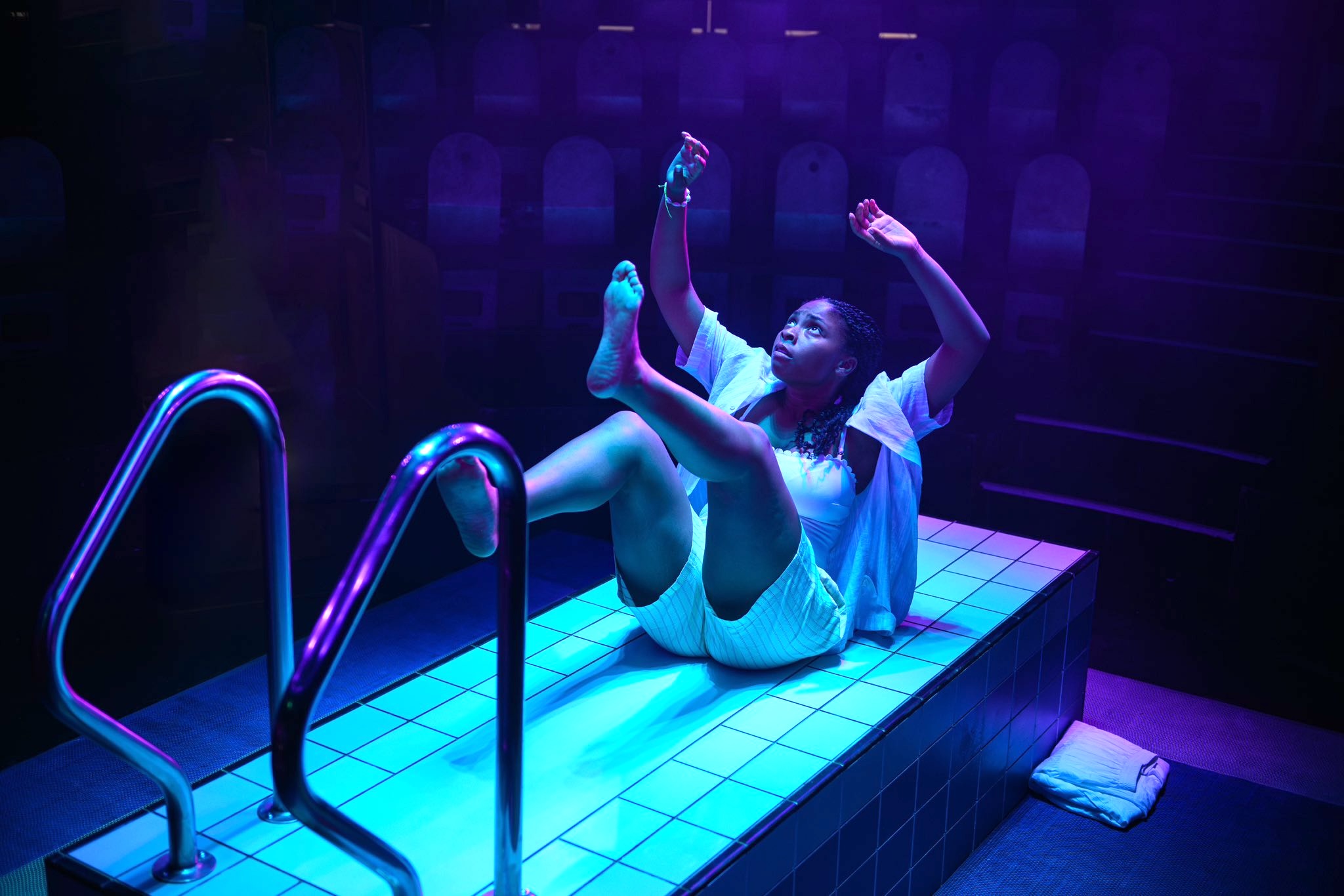
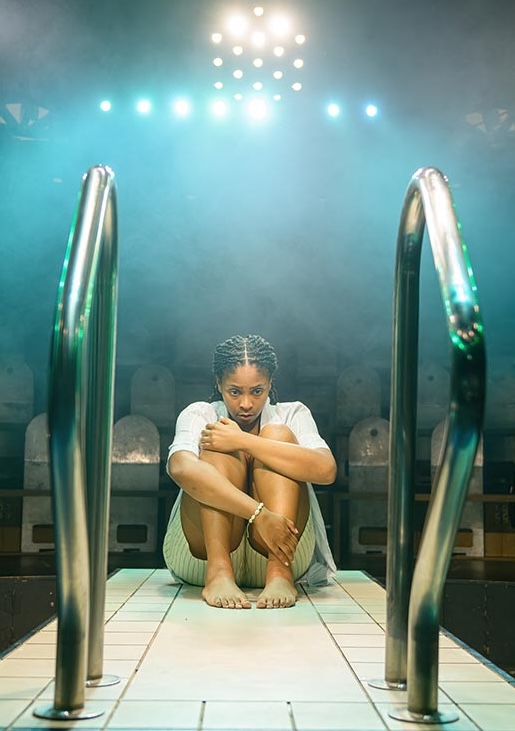
Jamie is 30 years old and is having her first official swimming lesson. What took her so long? Well, there was that incident back in her childhood that instilled her with a powerful dread of diving into the water, not to mention the old stereotype that Black people can’t swim. But now, more recent events have driven her to take on the challenge in the hope that she can rectify something that’s been haunting her…

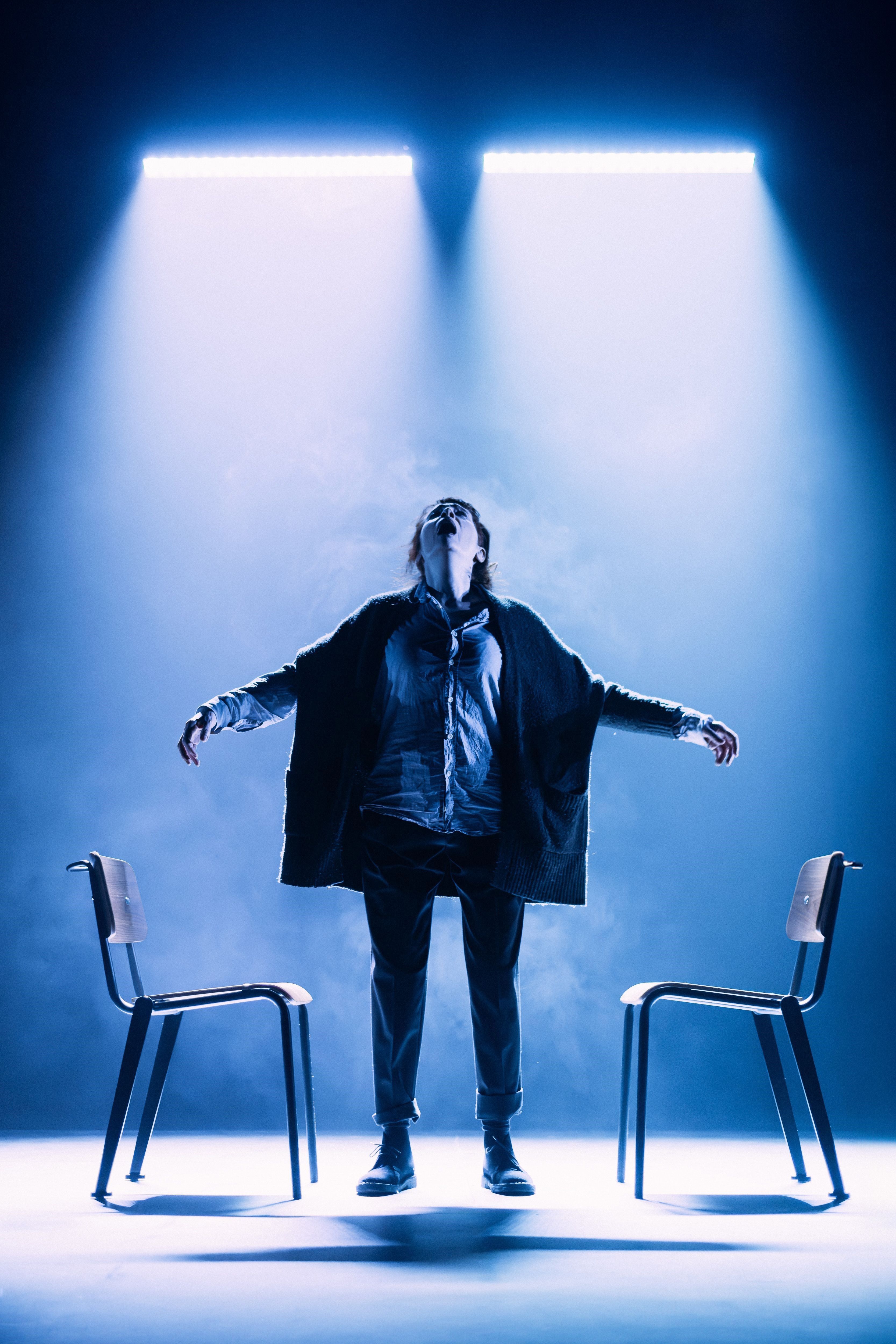
How I Learned to Swim by Somebody Jones is a engaging monologue, compellingly narrated and acted by Frankie Hart. The play was shortlisted for The Women’s Prize in 2023 and it’s easy to see why. Jamie’s story is compelling (and not just because I share her fear of being submerged). Her quiet determination to overcome old fears is both empowering and inspiring. Hart conveys Jamie’s emotions with aplomb, allowing glimpses of the anxious woman that hides behind a calm façade. She also slips effortlessly into a couple of other characters as the story unfolds: her indefatigable English swimming coach, Molly, and a spliff-smoking spiritual guide she goes to for advice.

This feels like a perfect play for Roundabout. The set is simply but effectively realised, the swimming pool location so convincingly evoked you can almost smell the chlorine. Lighting director Ali Hunter and composer Nicola T Chang work together to make the water sequences completely er… immersive.

There’s no great revelation here – at least, not one I haven’t already guessed at – but there is a genuine sense of peace and fulfilment at the play’s conclusion, the sense that long-held terrors are finally being laid to rest.

4 stars

Philip Caveney

Síomha Hennessy: 30 Under 30

06/08/24

Gilded Balloon Patter Hoose (Nip), Edinburgh

Síomha (it’s pronounced Shiva) is 35 years old and somehow, against all her expectations, she’s still ‘unexpectedly unfamous.’ She’s bewildered by this and, to be honest, I’m as mystified as she is. From the moment she prowls confidently into the room and launches into her first song, she has the crowd at the Patter Hoose in her tenacious grip. That opening pop song is terrific, wonderfully catchy and with lyrics that make you laugh out loud. It’s an impressive start.

The ensuing patter is just as perfectly crafted: canny observations about growing up in Ireland, her disastrous relationships, the minefield of social media and some outrageously outspoken views about sexuality. A ‘folk’ song from the POV of her contraceptive coil is wonderfully surreal. Presented in the style of Luke Kelly of The Dubliners, it’s an absolute hoot, the premise being that – at 200 euros – the device isn’t earning back its investment.

And then, just when you think you’ve got the measure of Hennessy’s schtick, she delivers a soulful ballad about Instagram, which shows off her soaring vocal range to the full.

The hour positively flies by until a final song – which has the entire room happily singing along with the chorus – brings the show to its conclusion. We missed Hennessy at last year’s Fringe but I’m glad we caught her act this time. She’s definitely one to watch and, on this evidence, she won’t remain ‘unfamous’ for very much longer.

4.8 stars

Philip Caveney

Lynn Faces

06/08/24

Summerhall (Main Hall), Edinburgh

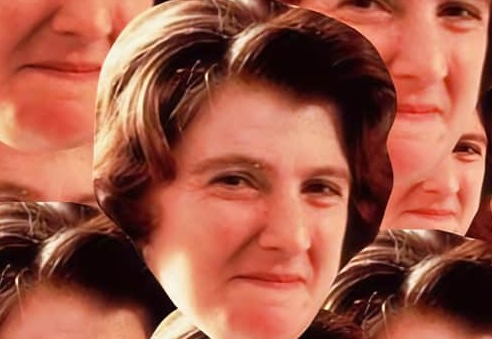
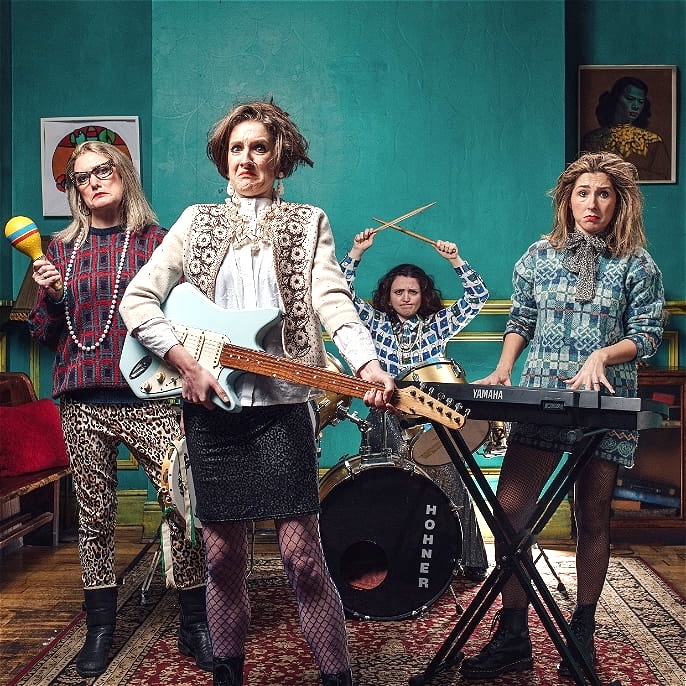
There’s no denying it’s an original premise. After all, there aren’t many bands inspired by the facial expressions of Alan Partridge’s long-suffering assistant, Lynn.

But Lynn Faces are here and they’re ready to perform. Leah (Madeleine Macmahon) is turning forty tomorrow, and – after splitting up with her boyfriend, Pete – she needs to do something big to mark the occasion. Encouraged by her friends, Shonagh and Ali (Holly Kavanagh and Peyvand Sadeghian), she’s booked a gig for the hastily-formed titular punk band. Okay, so the drummer they’ve never met is AWOL and – with the exception of Shonagh’s recorder – none of them can actually play an instrument, but how hard can it be? Leah did meet Viv Albertine from The Slits once; she’s bound to have absorbed some talent, right? 

Er, wrong. 

While silly on the surface, Laura Horton’s sophomore play also has some serious points to make about domestic abuse. Leah is devastated by her break-up with Pete,  eagerly awaiting messages from him and reminiscing fondly about how they met. But piece by piece the jigsaw builds until we have a clear picture of what he’s really like and how much damage he has done to her.

Unfortunately, the problem is that the gig really is as bad as it purports to be. Unlike say, The Play That Goes Wrong, where the apparently shoddy is actually perfectly drilled, Lynn Faces is an hour of non-musicians performing bad songs. The poignancy of the final stretches doesn’t feel earned and so it doesn’t land for me. It doesn’t help that I’m sitting next to an air conditioning unit, so any dialogue that happens away from the mic (or behind a Lynn mask) is hard to hear. 

There are some genuinely funny moments – Shonagh’s recorder solo and the Cunt x 40 song, for example – and Summerhall’s Main Hall is sold out, full of people laughing and enjoying the show.

For me though, this feels a bit dialled in. 

2.7 stars 

Susan Singfield

The Transcriber’s Tale

06/08/24

Gilded Balloon (The Patter Hoose), Edinburgh

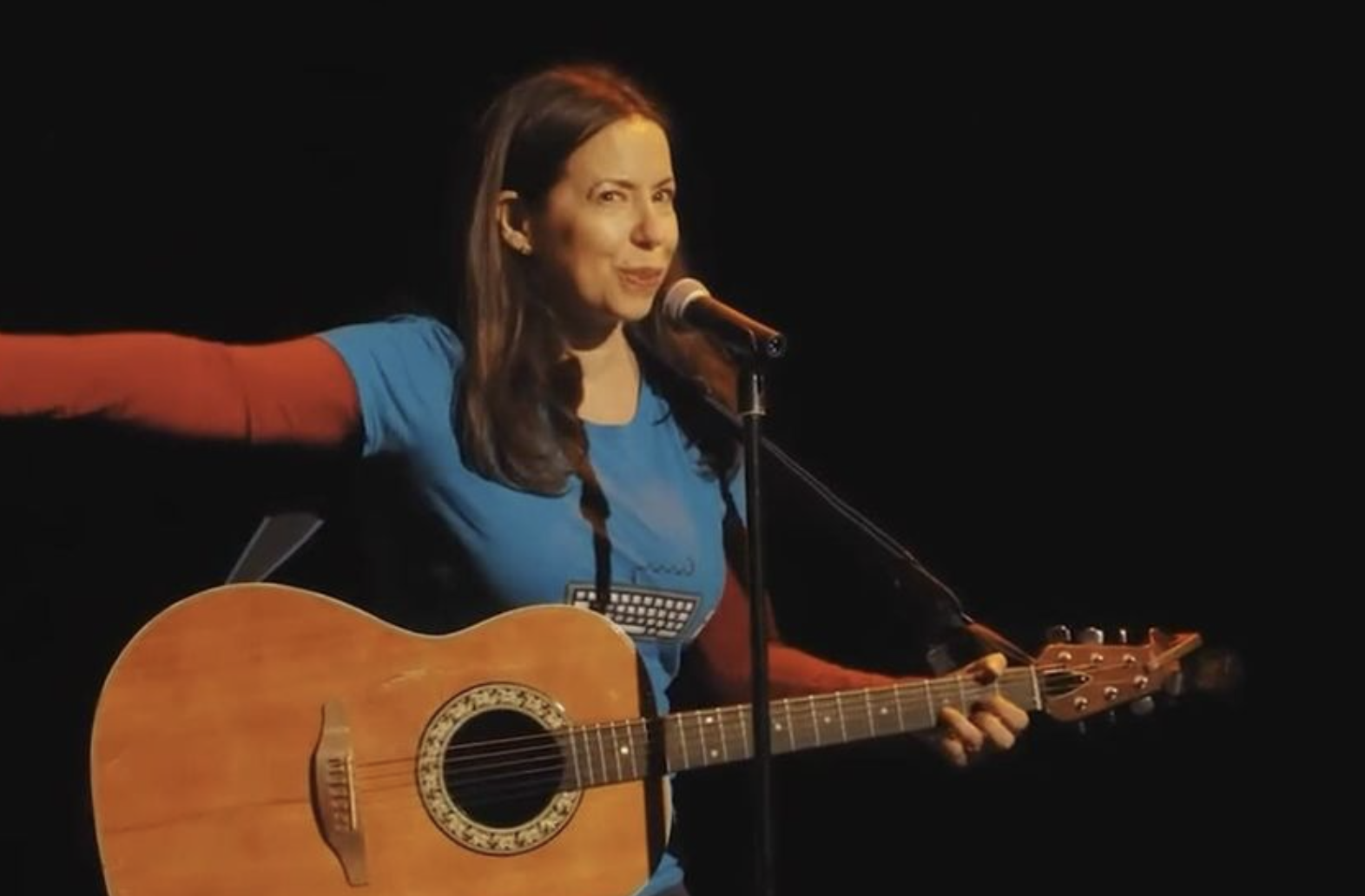
American actor/ musician Joanna Parson relates the story of the years she spent working for “Transcribers’ Express” (not their real name) in New York City, typing up news reports and magazine bulletins previously recorded on tape. It takes a special skill set to do the job effectively but Parson, armed with her ergonomic keyboard, quickly discovers she has a knack for it. At first it’s just a temporary solution, a way of earning easy money in between auditions for shows that never seem to come off. It’s also a way to finance her grocery and bar bills.

But the short term fix soon develops into long years of service, the day job ousting the dream.  Parson chronicles the ups and downs of her tenure in a series of short songs, accompanying herself on acoustic guitar. She’s a confident performer with a likeable line of patter and the songs range from an upbeat celebration off the joys of whisky to a plaintive, thoughtful meditation on 9/11. She rounds it all off with a jolly singalong, supplying the lyrics on a back projection, and the crowd happily complies.

This is enjoyable though I’m not always convinced that there’s quite enough material here to justify the length of the set and, in some cases – the 9/11 section in particular – Parson is skating over the surface rather than digging deeper into the material. All freelancers will be familiar with the unpredictability of their work and the need for a back-up plan. The revelation that Parson has now set up her own business offering transcribers a friendlier working environment seems to illustrate the old adage ‘if you can’t beat ’em, join ’em.’ Surprisingly, the idea that AI could soon supersede such operatives isn’t touched on.

Anybody with an hour to spare at lunchtime should make their way to the Patter Hoose. Ergonomic keyboards are optional.

3.4 stars

Philip Caveney

Chris Dugdale: 11

05/08/24

The Ballroom, Assembly, Edinburgh

At the Fringe, we spend most of our time seeking out new performers whose work we’ve never encountered before. But there are a few honourable exceptions. Back in 2015, as fledgling reviewers at the Festival, we happened upon Chris Dugdale: Sleightly Dishonest and were blown away by it. We weren’t magic fans per se (still aren’t really) but something about the man’s delivery, his brain-scrambling routines, his cheeky persona, chimed with us and we’ve seen him pretty much every year since – apart from when the dreaded COVID cancelled the whole Festival in one fell swoop.

But here he is again with 11 (remember that number), another meticulously arranged head-spinner that is mostly about coincidences – or at least apparent coincidences. One section deals with the attack on the World Trade Centre and the importance of that title is suddenly made clear. 

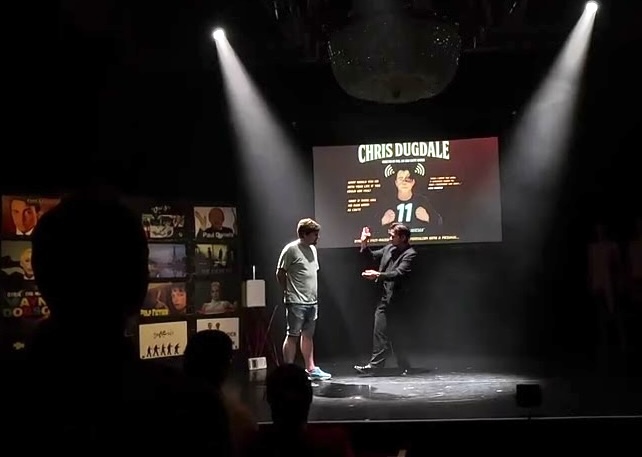
Dugdale is in a bigger theatre than usual and his wife and two young daughters are sitting in the audience (the latter putting their hands up when he asks for volunteers and having to be politely refused). As ever, we find ourselves laughing at the sheer unbelievability of some of the things we’re witness to, especially the examples of close-up magic, where a video camera is focused on the illusionist’s hands as he does a whole series of impossible things with a pack of cards. There are also some examples of mind control that have us shaking our heads in disbelief – and I may be guilty of muttering the odd expletive.

Oh and did I mention Dugdale’s poster collection? There’s a whole wall of them to stage left, a series of seemingly unconnected images…

As ever with these shows, I can’t give too much away because the best approach to Dugdale’s material is to go in with an open mind and prepare to have it opened a good deal more. But I will say that this is the best show we’ve seen from him and, trust me, it’s a very high bar. Those who like the sound of this should make a beeline for The Ballroom in the Assembly Rooms on George Street, where Mr Dugdale is doing unbelievable things every night.

Walking home afterwards, Susan randomly asks me what time it is. I glance at my watch and can’t help gasping. The numbers on the digital display are 9:11.

Another coincidence? Or is that noise I hear the distant sound of Chris Dugdale chuckling maniacally?

5 stars

Philip Caveney

Rebels and Patriots

05/08/24

Pleasance Courtyard (Upstairs), Edinburgh

“The villainy you teach me, I will execute, and it shall go hard…”

This Israeli-Palestinian-British co-creation, written by Nadav Burstein and co-produced by Floating Shed and Flabbergast, provides a timely discourse on the devastating nature of war, where ordinary people of all stripes are sacrificed to serve the interests of a powerful few.

The play opens with Wonder Woman and Albert Einstein drinking vodka with two friends, as the teenage protagonists prepare for a fancy dress party. This serves to underscore the quartet’s youth, engaging our sympathy as we realise that three of them have been conscripted into the Israeli Defence Forces. The fourth (Harvey Schorah) has an exemption, courtesy of Crohn’s disease.

Burstein’s efficient deployment of the small cast is impressive: through their stories, we see multiple perspectives on the Israeli-Palestinian conflict. There’s the combat pilot (Tom Dalrymple), who’s scared to kill, but believes Israel has no choice but to fight its enemies: “If you wrong us, shall we not revenge?” Then there’s Osher (Tarik Badwan), half-Palestinian and in active service. His name means happiness but he feels torn apart, traumatised by what he’s forced to do. Burstein’s character, meanwhile, is trying every trick in the book to avoid serving in a war he thinks is wrong, even turning to self-harm. It’s all very well for Schorah’s character to go on protest marches and tell his friends that they should rebel: everything he says is right, but they’re in the thick of it, and they’re terrified.

I’m impressed by the openness with which this young company approach this thorniest of topics, gently urging us to interrogate everything we think we know. Shylock’s most famous speech is paraphrased and repeated, refrain-like: “Hath not a Jew…? Hath not an Arab…? If you prick us, do we not bleed?”

Schorah’s character works well as a mirror for the audience. He’s on the outside, like us, making judgements from the comfort of our living rooms. Don’t be misled: the play makes no excuse for genocide. But it does remind us that, when we’re placing blame, we need to focus on the powerful, not the powerless.

Theatrically – as one might expect from Flabbergast – the piece has a fragmented structure, spotlighting first one character and then another. Loosely stitched with a sprinkling of history and Shakespeare, it all adds up to something very thoughtful, and the cast are keen to hear what audience members think. If only the world’s political leaders were as committed to constructive dialogue.

4.5 stars

Susan Singfield

Paper Swans

05/08/24

Pleasance Courtyard (Upstairs), Edinburgh

As soon as we note that Paper Swans is a Flabbergast production, we know we need to see it. Two of their previous shows, Swell Mob and The Tragedy of Macbeth, are among the most memorable pieces we’ve ever seen at the Fringe, and we’ve seen a lot. We know that – whatever else – Paper Swans is sure to be both experimental and innovative.

We’re not wrong. Written by and co-starring Vyte Garriga, this is a surreal piece depicting a young woman in a park at night, obsessively making the titular paper swans, while a security guard (Daniel Chrisostomou) urges her to leave.

Like most absurdist theatre, the structure is cyclical, reminiscent of a recurring dream, the characters destined to repeat the same encounter over and over. Ambiguous imagery takes precedence over coherent narrative or plot, and we’re left to ponder the possible meanings. Indeed, we spend the whole walk home doing exactly that.

The performances are highly stylised. Garriga, clad in a white leotard and tutu, resembles the origami swans she’s folding; her movement and gestures are like a ballet in slow-mo. Indeed, there are overt references to Swan Lake – to Odette, Odile and Siegfried – as well as to famous ballerinas from the past. Chrisostomou is more clown-like, his exaggerated physicality at first wonderfully comic and then desperately sad. Director Simon Gleave’s choreography is so precise and disciplined that every moment is intense, heightened to the nth degree. There is no let-up here. The hour flashes by and, as the actors take their bows, I realise that I’ve been holding my breath. I don’t know for how long.

What is Paper Swans about? I’m not entirely sure. Garriga’s website tells us that it draws on her personal experience as a woman from a post-Soviet country (Lithuania), “exploring the trauma of oppression, the price of freedom and self-discovery through visual symbolism.” So there’s that. I think it also says something about futility, about how we take up pointless causes and projects and try to make them meaningful, attaching such importance to them that we’re prepared to die rather than give them up. There’s something here about the performative nature of authoritarianism too, about how shedding the apparatus of the oppressor can make people more sympathetic, more human. Who knows? I suspect that, in fact, it’s a hall of mirrors, and all we can see are distorted images of our own mindsets.

Whatever it is, it’s gloriously done. I love it.

4.8 stars

Susan Singfield

So Young

04/08/24

Traverse Theatre, Edinburgh

A new play by Douglas Maxwell is always a treat. He’s an insightful playwright, able to walk that precarious tightrope between hilarity and tragedy with absolute authority. So Young is up there with his best work.

The play opens in the bedroom of married couple Liane (Lucianne McEvoy) and Davie (Andy Clark). They are in flagrante delicto and it appears to be going well – all four minutes of it. We know it’s that long because Andy has been timing it on his phone. In the afterglow, he wistfully talks about the years when their couplings could last the entire day, but there’s little time to linger on such details because the couple are already running late. They’re due to meet up with their friend, Milo (Nicholas Karimi), who they have known for years – in Andy’s case since they were best mates at school.

Liane is somewhat dismayed when Davie casually mentions that Milo is planning to introduce them to a new female friend. Both Davie and Liane are uncomfortably aware that Milo lost his wife, Helen, to COVID only three months earlier. The new friend turns out to be Greta (Yana Harris), just twenty years old and a former pupil at the school where Liane teaches. When she mentions that she and Milo are now engaged, Liane cannot help reacting badly to the news. After all, Helen was her best friend in the world and, thanks to the pandemic, there still hasn’t been a proper funeral service. 

As glasses of wine are consumed, it’s clear that there’s going to be a confrontation…

Maxwell always creates utterly believable characters. McEvoy is terrific as the caustic, fearless Liane, who has the ability to nail any target with a few well-chosen phrases and does so with abandon. She also manages to provoke a spontaneous round of applause for her discourse on the importance of female friendship. Gray, meanwhile, is brilliantly funny as the hapless Davie, at one point managing to have the entire audience convulsed with laughter, with nothing more than a series of exasperated looks and the repetition of the words, ‘Three months?’ Karimi has perhaps the trickier task of conveying Milo’s world-view, the difficulties of carrying on alone when his partner is gone. Harris is convincingly bright-eyed and resolute as Greta, fielding Liane’s dismissal of her as a child who knows nothing.

Having got his four characters into such strife, it’s left to Maxwell to conjure a conclusion that satisfies the audience and, once again – ably assisted by director Gareth Nicholls – he manages it with considerable panache. So Young is a perfectly-pitched drama that keeps me hooked throughout.

4.8 stars

Philip Caveney

The Sound Inside

04/08/24

Traverse Theatre, Edinburgh

The Sound Inside begins with an engaging example of fourth wall breaking, as Bella (Madeleine Potter), a creative writing professor at Yale, ambles onto the stage to introduce herself and her story. Her relaxed, sardonic tone is engaging, sometimes laugh-out-loud funny, and is liberally crammed with a succession of literary references.

And then in comes Christopher (Erik Sirakian), a garrulous Freshman in one of Bella’s classes, who has a propensity for impulsively saying all the wrong things. He’s arrived at Bella’s office without actually making an appointment and is clearly intent on knowing more about her, wanting to locate the real person hidden behind the curated image she presents in class. Bella is understandably cautious about engaging with him, suspecting that he’s some kind of weird stalker. But when he confides that he has started work on a novel, that he will have no rest until it’s completed, her curiosity is aroused.

She herself published a novel, seventeen years ago, and though it received promising reviews at the time, it has hardly set the literary world alight. Any thoughts of a new project have been stalled by recent worries about her health. She forms a tentative friendship with Christopher, uncertain of what might ensue, but prepared to see where this new path takes her…

Adam Rapp’s exquisite play has all the qualities of a great novel, pulling me deeper and deeper into its labyrinthine heart, providing the audience with puzzles to solve and mysteries to ponder. The two actors inhabit their respective characters with absolute authority, capturing all of their strengths and subtleties. Both of them are loners; both are driven by their inner desires. I love James Turner’s spare set design, which, combined with Elliot Griggs’ lighting and Gareth Fry’s soundscapes, helps to emphasise the twosome’s inner yearnings, their hopes and regrets.

More than anything else, this is a play about the nature of fiction: that elusive ephemeral beast that so many people long to capture. Director Matt Wilkinson handles the various elements of the play with skill and guides it to a poignant conclusion, which – much like Christopher’s novel – ends with an ellipsis.

The team at the Traverse seem to have an unerring ability to find great theatre and The Sound Inside, already a success in the USA, has everything I look for in this medium. It’s a mesmerising piece and should be on every Fringe visitor’s bucket list this year.

5 stars

Philip Caveney

Grazing by Mark Greenaway – Market Menu

03/08/24

Princes Street, Edinburgh

Ten years ago, we were living in Manchester. We came up to Edinburgh that August for two reasons: to visit the Fringe and to get married. We celebrated our ultra low-key wedding (registry office, no guests, strangers as witnesses) with a delicious meal at Mark Greenaway’s Bistro in Stockbridge. 

Although that particular venue hasn’t lasted as long as the marriage, Greenaway is still a big part of Edinburgh’s culinary scene, and Grazing – located on the ground floor of the Caledonian hotel on Princes Street – is a firm favourite of ours. 

So it makes sense to celebrate our tin wedding anniversary here. There’s a new five-course ‘market menu’ that we’re keen to try – and it doesn’t disappoint. 

We start with three ‘snacks’: a little cracker with burrata and caramelised mustard seeds, some beef tartare and the cutest mini baked potato, with tuna tartare and lime mayo. These are an absolute pleasure to eat, the potato in particular bringing smiles to our faces. 

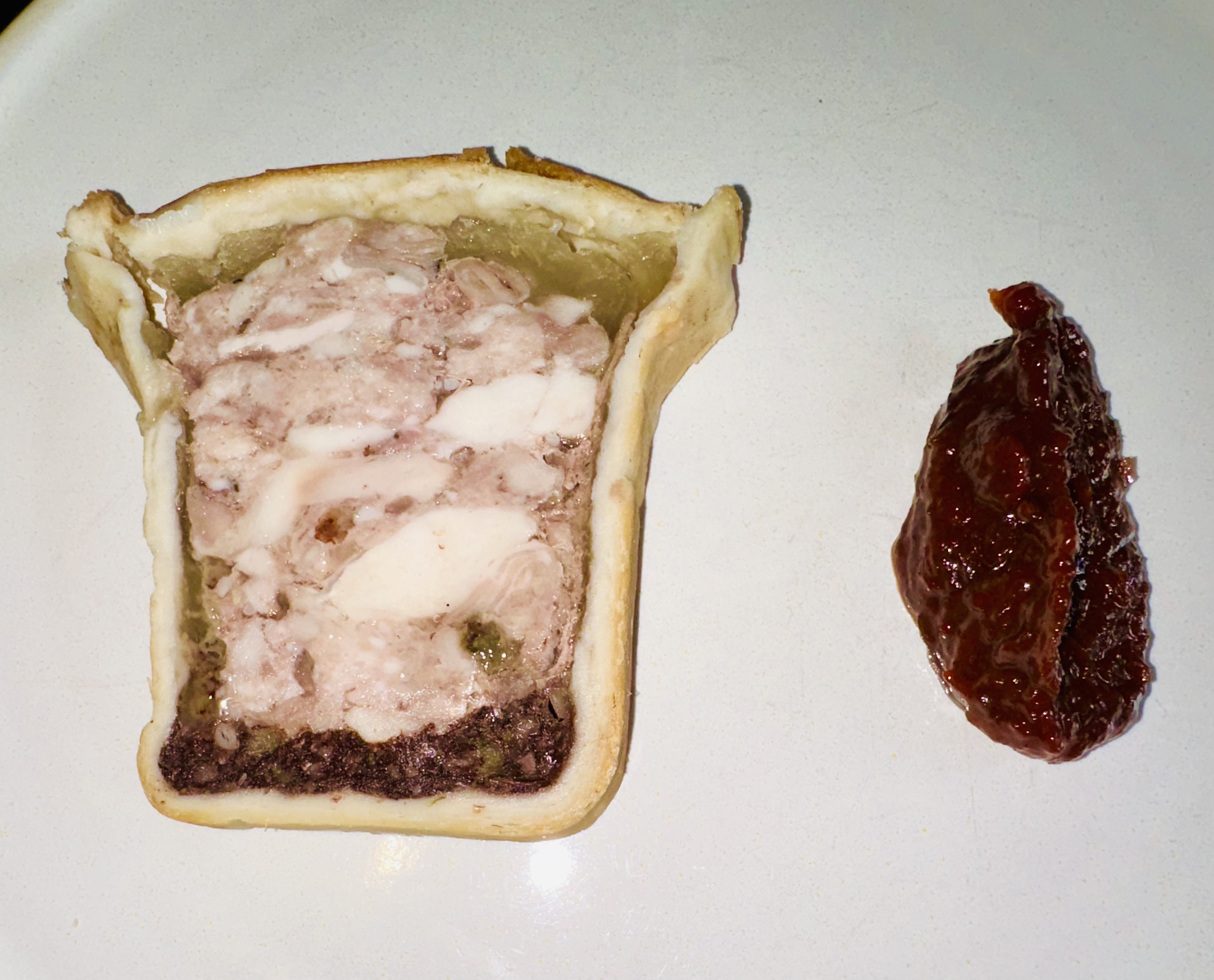
Next up, it’s rabbit paté en croute, a pastry frame containing layers of black pudding and spiced apple chutney as well as the meat. I’m not sure I’m going to like this; I haven’t eaten rabbit very often and I remember it as very strong and gamey. But this incarnation is delicate and light, and the gooseberry chutney on the side is a joy.

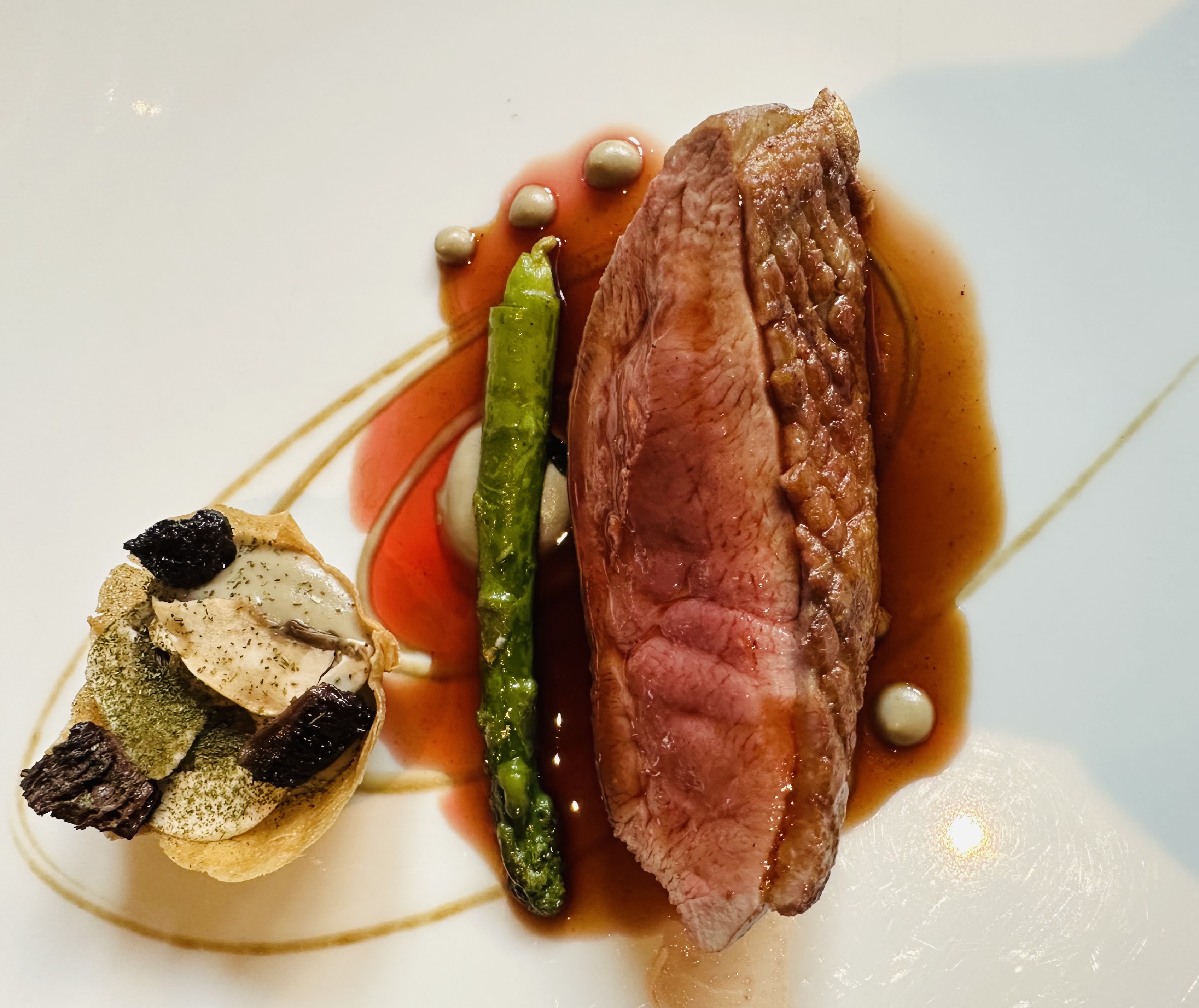
The main course is roast Perthshire duck breast, served with a morell mushroom tart and asparagus. Again, this is a revelation: I’m not usually keen on duck, but this is delicious – and that mushroom tart is bursting with flavour.

A pre-dessert of lemon curd cream proves a hit: there’s ice cream and chantilly, both bold with lemon – and the basil meringue complements it well. 

The only disappointment of the evening is the strawberry parfait, which is nice enough but too similar in concept to the pre-dessert (cold creamy stuff, room-temperature creamy stuff and some fruit) and not quite as tasty. 

But it doesn’t matter, because we’ve already taken the obvious decision to order an extra sweet to share. Not because we need it, but because Greenaway’s sticky toffee pudding soufflé is a thing of legend, an easy winner for our hypothetical Off Menu dream dessert. And it’s every bit as good as always: date-y and intense, rich but not heavy, quite the nicest thing you’ll ever eat. 

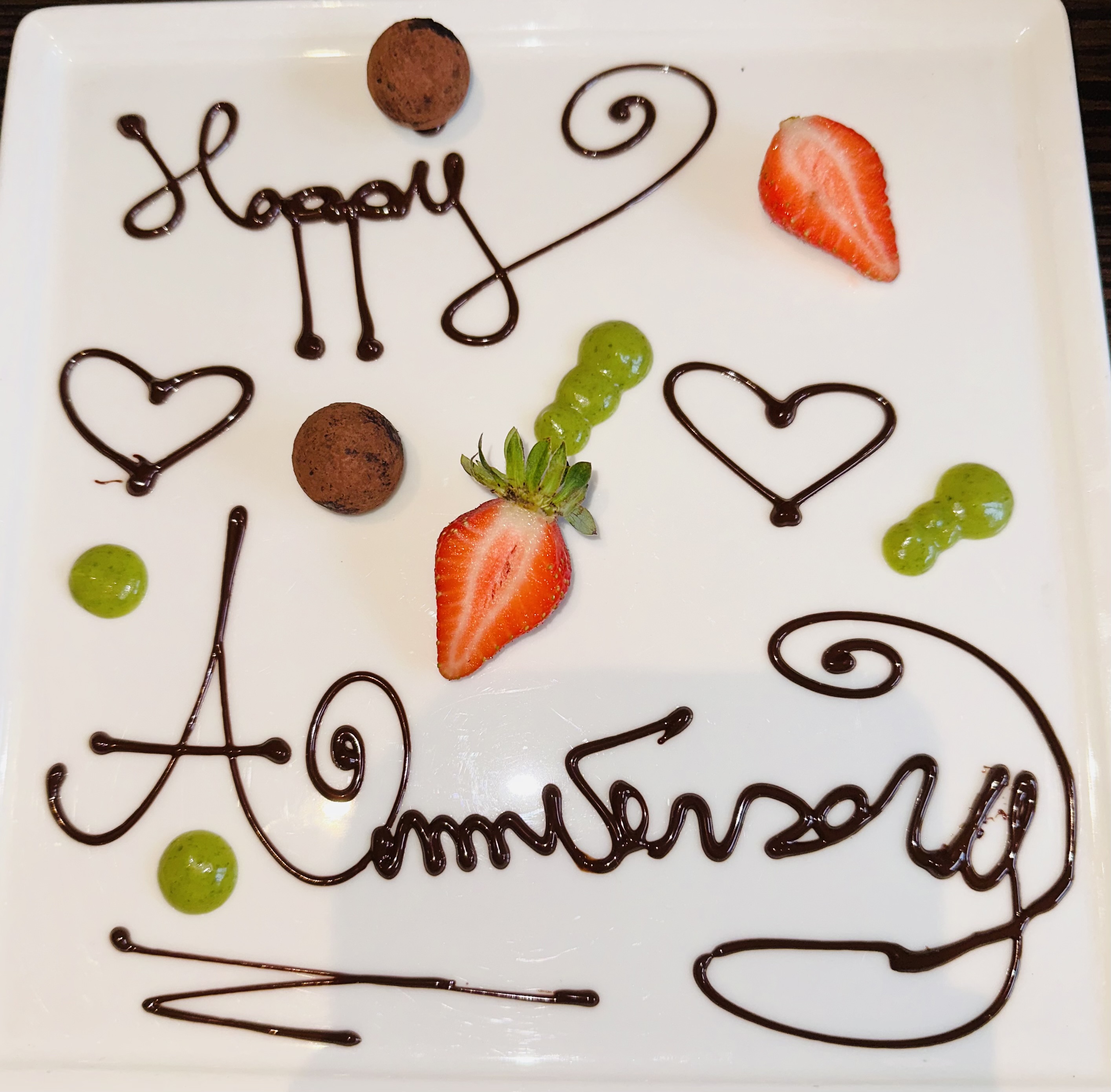
A couple of ‘Happy Anniversary’ petit fours round off the evening nicely, and we happily clink our glasses of Appletise in celebration of a decade well spent.

4.6 stars

Susan Singfield