The Falling

MV5BNjA2NTkxODkwNV5BMl5BanBnXkFtZTgwNzEwNDAwNTE@._V1_SY317_CR101,0,214,317_AL_

03/05/15

Carol Morley’s The Falling is an intriguing and occasionally mesmerising film, that has somehow managed to stake a claim at the multiplexes, amidst the tub-thumping superhero and action flicks. You’ll have to go back a long way to find something similar; all the way, in fact, to 1975, and Peter Weir’s Picnic At Hanging Rock, with which this film seems to share an affinity for the languorous, sensual qualities of nature. Weir’s story was, of course, based in Australia and this one, somewhere in the UK (it’s never actually specified exactly where) but Morley is fond of counterpointing luscious shots of lakes and woods with the tightly corseted, emotionless wasteland of a girls’ private school. Indeed, the two films have so many scenes in common, I refuse to believe that it’s coincidental.

It’s 1969 and the wild and rebellious Abbie (Florence Pugh) is beginning to discover the depths of her own sexuality. Her best friend, Lydia (Maisie Williams) can only watch helplessly as Abbie is inexorably drawn away from her towards Lydia’s brother, Kenneth (Joe Cole). Lydia lives with Kenneth and her tightly buttoned mother, Eileen (Maxine Peake) an agoraphobe who never leaves the house and who seems incapable of portraying any kind of emotion whatsoever. When Abbie finds she is pregnant, it threatens to blow apart the closeted world of the private school she attends and Lydia starts to look for ways to procure an abortion for her friend – but shortly afterwards, Abbie collapses and dies. The resulting shock has a profound effect on her fellow pupils. Lydia begins to experience rapturous fainting spells and as hysteria mounts, more and more more girls (and even one of the female teachers) experience the same phenomenon. In the film’s most powerful scene, pretty much the whole morning assembly succumbs. Is it simply a case of mass hysteria? Or is something deeper and more sinister at work?

The film revels in throwing out more questions than it has answers for. Morley’s slow, sensual direction generates an atmosphere of incredible tension and there are occasional uses of subliminal imagery that lend the film an almost hallucinatory quality. As Lydia, Williams delivers an unforgettable performance, while Pugh is so charismatic that her memory haunts the proceedings despite her early exit. Interesting too, to see former Merchant Ivory pin-up Greta Scaachi, taking on the role of the school’s sternest teacher.

The Falling is by no means a perfect film, but it’s far more experimental than most movies you’ll see these days and it has an ephemeral quality that will prompt you to talk about it long after the final credits have rolled. Not something you would say about Iron Man or The Avengers.

4.4 stars

Philip Caveney

Whose Lunch is it Anyway? Stu and Garry’s Free Improv Show

UntitledUntitled1

The Stand, Edinburgh

03/05/15

Stu Murphy and Garry Dobson’s residency at The Stand is an inspired way for the comedy club to draw in the punters during that entertainment dearth otherwise known as ‘Sunday lunchtime.’ We’ve seen the pair before (a twenty-minute slot during a night of stand-up), but this is the first time we’ve managed to catch their full-length act, and it really didn’t disappoint.

For starters, it’s free. I suppose it would need to be; this improbable time slot depends on people taking a punt, and thinking, ‘Well, why not?’ The place was bursting (although, as the eponymous duo pointed out, it was raining, and it was a bank holiday weekend). Perhaps the numbers aren’t always so good. We didn’t eat, but plenty around us did. This seems to be a popular gig for the hungry and hungover.

As for the act, it’s just a series of well-trodden improvisation games, but they’re played so well and with such joy and mischief, that it’s a real delight to be there. The comedians are inventive, clever, witty and warm. I can’t think of a better way to round off a weekend.

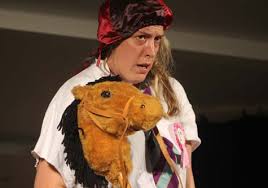
Oh – and Philip even got to go onstage, after volunteering to be the ‘puppeteer,’ controlling Stu’s every move during one (hilarious) scene. Now there’s funny for you.

4 stars

Susan Singfield

The Venetian Twins

Unknown

02/05/15

Lyceum Theatre, Edinburgh

Carlo Goldoni is, of course, the playwright whose earlier work, A Servant of Two Masters was so fruitfully adapted by the National Theatre to create One Man, Two Guvnors. The Venetian Twins is cut from the same bolt of gaudy cloth (indeed, can it really be a coincidence that lead actor Grant O Rourke is a dead ringer for James Corden?) At any rate, it matters not. This is a farce majeure, beautifully played, timed to precision and rib ticklingly funny from start to finish.

The action takes place in Verona. Rich and somewhat dim country boy, Zanetto (O Rourke) comes in search of a bride, specifically the nice but equally dim Columbina (Angela Darcy) whose gold-digging father, The Provost senses an opportunity to refill the family’s depleted coffers. But Zanetto has an identical twin brother, Tonino (also played by O Rourke) from whom he was separated as a child. When Tonino flees his native Venice for Verona along with his sweetheart, prototype feminist Beatrice (Jessica Hardwick), the scene is set for a bewildering series of ‘mistaken identity’ disasters. It’s a cliche to say that much hilarity ensues but in this case, that’s exactly right.

In the wrong hands, farce can be toe-curling, but there’s not a foot put wrong here (unless you count the hilariously drunken old landlady who falls repeatedly through an open trapdoor.) This owes much to Commedia Dell Arte, but this is no ‘off-the-peg plot. Much of the wittily updated script by Tony Cownie is delivered in broad Scots accents, which work brilliantly, and there’s a wonderfully foppish performance by John Kielty as the effete (and inevitably English-accented) Florindo. There’s some wonderfully fruity innuendo, a fistful of malapropisms from Columbina and a stomach-churning scene involving a blocked toilet that modesty forbids me to describe in detail. Meanwhile, O Rourke slips effortlessly between the two roles simply by doing up the top button on his jacket and adopting a different expression. The two acts galloped by while the audience, myself included, were convulsed with laughter from start to finish. If laughter is something you relish, then you really should see this before it moves on. It’s a Venetian blinder.

5 stars

Philip Caveney

My Big Fat Greek Kitchen, Edinburgh

Unknown

01/05/15

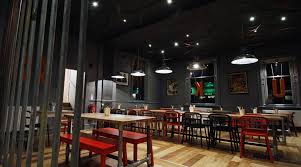
We visited this restaurant after a recommendation from a friend. It’s situated on Brougham Street, a stone’s throw from the Meadows. The interior is fairly Spartan and has the atmosphere of a simple taverna. I don’t know for sure, but I’d hazard a guess that MBFGK is a family-run affair and it’s clear from the hugs and kisses handed out by the proprietor to various guests as they departed, that this place generates a lot of return custom. Service, it has to be said, through warm and friendly, was a tad erratic. Our waitress kept galloping about the place to rearrange chairs and tables, even in the middle of taking our order.

For starters, I chose Whitebait, a dish that’s notoriously difficult to find these days. These were somewhat larger than expected and nicely cooked, lightly dusted with breadcrumbs. They came with nothing more than a small bowl of mayonnaise and the traditional slice of lemon. Susan chose Feta Cheese with kalamata olives and that’s exactly what she got – a generous hunk of cheese and a pile of bitter-tasting olives; but the dish needed something more to complete it – a couple of slices of pitta bread would have been a welcome addition. Perhaps some salad garnish?

For the main course, I went with Stifado – a rich and peppery beef stew. It arrived slapped into a white bowl, accompanied by a couple of pieces of dry toasted bread and an almost risible selection of fries – there were perhaps six of them in total, tasting of very little. The stew itself was hearty and satisfying, but once again, the dish felt incomplete and there was no attempt to make it look appetising. Susan’s choice of Lamb Souvlaki was pretty good, I thought, a generously sized skewer of tender meat,  onion and peppers, resting on a bed of rice, but once again, the dish looked rather underwhelming. The chef clearly knows how to prepare the meat elements of the meals, but would do well, I think, to put a little more effort into his presentation skills.

We drank a bottle of house white and I would have expected this to be a traditional Greek wine – an Assyrtiko, perhaps or a Savatiano, but instead we were served a (fairly decent) Italian Pino Grigio. Go figure. Overall, we enjoyed the food, but the name leads you to expect some kind of gastronomic blowout, which this certainly wasn’t. Don’t get me wrong. It was decent food, but with a little more work on the presentation, it would have scored much higher.

3.2 stars

Philip Caveney

Kro, Heaton Moor

Unknown-2

31/04/15

Kro has been in a prime location on the Moor since 2007. Back in the day, it was mostly famous for it’s Danish-inspired specialities, but that aspect has been somewhat reined in and these days it operates as an upmarket pub grub venue. The place has a relaxed atmosphere and the open plan, glass-walled extension makes for pleasant dining, especially in the summer months. On Sunday evenings there’s ‘Song Swap’ where various musicians come together to perform their material. The staff are relaxed and friendly and nothing is too much trouble. Make no mistake, this isn’t a place where you’d come for haute cuisine. If however, you’re in the market for a great value bit of scran and you’re not in the mood to cook something at home, this is hard to beat. There’s a fairly comprehensive a la carte and every evening, you’ll find a selection of specials chalked up on a board, offering two courses for £10 and three for £12.50.

On our latest visit, we decided to stick entirely to the specials board. I began with Lamb Kofta served with tzatziki, rocket salad and pitta bread. The Kofta was spicy and crunchy, though there was only a single skewer. It was accompanied by a generous side bowl of tzatziki and a dry pitta bread. Susan’s choice was Breaded Salmon Bites with sweet chilli sauceThe bites were light and fluffy, delicately flavoured and nicely set off by the sweet sauce. I thought it was the better of the two starters, certainly more generous, though both were perfectly acceptable.

For the main course, I sampled the Crab Cakes, served with wilted spinach, tartare sauce and French Fries. The cakes themselves were a little dry, though flavoursome enough and there was a large bowl of tartare sauce into which to dunk them. The fries were unremarkable and in my estimation, could have done with another minute in the fryer. Once again, Susan fared better with her choice of Slow Roasted Pork Belly, served with crushed new potato cake and a saje (sic) and onion gravy. The pork was melt in the mouth tender with a pleasing crunchy top layer and the rich onion gravy brought everything together nicely.

The portions were generous enough to eschew a sweet, though all three choices sounded appealing. The total bill for the meal, with a round of drinks, came to less than £30, which any way you look at is exceptional value for money.

3.6 stars

Philip Caveney

All Good Things

MV5BMTcwMjIyMTc2Nl5BMl5BanBnXkFtZTcwOTQyMzc5Mw@@._V1_SY317_CR0,0,214,317_AL_

29/04/15

Here’s one I missed earlier. All Good Things was originally released in 2010 and it’s one of those ‘based on a true story’ films, so mind-bogglingly bonkers that it really only could be the truth.  Ryan Gosling plays David Marks (the name has been changed to protect the – allegedly – guilty), the older son of dodgy property magnate, Sanford Marks (Frank Langella). When we first meet David, in 1971, he’s determined to resist going into the family business and when he meets up with Katie (Kirsten Dunst) after popping round to mend her leaky pipes, they start a relationship. But as time moves on, Katie begins to appreciate that David has several unsavoury skeletons lurking in his cerebral closet (not least the fact that he witnessed his mother’s suicide) and when eventuality he’s forced to capitulate and go back to work for his domineering dad, it’s painfully clear that things are not going to end happily.

These days, Gosling is very much the sex symbol, but here he plays the moody, cross-dressing and decidedly repellent David with considerable aplomb (although the ‘old age’ makeup he’s forced to don for later scenes wouldn’t win any awards). The story covers a lengthy time period and takes in Katie’s mysterious disappearance and a couple of murders, while the script doesn’t hesitate to point the finger at the real life counterparts of these ‘fictional’ characters. All this may go to explain why the film had such a low key release – apparently there were many who were ready and willing to sue the production team. But director Andrew Jarecki (of Capturing the Friedmans fame) stuck to his guns and somehow managed to get it out there.

All Good Things is certainly worth catching, if only to marvel at the way in which ‘David’ managed to come out of the whole business with no more than eight months in jail. It tells an intriguing (and occasionally mind-blowing story and for the most part, tells it well.

3.8 stars

Philip Caveney

Fruitvale Station

MV5BMTQ0OTU1MDkxMF5BMl5BanBnXkFtZTcwNjI5OTA3OQ@@._V1_SX214_AL_

26/04/15

Fruitvale Station wasn’t in the cinemas for very long, so I missed it on the big screen, but this powerful drama works just as effectively on a more intimate scale. It tells the real life story of 22 year old Oscar Grant (Michael B. Jordan) a Bay Area resident who was shot and killed in the early hours of New Year’s Day, 2009, by a police officer, responding to a minor disturbance on a tube train.

Ryan Coogler’s debut full-length feature occupies itself with the last day of Grant’s life, beginning with him waking up on New Year’s Eve and following events through to their tragic conclusion. It’s a stripped-down, high-powered production, just 85 minutes in duration, but one that it nonetheless compelling from start to finish. Jordan plays Grant as an affable charmer, with a tendency to get things wrong (on the day he died, he was coming to terms with the fact that he had lost his job at a grocery store because of persistent lateness.) A brief flashback to his time in prison is a little sketchy on detail, making you wonder is he really could have been quite as nice as he’s portrayed here, but as a searing plea for gun control the film works effectively and it would be a hard heart indeed that won’t be moved by its final, harrowing images.

Plaudits should also go to Octavia Spencer as Grant’s much-put upon mother (who heartbreakingly urged her son to take the subway into town in order to ‘avoid trouble’) and to Ariana Neal as his young daughter, Tatiana, who demonstrates acting ability beyond her tender years. Fruitvale Station may only be telling us something we know already – that the right to bear arms is a bad thing indeed – but the lesson is delivered in a confident, assured way, making Coogler a name to watch in  the near future.

4.1 stars

Philip Caveney

The Rolling Stone

Unknown

24/04/15

Royal Exchange, Manchester

Receiving its World Premiere at the Exchange, The Rolling Stone by Chris Urch has a short run here before transferring to the West Yorkshire Playhouse. It’s a story torn straight from the headlines. In the opening scene, two young men recline beside a lake on their first date – they chat, flirt and eventually kiss. Nothing at all out of the ordinary – except this is Uganda where homosexuality is expressly forbidden and transgressors face life imprisonment and ostracisation. Dembe (Sule Rimi) has fallen in love with young doctor, Sam (Robert Gilbert) who has an Irish father and a Ugandan mother. They both know that their relationship must be kept under wraps – particularly since Dembe’s older brother, Joe has recently been ordained as a church minister for their small community. But the local newspaper, ‘The Rolling Stone’ is always on the lookout for those people it likes to tag as ‘deviants’… and there’s a terrible price to pay if your name appears on their list…

There’s a great play to be written about this subject, but sadly, The Rolling Stone isn’t quite it. Despite excellent acting from the six-strong cast and some rousing acapella singing, the play’s characters are rarely allowed to rise above the two-dimensional; it’s hard to believe that they have another life outside of the story and everything we learn about them, seems designed merely to power the narrative. There are, however, some good scenes along the way. The playful opening hints at depths hidden beneath the surface, even if it never actually uncovers them; Joe’s vitriolic sermon condemning homosexuality makes for uncomfortable viewing and the play ends on a moment of high tension, where we realise the full implications of Dembe’s situation – but I wanted to know so much more about his family relationships and that didn’t really come across.

The Rolling Stone tells an important story, one that deserves to be heard by the widest possible audience and I’m glad that it has been written, (glad too that The Exchange deemed it worthy of production) but this must count only as a partial success. It continues here until the 1st of May.

3 stars

Philip Caveney

Shooting With Light

Unknown-1

22/03/15

Lowry Theatre, Salford

At the Edinburgh Fringe 2013, one of our happiest discoveries was the physical theatre group, Idle Motion. We saw two productions – Borges and I (based around the life of writer and librarian, Jorge Borges) and That Is All You Need To Know (inspired by the story of Bletchley Park and the breaking of the Enigma Code.) Both pieces were extraordinary and we were disappointed to discover that they weren’t back at the Fringe in 2014.

Now here’s a touring production of their latest offering, Shooting With Light, which we caught at the beginning of it’s short tour. It’s the story of famous war photographer, Robert Capa (or to give him his real name, Andre Friedman) and his partner, Gerda Taro, who shared his passion for such dangerous work and in many cases, actually took some of the photographs with which he was credited. What I love about this group is their simplicity. A basic set of centrally placed translucent white boxes becomes a whole variety of locations – doors, windows, a cinema screen (presciently showing Frank Capra’s It Happened One Night), wardrobes, phone booths, you name it. As always with Idle Motion, this is an ensemble piece with just five performers taking on a multiplicity of roles. In a mixture of acting and movement they lead us into the dark heart of the Spanish Civil War and, intriguingly, place  a mystery at the centre of the story – the search for a box of lost negatives that includes the picture that Capa considered the most important of all.

If I have a minor criticism with the piece, it’s simply that, so early in the tour, the movement isn’t quite as slickly choreographed as it will be as it settles in. There were a couple of clumsy missteps tonight and a slightly shonky moment where a rug was flung out of a window for Capa and Tarot to ‘lie’ on – the resulting effect, beneath a starry sky, was magical, mind you, but the transition, rather less so. I’m quibbling here. This is a splendid performance piece, engaging, atmospheric and ultimately rather emotional – both Capa and Taro paid the ultimate price for their undoubted courage and I’m not embarrassed to say that at one point I was watching through tear-filled eyes.

Shooting With Light continues at the Lowry until the 24th of April and then heads out to a series of locations around the UK until the 9th of May. (You’ll find full details on the group’s website.) If you love physical theatre and want to see it brilliantly performed, then I urge you to catch this show. It really is worth the effort.

4.4 stars

Philip Caveney

Cuckooed

Unknown

18/04/15

Cuckooed was one of the hot tickets at last year’s Fringe – so hot, in fact, that we failed to procure tickets for it. So it was great to see it repeated at the Traverse Theatre and to note, that once again, it was absolutely sold out. Luckily we booked early.

Tonight’s show is divided into two halves. Before the titular ‘comedy of betrayal,’ we are treated to forty minutes of chat by writer and star Mark Thomas, focusing mostly on the ‘105 Acts of Minor Dissent’ that he recently set himself. It’s hard to describe Thomas’s act. He’s not exactly a standup, in the sense that there are no real jokes or punchlines here – and yet he has people roaring with laughter, pretty much from the get go. He’s actually an activist, a ‘domestic terrorist’ as the police like to label him, a man who entered the Guinness Book of records for holding 20 protests in 24 hours. Thomas has devoted his life to confronting senseless authority and he manages to make me feel ashamed for not doing more. He’s also a man who doesn’t hold back when talking about those who he feels fall short of being decent human beings. A recent competition he held, to come up with a definition of the word ‘Farage,’ resulted in the following: Farage: the puddle of smelly liquid at the bottom of a rubbish bin. 

Cuckooed is a more complex animal, a blend of theatre, witness-recollections, video and reconstruction. Instead of a programme, we get a paperback copy of the script, which is always a bonus. It tells the story of when Mark was a member of the Campaign Against the Arms Trade and carried out protests alongside his dearest friend, referred to here only as ‘Martin.’ When it becomes apparent that members of the group are being spied on by the arms company, BAE Systems, it soon transpires that there has to be a mole working within CAAT, and, after much digging, suspicion falls upon Martin. Thomas is at first incensed. How could just a hardworking, devoted activist be thought capable of performing such a horrible deception? But, as he begins to probe the evidence himself, a terrible truth is uncovered…

Thomas is a mesmerising performer. This is essentially a monologue (with interjections from witnesses recorded on video screens, cleverly contained within the sliding drawers of filing cabinets), but he carries the show expertly, using all the techniques of a gifted actor. A key scene where his emotion builds to the point where his eyes fill with tears of regret is incredibly moving, and, I believe, impossible to fake. It raises some incredibly cogent questions about the right to privacy and touches on other deceptions – notably the case of undercover policeman John Dines, who conducted a three year relationship with a woman, a member of an anti-capitalist group, simply in order to spy on her and the other members.

It’s a brilliant show, not the angry diatribe it might have been, but thoughtful and measured. At its conclusion, the audience rise to their feet to deliver a well-deserved standing ovation. You can bet that we’ll be booking tickets early for his next show, Trespass, when it comes to Edinburgh in August.

5 stars

Philip Caveney