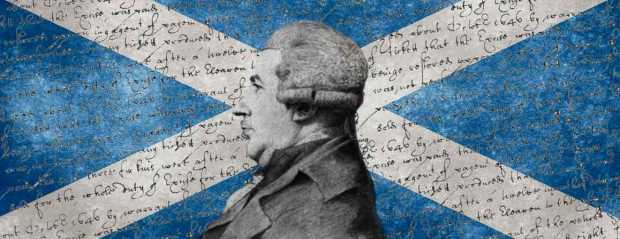
In PurSUEt

13/08/19

theSpace at Niddry Street (Lower Theatre), Edinburgh

I’m drawn to this show by the vibrant poster; I quite like Ms Perkins, and the tale of a quirky superfan (apparently based on a true story) is appealing to me. In reality, Eleanor Higgins’ In PurSUEt  isn’t so much about the titular Sue, as it is about the protagonist’s struggle with alcoholism.

It’s not really In PurSUEt’s fault that I’ve seen a few too many introspective shows at this year’s fringe – there are, for some reason, lots of micro-dramas about personal issues. As I tend to prefer more outward-looking work (I like intimacy in drama, but find it more interesting if there’s something more universal in the mix), I guess I’m just not this production’s target audience.

I have a few issues with the story too: I get very little sense of the character’s life outside of booze-and-Sue (she must have one; how else is she funding her impulsive trips in pursuit of her heroine?). And why doesn’t Sue recognise her after so many odd encounters? I’m not even sure what it is about Perkins that attracts Higgins in the first place, because she never says what it is she finds so appealing about the Bake-Off star.

Still, there’s no denying that Higgins is an engaging performer, and there are some funny sequences here and quite a few cutting one-liners. She also, as it turns out, has a lovely singing voice. And, in the end, her redemption feels earned.

3 stars

Susan Singfield

The Professor

12/08/19

Assembly Rooms (Drawing Room), George Street, Edinburgh

The audience files politely into the theatre and we take our seats. The lights dim and in comes our speaker for the day, who assigns us the roles of university students, here to attend his latest lecture. None of us feels inclined to argue the point. He immediately announces that today’s talk will take a break from the advertised subject and will instead make a few unexpected detours. Written by Brian Parks and performed by David Calvitto, The Professor depicts a man on the verge of a change – and moreover, not one he’s making by choice.

So we are offered a scattershot lecture on the joys of mathematics, the history of theatre and a snarling put down of the limitations of dance. Calvitto steers his way expertly through the very witty and hyper-verbose script, occasionally delivering dazzling one-liners and even pausing at one point to perform some lines in verse (because poetry that doesn’t rhyme is worthless, right?), accompanying himself on a mandolin. What’s clever here is that this professor cannot resist thrusting large chunks of his own prejudices and foibles into what ought to be a dispassionate account. He also believes that cats (and racoons) can read books. Don’t ask. And all of this, really, is just an elaborate set up for what must be the most protracted fart gag in history.

This is a slight but pleasing piece that starts and ends strongly enough, but feels a little unfocused in the middle.

Those who have worked in the world of academia will doubtless recognise a lot of what goes on here. The rest of us will just be too busy giggling about that fart joke.

3.5 stars

Philip Caveney

Boswell

Boswell 2

11/08/19

PQA Venues at Riddle’s Court, Edinburgh

Marie Kohler’s Boswell is an interesting play, offering insight into the relationship between Boswell (Brian Gill) and Johnson (Brian Mani). As the two men embark on their famous 1773 tour of Scotland, they are joined onstage by Joanie Weinstein (Abbey Siegworth), a 1950s American academic, in the UK to research Johnson. Her studies lead her to straight-talking Fiona (Laura Gordon), widow of one of Boswell’s direct descendants, and owner of a trove of unseen documents. Initially dismayed to discover the boxes contain far more Boswell than Johnson, Joanie soon finds herself fascinated by the former’s candid journals, and is determined to find out more about the libidinous ‘scribbler’.

The action cuts nicely between the two time periods. Joanie is ever present; it’s her reading of Boswell’s papers that is being played before us. The script is well-written, with witty dialogue and an energetic pace. Of course it takes liberties with the facts – it’s a play, not a historical document – but it evokes the 1770s well, and gives a real sense of the men’s relationship.

I like most of the humour. An early scene where David Garrick makes an appearance is particularly amusing, and Johnson’s curmudgeonly dismissal of the Scots is laugh out loud funny. Less successful are the repeated ‘don’t Scottish people sound funny?’ lines, particularly as – with the exception of Brian Gill – the Scottish accents deployed by the actors are uniformly atrocious (the acting is generally very good, but those accents… oh dear…). This is, it must be said, a bit tone-deaf.

The thawing of hostilities between Joanie and Fiona is nicely drawn, and the parallels between the two friendships are clear. It’s a neat trick to introduce David Hume as well, one-time inhabitant of this venue here at Riddle’s Court.

3.8 stars

Susan Singfield


Fishbowl

11/08/19

Pleasance Grand, Edinburgh

This quirky, captivating production from French theatre group Le Fils Du Grand Réseau is a recent winner of the Molière award for Best Comedy, and is playing to packed houses at the Pleasance Grand. It’s easy to see why. With its impeccably timed visual gags and ingenious production design, it contains beautifully devised sequences that are comparable to the work of Mack Sennet at his best. It is, essentially, a silent comedy, one that – again and again – elicits absolute gales of laughter from the auditorium.

This is all about the eccentricities and indignities of city living. We observe the lives of three neighbours, living cheek by jowl in adjoining attic apartments in Paris. There’s a shambolic hoarder, eking out a lonely existence amidst chaotic heaps of detritus; a karaoke-loving guy who inhabits a zen-like, white painted box; and a new arrival, a woman who styles herself as a holistic healer-hairdresser-masseur, but who clearly has none of the necessary training to practise these skills with any degree of success. When both men cast an asquisitive gaze in her direction, the scene is set for a series of rivalries and madcap misadventures.

There’s something deliciously old school about this production. I love the way it tells its unfolding story over an extended period of time, showing how people have the capacity to change – and I particularly like a brief moment where the technicians toiling behind the scenes are ‘accidentally’ put on display. If the story occasionally leans a little too heavily on the toilet gags, it’s nonetheless endlessly inventive, and I can truthfully say it isn’t quite like anything I’ve seen before.

Book your seats for the Grand. You’ll laugh mightily, even when the merde hits the fan.

4.5 stars

Philip Caveney

Tess

10/08/19

theSpace at Surgeon’s Hall (Fleming), Edinburgh

Tess (of the d’Urbervilles) might not seem like an obvious choice for a late night Fringe show, but Ondervinden and G & T Productions’ rumbustious interpretation is perfectly suited to its time slot: a lively ‘pint-in-hand’ production, with live folk music and gutsy performances.

The three-hander, written and directed by Elske Waite, is a sprightly affair, illuminating  the core of Hardy’s novel. It’s the same plot (impoverished country girl raped by entitled rich man then spurned by society), but this version is a lot less dour than its progenitor, and there’s a welcome dose of feminism thrown into the mix. The music (courtesy of Jonathan Ip, Tenzin Stephen and Isla Ratcliff) makes a perfect accompaniment for this rollicking adaptation.

Polly Waldron plays Tess, imbuing her with such childish innocence that only a stone-hearted person could fail to be moved by the abuse she suffers. But she’s not silent, and I like that: she knows she is being cruelly wronged, and she stands up for herself. Emily Windham and Colette McNulty play all the other characters, with token costume additions to symbolise a change of role. It’s nicely done: McNulty excels at the comic stuff, while Windham is perfect as Angel Clare, his chilling self-righteousness horribly exposed.

The set design (by Khadija Raza) is simple but witty; I especially like the cow, made from a sawhorse and a rubber glove, and the quirky humour of a tiny piece of astroturf.

So don’t be put off by the idea of Thomas Hardy as an evening out. This Tess knows how to party.

4.2 stars

Susan Singfield

The Legacy of William Ireland


10/08/19

PQA Venues, Riddle’s Court, Edinburgh

Ah, the unforgettable works of Shakespeare! Anthony and Cleopatra, Romeo and Juliet, Vortigern and Rowena… wait… Vortigern and Rowena? Chances are you’ve never heard of that one, mostly because it wasn’t actually written by the bard of Stratford but by a wannabe poet and playwright named William Henry Ireland, who also pursued a lucrative sideline in passing off his mediocre efforts as the work of the great man himself.

It all began modestly enough, with Ireland forging bills-of-sale bearing Will’s signature, mostly in an attempt to impress his Shakespeare-obsessed father, but – as time went on – things got somewhat out of hand…

This wittily scripted monologue by Tim Connery depicts Ireland as his deception is uncovered, understandably nervous and ready to flee for his life. Charlie Jack not only plays the fraudster with self-deprecating aplomb, but also looks uncannily like the man himself. I find myself torn between despising Ireland’s guile and feeling rather sorry for him, since the whole deception appears to be fuelled by a desperate attempt to impress the father who clearly hates him.

This is a fascinating look at a little-known historical event and, apart from a bit of dramatic licence in the final act, it sticks pretty close to the unbelievable truth.

Anyway, enough of this. I’m off to forge a new Harry Potter novel. You never know, it might just work…

4 stars

Philip Caveney


Frankenstein

10/08/19

theSpace on North Bridge (Perth), Edinburgh

I love Frankenstein. I’ve read the novel so many times it’s as familiar as a friend. I love the story behind it too, and never fail to marvel at the nineteen-year-old girl who could produce such a masterpiece. Of course, I’m not alone. This slim volume has inspired all manner of creatives to explore its possibilities in other forms, and now it’s Birmingham-based Blue Orange Theatre’s turn to have a go. What can they add to the mix?

Frankenstein is played here as a three-hander, focusing on The Creature’s story, with Taresh Solanki delivering an impressive performance as the protagonist. He’s all tension and sinew: a feral, frightened beast. Once in the proximity of humans, he begins to emulate their behaviour, and Solanki’s movements change accordingly: he grows more upright, his language skills develop. The physicality of the transformation is arresting.

James Nicholas and Emma Cooper embody all the other roles, taking turns to narrate the story as the action unfolds. I like the way the narration switches from third person to first as The Creature learns to speak, and the way all three performers inhabit the small stage. Between them, they do the novel proud.

Frankenstein, told this way, is an ideal piece for the Fringe, where a few simple props, some wooden crates and a white sheet can evoke an entire world.

4 stars

Susan Singfield


On the Other Hand, We’re Happy

10/08/19

Summerhall (Roundabout), Edinburgh

On the Other Hand We’re Happy is a play about adoption – the hopes, the perils, the joys and pitfalls of the process. Like most productions by Paines Plough, it’s brilliantly staged and powerfully acted. Written by Daf James and directed by Stef O’ Driscoll, this is an object lesson in how to toy with an audience’s emotions, and it succeeds admirably on just about every level. It’s a powerful, compelling story.

Josh (Toyin Omari-Kinch) and Abbi (Charlotte Bate) are a young couple in love, who – like so many others before them – plan to become parents. When they discover that they can’t make babies in the usual way, their thoughts turn to adoption, and they even elicit the opinions of the audience when discussing its merits. (The action regularly breaks the fourth wall, but it’s handled so cleverly, it never feels like a gimmick.) When the couple learn of a young girl, Tyler, who could be the right fit for them, they are naturally excited at the prospect of meeting her – but then fate deals them a cruel blow and it looks as though their dream may be an impossibility…

I love the direction of this piece, the way the actors appear to tumble and lurch from scene to scene, cutting back and forth in time, seeming to literally fall from one sequence to the next. Charlotte O’ Leary plays Tyler and also her mother, Kelly – a deliciously sweary Welsh woman, who may have taken some wrong turns in her life, but still wants the best for her daughter. All three performances are top notch, but Omari-Kinch’s physicality stands out. His is a character caught up in a maelstrom of wild emotions, flinging himself recklessly around the circular stage of Roundabout like an out of control automaton.

The conclusion is almost overpoweringly emotional and I watch the actors taking their well-deserved bows through a film of tears. If you like quality theatre, head down to Summerhall and catch this vibrant, beating heart of a play before it moves on.

It’s one of the best shows we’ve seen at this year’s Fringe.

5 stars

Philip Caveney

The Good Scout

09/08/19

The Space at Surgeon’s Hall (Grand), Edinburgh

The Good Scout is – astonishingly – based on real events. In 1938, with the two countries on the brink of war, Lord Baden-Powell and ambassador Joachim von Ribbentrop set up a series of ‘peace and friendship’ tours, inviting members of the Hitler Youth to stay with scout troops in England, in an attempt to foster relationships. British scouts went to Germany too, but writer/director Glenn Chandler’s play is all about one particular (fictional) visit to Bassington in Cambridgeshire.

Gerhard (Clemente Lohr) and Friedrich (Simon Stache) are the Hitlerjugend sent to stay with Will (Clement Charles) and his friend, Jacob (Charlie Mackay), two Rover Scouts keen for a new experience. Will is serious and principled, a law-abiding, anxious lad, working for the local newspaper, harbouring ambitions to become a ‘real’ journalist. Jacob lives with Will and Will’s mother, Rose (Amanda Bailey); the two boys are very close. But the Germans’ arrival highlights their differences, and tensions develop as new allegiances are formed. Secret agent John Dory (Lewis Allcock) adds an extra layer of mystery – forcing Will to choose where his loyalties really lie.

This is, at its heart, a play about relationships – and about historical attitudes to homosexuality. Friedrich is afraid to return to Germany, where he risks being castrated and sent to a concentration camp if his proclivities are reported. Things are better in England, but still dreadful: Jacob has to worry about a two-year prison sentence – and bear the burden of his last lover’s suicide. All four young men are forced to carry secrets, but their association gives them the chance to question what honouring their countries really means.

It’s a fascinating premise, and the performances are good, but overall it feels a bit uneven. The comic interludes depicting Hitler’s meetings with various world leaders are too cartoonish; I understand these are moments of high camp and light relief, but it just seems a bit silly and doesn’t really work for me. I’m also not convinced by some of the plotting, by how easily the boys break confidences and reveal what they know. There’s a guilelessness that makes them all seem younger than their age.

At times, there’s too much stage traffic, too much coming and going. There are no wings in this theatre, so each entrance and exit involves an ungainly wriggle through the backdrop, which is distracting; it would work better if it were more streamlined.

Nevertheless, this is an interesting story that throws light on a little-known slice of British history.

3 stars

Susan Singfield


The War of the Worlds

09/08/19

Pleasance Forth, Edinburgh

In 1938, Orson Welles’ Mercury Theatre Company transmitted a groundbreaking radio drama, an adaptation of H G Wells’ The War of the Worlds. In an attempt to bring the piece up to date, the story was told through a series of eerily realistic news reports, utilising sound effects and, at one point, even lapsing into total silence – an unprecedented technique on radio. The result was mass panic. Hordes of people, thinking they had tuned in to an actual news bulletin, left their homes in terror, convinced that the planet really was being invaded by aliens.

Theatre group Rhum and Clay reproduce extracts from the original broadcast, but intercut them with a contemporary story in which ambitious podcaster, Meena, visits the town of Grovers Mill in New Jersey, where Orson Welles located his adaptation. The Clinton/Trump election is fast approaching and Meena is chasing a story concerning a woman who claims to have been ‘abandoned’ as a result of Welles’ broadcast. Instead, she uncovers evidence of news articles being faked to further political aims – and to generate considerable income. Writer Isley Lynn is making an important point here. If hearts and minds can be so easily manipulated in the name of entertainment, then the same techniques can be (and are being) used for more nefarious purposes.

Simply but effectively staged, and convincingly acted by Jess Mabel Jones, Matthew Wells, Julian Spooner and Amalia Vitale, The War of the Worlds is one of those productions that prompts plenty of conversation afterwards. Those expecting a straight rerun of the Mercury Theatre’s transmission will be suprised and possibly even disappointed by this – it’s an altogether slipperier and more labyrinthine beast than its progenitor – but it makes its points eloquently and is well worth your time and money.

And you’ll be discussing it for hours.

4 stars

Philip Caveney