The Dowry

12/03/22

Commercial Street, Lerwick

We’re in Shetland, mainly for the purposes of researching a book I’m working on. But it would be rude, wouldn’t it, to pass up the opportunity to try out some of the local dining venues? We’re based in Lerwick and a wander around the town doesn’t reveal anywhere that looks particularly promising. However, an online check reveals that a place called The Dowry has several good reviews, and it turns out the place is only a short walk away from where we’re staying.

It’s a lively cafe bar, run by friendly young people and we’re soon enjoying a convivial drink while we peruse the menu and listen to a selection of Manchester music. Hang on, isn’t that Blossoms? Susan used to teach drama to the keyboard player! A case of synchronicity, I suppose.

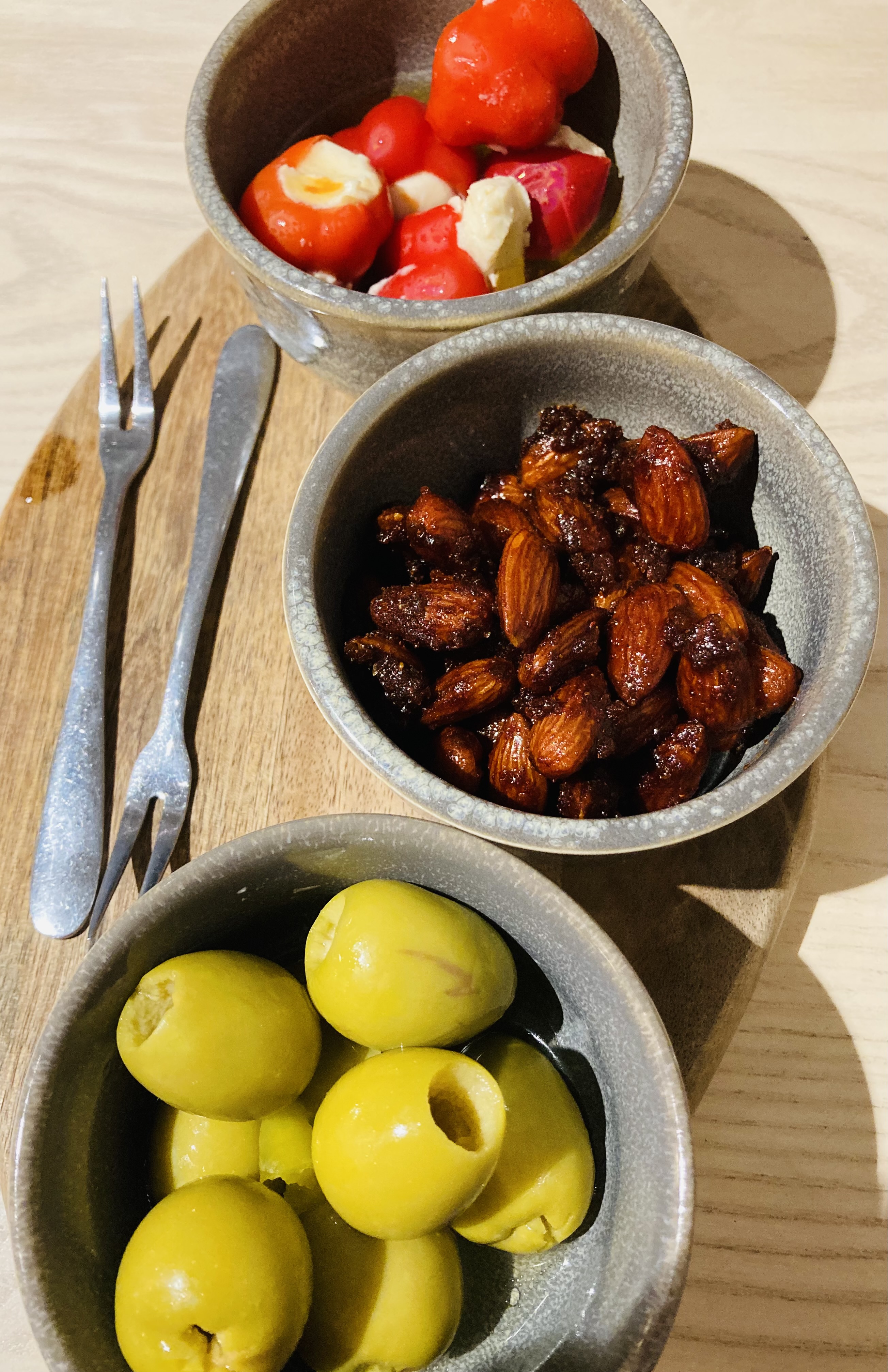
The concept here is shared plates so we order a starter of Gordal olives, sweet bell peppers and smoked almonds. Of course, there isn’t much preparation involved here but it’s a little triumph, the huge firm smoked olives making all other olives seem meh by comparison, the bell peppers sweet and stuffed with a creamy cheese filling and the almonds – though the first spicy/salty mouthful is disconcerting – quickly grow on me until they’ve become incredibly more-ish.

Next up we share a small plate of sesame Halloumi, which comes on a bed of Tabouleh, and is liberally decorated with blobs of yoghurt. There are two generously-sized chunks of cheese and, while this is a little bland, it’s more than made up for by the rich Moroccan flavours of the tabouleh and that tangy yoghurt.

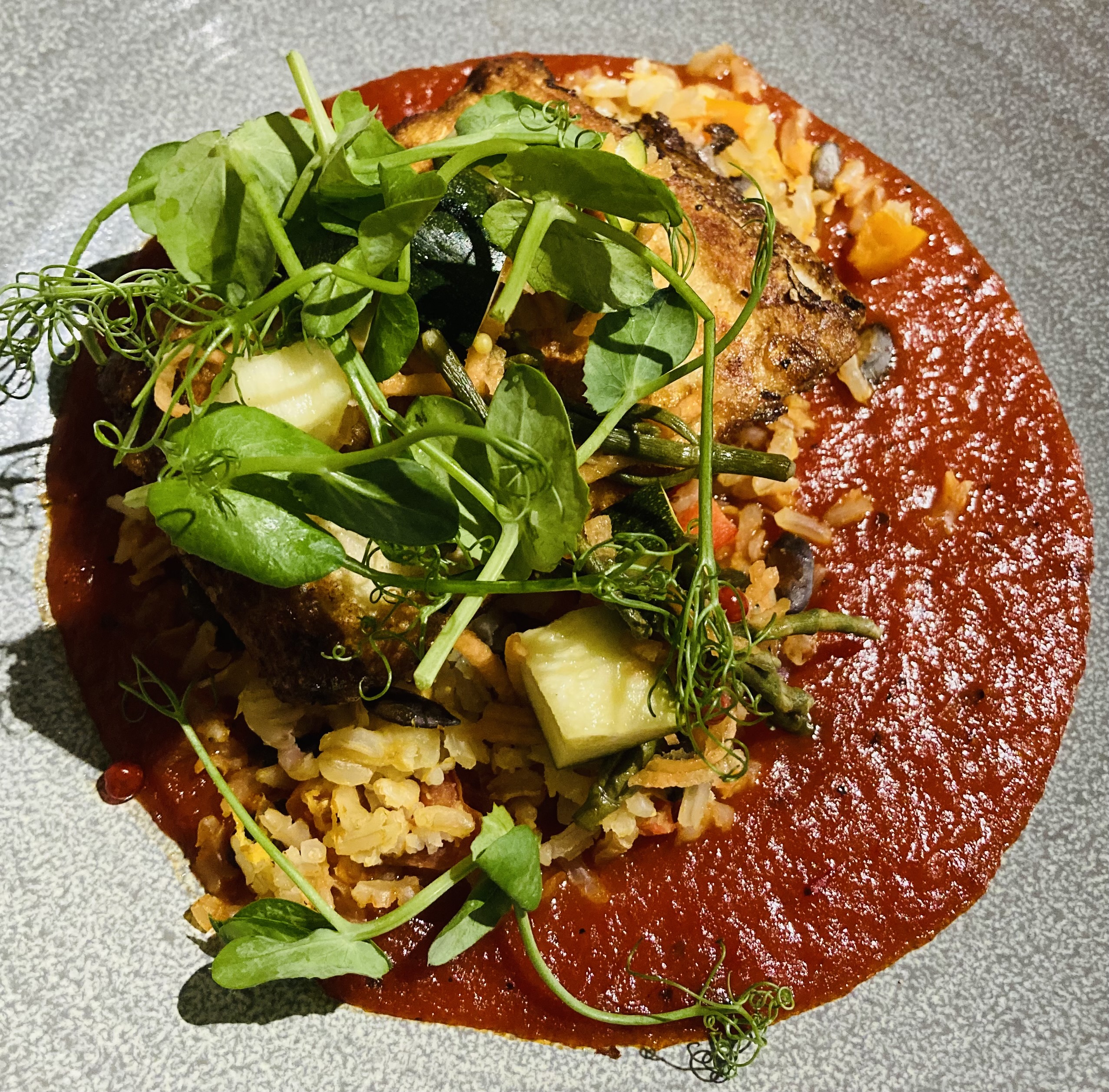
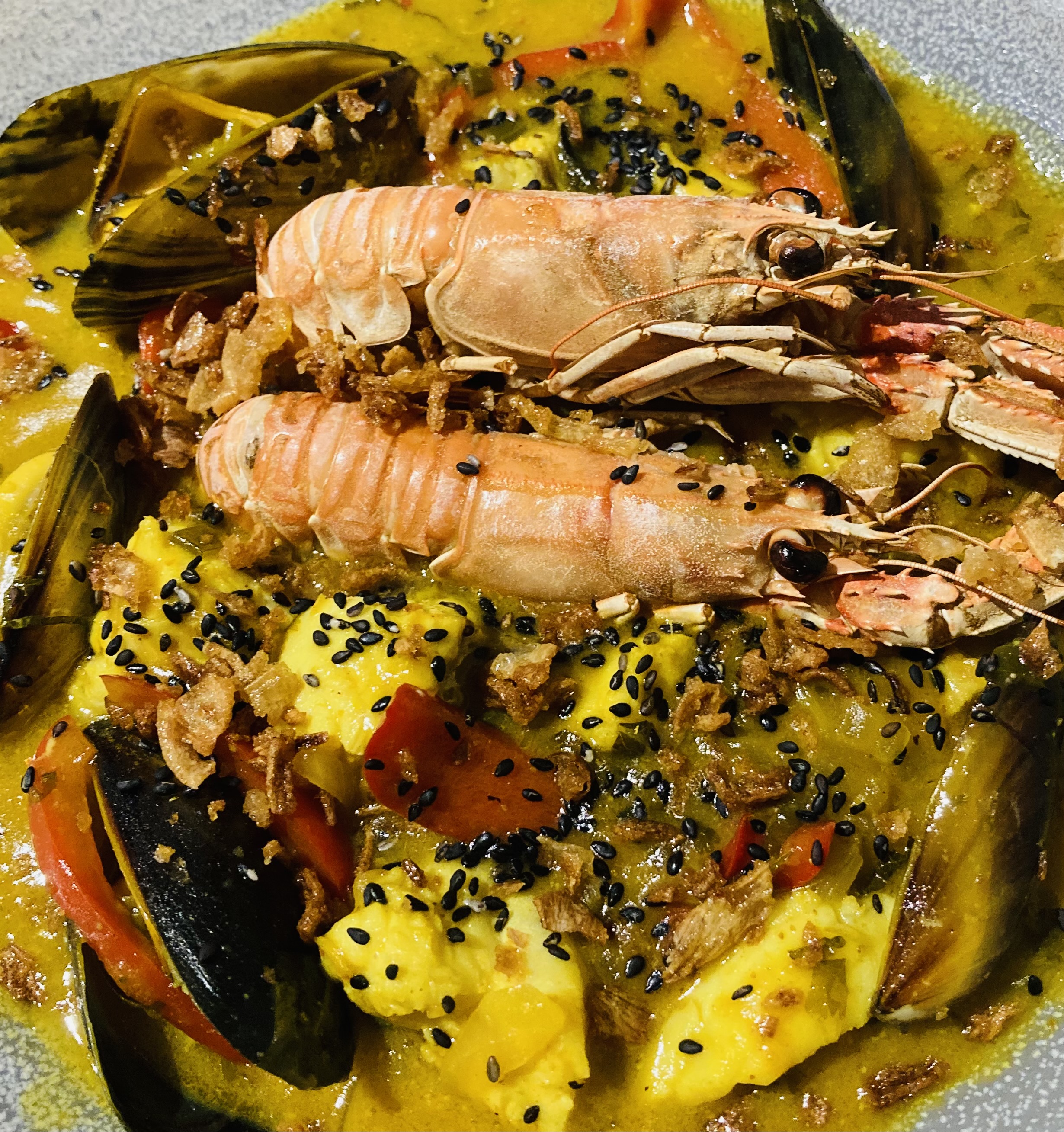
Two large, colourful plates follow. There’s a lovely pan-fried halibut which comes with brown rice, pickled veg and a deliciously sweet red pepper purée. The fish is perfectly cooked, a delightful flakiness under the crispy fried coating. There’s also a seafood stew, which features a couple of langoustines, some exemplary mussels, several beautifully cooked scallops, ling and monk – all ladled with a sublime lemongrass and coconut sauce. Everything on the plate is good save for the langoustines (and this is by no means the fault of The Dowry), which offer the usual dispiriting evisceration of heads, legs, carapace, only to leave an insubstantial scrap of flesh, which is gone in seconds. I’m beginning to feel the same way about lobster. It always looks so imposing on the plate yet hardly seems worth the effort. But I digress.

Overall, this is a thoroughly enjoyable dining experience: the food adventurous, the atmosphere buzzing and it’s excellent value for money. Unusually, we’re both too full to sample the puddings, though they sound worthy of further investigation another time.

So, if in Lerwick, do check out the Dowry. It’s worth your while.

4.2 stars

Philip Caveney

True Things

07/04/22

Cineworld, Edinburgh

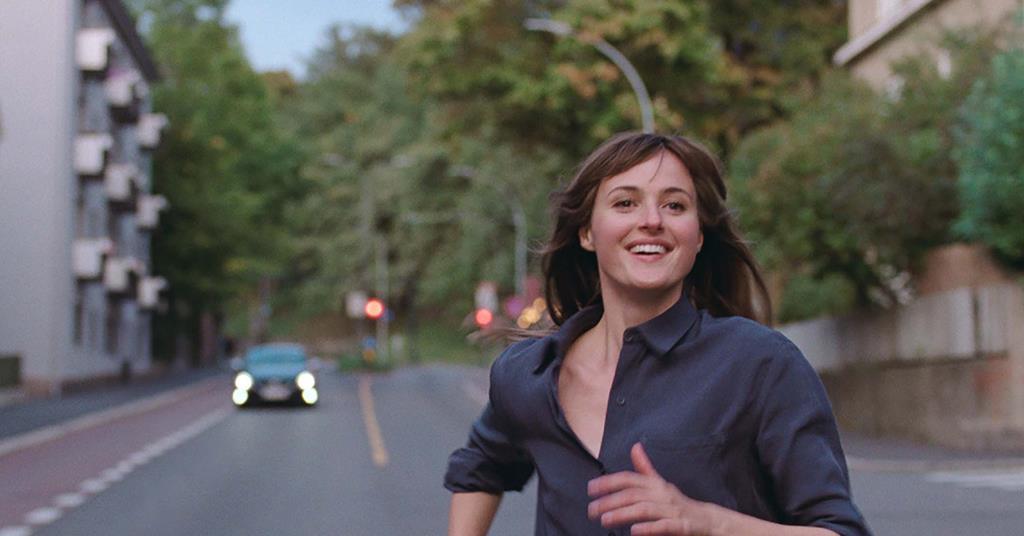
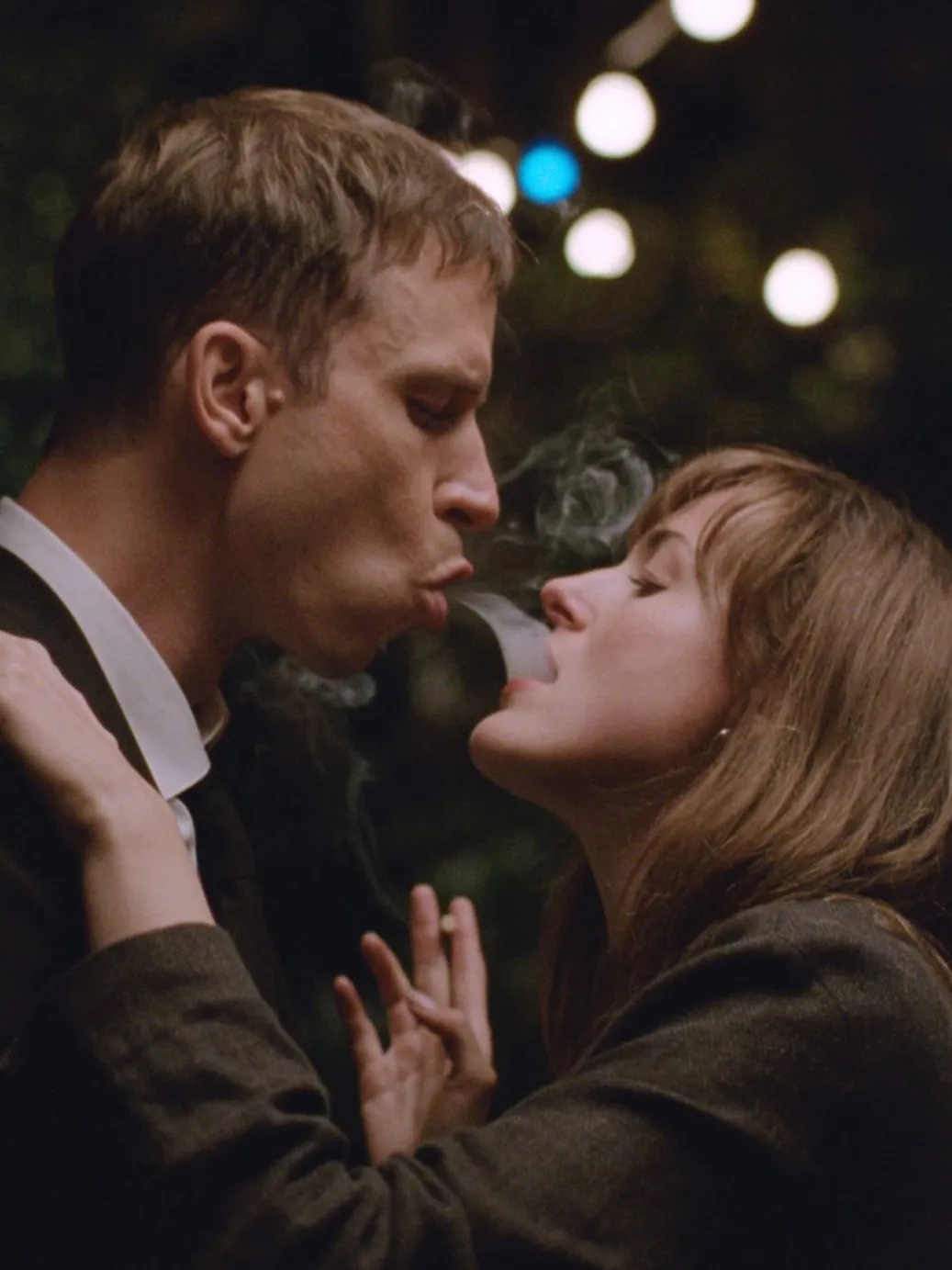
Kate (Ruth Wilson) has reached a difficult point on life’s highway. 

She’s somewhere in her thirties and struggling to hold down a thankless job at a benefits office in Ramsgate, where her customers seem to specialise in hurling abuse at her. She has no significant other in her life, no real interests and spends much of her free time gazing wistfully at exotic locations on her computer screen. Her work colleague, Alison (Hayley Squires), is trying to hook her up with one of her male friends, telling her that she needs to start playing the field if she doesn’t want to be a spinster all her life – while Kate’s mum (Elizabeth Rider) criticises her daughter’s ‘difficult nature,’ which – apparently – makes her come across badly to others. Kate’s dad (Frank McCusker) just seems obsessed with giving her home-grown vegetables from his allotment.

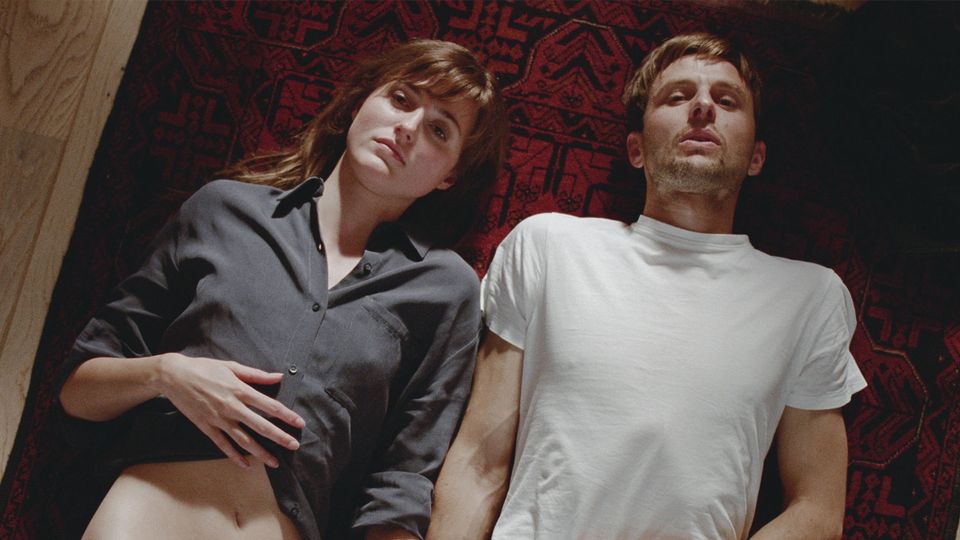
It’s clear that Kate is badly in need of new horizons – and things change dramatically when she conducts an interview with ‘Blond’ (Tom Burke), a handsome stranger, who freely admits to having done time in prison and cheekily wants to know if she’s free for lunch later on.

Against all better judgement, Kate accepts the invitation and shortly thereafter finds herself engaged in frantic sex in a high rise car park. To say that she’s smitten by Blond would be something of an understatement. She becomes instantly obsessed with him, unable to function properly when he’s not there, constantly waiting for a call or a text or… something. 

The trouble is, Blond is in complete control of this dangerous liaison and careful to give nothing away about his situation or his intentions. As viewers, we learn as little about him as Kate does. He’s an enigma and a pretty toxic one at that. It’s crystal clear that, if Kate cannot break the powerful hold he has on her, she is destined for heartbreak.

Harry Wootliff’s powerful little film is a veritable powder keg of longing, a symphony of doomed ambition. It’s as much a meditation on the theme of loneliness as it is an examination of the powerful pull of sexuality. Wilson is terrific here, offering yet another of her bruised outsiders struggling to survive the vagaries of life. She takes Kate through a maelstrom of subjugation until she finally seizes agency on a Spanish dance floor, thrashing ecstatically around to the sound of PJ Harvey’s Rid of Me. 

Burke, meanwhile, makes me understand exactly why Kate is in Blond’s thrall, even when he’s being obnoxiously vague about his intentions or heartlessly exploiting her utter devotion to him. He is powerfully charismatic. The film is essentially a two-hander, with an underused Squires doing the best she can with the thankless role of Alison.

It could be argued that True Things is relentlessly one-note, but if that’s the case, then it’s a note played with utter perfection by skilled artists. The characters here feel absolutely genuine and the slow-burn, languorous atmosphere is further intensified by Ashley Connor’s woozy cinematography, which often depicts events in an out of focus haze. A scene where Kate reels drunkenly around at a house party almost has me reaching for the alka seltzer. Furthermore, there’s a delicious duality to what’s depicted onscreen. I’m not always certain that scenes I’ve just watched have actually happened or are simply imaginings plucked from within Kate’s troubled head-space 

This could easily be annoying but, in the case of True Things, it gives the film added depth.

4 stars

Philip Caveney
The Da Vinci Code

05/04/22

King’s Theatre, Edinburgh

Ah, The Da Vinci Code. That preposterous juggernaut of a 2003 novel: badly written, controversially researched, ludicrously convoluted – and yet, somehow, as popular as can be, selling more than eighty million copies worldwide. 

Dan Brown’s tale leans on other people’s cleverness: his protagonist, Robert Langdon, is a Harvard professor, whose sidekick, Sophie Neveu, is a brainy cryptographer. Their enemies are equally learned, and the murder at the heart of this high-octane mystery takes place in the highbrow setting of the Louvre. Indeed, the whole plot is reliant on the duo’s impressive understanding of theology, symbology and Renaissance art. All of this, of course, is just smoke and mirrors, obscuring what is – essentially – a cryptic crossword given legs. Nevertheless, it’s undeniably engaging; there’s a reason the novel was a runaway hit. 

This stage adaptation (written by Rachel Wagstaff and Duncan Abel) doesn’t shy away from the schlocky nature of the source material. Instead, director Luke Sheppard uses more smoke and mirrors, this time in the form of impressive technical effects and slick production values. If touring shows can sometimes seem a little lazy, this is anything but, and Brown’s silly story is elevated by some damn fine theatrics. 

The plot is pared back, so that there’s less obfuscation and greater clarity. There are fewer chases (thank goodness). Nigel Harman imbues Langdon with a credible seriousness: it’s an unshowy, subtle piece of characterisation that serves the production well. In many ways, he’s the still centre of it all: bemused at finding himself involved, but quietly determined to sort things out. Hannah Rose Caton’s Sophie is somewhat livelier, as suits the role, but neither she nor Harman dominate the stage. That’s not what this is about, after all. 

The focus here is on the clues, on the elaborate treasure hunt that sees the pair wielding guns and crossing continents, challenging religious doctrines and theorising about everything from the Mona Lisa to the Holy Grail. David Woodhead’s bold set – all gauze panels and moments of revelation – is complemented by Andrzej Goulding’s stunning video design, with luscious projections filling every wall. It’s a dazzling spectacle (and, naturally, there’s an extra frisson for us as an Edinburgh audience, when the depiction is of nearby Rosslyn Chapel).  

I like the chorus too: the company sits, blank-faced and hooded at the side of the stage, rising occasionally in sporadic chants and rituals, all precisely choreographed by Tom Jackson Greaves. 

So – admittedly somewhat to my surprise – watching this production is a real pleasure. And not even a guilty one. 

4 stars

Susan Singfield

The Eyes of Tammy Faye

28/03/22

Disney +

The Eyes of Tammy Faye never made it to ‘a cinema near us,’ despite being relentlessly trailed. Still, as previously documented, we’ve signed up to Disney+ for a short spell, thanks to their dastardly decision not to release Turning Red anywhere else – and the presence of Tammy Faye on the platform makes us slightly less aggrieved about it.

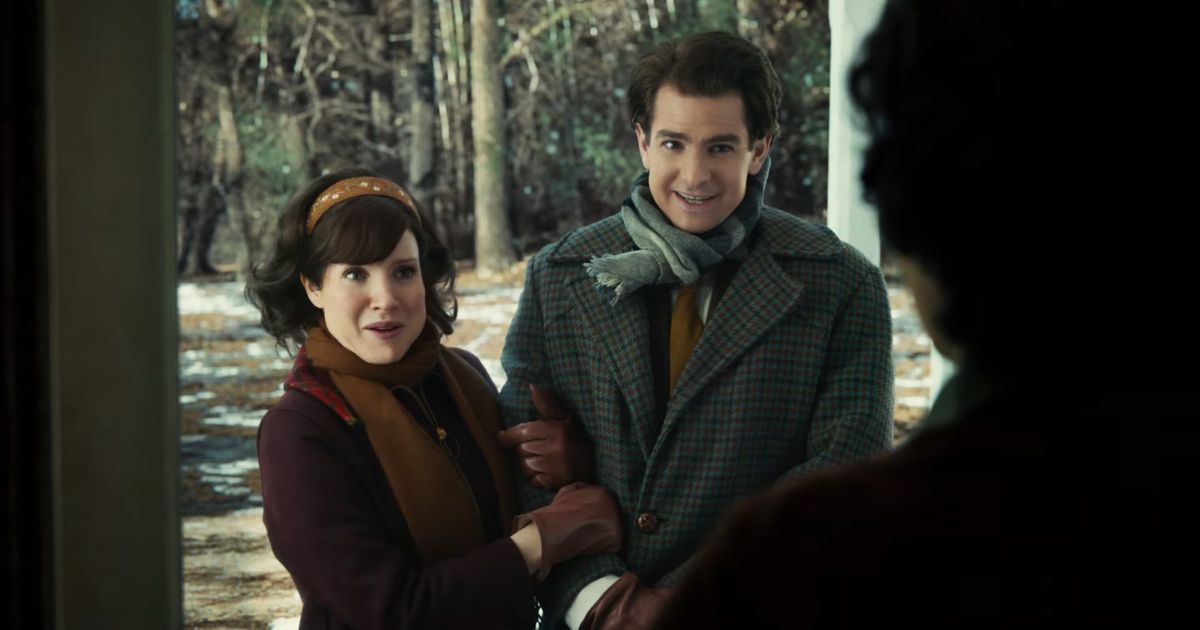
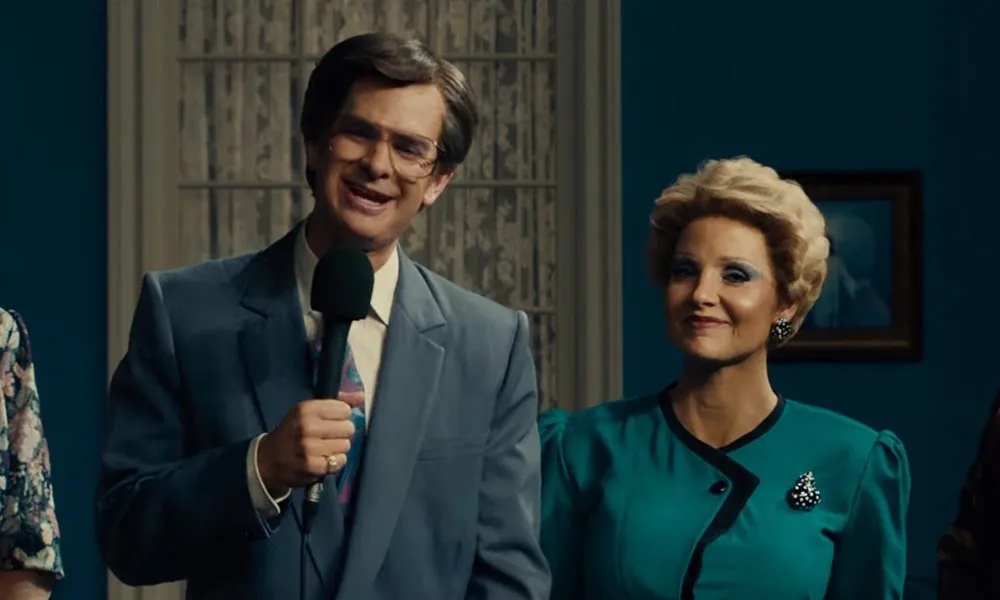
Michael Showalter’s film works just fine on the small screen; it’s about TV after all: an intimate biopic of one of the USA’s most infamous televangelists, based on a documentary by Fenton Bailey and Randy Barbato. After hosting a successful Christian puppet show for their local channel, Tammy Faye (Jessica Chastain) and her husband, Jim Bakker (Andrew Garfield), co-founded The PTL Club in 1974, and soon found they had a TV hit on their hands. By 1978, they were ready to embark on a new money-making project: a Christian theme park called Heritage USA, all funded by their fans/parishioners – or ‘partners’ as they referred to them.

The couple’s finances burgeoned along with their popularity, and they were soon splashing the cash, luxuriating in fur coats and art-filled mansions. Tammy gained notoriety for her outspoken support for the LGBT community, and particularly HIV/AIDS sufferers. Other high-profile evangelists disapproved of her convictions, but Tammy’s public preaching of love and acceptance made a real difference to the popular discourse. Jim, on the other hand, was causing controversy in other ways, and – in 1989 – found himself convicted on several counts of fraud and conspiracy, and was imprisoned for his crimes.

If Tammy is a woman of contradictions (and she is), then so is the film. There are some glorious sequences (the final rendition of Hallelujah, for example, and Tammy’s disarming approach to a group of teenage hoodlums poking fun at her). But there are also glaring omissions. The couple’s early path to local TV is never shown, and Richard’s extra-marital dalliances and abuses – both hetero and homosexual – are only tangentially referred to. Of course, we are seeing things through Tammy’s eyes, as the title makes clear, but her ignorance means that we miss some of the most compelling aspects of the tale.

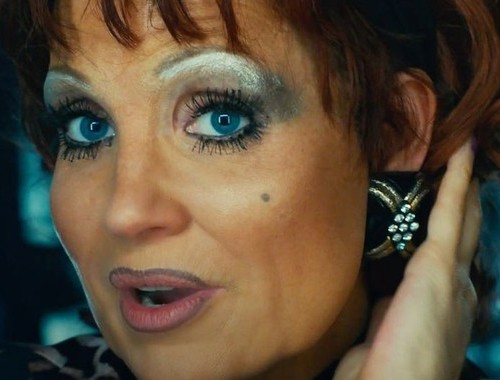
Make no mistake, Chastain is exceptional in the titular role: this is a truly stellar performance. Her Tammy is a wonderfully appealing woman, a heady mix of strength and vulnerability, naïvety and nouse. Even when she’s ridiculous – with her tattooed make-up and desperate smile – she’s somehow dignified and commands respect. Chastain pulled the Oscar for this last night, and it’s not hard to see why.

Still, a perfect performance doesn’t always equate to a perfect film, and this one sadly falls short.

3.7 stars

Susan Singfield

Ondine

27/03/22

Teviot Underground, Edinburgh

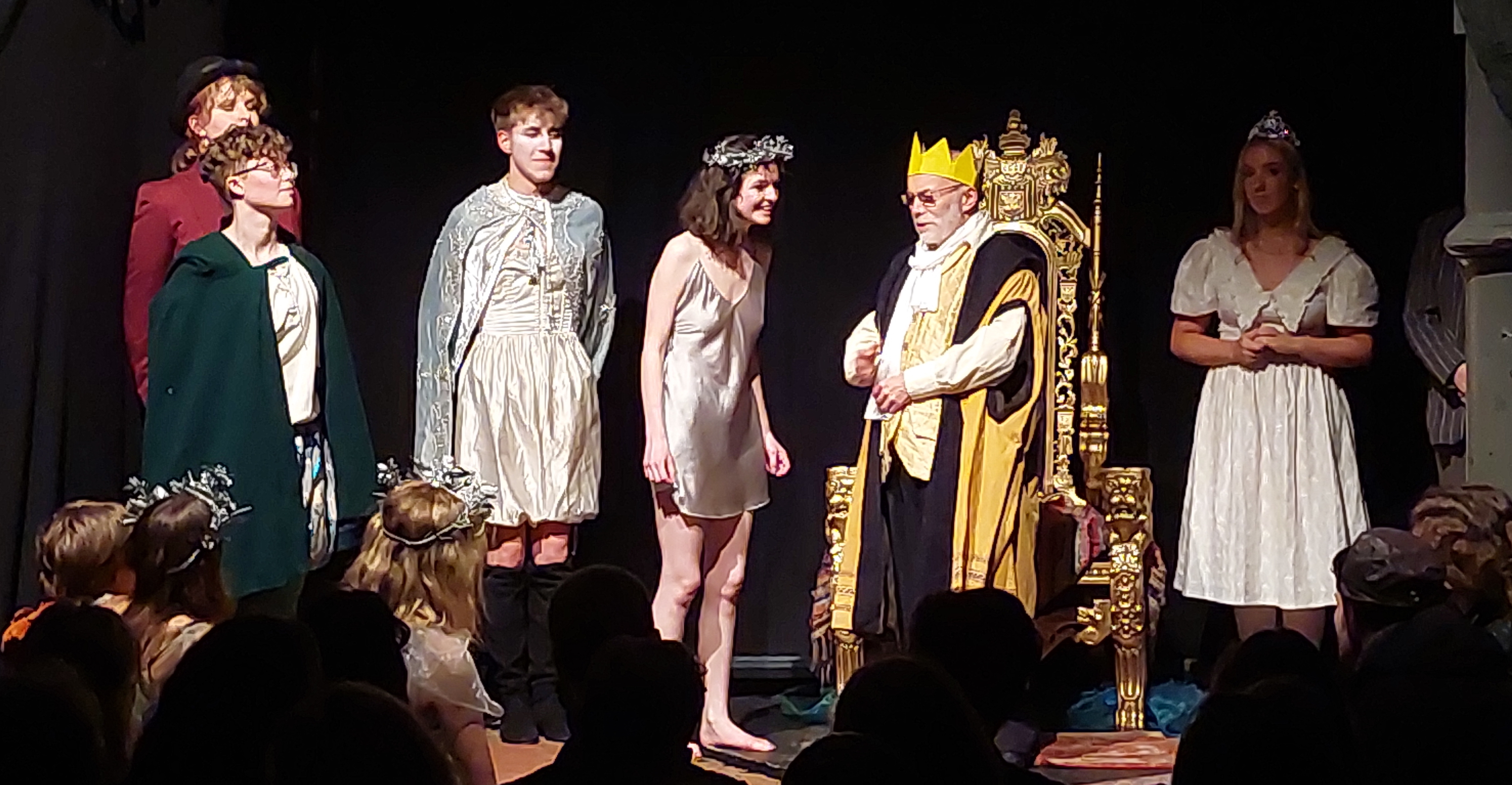
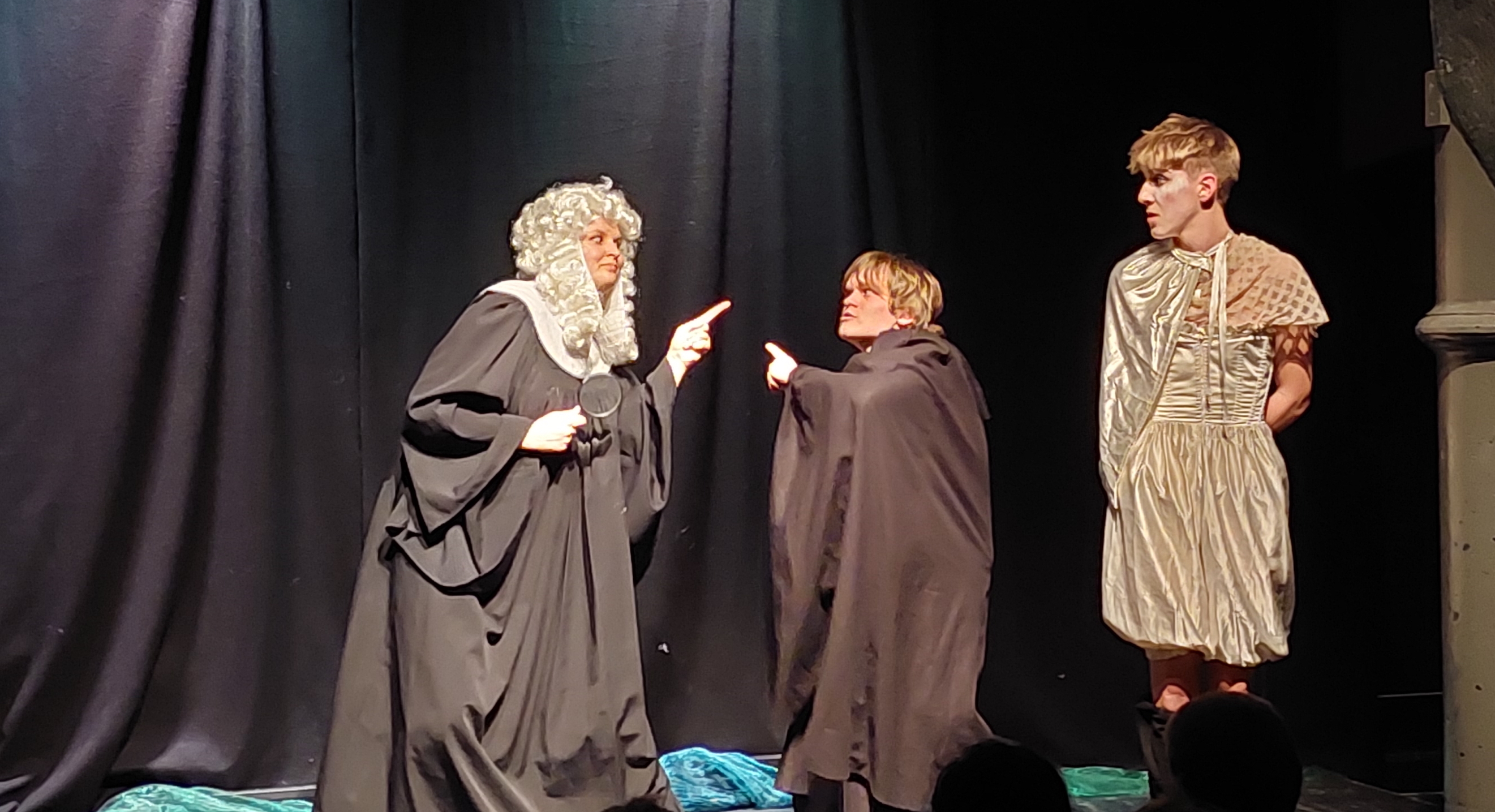
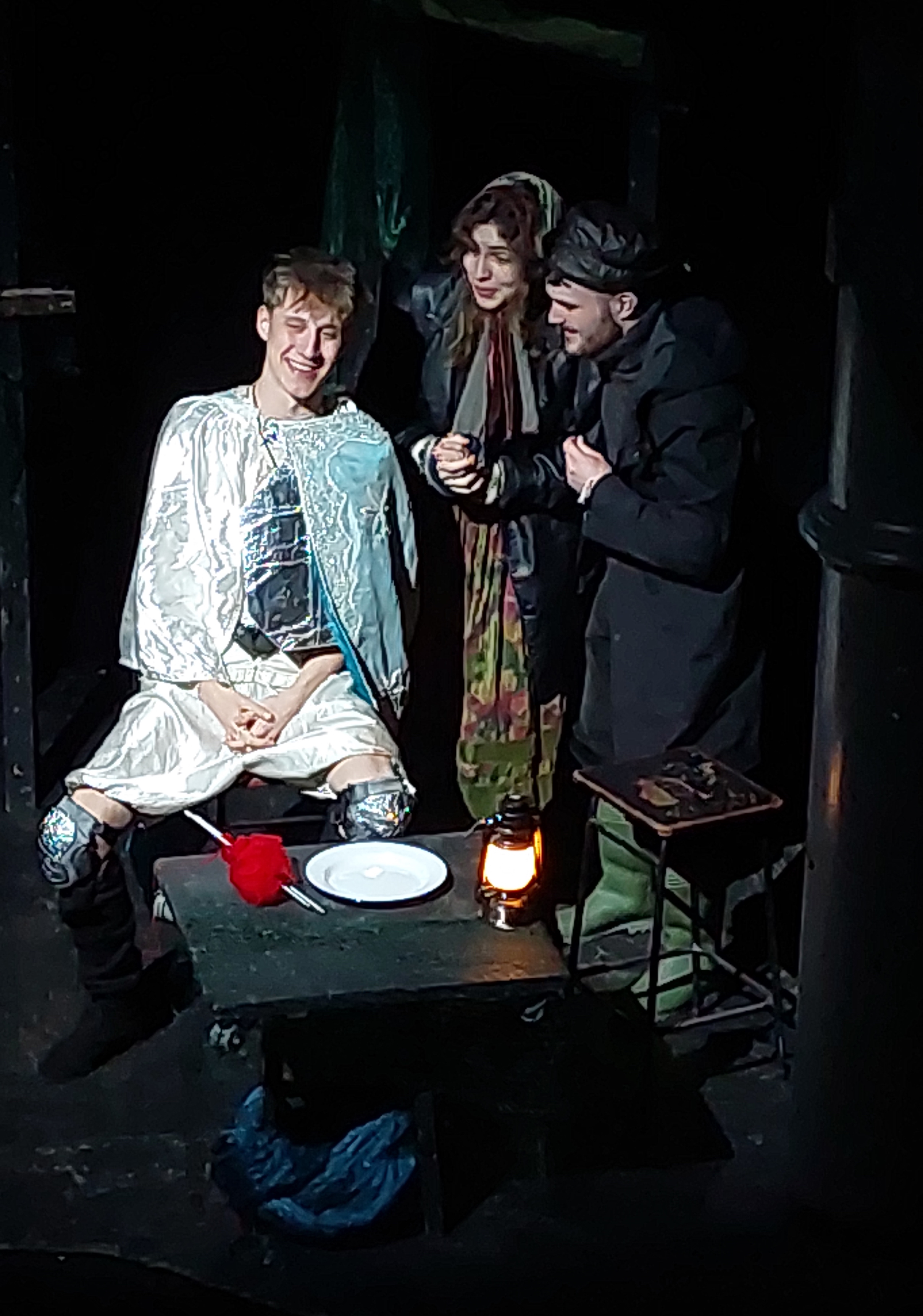
We’re at another student production, down in the Teviot Underground, where we’ve seen many excellent Fringe shows over the years. It’s here that Theatre Paradok have taken on Ondine, a fascinating play by Jean Giradaux, first performed in 1938 (and which, in the 1960s, famously featured Audrey Hepburn in the title role).

All the usual problems are in evidence tonight: a tiny, oddly-shaped stage; a selection of cobbled-together costumes and ramshackle props. There’s also a background buzz of voices coming from the bar next door, and yet the sizeable cast overcome these problems with admirable skill and determination. 

In a remote cottage, Fisherman Auguste (Huw Turnbull) and his wife Eugenie (Sophie Craig) await the return of their ‘daughter,’ Ondine (Clare Robinson). They are fully aware that she’s not their real child, but a changeling, substituted for their infant years ago, and now running wild in the midst of a storm. Ondine is a nature spirit who, though supposedly fifteen years old, has actually been around for centuries and is immortal.

Into this weird scenario wanders Hans (Kristjan Gudjonsson) a knight-errant, currently in love with and betrothed to Princess Bertha (Alice Humphries). He’s ridden into the country to contemplate his upcoming nuptials, but one look at Ondine and he is entranced. She too seems impetuously keen to be his bride.

But by the play’s second act, it’s already clear that the new union is beset by insurmountable problems, not least the fact that, in order to become Hans’s bride, Ondine has been forced to make a draconian pact with The Old One…

To suggest that Ondine is a weird play would be something of an understatement. It occasionally borders on the deranged. But its themes seem powerfully prescient today – the frailty of mankind, the ways in which we have lost touch with the healing powers of nature – and are right there in the story’s subtext. There are some terrific performances here, particularly from Robinson, who manages to keep the feverish intensity of the central character blazing throughout and whose inability to tell lies is the cause of much humour. Gudjonsson is also terrific, imbuing Hans with a sardonic wit and a sense of fatalism, which make his final scenes genuinely poignant. I also enjoy Adam Wu’s double role of The Old One and The Illusionist, managing to slip effortlessly from silent threat to cheerful swagger, while Angus Morrison and Trudy Kalvynaite offer a cheerfully knockabout double act as the two pompous magistrates called in to judge Ondine’s ‘infidelity.’

Director Philomène Cheynet has worked wonders with the uncompromising performance space, making me forgive its shortcomings and allowing me to focus on the strength of the performances. 

Ondine continues until the 30th March, and those looking for something quirky and absolutely unique should definitely seek it out.

4 stars

Philip Caveney
The Worst Person in the World

26/03/22

Cineworld, Edinburgh

I have to confess to an almost total ignorance of Norwegian cinema before the good word-of-mouth for Joachim Trier’s latest film prompts me to give it a try.

The Worst Person in the World is a rare beauty, a picaresque tale of life and love in contemporary Oslo, built around a superb, award-winning performance by Renate Reinsve. She’s Julie, who, when we first encounter her, is a medical student, bored by the reality of slicing up bodies and fast coming to the conclusion that’s she’s chosen the wrong subject.

Shortly thereafter, she breaks up with her boyfriend, decides to study psychology instead, and then jumps ship again in favour of a photography course.

Until she starts dabbling with writing…

Fast approaching her thirtieth birthday, Julie realises that, despite all her best endeavours, she still doesn’t have a game plan for the future and, when she meets acclaimed comic artist, Aksel (Anders Danielsen Lie), the two of them hit it off immediately. Soon they’re sharing an apartment. But Aksel is older than her and already talking about the possibility of starting a family. Julie appreciates she’s supposed to want that too, but is painfully aware that she still hasn’t found her own path.

And then one night, she skips out of a dull launch for Aksel’s latest book and recklessly crashes a stranger’s wedding party, where she has a chance encounter with Eivind (Herbert Nordrum), an easygoing barista. The two of them share their darkest secrets and Julie begins to realise, to her dismay, that she is falling for him…

If this all sounds like something you’ve seen a thousand times before, don’t be misled. TWPITW, co- written by Trier with Eskil Vogt, is a multi-faceted creation. Broken down into a kind of visual novel, it’s related in twelve ‘chapters,’ along with a prologue and an epilogue. The film positively buzzes with invention – from the magical scene where Julie runs through an Oslo where every other character is frozen into immobility to a weird magic mushroom experience at a house party – and on to a conclusion that is both heart-breaking yet, somehow, life-affirming. It’s all brilliantly paced and thoroughly entertaining. An eclectic soundtrack featuring a whole variety of performers only adds to the ‘whatever next?’ atmosphere.

I love the fact that Julie is an unreliable character, struggling to find her way in the world. Is she the ‘Worst Person’ of the title? Well, it’s actually Aksel who uses the phrase, but he’s referring to himself when he says it. But really he’s just a little out of touch in a world where all his long-held views are increasingly perceived as controversial. And Julie isn’t terrible either; she just wants to find her own identity and won’t settle for anything less.

This feels uncannily like real life, with all its messy complications, many of which can never be resolved, only put down to the twisted trials of human experience.

It’s hard to remember a film that has nailed the convoluted path to maturity with such absolute conviction. If you’re tired of the conventional (and happy to read subtitles), The Worst Person in the World may be just the cinematic experience you’ve been waiting for. However you feel about this film, I’m pretty confident you won’t be bored by it.

4.7 stars

Philip Caveney
Turning Red

24/03/22

Disney +

The House of Mouse’s decision to release all new Pixar films directly to their in-house streaming service seems incredibly short-sighted – and not just because this is a time when cinemas are really struggling to tempt viewers back into seats. Mostly, it’s because the gorgeous animation that exemplifies Pixar is made to be shown on the biggest screens available. However, Disney seem not for turning, so it’s time to renew that monthly subscription.

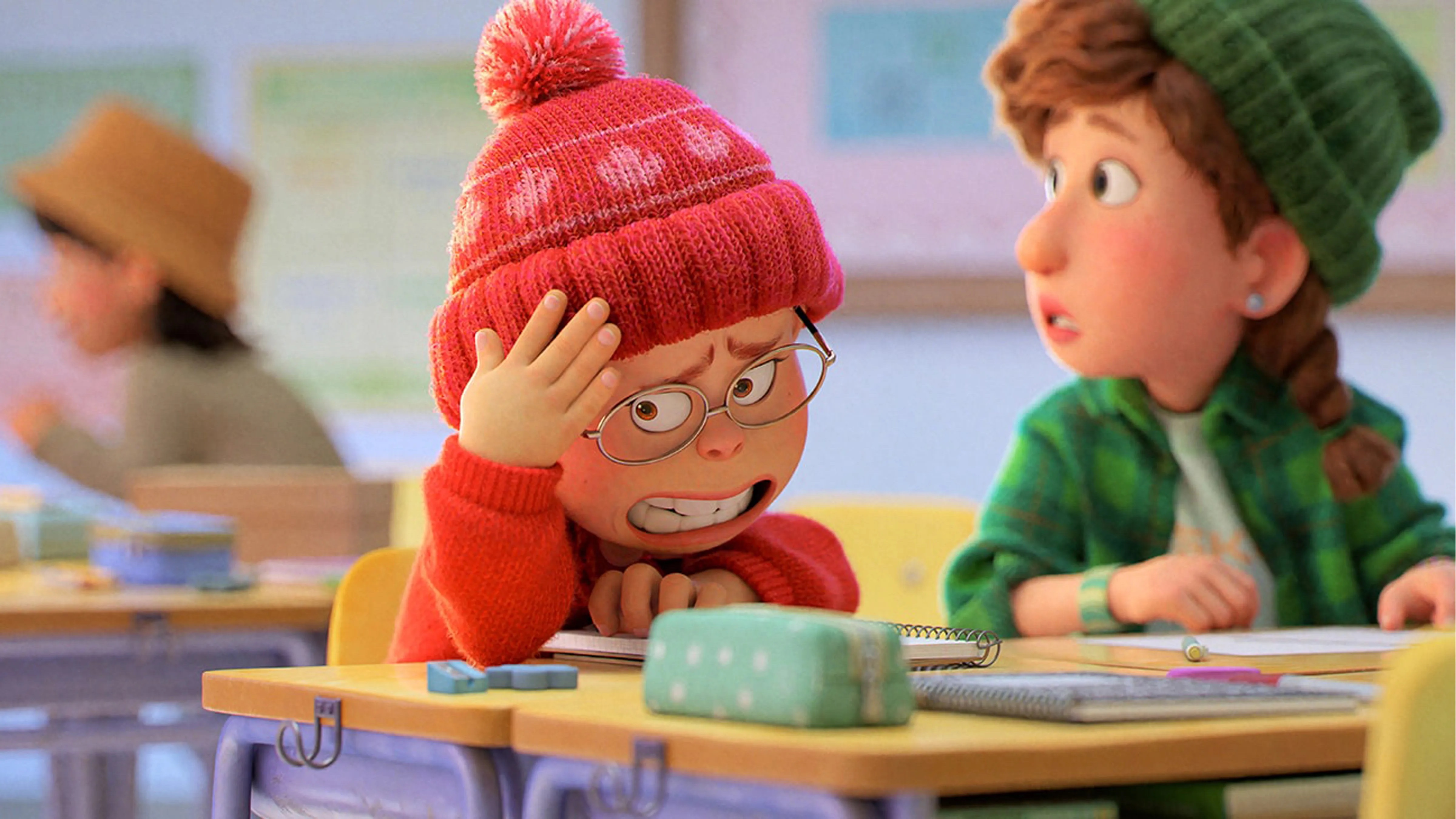
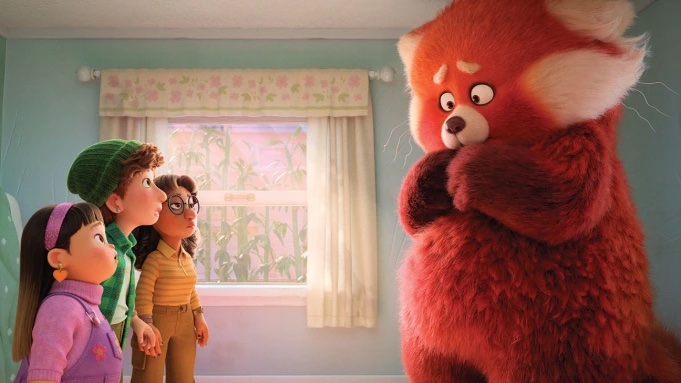
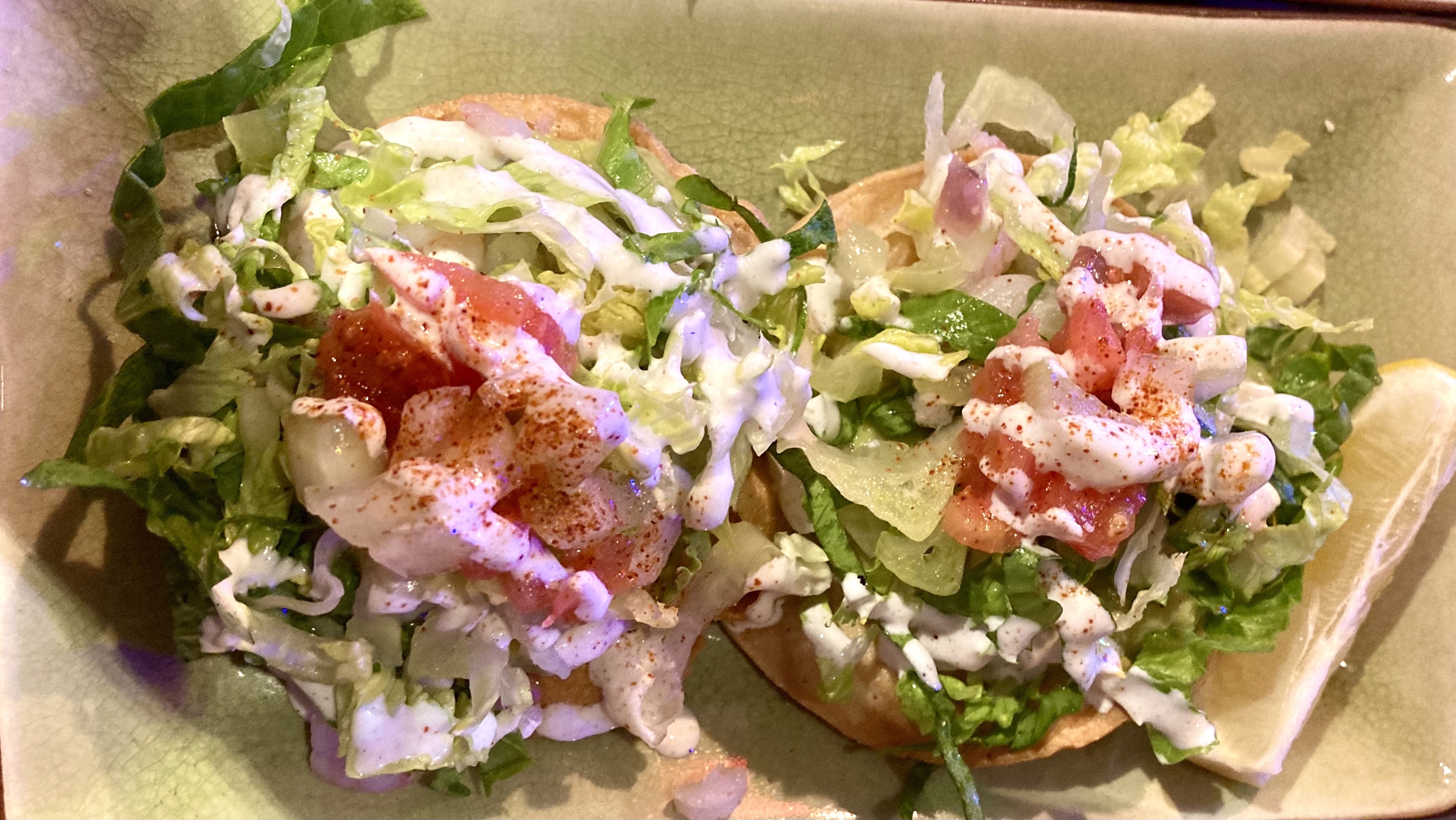
Turning Red is set in Toronto in 2002 . Meilin (Rosalie Chiang) is thirteen years old, a good girl who excels as a scholar and spends most of her spare time helping her domineering Mother, Ming (Sandra Oh), to run the family temple, a place dedicated to their illustrious ancestor, Sun Yee. Meanwhile, Meilin’s father, Jin (Orion Lee), cooks up some amazing food. In scenes that could have come straight from a Studio Ghibli feature, his dishes are enough to make this reviewer’s mouth water.

With her three bosom buddies, Miriam (Ava Morse), Priya (Maitreyi Remakrishnan) and Abby (Hyein Park), Meilin is a fan of the hot new boy band, 4*Town. She also discovers, to her dismay, that she’s developing a crush on handsome local store clerk, Tyler (Tristran Allerick Chen), who she has always professed to hate. She is hurtling headlong towards puberty and the resulting rush of hormones has an unfortunate effect on Meilin. She finds herself suddenly transforming into a giant red panda at the most inopportune moments (although I’m not sure when would be a good time). This is the result of an ancient transformation that every young woman of her family must undergo.

It can be cured, Ming assures her daughter, but not until a month has passed. Awkward.

And then news reaches Meilin that 4*Town are going to be performing at a huge concert in Toronto and she and her friends know that, whatever else comes or goes, they will have to be there in order to ‘become women.’ So how are they ever going to raise the hefty price of admission?

From the outset it’s clear that Pixar, already the most innovative of animation studios, is setting out to walk a path where no other cartoon makers have dared to venture. The Red Panda is clearly a metaphor, standing in for the turmoil and confusion of adolescence – the film even manages to cover the subject of menstruation without raising so much as an eyebrow. All credit to director Domee Shi, who has clearly used her own youth in Canada as inspiration for the story, co-writing the screenplay with Julia Cho and Sarah Streicher. Hats off also to songwriters Billie Eilish and Finneas, who manage to capture the vapid tosh that is 4*Town’s music with ease.

This is a gorgeous film, all about the power of womanhood and the healing properties of friendship. The fact that it’s wrapped up in a pretty parcel of jaw-dropping animation doesn’t dilute its message one jot – and the climactic showdown at the 4*Town arena concert – where events begin to feel a little like Pandazilla – brings everything to a suitably powerful conclusion.

Even on our modest screen at home this looks dazzling, so how it would have looked on IMAX can only be wistfully imagined.

4.4 stars

Philip Caveney
Topolabamba

23/03/22

Lothian Road, Edinburgh

We’ve had a fun day. Philip’s been visiting schools in North Lanarkshire as part of the Read to Succeed author tour, and, as I’m not working today, I’ve been acting as his chauffeur. We’ve been blessed with glorious sunshine, and have managed to squeeze a lunchtime walk around Drumpellier Park into our itinerary, as well as a quick visit to sculptor Andy Scott’s fabulous Kelpies, that loom over the motorway on our way home. So we’re feeling great, and want the good vibes to continue. Why not pop out for dinner?

Mexican restaurant Topolabamba is a two minute walk from our flat, but – thanks to its location, right by Byron, Wildwood, Nando’s, etc. – we’ve always assumed it’s part of a mega-chain, and so dismissed it as “not for us.” But a chance remark on someone else’s Facebook post makes me realise this is not the case. Topolabamba only has two branches (the other is in Glasgow), and, what’s more, the menu looks exciting. We’re sold.

Inside, the restaurant is a cacophony of colour: it’s a lively place, full of quirky wall-art and vivid lighting. The service is friendly and efficient, relaxed and unfussy. So far, so good.

We spend a long time choosing our dishes. There are ‘mains’ (called ‘The Big Boys’) but the majority of dishes come under the headings ‘Street Food’ and ‘Classics,’ and there’s a note on the menu recommending an order size of three to four dishes per person. We take this as gospel, and do as suggested, which leads me to my only real complaint: it’s too much food. It barely fits on the table. And if it’s too much food for me and Philip, then I’ll wager it’s too much food for most people (we both have hearty appetites).

Thankfully, it’s all delicious.

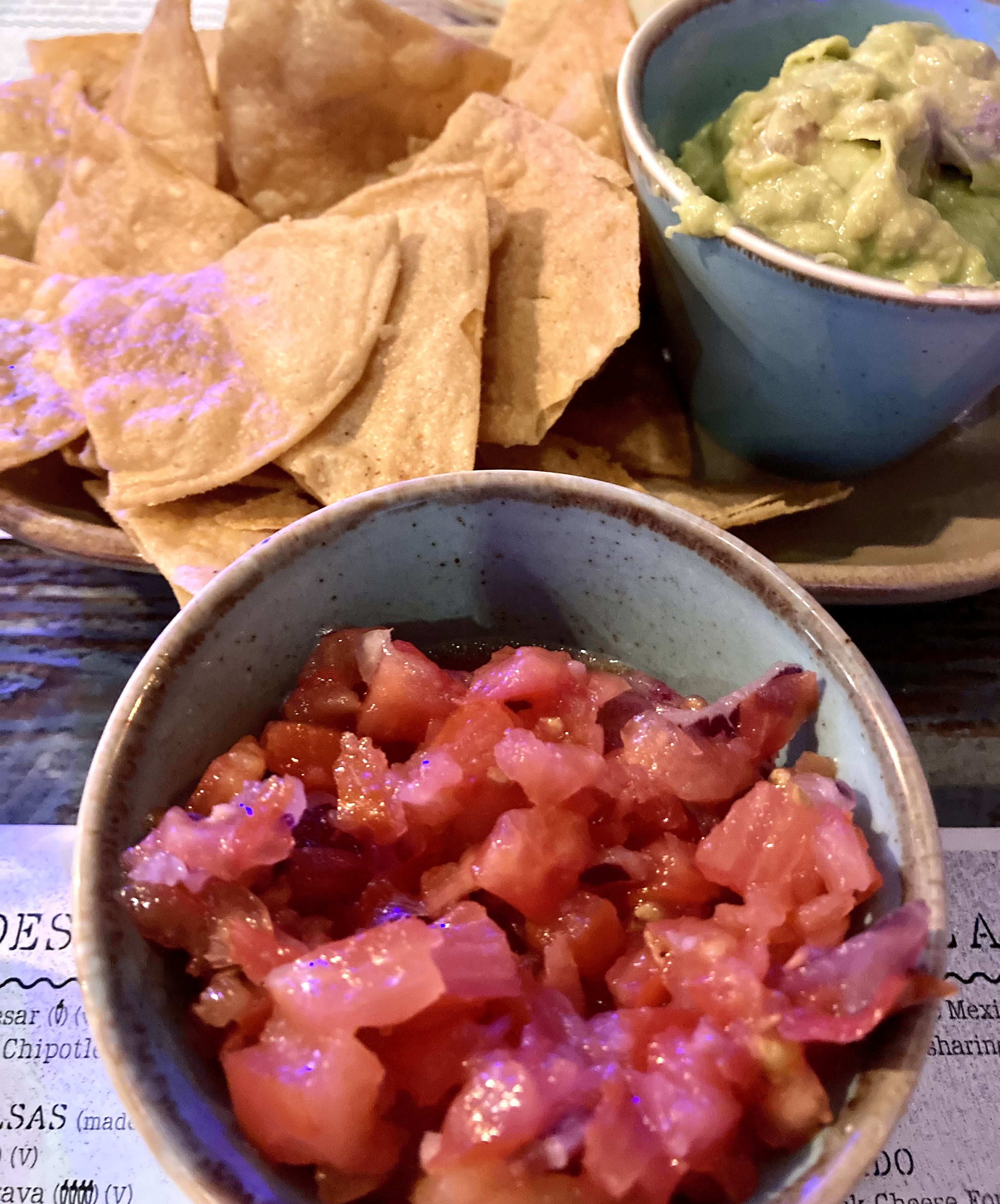
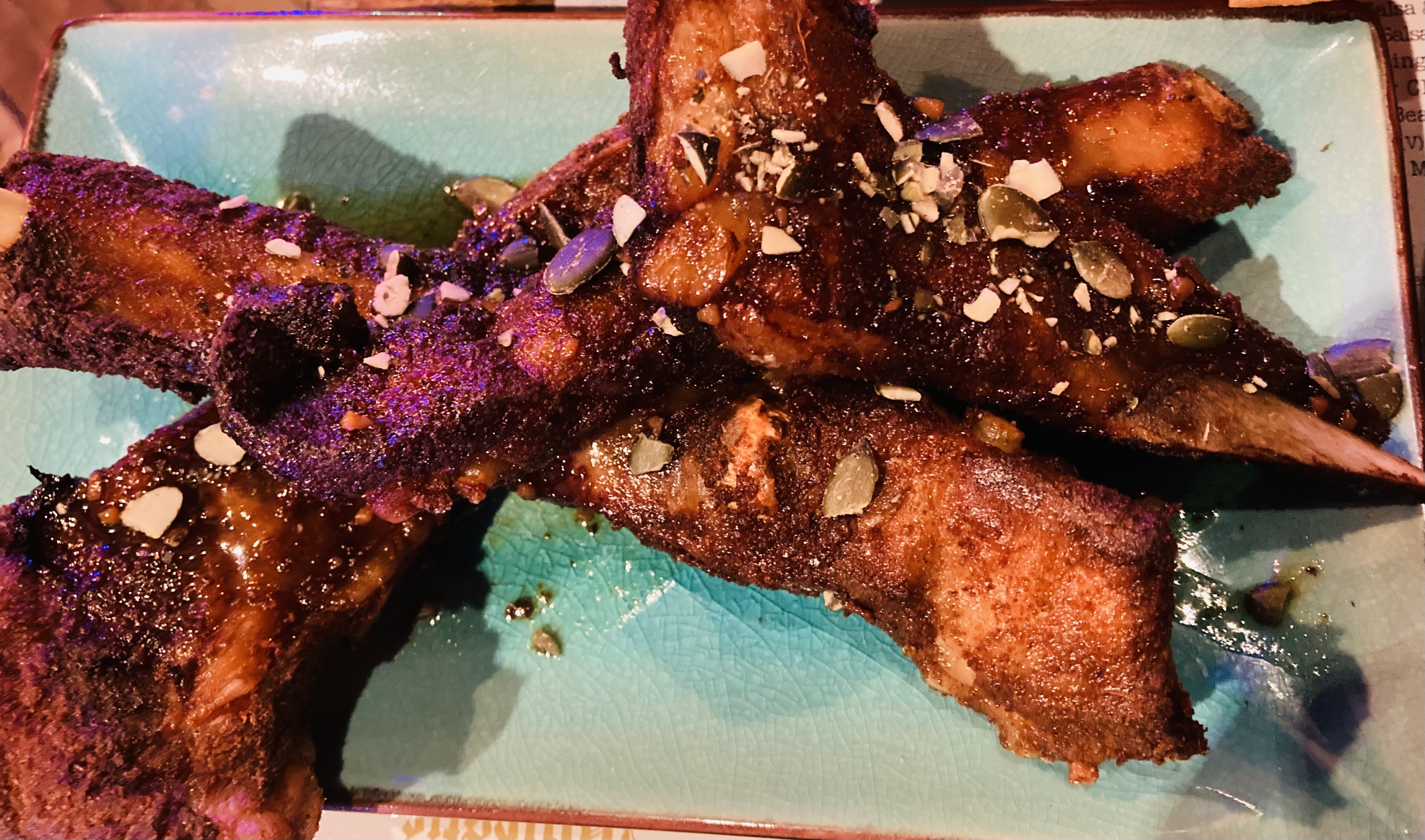
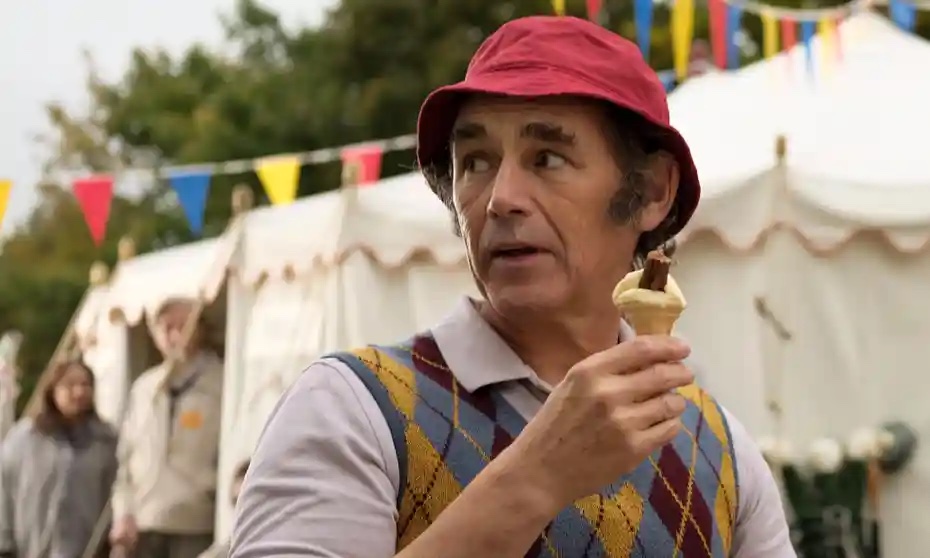
We share a range of dishes as eclectic as the decor: guacamole with tortilla chips and salsa; two lots of tostadas (prawn, cucumber salsa & guacamole and crab ceviche); quesadillas with smoked chicken & Oaxacan onions; classic queso fundido (basically a cheese fondue); Baja surf chowder, and some chipotle honey ribs. They’re all delicious and absolutely bursting with flavour. The standouts include the chowder, which is packed full of fish; it’s rich and intense and very more-ish. The smoky quesadillas are the very definition of comfort food, and the prawn tostadas are fresh and zingy with lime.

We’re pleasantly surprised by the bill. All of that mouth-watering fodder, as well as a large glass of house white and a pint of El Borracho, comes to a grand total of £65.39 – and that includes service!

We leave, smiling. How lucky we are to have such a fabulous eaterie on our doorstep. We’ll definitely be back. Next time, however, we’ll order as we go along – making sure there’s enough space on the table as well as in our bellies.

4.3 stars

Susan SIngfield

The Phantom of the Open

20/03/22

Cineworld, Edinburgh

Good golf movies are few and far between. Tin Cup, maybe. Happy Gilmore?

After being trumpeted for what seems like forever, The Phantom of the Open has finally er… opened and, after having seen the needlessly detailed trailer for what feels like a thousand viewings, it’s hard for the actual film to generate any real surprises. Which is a pity, though hardly the fault of writer Simon Farnaby or director Craig Roberts.

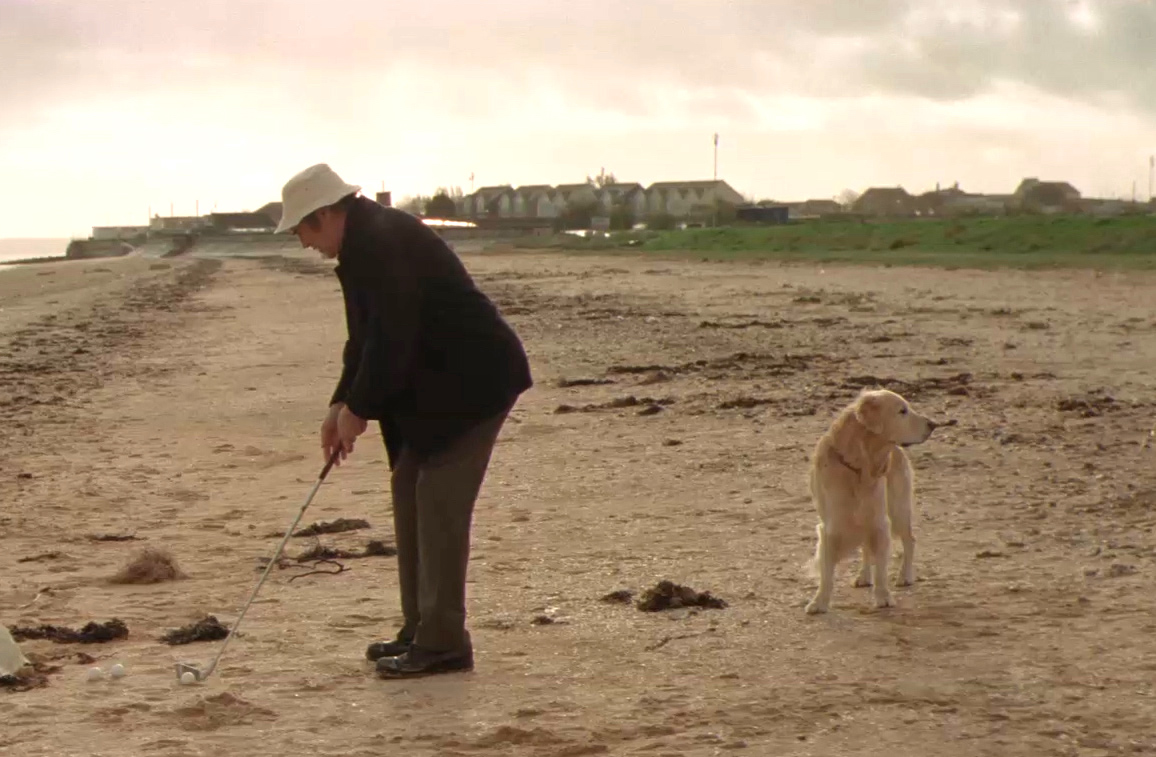
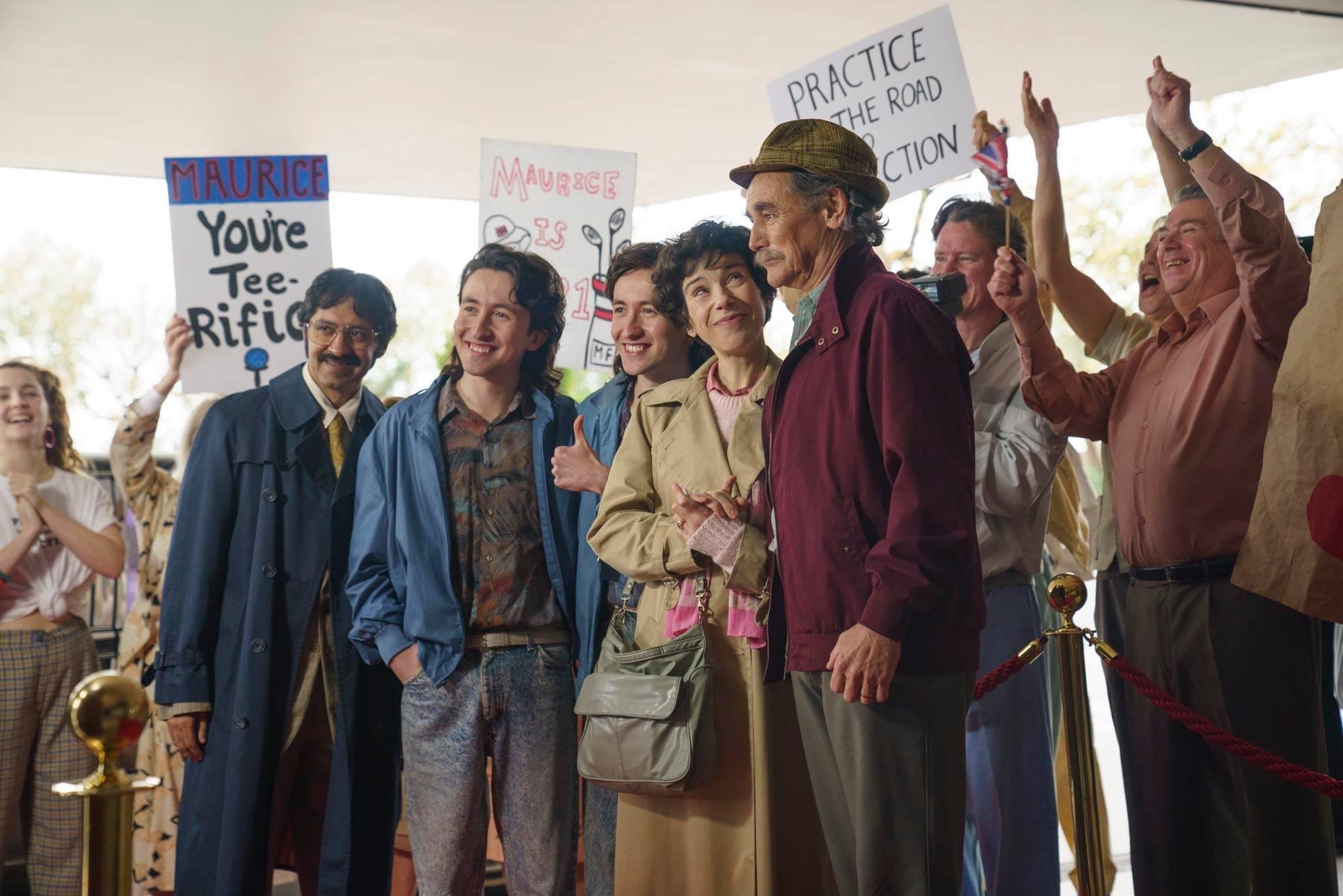
This is the true story of Maurice Flitcroft, a sixty-five-year-old crane operator, who, despite having no experience of – or indeed aptitude for – the game of golf, decides to enter the British Open Golf Championship. He initially appears as himself but, later, when he becomes persona non grata, under a series of increasingly unlikely nom de plumes. He’s also the father of twins, who briefly became the disco dancing champions of the world. (Seriously, you couldn’t make this stuff up.) It’s an immensely likeable story and, as played by Mark Rylance, Flitcroft is an immensely likeable chap: shy and unassuming, but with the dogged determination to keep going, no matter what.

‘Practice makes perfect,’ he’s fond of saying. A lot.

His lofty ambitions are aided by his ever-supportive wife, Jean (Sally Hawkins), but vigorously opposed by his nemesis, Keith McKenzie (Rhys Ifans), a sneering official who sees golf as the realm of the well-to-do, not for some working-class oik with ideas above his station.

But of course, the fickle public does have a habit of flocking to support an underdog. When Flitcroft’s lamentable debut earns him the worst score in the history of the Open, he’s spotted by Daily Mirror journalist Lloyd Donovan (Ash Tandon), who takes the opportunity to give him that titular nickname and to ensure that plenty of other golf fans hear all about him.

And that’s pretty much all we get in this warm-hearted romp – from Flitcroft’s disastrous attempts to gain skills in his adopted sport to the unexpected discovery that, in America, there’s a whole society of golfers who follow him with adoration. There’s an attempt to instil more dramatic meat into the story when Flitcroft’s desperate misadventures embarrass his upwardly-mobile stepson, Michael (Jake Davies), a wheeler and dealer at the shipyard where his father is employed. Can the two of them ever reconcile their differences? But this feels like a side-issue. The Phantom of the Open is mostly a good-natured attack on the old chuckle-muscles and in that respect, it comes up to par.

As an aside though, I do wish cinema trailers would resist giving away so much of an upcoming film. This might have fared better in my affections if I hadn’t felt as though I could act as a prompt for most of the actors’ lines. Just saying.

3.8 stars

Philip Caveney
Human Nurture

19/03/22

Traverse Theatre, Edinburgh

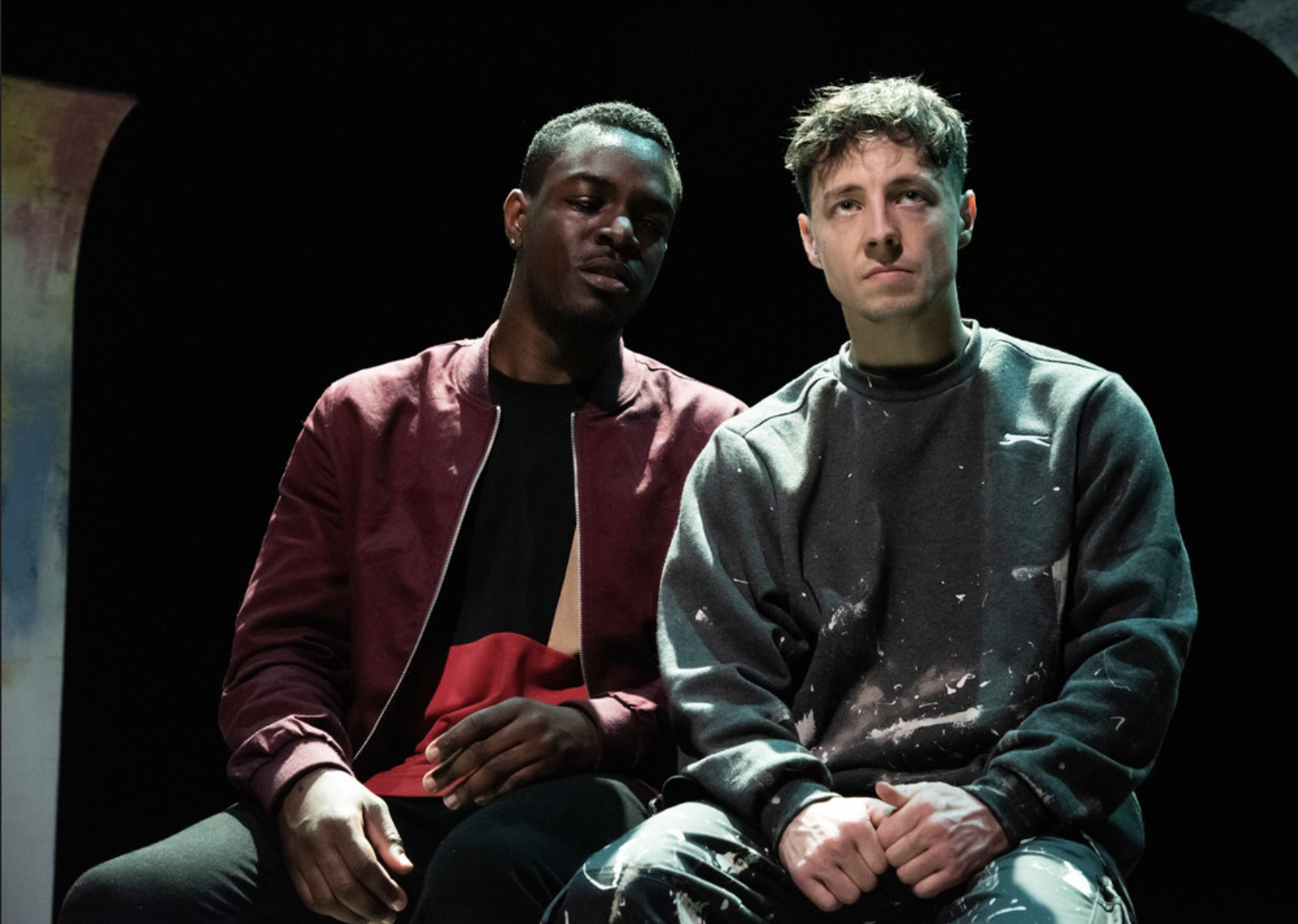
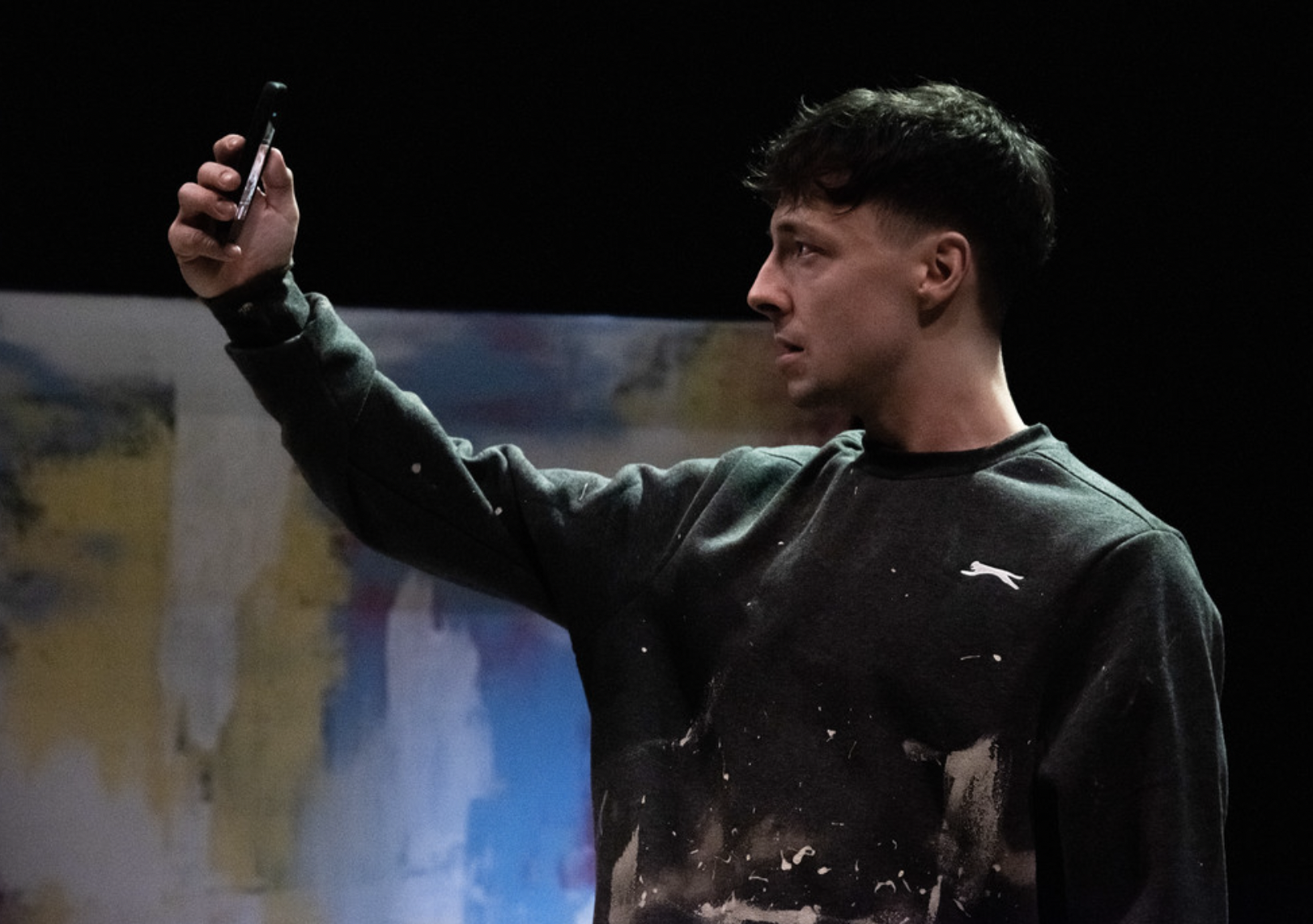
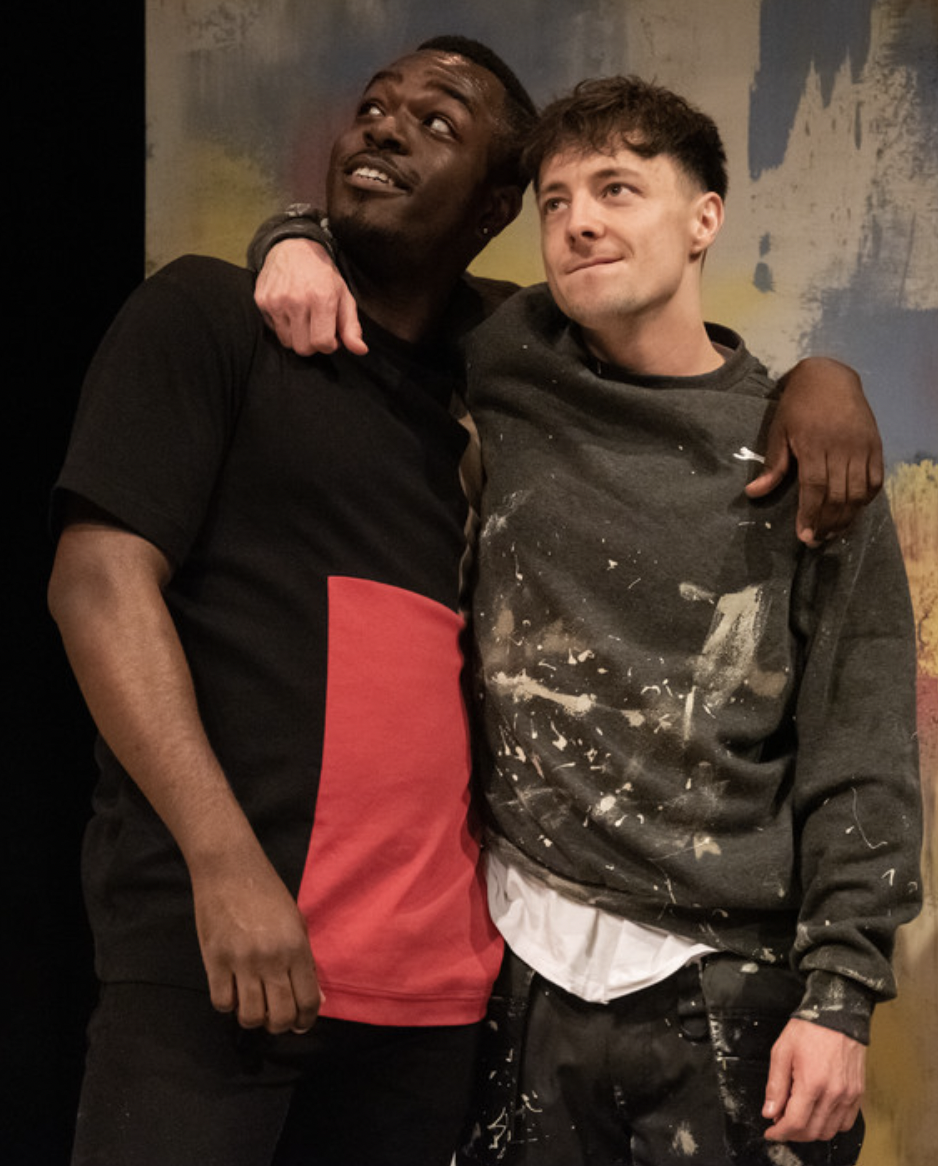
It’s Harry (Lucas Button)’s eighteenth birthday and, when his old friend ‘Roger’ (Justice Ritchie) turns up out of the blue, bringing him a Colin the Caterpillar cake and a selection of shared memories, he’s initially delighted. The two of them recall their days in the care system together: the adventures they had, the everyday trials they faced. 

But now things have changed somewhat. Harry is still struggling to make his way in the world, while Roger, who prefers now to answer to Runaku – his real name; the name his parents gave him – is about to set off for university and exciting new horizons. 

But before he leaves, he has some issues that need to be addressed. 

Harry has been pretty vocal on social media lately and many of his views are racially insensitive, to say the least. Runaku wants him to face up to his duplicity but, as Harry protests, how can he be a racist when his best friend is black?

Ryan Calais Cameron’s punchy play handles a complex subject with surefooted skill and nails the central flaw that lies at the heart of Harry’s logic. We soon learn that Runaku has been marginalised all through their years together, and that Harry needs to face up to something he’s avoided since the beginning of their friendship.

Both Button and Ritchie attack their roles with vigour and the physicality of their performances prevents this two-hander from ever becoming static. Movement director Yami Löfvenberg and Rob Watt’s pacy direction have them hurling themselves around the stage, slipping expertly through a whole range of emotions from cheery bonhomie to outright anger. I also enjoy the live music from musician Neeta Saarl and the way she interacts with the performers – though the lengthy electronic overture she performs at the beginning feels suspiciously like an attempt to pad out the play’s brisk running time.

But this is thought-provoking stuff, that isn’t afraid to tackle its sensitive material with refreshing honesty.

4 stars

Philip Caveney