Theatre

The Addams Family

25/04/17

Festival Theatre, Edinburgh

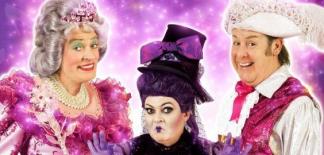
The Addams Family have had a long and varied gestation to get to this point. Originally created by cartoonist and namesake, Charles Addams, they first saw the light of day in 1938 as a series of single frame cartoons in The New Yorker, though in those days none of the characters had names and the term ‘Addams Family’ hadn’t even been coined. That happened in 1964, when the family became the subject of a long running TV series. In the 70s, they joined Scooby Doo in an animation and then were given their own cartoon series. In 1991, they got the big screen live action treatment, a huge hit which was followed by another successful movie – and then one straight-to-video instalment that nobody seems to want to talk about. And finally, in 2010, this musical by Marshall Brickman, Rick Elice and Andrew Lippa debuted on Broadway, where it ran for 722 performances. Which brings us to the Festival Theatre, the show’s first stop on a major tour of the UK.

This is evidently a franchise with enduring appeal and it’s clear from tonight’s packed auditorium that the audience isn’t just comprised of old timers out to relive a childhood favourite. The majority of the crowd is made up of people in their 20s, proof it ever it were needed that some concepts will always find a new audience. The overriding appeal of this fictional family is, of course that, weird and unconventional as they are, they actually exemplify good old-fashioned values. Gomez (Cameron Blakely) is an excellent father, Morticia (Samantha Womack) is the consummate mother and the two of them really do have the interests of their extended family close to their hearts. Actually, it’s sobering to note that as time time goes by, their weirdness seems to diminish when set against what’s happening in the real world.

In this version of the tale, Wednesday Addams (Carrie Hope Fletcher) is at that dangerous age and has fallen in love with a (whisper it) ordinary guy called Lucas (Oliver Ormson). She’s even talking about marrying him. Gomez’s instinct is to hide the news from his wife, who he knows will not be pleased at the idea, but how can he do that when Wednesday has invited Lucas and his straight-laced parents round for dinner? What will they make of Wednesday’s odd little brother, Pugsley (Grant McIntyre), who worries that he will miss out on those sibling torture sessions he enjoys so much? What will they think of the potion-dispensing Grandma (Valda Aviks) or Gomez’s weird brother, Fester (a barely recognisable Les Dennis) who spends most of his time trying to work out how he can get to his own true love… the moon? And Lurch… what about Lurch?

It’s a promising concept and, of course, it’s brilliantly conceived and presented, with faultless performances, note-perfect singing, brilliantly choreographed dancing and a host of eye-catching costumes. If I have a criticism, it’s simply that having set up such a delicious idea, the writers somehow fail to develop it any further and what we get is a series of beautifully realised set pieces that fail to progress the story any further. But, having said that, there’s still plenty here to enjoy, not least the performance of Charlotte Page as Lucas’s uptight Mom, Alice, who conceals an entirely different persona behind that meek and mild front.

And there’s certainly no doubting the enthusiasm of the standing ovation the cast receive as they take their final bows. It’s clear that, despite being in existence for something like seventy years, there’s life in this franchise yet. What next, I wonder? The Addams Family on Mars? Don’t laugh, it could happen.

4.2 stars

Philip Caveney

Not Dead Enough

24/04/17

King’s Theatre, Edinburgh

Murder mysteries are extremely popular, particularly, it seems, when presented in book or TV form: police procedurals regularly top the TV rankings, and crime novels – especially series with returning detectives – are big-hitters too. Peter James, for example, has sold over 18 million copies of his books worldwide.

In my experience, however, such stories tend to be less successful when performed on stage, unless they’re played for melodrama and for laughs. Because, let’s face it, the stories are often ludicrous, featuring crimes of such demented complexity and ingenuity that they require a very strong suspension of disbelief. And the schlocky side of things is more exposed on stage than it is in other forms: there’s no easy cutting away, no close-ups, no internal dialogue.

There are non-naturalistic techniques, of course, which could more than compensate for the shortcomings, but in this production – and in others I’ve seen – these are eschewed for a more realistic approach. But, while I sometimes think this is a shame, in this particular instance, it seems to work. Okay, so there are a few awkward moments which provoke incongruous laughter from the audience but, for the most part, playing it straight serves the production well.

Bill Ward plays Superintendent Roy Grace, the central character in James’ “Dead” series. He suits the role, displaying just the right balance between gravitas and levity. He’s ably assisted by Laura Whitmore as Cleo Morey, who serves as both love interest and pathologist. But the starring role is – of course – the chief suspect Brian Bishop, played with absolute relish by Stephen Billington.

The piece is pacy, well-structured and very engaging. The two-tier set keeps us firmly in the world of work, switching between the police station and the path lab, with the domestic sphere very much off-stage.

And, if the final pay-off is as preposterous as it is audacious, it really doesn’t seem to matter, as this is a genuinely exciting tale – a cracking good night at the theatre.

4 stars

Susan Singfield

Nell Gwynn

18/04/17

King’s Theatre, Edinburgh

Nell Gwynn is one of those historical characters that most of us know a little bit about. I knew, for instance, that she was a former prostitute with a sideline in selling oranges and I also knew that she had a famous affair with King Charles II, the ‘Merry Monarch’. I didn’t know that she was one of the first female actors ever to grace the English stage and that in her short meteoric career, she was acclaimed as something of a ground-breaker. And I didn’t know that a history lesson could be so enjoyable.,

This superb production from the English Touring Theatre of Jessica Swales’ Olivier Award-winning comedy is a delight in just about every respect. From the superbly realised set, through the opulent costumes and the lively period music, this is fabulous to behold, while Swales’ incredibly witty script, replete with double entendres and bawdy observations galore, will have you laughing heartily all the way through.

We are first treated to a brief excerpt from the latest production of the Theatre Royal, where the infamous actor Charles Hart (Sam Marks) is showing us examples of his celebrated stagecraft. He’s interrupted by a voice from the stalls and onto the stage wanders Nell (Laura Pitt-Pulford) and Hart quickly realises that she has some real potential as an actress. He takes her under his wing (and into his bed) and, pretty much overnight, a new star of the stage is born, much to the disgust of  Edward Kynaston (Esh Alladi), who up this point has managed to monopolise all the Theatre’s plum female roles. Nell becomes an overnight sensation but, of course, it isn’t long before King Charles II (Ben Righton) pays the theatre a visit and he too becomes somewhat enamoured of this new talent. Whereupon matters become rather complicated…

Nell Gwynn is proof, if ever it were needed, that historical costume drama doesn’t have to be dull and fusty – indeed, this is as bright and brilliant as you could possibly wish. Christopher Luscombe’s direction is accomplished and Laura Pitt-Pulford is sensational in the lead role but, if I’m honest, there isn’t a weak link in what really is an ensemble piece. And, should you find some of the antics on display hard to believe, a quick online search will reassure you that pretty much everything that happens here is supported by genuine historical evidence.

If you’re in the mood for a great night’s entertainment, this is one you really shouldn’t miss. Form an orderly queue.

4.8 stars

Philip Caveney


Fiddler on the Roof

05/04/17

King’s Theatre, Edinburgh

Fiddler on the Roof premiered on Broadway in 1964, a whole seven years before I was born. And yet, even though it has existed longer than I have, and despite my theatre habit, I was almost entirely ignorant of this musical before tonight. I mean, I knew the title, and I was familiar with a couple of the songs, of course, but I knew nothing of the story or the characters. So I came to this modern classic almost entirely unprepared.

Most people probably already know what I didn’t: that the play is about a Jewish community, living precariously in the Russian Pale of Settlement in 1905. Their village, Anatekva, is a temporary safe haven, where, for the most part, people rub along quite well. Teyve (played with assurance and charisma by Alex Kantor) has just one big worry: how to find suitable husbands for his five dowry-less daughters. But times are a-changing, and he soon discovers that he needn’t trouble himself; his daughters are more than capable of finding lovers for themselves, whatever he may think of them. And, by and large, Teyve gloomily accepts his diminishing role as a patriarch, although Chava (Katie McLean) pushes things just a bit too far when she falls for Fyedka (Keith McLeod), a Russian youth. The Russians are the enemy.

Edinburgh Music Theatre’s production is very good indeed, the kind of polished amateur performance that gladdens the heart. Direction and music (by Ian Hammond Brown and Paul Gudgin, respectively) are proficient and adept, and the crowd work (choreographed by Sarah Wilkie) is beautifully done. The performances are uniformly strong; this feels like real ensemble work, but Libby Crabtree’s Golde is particularly good: an engaging interpretation of a fascinating role.

Standout moments include the nightmare scene, where Teyve constructs an elaborate lie to convince Golde to allow Tzeitel (Sally Pugh) to marry impoverished tailor, Motel (Fraser Shand). The choreography here is lively and inventive, and an absolute joy to watch.

And then there’s that devastating ending. I don’t think it counts as a spoiler to reveal what happens when the play is so well-known. But, for me, it is a complete surprise, and a jolting one at that. I sit watching the villagers gather up their belongings as they are evicted from their homes, and I can’t stop the tears from falling. I’ve just spent ninety minutes getting to know these people; I’ve laughed with them, shared their gossip and their fears. And now they’re being exiled, sent to seek another home. The slow circular trudge around the stage feels like a never-ending sorrow. And how apposite a story for our times: this is what it means to be a refugee. Not a cockroach, a scrounger, a potential terrorist. Just this. People. In all their many guises. Sent away from all they know and love, and needing welcome somewhere new.

An excellent production of a truly moving play.

4.6 stars

Susan Singfield

Chess: The Musical

30/03/17

Festival Theatre, Edinburgh

Of all the big West End musicals, Chess is a bit of an anomaly. Based around an idea by lyricist Tim Rice, with music by Bjorn Ulvaeus and Benny Andersson (who, let’s face it, know more than a thing or two about composing a catchy song), it was initially a concept album, before being adapted into this theatrical version. It’s a real ensemble piece that presents a considerable challenge to anybody reckless enough to mount a production. Luckily, the Royal Conservatoire of Scotland is more than up to the task and they thrill a packed audience at the Festival Theatre with a skilful display of all things theatrical that is breathtakingly good. Indeed, I have to keep reminding myself all the way through, that I’m watching the work of students here – albeit from one of the most famous theatre schools in the world – because this demonstrates degrees of professionalism that would rival many of the biggest names in theatre.

Inspired by the real life story of chess grandmasters Bobby Fischer and Boris Spassky, it’s the story of American chess player Freddie Trumper (Barney Wilkinson) and Russian player Anotoly Sergievsky (Jamie Pritchard) – and a rivalry that extends beyond the game, when Freddie’s long time muse, Florence Vassay (Daisy Ann Fletcher), becomes romantically entangled with Anotoly. Based around two world championships and presided over by The Arbiter (Emma Torrens) the stage is set for some human life subterfuge that mirrors the complexity of the central game.

It’s all masterfully done – the three lead actors sing brilliantly, there’s some incredibly complex and sophisticated choreography (often incorporating the real time use of video cameras, à la Katie Mitchell) and choral singing that sends chills down the spine. If there’s a criticism, it’s simply that during the first half of the show, the overall volume is occasionally a little too loud, but this is sorted by the second half, which features the show’s best known songs (including, of course, the sublime I Know Him So Well, with Daisy Ann Fletcher harmonising effortlessly with Hayley VerValin as Anatoly’s Russian wife Svetlana).

All-in-all, this is a fabulous show, and director Andrew Panton and choreographer Darragh O Leary can both take a well-deserved bow – and, to be honest, you won’t find a weak element in any department of this marvellous show. It all makes for a brilliant night at the theatre.

5 stars

Philip Caveney

Anita and Me

28/03/17

King’s Theatre, Edinburgh

Meera Syal really knows how to spin a yarn. I read and enjoyed Anita and Me when it was first published, back in 1996. I watched the 2002 movie adaptation too, which was okay, although more superficial than the source novel. So I am interested to see this musical stage production, which is a collaborative effort by The Touring Consortium Theatre Company and Birmingham Repertory Theatre.

And it’s a lively, energetic piece, with an animated central performance from Aasiya Shah as Meena. The story of a young British-Indian girl, coming of age in a time of overt racism, is nicely told. There is anger here – Meena’s fury at local heart-throb Sam’s bigotry and ignorance, for example, and her refusal to allow him to get away with saying “I don’t mean you; I mean those other ones” – but there is humour, sadness, and forgiveness too. Sam’s anger is misdirected, but it’s understandable. He’s at the bottom of the pile, and he’s just lashing out. Far more important is Meena’s internal struggle to come to terms with who she is and who she wants to be.

It doesn’t work as well as the novel: the brush strokes are too broad and the nuances are lost. Without Meena’s internal monologue to temper our impressions, we’re left with a lot of stock characters behaving in predictable ways, declaiming their positions in loud, stagey voices. The Black Country accents feel overdone; it all needs toning down a bit. The novel has the same naivety, but it’s more credible on the page, when it’s told from a ten-year-old’s point of view. Here, we see the adults on their own terms, not Meena’s, and they are just too exaggerated to convince. It’s a shame, because the amplification hides the heart.

Despite this, there are some lovely moments, and some strong performances. Shobna Gulati and Robert Mountford, as Meena’s parents, give the subtlest characterisations, and these are easiest to believe. Nanima is a gift of a comic role, and Rina Fatania clearly revels in it. Meena’s sung letters to agony aunts Cathy and Claire are a nifty device, allowing us some insight into how she feels. And the set is impressively detailed, with some clever scene changes incorporated.

All in all, this is an enjoyable show, with much to recommend it. But it’s not as good as the book.

3.6 stars

Susan Singfield

9 to 5: The Musical

original

15/03/17

King’s Theatre, Edinburgh

9 to 5 is one of Dolly Parton’s best-loved songs, and this musical, is very much the singer’s brainchild too, featuring her music and lyrics with book by Patricia Resnick. Dolly even makes an appearance, projected onto a screen, introducing the show. It’s a lively, sprawling tale of office life, a feminist-lite story of three women who collaborate to overthrow their sexist boss, Hart (Colin Cairncross) and make their workplace more amenable.

Okay, so the storyline is somewhat shonky but the Bohemians Lyric Opera Company are one of Edinburgh’s best known amateur groups, established in 1909, and their production is as gutsy and energetic as you might expect. It’s beautifully styled – all 70s kitsch – and the choral singing is excellent.

But the stand-outs are the three leads, each perfectly cast. Katherine Croan is a sassy Doralee, the Dolly-Parton-esque glamour puss who despairs of her colleagues who refuse  to see there’s more to her than hair and boobs. She struts and pouts and really owns the stage. It’s a wonderful performance. Jo Heinemeier is also impressive as Judy, the timid new girl in the office, learning independence  after her husband has left her. Her voice is truly exquisite. Pauline Dickson’s Violet is another delight, conveying strength as well as vulnerability; it’s a maternal role and very well realised. The relationship between the three characters is warm and convincing, and really makes the piece.

There are a few quibbles: the choreography  is perhaps a little over-ambitious at times, and there are too many complicated  set changes, but overall  this is a decent production – and very well worth going to see.

3.8 stars

Susan Singfield


Hay Fever

HayFever

14/03/17

Lyceum Theatre, Edinburgh

The world of Noel Coward is arguably an overly familiar one – a world of tennis whites and champagne cocktails, of country houses and French windows. Perhaps the word most associated with his work is ‘arch.’ If you’re going to have a crack at the plays of ‘The Master’, you’d better be sure that quality is there in abundance.

Luckily, this co-production from The Lyceum Theatre and Glasgow’s Citizens Theatre, under the astute direction of Dominic Hill, gets it just right. Hay Fever is the story of the Bliss family, four eccentric bohemians co-existing in their country retreat and planning a bit of a bash at the weekend. The father of the house, David (Benny Baxter-Young), is a successful novelist, currently hard at work on his latest opus, The Sinful Woman. His wife, Judith (Susan Woolridge), is a former grande dame who has never quite lost her flair for the theatrical and is happy to utilise it whatever she’s doing (even she’s simply rearranging flowers). And then there are the kids, Sorel (Rosemary Boyle) and Simon (Charlie Archer), both bored to distraction, endlessly bickering and always ready to make a little mischief. When it transpires that each member of the Bliss family has invited a different house guest down for the weekend, it’s clear that the stage is set for some farcical encounters… but who, you might ask, will get to sleep in the Japanese room? And why does it seem to matter so much?

I’ve rarely seen Coward done better than this. The social awkwardness of the various visitors is played for maximum effect. The scene where hopelessly-out-of–her-depth Jackie Coryton (Katie Barnett) is obliged to interact with pompous Richard Greatham (Hywel Simons) is almost painfully funny. On the night we attend, an onstage accident, which results in a hostess trolley tipping over complete with everyone’s breakfast, is skilfully incorporated into the proceedings and gets some of the biggest laughs of the evening. I also enjoy the brief interval where housekeeper Clara (Myra McFadyen) treats us to a brief selection of Coward’s greatest hits.

This is a delightfully frothy confection and, even though it’s set in the 1920s, the awkward toe-curling moments it offers for our entertainment are still just as relevant today. Go along and treat yourself. These days laughter like this is in perilously short supply.

4.4 stars

Philip Caveney

Lyceum Variety Night 2

26/02/17

Lyceum Theatre, Edinburgh

Those enterprising people at Flint & Pitch have been busy putting together another night of  entertainment at the Lyceum Theatre, featuring the best of spoken word, theatre and music. Hosted by genial regulars Sian Bevan and Jenny Lindsay, this eclectic second helping kicks off with the jazz-inflected rhythms of Pronto Mama, a band who revel in slippery time signatures and who soon have everybody bopping along in their seats.

Next up, poet Aidan Moffat treats us to some of his wry and rather saucy poems (plus some rather wonderful extracts from his son’s diary). He finishes his section with a dedication to all the people he’s canoodled with down the years, complete with a raised can of Tenants Lager at the end. I’ll drink to that!

Actress/musician/singer/author Gerda Stevenson offers us a varied selection of items – a traditional Scottish ballad accompanied by one of those strange droning instruments that resembles a wooden suitcase (and which I’ve annoyingly never learned the name of), a trio of prose pieces commemorating great Scottish women, and a final song for which she enlists the help of a couple of friends for the harmonies.

After a short break, festival favourites, The Creative Martyrs take to the stage, looking like a cross between Estragon & Vladimir and Laurel & Hardy. Incredibly, they soon have us chanting along to the suggestion that we should ‘Burn The Books’, while their song about drowned refugees is also incredibly provocative and revealing, the final line leaving the audience temporarily too stunned to applaud. These two performers are really quite brilliant.

Tonight being the anniversary of Johnny Cash’s death, singer/songwriter Rachel Sermanni kicks off her segment with a haunting cover of one of the great man’s most famous songs, A Thing Called Love, and then offers a couple of songs of her own. Her voice is remarkable – ethereal, haunting, quietly amazing. I fully expect to hear more of her soon.

The advertised act, Don Paterson, is down with the flu, but Colin McGuire fearlessly steps in at the last moment to give us an extract from his work-in-progress play, which is all about that most important of subjects – sleep. He goes down a storm with the Lyceum audience.

Last up, American poet (and BBC slam-champion), Adele Hampton offers us some of her wry and distinctive poems. She admits that she is feeling a little nervous but despite that, acquits herself well with tales of weight-lifting and belonging. She leaves the stage to heartfelt applause.

It is left to Pronto Mama to finish off the night, which they do not with the usual pounding rock song, but with a plaintive acapella tune, which sends everyone home feeling happy and thoroughly entertained.

The next variety night is penciled in for Sunday 4th June. Miss it and you’ll only have yourselves to blame.

4.2 stars

Philip Caveney

Titanic: the Musical

21/02/17

King’s Theatre, Edinburgh

The King’s Theatre has a long and proud tradition of working with amateur companies; but it’s clear from the opening scenes of Southern Light’s production of Titanic, that we’re going to need to redefine the word ‘amateur,’ because this lavishly produced musical is certainly more assured than the term might lead you to expect. Indeed, the overall look and feel of it would give many professional companies a good run for their money.

Of course, we all know – or at least, think we know, the story of the ill-fated White Star liner which struck an iceberg on its maiden voyage in 1912 and sank, resulting in the deaths of over one thousand, five hundred passengers. The story has retained its fascination ever since and little wonder, as it serves as a powerful metaphor for the world’s obsession with the class system and the symbolic end of the British Empire. It has been the inspiration for a whole clutch of novels and films- eerily, it seems, even for a book that was written in 1898, called The Wreck of the Titan, which seemed to predict everything that would happen fourteen years later.

The Southern Light Opera Company’s production fairly bristles with ambition and much like the titular vessel, it’s a colossal undertaking. At one point I counted over seventy performers on stage, moving around in perfectly synchronised choreography, their massed voices soaring in thrilling harmony. A dining room sequence in the first half had three tables full of costumed actors, being served what looked like real food by a battalion of waitresses. (I’d have loved to watch the rehearsals for that!)

As this is so much an ensemble piece, it’s hard to single out individuals for praise, though Chris MacFarlane was very impressive as ‘the Stevedore,’ and Keith Kilgore as the ship’s designer, Thomas Andrews, also shone. Look out too, for a sprightly performance by Judith Walker as would-be social climber, Alice Beane. The musical’s first half, when everyone is optimistic and thrilled with their voyage is by far the most enjoyable. The second half, as we know only too well, heads into darker waters, and at times the sheer impossibility of depicting such a momentous incident onstage threatens to overpower the proceedings -but I did enjoy the moving epilogue where projections of the names of the dead played across the cast as they delivered a final song.

A lot of care and attention to detail has been lavished upon this musical – and the fact that tonight’s performance is dedicated to one of the members of the cast who died just a few days ago, makes it all the more poignant. Don’t let the word ‘amateur’ put you off. This is well worth your attention and it’s on at the King’s Theatre until Saturday the 25th of February.

4 stars

Philip Caveney