Theatre

The Deep Blue Sea

15/07/20

National Theatre Live

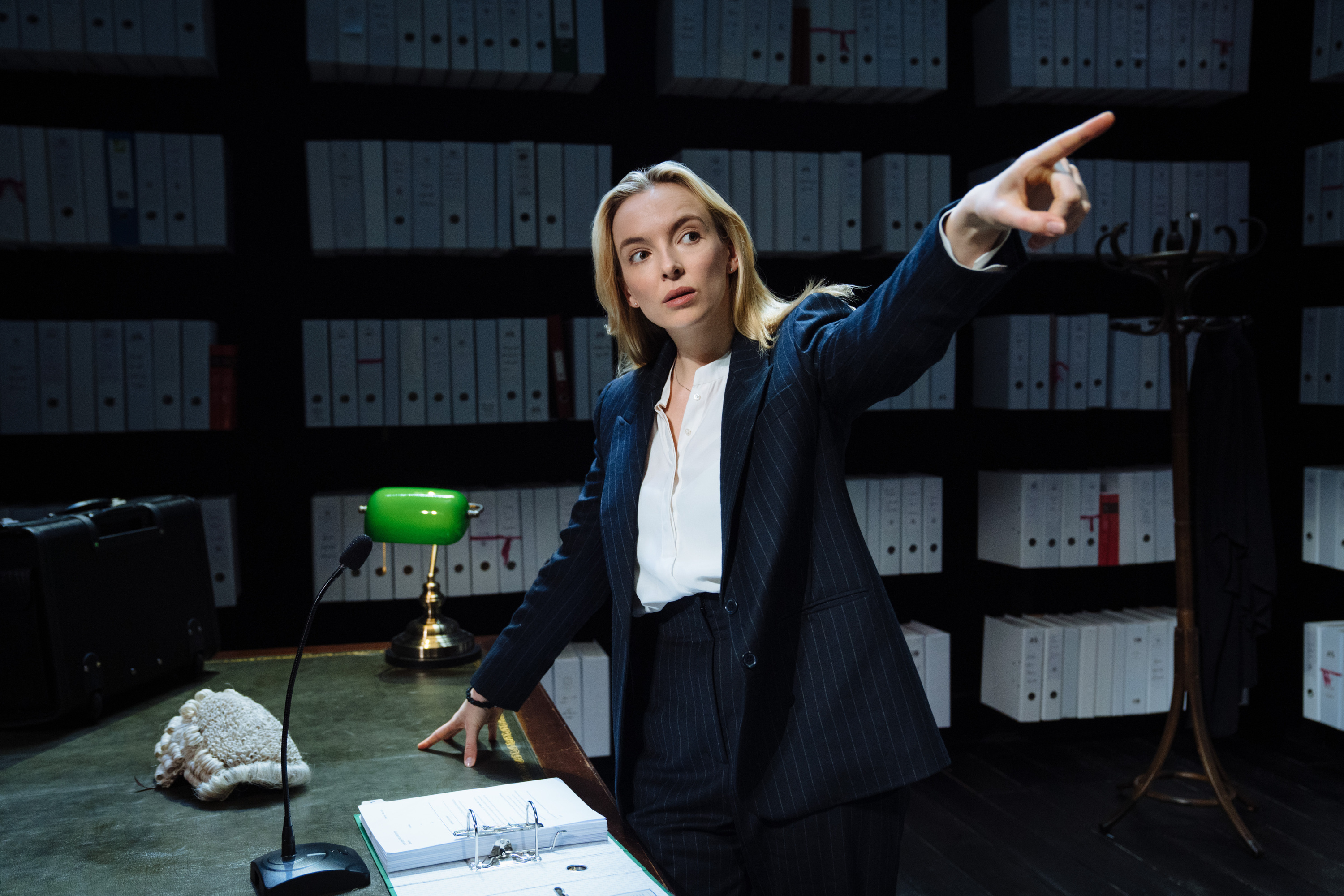
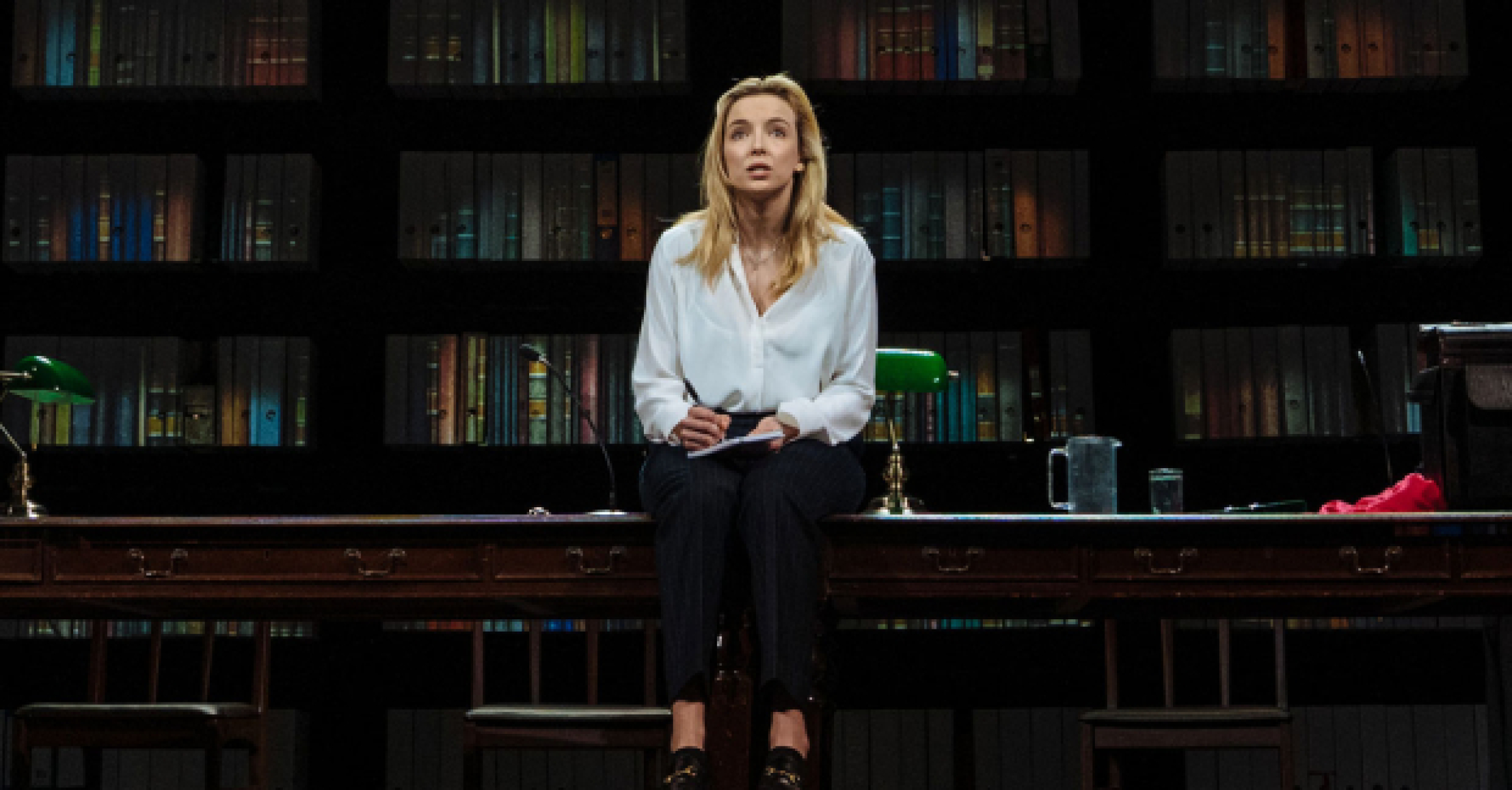
Terence Rattigan’s 1952 play seems remarkably contemporary, despite the period details that flood both the script and director Carrie Cracknell’s interpretation of it. Boarding houses are prevalent; Freddie has turned to alcohol because of his awful experiences as a second world war pilot; suicide is illegal; Dr Miller (Nick Fletcher), the doctor-turned-bookie, has a German accent that makes him an outsider. But its central themes – of love, loss and alienation – endure, even if the specific context does not.

Helen McRory is an inspired choice for the lead role, imbuing Hester Collyer with an oxymoronic fierce fragility. She’s at once desperate and sprightly, confident and lost.

Hester too is an outsider: a vicar’s daughter, she has left a respectable marriage (to the paternalistic Sir William, a judge, played with eminent likeability by Peter Sullivan) in favour of a love affair with the dashing Freddie Page (Tom Burke). It’s to the play’s credit that neither of these men is easily dismissed: Sir William is kindly, but Hester wants more than the pleasant companionship he offers; Freddie is unreliable and unromantic, but he is no cad. Both men offer Hester what they have to give, but neither has enough.

And, unable to envisage a future without Freddie’s love, Hester attempts to kill herself.

It’s undoubtedly a tragic tale, brutal in its exposure of human sadness. Tom Scutt’s design, with its eerie reflectiveness and skeletal outlines of other apartments – other sorrows – underscores the universality of Hester’s unhappiness.

But there is hope here, and redemption. And a fried egg sandwich too!

4 stars

Susan Singfield


A Midsummer Night’s Dream

27/06/20

National Theatre Live

Watching immersive theatre via a screen, especially a small screen, is always going to be oxymoronic. My first thought, as Egeus (Kevin McMonagle) drags his errant daughter, Hermia (Isis Hainsworth), through the Bridge Theatre’s standing audience to face the judgement of Theseus (Oliver Chris) is, ‘Oh, this isn’t going to work…’ By which I mean, this isn’t going to work for me. Because sometimes you really do have to be there.

This production, directed by Nicholas Hytner and Ross MacGibbon, is all about the live experience. I can only imagine how exhilarating it must have been in that auditorium, at once spectator and spectacle. Instead I’m at home (for the millionth night running), sitting on my sofa, watching via a computer.

It’s still very good, and I soon get over feeling distanced. I suppose we’ve all had to get over a lot stranger things in recent times. The chilling opening scene – where father-of-the-year Egeus seeks permission to put his daughter to death if she refuses to marry a man she doesn’t love – highlights the importance of the midsummer madness in the woods. Away from the strict patriarchal rule of Athens, the characters are free to explore their deepest desires, able to give rein to their true selves.

The story – for those who need reminding – is of four young lovers who run away into the forest. Also present is a group of amateur actors, seeking a quiet place to rehearse their latest play, and – of course – the resident fairies, who view these human interlopers as playthings, to be teased and manipulated just for fun. In this version, Oberon (Chris) and Titania (Gwendoline Christie)’s roles are switched, with Titania orchestrating the action.

Bunny Christie’s design is bold and daring, all flying beds and shifting green floors. The audience is called upon to move with the action, to pass a parachute above their heads, to dance; they become the forest’s shadows, the Athenian court. I’ve seen a lot of immersive theatre, but rarely anything as well-integrated as this, where the audience action feels purposeful and not just grafted on. The beds are especially clever, highlighting the dual themes of sex and dreaming; it’s not subtle, but why should it be? This is not a subtle play.

There’s not a bum note here, but there are some standout performances, not least from Hammed Animashaun, who plays Bottom as a wide-eyed enthusiast rather than a bumptious fool. He’s utterly endearing, so I’m delighted with Hytner’s decision to make his drug-fuelled tryst with Oberon a tender one, ill-advised but not risible. David Moorst’s Puck is also a delight, all twisty movements and Mancunian patter.

In short, I wish I’d been there; a show like this reminds me exactly why I love live theatre. But seeing it like this is much, much better than not seeing it at all.

4.6 stars

Susan Singfield

Small Island

19/06/20

National Theatre Live

Anyone who’s still clinging to the notion that #BLM protests are not needed in the UK would do well to watch this latest screening from the National Theatre, and remind themselves of the shameful way black British subjects from Caribbean countries have been treated here.

Andrea Levy’s novel, adapted for the stage by Helen Edmundson, is set in the 1940s, so does not directly address the 2018 Windrush scandal – where at least eighty-three people were wrongly deported – but it does show very clearly how they came to be here in the first place, encouraged to embrace their Britishness by fighting for ‘their’ country in the war, then helping to rebuild a battered Britain afterwards. ‘Used’ is the first word that comes to mind. ‘Abused’ is the second.

The play, directed by Rufus Norris, is at once an expansive, epic sweep of a project, and a deeply intimate portrayal of three people, cast adrift and then brought together, an intricate web linking their lives.

Leah Harvey is Hortense, a prim, ambitious Jamaican school teacher, desperate to escape the confines of her upbringing and live amongst the china tea cups and cream teas that define Britain for her. The love of her life is her ‘cousin’ Michael (CJ Beckford), but he doesn’t feel the same way about her. Spurned, Hortense realises that, by paying for his passage to England,  she can persuade RAF airman Gilbert (Gershwyn Eustache Jnr) to marry her, and offer her the life she dreams of.

But when she arrives in London, Hortense is horrified to discover that their accommodation is a tiny room in a rundown boarding house, that she is subjected daily to the most appalling racism, and that no one will employ her as a teacher, or even recognise the qualifications she’s worked so hard to acquire. The landlady, Queenie (Aisling Loftus), is their one ally, but even her support seems less assured when her bigoted husband, Bernard (Andrew Rothney), finally returns home from the war.

The acting from all is superb, although it is Harvey’s performance that lingers in the memory, a study in rigid reserve and masked disappointment.

I love Katrina Lindsay’s set design, which is perfectly complemented by Jon Driscoll’s projections, making full use of the enormous Olivier stage. The storm scenes in particular seem immersive, and the size of the Windrush boat (and thus the scale of the ensuing scandal) is cleverly conveyed.

The first act is more complex than the first, cutting between countries and characters, but we always know exactly where we are, and all the disparate strands are brought together skilfully in a more cohesive second act.

This is a timely release from the National Theatre, and reinforces the need for more BAME representation in the arts.

You have until next Thursday to watch it.

4.1 stars

Susan Singfield

The Madness of King George

16/06/20

National Theatre Live

This adaptation of Alan Bennett’s acclaimed 1991 play, a co-production between The National Theatre and the Nottingham Playhouse, stars Mark Gatiss as George III, the much-loved and admired monarch whose reign was nearly destroyed by a protracted battle with mental illness. We now know that George suffered from porphyria, a condition that comes with a whole raft of punishing symptoms – and it’s clear from the outset that the illness itself is worsened by the ill-informed efforts of the court physicians, who set about inflicting a whole series of what can only be described as tortures on the luckless monarch. They bleed him, they ply him with laxatives, they even spill boiling hot wax onto his head and back, convinced that these remedies will drive out his ‘ill humours.’  Little wonder, then, that their efforts are instrumental in pushing the king deeper into delirium. Bennett’s script walks a perilous tightrope between hilarity and the full blown tragedy of watching a man degraded and humbled in front of his family and his courtiers. 

It’s only when Prime Minister William Pitt (Nicholas Bishop) engages the services of Doctor Willis (Adrian Scarborough) that a possible light appears on the horizon. Willis’s approach to the problem is a tough, rigorous routine that seems more appropriate to the breaking of a horse than the nurturing of a stricken human being but, against all the odds, it starts to pay dividends.

Meanwhile, the Whigs see the king’s situation as an opportunity to oust Pitt’s Tories by allying themselves to the ambitious Prince of Wales (Wilf Scolding), who longs for some kind of power and doesn’t mind how he gets it.

This is a handsomely mounted production, which takes off at a gallop and never allows the pace to flag. Each scene segues effortlessly to the next and there’s solid work from the supporting cast, but this is essentially an opportunity for Gatiss to shine and he rises to the challenge with considerable aplomb, managing to bring out George’s innate likeability even as he is reduced to a gibbering, gesticulating wreck by his steadily mounting symptoms.

This is an object lesson in how to present a period piece. Everything here – the costumes, the sets, the actors’ comic timing, the machinations of the various political players, is presented with absolute authority and skilfully directed by Adam Penford.

It’s often said that fact is stranger than fiction and The Madness of King George seems to illustrate this point perfectly. 

4.2 stars

Philip Caveney


A Monster Calls

05/06/20

Old Vic/YouTube

Looking back through my diary of another life, in another time, I note that I was due to see the touring production of this play at the King’s Theatre, Edinburgh, in early April 2020. It now seems unlikely that this was ever a possibility. Sitting in a crowded auditorium, enjoying a live performance? Is that really how we used to carry on?

Some productions have added resonance because of personal experience. Back in 2006 when I’d just embarked on my career as a children’s author, I was fortunate enough to meet Siobhan Dowd, when our respective debut novels were nominated for the same award. She was utterly charming and I had no inkling then that she was only a year away from her untimely death from breast cancer. A Monster Calls was an outline for a future novel that she didn’t live long enough to deliver to her publishers. It was subsequently completed by Patrick Ness and became a huge success in 2012.

I also loved the film version, directed by J A Bayona in 2017, which (another coincidence) featured one of Susan’s drama school pupils in the lead role (although she didn’t actually teach him). Even without these connections, this would still be a powerful and affecting story. I remember leaving the cinema, red-eyed from weeping.

This production, filmed onstage at the Old Vic in 2018, is now available for a limited run on YouTube. Though perhaps not as slickly filmed as many of the recent  ‘live’ theatre performances, there’s no doubting the emotional heft of the story. The central premise, clearly inspired by Siobhan’s own circumstances, is utterly heartbreaking.

Thirteen-year-old Conor McGregor (Matthew Tennyson) is in meltdown. His beloved Mother (Marianne Oldham) is gradually succumbing to cancer and he doesn’t know how to handle it. Estranged from his father (Felix Hayes), who now lives in America with his new family, Conor has nobody to confide in. He is being perpetually bullied at school and is resisting all attempts by his well-meaning grandmother (Selina Cadell) to make him accept that his life is about to undergo a massive change.

When his mother points out an ancient yew tree near to the family home, Conor begins to experience a series of bizarre visitations from The Monster (Stuart Goodwin) who lives within the tree. He relates a series of bizarre fairy stories and encourages Conor to face up to an awful truth…

There’s so much to relish here: the exquisite staging which ranges from stripped-back simplicity to explosions of almost pyschedellic colour; the ingenious use of ropes to evoke a whole series of images and settings; and there’s a sumptuous electronic soundtrack played live by Will and Benji Bower that adds a lush, dreamlike quality to the proceedings. The thirteen-strong cast all offer exemplary performances, though of course it’s Tennyson, in the lead role, who carries the heaviest load.

Is it as good as witnessing the play live? No. Am I glad it exists? Damn right!

Those who haven’t experienced A Monster Calls should catch this while it’s still available (you have until 12th June). And those who already love it could do a lot worse than indulging in another helping, just to relish those bitter-sweet flavours.

4.6 stars

Philip Caveney

Wise Children

04/06/20

BBC iPlayer

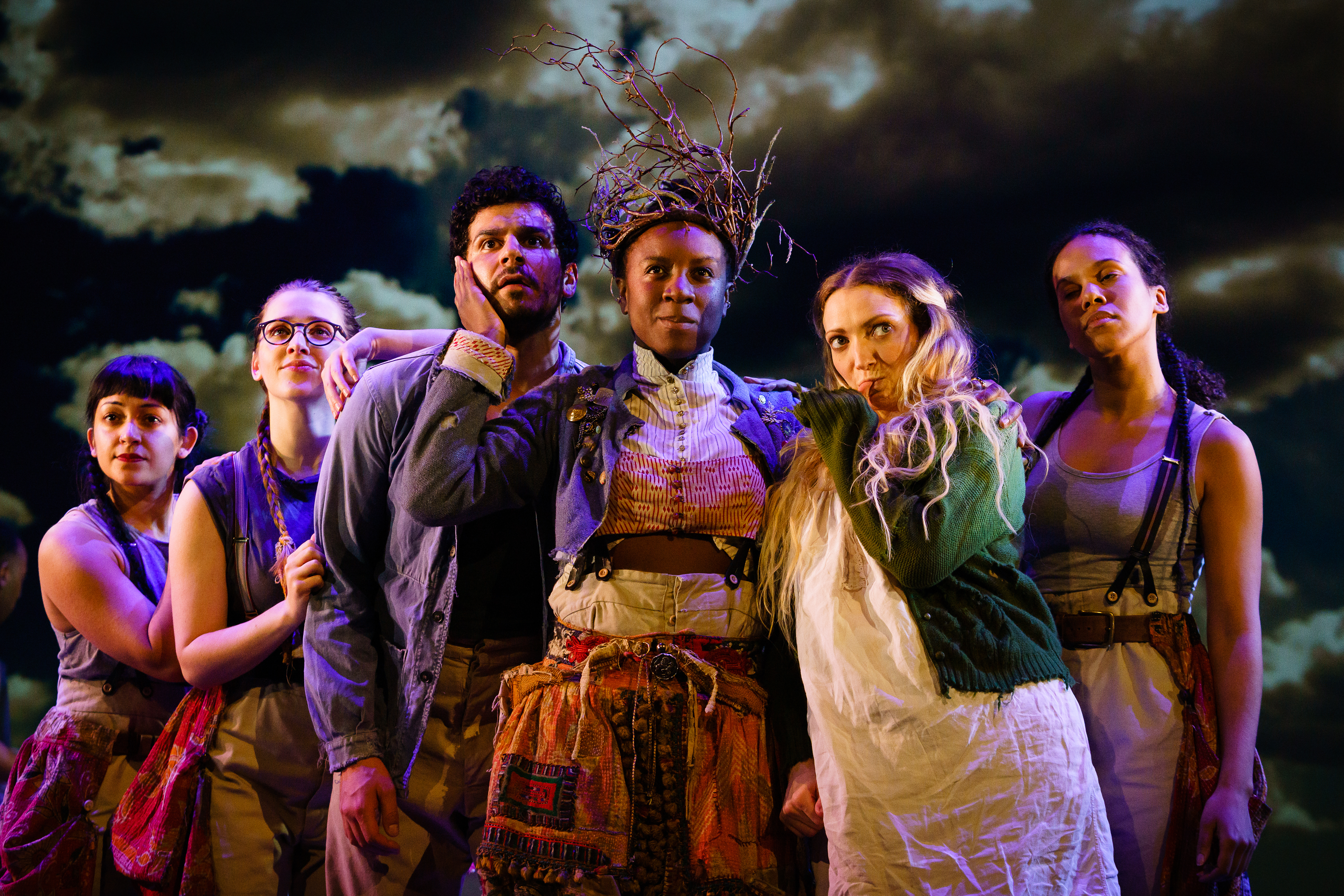
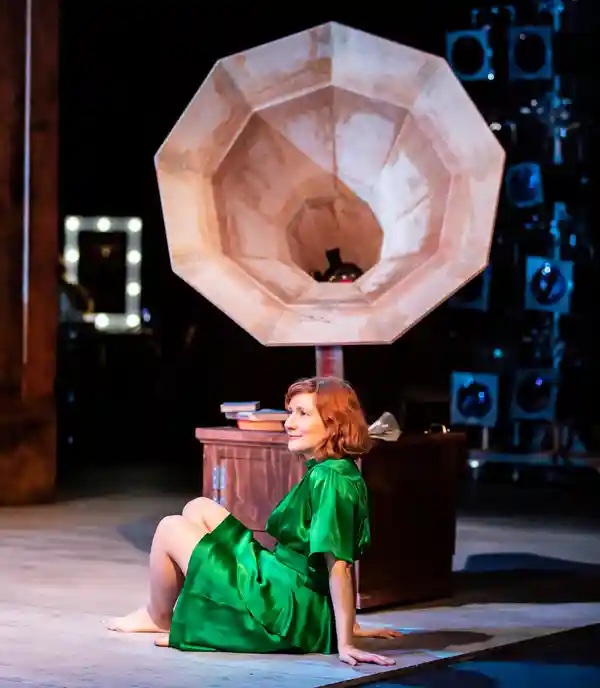
Emma Rice’s glorious stage adaptation of Angela Carter’s Wise Children is the most exciting theatrical production I’ve seen in my own living room, since lockdown began and I started trawling online offerings. Filmed at the York Theatre Royal, it’s right there on iPlayer (until July 9th), nestling amongst the Zoom panel shows and re-runs of old series, just waiting for you to click that mouse and let the mayhem begin.

It’s wild and wonderful, bawdy and tawdry – like watching Carter’s story come tumbling from the book, the word made flesh. Emma Rice’s adaptation revels in the novel’s magnificent excesses, amping up the theatricality, highlighting the slippery nature of identity and what it means to know who we are.

This is the story of illegitimate twins Dora and Nora Chance, who are celebrating their seventy-fifth birthday as the play opens. In this iteration, they are played by Gareth Snook and Etta Murfitt, who remain on stage throughout, narrating and commenting on  the tale as it unfolds. Their mother dies giving birth to them; their father, the preposterously successful Shakespearean actor, Melchior Hazard (Ankur Bahl/Paul Hunter) refuses to acknowledge them, and they are taken in by their mother’s landlady, Grandma Chance (Katy Owen), a shouty naturist, who puts them to work in the music halls as soon as possible. Their father’s twin brother, Peregrine (Sam Archer/Mike Shepherd), looks after them financially, and spoils them with presents whenever he visits. But the Hazards’ debauched extravagance means that nothing is immutable, and there are stepmothers, half-siblings and, yes, more twins at every turn. The Chances’ lives are never dull.

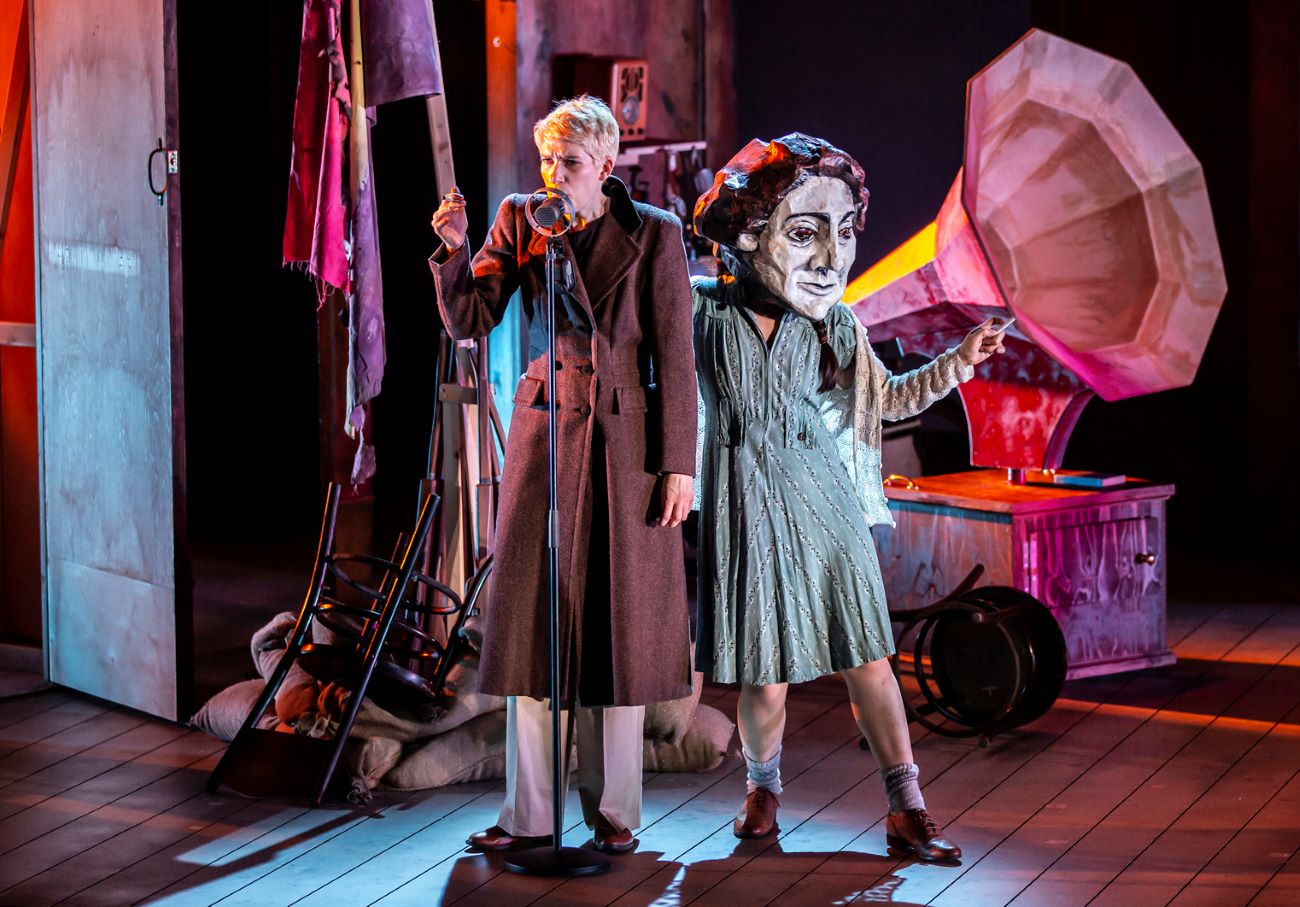
But this is an ode to theatre as well as the twins’ story. We are backstage and on stage as well as in the auditorium. There’s puppetry and physical theatre, Shakespearean tragedy and end-of-pier comedy. ‘What a joy it is to dance and sing,’ says Dora, and we see this realised in the fabulous teenage Dora and Nora (Melissa James and Omari Douglas), as they relish their showgirl flamboyance and explore their sexuality.

Vicki Mortimer’s design is as audacious and vibrant as the characters: a little touring caravan and ‘Wise Children’ spelled out in lights – all bright vivacity, a carnival of colour. The costumes are gaudy and unapologetically showbiz; Grandma Chance’s naked body suit is cartoonish, exaggerated and silly. It all works, a cacophony of artifice and illusion.

If you like theatre, then you will like this.

iPlayer. Now.

5 stars

Susan Singfield
Bravo Figaro

14/05/20

Go Faster Stripe and Traverse Theatre

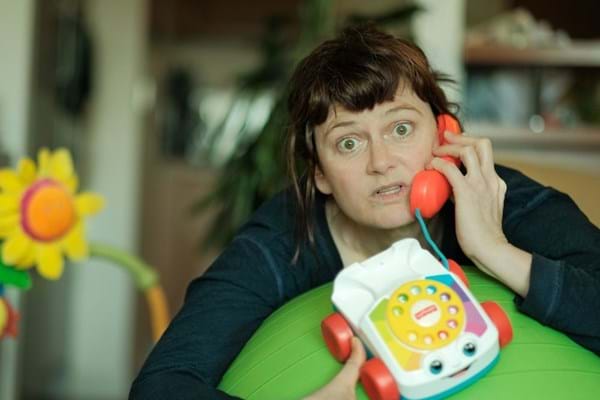
Mark Thomas is always a delight to watch: standup, storyteller, activist – all of these terms can be applied to him and all seem to fit perfectly. We missed Bravo Figaro at last year’s festival, so this seems like a welcome addition to our lockdown entertainment options, streaming live on YouTube for just £5, with a percentage of ticket purchases going to the Traverse theatre.

Business is pretty much as usual here, as Thomas ambles onto a sparsely furnished stage and begins to unfold the story of his father, Colin, a hardworking family man, a builder by trade who, unusually for a working class chap, developed a fervent passion for opera. Thomas pulls no punches in his depiction of a man who was never slow in using his own fists when angered and who clearly ruled his wife and chidren with a rod of iron. But, when he was stricken by a rare form of degenerative illness, Colin became a shadow of the man he used to be – and his son had to look for ways in which he might remind his father of the things that used to motivate him.

This clever and moving story, draws a compelling narrative, interspersed with occasional recorded pieces featuring the voices of his parents in conversation.

It’s testament to Thomas’s considerable skill as a raconteur that he manages to flit effortlessly in and out of the various scenes, between genuinely funny observations and heartwrenching moments of realisation. Not everything here quite hits home as surely as it might, for example, a brief passage where he explains to the younger people in the audience what vinyl is seems like a misstep – they are the hipster generation, after all.

But that’s a minor quibble. This is a charming and perceptive piece, that provides an excellent way to fill an hour of lockdown. I look forward to seeing him again, preferrably in a packed theatre, with the laughter of others ringing around me.

4.2 stars

Philip Caveney

Twelfth Night

23/04/20

National Theatre Live

I’m never sure about Twelfth Night. Yes, it’s a perfectly constructed play, with a rich cast of characters and some of Shakespeare’s most profound and memorable lines. But I’m always pulled up short by the identity swap stuff, because it’s so silly. And, dare I say it, over-used in the bard’s comedies. Yes, I know he’s a genius. But come on. It defies credulity.

Still, major plot quibbles aside, this latest offering from the NT Live’s lockdown programme is nothing short of glorious. Director Simon Godwin really revels in the play’s theme of gender fluidity, and it makes perfect sense in this context to have a female Malvolia (the marvellous Tamsin Greig), Feste (Doon Mackichan) and Fabia (Imogen Doel).

For those who need a memory jog or who are new to the play, this is the story of twins Viola (Tamara Lawrance) and Sebastian (Daniel Ezra), washed up on the shores of Illyria following a shipwreck. Each believes the other dead, and sets out alone to seek shelter.

To Viola, disguising herself as a boy seems the safest bet, so she changes her clothes and calls herself Cesario. So-disguised, she finds work as a messenger for Duke Orsino (Oliver Chris), and is soon engaged in the peculiar business of attempting to woo the Countess Olivia (Phoebe Fox) for him. Unfortunately, Olivia falls for Cesario instead – and, to complicate matters further, Viola herself is smitten with the Duke. Add Olivia’s unruly uncle Toby (Tim McMullen) and his drunken entourage into the mix, and it’s easy enough to see why the prissy, order-loving Malvolia becomes so peevish and out of sorts.

The standout here is clearly Greig’s Malvolia; this is a star turn. Her obsessive, precise nature is beautifully detailed, and the frenzied abandon that follows when she falls for the revellers’ trick – instructing her to dress in yellow stockings to win Olivia’s favour – allows us a glimpse beneath Malvolia’s repressed exterior, as her secret desires are cruelly exposed. Her abject humiliation is genuinely heartbreaking.

But there’s plenty to admire besides Greig: McMullen’s interpretation of Toby (all louche and dissipated, like an ageing rock star) is original and works well with the script, while Daniel Rigby’s man-bunned Andrew Aguecheek makes a perfect comic foil.

The set, by Soutra Gilmour, is inspired: dominated by a huge rotating staircase, that turns to reveal a vast range of locations, all cleverly depicted with a few deft strokes.

This is a lovely, light production, with both exquisite foolery and emotional depth. I reckon I’ll even let the false identity stuff go. Against the odds, they make it work.

4.4 stars

Susan Singfield
Liberty Equality Fraternity

21/04/20

Digital Theatre

The worldwide pandemic is leading us into some unexpected waters. My previous knowledge of Australian Theatre would best have been described as ‘very minimal’. But after recently watching and enjoying Emerald City on Digital Theatre, we’ve been prompted to seek out another production by the National Theatre of Australia.

Liberty Equality Fraternity is a tight little three-hander that plays rather like a witty update of Kafka’s The Trial, demonstrating how, in the age of social media, it’s impossible for anyone to have secrets. Whatever we do, whatever we say, it seems that somebody is always watching us.

Orlagh (Caroline Brazier) sits alone in a tiny room in front of a blank screen. She’s been at work on what seems like a normal day, when she finds herself unceremoniously bundled into isolation, with no real explanation of what’s happening to her. Has she broken some obscure law? Is she about to be accused of something? Then in comes ‘Arkie’ (Andrew Ryan). It’s not his real name, he explains, but refers to an extinct bird that he’s rather fond of. Arkie, it turns out, knows a lot about Orlagh. He has intimate details of every aspect of her life, including incriminating photographs which soon start to appear on the screen behind her – and, it transpires, he’s trying to establish connections between her and other people, some of whom she knows, and some she has never heard of.

As the interrogation continues, Orlagh’s fears start to mount and they are not exactly assuaged with the appearance of Walter (Helmut Bakaitis), whose suave and effortless dismissal of all that has gone before seems, if anything, even more sinister.

This is a dark and often caustically funny piece, written by Geoffrey Atherden and featuring sterling performances from the cast. Ryan is particularly good as the boorish Arkie, frantically trying to maintain control but subject to to his own fears and inadequacies, as Orlagh gradually begins to get the measure of him and turns his techniques back on him. It soon transpires that Arkie too has secrets he’d rather not share with the world.

The play asks some pertinent questions about the perils of contemporary living. Why are we so ready to share every detail of our lives on social media? Do we honestly believe that such platforms are harmless… that they might not one day be used against us?

Liberty Equality Fraternity may not provide any answers but it certainly asks some highly relevant questions.

4 stars

Philip Caveney


Five From Inside

21/04/20

Traverse Theatre YouTube

We were looking forward to Donny’s Brain at the Traverse, but then along came a global pandemic to scupper our plans. Enter writer Rona Munro, director Caitlin Skinner and the rest of the cast and crew with a plan to fill the gap: a series of five short monologues, free to view on the theatre’s YouTube channel.

Thematically, we’re in all too familiar territory: one way or another, the characters are all trapped, either physically incarcerated or marooned within their own introspection. It’s a ghastly reminder of the zeitgeist.

First up, there’s Jacob (Bhav Joshi), who’s literally locked up: he’s in prison, desperately seeking help from his brother. The off-kilter camera angles create a sense of panic and disorientation; his fear is palpable. Next comes twitchy Fern (Lauren Grace), who’s also being kept against her will, apparently in some kind of clinic. She’s struggling to ‘colour her mood’ correctly with her crayons. ‘I’m normal,’ she keeps insisting, frantically trying to banish her demons.

Mr Bubbles (Michael Dylan) is a children’s entertainer whose career is on the line after an embarrassing live TV bust-up with his partner; he’s trapped in his character, wiping at his make-up, trying to reveal the self below. And Siobhan (Roanna Davidson) is locked in a cycle of resentment against an employer who ostracises her, and refuses to recognise her contribution to the firm’s success.

My favourite of the five is the last one, Clemmy, performed by Suzanne Magowan (last seen by Bouquets & Brickbats in the thought-provoking Fibres), which takes the form of a filmed confession from a mother to her young daughter. She’s caught in a web of her own lies, and her anguish is heartbreaking. The back story is tantalising; this clearly has the potential to be developed into a longer piece.

But there’s no weak link here, and an astonishing tonal mix, considering the self-limiting nature of the project. Although each one is a stand-alone, they work best when viewed together, a series of lives connected by a sense of isolation.

Available until 9pm on 2nd May, these vignettes are well worth fifty minutes of your time.

3.8 stars

Susan Singfield