Theatre

Shell Shock

11/08/21

Assembly Roxy, Edinburgh

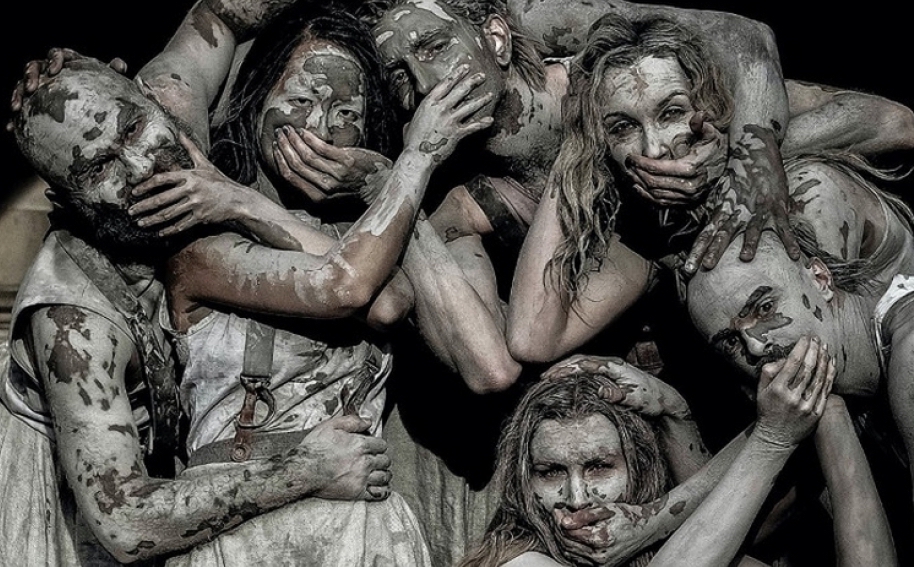
Shell Shock is an all-too familiar tale. As a society, we fail our military veterans at every turn. We pick them up, often at sixteen years of age (the UK is, apparently, the only country in Europe that routinely recruits under-eighteens), then thrust them into the most dreadful situations. What we ask of them is immense: to live apart from their families, to risk their own lives – and to kill others, should the need arise. And then, when we’re done with them, we just turn them out, expecting them to function without support in our cosy, civilian world. Surely we can do better than this?

Neil Watkin’s diaries, adapted and performed by Tim Marriott, offer us a glimpse into the troubled life of an ex-soldier. ‘Tommy’ has served in the army for thirty years, and he’s looking forward to a bit of normality, to renting a house with his girlfriend, Shell, and finding a new job. In the meantime, he’s staying with his mum and dad, and spending a lot of time at the job centre. Work is proving elusive, because he hasn’t got any qualifications, and his experience doesn’t seem to count. He’s angry all the time: if he could just get rid of the nightmares, get some sleep, maybe he’d be able to calm down? But he doesn’t want to take pills or talk to anyone, because he’s a real man, isn’t he, and real men cope…

This is an important story. If at times it feels a little stale, well maybe that’s the point. This is a commonplace situation; Tommy’s struggles are, sadly, far from rare. Still, it seems fair to say that the script might benefit from a little updating: in places, the references feel outmoded. Of course, as the piece is based on a real diary, this makes sense, but observational commentary about Big Brother and Friends falls flat, and the lengthy speech about IKEA is pretty hack. There are some genuinely affecting moments, not least at the very end, as Tommy’s suffering reaches its peak. The soundtrack is beautifully curated, and I like the use of mime alongside the sound effects: the level of understated detail Marriott achieves is impressive.

It’s good to see a decent-sized crowd in for this lunchtime show – and to be reminded that the Daparian Foundation exists, offering support to the thousands of Tommys out there.

3 stars

Susan Singfield

On Your Bike

10/08/21

the Space@Surgeon’s Hall, Edinburgh

The members of Cambridge University’s Musical Theatre Society have a lot to live up to: their predecessors were responsible for the smash hit SiX. I’d feel a bit mean for introducing the comparison, if it weren’t for the fact that they’re touting the link as a means of promotion, so I reckon it’s fair game.

And honestly, they don’t come out too badly. Okay, so On Your Bike (words by Joe Venable; music by Ben James) doesn’t have the universal appeal of a rewritten bit of history, nor the inbuilt narrative arc. But it’s a lovely, lively – and meaningful – musical nonetheless, and I am thoroughly engaged.

It’s a timely tale. Aidan (Dominic Carrington) longs to be an artist; Gemma (Ella Nevill) just wants to pay her rent. To make ends meet, they work as ‘Eatseroo’ riders. They wait outside Felicity (Claire Lee Shenfield)’s chicken shop, desperate for work, conscious all the time of the precariousness of their situation: their zero hours contracts, their poor pay, their lack of employment rights. And when Gemma is knocked off her bike, she has nowhere to turn…

Aidan’s girlfriend, Daisy (Emilia Grace), is no help. She works for Eatseroo in a different capacity: she’s a ‘proper’ worker, with an office and a salary. She’s bought into the company’s ethos, and wants Aidan to sell out his dreams.

Although the musical addresses serious issues (unionisation, exploitation, animal rights), it does so with a lightness of touch, so that it never feels hectoring. There is humour here, and tenderness, and a gentle love story – which feels all the more romantic for never being fully resolved.

The four performers all have fabulous voices, as you’d expect, and they complement each other well. The songs are upbeat and zesty, embodying the youthful spirit of the protagonists. There is archetypal musical theatre here, but James has also incorporated rock, jazz and hip hop, to vivacious effect.

Maybe Daisy’s redemption feels a little pat, and perhaps Gemma’s post-crash desperation could be highlighted a little more. But these are only quibbles: this is, without doubt, a quality piece of work.

4.4 stars

Susan Singfield

Screen 9

_MG_6274-Edit.jpg

10/08/21

Pleasance, EICC, Lomond, Edinburgh

As we enter the venue we’re offered a bag of freshly-made popcorn – and, as we take our seats, the appetising aroma of the stuff is all-pervading. The only thing to alert is to the fact that we’re not just here to watch a movie is a series of trigger warnings unfolding on the screen in front of us…

In July 2012, in a movie theatre in Boulder Colorado, during a premiere of The Dark Knight Rises, a teenage assailant entered the auditorium armed with assault weapons and started firing. In a matter of minutes, he had killed twelve people, while seventy others were injured, fifty eight of them by gunfire. He later pleaded not guilty by reason of insanity and is now serving twelve life sentences in prison.

Screen 9 is a powerful and compelling slice of verbatim theatre, based on the real life testimonies of four survivors. To say that it’s harrowing may be understating things somewhat.

Katy (Sabrina Wu) was with her boyfriend that night and he died protecting her. Mary (Hannah Shunk-Hoffing) was seriously wounded and lost one of her sons. Alex (David Austin-Barnes) saw a close friend murdered. but used his medical training to help the wounded. And Jonny (Alex Rextrew) was ‘lucky’ – he and his girlfriend escaped any physical injury, though the psychological effects of the night would stay with him forever. As the four tell their stories, I am drawn into the edgy uncertainty of their situation, particularly when the performers move to seats amongst the audience to give their accounts from somewhere behind me, their overlapping dialogue becoming ever more confused. As they speak, the screen dissolves into a series of uncertain blurred images and a thick haze fills the room. This is not for the faint-hearted.

Obviously, I’m glad I wasn’t at that fateful screening, but this uncanny retelling brings home some of the horror of the situation – and, when, during a break, the characters are drawn to discussing the subject of gun control, it’s fascinating to note that they all have different points of view. Katy wants firearms to be banned outright, but Jonny is still arguing for the right to bear arms, pointing out that if he’d had a weapon that night, he might have been able to save people’s lives. The intent of this is clear. Gun control is a complicated issue and the fact that the survivors of such a horrifying event are still able to have a rational and understanding conversation about it demonstrates the complexity of the problem. This is a subject that still needs to be fully explored.

Piccolo Theatre have created something very special here and Kate Barton’s direction takes an audience to places it may not want to go. While this is nobody’s idea of a fun night out at the Fringe, it’s nonetheless an enervating and thought-provoking theatrical experience, not to be missed.

5 stars

Philip Caveney

The Importance of Being…. Earnest?

10/08/21

The Pleasance, EICC, Edinburgh

The clue is in that question mark. Oscar Wilde’s original must be one of the best known plays of all time. But director Simon Paris has something rather different in mind. Is it possible, he wonders, to incorporate members of an audience into the play, and produce something that’s identifiable as Wilde’s creation, but with an unpredictable, spontaneous edge? And here’s the result.

It all starts recognisably enough, with Algernon (Guido Garcia Lueches) and Lane (Rhys Tees) setting up the familiar soirée and indulging in some razor-sharp banter as they go. But then we reach the point when they introduce ‘Ernest’ – and, oh no! The actor playing him has done a runner! Enter the harassed director (Josh Haberfield), who points out that there’s a live recording tonight and the show must go on at any cost. So he quickly enlists the services of a woman from the crowd to embody the central role. She’s whipped backstage, decked out in some period clothing and let loose to strut her stuff amongst the other members of the cast – which, I have to say, she does with considerable authority and to much hilarity.

Enter Lady Bracknell (Susan Hoffman), Cecily (Louise Goodfield) and Gwendolyn (Trynity Silk), who must all interact with ‘Ernest’ as best they can, but we’re just getting started. As the play progresses, the professional actors are forced to leave the stage one after another, for a whole variety of reasons. Too much alcohol? Check! A part in a Harry Potter production? Ditto! The resulting gaps are promptly filled by other members of the audience.

It’s roistering, good-natured stuff and the actors – with much help from the ever-inventive stage manager, Josh (Benn Mann) – have to work hard to cover the confusion and ensure everything makes sense. The result is fast, frenetic and farcical. Garcia Lueches enacts a brilliant sword fight – with himself – and there’s a delightful sequence where a drunken Gwendolyn staggers around the stage flailing with a metal tray at anyone who steps into range. Oscar Wilde will probably be turning in his grave, but nonetheless, this is the kind of show that exemplifies the Edinburgh Fringe and one that delivers a truly interactive experience.

There hasn’t been much to make us smile of late, so this jaunty production is particularly welcome. Come on, get down to The Pleasance EICC and be ready to do more than just watch!

4 stars

Philip Caveney

Mediocre White Male

07/08/21

Assembly Roxy, Central

Mediocre White Male is a cunningly structured monologue, which starts with the protagonist (played by Will Close) performing a few lines in character as the resident ‘ghost’ in a stately home somewhere in Winchester. But it isn’t long before those melodramatic proclamations are abandoned and he’s climbed down off his plinth to chat informally with the audience. He confesses himself bewildered by the complexities of modern life, and by sexual politics in particular.

Why can’t he refer to his young female colleagues as ‘girls,’ he wonders? Why must be endure workshops on the subject of gender equality? He’s thirty years old, for goodness sake! Surely his experience must stand for something?

The nuanced script by Close and his co-writer, Joe von Malachowski, might have been better suited to a more intimate venue. In the lofty surroundings of the Assembly Roxy, the opening sections of this feel distanced, rather than just socially distanced – and it takes a while before the narrative really begins to hook me in. But hook me it eventually does, at first making me feel sorry for this much put-upon character, who seems horribly misunderstood by everyone who knows him. Sidelined by his friends, shunned by his colleagues, he nurtures a deep sense of regret for a relationship that went badly wrong, back in his youth. What happened ten years ago has changed his life. He’s now a loner, still working in the uninspiring job that was only meant to be a temporary position.

It’s only as his tale enters its later stretches that I begin to fully appreciate what this story is really about- that what’s actually being related here is a tale of toxic masculinity, one that deftly demonstrates how white male privilege can assert such a powerful grip. The full impact of the deception is cleverly held back until the final line of dialogue.

Okay, if I’m honest, I feel this would work better if the character were older – some of the ‘bewildering’ things our protagonist mentions ought to fit easily enough into the wheelhouse of your average thirty year old – and those early sections would benefit from a more humorous approach. If the audience began by laughing out loud, rather than just chuckling, the monologue’s latter stages would be all the more affecting.

But Close is nonetheless a compelling narrator and it’s an interesting – and thought-provoking – piece of theatre.

3.8 stars

Philip Caveney
Corpsing

07/12/21

the SpaceUK Triplex, Hill Place, Edinburgh

Well, it’s been a long time coming, but live theatre is back, and – here at Bouquets & Brickbats – we feel as though all our Christmases have come at once (and, by Christmas, we mean the usual, fun-filled occasion, not the travesty of last year’s non-festive damp squib). And what better way to start than with Edinburgh-based Red Rabbit Theatre’s Corpsing, a new comedy-drama by Callum Ferguson and Lewis Lauder?

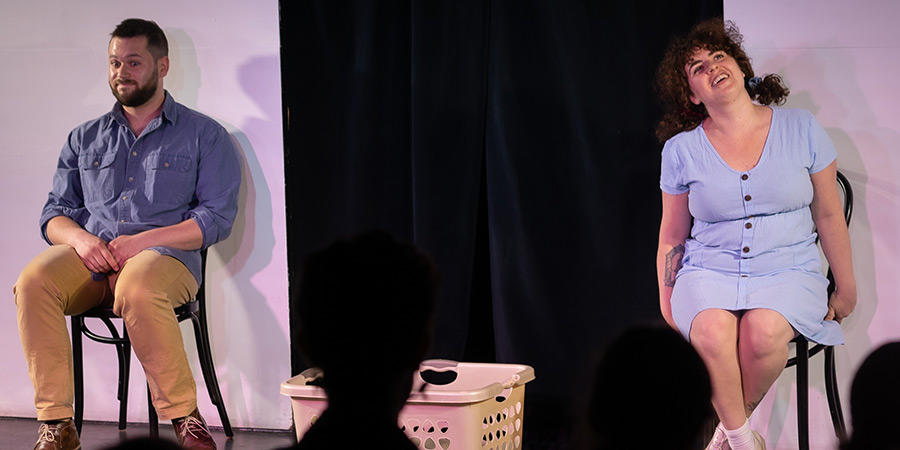
It tells the tale of Elliot (Dillon MacDonald), a recent graduate of Imperial College, London, armed with a degree in business studies and a newly-inherited funeral parlour. Elliot only ever met his grandfather once, so he’s not exactly overcome with emotion to learn that the old man is dead; instead, he’s keen to grasp the opportunity to run his own company, and put his theoretical knowledge into practice. Unfortunately for Elliot, his grandfather’s assistant, Charlie (Lewis Gemmell), soon lets slip that things haven’t always been done exactly by the book… and a trawl through a pile of unopened letters reveals another surprise: an auditor is arriving. Tomorrow.

What ensues is a playful three-hander, with dead bodies and misunderstandings a-plenty. The auditor, Fiona (Anya Burrows), is disarmingly friendly, but her inane chatter and frequent giggles mask a steely nature. How will Elliot and Charlie keep their business afloat?

There is a lot to like about this play. It’s laugh-out-loud funny in places, and the three actors work well together; despite being heightened for comic effect, their characters are all believable as well as distinctive. Gemmell clearly revels in the role of funnyman, but MacDonald and Burrows make great stooges; this is clearly a real team piece.

Okay, so I do have a few quibbles. The script sags a little at times: the conversation between Elliot and Charlie about the pros and cons of euthanasia, while interesting, outstays its welcome, and there’s perhaps too much exposition in the final scene. And it has to be said, there are a few plot-holes – why does Charlie need to wrap corpses in bin-bags, for example, and drag them to the premises? Aren’t there coffins and hearses here? There’s also more stage traffic than there needs to be: the set changes are unnecessarily complicated (why waste time swapping two very similar tables, when one would work just fine?), and I find myself irked by the empty file that’s supposedly ‘full of documents’ and the plastic water bottle labelled ‘champagne.’ Of course, I don’t expect expensive props in a Fringe piece, but these do feel a bit school-play, which is a shame, when the piece is – in general – rather good.

If you’re looking for a fun, light-hearted and engaging way to spend an hour – in a room with real people watching a real performance in real time – then you could do a lot worse than this.

3.4 stars

Susan Singfield

The Dumb Waiter

07/07/21

Old Vic: In Camera

Some questions are no-brainers. Would I like to see The Old Vic’s production of The Dumb Waiter by Harold Pinter? Well, as I consider it to be among the finest one-act plays in history, the answer to that is a resounding yes.

Am I able to be part of the socially-distanced audience for one of its live performances? Well, no, that’s awkward. It’s a long way from Edinburgh to London – but luckily, for a small fee, I can choose to watch it online as it is transmitted live, so it’ll be the next best thing to actually being there.

And who are the chosen performers for this production? David Thewlis as Ben and Daniel Mays as Gus. When I think about it, I can’t come up with two more appropriate actors for those roles. Thewlis promises to be a perfect fit for the snappy, irritable Ben, while Mays, with his perpetual hangdog look, is just right for his hapless subordinate, Gus.

The tickets are duly booked and a reminder is popped into the diary. All good.

The Dumb Waiter first arrived on the London stage in 1960 and, in many ways, it’s the play that first cemented Harold Pinter’s reputation. It’s the tale of two hit-men, sequestered in a grubby room, waiting to kill whoever walks through the doorway. The room is pretty featureless apart from the titular dumb waiter, and the men’s rambling conversation is punctuated by a series of seemingly meaningless instructions that are delivered within it.

Of course this antiquated piece of machinery is a metaphor for something – and the beauty of the play is that a viewer’s interpretation of what it might actually represent can be wide-ranging and inventive. Across the years, I’ve seen this performed in various venues and, back in the dim and distant past, have even been part of a youth theatre production of it. The play has been a huge influence on so many other productions – Martin McDonagh’s wonderful film In Bruges, for instance, clearly owes it a considerable debt.

So, the play begins at the appointed time, and yes, Thewlis and Mays are every bit as good as anticipated. Perhaps it doesn’t help that I know the script so well I could probably be working as a prompt – so there was never any chance of surprising me here, since director Jeremy Herrin has opted to play it straight, sticking to the original staging. What’s missing, of course, is the subtle electricity that’s generated by being present at the actual event, the indefinable frisson of watching the play unfold right in front of my gaze without the inevitable distancing that ensues whenever a play is turned into a movie.

In short, I’m still longing to return to the theatre for real. Until that time, The Dumb Waiter is a fine way to pass an hour and I urge you to watch it while you still have the chance. You’ll find the link here: https://www.oldvictheatre.com/whats-on/2021/live-stream-from-home/old-vic-in-camera-the-dumb-waiter

4 stars

Philip Caveney

Adam

15/03/21

BBC iPlayer

Trans men must be one of the most under-represented groups in the UK. I read a lot of news; I watch a lot of films and, when there are no pandemic restrictions, I am an avid theatre goer. But, despite the (anecdotal) fact that I know more trans men than I do women, I very rarely see them referred to; their stories largely seem to go untold.

Adam, then, is important not just because of what it says, but because it exists at all – and on a mainstream platform too. The BBC is under fire at the moment, but we shouldn’t forget what it offers us. If commercial viability is the only factor by which content is judged, marginalised people remain invisible to the masses, their experiences rendered forever ‘fringe.’

Indeed, Adam premiered at the Edinburgh Fringe in 2017, a National Theatre of Scotland production at the Traverse Theatre, where it was highly acclaimed. This new version, written by Frances Poet and directed by Cora Bissett and Louise Lockwood, again stars Adam Kashmiry as himself, and chronicles his experiences as an Egyptian trans man, alone and frightened in a Glasgow flat, awaiting the results of his asylum application. Adam can’t return to Egypt: revealing his true identity there could result in his death. But he can’t use his gender identity to claim asylum in the UK until he transitions, and he can’t transition until he is granted asylum. Trapped in this double bind, no wonder Adam struggles to cope…

This hour-long film is beautifully constructed. It does always feel more like a play than a movie, but that’s not to its detriment. Yasmin Al-Khudhairi appears as Adam’s female-looking outer self, and offers us an occasional and understated glimpse into how others perceive him. The rest of the supporting cast is strong too, especially Neshla Caplan as a sour-faced immigration officer. But this is Adam Kashmiry’s story, and it is his film too: his performance is compelling, haunting – and heartwarming. Because, although this story is one of unimaginable hardship and pain, it’s also one of triumph over adversity. Here he is: a free man, telling his own tale.

4.4 stars

Susan Singfield

A Gambler’s Guide to Dying

26/01/21

Traverse Online

We’re a little late to this one, which is a shame because A Gambler’s Guide to Dying, written and performed by Gary McNair, is a charming and engaging monologue, a delightful way to fill a spare hour. It’s the story of the narrator’s grandfather, a hardbitten Glaswegian, who discovers a love for betting on a long shot, even when such an approach incurs the wrath of the drinkers in his local bar.

Undeterred, Granddad continues with his mission, placing an accumulator bet every day, never spending any of his winnings, and always keeping an eye on the potential millions he might one day be able to leave for his family. When he is diagnosed with a fatal illness, he even spots an opportunity to turn that into a lucrative betting proposition.

Can he somehow outlive the remaining time that his doctors have predicted for him?

This could so easily have been mawkish and overly sentimental, but McNair’s approach is too skilful to allow that to happen. The marvel here is that the narrator manages to take on several roles in this story, never relying on costume changes or make-up, but just adding subtle vocal inflexions to identify each character. Gareth Nicholls’ and Siri Rødnes’s simple but effective direction develops this, positioning the camera to establish who is who, so that I’m never in any doubt as to which of them is speaking at any given moment, even when it’s a quick-fire exchange of words between grandfather and grandson.

I also love that McNair steadfastly refuses to offer a straightforward happy ending to his tale, yet somehow manages to use the gut-punch of failure to give his story a realistic, yet satisfying conclusion. The tragedy here is that this little gem will only be available to stream for one more day.

Do try to catch it.

4.2 stars

Philip Caveney

Hamilton

15/01/21

Disney +

Yes, I know, I know. What took us so long?

Well, I’ll be absolutely honest. I had some trepidation about watching this and most of it can be attributed to one three letter word. Rap. I haven’t previously been known for my appreciation of that musical form. Furthermore, I’m also unashamed to say that I’d never heard of Alexander Hamilton until Lin Manuel Miranda’s celebrated musical took the world by storm. But, finally here it is on Disney +, just waiting for me to get up the courage to press the button. Eventually, I can put it off no longer…

And of course, there is a large helping of humble pie waiting to be consumed. And while some of this most assuredly is rap – even in my ignorance, I picked up on a brief homage to Grandmaster Flash and the Furious Five – for the most part it’s an assured musical packed with memorable songs and some swaggering performances.

Alexander Hamilton (Lin Manuel Miranda) was an American statesman, politician , military commander, lawyer, banker and economist. (But what did he do in his spare time, you might ask?) The musical follows his progress from eager student to influential founding father; it marks his first encounters with Aaron Burr ((Leslie Odom Jnr), and his time as right-hand man to George Washington (Chris Jackson). There’s his romance and marriage to Eliza (Phillipa Soo), his platonic relationship with her sister, Angelica (Renée Elise Goldsberry), and his skirmishes with Thomas Jefferson (Daveed Diggs). Whenever things threaten to become a tad too serious, up pops Jonathan Groff as a simpering, preening King George, to lament about the loss of his colonies, accompanied by a jolly, bouncing melody.

After some initial reluctance, I find myself increasingly drawn into the story. It’s a complicated one that lends itself surprisingly well to the disciplines of the form. It’s interesting to note that when Shakespeare’s plays were first produced, they were performed in iambic pentameter, the voices strictly tied to the rhythm, which is, in a way, what Miranda is doing here, the different vocal exchanges perfectly judged and executed.

And, while it’s mostly about the songs and the incisive wordplay, there are also plenty of theatrical flourishes to catch the eye, excellent ensemble choreography, superb costumes and some astute stagecraft. Hamilton looks like a class act and that also contributes to its success.

So, yes, I’m glad I finally watched this and also I’m pleased that I learned something about an era of American history I previously knew little about. Strangely, with everything that’s happening in the USA right now, maybe I saw it at exactly the right time.

4.2 stars

Philip Caveney