Theatre

Jack Absolute Flies Again

18/10/22

NT Live: The Cameo, Edinburgh

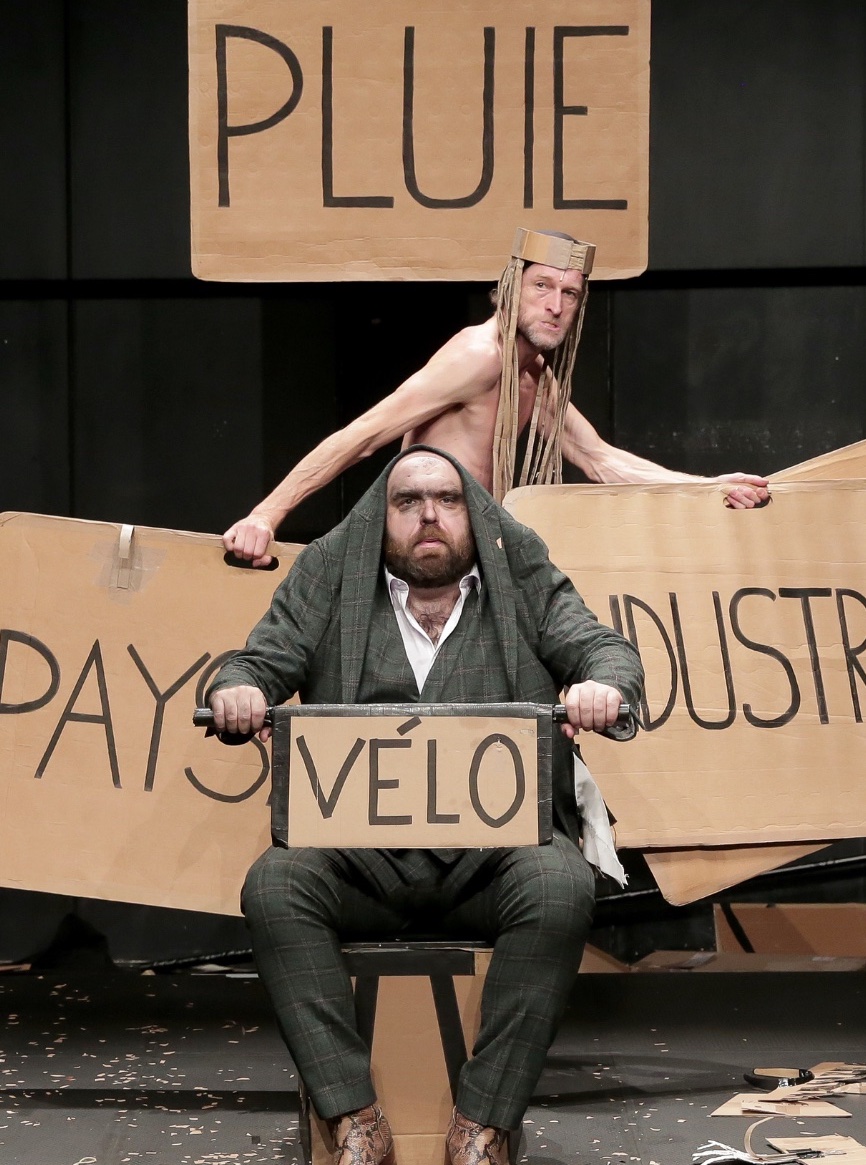
Daytime cinema always feels like playing hooky. A sign that – for today – fun has priority. And NT Live screenings have the same ‘getting away with something’ vibe. I’m watching a play in London, but – shhh, whisper it – I haven’t left Edinburgh. So this afternoon’s indulgence, Jack Absolute Flies Again, is the double whammy: a National Theatre production at lunch time on a Tuesday! And in our favourite picture house too…

Based on Sheridan’s The Rivals, Richard Bean and Oliver Chris’s production exemplifies ‘rollicking’. It’s a silly, frothy, feelgood piece of theatre – and I absolutely love it.

The action has moved from the late 18th century to the early 20th – specifically to World War 2 – and Malaprop Mansion has been requisitioned by the RAF. The titular Jack (Laurie Davidson) is a pilot, stationed in the grounds. He’s in love with fellow pilot, Lydia Languish (Natalie Simpson), who just happens to live in the mansion with her aunt, Mrs Malaprop (Caroline Quentin). Lydia, however, is infatuated with northern mechanic, Dudley Scunthorpe (Kelvin Fletcher), who, in turn, has a thing for Lydia’s maid, Lucy (Kerry Howard). Throw in a couple of other pilots vying for Lydia’s attention, a jealous fiancé and the ever-present spectre of death (these are military people, after all), not to mention Mrs Malaprop’s attraction to Jack’s father, Sir Anthony Absolute (Peter Forbes), and you’ve got quite the heady mix…

This comedy of errors is beautifully handled, all knowing nods to the audience, and perfectly executed groan-out-loud jokes. Sure, we can see the punchlines coming from cruising height, but that’s the point: the laughs are garnered in the gap, the moment when we know what’s coming before it lands. Quentin is particularly funny, clearly relishing the Malapropisms that litter her speech. They are so plentiful they make Sheridan look positively restrained, but their abundance works, again prompting us to pre-empt what she might say (Chekhov’s clematis, if you will). Howard also proves to have that comic edge, and I like her character’s frequent references to the theatricality of the piece, reminding the audience of the genre and what they ought to expect.

The set is delightful: all bucolic beauty and architectural elegance. Its chocolate box design suits the tone of the piece, and I especially like the doll’s house effect, when the mansion opens to reveal the rooms within. Ironically, the only things that don’t translate well to the cinema are, well, the cinematic sequences. I’m sure they’re impactful in the vast Olivier auditorium, but they are diminished by the live-screening process.

The ending is something of a shock, deliberately jarring. I won’t go into any detail (no spoilers here), but – on reflection – I think it works. It’s a brave choice, but probably the only one that makes sense, given the context. It feels tonally different from the rest of the piece, but I guess that’s the point. We all plod along, don’t we, dealing with the minutiae while the big stuff happens around us. Until…

There are a few more ‘encore’ screenings of Jack Absolute over the next month or so. If you’re in need of a laugh, take advantage of NT Live and give your local cinema a much-needed boost at the same time. You won’t regret it.

4.2 stars

Susan Singfield

Made in China

11/10/22

Traverse Theatre, Edinburgh

Janet (Jo Freer) lives in Wishaw, near Glasgow. Her daughter Tash’s birthday is fast approaching and Janet is frantically trying to procure the weird selection of fripperies Tash says she simply ‘has to have’ if her party is to be a success. When she demands some novelty lights in the shape of… er, aubergines, who is Janet to argue with her? She obligingly opens the Amazon app and clicks through her order.

Meanwhile, in China, Hui Ting (Amber Lin) is working long shifts at a factory, where such dubious items are produced and packaged, before being shipped all around the world. She has much to contend with, struggling to meet her targets and constantly being fined for trivial matters – even, in one case, for having her period at an inconvenient time. But she has a powerful motive for working around the clock: she doesn’t want her daughter to end up in the same position.

And then Janet discovers a scrap of paper in her latest order, something that Hui Ting has scribbled in a rare free moment and accidentally dropped into the box. Janet decides that she needs to find out what the note means. It takes her a while but, once she has an answer, she’s compelled to reappraise the way she lives her own life…

Made in China is a deceptively simple two-hander, the latest offering from A Play, a Pie and a Pint. On a stage festooned with cardboard boxes, the women appear to work side-by-side, their lives intertwined, even though they never interact. Playwright Alice Clark cleverly draws out the fascinating parallels between the two, and shows the kind of ripple effect that can be initiated by even the most innocuous form of Western consumerism. Both Freer and Lin make their characters utterly believable. I love Janet’s snarky, self-deprecating tone and I love too that Hui Ting is not presented as saintly, but as somebody who has her own agenda and is quite prepared to bend the rules in order to achieve her goals.

Clark’s eloquently written play alternates between harsh reality and the enduring allure of dreams. Philip Howard’s direction brings this prescient piece to a satisfying conclusion. As polemics go, it’s one of the best I’ve seen in quite a while.

4.1 stars

Philip Caveney
James IV: Queen of the Fight

05/10/22

Festival Theatre, Edinburgh

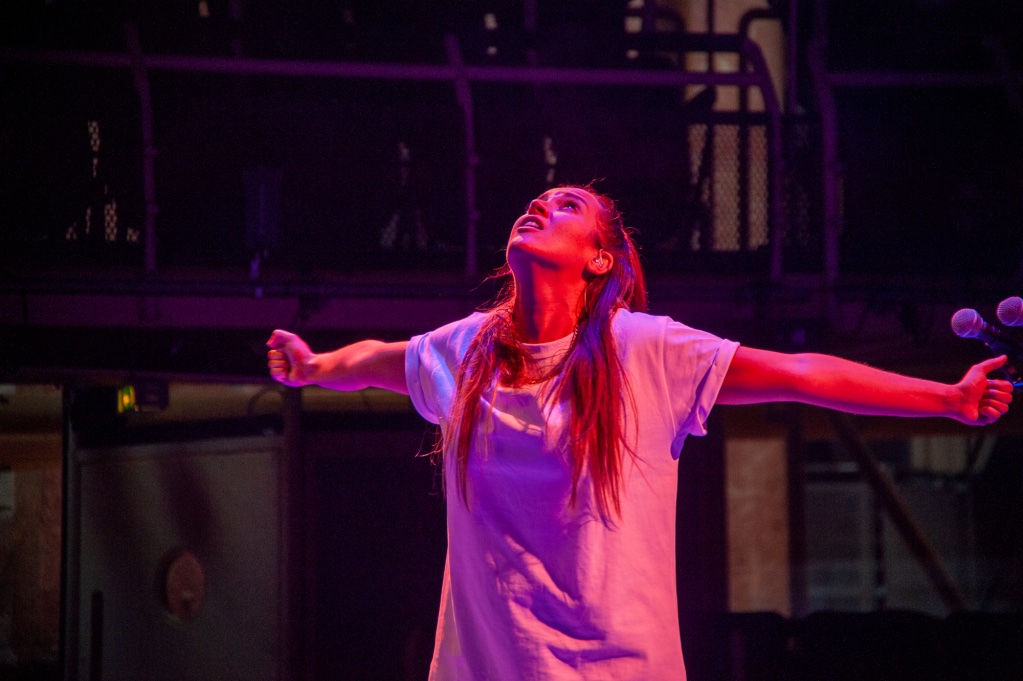
For the fourth part of her epic series about Scottish history, Rona Munro chooses to focus her gaze upon a little known episode in the reign of James IV – the influence of two ‘Moorish’ women on the Scottish court and the events that lead to the writing of Ane Blak Moor, a derogatory (and openly racist) poem written by the Makar, William Dunbar (Keith Fleming).

In 1504, Lady Anne (Laura Lovemore) and her servant, Ellen (Danielle Jam), arrive at the Scottish court. Anne is to be lady-in-waiting to James’s young English bride, Margaret (Sarita Gabony), so Ellen is left to form her own alliances. She soon finds a role within the royal household – as an entertainer – and eventually finds herself the confidante/lover of King James (Daniel Cahill). She plays the titular ‘Queen of the Fight’ – a kind of MC – in the symbolic tournaments he leads. But Margaret’s jealousy of the woman she perceives as an interloper will have significant consequences for James and his followers – and shows how, even though the King apparently champions diversity, when push comes to shove, racism rears its ugly head.

The real strength of this production is the way that Munro finds contemporary echoes in these historical characters, who talk and act like the kind of people you might encounter in modern-day Edinburgh. This is particularly apparent in Dunbar, who is obliged to cut his cloth according to the changing mood, in order to eke a meagre living from his writing. His grumpy observations about his precarious existence put me in mind of a typical freelancer, forever having to apply himself to the fickle moods of the court. Clearly some things never change. (No, no, never been there myself…)

This is a handsomely mounted production, from Jon Bauser’s elaborate set designs to the sumptuous costumes by Karen Short. (I love the way the play begins with the characters in contemporary clothes, before they are dressed in their period finery.) There are some wonderfully boisterous fight scenes too, the participants swinging broadswords at each other with wince-inducing gusto.

There’s so much to enjoy here – I’m especially amused by Gabony’s petulant, seventeen-year-old bride, too moody to even get out of bed – and there are Dame Phemy’s delightfully caustic remarks (Blythe Duff); she has worked in the court longer than anyone and has everybody (including the King) dancing to her tune.

Queen of the Fight is proof, if ever it were needed, that historical fiction doesn’t have to be dull and strait-laced. Here is a production that positively thrums and pulses with energy and one that genuinely earns an exuberant and heartfelt ovation.

4.6 stars

Philip Caveney
He Who Opens the Door

04/10/22

Traverse Theatre, Edinburgh

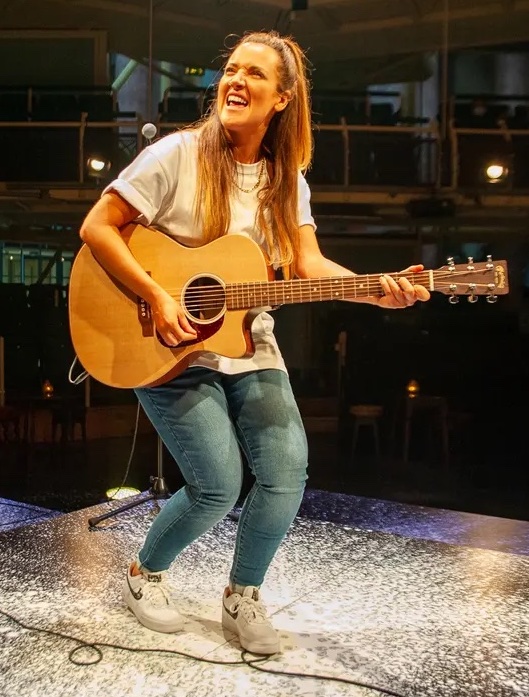
The ‘Play Pie Pint’ season continues, and this week’s offering is a dark comedy by Ukrainian playwright, Neda Nezhdana. The morgue where Vera (Louise Stewart) works is situated in an underground bunker, originally built as a bomb shelter. For Vera, this is just a normal, boring nightshift, babysitting the dead: filling out paperwork, flicking through a magazine and half-heartedly exercising – anything to pass the time. But then Vika (Yolanda Mitchell) stumbles from the freezer into the office, still drunk from the night before. She doesn’t know where she is, or why there’s a tag on her foot. Vera faints at the sight of a walking corpse and, when she comes round, she’s confused. Is Vika alive, or is Vera dead? Suddenly, shockingly, the two women realise the doors are locked and Vera’s phone has no signal. And then the landline rings…

He Who Opens the Door has been adapted by John Faradon, and – although the setting is still Ukraine – there’s a distinctly Scottish flavour to this production. I can see what director Becky Hope-Palmer is aiming for but, for me, this muddies things somewhat. It’s a metaphorical play, “reflecting the limbo for some people in eastern Ukraine, caught between opposing forces”, but I’m not immediately aware of where I am supposed to be: the signs, flags and magazine title tell me one thing, while the tone tells me another. Likewise, the programme says ‘present day’ but that’s not quite true: the script pre-dates the Russian invasion. This adds to my confusion, as I try to piece together what it all means. Not all of the jokes land, either, although the more serious points are eloquently made. I have to confess I’m a bit uncomfortable with Vera’s anti-abortion rhetoric (in particular, the assertion that women are always damaged by the process), and I’m not sure how this particular revelation contributes to the discourse. Still, this is only one idea amid a kaleidoscope of other, more enticing hypotheses about autonomy and independence.

In truth, there’s a lot of good stuff here. Both Stewart and Mitchell deliver strong, compelling performances, and it’s a lively, engaging piece. There are echos of Beckett in the waiting and uncertainty, and of Pinter too: those enigmatic phone calls reminiscent of the notes the dumb waiter delivers to hitmen Ben and Gus. Impressively, Hope-Palmer manages to convey a sense of time passing inexorably, as the women await their fates, while simultaneously offering us a play that gallops along at pace. Amidst the existential dread, there is dancing and singing; in the darkness, there is light.

He Who Opens the Door is not an easy play, but it is a fascinating one, and I can’t think of a more fruitful way to spend a lunchtime.

3 stars

Susan Singfield

Break My Windows

27/09/22

Traverse Theatre, Edinburgh

In an economy dominated by ‘funnel the capital upwards’ juggernauts like Uber, Yodel and Deliveroo, Eric (Tom McGovern)’s new company, Bring Me Wheels, is the logical conclusion. They all require drivers, right? So why not combine them, and concentrate even more money in a single pair of hands?

Speaking of hands, Eric has his fingers in a lot of pies, but Bring Me Wheels is especially close to his heart. He’s using it as an excuse to rebuild his relationship with his twenty-three-year-old son, Brandon (Ross Baxter), who hasn’t – as yet – got much to boast about on his CV. What better way to set him up than to make him manager of his dad’s shiny new start-up? But Brandon’s boyfriend, Sam (Jamie McKillop), has a lot to say about the inequities of late-stage capitalism, which puts a spoke in the Bring Me wheel. A bit of reading soon convinces Brandon that he’s not too keen on the business’s exploitative practices, although he does like living in a fancy flat and driving a brand new Tesla…

David Gerow’s script is nicely paced, and there’s plenty of humour to lighten the outrage. Directed by Ken Alexander, Break My Windows is as much an exploration of relationships as it is of the gig economy, and the chemistry between the three actors is palpable. At times it’s horribly tense, with Eric and Sam both entrenched in diametrically opposed views, and Brandon caught unhappily in the middle, snarked at by both of them, and repeatedly told to “keep your feelings out of this”. The politics are a little simplistic, perhaps, but that seems realistic too: you don’t have to spend too long on Twitter to see how binary and glib so-called debate can be. McGovern’s Eric is particularly funny – and strangely appealing, despite the odious views he espouses.

This thought-provoking piece is part of the latest A Play, a Pie and a Pint season, and it’s very fitting for a slice of lunchtime theatre.

3.7 stars

Susan Singfield

The Osmonds: A New Musical

22/09/22

Festival Theatre, Edinburgh

It’s late September, the theatres have been dark for the best part of a month, and we finally come back to… this. It’s probably fair to say that I’m not in the ideal demographic for The Osmonds: A New Musical but, looking down into the stalls of the Festival Theatre, it’s clear at a glance that a lot of women are here tonight, revisiting their teenage crushes – and they are having a great time. Some of them are even wearing the T shirts.

I was never an Osmonds fan. I was aware of them, of course, and – whichever way you look at it – they were a phenomenon, a seemingly unstoppable pop juggernaut. Originally a foursome of squeaky clean school kids, drilled to perfection by their army veteran father, George (Charlie Allen), and occasionally comforted by their Mom, Olive (Nicola Bryan), the boys were taught that family was everything and that it didn’t matter who was leader, as long as it was an Osmond. These were the kids who were ‘discovered’ in 1962 by family crooner Andy Williams, and who eventually signed a five-year contract for weekly appearances on his TV series. They consequently grew up in the unforgiving glare of a massive spotlight and, over the years, they sold over one hundred million records. Think about that for a moment.

One. Hundred. Million.

It really ought to be a fascinating tale but the clunky storytelling means it’s never really allowed to take flight; there’s far too much telling and not enough showing. Too often, we cut away from the more interesting stuff for a (very accurate) rendition of one of a long list of songs – although I can’t fault the performances, which nail with aplomb the brothers’ respective singing styles. 

The story is told from the perspective of Jay (Alex Lodge), the tall one who was usually positioned in the middle. It’s his spin on the tale – as transcribed by Julian Bigg and Shaun Kerrison – that powers this version of events and it’s interesting to note that George’s relentless approach to childcare is barely criticised, and that there’s barely any mention of the family’s Mormon religion. Naturally, towards the end, there’s a bit where the other brothers acknowledge that Jay was right about everything and they should have listened to him. Of course there is.

Most of us know the trajectory of the group: how Donny (Joseph Peacock) and his kid sister, Marie (Georgia Lennon) became TV stars in their own rights, and how the other brothers were eventually relegated to backing band status, obliged to goof around in hokey costumes behind their younger siblings – and how, in the 1980s, the family’s attempt to set up their own production company back home in Utah resulted in devastating financial ruin, obliging them to tour the world for two years in order to pay back every cent they owed. 

The first half works well enough, moving slickly along like a well-oiled machine, as the boys rapidly ascend to stardom. The costumes are spot on, the choreography is inventive and the hits keep on coming. The second half, however, feels somehow rather inert, with the brothers quarrelling, suffering from emotional distress and trying to apportion blame for their predicament. Time after time, more songs are offered as fillers (though to see Peacock perform Puppy Love to hordes of screaming women is certainly something to behold). 

Sensibly, they hold Crazy Horses till the end. That uber-heavy riff that wouldn’t have disgraced Motörhead in their prime even has me jiggling in my seat.

As the curtain falls, there’s no doubting the excitement of those fans down in the stalls, who are up on their feet applauding. The Osmonds is an accomplished jukebox musical, but I’m left with the distinct conviction that, with a better script, it could be more than that.

3 stars

Philip Caveney

Headcase

27/08/22

The Pleasance Courtyard (Beside), Edinburgh

Edfringe 2022 is gradually coming to a halt. Technically, there are still a few more days to go, but for us, sadly, this is where it ends. There are other places we need to be. As ever, after the buzz of watching and reviewing fifty-plus productions, we’re exhausted and looking forward to a rest.

But there’s still one last show to see.

Headcase is a memoir of sorts, written and performed by Kristin McIlquham (she’s quick to tell us that nobody ever knows how to pronounce her surname). On our way in, we’re provided with little red notebooks, because this is a show all about making lists. She’s been doing it for much of her life. ‘To do’ lists, mostly. You know the kind of thing. ‘Get a decent boyfriend, buy a flat in London.’ And now, fast approaching forty, she makes a new one. ‘Write a play about what happened to my dad. And get a brain scan.’

When she was six years old, Kristin’s father suffered a brain aneurysm. He was in a coma for some time and, when he finally emerged from sleep, he no longer recognised his own family and had to learn how to do things that should have been second nature to him. And he had to come to terms with what had happened to him. Now it’s Kristin’s turn to do the same. That title was his suggestion, by the way, based upon his favourite joke. He’s gone now, but Kristin’s passion to tell his story remains.

Headcase is an interesting piece, both funny and poignant. The stage is stacked with transparent packing boxes, filled with hundreds of notebooks, no doubt symbolising the emotional baggage Kristin has accumulated over the years. Every so often, she takes items from those boxes or from the leather tool belt around her waist, items that prompt certain memories. Musical cues tell us exactly where we are in the story. Along the way, Kristin fields awkward phone calls from her mother and is constantly interrupted by the voice of her therapist (Juliet Garricks) and, at key points, her father (Nicholas Karimi), a garrulous Glaswegian, with a habit of saying the wrong thing.

Nicely paced, the story switches from incident to incident, never losing momentum. I would like to see the notebooks we are given – and the things we’re asked to write in them – more convincingly integrated into the piece but, nonetheless, this is engaging stuff, designed by Zoë Hurwitz and directed by Laura Keefe. It’s a satisfying way to finish off what’s been an exciting and talent-packed Edinburgh Fringe.

And on that note, good night and goodbye, Edfringe 2022. We’re already looking forward to seeing you again in August 2023.

4 stars

Philip Caveney

Intruder (Intruz)

25/08/22

Summerhall (Anatomy Lecture Theatre), Edinburgh

I’m sitting in a lecture theatre and a man is writing rude words on a chalkboard, pausing occasionally to give me a stern look whenever I get a fit of the giggles. I’m not exactly sure why this is so funny, but it really is. And then the lecturer begins to tell his story and it’s not funny any more.

His name is Remi and he moves from his native Poland to Glasgow in order to pursue his dream of being an actor. But one night, walking home, he is accosted by two men who rob him and beat him up. The attack affects him profoundly, stirring within him a sense of paranoia, that steadily gets worse until it threatens to overwhelm him.

Written and performed by Remi Rachuba and directed by Marcus Montgomery Roche, Intruder is a difficult play to get a handle on. Rachuba is a fearless actor, who expends so much energy during the show you feel he could run the National Grid all by himself. Arranged on the floor in front of him are pairs of shoes which he uses to signify the different characters and situations he’s talking about. (Was it Lawrence Olivier who famously always began with the shoes?) Remi changes roles as easily as he changes his footwear.

I love the repeated tics that he employs to denote his deteriorating frame of mind: those uneasy glances over his shoulder, the shuddering paroxysms when his dark thoughts overwhelm him. I also love the simple gleefulness of the dance routine he indulges in on one of the rare occasions when he feels happy.

But there are some issues here. I’m not always entirely sure where and when a particular scene is set. There’s much talk of Glasgow, but then I hear him mention places I know are in Edinburgh. Of course, this might be intentional, but it throws me occasionally. And, while it’s only right that some of the lines are delivered in Polish, this also adds to a sense of disorientation.

Rachuba is an extraordinary stage presence and it will be interesting to see where he goes next. Meanwhile, there are just two more chances to catch this intriguing show.

3.6 stars

Philip Caveney

The Ofsted Massacre

25/08/22

The Space @ Surgeon’s Hall (Grand Theatre), Edinburgh

In its opening stretches, The Ofsted Massacre feels horribly familiar, taking me back to my old job in secondary education. Head teacher Ros (Florence Chevallier) calls an emergency staff meeting, and tries to sound upbeat as she delivers the dread news to the staff of her FE college: “We’ve had The Call.” Anyone who’s worked in a school knows exactly what that means. An Ofsted inspection: a high-stakes obstacle course on an un-level playing field. The dice have been cast in advance, and the bouquets and brickbats are already inscribed – but still you have to drive yourselves onwards, just to survive. Phil Porter’s script feels like it’s been torn from the inside of a stressed-out teacher’s head: a revenge fantasy, born of despair.

It’s also a very funny play, drawing on Shakespeare, while lampooning staffroom stereotypes and exposing every cliché. Bullish head teacher with an inferiority complex? Tick. Ruthless business manager in a designer suit? Tick. Bumbling classics teacher, littering his speech with Latin? Tick. Ditsy RS teacher who doesn’t know what’s going on? Tick. Badger in the dining hall? Ti… wait; hang on a moment; what? They’re clever caricatures: instantly recognisable types, but imbued with enough humanity to add up to a lot more than that.

At first, the focus is on internal disputes and divisions. Business manager Liz (Lila Skeet) has a plan to game the system: send the ‘naughty’ kids on a trip with the weakest member of staff, and bring in super-teacher, Yvette (Amelie Scott), to plug the gap. Meanwhile, the janitor, Frank (Jake Francis), is dispatched to place a bug in the inspectors’ office, while nervous NQT Dylan (Lara Pilcher) is given the job of listening in…

But when lead inspector Mark (Toby Anderson) tells Ros that, despite her best efforts, failure and Special Measures loom, the staff finally unite – to form an army. And mayhem is unleashed…

This production, by Kingston Grammar School’s sixth form drama students, is a triumph. The young cast embrace their roles, eliciting gales of laughter from the audience with their well-timed punchlines and impressive slapstick. One standout moment is the revelation that drama teacher Joe (Fin James)’s relationship with his ex, Liane (Isabella Walsh-Whitfield) – now an inspector – failed because Joe just couldn’t let go of the past, couldn’t stop thinking about ‘him’, talking about ‘him’, focusing on… Michael Gove. Anouk Busset, as RS teacher Felicity, is a study in physical comedy, her heightened state of confusion a wonder to behold. Amelie Scott is also very funny indeed, her Little Miss Perfect act honed to, well, perfection.

The Grand Theatre can be an awkward space to perform in. Although it’s a big, airy room with a large stage, there are no wings, and so the backdrop is used for entrances and exits, which often looks clunky. KGS’s directors (Stu Crohill et al) show that it can be done: I think this is the first time I’ve seen a play here without being aware of this problem. Set changes and transitions are also elegant – despite the staffroom scenes requiring six large chairs – an object lesson in zero-fuss, well-orchestrated stage management (Phoebe Bowen et al). Camille Borrows and Meg Christmas deserve a shout-out for the costumes: they’re spot-on, and I’m impressed by the attention to detail as they deteriorate, along with the college’s chances of success.

There’s only one more opportunity to catch this show at this year’s Fringe. Don’t miss out – you’re in for a treat. Especially if you’ve ever dreamed of getting your own back on Ofsted…

4.3 stars

Susan Singfield

Making a Murderer: The Musical

24/08/22

Underbelly Bristo Square (Cowbarn), Edinburgh

Like millions of others across the UK, I was transfixed by the Netflix documentary, Making A Murderer – so when I spot a poster on the Royal Mile with the words ‘The Musical‘ tacked onto the end, I’m intrigued – and simultaneously doubtful. I mean, one of the most infamous miscarriages of justice in recent years… with singing and dancing? Isn’t that going to be… disrespectful?

As it turns out, I needn’t worry. In the capable hands of writer Phil Mealey, MAMTM offers a compelling version of the familiar events, a fresh perspective on the story that never feels like a cheap shot. What’s more, the production supports (and is supported by) ‘The Innocence Project’.

We begin with a whistle-stop tour of the little town of Manitowoc, hosted by Betsy (Emma Norman), who at first tries to turn the attention of visitors away from the local lowlife ‘celebrity’, Steven Avery. Shortly thereafter, we are introduced to Avery himself (Matt Bond), his Ma (Amanda Beveridge) and his nephew, Brendan Dassy (Dean Makowski-Clayton). I’m pretty sure I don’t need to tell you what happens to Steven and Brendan. It was a national obsession, after all.

The songs are terrific throughout, ranging from spirited rockers to plaintive ballads. (Apologies to the audience at the show I visit, but the person you can hear sobbing loudly during Ma Avery’s final number is almost certainly me.) Mealey puts in an appearance as the self-aggrandising prosecutor, Ken Kratz, and Nickie Filshie takes the role of Kathleen Zellner, the lawyer determined to get Avery and Dassy out of prison. This is an ensemble piece and the cast are all accomplished singers, but I particularly enjoy the vocals of Makowski-Clayton as the tragic and vulnerable, Brendan Dassy.

It’s shocking to think that the Netflix documentary first aired in the UK in December 2015. Seven years later, Avery and Dassy are still languishing in jail on no credible evidence whatsoever. I appreciate it’s very late in the day to give a shout out for this splendid production, but I’m shouting anyway.

See it while you still can; it’s important that we don’t forget.

4.4 stars

Philip Caveney