Theatre

Manic Street Creature

24/08/22

Roundabout at Summerhall, Edinburgh

Ria is a plain-talking young musician from Yorkshire, who makes her way up to London, determined to further her career. At one of her first gigs, she encounters Daniel – and takes an instant shine to him. It isn’t long before the two of them have moved into an apartment together and he’s a member of Ria’s band. She tells him she loves him – a huge step for her – but, for some reason, Daniel seems unable to say the same words back.

As their relationship deepens, Ria begins to notice how anxious Daniel is – and to suspect that he may be suffering from the same manic depression that afflicted her father back in the day, the father she is now completely estranged from…

Manic Street Creature, written and performed by Maimuna Memon, is an assured slice of gig theatre that focuses on the subject of mental health from a slightly different perspective – that of the carer. As Ria desperately tries to find help for Daniel, she begins to experience problems herself, ones that threaten to swamp her own musical ambitions. And, when she does finally locate a doctor prepared to prescribe medication, Daniel’s character seems to change completely.

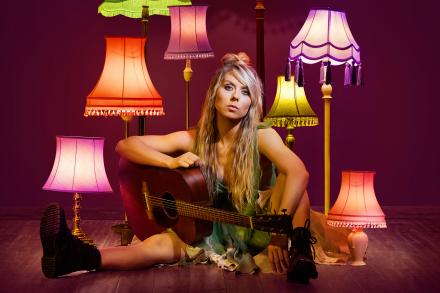
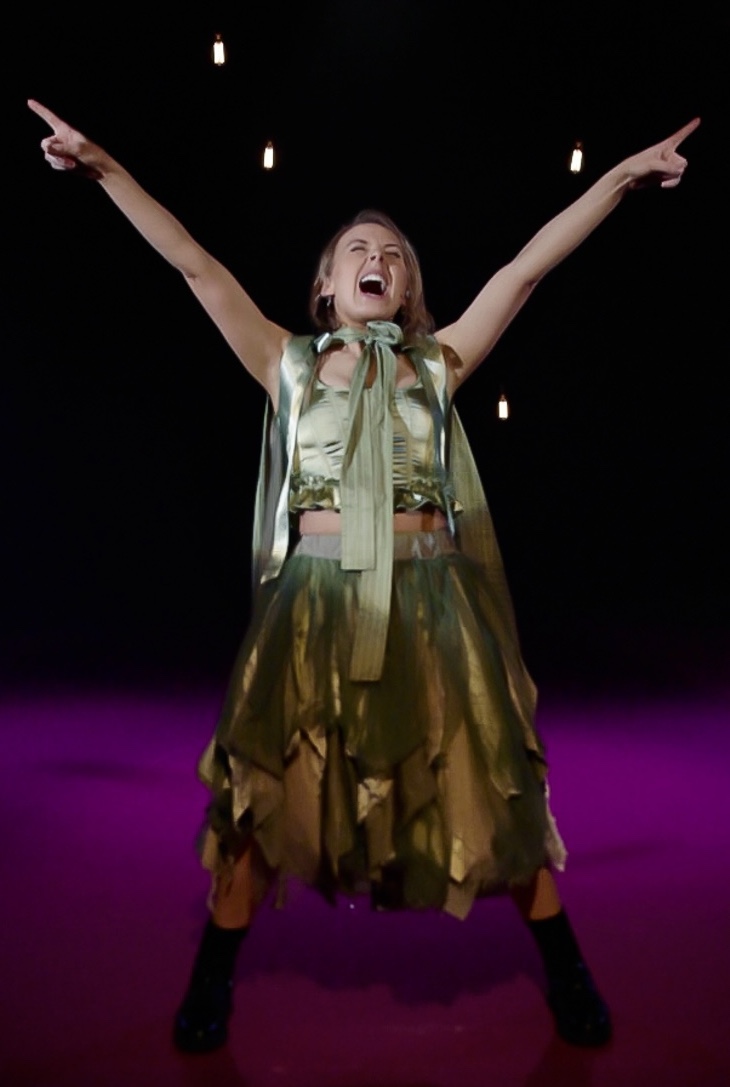
Memon tells the story through a sequence of songs being recorded in a studio session. She’s a confident, assured performer, with a thrilling vocal range, accompanying herself on acoustic and electric guitars, keyboards and shruti box. Her music is also augmented by the cello playing of Rachel Barnes and Yusuf Memon’s drums and guitar. When everything’s in full flow, the story takes flight and I feel myself propelled along by its urgent, rhythmic pulse. Sometimes it cuts abruptly back to a gentle, heart-tugging ballad, with Memon’s voice soaring effortlessly above the melody.

At the show’s conclusion, Memon offers information about mental health charities and says she wishes she could do more. But she’s already done plenty, bringing an important issue into focus through a triumphant sequence of songs. Perhaps she needs reminding of the message she’s just so eloquently delivered – that it’s really not her responsibility? At any rate, I wish I’d seen this show earlier in its Fringe run so I could have recommended it to more people.

There are just a few more opportunities to catch this awesome show, before the festival is over for another year – so what are you waiting for?

5 stars

Philip Caveney

Mrs Roosevelt Flies To London

23/08/22

Assembly, George Square, (Studio 5), Edinburgh

We’ve been devotees of Alison Skilbeck since 2017’s The Power Behind the Crone, so it’s a real pleasure to see her back at the Fringe after the uncertainty of the last couple of years. Mrs Roosevelt Flies to London is written and performed by Skilbeck, and directed by Lucy Skilbeck (no relation).

The title pretty much sums up what this monologue is about: the famous First Lady’s account of her dangerous journey to England’s capital in 1942. But the play opens twenty years after that, at the time of the Cuban Missile Crisis, with Eleanor fast approaching the end of her life and asking herself if the world is about to end in nuclear annihilation. Has all her hard work been for nothing?

Then we are whisked back down the years to her preparations for the trip, and we’re given insights into the various characters who surround her: the famous husband she loved and who secretly betrayed her; his controlling mother; the female journalist who became her best friend (and, as the gossips of the time suggested, her lover).

And then she’s off on her whirlwind tour, where she encounters an assortment of different characters, all of whom the actor inhabits with absolute authority, switching from one to the next as effortlessly as she puts on and takes off Eleanor’s famous feathered hat. Her brief impersonation of Churchill is an object lesson. Many actors would venture into the realms of caricature, but Skilbeck nails it perfectly. She’s an associate teacher at RADA, and it’s easy to see why.

I leave the show feeling I’ve had insights into Eleanor Roosevelt’s life that I wouldn’t have got from simply reading a biography about her. But it never feels like a history lesson and it’s gratifying to note that, even early on a Tuesday morning, Skilbeck is performing to a sold out audience.

4.5 stars

Philip Caveney

The Birds

22/08/22

The Space at Symposium Hall (Annexe), Edinburgh

I’m a fan of Daphne du Maurier’s short story,The Birds. I like the set-up, the idea of a family under siege, their home slowly transforming into a prison, and the frustration the central character, Nat, feels, when his neighbours dismiss his fears that something is amiss. Conor McPherson’s 2016 stage script dilutes this somewhat, replacing Nat’s family with two women, strangers to him and to each other. The disparate threesome, all seeking somewhere safe from the birds, hole up together in an abandoned house, where they struggle to get along. Much is made of the women’s rivalry, because – of course – they’re both attracted to Nat, and what else do women do but catfight over men? Gah. Still, at least there’s no caged loved birds, so we can be thankful for that…

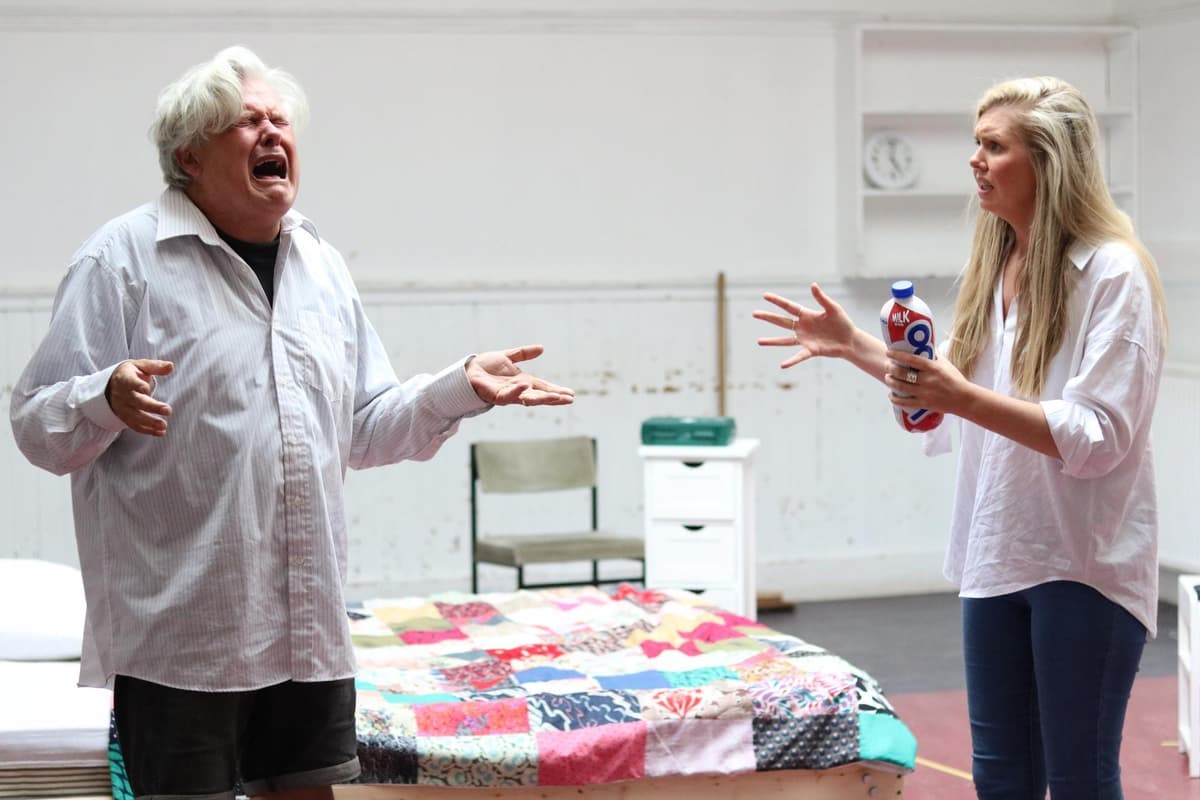
St Michael’s Players (from Chiswick) certainly give this all they’ve got. Things start off promisingly, with Diane (Arabella Harcourt-Cooze), who’s been managing just fine on her own, tending to the injured Nat (Neil Dickins), who has just stumbled in. The tension between the two is tangible, especially when he rants about his ex-wife having him sectioned, all while swinging a hammer. Harcourt-Cooze is mesmerising here, watchful and tense – and, when the moment passes, there’s a palpable sense of relief in the room. But Diane and Nat get along well, until Julia (Georgina Parren) arrives, driving a wedge between them, the younger woman displacing the older. Julia wields her fecundity like a weapon, but she shouldn’t underestimate Diane…

The four actors (David Burles plays Tierney, a small but crucial part) perform well, and commit fully to their roles. However, I don’t think enough is made of the existential threat. Initially, the birds’ presence is clear: there are recorded sound effects, as well as some off-stage flapping, which combine to create an atmosphere of dread. However, as the play progresses, the outside danger becomes less pressing, and we’re soon embroiled in a domestic drama, with only occasional reminders that the apocalypse is happening just the other side of the door. I think the stakes need raising here: we need to feel afraid of what the birds might do, to believe that they are growing in number and becoming ever more dangerous. The noises need to be louder and more incessant, and we could do something visual too, even just a simple lighting effect. Without these elements, the play essentially doesn’t fly.

Which is a shame because there’s much here to admire – particularly those committed performances.

3 stars

Susan Singfield

The Murder Club

22/08/22

The Space on the Mile, Edinburgh

Based on genuine historical characters and real life incidents, Steve Hennessy’s The Murder Club is set in 1922 and takes place in Broadmoor Criminal Lunatic Asylum. Former actor Richard Prince (Ewan McInntosh) is in there for the murder of a more successful actor, William Terriss, outside the Adelphi Theatre in 1997. Prince has only evaded the death penalty by reason of temporary insanity and lately he’s more interested in conducting the resident orchestra than dwelling on his notorious past.

But the arrival of another murderer, the oleaginous Ronald True (Ryan Forrester), causes something of a stir. It turns out that the newcomer, a former drug addict, is adept at bending people to his will, including the crime-obsessed warder, Jane Coleman (Annalise McNichol). Ensuing events are watched by the spectre of True’s last victim, Olive Young (Phoebe Duncan), who wanders blood-splattered and desolate through Broadmoor, commenting on the action and pausing occasionally to speak directly to the audience.

This is an interesting tale, well researched and nicely acted (Duncan is a particular standout), but I do have some issues with the plot. It seems to me that True’s claims about the eponymous club – a supposed secret society of renowned killers – is a flimsy device, too readily taken as gospel by Prince. Would anyone be gullible enough to fall for it? Well, Prince does, though nothing we learn about the man suggests that he’s that credulous. And if I can’t accept the premise, I can’t believe the outcome.

Still, David Wotton’s direction, which has the characters slipping into tableaux whenever Olive Young speaks, is nicely handled and a genuine atmosphere of dread permeates the production. Just imagine, an actor killing another actor simply because his shows are doing better than yours. Better not let that notion spread around the Fringe….

3 stars

Philip Caveney

There’s Nothing Quite Like Spaghetti Bolognese!

22/08/22

The Space on the Mile, Edinburgh

Let’s start with the elephant in the room: we are very definitely NOT this show’s target audience. It’s billed as suitable for 3+, which I’d say is about right – and the other adults here are accompanying wains. We’re not. We don’t have any. We wouldn’t usually come along to something designed for those so many years our junior, but we met Chloe Din (who stars as Penny) last week, while queuing for another show, and she talked us into it. What can we say? Her enthusiasm convinced us.

So here we are, and it’s a pleasure. Din and her co-star Dominic Myers have an easy rapport with their young audience, hitting just the right levels of pep and silliness. This play, adapted from a story by Ian Dunn (who also directs), is a cautionary tale, all about… pasta and sauce. Penny’s mum works for the NHS. She’s been doing lots of overtime, so she’s tired, and Penny’s dad is busy too, faced with the dual task of working from home and trying to find where his mischievous daughter has hidden his iPad. Unable to face another takeaway, Penny decides to help out – by cooking her mum’s favourite dinner, spaghetti bolognese. It’ll be a surprise she thinks.

And it is.

A very big surprise.

Because, after all her careful preparation, Penny’s dinner doesn’t just sit in the pan like dinners usually do, waiting to be served. Instead, it leaps out, and introduces itself as ‘Spag Bol.’ Penny is delighted with her new friend, and the pair embark on a series of adventures…

There’s Nothing Quite Like Spaghetti Bolognese! is an engaging and likeable piece of theatre. There is some audience interaction (we are split into three groups to provide the sound effects for the cooking scene, for example), but I think they would do well to include more of this. There are some repeated rhymes, which go down a storm with this young audience, and lots of lively songs, which also work well, despite a ‘ukelele malfunction’ when a string breaks about half way through, meaning that rather more of them are a cappella than I imagine is intended. No matter: Din and Myers forge on with gusto, and I doubt the children even notice.

Spag Bol’s costume deserves a mention of its own: it is a fantastic creation, imaginatively crafted from wool, and weirdly convincing.

The ending is a bit chaotic, and I’m not really sure why. It feels as if something has gone awry, because it finishes uncertainly with no clear signal that we’re done. The applause at first is tentative, and everyone looks confused. This is a shame, because it sends us out on the wrong note, wondering what happened rather than humming the final tune.

Still, if you’re in Edinburgh with small children and want to keep them entertained, this is sure to do the trick. If nothing else, it’ll serve as a warning not to play with their food…

3.7 stars

Susan Singfield

An Audience with Stuart Bagcliffe

21/08/22

Zoo Playground 3, Edinburgh

Our audience with Mr B takes place in the intimate setting of Zoo Playground, and it’s clear from the very outset that he’s really not happy about performing for us. Indeed, he’s so nervous, he can barely get his words out. But he’s all too aware that his Mum is waiting in the wings, a silent Svengali, listening to everything he says. And this is her idea, of course; she’s making him do this, insisting that Stuart tell his story to the world, exactly as it happened. She’s always envisioned something grander – a TV show or a Hollywood movie – but that hasn’t happened, so the Fringe is just going to have to do.

Stuart begins his narrative in a meek, West Country accent, telling us all about his schooldays, his friend Daisy and about the strange illness that afflicts him. At first, it’s all very funny. I can’t help laughing out loud at Stuart’s amateurish attempts to ‘act’, to impersonate the various characters who inhabit his tale. I giggle at his weird gurning expressions… and at his absolute terror of getting things wrong.

But make no mistake, the laughter isn’t going to last. We are heading into darker territory…

An Audience with Stuart Bagcliffe is the sort of show which exemplifies the Fringe at its best. Written by Benny Ainsworth and directed by Sally Paffett (both of whom can be seen in Triptytch Theatre’s other Fringe offering, Vermin), this ingeniously constructed monologue features Michael Parker as the titular Stuart, delivering Ainsworth’s script with consummate skill.

Furthermore, Parker’s powerhouse performance culminates in a display of such naked anger and contempt that I feel as though I’ve been punched in the solar plexus. One thing’s for sure: I’ve stopped laughing and my eyes are filled with tears.

There are just a few more chances to catch this little gem before the Fringe winds up, and I would advise you to take the opportunity to see it while you still can. It’s staggeringly good.

5 stars

Philip Caveney

Tickbox

20/08/22

Summerhall (Tech Cube 0), Edinburgh

Lubna Kerr emigrated from Pakistan to Glasgow when she was just a child. Now, many years later, she looks back on her life, growing up as an outsider, marginalised and stereotyped, and she rails – softly – against the constrictions she has endured.

The first constriction we hear about is in her own arteries. She’s in A&E with what the doctor is insisting is a stress-related heart problem. “But I’m not stressed,” Lubna demurs. She’s happy, isn’t she? What has she got to be stressed about?

Considering this question takes Kerr down a rabbit hole of remembrance, and she recounts for us the experiences that have shaped her, and led her here: to the hospital and to this stage – to two different kinds of theatre.

Kerr’s narrative is gentle and meandering, a wry and often self-deprecating account. There is humour and affection in her tale, and she has a very amiable presence; it’s easy to warm to her. Hers is a middle-class background: her mother laments the lack of household help and bemoans the size of their Govan flat; it’s not as fancy as she was used to, back in Pakistan. Their new neighbours assume Lubna’s dad is a shopkeeper or a bus driver, because that’s what the other brown people they know do. But her father is a scientist: he’s doing a PhD; he teaches at Strathclyde university. But being educated, being relatively well-off, these aren’t enough to protect the family from casual racism. Even at Brownies, where everyone seems to mean well, Lubna’s popularity comes courtesy of a badge the others can earn for meeting someone from the Commonwealth…

This is an immensely likeable show (and not just because we’re all given a Tunnock’s teacake), although it does feel a little too polite at times, and I would like to see the stakes raised. The running race, for example, feels thrown away: the build up is nicely done, but then it peters out, with no climax. I’m also not convinced that it’s necessary to try to hide the act of drinking water; Kerr walks behind a sofa several times during the show and, with her back to us, takes a sip from her bottle. I think it would look more natural and be less intrusive if she were to incorporate this into the show – and this would also give her the opportunity to interact with the set more effectively. There’s quite a lot of paraphernalia here that doesn’t really get used; if she had a vintage jug and water glass to go with the 1970s TV, etc., she could sit on the sofa and pour herself a drink as part of the action.

Tickbox offers a fascinating insight into life as an immigrant – and we leave, talking about the issues raised, and tucking into our teacakes.

3.4 stars

Susan Singfield

We Are Traffic: An Uber Adventure

20/08/22

Assembly Rooms, George Street (Drawing Room), Edinburgh

Jonathan Tipton-Meyers’ account of his years as an Uber-driver has a vaguely confessional feel – Confessions of a Taxi-Driver, anyone? Hurting badly from the break-up of his marriage and the failure of his business venture, Tipton-Meyers’ solution is to get into his car and drive at top speed, away from the scene of the accident.

When he needs to earn some money, he becomes an Uber-driver or, rather, an employee of Rideshare as it was originally known. Now, a few years down the line, he laments the fact that it’s no longer possible for a guy down on his luck to earn a decent living from ferrying friendly strangers around Los Angeles. Because, when Uber comes along, everything changes. A lot of money is still being made but not by the drivers – and even having to stop for a toilet break becomes a major issue.

What’s more, driving around the highways and byways gives him new insights into the quirks and disparities of his adopted city – and of the inherent racism that underpins it.

Tipton-Meyers shares anecdotes about some of the eccentric characters he meets on his travels – about the levels of abuse he sometimes faces from drunken passengers – and he gives us a glimpse into his hopes for a better future. He’s an affable narrator, but sometimes there’s the feeling that he’s still somehow a little too close to that breakup, that the wounds are too raw for him to arrange it all into a satisfactory story arc.

But it’s an agreeable way to pass an hour on the Fringe and a life-affirming lesson about chasing your dreams and never giving up on them.

3 stars

Philip Caveney

Boy

20/08/22

Summerhall (Main Hall), Edinburgh

1966: Winnipeg, Manitoba, Canada. Twin babies Bruce and Brian Reimer are both diagnosed with phimosis. Circumcision is recommended. Their doctor chooses a new and unconventional method: electrocauterization. Bruce is up first.

And the procedure goes horribly, shockingly wrong. Bruce’s penis is damaged beyond repair.

Brian is spared. His phimosis is left to resolve itself naturally. Which it does.

The twins’ parents, Janet and Ron, are distraught. So when Harvard-educated psychologist John Money recommends gender reassignment, they are soon persuaded. ‘Brenda’ won’t remember being Bruce, Dr Money says; it’s a simple matter of surgery and hormones…

Writer/director Carly Wijs draws on this tragic true story to create a thoughtful drama, exploring the very topical subject of gender identity, illuminating the age-old nature/nurture debate. It’s sensitively done – socratic rather than didactic – and it’s impossible not to feel emotionally involved.

Actors Vanja Maria Godée and Jeroen van der Ven play Janet and Ron respectively, and also act as narrators, using a range of cuddly toys as stand-ins for the other characters. This technique is oddly affecting, highlighting the family’s innocence, while also suggesting that the very act of telling their story is ‘play therapy’ for the troubled pair. The set, by Stef Stessel, is wonderfully effective in its simplicity: a wheeled ‘wall’ draped with a light blue cloth, suggestive of a waterfall, spans almost the whole width of the stage, and there’s a stunning moment of revelation towards the end of the piece. Both Godée and van der Ven are immensely likeable performers; their gentleness and vulnerability ensure we’re on their side. Janet and Ron are victims of a man so caught up in his own theories that he’s stopped seeing the humanity of those he’s experimenting on.

Because Brenda is a very unhappy child. She doesn’t like the constrictions that come with being a girl; she doesn’t want to wear dresses or learn to sew; she wants to climb trees and fight and run with the boys. Is this because she is a boy, or would a cis-Brenda feel the same frustrations? We’ll never know. What we do know, unequivocally, is that it can’t be right for someone else to have made such a momentous decision for baby Bruce: to have compounded his initial mutilation with surgical castration, testosterone blockers and oestrogen – and to have concealed this fact from him. It’s his body; his choice. And the repercussions are devastating…

Despite its harrowing subject matter, Boy is a tender, poignant tale, told with real heart. This is experimental theatre-making at its best.

4.8 stars

Susan Singfield

Sap

20/08/22

Roundabout @Summerhall, Edinburgh

‘Daphne’ (Jessica Clark) is a bisexual woman living in London. She’s working for a charity during the day and, in her free time, she’s making the most of the Capital’s vibrant nightlife. On her daily commute to work, she finds herself inexplicably drawn to a flat she passes. Through an open window, she can see a host of greenery growing within, as though inside it’s a huge forest. She finds this strangely alluring.

At a business meeting, she hooks up with a man, with whom she has a one-night stand. He doesn’t call her back, so she puts it down as one of those things. Then, some time later, at a gay club, she spots a ‘Wonder Woman’, who – she’s sure – is out of her league. She is amazed when the two of them promptly hit it off.

Pretty soon, they are an item, going everywhere together, wanting nobody else. But Daphne has a surprise waiting for her, one that is going to affect her life profoundly…

Sap is one of those plays where you daren’t reveal too much about the story. Suffice to say that Rafaella Marcus has scripted a deliciously labyrinthine tale about sexual identity (specifically bi-invisibility), one that cleverly assimilates a Greek myth into its core. The maze-like structure is beautifully captured by the hyper-physical performances, directed by Jessica Lazar and Jennifer Fletcher. Clarke is a brilliant narrator, inviting the audience into her world with supreme confidence: making them laugh, flirting outrageously with them, making them care about what’s going to happen to her. Rebecca Banatvala plays all the other roles: she’s the one-night-stand, she’s Wonder Woman, she’s over-inquisitive work colleague, Miriam. Again, I don’t want to reveal too much. While Banatvala’s performance is less flamboyant than Clarke’s, she manages to slip effortlessly between her characters, inhabiting them with the merest glance, the smallest gesture. Together, the two actors create a mesmerising partnership.

I’ve already observed that Roundabout are having one hell of a year and Sap is another glittering jewel in an already abundant treasure chest. Grab your tickets for this before they’re all snapped up.

5 stars

Philip Caveney