Theatre

The Importance of Being Earnest: NT Live

20/02/25

Dominion Cinema, Edinburgh

Despite having lived a mere thirty-minute walk from Morningside’s Dominion Cinema for the past decade, we’ve somehow failed to set foot inside – and we dare to call ourselves cinephiles! So tonight’s NT Live screening of The Importance of Being Earnest is extra exciting for us, as it’s also an opportunity to explore a new venue.

So let’s begin with that. The Dominion is undeniably boojie; indeed, it’s the fanciest cinema either of us has ever graced. The design is art deco (think flocked wallpaper, geometric shapes and a colour palette of gold, red and black); our seat is a super-comfy reclining sofa, with privacy screens and side tables. We pour our drinks (sparkling water and alcohol-free lager, since you ask) and sit back, feet up, more than ready to enjoy ourselves in these opulent surroundings.

I’ve seen, read and taught this play so many times that I know it almost by heart, but that’s not to its detriment. After all, the script is so packed with recognisable aphorisms that few in the audience are likely to be surprised by what is said; with Earnest, it’s all in the delivery.

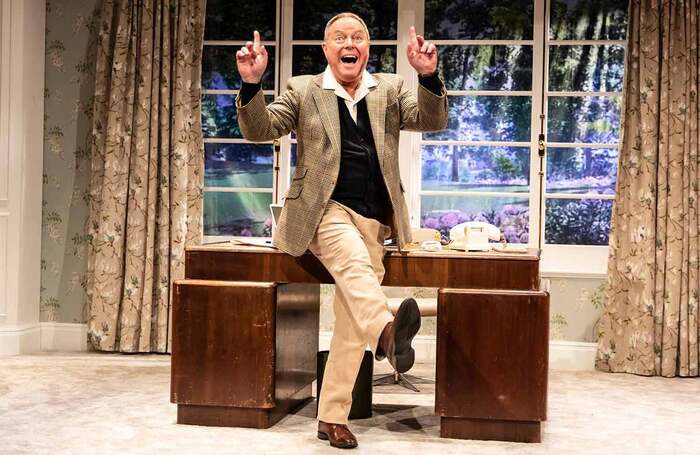
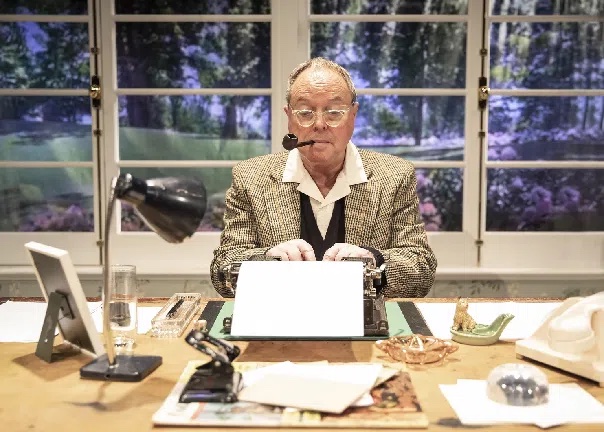
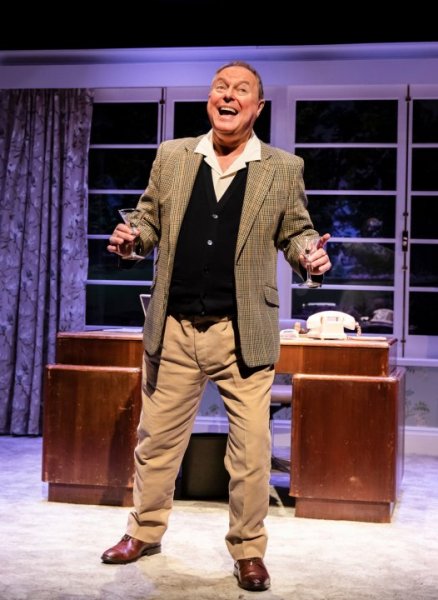
And what delivery it is! Directed by Max Webster, this is an overt celebration of queerness, Wilde’s subtext amplified to the nth degree. From the opening number, where Algernon (Ncuti Gatwa) shimmers in pink-sequinned drag, to the exuberant Mardi Gras-style finale, the closet door is flung wide open, making for a fabulously unsubtle show. To quote the wild wit himself, “moderation is a fatal thing; nothing succeeds like excess.” Webster has certainly taken this to heart.

The plot – for those who need a reminder – is at once frivolous and deadly serious. On the surface, it’s a frothy farce, all mistaken identity and foolish foppery. Underneath, it’s about repression – about the lengths people are forced to go to when their very natures are outlawed. Unbeknownst to each other, both Algernon and his best friend, Jack (Hugh Skinner), have found inventive ways to circumvent society’s disapproval of their predilections. Algernon has a pretend-friend, Bunbury, whose ill health Algy uses to excuse himself from dreary social events, while Jack has an alter-ego – an imaginary older brother called Ernest – who gets into mischief whenever he visits the city.

But things become complicated when Jack falls in love with Algy’s cousin, Gwendolen (Ronke Adekoluejo), whose mother, Lady Bracknell (Sharon D Clark), is far from pleased about the match. In desperation, Jack confesses his lies to Algy – who, true to form, responds by assuming Ernest’s identity for himself, and heading off to Jack’s country house to woo his pretty young ward, Cecily (Eliza Scanlen). Throw in a conflicted clergyman (Richard Cant), a dithering governess (Amanda Lawrence) and a couple of manservants (both played by Julian Bleach), and the scene is set for some merry mayhem.

The multi-racial casting within a period drama (courtesy of Alastair Coomer and Chloe Blake) gives the piece a contemporary edge, as do the occasional strains of recent-ish pop music and a cheeky allusion to one of London’s gay hotspots. Gatwa’s newfound fame as Dr Who also helps this production to appeal to a hip young audience, as does the sexual fluidity of the characters.

Clark’s depiction of Lady Bracknell is inspired: she brings a whole new dimension to the part, dispelling all my preconceptions of the character. Here, those oh-so-familiar lines are imbued with a haughty charm to create a formidable British-Jamaican matriarch without so much of a hint of Dench. Adekoluejo’s Gwendolen is a chip off the old block, saved from monstrousness by her cleverness and humour. In contrast, Scanlen’s Cecily is deliciously weird, a mix of doe-eyed intensity, sweetness and steel. But there are no weak links here: even Bleach, in the minor roles of Lane and Merriman, makes his mark, creating two distinct but equally absurd personae, evoking laughter with the simplest of smirks or stumbles.

More than anything, though, this is Skinner and Gatwa’s show, the focus firmly on the men’s friendship and their journey towards coming out. Their performances are jubilant and euphoric, and yet deceptively weighty, carrying with them real emotional heft. I can’t help thinking about Wilde, condemned to hard labour for his homosexuality, and wondering what he’d make of this? Surely, it would gladden his heart to see his characters finally set free.

5 stars

Susan Singfield

Much Ado About Nothing

06/02/25

Pleasance Theatre, Edinburgh

Let’s face it, judged by plot alone, Much Ado About Nothing is a bit, well… silly. Like most of Shakespeare’s comedies, the humour relies on disguise, misunderstandings and a fickle approach to romance. As an audience, we really have to suspend our disbelief. Would sworn enemies such as Benedick and Beatrice (Benedict Harrison and Verity Mann) really have an immediate change of heart thanks to some very unsubtly orchestrated eavesdropping? Both of them? It seems unlikely. Would a respected celebrant (Dylan Kaeuper) really suggest that a jilted bride should fake her death, or her father embrace the idea – agreeing that “death is the fairest cover for her shame”? Hmm. And would the groom – a mere twenty-four hours later – agree to marry his dead fiancé’s looky-likey cousin without ever setting eyes on her? I mean, that’s a no, right? Meanwhile, we’re also supposed to accept that no one in Leonato (Faolán Ingram)’s household suspects the decidedly dodgy – almost moustache-twirling – Don John (Cameron Broadly) of being a villain, despite the many outward clues. But still. It is what it is, and there’s a lot of fun to be had along the way.

EUSC’s production of this sprawling play is sprightly and engaging. The directors (Madeleine Brown, Marina Funcasta and Anna Simurda) have chosen to emphasise the humour, eliciting larger-than-life performances from their actors rather than aiming for anything subtle – and I think this is a wise move. The action has been moved from Italy to California, from the 16th century to the 1970s but, while the period is clearly-evoked, I’m less certain about the place. There’s certainly a laid-back Summer of Love vibe, but most of the music is British (Bowie, Bolan, The Sweet, The Police) and the majority of characters speak with English accents, so it all feels a bit more Camden Town than Haight-Ashbury.

Leonato’s estate is Party Central as he and his wife, Antonia (Maria Wollgast), play host to the local socialites. What better way to make a match for their beloved daughter, Hero (Francesca Carter)? The dope is plentiful, the drinks are flowing – and love is in the air. Claudio (Rider Hartley) fancies his chances with Hero, and she’s rather keen on him as well. But “the course of true love never did run smooth” (yes, I know – wrong play), and what could go wrong with Don Pedro (Eric Parker)’s complicated plan to woo the girl on his friend’s behalf? Throw in some meddling servants, a fabulously drunken henchman (Fraser Murray), a local constable (Robbie Morris) and a veritable army of liggers – and the scene is set for some merry mayhem.

It’s a great idea to have a live band on stage, although I can’t help feeling they’re under-utilised. Still, the young cast are clearly having a ball, dressed up to the nines in flares and sequins (floppy hats off to costume designers Paloma Leigh-Stevenson, Alex Dunlop and Bea Fitz), their delivery as bold and brash as the script demands. Not everyone has a lot to do, but they all make the most of what there is, and there are some lovely moments of background detail, such as Margaret (Mia Dé)’s horrified realisation that her tryst with Borachio is being used to frame Hero. Harrison (Benedick) and Carter (Hero) are the standouts for me, but all of the actors and musicians perform with gusto, and I am thoroughly entertained.

There are just two more chances to catch this groovy rendition of Much Ado, so why not head on down to the Pleasance and hang loose with the hippies? Be sure to wear some flowers in your hair…

3.4 stars

Susan Singfield

Moments

30/01/25

The Studio at Festival Theatre, Edinburgh

One of the UK’s leading visual theatre companies, Theatre Re focus on making “deeply moving non-verbal productions about universal human challenges and the fragility of life”. Their latest piece, Moments, lays bare the creative process, taking the audience on a journey from nothing to something, from the flicker of an idea to a compelling dramatic sequence.

The metatheatrical concept is made clear from the outset, as four performers – dressed in rehearsal blacks – stand in a line and introduce themselves. They are: Guillaume Pigé – conceiver, director, actor and mime; Dr Katherine Graham – lighting designer; Alex Judd – composer; and Anna Kitson – BSL interpreter. From the sound desk behind us comes the disembodied voice of Benjamin Adams. They describe their roles and what they each bring to a show.

And then they begin. A chair, at first simply functional, changes before our eyes, becoming a child and then a father. The mood switches, initially light and amusing, then emotionally charged. The intensity swells with the music; the lighting focuses our attention one way and another. There is dialogue but it’s in French, so – for me, at least, with my school level knowledge of the language – it’s more about tone and tenor than it is about the words.

There’s no denying how skilful these theatre-makers are: the performances are incredibly precise and absorbing, and it’s fascinating to see what they can do with a bare stage, no costumes and one prop. However, it feels more like a demonstration than a play; it’s an exemplar of how to develop a piece of drama but the final scene – the culmination of the process – is too brief to be satisfying.

Moments would work well as an introduction to a drama workshop for A level, Higher or Uni students. It’s a dynamic and engaging piece of work that would surely appeal to anyone interested in learning about the process of making theatre.

3 stars

Susan Singfield

Singin’ in the Rain

23/01/25

Pleasance Theatre, Edinburgh

In Edinburgh, a storm’s a-comin’ in… but before it hits, there’s the chance to catch EUSOG’s delightful adaptation of this classic 1952 Hollywood Musical. Back in 2022, we saw the touring production at the Festival Theatre, which boasted a massive budget and gallons of real water bucketing down from the heavens. A high bar indeed. But we’ve seen enough EUSOG shows to know that these talented students will deliver something special – and we’re not disappointed.

The year is 1927 and Dan Lockwood (Ewan Robertson) and Lina Lamont (Amelia Brenan) are the golden couple of silent cinema. Movie fans believe them to be an item and, for the sake of their own popularity, they allow this belief to flourish. Dan has steadily worked his way up the slippery pole of fame alongside his childhood friend, Cosmo Brown (Dan J Bryant), a wisecracking song-and-dance man. But of course a new film release – Al Jolson’s The Jazz Singer – is about to change the face of cinema forever. Lockwood and Lamont realise that they need to make a talking picture. But there’s a problem: Lina has a screeching voice with all the appeal of fingernails being dragged down a clapperboard.

And then Dan meets Kathy Seldon (Hannah Shaw), a theatre performer, who claims to never go to the cinema, and who plans to head off to New York to pursue a career on the stage – you know, real acting. She also has a lovely singing voice. And Dan is irrevocably smitten…

There are many good reasons why the original film still features in most critics’ lists of the greatest musicals of all time. It boasts a sparkling screenplay by Betty Camden and Adolph Green and a whole clutch of memorable songs by Nacio Herb Brown and Arthur Freed. What this production might lack in special effects is more than made up for by the dazzling and exuberant performances of its young cast, who take on the most demanding of roles with aplomb.

Robertson is the powerful anchor at the heart of the piece, singing up a storm, while Shaw is a delight in the ingenue role. Brenan is having the best time as Lamont, gleefully mangling her lines and performing What’s Wrong With Me? in tones that could shatter plate glass. And, as is the case in the film, it’s Cosmo who steals so many of the scenes: Bryant clowns with considerable skill and his performance of Make ’em Laugh even manages to rival Donald O’Connor’s most celebrated routine.

As ever with these productions, there is a large chorus and every performer gives it one hundred percent. Director Freya White and choreographer Rosalyn Harper have their huge cast moving effortlessly through a series of pratfalls and complex dance routines – and let’s not forget the input of musical directors Evie Alberti and Sebastian Schneeburger, who guide a seventeen-piece orchestra through that unforgettable score. The standing ovation from tonight’s packed crowd is genuine and well-earned.

Sadly, Storm Éowyn has already put paid to Friday night’s performance and fingers are currently crossed for the Saturday. If it does go ahead, then please take the opportunity to catch this captivating show, which to my mind personifies the very essence of pure entertainment. I’m willing to bet you’ll come out smiling and singing the title song, no matter what the weather’s doing.

4.8 stars

Philip Caveney

The Merchant of Venice

22/01/25

The Royal Lyceum, Edinburgh

New York’s Theatre for a New Audience brings The Merchant of Venice to Edinburgh’s Royal Lyceum as part of a reciprocal exchange programme. Starring John Douglas Thompson as Shylock, this is a bold and provocative production, drawing explicit links between 16th century Venice and an all-too-believable near-future USA.

Director Arin Arbus says she wants “to discover what this play means to us in the here and now” – and she certainly does that, using Merchant to hold up a mirror to a divided society where people’s views are polarised and entrenched. In Shylock’s Venice, Jews have few rights. They are forced to live in ghettos, prohibited from owning property, limited in the kind of work they are allowed to do. The prejudice runs deep: even Antonio (Alfredo Narciso), widely reputed to be one of the good guys – “a kinder gentleman treads not the earth” – deems it appropriate to spit at Shylock and call him a dog, all while asking him for money. In the modern American dystopia where this production is set, Thompson’s Black Shylock suffers comparable – and recognisable – iniquities.

It feels like a timely reminder of what we need to avoid, of where discrimination and inequality inevitably lead. Who can blame Shylock’s daughter, Jessica (Danaya Esperanza), for wanting to escape the ghetto, for hooking up with Lorenzo (David Lee Huynh) and converting to Christianity? Why shouldn’t she seek a better life? But it’s her desertion that pushes Shylock, already at breaking point, over the edge, fuelling his thirst for vengeance. What has he left to lose? Just as the Christian Venetians treat the Jews as a homogenous group to be despised, so Shylock views them all as one enemy. No wonder he is furious; no wonder he shows Antonio no mercy.

But the odds are stacked against him. The legal system isn’t fair or balanced: the laws are written by the powerful. Plus ça change, plus c’est la même chose. Power corrupts. Even Portia (Isabel Arraiza), who seems a pretty decent sort at first, isn’t immune. She changes when she assumes the mantle of supremacy, swaggering into the court in her borrowed clothes and treating Shylock with cruel contempt. Arbus’s direction highlights this theme; indeed, this version of the courtroom scene is the most intensely horrifying I have ever seen. The auditorium is eerily silent, as if we’re all holding our collective breath, appalled by Portia’s gloating as she humiliates Shylock.

I’m watching this just three days after Donald Trump has issued an executive order dismantling federal diversity, equity and inclusion programmes, which lends this consciously diverse production even more weight and urgency. Shakespeare’s message transcends the centuries; we have to heed its warning.

4.6 stars

Susan Singfield

Theatre Bouquets 2024

It’s been an exciting year for theatre in Edinburgh, so in time-honoured tradition, here are our ten favourite productions from 2024, plus three special mentions.

The House (Traverse Theatre, Edinburgh)

“Everything about this performance – the lighting, the music, the props – is exquisite and I love the piece’s grisly sense of humour, its celebration of the darkness of the human soul…”

The Giant on the Bridge (Traverse Theatre, Edinburgh)

“A complex, labyrinthine piece that explores a whole range of different moods, moving from plaintive acoustic ballads to propulsive electric rock…”

Blue Beard (Lyceum Theatre, Edinburgh)

“All about the seductive allure of darkness, the impulse that makes us devour murder-mysteries and glamourise the bad guys…”

The Sound Inside (Traverse Theatre, Edinburgh)

“Adam Rapp’s exquisite play has all the qualities of a great novel, pulling me deeper and deeper into its labyrinthine heart, providing the audience with puzzles to solve and mysteries to ponder…”

VL (Roundabout at Summerhall, Edinburgh)

” A whip-smart comedy that also has some incisive things to say about the difficulties of adolescence and the importance of friendship…”

Summer of Harold (Assembly Checkpoint, Edinburgh)

“An hour-and-a-half of impressive theatre, with snort-out-loud humour as well as profound emotional moments…”

The State of Grace (Assembly Rooms, Edinburgh)

“Whenever I thinkI’ve got the measure of the piece, it twists in another new direction, giving fresh food for thought, breaking down the barriers that I’ve carried around in my head for years…”

A Streetcar Named Desire (Lyceum Theatre, Edinburgh)

“Increasingly resembles a deranged carousel with the players caught in its unhealthy embrace, unable to get off the ride until it arrives at its ghastly destination…”

Angels in America: Part One – The Millennium Approaches (Bedlam Theatre, Edinburgh)

“It’s astounding what EUTC manage to achieve with their limited budget: the final scene in particular is a coup de théâtre…”

Treasure Island (Lyceum Theatre, Edinburgh)

“A must-see for the festive season – you’ll laugh, you’ll tremble, you’ll tap your feet to the jaunty jigs and reels!’

SPECIAL MENTIONS

The Little Shop of Horrors (Church Hill Theatre, Edinburgh)

Rebels and Patriots (Pleasance Courtyard, Edinburgh)

Weer (Traverse Theatre, Edinburgh)

Susan Singfield & Philip Caveney

Mary: a Gig Theatre Show

20/12/24

Traverse Theatre, Edinburgh

Mary: A Gig Theatre Show takes a bold approach to the Queen of Scots’ story, weaving folk rock with poetic monologues to create a fresh and engaging perspective. While comparisons to SIX are inevitable – royal women of the 16th century reimagined in song for a modern audience – Mary is no direct descendant of the juggernaut Tudor musical. It’s altogether a much more intimate affair.

Writer/lead performer Rona Johnston plays the titular monarch, imbuing her with real humanity. It’s a pacy piece, covering Mary’s entire life in a mere fifty minutes, and it’s to Johnston’s credit that it feels neither rushed nor superficial. That said, this is no history lesson: the focus is firmly on Mary’s emotional journey and her experiences as a woman destined to endure a peculiarly complex set of circumstances.

Like the Queen, Johnston is ably supported by her band of multi-rolling Marys: Izzie Atkinson, Jodie Kirkwood, Hester Irving, Laura Coull and Alli von Hirschberg. Kirkwood provides the comic relief as Darnley, presented here as a puffed-up lech, while Atkinson’s Elizabeth I is a cold and intimidating presence.

Directed by Katie Slater, Mary: A Gig Theatre Show is made very accessible by its homespun vibe, the performers’ onstage camaraderie contrasting cleverly with their characters’ bitter rivalries. This juxtaposition is reflected in the costume design, featuring corsets and long skirts alongside tartan tights and denim waistcoats, effectively straddling six centuries.

The songs, composed by Johnston, are memorable and toe-tapping, ranging from lusty rock powered by Coull’s urgent drums to plaintive ballads that showcase the three vocalists sumptuous harmonies. A standout for me is the languorous duet Johnston performs with Atkinson, the two voices soaring as they hit the final chorus.

While it’s an impressive production in its own right, more than anything Mary: A Gig Theatre Show feels like the beginning of something: young theatre makers at the start of what are clearly promising careers. If this cleverly-written piece is indicative of Johnston’s talent, then I can’t wait to see what she does next.

4.2 stars

Susan Singfield

4PLAY: 4 New Plays from 4 Edinburgh Playwrights

05/12/2406/12/24

Traverse Theatre, Edinburgh

As Scotland’s new writing theatre, the Traverse is the natural home for the 4PLAY collective to showcase their work. Over four nights, four emerging Edinburgh playwrights see their stories brought to life on the iconic Trav 2 stage – and all are greeted with delight by enthusiastic audiences.

First up is Fuckers by Ruaraidh Murray. From its opening moments, it’s clear that this is the no-holds-barred production its title suggests. In blackout, we listen to a noisy orgasm and then, as the lights go up, we’re confronted with a naked couple, daring each other to try a new sex act. As beginnings go, this is undeniably memorable! The pair are Andrew (Liam Ballantyine), a Scot, and Lois (Olivia Caw), an American, two performers who fall in love at the Fringe. But their sexual attraction is soured by their vaulting ambition, which o’erleaps itself and dooms their relationship. Directed by Eleanor Felton – aided by Sasha Harrington as a very necessary intimacy coordinator – this is a high-octane piece with an engaging energy. However, although the nudity works at first, establishing the physical nature of the affair, the constant dressing and undressing disrupts the flow and slows down the action, which is a real shame for such a kinetic piece.

Colours Run, written by Mikey Burnett and directed by Grace Ava Baker, tells the story of self-professed Hibs-loving hardman, Pongo (Ruaraidh Murray), who may have finally taken his nihilistic antics a step too far. Fearing retribution after handing out one beating too many, he heads home, anticipating the knock at the door that could come at any moment. Pongo lives with his younger brother, Pete (Sean Langtree), who openly idolises his big bruv and does everything he’s told, which means that he rarely goes out into the real world. Both Murray and Langtree are utterly compelling in their respective roles, Langtree appealingly vulnerable, Murray cold and calculating. The section where the pair play Who Wants to Be a Millionaire is wildly funny – but in the play’s latter half, Burnett’s script takes a confident step into darker, more transgressive territory. The nail-biting conclusion (which seems to echo Of Mice and Men) is simply but brilliantly handled.

Butterflies and Benefits, written and directed by Andrea McKenzie, boasts a cast of five and looks at the lives of four young protagonists enjoying a hedonistic lifestyle in the Edinburgh of the 1990s. Maz (Amy Glass) is having a great time partying until she falls under the spell of Mik (Michael Francis), an opportunistic coke-fiend who cannot extricate himself from the grip of the drug. Pretty soon, Maz falls pregnant and her close friends Abs (Lex Joyce) and Dee (Isla Campbell) can only look on in dismay as Maz and Mik enter a spiral of destruction. The long trance/dance sequences scattered throughout the narrative occasionally impede the momentum, and a single scene featuring health worker, Doc (Laverne Edmonds), doesn’t do enough to earn the character’s place in the story. This is an all-too-familiar warning about the dangers of drug addiction and the importance of friendship.

Last, but certainly not least, is Cheapo by Katy Nixon. A tight two-hander, this is our favourite of the four plays, deftly exploring the impact of a traumatic event on a pair of frightened teenagers. Something happened to Kyla (Heidi Steel) at a recent party, and she needs Andrew (Dayton Mungai) to help her sort it out. But he knows that her version of events is just a form of self-protection, and he’s not prepared to go along with the lies she’s telling herself. In a not-especially-subtle-but-nonetheless-effective metaphor, they play a game of chess, arguing about their possible moves while fighting to avoid checkmate. Under Gwen M Dolan’s direction, the tension is undercut by some beautifully-realised flights of fancy, as the duo imagine how their lives might have played out in alternate realities. Nixon’s script is spare and succinct, without a wasted word. She’s certainly one to watch.

What a treat it has been to see this quartet of plays, exploring stories from the edges of society. We look forward to seeing what these playwrights do next, and also to 2025’s 4PLAY.

4 stars

Susan Singfield & Philip Caveney

Treasure Island

29/11/24

Lyceum Theatre, Edinburgh

A satisfying Christmas show can be a decidedly tricky thing to pull off. If Robert Louis Stevenson’s Treasure Island initially seems an unlikely vehicle for such a venture, my qualms are short-lived. Duncan McLean’s sprightly adaptation of the classic tale is perfectly pitched for family entertainment. It sticks surprisingly close to the original plot, but throws in enough delightful twists to make me forget that I’ve heard this story so many times before.

The tale begins in the Admiral Benbow Home for Reformed Pirates. It’s coming on Christmas and young Jim Hawkins (Jade Chan) is attempting to keep the unruly residents (a pack of former cut-throats) suitably entertained with a story. But it turns out that ex-buccaneers take a dim view of books about macrame and bird-spotting, so Jim reluctantly offers to recount the events that brought them all together in the first place. It helps that the pirates have plenty of talents they can bring to bear in the telling, not least the fact that they can all sing, dance and bash out tunes on a variety of musical instruments.

The story begins in time-honoured fashion with the arrival of Billy Bones (Itxaxo Moreno) at the Admiral Benbow and, of course, the delivery of the dreaded Black Spot – and it isn’t long before Jim has possession of the fabled treasure map. He enlists the help of The Laird of Leith (a delightfully silly performance by TJ Holmes), who owns a ship called The Hispaniola. The Laird engages the services of a pie-maker called Lean Jean Silver (Amy Conachan), who has a pet puffin (expertly operated by Dylan Read). But Lean Jean may not be as benign as she appears…

The main changes to the story are geographical. McLean is based in the Orkney Islands so, in this version of the story, the Hispaniola heads North, towards colder waters. Alex Berry’s effective set design manages to somehow encapsulate the look and feel of an old sailing ship using not much more than ropes, rigging and strategically-placed stepladders, while everyday objects are pressed into service to become boats and aquatic creatures. Director Wils Wilson expertly deploys the small cast, sending them racing and capering over every inch of the Lyceum’s spacious stage, assisted by piratical-looking stage hands. At times, it feels like there’s a much bigger crew at work.

There are sword fights and chases, thrills and spills aplenty, and Tim Dalling (who also plays an engaging Ben Gunn) has written a selection of charming songs to accompany the action, ranging from plaintive ballads to raunchy rock-and-roll.

If only he had a singalong Christmas ditty up his sleeve, something to send every audience homewards singing the chorus. Oh wait, it turns out he has.

Treasure Island is a must-see for the festive season – you’ll laugh, you’ll tremble, you’ll tap your feet to the jaunty jigs and reels – and even the youngest members of the family will find themselves riveted. So step right this way, ye scurvy dogs – and have a merry puffin Christmas!

4.6 stars

Philip Caveney

Men Don’t Talk

17/11/24

Scottish Storytelling Centre, Edinburgh

“You’ve not been here before, have you?” asks Ken (Dougal Lee), addressing a member of the audience who has ostensibly turned up at the Men’s Shed for the first time. “How do you take your tea?”

“Er, just milk,” says the man in Row 2.

The shed boasts two kettles, Ken tells us proudly, switching one on and putting tea bags into a couple of mugs. While he waits for the water to boil, he chats amiably about why he’s been coming to the Men’s Shed ever since he retired. He needs a bit of space away from his wife, he says. They’ve never been under each other’s feet before. The shed is a place where he can come to enjoy the company of other men. And build a bat box.

He pours water into the mugs, adds milk, squeezes the tea bags and pops them into a food waste bin. Then he hands the mug over to the man behind me. “There you go.”

Writer-director Clare Prenton’s script has an endearingly gentle tone. The atmosphere in the shed is relaxed and understated; it’s easy to see why it appeals to the men who visit it. Based on extensive interviews with real-life Men’s Shed members, Prenton shines a light on the importance of creating spaces where men can talk.

Because they don’t, apparently. Unless they’re shoulder to shoulder, that is, rather than face to face. Men’s Sheds provide opportunities to learn new skills and there’s no pressure on the members to open up about their feelings. But, working alongside one another, helping out with art or craft or DIY projects, it turns out that men begin to feel comfortable sharing their personal stories. And that they are more than willing to put an arm around a pal’s shoulder and support them if they can.

This matters, because men’s mental health is in crisis. Suicide rates are worryingly high. The good news is that change is happening: we no longer tell our children that boys don’t cry; we don’t encourage repression or a stiff upper lip. And Men’s Sheds can play an pivotal part in this shift, especially for older guys.

As well as Ken, we also meet Jimmy (Billy Mack), an alcoholic who needs somewhere to be that isn’t the pub, and Tom (Greg Powrie), a widower who’s taken up woodwork since his wife’s demise. Through these characters and their meandering conversations – which cover PTSD, grief and custard creams -Prenton presents a convincing case, even when dealing with the controversial issue of whether women should be allowed to join. Ken’s the outlier who says no, while the others – including forty offstage members – have all voted yes. No one agrees with Ken but it’s to Prenton’s credit that his impassioned argument isn’t ridiculed, and he isn’t reduced to a clichéd misogynist for expressing this desire.

Today’s performance is BSL interpreted, and I’m impressed by how well the interpreter is incorporated into the action. He’s a named member of the Men’s Shed, greeted as Greg, drinking tea and eating biscuits with the rest of them, nodding hello and then translating what they say. It’s neatly done.

I also love the fact that the detailed, naturalistic set, designed by Frances Collier, has been built by Peebles & DIstrict Men’s Shed. This adds to the feeling that this is a truly inclusive piece, and that Prenton has treated her subject with the respect and gravitas it deserves. It’s a didactic play, but – although I definitely feel that I have learned something – I never feel lectured. And, if I were a man in need of a chat or a new project or simply somewhere convivial to be, I’d certainly be checking to see if there was a Men’s Shed in my locale.

4 stars

Susan SIngfield