Author: Bouquets & Brickbats

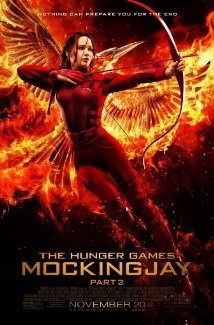
The Hunger Games: Mockingjay Part 2

MV5BNjQzNDI2NTU1Ml5BMl5BanBnXkFtZTgwNTAyMDQ5NjE@._V1_SX214_AL_

21/11/15

Another day, another dystopia.

So, one of the biggest movie franchises of recent years grinds inexorably to its conclusion and the overriding question is this: is there another blockbusting series in the cinematic universe that is so monumentally dull? Seriously, I know this series isn’t really aimed at somebody like me, but my goodness, it moves so slowly and when you find yourself sitting there thinking about what you might have for breakfast tomorrow, that’s surely not a good sign.

At the film’s start, Katniss Everdean (Jennifer Lawrence) is nursing a bruised throat, delivered courtesy of her old squeeze Peeta (Josh Hutcherson) now a brainwashed wreck thanks to the fiendish ministrations of President Snow (Donald Sutherland). Enlisted to lead a mission into the heart of the capital, Katniss enlists alongside her other squeeze, Gale (Liam Hemsworth). And guess what? Peeta goes along too, despite the fact that he keeps trying to kill members of his own squad. Go figure.

What follows is a long series of misadventures as the team are systematically despatched by bombs, bullets and er… oil. In between, we are treated to Katniss trying to choose between her two suitors. Will it be hunky Gale or unreliable Peeta (and if you have to think about that, for very long, then you haven’t really absorbed the message thus far)?

To be fair, there’s a decent sewer-set action sequence towards the final third (though the attacking creatures look like they’ve been drafted in from a far better film, Neil Marshall’s The Descent) and then there’s some more explosions before we’re treated to a ‘surprise’ twist which only the visually impaired won’t have seen coming. And of course, this being the final episode, there’s a syrupy coda, which seems intent on undermining the kickass female role that Lawrence has worked so hard to develop.

Of course, one cannot deny the financial success of this series – people are suggesting that together with the Bond and Star Wars franchise, it will single-handedly restore the fortunes of the cinema industry. But the supposed wisdom of the ‘political messages’ incorporated here are little more than fridge magnet sentiments – and it’s particularly galling to see the late Philip Seymour Hoffman’s final screen moments wasted on this bombastic sludge.

At least the series is finished – that is, until author Suzanne Collins decides to rewrite the first book from the point of view of President Snow. Don’t laugh, it seems to be the prevailing trend.

1.5 stars

Philip Caveney
 

The Dressmaker

MV5BNjQ3Nzk0MDM4M15BMl5BanBnXkFtZTgwMzI5ODA3NjE@._V1_SY317_CR0,0,214,317_AL_

21/11/15

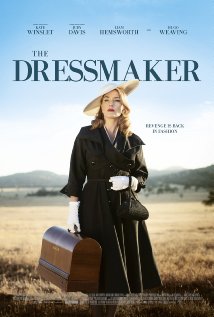
Myrtle ‘Tilly’ Dunnage is back in Dungatar, Australia. It’s a dreary, small-minded nothing of a place,  but there are demons to confront and scores to settle, and Tilly won’t rest until she’s righted those old wrongs. There’s magic (and marijuana) in her fancy-fabric bag, and – armed with her trusty Singer – she stitches up the spiteful mob.

The Dressmaker starts off wonderfully, with languid, hazy landscapes stretching out across the screen. Tilly (the ever-fabulous Kate Winslet), is as incongruous as they come, bringing glamour and a swagger to a tired, washed-out town. It’s a cartoonish, fairy-tale-ish film, with the characters writ large – and, at least to begin with – this is part of its charm. There are echoes of Edward Scissorhands here, both in the storytelling style, and in the bold, broad-strokes design. Tilly ‘rescues’ the town’s women with preposterous costumes; before long, they’re all tiptoeing along the dusty streets in high heels and cocktail frocks, corseted and primped for the daily drudge. They feel sexy and powerful, but they’re just pawns in Tilly’s game; it’s no coincidence that her own wardrobe becomes more muted as she reels them in.

The cinematography is beautiful; the acting sublime (with excellent support from Judy Davis, Kerry Fox and Hugo Weaving, all on finest form). The first two-thirds of this film are a delight. How disappointing then, to find the story arc fatally disrupted, and a final third that feels ridiculous, hysterical and hideously prolonged. There is a clear ending to this tale, and it occurs at about the eighty-minute mark; thereafter it’s an incoherent mess – and it can’t recover from this flaw.

3.5 stars

Susan Singfield

The Odyssey

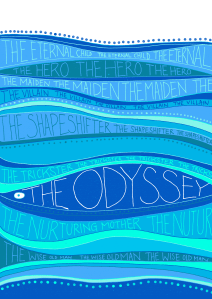
splendid_odyssey_artworkodd_01

17/11/15

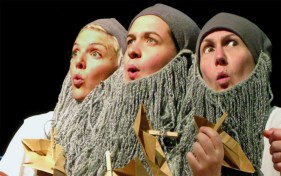
As theatrical events go, this is unusual. I’m wearing a set of goggles, a plastic poncho and a sparkly shower cap. I’m stumbling across a stage while the cast spray me with water pistols and throw ping pong balls at my head and I’m trying to get Odysseus (who is depicted by a wooden spoon with a smily face drawn on it) to the safety of a rubber ring. And I can’t complain, because I volunteered for this.

Welcome to The Odyssey as presented by Splendid Productions. When it comes to making a hoary old legend accessible for a wider audience, this team are hard to beat. The three-strong cast (Kerry Frampton, Genevieve Day and Cordelia Stevenson) depict a multitude of characters between them, switching effortlessly from role to role with aplomb and utilising  a selection of simple but ingenious costumes. Watching Kerry Frampton switch from a swaggering warrior to Penelope simply by the application of a white headscarf is an extraordinary thing, so accomplished it elicits gasps of astonishment. Meanwhile members of the predominantly young audience are enlisted to help out – a ‘storm orchestra’ periodically kicks up a rumpus, a young man in a poncho runs up and down telling the audience they’re all going to die and somebody else is called upon to keep a running tally of the carnage.  Odysseus’s epic voyage is depicted by a series of titles pegged out on a washing line. And it all works brilliantly.

I’ve rarely seen a better example of how to involve an audience in a production and I generally don’t laugh this loud when called upon to watch a Greek myth. Splendid are an appropriately named company. Catch this show at The Lowry, Salford Quays, before it sets sail for new horizons. It’s legendary.

4.8 stars

Philip Caveney

Steve Jobs

16/11/15

Steve Jobs is a strange sort of movie. Danny Boyle’s valiant attempt to capture the wayward genius of Apple’s head honcho is a film that really could only have been made after the man’s death. If he’d still been alive he’d have sued the makers for every penny they had. Not because it’s inaccurate, you understand, simply because that’s the kind of man he was.

Set mostly at the launch of three Apple products – the original Macintosh, the ill-fated Next cube and finally, the iMac, the set up is more like that of a theatrical production – and for all Boyle’s claims that this is a ‘standing-up’ movie rather than a ‘sitting-down’ one, it still comes across as predominantly talky. The script, by Aaron Sorkin, is a cut above most movie dialogue you’ll encounter, which certainly helps, but this frankly isn’t in the same league as The Social Network, with which the film will inevitably be compared.

Jobs (Michael Fassbender), quickly demonstrates the kind of behaviour that had him classed as a major pain in the backside by pretty much everyone who had the misfortune to work with him. He’s obsessed with tiny details, unwilling to take anyone else’s views into consideration and equally unwilling to take responsibility for his daughter, Lisa, who he claims might not actually be his child. His long-suffering assistant, Joanna Hoffman (Kate Winslet) is lumbered with the unenviable task of keeping him on track and we see clashes with bearded workhorse Steve Wozniak (Seth Rogan) and conversations with the closest thing that Jobs had to a father-figure, John Sculley (Jeff Daniels) – unless of course you include his actual biological father, a restaurant owner who used to boast that Jobs ate in his establishment, without ever finding out he was actually waiting on his own son.

Boyle’s films are usually adrenalin-fuelled, razzle-dazzle affairs, so this slow burning, stage bound production will inevitably prove a disappointment to many. Certainly, early indications are that the movie is not exactly putting bums on seats – but it wins through in the end by virtue of Sorkin’s edgy script and a soaring conclusion, where everything finally falls into place.

4 stars

Philip Caveney

Beasts of No Nation

MV5BMTYwMzMzMDI0NF5BMl5BanBnXkFtZTgwNDQ3NjI3NjE@._V1_SX214_AL_Unknown

15/11/15

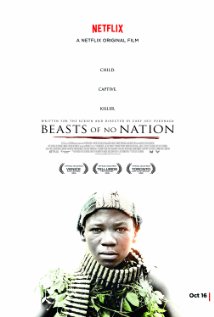
The world is changing and so are the ways in which movies are funded. Take Beasts of No Nation, for instance – an original production from Netflix, it was afforded only a brief theatrical outing, and it’s probably the last thing you would have expected to be produced by a popular streaming company. It’s a bleak and harrowing look at events during a civil war in an unnamed African country. A young boy, Agu (an extraordinarily affecting debut by Abraham Attah) plays happily with his friends in a country ruled by government troops; but when a rebel force’s resistance starts to gather pace, Agu’s family is caught up in the ensuing chaos. His Mother is forced to flee the country, while his schoolteacher father and his older brother are executed when they are mistaken for rebels. Suddenly a virtual orphan, Agu manages to escape the massacre and flees into the jungle.

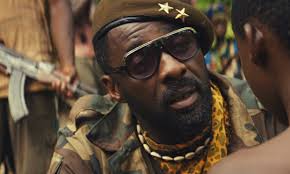
There, he is discovered by the rebels, who are led by the charismatic ‘Commandant’ (Idris Elba). He enlists Agu into his rag-tag army, where the boy undergoes a harsh indoctrination into the ways of warfare. Some of the ensuing scenes are unflinchingly brutal and we soon discover that the Commandant’s ebullient image conceals a darker, more predatory nature. BONN is in no way an easy film to watch – but it’s doubtless an important one and all credit to Netflix (and to co-producer Idris Elba), for having the guts to back such a searing and thought-provoking story. Credit also should go to director Carey Joji Fukunaga, who handles his difficult material with great skill, knowing exactly when to cut away from the carnage.

Will Agu survive his ordeal? And if he does survive, will he be traumatised for the rest of his days? You’ll need to watch the film to answer those questions, and it’s there to stream on Netflix, any time you’re ready, but be prepared -you’ll be enlisting for a bloody and uncompromising journey into the heart of darkness.

4.5 stars

Philip Caveney

The Lady In The Van

MV5BOTY0MjM3NTQyOF5BMl5BanBnXkFtZTgwMzcwNjUxNzE@._V1_SX214_AL_44-lady-in-the-van

14/11/15

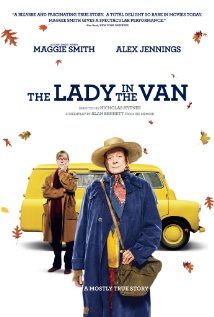
Based on Alan Bennett’s memoir and adapted from his 1999 West End play, The Lady In The Van features Alex Jennings as the great man himself, and is the true story of Miss Shepherd (Maggie Smith), an elderly transient who parked her beaten up old Bedford van in Bennett’s driveway and ended up staying there for fifteen years. The film’s a total delight, offering Maggie Smith a gift of a role as the obstinate, curmudgeonly and sometimes downright rude, Miss Shepherd, while Jennings’ assured turn as Bennett is so much more than just an uncannily accurate impersonation; indeed, here we get two Alan Bennetts for the price of one – the man who writes about his life and the one who actually lives it. With this simple but brilliant device, the film has a lot to say about the very nature of writing and the way in which real events are sometimes adapted for the purposes of entertainment. ‘But that didn’t really happen,’ writer Bennett will occasionally announce, like some glum member of a Greek chorus lurking in the background.

The story opens with a brief glimpse into Miss Shepherd’s past, the single traumatic event that initiated her deterioration into vagrancy, and then we witness her arrival in the street in Camden Town where Bennett has just purchased a house. We meet the other inhabitants of the street and witness their reactions to having this tragic creature parked nearby, an interesting mixture of liberal guilt and open disgust. Miss Shepherd’s toiletry arrangements are rudimentary to say the very least, while her open disdain for anyone who tries to help her, would probably move Ghandi to violence.

There’s so much to enjoy here. Bennett’s wry asides are sometimes cripplingly funny, Maggie Smith gives a triumphant performance in a role she was born to play and there are cameos from some big names, including one from each of the boys in the film of The History Boys. While much of the emphasis is on comedy, the film’s latter stages are deeply affecting and more sensitive viewers may find they have occasional recourse to a pack of tissues, and yet the script easily resists cheap sentiment.

Perfectly judged, beautifully acted and cannily scripted, there’s really not much here to criticise – just plenty to enjoy.

5 Stars

Philip Caveney

The Oresteia

The Oresteia - press pic 07 (A-702) The Oresteia - press pic 08 (B-123)

07/11/15

Home, Manchester

I’ve read a lot of Greek theatre (I did a Theatre Studies degree) and seen performances of some classic plays (Lysistrata and Phedra, for example) but I’ve never seen it done so… thoroughly… before, with a large chorus fully utilised, and the strophe and antistrophe physicalized on the stage. It’s like having pages of my text books brought to life, and I wish I’d seen it while I was studying.

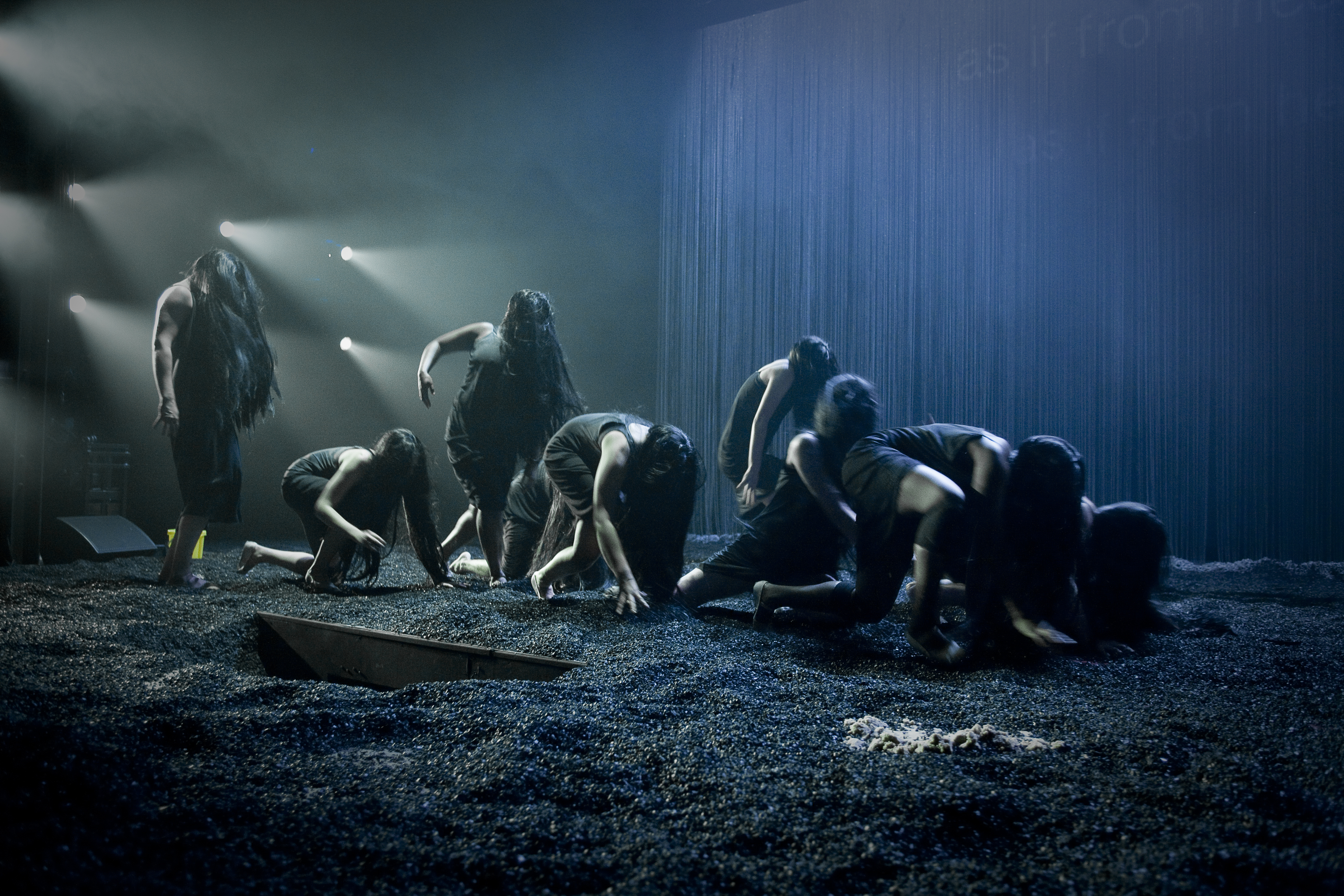
This is a fascinating production – all modern dress and regional accents – and Ted Hughes’ adaptation of the script is as fluid and accessible as you’d expect. This very deliberate modernity contrasts spectacularly with the traditional techniques: the choral speaking, the off-stage action – and it really, really works.

Make no mistake, the story is preposterous. Of course it is. It’s all heightened over-reaction and soap-opera plot – affairs and murder and long-lost kids. While Agamemnon has been fighting in Troy, his wife, Clytemnestra, has taken Aegisthus as a lover. She wants revenge on Agamemnon because he’s sacrificed their daughter to the gods, and a bloody, convoluted family drama thus ensues, albeit with the input of Apollo and Athene.

The acting is uniformly strong, but it’s the chorus that stands out. Split into three parts (men, women and Furies), the ensemble admirably fulfils its function, narrating, commenting and advising the characters. The choral speaking is beautifully precise, an object lesson in how it should be done. The men in particular create a kind of filter for the audience; they stand in the auditorium, leaning on the stage in their jeans and trackies, like a group of blokes in their local pub, checking out what’s going on. At times they’re in the dress circle too, shouting down to the characters, deploring what they do.

It’s an accomplished piece of theatre, and excellent to watch. Do try to catch it if you can.

4.6 stars

Susan Singfield

SPECTRE

MV5BMjM2Nzg4MzkwOF5BMl5BanBnXkFtZTgwNzA0OTE3NjE@._V1_SX214_AL_ Unknown-2

08/11/15

The James Bond movies seem to have settled into a regular pattern – a decent outing alternating with a not so decent one. I’ve been following the films since Dr No and was initially delighted with Daniel Craig’s efforts. Casino Royale delivered a much needed kick up the franchise, even if most of its chops were nicked from The Bourne Identity. Craig seemed to cleave closer to Ian Fleming’s vision of his infamous antihero and the silly gimmicks were kept to a minimum. Quantum of Solace felt like a decidedly patchy follow-up, which never really built up a head of steam. Skyfall of course, kicked things clear out of the stadium, becoming the most successful Bond film of all time, which leaves returning director Sam Mendes only one direction in which to take things. Down.

In the latest outing, Bond is (once again) looking like he’s all washed up. He’s gone out on his own in search of the orchestrator of a sinister organisation and M (Ralph Fiennes) has no option but to order him to stand down. Not that it deters him at all. With the help of Q (Ben Wishaw) and Moneypenny (Naomie Harris) he loads his gun and heads out after the bad guys. Before you can say implausible, he’s heading off to a variety of locations to hunt down whichever evil mastermind is behind the latest series of outrages. Meanwhile, the headquarters of MI6, bombed to destruction in Skyfall, have been replaced by a brand new super dooper high rise building, masterminded by C (Andrew Scott) who may as well have the word ‘dodgy’ tattooed on his forehead.

The film starts promisingly with a pre-credits sequence set amidst Mexico City’s El Dia De Muerte celebrations. There’s a Touch of Evil style tracking shot, some massive explosions and a helicopter-set punch up that redefines the word ‘thrilling.’ If the rest of the film was up to this standard, it would be a wonderful thing indeed. Instead, after Sam Smith’s forgettable theme song, (too shrill by half) we’re treated to some exposition, which, after that brilliant opening salvo, seems to move with all the urgency of molasses in winter. It takes quite a while for the film to recover – there’s a forgettable car chase, a punch up on a train that echoes Connery’s fight with Robert Shaw in From Russia With Love, a new love interest with Gallic moody monkey Lea Seydoux and a brief snogathon with Monica Bellucchi that looks like it’s crawled straight out of the sexist 60s. Things don’t really pick up much until chief villain Oberhauzer (Cristophe Waltz) puts in a belated appearance, whereupon we’re treated to a bit of torture, (always a great way to focus the attention), followed by what ought to be the finale.

Except that it’s not. There’s another finale, which though decently executed feels like a sequence too far (and judging by the legions of audience members paying a visit to the loo, we weren’t the only ones who felt this way). SPECTRE is decent entertainment and it’s savvy enough to reference many of the earlier movies, but it’s not strong enough to take its place with the best examples of the series. Some tightening up would have helped it hit all the right targets, but as it stands, this falls into the usual pattern. ‘Bond will return’ promises a credit, but will he be Daniel Craig? Watch this space.

3.8 stars

Philip Caveney

The Program

MV5BNDMzMzY3NTIyM15BMl5BanBnXkFtZTgwMjAwNTY1NjE@._V1_SX214_AL_

06/11/15

Lance Armstrong was the consummate all-American hero. He famously overcame testicular cancer and went on to win the Tour De France seven times in a row. Along the way, he founded a cancer charity, became a spokesman for the underdog, inspired people to excel and made millions from sponsorship and endorsements. It was all based upon a lie. He was using performance enhancing drugs to achieve his spectacular results and when the truth finally came out, his glorious career lay in tatters.

All this, of course, is well known. Now here’s Stephen Frears biopic, which dramatises the story. What it is, is a stripped-down, turbo-charged version of the events, but it’s light on truth and even lighter on detail. We first meet Armstrong (Ben Foster)  when he’s in his 20s, when he realises pretty quickly that he’s never going to become a winner in his chosen sport, unless he joins in with the practise of doping, something that most of his competitors seem to be well versed in. He makes friends with journalist David Walsh (Chris O Dowd) who is initially a fan; but when Armstrong starts to easily win races that he’s previously failed at, alarm bells start to go off in Walsh’s head. The problem is, why do his fellow journalists fail to detect something fishy going on? Soon, Armstrong and Walsh are bitter enemies.

The main reason to see The Program is to relish Ben Fosters’ extraordinary performance in the title role. His depiction of an obsessive man consumed with hubris is quite extraordinary and the fact that he physically resembles Armstrong is just the icing on the cake. But back to the film’s shortcomings. For us to fully appreciate Armstong’s fall from grace, it would be necessary to learn more about his private life. But this is simply airbrushed over. A five year marriage to Kristen Richard is reduced to a single scene of them walking down the aisle together. There’s no sign of the three children they had. Likewise, his year long engagement to musician Sheryl Crow. The only mention of her is that the two of them are ‘friends’. And finally, his relationship with longterm girlfriend Anna Hanson, (who he’s still with) isn’t even mentioned, let alone the two kids they had together.

Stephen Frears is a veteran director, so I can’t believe he’s simply chosen to skip over such important details. Could it be that certain people didn’t want to be involved? At any rate, The Program is perfectly watchable, but it feels suspiciously like the edited highlights of a movie – the full impact of his disgrace fails to come across, largely because we don’t see the repercussions it has on those who loved him. So, in a strange way, the film is as much of a cheat as Armstrong himself.

Don’t get me wrong. It’s perfectly enjoyable fare. But you’re left with the conviction that it could so easily have been something much more than that.

3.8 stars

Philip Caveney

The Heatons Tandoori

Unknown-1 Unknown

Heaton Moor, Stockport

05/11/15

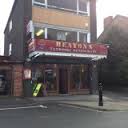
We all have our favourite curry house. For those who live around ‘The Moor’ it’s generally a toss-up between The Kushroom Koly and the Heatons Tandoori. We’ve always favoured the latter, not just because of the friendliness of the staff but also because of the impeccable standard of the food. Tucked away on Shaw Road, it’s an unprepossessing-looking establishment, but take a walk in that direction any day of the week and you’ll notice that one restaurant is nearly always busy – and that’s the Heatons Tandoori. It’s not exactly a Johnny come lately either. It’s been in its current location for 25 years

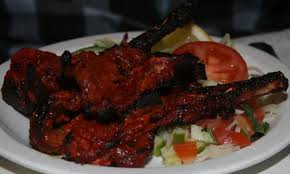
We start (naturally) with some poppadoms, served with bowls of mango chutney, raita, chopped onions and (always my favourite) lime pickle, which is hot and sweet and sour all at the same time. We also have a portion of tandoori lamb chops, which we choose to share, because the main courses here are always on the generous side. The chops come piping hot from the clay oven, nestling on some freshly chopped salad. They are perfectly cooked, spicy, juicy and featuring those lovely charred edges that are such a delight. The bones are quickly stripped of every morsel of flesh.

The main courses are also note perfect – a chicken dansak which is gloriously thick with lentils and a king prawn balti, deliciously spiced and featuring large chewy tiger prawns. We have these with a portion of boiled rice and a couple of huge nan breads, a plain one for me and a peshwari for Susan. The Heatons’ nan breads are rather splendid things, light as feathers and the size of zeppelins, they’re perfect to tear apart and dip into your sauces.

Because there’s never any hope of polishing off those gigantic portions, we ask for the remains to be bagged up, something the staff here are always happy to do, and we head for home, knowing that there’s a whole other delicious meal to be conjured from what’s in the bag. Susan is given a chrysanthemum on the way out, an enduring tradition which we’ve never really quite understood, but it matters not. Consistency is the name of the game when it comes to Indian food and we’ve never been disappointed by a meal at the Heatons.

Get down there and give it a try. You won’t be disappointed.

4.5 stars

Philip Caveney