Month: October 2024

1984

11/10/24

Bedlam Theatre, Edinburgh

George Orwell’s dystopian masterpiece has loomed large over 2024 for us. In April, we listened to Audible’s star-studded ‘immersive’ audio adaptation, where Andrew Garfield, Cynthia Erivo, Tom Hardy and Andrew Scott brought Oceania memorably to life. Immediately afterwards, we both read Sandra Newman’s Julia, a reworking of the novel from the lead female’s point of view. And today we’re here at Bedlam Theatre, ready to see EUTC’s interpretation of the cautionary tale.

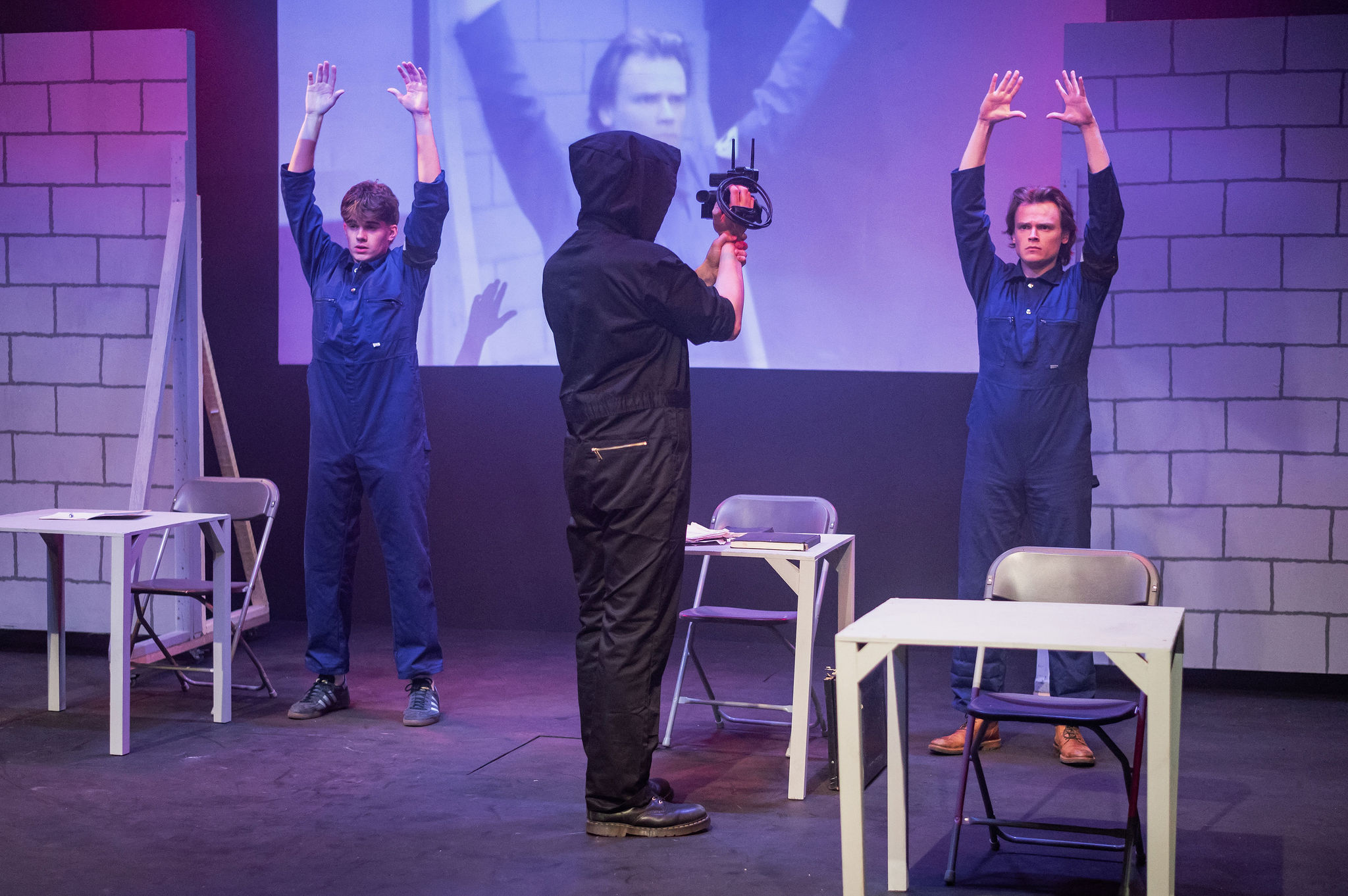
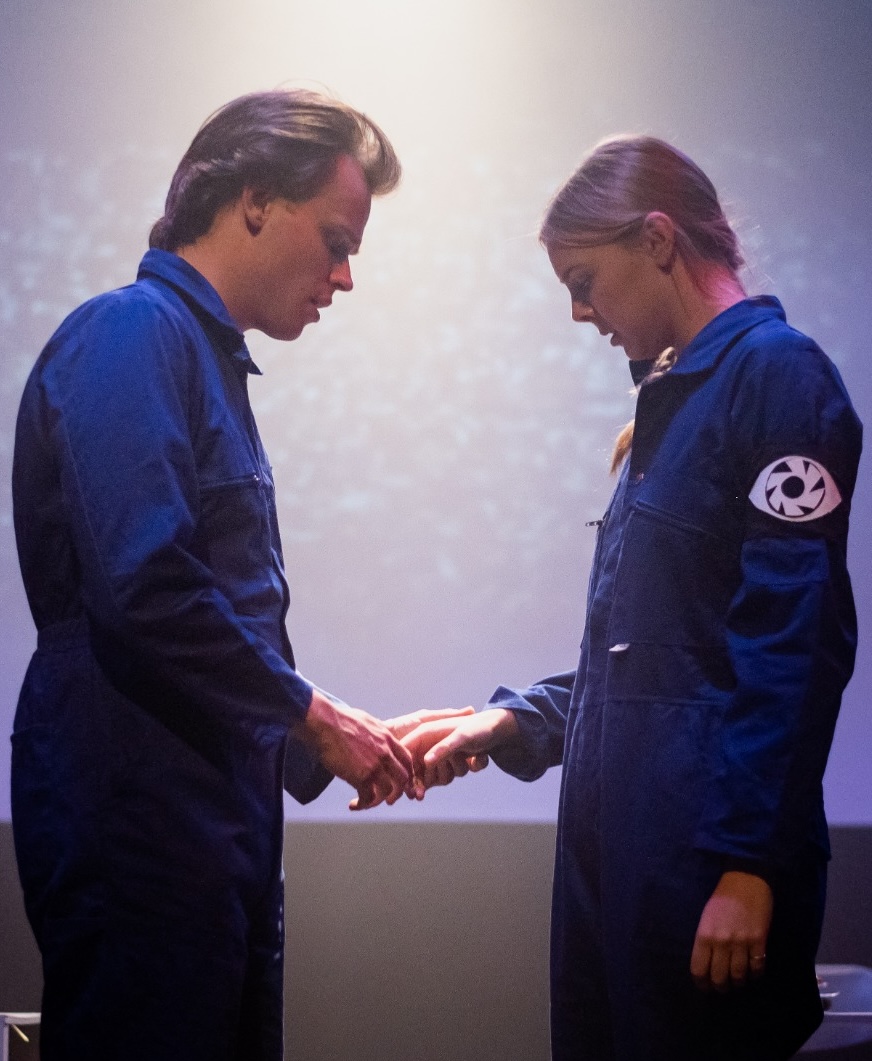
The use of screens projecting both pre-records (Lewis Eggeling) and live video (Tom Beazley) is inspired: there can’t be many stories more suited to a multi-media approach. The scene is set as soon as we enter the theatre: Big Brother (Thaddeus Buttrey) is watching us, a close-shot of his eyes filling the back drop. Instead of ushers, there are guards (Molly Gilbert, Rose Sarafilovic, Dylan Kaeuper and Fergus White), forbidding in their black uniforms, scarfs covering their lower faces. “All hand-held telescreens must be switched off,” one intones; “Silence!” bellows another. Predictably, we all comply.

This adaptation (by Robert Owens, Wilton E Hall Jr, and William A Miles Jr) generally works well, plunging us immediately into the middle of the story. What used to be Britain is now part of Oceania, a sprawling dictatorship led by Big Brother, its impoverished citizens ruled with an iron rod by the unforgiving Party. By falling in love, Ministry of Truth workers Winston (Harry Foyle) and Julia (Francesca Carter) have broken the law and, having crossed that line, find themselves increasingly unable to swallow the propaganda they are fed. But what chance do they stand against the all-seeing apparatus of the State?

Director Hunter King does a great job of establishing a sense of threat, as well as highlighting the fragile humanity that endures, despite Big Brother’s best efforts to quash it. “They can make us say things,” as Julia acknowledges, “But they can’t make us think them.” As the central duo, Foyle and Carter both deliver flawless performances: Winston and Julia are convincingly reckless, persuading themselves that they are less vulnerable than they really are, caught up in the excitement of their affair. The story is so well known that there is a dramatic irony not present in the original plot, and King exploits this effectively, so that we find ourselves grieving for the couple even as their relationship blooms.

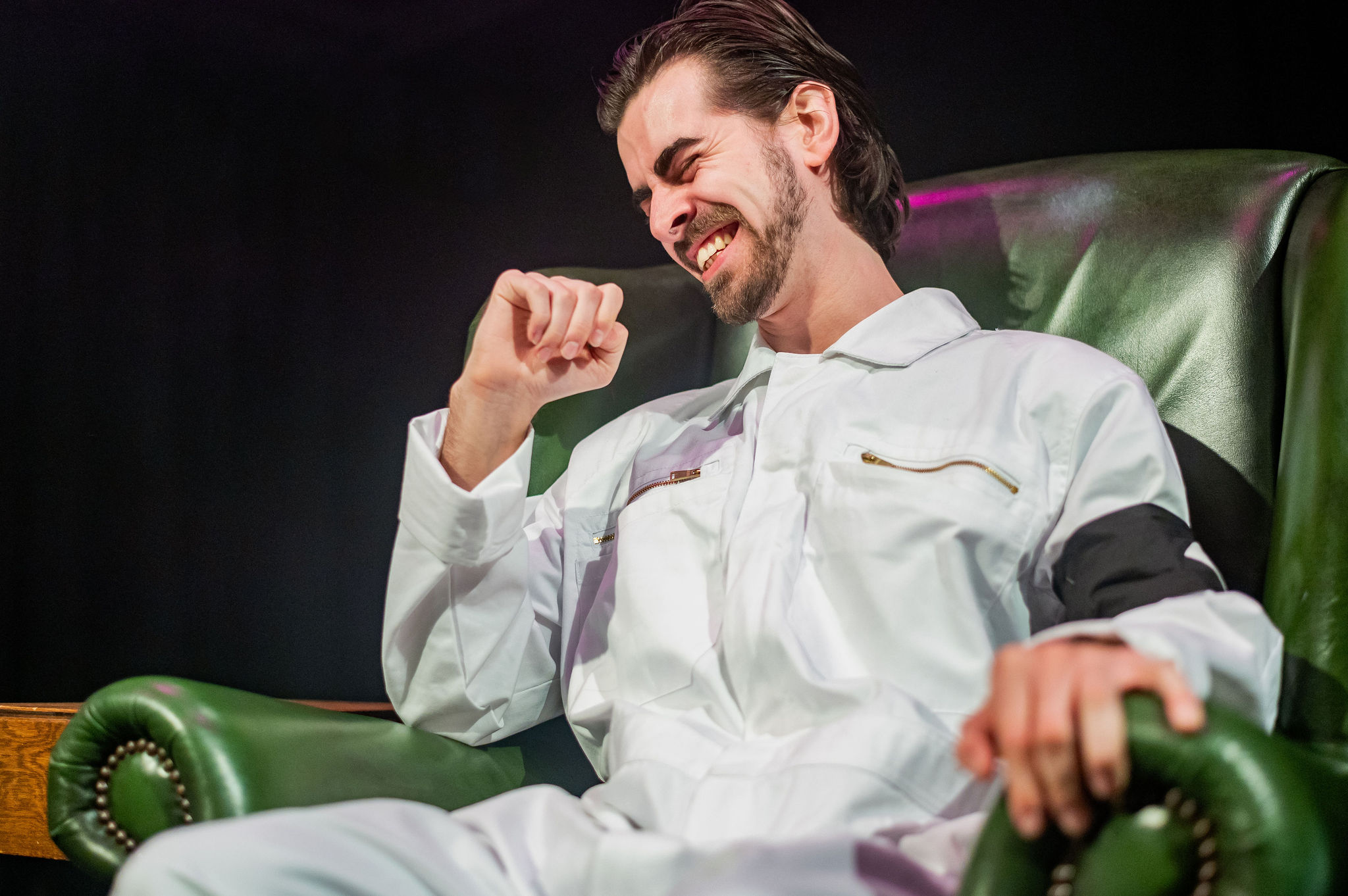
Robbie Morris is clearly having a whale of a time as smarmy backstabber, O’Brien, member of the Inner Party and chief snarer of the unwary. He plays the role as a kind of archetypal villain, complete with maniacal laugh, which makes for an interesting counterpoint, highlighting the freedom that comes with privilege: this is not a man who has ever felt the need to hide or even mute his feelings, unlike even the most loyal Party members. The only other character who seems uncowed is the landlady (Raphaella Hawkins), who owns the apartment Winston and Julia rent for their illicit lovemaking. As a Prole, she has a certain kind of liberty, born of being so poor and lowly that she’s considered unworthy of attention. It’s a dubious advantage.

As we’ve come to expect from Edinburgh University’s student shows, this is an impressive piece of theatre. I especially enjoy the fight sequences, directed by Rebecca Mahar, which are horribly credible and more brutal than I’m used to seeing on stage, ramping up the horror of this too-close-for-comfort imagined world. If I have a criticism, it’s more about the script than this production – there are a lot of actors without much to do, and I think more could be made of the ensemble. I’m also not sure why Winston and Julia get married – that’s not in the book and it doesn’t seem like there’s any dramatic purpose for the change.

That aside, EUTC’s 1984 is remarkable from start to finish, with even the final bows making a statement. It’s double-plus good.

4.4 stars

Susan Singfield
To Save the Sea

10/10/24

Traverse Theatre, Edinburgh

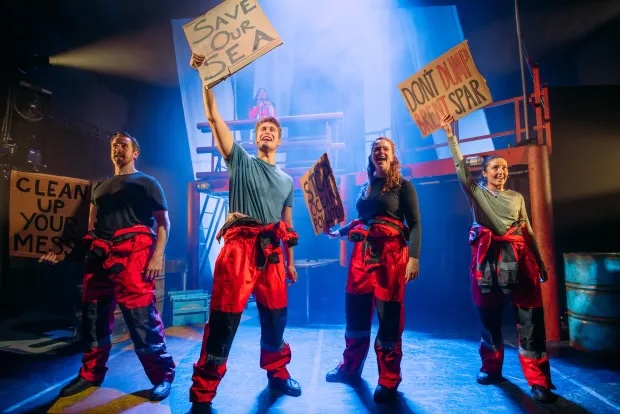
If ever I were asked to compile a list of ‘unlikely ideas for a musical,’ the story of the Brent Spar oil rig might well up there towards the top. How could such a tricky subject, set in such a obscure location, ever be convincingly staged? Well, this rousing production, written and directed by Isla Cowan and Andy McGregor is an object lesson in how to make such a venture work – a heartfelt polemic, for sure, but a supremely entertaining sung-through musical at the same time. And you don’t have to be a committed activist to appreciate the importance of what happened back in 1995 – and to realise that not enough has changed since then.

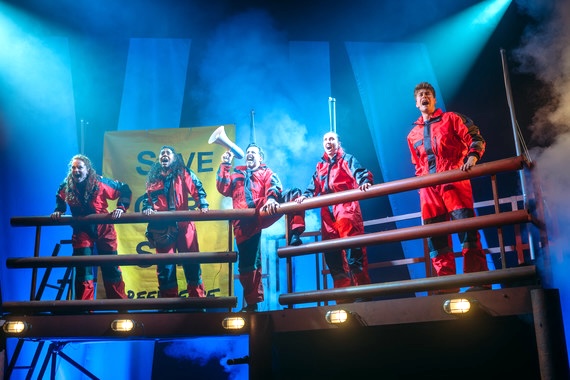
Many will remember the story of the decommissioned Brent Spar, which (largely as a cost-cutting exercise) was scheduled to be blown to bits by its owners, Shell, before being consigned to the depths of the North Atlantic, where it would cause untold damage to the ecosystem. But the company’s plans came to the attention of a team of Greenpeace activists, who sailed out from Shetland, climbed aboard the rig and steadfastly refused to leave, even after being repeatedly blasted by water cannon.

In this version of events, the names of the protagonists have been changed. Team leader Karl (Matthew McKenna) is driven by his desire to do the right thing for the environment. He’s backed up four others: feisty rich girl, Engel (Katie Weir), whose parents made a lot of money from fossil fuels; student, Colin (Nathan French), who has impulsively abandoned his University studies in order to go on this mission; journalist with a conscience, Brianna (Kaylah Copeland), who has promised to do everything she can to bring this matter to the public’s attention; and stay-at-home mum, Rachel (Kara Swinney), taking a break from her domestic duties to make a stand for ‘something that matters.’

Together the disparate team sail out to the rig and prepare to face the opposition.

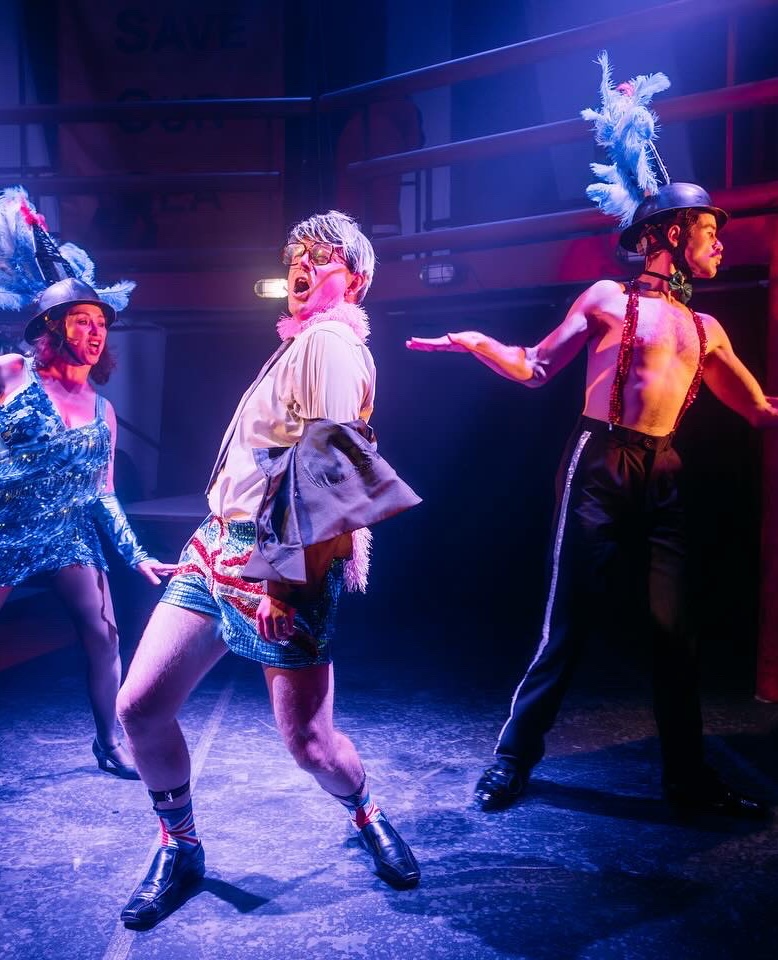
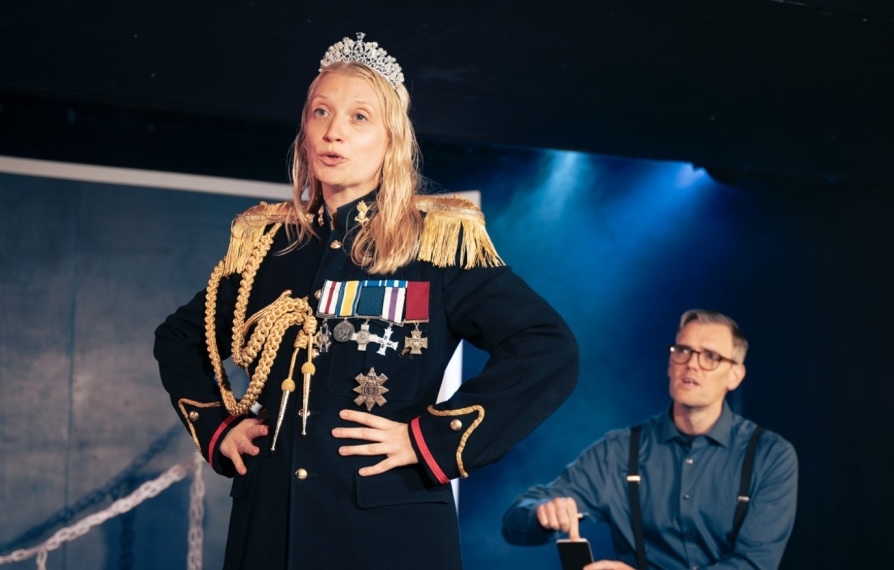
Meanwhile, a scheming triumvirate of Shell executives, Rupert (David Rankine), Karen (Helen Logan) and David (Ewan Somers), are determined to end the occupation as quickly as possible. This could cost them a lot of money! The trio are played as comic relief to the action, drawing up their dastardly plans almost in the style of Gilbert and Sullivan villains, romping around in a variety of costumes and occasionally breaking away to embody real life characters. Somers does a hilarious job of embodying John Major as (trust me) you’ve never seen him before, while Logan briefly dons a bald pate to impersonate German chancellor, Helmut Kohl.

Claire Halleran’s impressive set design convincingly evokes the rugged location and this is accentuated by Fraser Milroy’s sound and Simon Wilkinson’s lighting. The songs (also by Cowan and McGregor) are uniformly impressive, all majestic chords and soaring vocals. All the performers have impressive ranges and, when the five protestors join together in powerful harmony, the results are nothing short of spectacular. A scene where Rachel proudly proclaims the importance of her new-found role is particularly moving and I have to confess to having something in my eye by the time Swinney reaches the final chorus.

This is only at the Traverse for a couple more nights before moving on to tour a series of Scottish locations through October, finishing up in Inverness on November 2nd. If you can get seats, I urge you to make the effort. To Save the Sea is a deeply committed and ultimately moving piece of musical theatre with an important message to deliver.

4.6 stars

Philip Caveney

The Baddies

09/10/24

Lyceum Theatre, Edinburgh

The Baddies, David Greig and Jackie Crichton’s theatrical adaptation of Julia Donaldson and Axel Scheffler’s 2022 book, is well-pitched for its target audience of 3+. This morning’s audience is almost all made up of school trips, with rows of squirming, excited P1s and 2s eating snacks and being cajoled out of their jackets while waiting for the show to begin. The colourful set – designed by Jasmine Swan – intrigues them. Indeed, there’s one little girl in the front row who can’t seem to help getting out of her seat and walking towards the stage, drawn like the proverbial moth to the flame. Every time her teacher asks her to sit down, she does so – but she’s up again a moment later, eyes wide, mouth open.

But as soon as the show begins, she returns to her seat and watches, enthralled. And her reaction is a more important review of this production than anything I can write. Her classmates enjoy it too. The noise level in the auditorium bears testimony to the musical’s success: there are hundreds of young children here, clapping enthusiastically for the songs, waving their hands and shouting when required – but much quieter than the on-stage mice as the story carries them along.

A framing sequence introduces us to Mamma Mouse (Lottie Mae O’Kill), who wants to teach her three bad-mannered children (Dyfrig Morris, James Stirling and Rachel Bird) to say thank you, sorry and please, but it doesn’t go well. They’re more interested in having fun. To calm them down, she decides to tell them a bedtime story about a spotted handkerchief, and then we’re off, as they transform into the titular Baddies: Troll (Morris), Ghost (Stirling) and Witch (Bird). “We’re the very worst baddies,” they sing in the show’s catchiest number (courtesy of Joe Stilgoe) – but there’s a problem. They’re not. They’re rubbish at being bad. They can’t even scare the new young shepherdess The Girl (Yuki Sutton), who’s out in the mountains on her own for the very first time.

As an adult, I have to say that the story doesn’t do a lot for me. There’s not much of a narrative arc. I’d like the manners referenced in the opening sequence to have more bearing on the subsequent narrative. I’d also like Mamma Mouse to refrain from waving around her dirty hanky after exhorting the little mice to sneeze into it to catch the germs. But these are grown-up concerns and, as we’ve established, I’m not the target audience.

Stilgoe’s songs are light and catchy, but most of them are perhaps not sing-along-able enough for little children. I like Katie Beard’s direction: the slapstick is especially nicely done, with lots of silly near misses and amusing sound effects. O’Kill seems to be channelling Mary Poppins – and this works well for the piece, lending her a convincing authority over the proceedings, so that when she assures the audience in advance that, although there are some scary moments in the story, nothing bad happens and there’s a happy ending on its way, it’s clear that the children trust her and so relax into the tale.

But, for me – as for the little front row girl – it’s Swan’s design that steals the show. The set is a glorious riot of hidden delights, like a giant Polly Pocket, the mountainside opening up to reveal a fairytale cottage, while the costumes – although different from the book’s illustrations – seem somehow iconic. I can imagine them as popular Hallowe’en outfits.

The Baddies leaves Edinburgh on the 20th October for an extensive nationwide tour. If you’re a parent or a teacher and you have wee ones you want to treat, an hour in the company of this not-so-dastardly trio is pretty sure to please them.

4 stars

Susan Singfield
Anna/Anastasia

08/10/24

Traverse Theatre, Edinburgh

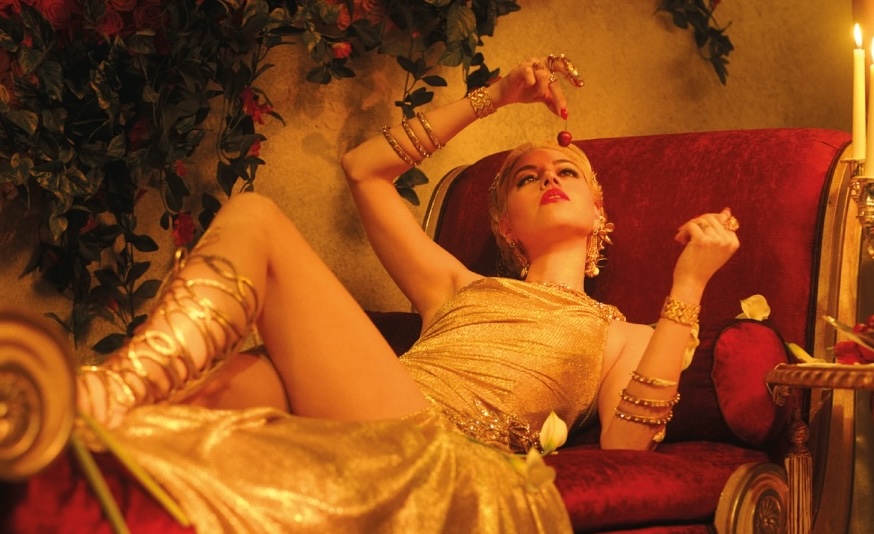
Berlin, February, 1922. Following a failed suicide attempt, Anna (Kirsty McDuff) is brought to a local police station. She’s dripping wet after trying to drown herself in a local canal. She is interviewed by Franz (Chris Forbes), a straight-laced police officer with a liking for equally straight talking. But when she claims to be the Grand Duchess Anastasia, the lone survivor of the assassination of her entire family by Bolshevik revolutionaries two years earlier, Franz isn’t quite sure what to believe. For one thing, Anna talks so lucidly about her glamorous past: her memories from the court of Nicholas and Alexandra, the glittering balls, the wonderful meals.

And for another, she is wearing an expensive-looking tiara that’s clearly been dented by a bullet…

Inspired by real events, Anna/Anastasia approaches its subject matter with an endearing sense of humour, playing Anna’s volatility off against Franz’s restrained, analytical approach. Franz, we are told, paints china swans as a hobby and keeps them up in the attic out of harm’s way. Anna, with her unrestrained bursts of exuberance, represents something he is unaccustomed to, something that threatens to bring all his most established convictions clattering down around him in pieces – and yet, as the years pass and Anna’s fortunes rise and fall, the couple keep re-encountering each other and a kind of guarded relationship develops.

The sprightly script by Jonny Donahoe (whose Every Brilliant Thing is a popular yearly visitor to the Edinburgh Fringe) maintains just the right mix of comedy and pathos, while the two performers make perfect foils for each other. McDuff stays in character the whole way through, inhabiting Anderson’s turbulent persona with considerable skill, while Forbes occasionally steps out of his main role to play a number of subsidiary characters – at one point breathlessly re-enacting the murder of the entire Romonov family single-handedly. Liz Caruthers handles the direction with an assured touch.

The story of Anna Anderson has formed the basis for many plays and films over the years and, though the mystery has recently been pretty much solved thanks to DNA testing, it continues to exert considerable powers over the public imagination. As Anna/Anastasia seems to emphasise, the actual truth of the story is somehow less important than the speculation it has always kindled – and the play’s bitter-sweet conclusion still manages to leave us wondering about the possibilities.

4.4 stars

Philip Caveney

A Different Man

05/10/24

Cineworld, Edinburgh

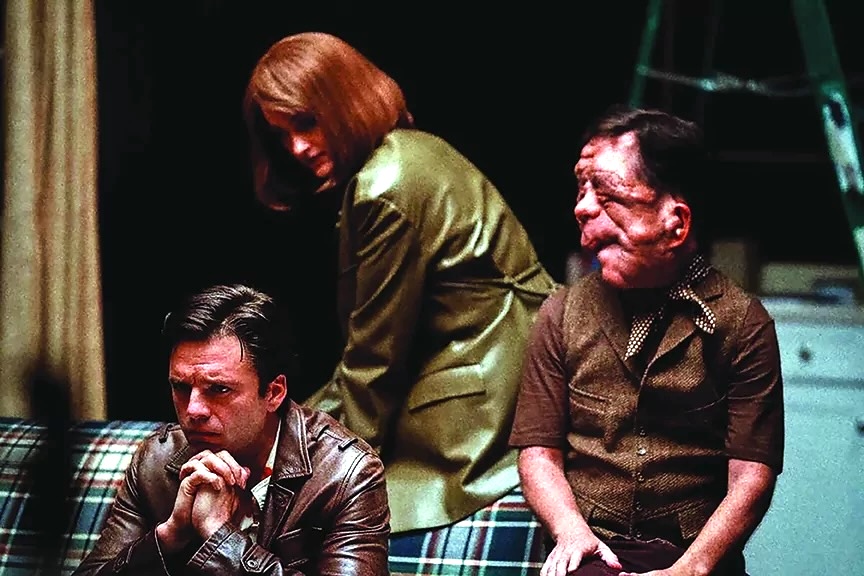
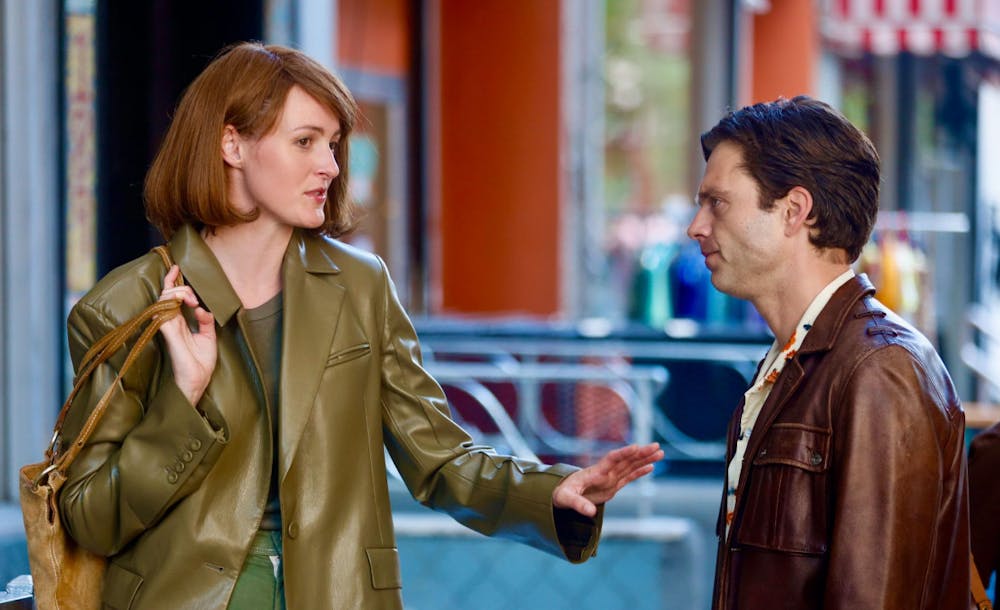
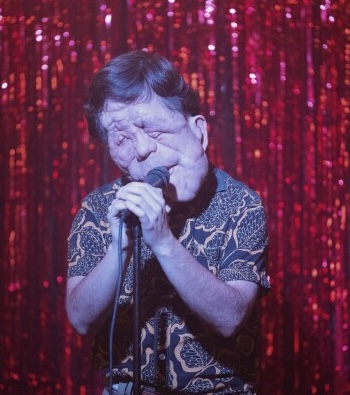
It’s not hard to imagine actor Adam Pearson’s delight on first reading the script for A Different Man. The film, a three-hander, was written expressly for him – and, my word, it gives him a chance to show what he can do. It also challenges our preconceptions and prejudices around disability and disfigurement – but not in any obvious, seen-it-all-before way.

Writer-director Aaron Schimberg has a cleft palate, so he knows something of how it feels to look different. Pearson, meanwhile – along with his character, Oswald, and Sebastian Stan’s character, Edward – has neurofibromatosis, which is a lot more noticeable. Edward copes by keeping his head down and trying to make himself small. He’s quiet, unassuming, and sadly accepting of his lot. He is an actor, but he doesn’t get much work – unless you count condescending corporate training videos of the ‘how to behave around your disabled colleagues’ variety.

And then two things happen.

First, Edward is offered the chance to take part in a drug trial for a revolutionary new treatment that will transform his appearance. Next, he meets his new neighbour, aspiring playwright Ingrid (Renate Reinsve), and begins to develop feelings for her. She’s nice to him – but recoils when he makes a tentative move.

He decides to take the plunge.

As the tumours begin to literally fall from his face (courtesy of some pretty impressive prosthetics), a new Edward emerges, smooth-skinned and conventionally handsome. Keen to shuck off his old identity as well as his deformities, he informs everyone that Edward has committed suicide and rebrands himself as ‘Guy’. Before long, he’s living the dream, with a well-paid job, a luxury flat and an active sex life. What more could he want?

The answer, it turns out, is the starring role in Ingrid’s off-off-Broadway play, Edward, which is all about her friendship with her tragic neighbour. But she’s not sure about giving Guy the part – it wouldn’t be authentic and surely a disfigured actor ought to get the role? But, she has to admit, there’s something compelling about Guy, even if he does have to wear a mask on stage.

And then Oswald turns up, cheerily intrigued by the idea of the play with a central part he feels he was born for. He’s keen to see how Ingrid has written the character and what Guy brings to the role. He looks like Edward used to look, but that’s where the similarity ends. Because Oswald is no one’s victim. He’s a happy, talented, popular man, keen to grasp new opportunities, comfortable in his own skin. Edward can’t cope, his cocksure persona crumbling in the face of Oswald’s frank and open confidence. Before too long, he finds himself replaced…

The three central performances are all impressive, although Pearson is the one who shines. Stan is believably conflicted as the shy, awkward Edward, his true nature visible to the viewer even when he’s swaggering and trying to inhabit his brave new world. Reinsve, meanwhile, is perfect as the deluded Ingrid, convincing herself that she’s not only well-intentioned but also alert to discrimination, despite the self-serving nature of her work, and the fact that she keeps referring to Beauty and the Beast as her inspiration.

A Different Man is well-crafted on every level but, primarily, it is a clever piece of writing, as multi-layered as Stan’s prosthetics, unflinching in its examination of how non-disabled people view those with disabilities. Without offering any easy answers, it also explores the ideas of authenticity and appropriation, all the while avoiding anything resembling a cliché. This is the sort of script that sparks ethical discussions – akin in some ways to American Fiction, The Substance or Scottish playwright Kieran Hurley’s Mouthpiece.

Nuanced, shocking, intelligent and insightful, this is a memorable movie for all the right reasons.

4.7 stars

Susan Singfield
Joker: Folie à Deux

04/10/24

Cineworld, Edinburgh

Todd Philips’ 2019 film, Joker, was cinematic Marmite. For every viewer that loved it (and I was firmly in that camp), there was an equal number of comic book fans who detested it, largely because the film had no truck with the conventions of the genre that inspired it. Instead, here was an unflinching exploration of a mentally ill man, abandoned by the healthcare system and ultimately championed by a bunch of deluded followers. It was grubby, brutal and utterly devastating.

Folie à Deux is equally divisive, though this time around what has incensed most social media pundits is the fact that the film is… well, there’s no other way to say this: a musical. In 2024, the genre appears to have fallen into total disrepute with movie fans, to the extent that even films like Wicked are reluctant to depict any actual singing and dancing in their trailers in case it puts off potential viewers.

Go figure.

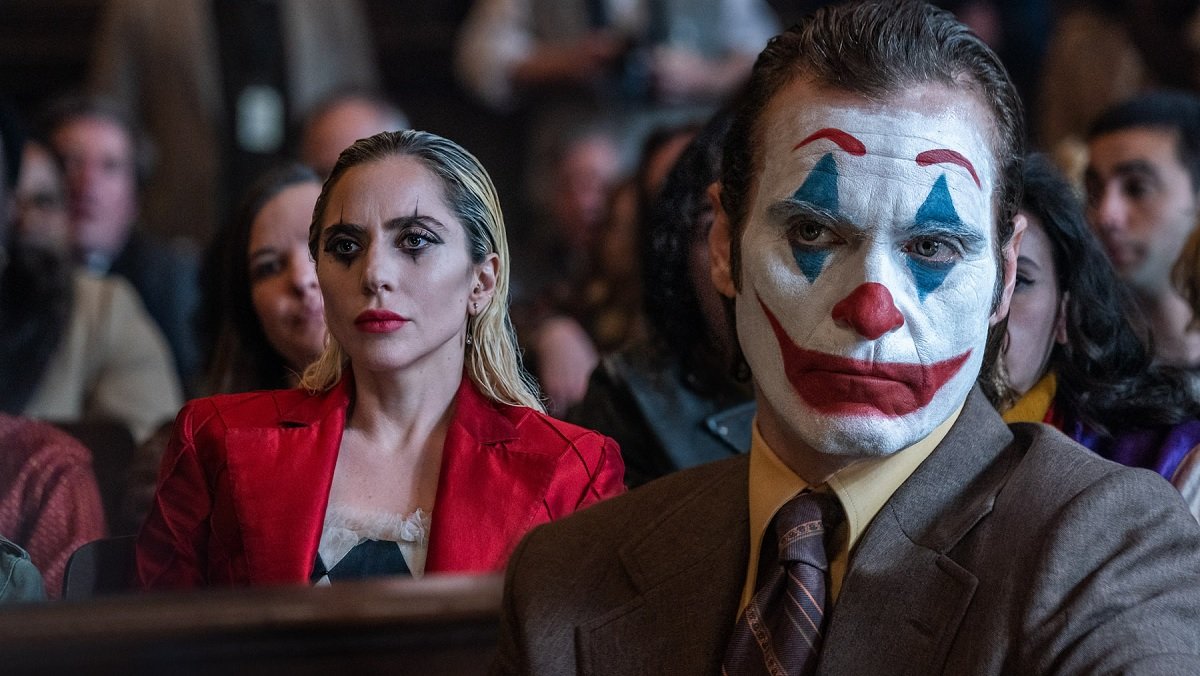
It’s two years after the events of Joker and Arthur Fleck (Joaquin Phoenix) is languishing in Arkham State Hospital, overseen by callous prison warder Jackie (Brendan Gleeson), who seems to delight in humiliating him at every opportunity. (Interestingly, it’s Jackie who tells the nearest thing to an actual joke in this story and, it has to be said, it’s a corker.)

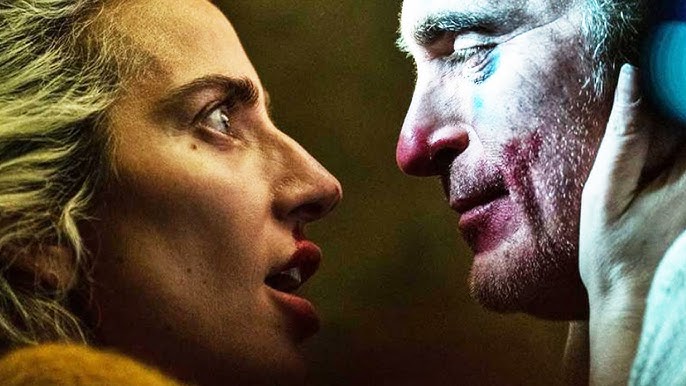
Arthur is fast approaching his day in court, schooled by his defence lawyer Maryanne (Catherine Keener), who is pretty sure that a plea of ‘dissociative identity disorder’ will save him from the death penalty. And then, attending an in-prison musical therapy session where inmates are encouraged to sing their troubles away, Arthur meets Harleen ‘Lee’ Quinzel (Lady Gaga) and, for the first time in his life, he has a reason to want to survive… and to slap that makeup back on his gaunt visage.

The term ‘musical’ is used quite loosely here. Phoenix and Gaga work their way through a series of solid gold bangers from the likes of Sinatra and Jaques Brel, but it’s made clear from the outset that these sequences occur in the cerebral landscape of Arthur’s head, his way of making sense of what’s happening to him. (Those with long memories may be reminded of Dennis Potter’s Pennies from Heaven, which adopted a similar approach.) A scene where Arthur is being interviewed by TV journalist Paddy Meyers (Steve Coogan) is a good case in point. Midway through the interview, Arthur suddenly breaks into song and dances around his cell – but Paddy remains blissfully unaware of his antics.

Phoenix is an actor of extraordinary ability and he slips into this unfamiliar discipline with his usual aplomb, using his newly slimmed-down frame to accentuate every move. Gaga, who has much more experience in the field, is also sensational, able to imbue an old chestnut like Get Happy with a strangely sinister edge, making me feel that I’m hearing it for the first time. As with the previous film, Philips steadfastly refuses to moderate his approach for the spandex brigade, doubling down on the grime and squalor. Folie à Deux is every bit as unsparing and unforgiving as its predecessor, whilst somehow managing to retain a beautiful humanity.

This may not be the perfectly-honed movie that was Joker, but for my money, it runs it a close second and is far (very far) from the embarrassing misfire that so many are describing it as. Some irate comic fans seem to have been hoping for a rerun of its predecessor, but what would be the point of that? I can’t help feeling they’ve somehow missed the point.

But then, I’m always happy to admit that I love a good musical.

4.6 stars

Philip Caveney

Megalopolis

03/10/24

Cineworld, Edinburgh

Well, I can’t say I wasn’t warned. Francis Ford Coppola’s long-nurtured passion project, Megalopolis, arrives garlanded with the kind of vitriolic advance reviews that instantly sank its chances of making any money at the box office. But why all the furore? What has the man done that’s so unspeakable? You’d think he’d murdered somebody. Instead, at the age of eighty-six, he’s made a vanity project, self-financing the hundred million dollar film by selling one of his vineyards. (We’ve all been there.) He hasn’t bankrupted a movie studio, which makes a refreshing change.

Lest we forget, Coppola has made some underwhelming films before. Yes, he gave us The Conversation, The Godfathers (One and Two) and of course, Apocalypse Now, but there was also One From the Heart and er… Jack, both of which were less than perfect.

It’s important to note that right from the opening credits, Megalopolis is described as ‘A Fable,’ so those who describe it as ‘unrealistic’ may be missing the point.

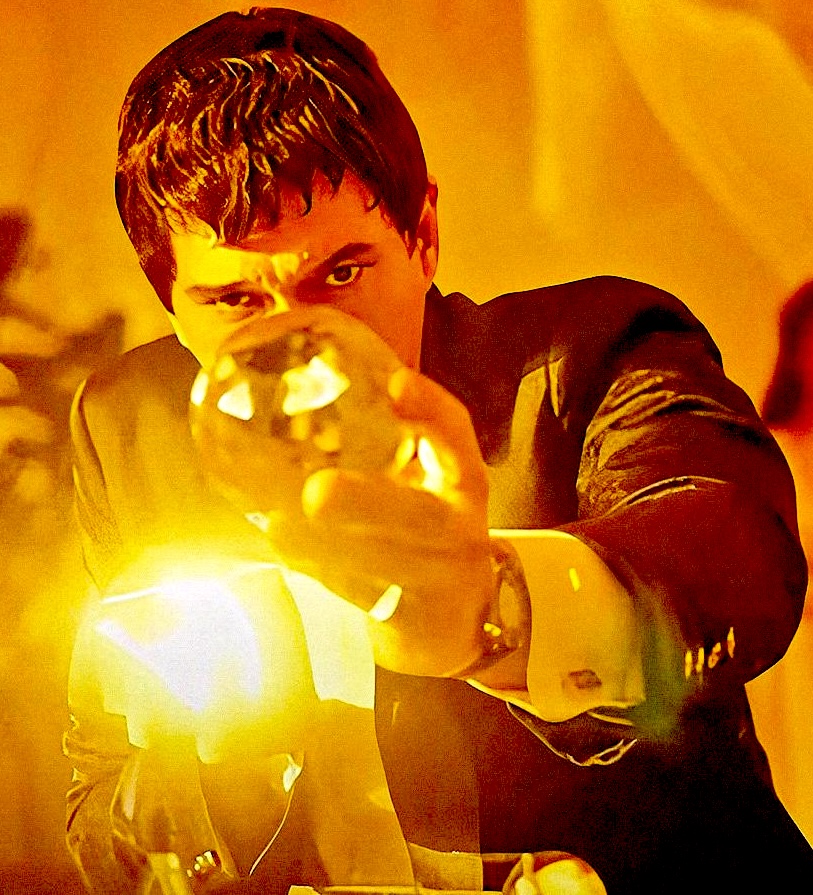
Somewhere in an imagined future, New York has become New Rome, and those that run the city have taken on the aspects of senators and emperors, strutting around in toga-like garments and looking very pleased with themselves. Cesar Catalina (Adam Driver) is a sort of genius / town-planner, who has discovered a mysterious and indestructible building substance called Megalon. He has also found a way to stop time by clicking his fingers (as you do) and has a penchant for lapsing into Shakespeare soliloquies for no apparent reason.

Cesar is currently intent on building the titular inner city area, which he believes will be the first step in creating a bright new future, but his main adversary in this project is Mayor Cicero (Giancarlo Esposito), who seems to be opposed to any kind of progress. Cicero’s daughter, Julia (Nathalie Emmanuel), on the other hand, finds herself increasingly drawn to Catalina and it’s not long before sparks begin to fly between them. It’s clearly going to cause trouble.

There are other powers at work in the city. TV presenter, Wow Platinum (Aubrey Plaza), is suffering from failing audience figures and is keen to take a step up in the world by marrying Cesar’s rich uncle, Hamilton Crassus III (Jon Voight). She uses her nephew, Clodio (Shia LaBeouf), to help her to get there, by any foul means he can devise. (The odious Clodio is clearly inspired by Donald Trump, right down to the bloody insurrection he foments and is perhaps the one place in the ‘fable’ that does relate to real life.)

Overall, Megalopolis doesn’t work and it’s not that it’s short of ideas. On the contrary, it is virtually struggling to contain them all and it doesn’t help that there are too many big names in cameo roles here, most of them improvising their lines. The likes of Dustin Hoffman and Talia Shire flit briefly across the screen and it feels as though Coppola, having secured their services, is unsure of exactly what to do with them. Sometimes, when you work too hard on a project, you stop seeing it objectively.

On the plus side, the film looks magnificent in IMAX, a succulent, shimmering wonder to behold (Coppola did his own cinematography) and, in the film’s latter stages, there are sequences that might best be described as psychedelic, the massive screen appearing to erupt at regular intervals in a blaze of light and colour. If you’re going to see this, do try to catch it in the cinema, because its going to lose all of its majesty on streaming. The running time of two hours and eighteen minutes soon elapses and, after everything that Coppola has given us over the years, surely it’s not too much to ask that movie buffs make the effort to actually go out to see it.

3 stars

Philip Caveney

Ruckus

02/09/24

Traverse Theatre, Edinburgh

We first saw Ruckus at the Fringe back in 2022, in the confines of Summerhall’s Cairns Lecture Theatre. We loved it, and so were keen to see it again, this time in the more spacious Traverse Two. This hard-hitting piece of theatre, written and performed by Jenna Fincken, is perhaps even more affecting this time around, and we can’t recommend it highly enough. It’s on until Thursday, so you’ve only two more chances to see it here before it moves on to the Nottingham Playhouse.

Read our earlier review here: https://bouquetsbrickbatsreviews.com/2022/08/08/ruckus/

4.7 stars

Susan Singfield & Philip Caveney

His Three Daughters

01/10/24

Netflix

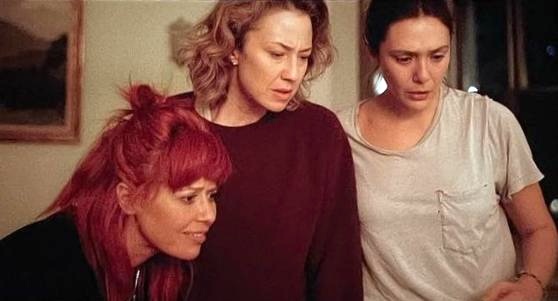
Vincent (Jay O’Sanders) is rapidly approaching the end of his life and his daughters have come to his Manhattan apartment to be with him when he finally expires. Katie (Carrie Coon) is the eldest of them, a natural organiser, working alongside hospice worker, Angel (Rudy Galvan), to ensure that all loose ends are securely tied up. She’s trying to ensure that the Do Not Resuscitate order that Vincent wanted is in place. She’s also trying to write her father’s obituary.

The youngest daughter, Christina (Elizabeth Olsen), a slightly dippy Grateful Dead fan, spends much of her time singing to Vincent and making needy phone calls to her husband and young daughter.

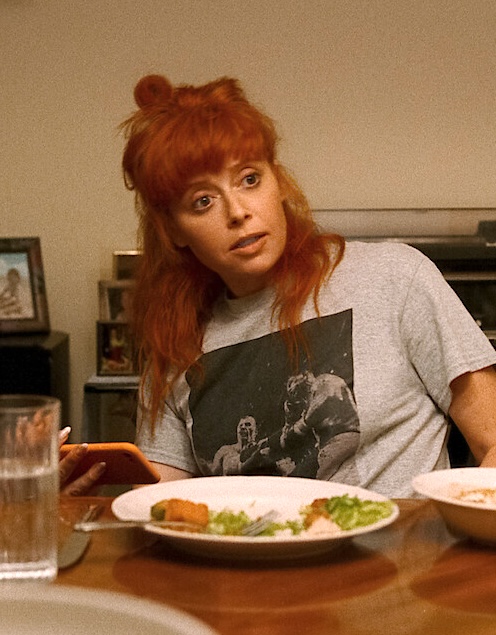
And then there’s step-sister, Rachel (Natasha Lyonne). Though not Vincent’s biological daughter, she has actually lived in his apartment for years and in some ways seems to be the most profoundly affected by his approaching death. She’s clearly determined to be as blitzed as humanly possible when the end arrives, courtesy of the seemingly endless supply of spliffs she smokes at every given opportunity.

This gentle and quirky film, written and directed by Azazel Jacobs, is essentially a character study, which plays the three very different women against each other, as they chat, reminisce and argue. Sparks fly when they finally address long-held grudges and feuds. Confined entirely to Vincent’s apartment, this could easily feel claustrophobic, but all three performances are strong enough to carry the feature along. Lyonne perhaps gets the most interesting role, drifting through the situation with a manic grin and a WGAF attitude, as the clock inexorably ticks through the closing hours of Vincent’s life.

There’s an unexpected revelation in the final furlong that initially makes me think that Jacobs has just ruined everything he’s spent so much time building – but happily that feeling is short-lived and it quickly becomes clear that he knows exactly what he’s doing.

His Three Daughters is a delightful and affecting film that has many insightful things to say about the human condition and our attitude to death. And if that sounds grim, don’t worry. There’s plenty here to make you smile. Don’t be surprised if, like me, you come away from this singing Five Little Ducks.

Just saying.

4.2 stars

Philip Caveney

Armour: A Herstory of the Scottish Bard

01/10/24

Traverse Theatre, Edinburgh

Today’s A Play, A Pie and A Pint production is a welcome revival of Shonagh Murray’s Armour: A Herstory of the Scottish Bard. Unwieldy title notwithstanding, this is a taut, well-scripted piece of theatre, the music deftly evoking the lyrical poetry at its heart.

It’s thirty years since the death of Scotland’s beloved poet, Robert Burns, and his widow, Jean (Irene Allan), still misses him. But she has plenty to occupy her time, not least her headstrong young granddaughter, Sarah (Karen Fishwick), who’s been sent to live with her in Dumfries, while her dad’s away in India. And then there’s Nancy Maclehose (Hilary Maclean), Burns’ erstwhile mistress, who seems very keen to talk to Jean. There’s something important she needs to say…

Tom Cooper’s direction and Heather Grace Currie’s set design both serve to highlight Murray’s clever structure, ensuring that Burns’ absence forms the centre of the play, a model of his mausoleum gleaming from the mantlepiece, white against the dark furniture. Armour is a feminist piece but it doesn’t shy away from the fact that we only know these women in relation to a man, that they are destined to remain almost unknown, circling the ghost of a famous heavyweight, as small as the dolls that Sarah plays with.

Murray’s script breathes life into the women, imagining their responses to the scant details we have of their real circumstances. Allan imbues Jean with a sharp dignity, a refusal to be shamed or diminished by her husband’s infidelities. What’s more, Maclean’s Nancy defies the image of a paramour: she admits to feeling guilt for not thinking about Jean, but there’s no room here for any moral outrage. She loved Rab. He loved her. He loved Jean too. People are complicated and you can’t change that. What you can do, as Jean explains to Sarah, is choose whether to be “a sitter or a do-er”. And being a do-er is infinitely more admirable.

Fishwick shines as the motherless young child, fascinated by her granny’s stories and determined to follow in her grandad’s footsteps and become a bard herself. Her wistful demeanour – as she remembers India and her dad – contrasts beautifully with the irrepressible spirit she shows as she sings and dances around her granny’s house. Jean and Nancy might have been consigned to a life in the shadows, but Sarah believes she can have much more. Especially with those great women behind her.

Armour is a deceptively melodic piece, which smoulders gently before bursting into full flame.

4.1 stars

Susan Singfield