Month: August 2023

Candide

14/08/23

theSpace @ Surgeons Hall (Grand Theatre), Edinburgh

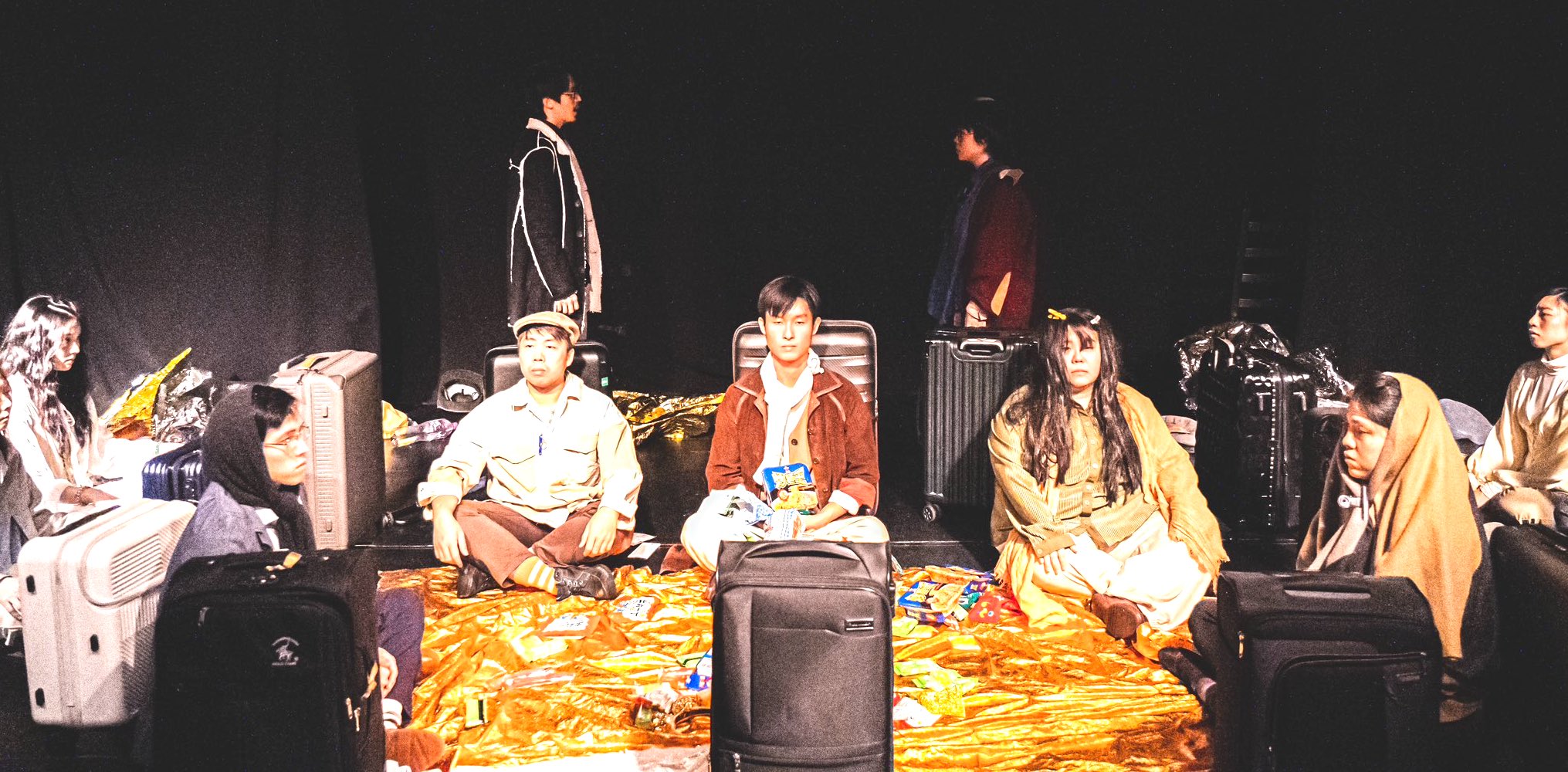
Ima Collab is a young theatre collective from Hong Kong, and their spirited version of Candide opens this week in the Space @ Surgeon’s Hall. Condensing Voltaire’s sprawling epic into a forty-minute slice of theatre is a tall order, but the fourteen-strong cast give it their all, and the result is both energetic and entertaining.

Like his C18th contemporaries Tom Jones and Gulliver, the eponymous Candide is an ingénue, whose epic journey from innocence to experience spans many decades and several distinct acts. His idyllic youth in a Baron’s castle, under the tutelage of renowned optimist Pangloss, comes to an abrupt end when he is caught kissing the Baron’s daughter, Cunégonde. Cast out, he endures a series of hardships: he is forced into joining the Bulgarian army, for example, and also survives both a shipwreck and an earthquake. Along the way, he is repeatedly reunited with and then parted from Cunégonde, until at last they marry and live unhappily ever after. (I think it’s okay to give spoilers to a three-hundred-year-old story.)

In this production, the tale is narrated to an eager group of travellers, keen to know why one of their number is obsessed with Voltaire’s novel. The contents of their suitcases are pressed into use as props, and the fourth wall is continually broken, as the cast ask questions of the audience, and issue demands to one another (“Can you make me a boat, please?”).

This breathless retelling is vibrant, and the cast are very engaging. There are a lot of jokes, most of which land well, although I’m not so keen on the fat-phobic jibe at the aged Cunégonde, who, played for the most part by one actor, is briefly replaced by a perfectly lovely-looking larger one – a move clearly intended to suggest that she is less desirable than she used to be.

The direction is imaginative and, if the ensemble movement sections sometimes lack precision, they are always enthusiastically performed.

An ambitious and diverting piece of theatre, Candide is certainly a lot of fun.

3.4 stars

Susan Singfield

Woodhill

13/08/23

Summerhall (Main Hall), Edinburgh

Lung is a verbatim theatre company, whose raisin d’être is to make hidden voices heard. “We use people’s real words to tell their stories; our shows always have a wider campaign and political aim.” In tonight’s show, those hidden voices belong to people failed by the UK prison system, specifically three young men who died in HMP Woodhill and the families who mourn them. It’s the first interpretative dance/verbatim mash-up I’ve ever seen, and it’s astonishingly powerful.

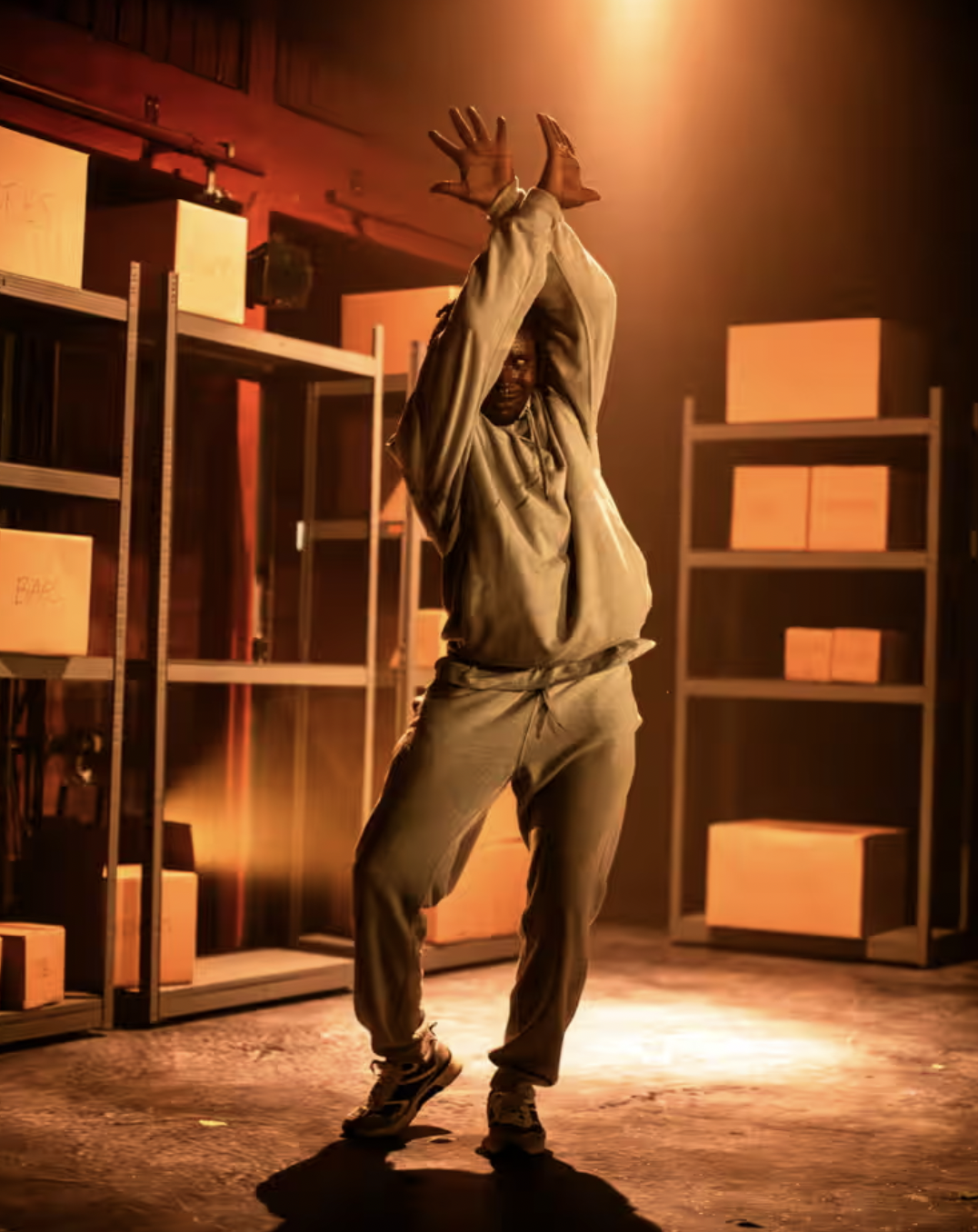
Recorded voices play over a soundscape by Sami El-Enany and Owen Crouch. Meanwhile, Chris Otim acts as the ghosts of the lost boys, and Tyler Brazao, Marina Climent and Miah Robinson play their relatives. Alexzandra Sarmiento’s choreography highlights the trauma inflicted on whole families by our punitive system, as they move like desperate Zombies through the years, reeling from blow after blow.

Director Matt Woodhead spent four years interviewing seventy people for this play – including inmates, prison officers, lawyers, and politicians, as well as the families featured here. The main focus is on three individuals – an urgent reminder that the awful statistics hide real people. Stephen Farrar, Kevin Scarlett and Chris Carpenter were all found dead in their cells at Woodhill. They all ostensibly took their own lives. But did they? “Woodhill killed them,” their families say. “The state killed them.”

The UK has the highest prison population in western Europe. Why? Do more than 83,000 of our people – more than 130 per 100k – really need to be locked up? Who benefits? Not the inmates, that’s for sure. And not wider society either – there is plenty of research proving prison doesn’t work. But private for-profit companies run prisons here, and they’re incentivised to lock people up, and incentivised to keep costs down once they’re inside. It shouldn’t come as a surprise that a recipe for disaster results in, well, disaster…

I get frustrated by our failure to look north: we have a model education system to look to in Finland, but we ignore it; likewise, Norway’s criminal justice system is a huge success: fewer people locked up (just 46 per 100k), low rates of recidivism, a compassionate prison culture based on rehabilitation. It’s kinder, cheaper and actually reduces crime. But still our politicians forge ahead with our failed revenge model, punishing people for being poor, for struggling with their mental health, for being Black.

Woodhill is relentless and startling, and there’s a moment, about fifteen minutes in, where I begin to feel restless, wanting a break from the dancing and recorded voices, perhaps some dialogue from the actors onstage. But I guess that’s the point: this is hard to bear, even as an audience member, even for an hour. And, of course, the fact that the actors never actually speak underscores how voiceless these people usually are. Woodhill offers them a rare chance to be heard.

Woodhead’s production, though unnervingly bleak, does offer a glimmer of hope. The piece is designed to educate, to change people’s minds. At the end, we are asked to sign a petition, to ensure that recommendations made at inquests – such as Stephen’s, Kevin’s and Chris’s – are implemented. It’s not enough, but it’s a start.

4.2 stars

Susan Singfield

Concerned Others

13/08/23

Summerhall, (Demonstration Room), Edinburgh

Concerned Others is a meditation on addiction – a vast, sometimes overwhelming subject for which there really are no ready answers. Tortoise In a Nutshell approaches the subject from a different perspective – using an intimate table-top performance, above which spoken verbatim dialogue is also displayed on a series of screens, while immersive music plays.

A miniature camera glides cinematically past rows of tiny houses and intricately detailed miniature figures as the words spill onto the screens. The effect, curiously, is to focus my attention on what’s actually being said and while it’s not saying much that I haven’t heard before, it does have the effect of making me concentrate. No easy matter when I’m sitting in the Demonstration Room, arguably the most uncomfortable venue of the Fringe.

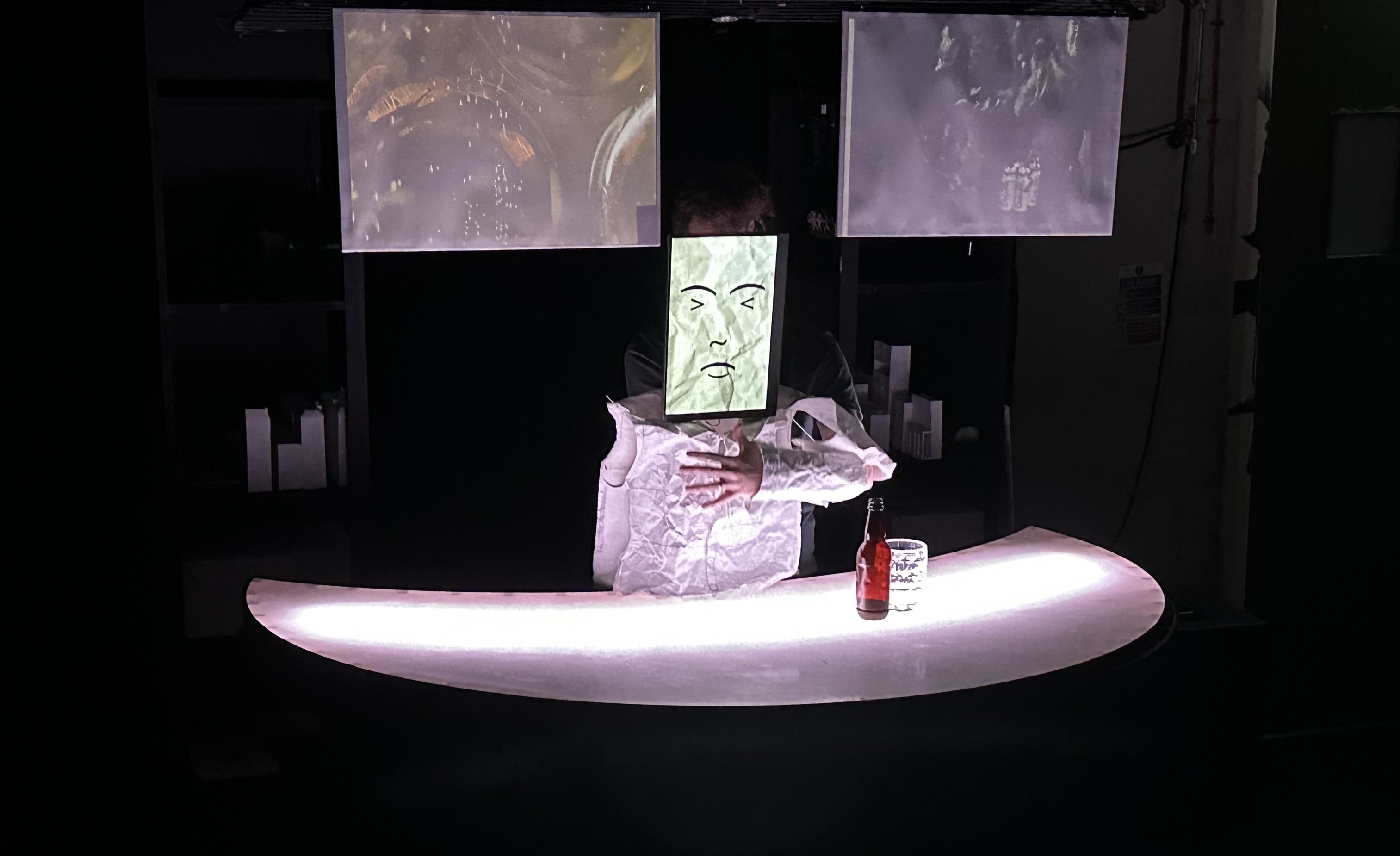
Now the scene shifts to a character whose face is a video screen, a vapid smile interspersed with mixed-up advertising videos extolling the virtues of various beers, and I’m reminded of my youth, when television adverts like these ones made me long to look old enough to go into a pub and buy a drink.

Again, we’re back to the little camera, which now glides through a series of empty rooms, emphasising the loneliness and desolation of addiction, the fact that so many people are obliged to face it alone…

By the conclusion – which somehow manages to end on a rising note of optimism about the future – I leave thinking about the ubiquity of addiction, it’s prevalence and it’s many different forms. We’re all of us addicted to something, aren’t we?

You could argue that perhaps Concerned Others could delve a little deeper into its chosen subject but there’s no mistaking the superb and affecting style in which this story is told.

4 stars

Philip Caveney

Distant Memories of the Near Future

12/08/23

Summerhall (Red Lecture Theatre), Edinburgh

Set somewhere in an all-too-identifiable near future, David Head’s thought-provoking storytelling session is a stern warning that we’re all going to hell in a handcart – and that the eventual destination may be a lot closer than we think. 

In this dystopian world, the Department of Productivity is now partnered with Amazon shopping, and everything that makes us human appears to be up for grabs. 

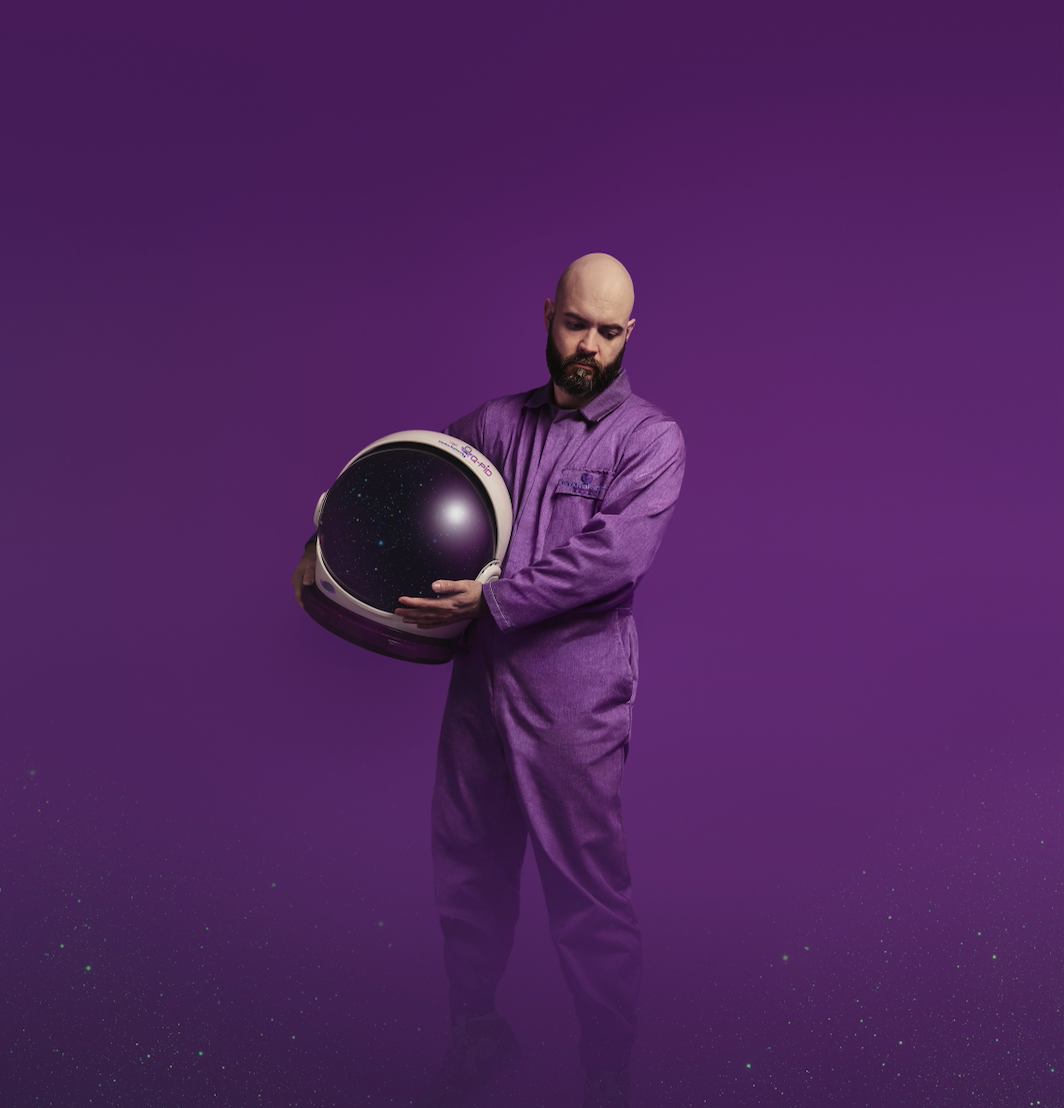
Head leads us confidently through his quasi-lecture, aided by languorous mood music, remarkable lighting effects and an AI avatar, with whom he occasionally converses – and who seems to disagree with a lot of what he’s saying.

The stories are skilfully interwoven and Head throws in the occasional snarky comment to ensure that proceedings are never in danger of becoming too pompous, but I occasionally find myself thinking that he’s not really telling us anything we don’t already know, he’s just amping it up. The overarching theme seems to be that human relationships develop in their own bumbling, accidental way and that the endless attempts to commodify them are inevitably doomed to failure, because no matter how sophisticated technology becomes, it can’t really duplicate our ability to make connections with each other. 

It won’t stop companies from giving it their best attempt though, not when there’s money to be made. At regular intervals, the talk is paused while we listen to advertisements – a dating app that offers to find our ideal partners; a company that wants to buy the rights to use our voices as selling tools… 

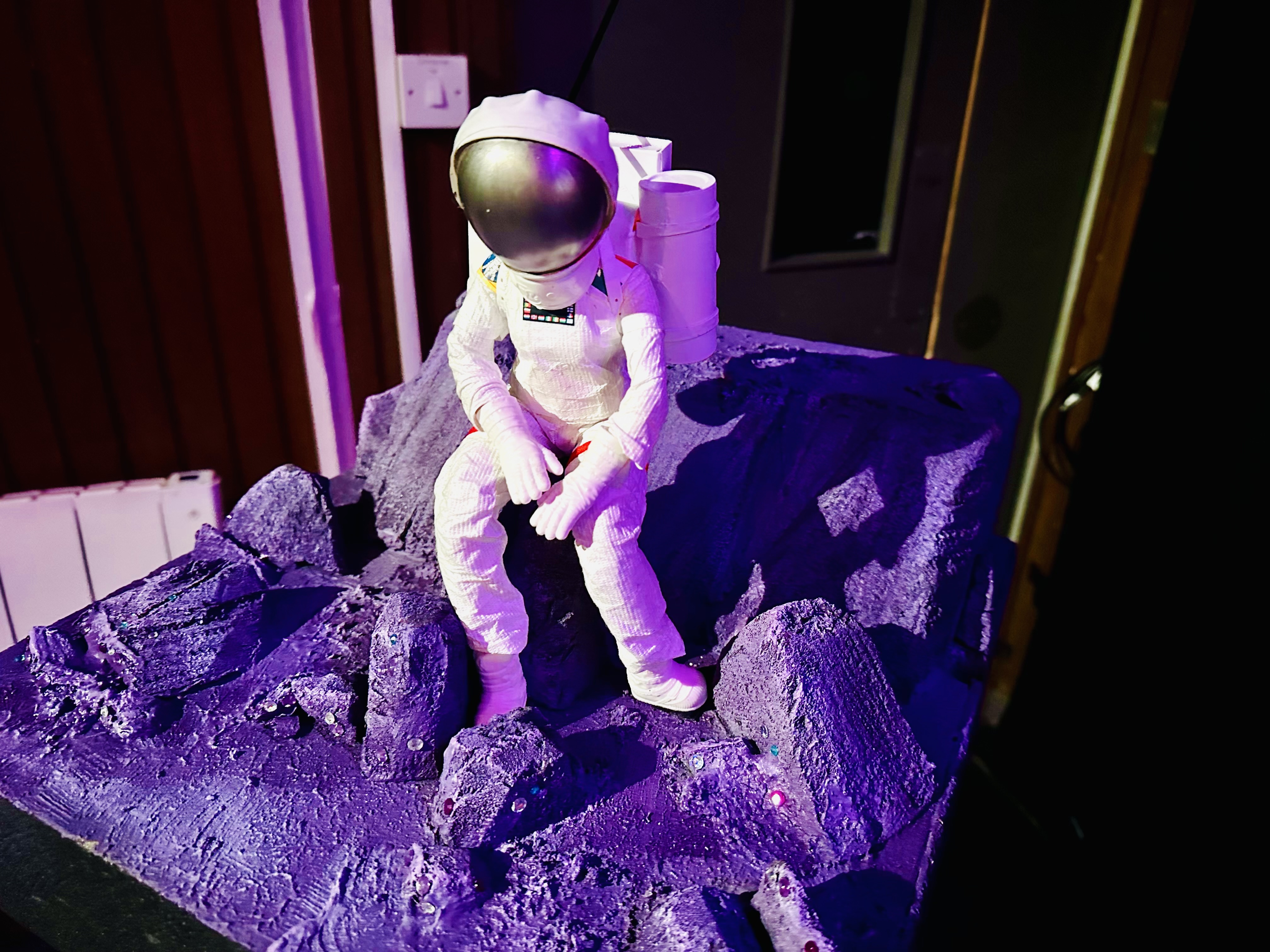
I’m particularly drawn to one section that depicts a space miner, marooned on a planet full of diamonds, trapped by the very wealth she’s been seeking, and helplessly contemplating her own lost love as her air supply runs out. It seems an apt metaphor for the state of humanity in this bleak vision of the future. I love the miniature puppet-figure that Head uses to illustrate this story, illuminated by the light of a torch.

Head is a charismatic and quietly authoritative storyteller and he handles the presentation with consummate skill. I leave the Red Lecture theatre with plenty to think about.

3.4 stars

Philip Caveney

The Box Show

12/08/23

Pleasance Courtyard (Cellar), Edinburgh

The Box Show (theboxshow.org) is one of the most original acts I’ve ever seen. Incredibly,  the whole production is confined to one small box – every prop, every costume change – like a puppet theatre with myriad human puppets. And Dominique Salerno (dominiquesalerno.com) is the puppet master, changing herself into a giant woman, a fighting couple, a demanding pop star – and a few more esoteric surprises it would be a crime to give away. 

 The constraints of the box mean that Salerno has to be imaginative – necessity is the mother of invention, after all. Low-budget theatre is often more interesting than its splashy, blinged up West End cousin; limiting herself to such a miniscule stage pushes Salerno even further down this road. I’m in awe of her imagination. 

The Box Show is fast-paced, never letting up for the whole hour, the sketches building to a hilarious crescendo. 

Audacious, funny, and perfectly crafted, The Box Show is performed with wit and precision. Salerno has the flexibility of a gymnast or a dancer (it makes my creaky knees hurt just watching her), as well as being a gifted actor and singer.

The tiny venue mirrors the tiny box, so it doesn’t take many punters for this to be sold out. Grab a ticket while you can – this Fringiest of Fringe shows is one not to miss.

5 stars

Susan Singfield

The Ice Hole: A Cardboard Comedy

12/08/23

Pleasance Courtyard (Grand), Edinburgh

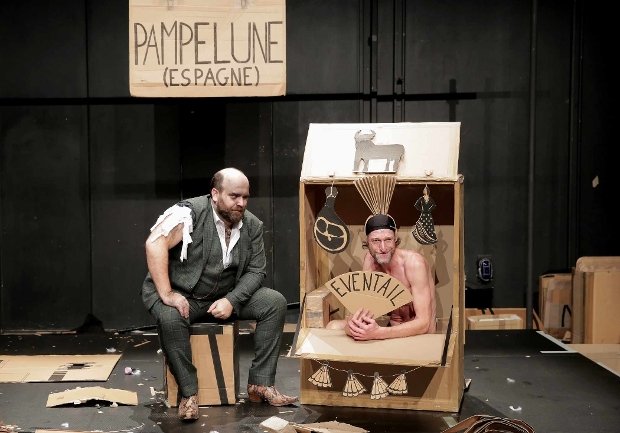
The Pleasance Grand is a big venue and this morning it’s packed to the rafters for The Ice Hole: A Cardboard Comedy. It’s the latest offering from French theatre group Le Fils Du Grand Réseau, the people who brought us Fish Bowl in 2019 and, believe me, that’s a tough show to follow. 

But they more than succeed.

This two man production features Pierre Guillois and Olivier Martin Salvan and begins with the latter fishing in the titular ice hole, when he captures a beautiful mermaid called Salina. As he fishes, Salvan tells us all about what’s happening… in Icelandic. Well, alleged Icelandic anyway. Gobbledygook might be a more apt description, but somehow we understand him.

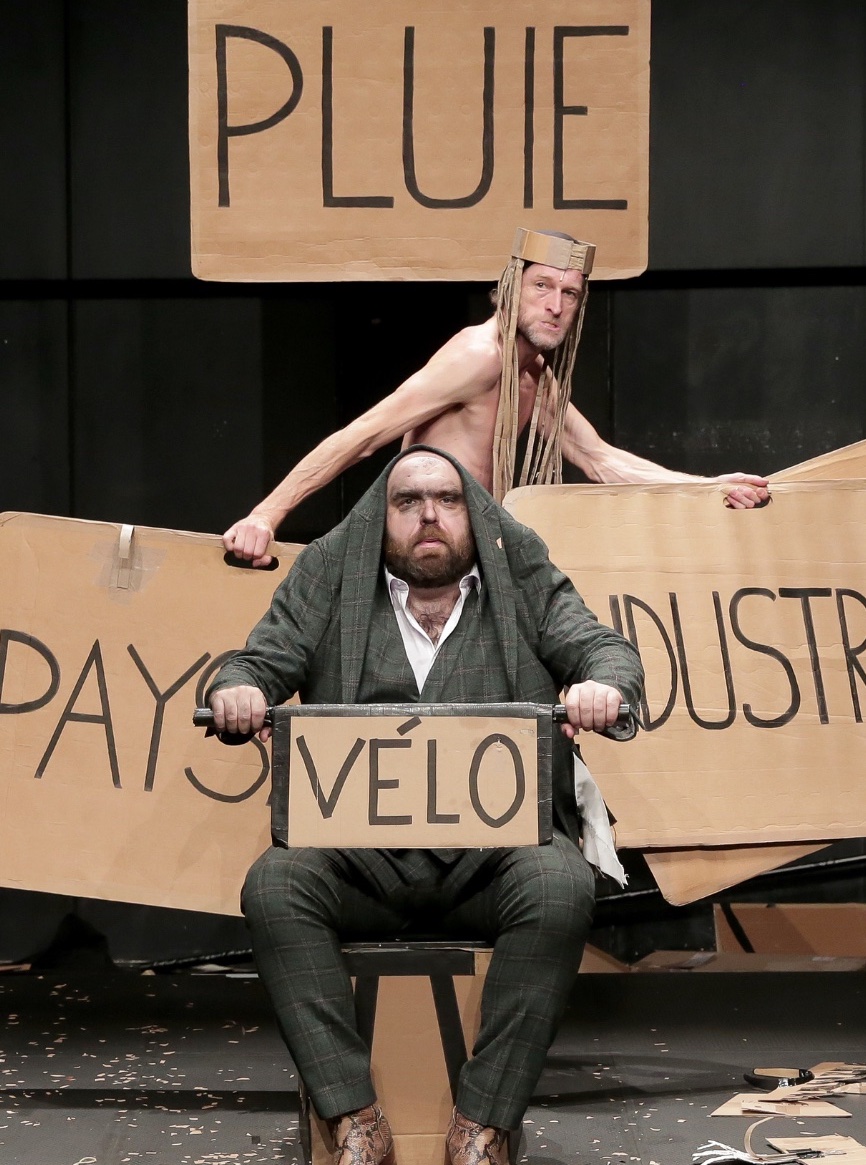
This is just the starting point for an adventure that takes our narrator all around the world – including a memorable stopover in Scotland, complete with bagpipes and authentic weather conditions. The brilliant gimmick here is that Guillois has to provide all the props for the story as it gallops along – and, as you’ve probably guessed from the title, they are all made from cardboard. 

If this sounds underwhelming, don’t be fooled. There’s an endless stream of ingeniously constructed items: machines, costumes, signs (English, not Gobbledygook!), footwear, tools, you name it… and they’re all made from old boxes. The items seem to materialise out of nowhere and the constant interactions between the two actors as this happens keep me laughing uproariously pretty much throughout. 

As I’m watching I’m having the recurring thought that I’m really glad I don’t have to clear up after these guys – and then, at the end, the audience is introduced to the two stagehands who actually have to do it.

TIH:ACC is an inspired piece of surreal lunacy, an hour of sheer unadulterated fun, fuelled by manic levels of invention. Miss it and you’ve only got yourself to blame.

4.8 stars

Philip Caveney

Grown Up Orphan Annie

11/08/23

Gilded Balloon Patter Hoose (Coorie), Edinburgh

Kathryn Bourne Taylor’s premise is a strong one: a ‘Where Are They Now?’ feature brought to life, starring everyone’s favourite plucky red-headed orphan. Leapin’ lizards! Little Annie is an adult! Unfortunately, she’s not a very happy one.

Long estranged from her billionaire adopted father, Annie is struggling to come to terms with his death. She’s angry about the environmental impact of his destructive business model, and bitter about a contract that means he owns the rights to all her songs. “My life has been made into a comic strip, a film, a Broadway musical – and I’ve got nothing to show for it,” she complains. She has a point. Why any kid would wanna be an orphan is beyond me.

Bourne Taylor makes for a believable millennial Annie, effortlessly embodying the familiar ‘please like me’ smile and can-do attitude. She nails Annie’s dazzling desperation, the knowledge that she’ll always have to sing for her supper.

I like the set up a lot, so I’m a little disappointed when the show pivots off in a whimsical direction, as Annie embarks on a mission to find a new sidekick (tragically, Sandy is long gone), and tries to resist opening the box that Daddy Warbucks has left to her. As charming as this stuff is, it’s very slight. There are early hints that we will be dealing with weightier stuff – the troubling power dynamic between a billionaire ‘saviour’ and an impoverished orphan; the effects of childhood neglect and trauma; the impact of sudden fame at an early age – but these are jettisoned in favour of something more kooky and ultimately less satisfying.

Grown Up Orphan Annie is a pleasant show, but I can’t help thinking it could be so much more.

2.8 stars

Susan Singfield

Polko

11/08/23

Roundabout at Summerhall, Edinburgh

Joe (Elliot Norman) spends a lot of time sitting in his parked car, listening to the weird distorted noises which are the only sounds he can get from his radio. Sometimes he shares the space with his old friend, Emma (Rosie Dyer), recently returned to the area after losing her job. She’s now living with her parents and clearly isn’t enjoying the experience very much, but Joe gets it. He’s been living with his mum for ages and claims he’s getting along just fine, even if he’s not actually allowed to sit on the sofa after spilling chilli oil on it.

Sometimes, Joe sits in the car with an older man, the hapless Peter (John McNeil), who has a bit of a thing about Joe’s mum, and was recently rejected by her – which is awkward to say the least. Peter is fond of a drink. Rather too fond, as it happens. The car they are sitting in used to belong to him but now he’s lost his licence and has sold it to Joe at a knockdown price, though he still has a proprietorial attitude towards the vehicle.

The in-car conversation often turns to an absent friend, somebody called Polko. He’s not around any more and nobody seems quite sure where he’s gone…

Polko is a strange, sinewy sort of play, where the characters talk around things rather than coming to the nub of what they are actually discussing. At various points, it becomes clear that these three dispossessed characters are all unreliable narrators, each of them having to revisit what they’ve said earlier in order to tell the full story. We probably shouldn’t trust them – even if we want to.

And the mystery of the titular character really doesn’t fall into place until the very last scene.

Written by Angus Harrison and sparely directed by Emily Ling, this is an intriguing, slowly-unfolding story that ultimately raises more questions than it has answers for, but the performances are strong – especially McNeil’s brooding and mysterious loner, who never manages to be direct – and the sense of slowly-building intrigue keeps me guessing right up to the end.

3.8 stars

Philip Caveney

England & Son

11/08/23

Roundabout at Summerhall, Edinburgh

Written by Ed Edwards especially for Mark Thomas and directed by Cressida Brown, England & Son is a hard play about hard lives. Thomas is the ‘& Son’ of the title, and delivers a bravura performance; from the outset, he has the audience in the palm of his hand. 

A semi-autobiographical piece, based on people Thomas knew in his childhood and Edwards’ experience in prison, this is a bleak exposé of an often overlooked underclass, exemplified by one boy’s complex relationship with his father. As well as this deeply personal account, it also opens up to examine an even more troubling relationship: between Britain and its former colonies. A lot of questions are raised: why is it okay for rich white people to plunder other countries, but not okay for poor white people to burgle houses? Is there any way to prevent armed forces personnel from being dehumanised by what they’ve seen and done? And what the fuck is an ‘artisan’ when it’s at home?

Although this is a dark piece, there are also some very funny lines and – as you’d expect – Thomas delivers these perfectly, the laughs landing every time. These shafts of light are much needed, so it’s a relief when caring social worker Martha offers our young offender the chance of a different life, even though it’s all too clear that he won’t be able to grasp it: his past has already shaped him; his future is assured. As soon as there’s a problem, he only knows one way to react, and he seems destined to follow in his fallen hero’s footsteps.

England & I is a deceptively complex piece, but it certainly hits home with today’s audience, who rise as one to give Thomas a standing ovation.

4.2 stars

Susan Singfield

The Death of Molly Miller

10/08/23

Underbelly Cowgate (Big Belly), Edinburgh

Have you heard the one about the influencer and the thief? No, me neither. It sounds like the set-up for a joke, but it isn’t. Instead it’s the premise for Matthew Greenhough’s thought-provoking and, yes, funny play about penury and privilege.

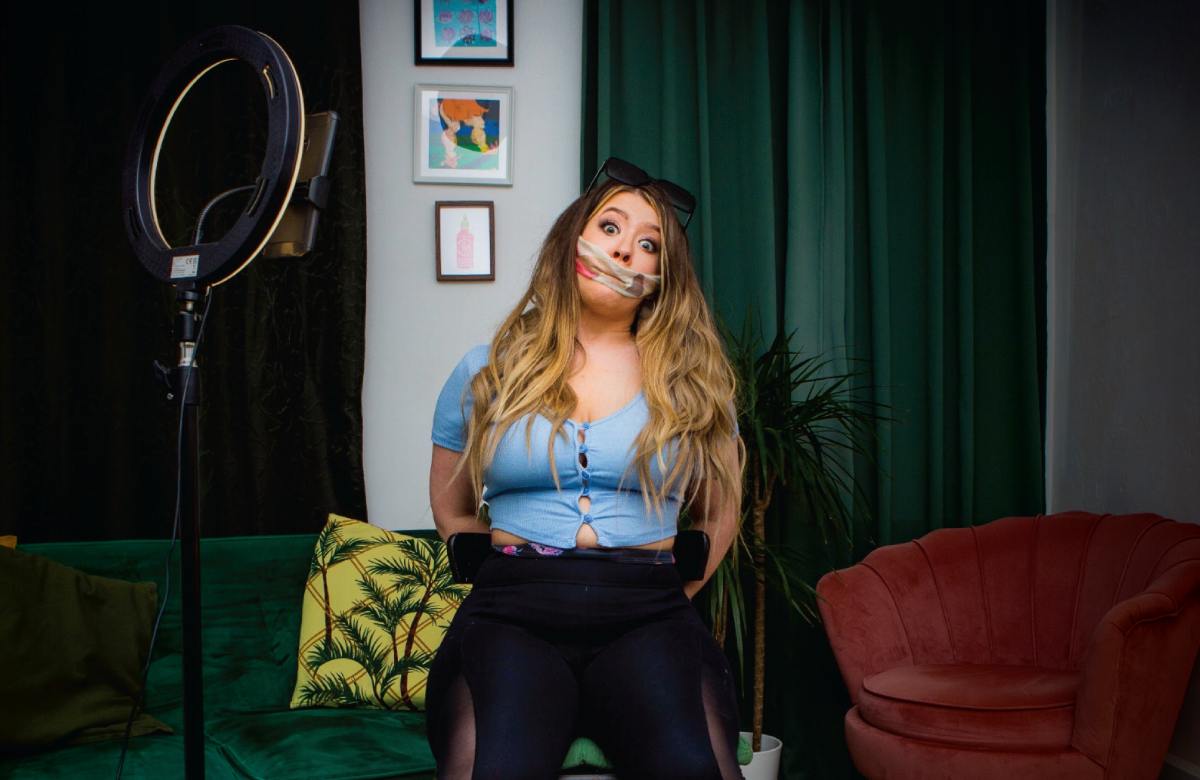
As far as Tommy (Greenhough) can see, reality TV star Molly (Esther-Grace Button) has it all: a posh flat, designer clothes, an active social life and a gazillion followers. Tommy, on the other hand, has nothing. Desperate to clear his debts with a fearsome loan shark, he decides to burgle Molly. After all, what has she ever done to deserve such riches? He despises her, thinks she’s fair game. But if he thinks that Molly is an easy target, he’s got another think coming. Because Molly Miller didn’t get where she is by being soft…

Under Jonny Kelly’s direction, The Death of Molly Miller is a engaging piece of theatre, and Button in particular is great at eliciting laughs from tonight’s appreciative audience. Between her performance and Greenhough’s writing, Molly’s initially vapid character soon reveals hidden depths, and we see the bottle beneath the Botox. Tommy too is a complex, multi-dimensional man, although perhaps Greenhough’s performance is a little too frenetic at times; some stillness and relative calm would help to highlight the moments of panic.

Like Molly herself, The Death of Molly Miller seems superficial, but actually has a lot to say.

4 stars

Susan Singfield