Toby Kebbell

I Play Rocky

11/11/2026

Cineworld, Edinburgh

We all love an underdog story – and this true-life account of how the most famous boxing movie in history was created is the very essence of what we mean by that term.

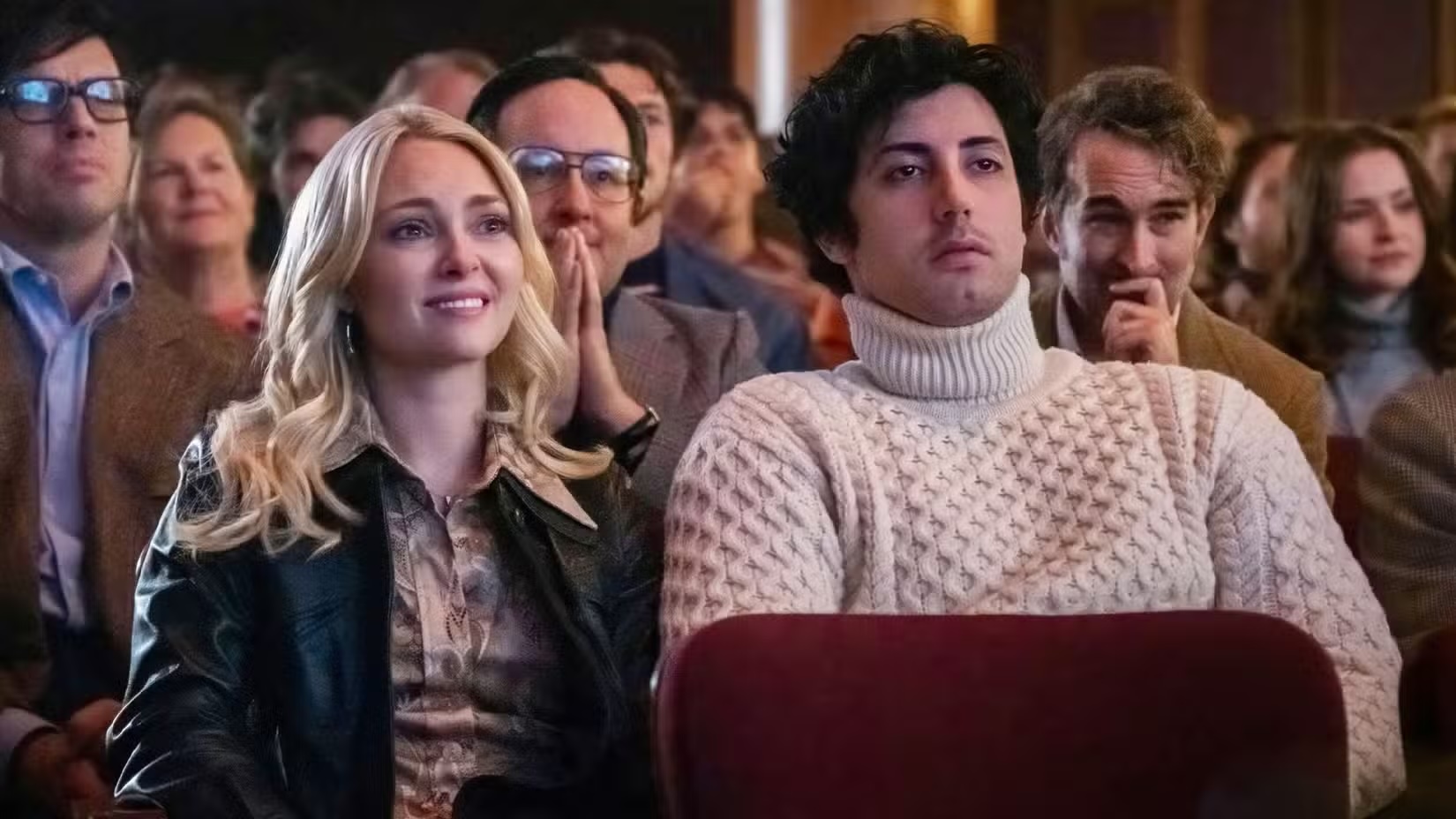
It’s the early 70s and wannabe actor ‘Mike’ Stallone (Anthony Ippolito) is making ends meet doing a series of nondescript jobs in and around New York City. In his free time he grabs every opportunity to attend auditions for minor character roles such as Thug No 3. When he gets desperate enough, he even dips his toes into the waters of soft porn, though that lucrative career path is quickly abandoned as soon as his bills are paid.

One job has him tearing ticket stubs in a movie theatre and it’s here that he meets Sasha (AnnaSophia Robb), who soon becomes his significant other. She persuades Mike to switch back to his real name, Sylvester – so much better for the movie star he longs to be, she tells him. Sasha is even introduced to Sylvester’s father, Frank (Matt Dillon), a hairdresser by trade and an opinionated asshole by nature. Frank never misses an opportunity to criticise his son, who he believes doesn’t have a hope in hell of ever landing a proper film role. “You’re just not handsome enough,” Frank insists.

But, nurtured by Sasha’s absolute belief in him, Sylvester refuses to give up. Inspired by a boxing match he sees on TV between Muhammad Ali and a much older boxer called Chuck Hepner, he pens the screenplay for Rocky in just three days and even manages to get a couple of bigshot producers, Irwin Winkler (P J Byrne) and Robert Chartoff (Toby Kebbell), interested in the script. They take it to money-man Sandy Maddox (Tracy Letts) to ask him to come up with the necessary finance, a cool two million at a time when that was considered big money. He’s happy to be involved in the project provided they can get a star name to take on the lead role. Ryan O’Neal or Clint Eastwood, maybe? Somebody like that.

But Sly is determined to take the lead and, no matter how much money he’s offered to step aside – and as the months pass, he is being offered big bucks – he stubbornly sticks to his guns…

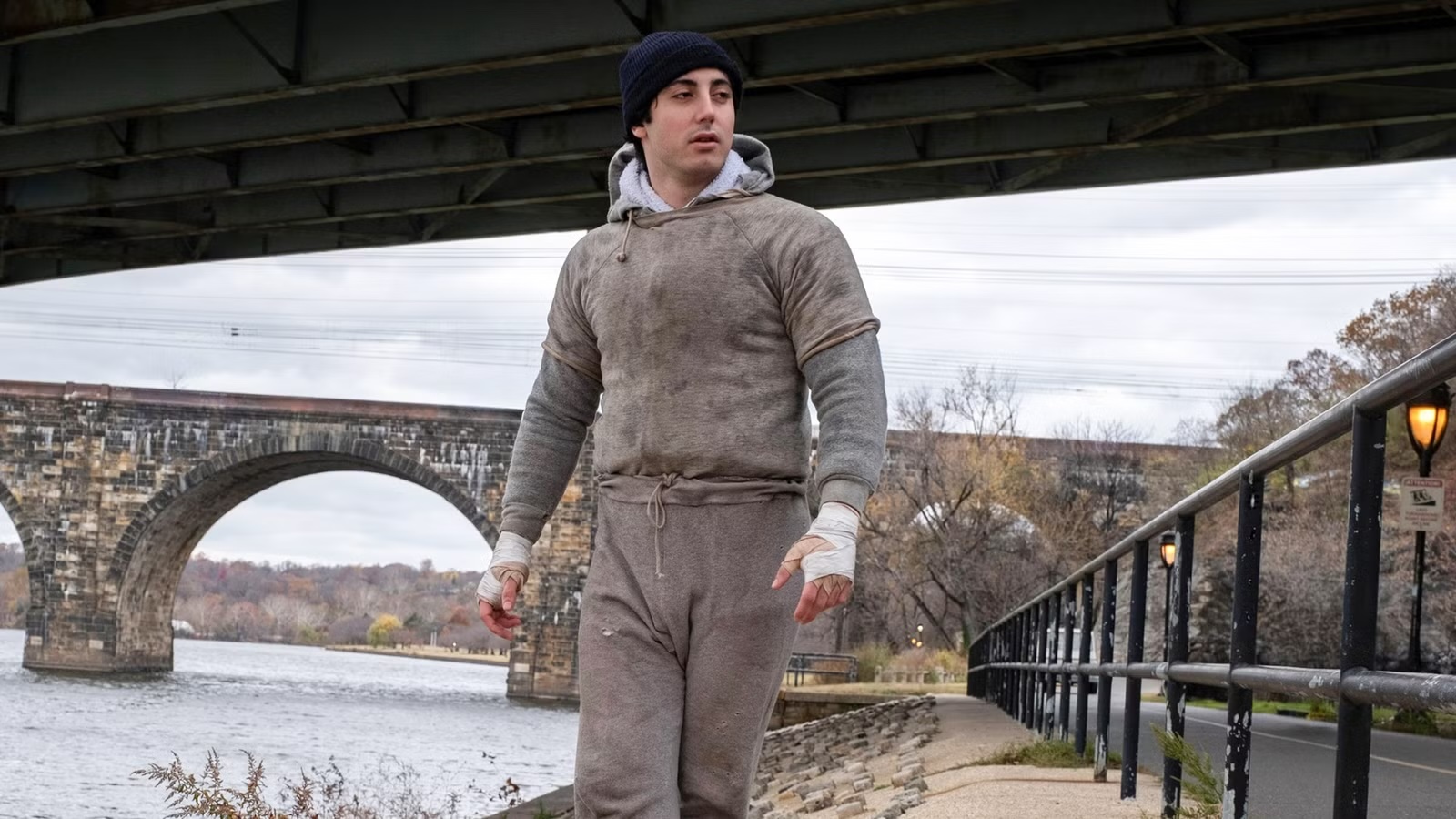
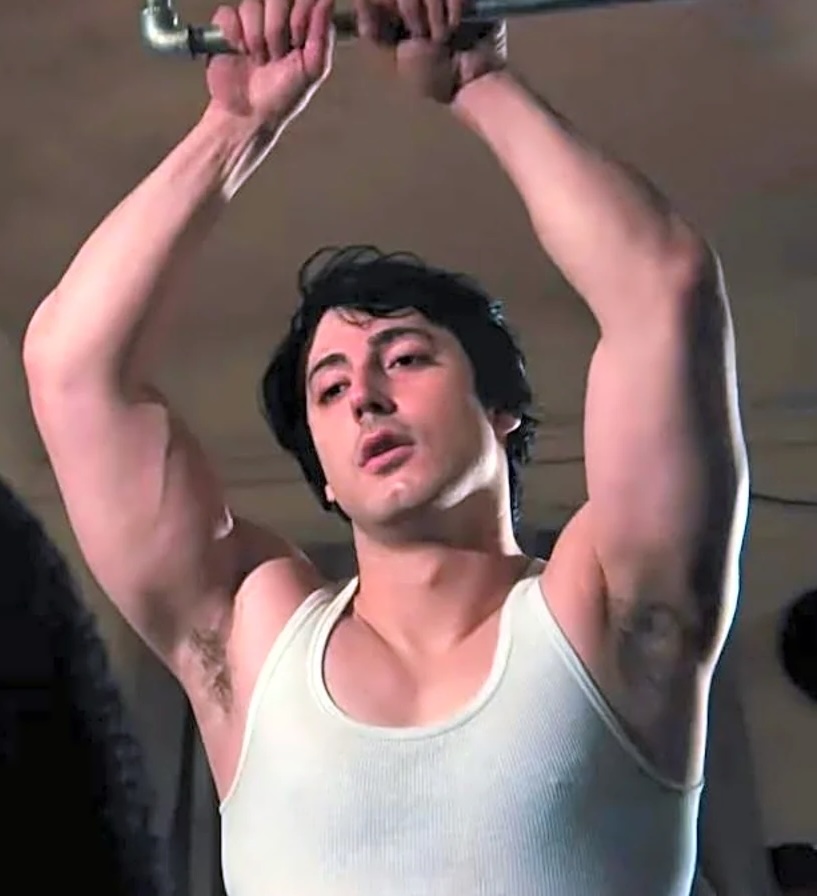
Of course, a concept like this can only work if the actor playing Stallone is credible – and Ippolito does an extraordinary job with the role, delivering a really convincing impersonation of the man, nailing that unmistakable gravel-toned voice, while at the same time, giving us insights into Stallone’s character and what drove that stubborn determination to succeed. Peter Farrelly directs Pete Gamble’s script with genuine verve and the 70s period detail is faithfully reproduced, right down to the early steadicam shots used to capture Rocky Balboa’s iconic victory ascent up the steps of the Philadelphia Museum of Art.

If there’s an issue with I Play Rocky, it’s simply this – how can the makers ever hope to surprise an audience with a story that’s so universally familiar? Okay, occasionally I encounter a few things that I didn’t previously know, but they are few and far between. On the other hand, I cannot deny that I really enjoy the mid-credit sequences, where short scenes from the original film are uncannily reproduced in tiny detail. Is this film, like its illustrious predecessor, likely to win an Oscar? Ippolito seems a good bet to get a best actor nomination and, should he end up lifting the gong on the big night, it will feel suspiciously like history repeating itself.

But I’m not convinced that this film has the necessary clout to win by a knockout.

4 Stars

Philip Caveney

Dead Man’s Shoes

16/09/23

Cameo Cinema, Edinburgh

Two men stride purposefully across a picturesque stretch of moorland near Matlock, Derbyshire. They are former soldier, Richard (Paddy Considine), and his younger brother, Anthony (Toby Kebbell), who has learning disabilities. As they walk, gentle music plays and we’re given glimpses of them playing together as toddlers. But what we’re about to see is far from gentle. It’s a harsh and unremitting tale of revenge.

Anthony has been wronged and Richard has returned to his hometown to put things right.

Meadows shows us a run-down rural community that is dominated by local kingpin, Sonny (Gary Stretch), and his sorry henchmen, a bunch of hapless deadbeats who drive around in (of all things) a battered Citroen 2CV. They make easy money selling drugs to the hardscrabble locals and treat anyone who opposes them with contempt. They are the big fish in this tiny pond, simultaneously pathetic yet somehow powerful. It’s clear that Gary and his crew wouldn’t last five minutes in the city but here, they see themselves as players.

But Richard has them squarely in his sights. He begins by confronting them, telling them exactly what he thinks of them and they are instantly dismayed. Nobody ever talks to them like that! Richard knows what they have done to his brother and he will make them pay. As he tightens the screws, he begins to expose them for what they are and they begin to understand the true meaning of fear…

Originally released in 2004, Dead Man’s Shoes is a collaboration between writer/actor Considine and director Shane Meadows and it’s now making a welcome return to UK cinema screens.

Part crime-thriller, part horror story, Dead Man’s Shoes brilliantly utilises Meadows’ flair for eliciting naturalistic performances and improvised dialogue, while Considine displays the hard-edged acting chops that soon launched him into the mainstream. Six years later, he directed the extraordinary Tyrannosaur, which in turn provided Olivia Colman with a star-making vehicle. It’s fascinating to contemplate how much has changed since this film’s release. It seems like a world away.

If you haven’t seen Dead Man’s Shoes, here’s your opportunity to correct the situation. It’s an extraordinary, low-budget gem, that still shines brightly nearly twenty years after its first outing.

4.6 stars

Philip Caveney

A Monster Calls

01/01/17

A Monster Calls is an intensely emotional movie, telling the tale of twelve-year-old Conor O’Malley (Lewis MacDougall), and his struggle to deal with the realisation that his mother (Felicity Jones) is dying of cancer. It’s made all the more poignant by the knowledge that Siobhan Dowd, who conceived the novel the film is based on, died of the same disease before she could write her book. What we have here, then, is fellow author Patrick Ness’s interpretation of Dowd’s idea – and it’s good to see he’s done her proud.

Lewis MacDougall’s performance is extraordinary. (I should perhaps note here that he’s a student at The Drama Studio in Edinburgh, where I now work; sadly I can’t claim any credit for his achievements, as he’s not in my class, I’ve never met him, and he’d filmed this before I even joined the team.) He’s a gifted young actor, perfect for the screen, with a touching vulnerability here that’s reminiscent of David Bradley’s Billy Casper in the 1969 classic, Kes. His anger, fear and frustration are all writ large, and Philip and I find ourselves crying at regular intervals.

The story is essentially a simple one, making use of the idea of ‘the monstrous other’ and exploring the concept of duality. Conor is conflicted: he loves his mother, but he can’t live with the uncertainty of not knowing when she’s going to die. And so he stumbles between quiet acquiescence and towering rage, the latter symbolised by the unleashing of the yew-tree monster – like Jekyll’s Hyde, Frankenstein’s monster, Bertha Rochester, or even Blue’s Savage in David Almond’s graphic novel. Like its literary predecessors, this monster allows Conor to release his repressed emotions. It is both his undoing and his salvation.

There’s a stellar cast at work here, with Sigourney Weaver and Toby Kebbell occupying the roles of Gran and Dad respectively, neither of whom are what Conor needs to fill the void left by his mum, although they both try hard, in their own ways. Felicity Jones’s portrayal of the dying Elizabeth is utterly heartbreaking; she’s a real chameleon, and it’s hard to think of her as the same actor I saw in Rogue One last week. And the monster’s stories are beautifully realised, with some delightful sequences featuring dazzling, stylised animation.

There are some flaws: the bullies’ dialogue, for example, is wholly unconvincing and depressingly generic, and the first fifteen minutes or so seem aimed at a much younger audience. But these are minor niggles in the face of such an affecting, tragic piece of work. It’s a lovely film, and well worth going to see.

4.2 stars

Susan Singfield