Royal Lyceum Theatre

Cinderella: A Fairytale

29/11/25

Royal Lyceum Theatre, Edinburgh

Look, I love a good panto as much as the next drama queen. Still, I have to admit there is something very special about this chance to see a Christmassy rendition of one of the world’s most famous fairy-tales without the distraction of all the boo-hiss-he’s-behind-you-wink-wink-nod-nod stuff. Cinderella‘s plucky orphan narrative is a compelling one, not least because of its moral certainty, where the good are rewarded and the bad are well and truly punished: there’s vengeance at play here, as well as virtue. And, in this version by Sally Cookson, Adam Peck and the Original Company, that dichotomy is writ large.

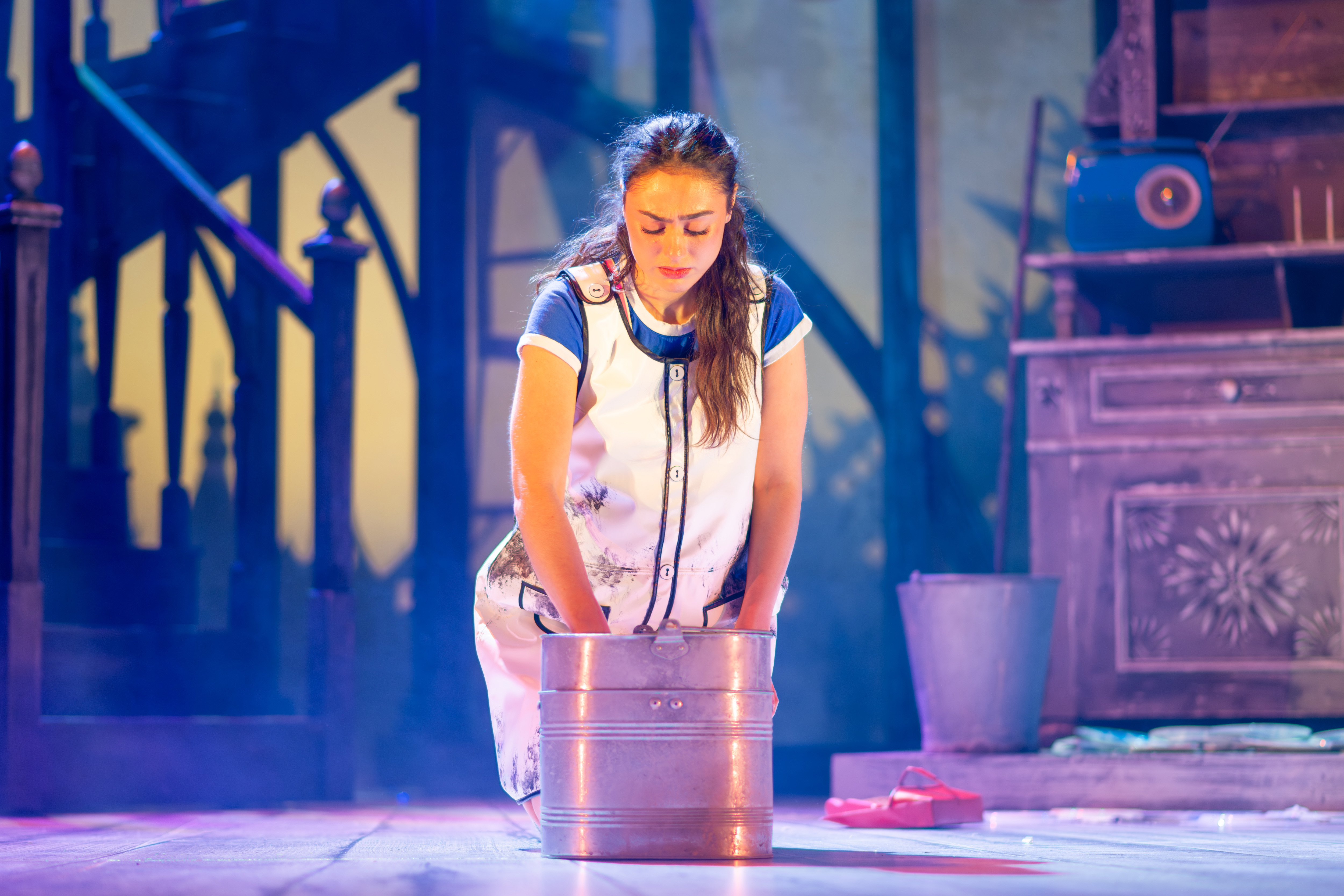
Ella (Olivia Hemmati) lives in a gloriously-realised enchanted forest, all dappled sunlight and multi-coloured birds. The home she shares with her dad (Richard Conlon) is one of those idyllic, romantically-ramshackle cottages where poor people live in story books, and she’s happy there. But when Father marries Mother (Nicole Cooper), everything changes: not only does her step-mum impose a whole raft of irritating rules, she also brings along her own two children, Sister (Christina Gordon) and Brother (Matthew Forbes), who are so priggish and uptight that Ella can’t stand them. And then, just as she’s getting used to the new regime, Father dies, leaving a grieving Ella at Mother’s mercy…

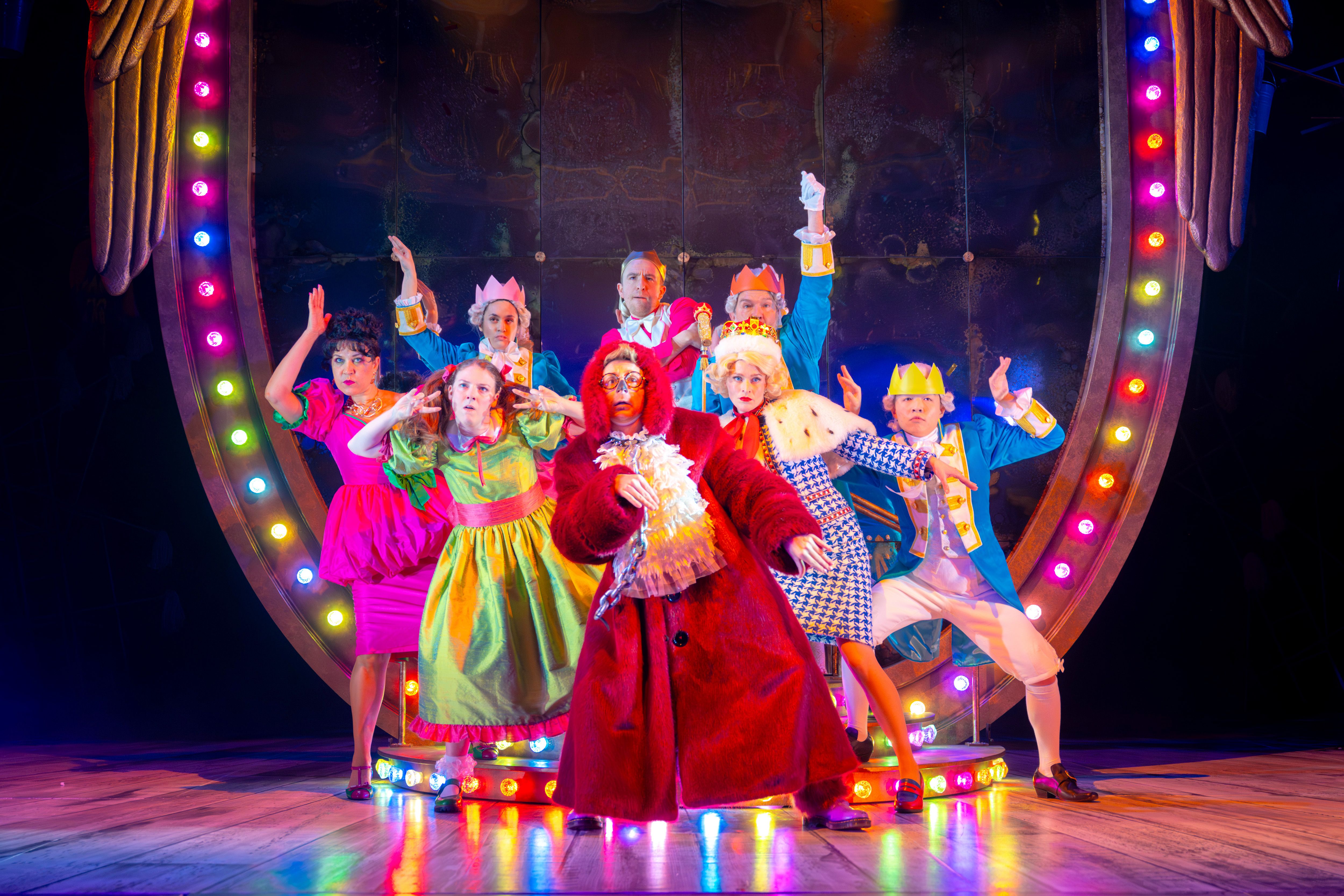
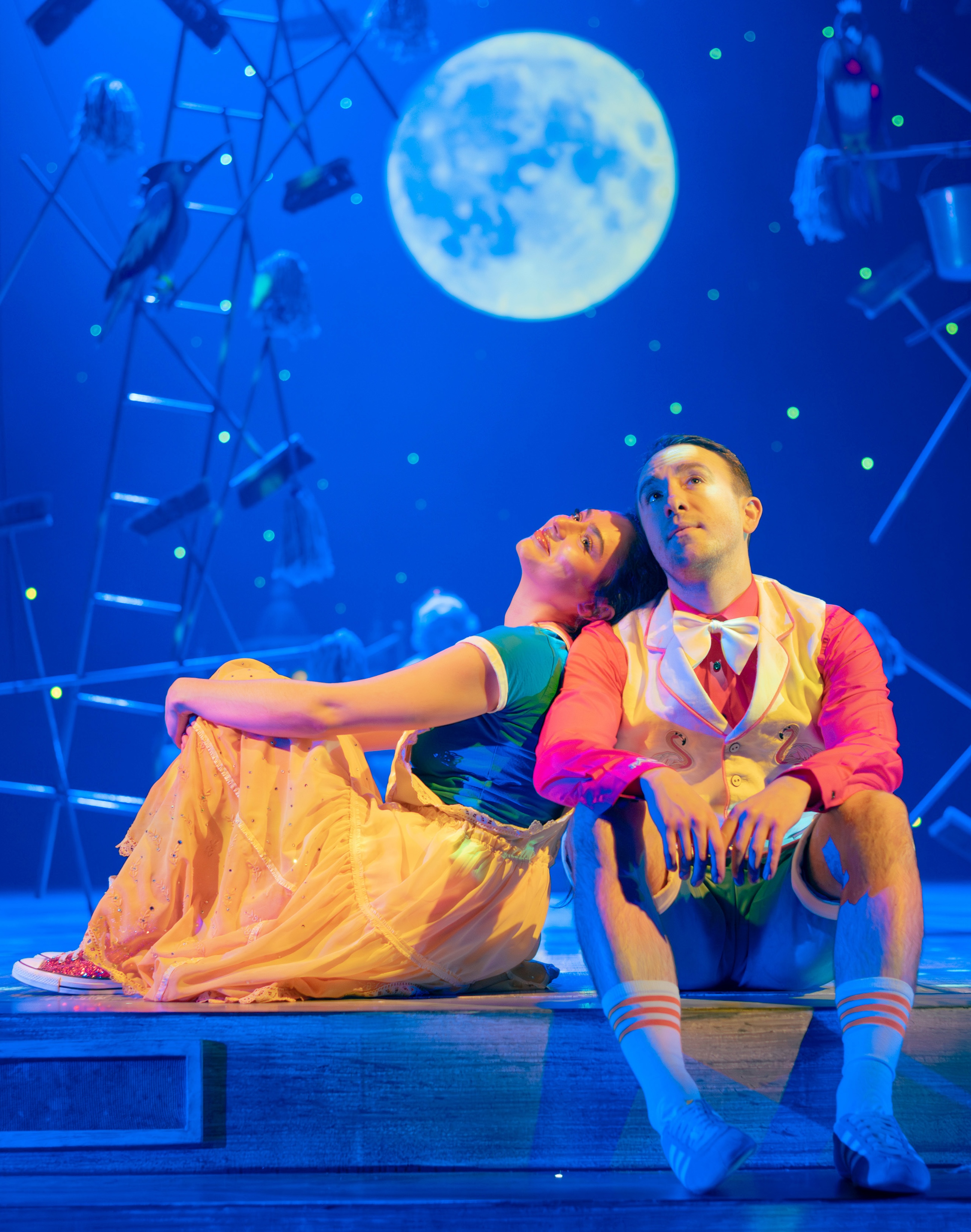
The strength of this show lies in its aesthetic: Francis O’Connor’s set and costume design evoke an ethereal other-worldliness, where magic feels eminently possible. The bird puppets (directed by Forbes and manned by Leo Shak, Stephanie Cremona and the cast) are fabulous, their rainbow plumes as appealing as they are fantastical. Even as a middle-aged woman, I’m completely captivated; how alluring must this staging be for the children in the audience?

The love story element is underplayed: Prince (Sam Stopford) is a nerdy teenage ornithologist and he and Ella strike up such a lovely, convincing friendship that the idea of their marriage seems jarring and incongruous. Director Jemima Levick wisely eschews any overt wedding pageantry, but I do wonder if it would be better to remove the romance entirely, focusing instead on the simple affection between the pair. After all, it’s not as if there’s the same financial imperative for this Ella, who seems to be living in a whimsical approximation of the contemporary world, as there was for her Grimm progenitor, who needed a husband to escape her servitude.

Cooper is obviously having a whale of a time as the odious Mother, camping up her tantrums and cruelty to create a deliciously-devilish interpretation of the character. The protracted toe-chopping sequence – the production’s only real nod to the folk story’s dark heart – is a gruesome highlight. Meanwhile, Gordon and Forbes’ Ugly Siblings are more sympathetic and nuanced than their traditional counterparts, frightened and corrupted by their toxic mum – and clearly redeemable. Carly Anderson has less to do as Queen, who appears here as a slightly-sozzled, benignly-bemused socialite. It’s an interesting take on the role but she is under-used.

Jon Beales’ music and Emily Jane Boyle’s choreography complement each other perfectly, enhancing the story and ensuring the pace never flags.

All in all, this is a delightful production, and one that is sure to enthral audiences of all ages this festive season.

4.2 stars

Susan Singfield
The Glass Menagerie

07/11/25

Royal Lyceum Theatre, Edinburgh

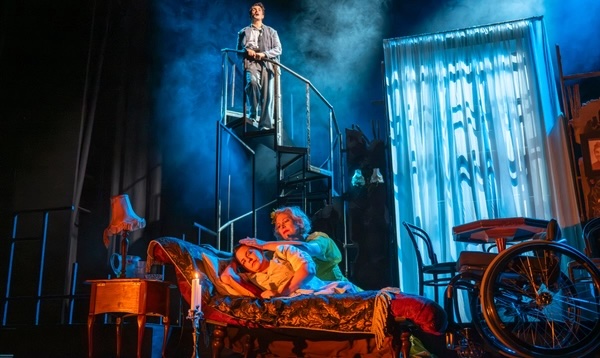
Directed by Andrew Panton, this production of The Glass Menagerie (from Dundee Rep, Citizens and the Royal Lyceum) is an altogether gentler and less histrionic affair than other interpretations I have seen – and all the more compelling for it. Emily James’ barely-there set echoes the characters’ fragility, underscoring the narrator’s opening assertion that the play “is not realistic.” The overt theatricality – the fourth-wall breaking; the exaggerated miming as the family eat a meal – paradoxically emphasises the underlying authenticity, the idea that this is “truth in the pleasant disguise of illusion”.

The time: 1937. The place: St Louis, Missouri. Our narrator is Tom Wingfield (Christopher Jordan-Marshall), and it’s no coincidence that he shares his initials with the playwright. The Glass Menagerie was described by Tennessee Williams as “a memory play,” a loosely autobiographical attempt to pin down his relationship with his emotional past – so it makes perfect sense that Tom should be an aspiring writer, desperate to escape the clutches of a dead-end job in a broken economy. He is consumed by the need for freedom in all its guises – creative, personal, sexual – bitterly resentful of his mother’s insistence that it is his duty to stay at home and provide for her and his sister.

His mother, Amanda (Sara Stewart), is the kind of fading Southern belle Williams is famous for, but – at least in this iteration – she’s less monstrous than Blanche DuBois or Maggie the Cat. This Amanda reminds me more of Austen’s Mrs Bennett: a woman made ridiculous by her desire to find a husband for her daughter, even though her zealotry makes perfect sense in a society where women are financially dependent on men. Stewart imbues Amanda with warmth and likability, while also making clear exactly why Tom finds her so intolerable.

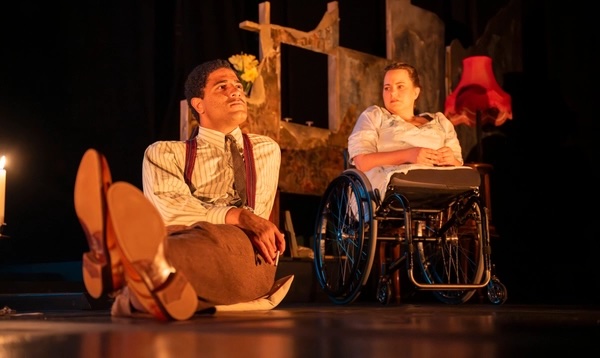
Amy Conachan’s Laura is irresistible. She is Tom’s older sister, but a combination of shyness and disability means that she is far less worldly-wise than him. In fact, they are opposites in almost every respect. While Tom finds the city too small and claustrophobic, Laura is agoraphobic, too terrified even to open the front door, let alone build a life for herself outside the home. Tom rails against his situation but Laura has ruefully accepted her lot in life, successfully side-stepping Amanda’s attempts to set her up on dates and dedicating herself to the care of her collection of delicate glass ornaments. So it’s all the more heartbreaking to see her open up to Tom’s kindly friend, Jim (Declan Spaine), only to have her hopes dashed by his smiling comment that he’d love to have a sister just like her. Exquisitely acted, the extended duologue between this pair is a real highlight for me.

The dreamy nature of the play is further emphasised by the music, liltingly performed by Spaine as the story unfolds, and Simon Wilkinson’s light design perfectly complements the ethereal atmosphere, at times illuminating the characters’ faces in such a way as to almost create cinematic close-ups, so that we’re forced to focus on their pain and misery.

This beautifully-realised production of The Glass Menagerie has only one more showing at the Lyceum, so you’ll have to be quick if you want to get yourself a ticket for tonight’s performance.

4.6 stars

Susan Singfield

The Mountaintop

04/06/25

The Royal Lyceum, Edinburgh

Katori Hall’s 2009 play bristles with prescience in this stirring revival, directed by Rikki Henry. We’re in Room 306 of the Lorraine Motel, Memphis, where a tired, sick Dr Martin Luther King Jr (Caleb Roberts) is planning on writing through the night. But, as the night in question is April 3 1968, we know this work will never make it to completion. Instead, assassination awaits.

The great man’s famous “I’ve been to the mountaintop” metaphor is gloriously realised in Hyemi Shin’s set design, the room balanced precariously on a slab of jutting rock protruding from the dark earth, offering little protection from the Biblical storm raging outside. There are climbing ropes too, tethering King to earthly reality even as they call for his ascension.

As ever, MLK is up against it. He’s in Memphis to promote his Poor People’s Campaign, and to support the striking Black sanitation workers. He’s a divisive figure: a hero to those he’s championing; a thorn in the side of the establishment. White supremacists hate him. How can he allow himself to rest when there is so much injustice to address? He calls the motel’s reception to ask for coffee, and salvation arrives in the form of housekeeping. It’s Camae (Shannon Hayes)’s first day on the job, and she’s beyond excited to meet her idol. Of course he can have one of her cigarettes.

In this fictional encounter between the real-life martyr and the made-up maid, Hall illuminates the flawed reality of King, who was, after all, a mere mortal, as prone to weakness as the rest of us. What set him apart wasn’t saintliness, it was conviction, purpose, determination – and the belief that he could be the change. As he laments the failures of his beloved America, the message comes across loud and clear, and is particularly important today: you don’t have to be special to make a difference. You just have to show up and fight.

Roberts and Hayes make an electric duo in this fierce two-hander, which lurches from realism to expressionism with thrilling momentum. Roberts imbues his warts-and-all depiction of MLK with so much warmth and charisma that we forgive him his trespasses. After all, if God (with whom he argues via the motel’s landline) can summon him to Heaven, who are we to argue with Her? Hayes makes for a perfect antagonist, her spirited Camae proving more than a match for the mighty King, challenging him both politically and personally. Issues of race and equity are illuminated rather than undermined by the humour that punctuates the couple’s verbal sparring, and Camae’s final monologue, accompanied by Lewis den Hertog’s black and white video design, is a stark reminder both of MLK’s legacy and of the battles yet to come.

4.5 stars

Susan Singfield

Through the Mud

11/08/24

Summerhall (Main Hall), Edinburgh

Plus ça change, plus c’est la même chose

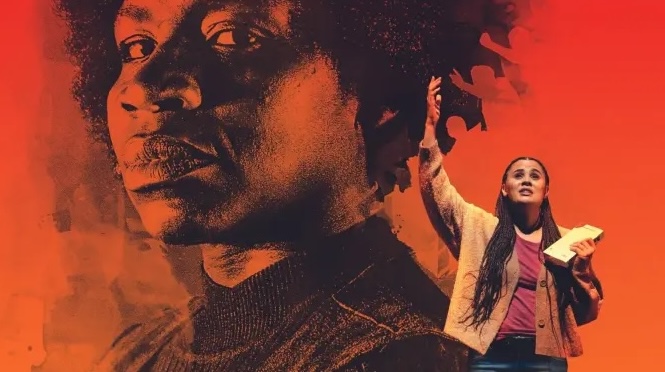
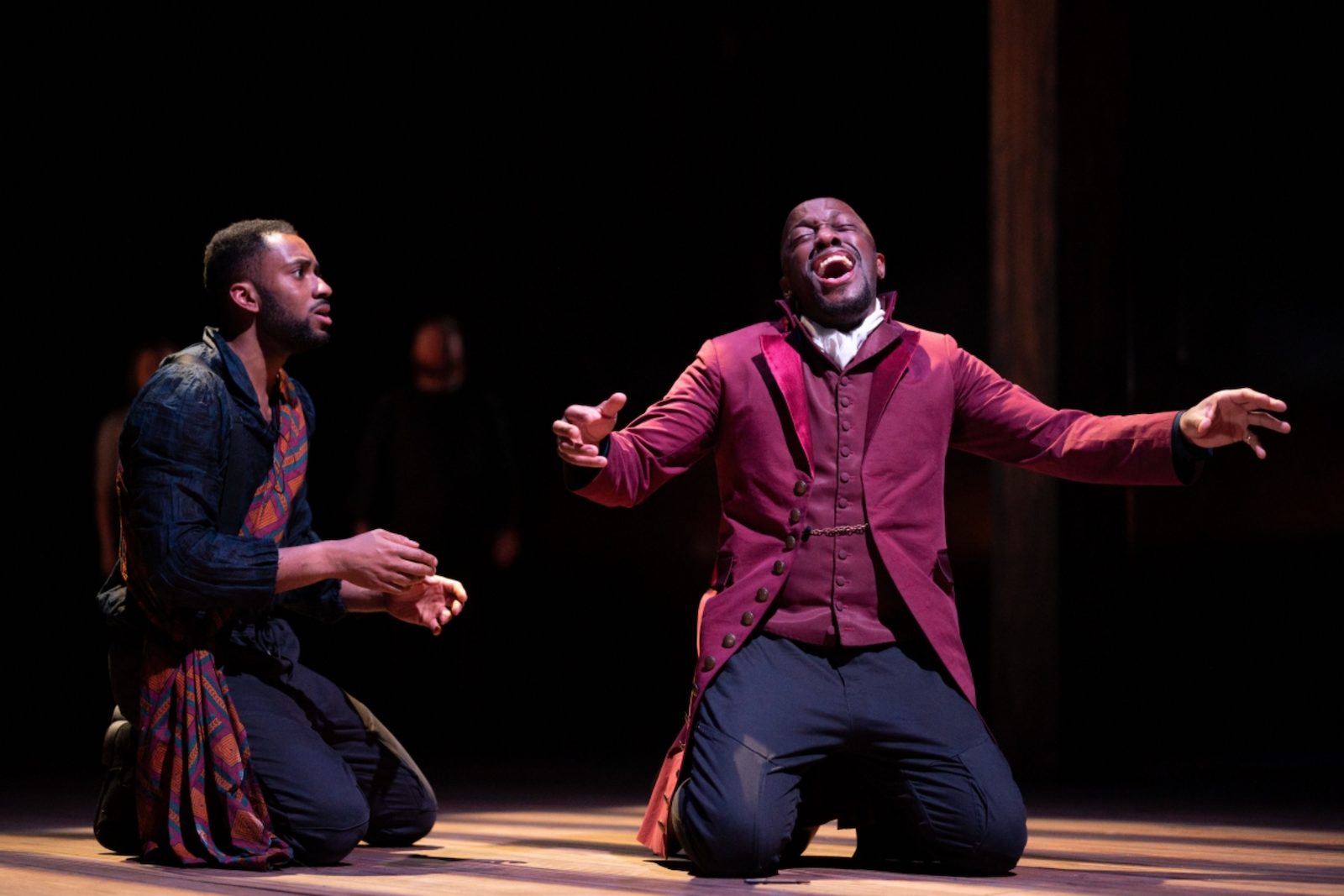
Apphia Campbell’s Through the Mud is a chilling reminder of how little has changed over the years when it comes to Black liberation in America. Campbell plays Assata Shakur, the 1970s civil rights activist, who – convicted of murder – escaped from jail and has been living in exile in Cuba ever since. In a parallel storyline, forty years later, college student Ambrosia Rollins (Tinashe Warikandwa) finds herself caught up in the beginnings of the Black Lives Matter movement.

This is a powerful piece of theatre, as much a call to arms as anything else, and it feels especially apposite as racist riots are breaking out just over the border in England. Of course, Through the Mud pertains specifically to American politics, but bigotry and prejudice aren’t confined to one continent and we have just as much blood on our hands.

Co-produced by Stellar Quines and Edinburgh’s Royal Lyceum Theatre, the production values are as high as you’d expect, and director Caitlin Skinner deftly leads us through the intertwining timelines, allowing the women’s individual stories space to breathe as well as highlighting the connections. The characters contrast and complement one another perfectly: Campbell imbues Assata with a fierce dignity and a fighter’s strength, while Warikandwa’s Ambrosia is altogether sweeter and more naïve – until her first weeks of college coincide with the fatal shooting of Michael Brown by a white police officer, and she can no longer cling to the fair-world fantasy that her parents built for her. 

The sense of outrage at the heart of the play is brought to life by the music, where spirituals and gospel songs give voice to the protest. The women’s vocals are impressive: Campbell deep and powerfully resonant, while Warikandwa’s more plaintive tones offer an enchanting counterpoint. When the two harmonise, the effect is positively thrilling.

In the face of all the awful evidence, it’s to Campbell’s credit that Through the Mud feels somehow hopeful rather than dispiriting. The women’s indefatigable spirits spur us into thinking we ought to act too. 

Not enough has changed – but the fight goes on.

4.5 stars

Susan Singfield
The Girls of Slender Means

17/04/24

Lyceum Theatre, Edinburgh

Gabriel Quigley’s vivacious adaptation of Muriel Spark’s novel opens in the 1960s. Jane (Molly Vevers) is the editor of Elan magazine. Her bright young assistant, Bluebell (Molly McGrath), nervously pitches a feature, but Jane is distracted by news of a certain Nicholas Farringdon (Seamus Dillane)’s demise. Maybe she can write a piece about him? After all, she knew him, back in the day. And, just like that, she is hurtling down Memory Lane, back to 1945 and the months between VE Day and VJ Day, when she lived in the May of Teck…

The May of Teck is a pithily-straplined boarding house, “for the pecuniary convenience and social protection of ladies of slender means below the age of thirty years, who are obliged to reside apart from their families in order to follow an occupation in London.” The young occupants – who all work as secretaries – share everything: rations, deportment tips, clothes. One dress in particular, a Shiaparelli known affectionately as Scappers, is dear to all their hearts. They each get to wear it on special occasions; there’s a strict rota in place.

The first act is sprightly, frothy, almost determinedly light; the focus is on fashion and friendship, dancing and diets. Beautiful Selina (Julia Brown) carefully monitors her calorie-intake to ensure her hips don’t grow too wide to wriggle through the tiny bathroom window so that she can sunbathe on the roof. Live-wire Anne (Amy Kennedy) provides a caustic running commentary on everything and everyone, while angelic elocution teacher, Joanna (McGrath again), recites poetry and sews. Meanwhile, Pauline (Shannon Watson) never stops prattling about her love affair with famous actor Jack Buchanan, and our Scottish protagonist, Jane, forges fan mail to authors for her publisher boss, and dreams of being a poet herself one day. Her attempts to be taken seriously – her dowdy cardigan, her constant references to “brain work” – are undermined by her goofy awkwardness, wonderfully captured by Vevers.

There’s a tonal shift in the second act. As we get to know the girls better, we begin to see beneath the gilded surface. Their frivolity is revealed for what it is: a distraction from the horrors they have endured during the war. It shouldn’t come as a surprise; it’s been there all along in Jessica Worrall’s set design, the monochrome backdrop of bombed-out buildings a constant reminder that the girls’ colourful chatter belies a darker truth. But it shocks, providing an effective wake-up call. They are survivors. No wonder they cling so desperately to the fantasy Scappers provides.

Under Roxanna Silbert’s direction, the story has a clear contemporary resonance, and not just because we, like they, are living through the dying days of a Tory government, fearful of what might happen next. The production is impressive as a whole, but there are also some stand-out scenes, most notably the droll office sequence and the dance, where the girls’ boyfriends are represented by legless mannequins.

Spark’s lesson is clear. Don’t underestimate people because they seem shallow; you don’t know what’s concealed within their depths.

4.3 stars

Susan Singfield
Blue Beard

15/03/24

Royal Lyceum Theatre, Edinburgh

I’m a massive fan of writer/director Emma Rice – and also of fairytales. I even wrote my own version of Blue Beard some years ago, a short story currently languishing in the proverbial drawer where unpublished fiction goes to die. So, co-produced by Wise Children, Birmingham Rep, HOME Manchester, York Theatre Royal, and – of course – Edinburgh’s Royal Lyceum, this adaptation promises to be a delight. It doesn’t disappoint.

We all know the story. Blue Beard is a charming villain: rich, handsome and very popular. Sure, he’s had more wives than Henry VIII, but he doesn’t pretend to be a saint, and it’s no surprise when a naïve young woman agrees to marry him. The surprise comes later, when he gives his new bride a key but prohibits her from using it, placing a temptation in her way that he knows she can’t resist. When, inevitably, she opens the forbidden door, she finds the dismembered corpses of his previous wives and understands immediately that she is next. Luckily, she has brothers, and they come riding to the rescue. And then – spoiler alert! – she lives happily ever after.

Naturally, things pan out a little differently here. Rice embraces the anarchic heart of the fairy tale, while simultaneously tearing it apart. The result is as chaotic and brash as anyone who knows her work will expect: maximalist and frantic and as unsubtle as the protagonist’s cerulean facial hair. I love it.

The music (by Stu Barker) is integral to the piece. It’s enthralling, and beautifully performed by the impressive cast, all of whom turn out to be quadruple-threats, not only dancing, singing and acting with aplomb, but also playing a range of instruments and, in the case of Mirabelle Gremaud, adding gymnastics and contortion to the mix.

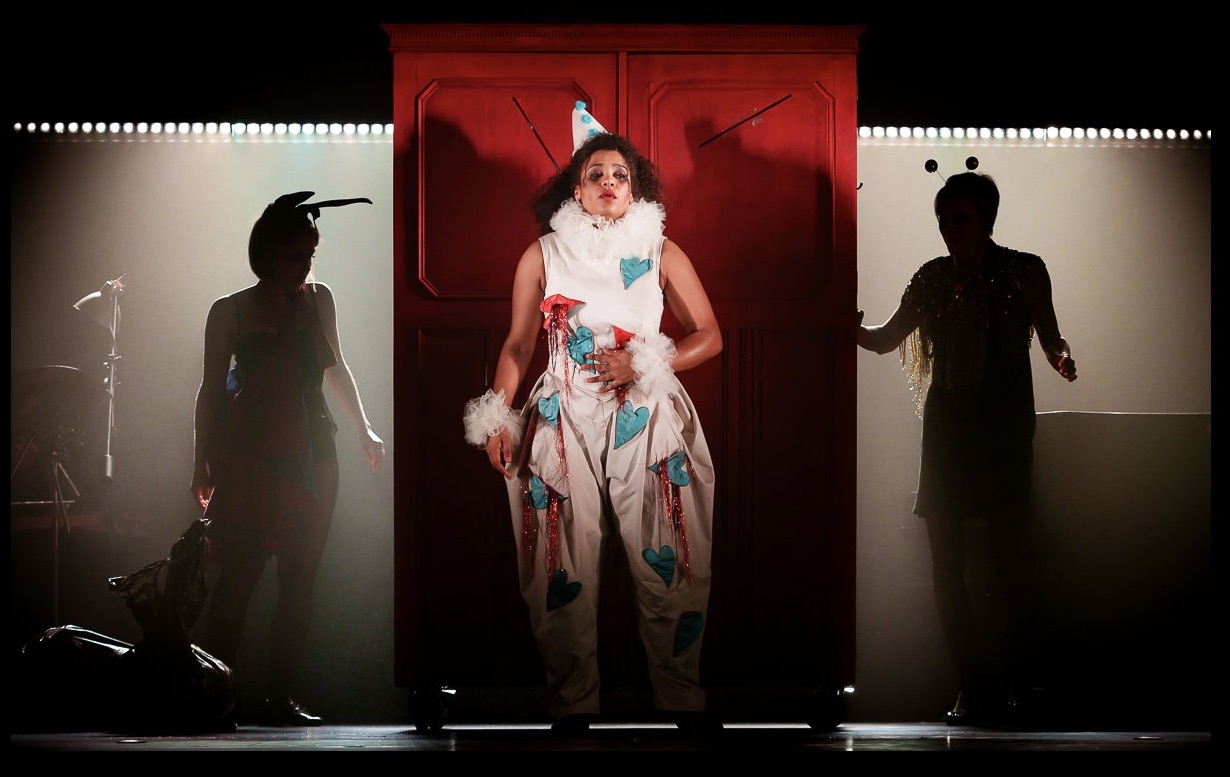
Vicki Mortimer’s ingenious set comprises boxes within boxes: indeed, the whole play is a magic show, all dazzling mirror-balls and sleights of hand. The cabaret glitz enhances the plot: no wonder Lucky (Robyn Sinclair) finds Blue Beard (Tristan Sturrock) spellbinding; he’s a magician, after all; illusions are his stock-in-trade. The thrilling, illicit pleasure draws us in: we too are seduced by Blue Beard’s ostentation and flair; excited as he conjures a horse race from nowhere; throws knives at his assistant (Gremaud); saws Lucky in half. This first act is all about the seductive allure of darkness, the impulse that makes us devour murder-mysteries and glamourise the bad guys.

But Rice’s Blue Beard comes with a warning, in the form of Mother Superior (the fabulous Katy Owen), whose Convent of the Three Fs reminds us that real women – as opposed to their fairytale counterparts – are at once fearful, fucked and furious. She’s both narrator and chorus, veering between humour and rage, first undercutting the tension with a perfectly-placed “fuck off”, then skewering Blue Beard’s dangerous pomposity.

The second act draws all the disparate strands together. Lucky doesn’t have brothers who can rescue her, but she does have Treasure and Trouble, her mum and sister (Patrycja Kujawska and Stephanie Hockley), and Blue Beard is no match for this formidable trio.

Out in the real world, the Lost Sister (Gremaud) is not so lucky. A screen showing black and white CCTV footage of a man following a woman is a theatrical gut-punch, less visceral than the slo-mo, gore-spattered, cartoon battle we’ve just enjoyed, but much more chilling. The auditorium, which just a moment ago was a riot of whoops and claps, is silent, aghast. The Lost Brother (Adam Mirsky) weeps; the Mother Superior sheds her habit. The smoke clears; the illusion breaks.

This is theatre with a capital T.

5 stars

Susan Singfield
You Bury Me

08/03/23

Lyceum Theatre, Edinburgh

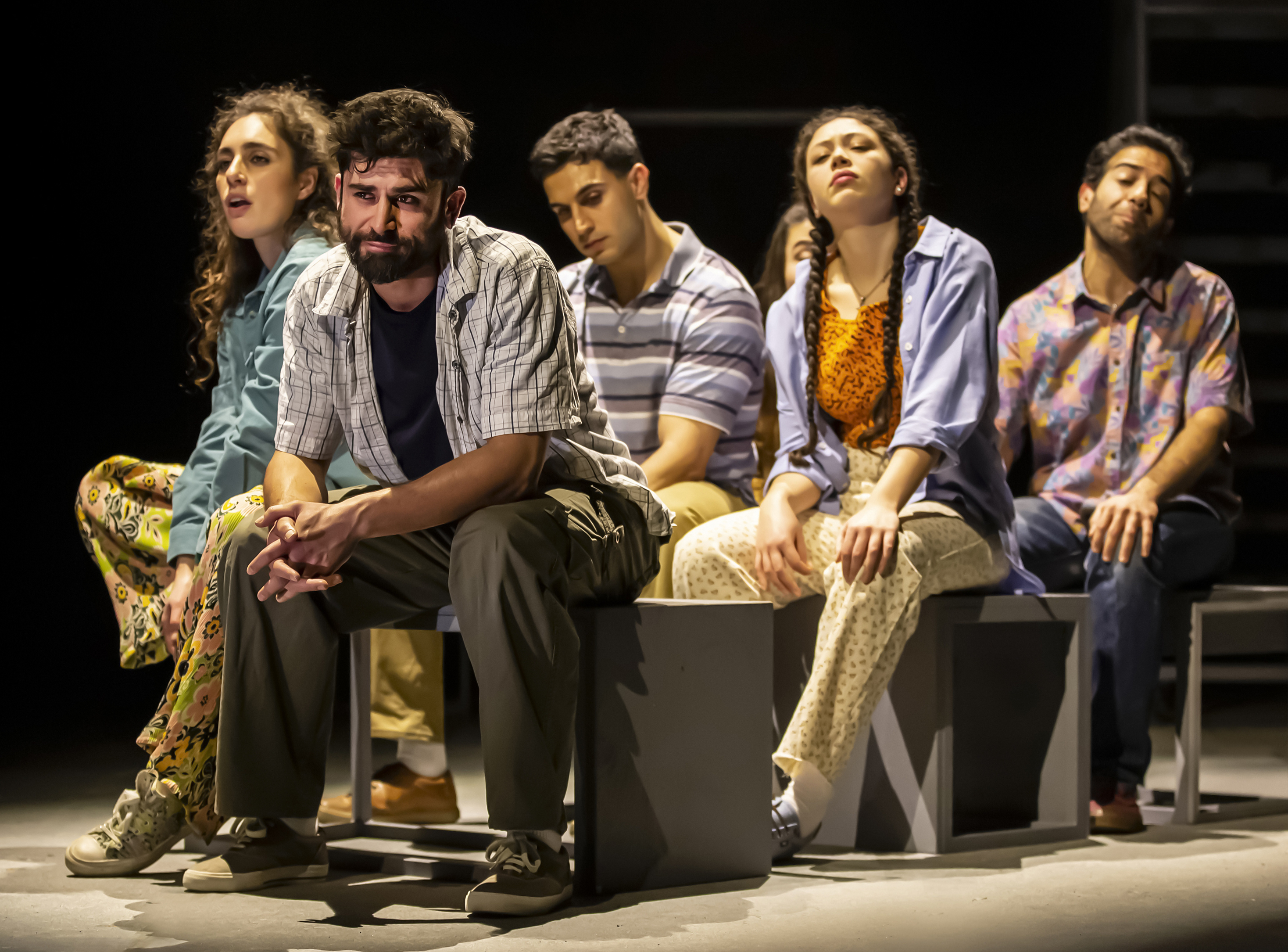
You Bury Me is a play about six young Egyptians coming of age in the aftermath of the Arab Spring – “a generation emerging from a national trauma, determined to live and love freely”. It’s a fascinating premise. I’m aware of the Arab Spring, of course; I read the news. But I don’t know anything about life in modern Egypt, nor of the ‘what happens next’. I’m keen to learn more.

Written by an anonymous playwright – under the alias ‘Ahlam’ – and directed by Katie Posner, the play is a co-production with the ever-dependable Paines Plough (among others), and the winner of 2020’s Women’s Prize for Playwriting. Its strength lies in the verve and vitality of the characters, all brimful of youthful energy, fighting to find their places in a changing world.

Alia (Hanna Khogali) and Tamer (Moe Bar-El) have both just graduated from university, but they’ve little experience of sex and relationships. They’re in love and want to get married, but it’s not as easy as all that. Alia is Muslim and Tamer is Christian; Alia’s family, who all work for the police, will not be pleased – and Cairo is a city where displeasing the police can have serious consequences…

Meanwhile, eighteen-year-old Maya (Yasemin Özdemir) is making the most of her last year of high school, attending every party she can, and making out with lots of guys. She’s bubbly and outgoing, and doesn’t care a jot about her ‘reputation’. New girl Lina (Eleanor Nawal) is shy and insecure, but opposites attract sometimes, and the two soon become firm friends – but is this enough for Lina?

Osman (Tarrick Benham) is Maya’s half brother, and he’s a political writer, publishing a blog that makes him a target for the authorities. We never see his girlfriend, Zeina, but we learn that she’s an activist too, so it’s no surprise to learn that Rafik (Nezar Alderazi) – who’s staying with Osman because his dad has kicked him out for being gay – thinks there are people watching the house. The two men fear for each other: Osman urges Rafik to delete Grindr, while Rafik wants Osman to stop writing his blog. But neither is prepared to sacrifice their sense of self in order to feel ‘safe’.

All six actors deliver lively and spirited performances, and I like the choral narration that provides context. Özdemir in particular really owns the stage; she is very charismatic, and Maya and Lina’s burgeoning friendship is always believable. Khogali and Bar-El make the most of the humour in Alia and Tamer’s fumbling sexual encounters, as well as inviting empathy for the lovers’ plight.

Although Benham and Alderazi both inhabit their roles well, their strand of the play is less satisfying, mainly because it is all told rather than shown. We don’t see any of Rafik’s dates, nor his family disowning him. Neither do we find out anything about what Osman is actually writing: the political discourse here is frustratingly vague. What is he saying that is so inflammatory, and how much danger is he really in? Without these details, Osman’s rage at his blog being deleted lacks context, and Rafik’s big emotional scene doesn’t elicit as much sympathy as it ought.

You Bury Me is eminently watchable – in the same way as an episode of Friends or Skins – and there are plenty of laughs, as well as moments of sadness. Ultimately, however, I don’t think it quite delivers on its political promise.

3.3 stars

Susan Singfield

The Meaning of Zong

20/04/22

Lyceum Theatre, Edinburgh

The Meaning of Zong opens in a contemporary UK bookshop, where Gloria, a young black woman (Kiera Lester), attempts to tell the white staff that they have misclassified a book about the Atlantic slave trade. They’re mystified. “It’s in African history,” they tell her. “But it’s British history,” she replies. They don’t understand, prevaricating with platitudes about ‘being allies,’ while vaguely insinuating that such decisions are taken by a distant boss. Gloria’s frustrated, but help is at hand, in the form of Olaudah Equiano (Giles Terera), a former slave, who steps out of the history book to tell Gloria (and us) his tale.

And the tale he tells is truly shocking: a shame-inducing account of an event so appalling it ought to be common knowledge. That it is not speaks volumes, illuminating the importance of that opening scene. If we don’t even acknowledge our history, how can we hope to learn from it?

In 1793, Oloudah tells Gloria, there was a massacre on board a British slave ship called The Zong. 132 slaves were thrown into the sea and left to drown, jettisoned because – so it was claimed – there was a shortage of drinking water, and so their killing was a “necessary” act. Not only did they commit murder, the ship’s owners also put in an insurance claim for the loss of their “property.” The insurers disputed the claim, of course (because some things are immutable), but not before Oloudah chanced upon the case, and joined forces with anti-slavery campaigner Granville Sharp (Paul Higgins) and shorthand secretary Annie Greenwood (Eliza Smith) to ensure the case was brought to public attention. The slave owners’ blatant dismissal of human beings as “cargo” caused outrage, and proved to be a significant step on the path towards abolition.

Although it’s an ensemble piece, this is very much Terera’s project: as well as playing Oloudah, he is both writer and co-director (along with Tom Morris). It’s a spectacular achievement, making bold social and political points, while still being playful and overtly theatrical. He pulls no punches and yet we’re on his side; he never lets us off the hook, but we feel galvanised rather than defensive.

We never witness the massacre. Instead, we are shown the legal struggle Oloudah and Granville mount to have the court’s ruling overturned. Instead, we are shown the strength of three female slaves (Lester, Bethan Mary-James and Alice Vilanculo), recounting the story of Anansi, the spider god, calling on the spirits to save them. And one of them – unnamed – is saved, clinging to a rope, reaching through the years to become Terera’s inspiration for this devastating reminder of our collective guilt.

Jean Chan’s set is a thing of beauty, reinforcing the notion that everything is connected, that we can’t escape our past just by shutting our ears and hiding things away. Thus Westminster Hall’s magnificent wooden ceiling is also the slave ship’s hull; the judge’s bench is also a Waterstones bookshelf. The furniture we sit on, the cutlery we use, the sugar we sprinkle in our tea: these things are all linked to slavery, Oloudah tells Gloria – and the truth will out.

Sidiki Dembele’s onstage drumming is both powerful and provocative, first bringing the audience together then silencing us with its force. It’s the perfect accompaniment to a story that demands to be heard.

The Meaning of Zong has already finished its run at the Bristol Old Vic, and only has a few more days here in Edinburgh before it moves on to Liverpool. It’s worth seeking out. We mustn’t let this story fade away. It belongs in the bookshop’s window, not relegated to a forgotten shelf.

4.7 stars

Susan Singfield

Thon Man Molière

tumblr_o7nct3VfMA1qbch0vo10_1280

01/06/16

Royal Lyceum Theatre, Edinburgh

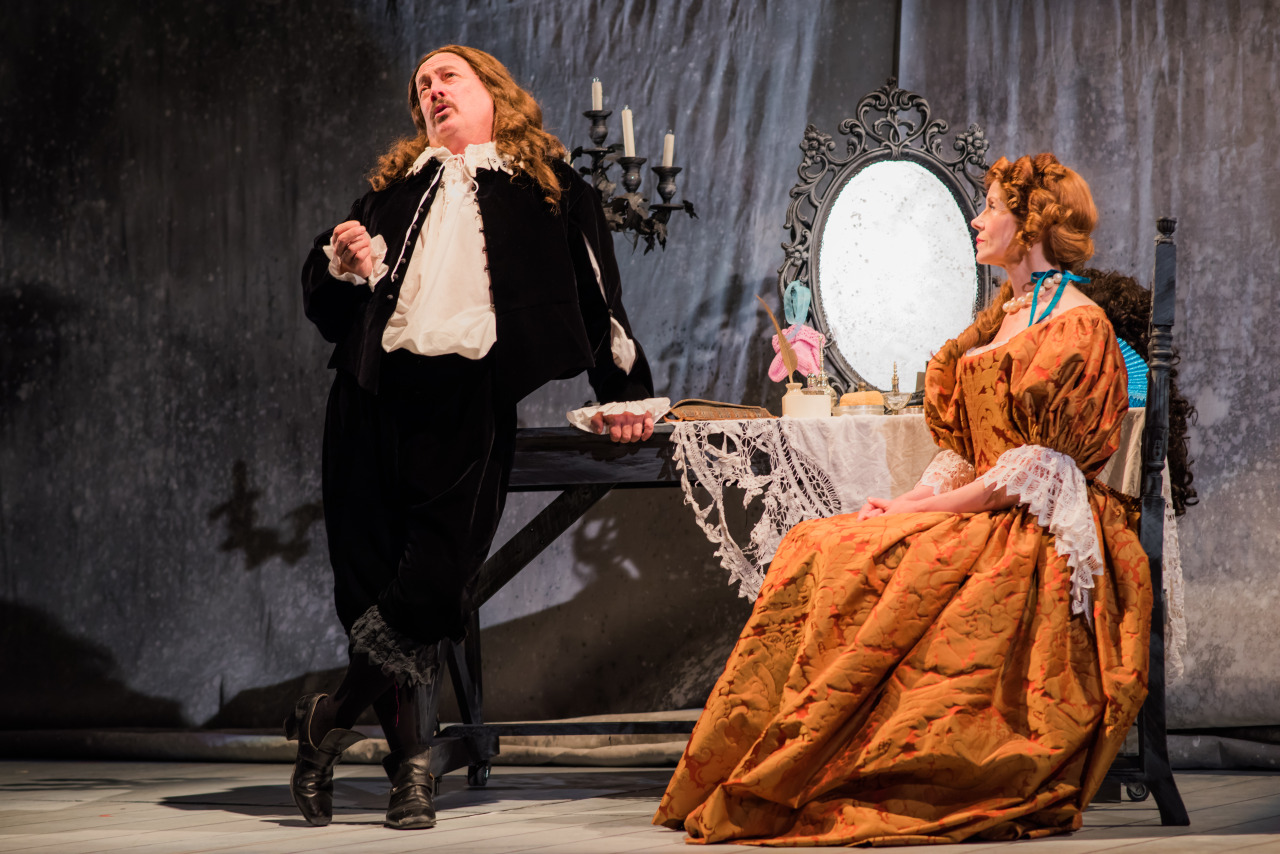
Thon Man Molière is Liz Lochhead’s witty, irreverent imagining of a particularly awkward period in the infamous French playwright’s life. Fêted by the King, and finally achieving recognition for his work, Molière seems determined to self-sabotage, persisting with his play, Tartuffe, despite warnings that its depiction of a corrupt clergyman might not sit well with the highly religious monarch on whose patronage he depends. And that’s not all: he compounds the precariousness of his position by falling in love with and marrying a young woman who, it appears, may very well be his daughter.

It’s a subject ripe for comedy, and Lochhead’s script fizzes with quips and drollery. It’s laugh-out-loud funny at times, not least when contemporary Scottish dialect is employed in response to seventeenth century mores. The performances are uniformly strong, with Jimmy Chisholm managing to tread the fine line between vulnerable and repulsive in his depiction of the egotistical Molière, so that we do actually care what happens to him, even when his misfortunes are richly deserved. Siobhan Redmond is fantastic too, imbuing Madeleine Béjart, Molière’s sometime lover, with a dignity and credibility beyond the ‘tart with a heart’ archetype.

The set, mostly backstage at a theatre, is all muted monochrome, with the unpainted backs of flats on view. The costumes, glorious peacock-confections in the main, stand out in contrast to this, conveying perfectly the tawdry glamour of the theatre, and how it shines against the pall of ordinary life.

If there’a a quibble, it’s with the dialogue. Most of the time, it’s superb: funny and acerbic and nicely paced. But, now and again, we are fed great lumps of exposition, clumsily forced into a conversation, most of which we just don’t need. There’s no real benefit, for example, in giving the audience a detailed plot summary of one of Molière’s plays; it’s unnecessary and just slows things down.

But all in all, this is a lovely play: a uniquely Scottish take on a slice of French comedy.

4 stars

Susan Singfield