reviews

The Importance of Being Earnest: NT Live

20/02/25

Dominion Cinema, Edinburgh

Despite having lived a mere thirty-minute walk from Morningside’s Dominion Cinema for the past decade, we’ve somehow failed to set foot inside – and we dare to call ourselves cinephiles! So tonight’s NT Live screening of The Importance of Being Earnest is extra exciting for us, as it’s also an opportunity to explore a new venue.

So let’s begin with that. The Dominion is undeniably boojie; indeed, it’s the fanciest cinema either of us has ever graced. The design is art deco (think flocked wallpaper, geometric shapes and a colour palette of gold, red and black); our seat is a super-comfy reclining sofa, with privacy screens and side tables. We pour our drinks (sparkling water and alcohol-free lager, since you ask) and sit back, feet up, more than ready to enjoy ourselves in these opulent surroundings.

I’ve seen, read and taught this play so many times that I know it almost by heart, but that’s not to its detriment. After all, the script is so packed with recognisable aphorisms that few in the audience are likely to be surprised by what is said; with Earnest, it’s all in the delivery.

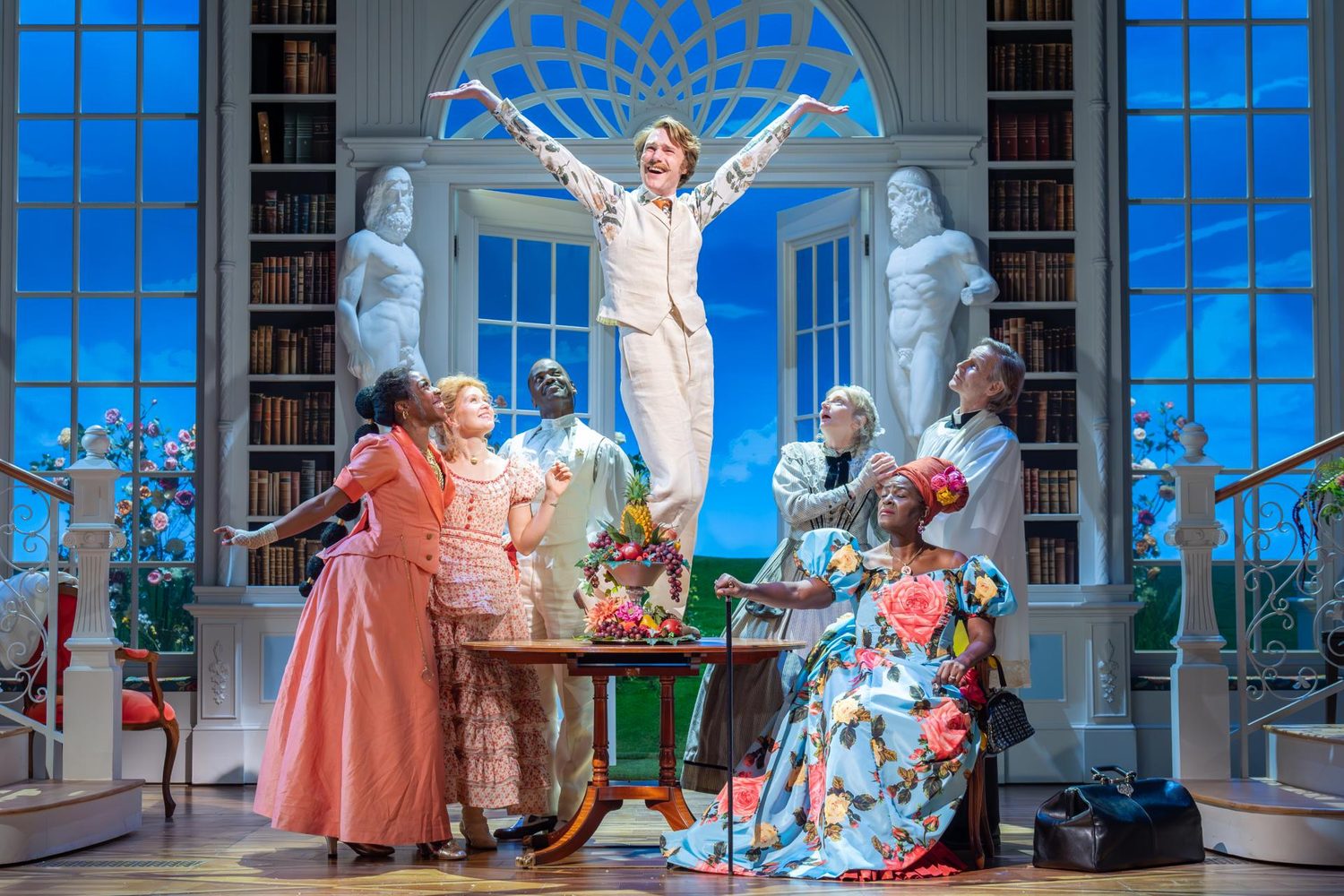
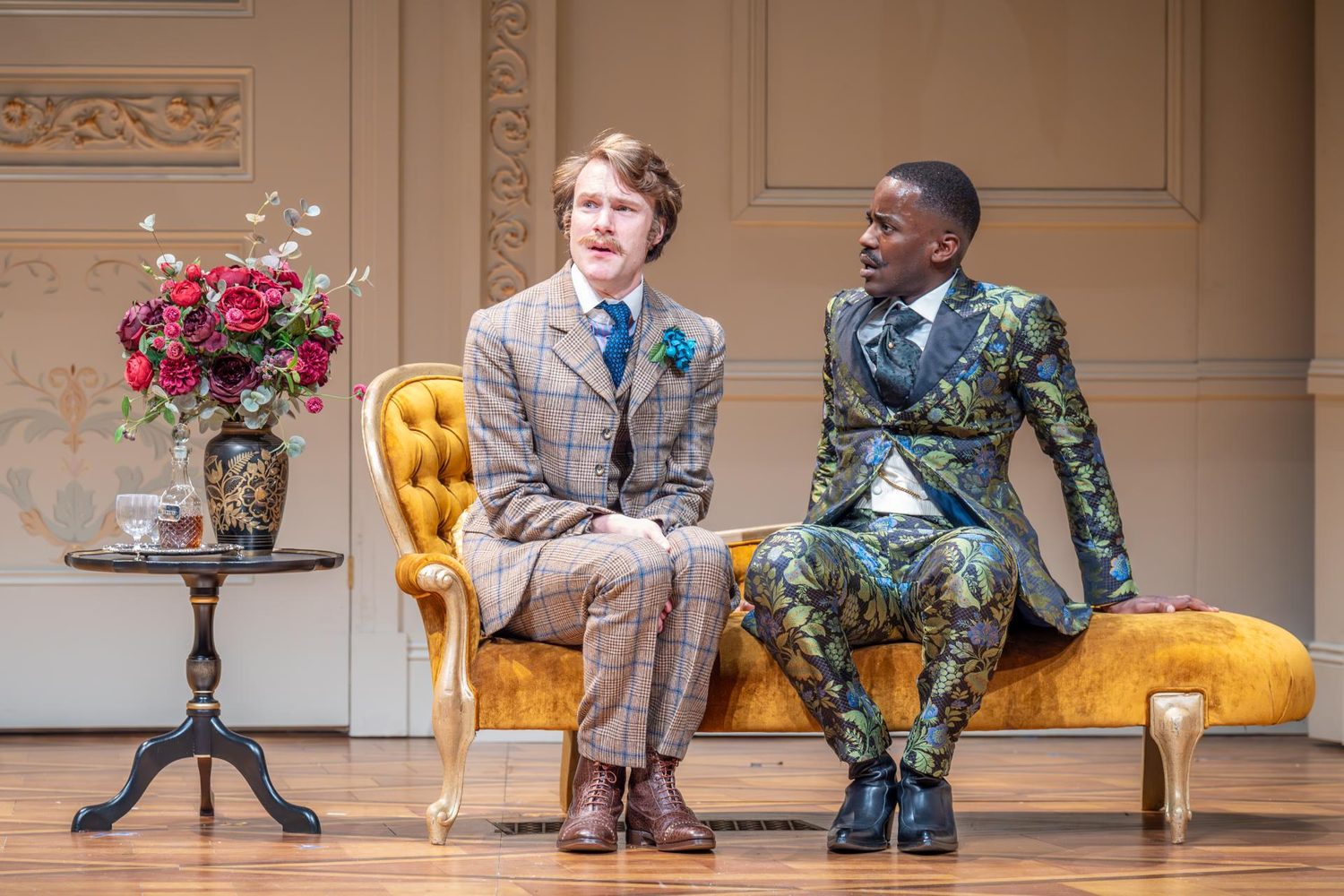
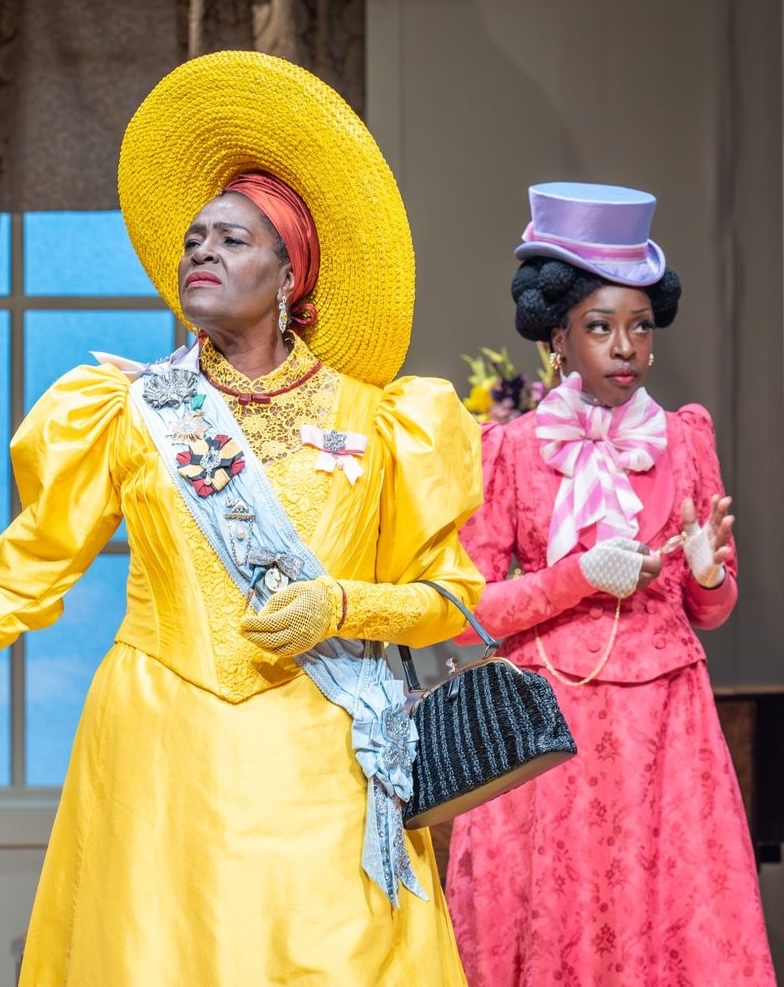
And what delivery it is! Directed by Max Webster, this is an overt celebration of queerness, Wilde’s subtext amplified to the nth degree. From the opening number, where Algernon (Ncuti Gatwa) shimmers in pink-sequinned drag, to the exuberant Mardi Gras-style finale, the closet door is flung wide open, making for a fabulously unsubtle show. To quote the wild wit himself, “moderation is a fatal thing; nothing succeeds like excess.” Webster has certainly taken this to heart.

The plot – for those who need a reminder – is at once frivolous and deadly serious. On the surface, it’s a frothy farce, all mistaken identity and foolish foppery. Underneath, it’s about repression – about the lengths people are forced to go to when their very natures are outlawed. Unbeknownst to each other, both Algernon and his best friend, Jack (Hugh Skinner), have found inventive ways to circumvent society’s disapproval of their predilections. Algernon has a pretend-friend, Bunbury, whose ill health Algy uses to excuse himself from dreary social events, while Jack has an alter-ego – an imaginary older brother called Ernest – who gets into mischief whenever he visits the city.

But things become complicated when Jack falls in love with Algy’s cousin, Gwendolen (Ronke Adekoluejo), whose mother, Lady Bracknell (Sharon D Clark), is far from pleased about the match. In desperation, Jack confesses his lies to Algy – who, true to form, responds by assuming Ernest’s identity for himself, and heading off to Jack’s country house to woo his pretty young ward, Cecily (Eliza Scanlen). Throw in a conflicted clergyman (Richard Cant), a dithering governess (Amanda Lawrence) and a couple of manservants (both played by Julian Bleach), and the scene is set for some merry mayhem.

The multi-racial casting within a period drama (courtesy of Alastair Coomer and Chloe Blake) gives the piece a contemporary edge, as do the occasional strains of recent-ish pop music and a cheeky allusion to one of London’s gay hotspots. Gatwa’s newfound fame as Dr Who also helps this production to appeal to a hip young audience, as does the sexual fluidity of the characters.

Clark’s depiction of Lady Bracknell is inspired: she brings a whole new dimension to the part, dispelling all my preconceptions of the character. Here, those oh-so-familiar lines are imbued with a haughty charm to create a formidable British-Jamaican matriarch without so much of a hint of Dench. Adekoluejo’s Gwendolen is a chip off the old block, saved from monstrousness by her cleverness and humour. In contrast, Scanlen’s Cecily is deliciously weird, a mix of doe-eyed intensity, sweetness and steel. But there are no weak links here: even Bleach, in the minor roles of Lane and Merriman, makes his mark, creating two distinct but equally absurd personae, evoking laughter with the simplest of smirks or stumbles.

More than anything, though, this is Skinner and Gatwa’s show, the focus firmly on the men’s friendship and their journey towards coming out. Their performances are jubilant and euphoric, and yet deceptively weighty, carrying with them real emotional heft. I can’t help thinking about Wilde, condemned to hard labour for his homosexuality, and wondering what he’d make of this? Surely, it would gladden his heart to see his characters finally set free.

5 stars

Susan Singfield
Moments

30/01/25

The Studio at Festival Theatre, Edinburgh

One of the UK’s leading visual theatre companies, Theatre Re focus on making “deeply moving non-verbal productions about universal human challenges and the fragility of life”. Their latest piece, Moments, lays bare the creative process, taking the audience on a journey from nothing to something, from the flicker of an idea to a compelling dramatic sequence.

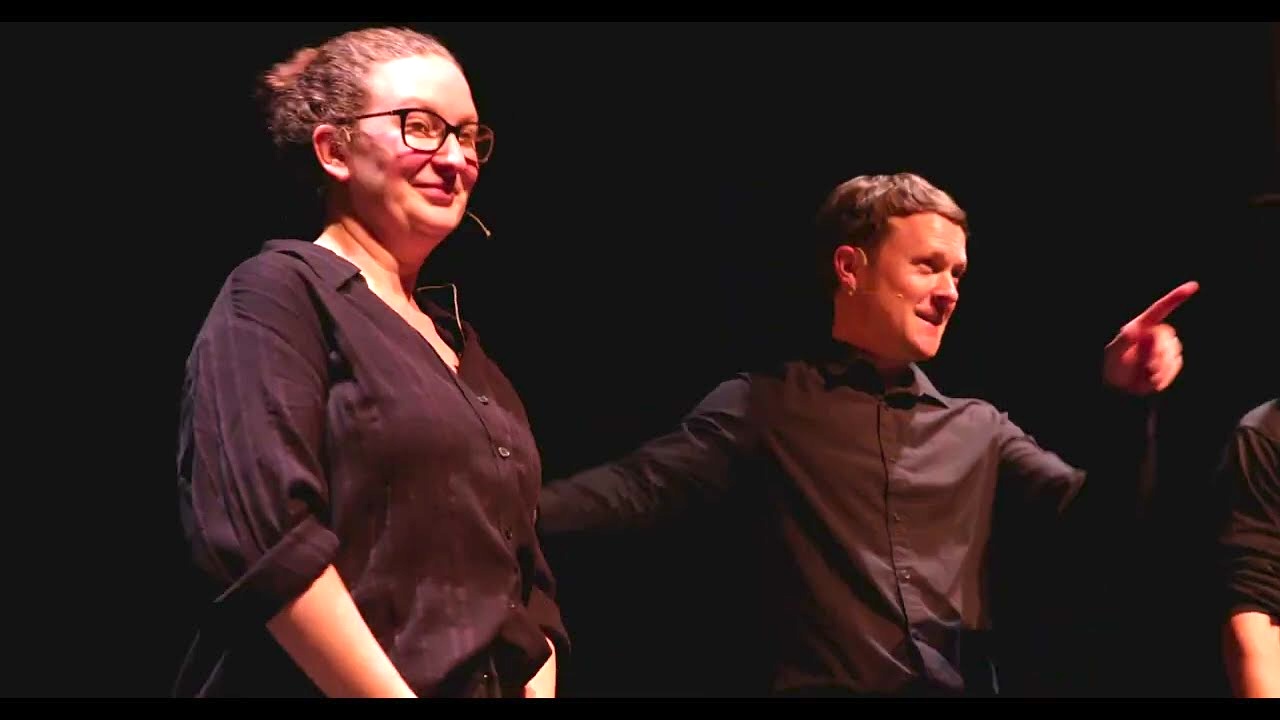
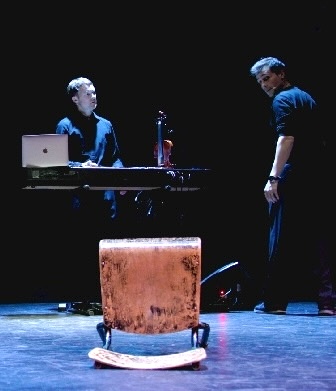
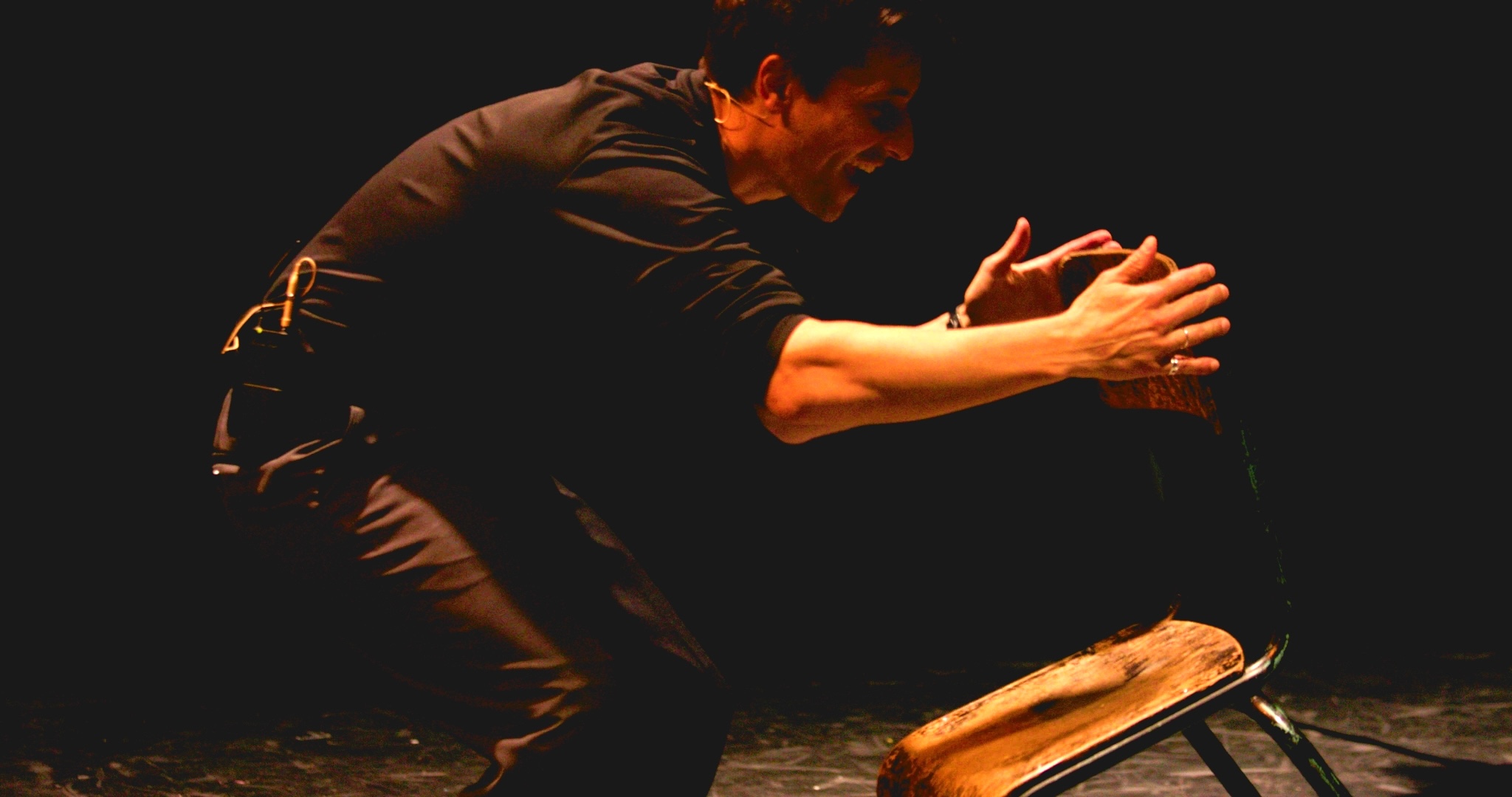
The metatheatrical concept is made clear from the outset, as four performers – dressed in rehearsal blacks – stand in a line and introduce themselves. They are: Guillaume Pigé – conceiver, director, actor and mime; Dr Katherine Graham – lighting designer; Alex Judd – composer; and Anna Kitson – BSL interpreter. From the sound desk behind us comes the disembodied voice of Benjamin Adams. They describe their roles and what they each bring to a show.

And then they begin. A chair, at first simply functional, changes before our eyes, becoming a child and then a father. The mood switches, initially light and amusing, then emotionally charged. The intensity swells with the music; the lighting focuses our attention one way and another. There is dialogue but it’s in French, so – for me, at least, with my school level knowledge of the language – it’s more about tone and tenor than it is about the words.

There’s no denying how skilful these theatre-makers are: the performances are incredibly precise and absorbing, and it’s fascinating to see what they can do with a bare stage, no costumes and one prop. However, it feels more like a demonstration than a play; it’s an exemplar of how to develop a piece of drama but the final scene – the culmination of the process – is too brief to be satisfying.

Moments would work well as an introduction to a drama workshop for A level, Higher or Uni students. It’s a dynamic and engaging piece of work that would surely appeal to anyone interested in learning about the process of making theatre.

3 stars

Susan Singfield

The Merchant of Venice

22/01/25

The Royal Lyceum, Edinburgh

New York’s Theatre for a New Audience brings The Merchant of Venice to Edinburgh’s Royal Lyceum as part of a reciprocal exchange programme. Starring John Douglas Thompson as Shylock, this is a bold and provocative production, drawing explicit links between 16th century Venice and an all-too-believable near-future USA.

Director Arin Arbus says she wants “to discover what this play means to us in the here and now” – and she certainly does that, using Merchant to hold up a mirror to a divided society where people’s views are polarised and entrenched. In Shylock’s Venice, Jews have few rights. They are forced to live in ghettos, prohibited from owning property, limited in the kind of work they are allowed to do. The prejudice runs deep: even Antonio (Alfredo Narciso), widely reputed to be one of the good guys – “a kinder gentleman treads not the earth” – deems it appropriate to spit at Shylock and call him a dog, all while asking him for money. In the modern American dystopia where this production is set, Thompson’s Black Shylock suffers comparable – and recognisable – iniquities.

It feels like a timely reminder of what we need to avoid, of where discrimination and inequality inevitably lead. Who can blame Shylock’s daughter, Jessica (Danaya Esperanza), for wanting to escape the ghetto, for hooking up with Lorenzo (David Lee Huynh) and converting to Christianity? Why shouldn’t she seek a better life? But it’s her desertion that pushes Shylock, already at breaking point, over the edge, fuelling his thirst for vengeance. What has he left to lose? Just as the Christian Venetians treat the Jews as a homogenous group to be despised, so Shylock views them all as one enemy. No wonder he is furious; no wonder he shows Antonio no mercy.

But the odds are stacked against him. The legal system isn’t fair or balanced: the laws are written by the powerful. Plus ça change, plus c’est la même chose. Power corrupts. Even Portia (Isabel Arraiza), who seems a pretty decent sort at first, isn’t immune. She changes when she assumes the mantle of supremacy, swaggering into the court in her borrowed clothes and treating Shylock with cruel contempt. Arbus’s direction highlights this theme; indeed, this version of the courtroom scene is the most intensely horrifying I have ever seen. The auditorium is eerily silent, as if we’re all holding our collective breath, appalled by Portia’s gloating as she humiliates Shylock.

I’m watching this just three days after Donald Trump has issued an executive order dismantling federal diversity, equity and inclusion programmes, which lends this consciously diverse production even more weight and urgency. Shakespeare’s message transcends the centuries; we have to heed its warning.

4.6 stars

Susan Singfield

The Remarkable Life of Ibelin

07/01/25

Netflix

Mats Steen (1989-2014) was only twenty-five when he died. The young Norwegian’s parents, Robert and Trude, had a lot to mourn: not only their son’s death but also the opportunities that had eluded him in life. Mats was born with Duchenne muscular dystrophy, an inherited disease that causes progressive muscle weakness. Although he could walk unaided as a child, by the time he reached adulthood, he could only move his fingers. Robert and Trude hated how limited Mats’ world was. He just played on his computer all day. He had no friends, had never been in love, rarely ventured beyond the four walls of his basement flat beneath their family home.

Or so they thought…

Reeling from his loss, Robert accessed Mats’ blog and left a message announcing his son’s death.

An avalanche of emails followed. And that’s when Robert and Trude discovered that, in fact, Mats had created a rich life for himself – online, within the World of Warcraft game. Here, he was Lord Ibelin Redmoore: a strong, handsome man, who went for a run every morning and socialised happily in the tavern at night. In role, he and his fellow gamers forged friendships, sharing secrets and heartaches, successes and fears. As Ibelin, in the mythical fantasy land of Azeroth, Mats was – ironically – more himself than he ever was in the real world, where too many people made judgements based on what they saw: at best pitying him; at worst assuming he was stupid.

Directed by Benjamin Ree, The Remarkable Life of Ibelin is an eye-opener, illuminating the power of RPGs. If other non-gamers are anything like me – and I suspect I’m fairly typical – they’ll have a vague idea of quests and shoot-’em-ups, but no real understanding of the games’ potency or potential. This documentary changes that.

Animators Rasmus Tukia and Ada Wikdahl bring Azeroth to the big screen, breathing life into Ibelin and the other avatars, including Mats’ first crush, Rumour (Lisette Roovers), and his friends, Reike (Xenia-Anni Neilson) and NikMik (MIkkel Neilson). The film cuts between home videos of Mats, talking heads of his family and friends, and cleverly animated sequences – creating a nuanced, layered biopic of a complex, intelligent young man.

There’s no denying that this is a heartbreaking piece of cinema; only the flintiest of hearts could fail to be moved. But it’s a celebration too – because Mats had many friends and made a lasting impact. Fantasy and reality are not just blurred, they’re inextricably bound.

4.3 stars

Susan Singfield