review

Ghost Stories

26/03/25

Festival Theatre, Edinburgh

What a strange thing, the passing of time. Taking my seat in the Festival Theatre, I can’t help being transported back to thirteen years ago, when Susan and I travelled from Manchester to London, with the express purpose of catching Ghost Stories as it neared the end of its first run. We’d heard great things about the show, created by Jeremy Dyson and Andy Nyman – and we were not disappointed.

Fast-forward to 2018 and now we’re in the cinema, watching the big-screen adaptation of the story, which has been skilfully retooled for a different medium, but still delivers a feast of creepy moments and heart-stopping jump-scares. 

And now, here’s the original production, out on tour and taking its twisty-turny narrative to a series of new locations. Over the intervening years, the show’s creators have somehow managed to compel audiences not to reveal too much about what actually happens in that intense hour-and-a-half and they continue to implore us to keep its secrets. Of course, this makes a reviewer’s job harder, but hey, those are the breaks. 

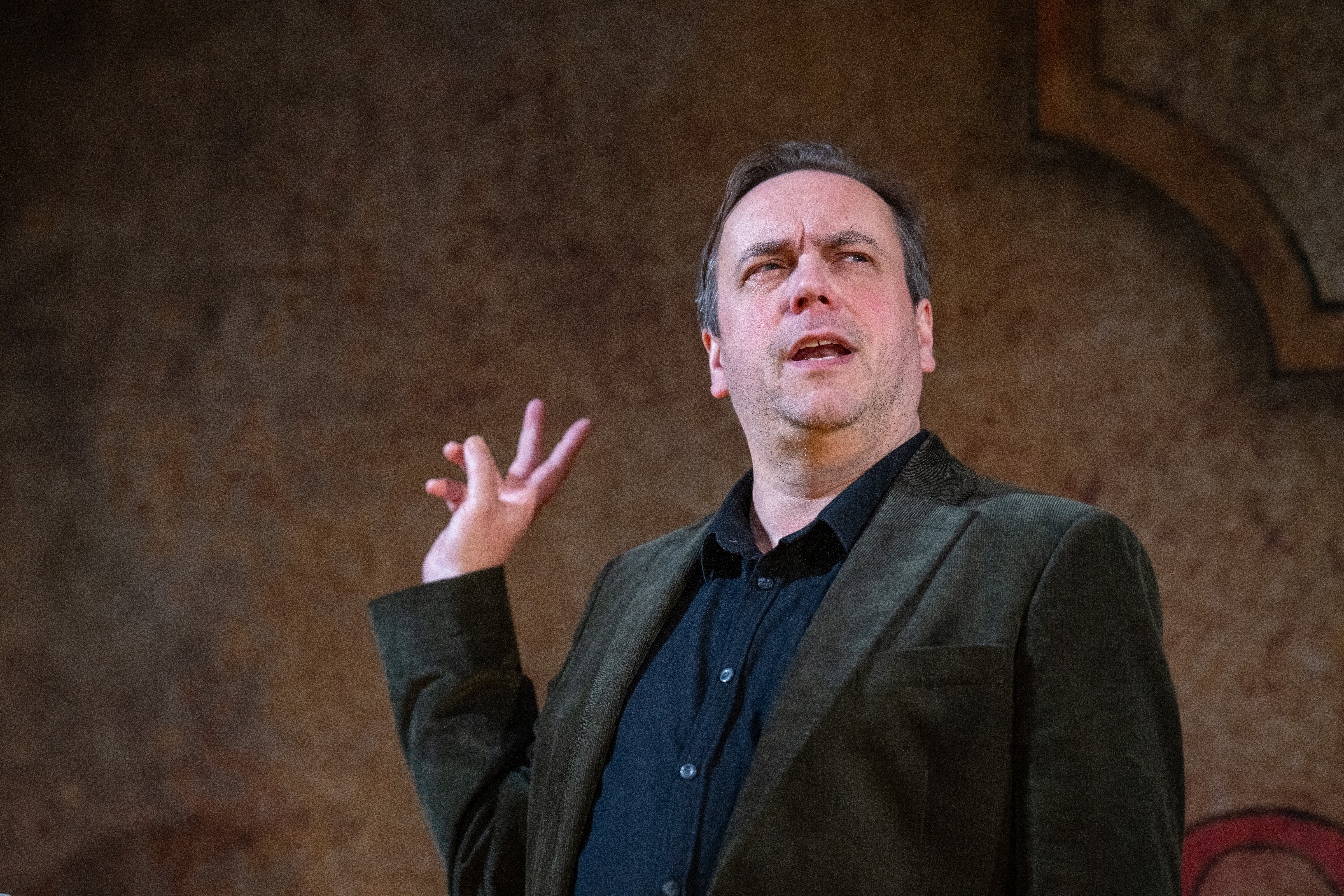
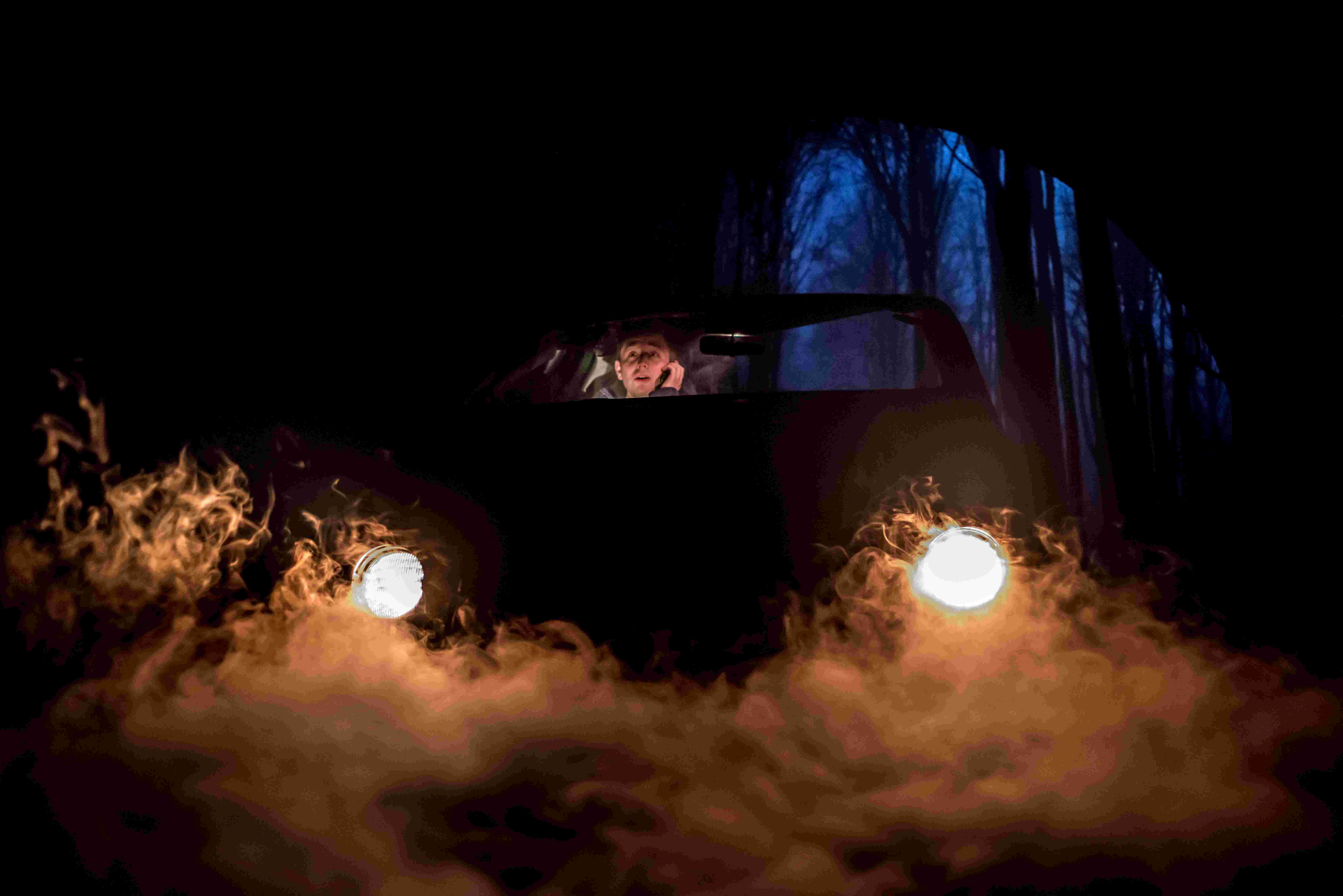
Suffice to say that Ghost Stories is a deliciously old-fashioned portmanteau, which incorporates three quite dissimilar stories and links them all together with an intriguing framing device. We are greeted by Professor Goodman (Dan Tetsell), a staunch disbeliever in all things supernatural, but he does have some puzzling cases to share with us. There’s the one about the chatty, chirpy nightwatchman, Tony Matthews (David Cardy), who has a particularly troubling evening at work; the cautionary tale of nervy Simon Rifkind  (Lucas Albion), who really should never have been put behind the steering wheel of an automobile; and let’s not forget the recollections of snarky businessman, Mike Priddle (Clive Mantle), who has a sobering memory to recount for anyone thinking of becoming a parent…

And that is about as much as I’m willing to share, other than to say that if you’ve never seen Ghost Stories in the theatre, this is your chance to rectify that situation. And if you have seen it, go back and admire the details. You may even spot the clues that have been artfully scattered throughout. You’ll relish Jon Bauser’s extraordinary set, forever opening up like a puzzle box to reveal its hidden depths. James Farncombe’s lighting design amps up the intense atmosphere of dread, which is also amplified by Nick Manning’s nerve-shredding sound design. Scott Penrose’s special effects will have you flinching in your seat at several key moments, while director Sean Holmes brings all the elements together and ties them up with a great big blood-curdling bow.

And if you’re of a nervous disposition, then my advice is to go along and see it anyway, because you’ll be so relieved to step out of the theatre to find that the real world is a whole lot less scary…

4.6 stars

Philip Caveney
The Importance of Being Earnest: NT Live

20/02/25

Dominion Cinema, Edinburgh

Despite having lived a mere thirty-minute walk from Morningside’s Dominion Cinema for the past decade, we’ve somehow failed to set foot inside – and we dare to call ourselves cinephiles! So tonight’s NT Live screening of The Importance of Being Earnest is extra exciting for us, as it’s also an opportunity to explore a new venue.

So let’s begin with that. The Dominion is undeniably boojie; indeed, it’s the fanciest cinema either of us has ever graced. The design is art deco (think flocked wallpaper, geometric shapes and a colour palette of gold, red and black); our seat is a super-comfy reclining sofa, with privacy screens and side tables. We pour our drinks (sparkling water and alcohol-free lager, since you ask) and sit back, feet up, more than ready to enjoy ourselves in these opulent surroundings.

I’ve seen, read and taught this play so many times that I know it almost by heart, but that’s not to its detriment. After all, the script is so packed with recognisable aphorisms that few in the audience are likely to be surprised by what is said; with Earnest, it’s all in the delivery.

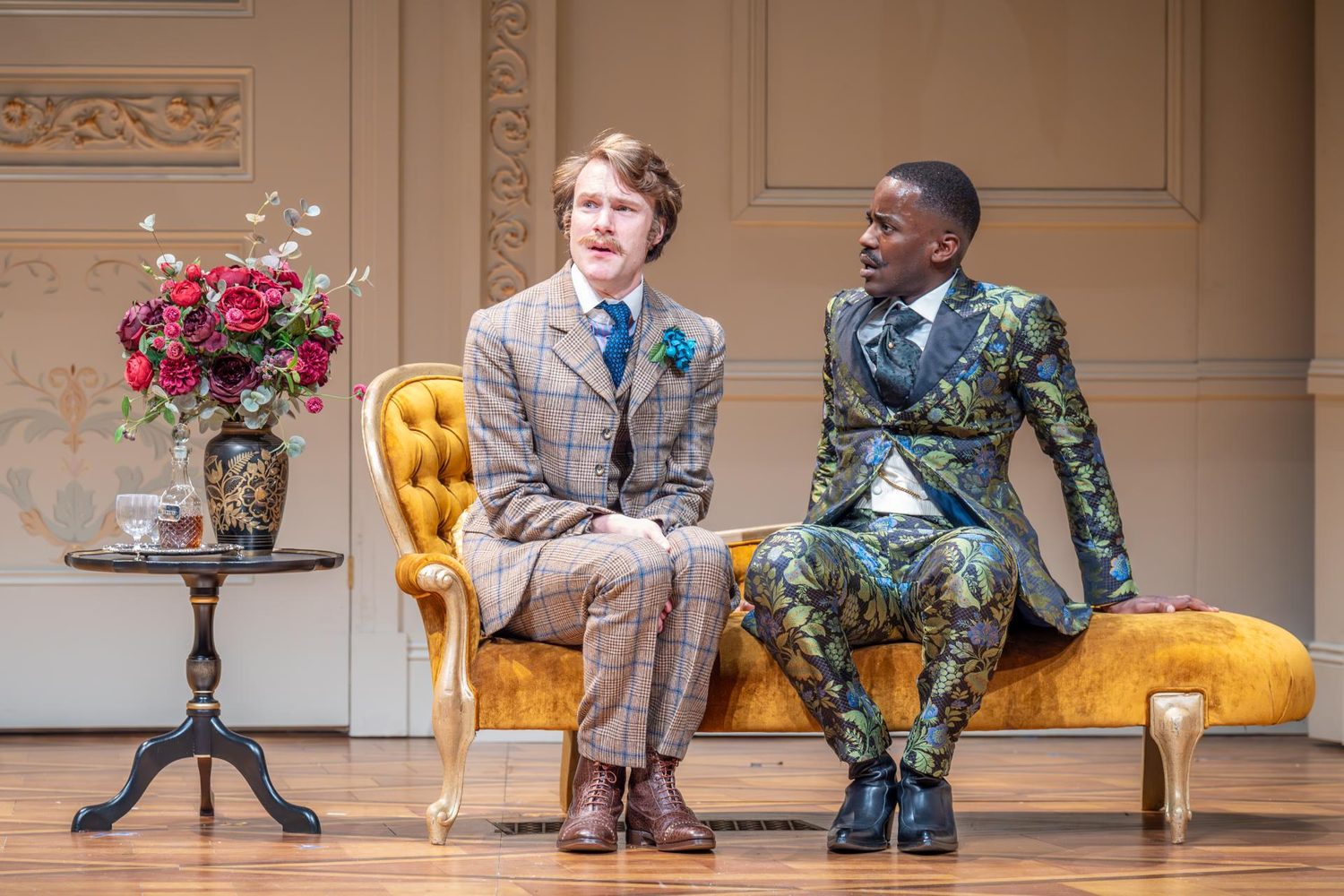
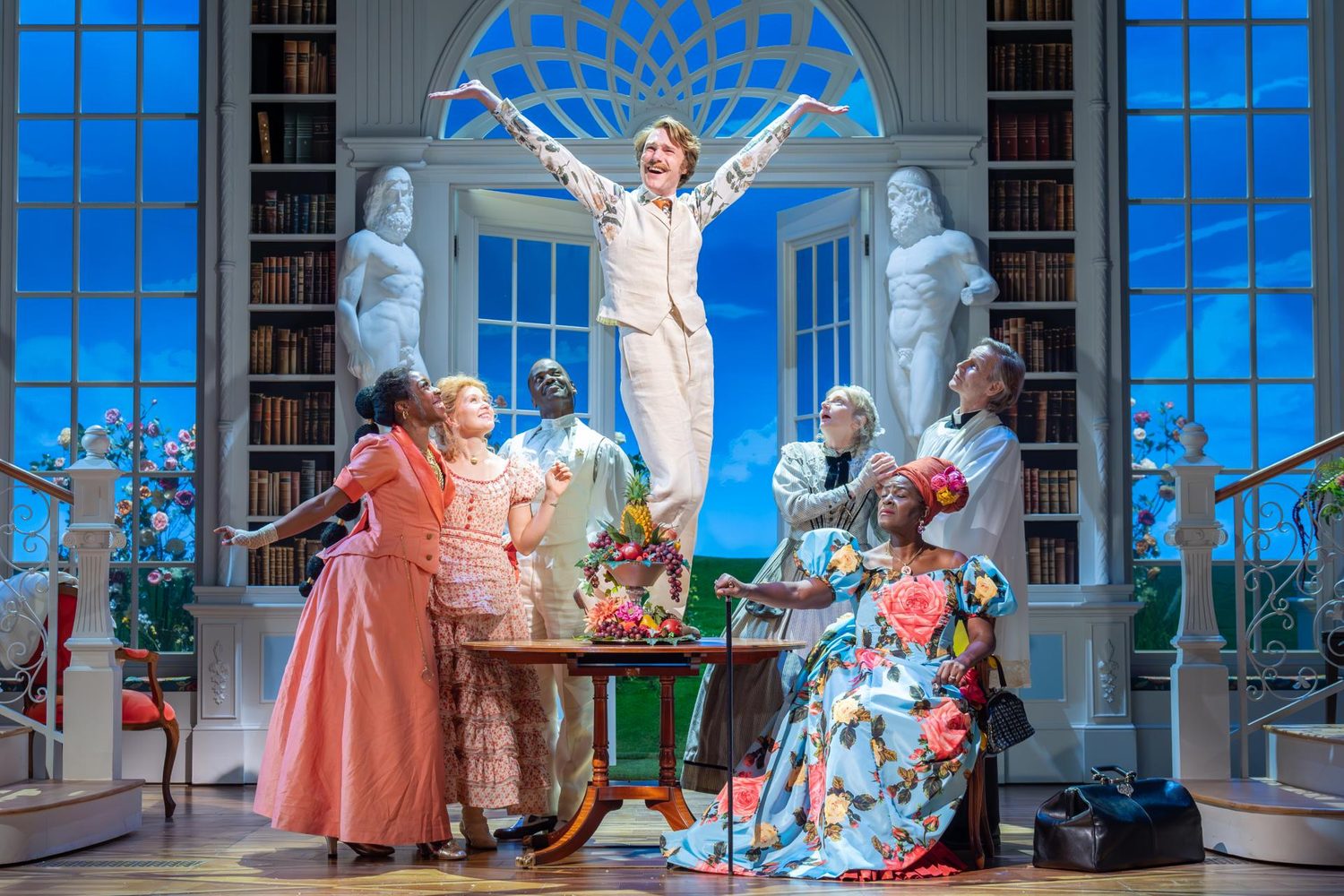
And what delivery it is! Directed by Max Webster, this is an overt celebration of queerness, Wilde’s subtext amplified to the nth degree. From the opening number, where Algernon (Ncuti Gatwa) shimmers in pink-sequinned drag, to the exuberant Mardi Gras-style finale, the closet door is flung wide open, making for a fabulously unsubtle show. To quote the wild wit himself, “moderation is a fatal thing; nothing succeeds like excess.” Webster has certainly taken this to heart.

The plot – for those who need a reminder – is at once frivolous and deadly serious. On the surface, it’s a frothy farce, all mistaken identity and foolish foppery. Underneath, it’s about repression – about the lengths people are forced to go to when their very natures are outlawed. Unbeknownst to each other, both Algernon and his best friend, Jack (Hugh Skinner), have found inventive ways to circumvent society’s disapproval of their predilections. Algernon has a pretend-friend, Bunbury, whose ill health Algy uses to excuse himself from dreary social events, while Jack has an alter-ego – an imaginary older brother called Ernest – who gets into mischief whenever he visits the city.

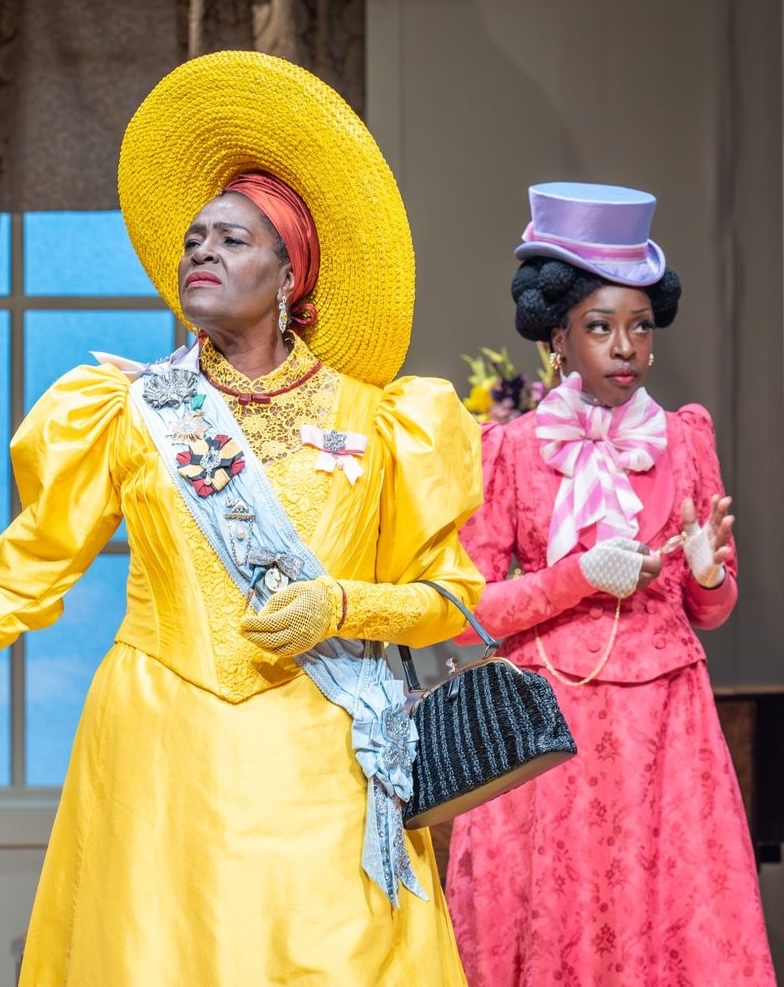
But things become complicated when Jack falls in love with Algy’s cousin, Gwendolen (Ronke Adekoluejo), whose mother, Lady Bracknell (Sharon D Clark), is far from pleased about the match. In desperation, Jack confesses his lies to Algy – who, true to form, responds by assuming Ernest’s identity for himself, and heading off to Jack’s country house to woo his pretty young ward, Cecily (Eliza Scanlen). Throw in a conflicted clergyman (Richard Cant), a dithering governess (Amanda Lawrence) and a couple of manservants (both played by Julian Bleach), and the scene is set for some merry mayhem.

The multi-racial casting within a period drama (courtesy of Alastair Coomer and Chloe Blake) gives the piece a contemporary edge, as do the occasional strains of recent-ish pop music and a cheeky allusion to one of London’s gay hotspots. Gatwa’s newfound fame as Dr Who also helps this production to appeal to a hip young audience, as does the sexual fluidity of the characters.

Clark’s depiction of Lady Bracknell is inspired: she brings a whole new dimension to the part, dispelling all my preconceptions of the character. Here, those oh-so-familiar lines are imbued with a haughty charm to create a formidable British-Jamaican matriarch without so much of a hint of Dench. Adekoluejo’s Gwendolen is a chip off the old block, saved from monstrousness by her cleverness and humour. In contrast, Scanlen’s Cecily is deliciously weird, a mix of doe-eyed intensity, sweetness and steel. But there are no weak links here: even Bleach, in the minor roles of Lane and Merriman, makes his mark, creating two distinct but equally absurd personae, evoking laughter with the simplest of smirks or stumbles.

More than anything, though, this is Skinner and Gatwa’s show, the focus firmly on the men’s friendship and their journey towards coming out. Their performances are jubilant and euphoric, and yet deceptively weighty, carrying with them real emotional heft. I can’t help thinking about Wilde, condemned to hard labour for his homosexuality, and wondering what he’d make of this? Surely, it would gladden his heart to see his characters finally set free.

5 stars

Susan Singfield

Macbeth

05/02/25

Cineworld, Edinburgh

Macbeth is a ubiquitous play. Searching back through the B&B archive, I’m not entirely surprised to find that this is the ninth time we’ve reviewed a version of Shakespeare’s celebrated tragedy and I note too that there are three other related items that reference that infamous surname in the title. It’s easy to understand why it’s such a perennial. One of the bard’s most propulsive stories, it’s a lean, mean tale of aspiration and the overriding lust for power, which – in these troubled times – seems all too relevant. This Olivier-award winning adaptation, filmed live at London’s Donmar Warehouse, features David Tennant in the title role with Cush Jumbo as the manipulative Lady M. The screening we attend is sold out.

It’s a stripped-back production, freed from any issues with costuming or elaborate set design. The actors wear simple, monochrome outfits and the performance space is a stark white rectangular dais. It’s set in front of a transparent screened box, behind which other members of the cast occasionally gather, like a chorus of half-glimpsed ghosts, to comment on the action. Prominent among them is a young boy, who at one point hammers his fist repeatedly against the screen and also reappears in the midst of the final battle. His presence serves to remind me that the Macbeths have earlier lost a child – and that perhaps it is this loss that’s the driving force behind their callous bid to seize the throne and betray their former friends.

Tennant is extraordinary, speaking those familiar lines (often direct to camera, as though sharing confidential material) with such utter authority that I almost feel I’m hearing them for the first time. Jumbo is also compelling. She’s the only one here without a Scottish accent, which seems to emphasise her solitude and her distance from the other characters. Cal McCaninch is a stately Banquo, Nouff Ousellam smoulders powerfully as Macduff and it’s a delight to hear Benny Young’s cultured drawl delivering Duncan’s self-satisfied lines as he arrives at the castle where he is destined to die.

Ros Watt is a delightfully punky Malcolm and Jatinga Singh Randawa offers a rambunctious turn as the Porter. In the only scene that takes a wild swing away from what’s actually written on the page, the latter chats to members of the audience and displays all the symptoms of a man suffering from a raging hangover. It’s a gamble but it pays off. And the witches? In what might be the production’s bravest move, they are barely glimpsed in the first act, only heard in giggling off-stage asides as they arrive and depart with a flap of supernatural wings.

Gareth Fry’s sound design adds extra layers of suspense to the production (I note that the audience at the live performance all wear headphones for a truly immersive experience), while Alistair McCrae’s music offers jaunty reels, Celtic airs and, at one point, a spirited highland fling as a brief respite from that all-pervading air of menace. Director Max Webster brings all these disparate elements together to create a powerful and absorbing drama that dares to experiment with the source material. And, at the conclusion, designer Roanna Vize really does – magically – bring Birnam Wood to Dunsinane. 

The final confrontation doesn’t leave me wanting and the face-off between Macbeth and Macduff is unlike any version I’ve seen before. Of course, the only valid reason for doing this immortal story one more time is to offer audiences something new – an aim that this extraordinary production has clearly taken to its dark heart.

5 stars

Philip Caveney

Moments

30/01/25

The Studio at Festival Theatre, Edinburgh

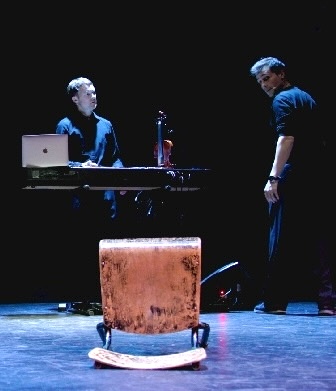
One of the UK’s leading visual theatre companies, Theatre Re focus on making “deeply moving non-verbal productions about universal human challenges and the fragility of life”. Their latest piece, Moments, lays bare the creative process, taking the audience on a journey from nothing to something, from the flicker of an idea to a compelling dramatic sequence.

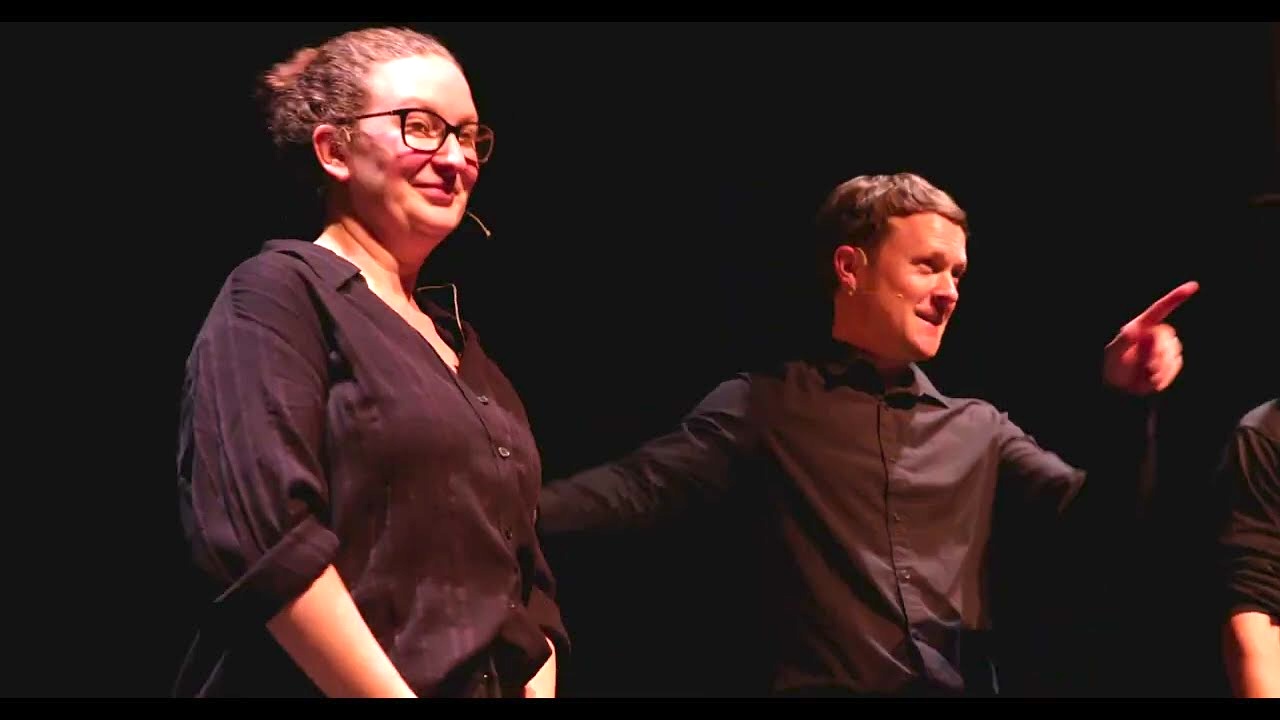
The metatheatrical concept is made clear from the outset, as four performers – dressed in rehearsal blacks – stand in a line and introduce themselves. They are: Guillaume Pigé – conceiver, director, actor and mime; Dr Katherine Graham – lighting designer; Alex Judd – composer; and Anna Kitson – BSL interpreter. From the sound desk behind us comes the disembodied voice of Benjamin Adams. They describe their roles and what they each bring to a show.

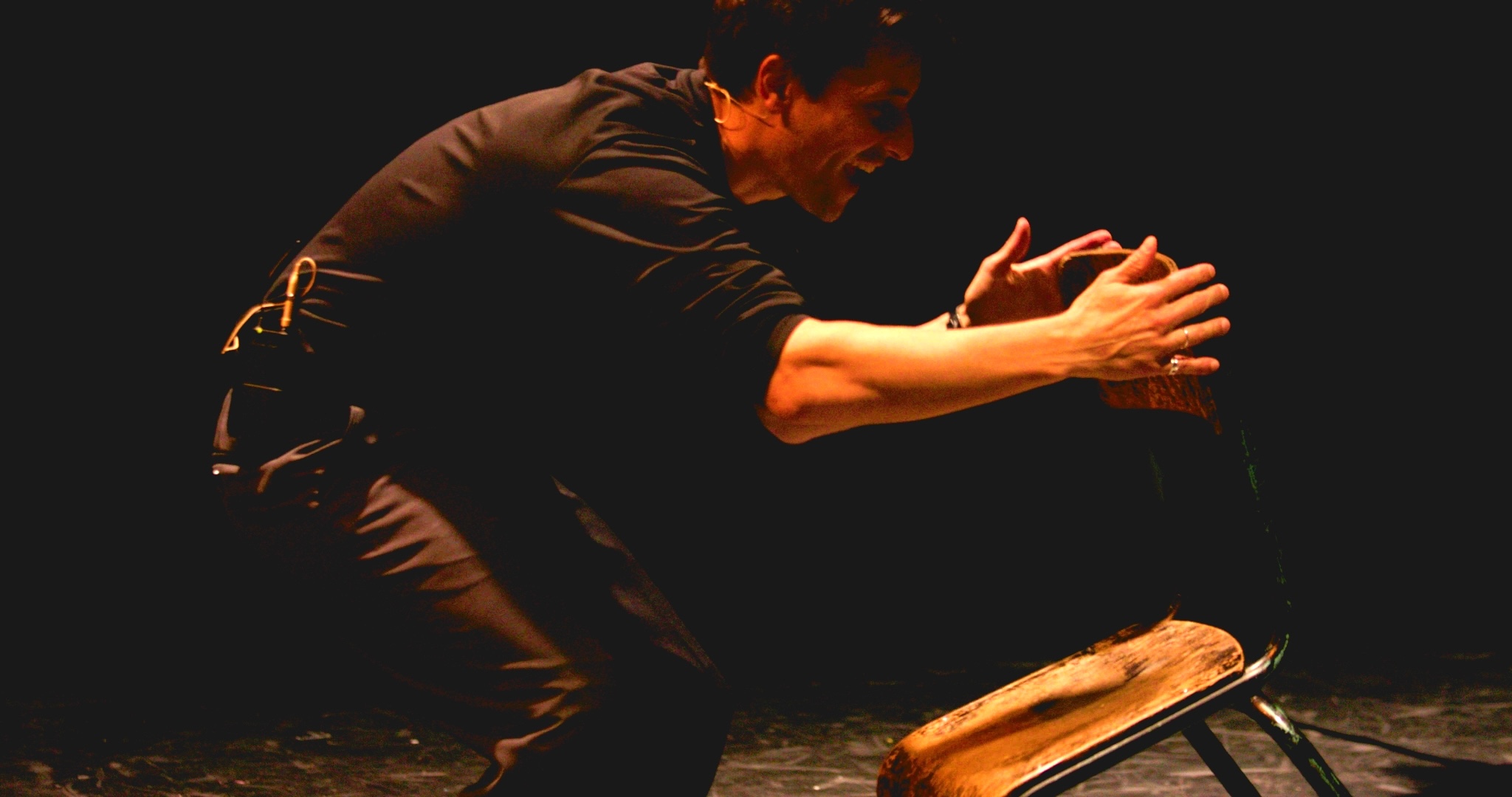
And then they begin. A chair, at first simply functional, changes before our eyes, becoming a child and then a father. The mood switches, initially light and amusing, then emotionally charged. The intensity swells with the music; the lighting focuses our attention one way and another. There is dialogue but it’s in French, so – for me, at least, with my school level knowledge of the language – it’s more about tone and tenor than it is about the words.

There’s no denying how skilful these theatre-makers are: the performances are incredibly precise and absorbing, and it’s fascinating to see what they can do with a bare stage, no costumes and one prop. However, it feels more like a demonstration than a play; it’s an exemplar of how to develop a piece of drama but the final scene – the culmination of the process – is too brief to be satisfying.

Moments would work well as an introduction to a drama workshop for A level, Higher or Uni students. It’s a dynamic and engaging piece of work that would surely appeal to anyone interested in learning about the process of making theatre.

3 stars

Susan Singfield

A Real Pain

12/01/25

Cineworld, Edinburgh

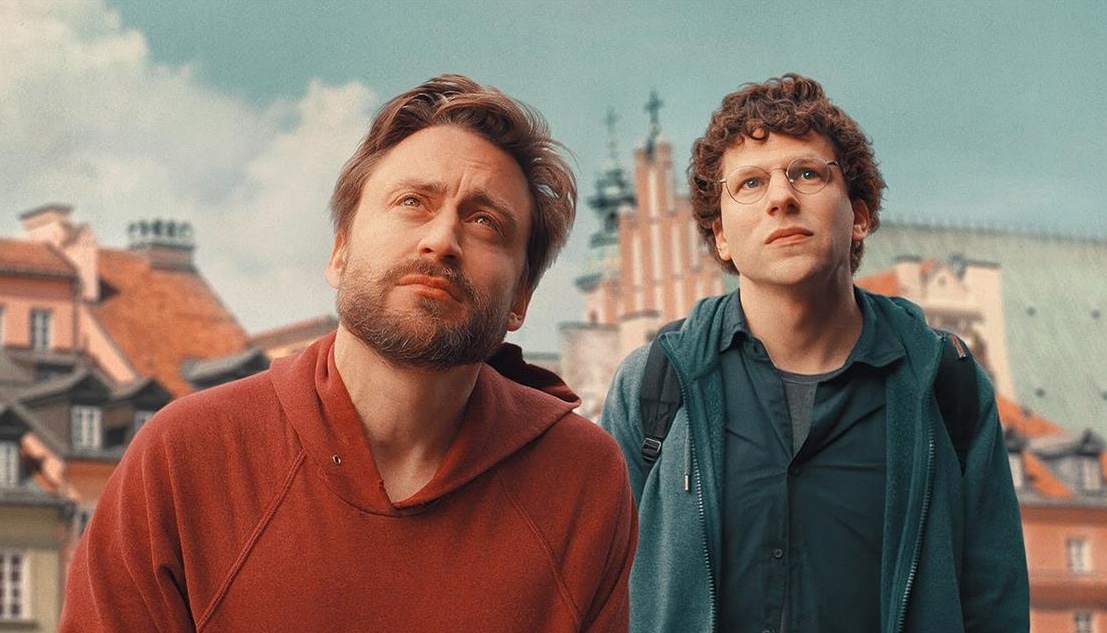
On paper, it sounds like a terrible idea: a comedy about chalk-and-cheese Jewish cousins on a tourist trip to a concentration camp. I’m sorry, what? But Jesse Eisenberg’s script successfully navigates the many potential pitfalls, and A Real Pain emerges as a thoughtful exploration of how we try to make sense of the horrors of recent history, expertly leavened by the mismatched buddy lols.

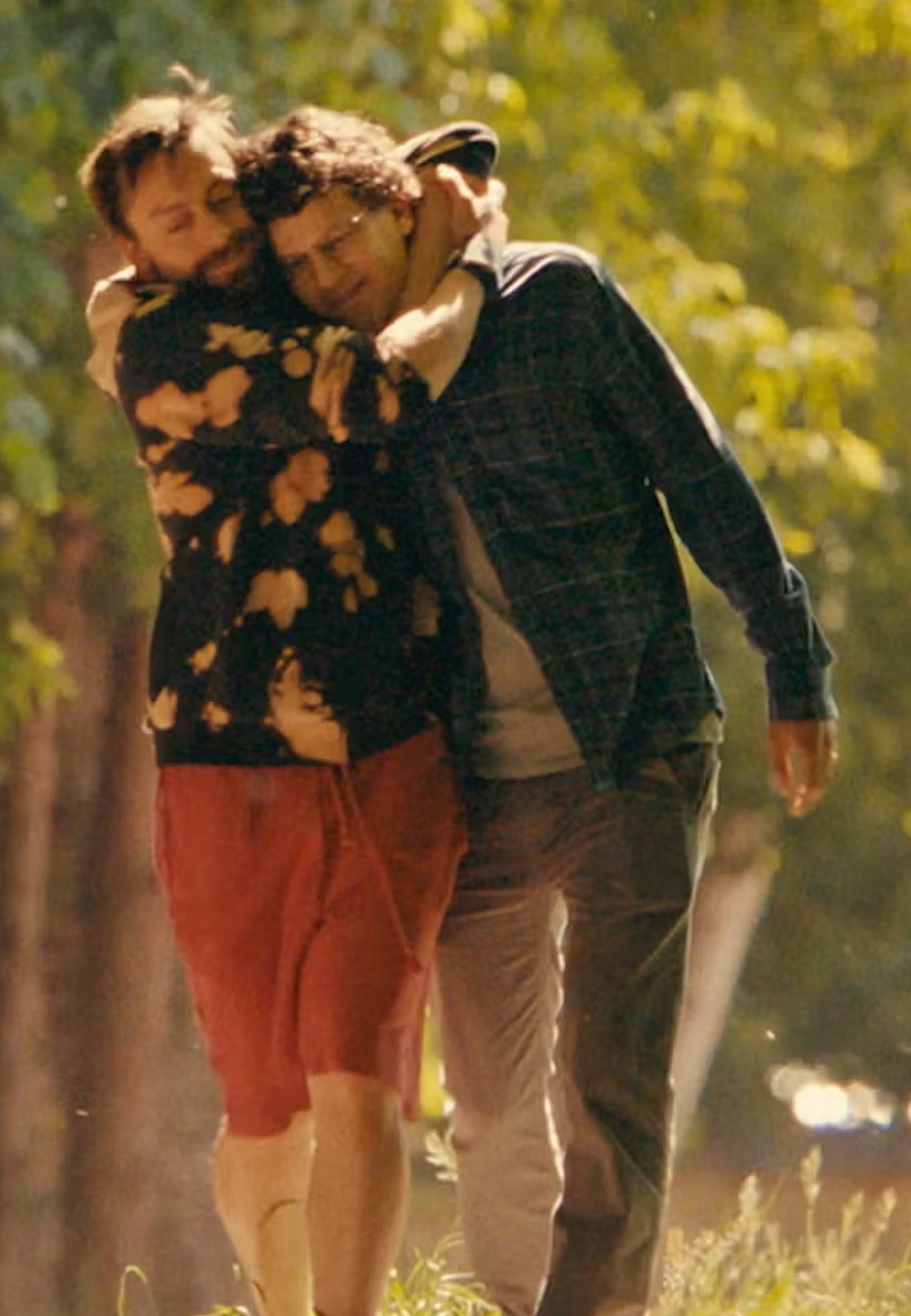
This is very much Eisenberg’s project: he also directs and co-stars as David, the uptight, neurotic half of the central pair. Kieran Culkin is Benji, the cousin he was inseparable from when they were young. Their backstory emerges through the dialogue: as they approach forty, we learn, David doesn’t want to hang out with Benji like he used to. He’s moved to NYC, where he has a wife, a child and a career to focus on. Benji, on the other hand, has yet to find his groove. Sure, he’s funny, charming and very popular, but he’s also living in his parents’ basement, depressed, without a steady job. Their paths rarely cross. But then their beloved Grandmother Dory dies, leaving money in her will for the two of them to travel to Poland, to see the house where she grew up and the camp that she survived. It feels like a canny final plan, to reunite her grandsons while also honouring the past.

It helps, of course, that Eisenberg and Culkin are both such strong actors, easily securing the audience’s sympathy. Culkin in particular shines here in the showier role, Benji’s vulnerability writ large, despite his devil-may-care attitude. Even as he’s selfishly appropriating the window seat – again – or disrupting a whole train carriage with a tantrum, it’s impossible not to feel protective of him, the carapace he’s constructed so obviously fragile. Eisenberg provides the comedic foil; he’s the helpless observer apologising for his cousin’s outbursts, blinking with embarrassment as Benji transgresses social mores.

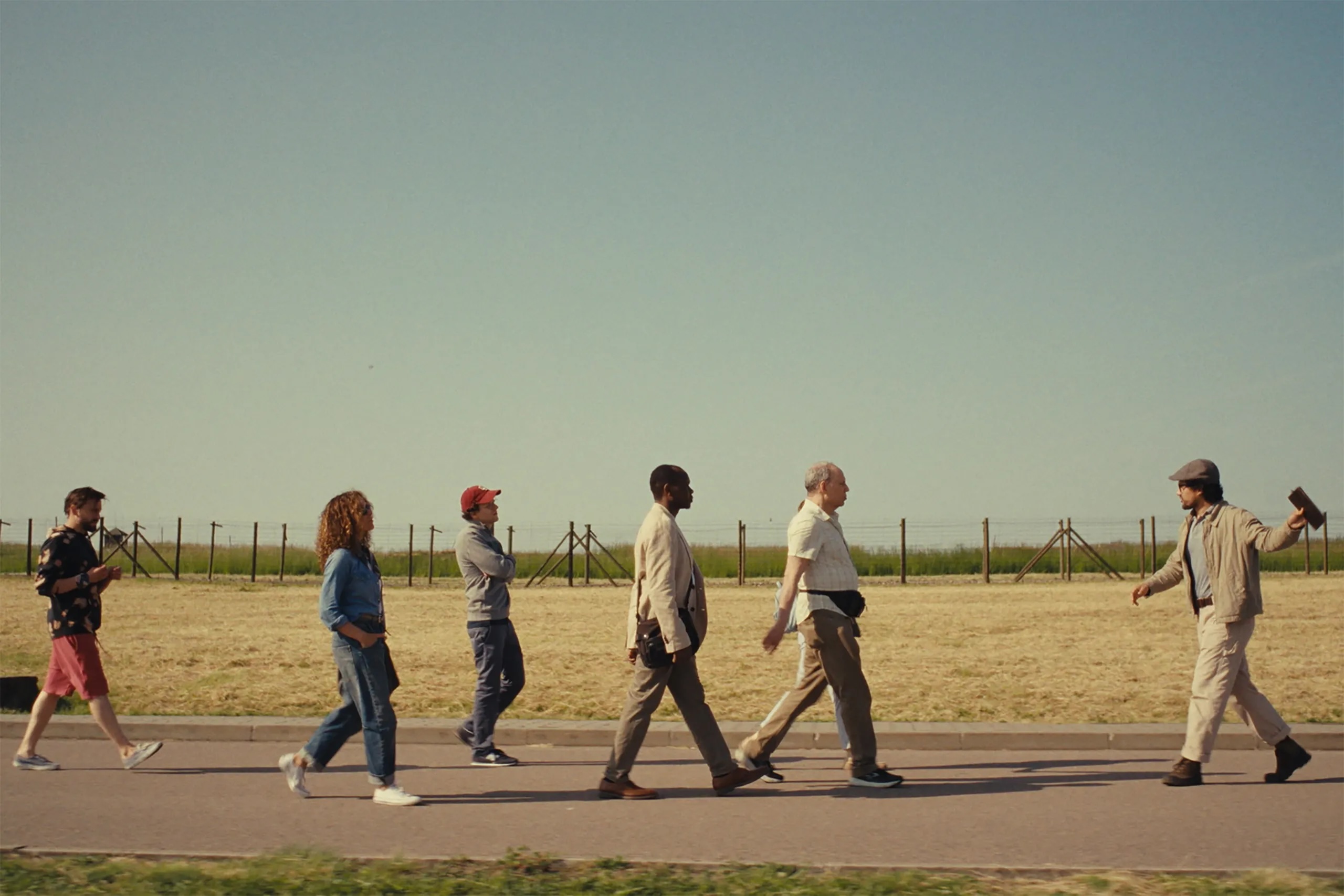
The supporting cast are also well-drawn, a convincing mix of characters, contentedly muddling along. British tour guide James (Will Sharpe) is an affable chap. He’s not Jewish but he is an Oxford graduate with a detailed knowledge of Polish history. The two solo travellers are Marcia (Jennifer Grey), a recently-divorced woman in her early sixties, and Eloge (Kurt Egyiawan), a survivor of the Rwandan genocide who has emigrated to the USA and converted to Judaism. Married couple Mark and Diane (Daniel Oreskes and Liza Sadovy) complete the group; like David and Benji, they’re visiting Lublin because it’s where their family comes from – and where many of them were killed.

The scenes in the Majdanek concentration camp are very moving. Eisenberg sensibly eschews any directorial flourishes here: there’s no music, no flashbacks, no fancy editing tricks. The bare walls speak for themselves, atrocities literally etched onto them in the blue stains left by poison gas. The tour group moves through in silence; their return bus journey passes quietly too, as they reflect on what they’ve seen – and what it means. Later, smoking a joint on the hotel roof, David points out three lights. “That’s the camp,” he says. “It’s so close” – a perfect example of the understated poignancy that makes the movie work so well.

A Real Pain is a clever film, a tight ninety minutes of carefully-structured storytelling, with never a dull moment. Eisenberg straddles the line between respect and irreverence, gently mocking people’s reactions without ever trivialising the Holocaust. It’s no mean feat to create such a heartwarming, thought-provoking tragicomedy.

4.4 stars

Susan Singfield