Oscar Wilde

The Importance of Being Earnest: NT Live

20/02/25

Dominion Cinema, Edinburgh

Despite having lived a mere thirty-minute walk from Morningside’s Dominion Cinema for the past decade, we’ve somehow failed to set foot inside – and we dare to call ourselves cinephiles! So tonight’s NT Live screening of The Importance of Being Earnest is extra exciting for us, as it’s also an opportunity to explore a new venue.

So let’s begin with that. The Dominion is undeniably boojie; indeed, it’s the fanciest cinema either of us has ever graced. The design is art deco (think flocked wallpaper, geometric shapes and a colour palette of gold, red and black); our seat is a super-comfy reclining sofa, with privacy screens and side tables. We pour our drinks (sparkling water and alcohol-free lager, since you ask) and sit back, feet up, more than ready to enjoy ourselves in these opulent surroundings.

I’ve seen, read and taught this play so many times that I know it almost by heart, but that’s not to its detriment. After all, the script is so packed with recognisable aphorisms that few in the audience are likely to be surprised by what is said; with Earnest, it’s all in the delivery.

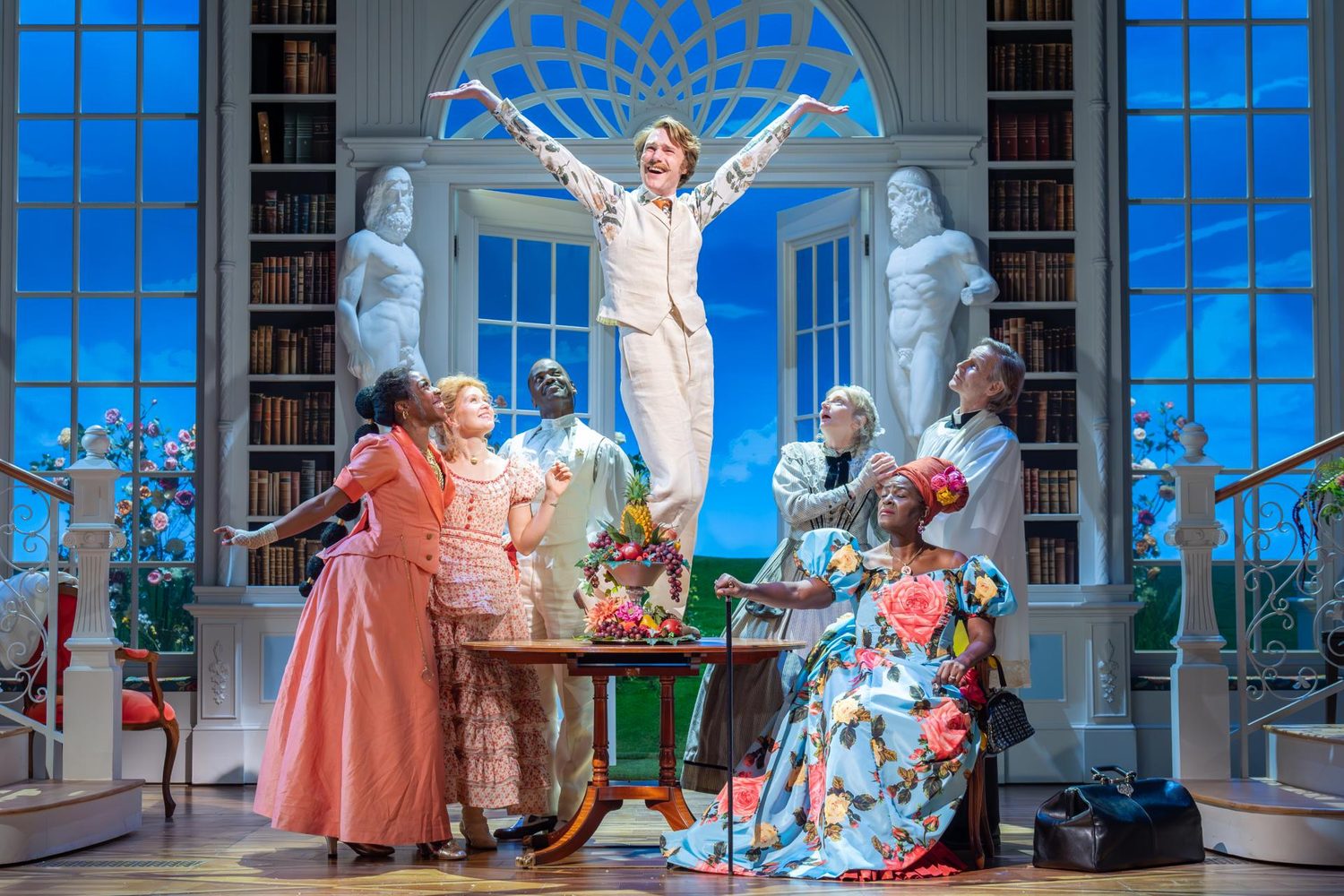
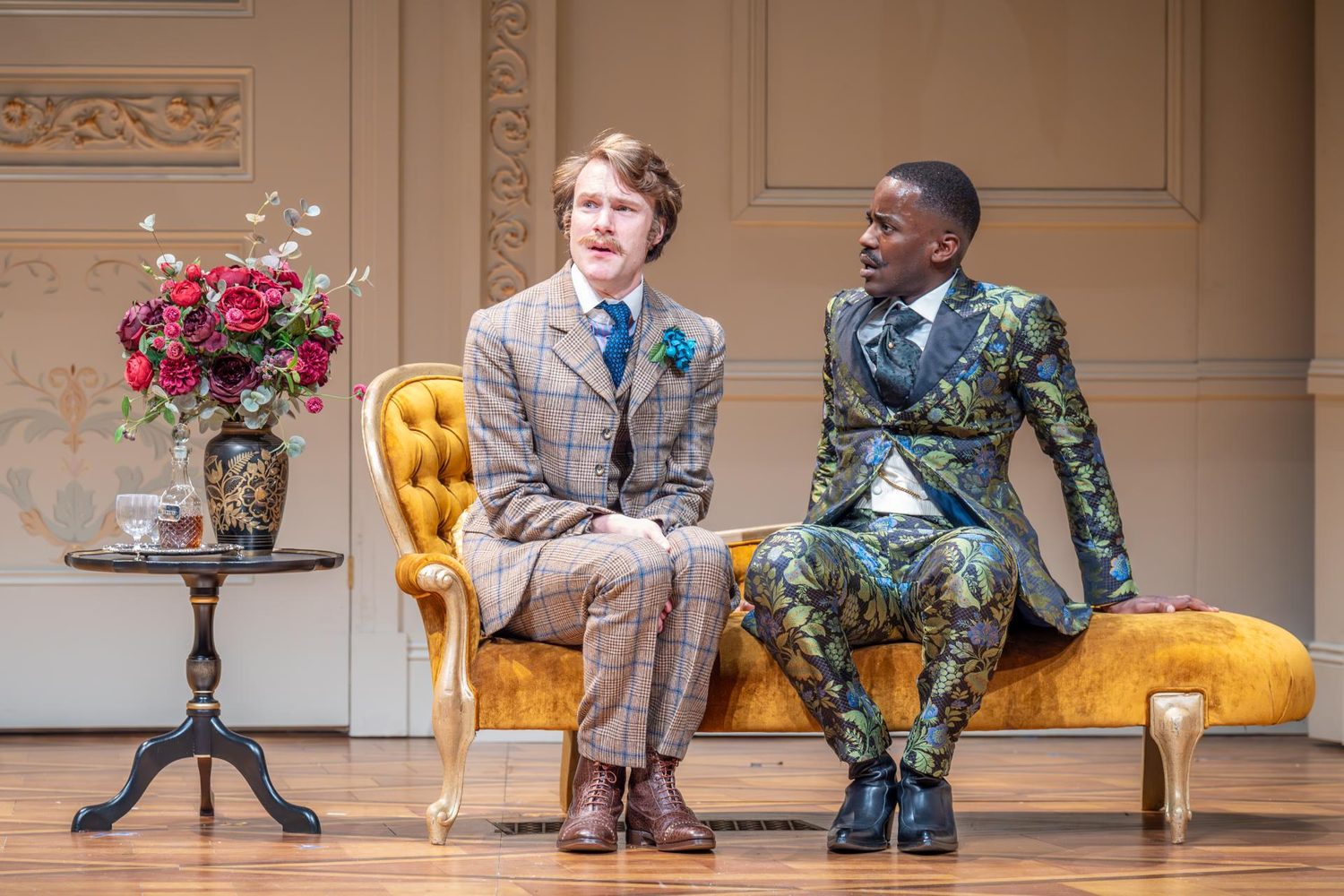
And what delivery it is! Directed by Max Webster, this is an overt celebration of queerness, Wilde’s subtext amplified to the nth degree. From the opening number, where Algernon (Ncuti Gatwa) shimmers in pink-sequinned drag, to the exuberant Mardi Gras-style finale, the closet door is flung wide open, making for a fabulously unsubtle show. To quote the wild wit himself, “moderation is a fatal thing; nothing succeeds like excess.” Webster has certainly taken this to heart.

The plot – for those who need a reminder – is at once frivolous and deadly serious. On the surface, it’s a frothy farce, all mistaken identity and foolish foppery. Underneath, it’s about repression – about the lengths people are forced to go to when their very natures are outlawed. Unbeknownst to each other, both Algernon and his best friend, Jack (Hugh Skinner), have found inventive ways to circumvent society’s disapproval of their predilections. Algernon has a pretend-friend, Bunbury, whose ill health Algy uses to excuse himself from dreary social events, while Jack has an alter-ego – an imaginary older brother called Ernest – who gets into mischief whenever he visits the city.

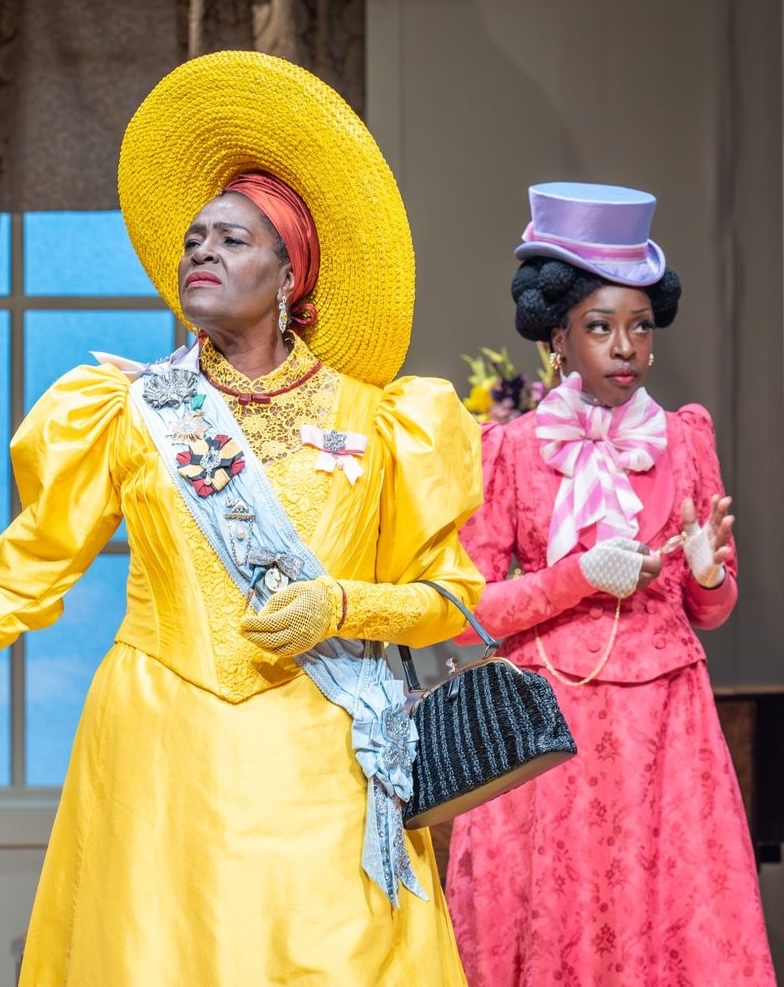
But things become complicated when Jack falls in love with Algy’s cousin, Gwendolen (Ronke Adekoluejo), whose mother, Lady Bracknell (Sharon D Clark), is far from pleased about the match. In desperation, Jack confesses his lies to Algy – who, true to form, responds by assuming Ernest’s identity for himself, and heading off to Jack’s country house to woo his pretty young ward, Cecily (Eliza Scanlen). Throw in a conflicted clergyman (Richard Cant), a dithering governess (Amanda Lawrence) and a couple of manservants (both played by Julian Bleach), and the scene is set for some merry mayhem.

The multi-racial casting within a period drama (courtesy of Alastair Coomer and Chloe Blake) gives the piece a contemporary edge, as do the occasional strains of recent-ish pop music and a cheeky allusion to one of London’s gay hotspots. Gatwa’s newfound fame as Dr Who also helps this production to appeal to a hip young audience, as does the sexual fluidity of the characters.

Clark’s depiction of Lady Bracknell is inspired: she brings a whole new dimension to the part, dispelling all my preconceptions of the character. Here, those oh-so-familiar lines are imbued with a haughty charm to create a formidable British-Jamaican matriarch without so much of a hint of Dench. Adekoluejo’s Gwendolen is a chip off the old block, saved from monstrousness by her cleverness and humour. In contrast, Scanlen’s Cecily is deliciously weird, a mix of doe-eyed intensity, sweetness and steel. But there are no weak links here: even Bleach, in the minor roles of Lane and Merriman, makes his mark, creating two distinct but equally absurd personae, evoking laughter with the simplest of smirks or stumbles.

More than anything, though, this is Skinner and Gatwa’s show, the focus firmly on the men’s friendship and their journey towards coming out. Their performances are jubilant and euphoric, and yet deceptively weighty, carrying with them real emotional heft. I can’t help thinking about Wilde, condemned to hard labour for his homosexuality, and wondering what he’d make of this? Surely, it would gladden his heart to see his characters finally set free.

5 stars

Susan Singfield

The Importance of Being…. Earnest?

10/08/21

The Pleasance, EICC, Edinburgh

The clue is in that question mark. Oscar Wilde’s original must be one of the best known plays of all time. But director Simon Paris has something rather different in mind. Is it possible, he wonders, to incorporate members of an audience into the play, and produce something that’s identifiable as Wilde’s creation, but with an unpredictable, spontaneous edge? And here’s the result.

It all starts recognisably enough, with Algernon (Guido Garcia Lueches) and Lane (Rhys Tees) setting up the familiar soirée and indulging in some razor-sharp banter as they go. But then we reach the point when they introduce ‘Ernest’ – and, oh no! The actor playing him has done a runner! Enter the harassed director (Josh Haberfield), who points out that there’s a live recording tonight and the show must go on at any cost. So he quickly enlists the services of a woman from the crowd to embody the central role. She’s whipped backstage, decked out in some period clothing and let loose to strut her stuff amongst the other members of the cast – which, I have to say, she does with considerable authority and to much hilarity.

Enter Lady Bracknell (Susan Hoffman), Cecily (Louise Goodfield) and Gwendolyn (Trynity Silk), who must all interact with ‘Ernest’ as best they can, but we’re just getting started. As the play progresses, the professional actors are forced to leave the stage one after another, for a whole variety of reasons. Too much alcohol? Check! A part in a Harry Potter production? Ditto! The resulting gaps are promptly filled by other members of the audience.

It’s roistering, good-natured stuff and the actors – with much help from the ever-inventive stage manager, Josh (Benn Mann) – have to work hard to cover the confusion and ensure everything makes sense. The result is fast, frenetic and farcical. Garcia Lueches enacts a brilliant sword fight – with himself – and there’s a delightful sequence where a drunken Gwendolyn staggers around the stage flailing with a metal tray at anyone who steps into range. Oscar Wilde will probably be turning in his grave, but nonetheless, this is the kind of show that exemplifies the Edinburgh Fringe and one that delivers a truly interactive experience.

There hasn’t been much to make us smile of late, so this jaunty production is particularly welcome. Come on, get down to The Pleasance EICC and be ready to do more than just watch!

4 stars

Philip Caveney

The Importance of Being Earnest

26/02/20

Bedlam Theatre, Edinburgh

We’re a little late to this because of conflicting dates in our calendar and, it must be said, that in the depths of a very chill February, Bedlam Theatre is not a venue for the faint-hearted. But, suitably wrapped up in layers of winter clothing, we soon discover that this is a production worth braving the elements for.

The Importance of Being Earnest is probably Oscar Wilde’s funniest play. It’s certainly his most quotable effort, fairly bristling with those witty, erudite one-liners that he’s justifiably acclaimed for. It marked the climax of his career – at the opening night in 1895, Wilde was presented with that infamous bouquet by the Marquess of Queensberry, and the rest is tragedy.

The play is, of course, mostly about the titular character, who is Jack in the city and Ernest in the country, largely because he’s an orphan who was discovered, as a baby, in the left luggage department of Victoria station. In a handbag. (A handbag?). He’s played here by Gordon Stackhouse, with just the right amount of angel-faced insouciance, delivering a deadpan double-act with his best friend, Algernon (Fergus Head – last seen by B&B in the thought-provoking, Education, Education, Education).

Ernest/Jack is wildly in love with Algernon’s cousin, Gwendolyn (Aine Higgins), but must first convince her overbearing mother, Lady Bracknell (Ishbell McLachlan), that he has what it takes to be a suitable husband. Lady B is, of course, a gift for any actor and McLachlan makes the most of the opportunity, firing on all cylinders and portraying her as magnificently awful, with a voice that could stop a runaway ox in its stride.

Algernon meanwhile (who is also pretending to be Ernest – don’t ask) takes one look at Jack’s young ward, Cecily (Georgie Carey), and proposes marriage to her. How the ensuing complications are untangled is the stuff of wild(e) farce, and this jaunty three-act play virtually rockets along, coaxing much laughter from the audience along the way. It’s a student production, so the props are on the rickety side, but they’ve done wonders with what they’ve got (somebody please give these people a bigger budget!). I’m onside from the opening salvo of Smiths/Pulp/Beastie Boys tracks that precede the first act. A final scene where the cast dance gleefully along to Primal Scream’s Rocks is frankly an inspired touch.

I think Oscar would have approved.

4.2 stars

Philip Caveney


A Woman of No Importance

01/10/19

King’s Theatre, Edinburgh

We all know what to expect from a play by Oscar Wilde, right? Lots of self-satisfied characters uttering verbal witticisms and arch remarks, as they view society from their well-uphostered perches. A Woman of No Importance, first performed in 1892, ticks all the boxes. Indeed, it’s so packed with memorable lines that I occasionally feel like I’m trapped in a book of theatrical quotes.

Lady Hunstanton (Liza Goddard) is hosting a soiree at her country house, and the great and the good are gathered for the occasion. The guests include American visitor, Miss Hester Worsely (Georgia Landers), and the odious Lord Illingworth (Mark Meadows), who prides himself on his rakish qualities. But when the mysterious Mrs Abuthnot (Katy Stephens) puts in a late appearance, it’s clear that she and Illingworth have previous history.  It turns out that they share a former connection that will have serious repercussions for Mrs Arbuthnot’s son, Gerald (Tim Gibson). He has just been offered the role of Lord Illingworth’s private secretary. Awkward.

This is a lavishly mounted production, but not everything works as well as it might. The decision to have elaborate scene changes covered by comic ditties by veteran performer Roy Hudd, in the role of Reverend Daubeny, seems to have been drafted in from an entirely different kind of production. It doesn’t help that I struggle to hear the lyrics of old favourites like Pretty Little Polly Perkins from Paddington Green – but, more importantly, these interludes seem to have nothing in common with the rest of the show. (I can almost imagine Oscar wincing in the wings as the songs unfold).

Despite this misstep, there are some strong performances here: Goddard is a delight as the endearingly forgetful Lady Hunstanton and Meadows entirely convincing as a thoroughly bad egg in dire need of a slapped face. Isla Blair is delightfully deadpan as the acid-tongued Lady Caroline Pontefract and Emma Amos excels as the rebellious Mrs Allenby.

The play itself is a bit of a mixed bag. Its heart is clearly in the right place and its defence of the inequalities of womanhood must have seemed positively groundbreaking when it was first performed – but there’s a prospensity too for over-sentimentality. Wilde’s evident belief that America was an innocent new world, where old indiscretions could be shrugged off and where promising new horizons beckoned, now feels ridiculously optimistic – but, of course, Oscar had his own reasons for hating his homeland’s interpretation of ‘morality’.

Fans of Mr Wilde – and there are many of them – should have a field day with this.

3.8 stars

Philip Caveney