01/10/26
Assembly Roxy (Upstairs), Edinburgh
Sarah Ruhl’s 2003 play reimagines Virgil’s Orpheus and Eurydice, centring the latter and relegating her lover to a supporting role. But this feminist retelling is a paradoxical one. Sure, the story is told from the heroine’s point of view; however, I don’t think the choice between three competing versions of male authority quite cuts it as real agency.
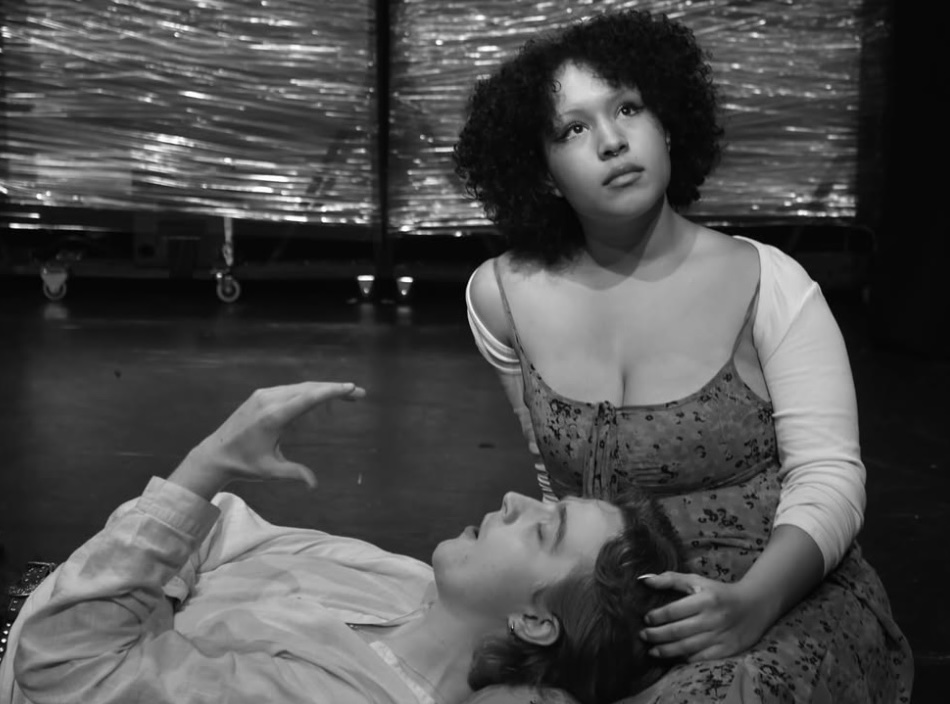
In this version, young lovers Eurydice (Erin Jederon-Hogg) and Orpheus (Shaun Hamilton) are immature and impetuous, carried away by romance and fantasy. They’re not especially well-suited: he’s airy, his head full of whimsy and song; she’s livelier, earthier; she likes to swim, dance and read. Nonetheless, they decide to marry.
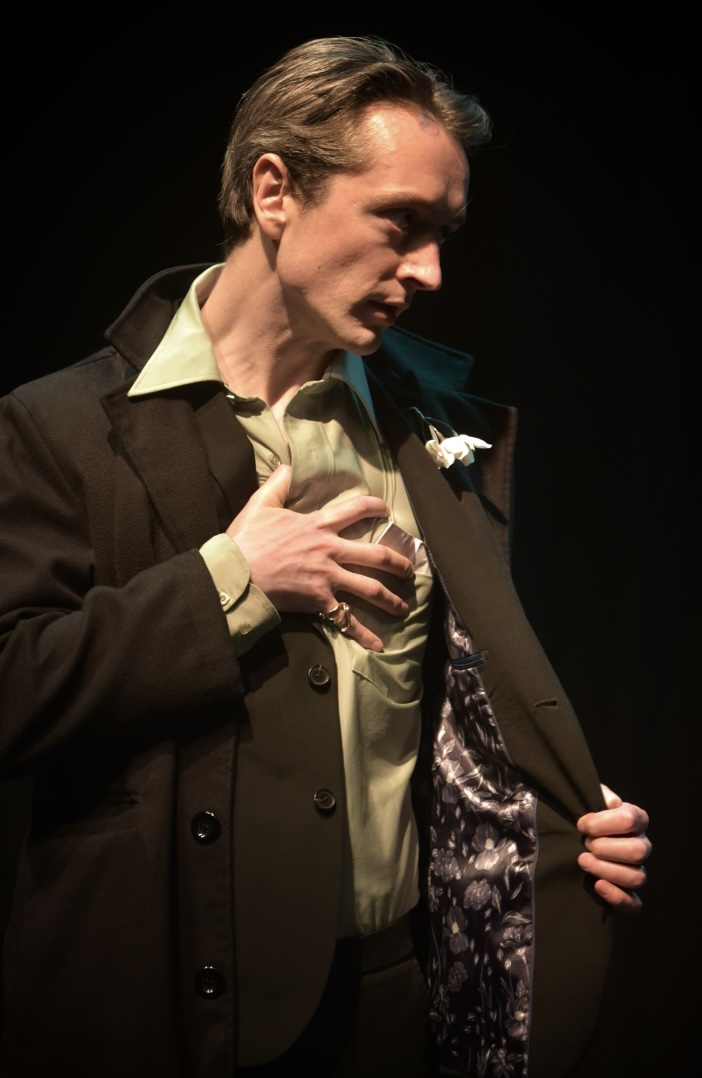
Eurydice’s late father (John Beattie) is watching from beyond the grave, desperate to communicate with his daughter, to pass on parental advice. He writes her a letter and gives it to a worm, hoping it will somehow make its way to her. But a Nasty Interesting Man (Jimmy Kavanagh) intercepts the note, using it to entice Eurydice away from her wedding and to her death, to the Underworld where he presides…
Orpheus is devastated; Eurydice not so much. Of course, death is confusing at first. She’s bathed in the Waters of Lethe, so she can’t remember anything, not even how to speak. Once she reconnects with her father, however, things start to come back, and they’re happy together in their room of string, rebuilding their relationship.
But both Orpheus and the Nasty Interesting Man want to claim Eurydice as their own. Which of the three men will she choose?
Any issues I have with Eurydice are with the script, not Gutter.’s first-rate production. Jederon-Hogg and Kavanagh excel in the showiest roles, the former captivating as the lead, shining with youthful exuberance in the early scenes before recoiling uneasily from the INM’s creepy attempts at seduction. Kavanagh plays the INM with evident relish, his gaze eerily intense, his enunciation horribly slow and precise. He imbues this absurd version of Hades with real menace, even while dragging a small red tricycle behind him. The INM grows downwards, he says, and changes abruptly from toddler to playboy. Meanwhile, Hamilton and Beattie competently deliver the more understated performances their characters call for, Hamilton offering a palpable sense of loss and bewilderment, while Beattie provides a core of gentle stability.
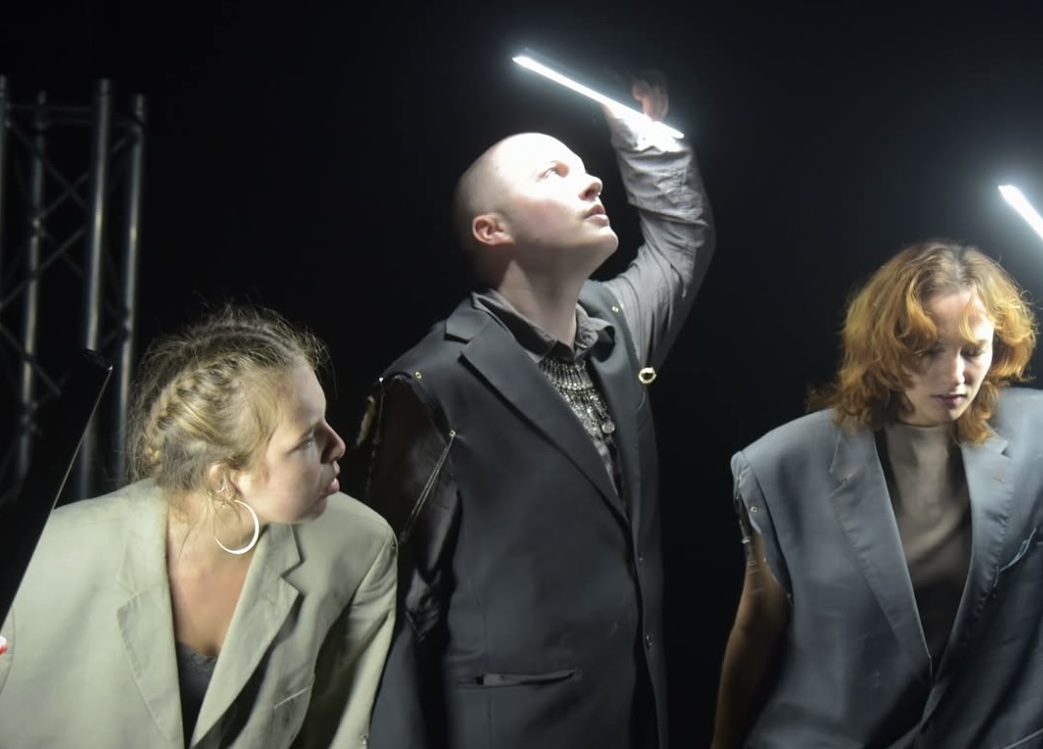
The stones are my favourites though. Amelie Berry (Loud Stone), Aodhán Mallon (Big Stone) and Lisa Gilham (Little Stone) form a hilarious Greek chorus, whinging and whining in perfect unison, like bored children given too much responsibility.
The design of this piece belies its shoestring budget. The set (by Iris Ollier and Lydia Miller) makes ingenious use of cellophane, string and bent wire, while the costumes (by Eliza Beecroft) are bold and evocative. I especially like the over-sized suits worn by the stones; ragged, sleeveless and threaded with bits of old jewellery, they have a curious jarring effect.
Could there be more actual music in the play, especially when Orpheus is onstage? It would certainly help if we were shown how musical he is, rather than merely told. That aside, co-directors Jane Morgan and Rue Richardson have done a sterling job. This is a pacy, compelling production and the ninety-minute running time seems to fly by.
4 stars
Susan Singfield