Max Webster

The Importance of Being Earnest: NT Live

20/02/25

Dominion Cinema, Edinburgh

Despite having lived a mere thirty-minute walk from Morningside’s Dominion Cinema for the past decade, we’ve somehow failed to set foot inside – and we dare to call ourselves cinephiles! So tonight’s NT Live screening of The Importance of Being Earnest is extra exciting for us, as it’s also an opportunity to explore a new venue.

So let’s begin with that. The Dominion is undeniably boojie; indeed, it’s the fanciest cinema either of us has ever graced. The design is art deco (think flocked wallpaper, geometric shapes and a colour palette of gold, red and black); our seat is a super-comfy reclining sofa, with privacy screens and side tables. We pour our drinks (sparkling water and alcohol-free lager, since you ask) and sit back, feet up, more than ready to enjoy ourselves in these opulent surroundings.

I’ve seen, read and taught this play so many times that I know it almost by heart, but that’s not to its detriment. After all, the script is so packed with recognisable aphorisms that few in the audience are likely to be surprised by what is said; with Earnest, it’s all in the delivery.

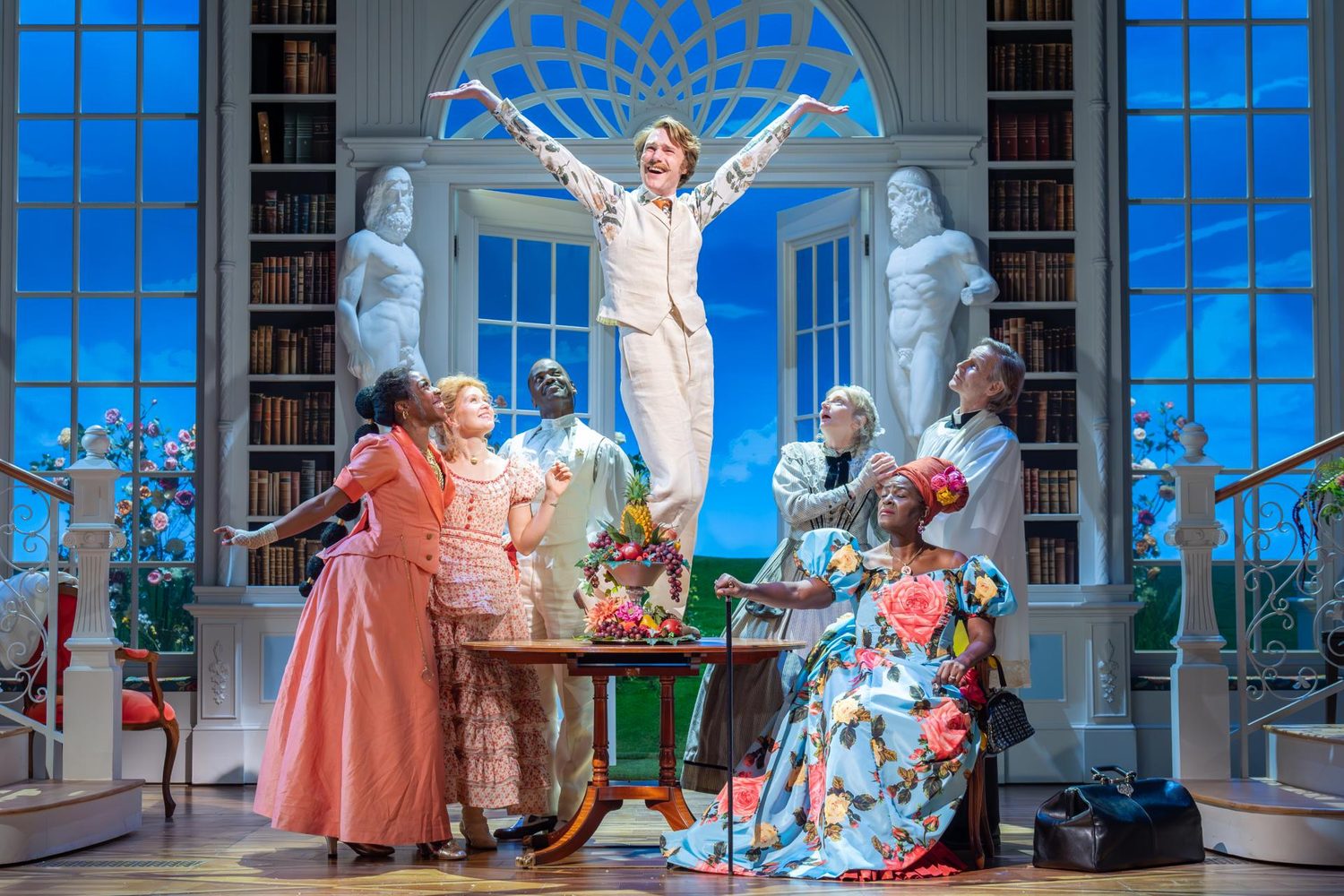
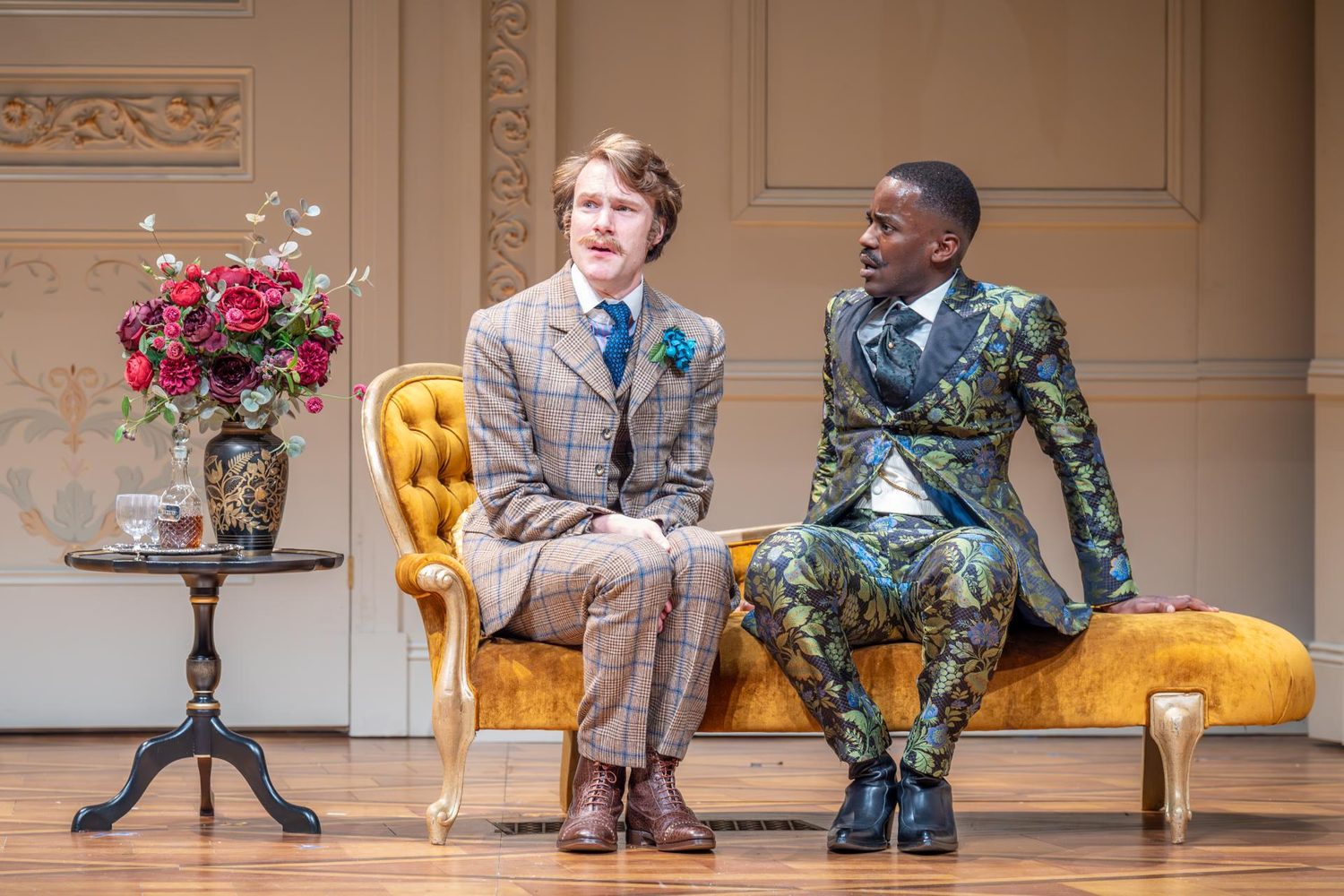
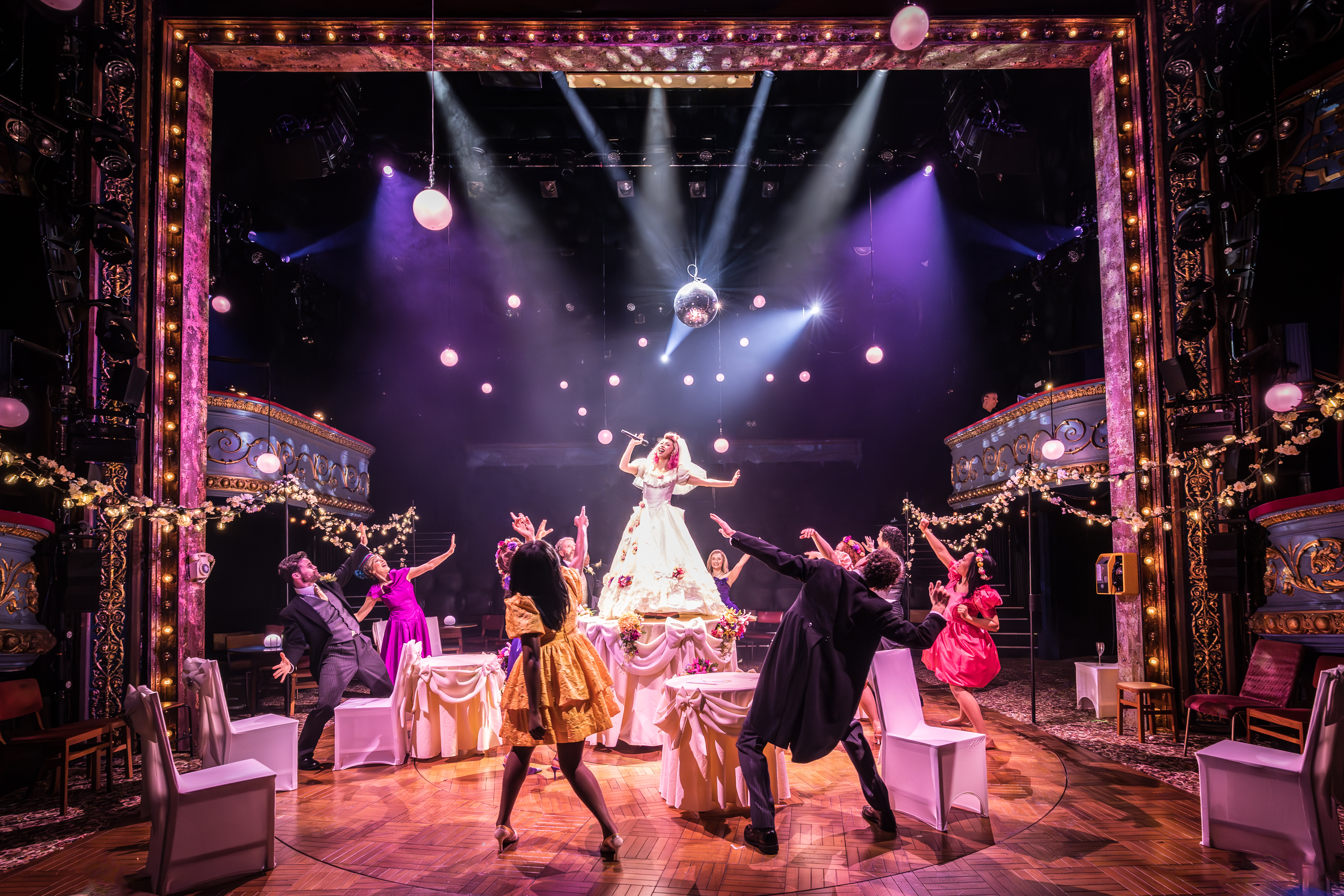
And what delivery it is! Directed by Max Webster, this is an overt celebration of queerness, Wilde’s subtext amplified to the nth degree. From the opening number, where Algernon (Ncuti Gatwa) shimmers in pink-sequinned drag, to the exuberant Mardi Gras-style finale, the closet door is flung wide open, making for a fabulously unsubtle show. To quote the wild wit himself, “moderation is a fatal thing; nothing succeeds like excess.” Webster has certainly taken this to heart.

The plot – for those who need a reminder – is at once frivolous and deadly serious. On the surface, it’s a frothy farce, all mistaken identity and foolish foppery. Underneath, it’s about repression – about the lengths people are forced to go to when their very natures are outlawed. Unbeknownst to each other, both Algernon and his best friend, Jack (Hugh Skinner), have found inventive ways to circumvent society’s disapproval of their predilections. Algernon has a pretend-friend, Bunbury, whose ill health Algy uses to excuse himself from dreary social events, while Jack has an alter-ego – an imaginary older brother called Ernest – who gets into mischief whenever he visits the city.

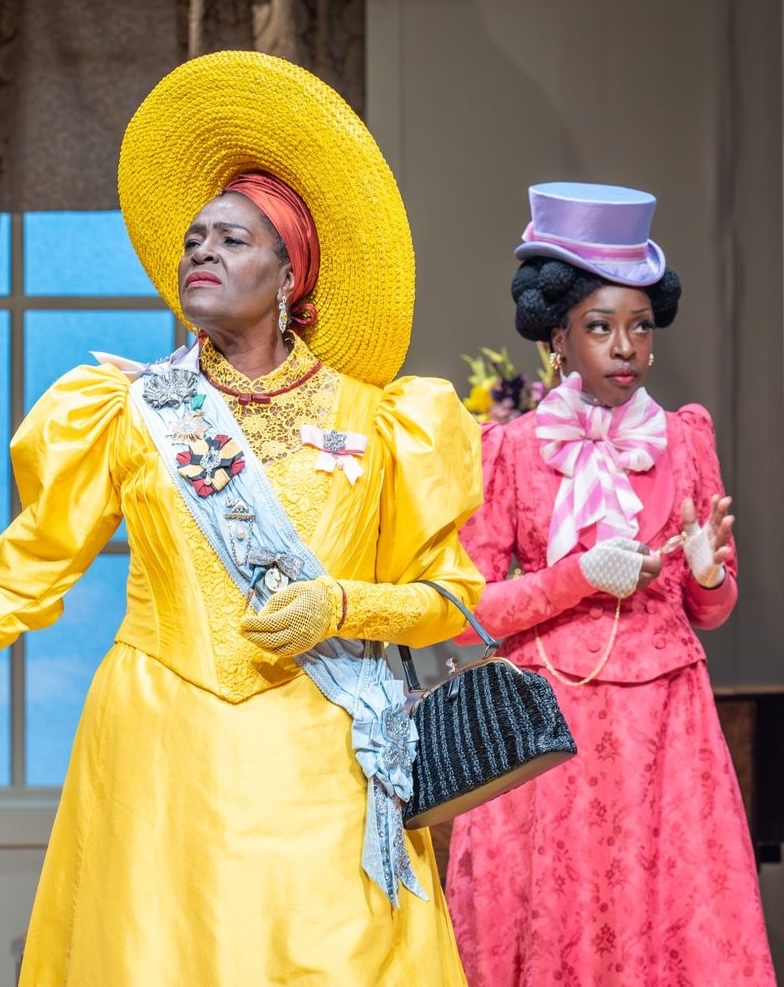
But things become complicated when Jack falls in love with Algy’s cousin, Gwendolen (Ronke Adekoluejo), whose mother, Lady Bracknell (Sharon D Clark), is far from pleased about the match. In desperation, Jack confesses his lies to Algy – who, true to form, responds by assuming Ernest’s identity for himself, and heading off to Jack’s country house to woo his pretty young ward, Cecily (Eliza Scanlen). Throw in a conflicted clergyman (Richard Cant), a dithering governess (Amanda Lawrence) and a couple of manservants (both played by Julian Bleach), and the scene is set for some merry mayhem.

The multi-racial casting within a period drama (courtesy of Alastair Coomer and Chloe Blake) gives the piece a contemporary edge, as do the occasional strains of recent-ish pop music and a cheeky allusion to one of London’s gay hotspots. Gatwa’s newfound fame as Dr Who also helps this production to appeal to a hip young audience, as does the sexual fluidity of the characters.

Clark’s depiction of Lady Bracknell is inspired: she brings a whole new dimension to the part, dispelling all my preconceptions of the character. Here, those oh-so-familiar lines are imbued with a haughty charm to create a formidable British-Jamaican matriarch without so much of a hint of Dench. Adekoluejo’s Gwendolen is a chip off the old block, saved from monstrousness by her cleverness and humour. In contrast, Scanlen’s Cecily is deliciously weird, a mix of doe-eyed intensity, sweetness and steel. But there are no weak links here: even Bleach, in the minor roles of Lane and Merriman, makes his mark, creating two distinct but equally absurd personae, evoking laughter with the simplest of smirks or stumbles.

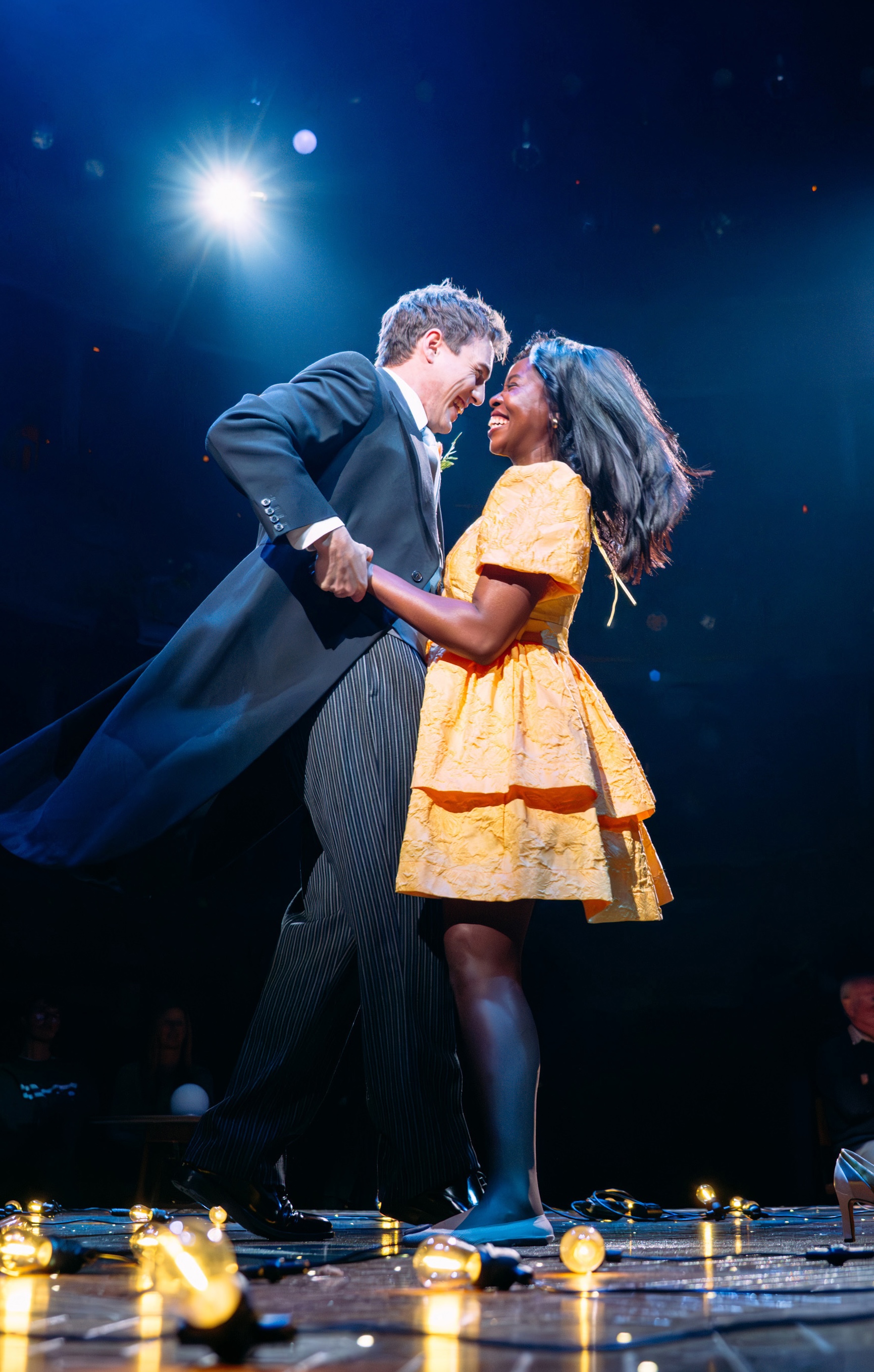
More than anything, though, this is Skinner and Gatwa’s show, the focus firmly on the men’s friendship and their journey towards coming out. Their performances are jubilant and euphoric, and yet deceptively weighty, carrying with them real emotional heft. I can’t help thinking about Wilde, condemned to hard labour for his homosexuality, and wondering what he’d make of this? Surely, it would gladden his heart to see his characters finally set free.

5 stars

Susan Singfield

Macbeth

05/02/25

Cineworld, Edinburgh

Macbeth is a ubiquitous play. Searching back through the B&B archive, I’m not entirely surprised to find that this is the ninth time we’ve reviewed a version of Shakespeare’s celebrated tragedy and I note too that there are three other related items that reference that infamous surname in the title. It’s easy to understand why it’s such a perennial. One of the bard’s most propulsive stories, it’s a lean, mean tale of aspiration and the overriding lust for power, which – in these troubled times – seems all too relevant. This Olivier-award winning adaptation, filmed live at London’s Donmar Warehouse, features David Tennant in the title role with Cush Jumbo as the manipulative Lady M. The screening we attend is sold out.

It’s a stripped-back production, freed from any issues with costuming or elaborate set design. The actors wear simple, monochrome outfits and the performance space is a stark white rectangular dais. It’s set in front of a transparent screened box, behind which other members of the cast occasionally gather, like a chorus of half-glimpsed ghosts, to comment on the action. Prominent among them is a young boy, who at one point hammers his fist repeatedly against the screen and also reappears in the midst of the final battle. His presence serves to remind me that the Macbeths have earlier lost a child – and that perhaps it is this loss that’s the driving force behind their callous bid to seize the throne and betray their former friends.

Tennant is extraordinary, speaking those familiar lines (often direct to camera, as though sharing confidential material) with such utter authority that I almost feel I’m hearing them for the first time. Jumbo is also compelling. She’s the only one here without a Scottish accent, which seems to emphasise her solitude and her distance from the other characters. Cal McCaninch is a stately Banquo, Nouff Ousellam smoulders powerfully as Macduff and it’s a delight to hear Benny Young’s cultured drawl delivering Duncan’s self-satisfied lines as he arrives at the castle where he is destined to die.

Ros Watt is a delightfully punky Malcolm and Jatinga Singh Randawa offers a rambunctious turn as the Porter. In the only scene that takes a wild swing away from what’s actually written on the page, the latter chats to members of the audience and displays all the symptoms of a man suffering from a raging hangover. It’s a gamble but it pays off. And the witches? In what might be the production’s bravest move, they are barely glimpsed in the first act, only heard in giggling off-stage asides as they arrive and depart with a flap of supernatural wings.

Gareth Fry’s sound design adds extra layers of suspense to the production (I note that the audience at the live performance all wear headphones for a truly immersive experience), while Alistair McCrae’s music offers jaunty reels, Celtic airs and, at one point, a spirited highland fling as a brief respite from that all-pervading air of menace. Director Max Webster brings all these disparate elements together to create a powerful and absorbing drama that dares to experiment with the source material. And, at the conclusion, designer Roanna Vize really does – magically – bring Birnam Wood to Dunsinane. 

The final confrontation doesn’t leave me wanting and the face-off between Macbeth and Macduff is unlike any version I’ve seen before. Of course, the only valid reason for doing this immortal story one more time is to offer audiences something new – an aim that this extraordinary production has clearly taken to its dark heart.

5 stars

Philip Caveney

Life of Pi

31/03/23

Cineworld, Edinburgh

Yann Martel’s novel, Life of Pi, was published in 2001 and won the Booker Prize the following year. In 2012, it was adapted into an impressive film, directed by Ang Lee. Of course, the inevitable next step was to adapt it for the stage, but that’s a very tall order. Would it be possible to convincingly present such a fantastical story in a theatre? Well, never underestimate what can be achieved with a suitable budget and state-of-the-art special effects. This version, beamed direct from London’s Wyndham Theatre as part of the NT Live season, is absolutely eye-popping.

The play opens in a hospital ward in Mexico, where our eponymous hero is being interviewed about his extraordinary survival in an open boat for 227 days, but his recollections are suddenly punctuated by a scene change so slick, I barely notice it happening, – until it has. 

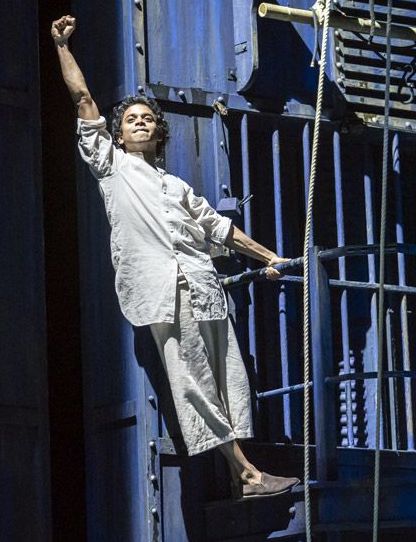
It’s the 1960s and Piscine Molitor Patel (Hiran Abeysekera) lives in Pondicherry, India. Named after a swimming pool in France, he prefers his adopted nickname ‘Pi.’ His parents run a small zoo and Pi and his sister spend much of their time looking after the animals – including the latest arrival, a fierce Siberian tiger called Richard Parker.

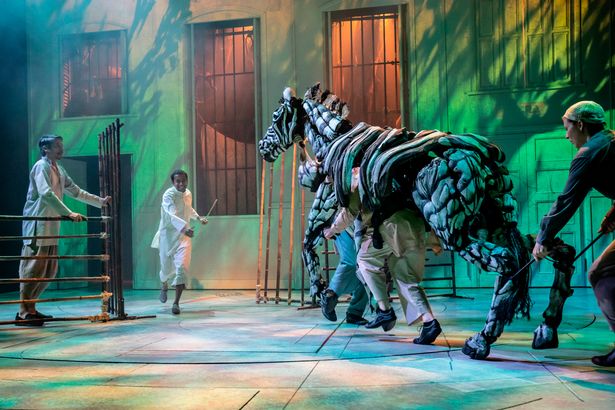
And now it’s 1976 and, due to violent political unrest, Pi’s parents have decided to relocate their animals to a zoo in Canada. Pi, his family and all the animals board the Japanese freighter Tsintsum, and set off on a sea voyage. What could possibly go wrong? Well, plenty, as it happens. Pi ends up stranded in a lifeboat with only a zebra, a hyena, an orangutan and er… Richard Parker for company. 

Which is awkward, to say the very least.

To give him his due, Abeysekara offers an extraordinary performance in the lead role but, as you might expect, his efforts and those of his fellow performers are somewhat dwarfed by the aforementioned puppetry and special effects, which are quite frankly, off the scale. 

Let’s begin with Tim Hatley’s ingenious set designs, particularly those that deal with Pi’s adventures in the fateful lifeboat tossed upon stormy seas. Raging torrents of water appear to flood across the performance space, while shoals of fluorescent fish speed along just below the surface. I even gasp out loud at one point when Pi takes a nose dive onto an apparently solid stage… and disappears right through it, only to resurface in an entirely different spot a moment later. How have they done that? (With trapdoors, obviously, but it’s astonishing nevertheless.)

As are the animals – or, more accurately,  the puppets, designed by Nick Barnes, which are so intricately made that I actually keep forgetting they’re mechanical, which is ridiculous because I can quite clearly see the people operating them… and yet… and yet, I still believe they’re real, which is some accomplishment. Richard Parker is, of course, la bête du jour, the very essence of feline power, even able to switch into a comedic role as a fan of haute cuisine and back to a snarling, powerful predator, but – to be fair – every creature I see, right down to the swarms of multi coloured butterflies, is an astonishing creations.

Adapted by Lolita Chakrabarti and directed by Max Webster, Life of Pi is like a magician’s box of tricks. There’s a small part of me that feels sorry for the cast of (mostly excellent) actors struggling to make themselves seen amidst all that sturm und drang, but I guess it’s just – ahem – the nature of the beast.

4.3 stars

Philip Caveney

The Winter’s Tale

14/02/17

Lyceum Theatre, Edinburgh

The Winter’s Tale is famously a play of two halves, and Max Webster’s production for the Lyceum exaggerates and develops this juxtaposition in every possible way – and the result is thrilling.

This is an modern-day version of the play: ‘Sicilia’ is now Edinburgh; ‘Bohemia’ is Fife. Although Leontes (John Michie) and Polixenes (Andy Clark) are still ostensibly ‘kings’, they are presented more as middle-class business men, rich and successful, with teams of staff assisting them. The set design helps to cement the contrasts between them: Leontes’ apartment, slightly raised and framed in black, looks exactly like the glass boxes lining Edinburgh’s Quartermile; a walled-off sound-booth reinforces this image. It’s an inspired idea: those apartments look like stage-sets anyway, their fourth walls removed to allow us to peep in. And they are sterile and hard, seemingly perfect but ultimately lacking – just like Leontes’ relationship with Hermione (Frances Grey). The pastoral scenes, on the other hand, are deliberately hokey. The fake grass is rolled out before us: there is no attempt at realism here. The props are more panto than serious Shakespeare, all bright-bunting and shopping trolleys and rickety wooden stuff. The costumes  all look hand-made, in a local am-dram kind of way. It’s hard to imagine we’re watching the same play. Polixenes  is a big fish here, but he’s in a very different kind of pond.

The contrasts are further underlined by both dialogue and acting style. While acts one, two, three and five retain Shakespeare’s original language, act four has been recast in Scots, an audacious undertaking performed with evident delight by writer James Robertson. The performances are mismatched too: whereas the Sicilian scenes are very serious and actorly, the Bohemian scenes are played for laughs, with comedic exaggeration and audience interaction; it’s beautifully done.

If I’ve a criticism of this play – and I haven’t much – it’s that the fayre goes on too long, without adding much to the plot. It is a lovely interlude, and the scene-setting is vital, but it starts to drag after a while: we want to know what happens next.

The performances here are universally strong, but Maureen Beattie’s Paulina is a definite stand-out; she imbues the character with warmth, vitality and strength. The musicians, led by composer Alasdair Macrae, deserve a mention too: their on-stage accompaniment is integral to the story-telling, and their presence adds a strange unearthliness that really elevates the play.

Do get yourself along to the Lyceum to see this: it’s really rather wonderful.

4.9 stars

Susan Singfield