28/05/26
Lyceum Theatre, Edinburgh
There are many people in the UK who look at what’s currently happening in Trump’s America and ask themselves what seems like a perfectly reasonable question:
“Why?”
Lynn Nottage’s 2015 play, Sweat, offers a compelling explanation. Set in the blue collar community of a steelworks in the fictional town of Reading, Pennsylvania, the story begins in 2008. We meet two young men, recently discharged from their respective spells in prison and here to talk to parole officer, Evan (Ako Mitchell). They are Jason (Lewis MacDougall), a sullen, introspective youth with neo-Nazi tattoos on his face – and Chris (Rudolphe Mdlonwa), who has emerged from his incarceration with utter faith in the Holy Bible and a determination to put the past behind him.
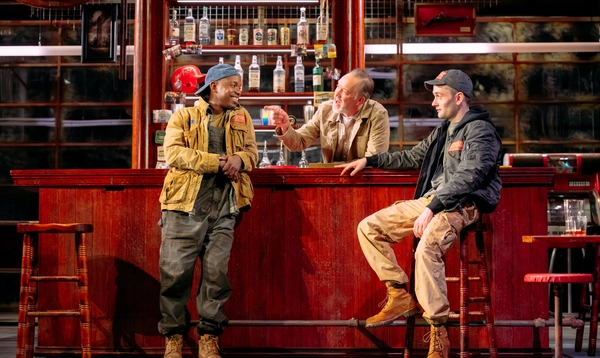
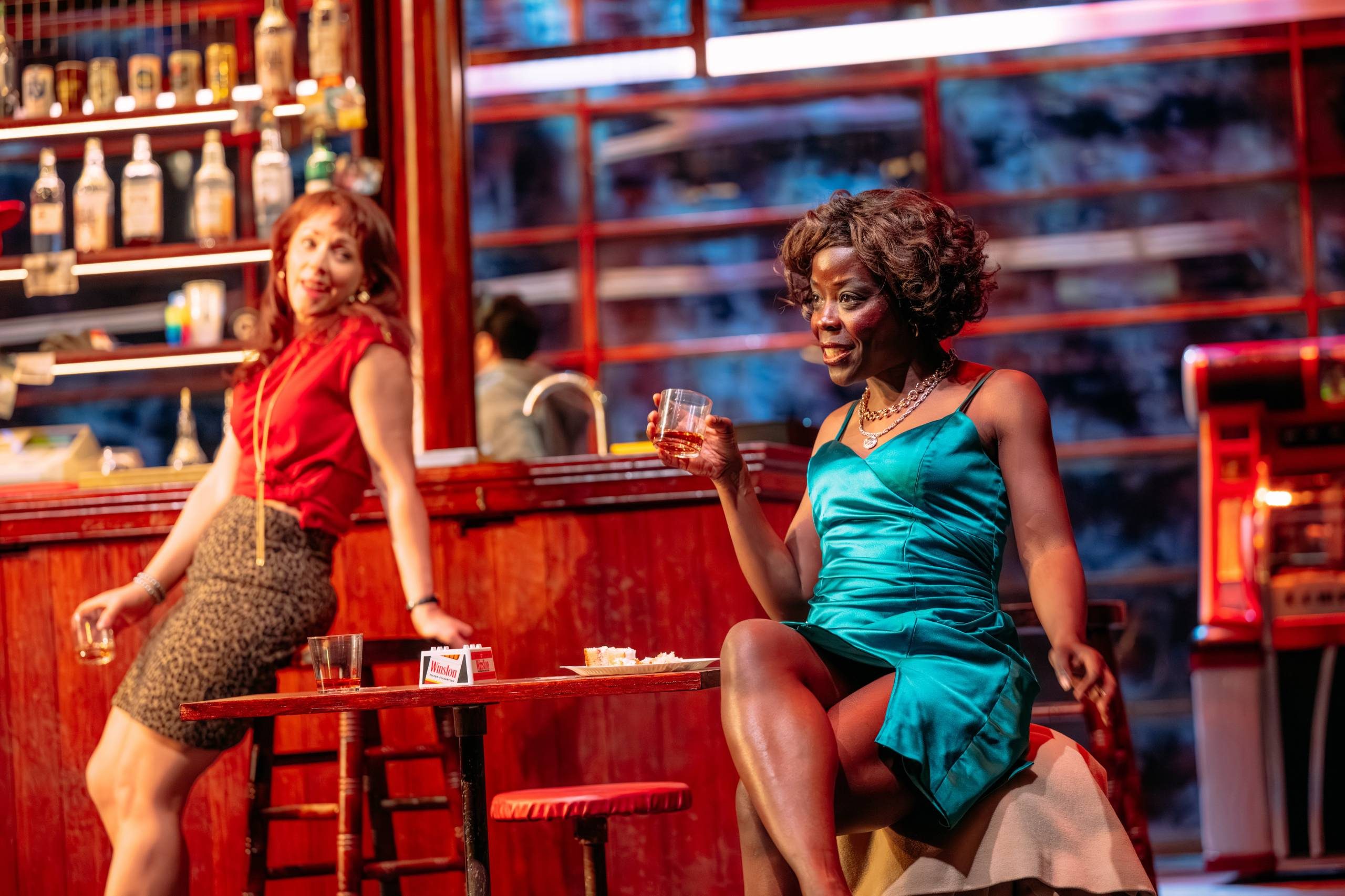
We are then transported back to the year 2000 and a local bar, where Stan (Christopher Middleton) rules the roost, plying his customers with shots, but knowing exactly when to warn them they’ve had enough. He’s assisted by Oscar (Manuel Pacific), a Columbian-American, who rarely speaks and is treated with cool indifference by the regular patrons. Chief among them are a trio of women, Jessie (Laura Cairns), Tracey (Lucianne McEvoy) and Cynthia (Debbie Horley). The latter pair are respectively the mothers of Jason and Chris, who at this stage in the story are best friends.
Change is afoot in the steelworks where the women have worked since their teens. There’s talk of cutbacks in salaries and equipment being mysteriously relocated elsewhere. Stan keeps warning them that they could all wake up tomorrow to find that their jobs have been moved to Mexico. Meanwhile, both Tracey and Cynthia have applied for the same management role and when Cynthia is accepted for the position, it inevitably drives a wedge between them.
And then those rumoured cutbacks start to kick in – and, as the pressure steadily rises, it’s clear that something bad is coming…
Sweat is an important play with plenty to say about the societal divisions sewn by Reagan that have led us to Donald Trump. A cleverly constructed scene when the TV in the bar appears to show a whole succession of American Presidents uttering the same empty rhetoric is key. Perhaps for the first time in my life, I begin to appreciate the impulses that have driven disenfranchised communities to seek change at any cost (I’m looking at you, MAGA and Reform). Don’t get me wrong, I don’t agree with them, but I do begin to comprehend their collective rage. And it’s a rare play that can sway me to such a degree.
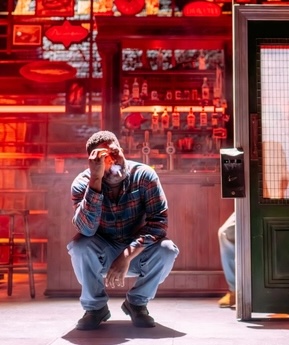
Sweat boasts a pressure cooker of a script, everything building to an inevitable violent catharsis. Joanna Bowman handles the direction with considerable skill, coaxing strong performances from every member of the cast – and I’ve rarely been so impressed by the talents of a set designer. Francis O’Connor opens with a stunning scene on the factory floor, where literal sparks are flying, before cutting to the stark floodlit interior of the prison, where Derek Anderson’s lighting comes into its own. And then the various elements that comprise Stan’s bar glide magisterially down from the rafters to create an utterly convincing American drinking hole.
The play’s abrupt and tragic conclusion leaves me suitably shattered – and the long silence before the audience applauds is testament to its power. It’s not what you’d call an easy watch, but it is a potent and eloquent piece, well worth your time and money.
4.6 stars
Philip Caveney