Fringe

One Way Out

24/08/23

Underbelly Cowgate (Belly Button), Edinburgh

One Way Out by Theatre Peckham’s NO TABLE productions is a deserving winner of Underbelly’s Untapped award, “a game-changing investment in early and mid-career theatre companies wanting to bring their work to the world’s biggest arts festival”. Hats off to Underbelly: if we want the Fringe to be an inclusive event, one that celebrates vibrancy and creativity, then financial support like this is a must. And One Way Out is certainly worth backing.

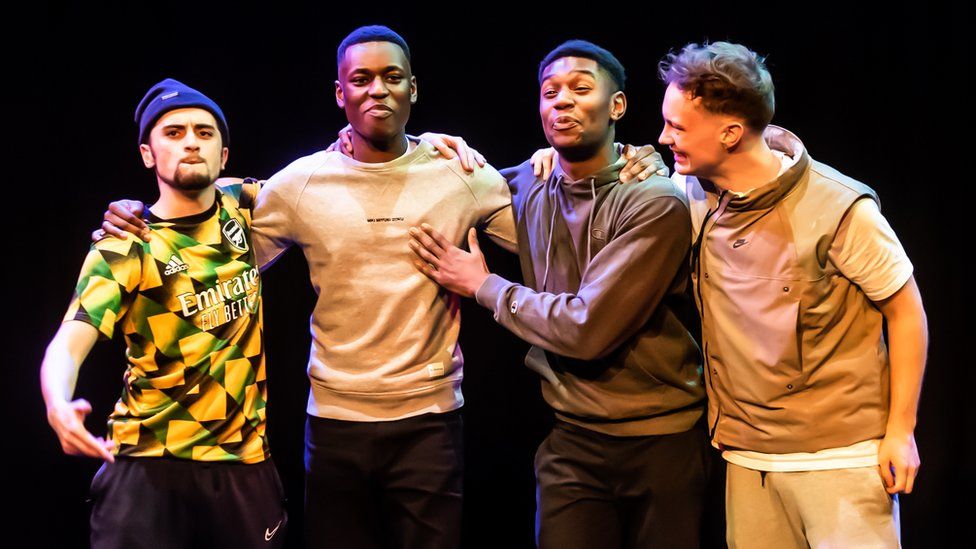
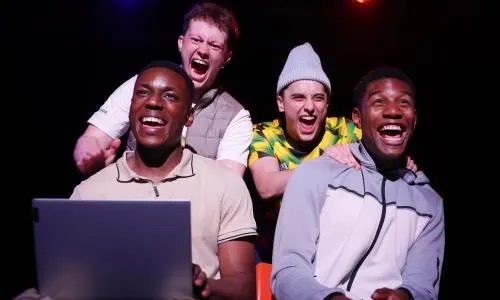
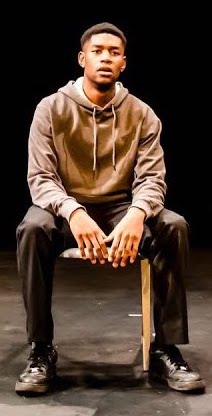
Written and directed by Montel Douglas, this is the tale of four friends, poised on the brink of adulthood, awaiting their A level results and planning their futures. The performances are high-octane; the direction bold and energetic. The boys are nervous about leaving school, but excited too. Tunde (Marcus Omoro) is focused on getting to university, the first step towards his dream of “a job with a suit”. Salim (Adam Seridji) plans on expanding his family’s business; his Uncle has one shop, but Salim will have many. Meanwhile, Paul (Sam Pote) is struggling academically. He does like performing magic tricks though. Maybe he could do something with that? Of the four, Devonte (Shem Hamilton) is the least certain of what he wants. He’s too busy worrying about his mum, who is on dialysis. Tunde is concerned about him. “You’re clever,” he tells his friend. “You’ve got to think about yourself as well as your mum. You should at least apply to university.”

But Jamaican-born Devonte’s UCAS application is his undoing. He doesn’t have the relevant documentation, can’t prove his leave to remain in the UK. He’s been here since he was nine years old, but now he’s being sent away…

Inspired by Douglas’s own memories of a cousin who was given a deportation notice at nineteen, One Way Out is a deceptively clever piece. Beneath all the fun and banter, all four young men are preoccupied with the question of what will happen to them, what their futures will look like. They’re dizzy with possibility. Devonte’s misfortune sends shockwaves through the group – and through the audience. It seems impossible that he should be uprooted against his will, torn from everything he knows – his friends, his sick mother – punished, as if he is a criminal. It should be impossible. Tragically, it is not. The Windrush scandal shames Britain, and Devonte’s plight highlights the atrocity. “It’s seventy-five years since the Windrush arrived,” Devonte says. “And seventy-five years since the NHS was founded. That’s not a coincidence.”

I like that the piece is brave enough not to offer a solution. There isn’t one. Three of the boys move on, for better or worse, into their adult lives, but we don’t find out what happens to Devonte because he’s gone. His friends’ efforts to save him fail. The system is brutal and its consequences dire. The audience just has to hope that Devonte will find happiness, and that Jamaica treats him better than the UK ever did.

4.3 stars

Susan Singfield

The Umbilical Brothers: The Distraction

15/08/23

Assembly Roxy, Edinburgh

Although this is (almost) our first experience of The Umbilical Brothers, they’ve been around for a long time, successfully plying their madcap blend of mime and soundscapes to appreciative audiences since the mid-90s.

We caught a glimpse of the sort of show they’re best known for at the Assembly Gala Launch, where David Collins performed a series of ever-more complex and surreal actions, accompanied by Shane Dundas’s weird and wonderful sound effects.

The Distraction is something else entirely though, a departure from their established style – although still just as silly and inventive. This show is all about the tech, specifically green screens and multiple cameras, and I’ve never seen anything quite like it.

You can almost hear them saying, “That’d be fun!” and then adding a series of ‘what-ifs’ until a show’s worth of shenanigans has been established.

Even while we’re waiting for the sell-out audience to file in, we get a sense of how cheery it’s going to be, as a series of groan-worthy jokes is displayed on the big screen that dominates the stage. It’s a canny move, setting the tone for the next hour.

There are some tech glitches in the first ten minutes, and it’s hard to tell if they’re real or part of the act. If the former, no matter – the delay is entertaining in itself. If, as I suspect, the latter is true, it’s a neat move, instilling a sense of jeopardy, and reminding the audience to be impressed by how much computer wizardry is being used.

Over the next sixty minutes, the duo mine the possibilities of live green-screen action, taking us from outer space to the depths of the ocean, via TV sports (played with babies – don’t ask), a guest appearance from Steve Jobs and more than one exploding head. There is audience participation – but not as you know it. And there are lots of dolls. If this all sounds like an amorphous mass of nonsense, then that’s exactly what it is – but brilliantly so.

I defy anyone to watch The Distraction without laughing all the way through.

4.5 stars

Susan Singfield

Blue

14/08/23

Assembly George Square (The Box), Edinburgh

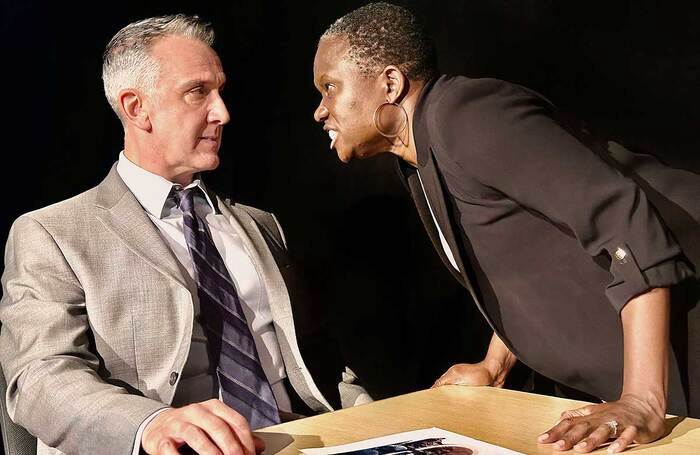
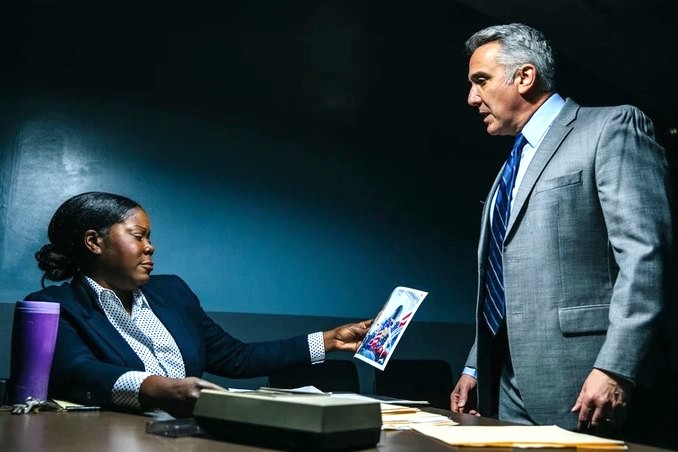
Blue by June Carryl is an intense two-hander, focusing on the aftermath of a police shooting.

Sully Boyd (John Colella), sorry, Sergeant Sully Boyd, as he is quick to remind us, is used to the Police Department’s internal discipline procedure. He’s had complaints levied against him before. Being interviewed by a fellow officer is just a formality, isn’t it? And anyway, this time the investigator is Rhonda Parker (Carryl), an old family friend. Sully’s known Rhonda since she was a kid; he was pals with her dad; heck, her husband used to be his partner, before he quit the force.

But something is different. For starters, this ‘mistake’ is much, much worse than the others. He’s shot and killed a Black motorist, and there’s no evidence that the guy did anything wrong. There is evidence, however, of Sully’s mounting racism, his conviction that something is being stolen from him, from all white men. As the aphorism goes, “When you’re accustomed to privilege, equality feels like oppression.”

Sully can reminisce about the good old days as much as he likes, but his true feelings have been brutally exposed, and another Black man has paid the price. African-American Rhonda isn’t about to let him off the hook…

Post-George Floyd, there has been a sea-change: first the groundswell of the Black Lives Matter movement and then pushback from those who think that, if Black lives matter, it means that white lives don’t. Blue is a blistering illustration of what this looks like in practice, of how a police force that is supposed to serve and protect us all equally is incapable of doing so, because its vision of ‘us’ is rooted in white supremacy.

It is to both Colella’s credit as an actor and Carryl’s as a writer that Sully does not come across as a two-dimensional baddy. He clearly sees himself as a decent guy, someone who’s put in his time serving his country, and just doesn’t understand why things have to change. He likes his position of privilege, even if he won’t acknowledge it.

However, it’s Carryl’s emotive performance that brings this important two-hander to its powerful and devastating conclusion.

4.6 stars

Susan SIngfield

Bangers

14/08/23

Roundabout at Summerhall, Edinburgh

Bangers is a tale told in rhyme, rap and R&B, a propulsive slice of gig theatre that feels as much like a party night as a performance. Set somewhere in the city of London, it’s the story of two unconnected characters, Aria (Danusia Samal – who wrote this) and Cleff (Darragh Hand), both of whom are going though rocky patches in their lives.

Cleff is coming to terms with the recent death of his father and struggling to decide whether to pursue his musical ambitions or, to please his Mum, take the safer route of passing exams and going to college. Aria is still haunted by a crush she had years ago, on the teacher who first mentored her and inspired her to perform. When Cleff and Aria bump into each other in a nightclub, it’s clear from the outset that they’re capable of making sweet music together, if only they can find a clear path through the debris of their respective issues.

The performance is presided over (you might more accurately say refereed by) an acerbic house DJ (Duramaney Kamba), who often intervenes when Aria and Cleff squabble and who employs a whole range of sound motifs to keep them in check. There’s a genuine good-time vibe to this show and Roundabout is packed to the rafters with cheering, clapping onlookers.

The story is told through ten different tracks. Samal and Hand take on several different personae as the story unfolds, but there are no real visual clues to help me spot when there’s been a change – which makes things a bit confusing at times. And, while I believe in Cleff’s story arc, Aria’s stretches my credulity. Could somebody really be hung up for so long over something so slight?

A late plot twist is probably meant to come as a big surprise, but I’m sure I’m not the only one who can see it coming.

Nonetheless, it’s hard to resist the sheer exuberance of the performances and the overall mood is so celebratory, I find myself compelled to go with the flow. By the show’s conclusion, I’m up on my feet with the rest of the crowd, urging the three performers on to their final joyful song.

4 stars

Philip Caveney

Woodhill

13/08/23

Summerhall (Main Hall), Edinburgh

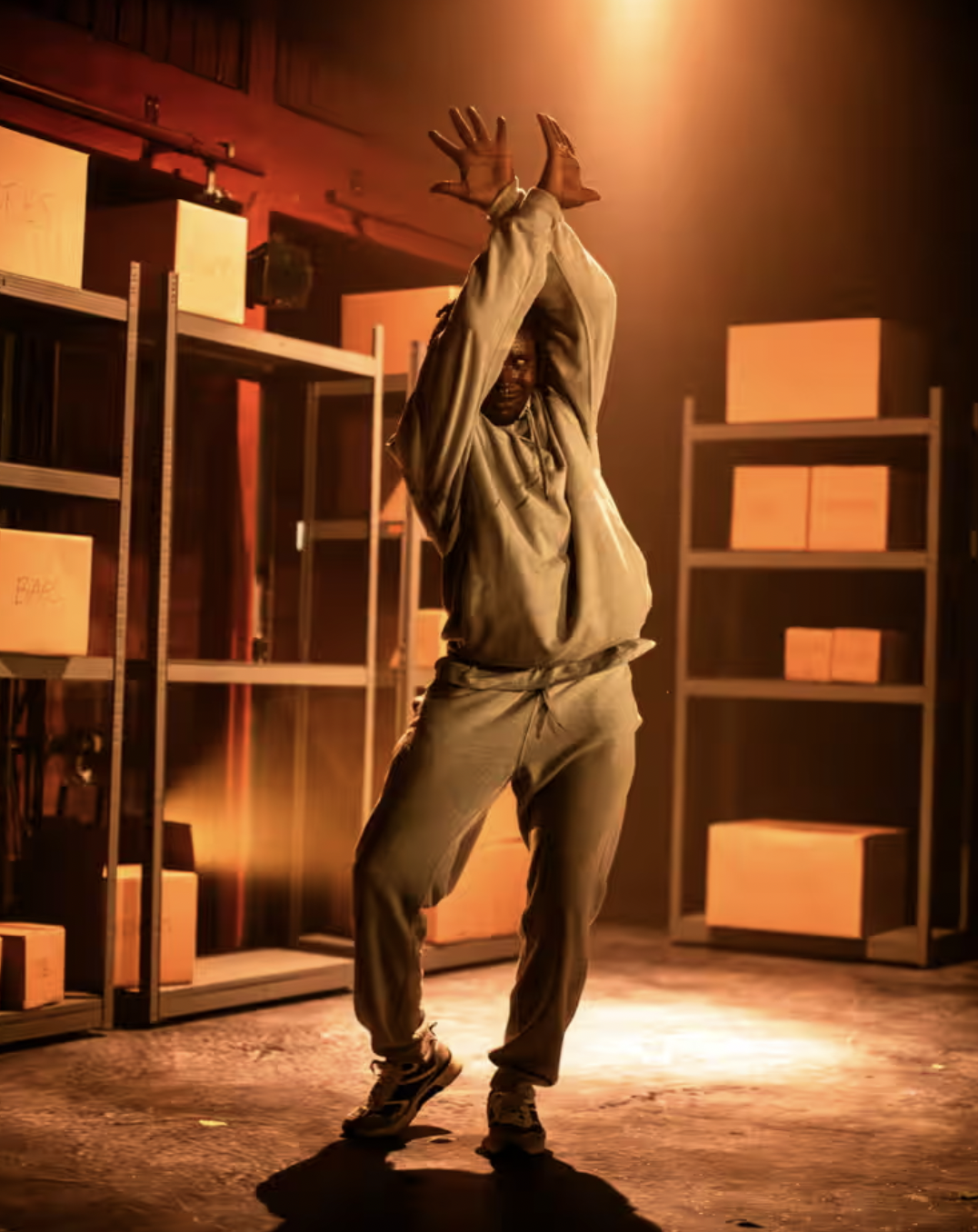
Lung is a verbatim theatre company, whose raisin d’être is to make hidden voices heard. “We use people’s real words to tell their stories; our shows always have a wider campaign and political aim.” In tonight’s show, those hidden voices belong to people failed by the UK prison system, specifically three young men who died in HMP Woodhill and the families who mourn them. It’s the first interpretative dance/verbatim mash-up I’ve ever seen, and it’s astonishingly powerful.

Recorded voices play over a soundscape by Sami El-Enany and Owen Crouch. Meanwhile, Chris Otim acts as the ghosts of the lost boys, and Tyler Brazao, Marina Climent and Miah Robinson play their relatives. Alexzandra Sarmiento’s choreography highlights the trauma inflicted on whole families by our punitive system, as they move like desperate Zombies through the years, reeling from blow after blow.

Director Matt Woodhead spent four years interviewing seventy people for this play – including inmates, prison officers, lawyers, and politicians, as well as the families featured here. The main focus is on three individuals – an urgent reminder that the awful statistics hide real people. Stephen Farrar, Kevin Scarlett and Chris Carpenter were all found dead in their cells at Woodhill. They all ostensibly took their own lives. But did they? “Woodhill killed them,” their families say. “The state killed them.”

The UK has the highest prison population in western Europe. Why? Do more than 83,000 of our people – more than 130 per 100k – really need to be locked up? Who benefits? Not the inmates, that’s for sure. And not wider society either – there is plenty of research proving prison doesn’t work. But private for-profit companies run prisons here, and they’re incentivised to lock people up, and incentivised to keep costs down once they’re inside. It shouldn’t come as a surprise that a recipe for disaster results in, well, disaster…

I get frustrated by our failure to look north: we have a model education system to look to in Finland, but we ignore it; likewise, Norway’s criminal justice system is a huge success: fewer people locked up (just 46 per 100k), low rates of recidivism, a compassionate prison culture based on rehabilitation. It’s kinder, cheaper and actually reduces crime. But still our politicians forge ahead with our failed revenge model, punishing people for being poor, for struggling with their mental health, for being Black.

Woodhill is relentless and startling, and there’s a moment, about fifteen minutes in, where I begin to feel restless, wanting a break from the dancing and recorded voices, perhaps some dialogue from the actors onstage. But I guess that’s the point: this is hard to bear, even as an audience member, even for an hour. And, of course, the fact that the actors never actually speak underscores how voiceless these people usually are. Woodhill offers them a rare chance to be heard.

Woodhead’s production, though unnervingly bleak, does offer a glimmer of hope. The piece is designed to educate, to change people’s minds. At the end, we are asked to sign a petition, to ensure that recommendations made at inquests – such as Stephen’s, Kevin’s and Chris’s – are implemented. It’s not enough, but it’s a start.

4.2 stars

Susan Singfield

The Box Show

12/08/23

Pleasance Courtyard (Cellar), Edinburgh

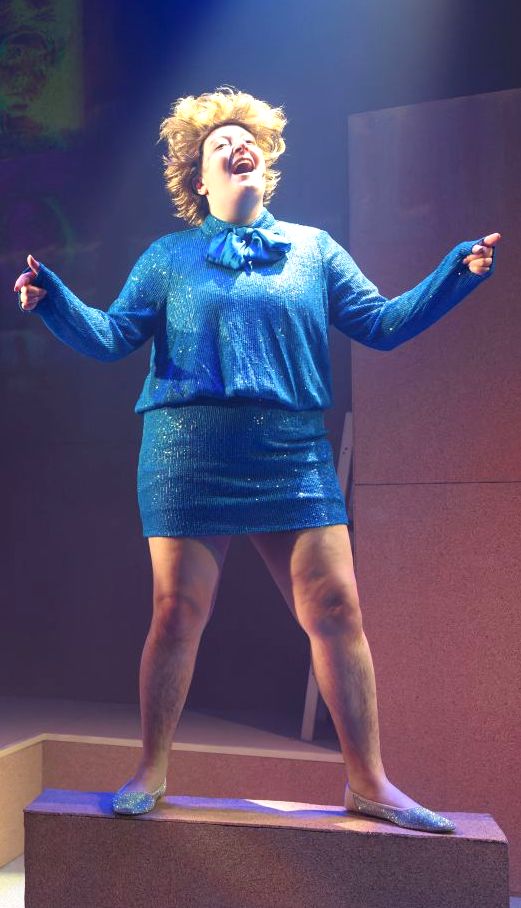
The Box Show (theboxshow.org) is one of the most original acts I’ve ever seen. Incredibly,  the whole production is confined to one small box – every prop, every costume change – like a puppet theatre with myriad human puppets. And Dominique Salerno (dominiquesalerno.com) is the puppet master, changing herself into a giant woman, a fighting couple, a demanding pop star – and a few more esoteric surprises it would be a crime to give away. 

 The constraints of the box mean that Salerno has to be imaginative – necessity is the mother of invention, after all. Low-budget theatre is often more interesting than its splashy, blinged up West End cousin; limiting herself to such a miniscule stage pushes Salerno even further down this road. I’m in awe of her imagination. 

The Box Show is fast-paced, never letting up for the whole hour, the sketches building to a hilarious crescendo. 

Audacious, funny, and perfectly crafted, The Box Show is performed with wit and precision. Salerno has the flexibility of a gymnast or a dancer (it makes my creaky knees hurt just watching her), as well as being a gifted actor and singer.

The tiny venue mirrors the tiny box, so it doesn’t take many punters for this to be sold out. Grab a ticket while you can – this Fringiest of Fringe shows is one not to miss.

5 stars

Susan Singfield

Grown Up Orphan Annie

11/08/23

Gilded Balloon Patter Hoose (Coorie), Edinburgh

Kathryn Bourne Taylor’s premise is a strong one: a ‘Where Are They Now?’ feature brought to life, starring everyone’s favourite plucky red-headed orphan. Leapin’ lizards! Little Annie is an adult! Unfortunately, she’s not a very happy one.

Long estranged from her billionaire adopted father, Annie is struggling to come to terms with his death. She’s angry about the environmental impact of his destructive business model, and bitter about a contract that means he owns the rights to all her songs. “My life has been made into a comic strip, a film, a Broadway musical – and I’ve got nothing to show for it,” she complains. She has a point. Why any kid would wanna be an orphan is beyond me.

Bourne Taylor makes for a believable millennial Annie, effortlessly embodying the familiar ‘please like me’ smile and can-do attitude. She nails Annie’s dazzling desperation, the knowledge that she’ll always have to sing for her supper.

I like the set up a lot, so I’m a little disappointed when the show pivots off in a whimsical direction, as Annie embarks on a mission to find a new sidekick (tragically, Sandy is long gone), and tries to resist opening the box that Daddy Warbucks has left to her. As charming as this stuff is, it’s very slight. There are early hints that we will be dealing with weightier stuff – the troubling power dynamic between a billionaire ‘saviour’ and an impoverished orphan; the effects of childhood neglect and trauma; the impact of sudden fame at an early age – but these are jettisoned in favour of something more kooky and ultimately less satisfying.

Grown Up Orphan Annie is a pleasant show, but I can’t help thinking it could be so much more.

2.8 stars

Susan Singfield

England & Son

11/08/23

Roundabout at Summerhall, Edinburgh

Written by Ed Edwards especially for Mark Thomas and directed by Cressida Brown, England & Son is a hard play about hard lives. Thomas is the ‘& Son’ of the title, and delivers a bravura performance; from the outset, he has the audience in the palm of his hand. 

A semi-autobiographical piece, based on people Thomas knew in his childhood and Edwards’ experience in prison, this is a bleak exposé of an often overlooked underclass, exemplified by one boy’s complex relationship with his father. As well as this deeply personal account, it also opens up to examine an even more troubling relationship: between Britain and its former colonies. A lot of questions are raised: why is it okay for rich white people to plunder other countries, but not okay for poor white people to burgle houses? Is there any way to prevent armed forces personnel from being dehumanised by what they’ve seen and done? And what the fuck is an ‘artisan’ when it’s at home?

Although this is a dark piece, there are also some very funny lines and – as you’d expect – Thomas delivers these perfectly, the laughs landing every time. These shafts of light are much needed, so it’s a relief when caring social worker Martha offers our young offender the chance of a different life, even though it’s all too clear that he won’t be able to grasp it: his past has already shaped him; his future is assured. As soon as there’s a problem, he only knows one way to react, and he seems destined to follow in his fallen hero’s footsteps.

England & I is a deceptively complex piece, but it certainly hits home with today’s audience, who rise as one to give Thomas a standing ovation.

4.2 stars

Susan Singfield

After the Act

06/08/23

Traverse Theatre, Edinburgh

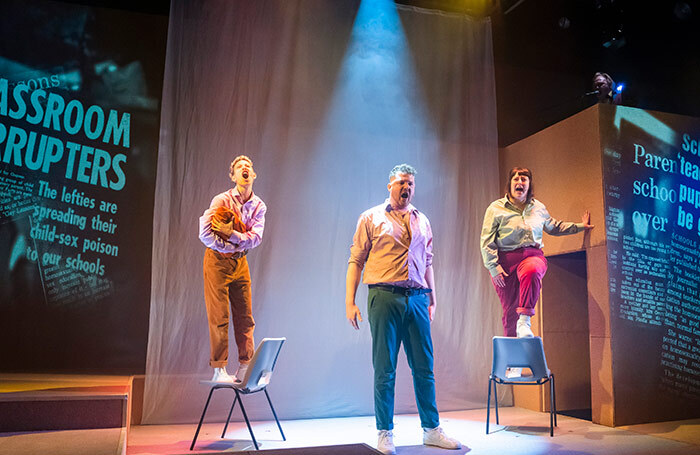
In 1988 I was in sixth form. I was (am) straight, and didn’t think I knew any gay people at all. No one was out. Nonetheless, when Section 28 was introduced – banning the promotion of homosexuality in schools – we all thought it was stupid. Not just cruel and regressive, but thick. We knew we couldn’t be encouraged into being gay, that no amount of advocacy by teachers – teachers! – could ever change who we were. Outlawing any positive mention of queer people though, that could hurt. We were only kids, but even we could see that.

Breach Theatre’s After the Act shows just how much hurt there was. This musical, written by Ellice Stevens and Billy Barrett, with an original score by Frew, is a verbatim piece, relaying the experiences of LGBTQ+ students, teachers and activists who struggled and fought through Section 28’s fifteen-year reign. It’s both shocking and compelling, an object lesson in how to stage a polemic. By turning the words into songs, Breach Theatre give them extra weight and meaning, turning some into plaintive refrains and others into angry protest chants.

There are six performers onstage: two musicians (Ellie Showering and Frew) and four actors (Stevens, Tika Mu’tamir, EM Williams and Zachary Willis. Under Barrett’s direction, this is a lively, insistent piece; indeed, thanks to choreographers Sung-Im Her and Anouk Jouanne, the actors are always in motion, the interweaving stories physicalised into a complex web. Although the production is a serious one, focusing on some very real anguish, there are also moments of humour, of light shining through the darkness.

Much of what we’re shown is shocking. A couple of lesbian protestors disrupt the six o’clock news, and Nicholas Witchell – who wrestles one of them to the ground and puts his hand over her mouth so that Sue Lawley can carry on and read the day’s stories – is lauded as a hero rather than being done for assault. Another particularly striking statement comes from a member of Haringey Council’s Lesbian and Gay Sub-Committee, who notes, “We are at a disadvantage because we can only use rational argument, while the opposition are tapping into irrational fear and bigotry.”

In the end, though, this is a triumphant piece of theatre. Stevens skewers Margaret Thatcher’s self-righteous ignorance in a comical depiction of the ex-PM: if she sounds ridiculous as she defends her nasty law, they’re her own words; she’s hoist by her own petard.

After the Act is vital viewing. Section 28 might have been relegated to the history books, but trans kids are in the middle of the same old battleground. We have to learn from what has gone before.

4.6 stars

Susan Singfield
The Ballad of Truman Capote

05/08/23

theSpace at Niddry Street (Upper Theatre), Edinburgh

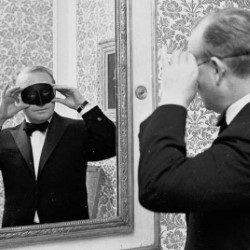
It’s 1966 and in New York’s swish Plaza Hotel, notorious author Truman Capote prepares to host a masked Black and White Ball, an occasion that will be attended by the most illustrious stars of the era. As he prepares himself for the evening, Capote muses about his life, his career and the critical reaction to his latest publication – a book that has launched him into literary superstardom and, at the same time, effectively ruined him.

Patrick Moy offers an uncanny impersonation of Capote, capturing the man’s strange lisping voice and effete mannerisms with aplomb. He parades restlessly around his hotel room, punctuating his observations with regular screwdriver cocktails and petulantly reading extracts from cruel reviews of In Cold Blood.

Andrew O’Hagan’s lyrical monologue offers us a glimpse into the titular character’s bizarre childhood and his curious relationship with fellow author, Harper Lee, but occasionally feels a little too dependent on name-dropping. Frank Sinatra, Marlon Brando, Marilyn Monroe and er…Princess Margaret? It’s like a Who’s Who of the 1960s and all these people are dancing to Capote’s tune.

But while we hear all about these luminaries, we never see them. Capote remains imperiously alone in his room, fielding telephone calls and gradually succumbing to the effects of alcohol as he relishes what will be his last moment of true power. It’s a curiously tantalising piece and I can’t be the only one wishing I could stay on to watch the delicious carnage that will ensue. 

Fans of Mr Capote – and there are many – are sure to enjoy Moy’s pitch-perfect performance, while O’Hagan’s script, though it lacks conflict, manages to effectively capture a significant moment in American history.

3 stars

Philip Caveney