Florence Pugh

Thunderbolts*

02/05/25

Cineworld, Edinburgh

I’ve been decrying Marvel’s deplorable lack of ambition for so long that, when the studio finally comes up with something that’s genuinely different from what’s gone before, I feel mean when I say that it’s still not quite enough. But more of that later.

Thunderbolts* – and no, that isn’t a typing error, there really is an asterisk in the title, though I honestly haven’t the faintest idea why – is a superhero movie with a difference. The team of players we are presented with are all misfits in one way or another. I guess you could argue that DC’s Suicide Squad offers a similar premise, but it’s more cleverly handled here. Chief among our pound-shop players is Yelena Belova (Florence Pugh), the sister of the now-deceased Black Widow. Once a larger-than-life adrenalin-junkie, Yelena spends all her time miserably doing the bidding of Valentina Allegra de Fontaine (Julia Louis-Dreyfus), a crooked politician with her eye on world-domination. (Hmm. I wonder where they got that idea?)

Yelena has lost touch with her father, Alexei (David Harbour), who now plies a trade as a chauffeur, and she longs for something that will make her feel like she’s actually doing some good. Sent out on yet another thankless mission – to destroy one of de Fontaine’s secret laboratories – Yelena discovers that two others have also been handed the same task. They are shape-shifter Ava Starr (Hannah John-Kaman), and John Walker (Wyatt Russell), a kind of below-parr Captain America knock-off. After a thankless skirmish, the three of them decide to join forces rather than continue to oppose each other and, before leaving, they rescue a seemingly ordinary guy called ‘Bob,’ (Lewis Pullman), who they find wandering about the place looking vaguely confused.

Once back in the real world, the ‘team’ quickly adds congressman Bucky Barnes (Sebastian Stan, last seen by B&B as the odious Donald T in The Apprentice) and, of course, Yelena’s dad, who has been itching for an excuse to ditch the new job and get back into his old Red Guardian outfit. It’s Alexei who comes up with the titular name for the assembly but it isn’t long before they are being pitched by the opportunistic de Fontaine as ‘The New Avengers.’

Thus far, Thunderbolts* feels rather ordinary: too many characters struggling for screen time and going through the same over-familiar tropes – but Bob, it turns out, is the film’s secret weapon in more ways than one, especially once he discovers his own hidden powers. He metamorphoses into a kind of alternate Superman, a dark, brooding figure whose actions are motivated by depression and paranoia and who is much more interested in destroying the world than saving it. He’s also not above rubbing out cute little children who get in his way – a move unthinkable in most superhero films.

While director Jake Schreier takes too long to reveal this trump card, once it’s out there, the proceedings pick up immediately and actually start to feel – dare I say it? – genuinely interesting, which is not a quality I’ve seen in a Marvel film for quite some time. And if nothing else, here’s proof that Florence Pugh is now a major box-office star, always capable of finding new depths in any persona she chooses to take on. Her Yelena is much more than a 2D comic brought to life.

For those who care about such things, there are two post-credit sequences. The first is brief and actually makes me laugh out loud. The second is more complex and offers a glimpse of upcoming Marvel release, The Fantastic Four, but you’ll need to stay in your seats until the bitter end if you want to catch it. It remains to be seen if that seemingly-doomed quartet can be rescued from the doldrums, but for now, Thunderbolts* is way better than expected.

3.6 stars

Philip Caveney

Puss in Boots: The Last Wish

21/02/23

Cineworld, Edinburgh

All things considered, this must be the least anticipated ‘sequel’ of the year. The Shrek franchise began way back in 2001 and, over the years, there have been three sequels of steadily diminishing quality. In 2011, Puss in Boots emerged as a Shrek spin-off and, it must be said, not a particularly memorable one. So Puss in Boots: The Last Wish is essentially a sequel to a spin-off. But those who take note of such things can’t fail to have missed the fact that the film has been nominated for an Oscar and a BAFTA. This is because it has something up its sleeve that nobody expected. It’s really good.

In the adrenalin-fuelled opening sequence, we meet our titular hero (voiced once again by Antonio Banderas), who is singing and dancing for an adoring audience. Shortly thereafter, he takes on a whole army of warriors single-handedly, and rounds things off by doing battle with an ancient woodland bogeyman.

And then he er… dies. 

Of course, he’s a cat and everyone knows that felines have nine lives, right? But, as a helpful doctor explains, Puss has just used up life number eight. From now on he needs to be very careful indeed, because – if he allows himself to be killed one more time – his heroic escapades will be over for good. So when he encounters the genuinely creepy Wolf (Wagner Moura), he realises that this is an enemy he can never hope to defeat, and for the first time in his life, he’s afraid. Almost before you can say ‘game over,’ he’s hiding out in Mama Luna (Da’Vine Joy Randolph)’s cat refuge and pursuing a quiet, domesticated existence.

What follows is a clever meditation on the subject of death, but if that sounds like something you really don’t want to watch, let me assure you that yes, you actually do! As scripted by Paul Fisher and Tommy Swerdlow, this is a witty – sometimes hilarious -quest tale that never misses an opportunity to propel the franchise headlong into previously uncharted waters, while Joel Crawford and Januel Mercado’s flamboyant direction allows the animation department to steer the visuals into challenging new dimensions. Suffice to say that there are scenes here that challenge Spider-Man: Into the Spider-Verse for eye-popping, jaw-dropping panache and make the original film look positively pedestrian.

There’s a welcome return for Puss’s ex-girlfriend, Kitty Softpaws (Salma Hayek), and a new sidekick in the shape of the criminally adorable Perrito (Harvey Guillén), a wannabe therapy dog who’s just pretending to be a cat, in a desperate attempt to extend his friendship group. And since the Shrek series has always riffed on popular fairy tales, we’re offered a villainous Goldilocks (Florence Pugh), plus her adoptive ursine family (Ray Winstone, Olivia Colman and Samson Kayo). There’s also arch-nemesis, Jack Horner (John Mulaney), a decidedly Trumpian creation, who – despite inheriting an entire pie-factory from his entitled parents – still insists on sticking his grubby thumbs into every opportunity that comes his way.

And did I mention the fabulous Latin American flavoured soundtrack by Heitor Pereira? I leave the cinema dancing.

While PIB:TLW might not be a comfortable fit for younger kids, for everyone from eight years and upwards, it’s a rollicking, rib-tickling adventure that never loses its momentum. My advice? Put aside your expectations and see this on the big screen. You won’t be disappointed.

4.4 stars

Philip Caveney

The Wonder

19/11/22

Netflix

Emma Donoghue’s The Wonder is a little jewel of a novel, a bleak tale seen entirely through the eyes of its main protagonist, Lib. Because the original story is so insular, I wondered if it would be a suitable subject for a film, but director Sebastián Lelio (who co-write the screenplay with Alice Birch) has done a creditable job of opening up the original vision, even throwing in some post-modernist flourishes to accentuate the artifice of the situation. The opening scene depicts a contemporary film studio, complete with lighting rigs and other equipment before the camera pans right and zooms in to the hold of a nineteenth century sailing ship, where Lib (Florence Pugh) is eating a meal. From the very beginning, Leilio seems to be warning us not take everything we see on face value. The Wonder, after all, is also a story of deception.

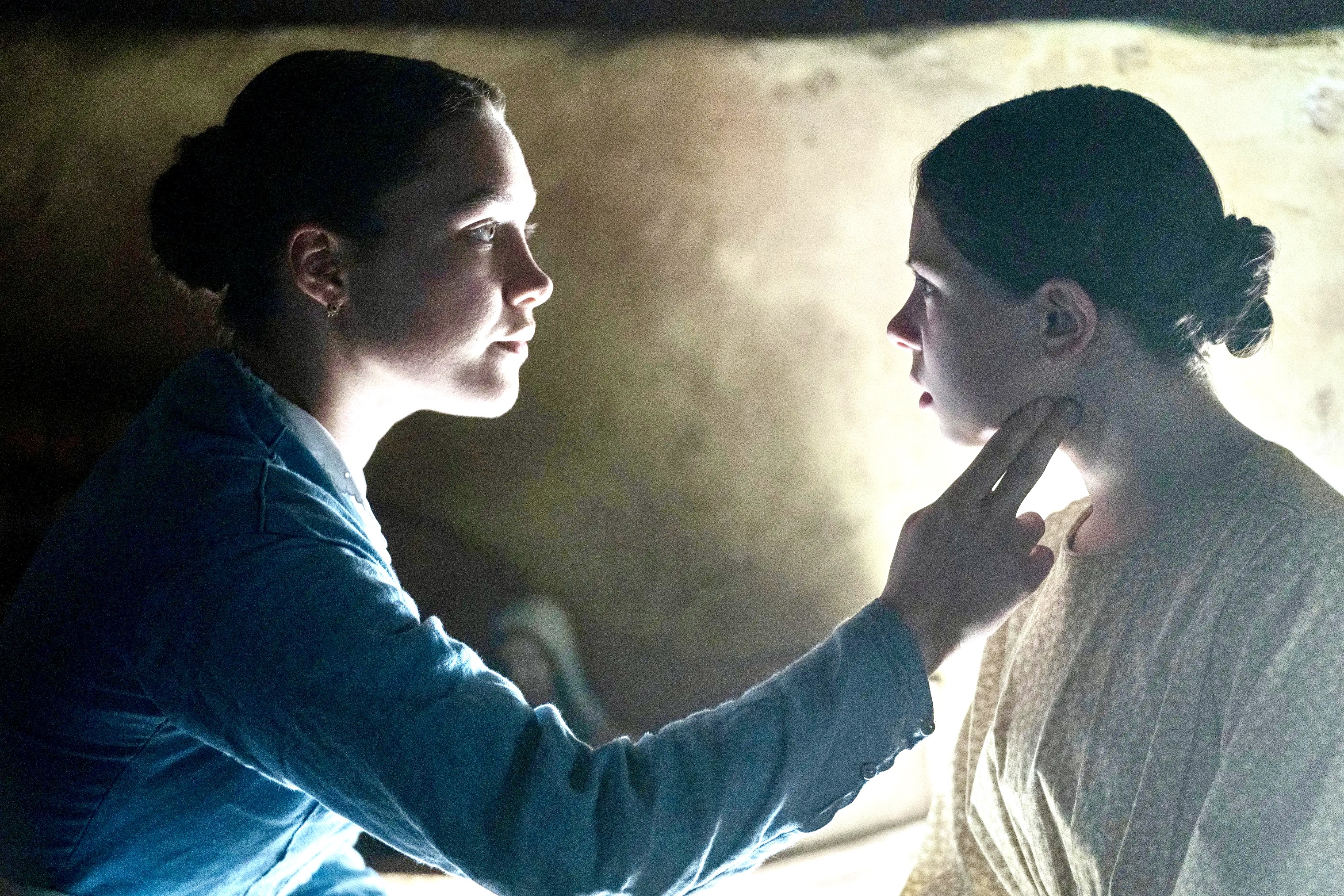
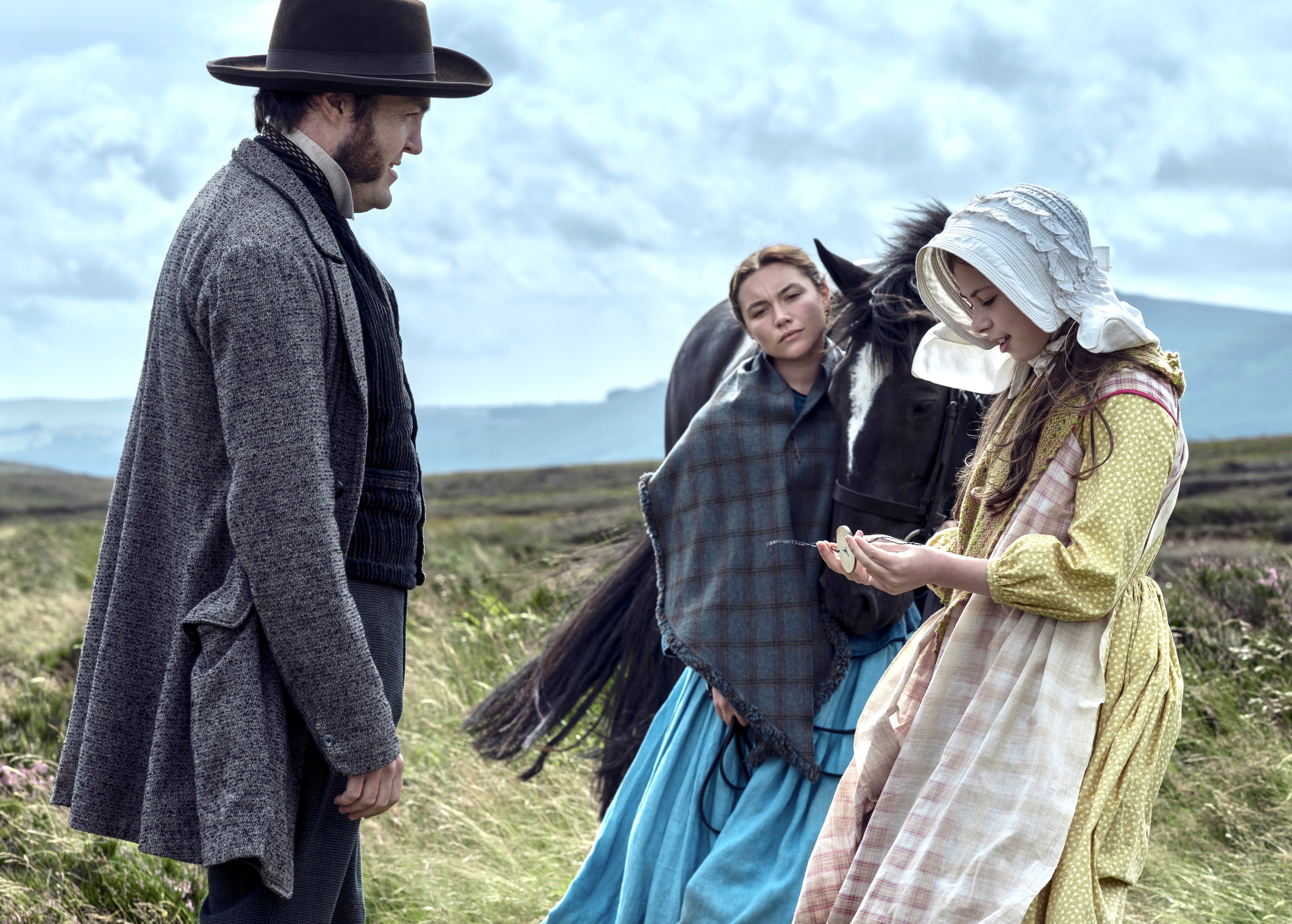
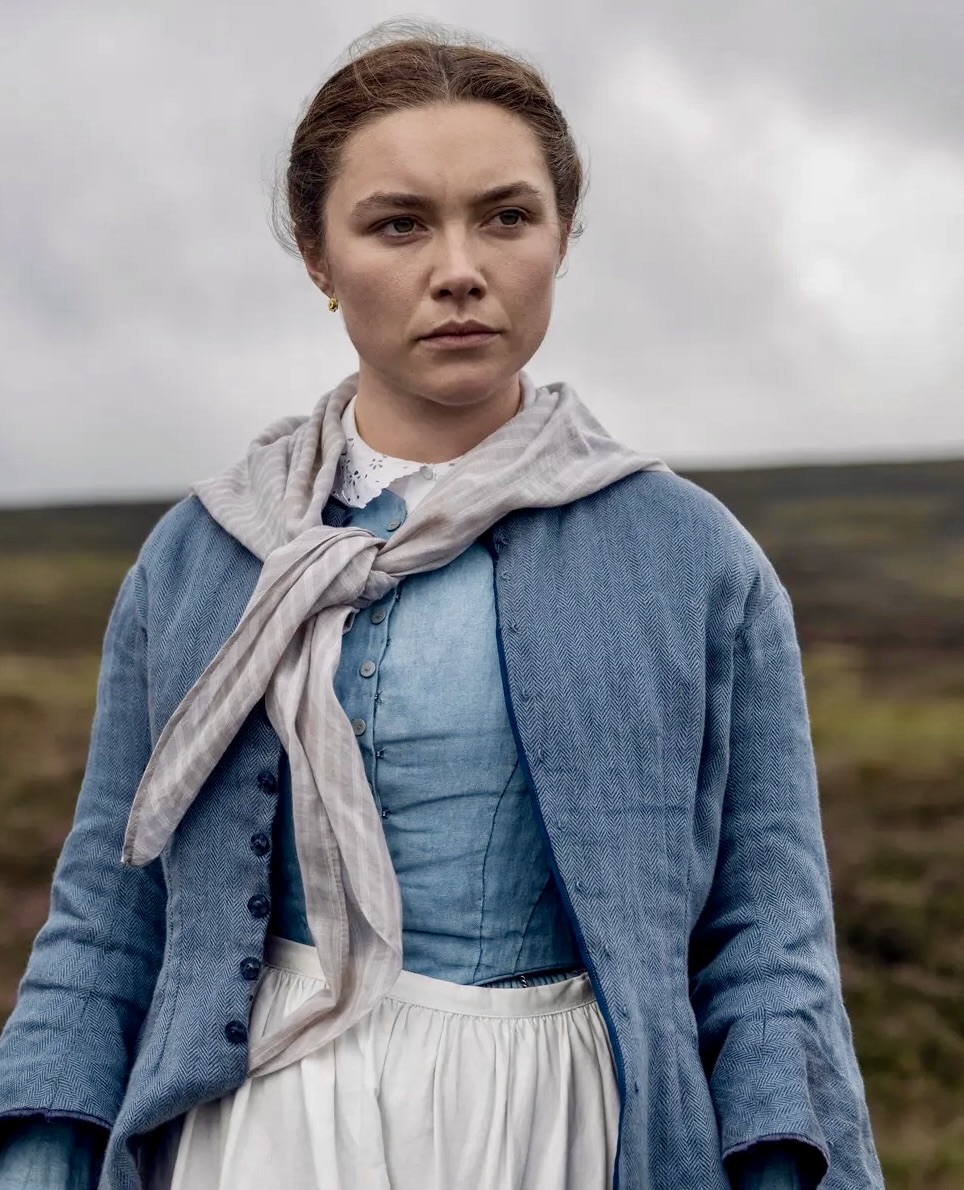
It’s 1862 and English nurse Lib Wright has been summoned to a remote Irish village to stand watch over the Wonder of the title – eleven year old old Anna O’ Donnell (Kila Lord Cassiday), who, it is claimed, has not eaten a morsel of food in four months and yet remains in apparently perfect health. Lib is understandably sceptical, but the local clergy, led by father Thaddeus (Ciarán Hinds), are keen to claim this as a bona fide miracle, a feather in the cap of the Catholic church. Dr McBrierty (Toby Jones), on the other hand, prefers to see Anna as some bizarre new mutation. Has she developed the ability to photsynthesise? Lib’s task will be to keep a close watch on Anna around the clock, alternating shifts with a nun, Sister Michael (Josie Walker), so that – if there is any secret feeding going on – it will soon come to light.

Lib’s suspicions are shared by newspaper journalist Will Byrne (Tom Burke), who has been despatched to his old stamping ground to investigate the claims, but the truth behind these ‘saintly’ events is well hidden and hard to root out…

The Wonder makes a successful transition from novel to film, largely because of Pugh’s sterling performance in the lead role, as well as through Ari Wegner’s moody cinematography, which somehow contrives to make every frame look like the work of a classic artist – Jan Vermeer perhaps, or Caravaggio. There are also a few moments where Anna’s older sister, Kitty (Niamh Algar), who also serves as the story’s narrator, breaks the fourth wall and addresses the viewer directly. Some may find these touches intrusive but, for me, they are so effective they have me wishing there were more of them and that Algar had a little more to do in the story – she’s a superb actor and this is little more than a supporting role.

Donoghue’s source novel, a scathing criticism of the Catholic faith and the gullibility of its followers, emerges intact – and those who anticipate a headlong plunge into despair should take heart. The film’s conclusion is more positive than you might expect.

4 Stars

Philip Caveney

Don’t Worry Darling

23/09/22

Cineworld, Edinburgh

Don’t Worry Darling. Well, it’s hard not to worry. Specifically, it’s hard not to worry about the missing comma. You know, the ‘direct address’ comma? I don’t like writing Don’t Worry Darling without it. It looks wrong, but I can’t add it in because it’s not there in the official title. Don’t tell me it’s not important or not to sweat the small stuff. I can’t help it. Punctuation matters, Grandma.

Still, taking a deep breath and moving past the title, Don’t Worry, Darling (sorry) is – for the most part – a very engaging film. Florence Pugh stars as Alice, a Stepford-style wife living in the Stepford-style town of Victory, an idyll in the middle of an unforgiving desert. That is, if your idea of an idyll is the sexist 1950s, where the men go to work (all at the same place, the – er – top secret Victory project) and the women stay at home, their daytime hours spent shopping, boozing and ballet dancing. Oh, and cooking and cleaning, which might sound like a downside, but these women really, really enjoy their household chores…

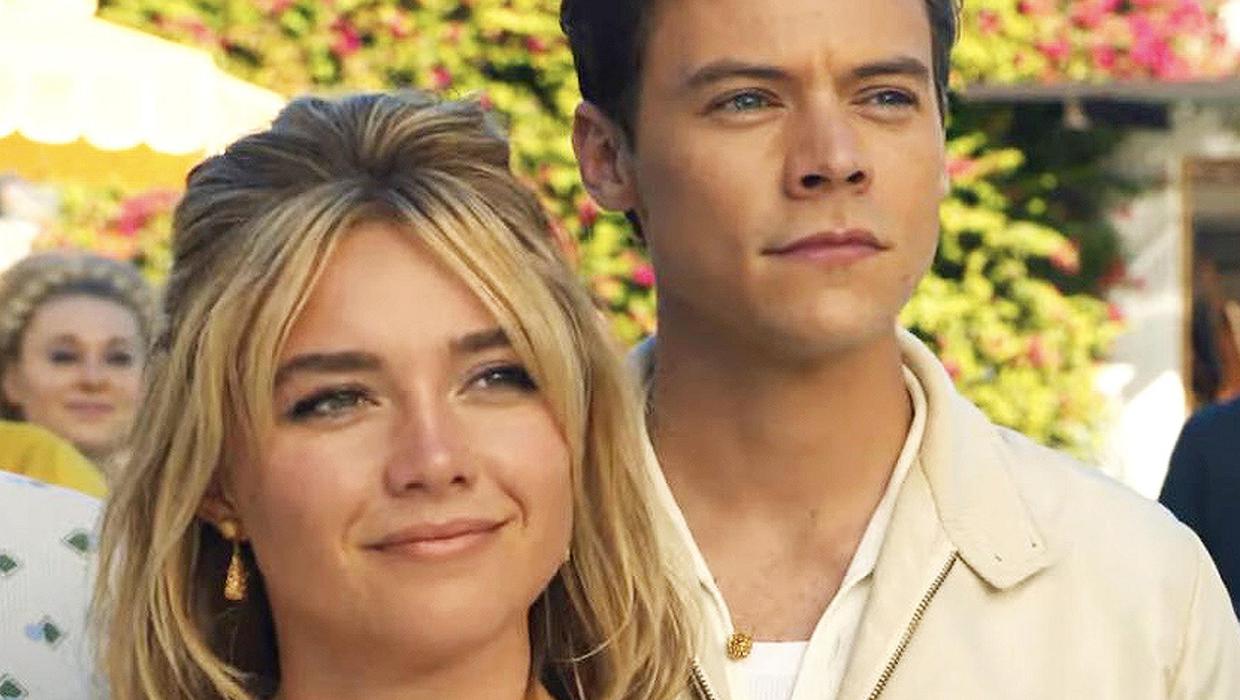
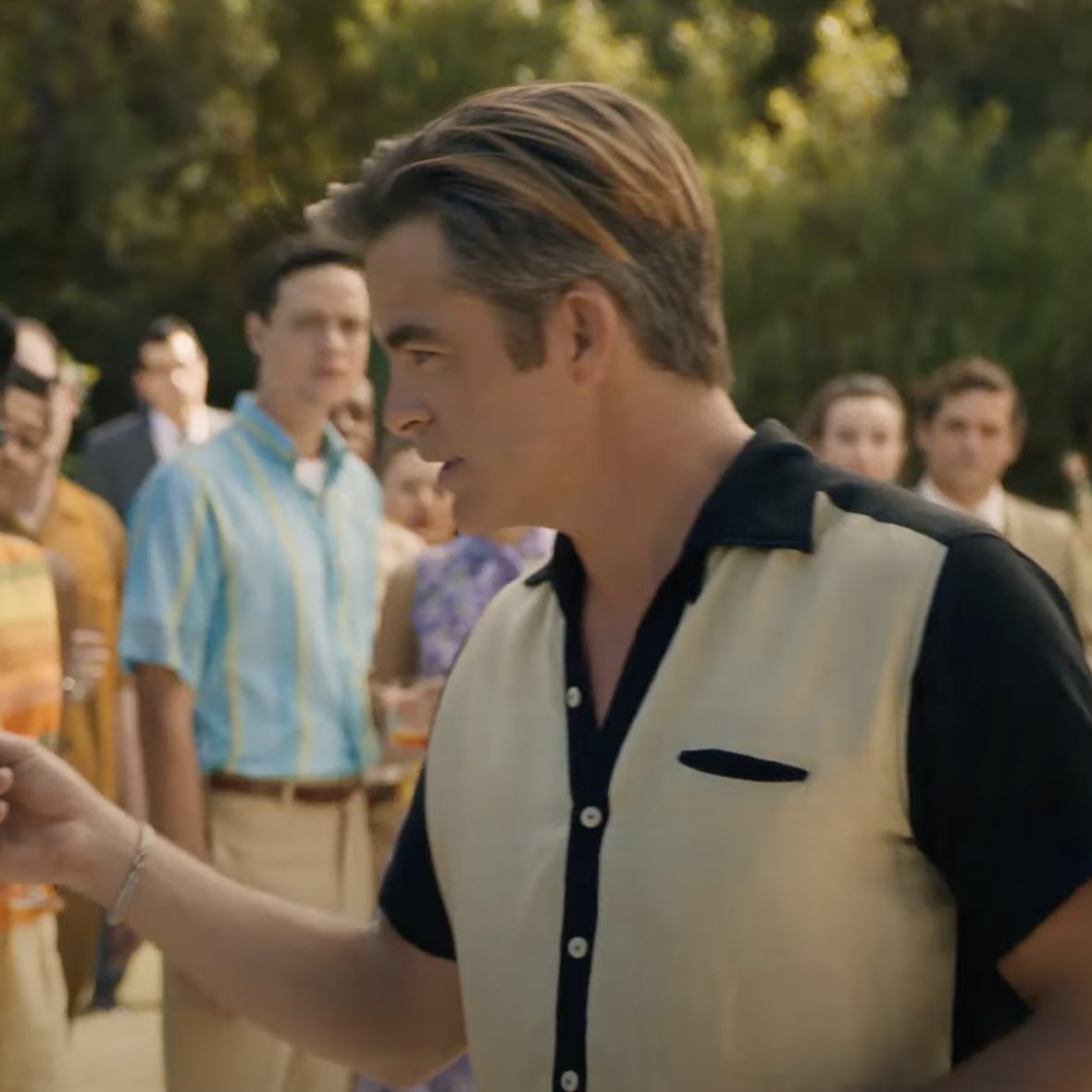
Alice and her husband, Jack (Harry Styles), seem even happier than all the other happy people – they can’t keep their hands off each other, and who cares if dinner ends up on the floor, when there’s frantic sex on the menu? Okay, so there are regular small earthquakes disrupting their peace, and Alice’s friend, Margaret (KiKi Layne) keeps trying to tell everyone that something’s wrong, but Dr Collins (Timothy Simons) assures them all that she’s not well; there’s nothing to worry about. Darling. Victory’s founder, Frank (Chris Pine), has everything in hand. Aren’t they lucky to be here? They can trust him. Can’t they?

But then Alice witnesses a plane crash, and – desperate to help – she ventures up to the forbidden Victory HQ. And what she sees there changes everything…

Olivia Wilde’s sophomore movie isn’t quite up there with Booksmart, but there’s a lot to admire here. It’s an ambitious project, riffing on The Matrix as much as the aforementioned The Stepford Wives, as well as The Truman Show and Valley of the Dolls. The script (by Katie Silberman) is also thematically close to Laura Wade’s similarly-titled stage play, Home, I’m Darling, in that it exposes the myth behind the glamorous image of the 1950s – the pastel colours, stockings and champagne cocktails (perfectly evoked by cinematographer Matthew Libatique) mask myriad miseries, particularly for women trapped in the domestic realm.

Pugh’s performance is flawless, and Styles does well in the supporting role. Pine is genuinely scary, his slick smile doing little to conceal Frank’s coercive nature, and Gemma Chan, as his wife, Shelley, is a suitably chilling accomplice. Wilde herself plays Bunny, a playful, hard-drinking woman, and Alice’s closest friend. It’s an interesting dynamic, and the set up is beautifully managed.

Unfortunately, the unravelling is less well-handled, and several gaping plot holes emerge along with the revelations. This is a shame, because the first two thirds promise so much, but the complex unveiling is too quick, too told. I am left with too many questions, and not in a good way.

Another half hour, a little more detail, some attention paid to the ‘but how?’ and Don’t Worry Darling could be much better than it is.

3.6 stars

Susan Singfield

Black Widow

23/07/21

Cineworld

After the apocalyptic smorgasbord of the Avengers trilogy, Marvel Studios seem to be struggling to find their proper niche in the cinema.

Black Widow has been a conspicuous victim of the lockdown, its release delayed by almost two years. Finally, here it is, gamely attempting to make its presence felt under the restrictions of a 12A certificate, where the excessive violence feels somehow at odds with what the filmmakers are actually allowed to show. This seems an ill-advised move. Cartoon violence is one thing, but Black Widow appears to have all the smashing, bashing and limb-breaking of a more realistic depiction without any of the consequences. Director Cate Shortland has to employ a lot of shakey-cam, so we don’t linger on injury detail. Protagonists emerge from bruising combat with a discreet smear of blood at the corner of the mouth. It’s unconvincing to say the least.

Maybe a 15 certificate would have been a better option?

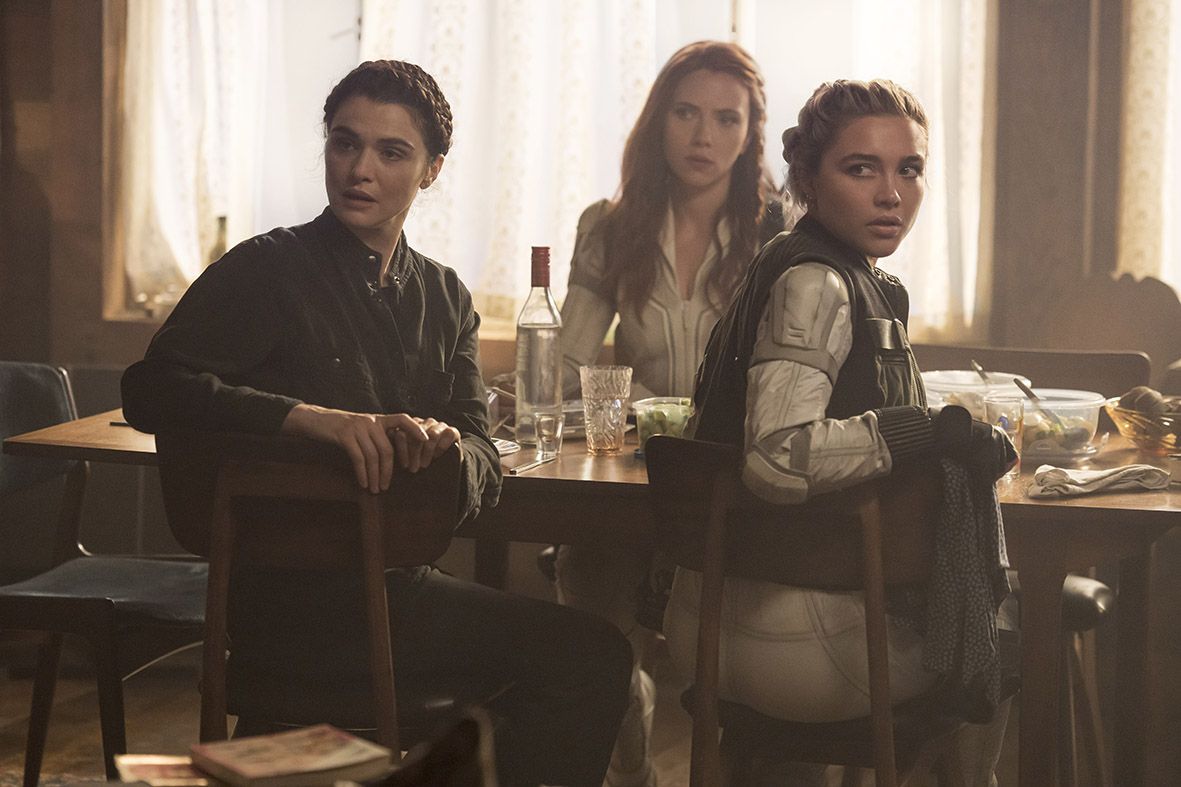
The film is, by necessity, a prequel. It begins in 1995 in Ohio, where Russian super-soldier Alexie Shostakov (David Harbour) and his ‘wife,’ Melina (Rachel Weisz), are posing as a happy family, with their two ‘daughters,’ Natasha and Yelena in tow. But when evil forces close in on them, they are forced into running for their lives. Yelena winds up being a ‘widow,’ a genetically engineered soldier, for the ruthless Dreykov (Ray Winstone), while Natasha defects to the West. She grows up to be an Avenger and, of course, in time, Scarlett Johansson.

In 2016, Natasha finds herself on the run once again, this time from her American employers, and it isn’t long before she reconnects with her sister, Yelena (Florence Pugh). After first attempting to beat the crap out of each other – as you do – they team up and go in search of their ‘parents.’ Alexie’s in a penitentiary and first needs to be sprung, while Melina is hard at work in a remote outpost teaching pigs to stop breathing (that’s not a misprint BTW). Subsequently, the family decide to team up in order to take down Dreykov and what has now become a massive army of widows, all of them turned into mindless servants by the liberal application of er… pheromones.

Much bloodless punching and kicking dutifully ensues – at times, this feels decidedly like Marvel’s take on the Jason Bourne movies, only with added Spandex – before everything culminates in one of those big action set-pieces which takes place aboard Draykov’s sky-station.

The screenwriters make a valiant effort to establish a feminist statement amongst all this Sturm und Drang, but the effect is horribly overdone, the proverbial sledgehammer/nut scenario played out at maximum volume with minimal coherence. While we should definitely be pleased that a mainstream superhero franchise is finally trying to get in step with female empowerment, it needs to be done in a less ham-fisted manner than this. Once again, here’s a clear case of what is essentially an animated comic strip getting ideas above its station.

Johansson and Pugh are both good in their roles – indeed the film’s best moments are rooted in their bickering, competitive sisterhood – while Harbour is assigned the role of comic relief, a blundering Russian oaf addicted to shots of vodka. Overweight and out of practice, he can still put up a decent fight when he needs to. Weisz seems criminally short-changed in her thankless role as mother/scientist/all-round ass-kicker.

Marvel aficionados will know to hang around for the inevitable post-credits sequence, but I feel so underwhelmed by Black Widow, I really can’t be bothered to wait. Another helping? No thanks, I’ll pass.

3 stars

Philip Caveney

Little Women

15/12/19

Here, at last, are screen versions of the Little Women I’ve had in my head since I read the book when I was eight. Headstrong, unconventional Jo, born to write and desperate for a bigger life; romantic Meg, yearning for riches but choosing (relative) impoverishment with her one true love; shy, saintly, not-long-for-this-world Beth; and Amy, little Amy, all drive and ambition, always trying to impress (or beat) Jo.

I grew up with these girls, and every adaptation I’ve seen has failed to realise them convincingly. Except Jo, of course; there are lots of lovely screen-Jos (Katherine Hepburn, June Allyson, Winona Ryder). She’s the most captivating character, the Lizzie Bennett: it’s easy for a good actor to capture her spirit. But her movie sisters have always been a disappointment to me, even when played by talented performers. They’ve never felt right. Until now.

Saoirse Ronan makes a marvellous Jo (of course she does); Emma Watson perfectly embodies Meg’s earnest longing; Eliza Scanlen imbues Beth with strength as well as a sweet nature. But it’s Florence Pugh’s pugnacious, jealous Amy that has me almost exclaiming with delight. Here she is: a proud and lively girl, both friend and rival to her big sister Jo. She’s bloody brilliant.

Writer-director Greta Gerwig shows us once again how talented she is: this is Little Women writ large, barely deviating from the source material, but bringing contemporary resonances to the fore. There’s less piety and sermonising here than there is in Alcott’s novel, and the chronology is disrupted, so that we first meet Jo as an already published, ambitious woman, negotiating the terms for her latest stories while working in New York. The girls’ childhood is shown through a series of flashbacks, and we flit back and forth in time, never confused, even though the same actors perform throughout, ageing ten years through hairstyles, clothing, poise and gait. This structure gives prominence to the women the girls become, contrasting their childhood aspirations with what they actually achieve.

There’s such vivacity and energy here, it’s impossible not to be charmed; Gerwig has captured the very heart of Alcott’s fictionalised autobiography. The story arc actually works better in the film, and the audacious ending is a genuine master-stroke.

Timothée Chalamet is an inspired choice for Laurie, depicting with ease the neighbour’s loneliness and need for love, as well as his playful decadence. Laura Dern makes an excellent Marmee, and who else but Meryl Streep could have played Aunt March to Ronan’s Jo?

I have a couple of quibbles. I don’t know why middle-aged, paunchy, German Professor Bhaer is replaced with a young, handsome Frenchman (Louis Garrel);  why shouldn’t Jo establish a less conventional friendship? And I would like to see more of Meg: her character is well-established, but her storylines are too truncated, I think.

But honestly, these are just tiny niggles. This movie makes me really happy; indeed, the last ten minutes have me grinning so widely I actually hurt my face. Bravo! A fabulous film to end the year.

5 stars

Susan Singfield

Midsommar

05/07/19

Rising star Ari Aster’s second movie, Midsommar, is a bucolic horror, a direct descendant of The Wicker Man. Starring Florence Pugh as the troubled Dani, it upends as many horror tropes as it embraces, the excesses building gleefully to a riotous, high-pitched finale.

The film opens with Dani worrying about her sister and pestering her reluctant boyfriend, Christian (Jack Reynor), for reassurance. He’s out with his flatmates: Josh (William Jackson Harper), Mark (Will Poulter) and Pelle (Vilhelm Blomgren), frustrated at being disturbed. He wants out of the relationship, he tells his friends, but he’s dithering, loathe to make a decision and act on it.

But then Dani’s parents die suddenly and he can’t ditch her; how can he? She’s clingy and needy, can’t be left alone. Christian feels trapped, compelled to invite her along on the trip he and his pals have planned, to visit the remote commune in Sweden where Pelle grew up, and take part in their midsummer festivities.

The tension here is nicely drawn: Christian caught in the middle between his girlfriend and his friends. Mark does not want Dani there and she is too fragile to let his animosity wash over her. The setup is promising.

From the dingy, gloomy hues of the opening reel, we are suddenly transported to the gloriously colourful and sunlit idyll of Pelle’s home with the Härga people. This is a daytime horror, no murky shadows where monsters lurk: these fiends are hiding in plain sight. Because, of course, not all is as it seems…

This is not a perfect film. There are some clear issues. Christian in particular is underwritten; his behaviour is inconsistent and lacking credible motivation. What we do know (he’s too weak to walk away from a failing relationship; he will deny a friendship, Judas-like) makes him unsympathetic, so it’s hard to care what happens to him. And then there’s Will Poulter. Mark starts off well enough, adding an interesting dynamic to the friendship group. But, once they arrive in Sweden, he seems to slowly fade from the film, a woeful underuse of such a fine actor. Perhaps, though, it’s the unthinking adherence to problematic clichés that causes me the most concern: exoticising the only disabled character; positioning naked elderly women as grotesques; suggesting mental illness is synonymous with violence and murderous intent.

Despite these problems, Midsommar is largely successful, not least for its bravura. Pugh is as compelling as ever, a real physical presence, dominating the screen. And there are some assured flourishes – a sequence where the protagonists’ car seems to quite literally start running upside-down along an inverted highway clearly shows Aster’s directorial chops. The mounting sense of dread is expertly manipulated, with even the silliest scenes adding a genuine disquiet. The fact that it all takes place in this sun-dappled pastoral hideaway only serves to highlight the brutality.

It’s worth noting too that all the horror here is human: we don’t need the supernatural; we are quite evil enough.

4.1 stars

Susan Singfield


Fighting With My Family

24/02/19

I have to confess that my expectations for this are not particularly high. This may surprise you, but the world of WWE wrestling is not something that’s ever figured high on the list of things I enjoy – but a members’ screening of Fighting With My Family at The Cameo, coupled with a quiet Sunday afternoon, is enough to entice me along to give it the benefit of the doubt.

And against all the odds, I am thoroughly entertained.

Written and directed by Stephen Merchant (who seems to be making more credible inroads into the movie industry than his old compadre, Ricky Gervais), this is a ‘based on a true story’ account of the career of Saraya Knight (Florence Pugh), who, from her childhood, along with brother, Zak (Jack Lowden), is schooled in the ways of all-things-wrestling by her parents, Ricky (Nick Frost) and Julia (Lena Heady).  They run a small wrestling club in the exotic locale of er… Norwich, where they regularly put on small-time bouts and train the local teenagers in the ways of unarmed combat.

Saraya and Zak have always dreamed of hitting the heights of the WWE so, when they are invited to go along to a tryout in London, they are of course wildly excited. But things become more complicated when Saraya is invited to head out to Florida to see if she has what it takes to become a wrestling superstar – while Zak is given a polite ‘no thanks.’ Now he has to watch as his sister has chance of achieving everything he’s ever dreamed of, while he’s stuck in Norwich, helping to care for his partner’s new baby and training the local teenagers. Bitter? Yes, pretty much.

Merchant does a terrific job of this, managing to steer  clear of the obvious and giving us a much more nuanced story than we might have expected. Just when we think we know where this is heading, he throws in the odd surprise – like the seemingly snooty model girls training alongside Saraya, who turn out to be perfectly decent people. Pugh, in a role I’d never have anticipated after Lady Macbeth, is appealing as a square peg trying desperately to fit into a round hole, and Lowden does an excellent job of conveying Zak’s inner torment as his sister’s star continues to rise. Vince Vaughan is terrific as the hard-assed coach who pushes Saraya to the edge of endurance and there’s even a nicely judged cameo by Dwayne Johnson, where the man’s inherent likability is allowed to shine through.

Look, this is never going to be anybody’s choice for film of the year, but if you’re looking for a slice of undemanding fun, and a genuinely heartwarming conclusion, you could do a lot worse. It may not convert you into a rabid fan off WrestleMania, but you’ll have some genuine laughs, something that’s in woefully short supply these days.

4 stars

Philip Caveney

Outlaw King


23/11/18

In a move that is happening with increasing regularity, Outlaw King has gone straight to Netflix. When this first started, I imagined it would only be an occasional thing, but now, it seems, the streaming company have their eyes on the Oscars. The inevitable result is that brilliant films like the Coen Brothers’ Ballad of Buster Scruggs have been afforded the same treatment; and Alfonso Cuaron’s upcoming release, the Oscar-tipped Roma, looks certain to follow an identical path. Oh sure, it will have a ‘limited theatrical release,’ but that may only amount to one week in a few cinemas in London in order to qualify for competition. Ultimately, it means that British cinema goers are going to miss out and this worries me. I love cinema and I want to see it supported not sidelined.

Ironically, this powerful action movie, based around the life of Robert the Bruce is yet another film that really deserves to be viewed on the big screen. There’s sumptuous location photography, filmed (in what is becoming the exception rather than the rule) in the places where the story actually happened. The time is clearly right for the subject. Consigned to a supporting role in Mel Gibson’s Braveheart, Robert the Bruce is an important figure in Scottish history, and the man chiefly responsible for securing its independence from England.

When we first meet Robert (Chris Pine), he is renewing his fealty to King Edward the First of England (Stephen Dillane), mostly at the insistence of his elderly father, Robert Senior (James Cosmo), who feels he’s seen enough bloodshed for one lifetime and fears the consequences of taking on his country’s occupiers. Robert reluctantly toes the line, paying his exorbitant taxes and even agreeing to marry Edward’s daughter, Elizabeth (Florence Pugh, building on her star making role in Lady Macbeth), a woman he has never even met before. But the capture and murder of Scottish rebel leader, William Wallace, brings about a change of heart in Robert and, against all contrary advice, he takes up his sword and sets about trying to unite Scotland against a common enemy. It’s no easy matter and he has plenty of defeats to overcome before he can make any progress. But as the saying goes, ‘if at first you don’t succeed…’

David Mackenzie makes an assured job of all this, handling the more intimate scenes and the epic battles with equal aplomb. The growing relationship between Robert and Elizabeth is sensitively handled but the film is unflinching when it comes to the visceral – a scene where one character is hung, drawn and quartered is certainly not for the faint-hearted. A climactic cavalry charge is so brilliantly immersive, I find myself wincing at every hack of a claymore, every thrust of a lance. Again, this really needs the scale of a cinema screen to fully bring Barry Ackroyd’s superb cinematography to life – even the biggest of home screens cannot hope to do it justice.

Pine handles the Scots accent convincingly enough and there’s nice supporting work by Aaron Taylor-Johnson as the pugnacious James Douglas, one of Robert’s closest allies. Those hoping for an appearance by the infamous spider of legend will be sadly disappointed, but lovers of stirring action will find plenty to enjoy here.

4 stars

Philip Caveney

The Commuter


15/01/18

Since 2008’s Taken, Liam Neeson has expended much of his onscreen energy trying to sell himself as an ageing action hero. While the first film was something of a guilty pleasure, the two sequels weren’t anything like as sure-footed, but Neeson (who, I feel compelled to remind you, once starred in Schindler’s List) clearly isn’t a man to give up on an idea. In The Commuter he lends the daily trip to and from the office a whole new dimension. As the opening credits unfold, we see him taking his regular journey in all weathers and in all types of clothing. The sequence is so nicely put together, it lulls us into thinking that this will be a classier film than we’ve come to expect from Mr Neeson, of late – but, sadly, that feeling is rather short-lived.

Neeson plays Michael McCauley, former cop turned insurance salesman. Happily married to Karen (Elizabeth Montgomery), he gamely takes the train to work every day, just as he has for the last ten years. But things take a turn for the worse when he arrives at work one morning to discover that the bank has decided to let him go. What is he to do? He’s sixty years old, for goodness sake! He has two mortgages and his teenage son is planning to go to a fancy college! Over a few beers he confides in his old pal, Detective Alex Murphy (Patrick White), and then hurries off to the station to catch the train home.

Once on route, he encounters the mysterious Joanna (Vera Farmiga), who offers him a very strange way out of his current predicament. Somebody on the train doesn’t belong there, she tells him. All McCauley has to do is work out who it is, stick a miniature tracker on the guilty party and receive a massive cash payout in return, enough to solve all of his worries. At first, he’s intrigued enough to start looking for this unknown person but, as the labyrinthine plot unwinds, he begins to realise it’s going to be a lot more messy than he’d anticipated…

This, I’m afraid, is the point where the film starts to go (if you’ll forgive the pun) right off the rails. The premise is so ridiculous, so downright complicated, it’s hard to hold back hoots of disbelief. Okay, so the action sequences do generate some excitement, but a whole raft of worrying questions start to prey on the viewer’s mind. How have the villains managed to contrive such an intricate plot? How is it that not one tiny element of the plan ever lets them down? More worryingly, how does a man who has spent the last ten years selling insurance contrive to be so good at beating people up, leaping on and off trains and crawling into inaccessible places? Yes, he’s a former cop, but doesn’t that consist mostly of eating doughnuts?

As the train (and the plot) thunders relentlessly on, we are treated to needlessly extended punch-ups (a scene where Neeson belabours an unfortunate man with his own electric guitar invites whoops of derision rather than the thrills it is surely aiming for) and there’s a late ‘shock’ plot reveal that will frankly surprise precisely nobody. All this is a shame, because Neeson is an accomplished actor and he deserves better material than this. Did I mention that he was in Schindler’s List? Oh yes, I did.

Okay, fans of thick-ear movies will find things to relish here. And I’m aware of the ‘so bad it’s good’ contingent who make these films bankable. But I’m unable to suspend my disbelief enough to let this one go by. Keep an eye out for some interesting faces amidst McCauley’s fellow-passengers, though. Isn’t that Jonathan Banks (Mike Ehrmintraut of Breaking Bad)? And her with the pink hair and the sneer – surely that’s rising star Florence Pugh from Lady MacBeth?

Little wonder she looks dazed… she’s doubtless wishing she’d taken an earlier train.

3.4 stars

Philip Caveney