Eliza Scanlen

The Importance of Being Earnest: NT Live

20/02/25

Dominion Cinema, Edinburgh

Despite having lived a mere thirty-minute walk from Morningside’s Dominion Cinema for the past decade, we’ve somehow failed to set foot inside – and we dare to call ourselves cinephiles! So tonight’s NT Live screening of The Importance of Being Earnest is extra exciting for us, as it’s also an opportunity to explore a new venue.

So let’s begin with that. The Dominion is undeniably boojie; indeed, it’s the fanciest cinema either of us has ever graced. The design is art deco (think flocked wallpaper, geometric shapes and a colour palette of gold, red and black); our seat is a super-comfy reclining sofa, with privacy screens and side tables. We pour our drinks (sparkling water and alcohol-free lager, since you ask) and sit back, feet up, more than ready to enjoy ourselves in these opulent surroundings.

I’ve seen, read and taught this play so many times that I know it almost by heart, but that’s not to its detriment. After all, the script is so packed with recognisable aphorisms that few in the audience are likely to be surprised by what is said; with Earnest, it’s all in the delivery.

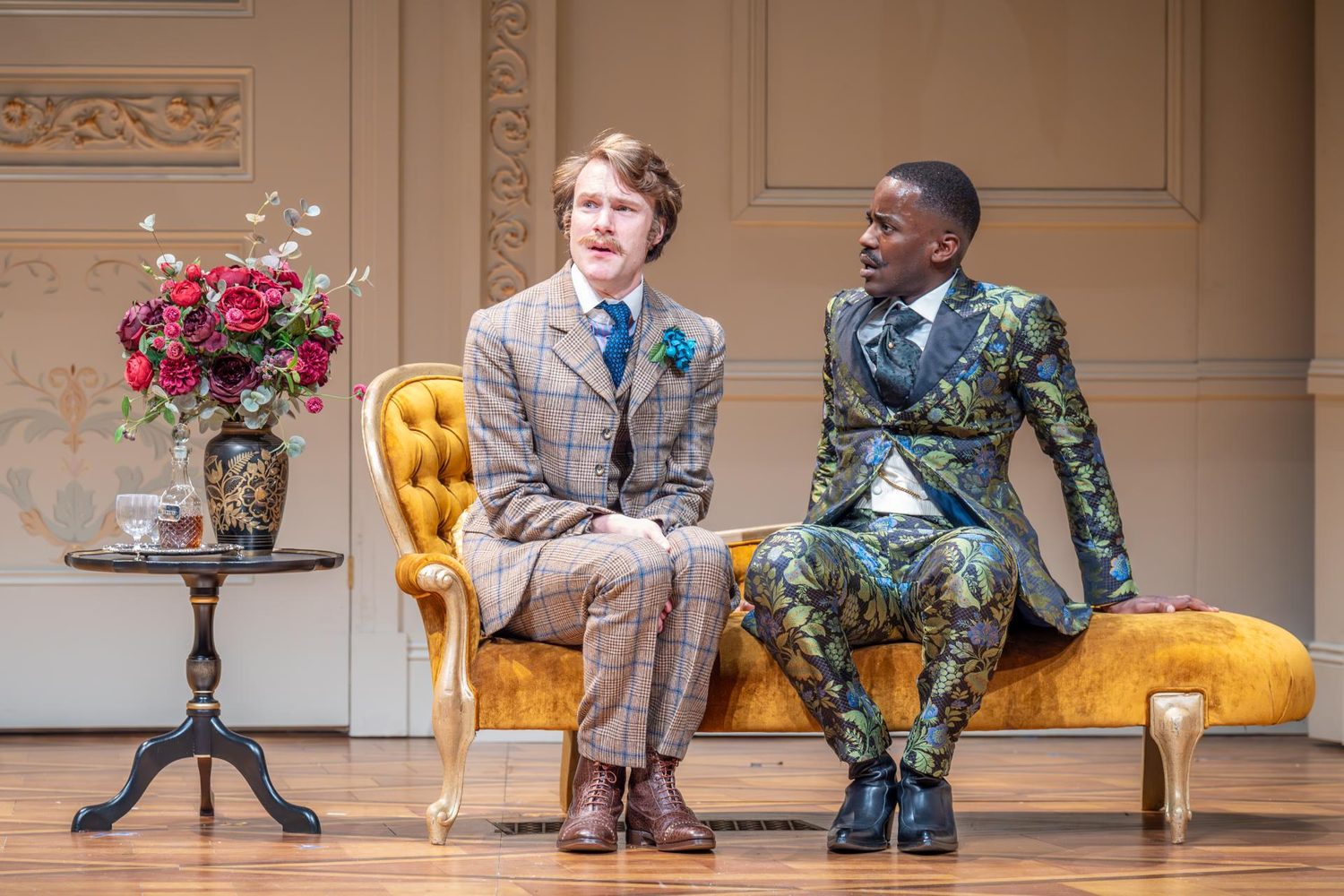
And what delivery it is! Directed by Max Webster, this is an overt celebration of queerness, Wilde’s subtext amplified to the nth degree. From the opening number, where Algernon (Ncuti Gatwa) shimmers in pink-sequinned drag, to the exuberant Mardi Gras-style finale, the closet door is flung wide open, making for a fabulously unsubtle show. To quote the wild wit himself, “moderation is a fatal thing; nothing succeeds like excess.” Webster has certainly taken this to heart.

The plot – for those who need a reminder – is at once frivolous and deadly serious. On the surface, it’s a frothy farce, all mistaken identity and foolish foppery. Underneath, it’s about repression – about the lengths people are forced to go to when their very natures are outlawed. Unbeknownst to each other, both Algernon and his best friend, Jack (Hugh Skinner), have found inventive ways to circumvent society’s disapproval of their predilections. Algernon has a pretend-friend, Bunbury, whose ill health Algy uses to excuse himself from dreary social events, while Jack has an alter-ego – an imaginary older brother called Ernest – who gets into mischief whenever he visits the city.

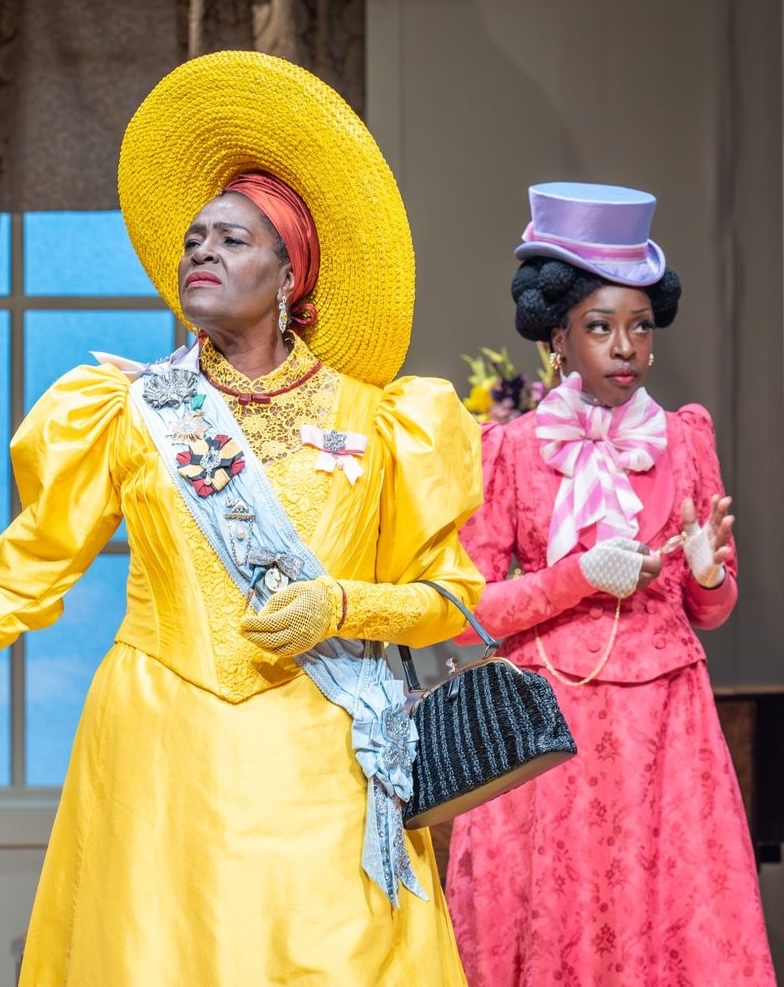
But things become complicated when Jack falls in love with Algy’s cousin, Gwendolen (Ronke Adekoluejo), whose mother, Lady Bracknell (Sharon D Clark), is far from pleased about the match. In desperation, Jack confesses his lies to Algy – who, true to form, responds by assuming Ernest’s identity for himself, and heading off to Jack’s country house to woo his pretty young ward, Cecily (Eliza Scanlen). Throw in a conflicted clergyman (Richard Cant), a dithering governess (Amanda Lawrence) and a couple of manservants (both played by Julian Bleach), and the scene is set for some merry mayhem.

The multi-racial casting within a period drama (courtesy of Alastair Coomer and Chloe Blake) gives the piece a contemporary edge, as do the occasional strains of recent-ish pop music and a cheeky allusion to one of London’s gay hotspots. Gatwa’s newfound fame as Dr Who also helps this production to appeal to a hip young audience, as does the sexual fluidity of the characters.

Clark’s depiction of Lady Bracknell is inspired: she brings a whole new dimension to the part, dispelling all my preconceptions of the character. Here, those oh-so-familiar lines are imbued with a haughty charm to create a formidable British-Jamaican matriarch without so much of a hint of Dench. Adekoluejo’s Gwendolen is a chip off the old block, saved from monstrousness by her cleverness and humour. In contrast, Scanlen’s Cecily is deliciously weird, a mix of doe-eyed intensity, sweetness and steel. But there are no weak links here: even Bleach, in the minor roles of Lane and Merriman, makes his mark, creating two distinct but equally absurd personae, evoking laughter with the simplest of smirks or stumbles.

More than anything, though, this is Skinner and Gatwa’s show, the focus firmly on the men’s friendship and their journey towards coming out. Their performances are jubilant and euphoric, and yet deceptively weighty, carrying with them real emotional heft. I can’t help thinking about Wilde, condemned to hard labour for his homosexuality, and wondering what he’d make of this? Surely, it would gladden his heart to see his characters finally set free.

5 stars

Susan Singfield
The Devil All the Time

23/09/20

Netflix

Imagine the vibrant Americana of the Coen Brothers, twisted into a seething vat of venomous corruption and you’ll pretty much have the measure of The Devil All the Time. Directed and co-written by Antonio Campos and based on a novel by Donald Ray Pollock (who serves as our narrator), this is a multi-layered, labyrinthine slow-burner of a film, where a whole string of characters are linked by a series of weird coincidences. In Pollock’s bleak world view, the blame for most of the evil that plagues humanity can be laid squarely at the door of organised religion.

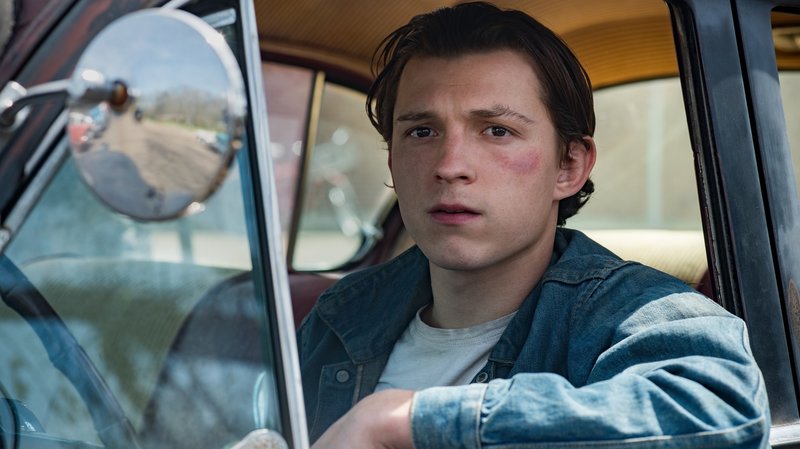
The central character, Arvon Russell (Tom Holland), is one of the few sympathetic human beings in this narrative, and even he is someone given to Old Testament levels of brutality towards anyone who wrongs his much-loved step sister, Lenora (Eliza Scanlen). Arvon’s violent tendencies stem from the treatment he received from his God-fearing Dad, Willard (Bill Skarsgard), who very much believed in the eye-for-an-eye approach and whose treatment of the family pet is particularly hard to stomach. Lassie Come Home, this really isn’t.  

Elsewhere, we encounter the Reverend Preston Teagarden (Robert Pattinson), a sleazy preacher with a predilection for seducing young girls: crooked cop Lee Bodecker (Sebastian Stan) who’ll do whatever is necessary to further his ambitions, and a particularly vile couple, played by Jason Clarke and Riley Keough, who get their kicks from picking up young male hitchhikers…

On paper, it all sounds rather relentless but, unfolded as it is in a slow, measured narrative, it’s a surprisingly powerful brew. As Arvon is led inexorably deeper and deeper along the path to retribution, I find myself gripped right up to the final credits. It helps that a whole menagerie of talented actors submit nuanced performances here, particularly Holland who proves beyond a shadow of a doubt that there’s a lot more to him than slinging webs.

This may not be to everybody’s taste. As a vision of the United States, there’s little here resembling any kind of hope for the country’s collective soul. Indeed, it is a tale so excoriating, so morally bankrupt, that you can only feel a nagging worry for the society that spawned it. 

The Devil All the Time is a Netflix original, ready to watch whenever you have the time, or the nerve, to take it on.

4.2 stars

Philip Caveney

Babyteeth

02/09/20

Milla (Eliza Scanlen) is sixteen years old and going through a rough time. Already alienated from her schoolmates, struggling to co-exist with her concert-pianist mother, Anna (Essie Davis) and her psychiatrist father, Henry (Ben Mendelsohn), she’s also trying to keep things together as a terminal illness exerts an increasingly powerful grip upon her.

So when she falls head-over-heels for local tearaway, Moses (Toby Wallace), a free-living, drug-abusing twenty-something, her parents are far from delighted at his unexpected appearance in their suburban home – particularly when his urgent need for drug money prompts him to try and rob the place. But Moses is Milla’s first romantic crush and he’s almost certain to be her last… so Anna and Henry realise they are going to have to let her take the lead on this.

Perhaps the most refreshing thing about Babyteeth is its steadfast refusal to allow any of the usual ‘brave victim’ clichés to step into the mix. Indeed, for quite some time, Milla’s cancer is barely mentioned, so when it finally does step into the frame, it delivers something of a gut punch.

Scanlen, last seen as the least interesting character in Little Women, is a revelation here, quietly dominating the screen with her sparky presence. Wallace too does a fabulous job of making the initially deeply unlikable Moses into a fully formed character, redeemed both by Milla’s love for him and by her parents’ touching decision to allow him into the family fold. This could have been extremely mawkish, but is so adeptly handled that it really isn’t. Davis and Mendelsohn too submit nuanced performances that make them so much more than just supporting players. We share their anxieties, their frustrations and their unswerving devotion to the daughter they love.

Babyteeth marks the assured directorial debut of actor Shannon Murphy, and she’s aided and abetted by Rita Kalnejais’s inventive screenplay, the story punctuated by a series of quirky chapter headings, giving this the feel of a superior teen novel.

The only tragedy is one of timing. There are only a handful of people at the afternoon screening we attend and that’s a shame. In safer times, I have no doubt, this would be pulling in decent crowds and deservedly so. It’s an affecting story – and expertly told.

4.7 stars

Philip Caveney

Little Women

15/12/19

Here, at last, are screen versions of the Little Women I’ve had in my head since I read the book when I was eight. Headstrong, unconventional Jo, born to write and desperate for a bigger life; romantic Meg, yearning for riches but choosing (relative) impoverishment with her one true love; shy, saintly, not-long-for-this-world Beth; and Amy, little Amy, all drive and ambition, always trying to impress (or beat) Jo.

I grew up with these girls, and every adaptation I’ve seen has failed to realise them convincingly. Except Jo, of course; there are lots of lovely screen-Jos (Katherine Hepburn, June Allyson, Winona Ryder). She’s the most captivating character, the Lizzie Bennett: it’s easy for a good actor to capture her spirit. But her movie sisters have always been a disappointment to me, even when played by talented performers. They’ve never felt right. Until now.

Saoirse Ronan makes a marvellous Jo (of course she does); Emma Watson perfectly embodies Meg’s earnest longing; Eliza Scanlen imbues Beth with strength as well as a sweet nature. But it’s Florence Pugh’s pugnacious, jealous Amy that has me almost exclaiming with delight. Here she is: a proud and lively girl, both friend and rival to her big sister Jo. She’s bloody brilliant.

Writer-director Greta Gerwig shows us once again how talented she is: this is Little Women writ large, barely deviating from the source material, but bringing contemporary resonances to the fore. There’s less piety and sermonising here than there is in Alcott’s novel, and the chronology is disrupted, so that we first meet Jo as an already published, ambitious woman, negotiating the terms for her latest stories while working in New York. The girls’ childhood is shown through a series of flashbacks, and we flit back and forth in time, never confused, even though the same actors perform throughout, ageing ten years through hairstyles, clothing, poise and gait. This structure gives prominence to the women the girls become, contrasting their childhood aspirations with what they actually achieve.

There’s such vivacity and energy here, it’s impossible not to be charmed; Gerwig has captured the very heart of Alcott’s fictionalised autobiography. The story arc actually works better in the film, and the audacious ending is a genuine master-stroke.

Timothée Chalamet is an inspired choice for Laurie, depicting with ease the neighbour’s loneliness and need for love, as well as his playful decadence. Laura Dern makes an excellent Marmee, and who else but Meryl Streep could have played Aunt March to Ronan’s Jo?

I have a couple of quibbles. I don’t know why middle-aged, paunchy, German Professor Bhaer is replaced with a young, handsome Frenchman (Louis Garrel);  why shouldn’t Jo establish a less conventional friendship? And I would like to see more of Meg: her character is well-established, but her storylines are too truncated, I think.

But honestly, these are just tiny niggles. This movie makes me really happy; indeed, the last ten minutes have me grinning so widely I actually hurt my face. Bravo! A fabulous film to end the year.

5 stars

Susan Singfield