

Edinburgh

I Can Go Anywhere

10/12/19

Traverse Theatre, Edinburgh

Douglas Maxwell’s I Can Go Anywhere takes its title from The Who’s 1965 single, Anyway, Anyhow, Anywhere, one of the earliest musical celebrations of Mod identity. This sharply written two-hander also explores identity, but approaches the subject from a refreshingly original angle.

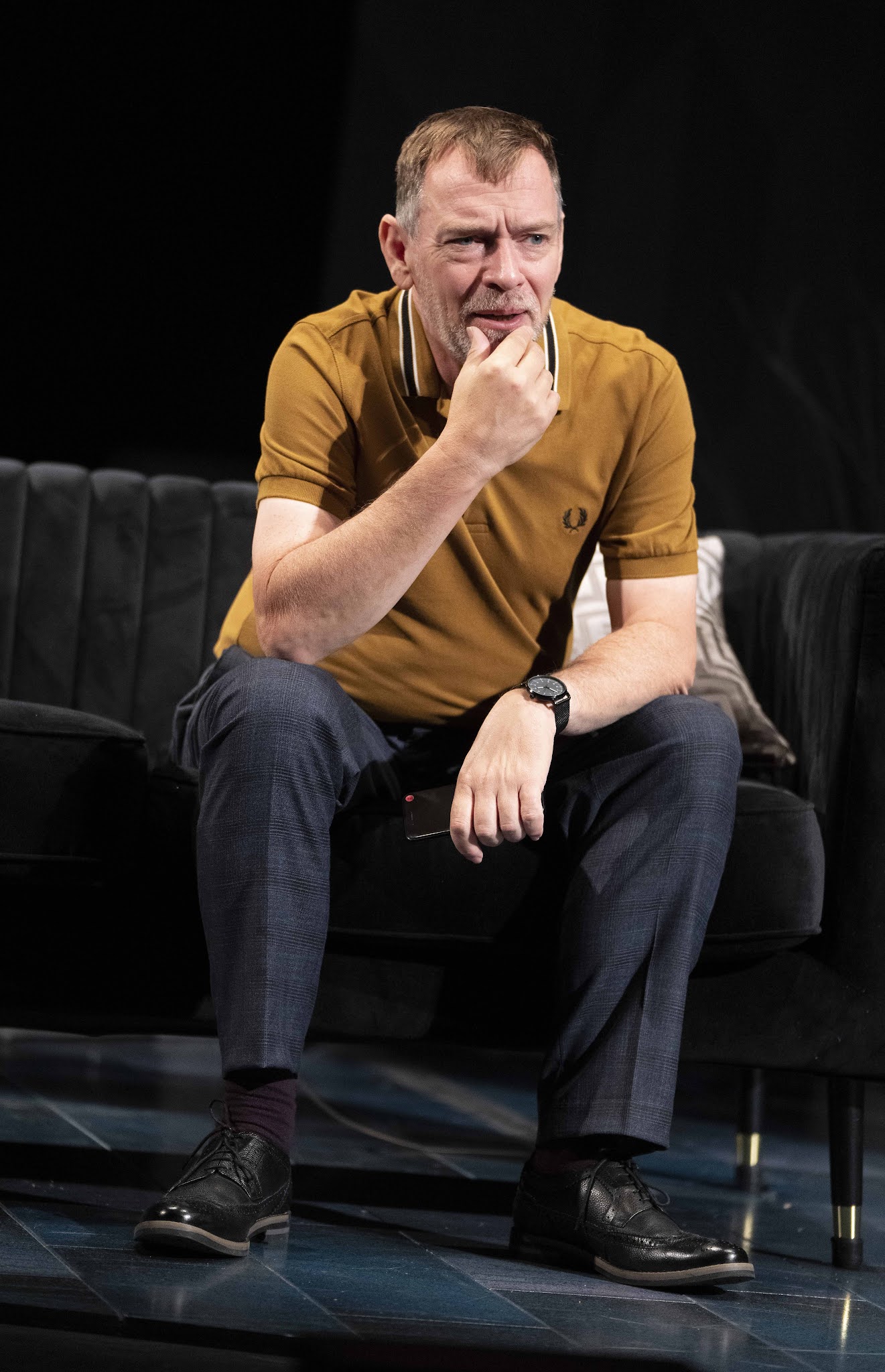
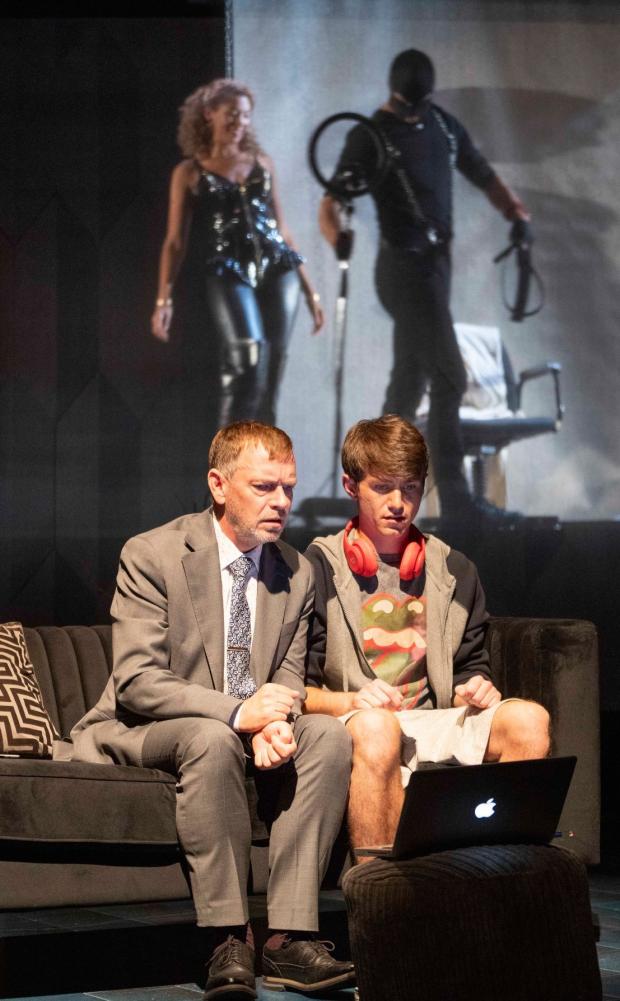
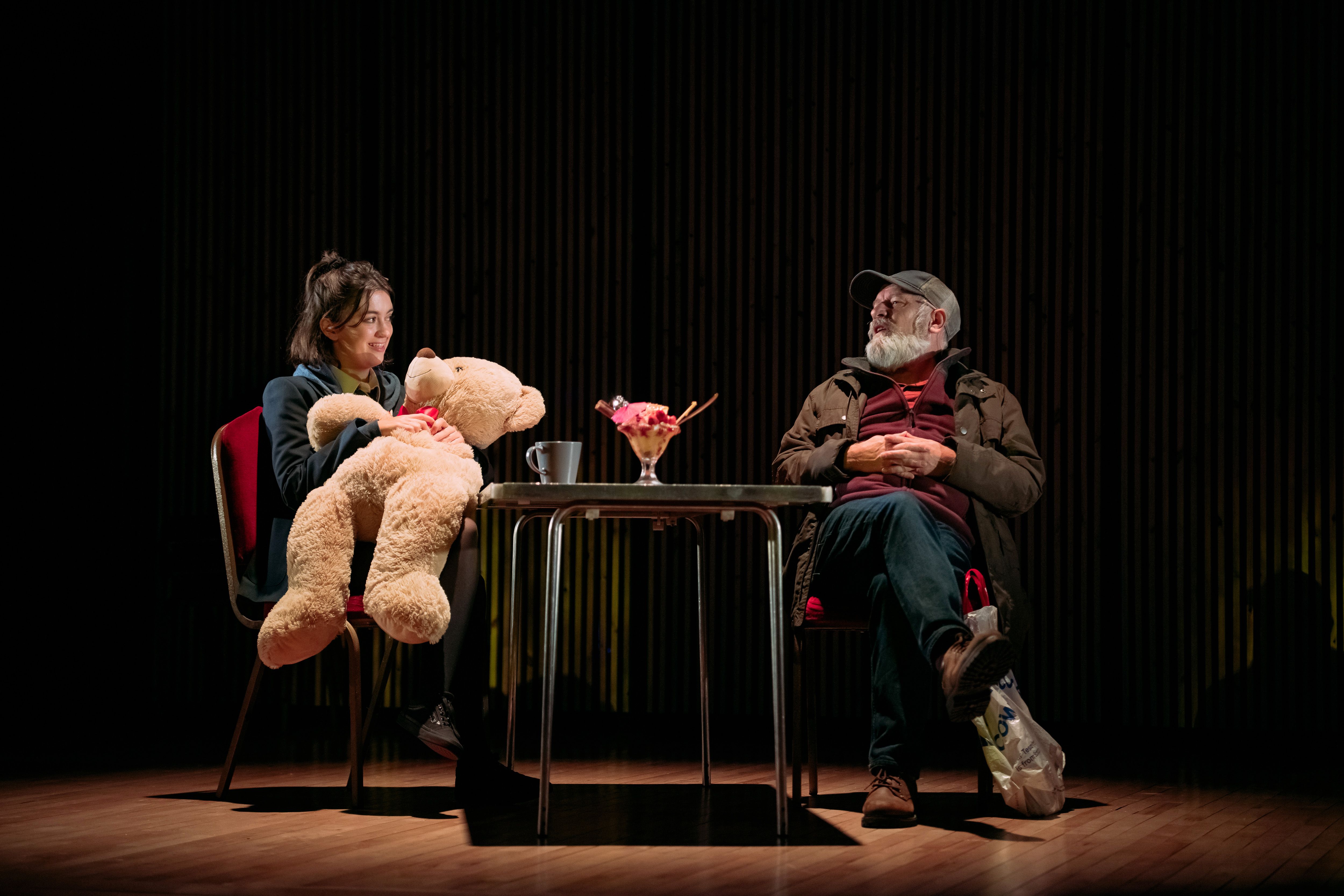
Stevie Thomas (Paul McCole) is a disillusioned college lecturer, the author of a barely read book called Beat Surrender, a study of mod culture. He is currently going through the worst ordeal of his life. When his doorbell rings, he’s hoping that his partner might be having second thoughts about leaving him. But instead, he’s confronted by Jimmy (Nebli Basani), a mod – well, not just that, but a young man who Stevie asserts looks like he’s escaped from the 1981 room of the Paul Weller Museum. He has the works: the oversized fishtail parka, a fitted mohair suit, even a pork pie hat. “Even his socks are works of art.”

Asylum seeker Jimmy has tracked Stevie down via the jacket blurb on his book, and wants his help with something. In three days’ time he has a hearing at the Home Office to establish whether he will be allowed to stay in the UK. Jimmy wants Stevie to write him a letter of recommendation, one that asserts his ‘mod-ness,’ which Jimmy believes will be enough to assure him a rightful place in British society. Stevie is doubtful. But as the two men talk over the situation, it begins to emerge that Jimmy has very powerful reasons for not wanting to return to the country of his birth… and they go far beyond the world of youth culture.

I Can Go Anywhere is a compelling play, that crackles and fizzes with witty dialogue. The two actors offer telling performances. At first, I feel that Basani is rather overstating Jimmy, who initially appears to be a twitching, gurning mass of neuroses – but, as the story develops, I begin to appreciate exactly why he’s the way he is, and I warm to him. McCole is assured too, showing us a man on the verge of losing everything, unwillingly pushed into a corner by this insistent, assertive youth, who has burst into his fractured life with all the delicacy of a drum kit falling down a flight of stairs. As Stevie seeks refuge in several glasses of red wine, so his true nature begins to rise to the surface.

The other bonus here is the music; even the songs that play while we’re waiting for the show to start are a series of brilliant offerings: the Kinks, the Small Faces… Spot on, man! I also like the fact that the play doesn’t give you too much information. We never learn which country Jimmy comes from, or even his real name; though the horrors he has experienced in his youth are never spelled out, they are nonetheless tellingly glimpsed.

This is a little gem. Those who are already suffering from a surfeit of festive offerings might prefer to opt for this menu instead. It offers a tasty alternative.

4.4 stars

Philip Caveney
 

Southside Scran: Festive Set Menu

01/12/19

Bruntsfield Place, Edinburgh

‘Tis the season for festive dining, and here at B&B, we’re always on the lookout for good deals, so the announcement of a new festive set menu at the Southside Scran is something that needs to be investigated at our earliest opportunity. So here we are at lunchtime on December 1st (can’t get any earlier than that!), all ready to eat, despite the fact that the two friends due to accompany us have bailed at the last moment because of a not-so-festive lurgy.

We love the Scran; part of the Tom Kitchin group, not only is it a short walk from where we live, but – more importantly – we’ve never come away from this place disappointed. We take our seats and enjoy the fresh ciabatta, butter and goose liver paté that’s always served here. Then the starters arrive. I’ve been missing paté, due to the fact that it seems impossible to buy in this country, unless it’s encased in layers of plastic. So I’m happy to opt for the rabbit rillette, which proves to be light and creamy and full of flavour. It’s accompanied by salad and toast. Susan has the goat’s cheese vol-au-vent, a delightfully flakey pie, which comes with tangy red onion marmalade and drops of basalmic vinegar.

We both want the turkey ballotine for the main course (though we’re torn between that and the roasted pumpkin risotto, which we’ve had before and loved.) But turkey wins the day and it looks and tastes amazing, with chunks of brussel sprout, potato, crispy salty lardons and a pretty heritage carrot on the top. There’s a jug of rich, red wine gravy to finish things off. Those who feel a roast dinner should occupy half an acre of plate may look down on this, but it encompasses all the flavours of a Christmas dinner and is suprisingly filling.

Room for pudding? Well, go on then. It’s almost Christmas!

I choose the chocolate mousse & citrus sablé, which is satisfyingly rich, while Susan opts for the mincemeat and frangipane tart, served with brandy crème Anglaise. This too is an utter delight and I say that as somebody who has only been able to eat mincemeat for a relatively short while, due to a long childhood aversion to the stuff, now conquered.

The three course set menu (£30 per head) comes with tea or coffee, and those hearty types who still have some room to spare can add a cheese course for a little extra. Of course, you can also mix and match. We add a couple of sides from the bistro menu at £4.50 each – some warm, crunchy French beans with hazelnuts and shallots and, as ever,  a bowl of macaroni cheese, because… well, because we’re hopelessly addicted to the stuff. And don’t tell me it doesn’t go with turkey. Macaroni cheese goes with everything. Fact.

All in all, this is a superbly satisfying way to get the festive season off to a perfect start. And it’s also excellent value for money.

5 stars

Philip Caveney
How the Grinch Stole Christmas: The Musical

26/11/19

Festival Theatre, Edinburgh

Goodness, is it that time of year already? That time when entire families run frantically around the shops loading up on presents for the family? That time when baubles, tinsel and unecessary plastic objects appear in every window? Bah! You know, when I think about it, the Grinch and I have quite a bit in common.

However, one Christmas tradition well worth preserving is the annual family trip to the theatre and, this year, first off the starting block in Edinburgh is the Festival Theatre, with this lush and lively adaptation of the Dr Seuss classic, How the Grinch Stole Christmas.

Of course, the problem with Seuss is that his slim volumes are so deceptively simple, they manage to effortlessly pack each complex tale into just a few cartoons and some amusing verse. This can create problems for those seeking to adapt his work for the stage. In order to achieve the necessary running time, it can often feel like too much padding has been added to the mix. But tonight, this is not the case: a musical is clearly an ideal way to spin the format out without loads of repetition.

First off, there’s a short introduction from Gregor Fisher, who reads a few pages of the book to a bunch of youngsters recruited from the audience. It’s not a particularly auspicious start, because the children aren’t really given anything to do but sit there and listen. However, as soon as the music strikes up and the Whos dance onto the stage, it’s clear that we’re in for an exhilerating ride. The songs are charming, and the choreography a delight. The costumes are eye-popping and the set design (based on the good Dr’s distinctive illustrations) provides a riot of festive colours.

Then on comes Old Max (Steve Fortune), the Grinch’s faithful hound who tells us the story of when he was Young Max (Matt Terry) and how, one fateful night, he was enlisted to aid the Grinch (Edward Baker-Duly) is his devious plan to kidnap Christmas and leave the Whos of Whoville bereft of Christmas cheer. Suess’s central message about the perils of consumerism is properly conveyed, together with the conclusion that Christmas should be (and can be) something much deeper than a mere trip to the shops. Whenever there’s a danger of it all becoming a little too sentimental, the script manages to pull things back to the right side of the line.

Baker-Duly gives us a splendid Grinch, slyly snarky and deliciously devious, thrilling the youngest members of the audience, while sneakily throwing in jokes for their parents. Special mention should be made of Isla Gie, playing Cindy Lou Who on the night we attend. The Grinch in me hates to use the word ‘adorable,’ but after some consideration, I really can’t think of a more apropriate one, and Gie comes dangerously close to walking off with the entire show.

As you’d expect from any Christmas production, TGWSC has all the pyrotechnics you could reasonably ask for, including a pretty convincing snowfall (I’d hate to be handed the task of cleaning it up afterwards).

Those looking for an enchanting festive night out for all the family will surely find what they want right here.

4.2 stars

Philip Caveney
Cabaret

06/11/19

Festival Theatre, Edinburgh

I think I know Cabaret because I’ve seen the movie. I love the movie. But tonight, at the Festival Theatre, I quickly learn that the stage version is very different. At first I’m disappointed. One of the things I like most about the movie is that it’s a musical where the songs are all supposed to be songs, performed in a club or at a rally. Here, characters sing instead of speaking, break into song to declare their love. In short, it’s a more traditional musical. And, as it goes on, I come to appreciate it.

Cabaret the movie is very much Sally Bowles’ story – and, of course, it’s Liza Minelli’s film. Here, Sally (Kara Lily Hayworth) has to share the limelight with two other leads: Emcee (John Partridge) and Fräulein Schneider (Anita Harris). It’s New Year’s Eve, a breath away from 1931; we’re in Berlin – and American wannabe novelist, Cliff (Charles Hagerty), is seeking inspiration.  At the train station, he meets the charming, erudite Ernst Ludwig (Nick Tizzard), who recommends Fräulein Schneider’s boarding house, and arranges to meet him at the bawdy Kit Kat Club, where English Sally is a dancer. It’s an intoxicating, hedonistic place,  but – even within these walls – the creeping march of Nazism cannot be avoided forever…

The choreography (by Javier de Frutos) is stunning: sexy, vibrant, funny and spectacular. Indeed, in the first act, the big number club scenes almost eclipse the story. Standout routines include the lewdly hilarious Two Ladies and the unsettling Tomorrow Belongs to Me. The orchestra are integrated with the action, on an upper tier, visible when we’re in the Kit Kat Club, but otherwise behind a screen. This works well, implying that they’re employees of the club.

The relationship between Sally and Cliff seems a bit muted, which makes sense, I suppose, as – in this version – she’s only staying with him because she’s lost her job and has nowhere else to go. Of course, he’s gay and she’s not one for commitment, so it was never going to be a forever thing, but I would like to see a bit more spark. Otherwise, Hayworth makes a lovely Sally – all wit and vivacity, with a beautiful singing voice – and Hagerty does a decent job as Cliff.

The storyline between the elderly Fräulein Schneider and her beau, Herr Schulz (James Paterson), is particularly emotive, their tentative steps towards romance thwarted by anti-Semitism. Harris and Paterson are nicely understated in these roles: they show the fortitude of those who’ve learned not to expect much; they’ve already survived one war and lived through hyper-inflation. Their pragmatism is heartbreaking, and provides an interesting counterpoint to both Cliff’s naïve idealism and Sally’s determined ignorance.

The second act is more compelling than the first: by now, we care about the characters, and the Nazi undercurrent is getting stronger. Partridge’s Emcee is getting visibly more edgy, his playfulness takes on a desperate tone. And we watch, horrified, as it all unravels, waiting for the inevitable horror we know must come.

The final scene is awful in the truest sense; it’s a powerful set piece, exemplifying Rufus Norris’ directing prowess. I won’t describe it here, because I think its impact relies on some element of surprise; suffice to say, the applause is accompanied by a sense of unease, the usual whoops and cheers that follow a rumbustious musical take a little while to erupt. And it takes a craftsman to achieve that.

4.1 stars

Susan Singfield


The Exorcist

05/11/19

King’s Theatre, Edinburgh

Pah! Who needs to see a bonfire and fireworks in November in Edinburgh? There’s a surfeit in August and at New Year – and The Exorcist is on at the King’s. Yes, The Exorcist. So how can I resist that?

William Peter Blatty’s 1971 schlocky horror story seems quite old-fashioned now, but it’s still pretty compelling. For those who’ve never read the book or seen the film, it’s about a girl called Regan (Susannah Edgley), who – on her twelfth birthday – is possessed by a demon. Her film star mother, Chris (Sophie Ward), is at a loss: what has happened to her sweet daughter? She calls in doctors and psychiatrists, but they make little progress. So Chris appeals to the Catholic church, begging them to arrange an exorcism. Father Merrin (Paul Nicholas) has met Regan’s demon before, and the battle to save her is a brutal one. Pubescent girls are a recurring theme for horror writers, from Snow White (and yes, I contend that is a horror) to Carrie, but Blatty’s depiction of emerging sexuality is the least subtle I know. I’m pleased to report that this adaptation doesn’t shy away from the more blatantly shocking elements, indulging the demon’s potty-mouth and the misuse of Christian imagery. Bravo.

Technically, this production is very good indeed. The lights (by Philip Gladwell) are utilised to excellent effect, blinding the audience during some jump scares, and creating a queasy, uncomfortable atmosphere. Likewise the sound (by Adam Cork), which perpetuates a sense of uneasiness throughout. The special effects are cunningly achieved, and the timing of the voiceovers is impressively precise. This ensures the all-important scare factor, without which this play would die a death.

There are some issues though. The set, although it looks magnificent, seems unnecessarily complicated, with stairs leading up to a bedroom that is clearly beneath them. I like the two-storey idea, and both the stairs and the attic space accommodate important dramatic moments, but the pointless complexity of the lounge and bedroom being on separate floors is both disorientating and distracting.

There are also a few too many characters. In the novel and film versions, this doesn’t feel like a problem, but here, the stage feels cluttered with people who don’t add much to the tale. Both Joseph Wilkins (Father Joe) and Stephen Billington (Dr Strong) perform well, but their presence seems extraneous.

The second act is tighter than the first, maybe because the story is more distilled here, and there’s less of a disconnect between the highly technical production and the hokey dialogue and plot.

Whatever. It’s not perfect. But it’s a genuinely engaging, scary piece of theatre – and that’s not easy to achieve.

3.7 stars

Susan Singfield

Gaucho

Gaucho looks as though it were built primarily to illustrate what the word ‘sleek’ might look like. It’s a combination of dark grey and mirrored surfaces, glitzy lights that hang low over the diners, quiet Latin American music pulsing in the background. It’s early evening in Edinburgh on a particularly dreich night, and we arrive like two half-drowned cats, dripping helplessly onto the carpet. A friendly attendant takes our coats and brings us a couple of tall glasses of Prosecco, which we consume in the upstairs bar, before descending to the dining area. Here, our waiter brings us a tray, where various cuts of meat are laid out for our inspection, so we can properly appreciate the differences between them.

We are brought a plate of bread and some herb butter. The slices of wholemeal are fine but there’s a couple of crunchy white rolls that have a satisfyingly homemade flavour to them, particularly when they’re plastered in that butter.

I start with a potato and salmon salad – the salmon flakey and perfectly poached, surrounded by crispy Ratte potatoes, endives and onion purée, the whole thing drenched in tangy lemon mayo. It’s an excellent start. Susan opts for an Empanada, a dainty pastry parcel filled with sweet corn and mozzarella. This is also nice, though I suspect mine is the more satisfying of the two

Next up, for me it has to be a steak. I choose what the Argentinians call a chorizo, which is just a succulent sirloin, served medium rare and bordered by a strip of juicy crackling. It cuts easily with an ordinary knife (always a good sign) and has a pleasing strip of crispy fat along one edge. I’ve certainly had more impressive steaks than this around Edinburgh, but I make short work of it and have no complaints. It’s accompanied by a side of chips, cooked with the skin on and there’s  a pleasantly spicy pepper sauce. There’s nothing wrong with Susan’s chicken Milanese, topped with a fried egg and garnished with rocket and Parmesan, but it’s perhaps a little too redolent of the deep fat fryer for her taste. 

We both order a side of mac’n’cheese – I know, I know, it doesn’t really go, but we’ve have a crap couple of days and we both feel like being indulgent. These are fairly hearty portions and perfectly nice in their own way, but not quite as spectacular as those offered at The Bruntsfield Chop House, where the sauce is thick and gooey and loaded with cheese. (You don’t order this dish for its health benefits.)

However, when it comes to the puddings, ‘indulgent’ is definitely the word to choose when describing them. My sticky toffee pudding comes with a generous helping of dulce de leche sauce, a dollop of clotted cream and delicious chunks of honeycomb. It’s absolutely mouthwatering. Susan’s salted dulce de leche cheesecake is also a winner, super sweet and so filling, I have to help her with the last couple of spoonfuls. (I’m useful like that).

We’re thoroughly sated and reluctantly head back out into the downpour as full as two ticks. 

3.8 stars

Philip Caveney

 

Hope and Joy

01/11/19

Traverse Theatre, Edinburgh

Ellie Stewart’s Hope and Joy is a quirky, absurdist piece of whimsy, set in a near future where environmental change has wrought a radical shift in nature. A shift so radical, in fact, that the opening scene shows Hope (Kim Gerard) giving birth to an egg. The father is a Whooper swan, we learn, and her son, Magnus (Ryan Havelin), a human-swan hybrid – costumed, delightfully, in a fabulous winged hoody. Hospital cleaner Joy (Beth Marshall) sees the boy’s ability to fly as a definite plus-point, but – as he grows up – the kids at school are less accepting of his differences. Hanging out with a gang of dissolute pigeons only makes things worse, and Magnus soon realises he needs to spread his wings (sorry…), and seek the company of others who are more like him.

It’s a fun play with some serious points underlying the humour, such as the letter Joy receives regarding her mum’s social care. The melting ice caps are, of course, a real cause for concern, and this fantastical imagining of where we might end up serves to highlight how unknown and precarious our planet’s future is. Themes of friendship, parenthood, otherness and isolation are also clear throughout, although rather superficially explored.

Becky Minto’s set is as wonderful as you might expect if you’ve seen her work before: a jagged white hospital bed/house/pole -dancing stage surrounded by stark black tree trunks. Caitlin Skinner’s direction is lively and dynamic, and – for the most part – works in harmony with the set, although I’m not convinced by the actors crouching off-stage, half-hidden in the woods; I think they need to be either properly concealed or more explicitly visible.

The performances are strong: Gerard and Marshall inhabit their roles effectively, creating bold, sympathetic characters, and Havelin is engagingly awkward as the diffident teenage bird-boy. The section in the pole-dancing club is less believable however: it’s an interesting twist, but the posing and spinning need to be more carefully choreographed, and delivered with more precision and control if they’re to be convincing.

Hope and Joy is throughly entertaining and an absolute pleasure to watch: an enjoyable way to spend an hour.

3.4 stars

Susan Singfield

Fibres

29/10/19

Traverse Theatre, Edinburgh

Fibres is Frances Poet’s ‘heath and safety’ play, an emotive response to her discovery that an acquaintance had lost both parents, six months apart, due to asbestos poisoning. Poet’s perception of asbestos as ‘something dangerous from the past’ was exposed as a fallacy; subsequently, she learned that more people die of asbestos-related illnesses each year than die in traffic accidents, that the NHS will be footing the bill for corporate greed/negligence until 2040. Mesothelioma takes between twenty and fifty years to develop, and even brief exposure is enough to kill.

Indeed, the brevity of exposure is a key feature of this play. Jack (Jonathan Watson) only works as a shipbuilder for a few days; he’s nervous about the asbestos dust he’s been warned about, so takes a pay cut and becomes an electrician. He thinks he’s dodged a bullet. His wife, Beanie (Maureen Carr), washes his overalls, a simple domestic act fraught with symbolism, as the fibres enter her lungs too.

As you might expect from Poet, there are many layers to be unravelled here; it’s not a simple polemic. There are parallels drawn between the asbestos fibres and the impact of traditional gender roles on a relationship: a slow, invisible poisoning.

Despite the subject matter, it’s not all doom and gloom. Jack and Beanie are a believable couple, muddling through as best they can. They’re facing the horror with fortitude and humour: Jack loves a bit of comedy, and has a catalogue of cringey jokes. Their daughter, Lucy (Suzanne Magowan), is struggling, but her breakdown is shown through a series of bleakly humorous, hide-your-eyes-behind-your-hands-while-your-toes-curl moments.

Breaches in health and safety protocol are given a human face, in the form of Lucy’s boss, Pete (Ali Craig). They work for a fibre optics company, and he’s up against it, trying to meet the demands of a contract while allowing his workers their requisite study days and sick leave. He’s fed up with the union rep’s ‘unreasonable’ demands, preventing him from getting the job done. We’re shown how it happens, how decent people can be pressured into repeating old mistakes. But Pete is given a chance to learn: his fondness for Lucy redeems him.

If this all sounds a bit po-faced, don’t be misled. This plays as a cleverly written domestic tragedy, with a window onto larger political issues. The actors switch between narration and performance; the set (by Jen McGinley) is a fluid, symbolic space, where the characters flit between life and death, the past and the present, dark humour and even darker anger. Jemima Levick’s assured direction ensures that there is no confusion: we always know where and when events are taking place, the pace allowing us time to digest what’s happening.

Fibres is a vital, heartbreaking play with an important message at its core.

4.1 stars

Susan Singfield


Barber Shop Chronicles

24/10/19

Lyceum Theatre, Edinburgh

There’s a different vibe in the Lyceum tonight: a youthful, energetic atmosphere. We take our seats fifteen minutes early, but the party’s already in full swing, with audience members invited up on to the stage, where the twelve-strong cast are dancing, chatting and miming cutting people’s hair. A couple of teenagers from the front row run up the steps self-consciously; within seconds they’re in barbers’ chairs, laughing with the actors standing behind them. A middle-aged man tries in vain to copy some dance moves; he’s having a great time. An actor wanders through the auditorium, shaking hands, making daft jokes. This immersive opening has a clear message: Barber Shop Chronicles is an inclusive piece of theatre, and we’re meant to be more involved than mere observers.

Inua Ellams’ play was first performed two years ago at the National Theatre (who co-produced it with Fuel and Leeds Playhouse). Since then, it’s been on tour, and its success is well-deserved. An intimate piece that spans six countries; a politically-charged play that doesn’t proselytise; a comedy that brings its audience to tears: Barber Shop Chronicles is nothing if not original.

The conceit is simple: a barber is not just a man who cuts his clients’ hair. He is also a counsellor, his shop is a confessional. And, if this is true, if men really do open up to their barbers, then what can we glean if we listen in? London-based Ellams’ research took him to South Africa, Kenya, Uganda, Nigeria and Ghana, and he returned with sixty hours of recordings on which he based his play. The authenticity of the voices rings true throughout, exploring the experiences of black men in Africa and the UK. We flit between time zones and hairdressers, the clocks whizzing round at double speed to take us between continents. In each shop, they’re watching the same football match (Chelsea vs Barcelona), each disparate group united by their interest in the sport.

There’s a lot to take in; under Bijan Sheibani’s direction, everything happens at breakneck speed. I like this: sure, there’s not always time to absorb one idea before another comes along, but the overlapping stories and fragments of ideology feel wonderfully realistic, adding to the impression that we’re listening in to what real people have to say.

The performances are exuberant for the most part, but quiet and heartfelt when required. This is true ensemble work, with a real sense of a team creating something together. The scene transitions are fascinating, the choreography both lively and precise.

The best thing, though, is the wide-ranging conversation, encompassing little-heard persepctives on everything from Nigerian Pidgin to Mugabe, from high performance cars to fatherhood. It’s densely packed – and never dull.

4.2 stars

Susan Singfield

The Monstrous Heart

23/10/19

Traverse Theatre, Edinburgh

Oliver Emanuel’s The Monstrous Heart takes place in a remote log cabin in the wilds of Canada, where Beth (Charlene Boyd), recently released from a long prison stretch in England, reconnects with her mother, Mag (Christine Entwhistle). It’s clear from the outset that this is not going to be a warm family reunion. The two women have unfinished business, business that relates to the little girl in the next room – and the threat of physical violence hangs heavy in the air.

There’s another protagonist in this story in the (very realistic) form of a dead grizzly bear, stretched out on the kitchen table, where it’s in the process of being stuffed by Mag, who, after an alcoholic past, has somehow rebuilt her life and now works as a respected taxidermist. The bear is a great big metaphor and its massive frame dominates the set, in some cases (perhaps deliberately?) blocking the sight-lines for some of the story’s action. Director Gareth Nicholls does his best to orchestrate the ensuing antics and, to give the actors their due, they subit powerful performances here. Boyd offers a devilish, gleefully nihilistic Beth, while Entwhistle’s Mag is a parcel of twitching uncertainty, never more compelling than when she tells her daughter exactly what she thinks of her.

But the script isn’t as assured as it needs to be and simply leaves too many unanswered questions, rendering the characters somewhat unbelievable. Around the midway point, there’s a scene that is surely intended to transform everything we’ve seen so far, as the bear does a bit more than just lie around – but sadly, it doesn’t quite come off.

Also, this is an extended riff on the plot of Frankenstein; there’s no mistaking it, as it’s  heavy-handedly referenced at one point, just to be sure we’ve got the message. Of course, it’s not this production’s fault that the last play we saw was Rona Munro’s sprightly adapation of that classic tale, but it certainly doesn’t help matters that this incarnation feels somewhat lumbering by comparison.

The Monstrous Heart is all about nature versus nurture, how creators can become as twisted and unpredictable as their creations. It certainly isn’t dull and it keeps me hooked right up to its violent conclusion.

But I am left wanting a little more substance, a little more depth.

Nice bear, though.

3 stars

Philip Caveney