Edinburgh

The Rocky Horror Show

21/02/22

King’s Theatre, Edinburgh

‘It’s just a jump to the left… and then a step to the righ-hi-hi-hight!’

It’s hard to believe that Richard O’Brien’s shlock-horror musical began its theatrical journey way back in 1973. Like many others, I didn’t actually witness it until The Rocky Horror Picture Show hit cinema screens in 1975. I can honestly say I’d never seen anything like it. The sexual politics were startling to say the least, Tim Curry’s Frank N Furter virtually burned up the screen, and yet the film didn’t make much of an impact at the box office. Go figure.

It wasn’t until much, MUCH later that it began to build its dedicated cult following.

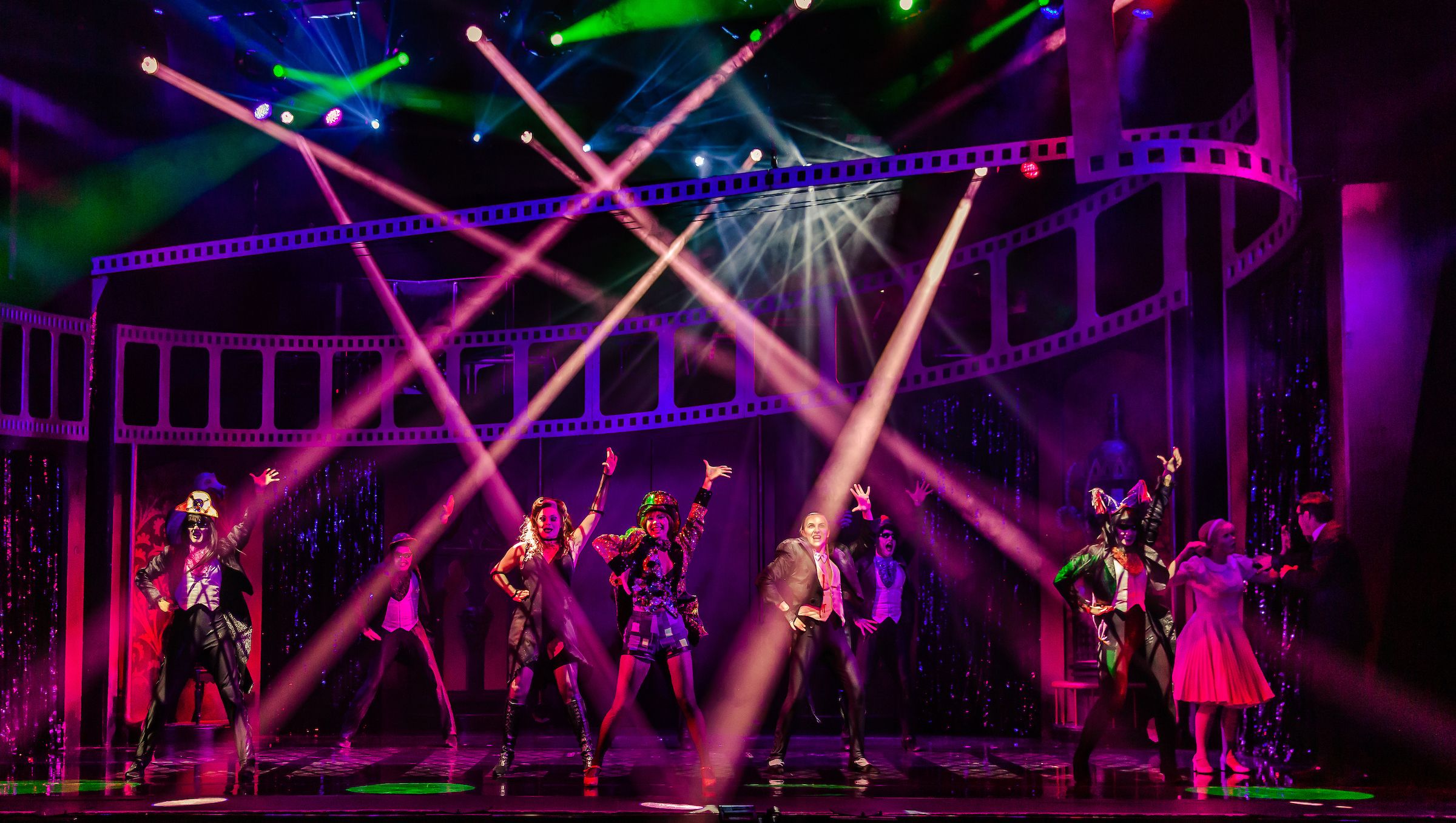
Die-hard fans are only slightly in evidence at the King’s Theatre tonight, a few brave souls sporting French maid outfits, stockings and suspenders – which may have more to do with the Scottish weather than anything else. But the elderly couple sitting in front of me are clearly longtime fans, singing along with every single number and helping each other into the aisle to smash The Time Warp.

Rocky Horror is just a gloriously silly romp with canny sci-fi references, backed up by a whole string of banging songs. From the opening chords onwards, I’m hooked.

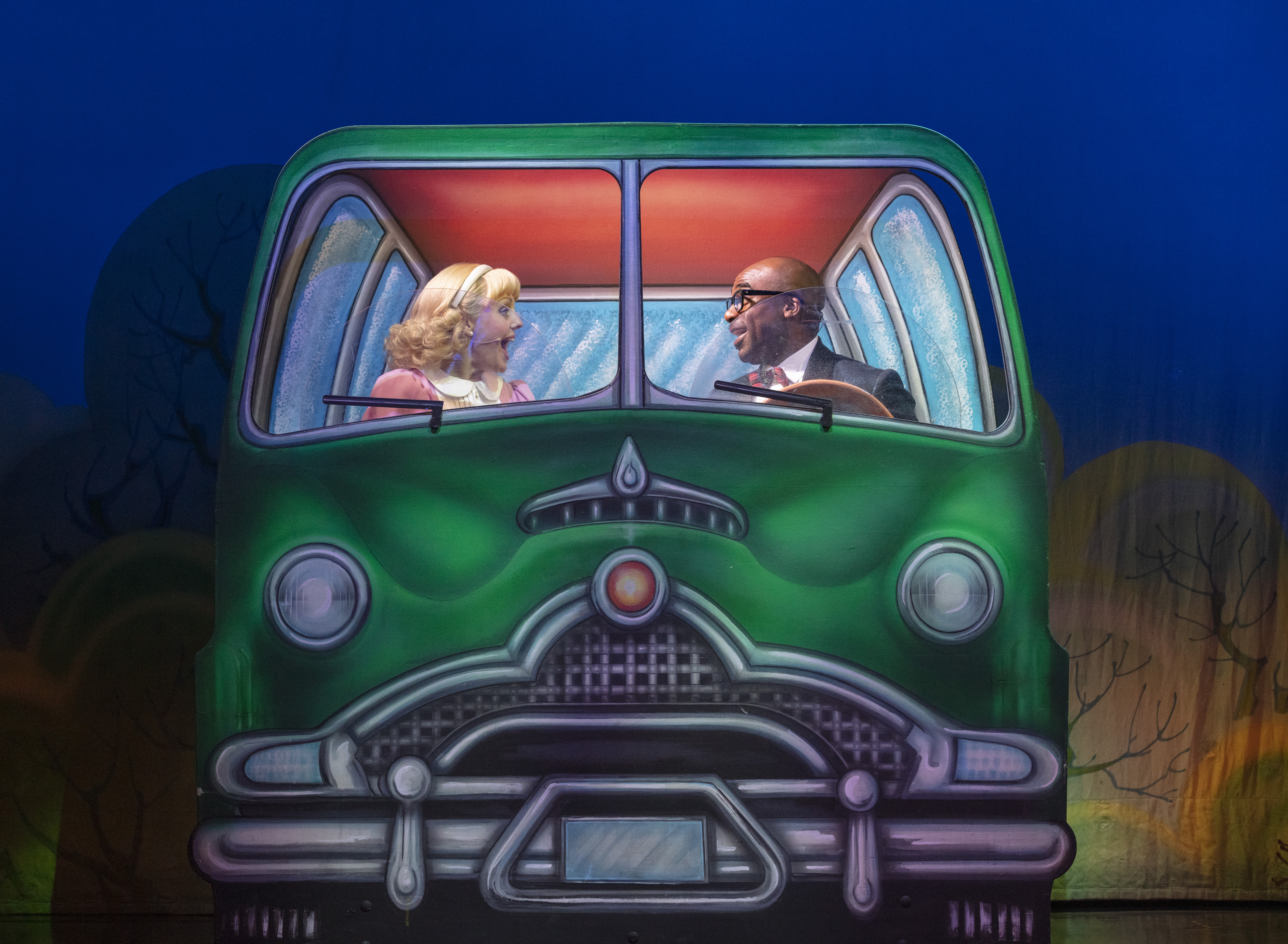
Brad (Ore Oduba) and Janet (Haley Flaherty) are two wholesome (okay, repressed) people, whose car breaks down one stormy night. They take refuge in that creepy-looking castle they passed a couple of miles back. Here they meet their unconventional host, Frank N Furter (Stephen Webb), his handyman, Riff Raff (Kristian Lavercombe), his maid Magenta (Suzie AcAdam) and a whole gaggle of deranged characters with a propensity for dissolute behaviour.

Furter, it transpires, has been working on a special project and Brad and Janet have arrived on the very night he plans to unveil Rocky (Ben Westhead), the perfect sexual companion.

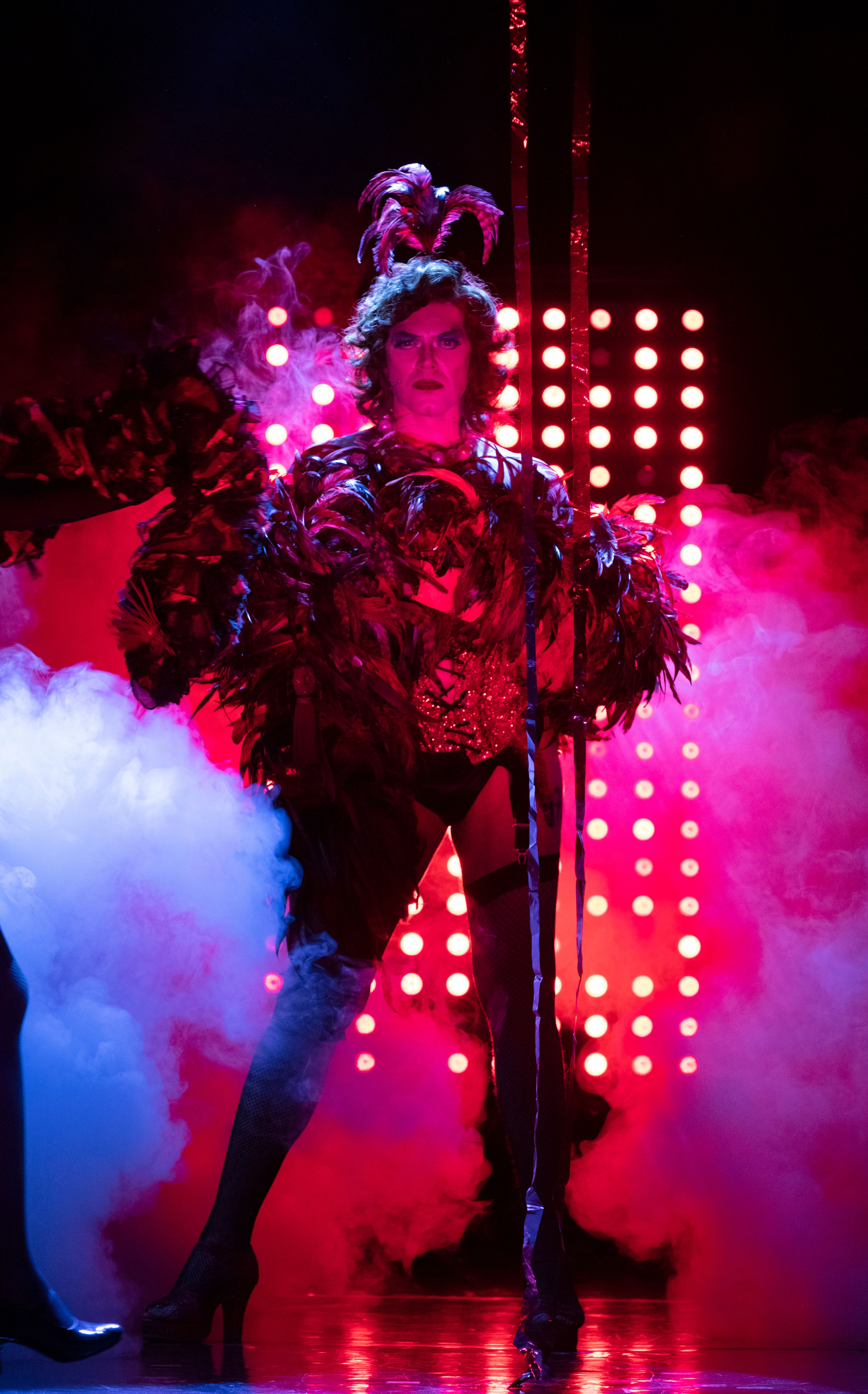
This production, directed by Christopher Luscombe, moves like the proverbial tiger on vaseline – the dance routines are brilliantly executed, Webb is wonderfully flamboyant as Furter and, of course, the presence of The Narrator (Philip Franks) is the production’s trump card. Suave, sophisticated and delightfully potty-mouthed, he fields interjections from the more vocal followers and offers a few pithy observations in return. One of them, about Prince Andrew, has the entire audience applauding.

Okay, so the first half still features the lion’s share of the best songs – which has always slightly unbalanced the production – and there are a couple of scenes in the second half that, viewed through a contemporary gaze do feel a bit… well, rapey… but of course, this was written at a time when the subject of sexual politics was in its infancy. O’ Brien’s main theme – that people should embrace and celebrate their sexual identities – still seems somehow ahead of the game forty-nine years after the show’s birth. And it seems highly unlikely that anybody is going to attempt an update this late in the game.

This is an absolute delight. As the performers thunder into a reprise of the show’s two best songs, the entire audience is up on its feet, clapping, dancing and singing along. Few nights out at the theatre are as deliriously enjoyable as this – and as we wander out into the night, we’re still humming The Time Warp.

After so long shut away in glum silence, we all deserve a large helping of Rocky. If this doesn’t put a great big stupid grin on your face, then nothing will.

4.6 stars

Philip Caveney

Bedknobs and Broomsticks

17/02/22

Festival Theatre, Edinburgh

There’s no doubt about it: director Candice Edmunds has created something wonderful here. From the first moment, it’s clear we’re in for a spectacle, and the extended opening sequence is an absolute triumph. It’s 1940. A cosy, intimate family scene is devastated by a bomb. The walls come tumbling down, the parents disappear, and three children stand wide-eyed in the chaos of an air-raid. They’re hustled out of London and onto a train. Not a word is spoken. The storm clouds – held aloft on sticks – are two-dimensional cutouts; ditto the train. It’s cheeky and inventive, exactly the sort of unabashed theatricality I adore.

It’s a good job Edmunds is so skilled, because the story – based on the 1971 Disney movie and Mary Norton’s earlier novels – is horribly muddled, a hybrid of whimsy and threat that doesn’t quite work. It always was. Even as a child, I didn’t like Norton’s The Magic Bedknob or Bonfires and Broomsticks. They have neither the light-hearted charm of Mary Poppins nor the gravitas of The Lion, The Witch and the Wardrobe.

The three orphaned children are Charlie (Conor O’Hara), Carrie (Izabella Bucknell) and Paul (Aidan Oti). They’re evacuated to the remote Dorset village of Pepperinge Eye, where they’re taken in by the mysterious Eglantine Price (Dianne Pilkington). At first mistrustful, their fears are soon assuaged, despite the fact that their newly appointed guardian is an apprentice witch. Because she’s not just any witch, but a witch with a mission: Miss Price is going to stop the Battle of Britain.

Sadly, the writing isn’t strong enough to carry off this coup de théâtre: lurching from a fanciful undersea dance to a terrifying armed encounter just feels odd and unsettling. The historical backdrop to the tale is largely accurate, and then – for no real reason – not. The ending is unnecessarily convoluted. And, The Beautiful Briny aside, the music isn’t the Sherman brothers’ best work either.

Nevertheless, this musical production is beautifully staged and performed – and, viewed as a collection of set pieces, it’s literally fantastic. Kudos to Jamie Harrison, the set and illusion designer: there are so many clever tricks here, and I can’t fathom out how all of them are done. Pilkington is well-cast in the main role, and Charles Brunton’s Emelius Brown exudes loveable ineptitude. Jacqui DuBois’ postmistress/museum curator Mrs Hobday is very funny too.

I love the ensemble work. The puppetry is delightful, and the choreography vibrant and enchanting.

This is a first-rate piece of theatre, too good for a second-rate tale.

3.8 stars

Susan Singfield

Maki & Ramen – Omakase Sushi Bar

13/02/22

Fountainbridge, Edinburgh

It’s what can only be described as a dreich night in Edinburgh. The rain has been coming down for hours and shows no signs of letting up. An attempt to seek solace at our usual haunt, The Cameo, backfires when we discover the place has been taken over for a quiz about ‘Chick Flicks’ – which is in neither of our wheelhouses. Then we remember, we still haven’t spent the money my in-laws gave me for my birthday back in December…

We make a quick call to Maki & Ramen and they have a table for us. Result!

Back when we were first in Edinburgh, this venue housed the ramshackle but rather delightful Kampong Ah Lee, which specialised in delightful Malaysian cuisine and spectacularly tacky wall art. Now the place is part of a mini-chain of restaurants, all in Edinburgh city centre, and the cuisine is Japanese (indeed, I visited it briefly in 2017, shortly after its name-change, while it still hadn’t settled on its game plan). When we arrive, the place is bustling with other bedraggled customers seeking refuge from the rain, but the friendly staff are well-organised and pretty soon we’re sipping our drinks and perusing the menu. Since ‘omakase’ literally means ‘dishes selected by the chef,’ we’re happy to let our waiter recommend some dishes she thinks we might enjoy.

We start with a grilled sushi set which is very good indeed: seven pieces of seafood (salmon, clam and prawn) wrapped around sticky rice, and so tender, they virtually melt in the mouth – as does the side of pork gyoza, which is accompanied by a portion of crisp endamame beans.

On a night like this, of course, a big warming bowl of ramen is an appropriate choice. I opt for chicken karaage, the chunks of tender meat encased in a really light and fluffy batter, while Susan chooses the salmon ramen. Both bowls come to the table piping hot, the broth fiery and satisfying. And both bowls contain a perfectly soft boiled egg and a selection of greens.

I’d like to tell you that while we’re eating the rain gradually recedes, that the skies roll miraculously back and (despite it being after eight o clock) the sun blazes benignly down upon us. Obviously, none of this happens, but for a while, I can actually imagine it. And, as far as a ‘pick-you-up’ goes, this is exactly what we needed.

We’ll be back before very much longer.

4.6 stars

Philip Caveney

The Lion, the Witch and the Wardrobe

08/02/22

King’s Theatre, Edinburgh

And, we’re back!

After the disappointment of seeing the King’s Theatre close its doors shortly after the launch of the Christmas pantomime, it’s wonderful to return once more to the stalls of the ‘Old Lady of Leven Street’ – and what a fabulous offering to kick things back into motion! I’ve seen several adaptations of CS Lewis’s celebrated book over the years, but few have handled the material quite as skilfully as in this powerful show, directed by Michael Fentiman and based upon Sally Cookson’s original production.

The four Pevensie children – Susan (Robyn Sinclair), Lucy (Karise Yansen), Peter (Ammar Duffus) and Edmund (Shaka Kalokoh) – are sent away from home as evacuees and, in a brilliantly staged opening , find themselves whisked off by train to a remote house somewhere in the wilds of Scotland. Here they meet their host, Professor Kirk (Johnson Willis), the owner of a curious cat and an ancient wardrobe that provides a convenient portal to the forever-winter world of Narnia…

From the outset here is a production that dazzles with enchantment. There’s a big cast, all of whom are given their chance to shine as they dance, play music and slip from character to character with apparent ease. This isn’t so much a full blown musical as a play with songs and the occasional burst of foot-tapping music. Of course, all the familiar faces are in place. There’s the imperious white witch (Samantha Womack), the messiah-like lion (Chris Jared), the flute-tootling faun (Jez Unwin) and the two of rebellious beavers (Sam Buttery and Christina Tedders), intent on returning Narnia to the way it used to be, before the snow began to fall.

There are several moments here that actually make me gasp in surprise: simply but effectively staged flying sequences; genuinely mind-twisting magical effects; and a brilliantly engineered set, where circular panels move smoothly aside to reveal fresh wonders, looking for all the world like Renaissance paintings. The audience sits spellbound as the performers leap and whirl across the stage in a riot of sound, colour and spectacle. The character of Aslan, simultaneously a real actor and a huge puppet, is an absolute masterstroke.

If you’ve been missing the buzz of live theatre, The Lion, the Witch and the Wardrobe offers a feast of delights for all the family – and, if you’ve been waiting for just the right production to lure you back, this must surely be the one to do it.

4.6 stars

Philip Caveney

Parallel Mothers

28/01/22

Cineworld, Edinburgh

Pedro Almadóvar’s latest film is as fascinating as you’d expect; the veteran director is no stranger to serious stories, improbably furnished with lush images and unlikely melodrama. In this sense, Parallel Mothers is more of the same. But it is, of course, gloriously original too, and very much its own film.

Actually, maybe that’s not quite right. Maybe this is really two different films, because the two main strands are very disparate and never really converge. They’re parallel, if you like.

We open with the first – and arguably most interesting – strand. In a studio in Madrid, Janis (Penélope Cruz) is taking photographs of Arturo (Israel Elejalde), an eminent archaeologist. She seizes the opportunity to ask for his help: she wants him to excavate a potential grave-site, where, she believes, her great-grandfather is buried, along with nine other early victims of the  Franco regime. The impact of the past on the present is superbly realised, and reinforces the importance of Spain’s Law of Historical Memory, which – shockingly – only began the process of identifying and exhuming mass graves in 2007. I’m embarrassingly ignorant about the Spanish Civil War; this movie has already made me read up on the basics, and I’m keen to learn more, so – for me, at least – it’s proved successful in raising awareness, which is clearly part of Almadóvar’s aim.

The second strand is more domestic. Janis and Arturo have a casual relationship, which results in a very-much-unplanned pregnancy. She’s delighted; he’s not. He’s married; his wife has cancer; he doesn’t want to start a family. They part amicably. Janis doesn’t mind the idea of raising a child on her own; after all, her own mother did it, and her grandmother too.

In the maternity hospital, Janis’s roommate is a frightened teenager. Ana (Milena Smit) doesn’t want a baby. She’s got all the material support she could need: her mother, Teresa (Aitana Sánchez-Gijón), is a wealthy actress with a big house, and there are staff too: a housekeeper and a nanny. But the emotional support is lacking, and she turns to Janis for comfort. The two women are very different, but their situations similar enough to allow them to bond.

Until something unforeseen happens…

The film ends with a quotation from Eduardo Galeano: “No history is mute. No matter how much they own it, break it, and lie about it, human history refuses to shut its mouth.” This is true of the bodies piled in anonymous graves, and it’s true of the contemporary secret Janis uncovers too.

There are more parallels: between Lorca’s exposé of “the grotesque treatment of women in Spain” in Doña Rosita the Spinster (Teresa’s latest role) and Ana’s tragic backstory; between Janis and her own free spirit of a mum, dead at twenty-seven from an overdose.

There is also humour, and beautiful domestic scenery. Ana and Janis bond over stereotypical ‘women’s work’ – the food imagery is very evocative, and I leave the cinema feeling hungry.

And yet…

This film is gorgeous to watch, thanks to José Luis Alcaine’s cinematography, but there’s no getting past the fact that some plot points are skated over. Without giving any spoilers, I can’t say too much, but there’s a gaping hole where officialdom and bureaucracy should be, and perhaps the tying up of the ‘mothers’ strand feels a little glib.

There’s no glibness in the final shot though; that’s as profound as they come. I’d have liked a better balance between the two strands, I think: the domestic story overshadows the historical one.

But, without doubt, this is a film to watch.

4.1 stars

Susan Singfield

Wilf

10/12/21

Traverse Theatre, Edinburgh

James Ley’s latest offering is about as far away from a ‘Christmas play’ as it could be. In fact, there’s only one nod towards the festive season: a decorated tree in the corner of the stage. Tree aside, this is more of an antidote to Yuletide than an evocation of it. And that’s fine, because there’s plenty of the traditional stuff on offer at other venues in the city. Wilf is a December play for those who want something… else.

And it really is something else. Where to start? Calvin (Michael Dylan) is struggling. He’s bipolar – in the midst of a manic episode – and everything is going wrong. He knows he needs to leave his abusive boyfriend, Seth, but there’s no one who can help. Not his mum: she’s left for a new life in the American bible belt, and has cut him out of her life. Not his driving instructor, Thelma (Irene Allan), because – after a mere 104 lessons – Calvin has passed his test, and the ex-psychotherapist is pleased to be rid of him. So where can he turn?

The answer soon presents itself: Wilf. Wilf is an unlikely saviour, not least because he is a car. Specifically, Wilf is a beaten up old Volkswagen, so there’s more than a hint of Herbie about him – although Wilf’s antics are more colourful than his predecessor’s. And by colourful, I mean sexual. Calvin and Wilf’s relationship is intense.

To be fair, Calvin’s pretty intense all round. With his shiny new driving license and his battered old car, he finally finds the courage to break away from Seth, but he’s a long way from feeling okay. A road trip around Scotland, staying in Airbnbs and cruising graveyards for anonymous sex, seems appropriate. And, with Wilf’s help, Calvin might just make it.

This tight three-hander, directed by Gareth Nicholls, is equal parts quirky and charming. Dylan is immensely likeable as Calvin, and treads the line between comedy and tragedy with absolute precision. The soundtrack is banging – who doesn’t love a bit of Bonnie Tyler? – and the simple set (by Becky Minto) makes us feel like we’re with Calvin all the way: inside the car; inside his head.

Allan brings a powerful energy to the role of Thelma, while Neil John Gibson, as everyone else, represents a gentler, more nurturing humanity, especially in the form of Frank.

All in all, Wilf is a gloriously weird concoction, and a most welcome addition to the winter theatre scene.

4 stars

Susan Singfield

Sleeping Beauty

01/12/21

King’s Theatre, Edinburgh

The King’s panto is an Edinburgh institution, and this year’s is extra special for a number of reasons. It’s the first one since the pandemic forced the theatres to go dark. The last one before the King’s closes for refurbishment. And the first one since the demise of Andy Gray, one third of the beloved triumvirate synonymous with Christmas theatre in this city. This Sleeping Beauty isn’t just a pantomime; it’s a tribute to him too.

There’s nothing new here. If you think you’ve seen it all before, well, you probably have. This is a tried and tested formula. Elaborate tongue-twisters? Check. Queen May hovering over the audience on a cantilever? Check. That thing they do with the chocolate bars? Check. It’s all there, like a greatest hits album. And thank goodness for that. Because this is as warm and familiar as a comfy cardy or a mug of hot chocolate – exactly what we need on a cold winter’s night.

The theatre is busy and bustling, but it feels relatively safe. People are taking the mask-wearing seriously; we’re all used to it now, and it doesn’t seem to impede the fun or mute the atmosphere. Anyway, we’re all putty in Queen May’s hands: Allan Stewart is a consummate comedian, and he knows how to work an audience, proving the adage that it’s not the joke, it’s the joker. Even the cheesiest of cheesy lines is funny when he utters it.

Grant Stott is here too, of course, and he’s a towering presence, playing Queen May’s – ahem – identical sister, Carabosse. In this version of the story, she’s the villain who curses Princess Aurora (Sia Dauda), dooming her death when she pricks her finger on a spinning wheel. The Good Fairy (Nicola Meehan) isn’t powerful enough to reverse the spell, but she can modify it, and Aurora falls asleep instead…

It’s nice to see the fool conflated with the love interest. Jordan Young plays Muddles, the jester whose heart belongs to Aurora. He delivers a wonderfully energetic performance, and appears to be having the time of his life as he hurtles from one ridiculous moment to another.

Andy Gray might be gone, but he’s not forgotten. His daughter, Clare Gray, has picked up the family panto-mantle, playing punky Princess Narcissa. She must be proud as punch when the audience applauds ‘King Andy’ – the affection is sincere and profound.

As ever, the King’s panto is a real treat, and not to be missed.

5 stars

Susan Singfield
Death Drop

17/11/21

King’s Theatre, Edinburgh

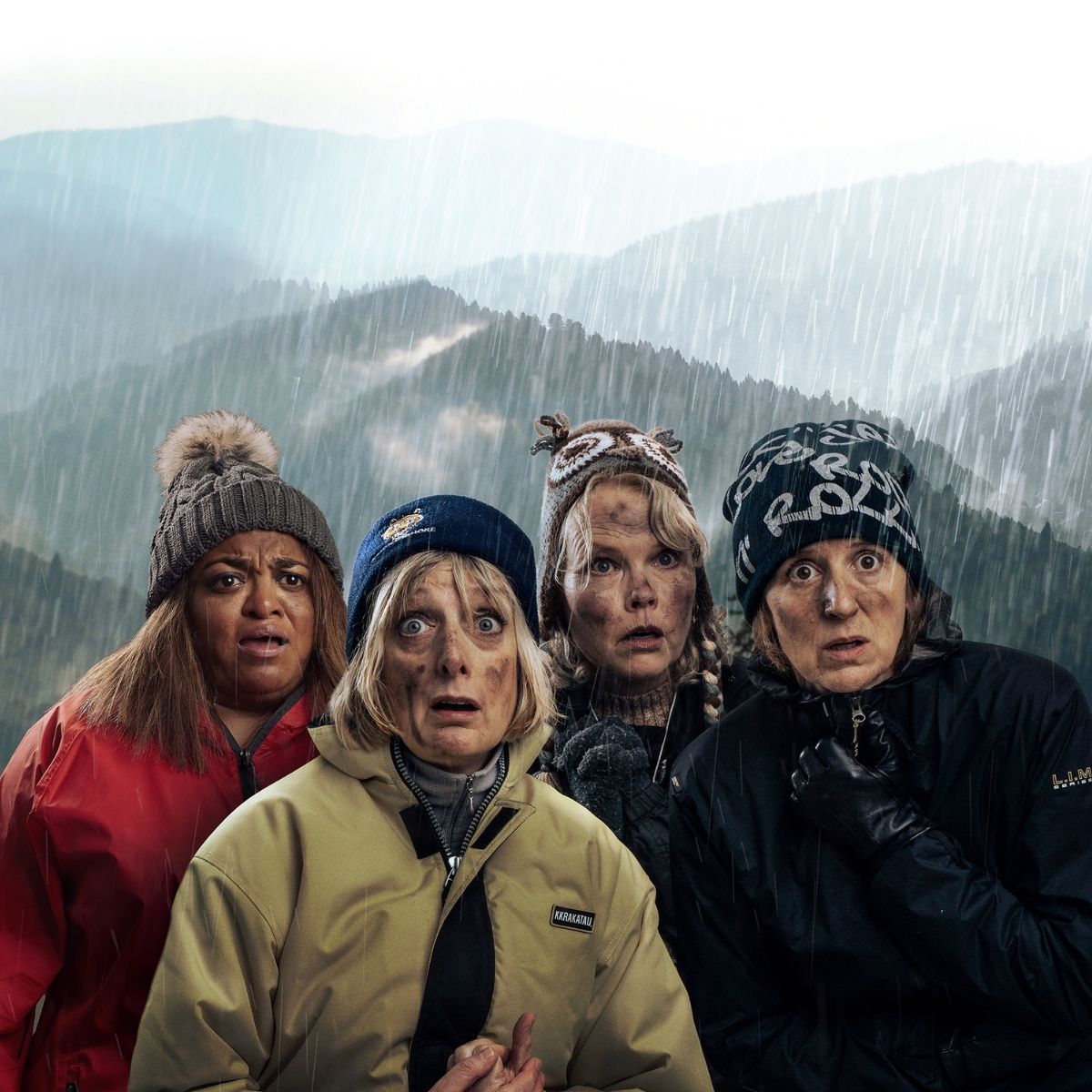
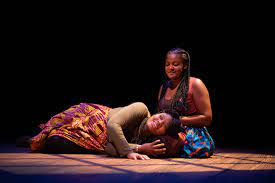
There’s nothing subtle about Death Drop. This pantomime-style murder-mystery spoof is as big, bold and spangly as a sequinned frock, and there are plenty of them in evidence too. Director Jesse Jones has embraced the ostentatious, which is, let’s be honest, the only option for a show with an international cast of Drag Race stars.

The set-up is familiar: we’re in a spooky manor house on a remote island. It’s 1991 and Lady von Fistenburg (Vinegar Strokes) is hosting a party in honour of Prince Charles and Princess Diana’s tenth wedding anniversary. Okay, maybe not all of it is familiar. Blue, Brie and Spread Bottomley (three sisters – or peas, named after cheese – all played by writer Holly Stars) have been engaged to do the catering for an eclectic mix of guests. These are: has-been pop starlet, Shazza (Willam); TV weather girl, Summer Raines (Ra’Jah O’Hara); odious newspaper editor, Morgan Pierce (Karen from Finance); Tory MP, Rich Whiteman (Richard Energy), and film-maker, erm, Phil Maker (Georgia Frost). But – oh no! – there’s a storm! Cue OTT sound and lighting effects from Beth Duke and Jack Weir. The phone lines are down, the electricity’s playing up and a fallen tree has blocked the only bridge to the mainland. And, one by one, the guests begin to die. Someone is clearly intent on murder. But who?

I spend the first ten minutes thinking I’m going to hate this show. I like drag, but the humour here is way beyond broad. They’re establishing the context, so there are lots of 90s references, but it’s all a bit sub-Peter Kay. I mean, just mentioning ‘Anne Diamond’ shouldn’t be enough to get a laugh, should it? I want my comedians to work harder than that: tell me a joke about Fray Bentos; don’t just say the words.

But it soon hits its stride, and I find myself laughing with everybody else. The assembled drag artists strut their stuff with aplomb, and the silliness is disarming. There are a few songs thrown in to good effect (penned by the ever-marvellous Flo and Joan), and these really help the carnival atmosphere. I’m less familiar with the work of drag kings than I am drag queens, but they make perfect sense: like their counterparts, they focus on exaggerated gender and cartoonish caricatures.

Holly Stars is a standout: her deadpan delivery guaranteed to entertain. Richard Energy’s Rich Whiteman is noteworthy too, a study in extravagant characterisation. I like Karen from Finance’s Morgan Pierce; it’s a peach of a part and Karen aces it.

There are a few issues. The second act is baggy, and the payoff isn’t strong enough. Death Drop peters out instead of climaxing, and – in a show as dependent on innuendo as this – that really matters. Nonetheless, this is fun. If your three favourite things are Drag Race, The Play That Goes Wrong and panto, then this is your dream production.

3.4 stars

Susan Singfield

Eric and Ern

15/11/21

Festival Theatre, Edinburgh

Picture this.

It’s sometime in the late 1960s and I’m a kid. (Yes, I actually was a kid, back in the day. I have a birth certificate to prove it.) I’m with my parents and my older sister, sitting in our modest house on an RAF base somewhere in the UK (probably Lincolnshire). We’re all gathered in front of a television set, housed in a walnut cabinet the size of East Anglia, with a screen that has the dimensions of a postage stamp. This is of course in the years BS (before streaming), so if there’s a show you want to see you have to be there, on the dot, otherwise the chance will be gone pretty much forever… or at least until somebody invents the concept of reruns. I’m a typical kid, already displaying symptoms of being an individual, and there aren’t many shows my parents like that I’m willing to watch. But there is one notable exception. Morecambe and Wise.

The decades move on, but still all four of us are happy to sit down together and watch these two northern comics whenever they have a new series or a Christmas special. What is it about them that’s so good? Nobody could accuse Eric Morecambe of having brilliant material – his stuff was kind of hack – but he was just a genuinely funny man, who, with a wiggle of his glasses and a sidelong glance, could humiliate the pompous, overbearing Ernie Wise, a man so convinced of his own talent that he was willing to employ major stars to appear in ‘the plays what he wrote.’

I never tired of the act and, like many, I was gutted when Eric Morecambe died, Ernie Wise retired and there would be no more nights worshipping at their shrine.

Eric and Ern is, I suppose, a tribute act but it seems somehow more than just that. While Ian Ashpitel and Jonty Stephens look, move and sound like the real McCoys, there’s such warmth in this performance, such evident affection for the original duo, that it feels like stepping into a time machine and heading back to those long-mourned nights. The show is cleverly paced, composed of excerpts from classic sketches, each one just long enough to ensure it doesn’t outstay its welcome. There’s also a stooge in the form of vocalist Sinead Wall, who somehow succeeds in keeping a straight face through her lovely rendition of Send in the Clowns, while ‘Eric’ and ‘Ern’ cavort in costume just behind her.

Long cherished routines are observed: the paper bag trick (which I have been shamelessly unleashing on various young relatives over the years); the Austrian dance routine; the ‘two men in bed reading newspapers;’ even ‘Mr Memory,’ who knows everything about anything…. given enough prompts. From the opening scenes, I’m laughing helplessly, a condition I find myself in until the duo finally dance offstage, legs akimbo in time-honoured fashion.

This is a great big warm hug of a show. If you’re already fans of M & W, you’ll have a whale of a time. If they are new to you – I suppose such a thing is possible – why not go along and see what all the fuss was about?

Your time machine awaits!

4.4 stars

Philip Caveney

The Enemy

20/10/21

King’s Theatre, Edinburgh

Ooh. I’m VERY excited about this one. I’m an avid admirer of Ibsen – what self-respecting theatre-lover isn’t? I’m in awe of the way he combines theatrical innovation and political conviction with accessible story-telling. I’m also a fan of Kieran Hurley’s work (Chalk Farm, Mouthpiece and Beats are all excellent), so I’m fascinated to see what he and director Finn den Hertog do with the Norwegian’s masterpiece, An Enemy of the People.

In fact, Hurley doesn’t change much at all, plot-wise. This 140-year-old play is uncannily prescient. The difference is all on the surface: in the modes of communication, and the cadence of the dialogue – and it’s beautifully done. The story shifts easily to a contemporary “once-great Scottish town,” where a new spa resort promises regeneration, and offers hope to the poor and dispossessed who live there. But Dr Kirsten Stockmann (Hannah Donaldson) is concerned: a sickness bug is spreading, and she’s almost certain the town’s water supply has been contaminated. But how? Could blame lie with council-approved shortcuts, aimed at bringing forward the resort’s opening? Maybe. If so, it’s more than a little awkward, because the provost is Kirsten’s sister, Vonny (Gabriel Quigley). Still, surely she will be grateful for the heads up, pleased to be able to avert a public health disaster, no matter what the cost? But no. Vonny has no qualms: without the resort, the people have nothing. They’re not sick because of poison, she tells her sister; they’re sick because they’re poor. She has a point.

Although the story remains unchanged, the staging is bang up-to-date: video designer Lewis den Hertog has created a multi-media piece à la Katie Mitchell, with ‘live cinema’ (where the onstage action is filmed and projected simultaneously onto a large screen) a key feature. There are pre-filmed sequences too, such as a jarringly upbeat advert for the new resort, and a series of enthusiastic vox pops on the local news. And there are text messages, and YouTube videos, and Skype and BTL comments a-plenty. It’s Ibsen with all the socials. It works. There’s a dizzying sense of things spiralling out of control, with Kirsten in the middle, alone, holding on to the damning test result – a dreadful talisman.

But Kirsten isn’t quite alone. She might have broken ties with her sister; her friend, Benny (Neil McKinven), and local celeb, Aly (Taqi Nazeer), might have sidled away – but her teenage daughter, Petra (Eléna Redmond) is firmly on her side. And so, perhaps, is Derek Kilmartin (Billy Mack), who has a proposal for Kirsten to consider…

It’s wonderful to see creative theatre projects taking shape again (I’ve nothing against old favourites, and it’s clear to see why theatres are being cautious post-pandemic, but it’s definitely time for something new). This particular project seems like a canny move, combining Ibsen’s timeless appeal with something bold and fresh. It’s almost guaranteed to get bums on seats, while simultaneously allowing playmakers the chance to experiment. Good call!

For the most part, it pays off. I have a little trouble hearing some of the dialogue, especially in the first act. I’m sitting quite far back in the stalls, which might have something to do with it, but I wonder if it’s more about the actors delivering their lines to cameras rather than to the auditorium. But this is my only gripe. The performances are natural and convincing, the relationships well-defined.

The message is clear: the truth matters, however unpalatable. It’s a timely homily. We need to heed the experts. The only problem is, we all think we’re Kirsten Stockmann.

4.3 stars

Susan Singfield