Edinburgh

Woodhill

13/08/23

Summerhall (Main Hall), Edinburgh

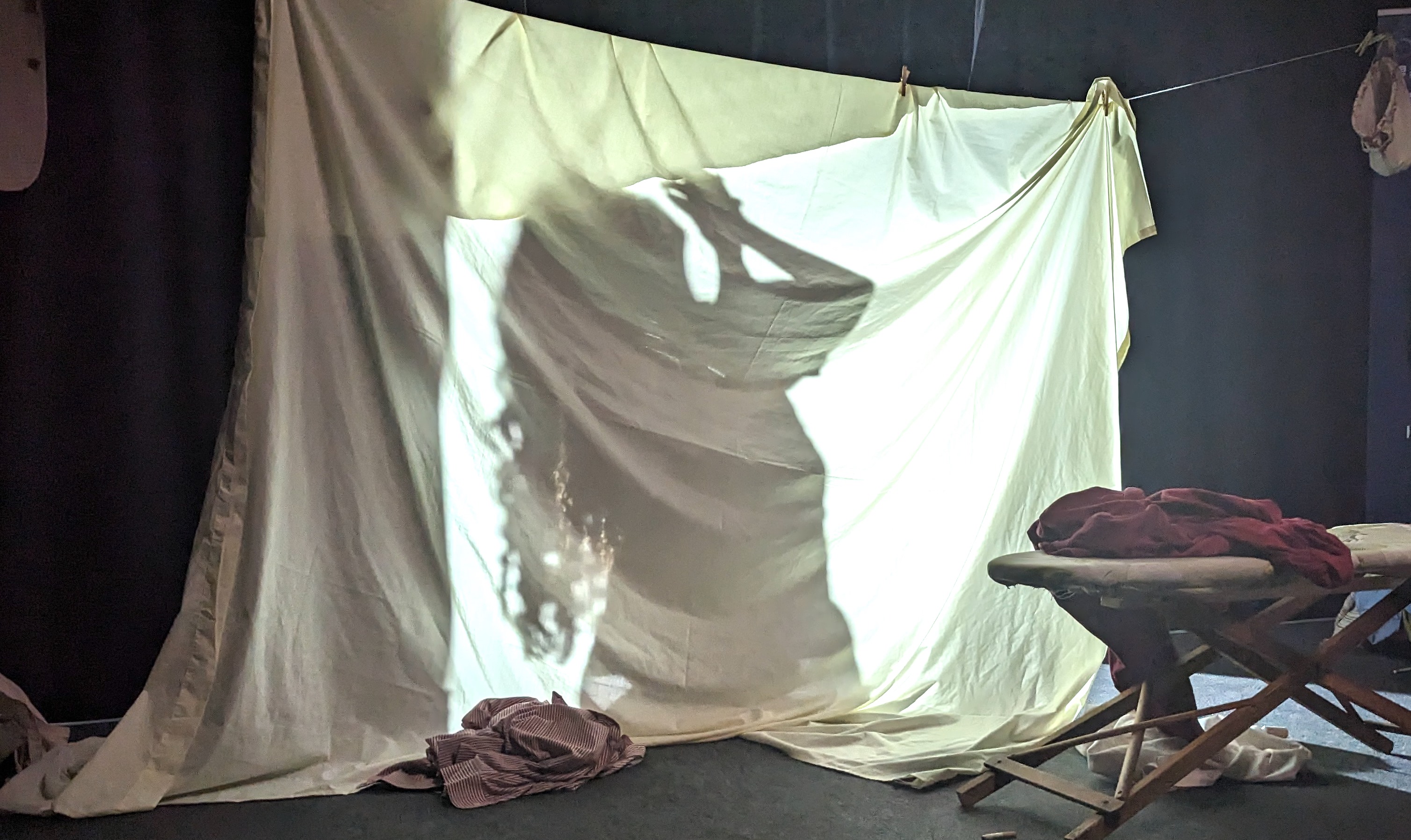
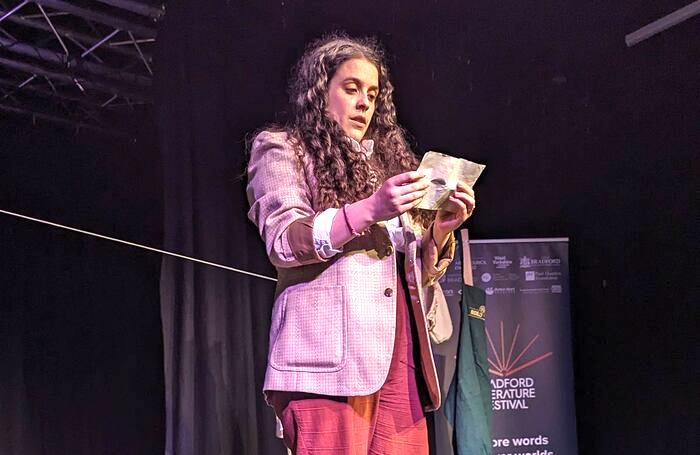
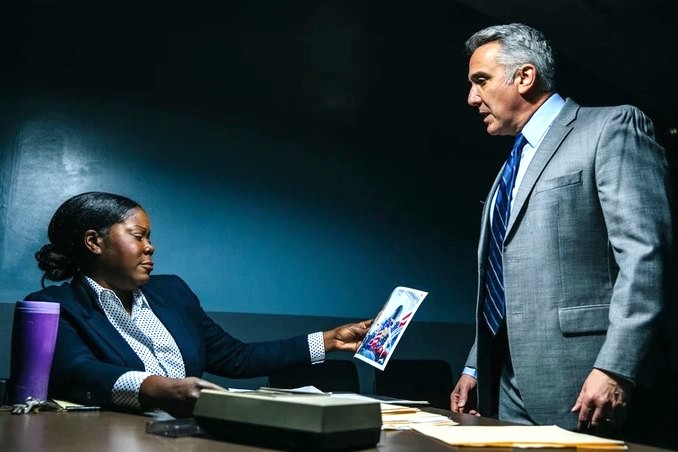
Lung is a verbatim theatre company, whose raisin d’être is to make hidden voices heard. “We use people’s real words to tell their stories; our shows always have a wider campaign and political aim.” In tonight’s show, those hidden voices belong to people failed by the UK prison system, specifically three young men who died in HMP Woodhill and the families who mourn them. It’s the first interpretative dance/verbatim mash-up I’ve ever seen, and it’s astonishingly powerful.

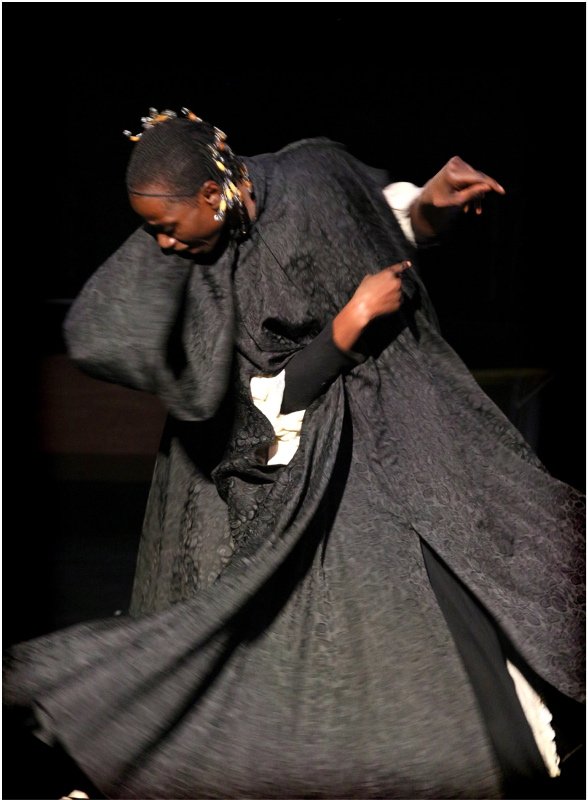
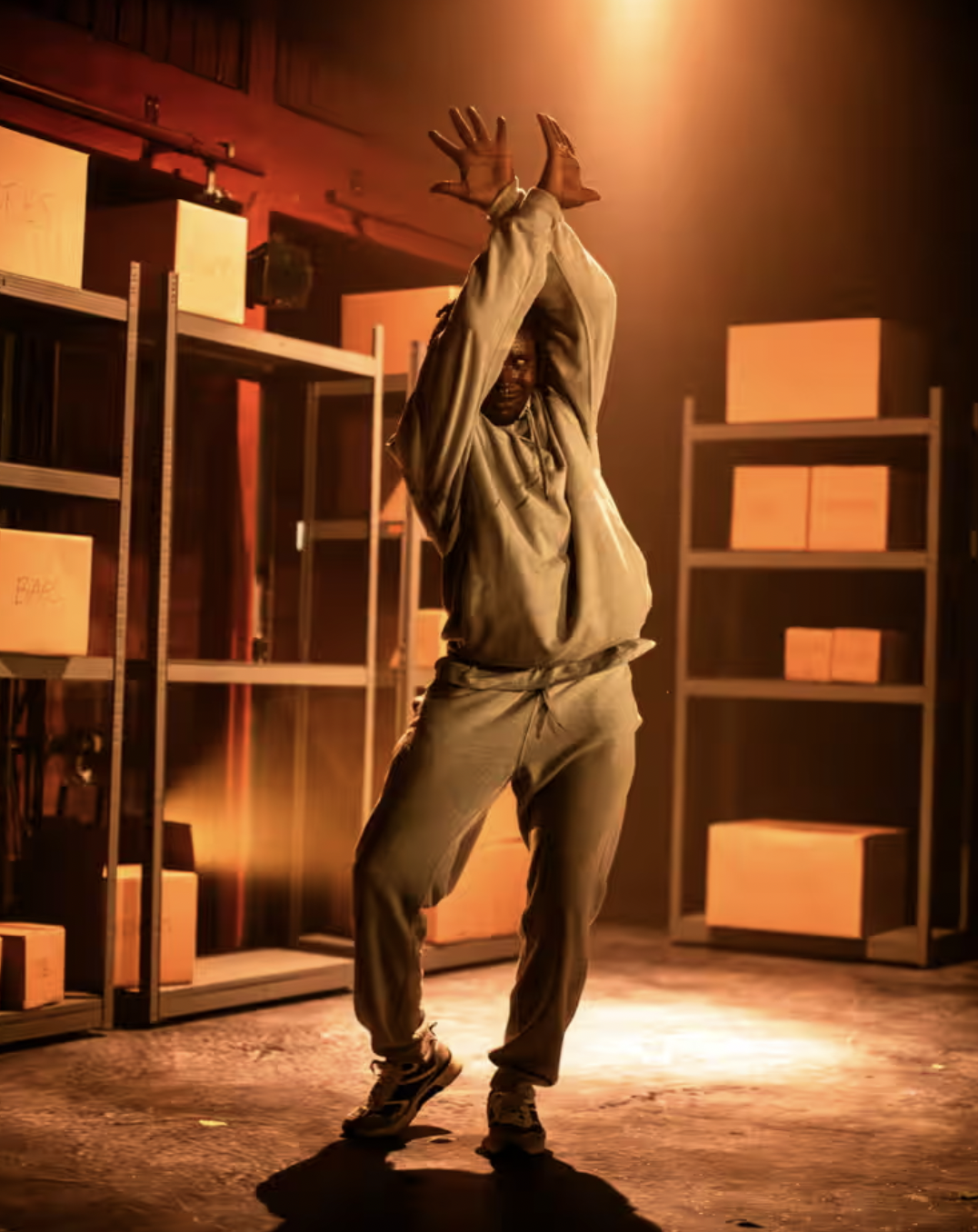
Recorded voices play over a soundscape by Sami El-Enany and Owen Crouch. Meanwhile, Chris Otim acts as the ghosts of the lost boys, and Tyler Brazao, Marina Climent and Miah Robinson play their relatives. Alexzandra Sarmiento’s choreography highlights the trauma inflicted on whole families by our punitive system, as they move like desperate Zombies through the years, reeling from blow after blow.

Director Matt Woodhead spent four years interviewing seventy people for this play – including inmates, prison officers, lawyers, and politicians, as well as the families featured here. The main focus is on three individuals – an urgent reminder that the awful statistics hide real people. Stephen Farrar, Kevin Scarlett and Chris Carpenter were all found dead in their cells at Woodhill. They all ostensibly took their own lives. But did they? “Woodhill killed them,” their families say. “The state killed them.”

The UK has the highest prison population in western Europe. Why? Do more than 83,000 of our people – more than 130 per 100k – really need to be locked up? Who benefits? Not the inmates, that’s for sure. And not wider society either – there is plenty of research proving prison doesn’t work. But private for-profit companies run prisons here, and they’re incentivised to lock people up, and incentivised to keep costs down once they’re inside. It shouldn’t come as a surprise that a recipe for disaster results in, well, disaster…

I get frustrated by our failure to look north: we have a model education system to look to in Finland, but we ignore it; likewise, Norway’s criminal justice system is a huge success: fewer people locked up (just 46 per 100k), low rates of recidivism, a compassionate prison culture based on rehabilitation. It’s kinder, cheaper and actually reduces crime. But still our politicians forge ahead with our failed revenge model, punishing people for being poor, for struggling with their mental health, for being Black.

Woodhill is relentless and startling, and there’s a moment, about fifteen minutes in, where I begin to feel restless, wanting a break from the dancing and recorded voices, perhaps some dialogue from the actors onstage. But I guess that’s the point: this is hard to bear, even as an audience member, even for an hour. And, of course, the fact that the actors never actually speak underscores how voiceless these people usually are. Woodhill offers them a rare chance to be heard.

Woodhead’s production, though unnervingly bleak, does offer a glimmer of hope. The piece is designed to educate, to change people’s minds. At the end, we are asked to sign a petition, to ensure that recommendations made at inquests – such as Stephen’s, Kevin’s and Chris’s – are implemented. It’s not enough, but it’s a start.

4.2 stars

Susan Singfield

The Box Show

12/08/23

Pleasance Courtyard (Cellar), Edinburgh

The Box Show (theboxshow.org) is one of the most original acts I’ve ever seen. Incredibly,  the whole production is confined to one small box – every prop, every costume change – like a puppet theatre with myriad human puppets. And Dominique Salerno (dominiquesalerno.com) is the puppet master, changing herself into a giant woman, a fighting couple, a demanding pop star – and a few more esoteric surprises it would be a crime to give away. 

 The constraints of the box mean that Salerno has to be imaginative – necessity is the mother of invention, after all. Low-budget theatre is often more interesting than its splashy, blinged up West End cousin; limiting herself to such a miniscule stage pushes Salerno even further down this road. I’m in awe of her imagination. 

The Box Show is fast-paced, never letting up for the whole hour, the sketches building to a hilarious crescendo. 

Audacious, funny, and perfectly crafted, The Box Show is performed with wit and precision. Salerno has the flexibility of a gymnast or a dancer (it makes my creaky knees hurt just watching her), as well as being a gifted actor and singer.

The tiny venue mirrors the tiny box, so it doesn’t take many punters for this to be sold out. Grab a ticket while you can – this Fringiest of Fringe shows is one not to miss.

5 stars

Susan Singfield

Grown Up Orphan Annie

11/08/23

Gilded Balloon Patter Hoose (Coorie), Edinburgh

Kathryn Bourne Taylor’s premise is a strong one: a ‘Where Are They Now?’ feature brought to life, starring everyone’s favourite plucky red-headed orphan. Leapin’ lizards! Little Annie is an adult! Unfortunately, she’s not a very happy one.

Long estranged from her billionaire adopted father, Annie is struggling to come to terms with his death. She’s angry about the environmental impact of his destructive business model, and bitter about a contract that means he owns the rights to all her songs. “My life has been made into a comic strip, a film, a Broadway musical – and I’ve got nothing to show for it,” she complains. She has a point. Why any kid would wanna be an orphan is beyond me.

Bourne Taylor makes for a believable millennial Annie, effortlessly embodying the familiar ‘please like me’ smile and can-do attitude. She nails Annie’s dazzling desperation, the knowledge that she’ll always have to sing for her supper.

I like the set up a lot, so I’m a little disappointed when the show pivots off in a whimsical direction, as Annie embarks on a mission to find a new sidekick (tragically, Sandy is long gone), and tries to resist opening the box that Daddy Warbucks has left to her. As charming as this stuff is, it’s very slight. There are early hints that we will be dealing with weightier stuff – the troubling power dynamic between a billionaire ‘saviour’ and an impoverished orphan; the effects of childhood neglect and trauma; the impact of sudden fame at an early age – but these are jettisoned in favour of something more kooky and ultimately less satisfying.

Grown Up Orphan Annie is a pleasant show, but I can’t help thinking it could be so much more.

2.8 stars

Susan Singfield

England & Son

11/08/23

Roundabout at Summerhall, Edinburgh

Written by Ed Edwards especially for Mark Thomas and directed by Cressida Brown, England & Son is a hard play about hard lives. Thomas is the ‘& Son’ of the title, and delivers a bravura performance; from the outset, he has the audience in the palm of his hand. 

A semi-autobiographical piece, based on people Thomas knew in his childhood and Edwards’ experience in prison, this is a bleak exposé of an often overlooked underclass, exemplified by one boy’s complex relationship with his father. As well as this deeply personal account, it also opens up to examine an even more troubling relationship: between Britain and its former colonies. A lot of questions are raised: why is it okay for rich white people to plunder other countries, but not okay for poor white people to burgle houses? Is there any way to prevent armed forces personnel from being dehumanised by what they’ve seen and done? And what the fuck is an ‘artisan’ when it’s at home?

Although this is a dark piece, there are also some very funny lines and – as you’d expect – Thomas delivers these perfectly, the laughs landing every time. These shafts of light are much needed, so it’s a relief when caring social worker Martha offers our young offender the chance of a different life, even though it’s all too clear that he won’t be able to grasp it: his past has already shaped him; his future is assured. As soon as there’s a problem, he only knows one way to react, and he seems destined to follow in his fallen hero’s footsteps.

England & I is a deceptively complex piece, but it certainly hits home with today’s audience, who rise as one to give Thomas a standing ovation.

4.2 stars

Susan Singfield

The Death of Molly Miller

10/08/23

Underbelly Cowgate (Big Belly), Edinburgh

Have you heard the one about the influencer and the thief? No, me neither. It sounds like the set-up for a joke, but it isn’t. Instead it’s the premise for Matthew Greenhough’s thought-provoking and, yes, funny play about penury and privilege.

As far as Tommy (Greenhough) can see, reality TV star Molly (Esther-Grace Button) has it all: a posh flat, designer clothes, an active social life and a gazillion followers. Tommy, on the other hand, has nothing. Desperate to clear his debts with a fearsome loan shark, he decides to burgle Molly. After all, what has she ever done to deserve such riches? He despises her, thinks she’s fair game. But if he thinks that Molly is an easy target, he’s got another think coming. Because Molly Miller didn’t get where she is by being soft…

Under Jonny Kelly’s direction, The Death of Molly Miller is a engaging piece of theatre, and Button in particular is great at eliciting laughs from tonight’s appreciative audience. Between her performance and Greenhough’s writing, Molly’s initially vapid character soon reveals hidden depths, and we see the bottle beneath the Botox. Tommy too is a complex, multi-dimensional man, although perhaps Greenhough’s performance is a little too frenetic at times; some stillness and relative calm would help to highlight the moments of panic.

Like Molly herself, The Death of Molly Miller seems superficial, but actually has a lot to say.

4 stars

Susan Singfield
Salty Irina

10/08/23

Roundabout at Summerhall, Edinburgh

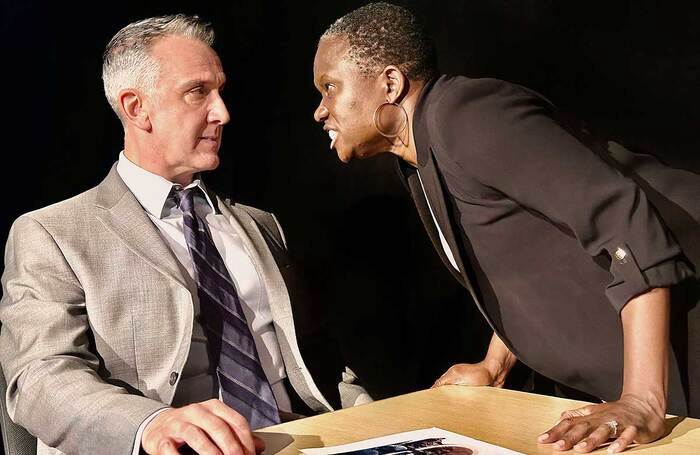
Eve Leigh’s Salty Irina, isn’t your average tale of first love, nor even of coming out – although it is both of those things. Instead, a much darker, more frightening theme emerges as Eirini (Yasemin Özdemir) and Anna (Hannah Van Der Westhuysen) embark on a reckless mission… 

They’re teenagers, so of course they think they’re invincible; of course they’re likely to take risks. Sitting in the audience, several decades ahead of them, I can only watch in horror as they convince themselves that infiltrating a far-right festival is a good idea. From a grown-up, liberal vantage point, it’s clearly a bad idea for anyone. For an immigrant? For lesbians? For two wide-eyed young girls with more idealism than guile? It can only end badly.

But Eirini and Anna want to do something. There’s been a spate of murders in their (unspecified) city and the police don’t seem to see the link. The victims are all immigrants, but – because they’re from different ethnic groups – each is being treated as an isolated case. So when the girls learn that a fascist group is holding an event nearby, it seems logical to them to don disguises and investigate. An older hippy in their squat says what the whole audience is thinking: “Don’t go!” But when have teenagers ever listened to boring know-it-all adults telling them what to do? 

It’s not until the final third of the play that Jana (Francesca Knight) appears. We’ve seen her before, acting as a stagehand, passing props, clearing the set; it’s a neat conceit. The threat she poses has always been there, in the shadows, but it’s only when the girls are isolated and vulnerable that she reveals herself.

If Eirini and Anna were older, the plot would be fantastical. Honestly, at first I think the whole thing is a bit far-fetched, but then I google ‘far-right festivals’ and discover that they really are a thing, even here in Scotland. (God knows what marketing I’ll be faced with now, as the internetty algorithms get to work.) But their age makes me ache for them: I absolutely believe that they would step boldly, naïvely into the fray, convinced that they are doing the right thing. 

Debbie Hannan’s direction is fresh and contemporary, all minimal props and non-literal interpretation. It feels as youthful as the play’s protagonists, the transitions snappy and impetuous. 

Van Der Westhuysen and Özdemir (last seen by us in Autopilot and You Bury Me respectively) are perfectly cast, embodying the journey from youthful innocence to devastating experience. 

4.5 stars

Susan Singfield

The Trials of Galileo

08/08/23

Greenside @ Infirmary Street (Mint Studio), Edinburgh

Veteran actor Tim Hardy is never less than excellent. Tucked away in this unassuming studio on Infirmary Street, his latest Fringe performance arrives without fanfare, but his reputation clearly precedes him: there isn’t a spare seat in the house. Of course, Galileo might have something to do with it too. It’s a cleverly chosen topic, curiously apposite in these post-truth times.

Written and directed by Nic Young, The Trials of Galileo is an insightful piece, illuminating a specific historical event, as well as the human and systemic failings that caused it. That event, of course, is the Roman Catholic Inquisition’s persecution of astronomer Galileo Galilei, in response to his assertion that the Earth revolves around the sun – contrary to the scriptures and therefore heresy. The great scientist’s frustration is palpable and compelling; it’s impossible not to wince as he does what surely most of us would do when threatened with torture, namely swallow down our fury and deny the truth we know. The description of that torture is horrifying, a stark and terrible reminder of what people are prepared to do to one another to stoke their egos or preserve their power.

Young’s words are finely-crafted, and Hardy knows how to give them weight, to cast light on the ridiculousness of Galileo’s situation: a great mind, forced to capitulate to those far stupider than he. How many people have suffered because of the blind faith religions (and quasi-religions, like Trumpism) demand, because inconvenient truths are hard to hear?

The biggest tragedy isn’t that Galileo was silenced; it’s that nothing much seems to have changed.

4.5 stars

Susan

Alison Skilbeck’s Uncommon Ground

07/08/23

The Front Room, Assembly Rooms, Edinburgh

The last time we saw Alison Skilbeck, she was playing the role of Mrs Roosevelt in the comparative luxury of Studio 5, George Square. This year she’s appearing in The Assembly’s Front Room, a converted shipping container, but – as ever – she gives the performance her all, and we might as well be in a park somewhere in London, where the piece is set.

We first saw a Skilbeck performance back in 2017 (The Power of the Crone) and we’ve made a point of tracking her shows ever since, always interested to see where she’ll go next. The delightful thing is that we never really know what we’re going to get.

This year, she performs a collection of self-written monologues, set during lockdown. It features five human characters and one that … well, I don’t want to give too much away. As ever, she does that thing she always does, putting on a hat or a pair of fairy wings and suddenly inhabiting the character the item belongs to. These characters are not all female and they range from childhood to old age, but there’s something that interlinks them all, something we’re not fully aware of until the conclusion.

It’s a lovely piece of writing, gentle and lyrical, which captures the nuances of everyday speech with considerable skill, and an hour and ten minutes slips easily by. Along the way we are given some thoughtful insights into the human condition through the words of strangers we somehow end up caring about.

If this sounds like your cup of tea, it’s all waiting for you in a tin box on George Street.

4 Stars

Philip Caveney

After the Act

06/08/23

Traverse Theatre, Edinburgh

In 1988 I was in sixth form. I was (am) straight, and didn’t think I knew any gay people at all. No one was out. Nonetheless, when Section 28 was introduced – banning the promotion of homosexuality in schools – we all thought it was stupid. Not just cruel and regressive, but thick. We knew we couldn’t be encouraged into being gay, that no amount of advocacy by teachers – teachers! – could ever change who we were. Outlawing any positive mention of queer people though, that could hurt. We were only kids, but even we could see that.

Breach Theatre’s After the Act shows just how much hurt there was. This musical, written by Ellice Stevens and Billy Barrett, with an original score by Frew, is a verbatim piece, relaying the experiences of LGBTQ+ students, teachers and activists who struggled and fought through Section 28’s fifteen-year reign. It’s both shocking and compelling, an object lesson in how to stage a polemic. By turning the words into songs, Breach Theatre give them extra weight and meaning, turning some into plaintive refrains and others into angry protest chants.

There are six performers onstage: two musicians (Ellie Showering and Frew) and four actors (Stevens, Tika Mu’tamir, EM Williams and Zachary Willis. Under Barrett’s direction, this is a lively, insistent piece; indeed, thanks to choreographers Sung-Im Her and Anouk Jouanne, the actors are always in motion, the interweaving stories physicalised into a complex web. Although the production is a serious one, focusing on some very real anguish, there are also moments of humour, of light shining through the darkness.

Much of what we’re shown is shocking. A couple of lesbian protestors disrupt the six o’clock news, and Nicholas Witchell – who wrestles one of them to the ground and puts his hand over her mouth so that Sue Lawley can carry on and read the day’s stories – is lauded as a hero rather than being done for assault. Another particularly striking statement comes from a member of Haringey Council’s Lesbian and Gay Sub-Committee, who notes, “We are at a disadvantage because we can only use rational argument, while the opposition are tapping into irrational fear and bigotry.”

In the end, though, this is a triumphant piece of theatre. Stevens skewers Margaret Thatcher’s self-righteous ignorance in a comical depiction of the ex-PM: if she sounds ridiculous as she defends her nasty law, they’re her own words; she’s hoist by her own petard.

After the Act is vital viewing. Section 28 might have been relegated to the history books, but trans kids are in the middle of the same old battleground. We have to learn from what has gone before.

4.6 stars

Susan Singfield

The Grand Old Opera House Hotel

06/08/23

Traverse Theatre, Edinburgh

Occasionally you see a production that not only exceeds your expectations, but sends you out of the theatre exhilarated by its sheer invention. The Grand Old Opera House Hotel is one such play, a piece that fearlessly swings for the fences and hits all of its targets bang on. Part slapstick, part comic-opera, part mad-as-a-box-of-frogs spectacle, this is something you really don’t want to miss.

Aaron (Ali Watt) arrives at the titular establishment for his staff training and quickly learns that the recently rebuilt hotel is suffering from teething troubles. The electronic door numbers keep changing without warning, the lights flicker constantly and Aaron can hear people singing. A staff member tells him that, back in the day, the place was an actual opera house. It burned down sometime in the 1920s, killing the show’s cast in the process. Could Aaron be hearing their ghosts?

One of the singers he can hear is actually his opera-obsessed colleague, Amy (Karen Fishwick) – but Aaron doesn’t know that. He naturally thinks the place is haunted. If he just met up with Amy, in person, it would all be explained in an instant, but in a building with so many rooms, that’s not going to be easy…

It’s almost pointless to talk about the plot other than to say it all makes a twisted kind of sense. This delicious, sprawling extravaganza galumphs merrily through a whole gamut of different moods, characters and connections, barely stopping to draw a diaphragmatic breath. Isobel McArthur’s script is playful and exciting, while Ana Inés Jabares Pita’s set design opens up and interconnects like a Chinese puzzle box. Director Gareth Nicholls keeps his six-strong cast on their toes, moving through a whole series of lightning-fast costume changes, interacting, singing and sometimes even dancing for all they’re worth. It feels as though there are a lot more than half a dozen people on that stage. And in a way, there are.

McArthur keeps the pot simmering throughout, moving inexorably towards a tantalisingly prolonged conclusion. This is that rarest of creatures, an ambitious production that takes plenty of risks and somehow never puts a foot wrong. If you’re looking for something you’ll remember long after the final curtain, you’ve come to the right place.

5 stars

Philip Caveney