Edinburgh

Origin

10/03/24

Cineworld, Edinburgh

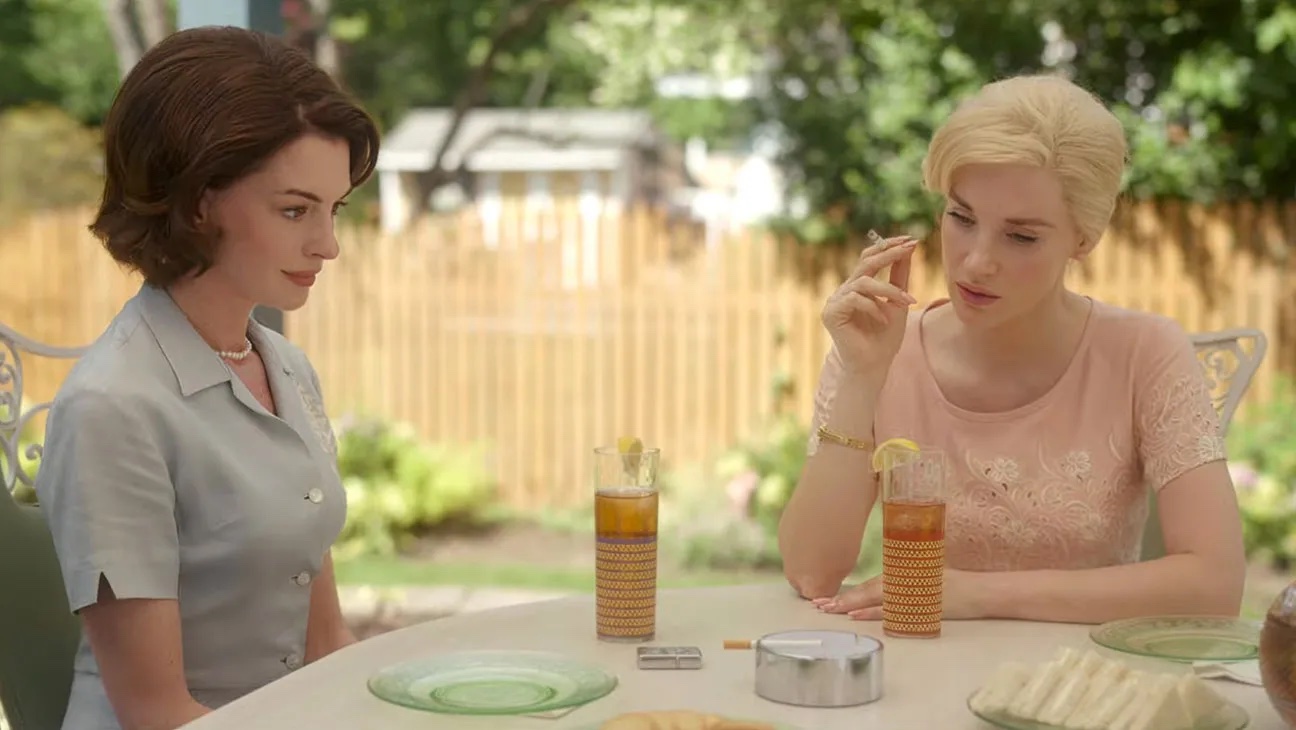
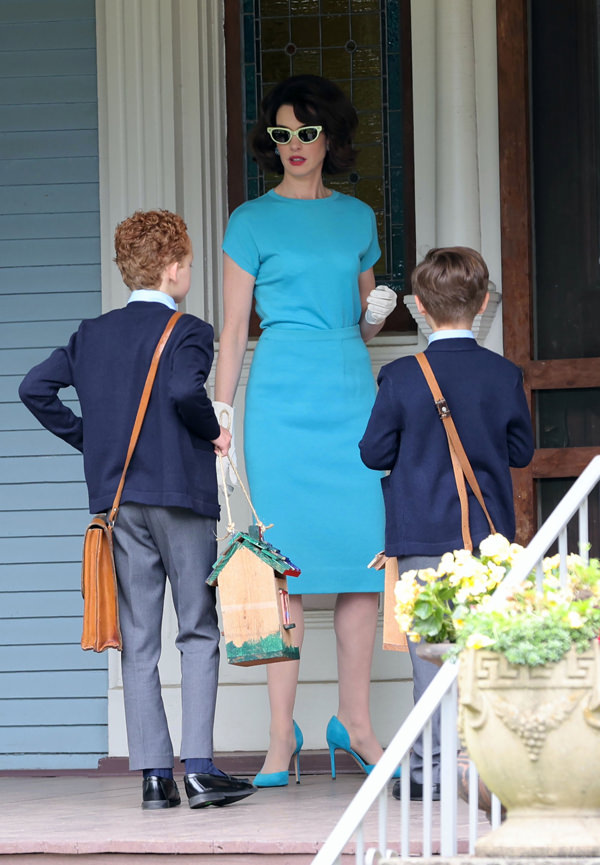
Origin isn’t like any film I’ve seen before. Structurally, it’s akin to a dramatised lecture – but if that sounds dry, then I’m doing it a huge disservice. Writer/director Ava DuVernay has taken an academic text and created an artist’s impression of both the work and its author. The result is multi-layered: at once instructive and provocative – and absolutely riveting.

Based on Caste: The Origins of Our Discontents by Isabel Wilkerson (played here by Aunjanue Ellis-Taylor), Origin isn’t an easy watch. Wilkerson’s central conceit is that all oppression is linked – that the Holocaust, US slavery and India’s caste system all stem from the same fundamental practice of labelling one group of people ‘inferior’. This perception is entrenched via eight ‘pillars’, including endogamy, dehumanisation and heritability. DuVernay has done a sterling job of distilling these complex ideas and making them accessible, but the volume of cruelty on display is devastating. Who are we? Why do we keep on letting this happen? Some scenes are particularly heartbreaking, for example the young Al Bright (Lennox Simms)’s humiliating experience at a swimming pool in 1951, and I can hardly bear to mention the visceral horror of seeing people crammed into slave ships.

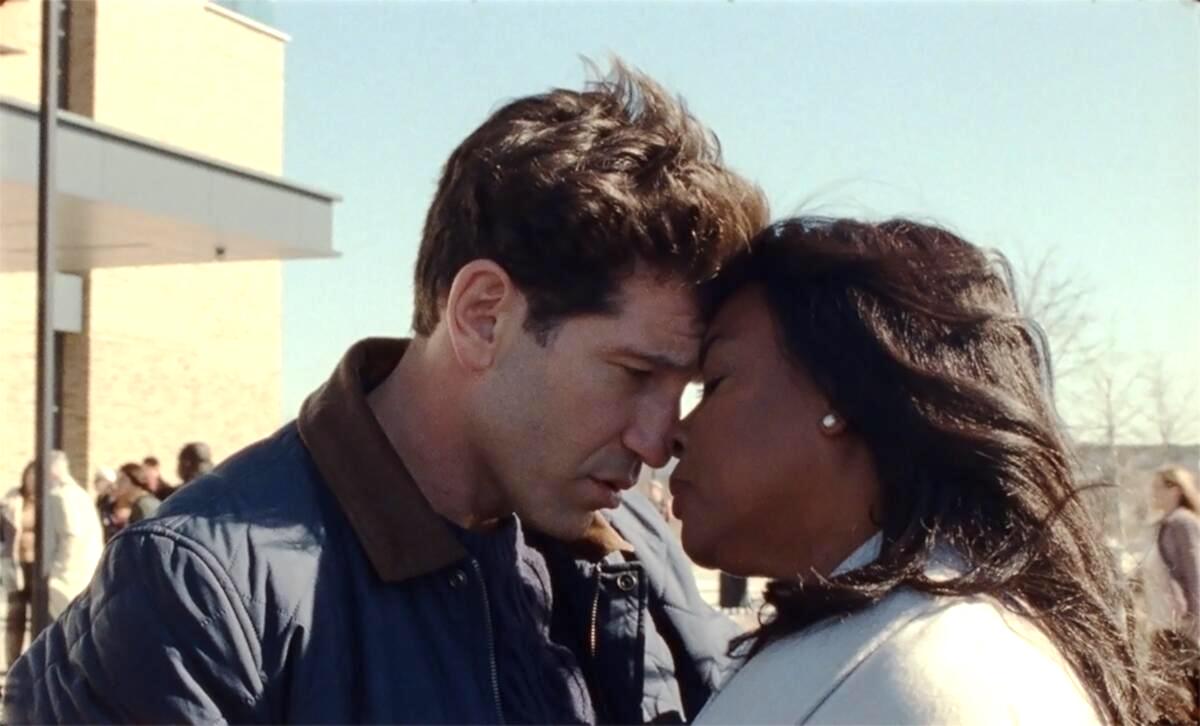
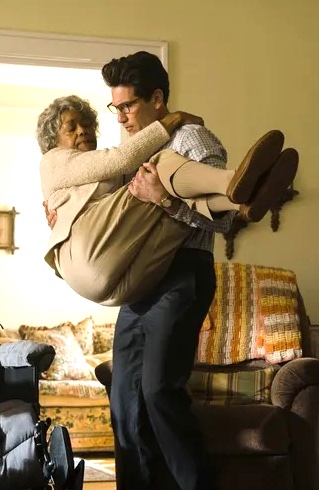
Ellis-Taylor’s Wilkerson is very engaging. She’s not only fiercely intelligent, but also thoughtful and gentle. Despite the weighty topics that dominate her working life, she finds time to have fun with her husband, Brett (Jon Bernthal), and to look after her mum, Ruby (Emily Yancy). She feels real.

Wilkerson’s personal life anchors the movie, which begins with her looking at retirement homes with Ruby. We see how Trayvon Martin (Myles Frost)’s shooting sows the first seed of her thesis, and then we jump back and forth in time and place, bearing witness to Nazi book burnings and Bhimrao Ambedkar’s ‘untouchable’ status; to Elizabeth and Allison Davis’s undercover work with Burleigh and Mary Gardner, documenting the everyday realities of racism in 1940s Mississippi. It is to DuVernay’s credit that we are never in any doubt about where we are or what point is being made.

There are moments when the concepts need bullet-pointing for clarity, and this is neatly achieved by the addition of a literal whiteboard. We see Wilkerson laboriously erecting it, before covering it in notes about the pillars that hold oppression in its place. This helps to anchor the key arguments, making them easy to grasp and remember.

Origin is a demanding piece of cinema, but it’s worth the effort. I come away feeling both horrified and educated, looking at the world in a different way.

4 stars

Susan Singfield

Perfect Days

25/02/24

Cameo Cinema, Edinburgh

‘It’s about this guy who cleans toilets for a living.’

Yes, I know. On paper, Perfect Days doesn’t sound like the most promising scenario I’ve ever heard but, in the hands of veteran director, Wim Wenders, it’s so much more than I might have expected. Wenders is somebody who I used to love back in the day. Paris Texas (1984), is the movie I remember him best for, but, since Wings of Desire in 1987, I have lost track of his output. This latest offering is a charming, affectionate study of a man’s everyday working life and the various people he encounters along the way. 

Perfect Days picked up a couple of prestigious prizes at Cannes in 2023 and more recently was nominated for Best International Feature Film at the 96th Academy Awards. It’s easy to see the qualities that enchanted the judges.

The aforementioned toilet cleaner is Hirayama (Koji Yakusho), a quiet and reserved character who has very little to say for himself but who appears to have an almost zen-like appreciation of the world about him. He’s a man who is absolutely committed to his routine and, from the opening scene onward, we share it with him. He wakes in the early hours of the morning in his small but immaculately neat apartment and we travel with him in his van as he listens to a series of vintage songs on his cassette player – The Animals, Van Morrison and (perhaps not surprisingly given the title of the film) Lou Reed.

We work alongside him as he journeys from public toilet to public toilet, ranging from simple-but-functional cubicles to state-of-the-art superloos, sharing his brief interactions with the people he encounters along the way. Not all of them are strangers to him. There’s his feckless young colleague Takashi (Tokio Emoto), endlessly chasing after a woman called Aya (Aoi Yamada) and trying to find ways to earn enough money to go out with her. There’s Hirayama’s teenage niece, Niko (Arisa Nakano), who turns up unannounced at his door one evening after running away from home. And there’s Hirayama’s estranged sister, Keiko (Yumi Aso), who comes to collect her daughter and who cannot understand why her brother is ‘wasting his life’ in such a thankless occupation.

But as the story progresses, we begin to understand that Hirayama isn’t wasting his life. Far from it, he is carrying out important work to the best of his ability, with quiet dignity and determination. Of course, a life so based on routine only needs the slightest glitch to throw everything into turmoil, which happens when Takashi fails to show up one day, leaving Hirayama to do the work of two people…

As Perfect Days unfolds in its calm, understated way, it exerts an increasingly powerful grip on the viewer, gradually revealing more about its central character but always leaving us wanting to know a little more. It’s also true to say that the city of Tokyo is one of the most important characters in the film. Wenders unveils its various charms in so many different lights, from dawn to dusk, from sundown to sunrise. Franz Lustig’s cinematography depicts its back alleys and sidestreets, stares up at its neon lit skylines in a sort of swooning wonder. 

Yakusho’s performance is also a delight, his character saying little but revealing every emotion through his range of expressions, dour and perplexed one moment, on the verge of helpless laughter the next. It all culminates in an extended shot of him driving his van home as Nina Simone’s Feeling Good blasts from the tape deck, Hirayama’s face registering the sheer unadulterated joy of every line.

Some will claim that there’s not enough content here to sustain a two-hour running time, but I would respectfully disagree. This is a little gem of a film and a reminder if ever it were needed that, at the age of 78, Wenders is still a creative force to be reckoned with.

4.4 stars

Philip Caveney

The House

03/02/24

Traverse Theatre, Edinburgh

Imagine if you will a Punch and Judy show, elevated to the very peak of its puppetry potential – where, in an incredibly complex set, a whole cast of brilliantly-sculpted characters caper and bicker with all the subtleties of human comedians – and you’ve pretty much got what Sofie Krog Teater’s The House is all about. Appearing at the Traverse Theatre as part of the Manipulate Festival, this has a sold-out crowd screeching with laughter as it rockets to an uproarious conclusion.

We are told first of how a house can speak of what has happened within its walls, and then we’re shown the titular abode, an old crematorium. It’s been owned for years by an old woman who now lies in a four-poster bed up in the top bedroom, rapidly approaching her demise. Her nephew, Henry (who bears an uncanny resemblance to Stan Laurel), and his wife, Cora ( a cigarette constantly jutting from her mouth), run the business on her behalf. Cora knows that there’s a will that names them as their great aunt’s successors and she’s gleefully counting the days to the big payoff. But at the last minute, a lawyer is summoned and an important change is made…

Cora is intent on keeping the house for herself – and only the old woman’s faithful dog stands between her and justice.

I know that puppeteers Sofie Krog and David Faraco are concealed within that miniature house somewhere, because I definitely saw them climb inside it at the beginning. And I know they must be operating everything that happens, but the illusion is so brilliantly engineered, I forget about them completely as they unleash one ingeniously conceived bout of slapstick after another.

The puppets themselves are wonderful little creations, so full of character and nuance that they almost come alive as they scamper from room to room, trying to outwit each other. Everything about this performance – the lighting, the music, the props – is exquisite and I love the piece’s grisly sense of humour, its celebration of the darkness of the human soul. Oh, and did I mention that the house can revolve, to show us an entirely different view of what’s happening within?

If you haven’t managed to catch Sofie Krog Teater on this visit, do keep an eye out for them in future. This unique show offers a touch of genius that will brighten the day of anyone lucky enough to see it.

5 stars

Philip Caveney

Protest

27/01/24

Traverse Theatre, Edinburgh

Hannah Lavery’s 2023 play, Protest, makes a brief but welcome return to Edinburgh as part of its new tour, with two performances at the Traverse this weekend. Having missed it at last year’s International Children’s Festival, we’re delighted to have the chance to catch up with this lively, engaging production from Fuel, Imaginate, Northern Stage and the National Theatre of Scotland.

Amy Jane Cook’s set is a brightly-coloured children’s playground, the natural habitat of the P7 girls whose story this is. The climbing frames and running track serve both to entertain and to constrain, opening up possibilities at the same time as imposing limitations.

Through three cleverly-interwoven monologues, we learn about the challenges faced by these very different characters. Alice (Kirsty MacLaren) is a live wire – and the best runner in her class, so she’s outraged when a boy gets chosen for the final leg of the inter-form relay. Jade (Harmony Rose-Bremner) has always been proud of her family history but her happiness is “dented” when she faces racist abuse for the first time; suddenly, she doesn’t feel so secure in her home town. Meanwhile Chloe (Amy Murphy), a quiet, introverted child, has the weight of the world on her shoulders. She’s desperate to save the planet, but how can she do it on her own? She hasn’t got any friends and she can’t even ask her brother to help her any more, because he’s gone all moody since their dad left home.

But is any of these girls prepared to accept what’s happening? No way. They’ve got their Grans on their side, and they’re ready to stand up. To raise their voices. To protest.

Under Natalie Ibu’s assured direction, this is a vibrant, kinetic piece of theatre, the girls’ unselfconscious physicality propelling the action. Rarely still, they’re bursting with energy and enthusiasm, besides themselves with the injustice of it all and delighted with their efforts to put things right. It’s tonally spot-on, embracing the naïve optimism of eleven-year-olds – and reminding us how this might just be what we need to change the world.

Splendidly acted, this is a delightful and inspiring play, and I am pleased to see that it has attracted a young audience today. Children aged 8+ should get a lot from it – and the adults accompanying them are in for a thought-provoking treat as well.

4.3 stars

Susan Singfield

Jekyll & Hyde

18/01/24

Royal Lyceum Theatre, Edinburgh

I’ve always thought of Jekyll and Hyde as the quintessential Edinburgh story, so it never fails to come as a surprise when I’m reminded that the original novella was based in London. (And written in Bournemouth to boot!) Gary McNair’s astute adaptation of Robert Louis Stevenson’s iconic story uses the same setting as its illustrious predecessor and strips the story back to its bare essentials. It’s a monologue, performed with gusto by Forbes Masson. Everything about the production feels taut and fleet, a straight seventy-five minute run with no interval.

Masson wanders onstage as the story’s narrator, lawyer Gabriel Utterson, who warns us that he’s not ‘the good guy’ in this tale. With this idea firmly planted, he begins to relate his story: how he learns from his cousin, Richard Enfield, of a brutal attack on an innocent eight-year-old girl by a man called Edward Hyde, whom he describes as “downright detestable.” 

Utterson’s suspicions are instantly aroused because one of his oldest friends and clients, the mild-mannered Dr Henry Jekyll, has recently changed his will in favour of a man with that same name. Utterson soon becomes obsessed with Hyde and spends much of his time hanging around the man’s doorway without ever managing to spot him… 

The problem with adapting such a familiar story is, of course, that there can be few real surprises. I admire Michael Fentiman’s direction, Max Jones’ spare set design and particularly Richard Howell’s startling lighting effects, which – combined with the Richard Hammarton’s eerie soundscapes – accentuate the disturbing psychological aspects of the story. I applaud the fact that McNair has dispensed with the mysterious ‘serum’ swigged by Jekyll in order to transform himself into Hyde, an element that has always seemed corny to me. I note too that the plot’s most unbelievable strand – that despite so many visits to Hyde’s doorway, Utterson fails to notice that it connects directly to Jekyll’s house – has been left intact.

Of course, none of this could fly without Masson’s confident performance and he rises to the occasion admirably, inhabiting every character with consummate skill, switching from one to the other, seemingly without effort. A sequence where he passes a bowler hat from hand-to-hand as he conducts a lengthy conversation with himself feels suspiciously like observing a masterclass in acting. It’s an absolute pleasure to behold.

It’s only in the production’s final moments – when Utterson’s introductory words are re-echoed – that this adaptation’s true strengths are actually revealed. There is, I think, a suggestion here that hasn’t been fully explored before. And that’s reason enough for its existence.

4 stars

Philip Caveney

Pho

06/01/24

St James Quarter, Edinburgh

We’re not usually big on chain restaurants but, after dashing around the city on an ‘escape hunt’, we end up in the vicinity of the St James Quarter. The friend who gifted us the challenge has generously covered our lunch too – and we’re more than ready for it. Post-Christmas, I’m looking to shed a few pounds, so we need to find somewhere offering a healthy range. Pho seems to fit the bill.

I know it’s a contentious issue, but the 2022 law requiring businesses with more than 250 employees to display calorie information on their menus is useful to me today. I’m tracking my consumption, and it’s great to know that I can enjoy two courses without derailing myself.

For my starter, I have cuốn diếp chay (spicy salad rolls), which come in at an almost unbelievable 44 calories. They’re fresh and vibrant: strips of raw vegetables, enoki mushrooms and herbs wrapped in a lettuce leaf and served with a very more-ish peanut sauce. Philip has a Nem hải sản (a seafood spring roll), which is large, crispy and filled with king prawn, crab and pork. He says it’s crunchy, not at all greasy and packs a real punch.

For my main, I want a cauliflower rice bowl with char-grilled chicken, but I’m told there’s no cauliflower rice today. ‘Real’ rice takes me over my allowance, so I opt for the Phở gà instead. This Vietnamese rice-noodle soup (347 calories) is no mean substitute: the broth is fragrant, the chicken nicely cooked and the noodles as slippery and delicious as you’d expect. I especially like the side plate of fresh herbs, allowing me to tailor the dish to my own taste. Philip opts for the phở xào (wok-fried noodles) with chicken and prawn. This is a delightful dish, full of earthy goodness, replete with lemongrass, chilli and Asian greens.

We’re not drinking at the moment, so we’re pleased to see a good range of soft and alcohol-free beverages. Philip samples the Freestar 0.5% lager, while I try a Negroni spritz. Both hit the requisite spots. We enjoy the eclectic juke box too, and the lively, buzzing atmosphere.

All in all, we’re impressed. If you’re looking for a quick healthy lunch in the city, you could do a lot worse than Pho.

4.3 stars

Susan Singfield

The Pantomime Adventures of Peter Pan

01/12/23

Festival Theatre, Edinburgh

It’s that time of year again – oh yes, it is. We’re sitting in the Festival Theatre, where there’s a very festive atmosphere. Behind us, two rows of Cubs and Brownies chatter excitedly, waving light-up wands and eating vast amounts of chocolate. Families, including adults, are no less giddy. Christmas outfits are clearly de rigeur: there’s an abundance of baubles and sparkle, from headbands to socks and every item in between. We’re soon caught up in the fun.

This year’s theme (and it is a theme, rather than a story) is Peter Pan. This version of the tale (written by Harry Michaels and Allan Stewart) takes the form of a sequel to JM Barrie’s original. Even though his old adversary, Captain Hook (Grant Stott) was eaten by Jock the Big Green Croc a long time ago, Peter Pan (Kieran Lynch) is in trouble: the pixie dust that allows him to fly has disappeared from the magic waterfall, leaving him grounded. He sends Tink (Rebecca Stenhouse) to fetch his old friend, Wendy (Robyn Whyte), to see if she can help. It soon transpires that somehow Hook has returned, and that he’s behind the problem… Can he and Starkey (Clare Gray) persuade the erstwhile ship’s cook, May McSmee (Stewart) and her son (Jordan Young), to rejoin his crew?

This Peter Panto is as big and bold a show as we’ve come to expect. Crossroads’ production values are always impressive: the costumes lavish, the props spectacular. The opening sequence sets the standard, with a beautifully animated video-projection that leads us straight into the fantasy. The lighting (by Jack Ryan) is very clever, transforming the same set in an instant from a pretty pastel fairyland into a terrifying red-hued pirate lair. The sound (by Guy Coletta and Andrew Kirkby) is dialled way past eleven, immersing us in Neverland. And there are pyrotechnics a-plenty too.

Pantomime survives by being endlessly adaptable, and nowhere is this more apparent than in the casting of Flawless as Hook’s pirate crew. This is a masterstroke, lending the pantomime some real edge, as the street dancers inject a dose of cool into the cheesiness. What seems on paper like an odd marriage, in fact works really well within the piece. It’s not just their awe-inspiring dance moves, but their presence as a kind of Greek chorus, observing the ridiculous antics around them and providing a silent commentary and response.

Stewart and Stott are the lynchpins, and this is a silver panto-versary for both of them. Their onstage rapport is legendary, and it lives up to the hype. They know how to work together to mine the laughs, and always give the impression that they’re having the time of their lives. Stewart is a fabulous Dame – his Aunty May can’t help but dominate every scene she’s in – and Stott clearly relishes his cartoonish villainy. Jordan Young fits in well as the still new-ish number three (following Andy Gray’s sad demise), and his clowning is superb.

There are a couple of negatives. It’s no secret that plot always comes second to tropes in a panto but the balance shifts a little too far here. The storyline gets lost: Peter Pan and Wendy are sidelined and Captain Hook’s redemption doesn’t really register. What’s more, the climactic moment when Peter Pan finally flies again (I’m not counting that as a spoiler – the only surprise would be if he didn’t) just isn’t as impressive as it should be. We’ve already seen Tink take to the air, after all, so it’s a little underwhelming when Peter just follows the same trajectory. I don’t think it helps that the cast look out into the auditorium when they’re wondering where Peter is, so that the audience follow their guidance and look up, prepared to see him appear above our heads; it’s an anticlimax when he simply descends from the flies on strings and flutters across the stage. In any other production, this would be enough, but our expectations have been elevated by the amazing animatronic crocodile and other effects.

But it seems churlish to dwell on these niggles when everything is nigh-on perfect and we’re having so much fun. The Pantomime Adventures of Peter Pan is on until Hogmanay, so grab yourself a ticket, dig out your Santa deeley-boppers and head on down to the Festival Theatre for a few hours of sheer joy.

5 stars

Susan Singfield

Ox and Finch

26/11/23

Sauchiehall Street, Glasgow

We are in Glasgow, mostly for the purposes of visiting the Kelvingrove Gallery and Museum, but we’re in the mood to make a day of it and hankering for a fancy lunch first, so we put out a call on the old socials, asking for recommendations. Most of the replies we receive mention Ox and Finch, which is why we find ourselves striding along Sauchiehall Street on a brisk November morning, working up an appetite.

The place has a vaguely rustic feel, with a team of industrious chefs in the open kitchen area, poised to deliver the goods. The central premise here is small plates to share, which sounds like a great idea, so we settle into a snug booth for two and place our orders. We love the fact that, like its sister restaurant, Ka Pao, the restaurant offers a bottle of still or sparkling water to accompany the meal at no cost. More places should adopt this approach.

First up there’s a bowl of fresh sourdough with whipped butter and a generous helping of gordal olives, crisp, crunchy and infused with lemon, which makes a perfect palate cleanser.

Next up there’s whipped feta, a bowl of creamy, cheesy delight flavoured with banana chilli and fresh oregano, served with toasted flatbreads. This is so delicious, we’re glad to have a bit of sourdough left over to mop up what’s on the plate. We soon discover that pretty much everything we’ve ordered is great. This may not be the best-looking selection of food we’ve ever been served, but taste-wise, it’s faultless.

The crab tubetti is next, an indulgent and aromatic delight, little tubes of pasta in a rich chive and urfa pepper sauce, every mouthful a revelation. In hindsight, it’s hard to single out one dish in particular as the highlight, but this could well be it. There’s something in those sumptuous, sticky mouthfuls that is completely gratifying.

Next out is charred hispi cabbage and I ask you, when was the last time you were enthusiastic about a brassica? But this crispy hunk of greenery, studded with creamy blue cheese and sprinkled with macadamia nuts is absolutely stunning and the accompanying thin slices of pear provide a perfect contrast.

A couple of impressive meat dishes follow. The pan-fried pork is sublime – melt-in-the-mouth tender medallions of flesh are accompanied by smoked ham hock and wonderfully earthy butter beans – while the slow-cooked lamb shoulder stands on a mound of creamy polenta with a scattering of salsa rossa and herb salad. So far, so perfect. 

Now, I know what you’re thinking, You can’t possibly have room for pudding, can you? But remember, these are small plates, perfectly judged – and it would be silly, wouldn’t it, to come all this way without going for the full experience? Well, that’s our excuse and we’re sticking to it.

So we sample three puddings: the raspberry and olive oil mille feuille, the delectable pastry layers cooked to a crisp brandy-snap consistency and loaded with sweet filling; the Montenegro semifreddo, a cold ice cream-like confection served with poached plums and pistachios; and a coffee and praline tiramasu, which is perhaps my least favourite of the three, though that has a lot to do with me not particularly liking the flavour of Tia Maria. (Susan is a fan though and assures me that it’s one of the best she’s ever tasted.)

So, there we are, suitably fortified and ready to walk on to the labyrinthine delights of the Kelvingrove, which is little more than a stone’s throw further along the road. My only regret here is that Ox and Finch has been in existence since 2014 and I have only just found it. 

As we’re paying the bill, our waiter slyly tells us that a brand new menu is coming in just a couple of weeks’ time. Would we be up for another visit?

Oh yes, I rather think we would.

5 stars

Philip Caveney

Play Pretend

24/11/23

Traverse Theatre

Framework Theatre is a rather special support organisation for emerging theatre-makers in Scotland, helping to build a “better, stronger, Scottish theatre sector”. It’s often said that you should write about what you know, and playwright Katie Fraser certainly does that, with this self-referential piece about, um, emerging theatre-makers, battling the old guard and forging a new way.

Actors Amy (Claire Wootton) and Greg (Gerry Kielty) are rehearsing a new piece about Flora MacDonald and Bonnie Prince Charlie. For her, it’s an exciting opportunity, her first professional role since leaving drama school. For him, it’s a backwards step; his career trajectory has been stymied by an unspecified scandal, so he’s slumming it, waiting out his time on the naughty step by directing and starring in this ‘little’ play.

To begin with, Amy is deferential, and Greg responds well to this. He’s pleasant, happy to share the benefits of his experience. But we soon see his darker side as Amy gains confidence and begins to question his peculiar interpretation of what is supposed to be a feminist play, written by ‘Harriet’, a young female playwright.

It makes sense that Greg should contrive to keep Harriet from the rehearsal room, as he tries to assert his dominance over the narrative. But Play Pretend suffers a little from the absence of this third character: I find my attention diverted from the action on stage as I wonder why she doesn’t ignore his instructions and come to see what’s happening to her play. It might be more convincing if we were to hear Greg making up outrageous excuses about why she can’t attend.

Fraser’s script comprises a series of vignettes, from which the story emerges bit by bit, the two actors learning more about each other as the rehearsal process goes on. It’s a strong idea and generally works well, although I do find myself wishing for higher stakes, and for a bolder, more cathartic climax.

Laura Valerie Walker’s sprightly direction highlights the meta-theatricality of the piece. The slow-motion transitions are effective in conveying the passing of time, moving us from one snapshot to the next, reminding us that this is all a performance, but they are too protracted, and start to become a little wearisome towards the end. The set, by Isadora Gough, with its over-abundance of tape marks on the floor and moveable furniture, reinforces the point that this is a constructed image, an illusion, designed to tell a tale.

Both Wootton and Kielty inhabit their dual roles convincingly. Wootton nails Amy’s mixture of self-assurance and desperation, her superficial politeness masking her frustration with Greg’s pomposity. She needs this part to kickstart her career, so she forces herself to put up with his condescension – but Wootton shows us what a struggle this is. It is to Kielty’s credit that we feel any sympathy for Greg: he is a bombastic, arrogant man, showing no contrition for his past aberrations and riding roughshod over the two young women he’s working with, assuming that he knows more than both the playwright and female lead about what this feminist drama needs. Nonetheless, Kielty manages to convey Greg’s underlying vulnerability, his fear at being left behind as the tide turns, his self-esteem dependent on his status.

With its artfully-woven historical and contemporary strands, Play Pretend is a thought-provoking and insightful piece about the struggles we face as we try to move towards a more egalitarian society. When you’re used to privilege, as the saying goes, equality feels like oppression.

4 stars

Susan Singfield

Learning to Fly

17/11/23

Traverse Theatre, Edinburgh

We have an unusual reason to remember the name James Rowland.

Searching back through the annals of our reviews blog, I see that, on the 14th March 2019, we were in the Traverse Theatre, watching him perform A Hundred Different Words for Love, part of a trilogy of plays he was touring. We managed to see all three of them but, due to circumstances beyond our control, in the wrong order.

You don’t need long memories to recall that this was a troubling time for theatre-makers around the world – and indeed, the poor turnout for this show had nothing to do with Rowlands’ material but instead spoke volumes about how frightened audiences were of mysterious new virus that was afflicting the world. Tickets had been sold, but few customers were brave/reckless enough to turn up and take their seats. Sure enough, just two days later, theatres across the UK were instructed to close their doors – and it was a long time before they were safe to reopen them.

Happily, things have moved on since those dark days  – and Rowland’s latest offering, Learning to Fly, is a charming and affable piece, based around a recollection from the performer’s youth, a time when he lived in Didsbury, Manchester, near to Fog Lane Park. 

Weirdly, in the 1980s, I lived there too, but that’s another story.

Rowlands is as likeable and swaggering as ever. I can hardly fail to forget that he performed one part of the aforementioned trilogy stark bollock naked, which certainly takes some confidence, but tonight he’s modestly dressed in a white singlet, trackie pants and trainers. He wanders onto the stage, has a brief chat with the audience about trigger warnings and the like, and then launches into his story.

He tells us about being fourteen years old and about an unspecified illness that keeps him from going to school; and how his struggling mother leaves him for one day a week in the care of Anne, an elderly neighbour, who never seems to leave her house and who spends most of her time listening to the music of Beethoven.

Against all the odds, the two of them  form an uneasy friendship, one that steadily grows over the weeks until one night, James does something unprecedented – something that will change their relationship forever…

Learning to Fly is a charming and beguiling piece, one that veers from outright hilarity to moments of pathos and regret. It’s easy to picture Rowlands as a youngster, steadfastly pursuing his own particular goals in life, which perhaps unsurprisingly, are not those of the average fourteen year old. I can believe that he would do something so spectacularly off-the-wall. 

If I’ve a criticism to make, it’s simply that some of the pay-offs are not always delivered as forcefully as I’d like – and there’s an indecisiveness to the conclusion that has tonight’s audience unsure of whether the time to applaud has actually arrived or not. 

But it would be an unsympathetic viewer indeed who doesn’t derive enjoyment from this unconventional mix of comedy, storytelling and music. 

Hopefully Rowlands’ current tour will be allowed to continue without the unwelcome interruption of a pandemic. Fingers crossed.

3.8 stars

Philip Caveney