Edinburgh

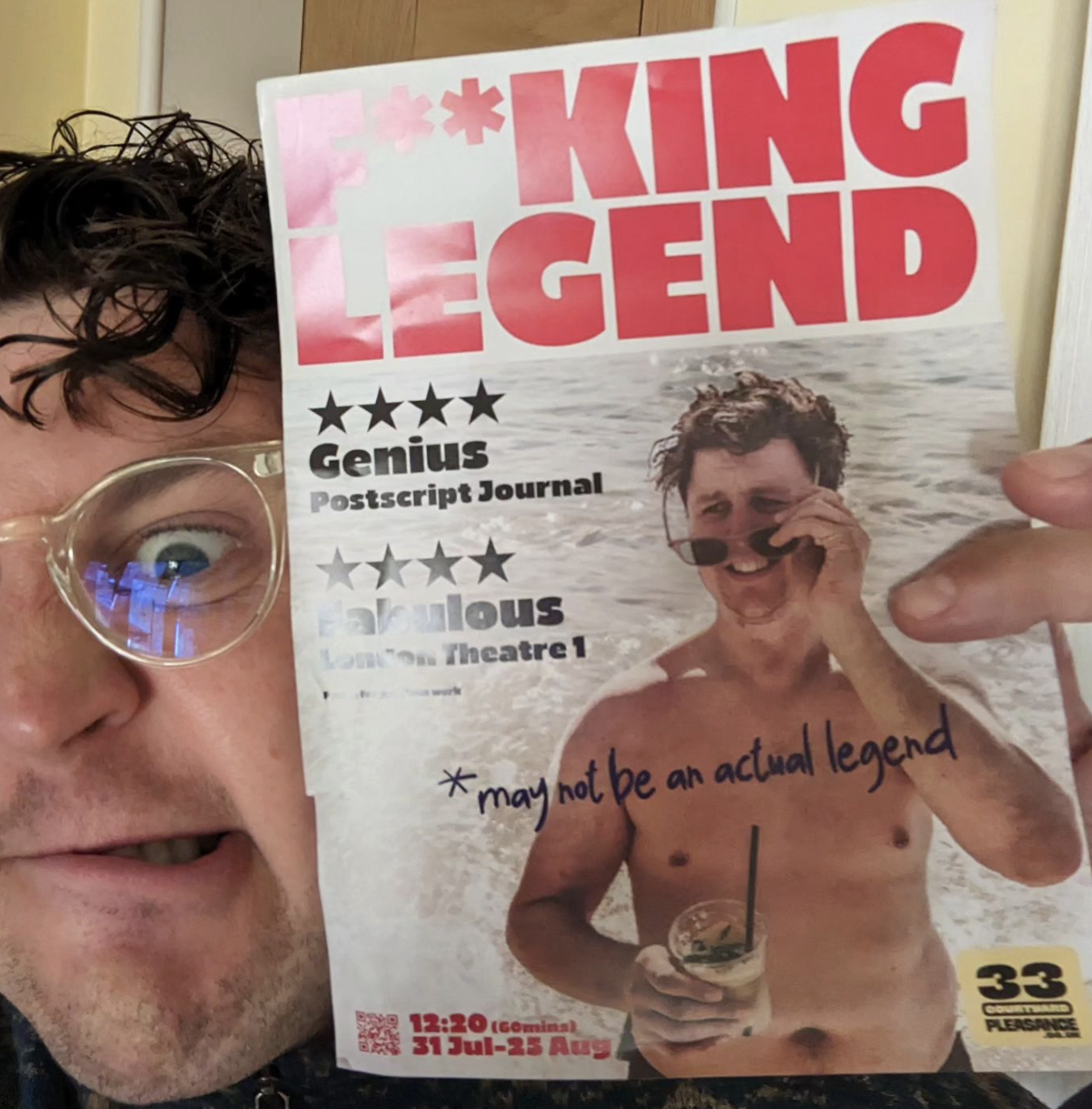
F**king Legend

14/08/24

Pleasance Courtyard (Bunker Two), Edinburgh

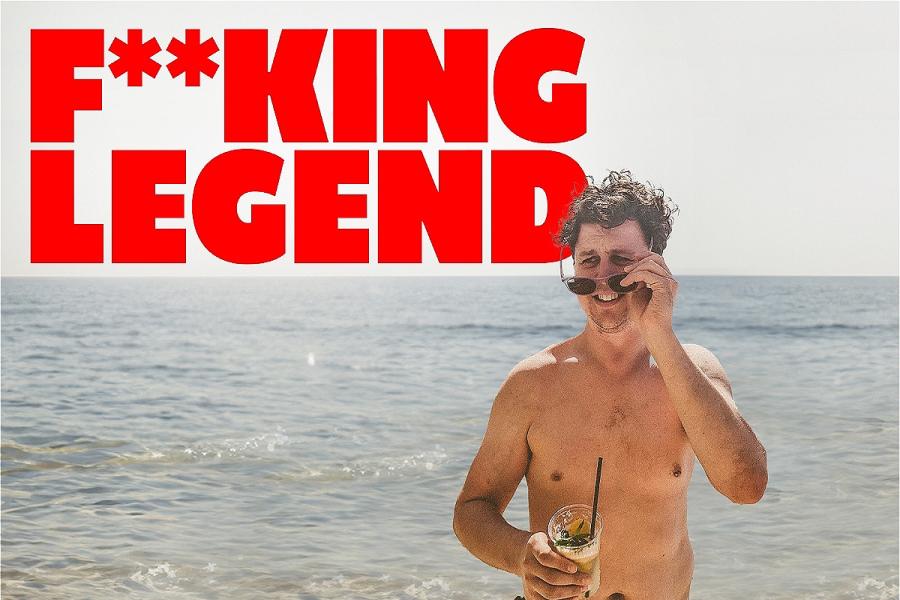
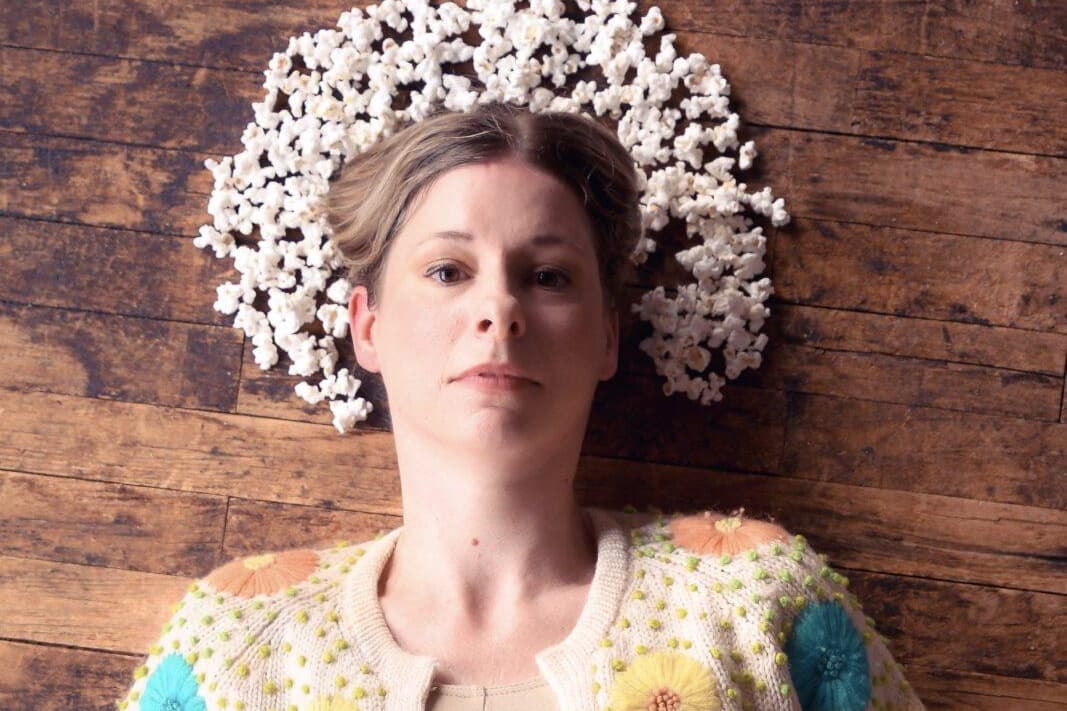
Olly Hawes isn’t a bad guy. Okay, so maybe things get a little out of hand on stag dos now and again, but he and his pals are not like those other lads, misbehaving drunkenly in historical European cities. Sure, they go to the same places and drink the same booze, but their raucousness is performative and self-aware. They’re being ironic – and that makes all the difference. Right?

In this one-man show, Hawes veers between biting humour and apocalyptic despair; it is at once a confessional and a call to arms. The affable persona he creates serves as a hook, allowing him to reel us in and bring us face-to-face with our own hypocrisies.

There’s a gulf between the opening scene, where Hawes stands contemplating which socks to wear, and the terrifying ending, where we all stand on the precipice of a climate disaster. But Hawes is an effective guide, leading us from an introspective focus on the daily minutiae to a bird’s eye view of what’s happening just out of shot. If this sounds bleak, it is, but don’t be misled – it’s also very entertaining.

There’s an overt meta-quality to this monologue. Hawes invites us to picture our own lead character. It might be him or it might just be someone a bit like him. It might be us. (It is us. We’re all guilty.) The piece is presented as a screenplay, with Hawes narrating the cues, which works well as a simple means of establishing where we are in time as well as place.

There’s no denying that the ending is frenetic and hyperbolic – but it feels earned. This is clever writing with a relatable protagonist, striking exactly the right tone to keep the audience on board.

And we need to actually do something about climate change, don’t we? The planet’s burning while all us f**king legends look away and party.

4 stars

Susan Singfield
My Grandmother’s Eyepatch

13/08/24

Zoo Playground 1, Edinburgh

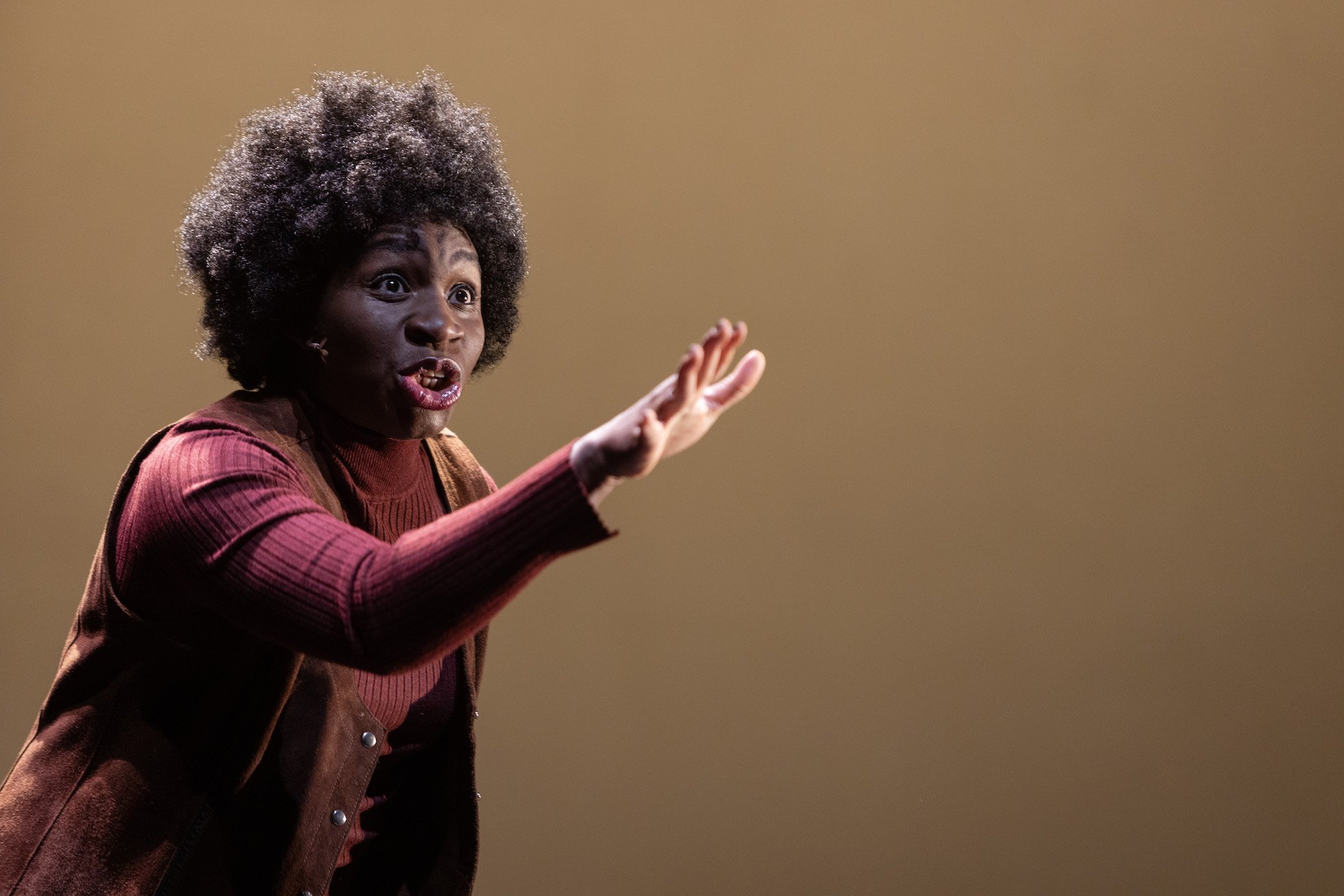
Award-winning actor and clown Julia VanderVeen is hosting a memorial service for her beloved grandmother, the improbably-named Mamie Lee Ratliff Finger. It’s time for Julia to deal with her grief head-on, a mere eighteen years after Mamie’s demise.

We’re all here to pay our respects to the piratically-attired matriarch, and we’re soon ensconced in VanderVeen’s giddy, absurdist world, our cheeks hurting from laughing, our hands held to our mouths in gestures of oh-God-what-now? A lot of the comedy comes simply from VanderVeen’s exaggerated facial expressions and her tendency to skewer audience members with a scarily intense stare. Sometimes she moves achingly slowly, making us chuckle just to relieve the tension; other times, she capers about the small stage frenetically, or performs a ridiculously elaborate dance, contorting herself into a range of awkward poses. There are props a-plenty littering the stage – a more-is-more approach akin to Natalie Palamides’ in Weer.

Macbeth? Check. Card tricks? Check. Hobby horse? Of course. What else could you possibly ask for?

Perhaps unsurprisingly, the show tells us more about Julia than it does about Mamie, although we do learn quite a lot about her grandmother in the process. It would be a crime to reveal too much here, as it’s the unpredictability that makes it so entertaining; suffice to say, I’m pretty sure you’ve never been to a memorial service quite like this one – and if you have, I hope your therapist is good.

Sly, silly and absolutely hilarious, My Grandmother’s Eyepatch is the funniest show about grief I’ve ever seen.

5 stars

Susan Singfield

I Sell Windows

12/08/24

Assembly George Square (Studio 4), Edinburgh

Actors Daniel Blinkoff and Tamlyn Tomita, founders of LA Theatre Company Outside In, are committed to making a space where diverse voices can be discovered, evolved and shared. With its almost unimaginable variety of shows (more than three thousand, every day), the Edinburgh Fringe is a perfect match for such an endeavour, and Kacie Rogers’ I Sell Windows is an impressive addition to the programme.

Directed by Jaquita Ta’le, Rogers presents a monologue about love, trauma, thwarted ambition – and selling windows. Casement, sash, bay, awning: ‘Kacie’ can make your dreams come true. But first, you have to stop waiting to be ready and really start living…

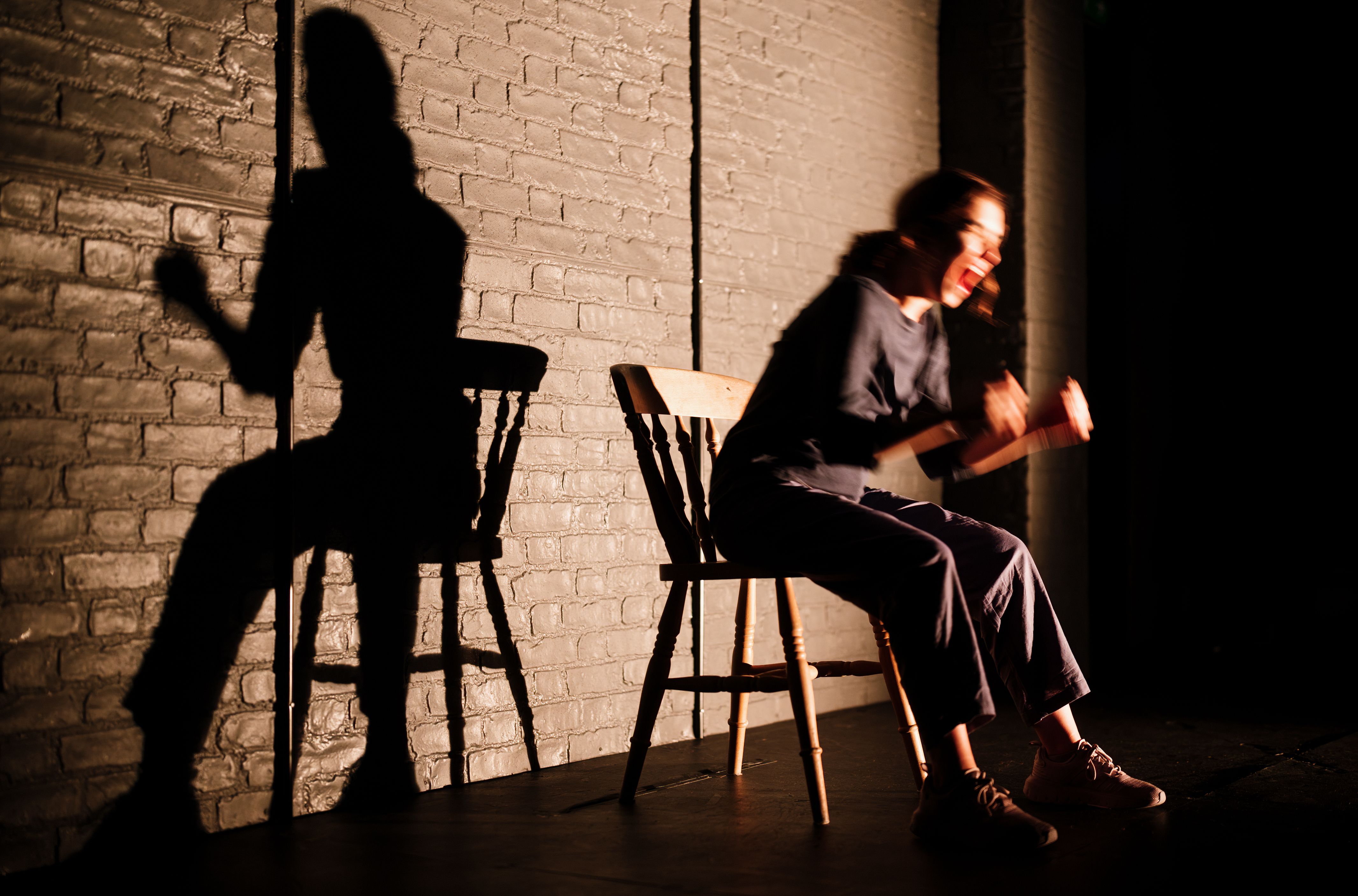
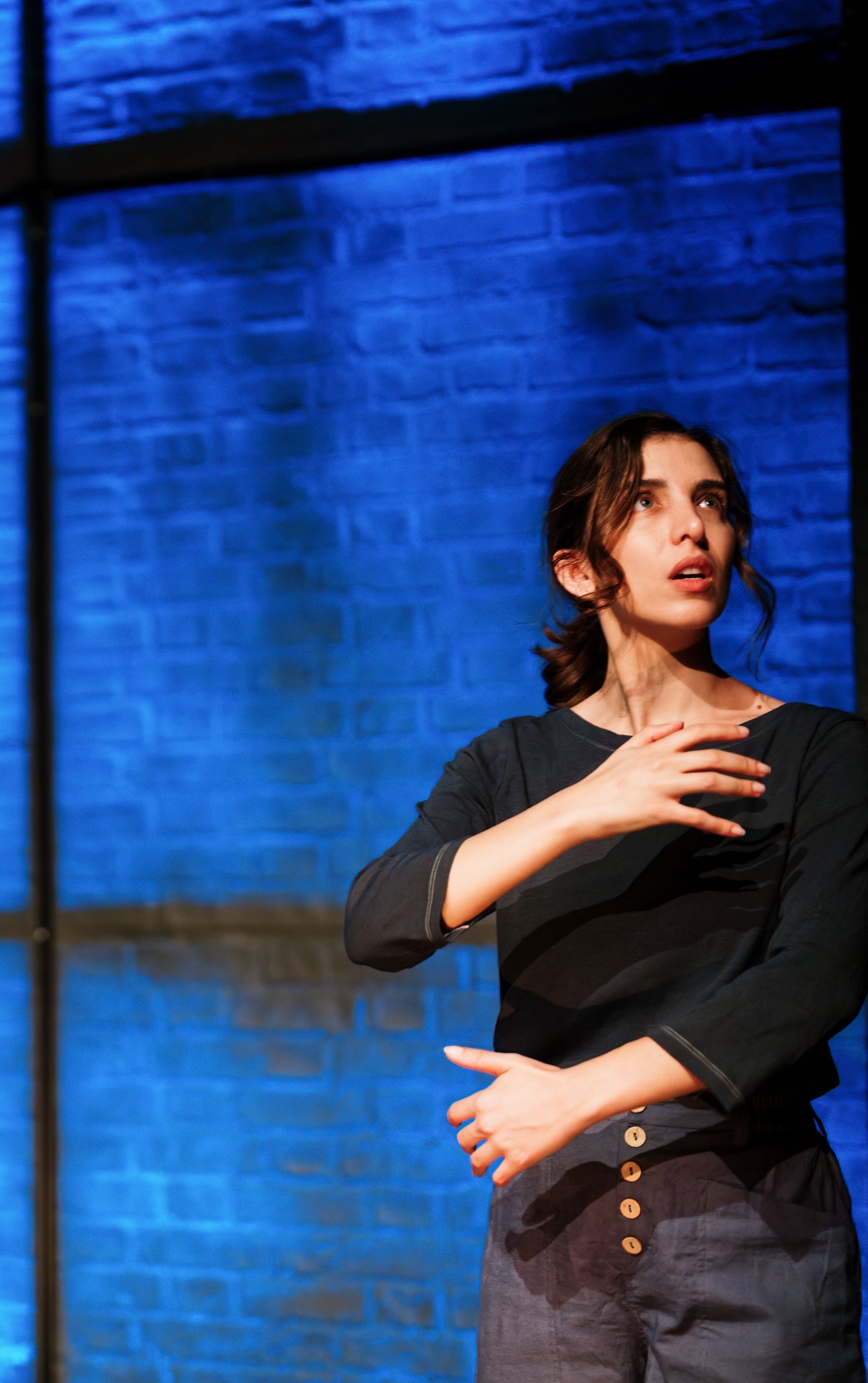
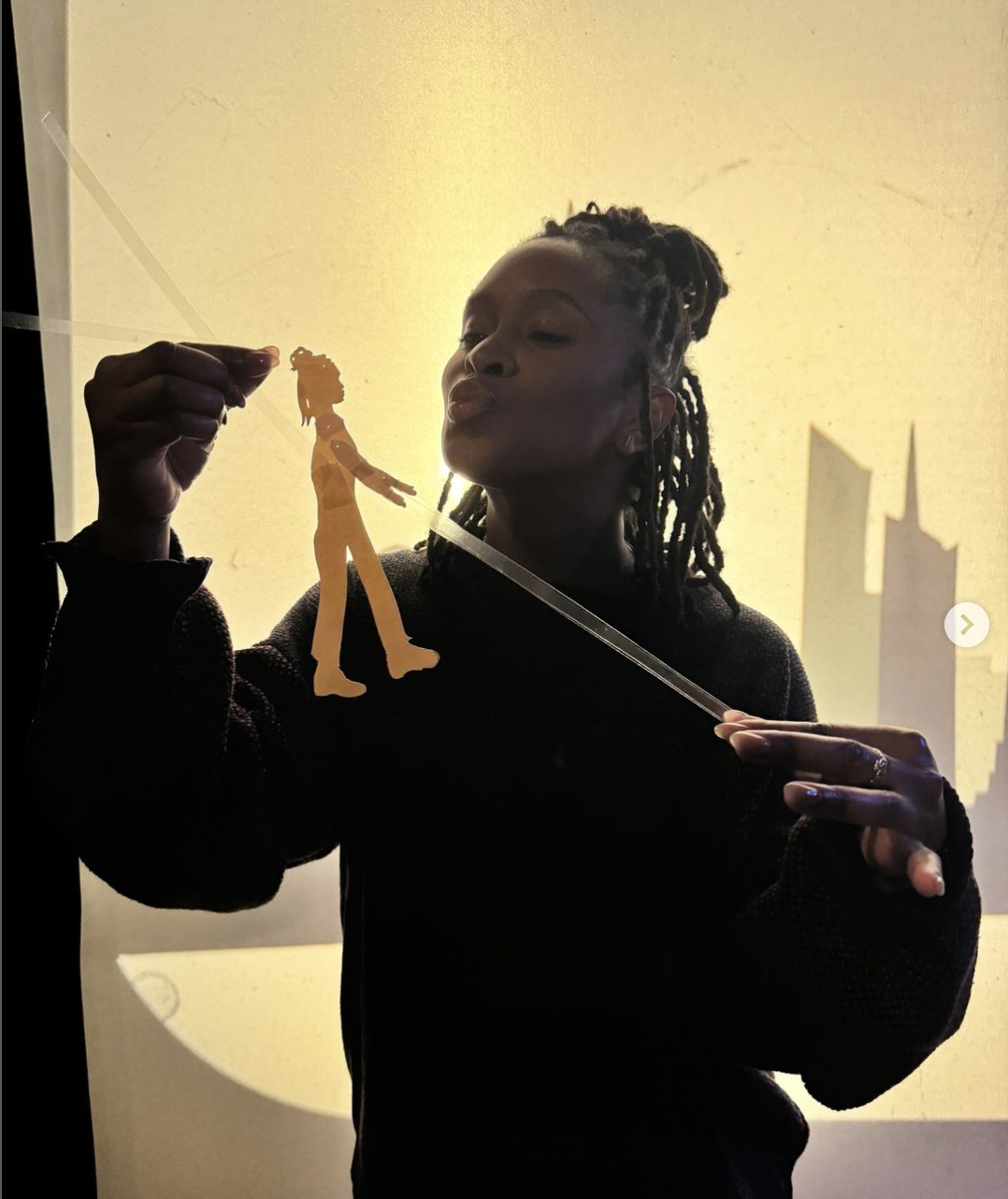
The fragmentary structure of the play reflects Kacie’s uneven mental health, as she struggles to come to terms with the death of her grandfather and the realisation that she may never earn a living as an actor. Reeling from the impact of these twin losses, she begins to implode, jeopardising her relationship and spinning out of control. Her breakdown is beautifully illustrated by the use of intricate shadow puppets (courtesy of Brittaney Talbot and Perry Daniel), as well as a sequence of recurring dreams, lit like the Northern Lights. Along with Rogers’ heartfelt a cappella rendition of Tracy Chapman’s iconic Fast Car, this amounts to both a profound character study and a rumination on the ways in which we are taught to value (and undervalue) ourselves.

Performed with verve, wit and absolute precision, I Sell Windows is a thoughtful play, ostensibly about one young Black woman’s experience, but applicable to every one of us.

4.2 stars

Susan Singfield

One Sugar, Stirred to the Left

12/08/24

theSpace @ Surgeons’ Hall (Grand Theatre), Edinburgh

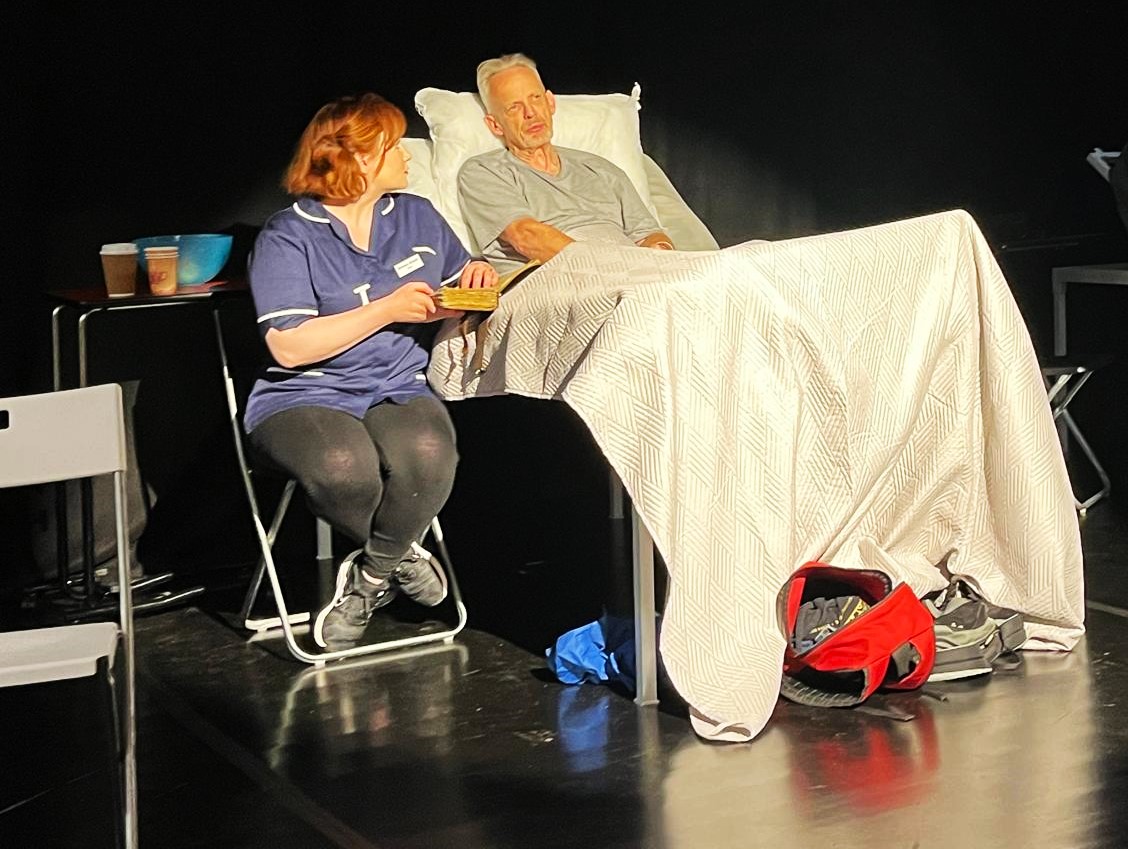
Jon Lawrence’s One Sugar, Stirred to the Left is an affecting drama, set in a hospice. Stephen Corrall plays Henry, an elderly man with terminal cancer, living out his final few months under the tender care of Doctor Choudry (Kareem Nasif), Nurses Carol (Eleanor Healing) and Bronwyn (Anne Yeomans), and tea lady Amala (Jiang). From his death bed, Henry muses on his complex past, his painful present and his ever-shrinking future. He wants to leave something special for his son, Justin (Dom Fraser). And maybe – just maybe – Bronwyn can help.

This ‘play with songs’ has some really interesting things to say about the human need to make peace with ourselves and others before we die. Corrall convincingly portrays Henry’s growing acceptance of his situation and, under David Kettle’s direction, the calm and tranquility of the hospice seems to expand, extending its solicitude to the whole audience. Kettle also provides the guitar accompaniment, while Jiang is the comic relief. But it’s Yeomans who provides the emotional heart of this piece, her plaintive vocals encapsulating a poignant mix of nostalgia, regret and love.

Perhaps some of the plotting is unnecessarily convoluted. It would be simpler and also make more sense if Henry were the one to hear Bronwyn sing, rather than learning second-hand from Justin that she “has a lovely voice.” As it stands, we have to suspend a whole lot of disbelief to accept that anyone would entrust fifty years’ worth of personal writing to someone and ask them to set it to music without knowing anything about their style or ability. I’m also not sure that the sub-plot – about Hamish (Duncan Airlie-James) – has enough space to breathe in this short play. Although Hamish is a well-drawn character and Airlie-James delivers a likeable performance, imbuing the former comic with a roguish charm, this strand feels like it belongs to a longer piece with a wider focus. I can’t help but feel that the large cast and sprawling storyline dilute the message.

On the whole, I like the naturalistic set, the cold, clinical room belying the hospice’s geniality and warmth. However, there are so many props that the space feels cluttered, the stage business sometimes distracting me from what’s being said.

Despite some minor criticisms, there’s no denying the emotional impact of this piece, and I’d be lying if I said I wasn’t crying at the end. Like so many, I’ve witnessed firsthand how important hospices are; I will be forever grateful to the staff at St Kentigern’s in St Asaph, North Wales, who provided so much succour to my parents when my dad was diagnosed with MND.

This production illuminates the importance of affording people dignity at the end of their lives, and of not being afraid to talk about death.

3.2 stars

Susan Singfield

Through the Mud

11/08/24

Summerhall (Main Hall), Edinburgh

Plus ça change, plus c’est la même chose

Apphia Campbell’s Through the Mud is a chilling reminder of how little has changed over the years when it comes to Black liberation in America. Campbell plays Assata Shakur, the 1970s civil rights activist, who – convicted of murder – escaped from jail and has been living in exile in Cuba ever since. In a parallel storyline, forty years later, college student Ambrosia Rollins (Tinashe Warikandwa) finds herself caught up in the beginnings of the Black Lives Matter movement.

This is a powerful piece of theatre, as much a call to arms as anything else, and it feels especially apposite as racist riots are breaking out just over the border in England. Of course, Through the Mud pertains specifically to American politics, but bigotry and prejudice aren’t confined to one continent and we have just as much blood on our hands.

Co-produced by Stellar Quines and Edinburgh’s Royal Lyceum Theatre, the production values are as high as you’d expect, and director Caitlin Skinner deftly leads us through the intertwining timelines, allowing the women’s individual stories space to breathe as well as highlighting the connections. The characters contrast and complement one another perfectly: Campbell imbues Assata with a fierce dignity and a fighter’s strength, while Warikandwa’s Ambrosia is altogether sweeter and more naïve – until her first weeks of college coincide with the fatal shooting of Michael Brown by a white police officer, and she can no longer cling to the fair-world fantasy that her parents built for her. 

The sense of outrage at the heart of the play is brought to life by the music, where spirituals and gospel songs give voice to the protest. The women’s vocals are impressive: Campbell deep and powerfully resonant, while Warikandwa’s more plaintive tones offer an enchanting counterpoint. When the two harmonise, the effect is positively thrilling.

In the face of all the awful evidence, it’s to Campbell’s credit that Through the Mud feels somehow hopeful rather than dispiriting. The women’s indefatigable spirits spur us into thinking we ought to act too. 

Not enough has changed – but the fight goes on.

4.5 stars

Susan Singfield

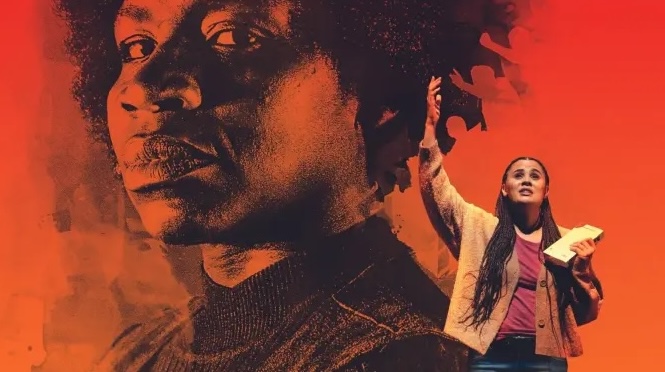
Lost Girl

10/08/24

Underbelly George Square (Wee Coo), Edinburgh

Tracey Emin… stereotype… train wreck. Oops! Sorry. Wrong notes. Let’s try again…

Amy Lever’s Lost Girl is a fascinating monologue, charting nineteen-year-old Birdy’s search for self-acceptance. She’s never been particularly clever (as her A level results confirm); she hasn’t any special talents and she doesn’t know what she wants to do with her life. Until now, none of this has really mattered, because she’s had her best friend Bex by her side, and they’ve been battling the world together. So what if Birdy didn’t make it into uni? Neither did Bex – or Jeremy Clarkson, for that matter – and they’re both doing okay.

But now Bex – resolutely Catholic – has unearthed some hitherto unknown Portuguese Jewish ancestry, which means she can claim an EU passport, and so she’s gone off travelling. Birdy, meanwhile, who is actually Jewish, has no such useful connections. “Hey, Siri,” she asks. “Is Syria in the EU?” Even Siri, who surely hears all sorts, isn’t programmed to deal with this level of ignorance. “Don’t be stupid,” he responds.

So Birdy feels lost. She’s plagued by recurring nightmares and angry with Bex for deserting her. She’s angry with her family too because… well, because they’re her family. Who else is going to bear the brunt of her frustration?

But when Birdy gets a job working in the archives of a local Jewish museum, she begins to unearth some secrets that make her see her relatives in a whole new light…

Lever is an accomplished actor, quickly earning our sympathy with her heartfelt performance. Her depiction of wannabe actor Bex’s disastrous one-woman show is very witty, as is her portrayal of the monosyllabic Sammy Morrison. The writing is good too, often causing us to laugh out loud, as well as giving us plenty to think about.

The simple, unfussy staging is well-suited to the piece, the frame of documents and photographs symbolising both cage and portal, illuminating Birdy’s contradictory impulses for stasis and for flight.

As much a character study as a play, Lost Girl offers a fascinating insight into the mind of a teenager seeking validation and coming to terms with her cultural identity.

4 stars

Susan Singfield

Werewolf

09/08/24

Summerhall (Former Women’s Locker Room), Edinburgh

I’m a drama teacher by day (emerging as a theatre critic under a full moon) so I am au fait with the game Werewolf – the teenagers I work with are obsessed with it. For those less familiar with the concept, it’s a role-playing exercise set in a remote village, where the titular lupines feast on one unfortunate inhabitant each night. Every morning, the villagers (who include a doctor, a detective, a chief and – randomly – a Cupid) meet to try to work out who among them is a killer. Think The Traitors or Among Us, depending on your demographic. It’s a little bit like that.

New Zealand’s Binge Culture theatre company brings a heightened version of the game to this year’s Fringe, with extra layers of drama and complexity, and the immersive experience is a lot of fun. Before we’re ushered into Summerhall’s Former Women’s Locker Room, we’re told that we will each find a card on our seats. We should read them and follow the instructions without revealing their contents to anyone else. 

Once we’re seated, three wardens (Joel Baxendale, Hannah Kelly and Stella Reid) inform us that we’re in a containment bunker, and that we need to stay here for seven days to avoid – whisper it – “the contagion.” Post-Covid, this doesn’t actually feel like such a stretch, but things soon start to go awry. Obviously, I can’t give too much away because the element of surprise is key to this production. Suffice to say, the tension steadily mounts…

I love it. The wardens do an excellent job of inhabiting their characters at the same time as managing the narrative, expertly drawing what they need from the participants. The sound design (by Oliver Devlin) is crucial to the piece, creating an unsettling atmosphere and perfectly enhancing the horror elements. Everyone in the room appears committed to the game; we’re all determined to uncover the danger in our midst.

I highly recommend this piece, especially to families with teenagers in tow. If you want something entertaining and immersive, then Werewolf is surely what you’re looking for. It”s an absolute howl.

4.5 stars

Susan Singfield
Mutant Olive 2.0

08/08/24

Gilded Balloon Patter Hoose (Nip), Edinburgh

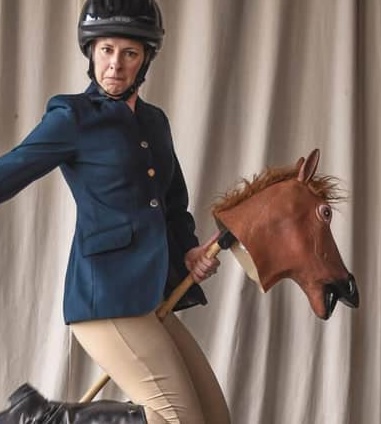
Mutant Olive 2.0 is a wild ride of a show. Adam Astra (Mitch Hara) is auditioning for a part in Hamilton Unplugged and he’s determined to stand out from the crowd. Sure, he’s an ex-addict, his headshot is twenty years out of date, and he’s left his props on the kitchen table but, as the audience becomes a room full of directors, producers and casting agents, we are urged not to let any of this cloud our view. He’s going to wow us with a Shakespearean monologue. What could be more appropriate?

Except, would we mind waiting just a minute, because his Dad’s calling? Sorry about that. The problem with his Dad is… “Okay. Puck. I am that merry wanderer of the night…” His phone rings again.

Hara is a kinetic performer, almost sparking with energy. He dazzles with his smile and prowls the small stage, lurching from sly camp to devastating emotion, somehow keeping us with him all the time. The stories of Astra’s childhood – his speed-freak alcoholic mother; his hitman father – seem utterly fantastical, but it turns out they are largely autobiographical, based on Hara’s own experiences. 

The audition, of course, careens out of control, like the seventeen cars Astra has crashed whilst high. And in amongst all of the gloriously riotous, outrageous tales, we see the man emerge, scarred but intact, resolute in his determination to succeed on his own terms.

Directed by Carlyle King, Mutant Olive is a true delight. I’ll certainly be seeking out more of Hara and King’s work, starting with Smothered, their short form series on Amazon Prime. Meanwhile, do yourself a favour and head to the Gilded Balloon for a chance to see a fairy goblin in a whole new light. 

4.6 stars

Susan Singfield

Rebels and Patriots

05/08/24

Pleasance Courtyard (Upstairs), Edinburgh

“The villainy you teach me, I will execute, and it shall go hard…”

This Israeli-Palestinian-British co-creation, written by Nadav Burstein and co-produced by Floating Shed and Flabbergast, provides a timely discourse on the devastating nature of war, where ordinary people of all stripes are sacrificed to serve the interests of a powerful few.

The play opens with Wonder Woman and Albert Einstein drinking vodka with two friends, as the teenage protagonists prepare for a fancy dress party. This serves to underscore the quartet’s youth, engaging our sympathy as we realise that three of them have been conscripted into the Israeli Defence Forces. The fourth (Harvey Schorah) has an exemption, courtesy of Crohn’s disease.

Burstein’s efficient deployment of the small cast is impressive: through their stories, we see multiple perspectives on the Israeli-Palestinian conflict. There’s the combat pilot (Tom Dalrymple), who’s scared to kill, but believes Israel has no choice but to fight its enemies: “If you wrong us, shall we not revenge?” Then there’s Osher (Tarik Badwan), half-Palestinian and in active service. His name means happiness but he feels torn apart, traumatised by what he’s forced to do. Burstein’s character, meanwhile, is trying every trick in the book to avoid serving in a war he thinks is wrong, even turning to self-harm. It’s all very well for Schorah’s character to go on protest marches and tell his friends that they should rebel: everything he says is right, but they’re in the thick of it, and they’re terrified.

I’m impressed by the openness with which this young company approach this thorniest of topics, gently urging us to interrogate everything we think we know. Shylock’s most famous speech is paraphrased and repeated, refrain-like: “Hath not a Jew…? Hath not an Arab…? If you prick us, do we not bleed?”

Schorah’s character works well as a mirror for the audience. He’s on the outside, like us, making judgements from the comfort of our living rooms. Don’t be misled: the play makes no excuse for genocide. But it does remind us that, when we’re placing blame, we need to focus on the powerful, not the powerless.

Theatrically – as one might expect from Flabbergast – the piece has a fragmented structure, spotlighting first one character and then another. Loosely stitched with a sprinkling of history and Shakespeare, it all adds up to something very thoughtful, and the cast are keen to hear what audience members think. If only the world’s political leaders were as committed to constructive dialogue.

4.5 stars

Susan Singfield

Grazing by Mark Greenaway – Market Menu

03/08/24

Princes Street, Edinburgh

Ten years ago, we were living in Manchester. We came up to Edinburgh that August for two reasons: to visit the Fringe and to get married. We celebrated our ultra low-key wedding (registry office, no guests, strangers as witnesses) with a delicious meal at Mark Greenaway’s Bistro in Stockbridge. 

Although that particular venue hasn’t lasted as long as the marriage, Greenaway is still a big part of Edinburgh’s culinary scene, and Grazing – located on the ground floor of the Caledonian hotel on Princes Street – is a firm favourite of ours. 

So it makes sense to celebrate our tin wedding anniversary here. There’s a new five-course ‘market menu’ that we’re keen to try – and it doesn’t disappoint. 

We start with three ‘snacks’: a little cracker with burrata and caramelised mustard seeds, some beef tartare and the cutest mini baked potato, with tuna tartare and lime mayo. These are an absolute pleasure to eat, the potato in particular bringing smiles to our faces. 

Next up, it’s rabbit paté en croute, a pastry frame containing layers of black pudding and spiced apple chutney as well as the meat. I’m not sure I’m going to like this; I haven’t eaten rabbit very often and I remember it as very strong and gamey. But this incarnation is delicate and light, and the gooseberry chutney on the side is a joy.

The main course is roast Perthshire duck breast, served with a morell mushroom tart and asparagus. Again, this is a revelation: I’m not usually keen on duck, but this is delicious – and that mushroom tart is bursting with flavour.

A pre-dessert of lemon curd cream proves a hit: there’s ice cream and chantilly, both bold with lemon – and the basil meringue complements it well. 

The only disappointment of the evening is the strawberry parfait, which is nice enough but too similar in concept to the pre-dessert (cold creamy stuff, room-temperature creamy stuff and some fruit) and not quite as tasty. 

But it doesn’t matter, because we’ve already taken the obvious decision to order an extra sweet to share. Not because we need it, but because Greenaway’s sticky toffee pudding soufflé is a thing of legend, an easy winner for our hypothetical Off Menu dream dessert. And it’s every bit as good as always: date-y and intense, rich but not heavy, quite the nicest thing you’ll ever eat. 

A couple of ‘Happy Anniversary’ petit fours round off the evening nicely, and we happily clink our glasses of Appletise in celebration of a decade well spent.

4.6 stars

Susan Singfield