Donald Trump

The Merchant of Venice

22/01/25

The Royal Lyceum, Edinburgh

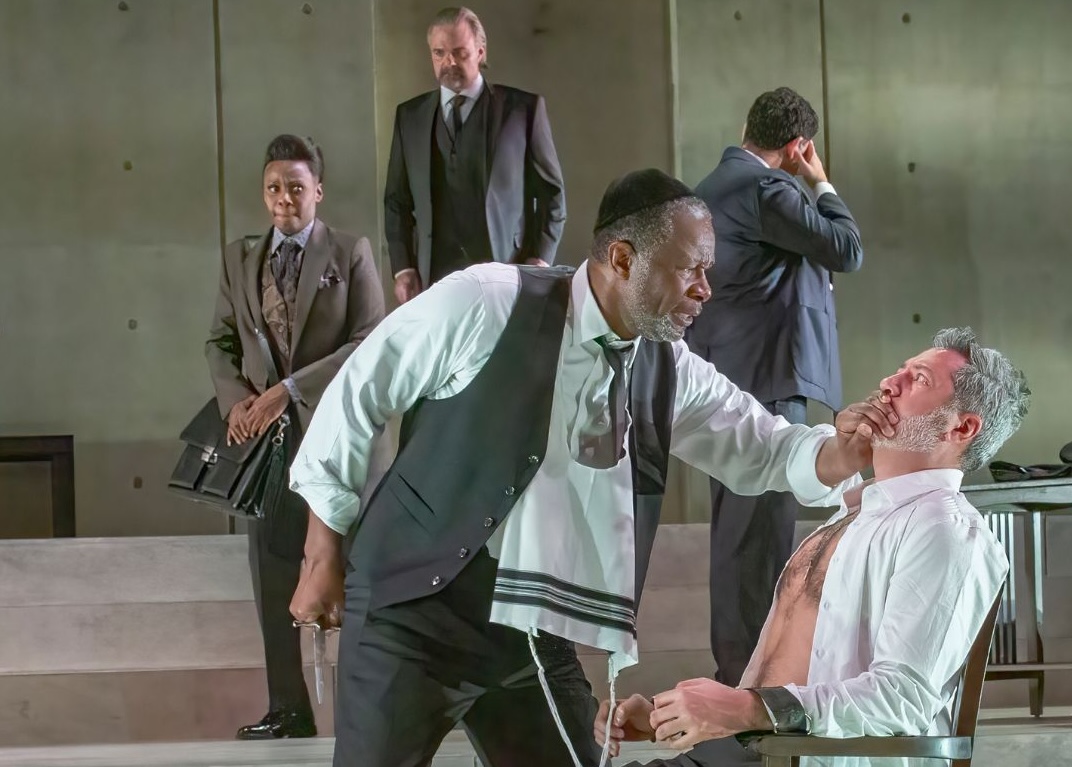
New York’s Theatre for a New Audience brings The Merchant of Venice to Edinburgh’s Royal Lyceum as part of a reciprocal exchange programme. Starring John Douglas Thompson as Shylock, this is a bold and provocative production, drawing explicit links between 16th century Venice and an all-too-believable near-future USA.

Director Arin Arbus says she wants “to discover what this play means to us in the here and now” – and she certainly does that, using Merchant to hold up a mirror to a divided society where people’s views are polarised and entrenched. In Shylock’s Venice, Jews have few rights. They are forced to live in ghettos, prohibited from owning property, limited in the kind of work they are allowed to do. The prejudice runs deep: even Antonio (Alfredo Narciso), widely reputed to be one of the good guys – “a kinder gentleman treads not the earth” – deems it appropriate to spit at Shylock and call him a dog, all while asking him for money. In the modern American dystopia where this production is set, Thompson’s Black Shylock suffers comparable – and recognisable – iniquities.

It feels like a timely reminder of what we need to avoid, of where discrimination and inequality inevitably lead. Who can blame Shylock’s daughter, Jessica (Danaya Esperanza), for wanting to escape the ghetto, for hooking up with Lorenzo (David Lee Huynh) and converting to Christianity? Why shouldn’t she seek a better life? But it’s her desertion that pushes Shylock, already at breaking point, over the edge, fuelling his thirst for vengeance. What has he left to lose? Just as the Christian Venetians treat the Jews as a homogenous group to be despised, so Shylock views them all as one enemy. No wonder he is furious; no wonder he shows Antonio no mercy.

But the odds are stacked against him. The legal system isn’t fair or balanced: the laws are written by the powerful. Plus ça change, plus c’est la même chose. Power corrupts. Even Portia (Isabel Arraiza), who seems a pretty decent sort at first, isn’t immune. She changes when she assumes the mantle of supremacy, swaggering into the court in her borrowed clothes and treating Shylock with cruel contempt. Arbus’s direction highlights this theme; indeed, this version of the courtroom scene is the most intensely horrifying I have ever seen. The auditorium is eerily silent, as if we’re all holding our collective breath, appalled by Portia’s gloating as she humiliates Shylock.

I’m watching this just three days after Donald Trump has issued an executive order dismantling federal diversity, equity and inclusion programmes, which lends this consciously diverse production even more weight and urgency. Shakespeare’s message transcends the centuries; we have to heed its warning.

4.6 stars

Susan Singfield
The Apprentice

19/10/24

Cineworld, Llandudno

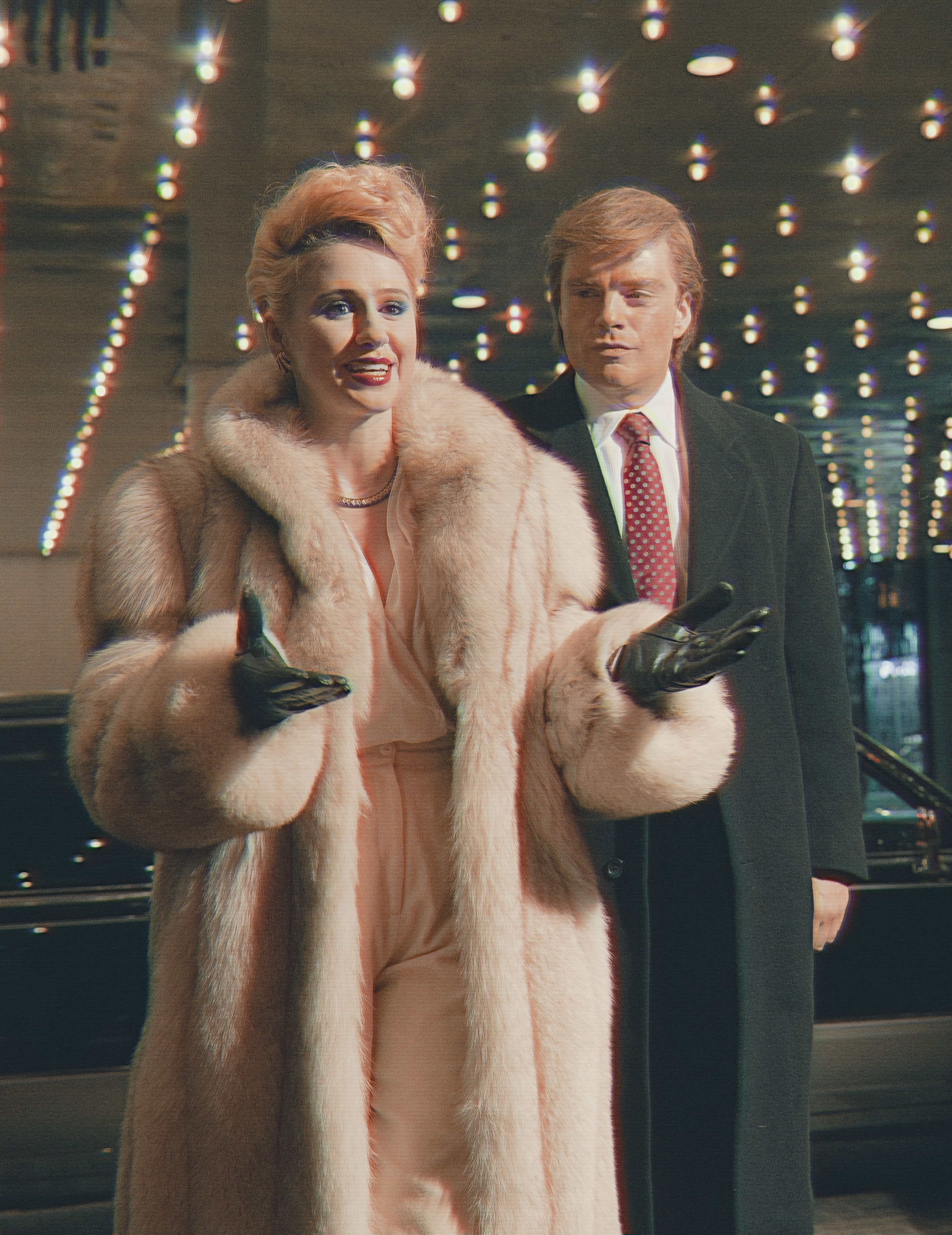
We’re in Wales, visiting Susan’s mum, but Brenda is a bit of an anti-Trump-obsessive and like us, she’s been eagerly awaiting the release of The Apprentice. It’s clearly time to flex the Unlimited card. Abi Abbasi’s biopic couldn’t have come at a more inopportune time for Trump. Of course he’s threatened legal action, though I’m pretty sure that Abbasi’s film doesn’t feature anything that isn’t already common knowledge to those who’ve read some of the numerous books about the man – but what it does, very effectively I think, is to illustrate how the Trump-monster was made and shaped.

Like most beasts, he’s learned his craft through imitation.

When we first meet Donald (Sebastian Stan) it’s 1973 and he’s essentially a slum landlord in New York City, trying his level best to please his ever-critical father, Fred (Martin Donovan), and deal with his alcoholic older brother Freddy (Charlie Carrick). The family fortune has already been made and the Trumps are currently fighting allegations that they have been discriminating against their African-American tenants – but Donald is looking for ways to better himself and has a vision of turning the long-derelict Gulf and Western building into a gleaming new construction called Trump Tower. But he knows he can’t do it alone.

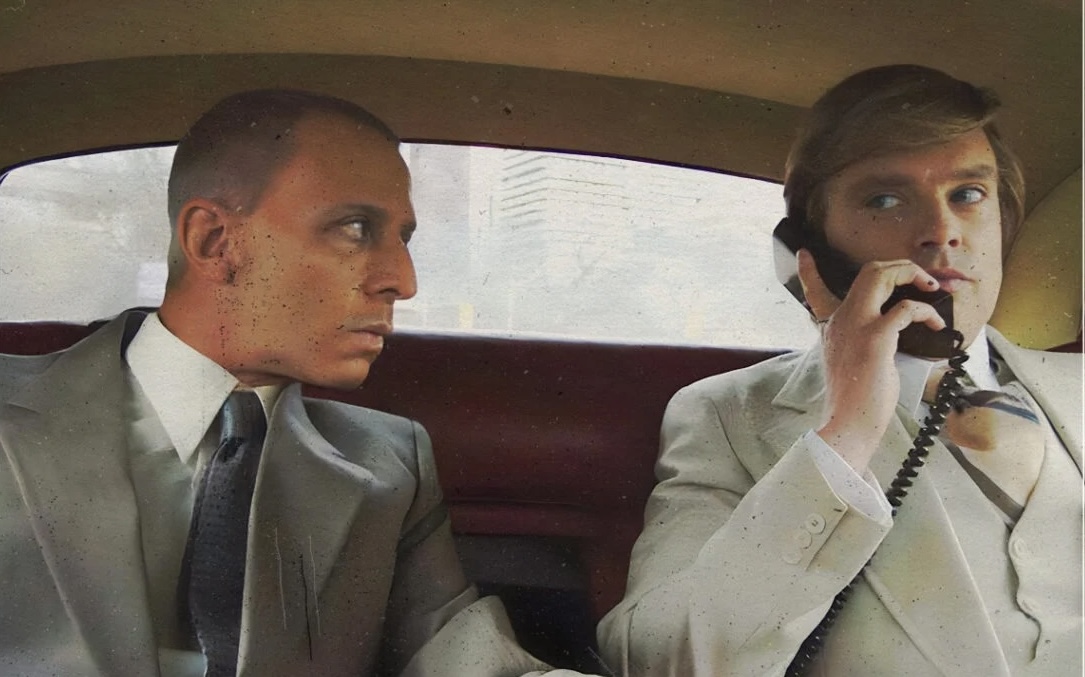
Then he falls into the company of Roy Cohn (Jeremy Strong), a ruthless lawyer, best known at this point for securing the death penalty for the Rosenbergs, a man who will stop at nothing to get his own way. He takes Donald under his wing and quickly drills into him his personal mantra. Never admit defeat, the truth is what you say it is and always act as though you’ve won, even if you haven’t.

Pretty soon, Trump has become the perfect acolyte, copying all of Cohn’s traits and even doubling down on them. When Donald meets and falls for Ivana Zelničková (Maria Bakalova), there’s a moment where it seems as though the film might be about to let him off the hook. His clumsy attempts to seduce her make him seem almost… relatable – but the feeling is short-lived. The monster soon comes back to the fore and the scene where his affectations turn against his former love is shocking to say the least.

Sebastian Stan does a pretty good job of capturing Trump’s gradual deterioration into the beast we know. Holding back the man’s distinctive hand gestures and vocal affectations until the film’s final furlong, he literally grows into the role. Strong, meanwhile, submits an extraordinarily chilling performance as Cohn: lean, cadaverous, almost alien, he surveys everyone he meets with the same dead-eyed stare. Here is a man who hides his real identity behind a mask, who puts down his enemies with a barrage of verbal abuse, while secretly pursuing a dissolute life with complete abandon. He’s totally toxic and yet, his ultimate treatment by Trump, when he has outlived his use, is all the more shameful because of that toxicity – and it’s hard not to feel some sympathy for him.

Abas meanwhile, captures the look and feel of the changing decades with a skilful combination of found footage and reimagined scenes. His use of music is inspired. Using Yes Sir, I Can Boogie as Ivana’s unofficial theme tune is particularly effective.

Trump can (and surely will) protest that releasing The Apprentice when he is gearing up for the fight to become the US President for a second term is inexcusable – but, as this film so clearly portrays, when it comes to a dirty, underhand fight, this is a man with considerable experience of his own.

4.3 stars

Philip Caveney

Matt Forde: Inside No. 10

26/08/23

Pleasance Courtyard (Pleasance Beyond), Edinburgh

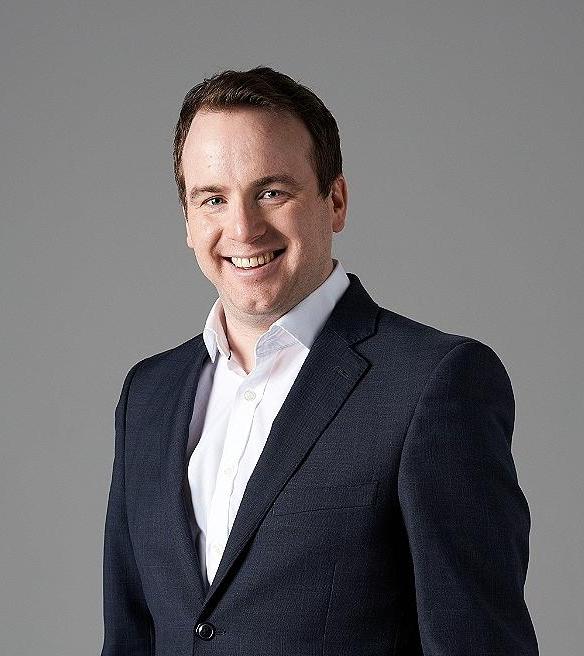
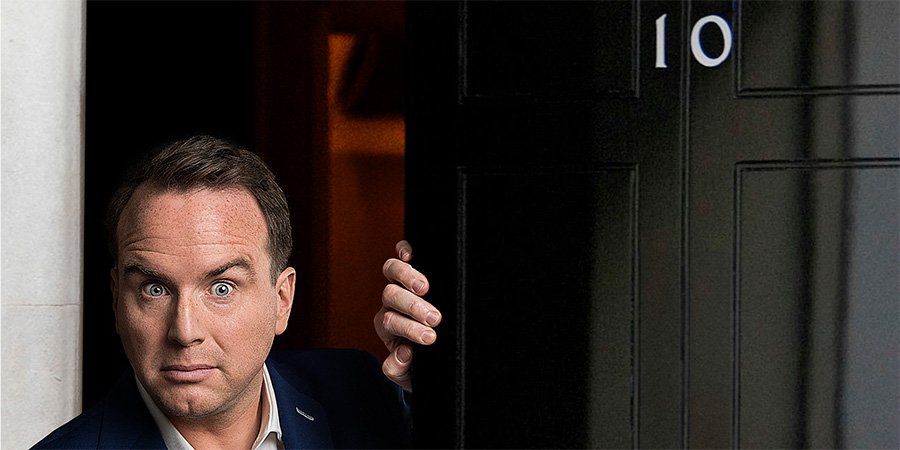
Matt Forde has built his reputation on a canny combination of political commentary interspersed with impersonations of the people in power. He’s a seasoned, confident performer and, pretty much from the get go, Inside No. 10 has the sizeable audience at the Pleasance Beyond laughing it up. The over-riding message is that the country is being led by the biggest bunch of buffoons in history and our only hope is to giggle about it. No arguments there. I’ve always thought that Rishi Sunak would be a hard man to impersonate but Forde manages it with ease, highlighting his ability to sound inappropriately effusive, even when he’s delivering horrible news.

And it’s not just the Tories. There’s a brilliantly observed Keir Starmer in there too, austere and seemingly obsessed with tearfully mentioning his late father at every opportunity and, since we’re in Scotland, the recent woes of the SNP are duffed up too, even if Forde wisely keeps his Nicola Sturgeon down to a few one-liners.

Ironically, it’s when he steps outside of British politics that the show really takes flight. His impersonation of Donald Trump is, as ever, spot on, nailing the man’s petulance and his childlike habit of blaming everybody else for his misfortunes. It’s easily the funniest part of Inside No. 10, (especially after being handed the gift of that mugshot) but, unfortunately, it has the effect of making the remainder of the show feel slightly anticlimactic. The piece doesn’t conclude so much as peter out.

Perhaps a little restructuring would help, holding back Trump (if only such a thing were possible) and finishing the exercise on a high point. Or maybe having him as a guide, observing our political system from his jaundiced POV?

Mind you, it’s bit late in the day to be suggesting changes, when the Fringe has almost run its course; besides, if the object of the exercise is to make an audience laugh, Forde certainly succeeds in that respect, big time.

3.8 stars

Philip Caveney

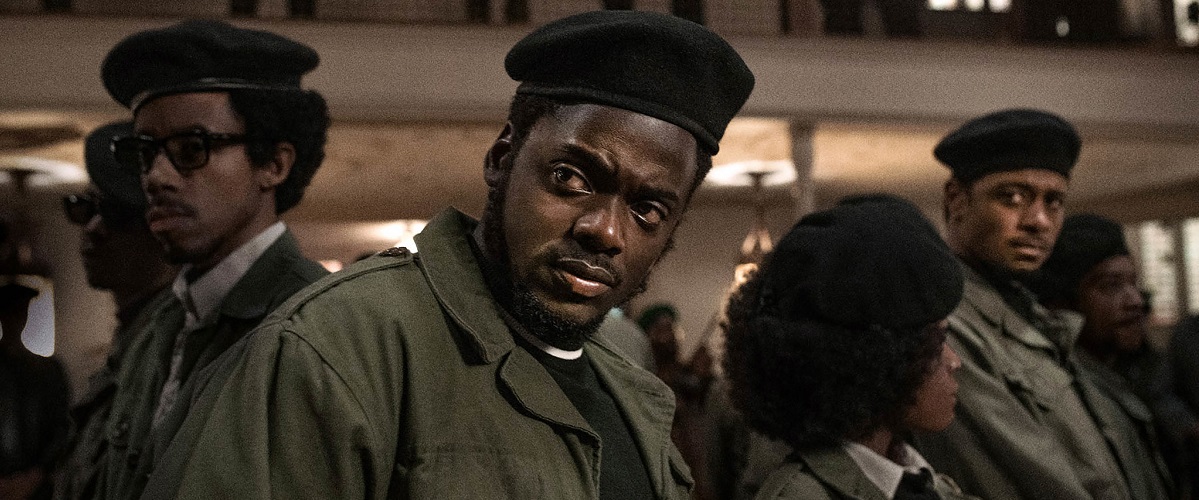
Judas and the Black Messiah

25/03/21

Apple TV

The ‘Judas’ in this story is Bill O’Neil (LaKeith Stanfield), a petty car thief who habitually pretends to be an FBI officer in order to ply his trade. Arrested by the police, he’s approached by genuine FBI Agent, Roy Mitchell (Jesse Plemons), who points out that O’Neil is now facing a lengthy stretch in prison – six months for stealing a car and five to six years for impersonating an officer.

Or, he might prefer to do the Feds a favour and become their snitch, posing as a member of the burgeoning Black Panther movement. Agree to that and he can walk free.

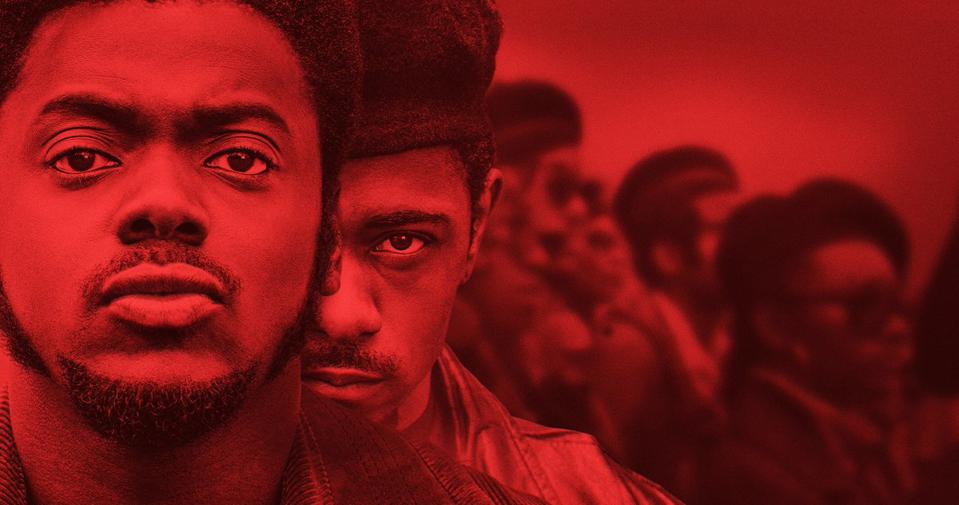
Perhaps not surprisingly, Bill chooses the latter option and, provided with a decent automobile by his new chums, he’s soon acting as driver to the ‘Messiah’ of the story – Black Panther Chairman, Fred Hampton (Daniel Kaluuya). Hampton is a charismatic and influential mouthpiece, who has his eyes resolutely fixed on the emancipation of Black America. With this in mind, he sets about uniting the various gangs of the city into something he calls The Rainbow Coalition. The white powers-that-be are getting decidedly nervous as the Panthers’ power steadily grows and, of course, there will be consequences…

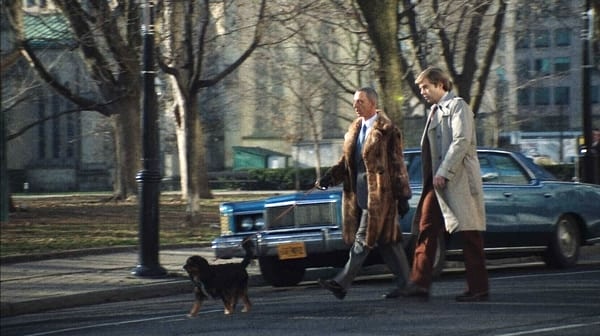
Shaka King’s slickly directed film is set in a grimy, neon-lit vision of Chicago in the 1960s, an urban powder keg perpetually battered by rain; the city almost becomes another character in the narrative. Perhaps it’s a coincidence that Plemons’ smug and smirking Roy Mitchell looks uncannily like Donald Trump and that Martin Sheen’s oily turn as J. Edgar Hoover eerily evokes the oleaginous style of Rudy Giuliani – but I’m inclined to think otherwise. At any rate, the screenplay makes no bones about it. These are power-mad Machiavellian types, who will stop at nothing to assert their absolute authority.

Daniel Kaluuya’s career has soared meteorically since starring in Get Out and he certainly makes the most of his role here. Hamptons incendiary sermons make it easy to understand why he holds so much sway over his disciples – and why the white rulers of America are terrified of his influence. Little wonder the performance has generated substantial Oscar buzz. Stanfield too is excellent in what is arguably the more difficult role, clearly showing in every frame how conflicted his character is, how degraded by participation in Mitchell’s schemes. As well as providing a thrilling narrative, Judas and the Black Messiah is also extremely informative, filling in many of the gaps in my knowledge of the Black Panther movement. When I was a youngster, its members were always painted as evil troublemakers. In retrospect, it’s easy to see that right was on their side.

The list of injustices meted out to Black Panther members is long and shameful – a callous list of beatings, wrongful imprisonments and murders, mostly inflicted on people whose main ambition was to be free. It’s sometimes hard to believe that the incidents portrayed here happened in my own lifetime – and it’s also sobering to reflect that so little has changed since then.

And, lest I try to console myself by saying, ‘well, it was another time,’ the film’s poignant coda reveals exactly what happened to O’Neil, decades after the turbulent events portrayed here.

Shame is clearly something that lasts a lifetime.

4.4 stars

Philip Caveney

Bombshell

07/01/20

It was perhaps inevitable that #MeToo would eventually inspire a movie and it’s rather ironic that the first one out of the gate has been written and directed by men – moreover, the director is Hal Roach, previously best known for the Austin Powers films, a franchise that never troubled itself overmuch with the subject of women’s rights. Nonetheless, Bombshell is a powerful and prescient story that takes a close look at the Fox News scandal and the people who lived through it.

Charlize Theron plays Megyn Kelly, Fox’s most influential news anchor, who, at the film’s opening, is exchanging excoriating words with one Donald Trump, an event that will put her on the Republican party’s shit list for an entire year. Kelly has long ago learned to co-exist with Fox News’s all-powerful boss, Roger Aisles (the usually avuncular John Lithgow, cast against type here as a loathsome philanderer). Aisles constantly keeps an eye peeled for new opportunities and soon finds it with the arrival of ambitious young TV producer, Kayla Pospisil (Margot Robbie). Kayla has a yen to step in front of the cameras herself. The question is, how much will Aisles demand to help her achieve that ambition?

Meanwhile, another veteran presenter, Gretchen Carlson (Nicole Kidman), finds her power at the network fading. She’s already been shunted to a less prestigious afternoon slot because of her refusal to kowtow to Mr Aisles’ increasingly sexist demands – and, when she is summarily sacked for no good reason other than she is getting older, she decides to sue Aisles for wrongful dismissal. She hopes that other women who have suffered at his hands will join her cause but, as she soon discovers, many employees at Fox (including Kelly) have too much to lose to risk incurring the wrath of the network…

Charles Randolph’s screenplay does a pretty thorough job of depicting the toxic atmosphere at Fox News during this period. Both Theron and Kidman, sporting convincing prosthetics to make them look more like the genuine players, offer their customary assured performances, but are perhaps hampered by the fact that, when playing real life personalities, finding their inner life can be problematic. It’s therefore Robbie who is the real revelation here. Since her character is a fiction, an amalgam of Aisles’ many victims over the years, she has more freedom to explore the role – and runs with it. The scene where Aisles compels her to ‘give him a twirl’ is an object lesson in understatement, the character’s hidden turmoil brilliantly expressed in every movement and gesture – while later on her tearful phone conversation with a female friend is emotive stuff. Lithgow too is excellent, horribly convincing as the oleaginous Aisles, a man who can make the very act of breathing look unpleasant.

I like the unflinching realism here. There’s no female bonding on display, no sense of the women working together for a common purpose – indeed, the major protagonists of this story barely exchange half a dozen words with each other. It’s a sobering demonstration of how personal ambitions can get in the way of a greater good. But that makes it all the more believable, more like something that could actually happen in such a cutthroat, competitive world.

Watch out for a cameo from Malcolm McDowell as a (pretty convincing) Rupert Murdoch and don’t miss the closing captions, which point out how the guilty parties in this debacle came away with (surprise, surprise) a lot more money than its supposed victors.

Bombshell may be the first film to properly explore the subject of  #MeToo, but I’m quite sure it won’t be the last. And, for a opening salvo, this hits most of its targets.

4.2 stars

Philip Caveney

Fahrenheit 11/9


28/10/18

It’s rare that I emerge from a cinema shaking with anger, but that is exactly how I feel after watching Michael Moore’s latest offering, Fahrenheit 11/9. As you’ll doubtless surmise from the title, it’s his investigation of the phenomenon of ‘President’ Donald Trump. But it’s actually much more than that. This is a documentary that questions the very existence of democracy itself, demonstrating again and again that, in contemporary America, the original meaning of the word has been consistently devalued until it is nothing more than a hollow shell, a travesty of its former self.

The film has been accused by many as being ‘scattershot,’ but I don’t believe it is. True, it  examines a whole range of topics, but they are expertly drawn together to illustrate one central point: Moore’s belief that his country is fatally wounded and rapidly expiring. It is, if anything, a prolonged howl of anger and remorse. ‘How could this happen?’ Moore asks us, repeatedly. ‘How could it be allowed to happen?’

Sure, he takes in the rise of Trump, comparing it to the ascent of the Nazi party in Germany after the First World War, even going so far as to show footage of one of the Fuhrer’s rallies overlaid with lines from Trump’s speeches. It ought to be a cheap shot, but I’m afraid it works all too convincingly.  He also offers footage of Trump in earlier times, where the clues to his repugnant personality were already there for all to see.

Moore returns to the situation in his hometown of Flint, Michigan, the subject of his first film, Roger & Me in 1989, where the mostly black inhabitants were (and unbelievably, still are) being forced to use a water supply that is contaminated with lead. (There is a clean water supply available but it’s reserved… for washing engine parts.)

It looks at the recent situation where teachers – fed up with being paid peanuts and irate at being obliged to demonstrate their fitness regime in order to access healthcare –  were obliged to instigate a strike in order to receive better treatment. And it looks at the Parkland School shooting where pupils came together to protest about what happened and managed to mobilise huge rallies across America. It’s only in these two areas that we are offered any rays of hope, the proof that ordinary people can effect change if they get off their backsides and do something – but, as Moore observes in an early scene, there are over a hundred million Americans who don’t even bother to vote. And why would they, when they look at the sorry cavalcade of greedy, self-serving capitalists that are trotted out as candidates?

This doesn’t make for a pleasant trip to the cinema. It’s a shocking, excoriating journey to the dark side and, worst of all, it isn’t a slice of dystopian fiction: this is happening, right now – in the place that likes to boast that it’s ‘the land of the free.’

If you want a fuller picture of what’s really happening to democracy in the USA, I urge you to go and see this film. But don’t expect an easy ride.

5 stars

Philip Caveney