Coraline

Wildwood

25/10/26

Cineworld, Edinburgh

As someone who grew up watching the fantasy films of Ray Harryhausen, I’ve long had a soft spot for stop-frame animation – that slow, painstaking process where little model figures are shot and subtly manipulated one frame at a time until persistence of vision gives the semblance of actual motion. Wallace and Gromit? Yes, bring ’em on!

But the release of Laika Animation’s Coraline in 2009 announced the arrival of significant new players in the game. With each successive release, their abilities have grown ever-more sophisticated, ever-more assured until, with Wildwood, they have achieved something jaw-dropping: a fantasy adventure on such a scale that it feels at times as though it’s about to burst out of the screen – a film so full of urgency that it’s sobering to reflect that it represents sixteen years of work for its huge team of animators.

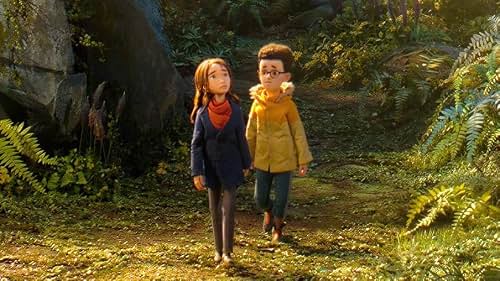
This contemporary tale is set in in Portland, Oregon (where Laika is actually based) and it’s the story of Prue McKeel (Peyton Elizabeth Lee), a truculent teenage girl who lives with her ex-hippie parents in a house on the edge of the titular forest, a place she’s expressly forbidden to visit. She’s often charged with looking after her baby brother, Mac, and is told to ensure that he “stays in the house.” But one day, with her parents away from home, she can’t resist the impulse to take him out on the back of her bike for a hair-raising ride around town – and we start to get a feel for the scope of the film as we see a pretty accurate representation of the Pacific Northwest’s coolest city. Along the way, Prue bumps into Curtis (Jacob Tremblay) a video-game enthusiast she has always dismissed as an annoying nerd. He insists on tagging along with the siblings when they go to visit a local playground.

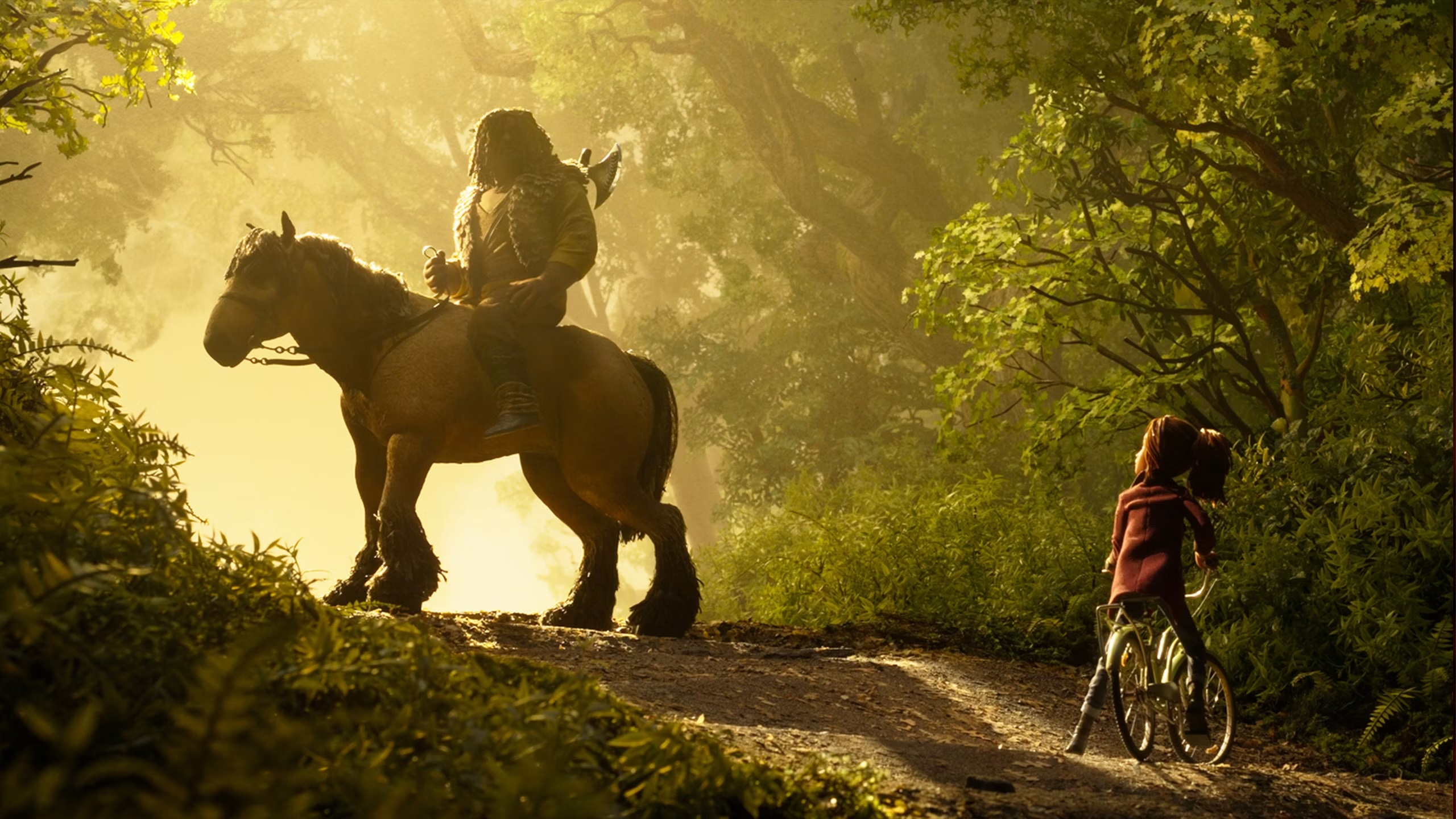
It’s at this point that Mac is abducted by a huge flock of crows and carried off into the forbidden woods. Prue and Curtis have no other option than to follow in hot pursuit, and it’s here that they discover an entire world of talking animals…

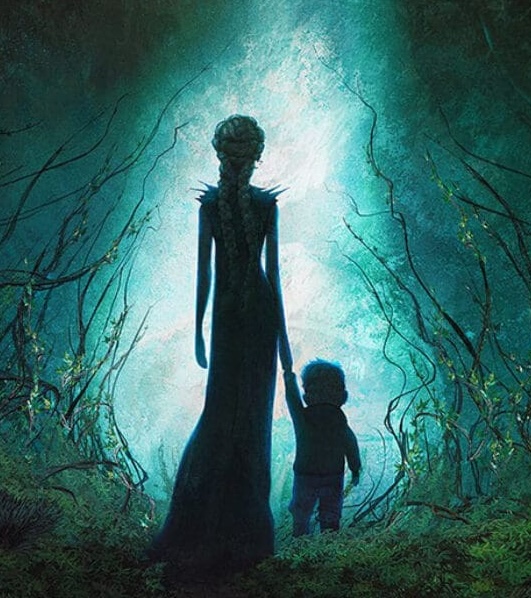
And if, so far, this sounds like yet another Narnia-influenced tale, well don’t be misled. Wildwood has a dark, disturbing narrative and the film has a 12A certificate. Parents expecting a joyful Pixar-style experience should be warned that some younger viewers may find much of what’s on offer here quite unsettling. For example, the film begins with the suicide of a young boy – he’s the son of Alexandra, the dowager governess (voiced by Carey Mulligan), and the sequence provides the key to unlocking the adventure. What’s more, some later scenes involve a massive battle in the forest between the various factions that dwell there and some of the close combat is unapologetically savage in nature. So if you’re taking youngsters along, please ensure they can handle it.

What makes Wildwood stand head and shoulders above what’s gone before is its epic sense of scale. We are dazzled by incredibly realistic model work depicting vast landscapes, aerial views of towns and cities and labyrinthine underground lairs. And this time out, Laika, under the direction of Travis Knight, have used CGI to augment the traditional stop-frame. Where previously we could only have a limited number of animated figures in any particular shot, now there can be hundreds, thousands of them, each one rendered so perfectly that at times I feel that I can’t possibly be looking at beings built from modelling clay, but at real characters with movements and expressions as complex as anything in our world. (Anyone sitting near me during the screening I attended must have heard me gasping aloud every few minutes. Sorry, but I just couldn’t help myself.)

It’s been a long road to get to this point but I suspect that Laika have just set a new gold standard for stop motion. The film has a budget of a hundred million dollars and I don’t know what chance it has of ever earning earning back that investment, but all that dedication, initiative and experimentation is up there in every frame. I urge everyone reading this to go and see this incredible film at your earliest opportunity. The word ‘masterpiece’ can sometimes be overused but in this instance, I can’t think of a more appropriate word. I just wish Ray Harryhausen had lived long enough to see it.

Oh, and if you’d like a quick glimpse at how such wonders are achieved, stay in your seat for a little while as the credits roll.

5 stars

Philip Caveney

Coraline (15th Anniversary)

29/08/24

Cineworld, Edinburgh

It’s hard to believe that fifteen years have already passed since Coraline was first released – and now it’s back in the cinemas in a fabulous new 3D digital print. Any fears that the film might look somehow ‘old school’ are instantly dispelled from the stunning credit sequence onwards. It’s been polished and sharpened and, while I’ve seen many films in 3D, few of them look as ravishing as this one.

Based on Neil Gaiman’s novel, adapted and directed by Henry Selick, Studio Laika’s debut film is the story of young Coraline (voiced by Dakota Fanning), who has recently moved to a spooky old house in the country. Her parents, Mel (Teri Hatcher) and Charlie (John Hodgman), are well-meaning but totally caught up in the gardening catalogue they are writing together. Left to her own devices, Coraline interacts with the house’s other residents. There’s a pair of weird ex-theatricals, Miss Spink (Jennifer Saunders) and Miss Forcible (Dawn French). There’s a muscle-bound circus performer, Mr Bobinsky (Ian McShane), who teaches mice to jump (as you do) – and there’s awkward teenager, Wyborn (Robert Bailey Jnr), who clearly likes Coraline a lot but finds it hard to tell her. There’s also a mysterious black cat (Keith David) who has a habit of popping up in the most unlikely places.

But when Coraline discovers a mysterious locked doorway in her bedroom, she can’t resist exploring and, at the end of a long, fleshy tunnel, she discovers an alternate world where her ‘other parents’ live. They have buttons for eyes – which is worrying – but on the other hand, their bizarre ‘anything goes’ lifestyle does seem to be incredibly enticing – and it’s clear from the outset that they’d just love Coraline to come and live with them. Only first, she’ll need a slight adjustment…

Coraline is one of those perfectly-pitched fantasies, on the one hand enchantingly inventive and on the other, pulsating with dark menace. As ever, I’m astonished by how much character the animators have conveyed through those tiny stop-motion figures – the uncanny way that every gesture, every facial expression, is captured with enough authority to make me believe that I’m looking at something that has life beyond the film cameras.

Furthermore, every aspect of this production – the incredibly detailed sets, the colourful costumes, the intense dreamlike lighting – are lovingly crafted and work together to create a satisfying whole. I shudder to think of the sheer time it must have taken to bring this story to life, the years expended on moving those metal armatures a centimetre at a time. But the effort was clearly worth it. There are so many glorious sequences on display that the movie seems to positively race along. It’s worth staying in your seats to watch the short film that follows as a team of animators from Laika sit down to discuss how they have gone about updating that glorious original.

This is, quite simply, a masterpiece of animation. And if you’re thinking, ‘well, I’ve already seen it,’ let me assure you that this glorious new edition is well worth another look.

5 stars

Philip Caveney

`

Missing Link

14/04/19

Since its Oscar-winning debut feature Coraline in 2009, Laika Animation has resolutely ploughed its own furrow through the world of stop-motion, steadfastly avoiding the obvious and always maintaining the highest standards. Aardman may be the better-known company, but Laika are more consistent – and they seem to have perfected the trick of creating animations that really are suitable for all ages.

Missing Link is a good case in point. This is the story of fearless Victorian adventurer, Sir Lionel Frost (Hugh Jackman), a man with an unshakable belief in his own brilliance and a matching resolve to hunt down the mythical creatures of the world. When his attempt to photograph the Loch Ness monster makes him a laughing stock at the Adventurers’ Club, he decides to go in search of the legendary American Sasquatch – and, in a plot strand that owes an unspoken debt to Around the World in 80 Days, even makes a bet with the society’s villainous leader, Lord Piggot-Dunceby (Stephen Fry), that he will prove that the creature is more than just a legend. If he succeeds, he will be granted membership. As insurance, Piggot-Dunceby sends evil assassin Willard Stenk (Timothy Oliphant) to ensure that Frost fails to make good on his wager.

Frost soon locates said Sasquatch, whom he quickly dubs Mr Link (Zach Galifianakis). But he is more than a little surprised to discover that this particular Bigfoot can talk, read and even write – indeed, he has penned the letter summoning Frost to meet up with him. He wants more than just an exchange of pleasantries. He wants Frost to take him to meet his closest cousins – the Yetis of far off Tibet…

Everything about Missing Link is spot on – the gorgeous, idiosyncratic animation, the astute characterisation, the fleet footed storyline that scrambles from one thrilling escapade to the next. There are some very funny scenes here, enough to get a Sunday afternoon audience laughing along throughout and there are also several eye-popping sequences that combine the stop-frame puppets with state of the art CGI work, a storm at sea being a particular standout.

It’s also great to note that Zoe Saldana’s adventurer, Adelina Fortnight, is given enough chops to compete on an equal footing with her male companions, whilst neatly sidestepping the possibility of being cast as (ho hum) the film’s love interest.

This is wildly entertaining stuff – and it’s been quite a while since I enjoyed an animated feature quite as much as this one. If you’re looking for the perfect family feature, you can’t go wrong with this.

4.6 stars

Philip Caveney