Alice Lowe

Timestalker

13/10/24

The Cameo, Edinburgh

The release of a new Alice Lowe film is a cause for celebration. Actor/writer/director – and as far as I know, she might do the catering as well – Lowe is adept at ensuring that a modest budget goes a long, long way. Her debut feature, Prevenge, was released way back in 2017, shot while she was pregnant (of course it was), so Timestalker has been many years in ahem… gestation. It’s probably best described as a fantasy set across hundreds of years, and the central theme is the general futility of pursuing the heart’s desire.

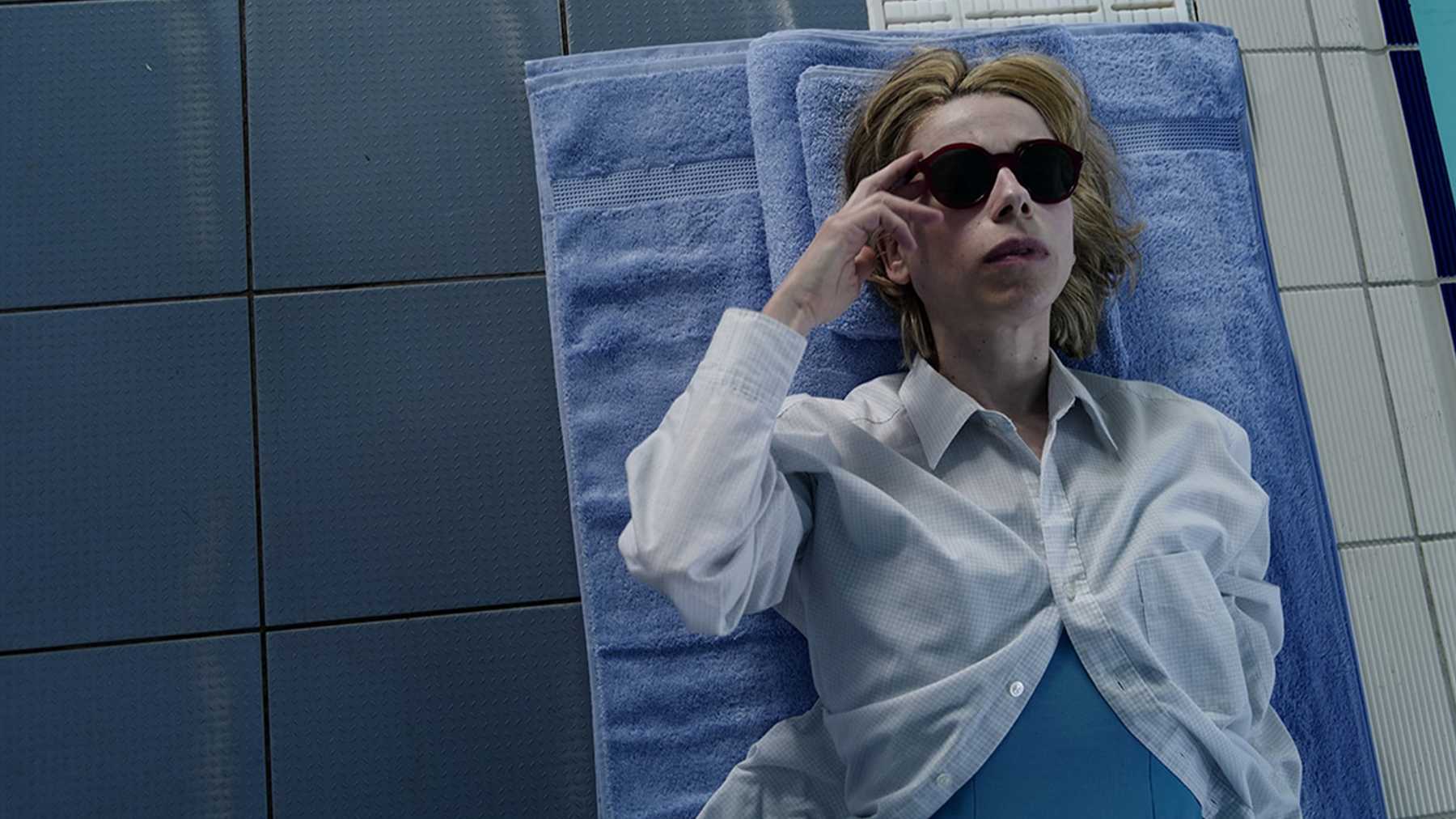
We first meet Agnes (Lowe) in the 1600s in Scotland, where she’s a lonely spinster, much gossiped about by her neighbours, who pays the occasional visit to a masked preacher, a man given to talking about the dawning of a new religion. When said preacher is arrested and brought to a public place for torture and execution (they made their own entertainment those days), his mask is removed, revealing the handsome face of actor Aneurin Barnard. Agnes is instantly and irrevocably smitten. Attempting to approach him, she trips and falls face first onto the executioner’s axe, which is the bloody end of her.

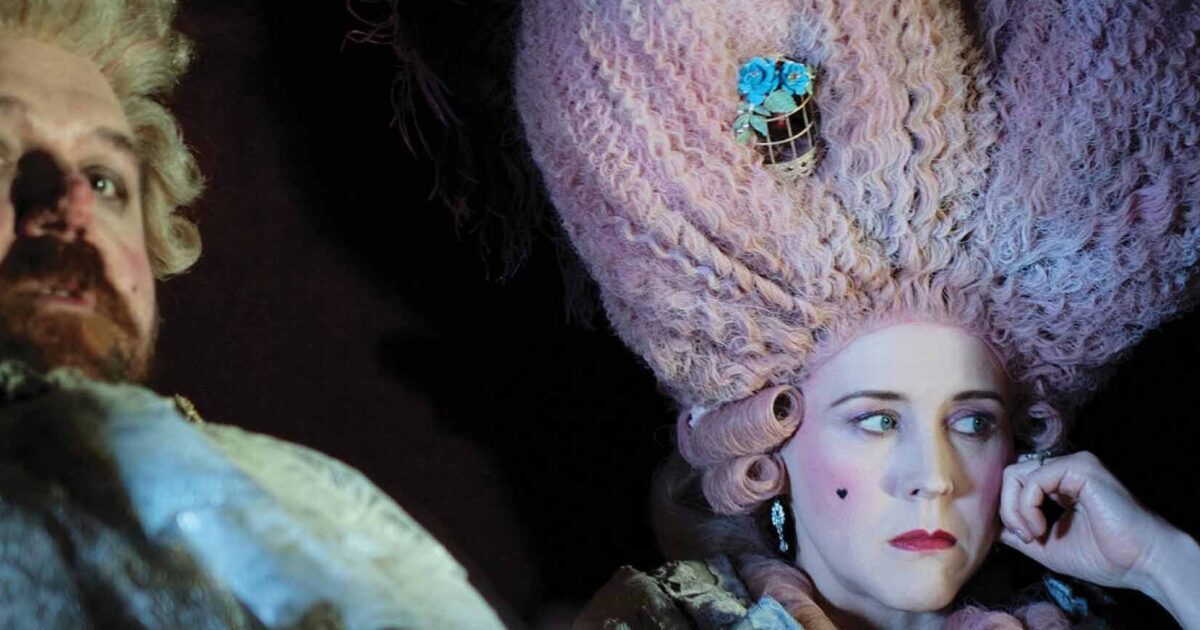
Except that it’s not. She’s promptly reborn in the 1790s, rich but bored, with a toxic husband played by Nick Frost. This Agnes has a penchant for wearing some truly monumental wigs but she’s missing something in her life. When she spies the visage of a handsome highwayman – Barnard again – her passion is reignited and she is, once more, in pursuit of love. But of course it’s doomed to end badly. With each transformation, her luck fails to improve and an added problem is that every new persona harbours memories of the one before… and where exactly does Cleopatra fit into all this?

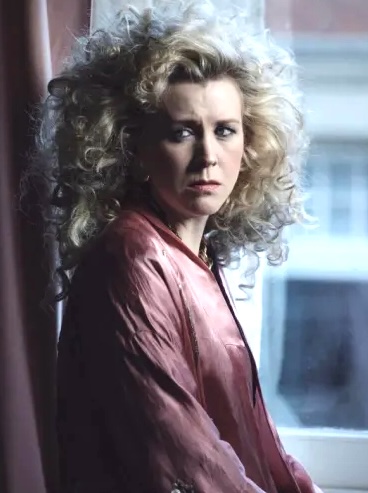
Lowe’s sparky script is laced with deadpan humour, and cinematographer Ryan Eddleston has a lot of fun aping the look of celebrated films. If the opening sequence is Witchfinder General, then the 80s New Romantic section has the muted, pastel tones of Adrian Lyne’s Flashdance – and Lowe has the perm to back it up. Sadly, the budget doesn’t quite stretch to making the Manhattan locations look entirely convincing.

Tanya Reynolds does a good job of embodying the various iterations of Agnes’s perennial sidekick, Meg, and Jacob Anderson is quietly impressive as different versions of a character simply known as Scipio. Frost continues to be suitably malevolent in every loathsome bloke he portrays.

While it might sound faintly bewildering on the page, the myriad twists and turns of the plot are confidently handled and there are some cleverly placed visual clues – a huge heart hidden in a forest, a brightly plumaged songbird in a cage – to keep reminding us of what’s gone before.

As ever with Lowe’s work, the spirit of pure invention is kept proudly to the fore and I find myself wondering what this formidable film maker could achieve given a hundred-million-dollar budget. Until that unlikely event actually happens, why not seek out your nearest independent cinema and sample the delights of her latest gem? It’s well worth your time and money.

4 stars

Philip Caveney

Greatest Days

18/06/23

Cineworld, Edinburgh

Back in the 1990s, when Take That took the world by storm, I was very anti-boyband. They’re still not really my thing (I’m no aficionado, but I tend to prefer bands that form organically and, you know, play their own instruments). Still, now that I’m a bit older and less tribal, I have to admit that TT did have some banging tunes (Rule the World and Shine are the best, to my mind), although I don’t think I’ll ever feel anything other than incredulous that The Samaritans actually had to set up a helpline for distressed fans when the group announced that they were splitting up. Like… what?

Greatest Days, a colour-by-numbers jukebox musical, leans into the deep emotional connections young followers attach to their oblivious heroes, mining Take That’s back catalogue to mixed effect. Teenager Rachel (Lara McDonnell) is obsessed. Things aren’t great at home – her mum and dad spend all their time arguing – so she retreats into a fantasy life, where ‘the boys’ help her out. An early dance routine, where the Take-That-Alikes pop out of kitchen cupboards to pass her utensils, lift her up to the overhead cupboards and stir her spaghetti hoops fills me with hope: it’s bold and theatrical and a lot of fun. (Sadly, it’s a technique that soon outstays its welcome: too many similar scenes follow, and it all starts to feel a bit overdone.) Her pals, Heather, Zoe, Claire and Debbie (Eliza Dobson, Nandi Sawyers-Hudson, Carragon Guest and Jessie Mae Alonzo), are all equally fanatical, and their friendship reaches its apotheosis the night that Debbie gets them all tickets to a gig in Manchester.

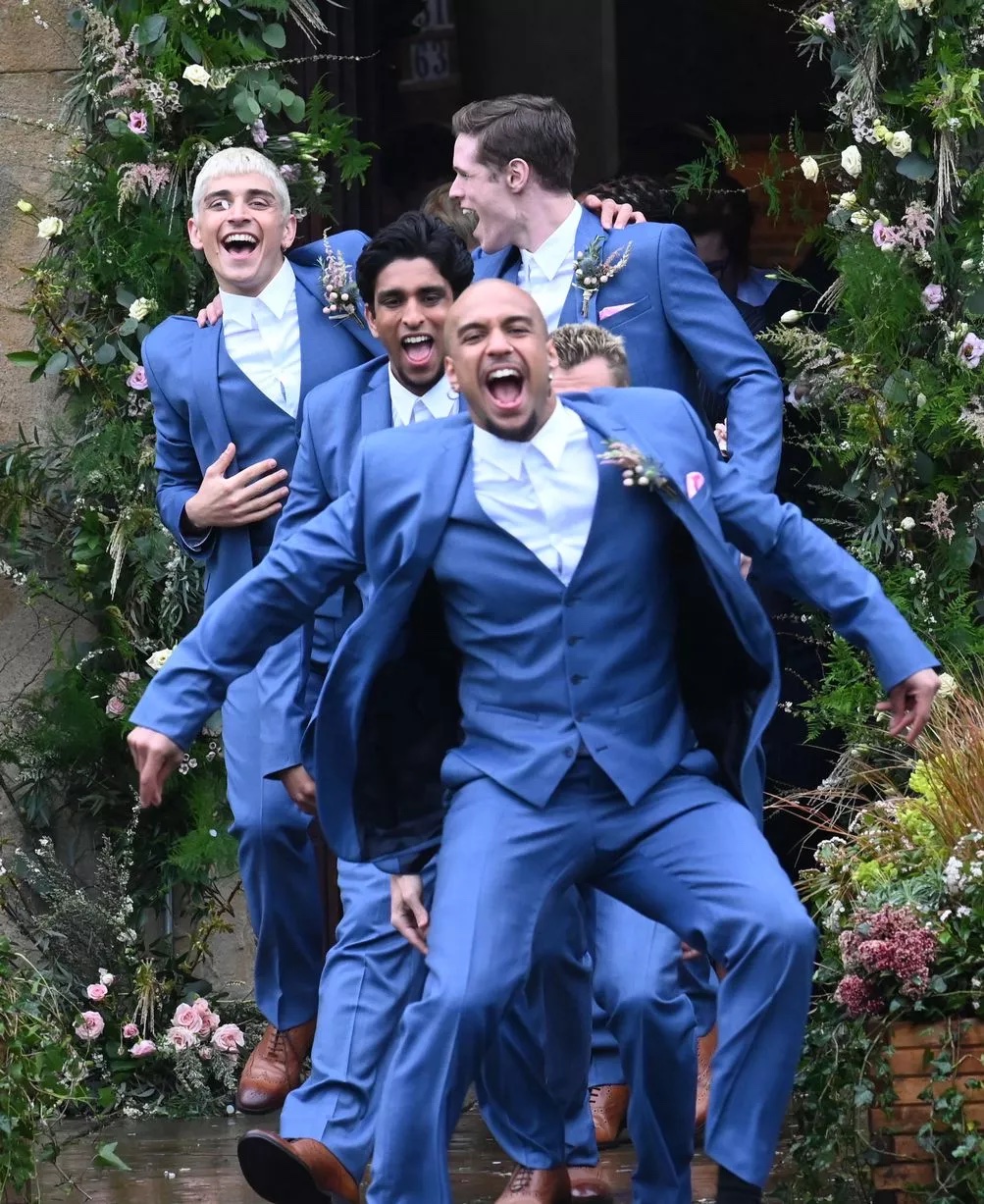
Fast forward twenty-five years. Rachel has grown up to be Aisling Bea (Heather, Zoe and Claire have morphed into Alice Lowe, Amaka Okafor and Jayde Adams respectively, while the adult Debbie is notably absent). Grown-up Rachel is a nurse, and still obsessed with the boys, forcing the kids on her ward to listen to what they perceive as her terrible music taste. She loves her job and her sweet-natured boyfriend, Jeff (Marc Wootten), but something is missing. When she wins a radio phone-in competition, she’s suddenly faced with the opportunity to put that right, to reconnect with the old gang and see their favourite band one last time, as they perform a reunion gig in Athens…

With such a lively, amiable cast and some gloriously OTT big numbers (neither boarding an easyJet flight nor travelling on a night bus have ever looked even a tenth as glamorous as they do here), there’s a lot to like about Greatest Days. However, it’s very uneven, as if writer Tim Firth and director Coky Giedroyc have thrown a match into a box of unlabelled fireworks, some of which prove spectacular and light up the sky (sorry, couldn’t resist), while others fizzle out like proverbial damp squibs. The revelation that the statues in the fountain are the boys, for example, should be a cheeky little wink of a moment, but instead is drawn out into a boring ten-minute montage of selfie-taking. The central premise seems a little overwrought too.

A pleasant – if ironically forgettable – trip down memory lane, Greatest Days probably isn’t going to relight anyone’s fire (I know, I’m doing it again) but, if you’re a fan of ‘the boys’, then you’ll probably enjoy it, so you’d better hot-foot it to the cinema before you run out of time.

3 stars

Susan Singfield

Eternal Beauty

09/10/20

Curzon Home Cinema

Films that tackle the subject of mental illness are difficult to get right and the ones that do are few and far between. Eternal Beauty, written and directed by Craig Roberts, is more successful than most at capturing the confused and sometimes terrifying world of a schizophrenic.

It does seem odd, though, that a film set in South Wales and financed by the Welsh Film Board should feature such a paucity of Welsh actors in its cast. Robert Pugh, the only cast member with a noticeably Welsh accent, ironically spends the entire film in almost total silence.

Go figure.

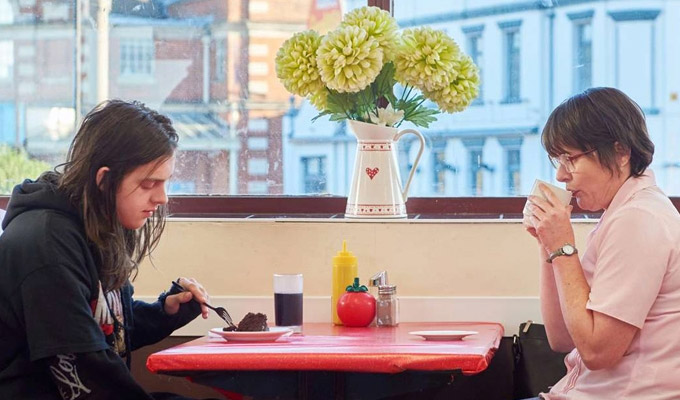
Sally Hawkins is Jane, who, since being left at the altar by her fiancé many years ago, has increasingly drifted into a chaotic world of delusion, much to the bewilderment of her family. (In flashbacks, she’s played by Morfydd Clark, who is great, although she looks nothing like Hawkins.) Jane dwells in a place where ‘reality’ is in very short supply and where the aforementioned fiancé phones her at random times throughout the day and night, to whisper sweet nothings down the line.

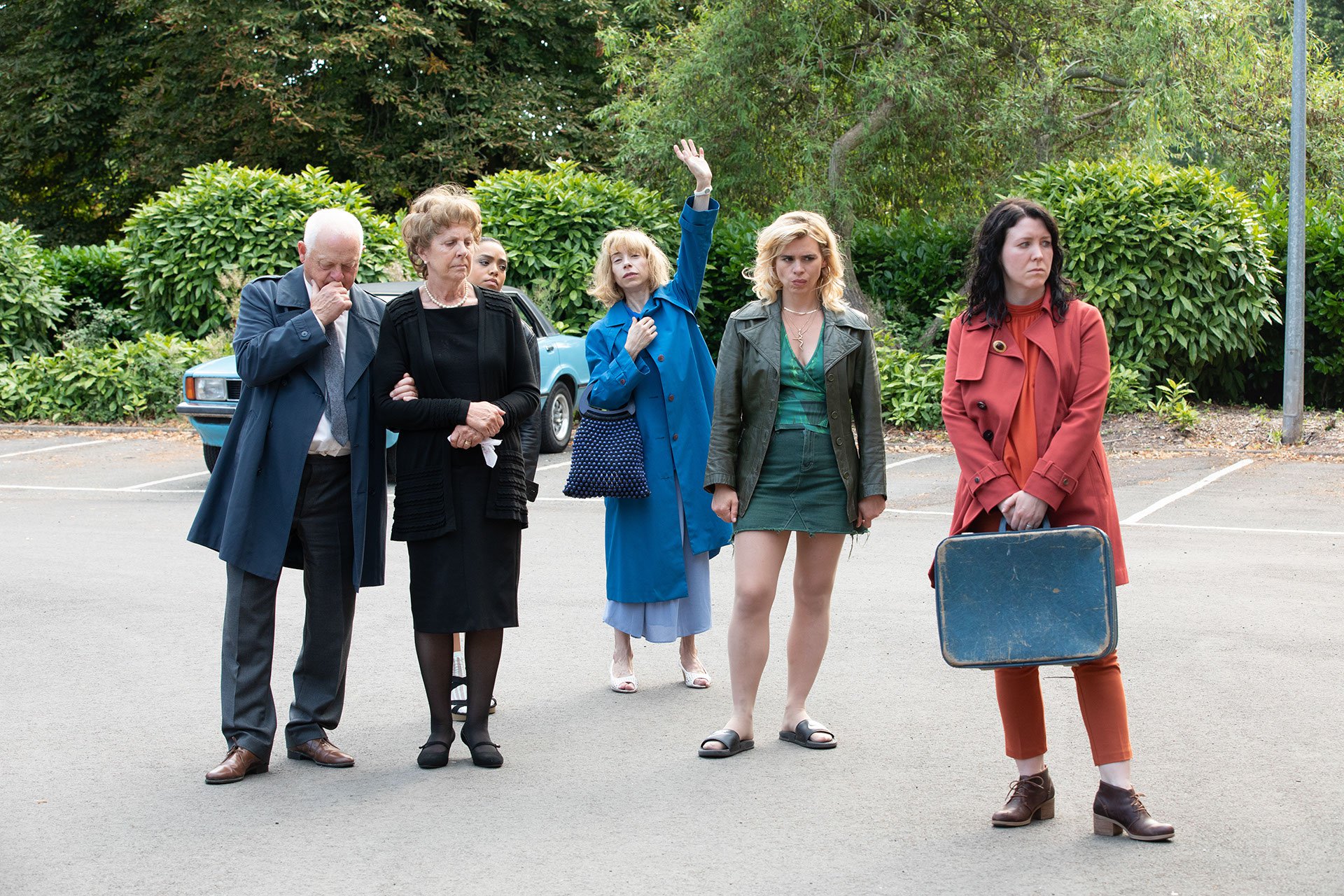
Jane’s singularly unsympathetic mother, Vivian (Penelope Wilton) treats her condition with utter disdain, while her father, Dennis (Pugh), can’t even seem to voice an opinion. Jane’s two sisters, the likeable Alice (Alice Lowe) and the frankly unpleasant Nicola (Billie Piper), each deal with her condition in their own way.

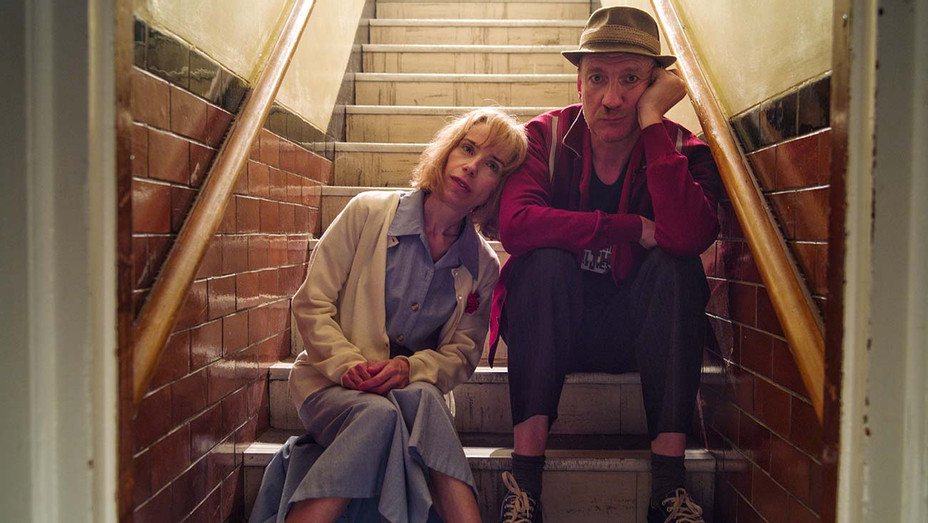
Jane’s fragile existence receives a sudden boost when she reconnects with a friend from childhood. Mike (David Thewlis) styles himself as a musician – though the brief performance we’re treated to suggests that this may not be his true forte. However, his sparky presence revitalises Jane and it begins to look as though he may be just the man to lead her out of the dark labyrinth in which she’s become ensnared. But this is no fairy tale…

As ever, Hawkins submits a brilliantly nuanced performance in the lead role and she’s ably supported by a whole host of excellent performers. Kit Fraser’s cinematography cleverly uses colour palettes to define the different characters and there’s a suitably quirky soundtrack of vintage songs to supplement the action. Niggles aside, Eternal Beauty is well worth a watch, if only to marvel at Hawkins’ ability to take the most demanding roles in her stride – and to wonder how Roberts has somehow managed to make this bleak tale curiously life-affirming.

4.2 stars

Philip Caveney

Days of the Bagnold Summer

20/08/20

Curzon Home Cinema

Based on a graphic novel and directed by Simon Bird, best known for playing Will McKenzie in The Inbetweeners, the curiously titled Days of the Bagnold Summer is a gentle, quirky little film that really doesn’t fit comfortably into any particular genre. It’s not exactly a comedy, though it generates plenty of smiles and there’s very little in the way of action or suspense. One quality it has in abundance, however, is charm. 

It focuses on the relationship between shy librarian Sue Bagnold (Monica Dolan) and her teenage son, Daniel (Earl Cave), a morose, heavy metal obsessed goth, who has never really forgiven his mother for breaking up with his father, even though it happened years ago. When a planned trip to Florida to spend time with his dad and his stepmum fails to materialise, Daniel doesn’t hold back in complaining about the prospect of spending the summer with the woman he considers to be the most boring person on the planet. 

Meanwhile, Sue attempts to form a meaningful relationship with amorous college lecturer, Douglas (Rob Brydon); she spends time with her more outgoing sister, Carol (Alice Lowe); and ends up confessing her troubles to smug, new age therapist, Astrid (Tamsin Greig). Daniel, aided and abetted by his only friend, Ky (Elliot Speller-Gillott), tries to find a summer job and entertains ideas of becoming the front man for a local band…

If this all sounds a little underwhelming, it’s important to add that the appeal of Days of the Bagnold Summer lies in its ambling, good natured approach to its chosen subject. Both Dolan and Cave submit note-perfect performances in the lead roles: you believe in their characters absolutely and neither of them is ever allowed to become a caricature. There are no great dramatic revelations here. This is a story about a mother and son learning how to rub along with each other and their eventual bonding over the imminent demise of a family pet is nicely handled.

All in all, this is a delightful first feature for Bird and it will be interesting to see where he goes next.

4.1 stars

Philip Caveney

Sometimes Always Never

16/06/19

Scrabble can be a hard lesson for people like me, who are in love with language. We initially approach it, don’t we, thinking it will be an exercise in showing off our vocabulary, a chance to demonstrate how erudite we are? But we quickly learn that it’s really a brutal game of mathematics and that those players who have memorised a series of obscure, high-scoring two letter words are going to wipe the floor with us.

It’s this condumdrum that lies at the heart of Sometimes Always Never, a quirky and bitter-sweet story, written by Frank Cotterall Boyce and directed by Frank Hunter. It’s set in and around Formby, where Anthony Gormley’s distinctive sculptures haunt the sands, looking for all the world like bit-part players waiting for a chance to step into the action.

Alan (Bill Nighy) is a fascinating character, a retired tailor (the film’s title refers to the three buttons on a jacket and how you should wear them). He’s also a part time Scrabble-hustler. In the film’s downbeat opening, he meets up with his estranged son, Peter (Sam Riley) and the two of them go to have a look at the body of a dead man. Alan’s other son, Michael, you see, went missing years ago, following a heated argument over a game of… Scrabble, and Alan’s life since then has been dominated by his absence. The dead man turns out to be the missing son of Margaret (Jenny Agutter) and Arthur (Tim Mcinnery),  and, relieved, Alan heads home. But a couple of days later,  he arrives unnanounced at Peter’s house, where he pretty much moves in, much to the bafflement of Peter’s affable wife, Sue (Alice Lowe), and her teenage son, Jack (Louis Healy), with whom Alan ends up sharing a room. As the days pass and there is no sign of Alan going home, he begins to exert a peculiar influence over the family…

This is a deliciously oddball concoction which finds plenty of fun in the strange rituals that people employ in order to rub through their days. Nighy is as terrific as ever, though it does take a little while to adjust to the shock of hearing him speak with a Merseyside accent. Mind you, that also goes for Jenny Agutter, who manages to hide her own painfully plummy tones in a similar manner. It’s apparent from their first meeting that Alan and Margaret  have some chemistry between them.

Despite its charms, the film suffers a little from an inconsistency of tone. For instance, an early scene where Alan and Peter appear to be driving in a cardboard cutout car is a delight, but this approach isn’t used anywhere else – and a scene featuring Alexi Sayle as a random fisherman doesn’t really add anything to the story. Furthermore, any film that’s lucky enough to have Alice Lowe in the cast really ought to find a little more for her to do but, these reservations aside, this is mostly a cleverly judged cocktail of wry chuckles and poignant observations.

Not exactly earth-shattering stuff, then, but – in its own way – a satisfying and rather unique cinematic experience.

4 stars

Philip Caveney


Black Mirror: Bandersnatch

30/12/18

We haven’t reviewed earlier episodes of Charlie Brooker’s excellent Black Mirror series, mainly because we don’t really do TV shows – but a couple of things feel different this time around. For one thing, with so many feature films making their debuts on Netflix these days, it seems more appropriate. And for another, Bandersnatch is something of a game-changer. This is an interactive story, heavily influenced by the ‘make your own adventure’ books of the 1980s and one in which viewers can participate. As the tale unfolds, we are faced with a series of simple decisions: should a character choose Sugar Puffs or Frosties, for example? Clicking on one suggestion or another will influence what consequently happens on the screen. It starts small but the choices become ever more dramatic as the story scampers along.

It’s 1984 and young Stefan Butler (Fionn Whitehead) is an ambitious video game designer, who, after the tragic death of his mother, is living alone with his secretive father, Peter (Craig Parkinson). Stefan, when not spending time with his analyst, Dr Haynes (Alice Lowe), is developing a brand new game called Bandersnatch, which he takes along to major video game publisher, Tuckersoft, headed by ponytailed entrepreneur, Mohan Thakur (Asim Chaudrey). At the initial meeting, Stefan is introduced to one of his video game designer idols, Colin Ritman (Will Poulter), and is subsequently astonished to discover that the team like his ideas and want to offer him the opportunity to make it a reality.

But will he accept the offer? Well, that’s kind of up to you…

Bandersnatch is an astonishingly meta idea. As our choices send the action into deeper and ever more labyrinthine rabbit holes, it occurs to me that I am watching something that I am, however tangentially, able to influence. Rather than just being a passive observer, I am involved in the creation of a fiction. It gets even more interesting when characters I am trying to influence begin to disobey me. This is a genuinely exciting idea and it soon becomes apparent that the episode may require at least one repeat viewing to see if different choices will radically affect the outcome.

I’m not suggesting that Bandersnatch is one hundred percent successful. There’s a tendency to come up against buffers which repeatedly send you back to watch the same sequences over again – and I can’t help feeling that one particular outcome may happen in every version of the story – but Brooker deserves plaudits for coming up with this – and Netflix too, for having the chutzpah to finance it.

Where this concept may lead audiences in the future opens up fields for speculation, but to me it feels like an interesting first step. Watch this space.

4.7 stars

Philip Caveney

Prevenge

31/01/17

Prevenge belongs to Alice Lowe. She’s the writer, director and the star – and the resultant singularity of vision gives this film a rare clarity. Truly, it’s a pleasure to watch this darkly funny tale, even if there are moments of such gruesomeness that I have to hide my eyes.

Ruth is a young widow, pregnant and enraged. Spurred on (she believes) by her unborn baby, she embarks on a killing spree, murdering her victims with ruthless determination. They include odious 70s music DJ, Dan (Tom Davis), workaholic CEO, Ella (Kate Dickie), and likeable climbing instructor, Tom (Kayvan Novak). Interspersed with visits to the midwife, these homicidal incidents grow ever more violent, yet – despite her obvious moral deficiencies – we remain firmly on Ruth’s side. She’s not likeable exactly – and why should she be? But her humanity is writ large; she’s an ordinary woman, with the same flaws and over-reactions that affect all of us. She just takes things to extremes, that’s all.

Lowe uses the obviously low-budget to her advantage: the film has a claustrophobic feel as we’re stuck with Ruth in cheap hotel rooms, the corner of a bar, another victim’s living room. The episodic structure means that it’s essentially a series of two-handers, but this plays to the story, and helps to underline Ruth’s isolation. The only constant in her life is the midwife. It’s a tragedy, I suppose – but a very funny one.

This screening is part of a Q and A tour, so we have the added pleasure of hearing Lowe speak about her project. Her enthusiasm is infectious, and it’s fascinating to hear how the idea for the film emerged: “A funding opportunity came up, and I thought, ‘Oh, but I’m pregnant, so I can’t…’ And  then I started to think about what I could do that would include my pregnancy.” Like all the best creative pieces, then, this is a mixture of talent, experience and happenstance. You won’t see another film quite like it. It’s well worth a visit to your local cinema.

4.6 stars

Susan Singfield