Thirteen Lives

20/11/22

Amazon Prime

I’m unfashionably late to this one. This film barely had a theatrical showing in the UK and somehow managed to slip onto streaming services without much fanfare. This is a shame, because Ron Howard’s ‘based on a true story’ feature steadfastly refuses to go down the typical Hollywood hero route, instead offering a meticulously researched account that unfolds its complex story with all the authority of a documentary.

It takes us back to the familiar events of July 2018, when Thai junior football team, The Wild Boars, accompanied by their assistant coach, decides to pay a trip to a popular tourist destination, the Tham Luang Nang Non caves in Chiang Rai Province. As they wander deep into a rocky labyrinth, they are unaware that an early Monsoon has arrived, and that flood waters are already rising with terrifying speed, to come pouring in through every crevice. When the boys fail to show for a planned birthday celebration later that day, their parents raise the alarm – but, by now, their kids are trapped deep beneath the ground – and the rain is still pouring.

Among the many volunteers who subsequently arrive to lend a hand are two experienced divers from the British Cave Rescue Council, Rick Stanton (Viggo Mortenson) and John Volanthen (Colin Farrell), who handle the ensuing search through submerged tunnels with quiet calm and determination, only pausing to squabble over which of them ate the last custard cream. Both Mortensen and Farrell do a great job of capturing the men’s distinctive Coventry accents and their bluff, matter-of-fact approach to their highly specialised work – something which has already defeated the team of Navy SEALs who were first on the scene.

Finding the boys proves to be relatively easy, but getting them out alive – well, that’s a more complicated process, which will involve thirteen individual underwater journeys, each lasting more than seven hours. The boys have no experience of cave diving – indeed, some of them can’t even swim. With this in mind, Stanton and Volanthen decide to recruit more of their cave-diving chums. Chris Jewell (Tom Bateman), Jason Malinson (Paul Gleeson) and Richard ‘Harry’ Harris (Joel Edgerton) all answer the call, but it is the latter who will give the team their decisive edge, largely because of the special skills he’s acquired through his day job…

It’s hardly a spoiler to say that the enterprise has a successful outcome – indeed, pretty much the whole world knows how that went. But this film demonstrates what a complicated and dangerous procedure it was, how fraught with the possibility of disaster – and it is to Howard’s credit that though viewers already know the outcome, he nevertheless manages to generate nail-biting suspense throughout many of the extended underwater sequences.

He’s also keen to point out that the mission’s eventual success is not just due to the divers. There’s the young engineer who, with his own team of volunteers, works around the clock to divert millions of gallons of water away from the cave – and there are the local farmers who agree to sacrifice their entire rice crop for the year, in order to help with that process. There’s a whole army of ordinary people, cooking, carrying, doing anything necessary to keep the cogs turning. And happily, there’s no mention of a certain Mr Musk and his less than helpful approach to the situation.

Thirteen Lives is a story of human endurance and a celebration of the ingenuity of the many people who worked together to bring a seemingly impossible task to fruition.

3.8 stars

Philip Caveney

The Wonder

19/11/22

Netflix

Emma Donoghue’s The Wonder is a little jewel of a novel, a bleak tale seen entirely through the eyes of its main protagonist, Lib. Because the original story is so insular, I wondered if it would be a suitable subject for a film, but director Sebastián Lelio (who co-write the screenplay with Alice Birch) has done a creditable job of opening up the original vision, even throwing in some post-modernist flourishes to accentuate the artifice of the situation. The opening scene depicts a contemporary film studio, complete with lighting rigs and other equipment before the camera pans right and zooms in to the hold of a nineteenth century sailing ship, where Lib (Florence Pugh) is eating a meal. From the very beginning, Leilio seems to be warning us not take everything we see on face value. The Wonder, after all, is also a story of deception.

It’s 1862 and English nurse Lib Wright has been summoned to a remote Irish village to stand watch over the Wonder of the title – eleven year old old Anna O’ Donnell (Kila Lord Cassiday), who, it is claimed, has not eaten a morsel of food in four months and yet remains in apparently perfect health. Lib is understandably sceptical, but the local clergy, led by father Thaddeus (Ciarán Hinds), are keen to claim this as a bona fide miracle, a feather in the cap of the Catholic church. Dr McBrierty (Toby Jones), on the other hand, prefers to see Anna as some bizarre new mutation. Has she developed the ability to photsynthesise? Lib’s task will be to keep a close watch on Anna around the clock, alternating shifts with a nun, Sister Michael (Josie Walker), so that – if there is any secret feeding going on – it will soon come to light.

Lib’s suspicions are shared by newspaper journalist Will Byrne (Tom Burke), who has been despatched to his old stamping ground to investigate the claims, but the truth behind these ‘saintly’ events is well hidden and hard to root out…

The Wonder makes a successful transition from novel to film, largely because of Pugh’s sterling performance in the lead role, as well as through Ari Wegner’s moody cinematography, which somehow contrives to make every frame look like the work of a classic artist – Jan Vermeer perhaps, or Caravaggio. There are also a few moments where Anna’s older sister, Kitty (Niamh Algar), who also serves as the story’s narrator, breaks the fourth wall and addresses the viewer directly. Some may find these touches intrusive but, for me, they are so effective they have me wishing there were more of them and that Algar had a little more to do in the story – she’s a superb actor and this is little more than a supporting role.

Donoghue’s source novel, a scathing criticism of the Catholic faith and the gullibility of its followers, emerges intact – and those who anticipate a headlong plunge into despair should take heart. The film’s conclusion is more positive than you might expect.

4 Stars

Philip Caveney

Watcher

16/11/22

Cineworld, Edinburgh

Not to be confused with the recent Netflix series with a very similar name, Watcher is a psychological thriller in which a young woman begins to suspect that she is being targeted by a killer. Directed by Chloe Okuno, who co-wrote the screenplay with Zack Ford, this is a powerful slow-burn of a story, where the central character’s sense of mounting paranoia makes a viewer continually reassess what’s happening onscreen. Is it all just a series of coincidences? Or is the woman in serious danger?

Julia (Maika Monroe) accompanies her husband, Francis (Karl Glusman), to his home city of Bucharest, where he is starting a new job in marketing. His busy schedule means that he is often away from their rented apartment late at night, and Julia is pretty much left to her own devices. She’s trying to learn to speak Romanian, with the aid of an online language course, but she’s a novice and can barely understand what people are saying – her landlady, a barista, even her husband’s colleagues when she invites them to a dinner party. Meanwhile, a series of grisly murders is happening in the city, attributed to a killer whom the newspapers have dubbed ‘The Spider.’

And then Julia notices that, from an upstairs apartment across the street, somebody is watching her…

As is so often the case with a film like this, it would be wrong to give away too much of the plot. Julia’s sense of alienation is heightened by the fact that the filmmaker’s don’t offer subtitles for what the many Romanian characters are saying, and her only real friendship is with Irina (Madelina Anea), the young woman in the next apartment, who thankfully speaks English. Julia gets little help from Francis, who clearly thinks his wife is simply paranoid and has a tendency to gaslight her every time she mentions her concerns. As matters build steadily to a shattering conclusion, I find myself entirely swept up in Julia’s predicament. The final scenes actually have me holding my breath…

This is a fabulous, low-budget chiller that deserves an audience, so I’m horrified to note that, at the morning screening we attend, we are the only two people in the auditorium. Can the cinemas survive if people continually opt to stay at home and watch films on their small screens?

Meanwhile, Watcher is powerful reason to get off your sofa and visit your nearest multiplex.

4.6 stars

Philip Caveney

Black Panther: Wakanda Forever

15/11/22

Cineworld, Edinburgh

In 2019, Black Panther was a genuine delight, a superhero movie that dared to challenge the preconceptions of the genre. What’s more, it was a film that made Black audiences, previously poorly represented in the world of spandex, flock to cinemas in their millions. Of course, after such phenomenal success, there was always going to be a sequel, but the tragic death of actor Chadwick Boseman (who played the lead role of T’Challa) left writer/director Ryan Coogler with a real quandary. How could he hope to make another Black Panther without Boseman? Should he recast the role? Or might there be another way?

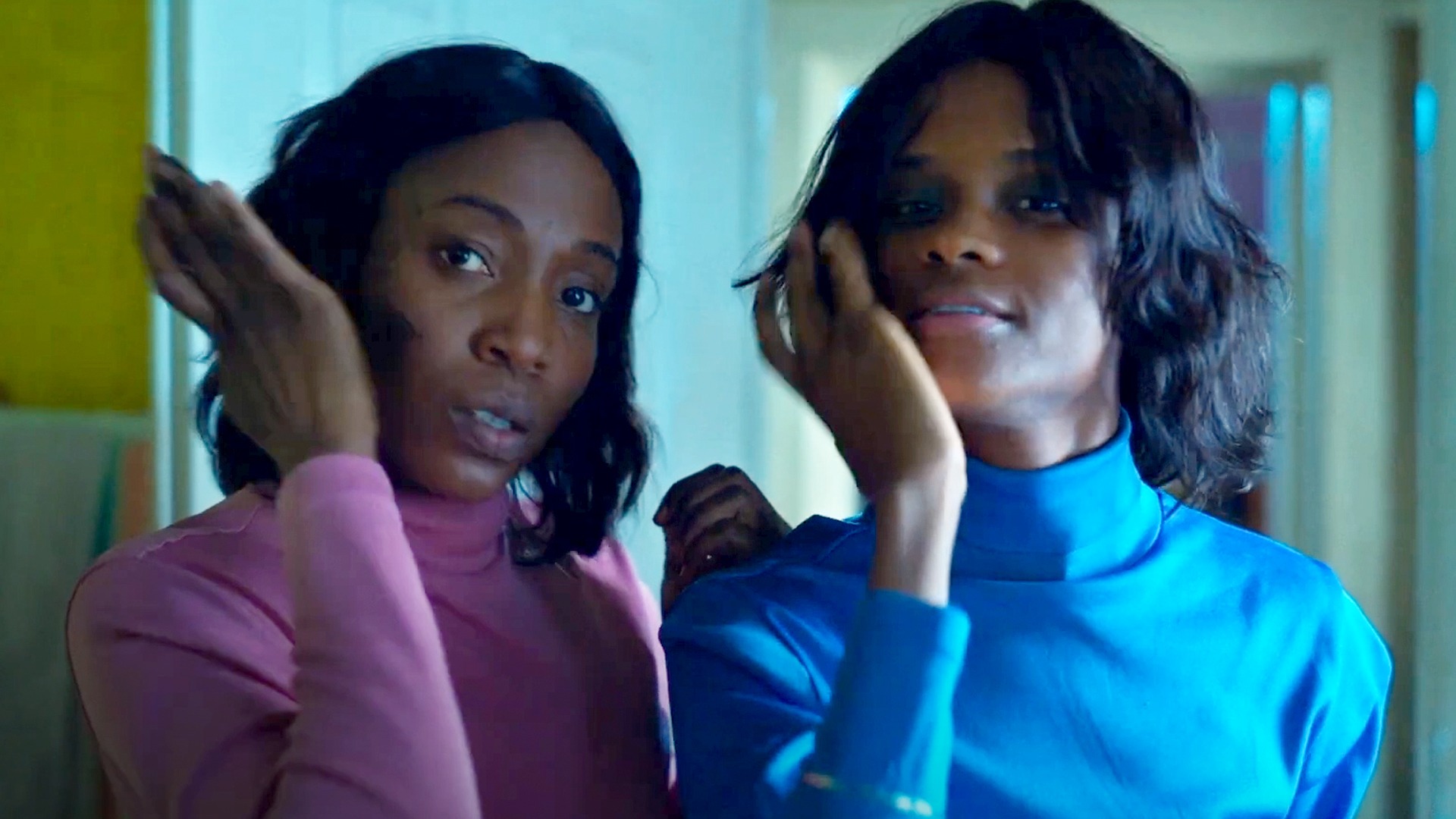
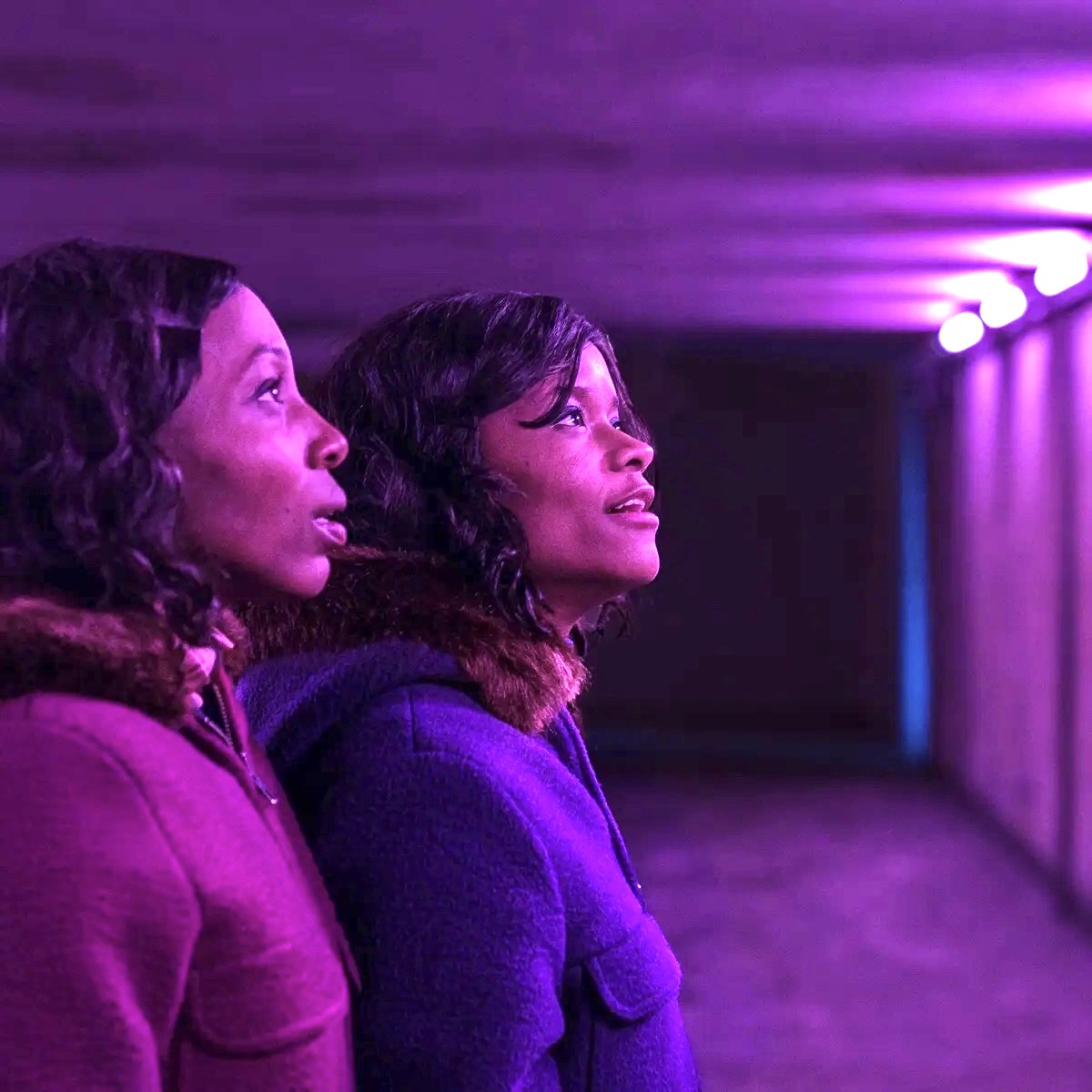
Wakanda Forever opens with T’ Challa’s sister, Shuri (Letitia Wright), desperately trying to engineer a cure for the ‘mysterious illness’ that has recently claimed her brother. But of course, it’s already too late and soon she and Queen Ramonda (Angela Bassett) are presiding over an elaborate funeral service, full of dancing, drumming and joyous singing. This feels as much like the cast’s heartfelt farewell to Boseman, as it does part of the story. But a story there must be, so…

We begin with a raid by armed soldiers on one of Wakanda’s outreach posts, an attempt to steal some of the priceless vibranium that makes the African nation the most powerful in the world. But Wakanda’s battalions of fearsome female warriors are lying in wait and one of those 12A style punch-ups duly ensues – the kind where no blow quite lands and no deaths are too clearly signalled. To add to the confusion, it’s all filmed at night, employing a particularly muddy palette, so it’s not always clear exactly who’s not quite punching who. Not an auspicious start.

And then it transpires that somebody else in the world has vibranium! He’s Namor (Tenich Huerta), a sort of merman with winged feet, who commands the Meso American undersea kingdom of Talokan (he’s better known as The Sub-Mariner in the source comic books). Namor is looking to form an alliance with Wakanda and warns Queen Ramonda that, if she refuses his invitation, he’ll consider her an enemy and will declare war on her people. She’s adamant that she won’t accept his terms, so war it shall be.

It was never going to be an easy task to follow up Black Panther, but it’s disheartening to witness just how completely this attempt fails at almost every step. The mournful reality of what’s happened behind the scenes seems to have infected the whole project, reducing it to a collection of turgid conversations featuring people talking about very serious matters in gloomy chambers. Shuri, previously an enthusiastic bright spark of a character, a sort of Q to Boseman’s Bond, has grown up to be a seriously sombre young woman, weighted down by the realisation that she must take on her brother’s former responsibilities. Meanwhile Basset’s Queen Ramonda seems permanently angry about everything and spends most of her time alternately shouting and sneering at people. As T’ Challa’s former wife, Nakia, the excellent Lupita Nyong’o is given precious little to do and the same goes for Martin Freeman as Agent Everett Ross, who seems to have been handed the thankless task of being the ‘comic relief.’ Where the first film hurtled gleefully along, fuelled by its own sense of reinvention, Wakanda Forever trudges dejectedly from scene to scene. At times, I am dangerously close to falling asleep.

Okay, there’s an admittedly epic final battle between the Wakandans and Namor’s aquatic hordes (who, it must be said, look like they’ve wandered in from the set of Avatar) – and, for the more patient viewer, there’s a post-credit sequence that offers up a genuine surprise – but by then it’s far too late to save this project from the doldrums. Some may argue that Coogler has taken the franchise into even more uncharted territory, but unfortunately, Wakanda Forever takes me to places I really don’t want to visit.

2.8 stars

Philip Caveney

Sister Radio

10/11/22

Traverse Theatre, Edinburgh

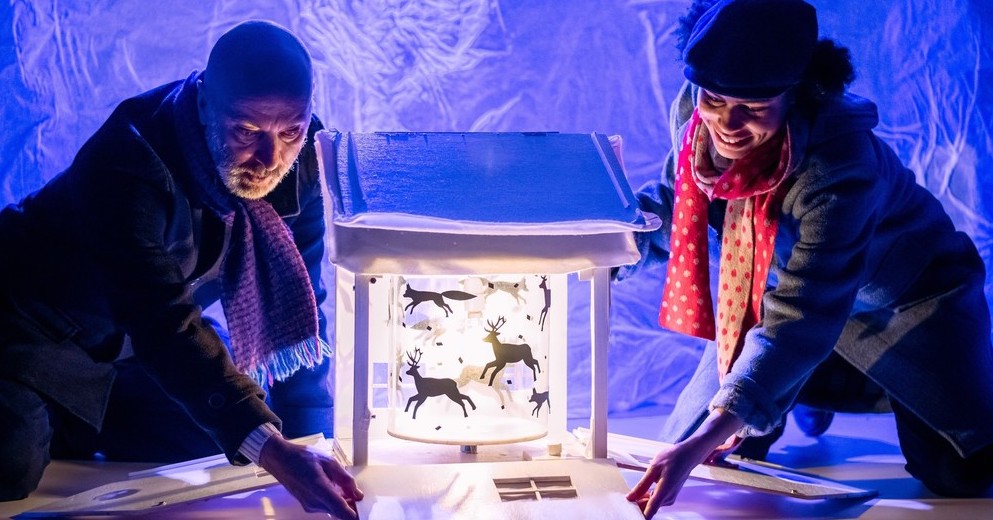
Sister Radio is a rare beast: an intimate two-hander with an epic sweep. We open with some recorded sound: two childish voices, giddy and playful, welcoming an imaginary audience to the ‘Sister Radio’ of the title. And then we move forward in time and place: we’re in Edinburgh; it’s 2020; the pandemic has just landed on our shores. The girls have grown up; indeed, sisters Fatemeh (Lanna Joffrey) and Shirin (Nalân Burgess) have been sharing a tenement flat for more than forty years. But something is amiss. Why don’t they speak to each other?

Sara Shaarawi’s script flits nimbly between the past and the present. Suddenly it’s the late 1970s, and Shirin arrives, suitcase in hand, newly immigrated to the UK from Tehran. Fatemeh is older; she’s already established a life for herself here – but she’s excited to see her sister, happy to share her apartment. As we move back and forth in time, we begin to see both the macrocosmic events that have shaped the women’s lives, and the microcosmic ones that have silenced them.

Despite the constraints of a simple, fixed set (designed by Becky Minto) and minimal costume changes, we are never in any doubt as to when we are, thanks to the clever soundscape emanating from the radio. It’s a lovely device, reminding us of the close relationship the sisters used to enjoy, and also anchoring us in time, via popular music and news coverage of key events. There’s the fall of the Berlin Wall, the Chernobyl disaster, a royal wedding or two – and, of course, the Iranian revolution, the reason Fatemeh and Shirin have sought sanctuary in Scotland. Their personal conflict plays out against this background, and director Caitlin Skinner skilfully balances the two strands.

Both Joffrey and Burgess inhabit their characters, their performances convincing and compelling, illuminating Shaarawi’s subtle exploration of what it means to be an immigrant. Their voluble discussions about their imagined futures are fascinating – while Shirin wants to return to Tehran, Fatemeh sees Edinburgh as her home. Even the years of silence are engaging, thanks to movement director Saffy Setohy: the sisters almost dance their daily rituals, existing separately within the same space, side-stepping away, their eyes never meeting – not even when they’re swapping coffee cups, to read each other’s fortunes in the grounds.

The revelation, when it comes, is somewhat disappointing: it’s mundane and predictable, unlike the set up. But maybe that’s the point: whatever else is going on – even something as momentous as the toppling of a regime – it’s the little things that propel us. We’re never free of our own pettiness.

Sister Radio, co-produced by Pitlochry Theatre and Stellar Quines, is on at the Traverse until Saturday. It’s a quietly impressive piece, and all the more resonant because of the current protests in Iran.

4 stars

Susan Singfield

Living

09/11/22

Cineworld, Edinburgh

Scripted by novelist Kazuo Ishiguro and directed by Oliver Hermanus, Living is a remake of Akira Kurosawa’s celebrated film, Ikiru – the story of a man coming to the end of his life and desperately trying to right the wrongs of his wasted opportunities. Set in the same era as the original, the story is cleverly relocated to a city hall somewhere in London, where a battalion of bowler-hatted wage slaves put reams of printed paper into order. The office is presided over by Mr Williams (Bill Nighy) a man so grievously incapable of meaningful conversation, that the office’s sole female occupant, Miss Harris (Aimee Lou Wood), has secretly dubbed him ‘Mr Zombie.’

But when his doctor informs him that, courtesy of stomach cancer, he has only a few months left to live, Williams finds he is totally incapable of talking about it to his son and daughter-in-law, preferring instead to unload on a random stranger he meets in a cafe, louche ‘artist’, Sutherland (Tom Burke). Sutherland listens in bewilderment as Williams tells him that he’s never properly lived his life and his solution is to take Williams out on the lash, visiting a series of seedy bars and strip clubs. This offers Williams some momentary respite from his torture, but no real answers.

Next, he has a chance encounter with Miss Harris, and ultimately takes her into his confidence. These scenes could easily be creepy, but it’s clear that Williams is inspired not by lust, but by the young woman’s youth: her ability to take pleasure in the smallest things – like the knickerbocker glory she gleefully chooses when the two of them have lunch at Fortnum’s. It’s these scenes that are the film’s strongest suit and one lengthy monologue from Williams, as he recalls happier times, actually has me filling up with tears.

Ultimately, Living is all about the inability of people to communicate with each other and the point is eloquently made, but – given the film’s length and the fact that it moves with all the urgency of glacial erosion – it sometimes feels as though it makes it several times over. Williams’ elevation to a kind of sainthood, as his final moments are recalled by a passing police constable (Thomas Coombes), come dangerously close to mawkishness. Furthermore, there’s a part of me that feels there’s a kind of cheating going on here. Williams’ progressing illness is conveyed with little more than the occasional grimace and a discreet spot of blood on a handkerchief. Otherwise, he remains as perfectly attired and implacable as ever. None of the horrors of his cancer are ever shown and we all know, don’t we, that real life is never as convenient as that?

Still, there’s plenty to admire here. Nighy was doubtless put on this earth to play the role of Williams, his chiselled, impassive features somehow managing to convey the torment that lies beneath that calm exterior – and Wood is simply adorable as the ingenue who breezes briefly through the fusty atmosphere of the office, before moving on to better things. Kudos should also go to the sound department, for the lustrous music that underpins the films key moments, accentuating the poignancy and regret of the central premise. The era is convincingly evoked, right down to the opening and closing credits and Sandy Powell’s meticulous costume design is, as ever, spot on.

A final thought. I wonder if this – like the film that inspired it – would have looked even more sumptuous in black and white?

3. 8 stars

Philip Caveney

Barbarian

08/11/22

Cineworld, Edinburgh

There’s been a lot of hush-hushery from the makers of Barbarian, of the ‘don’t give away the ending’ variety. I can totally understand why. Writer/director Zach Creggar has put together a low-budget horror tale that seems to delight in pulling the rug from under the viewer at regular intervals. No sooner am I thinking, ‘Ah, I know what’s happening here,’ than I am obliged to indulge in a major rethink, until – eventually – I’m in the ‘what the hell is happening here?’ camp.

I rather like being in this position and, in the end, I find I’m awarding points for Creggar’s chutzpah, as he gleefully galumphs into uncharted territory. Put it this way: if you can work out where it’s all going, you’re way ahead of me.

Tess (Georgina Campbell) is travelling to an Airbnb in a run-down neighbourhood of Detroit, ignoring regular calls from someone who we presume is her troublesome ex. She arrives in the dead of night, exhausted, only to find that the place is already occupied by Keith (Bill Skarsgärd), who seems thoroughly nice and agreeable. But is he? When Tess discovers that every hotel in Detroit is fully booked because of a convention, she reluctantly accepts Keith’s invitation to take the bed while he sleeps on the sofa, but she’s understandably apprehensive when he offers her a glass of wine.

The atmosphere is already freighted with anxiety and, when Tess wakes up in the night to find that her previously locked bedroom door is open, it’s clear that darker things are coming. These include: the unexpected arrival of the Airbnb’s owner, toxic male film director, A J (Justin Long); flashbacks to the antics of a very disturbing fellow called Frank (Richard Brake); and then there’s… no, sorry, I can’t really tell you about that. You probably wouldn’t believe me anyway.

Campbell and Skarsgärd are both terrific, and Long is convincing as the odious AJ. But Barbarian goes to some pretty horrible places. As the title suggests, there are various barbaric situations for viewers to get through and those who draw the line at seeing a man beaten to death with his own arm might prefer to give this one a miss. Like many films in the horror genre, it’s only in the closing stages that some of what’s happening onscreen begins to stretch credulity. (I was always told that all falling objects descend at the same speed – but apparently not.)

However, it’s been a while since a horror film has surprised me in such a positive way, and in that spirit, I’m happy to commend this film as a right riveting watch.

Just make sure you double-lock your bedroom door when you get home afterwards. It’s best to be on the safe side.

4.2 stars

Philip Caveney

Jinnistan

08/11/22

Traverse Theatre, Edinburgh

Jinnistan, directed by Niloo-Far Khan, is the last of this season’s PPP productions, and – in a break with the norm – it’s in the ‘big theatre’, aka Traverse One. This seems fitting, as the play’s parameters are bigger than normal too, encompassing not just the world as we know it, but the spirit realm as well. The Jinnistan of the title co-exists with Pakistan – but relations are strained, to say the least.

Malik (Taqi Nazeer, who also wrote the script) moved from Scotland to Pakistan a year ago. His wife, Layla (Avita Jay), and teenage daughter, Asiya (Iman Akhtar), have followed him there. Asiya’s not happy, and neither is Malik. She wanted to stay at home with her pals. and he – well, he isn’t saying. I guess it isn’t easy to tell your family that it’s your destiny to be a genie-fighter, and that there are annual rituals you need to perform in order to save lives.

This is essentially a low-fi horror, and all the genre’s tropes are in evidence here. Spooky graveyard? Check. Family secret? Check. Wayward teenage girl possessed by an evil spirit? Check. Nazeer keeps things fresh by transposing the action to a different culture, seamlessly blending Arabic and English to give a clear sense of place. The setting is enhanced by special effects, which – though obviously constrained by budget – are serviceable enough, conveying a feeling of unease.

Akhtar delivers an impressive performance, imbuing Ayisa with a convincing mix of swagger and insecurity. The sound design (by Niroshini Thambar) is also excellent: the jinn’s voice truly seems to emanate from somewhere beyond the here and now.

I do have some quibbles: the script is a little uneven, for example, and there are jarring moments of humour that undermine the building tension, so that – ultimately – the stakes are never really raised. The recorded voices, though well-delivered, are over-used: all too often, I find myself listening to a block of exposition, while looking at a blank or static stage.

Nonetheless, Jinnistan is an entertaining piece of lunchtime theatre, and a fitting end to this round of PPP’s lunchtime offerings.

3 stars

Susan Singfield

All Quiet on the Western Front

05/11/22

Netflix

Erich Maria Remarque’s novel, All Quiet on the Western Front, first published in 1923, was that rarest of things – a runaway bestseller that carried at its heart a powerful anti-war message. In 1930 it was adapted into a movie, directed by Lewis Milestone, and it easily won that year’s Oscar for best film. In 1979, a pedestrian TV version struggled to compete with what had gone before and is now pretty much forgotten. It would be a brave soul indeed who thought they could do anything fresh with the subject.

Hats off then to writer/director Edward Berger, who steps gamely up to the diving board and takes a headlong plunge. Here is a version of the tale that doubles down on the futility of warfare and is able to depict the full visceral horror of life and death in the trenches in ways that Milestone would never have been allowed to in the 1920s.

We begin with a chilling scene of hundreds of dead German soldiers in the aftermath of a battle. We see their uniforms bieng stripped from them, then taken away to be laundered and packaged. Next we encounter our hero, Paul Bäumer (Felix Kammerer), still a naïve teenage schoolboy. He and his classmates are swept up in the idea of being heroes for a just cause and can’t wait to enlist, to do their duty. But all too soon, they arrive on the Western Front, unwittingly wearing the dead men’s uniforms, and begin to realise that all their childish fantasies are about to be torn to pieces by the bloody conflict around them.

The set pieces that follow make for harrowing viewing. The battle scenes are epic in scale, brilliantly captured by James Friend’s cinematography, and Berger doesn’t flinch from depicting scenes of utter carnage. An extended sequence where Paul’s battalion encounters tanks for the first time is particularly memorable – but there are quieter scenes too. Paul’s growing friendship with his comrade ‘Kat’ (Albrect Schuch) is expertly drawn, and the regular cutaways to politician Matthias Erzberger (Daniel Brühl), frantically trying to negotiate a truce as yet another brutal conflict approaches, add notes of suspense. Of course, we all know where this is leading. Volker Bertelmann’s ominous score contributes to the growing sense of unease.

Milestone’s iconic ending (taken from the novel) is so well known, I completely understand why Berger chose not to use it. In this version, he offers a desperate race against time, which may lack the elegance of the original concept, but the utter futility of the situation is once again brought to the fore and it makes for a powerful conclusion.

I can hardly recommend this as an uplifting watch – indeed, there are moments here that make me want to look away. But the novel’s original message is still very much in evidence.

4.2 stars

Philip Caveney

The Good Nurse

29/10/22

Netflix

Films about real-life serial killers usually break down into two distinct groups. There are those that exploit the original story for lurid shock effect and have no real interest in looking for answers. Then there are those that are prepared to delve a little deeper into the circumstances surrounding a series of events. The Good Nurse, directed by Tobias Lindholm, definitely belongs in the latter category. There’s no mistaking the fact that the screenplay – written by Krysty Wilson-Cairns (and based on the book by Charles Graeber) is much more interested in the motivation than the crimes themselves.

The film focuses primarily on the nurse of the title. She’s Amy Laughren (Jessica Chastain), a single mom, struggling to balance her punishing work schedule at a New Jersey hospital with looking after her two young daughters – and she’s suffering from a debilitating heart condition. Put simply, Amy cannot afford to take time off work because she’s not been in her current post long enough to qualify for health insurance. She needs to keep going for another year, if she can.

And then along comes new recruit, Charlie Cullen (Eddie Redmayne), a likeable and considerate workmate, who quickly guesses at Amy’s health issues and does his best to help her out, appearing to care deeply about her difficult situation. The two of them quickly become close friends, with Charlie even helping to look after Amy’s daughters, Maya (Evan McDowell) and Alex (Alix West Lefler), when the going gets particularly tough.

But then there are some unexplained fatalities on the hospital ward, and two investigators, Tim Braun (Noah Emmerich) and Danny Baldwin (Mnmandi Asomugha), show up, asking some worrying questions. Why has Charlie Cullen been repeatedly shunted from hospital to hospital over his long career? Why does he always leave after a spike in deaths? And why do his former employers always seem so reluctant to pursue any questions about him?

This is another true crime story that boggles the mind: The Good Nurse doesn’t hesitate to point the finger of accusation at the American health care system, identifying it as a major enabler of Cullen’s exploits. Indeed, it’s the main reason why a man responsible for one of the highest murder tolls in history remains, ironically, a name that few people are familiar with. Essentially a taut two-hander, the film is as compelling as it is baffling. Chastain is terrific as Laughren, torn between her genuine friendship with Cullen and the dawning realisation that he is not the affable fellow he appears to be. Redmayne keeps his performance understated, only unleashing the full force of his character’s anger in one confrontational interview, yet he still manages to convey the frightening creature that hides behind that bland, smiling exterior.

We still don’t know – and probably never will – what motivated Cullen’s apparently random acts of murder, but The Good Nurse is unflinching in its portrayal of a health system motivated by profit and with scant regard for those who depend upon it for their survival.

4.2 stars

Philip Caveney