The Lost King

07/10/22

Cineworld, Edinburgh

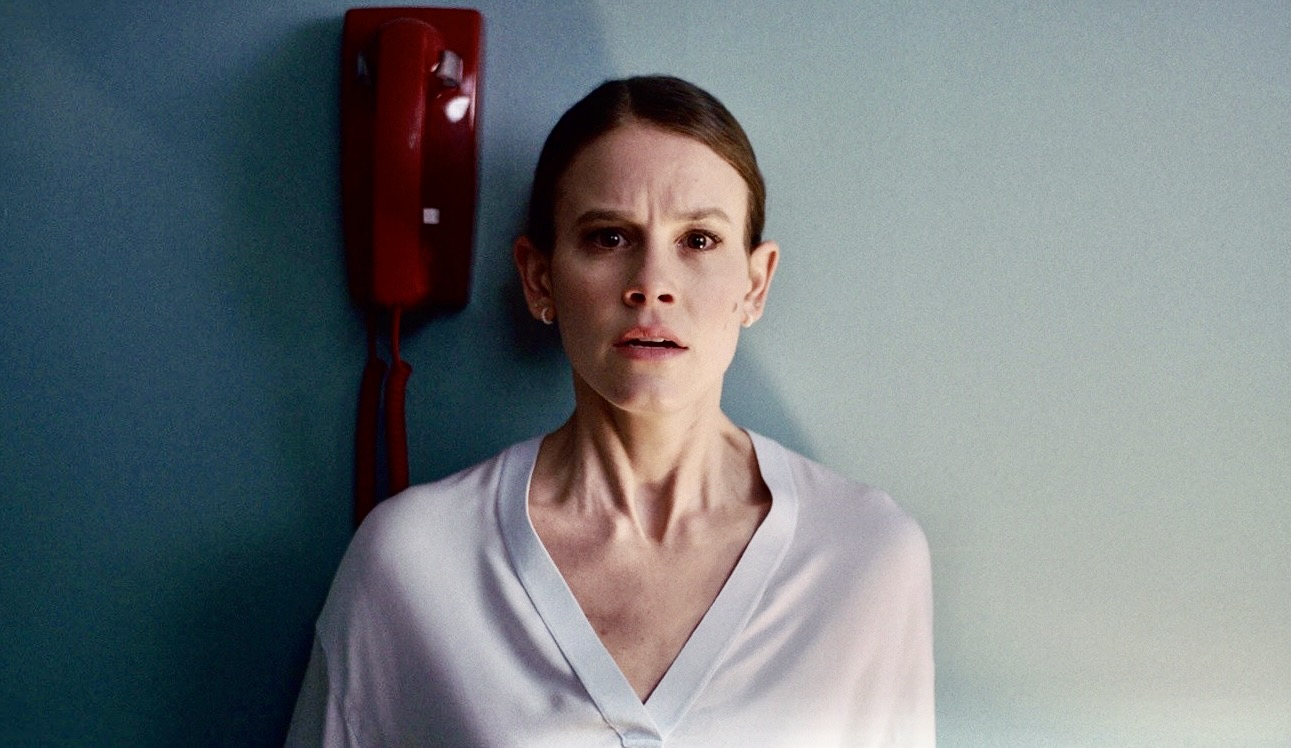
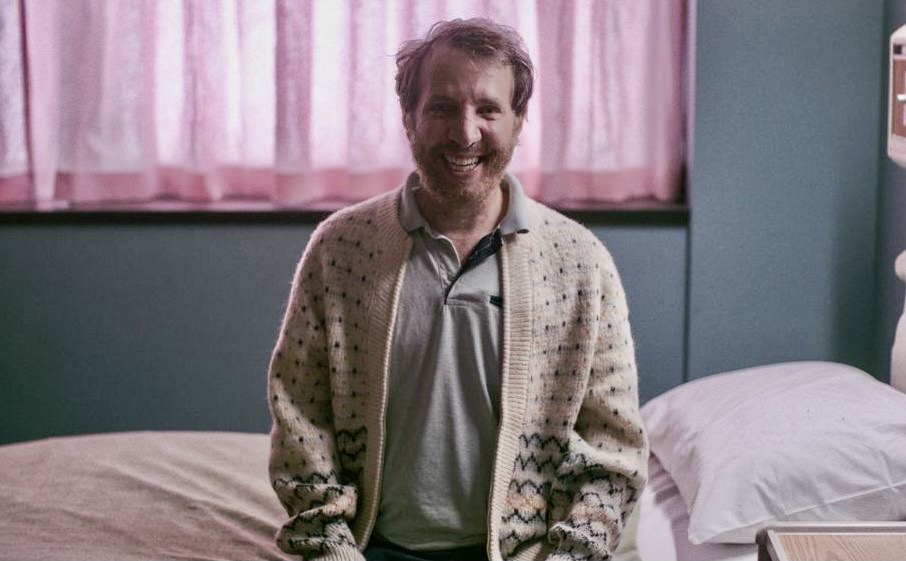
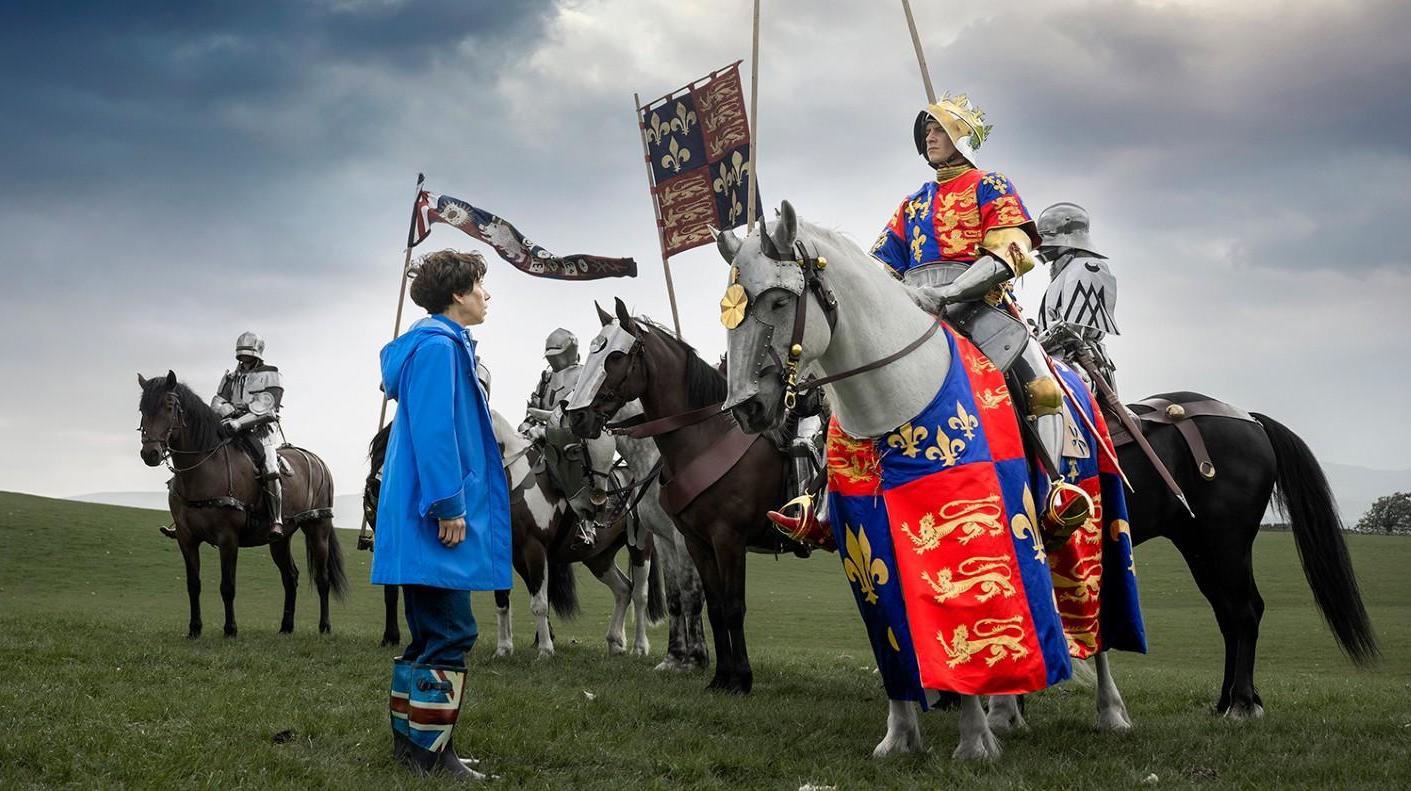
The Lost King is based on a true story – how a woman called Philippa Langley came to be the driving force behind the discovery of the remains of King Richard III… underneath a council car park in Leicester. Written by Steve Coogan and Jeff Pope and directed by Stephen Frears (the team behind the excellent Philomena), the film relates how Langley (Sally Hawkins), an ‘ordinary woman’ living in Edinburgh, first becomes interested in the last of the Plantagenet kings, while watching a performance of Shakespeare’s eponymous play. The titular role is performed by a young actor (Harry Lloyd) and thereafter, Langley experiences visions of ‘Richard’, who seems to be waiting for her to do something.

Much to the bemusement of her ex-husband, John (Coogan), and her two young sons, Langley’s interest quickly develops into a full-blown obsession. She reads everything she can find about Richard, she joins a group of local enthusiasts and, eventually , she finds herself in Leicester and that fateful car park. After making her way a spot helpfully marked by a large letter R, she becomes convinced that she’s standing on Richard’s grave.

I know. If this hadn’t actually happened it would be risible. But it did happen, so get over it.

Convinced she’s right, Langley approaches archeologist Richard Buckley (Mark Addy) at Leicester University, and persuades him to help her to organise an excavation of the car park. But where are the funds going to come from?

The film has stirred up some controversy by suggesting that, although Langley was undoubtedly the prime mover behind the campaign to find Richard – she actually raised most of the money via crowdfunding – she was latterly sidelined by Leicester University, who monopolised the subsequent discovery and dismissed her as an ‘amateur’. One man in particular, Richard Taylor (played here by Lee Ingleby), comes across as especially unpleasant and the real Taylor, former Vice Chancellor of the university, is currently threatening legal action. Surely it would have been kinder at least to give the character a different name? (This would also have avoided having yet another Richard in the story.)

Whatever the truth of the case, this is a fascinating story about self-belief and perseverance. I like the fact that Langley is not deified here, but presented as a far from perfect individual, selfishly devoting everything to her obsession, no matter what the cost to herself or her family. And I like the device of having Richard as part of the ongoing adventure, offering a little more depth to the proceedings.

While the whereabouts of a long-dead body is arguably low-stakes, recent events have shown how pageantry, pomp and circumstance really seem to matter to huge swathes of the population, and it’s always a delight to see Edinburgh (my home city) depicted onscreen in all its glory – even when, in certain scenes, it’s pretending to be Leicester!

3.8 stars

Philip Caveney

Don’t. Make. Tea.

06/10/22

Traverse Theatre, Edinburgh

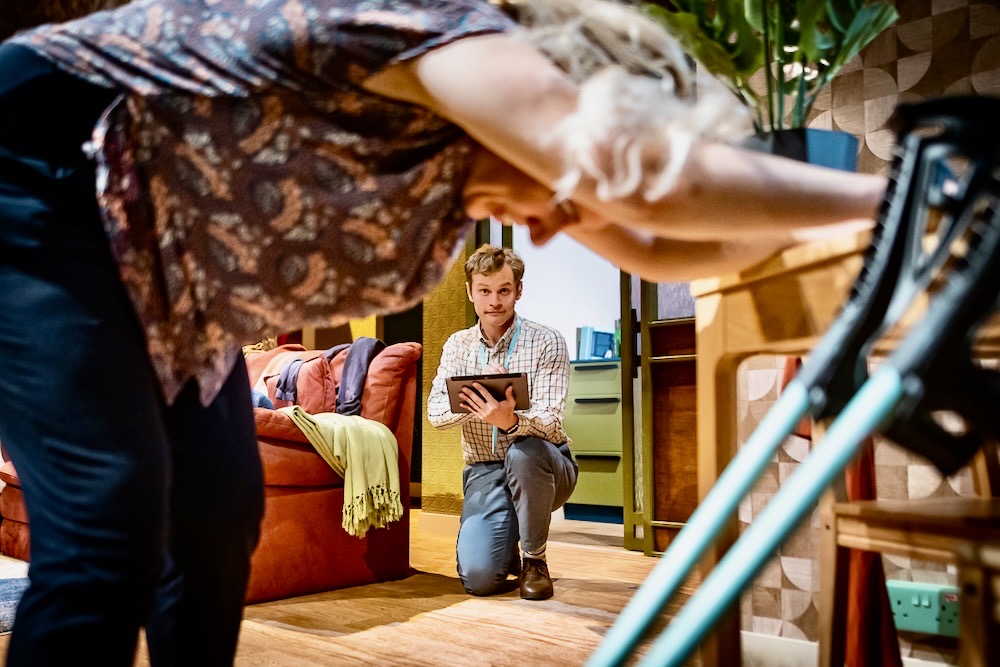
Chris (Gillian Dean) is feeling understandably nervous. It’s the year 2030 and today she’s having her assessment. Chris has OPMD, which means that she is partially sighted, has trouble walking and is in constant pain. This rare condition is degenerative, so things are only going to get worse – but, under a recently implemented system, claimants are assessed ‘positively’, i.e. on what they can do rather than on what they can’t do.

The process will be depressingly familiar to those who have been through a PIP assessment. Points are awarded throughout the frustratingly opaque interview. If Chris scores five, she will be expected to take on part-time work. Score ten and she can go full-time! All Chris knows is that she has no money in her account and her electricity supply is set to switch itself off when the meter hits zero. She’s desperate. Meanwhile, her life is supervised by ‘Able’, an Alexa-like hub that offers a commentary on everything she says and does… and may just be capable of informing on her should she ever step out of line.

Enter Ralph (Aidan Scott), the sly, smirking interrogator who will determine Chris’s future. ‘We listened,’ he keeps telling her, and then proceeds to turn her words against her. His questions are cunningly designed to trip her up and he’s on to all the received wisdom that has served her up to now (‘be you on your worst day’; ‘don’t show them you can make a cup of tea’).

This clever and prescient piece from Birds of Paradise Theatre, written by Rob Drummond and directed by Robert Softly Gale, is designed to be as accessible as possible. Able’s irksome commentary acts as a kind of audio description, while on a huge TV screen that dominates one wall, Francis (the engagingly comic Emery Hunter) helpfully translates everything into sign language. An overhead video display also offers viewers the text. I’ve rarely seen audio-visual aids so skilfully integrated; indeed, they are characters in their own right.

It’s a show of two halves. The first is essentially a taut two-hander as Chris and Ralph go through the various hoops and hurdles of the assessment. The narrative becomes increasingly adversarial and the interview builds to a frantic conclusion. As the lights go down for the interval, I ask myself where this can possibly go next.

The second act is an entirely different kind of beast, a high-powered slice of farce as new figures appear, seemingly out of nowhere. It would be wrong to give too much away but there are some wildly funny moments here, though the piece never forgets that it has an important message about disability rights to get across – something it skilfully manages without thumping me over the head.

Don’t. Make.Tea. is a dystopian vision of an all-too credible near future, a play laced with dark humour and some genuine surprises. Cleverly crafted to be accessible to the widest possible audience, it’s an exciting slice of contemporary theatre.

4.2 stars

Philip Caveney
James IV: Queen of the Fight

05/10/22

Festival Theatre, Edinburgh

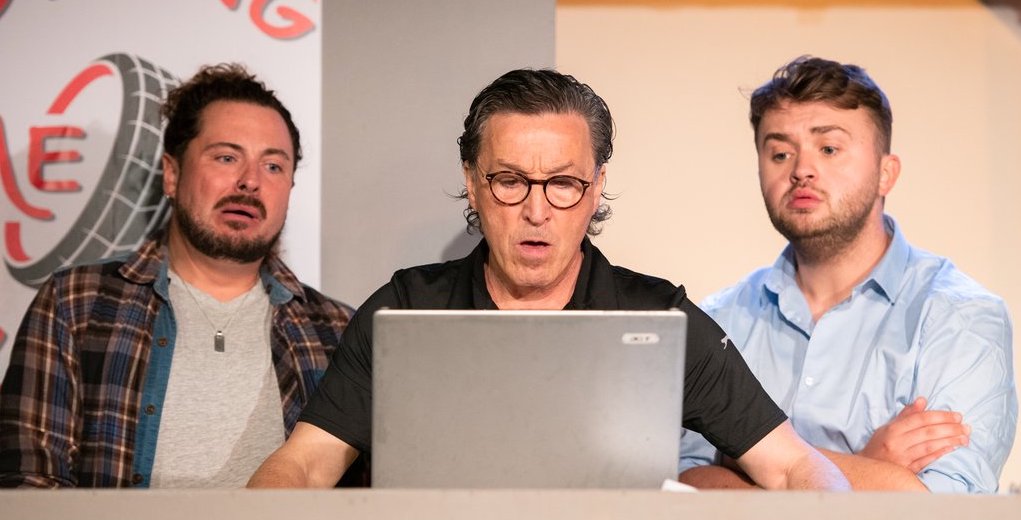
For the fourth part of her epic series about Scottish history, Rona Munro chooses to focus her gaze upon a little known episode in the reign of James IV – the influence of two ‘Moorish’ women on the Scottish court and the events that lead to the writing of Ane Blak Moor, a derogatory (and openly racist) poem written by the Makar, William Dunbar (Keith Fleming).

In 1504, Lady Anne (Laura Lovemore) and her servant, Ellen (Danielle Jam), arrive at the Scottish court. Anne is to be lady-in-waiting to James’s young English bride, Margaret (Sarita Gabony), so Ellen is left to form her own alliances. She soon finds a role within the royal household – as an entertainer – and eventually finds herself the confidante/lover of King James (Daniel Cahill). She plays the titular ‘Queen of the Fight’ – a kind of MC – in the symbolic tournaments he leads. But Margaret’s jealousy of the woman she perceives as an interloper will have significant consequences for James and his followers – and shows how, even though the King apparently champions diversity, when push comes to shove, racism rears its ugly head.

The real strength of this production is the way that Munro finds contemporary echoes in these historical characters, who talk and act like the kind of people you might encounter in modern-day Edinburgh. This is particularly apparent in Dunbar, who is obliged to cut his cloth according to the changing mood, in order to eke a meagre living from his writing. His grumpy observations about his precarious existence put me in mind of a typical freelancer, forever having to apply himself to the fickle moods of the court. Clearly some things never change. (No, no, never been there myself…)

This is a handsomely mounted production, from Jon Bauser’s elaborate set designs to the sumptuous costumes by Karen Short. (I love the way the play begins with the characters in contemporary clothes, before they are dressed in their period finery.) There are some wonderfully boisterous fight scenes too, the participants swinging broadswords at each other with wince-inducing gusto.

There’s so much to enjoy here – I’m especially amused by Gabony’s petulant, seventeen-year-old bride, too moody to even get out of bed – and there are Dame Phemy’s delightfully caustic remarks (Blythe Duff); she has worked in the court longer than anyone and has everybody (including the King) dancing to her tune.

Queen of the Fight is proof, if ever it were needed, that historical fiction doesn’t have to be dull and strait-laced. Here is a production that positively thrums and pulses with energy and one that genuinely earns an exuberant and heartfelt ovation.

4.6 stars

Philip Caveney
He Who Opens the Door

04/10/22

Traverse Theatre, Edinburgh

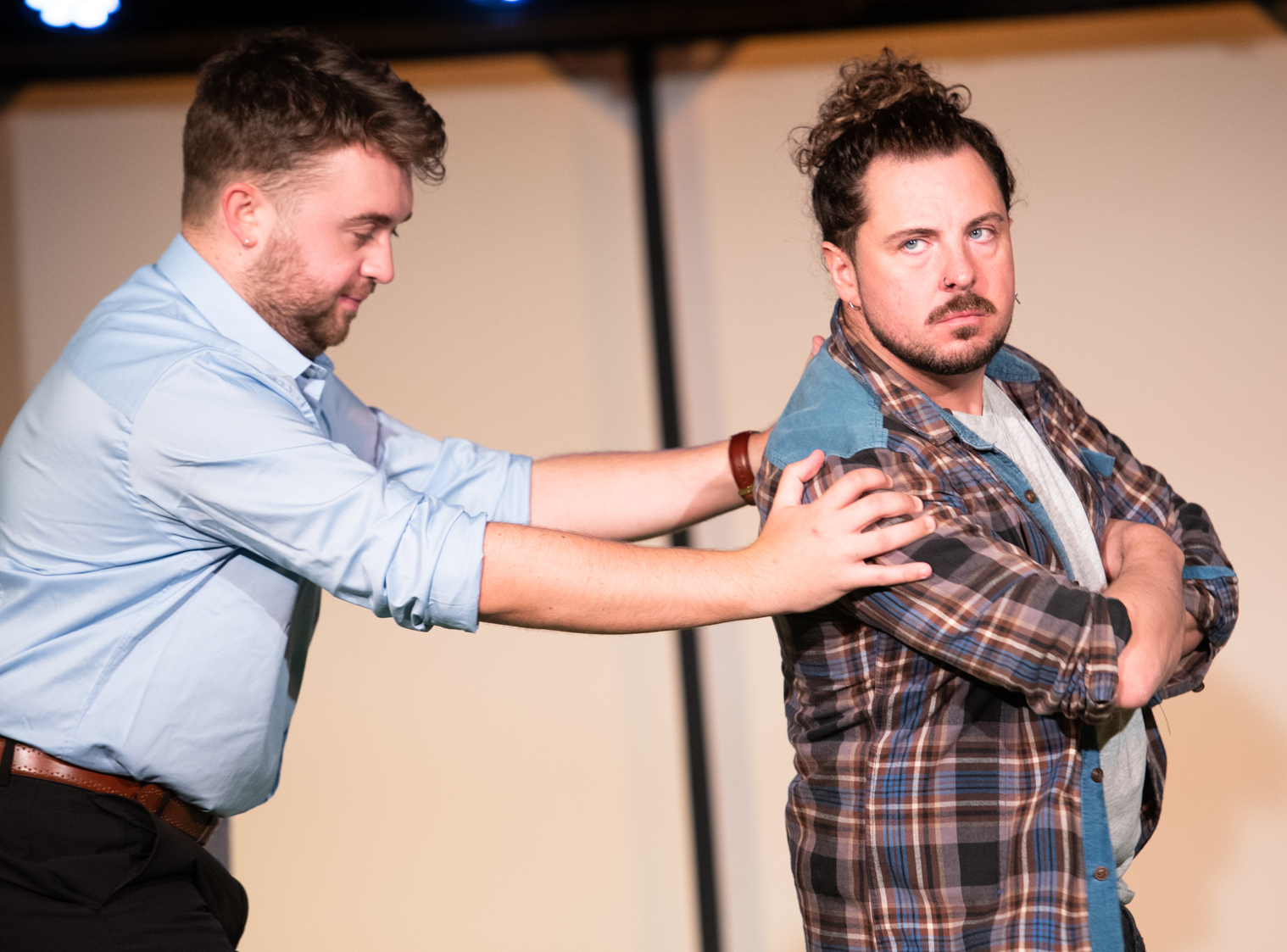
The ‘Play Pie Pint’ season continues, and this week’s offering is a dark comedy by Ukrainian playwright, Neda Nezhdana. The morgue where Vera (Louise Stewart) works is situated in an underground bunker, originally built as a bomb shelter. For Vera, this is just a normal, boring nightshift, babysitting the dead: filling out paperwork, flicking through a magazine and half-heartedly exercising – anything to pass the time. But then Vika (Yolanda Mitchell) stumbles from the freezer into the office, still drunk from the night before. She doesn’t know where she is, or why there’s a tag on her foot. Vera faints at the sight of a walking corpse and, when she comes round, she’s confused. Is Vika alive, or is Vera dead? Suddenly, shockingly, the two women realise the doors are locked and Vera’s phone has no signal. And then the landline rings…

He Who Opens the Door has been adapted by John Faradon, and – although the setting is still Ukraine – there’s a distinctly Scottish flavour to this production. I can see what director Becky Hope-Palmer is aiming for but, for me, this muddies things somewhat. It’s a metaphorical play, “reflecting the limbo for some people in eastern Ukraine, caught between opposing forces”, but I’m not immediately aware of where I am supposed to be: the signs, flags and magazine title tell me one thing, while the tone tells me another. Likewise, the programme says ‘present day’ but that’s not quite true: the script pre-dates the Russian invasion. This adds to my confusion, as I try to piece together what it all means. Not all of the jokes land, either, although the more serious points are eloquently made. I have to confess I’m a bit uncomfortable with Vera’s anti-abortion rhetoric (in particular, the assertion that women are always damaged by the process), and I’m not sure how this particular revelation contributes to the discourse. Still, this is only one idea amid a kaleidoscope of other, more enticing hypotheses about autonomy and independence.

In truth, there’s a lot of good stuff here. Both Stewart and Mitchell deliver strong, compelling performances, and it’s a lively, engaging piece. There are echos of Beckett in the waiting and uncertainty, and of Pinter too: those enigmatic phone calls reminiscent of the notes the dumb waiter delivers to hitmen Ben and Gus. Impressively, Hope-Palmer manages to convey a sense of time passing inexorably, as the women await their fates, while simultaneously offering us a play that gallops along at pace. Amidst the existential dread, there is dancing and singing; in the darkness, there is light.

He Who Opens the Door is not an easy play, but it is a fascinating one, and I can’t think of a more fruitful way to spend a lunchtime.

3 stars

Susan Singfield

Blonde

03/10/22

Netflix

Andrew Dominik’s Blonde, based on a novel by Joyce Carol Oates, is an art film with a capital ‘A’. Given a running time close to three hours and presented in a whole variety of aspect ratios, it purports to be the inside story of Norma Jeane Baker – or Marilyn Monroe, as she’s better known. One overriding message comes through loud and clear: if there were any joyful moments in the star’s life, they were few and far between. This is the tale of a young woman who is repeatedly betrayed and brutalised by just about everybody she comes into contact with.

We first encounter her as a little girl (Lily Fisher), living with her abusive, disturbed mother, Gladys (Julianne Nicholson), who nearly ends both their lives by driving headlong into the midst of a bush fire. As an opening, it’s powerful and arresting – but from this point, the story takes a seismic jump through time, where we discover Norma/Marilyn (Ana de Armas) chasing roles in Hollywood, largely by allowing herself to be thrown down onto the casting couch and horribly abused by unnamed ‘producers’. The problem here is that Dominik, who also wrote the screenplay, seems to assume that everybody watching is going to be so well versed in Monroe’s career that we’ll instinctively know who’s who. It’s not always easy to follow and, for those not in the know, it’s hard work.

The overall theme here is about father issues. From the beginning, Norma Jeane’s Mother shows her photographs of a mysterious man who, she claims, is her father, once a big star in Hollywood movies. Norma Jeane consequently spends most of her life searching for him, even calling her various partners ‘Daddy’. The story leaps back and forth in time and we’re given insights into her doomed marriage to Joe Di Maggio (or ‘Ex-Athlete’, as Bobby Cannavale’s character is billed) and her equally ill-fated relationship with ‘The Playwright’ (Adrien Brody, looking the dead spit of Arthur Miller).

This is hardly a fun-filled ride. We see a harrowing abortion scene, which definitely feels pitched as an anti-abortion polemic, and there’s an equally horrible account of the miscarriage Monroe suffers while married to Arthur Miller. A brief and sordid encounter between Monroe and ‘The President’ (Caspar Philipson) is about as repugnant a sex scene as I’ve ever witnessed.

As if in an attempt to lighten the mix, there are accomplished recreations of several of Monroe’s most iconic film roles, but the swings in tone are extreme and it feels suspiciously like being alternately sprinkled with sugar and dragged through a cess pit.

Ana de Armass offers an accomplished performance in the lead role, inhabiting Monroe’s manic persona with great skill – but Blonde feels increasingly like a big bumper pack of fireworks, occasionally shooting off fabulous cinematic dazzlers but, more often than not, offering a selection of damp squibs. What’s more, the film would benefit I think, from a more stringent edit, cutting out those slower sections where the story is allowed to drag.

It’s worth seeing, but be warned – it’s not the straightforward biopic that you might expect.

3.6 stars

Philip Caveney
Smile

01/10/22

Cineworld, Edinburgh

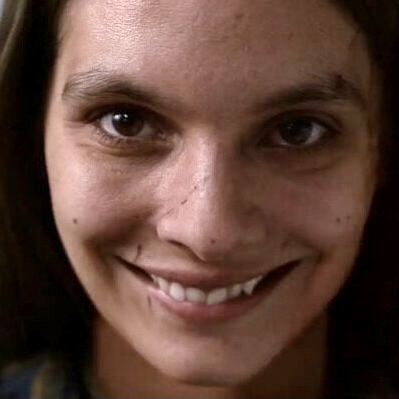
Here’s that rarest of things, a horror movie that considers itself scary enough to actually warrant an 18 certificate. In the case of Smile, a confident debut from writer/director Parker Finn, it seems perfectly justified. It’s a long while since a movie unsettled me quite as effectively as this one – and all because of the simple solid gold truth: you can spend millions on fancy effects, but nothing is quite as terrifying as somebody grinning at you.

Indeed, perhaps Grin would have been a more accurate title.

Rose Cotter (Sosie Bacon) is working long hours at an emergency psychiatric unit and, many years after the event, she’s still haunted by memories of her mother’s death from a drugs overdose. One day a young woman called Laura Weaver (Caitlin Sasey) is admitted to the unit, clearly terrified by a series of visions she’s having, in which characters from her past are visiting her.

The people don’t say anything – they just grin at her. Then, before Rose quite knows what’s happening, Laura has committed suicide, right in front of her.

Rose is urged to take time off to rest but, as you might imagine, that’s no easy matter, because now Rose is starting to experience visions of her own. Her partner, Trevor (Jessie T Usher), is decidedly unsympathetic, telling her he hasn’t got time for such nonsense, and her sister, Holly (Gillian Sinster) – who is also troubled by what happened in the past – soon has powerful reasons to be unsympathetic too, after Rose’s memorable visit to her young son’s birthday party. Only Rose’s ex -partner, Joel (Kyle Gadner), a cop, seems to be ready to offer any kind of help…

It would be a crime to give away any more about the plot. Suffice to say that Finn handles the gradually unfolding narrative with consummate skill, aided by strong performances from the cast and a brilliantly nerve-shredding soundtrack by Christobal Tapia de Veer. Jump-scares are often over-used in films like this, but Finn manages to catch me out time and time again. What’s more, while many horror movies stigmatise those suffering from mental illness, Finn manages to use the trope in a more respectful way, walking that tricky tightrope without ever overbalancing. The title is cunningly referenced again and again, and the idea that past events can keep coming back to haunt a person is effectively demonstrated. The result is a narrative that holds me in an icy grip for almost its entire duration.

It’s therefore sad to report that, in the last five minutes or so, the film stumbles slightly, offering a shonky effects sequence that feels like an unnecessary contrivance, and a conclusion that suggests that somebody already has an eye on turning Smile into a franchise. I really hope that doesn’t happen. With such an assured first outing under his belt, I’m interested to see what other ideas Finn has, because – ending aside – this is a superior slice of horror.

Meanwhile, those who like to be terrorised by what they’re watching should strap themselves in for a wild and traumatic experience. As I leave the auditorium, I notice that a member of staff is smiling at me…

4.4 stars

Philip Caveney

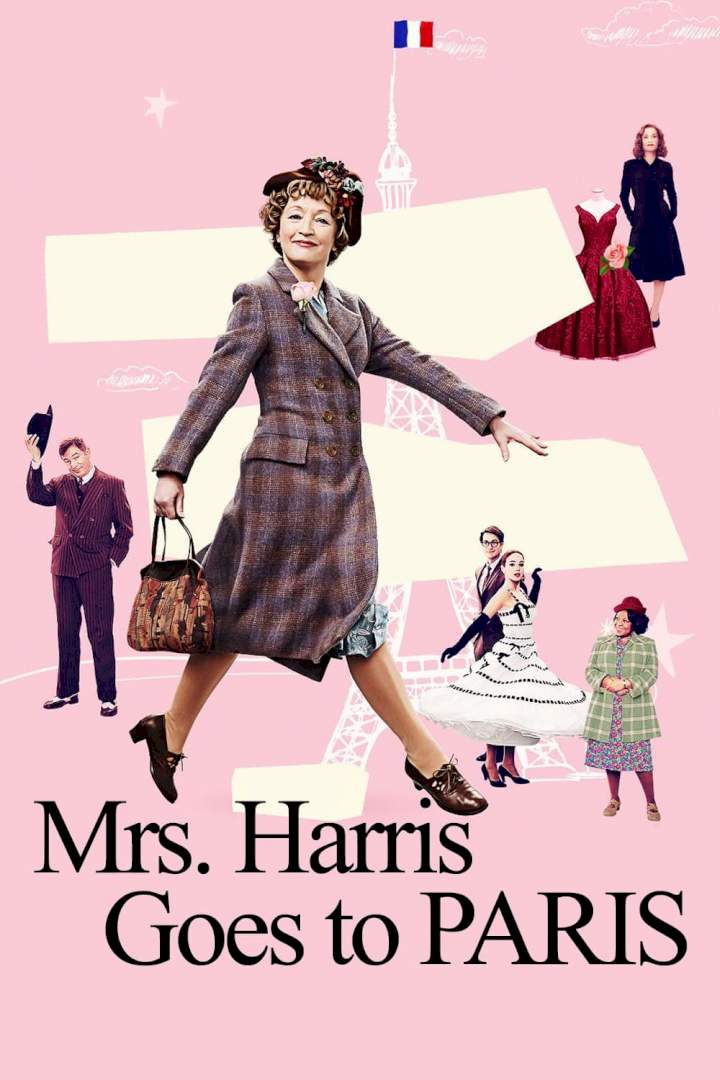
Mrs. Harris Goes to Paris

30/09/22

Cineworld, Edinburgh

I am poorly when I see the 1992 teleplay, Mrs ‘Arris Goes to Paris, nursing a cold. I am lying on my sofa with the TV on, drifting in and out of sleep. At one point, I wake up, and there are Angela Lansbury, Diana Rigg, and, wait, is that Fred from Corrie? Is this a fever dream? I find myself engaging with the story, and watching through to the end. On occasion, I mention it to friends, but nobody has ever heard of it. They look at me sceptically. I let it go…

So I’m weirdly excited about this latest iteration of the tale, which I now know is based on a novel by Paul Gallico. Lesley Manville stars as the titular Mrs Harris (her ‘H’ restored), with Isabelle Huppert and Jason Isaacs as the big name support.

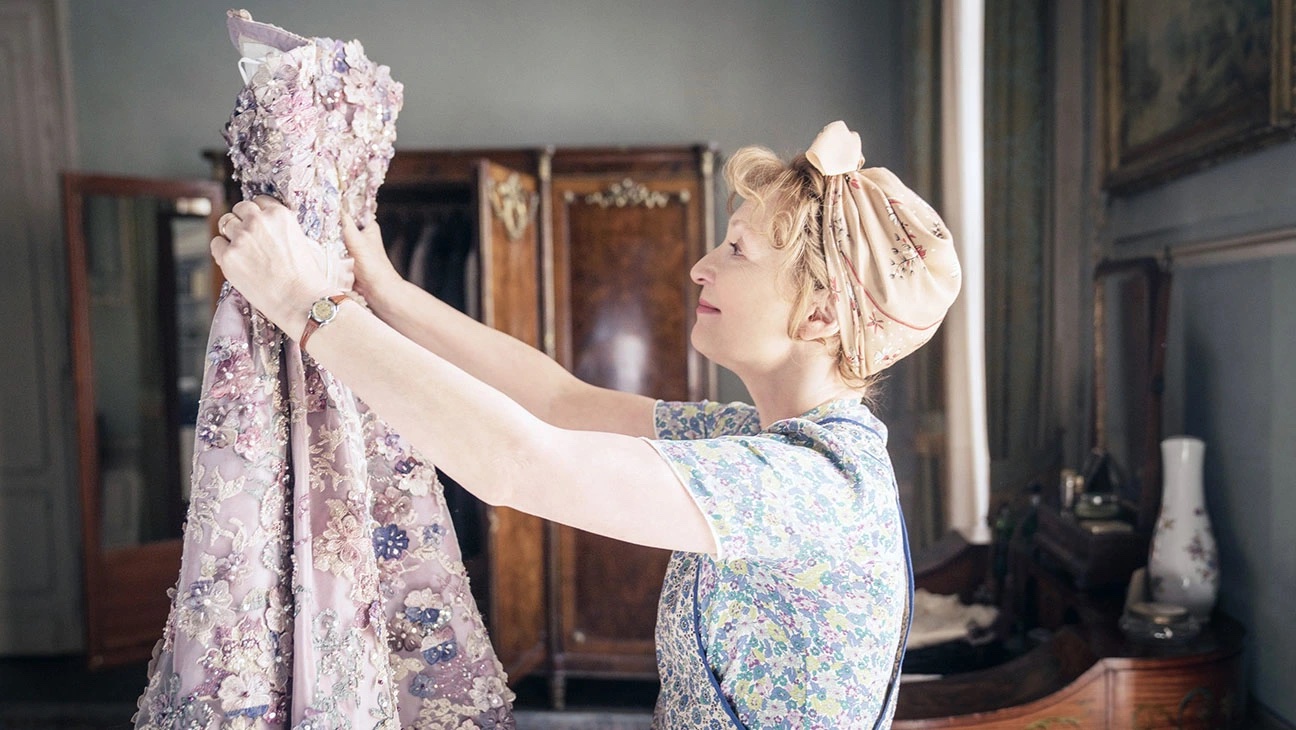
It’s London, 1957. Ada Harris knows in her heart that she’s a war widow, but she’s been waiting years for Eddie’s death to be confirmed. In the meantime, she’s working as a charwoman, cleaning up after a succession of indolent rich folk. She’s not unhappy exactly: she has a busy social life, drinking, dancing and ‘going to the dogs’ with her friends, Violet (Ellen Thomas) and Archie (Isaacs). But something is missing and, when Ada catches a glimpse of an exquisite couture gown in Lady Dant (Anna Chancellor)’s bedroom, she realises exactly what that missing something is…

A posh frock from Paris is beyond Mrs Harris’s slender means, but she’s a determined woman, and sets to with admirable grit, making savings wherever she can. Take the bus to work? No, not when she can walk. And what does she need with evenings out? Better to spend the time altering and repairing people’s clothes, bringing in a few extra shillings. Despite her hard work, however, that Dior dress is still way out of reach.

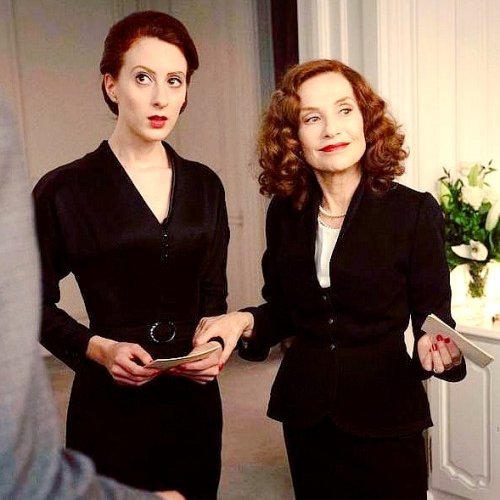
Until a series of fortunate events occurs, and – of course – she’s off to Paris! (Come on, that’s hardly a spoiler; it’s literally in the title.) The streets of the French capital appear to be paved with litter (there’s a bin strike, which we citizens of Edinburgh can certainly relate to), but Ada rises easily above the stink. She’s having the time of her life, and – with the help of André (Lucas Bravo), Natasha (Alba Baptista) and the dashing Marquis de Chassagne (Lambert Wilson) – she’s rediscovering her mojo. Sure, Mme Colbert (Huppert) is a bit sneery, and Mme Avallon (Guilaine Londez) seems to view her as an enemy, but so what? A couture gown is on its way; what could possibly go wrong?

Mrs Harris Goes to Paris is essentially a fairytale, although it’s not very grim. It’s a frothy concoction, signifying little, but it’s eminently watchable, with warm, engaging characters, and a satisfying (if predictable) story arc. Under Anthony Fabian’s direction, this primarily Hungarian production (no, I don’t know why either) is beautifully shot, and Felix Wiedemann’s cinematography really captures the ethereal beauty of the clothes, so vital to the tale. It’s refreshing to see a love story that doesn’t patronise an older woman, and I’m pleased that the ‘fish out of water’ stuff is played down. Ada is independent: she has lived alone through a war and is used to city life, and she mixes with all kinds. It’s no surprise that she can hold her own in a Parisian restaurant, nor that she’s unfazed by the unfamiliar etiquette of a Dior fashion show. Perhaps the most important theme is one of societal change: just as the political elite in Paris have to accept that the workers won’t settle for poverty wages any more, neither will Ada continue to put up with late payments and disrespect from her employers. The war was a real turning point, and its longterm implications are starting to be felt.

I don’t really know how this compares to the teleplay, because I wasn’t fully compos mentis when I was watching that, but I do know that it’s more enjoyable to see Mrs Harris finding her dream dress when I’m not in a Lemsip fug. And at the cinema too, which is always better (true fact, no counter-arguments accepted).

3.8 stars

Susan Singfield

Break My Windows

27/09/22

Traverse Theatre, Edinburgh

In an economy dominated by ‘funnel the capital upwards’ juggernauts like Uber, Yodel and Deliveroo, Eric (Tom McGovern)’s new company, Bring Me Wheels, is the logical conclusion. They all require drivers, right? So why not combine them, and concentrate even more money in a single pair of hands?

Speaking of hands, Eric has his fingers in a lot of pies, but Bring Me Wheels is especially close to his heart. He’s using it as an excuse to rebuild his relationship with his twenty-three-year-old son, Brandon (Ross Baxter), who hasn’t – as yet – got much to boast about on his CV. What better way to set him up than to make him manager of his dad’s shiny new start-up? But Brandon’s boyfriend, Sam (Jamie McKillop), has a lot to say about the inequities of late-stage capitalism, which puts a spoke in the Bring Me wheel. A bit of reading soon convinces Brandon that he’s not too keen on the business’s exploitative practices, although he does like living in a fancy flat and driving a brand new Tesla…

David Gerow’s script is nicely paced, and there’s plenty of humour to lighten the outrage. Directed by Ken Alexander, Break My Windows is as much an exploration of relationships as it is of the gig economy, and the chemistry between the three actors is palpable. At times it’s horribly tense, with Eric and Sam both entrenched in diametrically opposed views, and Brandon caught unhappily in the middle, snarked at by both of them, and repeatedly told to “keep your feelings out of this”. The politics are a little simplistic, perhaps, but that seems realistic too: you don’t have to spend too long on Twitter to see how binary and glib so-called debate can be. McGovern’s Eric is particularly funny – and strangely appealing, despite the odious views he espouses.

This thought-provoking piece is part of the latest A Play, a Pie and a Pint season, and it’s very fitting for a slice of lunchtime theatre.

3.7 stars

Susan Singfield

Prey

25/09/22

Disney+

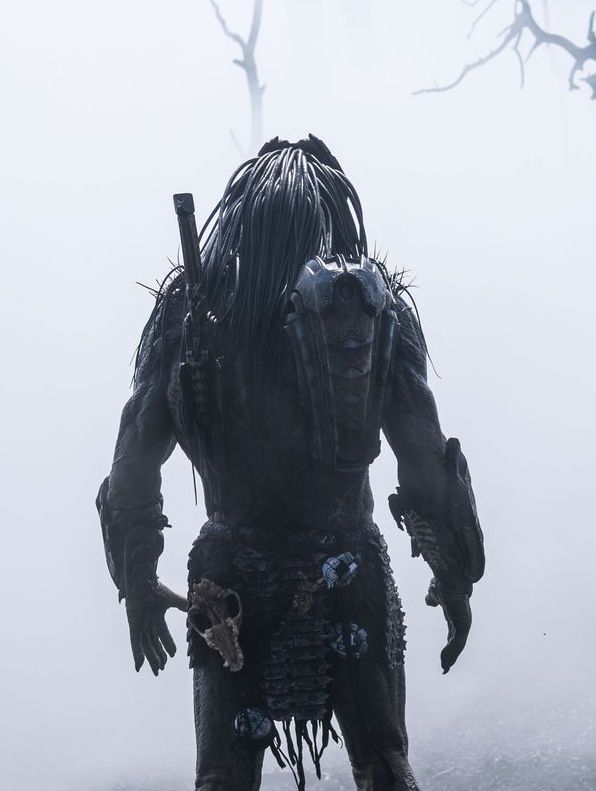
In 1987, Predator was a palpable hit for Arnold Schwarzenegger, a sci-fi action adventure so stuffed full of testosterone it felt like it was going to explode off the screen. Its titular villain, an alien hunter sporting dreadlocks and a face like a shellfish casserole, was memorable enough to prompt a series of sequels, each one less satisfying than the last. Eventually, the creature was pitted against the villain from Alien, which really should have been the end of the story. It seems obvious: if you haven’t got anything new to add to a franchise, why bother?

And then writer/director Dan Trachtenberg has a great idea. What if the alien hunter has been around for a long time? What if he visits Earth in the 1700s? What if he has all those same hi-tech weapons at his disposal but his adversaries are native Americans, armed with nothing more deadly than knives, spears, bows and arrows?

It sounds like a brilliant premise and, from the moment I hear about it, I’m in. But annoyingly, Prey doesn’t get a cinematic release and is exclusively shown on Disney+. Which more or less explains how I wind up viewing it months after its initial release.

No matter, late is better than never, right?

This is the story of Naru (Amber Midthunder), a young Commanche woman who cannot see why she is expected to stay in the tipi with her mother, Aruka (Michelle Thrush), cooking and being practical, while her brother, Taabe (Dakota Beavers), gets to head off on hunts, killing rabbits and deer for the larder and even taking on the occasional larger animal, like the pesky mountain lion that’s been causing havoc amongst the tribe. Naru practises with her weapons at every opportunity, even devising a brilliant technique employing an axe on a length of home-made rope. She wants to be ready if Taabe ever grants her the opportunity to hunt alongside him.

Then one day she sees something in the sky, something she thinks is a vision of the Thunderbird. Of course, it really marks the arrival of the alien hunter, dropping by for another of his brutal safaris. Pretty soon, he’s attacking and killing everything that moves – and it’s only a matter of time before Naru and he are engaged in a desperate struggle for survival…

There’s so much to enjoy here – Midthunder is terrific in the central role (it will be interesting to see where she goes next) and Jeff Cutter’s sumptuous location cinematography sets the scene perfectly. The action sequences are brilliantly devised and filmed, but, unlike the original film, Prey has plenty to say about the nature of hunting, how different it is when people depend upon it in order to stay alive. This point is eloquently enforced when Naru chances on a whole field of skinned buffalo, the victims of a large group of French hunters, who we meet later in the film and who clearly embody the true nature of savagery. Furthermore, there’s a cleverly constructed plot here. Everything that happens to Naru is shown for reasons that will only become fully evident in the film’s final moments. Keep an eye out for Chekov’s quicksand!

Most critics have placed Prey as the second best film in the Predator franchise, but I’d go further than that. For my money, this effort leaves Arnold’s macho swagger in the dust.

4.2 stars

Philip Caveney

Don’t Worry Darling

23/09/22

Cineworld, Edinburgh

Don’t Worry Darling. Well, it’s hard not to worry. Specifically, it’s hard not to worry about the missing comma. You know, the ‘direct address’ comma? I don’t like writing Don’t Worry Darling without it. It looks wrong, but I can’t add it in because it’s not there in the official title. Don’t tell me it’s not important or not to sweat the small stuff. I can’t help it. Punctuation matters, Grandma.

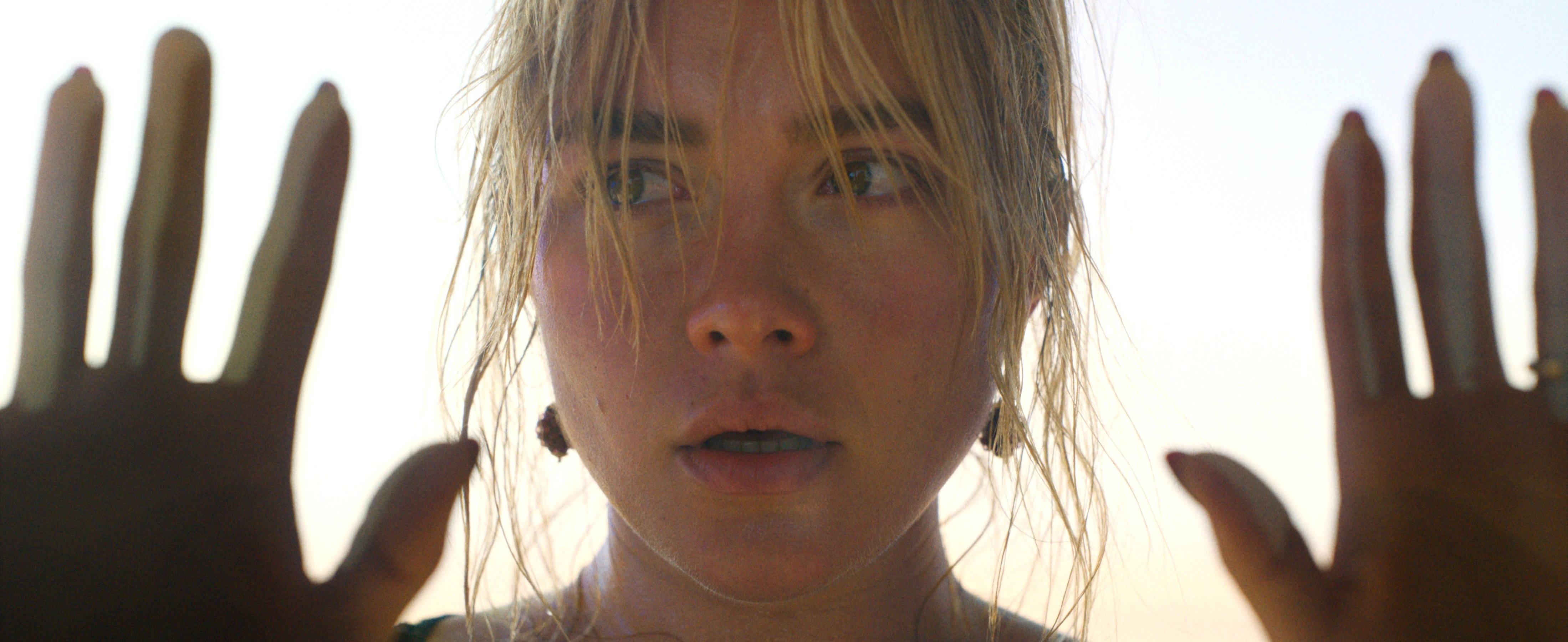
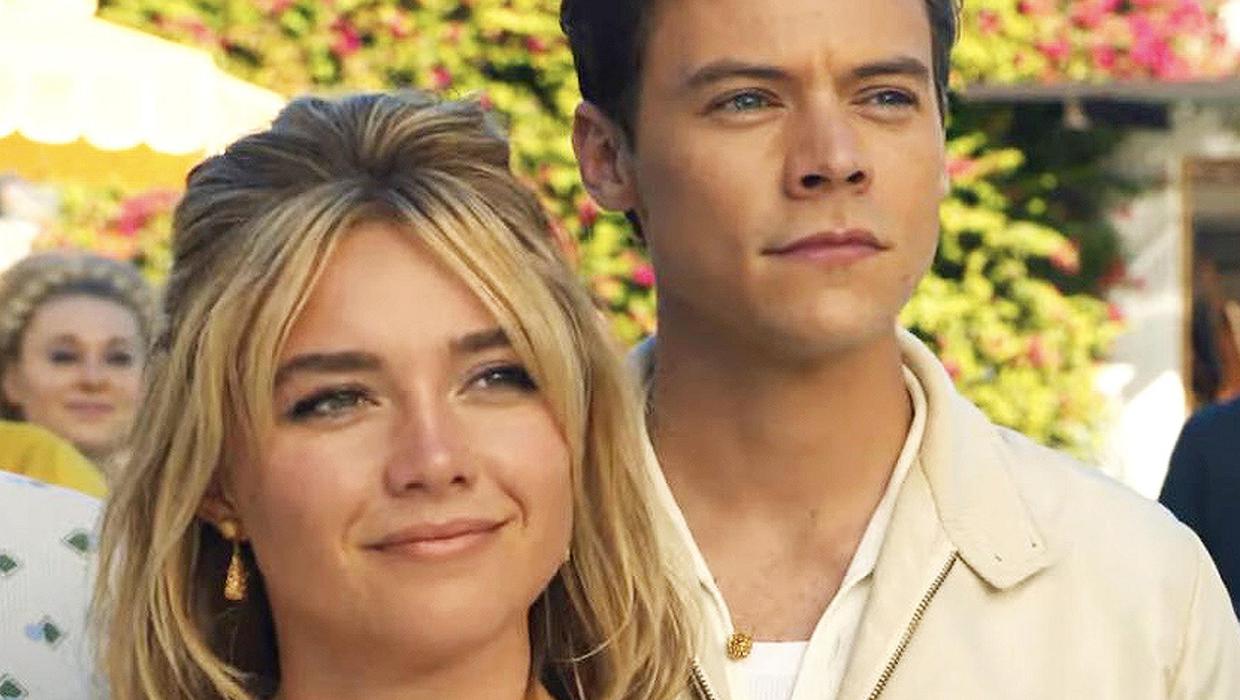
Still, taking a deep breath and moving past the title, Don’t Worry, Darling (sorry) is – for the most part – a very engaging film. Florence Pugh stars as Alice, a Stepford-style wife living in the Stepford-style town of Victory, an idyll in the middle of an unforgiving desert. That is, if your idea of an idyll is the sexist 1950s, where the men go to work (all at the same place, the – er – top secret Victory project) and the women stay at home, their daytime hours spent shopping, boozing and ballet dancing. Oh, and cooking and cleaning, which might sound like a downside, but these women really, really enjoy their household chores…

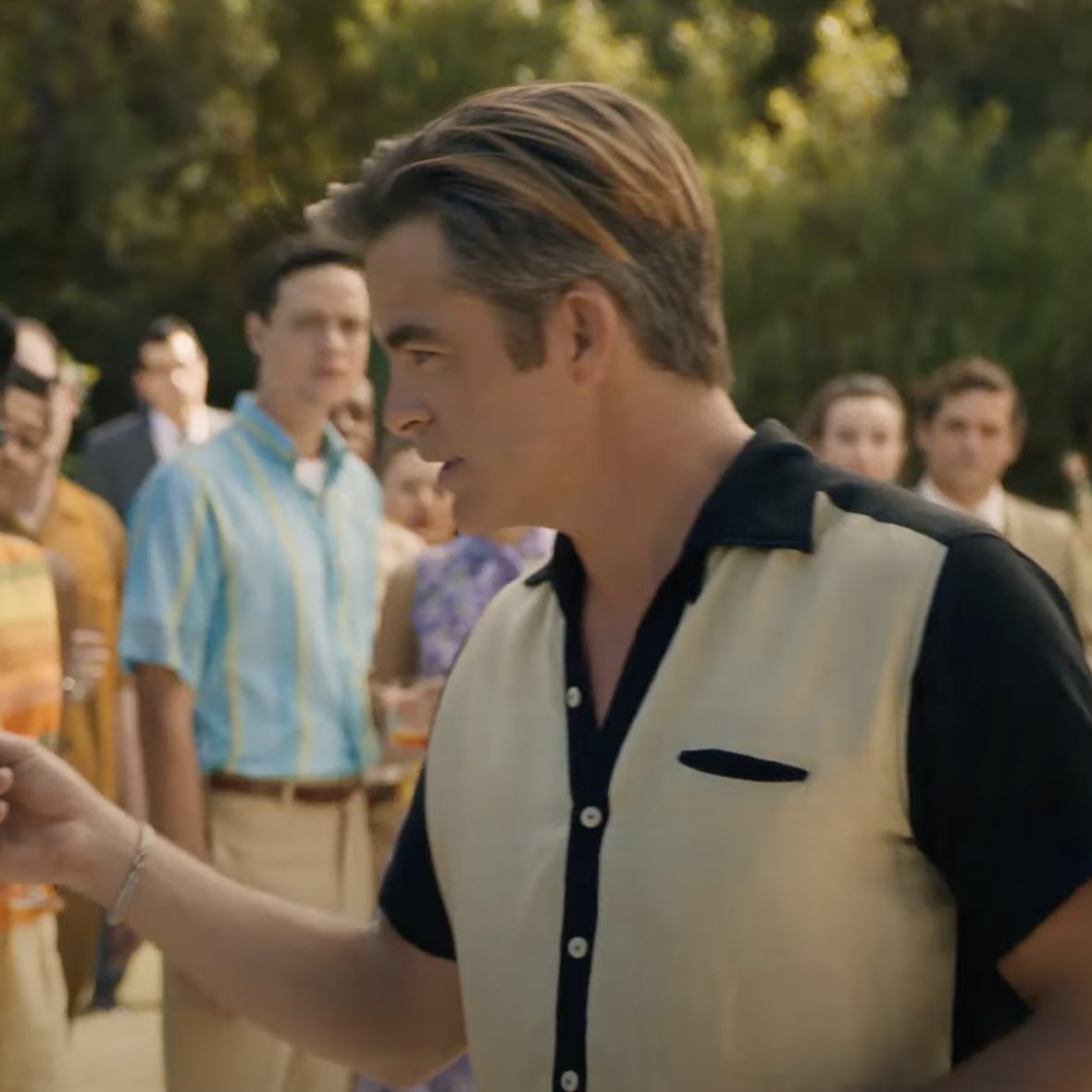
Alice and her husband, Jack (Harry Styles), seem even happier than all the other happy people – they can’t keep their hands off each other, and who cares if dinner ends up on the floor, when there’s frantic sex on the menu? Okay, so there are regular small earthquakes disrupting their peace, and Alice’s friend, Margaret (KiKi Layne) keeps trying to tell everyone that something’s wrong, but Dr Collins (Timothy Simons) assures them all that she’s not well; there’s nothing to worry about. Darling. Victory’s founder, Frank (Chris Pine), has everything in hand. Aren’t they lucky to be here? They can trust him. Can’t they?

But then Alice witnesses a plane crash, and – desperate to help – she ventures up to the forbidden Victory HQ. And what she sees there changes everything…

Olivia Wilde’s sophomore movie isn’t quite up there with Booksmart, but there’s a lot to admire here. It’s an ambitious project, riffing on The Matrix as much as the aforementioned The Stepford Wives, as well as The Truman Show and Valley of the Dolls. The script (by Katie Silberman) is also thematically close to Laura Wade’s similarly-titled stage play, Home, I’m Darling, in that it exposes the myth behind the glamorous image of the 1950s – the pastel colours, stockings and champagne cocktails (perfectly evoked by cinematographer Matthew Libatique) mask myriad miseries, particularly for women trapped in the domestic realm.

Pugh’s performance is flawless, and Styles does well in the supporting role. Pine is genuinely scary, his slick smile doing little to conceal Frank’s coercive nature, and Gemma Chan, as his wife, Shelley, is a suitably chilling accomplice. Wilde herself plays Bunny, a playful, hard-drinking woman, and Alice’s closest friend. It’s an interesting dynamic, and the set up is beautifully managed.

Unfortunately, the unravelling is less well-handled, and several gaping plot holes emerge along with the revelations. This is a shame, because the first two thirds promise so much, but the complex unveiling is too quick, too told. I am left with too many questions, and not in a good way.

Another half hour, a little more detail, some attention paid to the ‘but how?’ and Don’t Worry Darling could be much better than it is.

3.6 stars

Susan Singfield