All Quiet on the Western Front

05/11/22

Netflix

Erich Maria Remarque’s novel, All Quiet on the Western Front, first published in 1923, was that rarest of things – a runaway bestseller that carried at its heart a powerful anti-war message. In 1930 it was adapted into a movie, directed by Lewis Milestone, and it easily won that year’s Oscar for best film. In 1979, a pedestrian TV version struggled to compete with what had gone before and is now pretty much forgotten. It would be a brave soul indeed who thought they could do anything fresh with the subject.

Hats off then to writer/director Edward Berger, who steps gamely up to the diving board and takes a headlong plunge. Here is a version of the tale that doubles down on the futility of warfare and is able to depict the full visceral horror of life and death in the trenches in ways that Milestone would never have been allowed to in the 1920s.

We begin with a chilling scene of hundreds of dead German soldiers in the aftermath of a battle. We see their uniforms bieng stripped from them, then taken away to be laundered and packaged. Next we encounter our hero, Paul Bäumer (Felix Kammerer), still a naïve teenage schoolboy. He and his classmates are swept up in the idea of being heroes for a just cause and can’t wait to enlist, to do their duty. But all too soon, they arrive on the Western Front, unwittingly wearing the dead men’s uniforms, and begin to realise that all their childish fantasies are about to be torn to pieces by the bloody conflict around them.

The set pieces that follow make for harrowing viewing. The battle scenes are epic in scale, brilliantly captured by James Friend’s cinematography, and Berger doesn’t flinch from depicting scenes of utter carnage. An extended sequence where Paul’s battalion encounters tanks for the first time is particularly memorable – but there are quieter scenes too. Paul’s growing friendship with his comrade ‘Kat’ (Albrect Schuch) is expertly drawn, and the regular cutaways to politician Matthias Erzberger (Daniel Brühl), frantically trying to negotiate a truce as yet another brutal conflict approaches, add notes of suspense. Of course, we all know where this is leading. Volker Bertelmann’s ominous score contributes to the growing sense of unease.

Milestone’s iconic ending (taken from the novel) is so well known, I completely understand why Berger chose not to use it. In this version, he offers a desperate race against time, which may lack the elegance of the original concept, but the utter futility of the situation is once again brought to the fore and it makes for a powerful conclusion.

I can hardly recommend this as an uplifting watch – indeed, there are moments here that make me want to look away. But the novel’s original message is still very much in evidence.

4.2 stars

Philip Caveney

The Good Nurse

29/10/22

Netflix

Films about real-life serial killers usually break down into two distinct groups. There are those that exploit the original story for lurid shock effect and have no real interest in looking for answers. Then there are those that are prepared to delve a little deeper into the circumstances surrounding a series of events. The Good Nurse, directed by Tobias Lindholm, definitely belongs in the latter category. There’s no mistaking the fact that the screenplay – written by Krysty Wilson-Cairns (and based on the book by Charles Graeber) is much more interested in the motivation than the crimes themselves.

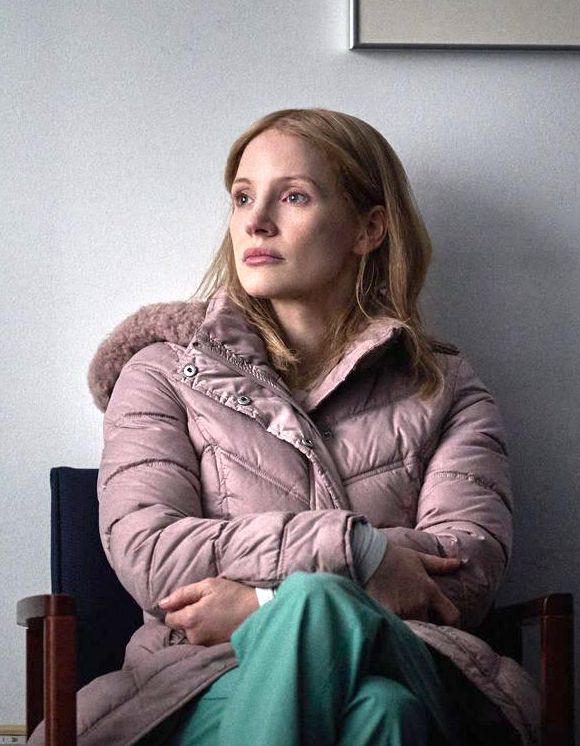
The film focuses primarily on the nurse of the title. She’s Amy Laughren (Jessica Chastain), a single mom, struggling to balance her punishing work schedule at a New Jersey hospital with looking after her two young daughters – and she’s suffering from a debilitating heart condition. Put simply, Amy cannot afford to take time off work because she’s not been in her current post long enough to qualify for health insurance. She needs to keep going for another year, if she can.

And then along comes new recruit, Charlie Cullen (Eddie Redmayne), a likeable and considerate workmate, who quickly guesses at Amy’s health issues and does his best to help her out, appearing to care deeply about her difficult situation. The two of them quickly become close friends, with Charlie even helping to look after Amy’s daughters, Maya (Evan McDowell) and Alex (Alix West Lefler), when the going gets particularly tough.

But then there are some unexplained fatalities on the hospital ward, and two investigators, Tim Braun (Noah Emmerich) and Danny Baldwin (Mnmandi Asomugha), show up, asking some worrying questions. Why has Charlie Cullen been repeatedly shunted from hospital to hospital over his long career? Why does he always leave after a spike in deaths? And why do his former employers always seem so reluctant to pursue any questions about him?

This is another true crime story that boggles the mind: The Good Nurse doesn’t hesitate to point the finger of accusation at the American health care system, identifying it as a major enabler of Cullen’s exploits. Indeed, it’s the main reason why a man responsible for one of the highest murder tolls in history remains, ironically, a name that few people are familiar with. Essentially a taut two-hander, the film is as compelling as it is baffling. Chastain is terrific as Laughren, torn between her genuine friendship with Cullen and the dawning realisation that he is not the affable fellow he appears to be. Redmayne keeps his performance understated, only unleashing the full force of his character’s anger in one confrontational interview, yet he still manages to convey the frightening creature that hides behind that bland, smiling exterior.

We still don’t know – and probably never will – what motivated Cullen’s apparently random acts of murder, but The Good Nurse is unflinching in its portrayal of a health system motivated by profit and with scant regard for those who depend upon it for their survival.

4.2 stars

Philip Caveney
Sen Viet Vegan Restaurant

28/10/22

Brougham Place, Edinburgh

For the first time in ages, we have a couple of visitors – and one of them is Our Favourite Vegan (TM), so it seems like the perfect opportunity to try out a relatively recent addition to Edinburgh’s dining scene. Sen Viet Vegan Restaurant occupies the premises where Passorn Thai Restaurant used to stand, and is now resplendent in a very bright – some might say too bright – shade of yellow. It’s early Friday evening and the place is already pretty full – so full, in fact, that we have to wait a good wee while for our pre-booked table to become available. But we’re not in a rush, so we don’t mind. When we’re finally seated, we waste no time in ordering some bottles of Vietnamese beer. Both North and South Vietnam are represented; I find myself favouring the South, although there’s not a lot in it. Both are clean tasting lagers that make the perfect companion to spicy food.

The friendly staff have already warned us that they only have one chef tonight and that there might be a bit of a delay, but we’re happy to sit and sip and chatter.

The appetisers prove to be exactly what we are hoping for. We’ve ordered two Khai Vị Đặc Biệt (sharing platters), which are generously heaped with a variety of appetisers. There are delightfully chewy chunks of salted and chilli-battered tofu, expertly deep-fried crispy spring rolls, piquant tofu summer rolls, vermicelli grilled betal leaves and Ha Long fried cakes (these are traditionally made using squid, but whatever’s in this vegan adaptation captures the fishy flavour perfectly). The appetisers are accompanied by three different dips, including a peanut-based sauce that is absolutely finger-licking tasty and this is a convenient way to sample a wide range of different flavours and textures.

There’s another wait for the main courses but, once again, when they arrive, they are exceptionally good.

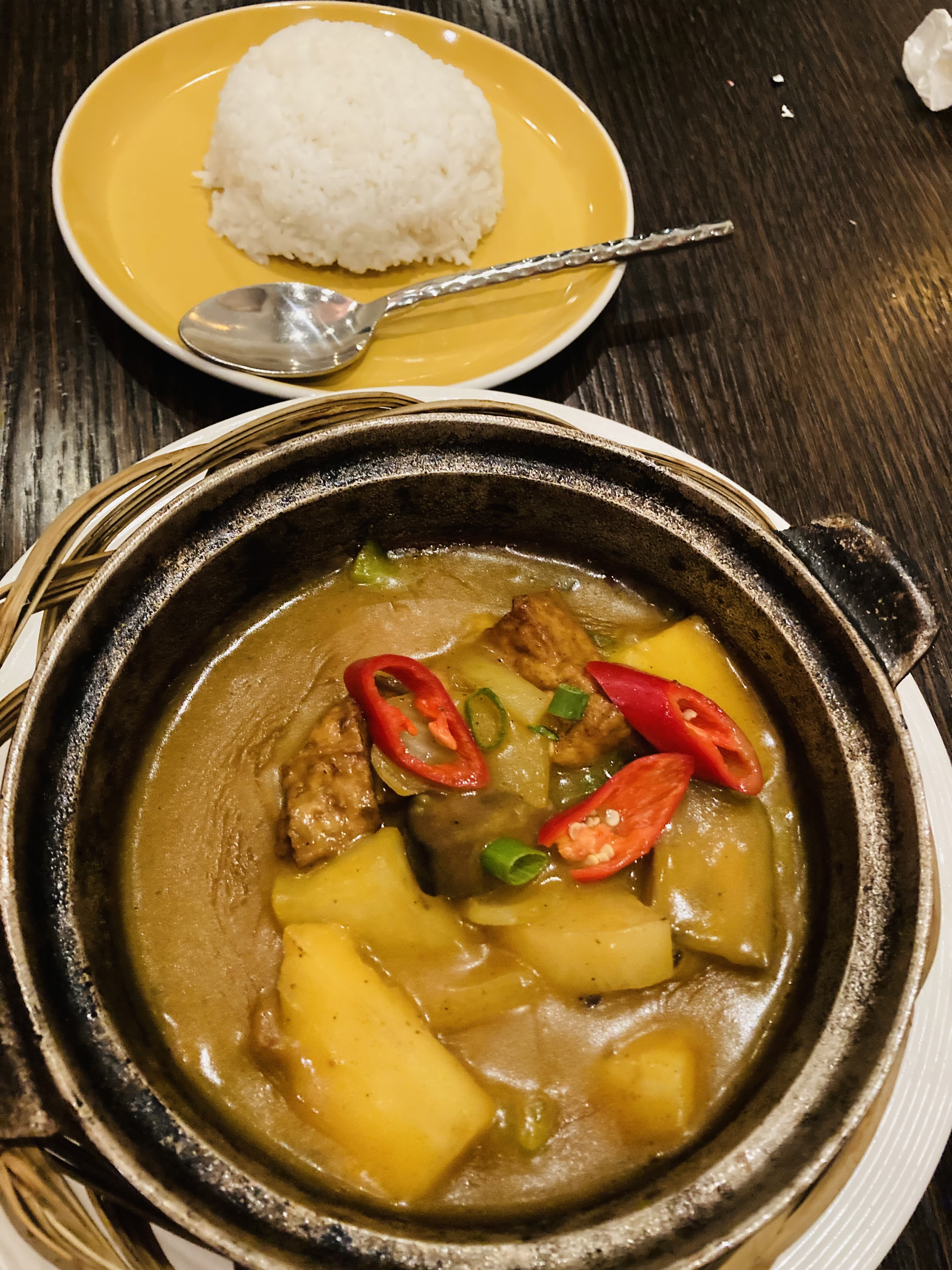
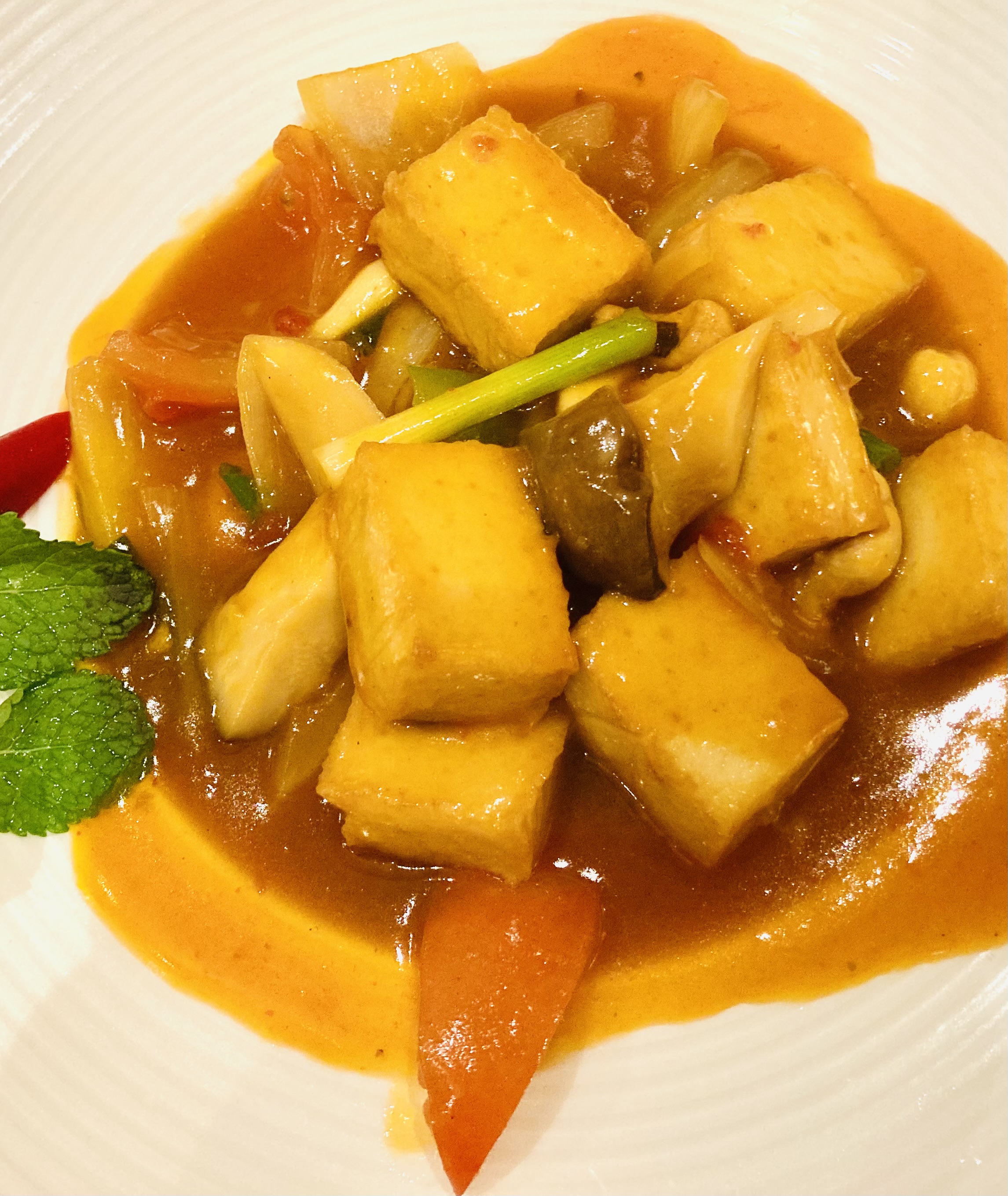
I have chosen the Cà Ri Đậu Hũ  – a tofu coconut curry. While it’s really not much to look at, the dish contains chunks of dark tofu, with slow cooked mixed vegetables, tender pieces of potato and sweet potato, onion and garlic, all slow-cooked in coconut cream and lemongrass broth. It’s so good, I have to keep reminding myself not to eat it too quickly. There’s also a bowl of perfectly-cooked sticky rice, which is the ideal accompaniment.

Susan has gone for the Đậu Hũ Kho – a traditional dish that features tofu and mixed vegetables caramelised in a clay pot. Again, it’s absolutely sumptuous, thick and effusive, even though – again – the photos fail to do it justice. The bowls are licked thoroughly clean and we find ourselves too full for pudding.

Based on the food alone, Sen Viet is an unqualified delight – and we’ll certainly be back to see how it fares on nights when they have more than just one chef at work. All in all, Brougham Place – which also boasts Sora Lella Roman Restaurant and Black Rabbit Deli – is fast becoming the essential destination for hungry vegans.

4 stars

Philip Caveney
South Pacific

26/10/22

Festival Theatre, Edinburgh

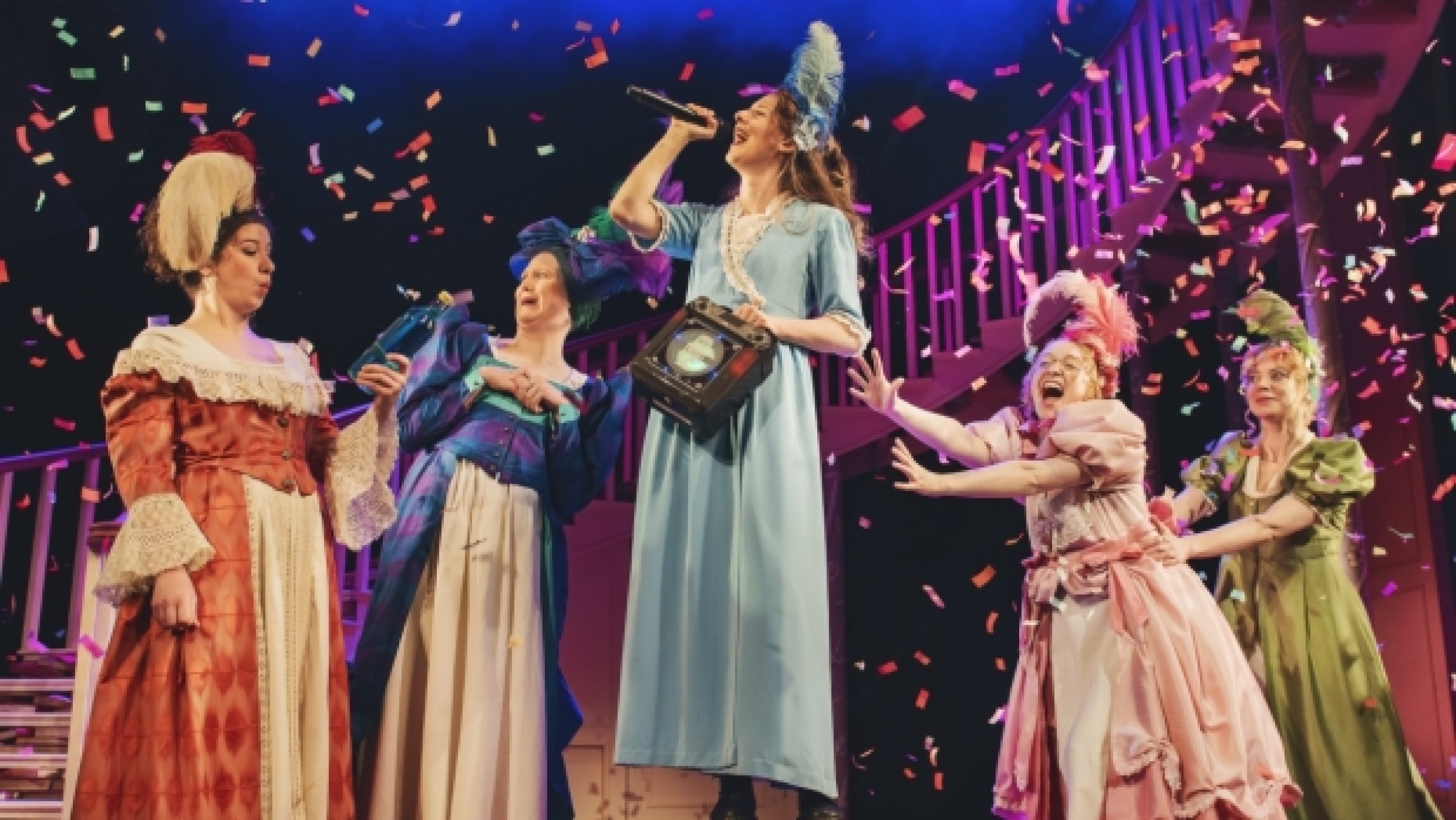
Rodgers’ and Hammerstein’s classic musical, first performed in 1949, is revived here in a touring production from Chichester Festival Theatre, which is handsomely mounted and features a thirty-strong cast. Peter McIntosh’s impressive set designs are built around a revolving stage and utilise atmospheric back projection, while tables, chairs and other props appear to float magically downwards from the heavens.

We are on a tropical island during the Second World War, where American troops are stationed in preparation for the coming conflict with Japanese invaders. The Tonkinese people of the island have learned to fit in with – and even profit from – their American visitors. Bloody Mary (Joanna Ampil, whose ethereal voice is a highlight of the piece) now runs a flourishing trade in grass skirts, which the troops buy as souvenirs to send back to their families. Meanwhile, long-time resident and plantation owner, Emil de Beque (Julian Ovenden), has been romancing naïve young ensign, Nellie Forbush (Gina Beck), and impulsively proposes to her. She’s all for the idea of marriage – until she discovers that Emile has two children and that his deceased wife was Tonkinese – or ‘coloured’ as she puts it.

The audible gasps of discomfort from the audience at this point are a reminder that South Pacific is very much of its time. There’s been no attempt to adapt the piece for more contemporary audiences. Of course, the message is supposed to be anti-racist – the point is addressed in a song by Lt Joseph Cable (Rob Houchen), who points out that bigotry is handed down through the generations, learned rather than innate – but a contemporary lens might also look upon the exotic ceremonies carried out on the sacred island of Bali Hai as ‘othering’, and wonder why there’s no concern about the unequal relationship between the white plantation owner and his native servants.

Musically, this production has plenty to offer – there’s a fine live orchestra providing sumptuous backing to Divenden’s powerful, almost operatic voice. There are Liat (Sera Maehara)’s elegant dance moves; she seems, at times, to virtually float across the stage. Dougie McMeekin offers nicely-judged comic relief as wheeler-dealer, Luther Billis. And, of course there’s a whole clutch of classic songs, recognisable even to an audience who may not be familiar with the musical itself. The production’s most rousing moments are when the ensemble is belting out spirited pieces such as ‘There Is Nothin’ Like a Dame,’ or ‘I’m Gonna Wash That Man Right Outa My Hair.’

If South Pacific has shortcomings they lie in the script, which was originally adapted from a series of short stories by James A Michener. The plodding storyline sometimes feels disconcertingly pedestrian – and too often, we’re fobbed off by being told about something that’s happened offstage, rather than actually being shown it. The final ‘action’ set piece, built around a jungle skirmish, feels particularly sketchy, and the death of an important character is carelessly thrown away.

Still, there’s plenty to like here and judging by the exuberant cheers that greet the final curtain, there are many in tonight’s audience who are thrilled by this trip down memory lane.

3 stars

Philip Caveney
Decision to Leave

26/10/22

Cameo Cinema, Edinburgh

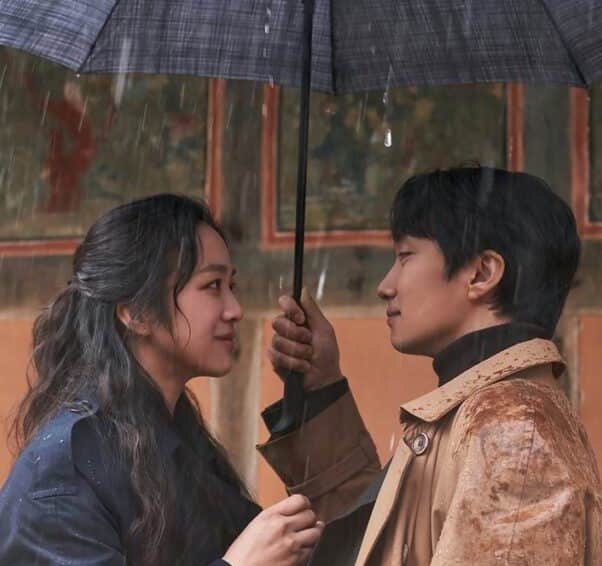
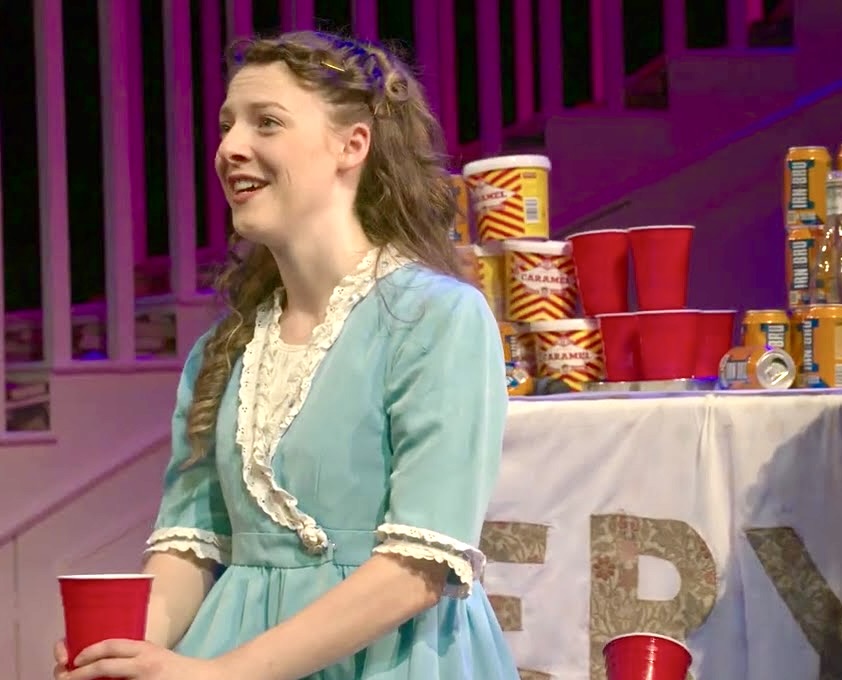
A new release from Park Chan-wook is always a cause for celebration, but anyone expecting the unbridled sexuality of The Handmaiden may be surprised to learn that Decision to Leave is a much more chaste affair. Yes, there’s passion here, but it’s portrayed almost entirely in words (in some cases via a Chinese-Korean translation app) and in discreet sidelong glances.

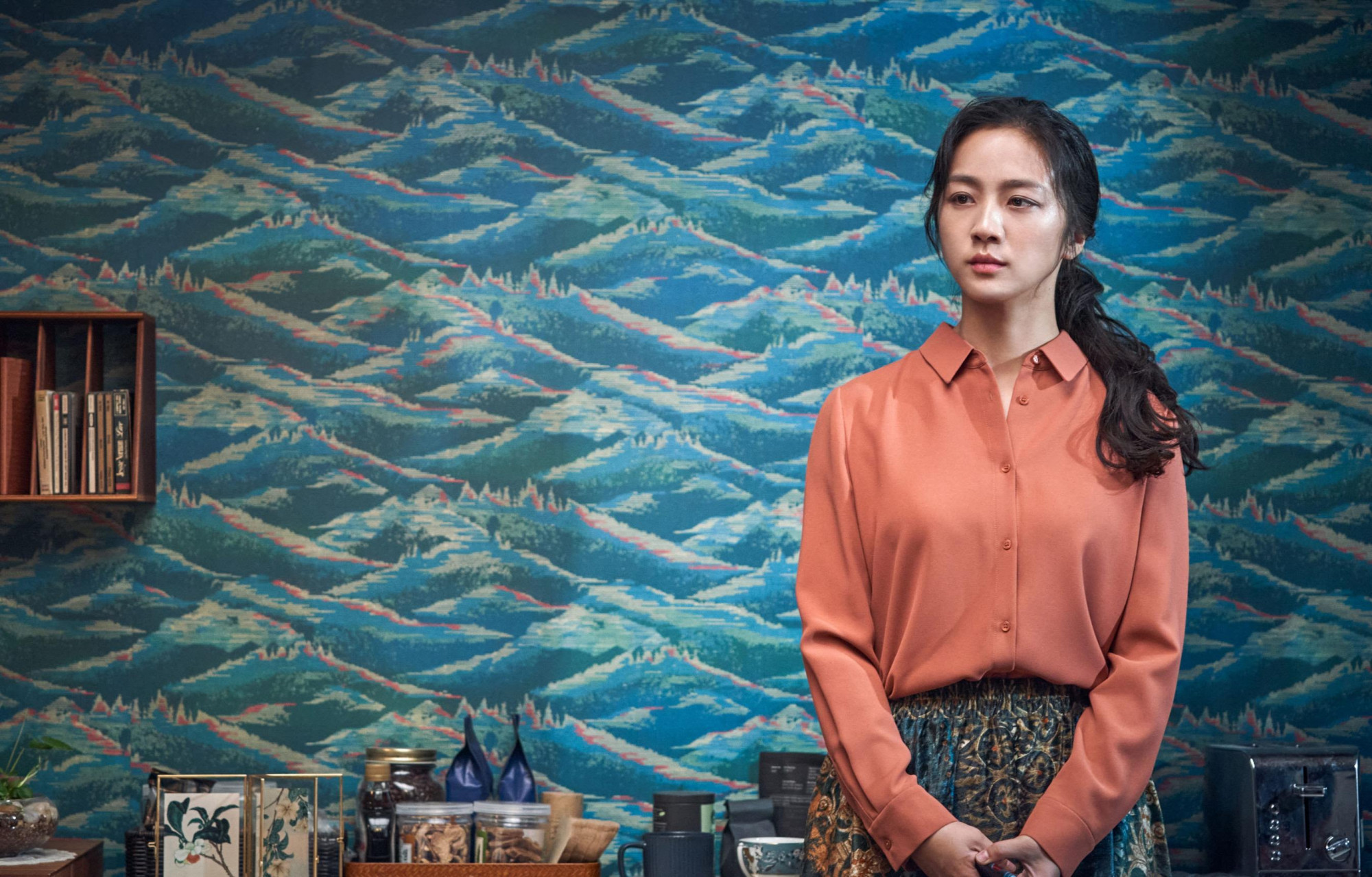
Workaholic Detective Hae-jun (Park Hae-il) is summoned to investigate the death of a mountain climber who has fallen from a great height. But did the man jump or was he pushed? Suspicion soon falls on his Chinese wife, Seo-rei (Tang Wei), and Hae-jun, who is already suffering from chronic insomnia, starts to spend his nights surveilling her. He follows her around Busan, studies her routines and chronicles her every move. And then he begins to realise that he is falling in love with her and that what began as professional interest is turning into something much more compelling…

This is one of those films where it would be criminal to give too much of the plot away – and besides, the ensuing story is so labyrinthine, so full of unexpected twists and turns, it would be pretty much impossible to do that even if I wanted to. Armchair detectives will have a field day trying to figure out the mysteries wrapped up in this story and I’m fairly certain that very few are likely to guess at the baffling solution to this strange, enigmatic puzzle of a film.

Park Chan-wook’s distinctive visual style – aided and abetted by cinematographer Kin Je-yong – is to the fore throughout and, as ever, he relishes playing tricks on the viewer, constantly tinkering with our perceptions and expectations. Both the leads dazzle in their roles, and are ably supported by a fine cast, particularly by Lee Jung-hyun as Hae-jun’s statistic-obsessed wife, Jung-an – but this is essentially a two-hander.

With a running time of two hours and nineteen minutes, I do occasionally find myself wishing that the pace wasn’t quite so glacial, but the great director has never been one to hurry himself over anything and, despite my reservations, Decision to Leave manages to hold me in a powerful grip right up to its chilling final frame.

4 stars

Philip Caveney
Crocodile Rock

25/10/22

Traverse Theatre, Edinburgh

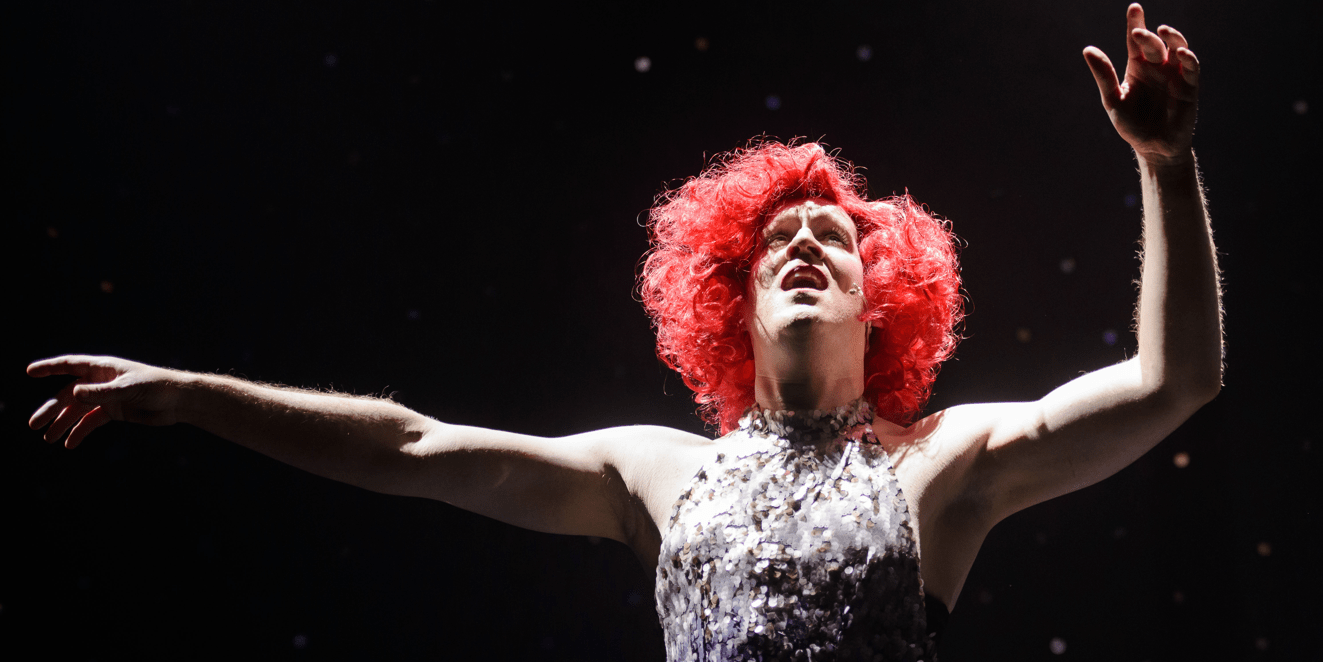
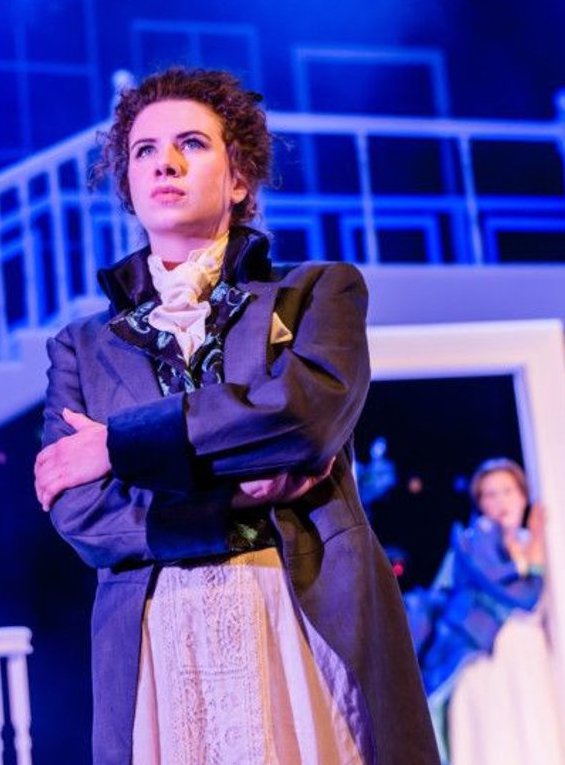
Seventeen-year-old Stephen McPhail feels marooned in his tiny island hometown, Millport. Sure, the mainland is only a short ferry-hop across the water, but the distance seems insurmountable. Stephen’s faither owns a pub, and his maw a B&B, and he’s expected to follow them into the family businesses. But the blokey banter at the bar leaves Stephen tongue-tied and blushing, and he dreams of something more. It’s only when handsome newcomer Henry Thomas arrives that Stephen finally figures out why he doesn’t fit in: he’s gay. The realisation brings him little comfort: Henry not only rejects him, but also makes sure he’s ostracised by his peers. Because being gay in 1997 – especially in a small town, and even more especially when you’re still at school – is a long, long way from easy. Things only improve when the annual Country and Western festival rolls into town, and a keyboard-playing drag queen offers Stephen a way out…

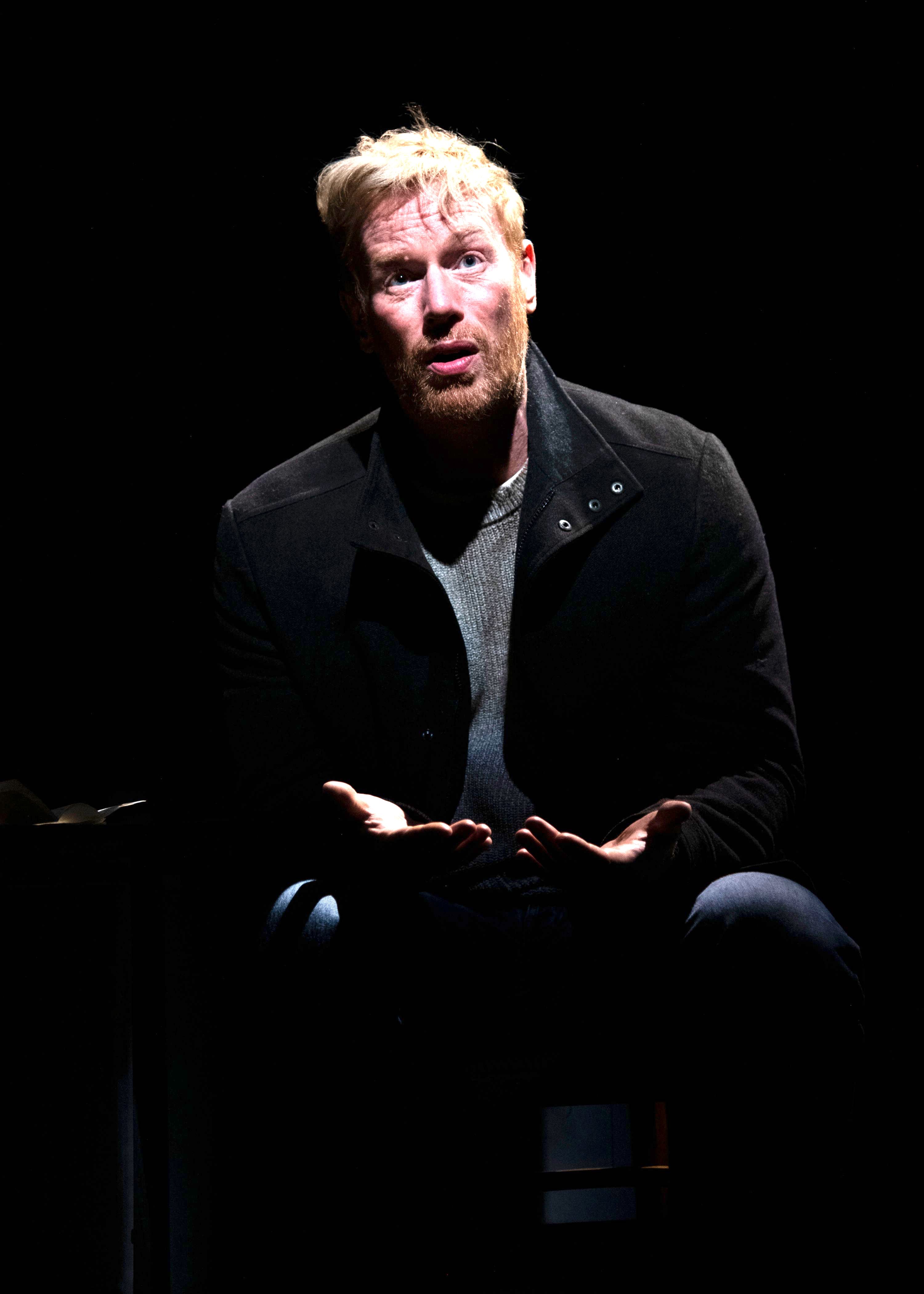
Andy McGregor’s one-man (and a band) musical is a delight. The writing nails the open homophobia still so prevalent in the late 90s; I was a teacher then, and Clause 28 was crippling. Coming-out tales are far from rare, but this one soars: the songs are bold yet nuanced, and actor Stephen Arden really brings to life the young man’s loneliness and yearning. It’s always apparent that Stephen is a caterpillar, waiting to grow his wings, and – when he does – his exuberance is catching. There’s a real sense of celebration in the final act, and we leave smiling, sharing some of Stephen’s catharsis. Arden has an impressive vocal range, and the three-piece band (Kim Shepherd and Simon Donaldson, led by musical director Andy Manning) produce an impressively full sound. Arden acknowledges their presence, interacting with them occasionally, so that they are seamlessly integrated into the play.

The set (by Kenny Miller) is simple but very effective. A large photograph of Millport’s famous but – sorry – undeniably awful Crocodile Rock serves as a background, contrasting wonderfully with the sequinned glamour Stephen eventually embraces. The photo not only hides a sliding door, but also some hinged boards that open up to show us Stephen’s cartoon-themed bedroom, reminding us of just how young he is, poised on the cusp between boy and man.

Crocodile Rock is on tour. If you haven’t seen it yet, you’ve missed your chance in Edinburgh, but you can still catch it at the Lemon Tree in Aberdeen on 4th November. It’s a real treat.

4.1 stars

Susan Singfield

The Banshees of Insisherin

25/10/22

Cineworld, Edinburgh

Last week, I finally managed to catch up with Martin McDonagh’s debut play, The Beauty Queen of Leenane, at the Traverse Theatre – and now here’s his latest cinematic offering, which itself started life as a play, the projected third piece in his Aran Islands trilogy. For various reasons, McDonagh wasn’t happy with it in its original form, so it was never released. He should be delighted, however, with the critical reception for The Banshees of Inisherin, where important voices have been talking about potential Oscar nominations.

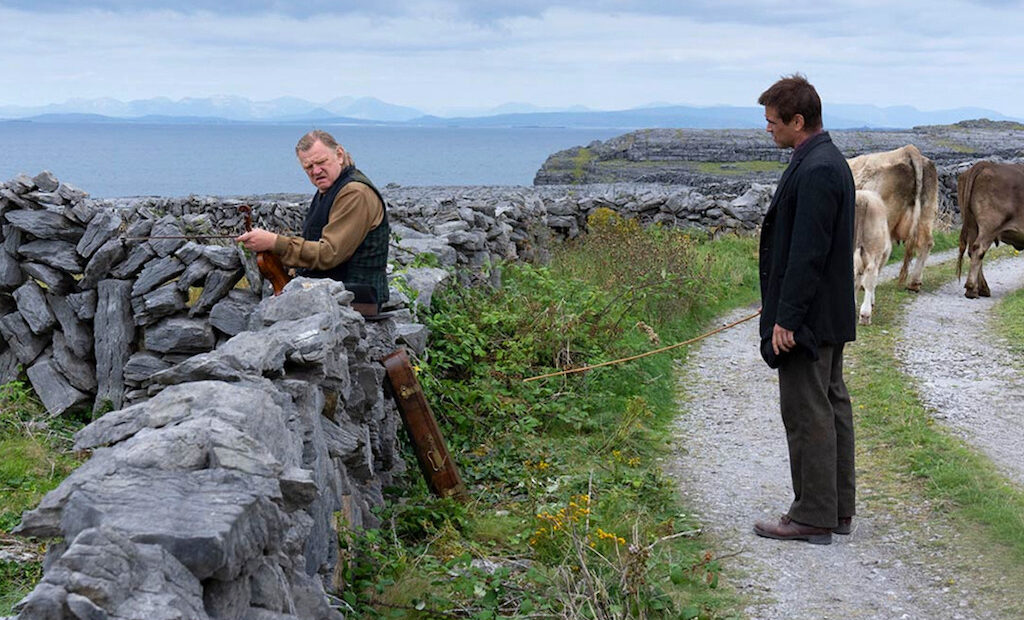
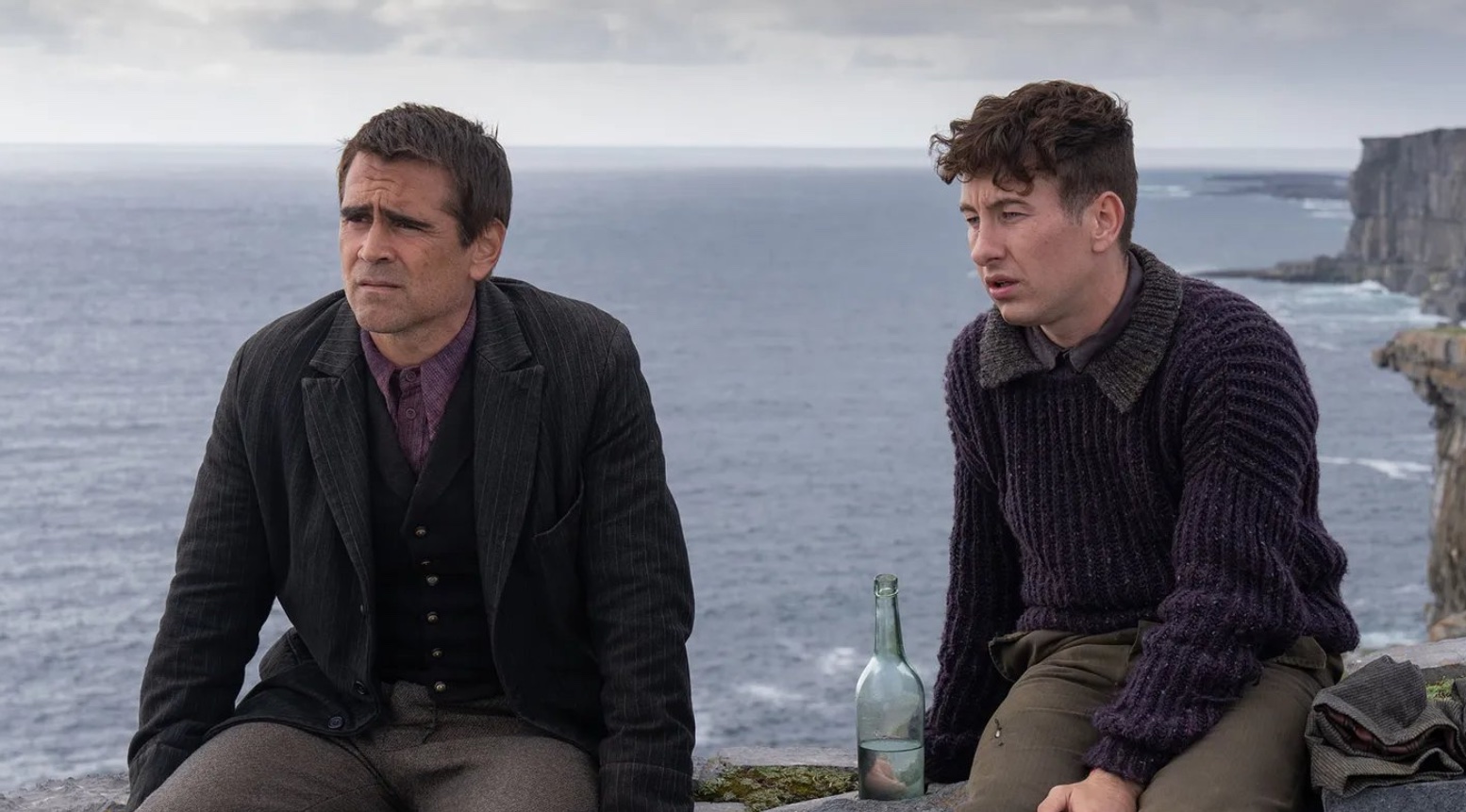
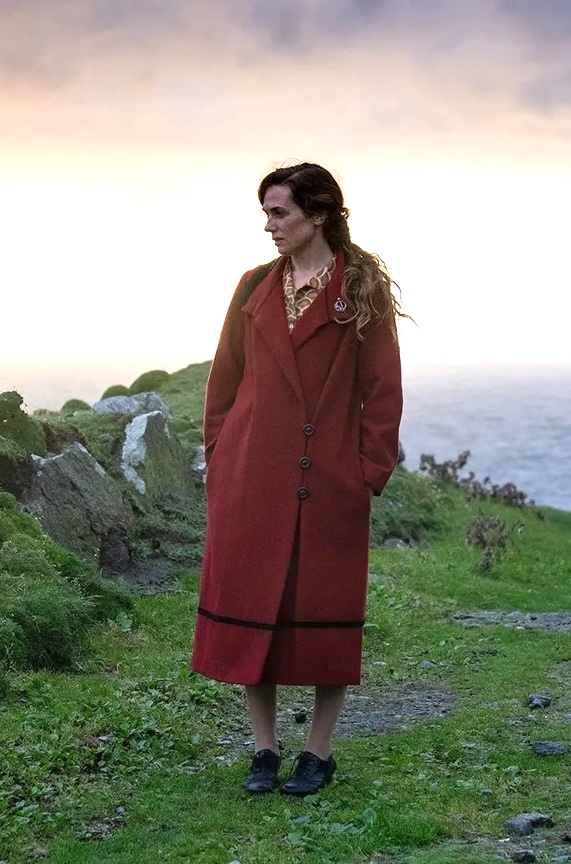
It’s 1923 and the titular island is a remote and inaccessible place. Across the water on the mainland, a civil war is raging and, even from a distance, the sound and fury can be overheard. But here there’s precious little to occupy the inhabitants, who spend their days trying to grub some kind of living from the soil. Pádraic Súilleabháin (Colin Farrell) lives with his sister, Siobhan (Kerry Condon), and he’s a man who likes to follow a routine. Every day at 2 pm, it’s his custom to call on his best friend, Colm Doherty (Brendan Gleeson), and accompany him to the local pub for a couple of pints.

He’s understandably shocked when one day Colm announces that he doesn’t want to be friends with Pádraic anymore. Colm claims that his regular drinking companion is the dullest man on the island and that he wishes to devote the rest of his life to writing his music. Pádraic is never to speak a word to him again – and, if he does, there will be terrible consequences…

Pádraic is hit for six by this announcement and haplessly tries to rescue the situation – but he has no idea how far Colm is prepared to go in order that his edict is followed.

Banshee’s theatrical origins are evident from the opening scenes and it’s clear that here is a piece that could work very effectively on stage, though the beautiful rural settings do help to open the story up to wider horizons. McDonagh’s ear for absurdist black humour has rarely been better and the plot, which sounds slight on paper, is filled with fascinating nuance. McDonagh has plenty to say about the insular psyche of island communities, an unforgiving world where everyone knows everyone else’s business and is happy to discuss it in public. Both Farrell and Gleeson make the most of their acting reunion, fourteen years after In Bruges, though I would suspect Farrell’s performance as the vulnerable Pádraic is the most Oscar-worthy of the two. Both Condon and Barry Keoghan (as, respectively, Siobhan and the tragic Dominic) may be worthy of ‘best supporting’ nods.

The Banshees of Inisherin is a beautifully observed contemplation of the thankless futility of human existence. Colm is stubborn and self-aggrandising, locked in hopeless dreams of being remembered after his death. Pádraic, meanwhile, is incapable of dealing with anything that compromises his preferred schedule.

Only Siobhan has the courage to change her life, but even that simple act – it turns out – has dark consequences.

4.6 Stars

Philip Caveney
Pride and Prejudice* (*sort of)

20/10/22

Lyceum Theatre, Edinburgh

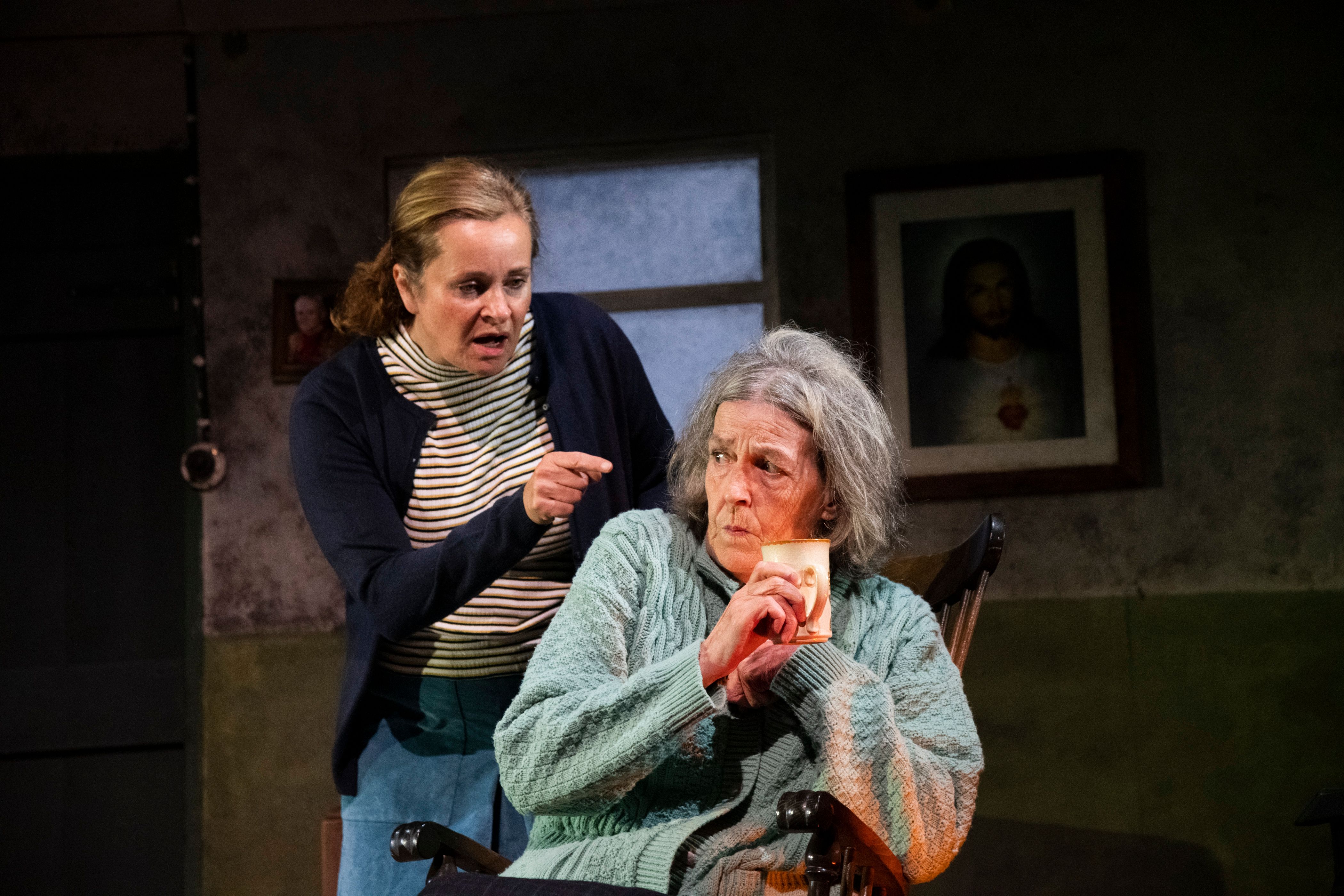
It’s a real treat to revisit writer/director Isobel McArthur’s rambunctious retelling of Jane Austen’s best-loved novel. Since we last saw it in January 2020, a lot has happened – and I’m not referring to the pandemic. Pride and Prejudice* (*sort of) has wowed the West End and bagged itself a well-deserved Olivier award. McArthur must be buzzing.

This adaptation is actually pretty faithful to the original. The set-up is intact: we have the Bennett family facing financial ruin, and Mrs Bennett (McArthur) desperately trying to marry off her five daughters. And the central romance is intact too: we have sparky, reckless Lizzy (Leah Jamieson), determined to marry for love or not at all – consequences be damned – and we have Darcy (McArthur again). Her portrayal of the enigmatic, uptight ‘hero’ is as exquisite as I remember. She nails his inarticulacy, highlighting his inability to express himself, rendering him sympathetic, despite his brusque manner.

The difference lies in the telling. The conceit is that five servants are dressing up, playing, showing us what they’ve observed in the houses where they work. Thus class barriers are broken down, and so is the gap between the 19th century gentry and the theatre-goers of the 21st. McArthur’s talent lies in unveiling the jokes, so that Austen’s satire – hidden from a modern audience behind bonnets and mannered language – is exposed to the light. Via karaoke and biting sarcasm.

Hannah Jarrett-Scott almost steals the show: she’s a natural clown, clearly relishing the twin roles of Caroline and Charles Bingley, but also flashing her acting chops in a nuanced depiction of Charlotte Lucas, repressing her feelings for Lizzy. Christina Gordon (as Jane, Wickham and Lady Catherine) and Tori Burgess (as Lydia, Mary and Mr Collins) are both excellent too. I’ve nothing negative to say.

Pride and Prejudice* (*sort of) is at the Lyceum until November 5th, which seems appropriate for such a dazzling firecracker of a show.

4.6 stars

Susan Singfield

The Beauty Queen of Leenane

19/10/22

Traverse Theatre, Edinburgh

I’m a huge fan of Martin McDonagh, both as a playwright and a film director. In Bruges may just qualify as my favourite movie of all time and, on one memorable occasion, I travelled from Manchester to London to catch his play, Hangmen, where I very nearly witnessed the accidental hanging of actor Johnny Flynn. But somehow, in all my years of reviewing, I’ve never managed to see a production of McDonagh’s debut play, The Beauty Queen of Leenane. Until now. To say that I’m excited about seeing it would be an understatement. So… no pressure, Rapture Theatre.

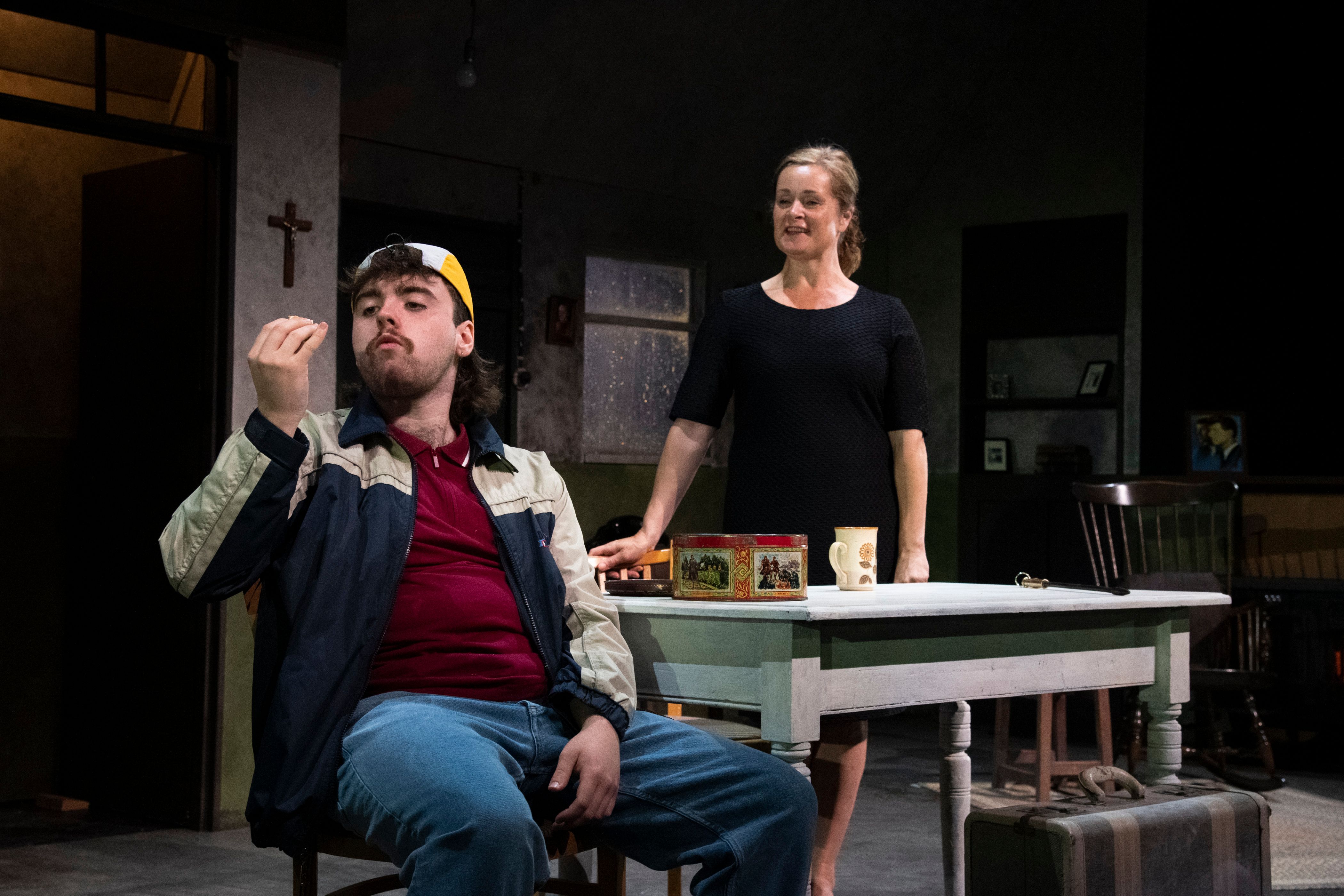
Maureen (Julie Hale) is forty years old, and living with her elderly mother, Mags (Nuala Walsh), in a grubby cottage in the wilds of Connemara. It’s a thankless existence, forever mashing up her Ma’s daily Complan and preparing bowls of lumpy porridge, while listening to the stream of malignant chatter the old woman spews out. Then one day, their obnoxious neighbour, Ray (Ian O’ Reilly), drops by with what passes for exciting news in these parts. Ray’s older brother, Pato (Paul Carroll), is coming over from London to attend a family celebration, and Maureen and Mags are invited along.

Maureen has long had a soft spot for Pato. Could his presence offer the possibility of romance she’s always dreamed of? Decked out in a brand new dress and some high heeled shoes, Maureen makes her play for Pato and it begins to look as though all her prayers might be answered. But then there’s the awkward question of what will happen to Mags, should Maureen decide to leave Leenane…

This is a debut piece and, while it might not have the assuredness of some of McDonagh’s later works, it nonetheless displays all the hallmarks of an exciting new talent flexing his muscles. The influence of Harold Pinter is surely there in the awkward pauses, the repetitions, the elevation of innocuous comments to a weird form of poetry – and McDonagh’s ear for the Irish vernacular is already finely tuned. As if setting out his territory for future exploration, there’s a shocking moment of violence that comes out of left field in unflinching detail.

There’s also a moment of revelation, which obliges me to go back and reconsider something I thought I already knew…

The performances here are exemplary and it’s perhaps unfair to single out one in particular, though I do relish Walsh’s personification of Mags: forever watchful, sly, and secretive, simultaneously Maureen’s warden and her tragic victim. This is an elegy about loneliness and subjugation, the perils that lie in wait for those who seek to escape – and a warning to be very, very careful what you wish for.

For me, The Beauty Queen of Leenane has been a long time coming, but it is well worth the wait.

4.3 stars

Philip Caveney
Jack Absolute Flies Again

18/10/22

NT Live: The Cameo, Edinburgh

Daytime cinema always feels like playing hooky. A sign that – for today – fun has priority. And NT Live screenings have the same ‘getting away with something’ vibe. I’m watching a play in London, but – shhh, whisper it – I haven’t left Edinburgh. So this afternoon’s indulgence, Jack Absolute Flies Again, is the double whammy: a National Theatre production at lunch time on a Tuesday! And in our favourite picture house too…

Based on Sheridan’s The Rivals, Richard Bean and Oliver Chris’s production exemplifies ‘rollicking’. It’s a silly, frothy, feelgood piece of theatre – and I absolutely love it.

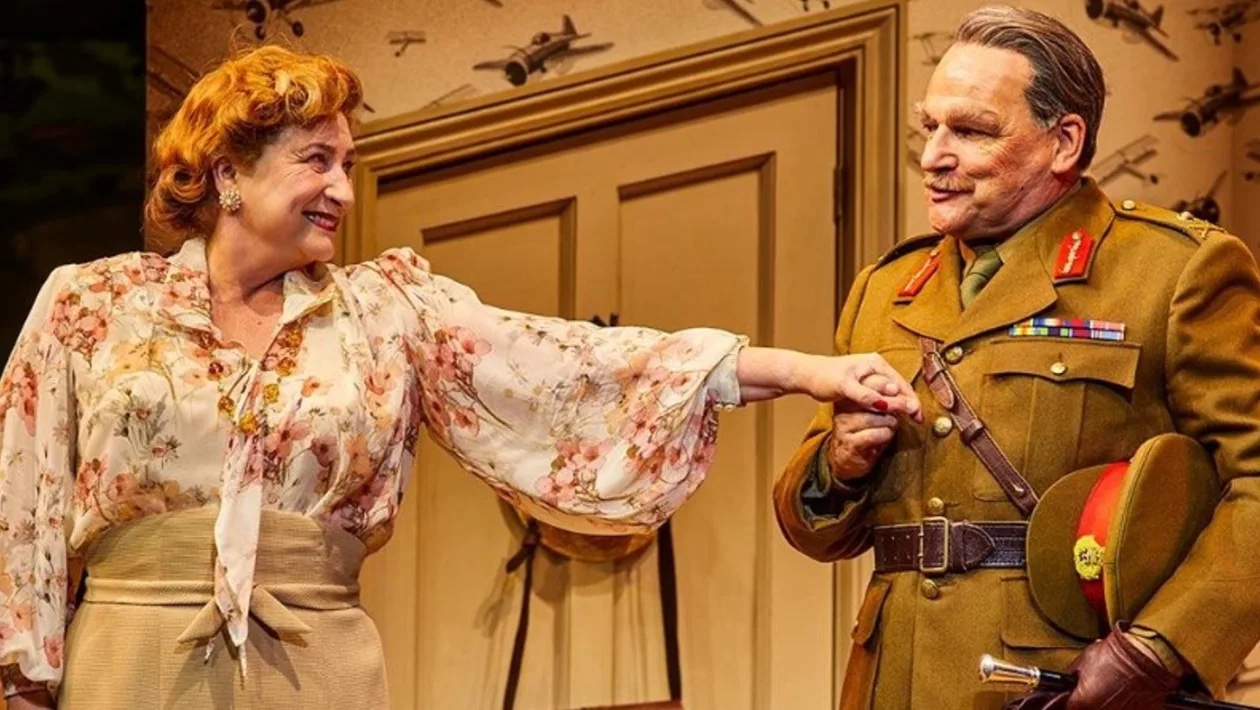
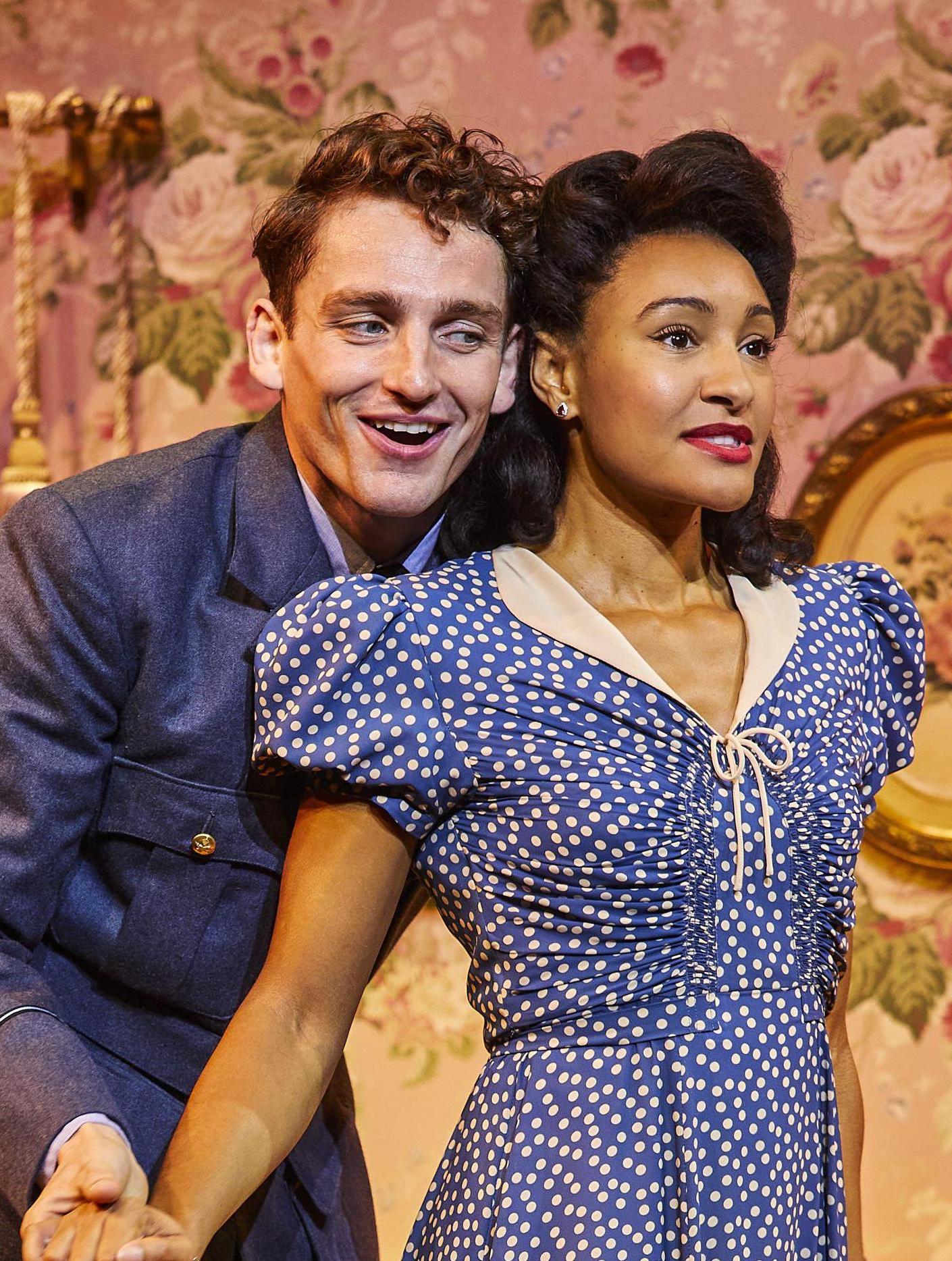
The action has moved from the late 18th century to the early 20th – specifically to World War 2 – and Malaprop Mansion has been requisitioned by the RAF. The titular Jack (Laurie Davidson) is a pilot, stationed in the grounds. He’s in love with fellow pilot, Lydia Languish (Natalie Simpson), who just happens to live in the mansion with her aunt, Mrs Malaprop (Caroline Quentin). Lydia, however, is infatuated with northern mechanic, Dudley Scunthorpe (Kelvin Fletcher), who, in turn, has a thing for Lydia’s maid, Lucy (Kerry Howard). Throw in a couple of other pilots vying for Lydia’s attention, a jealous fiancé and the ever-present spectre of death (these are military people, after all), not to mention Mrs Malaprop’s attraction to Jack’s father, Sir Anthony Absolute (Peter Forbes), and you’ve got quite the heady mix…

This comedy of errors is beautifully handled, all knowing nods to the audience, and perfectly executed groan-out-loud jokes. Sure, we can see the punchlines coming from cruising height, but that’s the point: the laughs are garnered in the gap, the moment when we know what’s coming before it lands. Quentin is particularly funny, clearly relishing the Malapropisms that litter her speech. They are so plentiful they make Sheridan look positively restrained, but their abundance works, again prompting us to pre-empt what she might say (Chekhov’s clematis, if you will). Howard also proves to have that comic edge, and I like her character’s frequent references to the theatricality of the piece, reminding the audience of the genre and what they ought to expect.

The set is delightful: all bucolic beauty and architectural elegance. Its chocolate box design suits the tone of the piece, and I especially like the doll’s house effect, when the mansion opens to reveal the rooms within. Ironically, the only things that don’t translate well to the cinema are, well, the cinematic sequences. I’m sure they’re impactful in the vast Olivier auditorium, but they are diminished by the live-screening process.

The ending is something of a shock, deliberately jarring. I won’t go into any detail (no spoilers here), but – on reflection – I think it works. It’s a brave choice, but probably the only one that makes sense, given the context. It feels tonally different from the rest of the piece, but I guess that’s the point. We all plod along, don’t we, dealing with the minutiae while the big stuff happens around us. Until…

There are a few more ‘encore’ screenings of Jack Absolute over the next month or so. If you’re in need of a laugh, take advantage of NT Live and give your local cinema a much-needed boost at the same time. You won’t regret it.

4.2 stars

Susan Singfield