Master Gardener

23/05/23

Cameo Cinema, Edinburgh

Paul Schrader is the man who wrote Taxi Driver, which became one of Martin Scorcese’s most celebrated films – but, as a director, Schrader’s career has been rather less spectacular. He prefers to concentrate on smaller stories that feature flawed protagonists who harbour dark secrets. Master Gardener, which forms a kind of loose trilogy with his earlier efforts, First Reformed and The Card Counter, seems to follow the same format.

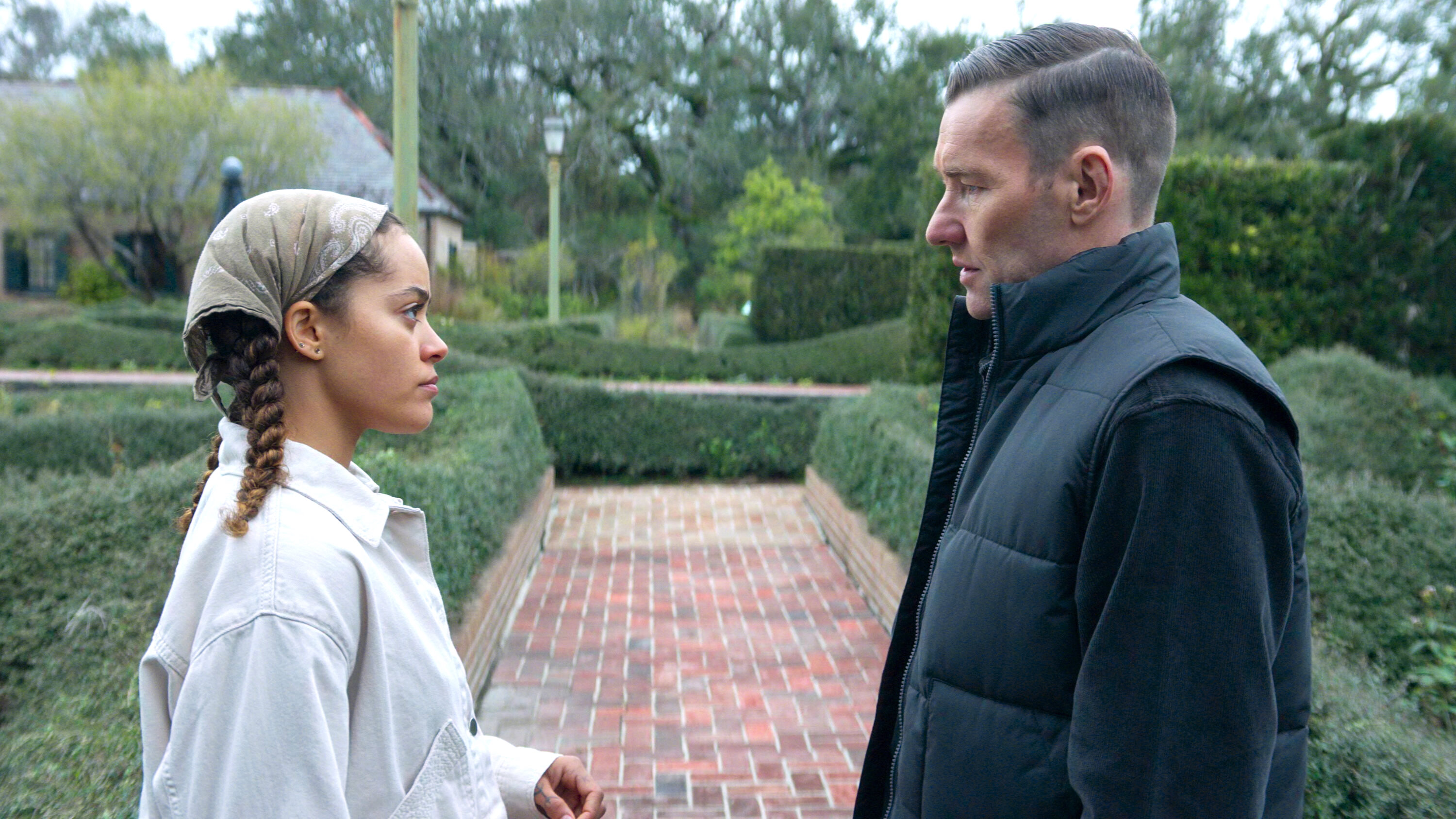
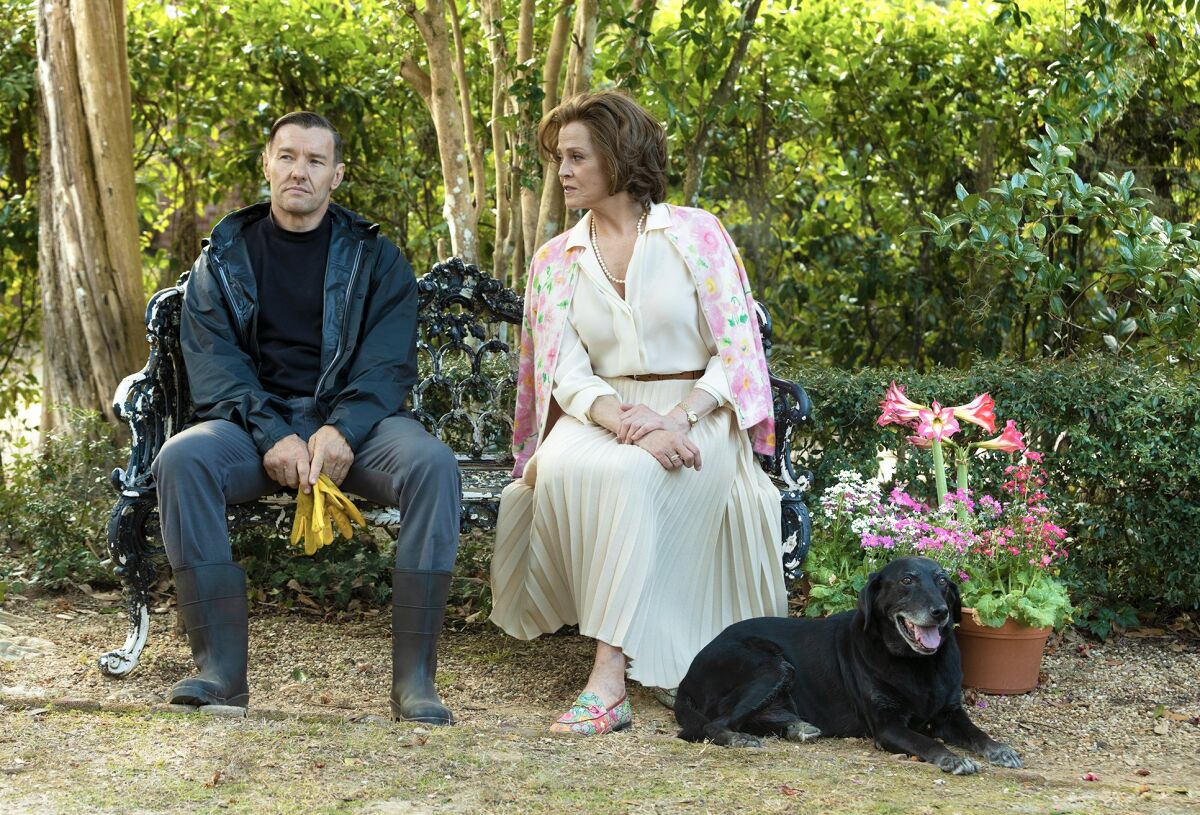
The master gardener of the title is Narvel Roth (Joel Edgerton), a skilled horticulturalist who works on the extensive estate (clearly a former plantation) owned by Norma Haverhill (Sigourney Weaver), with whom he enjoys (if that’s the right word) the occasional sexual encounter, a process which seems to hark back to some kind of mistress/slave tradition. Narvel is nonplussed when Norma asks him to take on a new trainee, her great niece, Maya (Quintessa Swindell), who – Norma tells him – has been through ‘some issues’, and whom she has barely ever met.

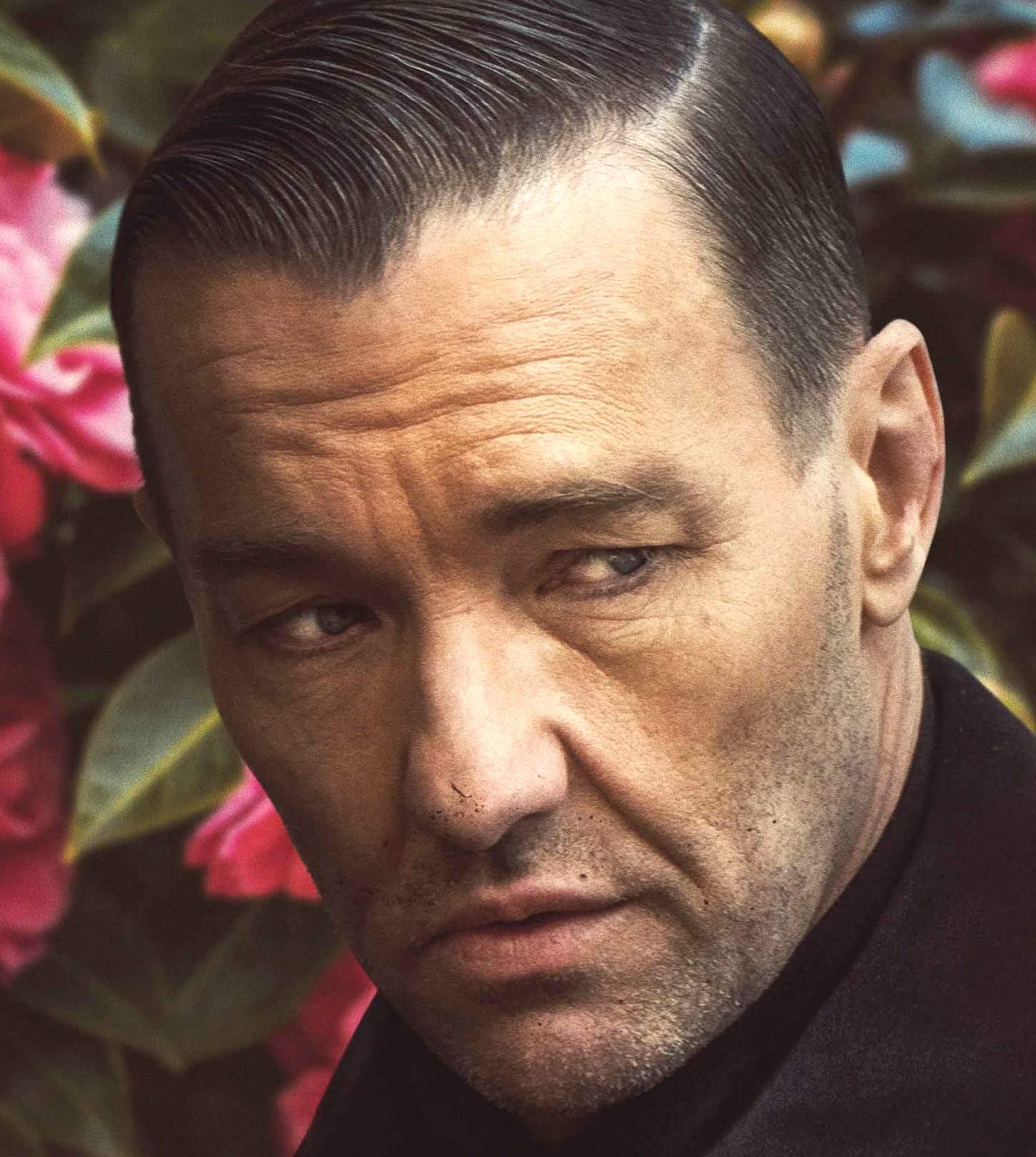
Maya is a mixed race woman in her twenties and we soon discover that her foremost issue is that she’s a drug addict. She and Roth hit it off, despite the fact that he has a habit of distilling everything down to ponderous lectures about the nurture of plants – but we have already been tipped off, via the plethora of bizarre tattoos on Narvel’s torso, that he’s had a very different life before he became a gardener, one in which the swastika featured prominently. When Maya is attacked by a drug dealer, Roth takes it upon himself to be her protector – a move that incurs Norma’s anger.

There are several elements here that really don’t convince. For one thing, Maya must be the most wholesome looking drug addict in history, while her ‘beating up’ comes down to a polite cut on her bottom lip. Norma’s vitriolic reaction to Roth’s interest in the girl, on the other hand, seems totally overblown. And when the story heads along the all-too-familar trope of a tough white man becoming the saviour of a younger female, there’s an overpowering sense of ‘seen it all before’. Brief flashbacks to Roth’s earlier life (as a much more hirsute hired killer) kindle even more questions. Where did that encyclopaedic knowledge of horticulture come from in the first place? From the White Supremacists’ Handbook? And why is Maya so ready to forgive him for his previous excesses?

Some earnest twaddle about ‘new shoots’ and ‘the seeds of love growing like the seeds of hate’ fail to explain any of this and, by the time we arrive at the (again faintly unbelievable) conclusion, I’m starting to feel relieved that this is a free Picturehouse screening and that I haven’t actually had to pay for a ticket to see this movie.

Schrader has quite a history in cinema and it would be unfair to dismiss him on the strength of one film, but he can (and has) made much better ones than this.

2.8 stars

Philip Caveney
Beau Is Afraid

21/05/23

Cineworld, Edinburgh

Beau would appear to have every reason to be afraid.

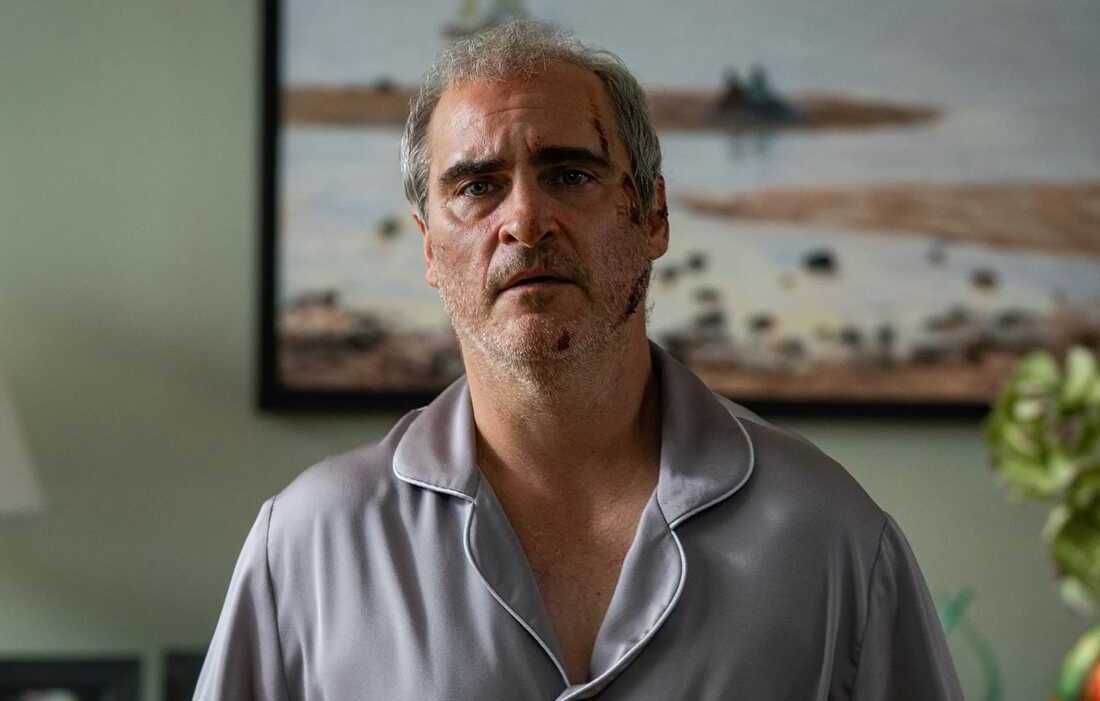
When we first encounter Beau (Joaquin Phoenix), he’s living in a run-down flat in the heart of an American city that appears to have been set-dressed by Hieronymus Bosch. There are rotting bodies lying in the street, vicious fights are breaking out on every corner and he can’t even visit the convenience store without being pursued by a naked man who wants to stab him. His ever-smiling therapist (Stephen McKinley) tells him that it’s all the result of anxiety and makes sure he’s topped up with as many unpronounceable drugs as he can swallow – but he must be sure to take them with WATER!

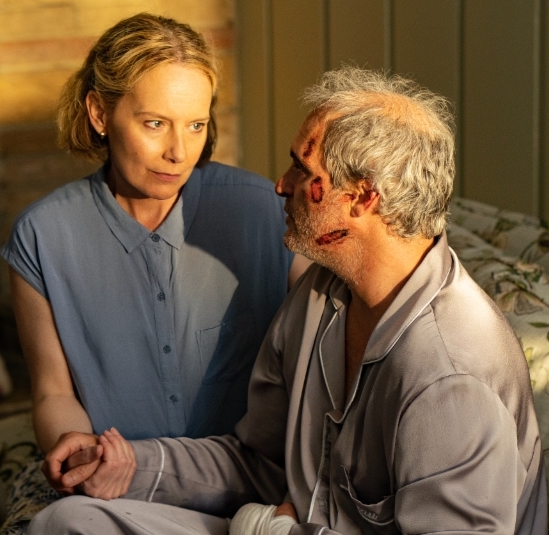
A long-planned and somewhat overdue visit to his domineering mother, Mona (Patti Lupon), is the catalyst for a paranoiac sequence of unforeseen events, that put Beau into the hands of seemingly friendly couple, Grace (Amy Ryan) and Roger (Nathan Lane). But once ensconced in their home in the country, he soon realises that everything there is not as cosy as it seems. Why does the couple’s teenage daughter, Toni (Kylie Rogers), appear to hate him? And what’s the story with Jeeves (Denis Ménochet), the deranged army veteran who lives in a caravan in the garden? Why does he look at Beau in that sullen, threatening manner? The entire film plays like an endlessly protracted nightmare from which its lead character cannot awaken and though Beau still strives to make that all-important visit to his Mom, everything he does is destined to go horribly, catastrophically wrong…

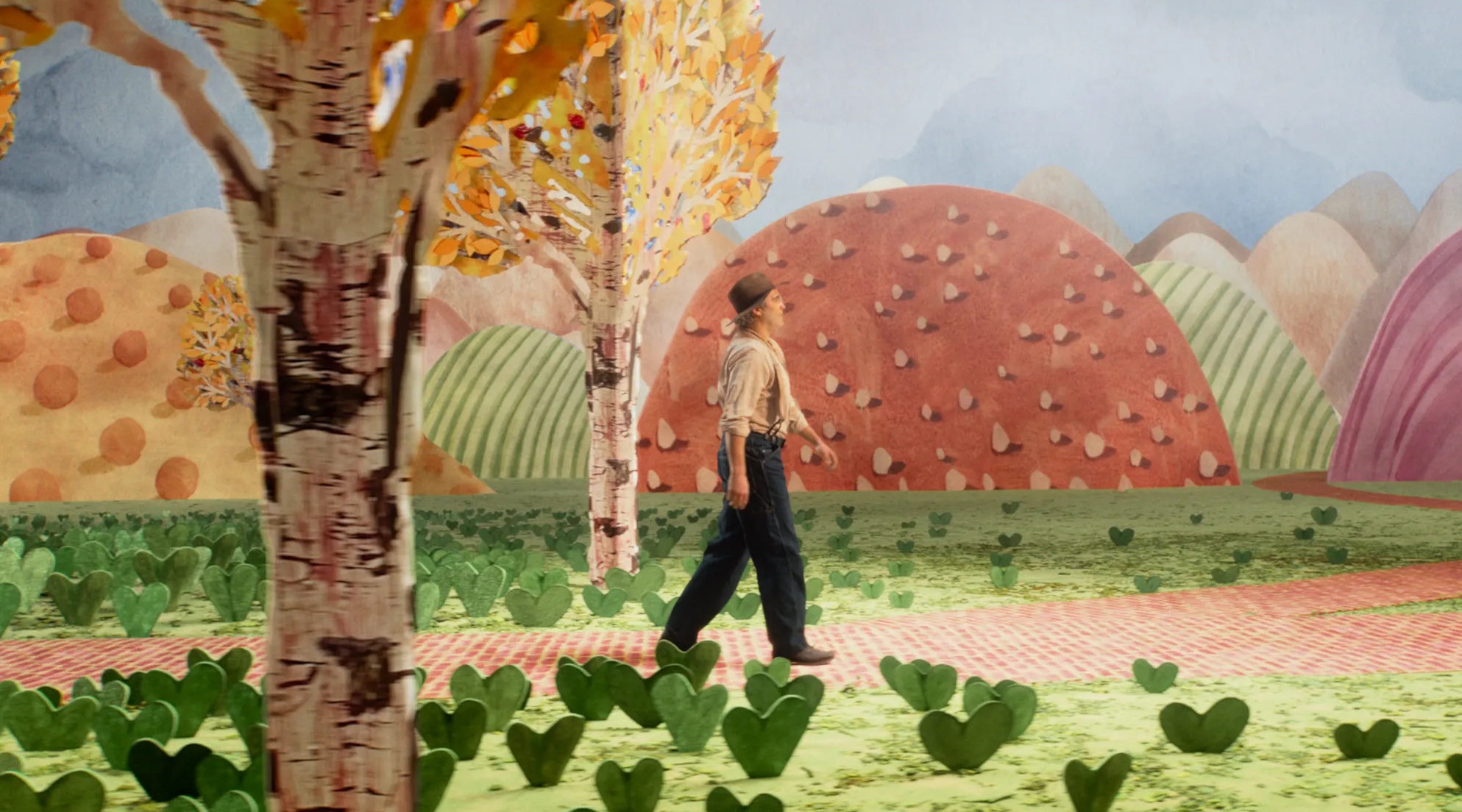
Ari Aster is an interesting director, who excels at amping up an audience’s anxiety levels and, in the process, creating genuinely terrifying scenarios – but I felt his two previous features, Hereditary and Midsommar, both careered out of control in their final stretches and Beau Is Afraid suffers from the same complaint. While there are many memorable scenes here and a degree of invention that puts Aster amongst the forefront of contemporary filmmakers (check out the lengthy sequence where Beau wanders through a series of gorgeous animated landscapes), there’s still the conviction that he’s not quite as in control of his own storytelling as he needs to be.

With a bladder-straining running time of nearly three hours, the film’s conclusion feels needlessly protracted and there are some sections here – particularly a lengthy oedipal confrontation with his mother – that could probably have been edited out to make a tighter, more coherent movie.

Make no mistake, this is still a recommendation, because much of what’s on display here is absolutely dazzling. But you really can have too much of a good thing.

4.2 stars

Philip Caveney
Still: A Michael J Fox Movie

20/05/23

Apple TV

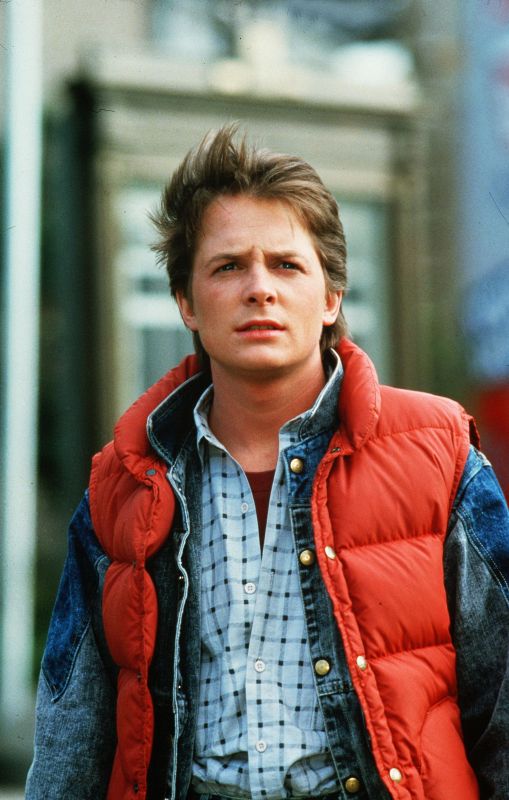
The name Michael J Fox is synonymous with three things: Marty McFly; a teenage, basketball-playing werewolf; and Parkinson’s disease. Mega-famous in the 1980s for smash hit films Back to the Future and Teen Wolf, Fox is just as well-known these days for his candid communications about living with a degenerative brain disorder. This inventive documentary, by Davis Guggenheim, is revelatory – about Fox, as well as about Parkinson’s.

Fox has always exuded on-screen warmth. He’s the epitome of likeable: wry, self-deprecating and funny. Whatever role I’ve seen him in, he brings these qualities to bear. Watching Still, it soon becomes apparent that that’s just who he is, which isn’t to denigrate his acting ability: he’s played a range of types – but always with a hint of sweetness shining through.

Guggenheim’s biopic is thoughtful and meandering, cutting between past and present, making clever use of film clips to illustrate key details of Fox’s life and character. From tiny live-wire working-class Canadian kid to tiny live-wire Hollywood star, we see how Fox’s kinetic energy (and general niceness) propelled him to success. It also enables him to live contentedly: unusually for someone in his career, he’s sustained a long and happy marriage and is clearly close to his four kids. Fox’s wife, Tracy Pollan, is an actor too (they met on hit TV show Family Ties) and the pair seem truly devoted. It’s lovely to see.

In some ways, the film is harrowing, because it doesn’t pull any punches about the realities of living with Parkinson’s. Fox falls over a lot and hurts himself when he lands: he’s broken all the bones around his left eye. He shakes uncontrollably, all the time; he struggles to walk. He relies on medication, very aware of when it’s wearing off and he needs his next pill. He has a lot of physio, which helps to keep him mobile. Presumably Parkinson’s sufferers without his kind of money can’t access quite so much one-to-one therapy; even with it, things are tough.

But in other ways, the film is uplifting, because – while it steadfastly avoids the ‘disabled person as inspiration’ trope – it also shows how the condition doesn’t really change the man. Michael is still very much Michael, with the same twinkle, the same humour, the same candour.

It’s fascinating to listen to him describe the tricks he employed in the early days of his diagnosis (aged only 29), when he was desperate to hide his tremors from the world. Once you know what he’s doing, footage from Spin City, the TV show he was making back then, takes on a whole new significance.

Still is a weirdly feelgood film – a testimony to a life well-lived.

4.6 stars

Susan Singfield

Anna Karenina

21/05/23

Lyceum Theatre, Edinburgh

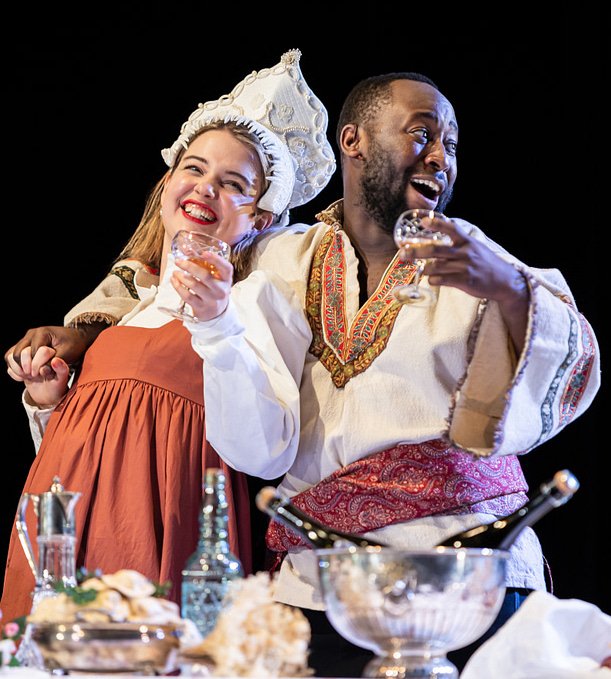
As dares go, this one – from Scottish writer Lesley Hart to British-Russian director Polina Kalinina – has turned out rather well, resulting in this sparky adaptation of Tolstoy’s classic novel. It certainly disproves Kalinina’s original contention that Russian texts tend to “lose vigour and immediacy in translation”: this piece is both vigorous and immediate.

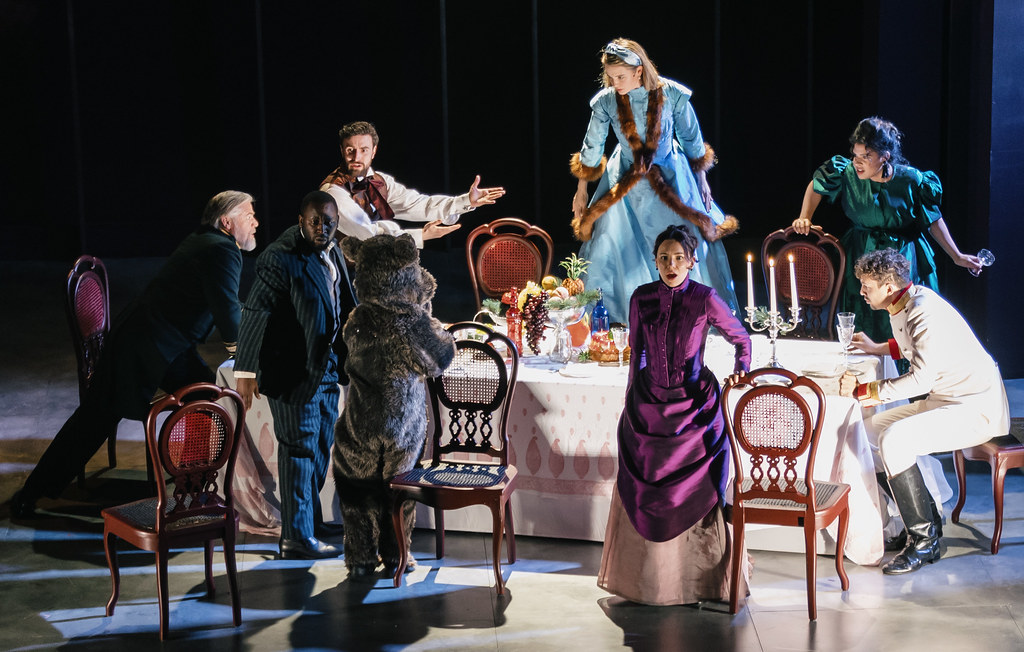
The plot is well-known. Anna (Lindsey Campbell) – bored society wife and loving mother – visits her sister-in-law Dolly (Jamie Marie Leary)’s family estate, hoping to persuade her to forgive Anna’s feckless brother, Stiva (Angus Miller), for his affair with a governess. But it’s a fateful visit, because it’s here that Anna meets Vronsky (Robert Akodoto) – and embarks upon a tumultuous affair that will have a terrible impact. The story is pared back here, of course – four-hundred-thousand words of prose are condensed into a tight two-and-a-half-hours of drama – and it’s all the better for it. The book’s lengthy histrionics are economically conveyed by Xana’s deliberately grating sound design, which feels akin to being in a dentist’s chair, the screeching somehow inside your head. It’s not pleasant, but it’s strikingly effective.

Hart’s script highlights the biting unfairness of a patriarchal order, where Stiva’s many sexual transgressions cause him only minor trouble when they’re revealed, while Anna’s single affair turns her into a social pariah, shunned by her former peers, and – most painfully – banned from seeing her own son (played tonight by Noah Osmani). Her tragic end, prefigured by a brutal train accident at the start of the play, hangs literally over her head throughout: Emma Bailey’s stark design is dominated by this sword of Damocles, a huge screw-like ceiling pendant, each action causing it to turn another notch, embedding itself into Anna’s heart.

I love the urgency of the opening: a dinner party tableau that stutters and lurches into life. The characters are boldly drawn and instantly recognisable, from Karenin (Stephen McCole)’s supercilious reserve to Stiva’s self-indulgence and Levin (Ray Sesay)’s naïve modesty. The sliding screen upstage is ingenious too, opening to reveal a snowy railway platform, or pastoral wheat fields that seem to offer the hope of a simpler life.

Campbell’s Anna is a believable creation, beautiful and confident and relatively content – until she’s blindsided by her attraction for Vronsky. The tragedy here is as much about the corruption of their love as it about her death. What they have is real, but it’s destroyed by social mores and jealousy. It’s not their relationship that ruins Anna; it’s the stifling rules we humans impose upon ourselves.

So is Tolstoy still relevant and appealing in the twenty-first century? If this Royal Lyceum and Bristol Old Vic production is anything to go by, the answer is a resounding yes!

4.2 stars

Susan Singfield

Dear Billy

18/05/23

Traverse Theatre, Edinburgh

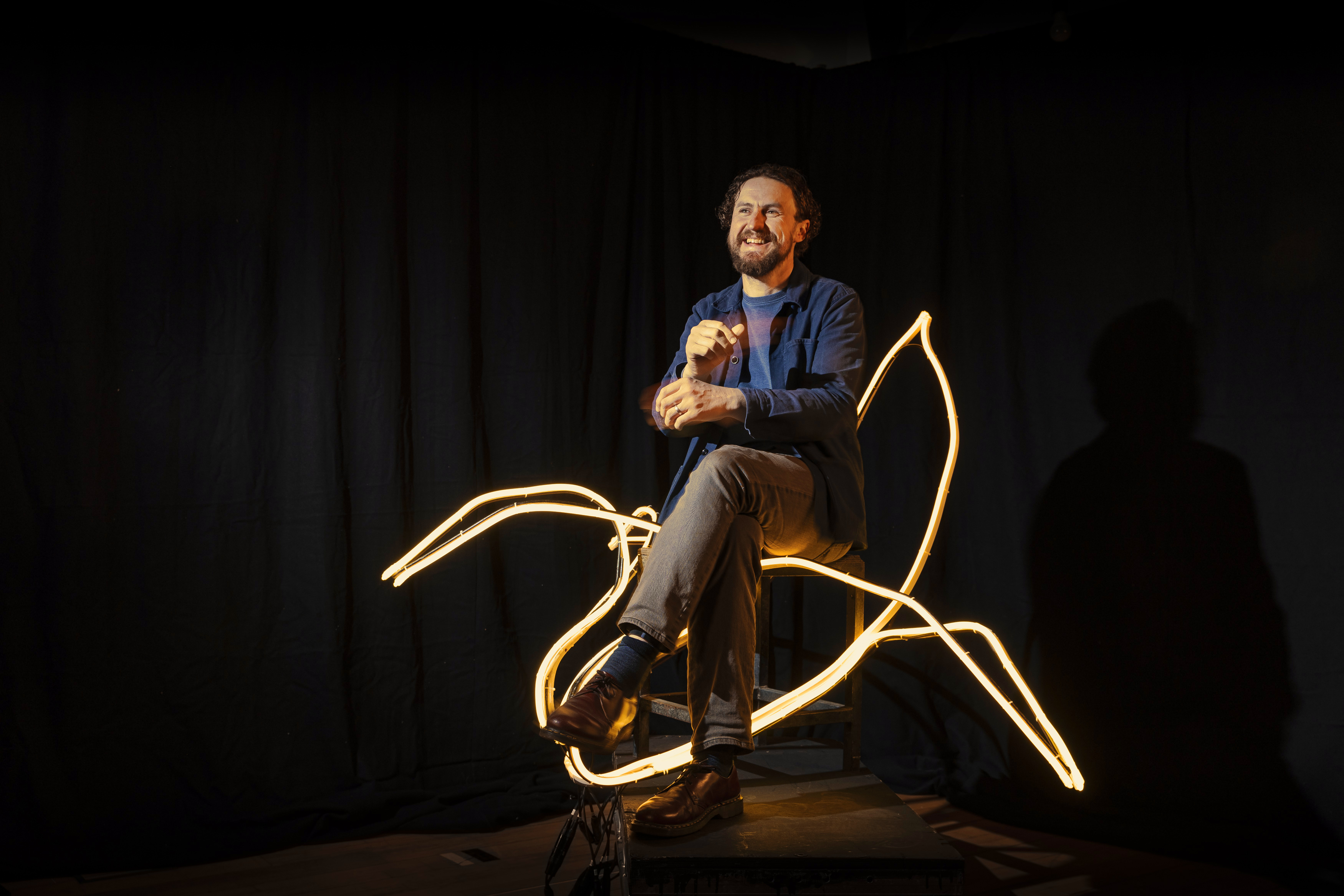
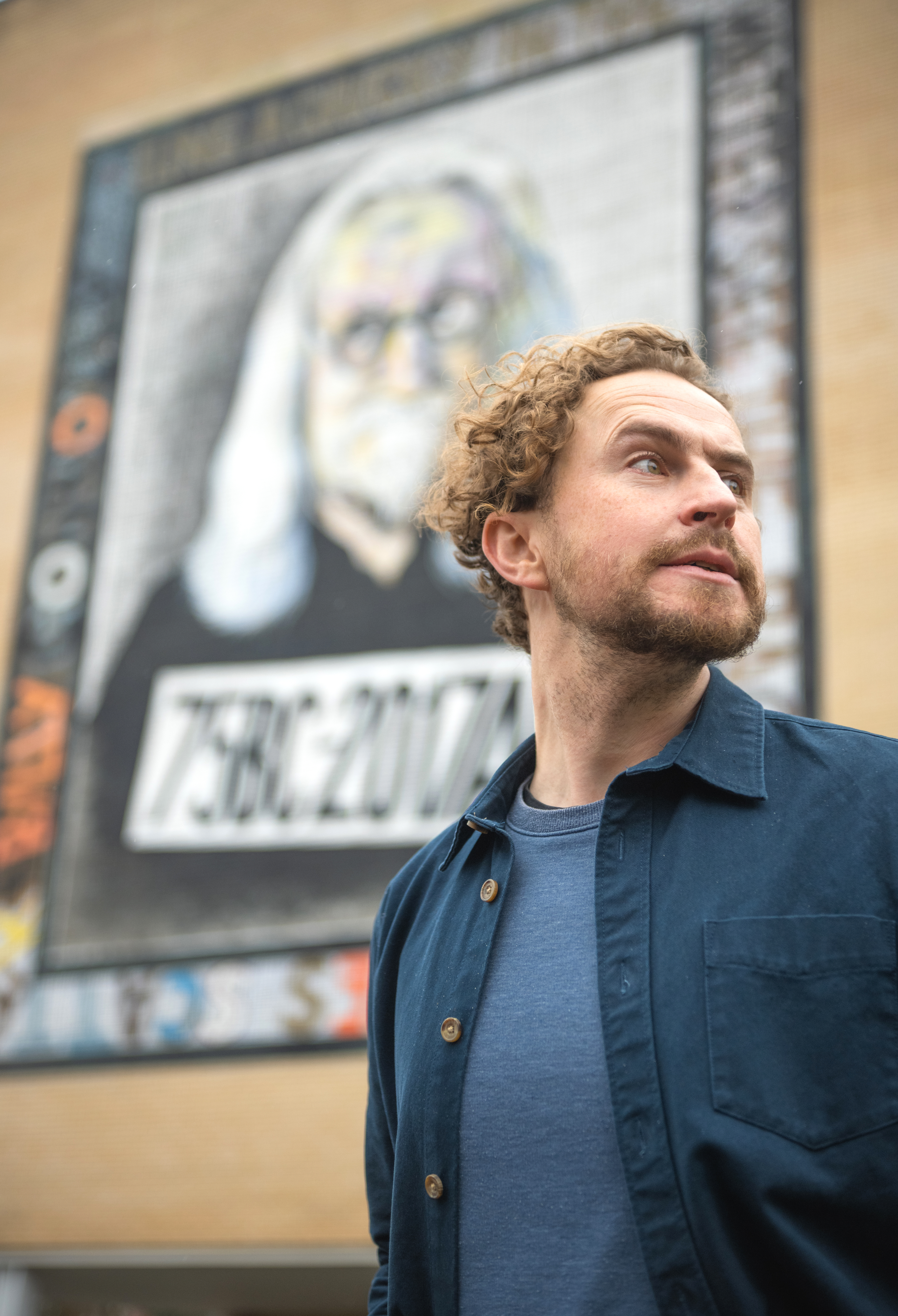
Gary McNair’s Dear Billy is a charming and affectionate love letter to the much adored comedian/musician, Billy Connolly. McNair is a self-confessed fan – and, it must be said, that there’s something about his looks and general demeanour that chime with The Big Yin’s own personality. But rest assured, this isn’t some kind of a tribute act.

Instead, McNair has wandered the highways and byways of Scotland, talking to Connolly’s fans – and, over ninety minutes, he recounts the various things they’ve said about the man they (mostly) idolise, assuming their voices and mannerisms to comic effect. If this sounds like an unpromising premise, don’t be fooled. Mostly because of McNair’s consummate skills as a raconteur, I find myself laughing pretty much throughout the proceedings.

He’s joined onstage by musicians Simon Liddell and Jill O’ Sullivan (the latter occasionally given the opportunity to sing some of her own songs in a truly astonishing voice) and it’s fun to note the struggles they have to keep straight faces as McNair lets rip. But this is essentially a showcase for his comic skills, as he strides fearlessly back and forth between four microphones, inhabiting a whole range of personae, from grandmothers to dockers, with testimonies that range from the heartrending to the hilarious.

There may not be an awful lot of substance here, but it’s certainly an entertaining show. McNair references many of Connolly’s most iconic routines, so fans of the Big Yin in particular, will have a field day. But it’s worth saying that you don’t have to be a fan in order to enjoy what’s on offer.

Anyone looking for a much-needed giggle will find what they’re looking for right here.

4 stars

Philip Caveney
Bar + Block Steakhouse

17/05/23

Princes Street, Edinburgh

Whitbread’s Bar + Block is the kind of restaurant that those of us with foodie pretensions like to dismiss: it’s a chain; it’s attached to a Premier Inn. The food is bound to be pre-packaged, we tell ourselves; it’s surely a soulless place. But even we have to admit that this Edinburgh branch, situated on Princes Street with its iconic view of the castle, is very nicely styled. It looks inviting. And, after a morning of shopping (which is absolutely our least favourite kind of morning), we find ourselves drawn to the lunch and early dinner menu advertised in the window. Three courses for £14.95? It’s hard to resist.

The menu is short, but reads well. Philip starts with Korean chicken wings, which are charcoal cooked and generously flavoured with barbecue sauce and chilli. I have the tomato bruschetta, which isn’t perhaps the most exciting choice, but I just love tomatoes, and I like the sound of the the stone-baked flatbread they come on. As expected, it tastes good, enhanced by a sweet balsamic-heavy dressing.

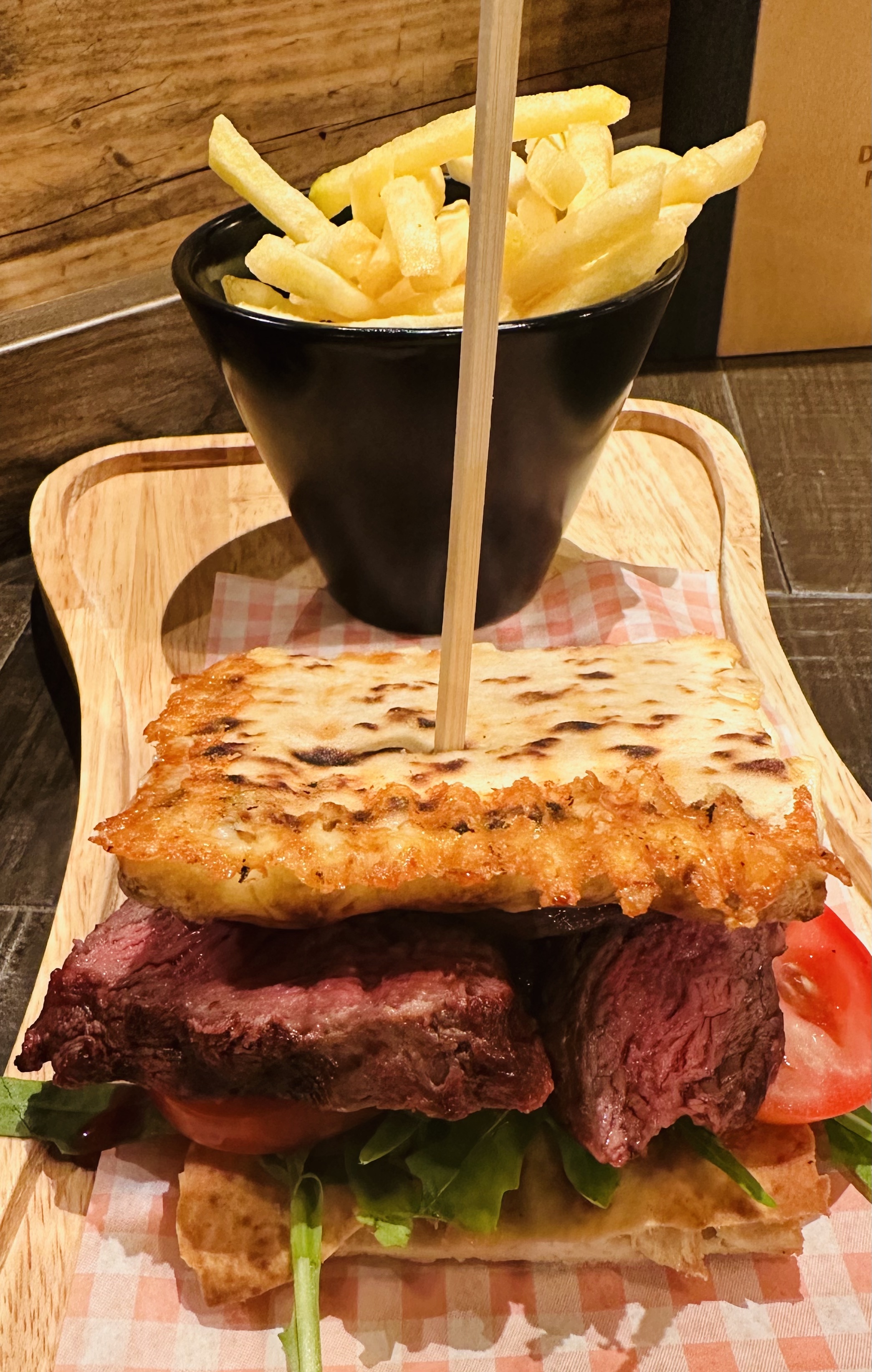
For his main, Philip chooses the steak sandwich with fries. This looks really attractive, and he’s pleasantly surprised by the quality of the meat, which surpasses his expectations for this price point. It’s served on more of that stone-baked flatbread, and garnished with cheese, onions, tomato and rocket. The chips aren’t great – just frozen skinny fries – but they’re piping hot, which makes them edible at least. I have the seabass fillet, which comes with a delicious Greek salad and – yes, you’ve guessed it – a piece of stone-baked flatbread. Apart from the over-reliance on that particular carb, this is a pleasant dish: the fish is well-cooked, the skin pleasingly crispy, and the salad is generously strewn with feta cheese.

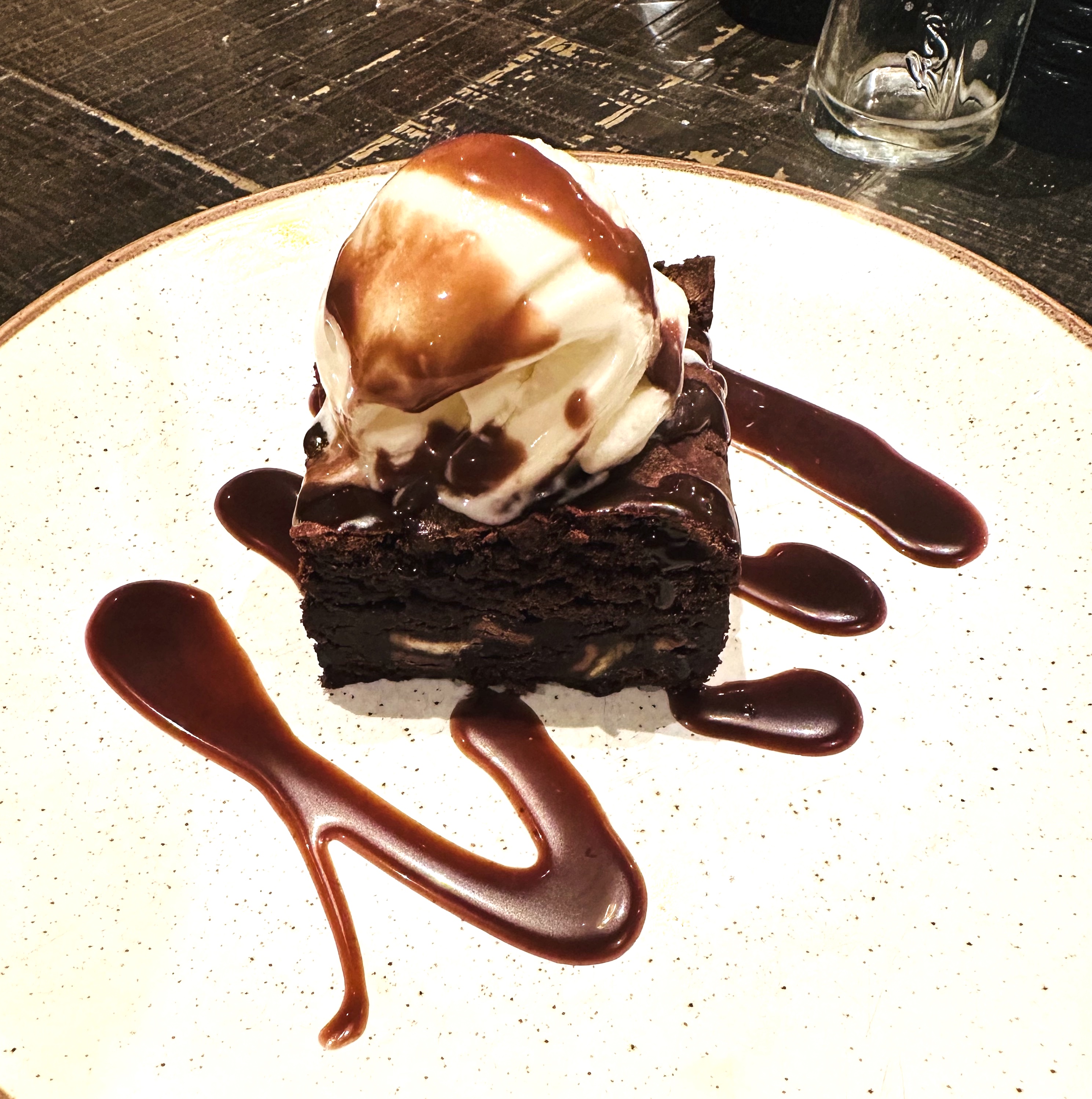
Do we have room for pudding? You bet we do. I have the Eton Mess sundae, a pleasing concoction of berries, ice cream, cream and meringue, while Philip opts for a triple chocolate brownie, served warm with vanilla ice cream. Both slip down far too easily.

Add in a couple of alcohol-free drinks (a Peroni and a Rekorderlig fruit cider), and we’re feeling pretty satisfied. Okay, so our assumptions haven’t exactly been disproved: Bar + Block is exactly what we knew it would be. But the service is pleasant, we’ve had a decent lunch, and it hasn’t cost us much. I’m not sure we’ll be in a rush to return, but I’m glad we’ve given it a go.

3 stars

Susan Singfield

Love the Sinner

17/05/23

Traverse Theatre, Edinburgh

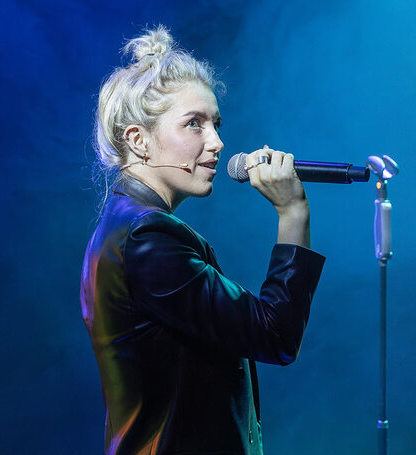
The seven deadly sins have been a source of inspiration for many writers over the centuries. This fabulous interpretation from poet/performer Imogen Stirling gives them a powerful contemporary relevance. Conceived during lockdown, it’s an assured piece of gig theatre, which takes those seven infamous traits and reimagines them as everyday people, living in a contemporary city beset by a near-apocalyptic rainstorm. We’re in Glasgow and the Clyde is threatening to burst its banks.

It’s here that our protagonist, Sloth, finally stirs herself from the bed she’s been lying in for far too long and ventures out onto the rain-lashed streets to attend a party hosted by her friend, Gluttony. Stirling’s playful and incisive words evoke a whole series of familiar tropes – the social-media obsessed millennial, the guilt-afflicted porn addict, the business-centred entrepreneur intent on looking good at all times. But these are more than just stock characters: Stirling’s astute words skewer them, imbuing each of them with a cinematic clarity, bringing them to life as she reveals their flaws and strengths.

This is by no means a solo endeavour. Stirling’s verbal observations are accompanied by musician Sonia Killmann’s ominous soundscapes. She sits front of stage, conjuring pulsing, vibrant music and occasionally lending her vocals to Stirling as they sing together in lilting harmony. Behind the performers, Ellie Thompson’s enthralling video and projection designs offer atmospheric images of the city at night and tantalising glimpses of out-of-focus characters reacting to Stirling’s monologue. Matthew Lenton directs the whole endeavour with great skill, helming the piece to its powerful and frenetic conclusion.

As the last chords fade, I find myself applauding enthusiastically with the rest of the packed audience and wishing there could be some kind of encore – but how would you follow this?

Love the Sinner is a mesmerising piece of theatre. Catch it if you can.

4. 6 stars

Philip Caveney
Air

12/05/23

Amazon Prime

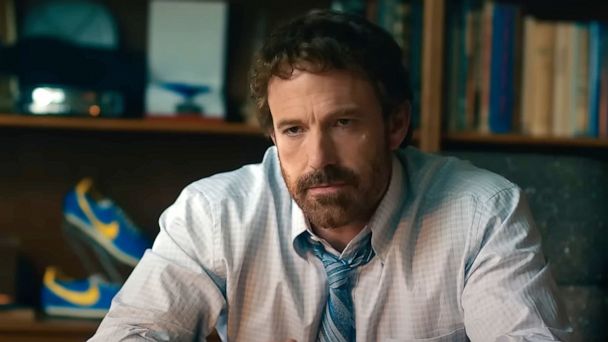
After a brief and unspectacular appearance at UK cinemas, Air moves swiftly onto streaming and is now available on Amazon Prime. It’s hard to understand what attracted Ben Affleck to this story in the first place. It’s essentially an expensive puff-piece for Nike – a film that conveniently ignores the company’s dubious track record of sweatshops and child labour and, instead, offers a story about one man’s ‘heroic’ gamble to launch a new product.

It’s 1984 and, while Nike are doing excellent business in the running shoe stakes, their basketball division is trailing behind Adidas and Converse. The company’s resident talent scout, Sonny Vaccaro (Matt Damon), is keen to find a young basketball star to help boost sales, but company CEO, Phil Knight (Ben Affleck), can only find a measly $250k for him to spend on the project – for which he’s expected to engage the services of three or four players.

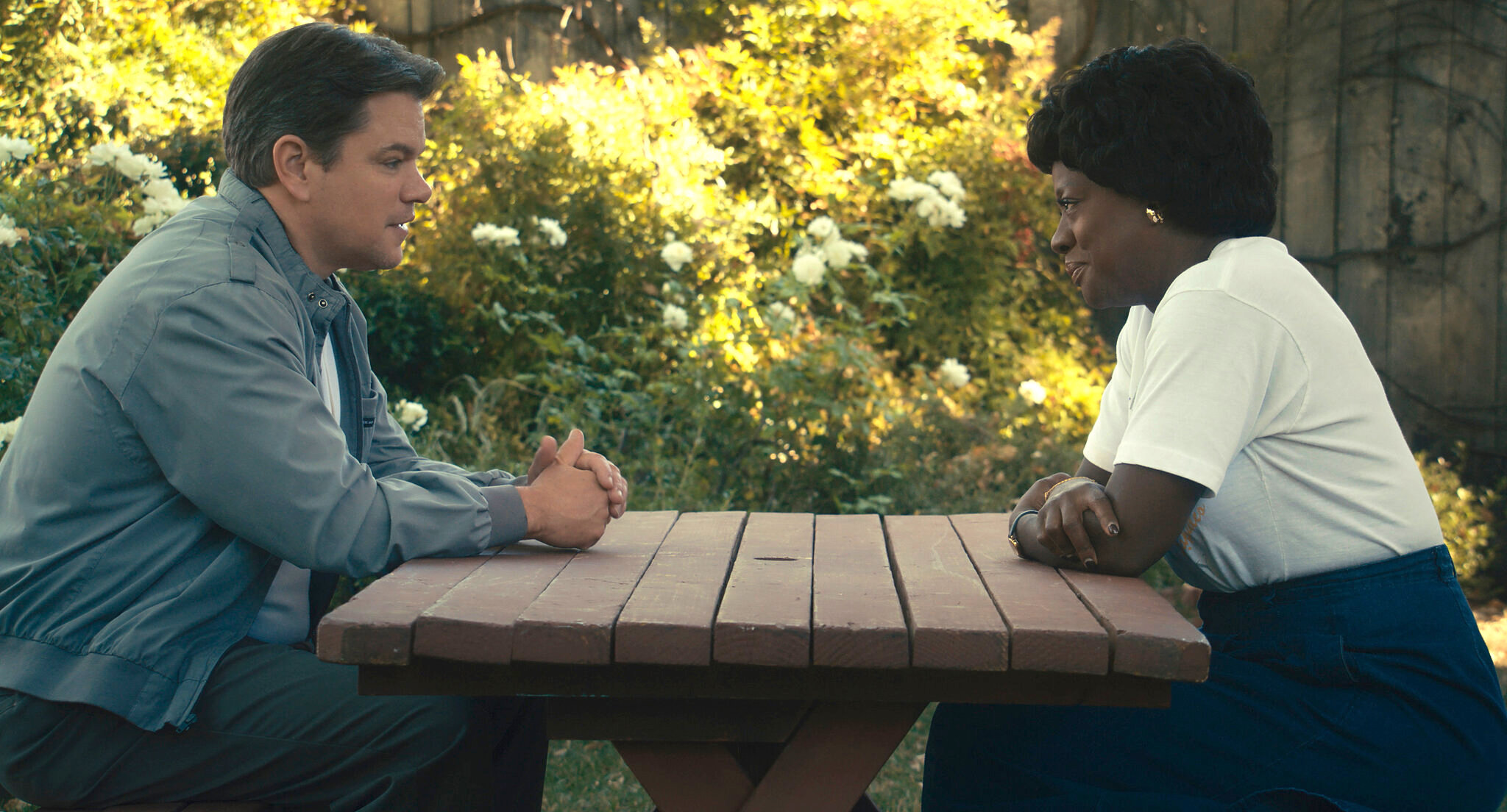
But Vaccaro decides instead to spend the entire amount on one rising star, Michael Jordan – and, what’s more, to design a shoe based around the young player’s identity: the Air Jordan. But how can he convince the man not to sign with one of Nike’s powerful competitors? Vaccaro directs his pitch to Jordan’s influential mother, Deloris (Viola Davis), sensing that she’s the real power behind the throne.

Directed by Affleck and written by Alex Convery, Air captures the look and feel of the early 80s, with plenty of bad haircuts, nasty brown furniture and some truly horrible fashions. It also offers a propulsive soundtrack of MOR hits – Springsteen, ZZ Top… what could possibly go wrong? Well, plenty as it turns out. The main problem is that Air sets itself up as an edgy game of chance. Will Vaccaro’s risky gamble actually pay off? Or will it go tumbling down in flames? The problem, of course, is that we all know the outcome from the word go, a fact that effectively robs the story of any sense of jeopardy it might have hoped for.

The overriding result is that it’s very hard to care about what happens.

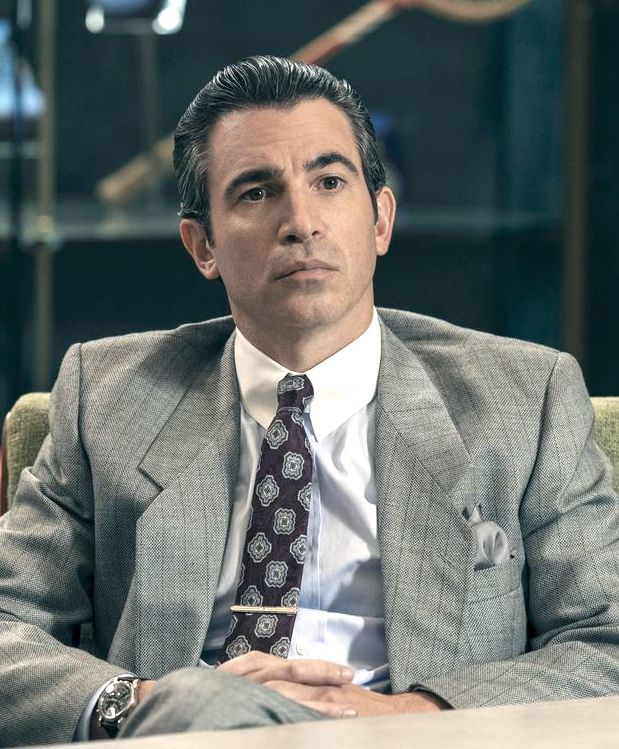
It’s also galling to see a true story that revolves around a young, Black sportsman peopled almost entirely by prosperous white males. These unlikeable figures spend most of their time hurling insults at each other, especially powerful sports agent, David Falk (Chris Messina). Oddly, Michael Jordan himself appears only as a voiceless figure with his back turned to the camera (apart from a brief post-credits sequence with Jordan eulogising his mother in a speech). This only serves to emphasise how little authority he has in a business deal that will earn him – and Nike – billions of dollars in revenue.

And no amount of placatory strap lines about charity donations and sports foundations can lessen the fact that this is a rather sordid story about rampant capitalism, which comes cunningly disguised as a tale of maverick heroism.

Jog on, Nike.

2. 4 stars

Philip Caveney

Who Killed My Father

11/05/23

Traverse Theatre, Edinburgh

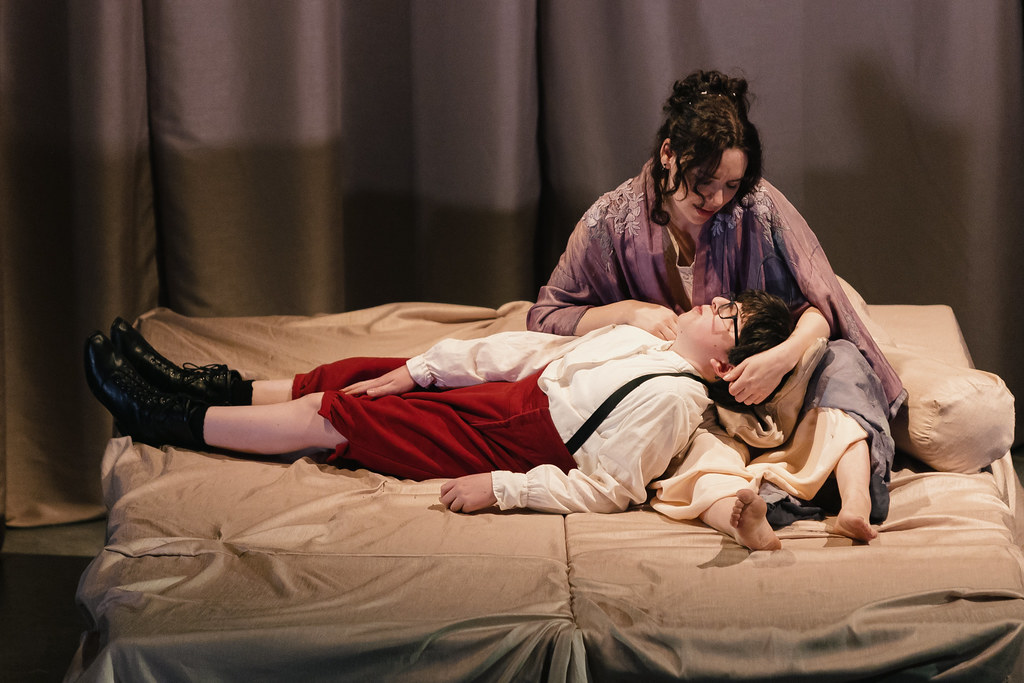
Who Killed My Father is based on Édouard Louis’s 2018 autobiographical novel, Qui a tué mon père. Adapted and directed by Nora Wardell, it’s an eviscerating piece. Part polemic, part memoir, this monologue is presented as an address to Édouard (Michael Marcus)’s invisible father, thus casting the audience in the paternal role. It’s an interesting conceit.

Édouard’s father is disabled, thanks to his (literally) back-breaking work in a factory. But Édouard’s relationship with his dad is complicated: although he feels sympathy for the dependent old man he has become, he remains angry with the alcoholic homophobe, who made growing up gay in their small French village so very difficult. Still, now that he is an adult, Édouard is able to take a step back, and finally recognise the systemic inequalities that have shaped his father’s destiny, and to extrapolate from that the myriad ways in which so many marginalised people’s lives are damaged by political figures, uncaring and oblivious to the consequences of their acts. This play – where he denunciates these figures – is Édouard’s revenge.

It’s a compelling idea, but – for me – it doesn’t quite come off. For starters, there’s nothing to indicate that we’re in France until the very end, when a number of French politicians are named and shamed. This should be a powerful moment, but instead it momentarily confuses me, so that I’m mentally relocating the story rather than focusing on the point being made. In addition, the stage is cluttered with a vast array of props that just aren’t used, including a fabulously complex Scalextric. (I only had the figure-eight version when I was young; this one is the stuff of dreams, so it’s particularly frustrating that it’s given such prominence but never called into play.)

In the end, the message feels a little muddled, lost in a scattershot of anecdotes and directorial flourishes.

2.8 stars

Susan Singfield

Are You There God? It’s Me, Margaret

10/05/23

Cineworld, Edinburgh

I was an avid reader as a child, so of course I devoured Judy Blume’s novels. Are You There, God? It’s Me, Margaret was the first one I chanced upon in our village library, its long title drawing my eye. I’d never seen a book with a name like that before, and – I soon realised as I scanned the blurb – I’d never read one that dealt with such subjects either. Periods, bras and… God?

I wasn’t especially interested in the God stuff. I don’t think that has as much resonance here in Britain as it does in Blume’s native USA; we’re a much more secular place, and there are loads of kids in every classroom who don’t know or care what religion they are. Periods, however, and breast acquisition: they were just as relevant in my Welsh primary school as in Margaret’s New Jersey one.

Blume’s novels work because she doesn’t trivialise kids’ experiences. Sure, menstruation and supportive underwear soon lose their allure and become mundane once you’ve got them, but when you’re young and they’re ahead of you, their mystery looms large.

Writer/director Kelly Fremon Craig’s adaptation is faithful to its source material, and bound to be a smash with the novel’s ninety-million readers. It’s a simple tale: the eponymous Margaret (Abby Ryder Fortson) is eleven years old and living her best life. She’s just enjoyed a fun time at summer camp, and is excited to be returning home to her family in New York – her mom, Barbara (Rachel McAdams), her dad, Herb (Benny Safdie), and her Grandma, Sylvia (Kathy Bates). As far as Margaret and Sylvia are concerned, things are fine exactly the way they are – but Barbara and Herb have other ideas. They want to move out of their cramped apartment to a house in the suburbs, where Herb has found a better job, and Barbara can try out being a stay-at-home-mom.

At first, life in New Jersey seems okay. Precocious pre-teen Nancy (whose verve and sparkle is marvellously captured by Elle Graham) makes a beeline for Margaret, and invites her to join her friendship group. Unlike Margaret’s old friends, these girls are obsessed with growing up, and she is soon initiated into a world of body-consciousness and crushes, not to mention fashion rules. “No socks!” says Nancy, “And you have to wear a bra!”

Margaret follows obediently, although she’s not entirely on board. She’s still trying to figure out who she is. Herb is Jewish and Barbara is Christian, and they’ve never taken Margaret to any kind of church, telling her she can choose her own path when she’s old enough. So when her new teacher suggests she might research different religions for her sixth-grade project, Margaret is intrigued. Maybe this way she’ll find some of the answers she needs. And so she embarks on her quest, visiting the synagogue with Sylvia, a Presbyterian church with her pal, Janie (Amari Alexis Price), a Methodist church with Nancy and a Catholic confessional with her classmate, Laura (Isol Young). But God proves elusive, and Margaret eventually realises there are some problems she needs to sort out on her own…

This is a delightful movie, the characterisations bold but convincing, avoiding easy caricature. Fortson is perfectly cast as Margaret, imbuing her with just the right amount of self-consciousness and uncertainty. Bates shines as the slightly overbearing Sylvia, entirely redeemed by her devotion to her granddaughter, while McAdams exudes kindness and sensitivity. It’s a slight tale, but it’s beautifully told, and I’m taken right back to my own childhood. As a piece of nostalgia, it absolutely works, but I’m sure its appeal is wider than that. Today’s adolescents are bound to love it too.

4. 4 stars

Susan Singfield