Sichuan House

08/05/23

George VI Bridge, Edinburgh

There are all kinds of reasons for deciding to visit an unfamiliar restaurant. It could be a friend’s recommendation; a well-timed discount offer; an enticing smell issuing from an open doorway. In the case of Sichuan House, the main motivator is my eyes. Walking along George IV Bridge to my regular writing haunt, The National Library of Scotland, I keep passing the window of the venue where I can’t fail to notice the crowds of (predominantly Chinese) customers, enthusiastically chowing down on a succession of enticingly vibrant meals. The food looks quite different from the kind of Mandarin cuisine I’m familiar with.

So, after a long and tiring drive from North Wales to Edinburgh, on an evening when neither of us feel like cooking, I suggest we might call in there and try it out. It’s around seven thirty on a bank holiday Monday when we rock up and the place is already buzzing. A charming waiter leads us to a vacant table by the window (as far as we’re aware, you can’t book in advance) and hey presto! We’re the people chowing down as passers-by gaze enviously in.

We start by sharing a plate of pork and chive dumplings, a deceptively simple meal, ten soft parcels stuffed with a delicious savoury filling and served with a bowl of black vinegar, into which said parcels can be dipped. To say that they’re delicious would be something of an understatement. They are among the best I’ve ever tasted, absolutely bursting with flavour.

For the main course, Susan chooses prawns with ginger, and that’s pretty much what arrives – a generous serving of large, juicy prawns in a glutinous savoury sauce, which includes lashings of slow cooked onions and crispy spring onions. As you might expect there’s a rich punch of ginger in there and once again, this is a perfectly executed dish.

The same can be said for my sizzling beef with chilli, tender chunks of meat in a rich sauce which features red and green peppers and again those wonderfully gloopy onions. As you’d expect the course is fiercely spiced, just enough to give that wonderful warmth at the back of the throat (and even to clear the sinuses), but not so severe that the effect becomes too overwhelming.

We also share a portion of egg fried rice and though this is entirely familiar, it’s been expertly prepared, with not a hint of greasiness about it.

Despite being right in the middle of Edinburgh’s tourist route, the food is very reasonably priced. Sichuan House may not be the venue for a lavish, family occasion, but for those seeking authentic Chinese cuisine at great value prices, this is a great place to look for it. We’ll be back – and next time, we’ll make sure we’ve left enough room for more.

4. 4 Stars

Philip Caveney

The Unlikely Pilgrimage Of Harold Fry

06/05/23

Cineworld, Edinburgh

Adapted from her own novel by Rachel Joyce, The Unlikely Pilgrimage of Harold Fry is a curious confection, occasionally poignant and life-affirming, but just as often stepping into quasi-religious territory and offering moments that can most charitably be described as ‘twee’. And it must also be said that the most pertinent word in the title is ‘Unlikely’.

Harold (Jim Broadbent ) and Maureen (Penelope Wilton) are living a life of quiet desperation somewhere in Devon, when a letter arrives from Harold’s old friend, Queenie, who is now in a hospice in Berwick-on-Tweed, approaching the end of her life. It’s clear from Maureen’s reaction that there’s something about her husband’s relationship with this woman that disturbs her, but she stays quiet as he pens a hasty reply to Queenie and then sets off to post his letter. But a chance conversation with a young assistant in the garage, where Harold stops to buy milk, prompts him to make a decision. He will deliver his reply by hand – and he will walk all the way there, a distance of nearly five hundred miles, with no special equipment and no preparation.

At various points along the way, Harold encounters a series of strangers, who in various ways help him to accomplish his self-imposed pilgrimage, but none of these characters is given enough to do to make this anything other than a two-hander – and every step of the way, Harold is haunted by memories of the awful tragedy that changed his life forever…

Watching this is a strangely unsettling experience. One moment I’m thinking that it’s doing something really clever, the next I’m close to tears as a genuinely affecting moment tugs at my heartstrings – but then, all too often, I’m wincing as a really banal revelation comes leaping out of left field to slap me right in the kisser. Both Broadbent and Wilton are seasoned performers, and do the best they can with the material, but I can’t help feeling sorry for Wilton, who – as Maureen – is reduced to spending the first half of this film sulking at home while her husband strides off on what feels like a capricious whim.

The uneven tone coupled with the glacial pace conspire to make the film feel longer than its moderate running time. I haven’t read the source novel, so I don’t know how faithful an adaptation this is but, at the end of the day, there’s something here that doesn’t quite come off. File this one under S for ‘Should-Have-Been-Better’.

2.8 stars

Philip Caveney
Guardians of the Galaxy: Volume 3

03/05/23

Cineworld, Edinburgh

Marvel Studios have had a lean time of it lately, with audiences and critics alike underwhelmed by their offerings, even if they do continue to generate huge profits. From their many properties, only two have continued to hold any allure for me: Spider-Man and Guardians of the Galaxy, mostly by virtue of the fact that neither of them takes itself too seriously.

Of course, since the previous GOTG, a lot of water has gone under the proverbial bridge. Writer/director James Gunn has been cancelled, sacked by Marvel and then installed at DC films, where he’s risen through the ranks like a meteor. He’s finally back at Marvel as a revered guest to helm the third (and allegedly final) instalment of the franchise he created.

But the fact that Volume 3 has a running time of two-and-a-half hours gives me cause for suspicion. Is it going to go all earnest on us? Well, yes and no.

When we hook up with The Guardians, they are struggling to get on with their everyday lives in a place called Knowhere – a quirky new colony they’ve set up. Peter Quill (Chris Pratt) is mourning the death of Gamora (Zoe Saldana), who Marvel fans will remember was one of the many characters snapped out of existence by Thanos in Avengers: Endgame. A version of her still exists, mind you, but she has no memory of her previous life and is now a Ravager under the command of Stakar Ogord (Sylvester Stallone, who appears to be cruising through his role on autopilot). Gamora has no memory of the fact that she and Quill were once lovers, which is… awkward to say the least.

Volume 3 devotes a large part of its running time to an origin story for the team’s most enigmatic member, Rocket (voiced by Bradley Cooper), and for me – against all expectations – these are the scenes that have the most impact, effectively adding heartbreak to a story that previously relied more on its comedy chops. There’s still plenty of the latter in evidence, especially in the bickering between Mantis (Pom Klementieff) and the endearingly dim-witted Drax (Dave Bautista). Meanwhile, Nebula (Karen Gillan) seems to have beef with just about everybody she encounters, which can get a bit wearing.

But the Guardians’ everyday life is rudely disrupted by the arrival of a remarkably buff Will Poulter as genetically-engineered golden boy, Adam Warlock. He’s been sent by megalomaniac geneticist, The High Evolutionary (Chuckwudi Iwuji) to collect Rocket (with whom The High Ev has an old score to settle). Pretty soon, there’s a major battle going on.

While I appreciate this is a comic book movie and there have to be some large scale punch-ups, I surely can’t be the only viewer who’s getting a little tired of watching spandex-clad characters being repeatedly smashed through brick walls, causing multiple explosions as they go? Sadly there’s an awful lot of that going on, and another issue for me is that, as the story progresses and the Guardians get split up, I’m not always sure where said punch-ups are taking place at any given time. Indeed, there’s so much fighting going on that, even with that portentous running time, the film sometimes feels curiously over-stuffed.

I know I’m fond of using the curate’s egg analogy but it’s never felt more appropriate than it does for Volume 3. Yes, there’s plenty to enjoy here; I won’t argue the point. But there are also some extended action set-pieces that have me wishing for access to a fast-forward button. Maybe it’s just me. Perhaps there are people out there who want more of that and less of anything new. I don’t know. Die hard Guardians fans will probably want to sit through till the bitter end for the by now obligatory post-credit sequences, the first of which is slightly baffling, while the second can only have significance for the kind of people who would choose GOTG as a specialist subject on Mastermind. (I confess I had to Google it. It helps if you’ve seen the Guardians Holiday Special on Disney + – apparently.)

Despite my grumpiness, I like a lot of this – but not quite enough of it to merit a four-star review. And a final caption announcing that ‘The Star-Lord Will Return’ does not exactly fill me with anticipation. Maybe that’s enough Guardians for one lifetime.

3. 8 stars

Philip Caveney

Polite Society

30/04/23

Cineworld, Edinburgh

Sixteen-year-old Ria (Priya Kansara) and her older sister, Lena (Ritu Arya), have always had big plans: Ria will be a stuntwoman, and Lena an artist. But, while Ria remains committed to a kickass future, Lena’s given up. She’s dropped out of art school, and spends her days lying listlessly in her room. Then, at an Eid ceremony, Lena meets Salim (Akshay Khanna) and she’s smitten. He’s rich, handsome, kind and devoted – what’s not to love? Before long, the couple are engaged.

Ria is distraught: Lena is her role model. If Lena’s dreams can be so easily derailed, what does that say about her own chances? What’s more, there’s something decidedly fishy about Salim. Surely sabotaging the wedding is the right thing to do…

Written and directed by Nida Manzoor, Polite Society is a chaotic delight. A mash-up of martial arts, romcom and coming-of-age genres, it’s engaging, cartoonish, funny and exciting. It’s also a warm-hearted and affectionate portrayal of the British-Pakistani community.

Everything here is dialled up to eleven. When Ria and Lena fight, they really fight: heads crack, blood pours, doors and mirrors break. But the extreme violence, bright colours and melodramatic storyline work well to symbolise the heightened emotions of adolescence, where everything feels like the end of the world.

It’s a densely-packed piece, with some more nuanced details too. I like the fact that we never discover whether Lena actually is ‘good enough’ at art: she clearly has some talent, but maybe she’s right to drop out of art school. Not everyone can realise their early promise; not everyone retains the same ambitions as they age. While Ria’s still in her Matilda-When-I-Grow-Up phase, Lena has moved on… I also like the depiction of the girls’ kind-hearted parents (Shobu Kapoor and Jeff Mirza), indulging their daughters’ aspirations, but much happier when Lena decides to get married. It feels believable. Raheela (Nimra Bucha) makes a wonderfully chilling villain, while Seraphina Beh and Ella Bruccoleri (as Ria’s schoolfriends, Clara and Alba) are charming as the comic relief.

Polite Society is a delicious modern fairy-tale: Prince Charming is put firmly in his place, and the damsel takes charge of her own destiny. We’re left believing that Ria really might actually leap and kick her way into her fantasy future.

4.1 stars

Susan Singfield

Fava

30/04/23

Morrison Street, Edinburgh

Fava has been on our radar for quite a while. We’re fans of Greek cuisine and every time we walk past their attractive premises on Morrison Street, we say, ‘We must try that place soon.’ So when I notice a My Ideals offer, which pretty much buys us a meal at half the usual price, it’s a no-brainer.

It’s 7.45pm on a Sunday evening and the place is bustling with diners. The staff are friendly and the atmosphere convivial, even if the combination of a high ceiling and the inevitable jangling bouzouki soundtrack makes conversation difficult. For starters, we choose to share a baked feta cheese and a Fava salad. The latter is delightful: handsomely presented with edible flowers, it’s a tasty mix of avocado, cucumber, leaves and pomegranate, drizzled with a honey and mustard dressing. The feta is delicious too, flavoured with oregano, tomato, peppers and chilli, but I’m rather less enthused by the presentation. The feta has been baked on a sheet of foil, which means that a lot of it adheres to the backing and proves very, VERY difficult to separate. Of course, we’ve ordered a side of pitta bread (there has to be pitta bread, right?) and this is also nicely done – salty and buttery, just as we like it.

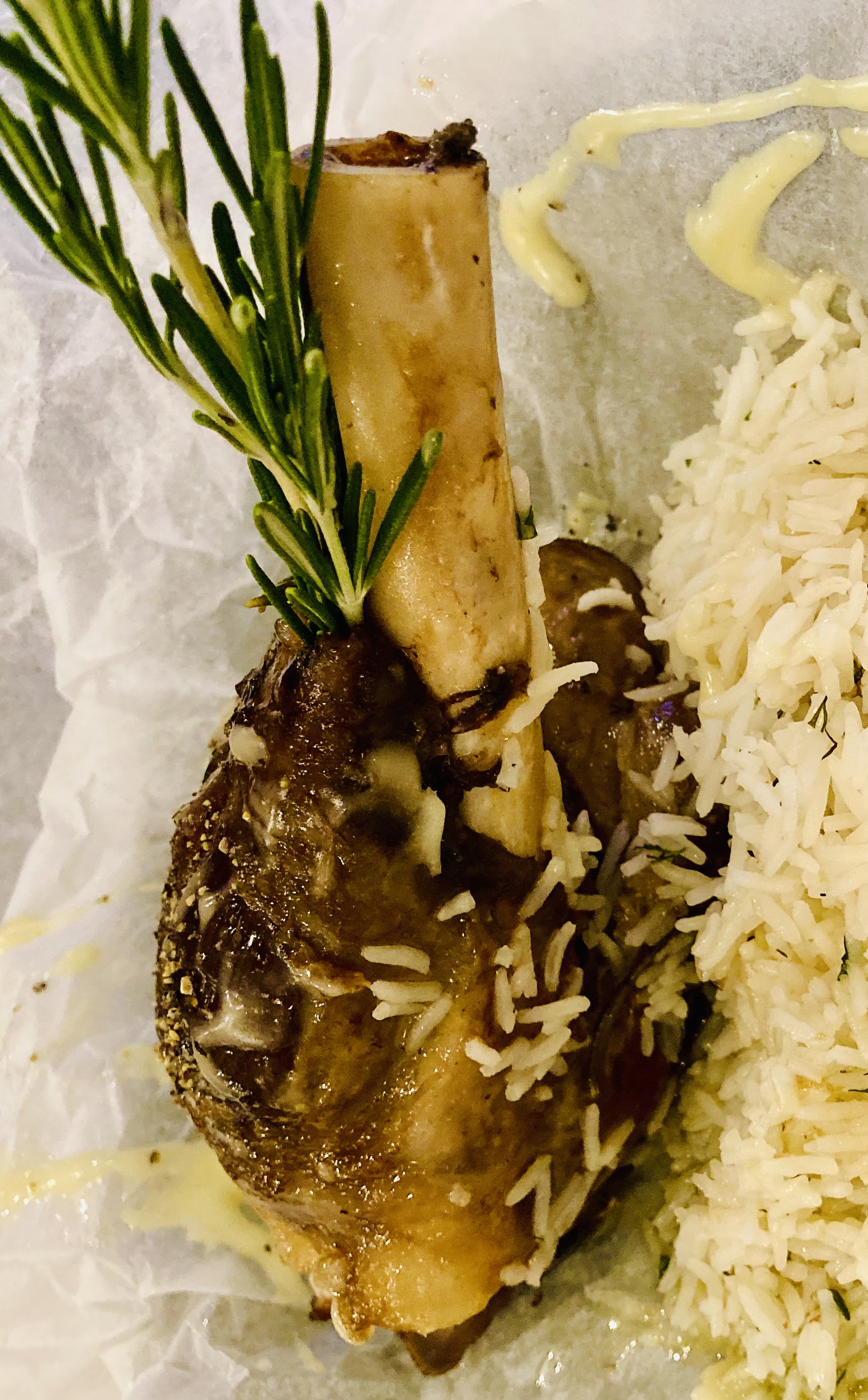
For my main course, I’ve chosen Kleftiko – a generously-sized slow-cooked lamb joint, flavoured with lemon and rosemary, the flesh so succulently tender it comes effortlessly away from the bone with the merest touch of a knife. It’s served with subtly spiced rice (though you can opt for new potatoes, if preferred). Susan has the Kotopoulo Lemanato, a tender chicken fillet, delicately seasoned with lemon, garlic and olive oil. This is accompanied by rice and salad. Both dishes are accomplished and we make short work of them.

For the pudding, it has to be the Portokalopita – a traditional Greek honey and orange cake, which we decide to share as we’re really quite full from the main courses. Not only does does this particular sweet feature prominently in the novel I’m currently editing (so it seems like a good omen) but it’s already a long established favourite of mine. Again, it’s nicely executed, the soft sponge oozing the zesty mixture it’s been liberally doused with. A scoop of Greek yoghurt ice cream makes the perfect accompaniment.

All in all, Fava is a pleasant place to dine: it’s lively and accommodating and the food’s good too. Throw in that My Ideals offer (still available at time of writing) and it’s simply too good to miss.

4.2 stars

Philip Caveney
Good: NT Live

28/04/23

Cameo Cinema, Edinburgh

We miss the first screening of Good due to health issues and are resigned to our fate, but happily The Cameo Cinema offers this encore screening just as we’re scratching our heads and wondering what we should see tonight.

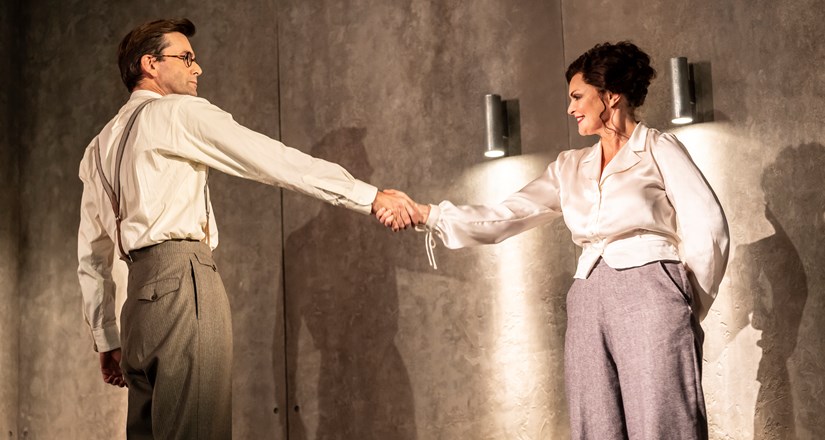
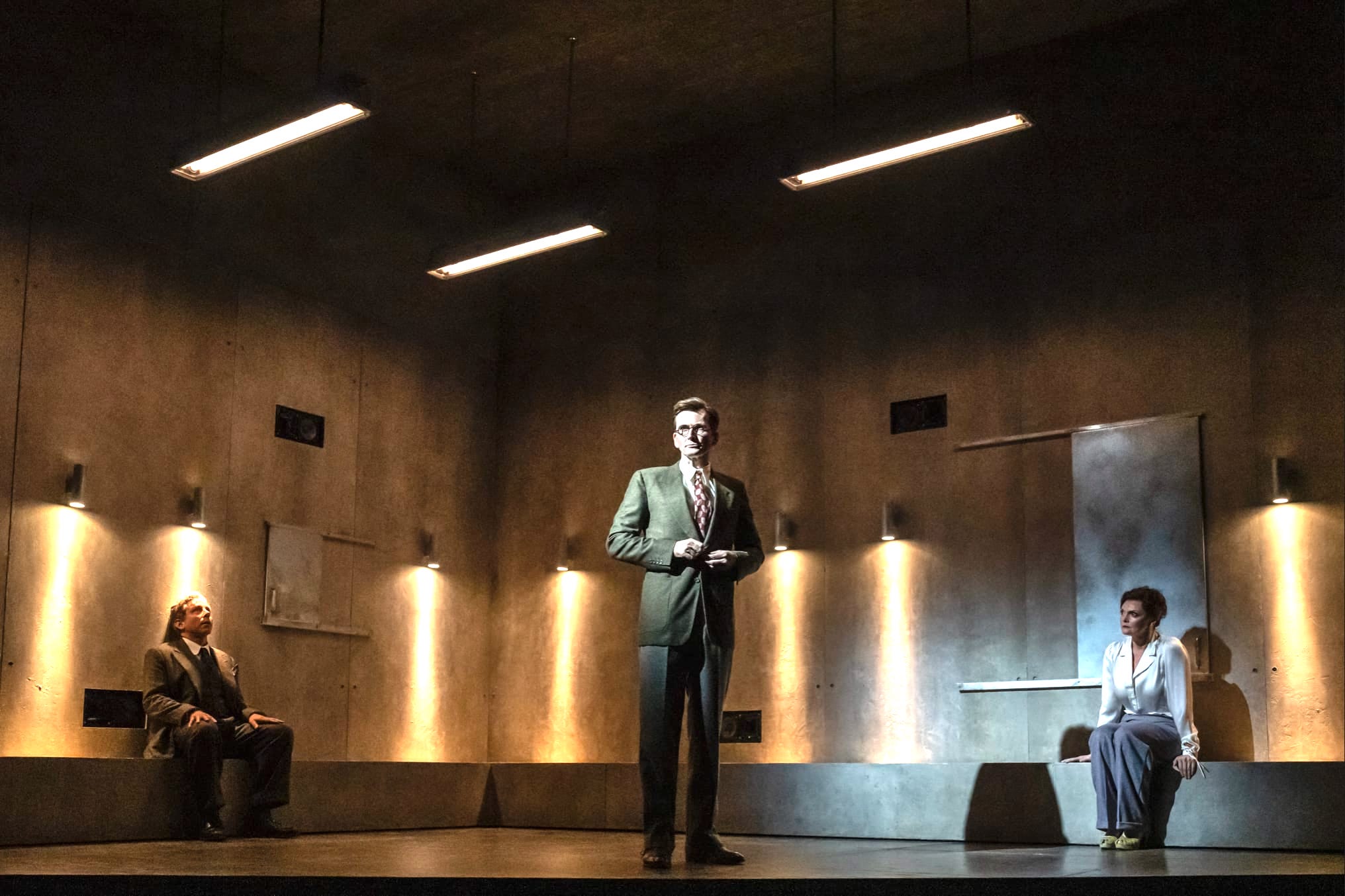
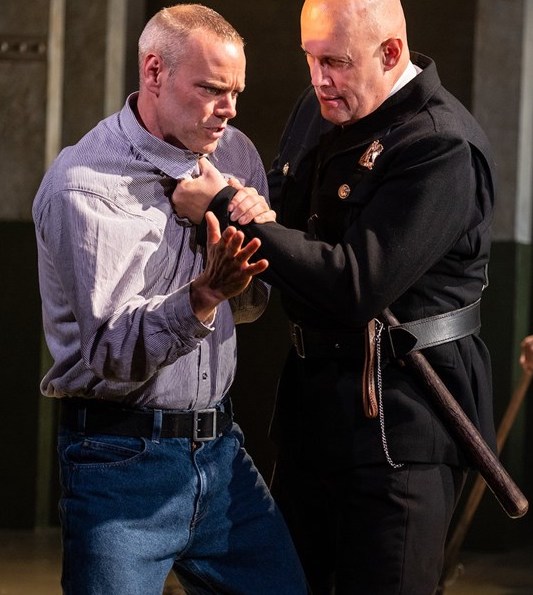
Written by the comparatively little known C P Taylor (who tragically died soon after Good had its London premiere in 1981) this excoriating piece of theatre feels weirdly askew from the opening scene. Why has set designer, Vicki Mortimer opted to use so little of the Harold Pinter Theatre’s stage, confining the action to a narrow, wedge shaped, performance space, which only really opens up at the play’s startling conclusion?

Well, it’s this confined quality which emphasises the chilling claustrophobia of the piece, the story of a man consumed by his own hubris and his willingness to repeatedly spin his own heinous crimes as the actions of a ‘good’ person.

The man in question is Halder (David Tennant), a German literary professor whose published works catch the eyes of important people in the rising Nazi party, and who is invited to join their swelling ranks. But there’s an obvious problem with this suggestion: Halder’s best friend, psychiatrist Maurice (Elliot Levey), is Jewish and doesn’t see why he should be expected to hide the fact. Meanwhile, Halder is struggling to maintain a marriage to his hapless wife, Helen (Sharon Small), whilst looking after his mother, who is stricken by dementia – and he’s also starting an affair with one of his students, Anne. How is he going to square all these issues to his own satisfaction whilst proudly taking his place in the ranks of the SS? And at what point will he decide that he’s being asked to go too far?

Tennant, making his long awaited return to the West End, is incredibly assured in the complex role of Halder, switching from slyly funny to chillingly mercenary with aplomb. At one point, he even sings and dances with absolute authority, personifying the charmer with a steely inner self. Levy too is excellent, both as Maurice and in the other roles he inhabit, but for me it’s Small who really commands the stage, flicking effortlessly between her three female characters – and the persona of an alpha male SS commandant – simply by changing her voice and her posture. It’s a superbly nuanced performance that ensures I’m always fully aware of who she is embodying at any given moment.

Essentially a three-hander (although the play does feature other performers in its final stages), Good is an ambitious and original piece of theatre that makes me wonder what Taylor might have achieved if only he’d lived longer.

4 stars

Philip Caveney
The Shawshank Redemption

26/04/23

Festival Theatre, Edinburgh

It’s been a long journey for The Shawshank Redemption. Stephen King’s novella, first published in his Different Seasons collection in 1982 was adapted into a feature film in 1994. Nominated for a clutch of Oscars (none of which it won), the film became a slow burner and has often featured on critics’ ‘best of’ lists. This adaptation, by comedians Owen O’ Neill and Dave Johns, premiered at the Gaiety Theatre, Dublin in 2009, and then reappeared in Edinburgh in 2013 (where coincidentally, we saw it on one of our first forays to the Fringe). Now, in a significantly rewritten version, it lands at the Festival Theatre.

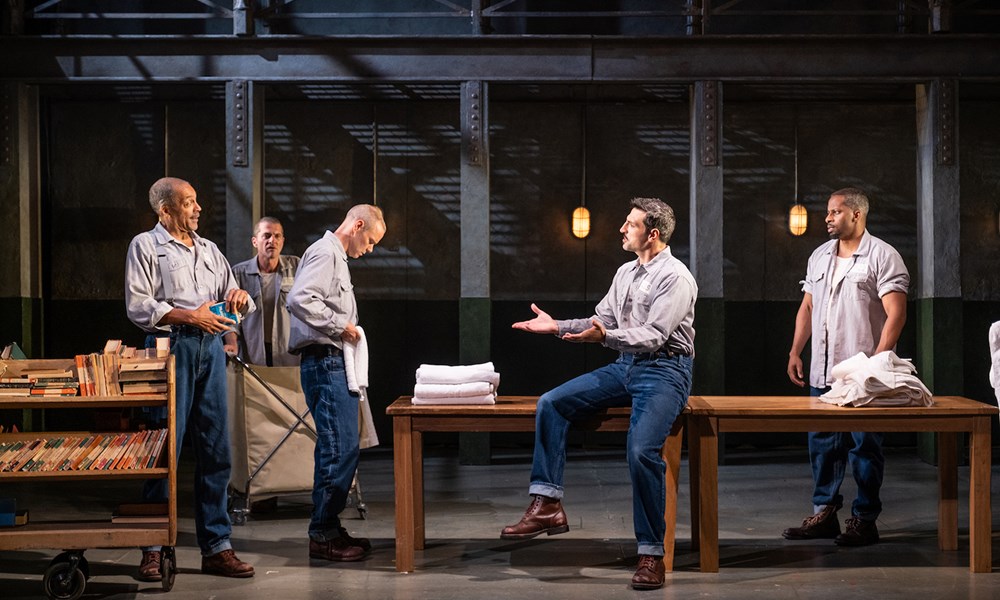
It’s the tough and relentless tale of Andy Dufresne (Jo Absolom), who – wrongly accused of murdering his wife and her lover – finds himself incarcerated in the titular prison in the 1950s. Quiet and unassuming, Andy is repeatedly bullied (and even sexually abused) by a couple of hard cases he’s obliged to share space with. But he makes one real friend in the prison, Ellis ‘Red’ Redding (Ben Onwukwe), the Shawshank’s resident fixer. You need something bringing in, something that’s not officially available? Red’s the guy who can get it for you… at a price.

As the years slip inexorably by, the timescale effortlessly enforced by a series of popular songs from the period, Andy keeps his head down, doing his time and ingratiating himself with the prison’s crooked ruler, Warden Stammas (Mark Heenahan). Through it all, his Andy’s determination to escape from this hellhole never diminishes…

This is a dour and workmanlike retelling of what must rank as one of King’s bleakest stories. Gary McCann’s stark set design, coupled with David Esbjornson’s taut direction, reflects the hopelessness and depravation of prison life well enough, but the action feels somewhat dwarfed by the enormity of the Festival Theatre. This would surely have been better suited to the more intimate surroundings of The King’s but, for obvious reasons, that isn’t a possibility right now. There’s a distancing effect in that huge auditorium and I find myself wanting to be closer to the action, to feel more of the the physicality of the piece. Furthermore, I become increasingly aware of the many, quite complicated, scene changes that punctuate the proceedings and I feel unconvinced at what is revealed when that famous poster of Rita Hayworth is ripped away.

The performances are strong, though it’s the two central characters who dominate. Absalom handles the quieter, more restrained role of Andy Dufresne with ease, but its Onwukwe, as the story’s acerbic narrator, who is given more of an opportunity to shine, particularly in the second act, as events build to a stirring and optimistic conclusion. Of course, the latter was always intended to come as a startling revelation, but the tale is so well known by now, there surely can’t be a soul in the theatre who doesn’t know what’s coming in the end.

3. 5 stars

Philip Caveney
Evil Dead Rise

23/04/23

Cineworld, Edinburgh

True confession time. I’ve always had a bit of a soft spot for The Evil Dead.

In 1981, Sam Raimi’s original movie, made for shirt buttons and starring his best buddy, Bruce Campbell, made a big impact on my younger movie-going self. The fact that, on its initial release, it became ensnared in the Government’s absurd ‘video-nasty’ ban only served to make it a cause célèbre and, when it finally earned itself a proper release, it made tons of money. The sequel in 1987 allowed the duo to make the film they’d always wanted to, with a much bigger budget and a welcome dose of added humour. And finally, 1992’s Army of Darkness (AKA The Medieval Dead) offered a conclusion that was so bat-shit crazy it finished off the trilogy in entertaining style.

It’s undeniably a tough act to follow – as director Fede Alvarez discovered in 2013, when he attempted a revamp, which came and went without making much of a splash – but Irish writer/director Lee Cronin’s Evil Dead Rise (what happened to the The, I wonder?) jumps headlong into a spirited reimagining without pausing to ask if it’s a good idea. The presence of an 18 certificate suggests that this isn’t going to be the kind of movie that judiciously cuts away from the gore – and so proves to be the case. Those of a nervous disposition, please be warned that this is harrowing stuff.

We open, as ever, in a remote lakeside cabin where three holiday makers are having a bad time. If this short pre-credit sequence suffers from a case of ‘seen it all before’, then the following action, which backtracks 24 hours, does feel markedly more original, transplanting the action to a scuzzy high rise apartment in Los Angeles.

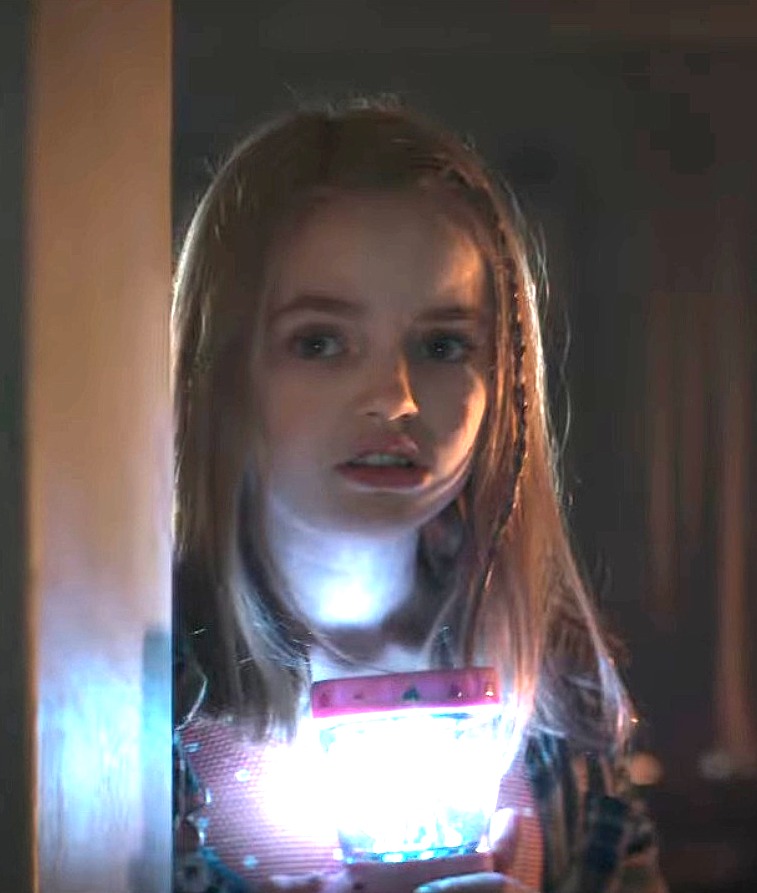
It’s here that, upon finding that she’s pregnant, guitar technician, Beth (Lily Sullivan), arrives in search of her estranged sister, Ellie (Alyssa Sutherland), who has recently suffered a breakup with her partner. Ellie seems to be a contender for struggling parent of the year, attempting to raise her three kids, Bridgette (Gabrielle Echols), Danny (Morgan Davies) and cute but weird little ‘un Kassie (Nell Fisher) in a condemned apartment that’s due to be closed down sometime in the near future. A power cut promptly ensues. What else to do then but send the kids out to collect some takeaway pizza?

Things head in an even more dodgy direction when a sudden earthquake opens up fissures in the street, revealing an ancient underground bank vault, festooned with crucifixes. Danny can’t resist going down there for a quick recce and emerges with some old LP records and a very familiar-looking book… yep. you guessed it. That book. Don’t bring it home, Danny! Don’t… ah well. He brings it home. Of course he does.

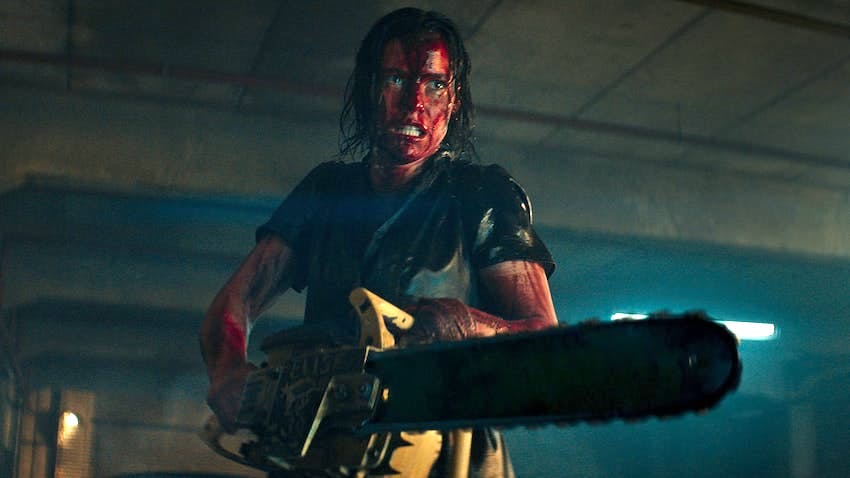
All too soon, Ellie has become infected by the powers of evil and is happily attempting to chow down on her offspring. It falls to Beth to try and protect them. But trapped in the apartment, with stairways and elevators destroyed by the quake, how can she and her young charges ever hope to escape from the now demented Ellie, who is hellbent on their destruction?

I won’t lie to you. What follows is hard to watch – an exercise in nerve-shredding, no-holds-barred mayhem. If the aim of the exercise is to horrify, then Cronin succeeds in spades. Susan later admits to having seen only forty minutes or so of the film, spending the remainder of the running time with her hands over her eyes. For those made of sterner stuff, there are decapitations, eviscerations and the use of a cheese grater in a style you’re unlikely to see on Masterchef. Viewers in the know (and we are legion) will spot occasional nods to the original trilogy that feel more like homages than copycats – and there’s one great big reference to Stanley Kubrick’s The Shining, just for fun. Oh yes, Bruce Campbell – who executive produced the film along with Raimi – makes a sort of cameo in this film. See if you can spot him!

I am suitably entertained (if that’s the right word) and emerge from the screening feeling that, if filmmakers must insist on rebooting former glories rather than coming up with new ideas, then Evil Dead Rise is more successful than many revamps that have gone before. But one thing’s for certain: this isn’t a film for the faint-hearted.

3. 8 stars

Philip Caveney
How To Blow Up a Pipeline

21/04/23

Cineworld, Edinburgh

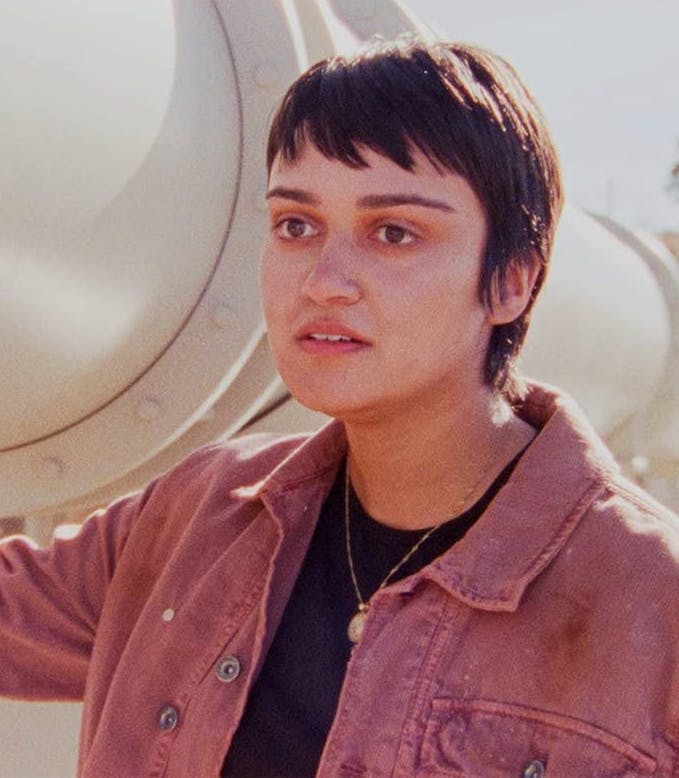
Make no mistake, How To Blow Up a Pipeline is a polemic – a powerful call to environmental action, so naked I occasionally find myself wondering how the film’s makers ever managed to sneak this onto the screens of a multiplex. Perhaps it’s because it comes cunningly disguised an a nail-biting thriller, constantly keeping the viewer on edge as a bunch of ramshackle eco warriors tinker clumsily with potentially deadly explosives as they draw up their plans to… well, the clue’s in the title.

The protagonists of the story each have their own reasons for hating the oil industry so see their actions not as terrorism, but as self defence. Michael (Forrest Goodluck) is a native Americans, who’s endured years of being pushed around by the government and has grown tired of pursuing more gentle approaches to protest. Theo (Sasha Lane) is suffering from incurable leukaemia, caused by living in proximity to an oil refinery, while her partner, Alisha (Jayme Lawson) is prepared to go to any lengths to help Theo achieve retribution. Good ol’ boy, Dwayne (Jake Weary), has seen the land his family has farmed for generations stolen by the oil industry with no compensation offered, while Shawn (Marcus Scribner) and Xochitl (Ariela Barer) are grimly determined to make a change at any cost.

And what of young couple, Rowan (Kristine Froseth) and Logan (Lucas Gage, looking uncannily like a young Hugh Grant)? Who is Rowan covertly sending text messages to? And does Logan even know she’s doing it?

Co-written by Barer and based on a book by Andreas Malm, the film is tautly directed by Daniel Goldhaber and has a devastating habit of cutting away from scenes of high anxiety to insightful flashbacks, depicting each characters’ first steps on their journey to where they are today. And while you sometimes think you know exactly where all this is headed, there’s a cleverly assembled final twist that few viewers will see coming.

The film’s ecological message comes across loud and clear and it’s hard to argue with the grit and determination of these disparate characters who come together to pursue a common goal. The ensemble cast all deliver strong performances and the propulsive narrative of the story has me thoroughly gripped, right up to its final frames.

Does a pipeline suffer its titular fate? You’ll have to watch the film to find out.

4 stars

Philip Caveney
The Ocean at the End of the Lane

19/04/23

Festival Theatre, Edinburgh

Neil Gaiman’s novel, The Ocean at the End of the Lane, is a complicated beast – the story of a man reliving his childhood experiences of a series of bewildering supernatural happenings. This adaptation, by Joel Horwood, sticks pretty closely to the original, picking up the tale when, many years later and now grown to adulthood, the man returns to his old stamping ground to attend a funeral. Whilst there, he takes the opportunity to visit a farm, where he encounters its matriarch, Old Mrs Hempstock (Finty Williams). But why does she look exactly the same as he remembers? And how does she know so much about him?

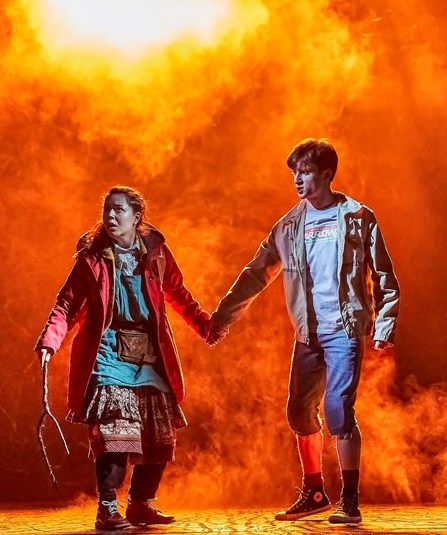
Suddenly, effortlessly, the man is replaced by Boy (Keir Oglivy), the man becomes Dad (Trevor Fox), and Boy relives the tragic events of 1986, when he made his first visit to the farm, meeting Mrs Hempstock’s daughter, Ginnie (Kemi-Bo Jacobs), and Ginnie’s teenage daughter, Lettie (Millie Hikasa), with whom he instantly has a connection. Lettie is a precocious child, who claims to be skilled in magic. She offers to take Boy on a dangerous journey in search of ‘The Flea’, but warns him that, if she allows him to accompany her, he must never, NEVER let go of her hand…

And of course, he does.

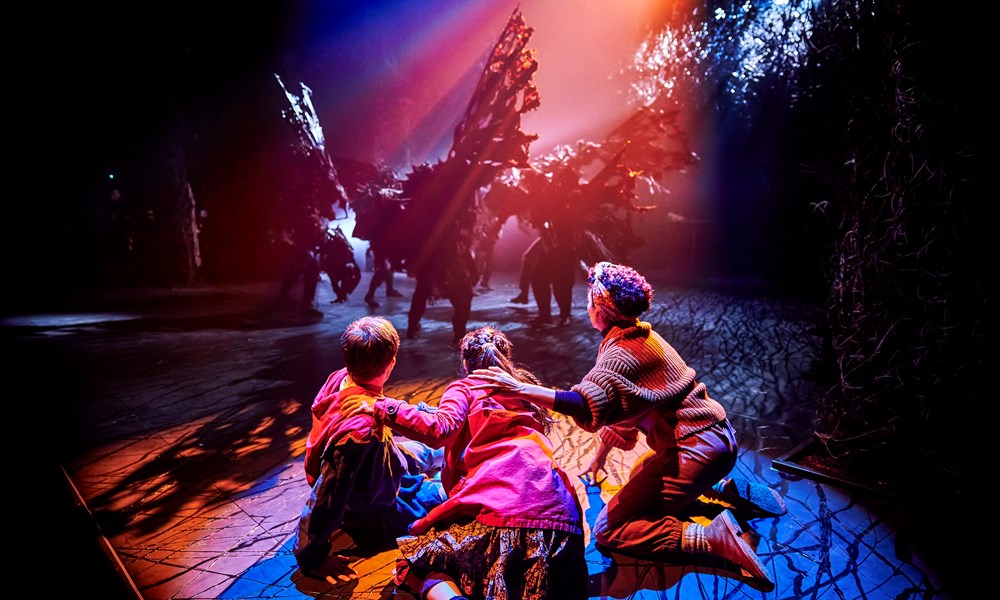
I don’t want to say too much more about the plot because this is the kind of story that’s entirely open to personal interpretation. You can take the magical rituals and the weird demon-like creatures at face value, or you can choose to interpret them as allegories, the experiences of a troubled boy, a boy moreover who is completely addicted to fantasy fiction and who is haunted by his own childhood imaginings. But what really makes TOatEotL fly is the soaring magnificence of the production. The astonishing set designs by Fly Davis and the vibrant lighting effects by Paule Constable conspire to transform the Festival Theatre into a mysterious labyrinth, utilising every single inch of the large stage.

I also love the way the team of supporting players, all dressed in black, assume the role of stage hands, making the scene transitions an integral part of the story.

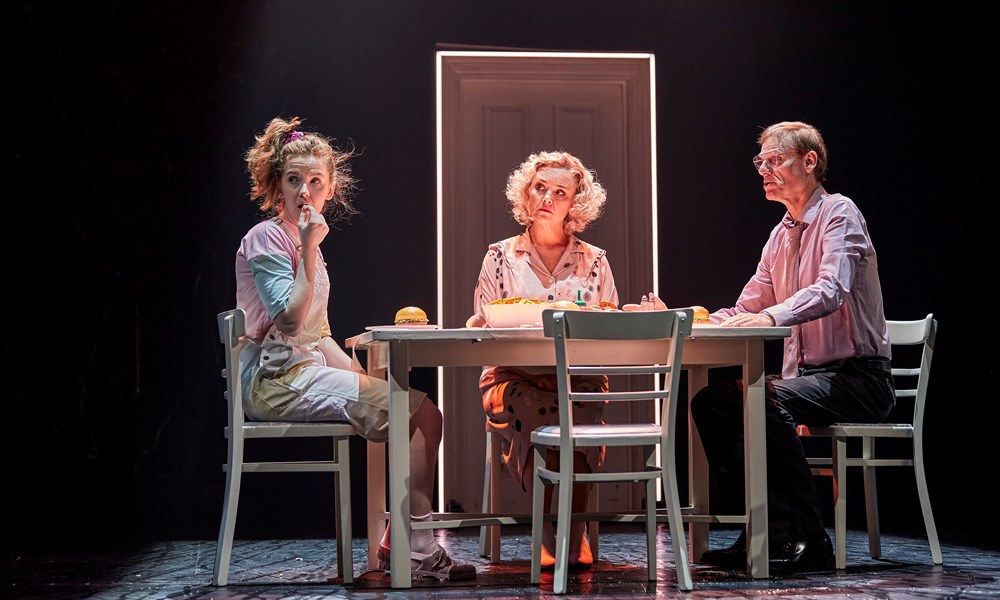
Katy Rudd directs with consummate skill, particularly with the arrival of sinister lodger, Ursula (Charlie Brooks), who worms her way into the affections of Dad and Boy’s ‘Sis’ (Laurie Ogden). A sequence featuring a whole series of illuminated doorways through which Ursula disappears and reappears is so brilliantly played that I find myself gasping aloud at each new revelation. Be warned, things get very spooky in the later stages and the production’s suggested thirteen plus recommendation is not just there for show. Impressionable younger viewers could find themselves disturbed by some of the scenes enacted here.

National Theatre productions are renowned for the ingenuity of their stagecraft and this is no exception. It’s triumphantly spectacular. Currently on tour, if it should come to a theatre near you, don’t miss your chance to see it. It’ll blow you away.

4.6 stars

Philip Caveney