Saltburn

22/11/23

Cineworld, Edinburgh

Emerald Fennell’s second film shares some DNA with her debut: they’re both stories of revenge writ large, of simmering grievance metamorphosing into violence. But, while Promising Young Woman was an out-and-out success, Saltburn is more of a mixed bag.

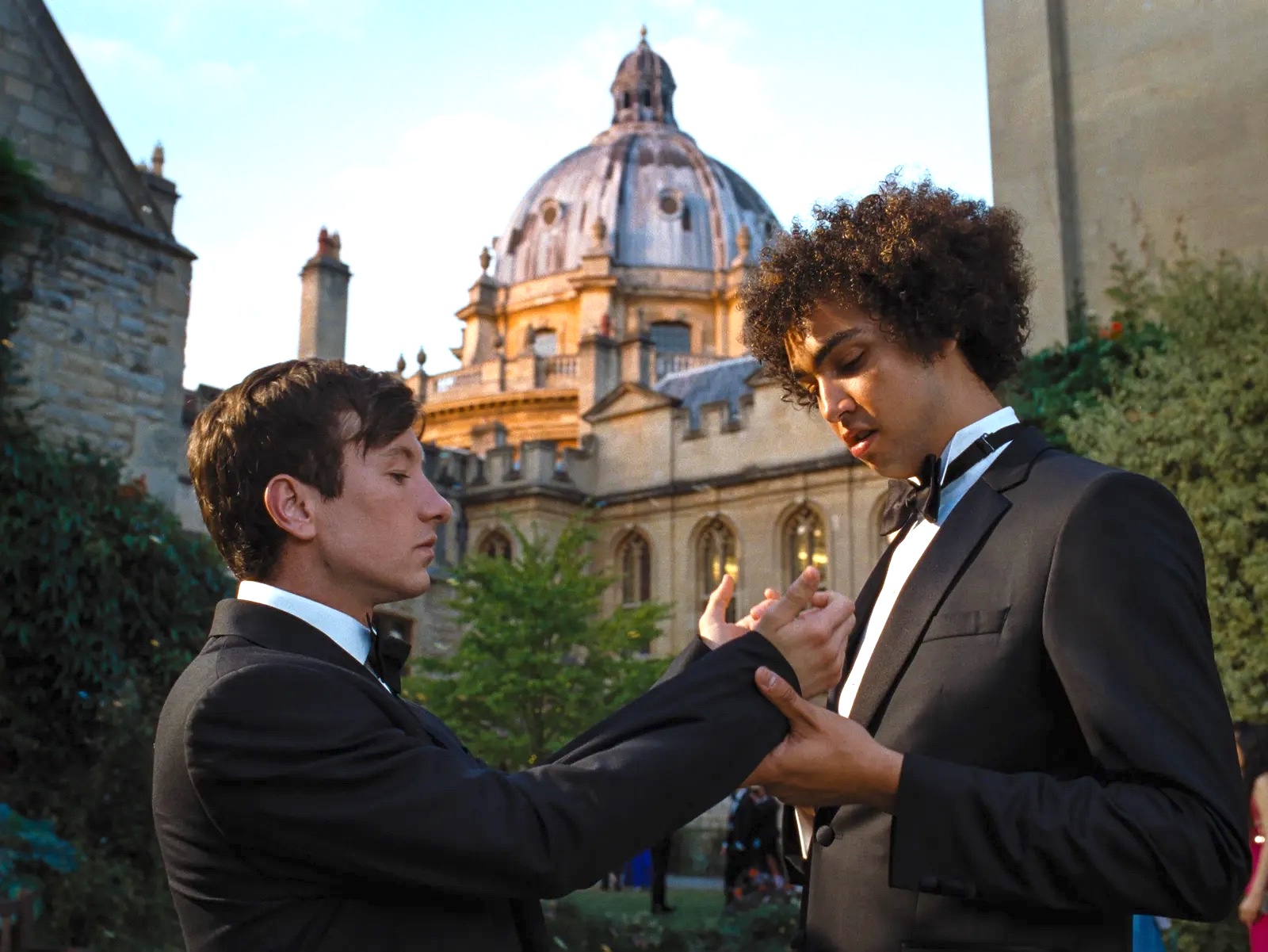
Oliver (Barry Keoghan) is a fish out of water at his Oxford college. Not only has he made the terrible faux pas of devouring every book on the summer reading list, he’s also got a Scouse accent and his tuxedo is rented. “The sleeves are too long,” sneers his tutorial-mate, Farleigh (Archie Madekwe). “Still, you almost pass.” Frustrated by his outsider status and bored rigid by Jake (Will Gibson), apparently the only other non-posh person in the city, Oliver becomes obsessed with Felix (Jacob Elordi), insinuating himself into the young aristocrat’s circle. Felix warms to Oliver, taking him under his wing and inviting him to spend the summer at his family home. Oliver is delighted: the titular Saltburn is a bastion of excess and he is more than ready to indulge himself. But, as the weeks slip by and real life looms, things begin to take a darker turn…

The first third of this film is anachronistic. It’s supposed to be set in 2006, but the Oxford we see here feels like a throwback to the 1920s. Although there’s no denying that the university is still disproportionately posh, by the time the movie’s events occur, about 50% of Oxford undergraduates came from state schools (the figure is 68% now) – and, even among those who were privately educated, only a tiny number were as privileged as Felix and his friends. I find myself rolling my eyes at the idea that Oliver and Jake might stand out amongst their peers, or that anyone would notice them enough to bellow “scholarship boy” as they pass by. It’s unnecessary too: Oliver’s desire to move in Felix’s orbit doesn’t need to be dependent on the absence of any other working or middle-class people.

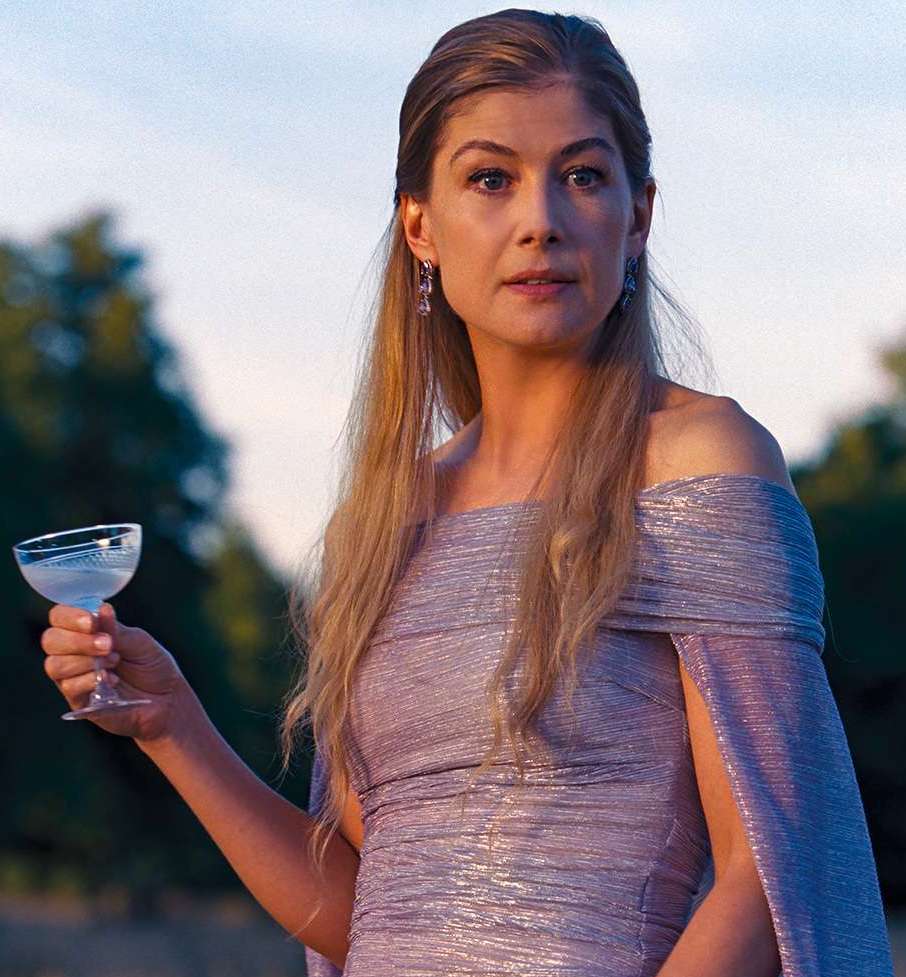
When the action moves to Saltburn, things improve dramatically – although the sense of stepping back in time might be heightened if Fennell were more effective in capturing the early noughties in the opening stretch. Here we meet Felix’s parents, Sir James (Richard E Grant, on top form) and Elspeth (played with obvious glee by Rosamund Pike). “Mummy” is the best thing about the whole movie, delightfully lacking in self-awareness, blithely callous in every word and deed. She gets the funniest lines too, and Pike delivers them with deadly precision: when Elspeth hears of her erstwhile friend’s death, for example, she responds with a scathing, “She’ll do anything to get attention.”

If the revenge, when it comes, is faintly ridiculous, then it’s found a suitable home in Saltburn, where everything is magnified, where there’s too much space, too many artefacts, too many people and too much money. The house and grounds provide a perfect backdrop for this illustration of careless privilege, and Linus Sandgren’s cinematography is almost hallucinogenic, reinforcing the sense of dislocation from the outside world.

Of course, there are many ways to read this sly, allusive story, with its Brideshead references and satirical tone. The most generous interpretation is that the joke is on the upper classes, depicted here as shallow and vacuous, playing games with other people’s lives to relieve their louche ennui. But it also comes across as a warning to the toffs to beware the pesky proles. Give us an inch and we’ll take a mile; we just don’t know our place. Fennell (whose own rarefied life is far closer to the Cattans’ than to Oliver’s) reveals an unfortunate blind spot when it comes to class. Elspeth references Pulp’s Common People early on, refuting the idea that the lyrics refer to her. “No, it wasn’t based on me. She had a thirst for knowledge. I’ve never wanted to know anything.” But there are a few lines later in the song that are perhaps more relevant: “Like a dog lying in a corner, they will bite you and never warn you. Look out! They’ll tear your insides out.” There appears to be an underlying (perhaps unconscious) snobbery at play.

Despite its dodgy subtext, Saltburn is a curate’s egg of a movie, with some very good parts indeed, and the final sequence – set to Murder on the Dancefloor – is utterly glorious. I look forward to what Fennell does next, albeit with some trepidation.

3.3 stars

Susan SIngfield
Nandor Fodor and the Talking Mongoose

19/11/23

Amazon Prime

There are are some so-called ‘true’ stories that, if presented as fiction, would simply be dismissed as sheer nonsense. And then there’s ‘Gef,’ the talking mongoose, alleged to have haunted the Irving family on the Isle of Man in the 1930s, a situation deemed credible enough to prompt esteemed investigators into travelling to the Irvings’ remote farmhouse in order to establish whether or not Gef is actually real. Even the BBC produced a film about him and, for a while his fame was widespread. My main reaction to the story is one of bewilderment: why did anyone take this blatant baloney seriously?

I’ve heard about the story previously, thanks to an episode of the podcast, No Such Thing as a Fish, so my interest is sparked when I hear about writer/director Adam Sigal’s feature film. However, the fact that it hasn’t troubled the cinemas but has been unceremoniously dumped onto Amazon Prime suggests that there can’t be much here to shout about and, sadly, this proves to be the case.

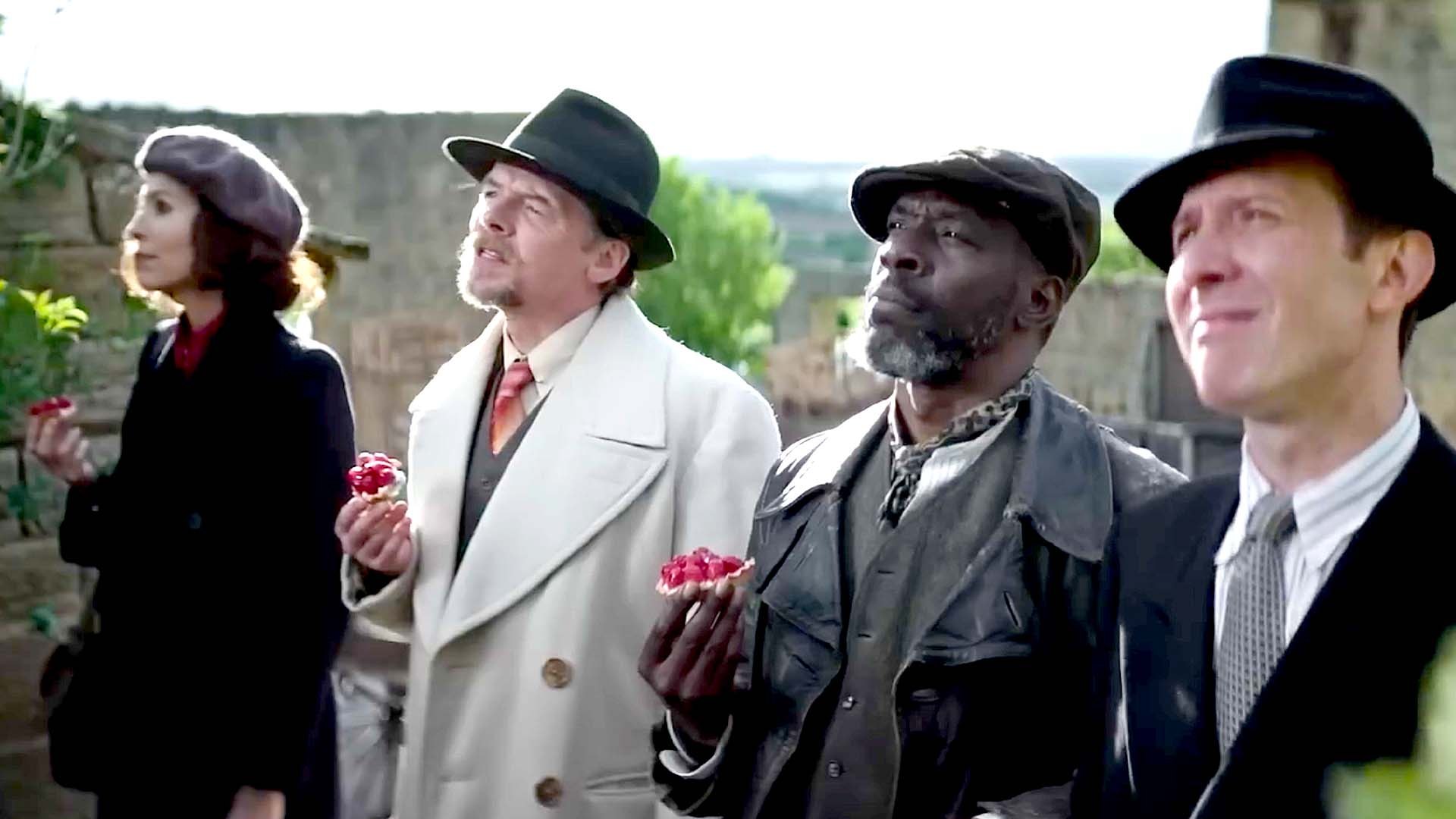
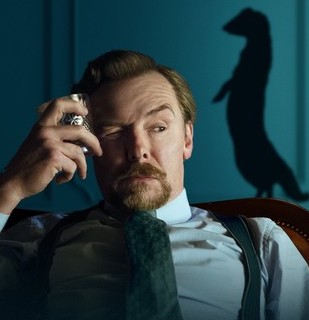
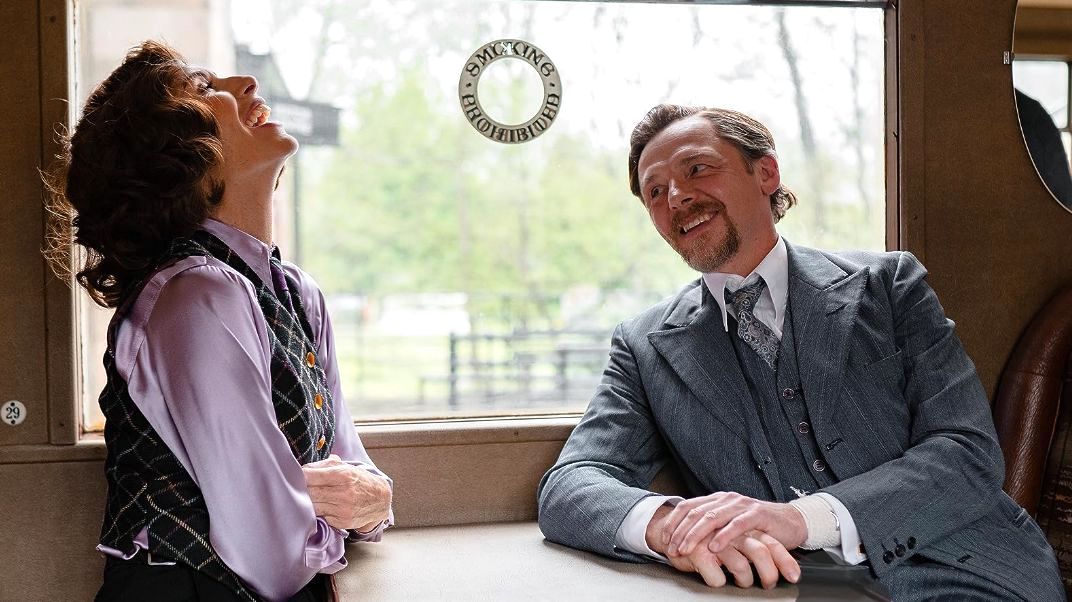
Respected psychological researcher, Doctor Nandor Fodor (Simon Pegg), receives a letter from the Irving family telling him all about their resident mongoose and, after consulting esteemed colleague, Harry Price (Chistopher Lloyd), who has also investigated the case without reaching a satisfying conclusion, Fodor is intrigued enough to travel to the Isle of Man, accompanied by his assistant, Anne (Minnie Driver), to whom he may or may not be attracted. (It speaks volumes about the storytelling when I have to report that I’m still not sure sure about that element.)

Once there, they meet the affable Mr Irving (Tim Downie) and the other members of his household, including his teenage daughter, Voirrey (Jessica Balmer), who makes no secret of the fact that she is an accomplished ventriloquist. (I know: suspicious, right?)

But Fodor’s subsequent attempts to get to the truth of the matter are met with a whole series of bewildering obfuscations. Is Gef real? (No.) Or is he a cunningly contrived hoax, designed to bring people to the Irvings’ remote farm for reasons that can only be guessed at? Normally in cases of deception, the idea is to generate money, but that certainly isn’t what’s happening here. While the Irvings are far from being destitute, they live a frugal existence.

Sigal’s film is certainly enigmatic and it’s also handsomely filmed, the era convincingly evoked thanks to Sara Deane’s assured cinematography – but the screenplay spends far too much time telling us about events that have happened off screen, whilst offering us only the barest glimpses of Gef (voiced by Neil Gaiman). Both Pegg and Driver do their best with their respective characters, despite being given so little to work with. In the end though, the biggest mystery of all is how this unremarkable little project managed to pull in such a strong cast.

By the time we reach the underwhelming conclusion, I’ve pretty much given up on the film, and that’s a shame. There’s something so off-the-wall captivating about its central premise, that I’m left with the powerful conviction that there’s surely a great film to be made about Gef and his escapades.

Sadly, this isn’t it.

2.8 stars

Philip Caveney

Learning to Fly

17/11/23

Traverse Theatre, Edinburgh

We have an unusual reason to remember the name James Rowland.

Searching back through the annals of our reviews blog, I see that, on the 14th March 2019, we were in the Traverse Theatre, watching him perform A Hundred Different Words for Love, part of a trilogy of plays he was touring. We managed to see all three of them but, due to circumstances beyond our control, in the wrong order.

You don’t need long memories to recall that this was a troubling time for theatre-makers around the world – and indeed, the poor turnout for this show had nothing to do with Rowlands’ material but instead spoke volumes about how frightened audiences were of mysterious new virus that was afflicting the world. Tickets had been sold, but few customers were brave/reckless enough to turn up and take their seats. Sure enough, just two days later, theatres across the UK were instructed to close their doors – and it was a long time before they were safe to reopen them.

Happily, things have moved on since those dark days  – and Rowland’s latest offering, Learning to Fly, is a charming and affable piece, based around a recollection from the performer’s youth, a time when he lived in Didsbury, Manchester, near to Fog Lane Park. 

Weirdly, in the 1980s, I lived there too, but that’s another story.

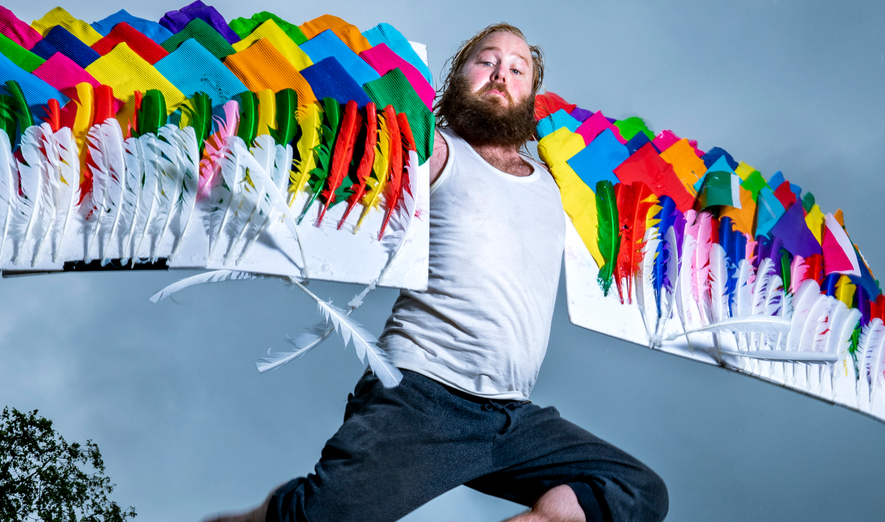
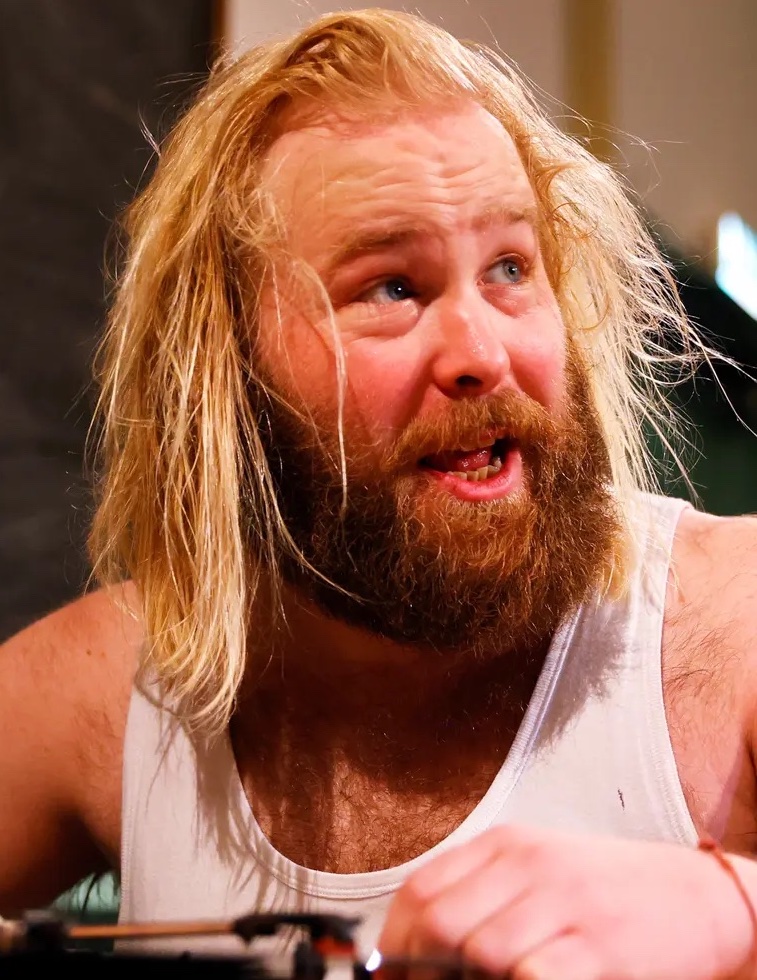
Rowlands is as likeable and swaggering as ever. I can hardly fail to forget that he performed one part of the aforementioned trilogy stark bollock naked, which certainly takes some confidence, but tonight he’s modestly dressed in a white singlet, trackie pants and trainers. He wanders onto the stage, has a brief chat with the audience about trigger warnings and the like, and then launches into his story.

He tells us about being fourteen years old and about an unspecified illness that keeps him from going to school; and how his struggling mother leaves him for one day a week in the care of Anne, an elderly neighbour, who never seems to leave her house and who spends most of her time listening to the music of Beethoven.

Against all the odds, the two of them  form an uneasy friendship, one that steadily grows over the weeks until one night, James does something unprecedented – something that will change their relationship forever…

Learning to Fly is a charming and beguiling piece, one that veers from outright hilarity to moments of pathos and regret. It’s easy to picture Rowlands as a youngster, steadfastly pursuing his own particular goals in life, which perhaps unsurprisingly, are not those of the average fourteen year old. I can believe that he would do something so spectacularly off-the-wall. 

If I’ve a criticism to make, it’s simply that some of the pay-offs are not always delivered as forcefully as I’d like – and there’s an indecisiveness to the conclusion that has tonight’s audience unsure of whether the time to applaud has actually arrived or not. 

But it would be an unsympathetic viewer indeed who doesn’t derive enjoyment from this unconventional mix of comedy, storytelling and music. 

Hopefully Rowlands’ current tour will be allowed to continue without the unwelcome interruption of a pandemic. Fingers crossed.

3.8 stars

Philip Caveney

The Killer

13/11/23

Netflix

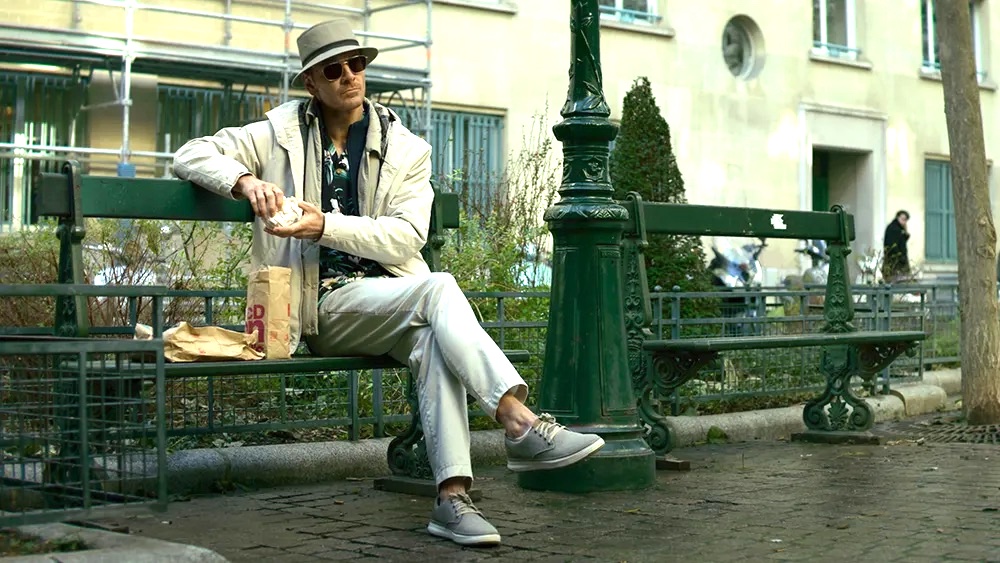
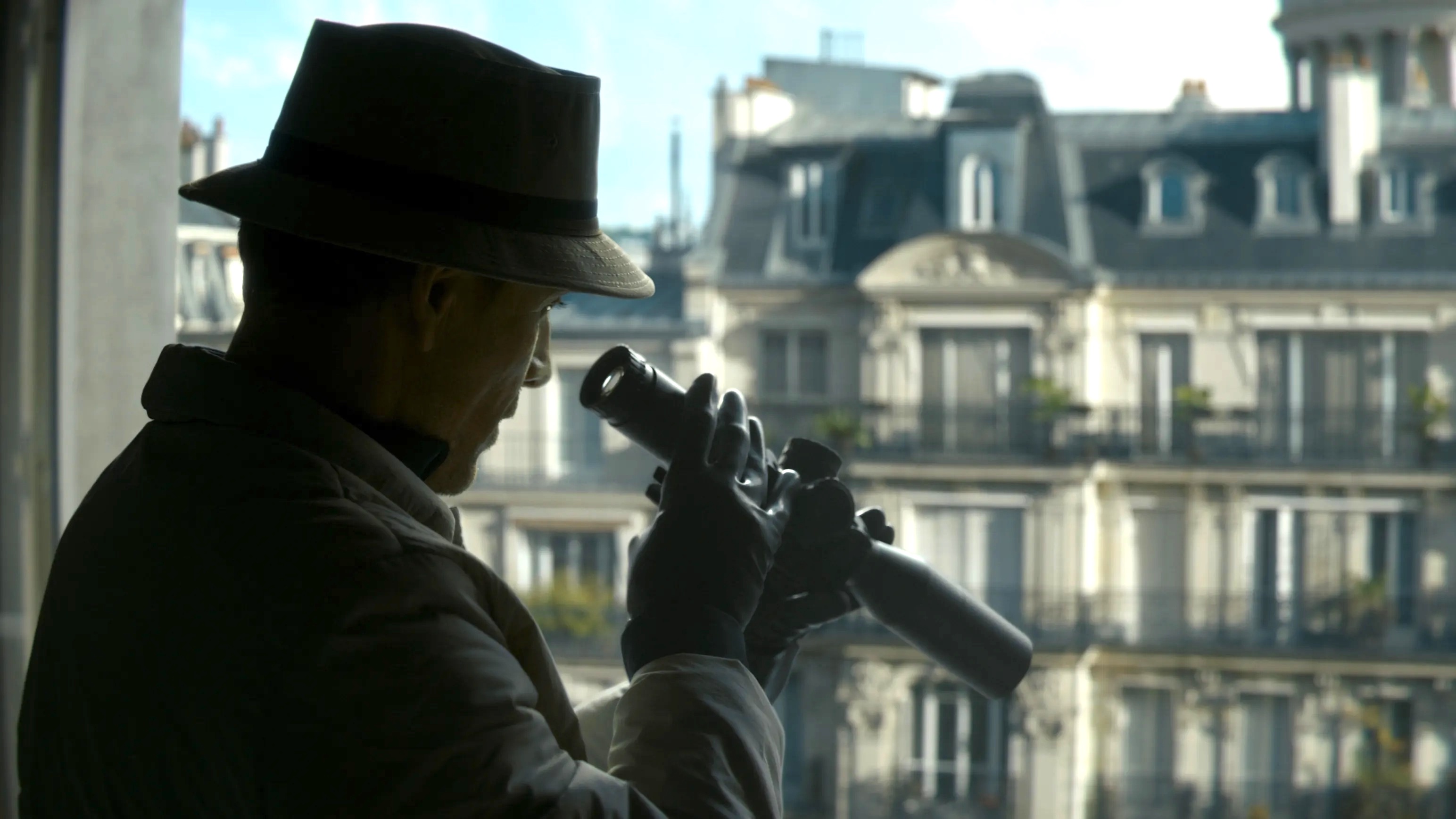
The arrival of a new film by David Fincher is always of interest, but apart from limited screenings at a few independent cinemas, The Killer has quietly dropped onto Netflix without much trumpeting. Based on Alexis Nolent’s graphic novel of the same name, this sees Michael Fassbender as the titular assassin, who, when we first encounter him, is stalking his latest target, whilst simultaneously providing a running commentary. This comes across as a self-help manual for would-be professional murderers and would perhaps be more impressive if the projected hit didn’t go spectacularly awry.

But it does and, shortly afterwards, a revenge attack is carried out on our psychopathic hero’s nearest and dearest, whereupon (cliché alert!) he is obliged to travel around the world ensuring that those who were hired to clean up after his errors are brought to book in the severest manner possible.

Fincher is an accomplished director and the long opening sequence is beautifully handled, the tension and suspense steadily mounting as the seconds tick by. Likewise, an extended fight sequence in an apartment somewhere in Florida is brutally and viscerally captured in bone-crunching detail. The assassin’s preoccupation with listening to The Smiths as he works provides a wonderfully quirky detail and Erik Messerschmidt’s sleek cinematography is a delight.

But there’s an inherent problem here and it’s one of empathy. It’s hard for a viewer to care about a sociopath and even harder to sympathise with him when he’s given the kind of rough treatment he generally doles out to his victims. We never really learn anything about them – or him for that matter – and the only other person we meet in any detail, The Expert (Tilda Swinton), isn’t on screen long enough to make her presence felt.

Ultimately, this is an exercise in style that needs more content to back it up. Yes, the various components are masterfully assembled, and yes, it’s an example of skilfully-constructed images, but I’m left chasing shadows for the best part of two hours and, no matter how artfully that’s depicted, it’s really not enough to make this a satisfying piece of cinema.

3.4 stars

Philip Caveney

Anatomy of a Fall

11/11/23

Cineworld, Edinburgh

Winner of this year’s Palme d’Or at Cannes, Justine Triet’s Anatomy of a Fall is a sly and unconventional crime drama that steadfastly refuses to follow the familiar tropes of the whodunnit, preferring instead to explore the psychologies of its characters. It manages to sustain an air of mystery without ever offering viewers anything resembling a plausible solution – and yet, somehow, this only serves to make the story all the more intriguing.

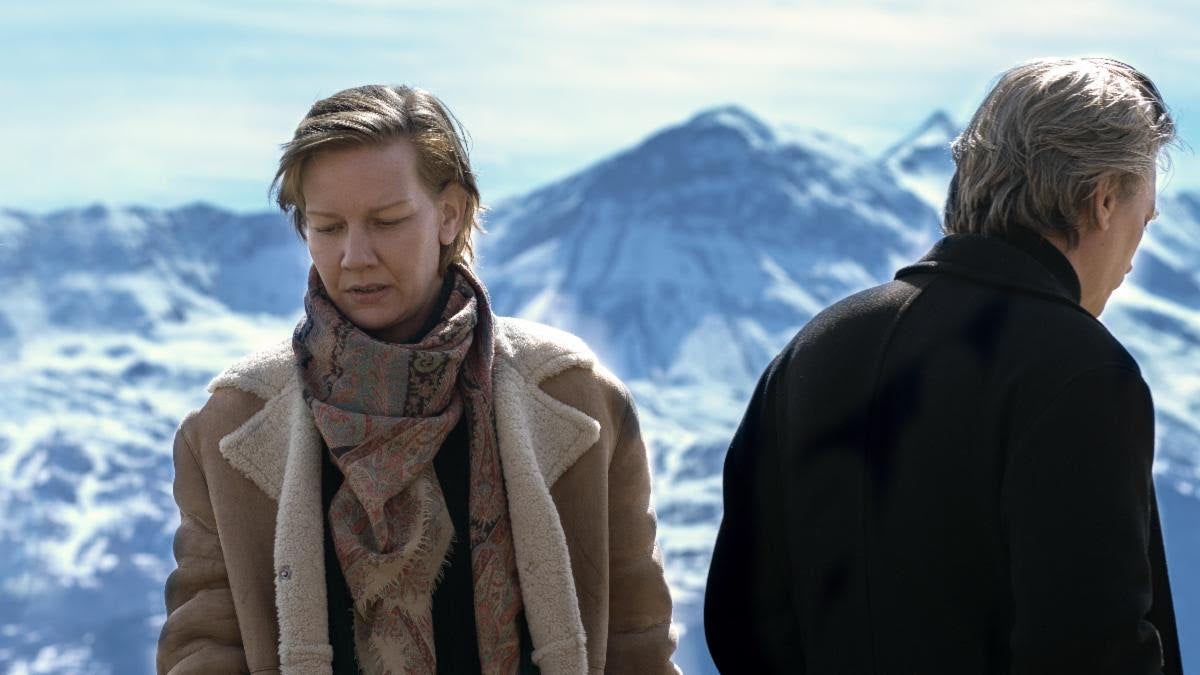
In her remote chalet in the French Alps, novelist Sandra Voiter (Sandra Hüller) is attempting to conduct an interview with graduate student Zoé (Camille Rutherford). There’s an obvious attraction between the two – Sandra is openly bisexual – but up in the roof space, Sandra’s husband, Samuel (Alan Davies lookalike, Samuel Theis), is asserting his presence by doing some noisy manual work. He’s also playing music at an ear-shattering volume, which makes the planned interview impossible. It is soon abandoned and Zoé leaves. 

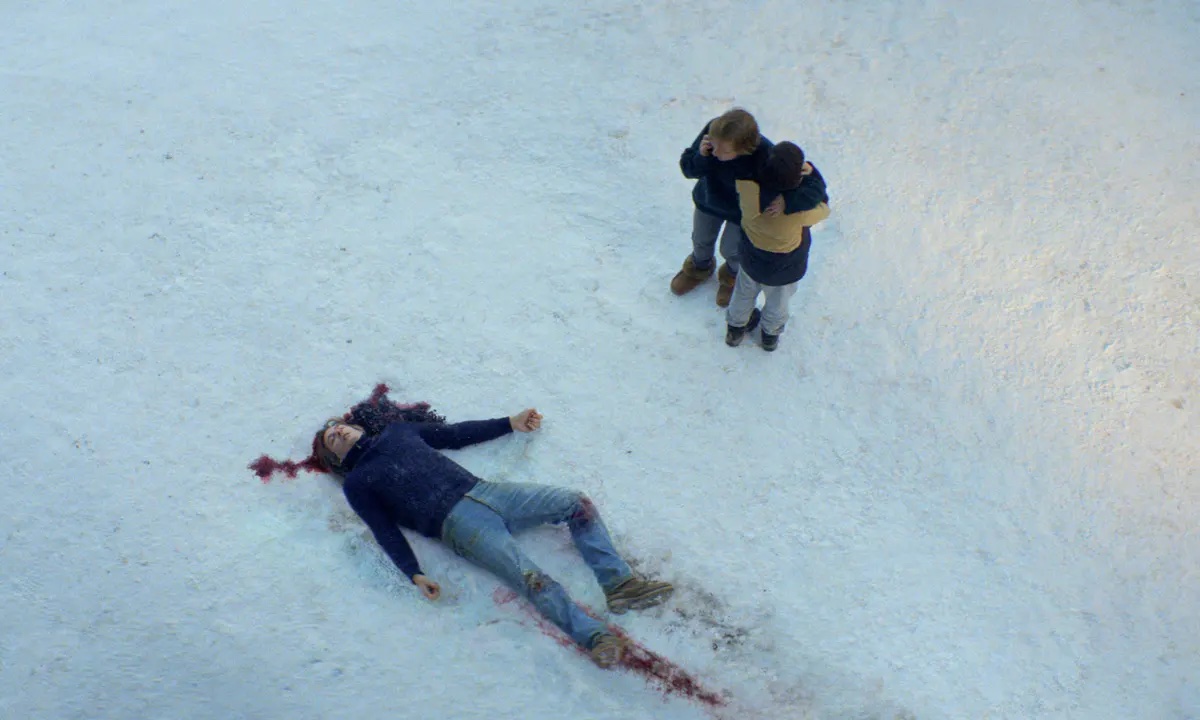
Shortly afterwards, Sandra and Samuel’s visually-impaired son, Daniel (Milo Machado Graner), takes his dog for a walk in the snow and, on his return, he (quite literally) stumbles upon the bloody corpse of his father, lying a short distance from the house. Samuel has fallen from the attic space, striking a shed on the way down.

But did he jump – or was he pushed?

Soon, an investigation is under way and Sandra is the only suspect. Her past actions are making her look ever-more unreliable, so her attorney (Swann Arlaud) is struggling to construct a credible defence – and it probably doesn’t help that he is attracted to her. Meanwhile, the prosecutor (Antoine Reinartz) seems to have made it his personal mission to see her behind bars. 

The irony here is that the person with the clearest vision of what’s actually going on is a boy whose eyes don’t work…

Anatomy of a Fall is a strange beast indeed, a film that becomes increasingly compelling as it moves ever further away from anything approaching a straightforward resolution. The fact that the two main characters are writers of fiction – and the ways in which the narrative becomes increasingly more speculative as the case progresses – adds to the sense of intrigue. And then there’s a late-stage flashback, prompted by the discovery of an audiotape (recorded by Samuel), which sets everything spinning in an entirely different direction. Hüller offers a compelling performance in the lead role, but it’s young Machado Graner who makes the biggest impression, as the indefatigable Daniel, struggling to come to terms with the death of his father.

The nebulous nature of the plotting will doubtless have Agatha Christie spinning in her grave, but this feels like a fresh and unconventional approach to the crime genre and it’s easy to see why the film was chosen as the winner of one of cinema’s most coveted prizes. 

4.3 stars

Philip Caveney

Henderson’s

10/11/23

Barclay Place, Edinburgh

Some friends are up in Edinburgh for the weekend, so we arrange to meet at Henderson’s for a meal and a catch-up. The Henderson name is an Edinburgh institution: Janet opened the city’s first vegetarian restaurant way back in 1962. Sadly, the original venue closed in 2020 (due to the pandemic), but her grandson, Barrie, has since picked up the family (carrot?) baton, taking his turn to encourage the city’s residents to ‘Eat Better, Live Better’.

Philip chooses the vegan king oyster mushroom scallops for his starter, which are served with a cauliflower puree, samphire and seaweed flakes. It’s an impressive opening: the fungi’s texture and shape perfectly mimicking their seafood equivalent, and these are expertly cooked. One of our friends opts for gnocchi, with carrot purée, nasturtium pistou, toasted pumpkin seeds and almond parmesan crumb. He says it’s delicious.

Our other friend and I decide to eschew starters in favour of ‘nibbles’, reasoning that we don’t want to be too full to enjoy our mains. This is a mistake. Both her preserved lemon hummus and my butterbean, confit garlic and rosemary pate are very tasty and well-made, but they’re robust, generously-portioned and served with sourdough. We should probably have stuck with olives!

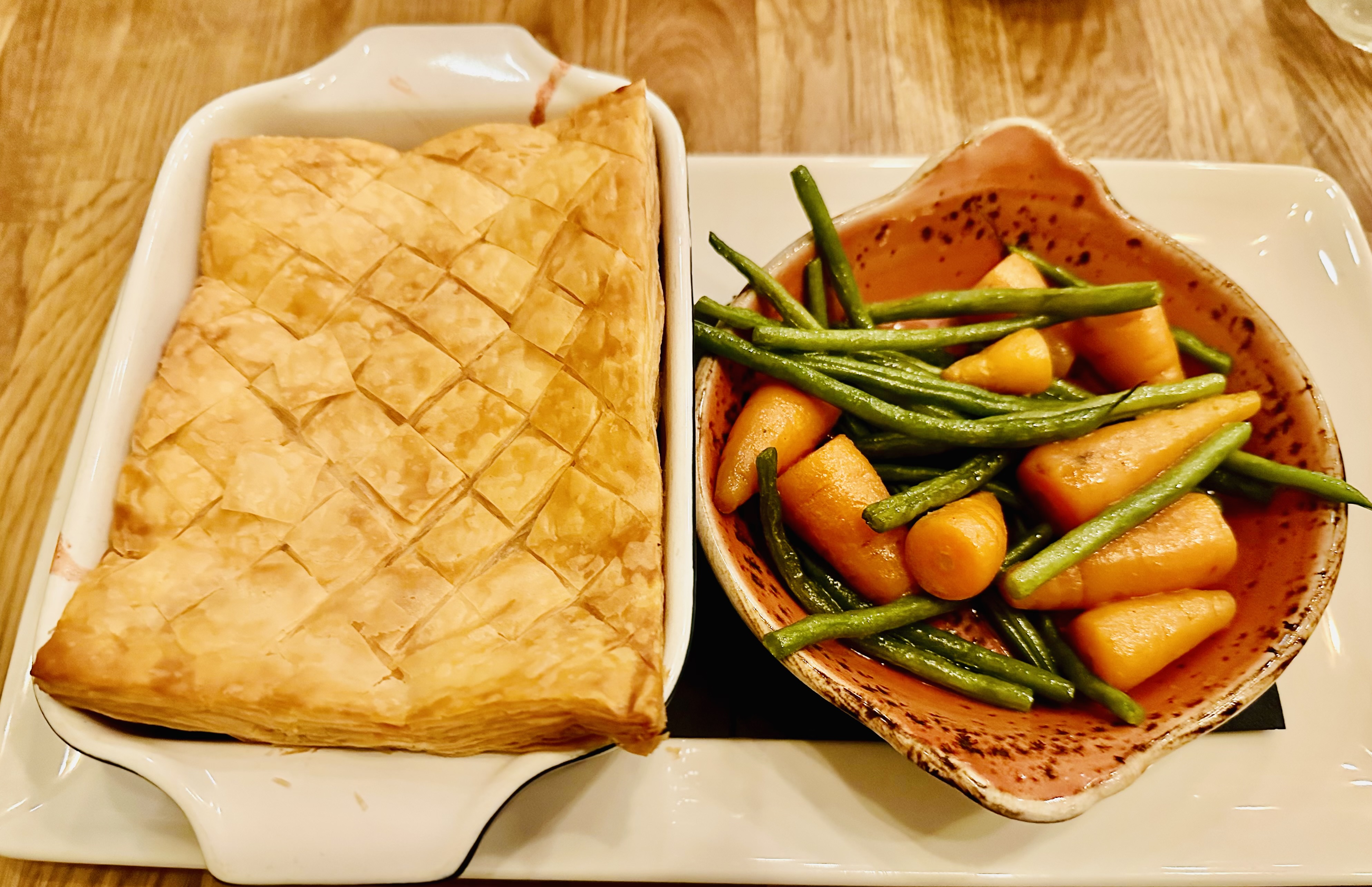
For our mains, three of us opt for the beetroot and black bean burger on a bouncy, homemade brioche bun. There’s also an onion ring, some caramelised onion and, because none of us is vegan, an extra layer of smoky cheddar. The burger comes with a side of skin-on chips, and a rather wonderful stout mayo. Philip – ever the outlier – has the beet bourguignon pie, which, despite its inelegant appearance, turns out to be the standout dish of the evening. Nestled beneath a flaky, golden pastry top is a rich, slow-cooked beetroot concoction, which he devours with gusto.

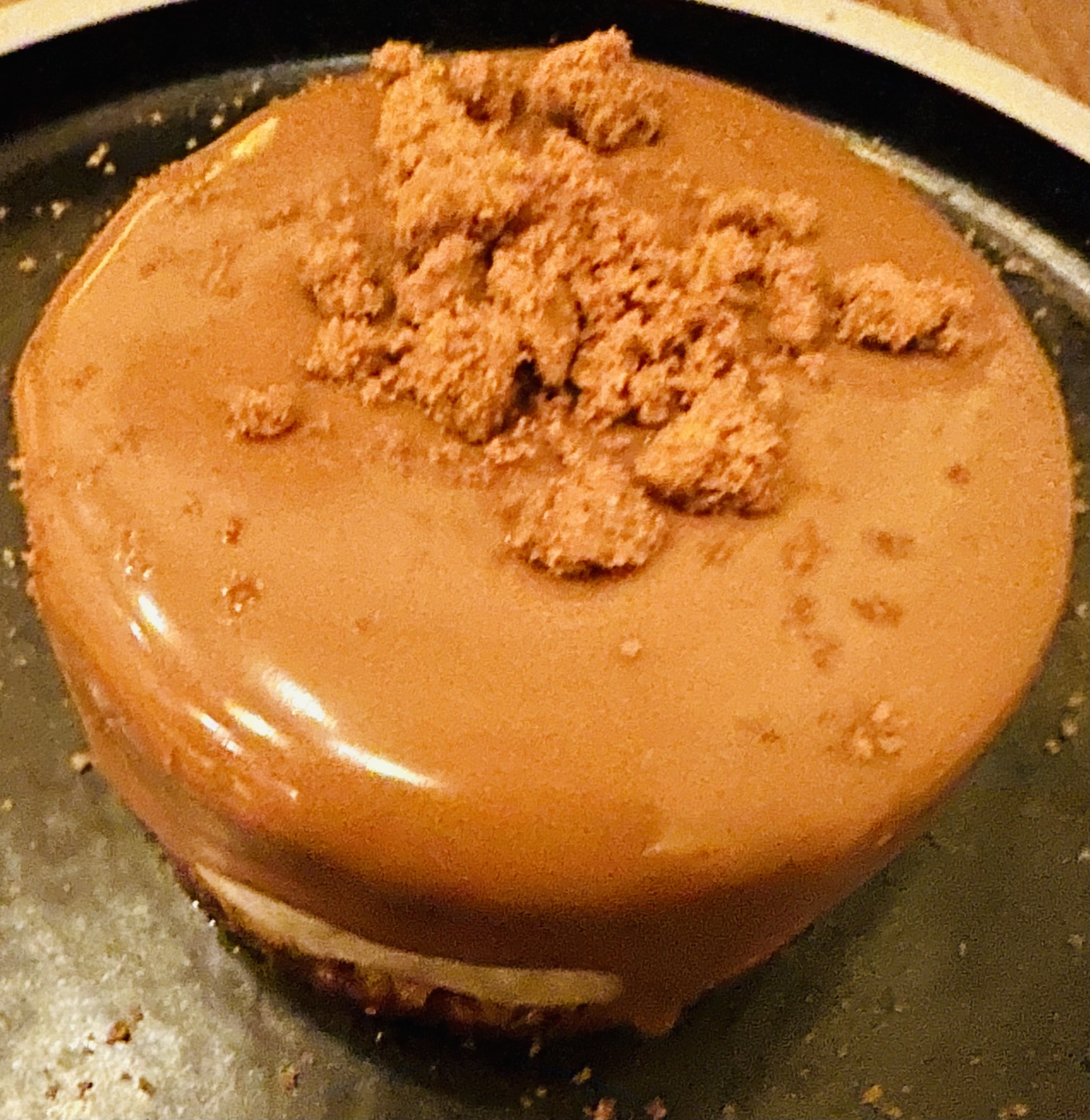
For pudding, our friends share a warm spiced fruit cobbler with homemade vanilla ice cream, while Philip and I go halvies on a slice of vegan biscoff cheesecake and a baked Alaska with banana ice cream and salted caramel topping. While Philip prefers the cheesecake (he likes its silky texture and the fact it’s not too sweet), I think the baked Alaska has the edge, precisely because it is so intensely sugary.

It’s great to spend time with our friends in these convivial surroundings. Throw in a couple of mocktails (I highly recommend the Noscow Mule) and you’ve got yourself a delightful evening.

4.1 stars

Susan SIngfield

The Royal Hotel / Hotel Coolgardie

04/11/23

Cineworld, Edinburgh / Amazon Prime

We watch The Royal Hotel in the cinema. It’s fascinating. We know it’s based on a documentary, but how much of it is true? We head straight home and seek out Hotel Coolgardie.

Wow.

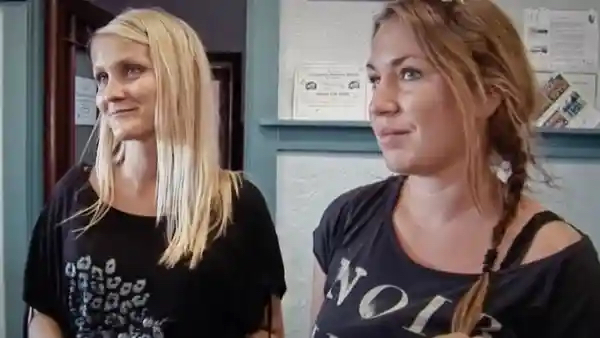
Hotel Coolgardie centres on two Finnish backpackers, Lina and Steph. When their wallets are stolen in Perth, they need to work to earn some money. An agency finds them a job serving drinks in a remote mining town. “You have to be able to cope with male attention,” they are warned. They don’t seem to notice the flashing red light. (Or perhaps they just feel reassured by the mitigating presence of a filmmaker.)

The pub is run by an odious landlord, who proudly informs the agency that it’s okay if the girls are inexperienced so long as they’re good-looking, and then takes great delight in bellowing at them when they arrive, belittling them for not understanding the local dialect and for not instinctively grasping the idiosyncrasies of his business. His clientele are heavy drinkers, and lewd behaviour is encouraged. “My customers grow an extra leg when new girls come into town,” he leers, as he puts out a sign announcing their arrival. In the bar, the men discuss who’ll be the first to ‘bag’ one of them. They know they’re being filmed; clearly, they don’t think they’re doing anything wrong.

Pete Gleeson’s documentary serves as a salutary lesson: when sexism and xenophobia are normalised, they thrive, especially within an isolated community. Coolgardie is not a safe place for Lina and Steph and, because they’re not willing to play along with the roles they’ve been assigned, they’re mocked and resented by the locals.

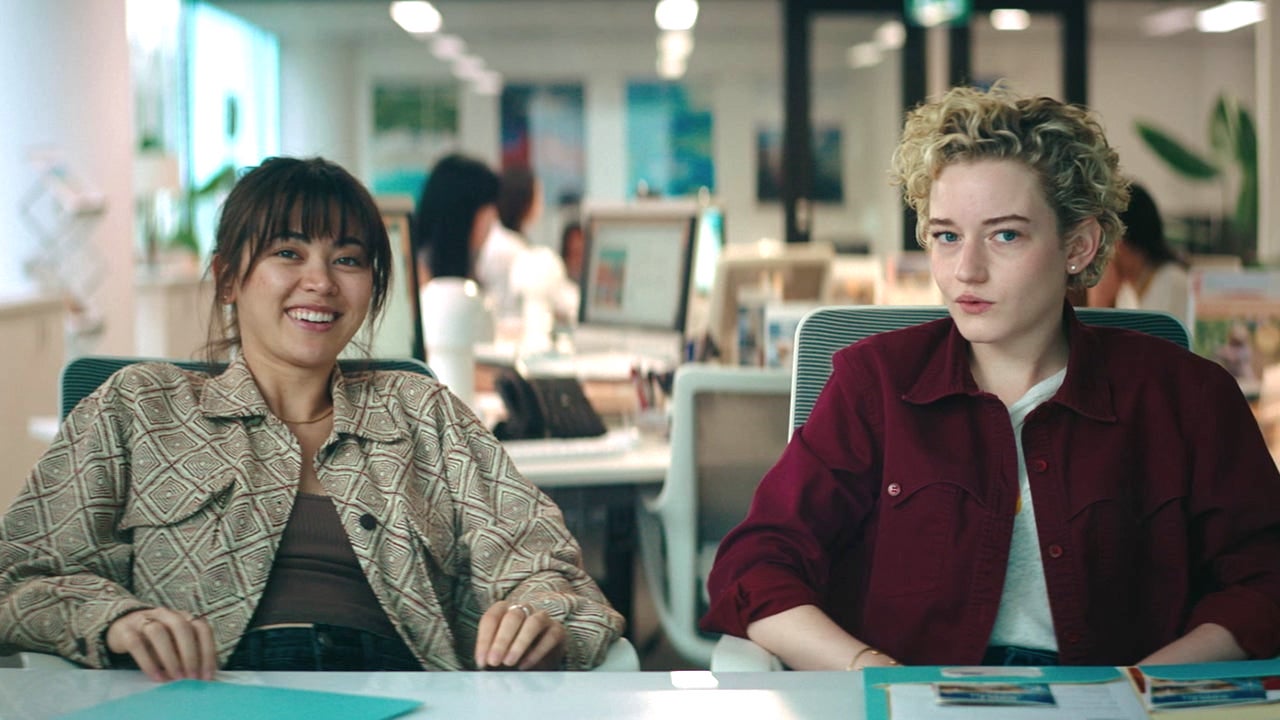
Writer-director Kitty Green seizes on the horror elements of this real-life set-up, highlighting the remoteness of the location as Canadian backpacking duo Hanna (Julia Garner) and Liv (Jessica Henwick) make their arduous bus journey through the empty desert. The Royal Hotel is dirtier and dingier than its counterpart; its customers nastier and more deliberate. The score, by Jed Palmer, ramps up the disquietude, and tension mounts as first Liv begins to assimilate, and then their only ally, Carol (Ursula Yovich), departs, leaving Hanna to face her adversaries alone.

Somehow, Green’s amplification makes the story less menacing. Gleeson’s documentary shows a more nuanced view of the community: we see the men’s vulnerability as well as their defensiveness, the insecurities that fuel their misogyny. This doesn’t excuse them or diminish their threat; in fact, it makes them more frightening because, unlike the cartoonish bad guys in Green’s film, they’re all-too recognisable. In the Royal Hotel, the men are uniformly terrifying; in the Hotel Coolgardie, there is a scale. “Canman” John Joseph Lowe, for example, has a genuinely sweet side. Sure, he’s a rambling drunk who demands too much of the girls’ attention and creeps them out by showering them with unwanted gifts, but he also looks out for them, drives them where they want to go and truly wants to help. On the other hand, “Pikey” – reincarnated in The Royal Hotel as Dolly (Daniel Henshall) – is a terrifying man, spewing hatred towards all women because no one wants to sleep with him. “It’s because I haven’t got a driving licence,” he says. “That’s not the reason,” Lina tells him. Henshall’s Dolly is horrible, but nothing he does is as scary as Pikey’s quiet, all-consuming rage.

What’s more, while Hotel Coolgardie‘s bogeyman is sexism, The Royal Hotel‘s seems to be Australia. The difference is subtly drawn, but it’s there. In the documentary, we see the magnification of a bigoted culture, flourishing in this particular spot thanks to an enabling landlord. In the movie, the implication is that Canada is somehow different, that the problem is specifically Australian working-class men.

Still, I wish that Gleeson had acknowledged his presence in Hotel Coolgardie; there’s something disingenuous in the way the film suggests the women are in real danger, when we know that he’s always there with them, filming everything, reducing their risk. But I still prefer it to Green’s film, which undermines the truth of Hanna and Liv’s situation by allowing them to ‘win’. The coda at the end of The Royal Hotel is far more chilling.

It makes sense to view these two films as a pair. My dearest hope is that the job agency stops sending young women out to places like Coolgardie. It’s not enough to warn them that they have to be okay with male attention. They need to warn the landlords instead: our clients have human and employment rights.

The Royal Hotel3.4 stars

Hotel Coolgardie – 4 stars

Susan Singfield

Flip!

03/11/23

Summerhall, Edinburgh

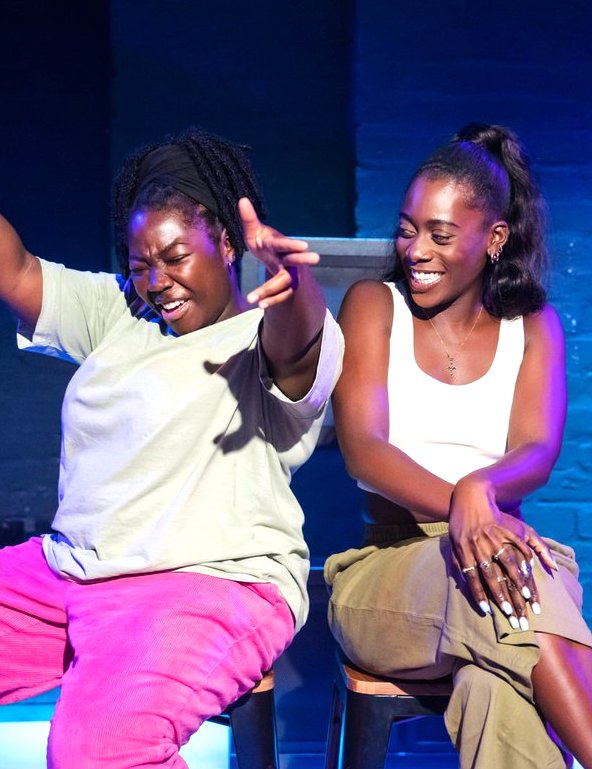
Racheal Ofori’s FLIP! is a fresh and keen-eyed take on the Faust story. Two young graduates, eager to make their mark, are enjoying moderate success on their WePipe channel. Their videos are vibrant and fun, full of silly catchphrases and exuberant dance routines, pragmatic beauty tips and off-the-cuff remarks. They’re enjoying making them – and it shows. For Crystal (Jadesola Odunjo), the collaboration and creativity are paramount, but Carleen (Leah St Luce) is hungry for cold hard cash. She has to be: unlike Crystal, she doesn’t have parents who can bankroll her, and her hard-earned degree doesn’t seem to be helping her to get a decent job.

So when a new app starts to gain traction, Carleen is all over it. FLIP! is hugely popular, its short video format both punchy and easily accessible. Crystal takes a bit of convincing – she’s not keen on the app’s style or ethos – but, before long, the duo are doing well. Until Crystal says something that other users don’t like, and she’s trending for all the wrong reasons…

Carleen is faced with a dilemma: should she stand by her friend and eschew her newfound notoriety, or sign a deal with FLIP! as one of their brand ambassadors?

Under Emily Aboud’s assured direction, FLIP! is a kinetic, engaging piece of theatre, turning an almost empty stage into a convincing digital universe. Aline David’s lively choreography helps to underscore the characters’ youth – their exuberance and naïvety – and both Odunjo and St Luce deliver flawless performances, charting the characters’ respective journeys from dreams to despair.

Because, of course, just as every action has an equal and opposite reaction, every exciting new promise of autonomy and riches soon has the sharks circling, working out how they can exploit it for their own ends. And FLIP! are no exception, cunningly demanding the rights to Carleen’s digital image and then using AI to create content for her. Sure, she’s making money, but she’s no creative control, no pride in her work. The fun has gone – and so has her best friend. But if she reneges on the deal, what then? FLIP! will just use someone else, and she’ll be back in a dead-end job. There’s no way out.

Ofori’s social commentary is sharp and incisive, and we leave the theatre with much to discuss. FLIP!‘s Edinburgh run is over now, but it’ll be at the Soho Theatre from 7th-25th November, so do try to catch it if you’re in London. It’s FLIP!pin’ great!

4.3 stars

Susan Singfield

Dead Dad Dog

02/11/23

Traverse Theatre, Edinburgh

John McKay’s quirkily titled play originally debuted at the Traverse in 1988, before transferring to the Royal Court Theatre in London – so it’s great to have the opportunity to see it back in its original home. This deceptively simple two-hander takes the form of a series of titled vignettes punctuated by snatches of classic 80s pop songs.

It’s early morning in Edinburgh and ‘Ek’ (Angus Miller) is preparing breakfast and psyching himself up for an interview at BBC Scotland, where he hopes to start a new career. He’s ill-prepared for the arrival of his father, Willie (Liam Brennan), a quiet man in a loud suit. Ek’s surprise is understandable: Willie has been dead for twelve years. He explains that he’s been granted the opportunity to visit Ek so that the two of them can ‘reconnect’. “Heaven,” he tells Ek, “is OK.”

The visit comes with some awkward conditions. Ek and his dear-departed Dad must remain within a few paces of each other at all times (otherwise there are disastrous side-effects). What’s more, Willie can be seen – and heard – by all and sundry. Which is awkward to say the very least. But Ek is determined to attend his job interview anyway, and even goes ahead with a date with his latest crush. A bad idea? Well yes, but this is hardly a realistic story and much pleasure is derived from the absurd comedic situations that the duo are obliged to stumble through.

Both Miller and Brennan offer assured and likeable performances and I love the simplicity of the staging, where one wooden chair is the only prop, pressed into service to represent a whole range of different things. There’s a strangely old-fashioned feel to the piece – so much has changed since 1988 – and sadly, a planned second half, featuring a more contemporary sequel, Sonny Boy, is unable to go ahead due to illness in the cast. (The current foul weather conditions might be part of the problem too.)

This is a shame, because added pleasure would surely stem from seeing how things have metamorphosed over the intervening years. Nonetheless, Dead Dad Dog is an entertaining piece. Liz Carruther’s direction keeps the pot bubbling merrily away and McKay’s script provokes much hilarity (and the occasional touch of pathos) as we go. Fingers crossed we get to see that sequel.

4 stars

Philip Caveney

The Grandmothers Grimm

01/11/23

Traverse Theatre, Edinburgh

The Grandmothers Grimm, written and directed by Emily Ingram, returns to Edinburgh for the final two nights of its latest tour. Premiered in 2017, this long-running play continues to resonate six years later, drawing in a sizeable crowd tonight at the Traverse.

Revisionist fairy tales are nothing new: like pantomimes, these stories survive because they’re endlessly adaptable. But this production, by Some Kind of Theatre, is more about intellectual property: who invented the stories, who owns them – and who gets the credit.

It’s no surprise to learn that the past was sexist (the present is pretty sexist too). But it is perhaps news that the Grimm brothers’ project – collecting traditional folk tales for a compendium – actually deprived a lot of working-class female storytellers of their living, like a nineteenth-century Spotify. After all, who’s going to pay to listen to an old woman tell them a story if they have ready access to a printed copy of the text? Jacob (Justin Skelton) and Wilhelm (Gerry Kielty) might argue that they never claimed authorship of the tales, readily acknowledging their process, but it was their names on the cover – and their profits in the bank.

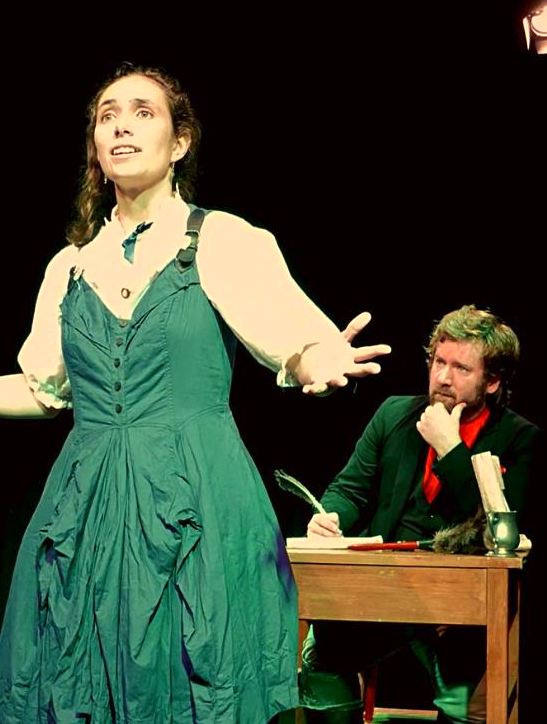
Marie Müller (Ingram) opens the play, alone, weaving her narrative with practised ease. This, we understand, is how the stories were traditionally told: a paying audience listening, rapt, as an elderly, peasant woman draws us in. When Jacob and Wilhelm burst onto the stage, accompanied by the middle-class Marie Hassenpflug (Sophie Harris), it’s clear that Old Marie doesn’t stand a chance. She’s displaced, allowed to speak only for as long as it takes for the brothers to transcribe her words.

Hassenpflug doesn’t fare much better. She’s educated so the Grimms are superficially more respectful towards her. Nonetheless, they purloin her stories with a blatant disregard for her authorship; it doesn’t occur to them to credit her (a bit like those celebrity children’s authors, who don’t credit their ghost writers…). Harris imbues Hassenpflug with a fierce dignity, which makes for a stark contrast to the brothers’ pettiness.

Kietly’s Wilhelm is focused on sales. He thinks the stories need to be sanitised so that parents will buy them for their children. Skelton’s Jacob hates this idea: he doesn’t want to create the kind of sappy stories he associates with Charles Perrault. He favours a warts and all approach, arguing that the darkness is what makes the tales. I’d agree with him if it weren’t for the fact that his version of ‘authenticity’ denies the existence of the real originators.

The staging could hardly be more simple: the performance area is almost empty, save for a desk and a couple of books; the only additional props are some feathers, cups and apples. This is no-frills, low-budget, black-box theatre – and none the worse for it. Skelton provides the comic relief, galloping round the stage as a donkey prince, as the quartet bring the various tales to life. It’s deftly done, so that we hear the original versions and then see them warped and changed. The pace never falters.

If The Grandmothers Grimm feels like a natural fit for the Edinburgh Fringe, then it’s nice to be transported back to August on this cold November night.

4 stars

Susan Singfield