Group Portrait in a Summer Landscape

05/10/23

Lyceum Theatre, Edinburgh

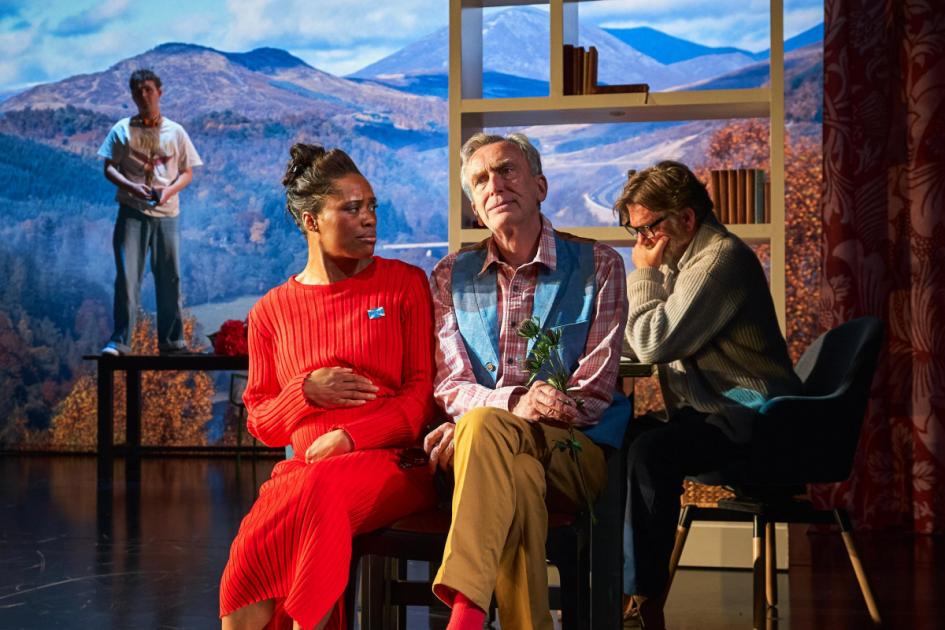
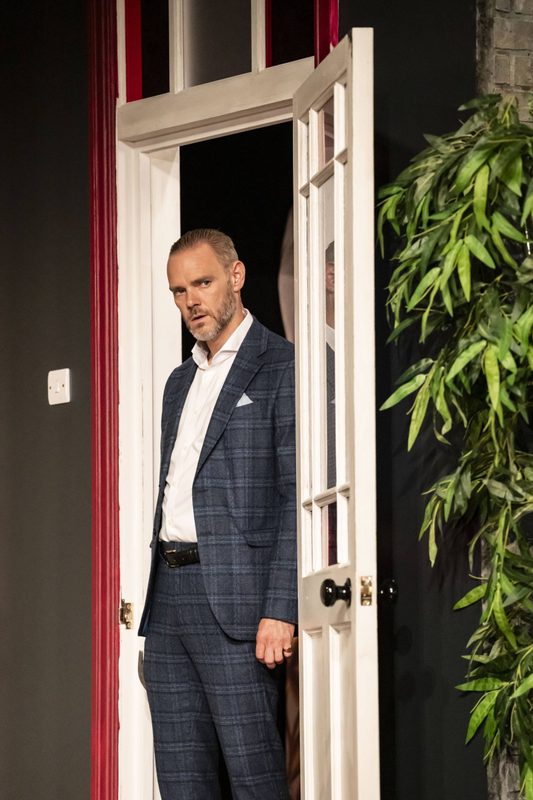
Patriarch Rennie (John Michie) has invited a disparate group of people to his retirement party. He’s had to keep the guest list secret from his wife, Edie (Deirdre Davis), because – with the exception of her old pal, film star Jimmy Moon (Benny Young) – there’s no way she’d agree to hosting the people he has in mind. En route to the couple’s country house in the Scottish Highlands is their daughter Emma’s ex-husband, for example – even though their wedding ended acrimoniously and Charlie (Matthew Trevannion) is renowned for wreaking havoc wherever he goes. Of course, he maximises the antagonism by bringing along his latest girlfriend, Jitka (Nalini Chetty), and why wouldn’t Rennie ask the newly-betrothed Frank (Keith Macpherson) and Kath (Patricia Panther) to join the party? It’s not as if Frank’s always been in love with Emma (Sally Reid) or anything, is it? Oops. There’s an uninvited presence too: the ghost of Rennie and Edie’s son, Will (Robbie Scott), who watches over the day’s proceedings with increasing horror…

Playwright Peter Arnott says he set out to to write a ‘Scottish Chekhov’ and to some extent he has succeeded. At first it seems as though, unlike Chekhov, Arnott is looking back at the political moment that nominally serves as the play’s pivot; he has the advantage of hindsight to create dramatic irony. After all, we know the outcome of the 2014 Scottish independence referendum, the divisive topic inflaming the characters. But we soon learn that this is just a distraction: as Charlie says, it’s mere tinkering around the edges while ignoring the real revolution that is on its way, and which only the rich and ruthless will be able to survive.

If Arnott’s script is retro, then David Greig’s direction is decidedly contemporary, a deliberate jarring of styles that helps to illuminate the sense that something is changing, mirroring the mismatch between parochial politics and apocalyptic predictions, Chekhovian naturalism and magical realism. I like the dissonance.

Jessica Worrall’s set also leans into the contrast, a hyper-realistic backdrop juxtaposed with a more figurative interior: a glorious photograph of a Highland glen and a sketched-in kitchen-diner, symbolised by oversized shelving units, enormous tables and vast floral curtains.

Both Simon Wilkinson’s lighting and Pippa Murphy’s sound are integral to the production: the former spotlighting the snippets of conversation that combine to drive the plot, the latter signalling the shifts to the ghost’s point of view, as the sound distorts and fragmented memories play through Will’s Walkman. This supernatural presence is one of my favourite things about the play: Scott physicalises the spirit’s pain and confusion with a beautiful awkwardness.

The first act is very strong, an interesting set-up that promises something the second doesn’t quite deliver. Although the characters are all cleverly depicted, the piece feels somehow unfinished, as if the story arc has been cut short. Rennie’s revelation, when it comes, is anticlimactic, and I don’t quite buy it as a reason for inviting these particular people to his home (why would anyone ever invite Charlie anywhere?). But, even if it’s a little opaque and doesn’t offer any real answers to the issues it grapples with, Group Portrait in a Summer Landscape is an intelligent and ambitious play, leaving us with a lot to think – and talk – about.

3.8 stars

Susan Singfield

Sister Act

04/10/23

Festival Theatre, Edinburgh

There are some films that make the transition to stage musical against all the odds – and there are others that are clearly destined to be that very thing from the word go. 1992’s Sister Act, a comedy vehicle for the then rising star Whoopi Goldberg, definitely belongs in the latter category. Funny, irreverent and already packed with rousing gospel tunes, this feels like a natural progression.

Philadelphia, 1977. Deloris Van Cartier (Landi Oshinowo) is trying to make headway as a singer on the Philly soul scene and, when we first meet her, she’s auditioning at a nightclub owned by her shady boyfriend, Curtis (Ian Gareth-Jones). Curtis (who naturally is married) assures Deloris that she’s not quite ready for stardom and offers her one of his wife’s cast off fur coats as compensation. Deloris already has doubts about the wisdom of the relationship and this is compounded when she witnesses Curtis murdering one of his henchmen, whom he suspects is a police informant.

Deloris seeks help at the local police station, where she encounters former school chum and crush, ‘Steady’ Eddie Souther (Alphie Parker). Eddie wants Deloris to lie low until she can speak about the murder in court and he thinks he has the perfect hideout for her. It’s a convent, Our Lady of Perpetual Sorrow, an ancient establishment that has fallen on hard times and is struggling to survive. It’s presided over by the acerbic Mother Superior (Lesley Joseph), who struggles to cope with Deloris’s potty mouth and, in an act of desperation, assigns her the task of coaching the convent’s resident choir, which is frankly terrible.

But Deloris has her own methods of coaxing the best performances out of the sisters and the results are startling to say the least.

What ensues is a slick, funny, exhilarating and sometimes uproarious sequence of events that never loses momentum. There’s so much here to relish. The vocal performances of Oshinowo – and of Lizzy Bea who plays the young noviciate, Sister Mary Robert – are simply thrilling to witness, their voices soaring over the sound of a live band. The resident nuns all have their own individual characters and I’m particularly impressed by Isabel Canning’s Sister Mary Patrick, whose enthusiastic twirls and gestures demonstrate the sheer exuberance of a woman discovering the joy of her own inner creativity.

The set and costume designs by Morgan Large are gorgeous, a wonderful mash up of stained glass and 70s kitsch, the many complex scene changes happening as if by magic. Alistair David’s choreography makes everything look effortless and Joseph demonstrates the kind of comic chops that have kept her treading the boards for so many years. And yes, maybe there is a big dollop of schmaltz thrown in for good measure, but hey, that’s no hardship.

By the finale, which features more sequins than seems humanly possible, I’m clapping along with the rest of the packed audience, loving every minute. The term ‘feel-good theatre’ is sometimes overused but I can’t think of a more appropriate description for Sister Act. This is a ton of fun.

4.2 stars

Philip Caveney

The Sheriff of Kalamaki

03/09/23

Traverse Theatre, Edinburgh

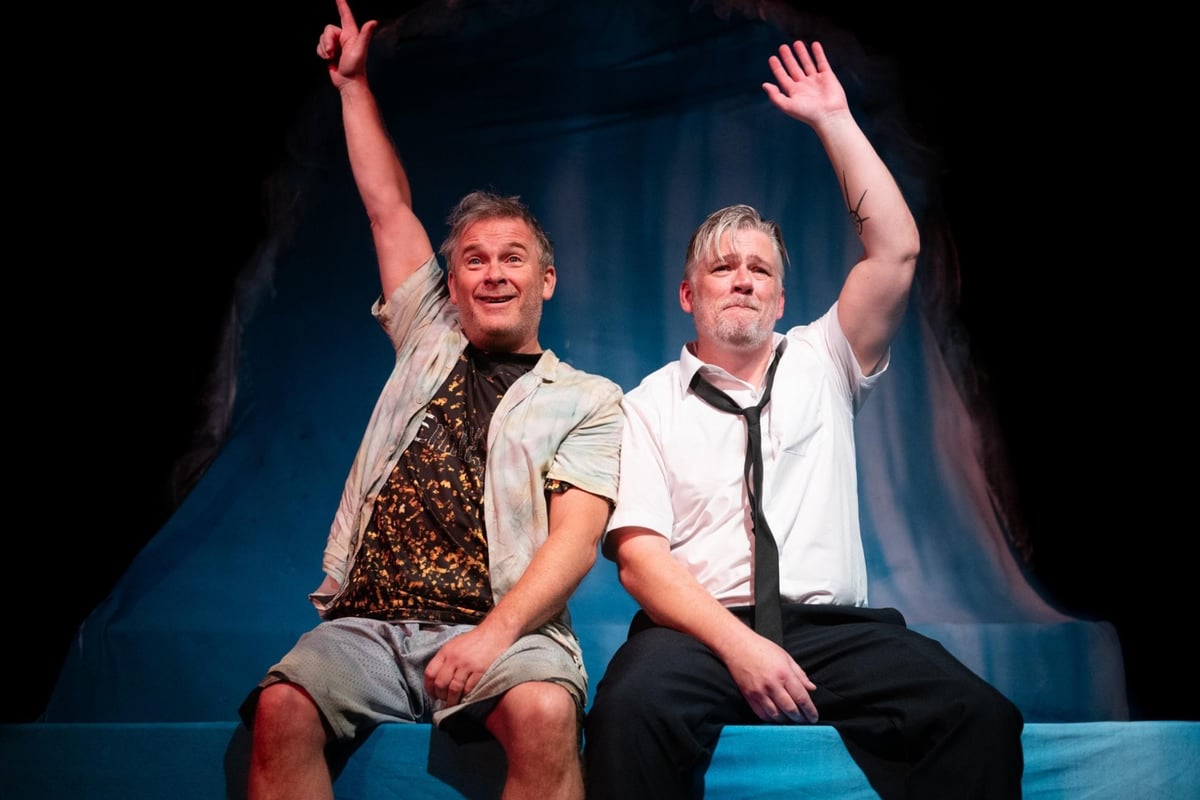
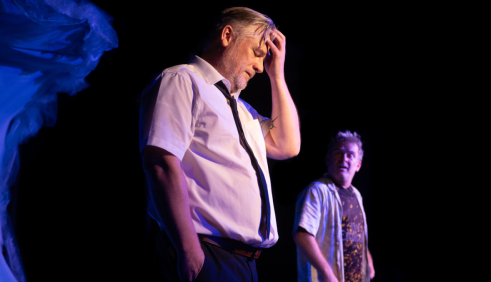
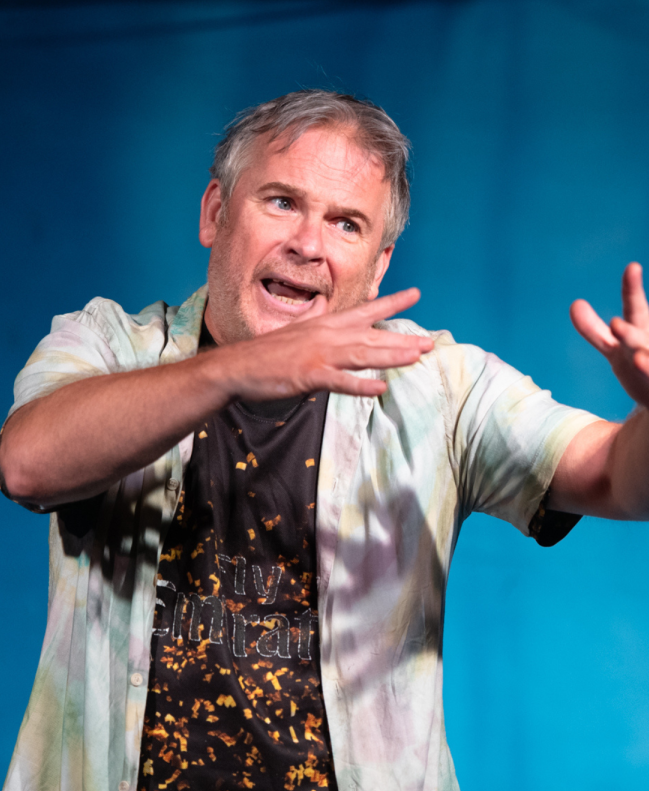
In this unusual two-hander by Douglas Maxwell, Paul McCole plays the eponymous law-keeper. It’s not an official role but alcoholic Dion is proud of the title, even if he did choose it himself. He swaggers (and staggers) his way through the bars and clubs of Zakynthos, seemingly unaware that he’s being used as a lookout by the local drug dealer. He’s a loveable character, his cheery bluster doing little to hide just how damaged and vulnerable he really is. His existence is precarious but he seems to be coping – until his apparently straight-laced brother, Ally (Stephen McCole), comes looking for him, after almost thirty long years…

Maxwell eschews a duologue in favour of two almost completely separate monologues, a structural device that mirrors the brothers’ estrangement. Dion, when we first meet him, is alone – as he has been since 1994. When Ally shows up, the ensuing conflict shows us how this situation began, and then it’s Ally’s turn to find himself bereft and isolated in Kalamaki, a solitary figure standing on a cliff, facing his demons, while in the town below him, everyone else is having fun. The script’s construction makes for an oddly unsettling experience, but I think it serves the story well.

Gemma Patchett and Jonny Scott’s set design is suitably stark: a raised platform, overshadowed by a huge, curved sheet that represents the sea and sky. This works well on a figurative level too, the brothers dwarfed by the natural world, the quarrel that once seemed so all-consuming now rendered petty and insignificant. After all, the planet’s burning: Ally’s plane is half-empty; tourists have turned their backs on the island’s unbearable heat and unpredictable wildfires.

Jemima Levick’s direction is lively and pacy, highlighting the superficial contrasts between the two men, while the real-life McCole siblings are both formidable performers, creating a convincingly acrimonious relationship. Their differences are slowly peeled away, revealing their essential similarities and exposing the myths we tell ourselves about what ‘a good life’ really is.

4 stars

Susan Singfield
Ka Pao

01/10/23

St James Quarter, Edinburgh

We’ve been looking forward to this evening. Not only are we catching up with friends we haven’t seen in waaaay too long, we’re also – on their recommendation – visiting Ka Pao, a new Scottish/Southeast Asian fusion restaurant in the swish St James Quarter. The menu looks exciting!

It doesn’t disappoint.

The venue earns its first plus-point by presenting us with two bottles of chilled tap water as standard – one still, one sparkling. I like this new trend and drink a lot (maybe too much) of the fizzy one.

There’s a set menu for four or more people, but not everyone in our party fancies it, so we go à la carte. All dishes are for sharing we’re told, and are encouraged to order three or four each: a snack, a starter, a main and a side. Thank goodness we stick to three – it’s still too much. But that’s my only gripe.

This is lovely food: fresh, distinctive and perfectly cooked. For snacks, we sample the tomato and aubergine dip with pork skins, the pork and bone marrow sausage and the arbroath smokie miang. The pork skins are amazing – puffed up like poppadoms (or like yak chews, according to our dog-owning friends). The sausage is also delicious, just bursting with flavour, but the arbroath smokie is the most interesting. It comes mashed with peanuts and galangel, and we’re instructed to wrap a spoonful in a spinach leaf. It’s sweet at first, then spicy, then finally fishy and smoky. We decide we like it.

Our starters are corn ribs with salted coconut, shrimp and lime, and crispy pork belly. Three of us have ordered the corn but two portions would suffice. Not that we’re complaining: these are easily the standout of the evening, deceptively simple, crisp and utterly delectable. We spend some time looking for recipes when we get home.

For mains, we have the green curry of lamb shoulder (which comes with broad beans, peas and banana chilli), the chicken leg massaman curry (with ratte potato, smoked grape and peanut) and the chuu chee curry of courgette (with peas and ramiro pepper), with a side of stir-fried savoy cabbage and a couple of portions of jasmine rice. The chicken curry is very good, although one of our friends finds it too sweet for her palate. The lamb is particularly tasty, a fiery delight, the chunks of meat slow cooked until they’re melt-in-the-mouth tender.

We all profess to be full, but we still say yes to pudding, sharing a couple of portions of almond and cardamom sponge with pineapple and coriander curd (wow!) and a serving of mango and calmansi soft-serve, a kulfi-like confection that offers a citrus-fresh contrast to the sweetness of the pudding.

Like the comic-book sound effect its name evokes, Ka Pao is bold, punchy and memorable – and we’ll certainly be back for more.

4.7 stars

Susan Singfield
The Creator

30/09/2

Cineworld, Edinburgh

Director Gareth Edwards made an impressive feature debut with Monsters in 2010, but followed it with a lacklustre Godzilla reboot and, in 2016, an underrated Star Wars standalone, Rogue One. The Creator marks a significant step up for him. This epic sci-fi adventure is set on a war-torn planet Earth in the year 2070 and its story – about the struggle between humans and AIs – could hardly be more topical, particularly as Edwards (who co-write the screenplay with Chris Weitz) takes it in an entirely unexpected direction. Who are the bad guys in this story? Wait and see.

Twenty-six years after a nuclear explosion has ravaged Los Angeles, Joshua (John David Washington) is an American Army operative, working under deep cover amidst AI forces, who are based in New Asia. He’s fallen in love with and is married to enemy scientist, Maya (Gemma Chan), which is complicated to say the very least, particularly as she’s now pregnant by him. But when the mission goes badly awry, Maya is caught in the crossfire and Joshua only just manages to escape with his life.

Some time later, he’s approached by Colonel Howell (Alison Janney), who has compelling evidence that Maya is still alive and wants Joshua to join a new mission to hunt her down. What’s more, she assures him, Maya is deeply involved in the creation of a new AI ‘super weapon’, something that American forces are desperate to eradicate. Sensing an opportunity to be reunited with his wife, Joshua agrees to the mission – but when he comes face to face with the new weapon, he is understandably bewildered. Alphie (Madeleine Yuna Voiles) is a child, possibly the most adorable-looking creature in the universe – and she may even contain Joshua’s own DNA.

What ensues is a fabulous slice of world-building, a series of breathless action sequences set against majestic eastern landscapes. There may be a little too much gunplay here for some – and the 12A certificate means that punches are occasionally pulled to try and constrain all that violence – but it’s impossible not to be swept up in the steadily rising suspense, as Joshua desperately tries to get Alphie to safety.

The Creator looks like a big expensive project but Edwards has brought the film in for a comparatively miserly eighty million dollars (it sounds like a lot but is a third of what these sci-fi extravaganzas usually cost). What’s more, the story, which sounds like broad strokes on paper, is considerably more nuanced than most sci-fi adventures and I find myself constantly impressed by the film’s invention, the grubby reality of the AI creations that populate this imagined world. Edward’s script fearlessly challenges our expectations about America. The usual Hollywood message is completely subverted and the age-old macho-saviour complex revealed as a toxic sham.

John David Washington makes a compelling hero (and, after Tenet, he must be relieved to star in a film that viewers can actually understand), while Madeleine Yuna Voiles is quite simply mesmerising as Alphie. If you like action and you like sci-fi, chances are you’ll enjoy The Creator. And happily, you won’t have to pay fifty million dollars to see it.

4.4 stars

Philip Caveney

The Old Oak

28/09/23

The Cameo, Edinburgh

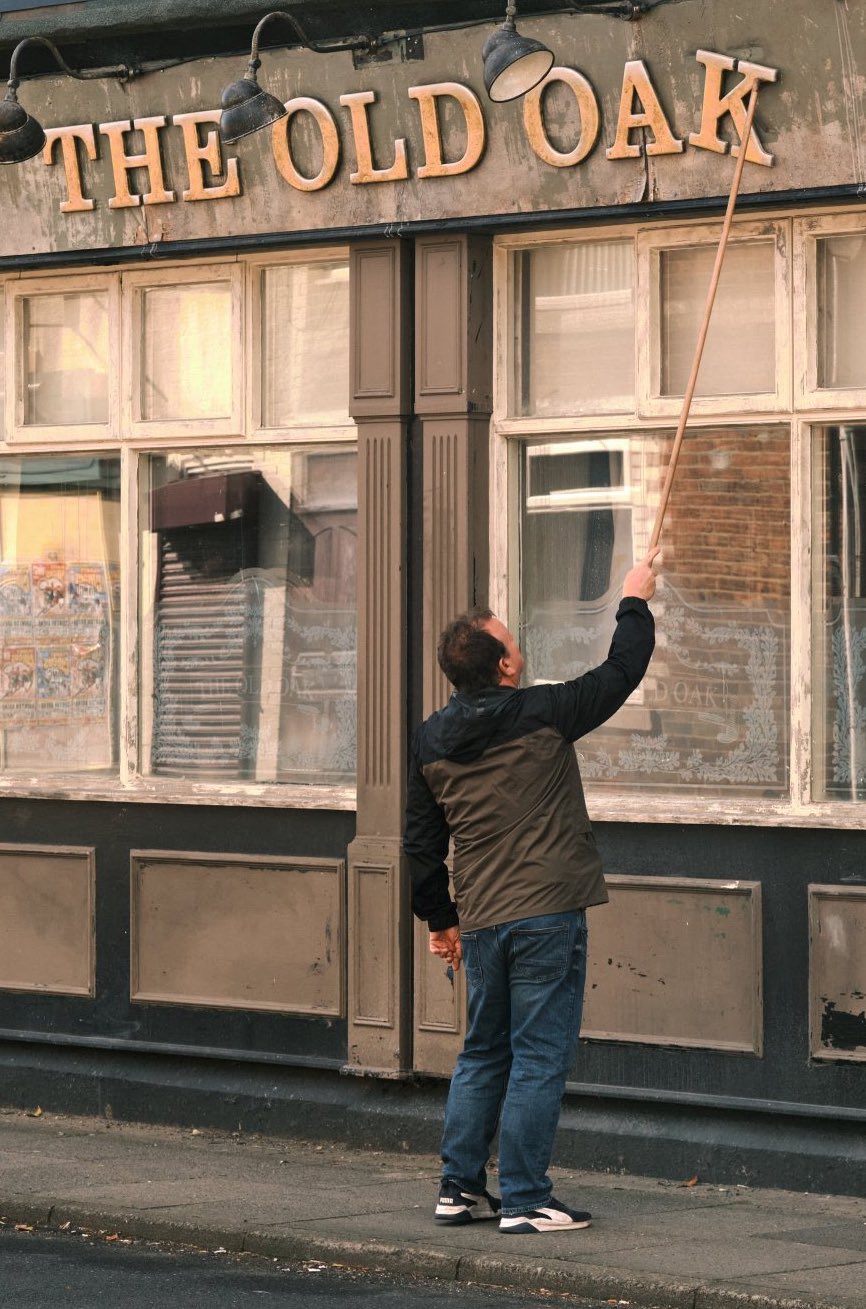
It feels like the end of an era. The Old Oak is the fourteenth feature film directed by Ken Loach and written by Paul Laverty. Their partnership began with Carla’s Song in 1986 but Loach, of course, has been around a lot longer than that (he directed his first feature, Poor Cow in 1967!). Now in his eighties, he’s decreed that this film will be his swan song.

From the opening scenes, we know we’re watching a Ken Loach film. All the familiar tropes are there: a cast of largely non-professional actors; the everyday struggles of working-class characters; the indifference of the powers that be; utterly realistic settings – and a socialist polemic that demonstrates how completely the people of Britain have been betrayed since the rise of Margaret Thatcher.

This story is set in a village just outside of Durham, a once vibrant community ravaged by the closing of the coal mines and now a crumbling vestige of its former self. When Syrian refugees are unceremoniously unloaded into the villages’s vacant properties, it’s hardly surprising that some of the people who’ve lived here all their lives react with suspicion and sometimes outright hostility to their new neighbours. Resources are already in short supply; there’s nothing left to share.

TJ Ballantyne (Dave Turner) is the landlord of the titular pub, which is now the one place where the local community can congregate, but even that is a shadow of what it once was. In a closed-down back room, photographs from the days of the miners’ strike, taken by TJ’s late father, decorate the walls. He shows them to Yara (Ebla Mari), a young Syrian woman, who is herself a keen amateur photographer. Her precious camera was broken by a local yob when she was stepping off the bus that brought her here and TJ helps her to get it repaired.

And when she comes up with the idea of reopening that back room and using it as a community space to offer free meals to everyone that needs one, TJ steps up to the challenge. But he has underestimated the jealousy and anger this will trigger from his neighbours…

While The Old Oak may not be Loach and Laverty’s finest achievement, these two cinema stalwarts have nonetheless created an entirely credible and sometimes heartbreaking story, one that serves as a fitting tribute to everything they’ve achieved over the years. It’s particularly satisfying to have Laverty himself onstage after the screening to answer questions about the film and the process of writing the screenplay.

If this really is to be a final collaboration, then The Old Oak provides a rousing sendoff. And I love the uncompromising way in which the film ends, with no pat solution to the problems – just a village slowly learning to become a community.

4.2 stars

Philip Caveney

2:22 A Ghost Story

27/09/23

Festival Theatre, Edinburgh

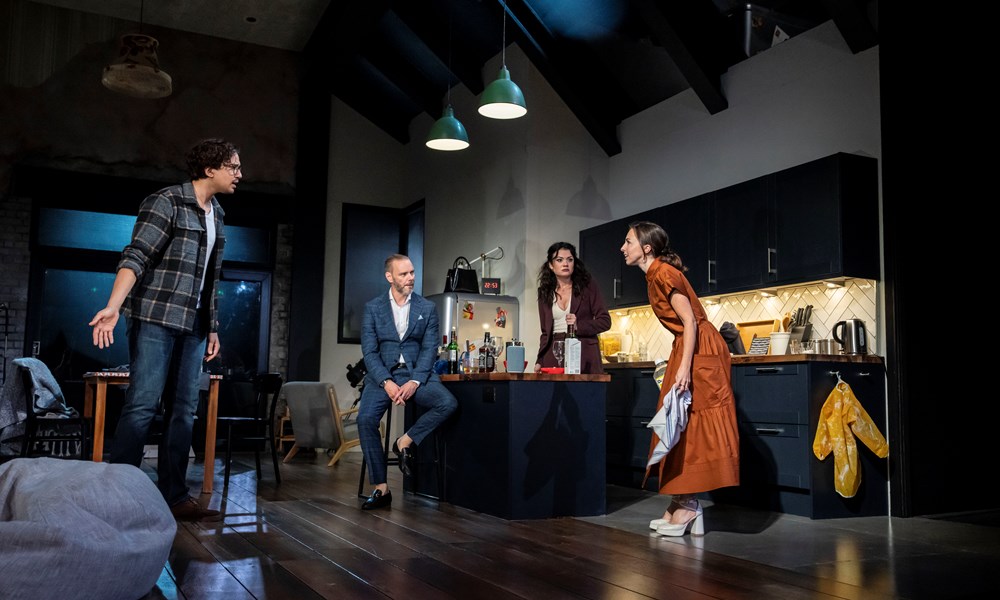
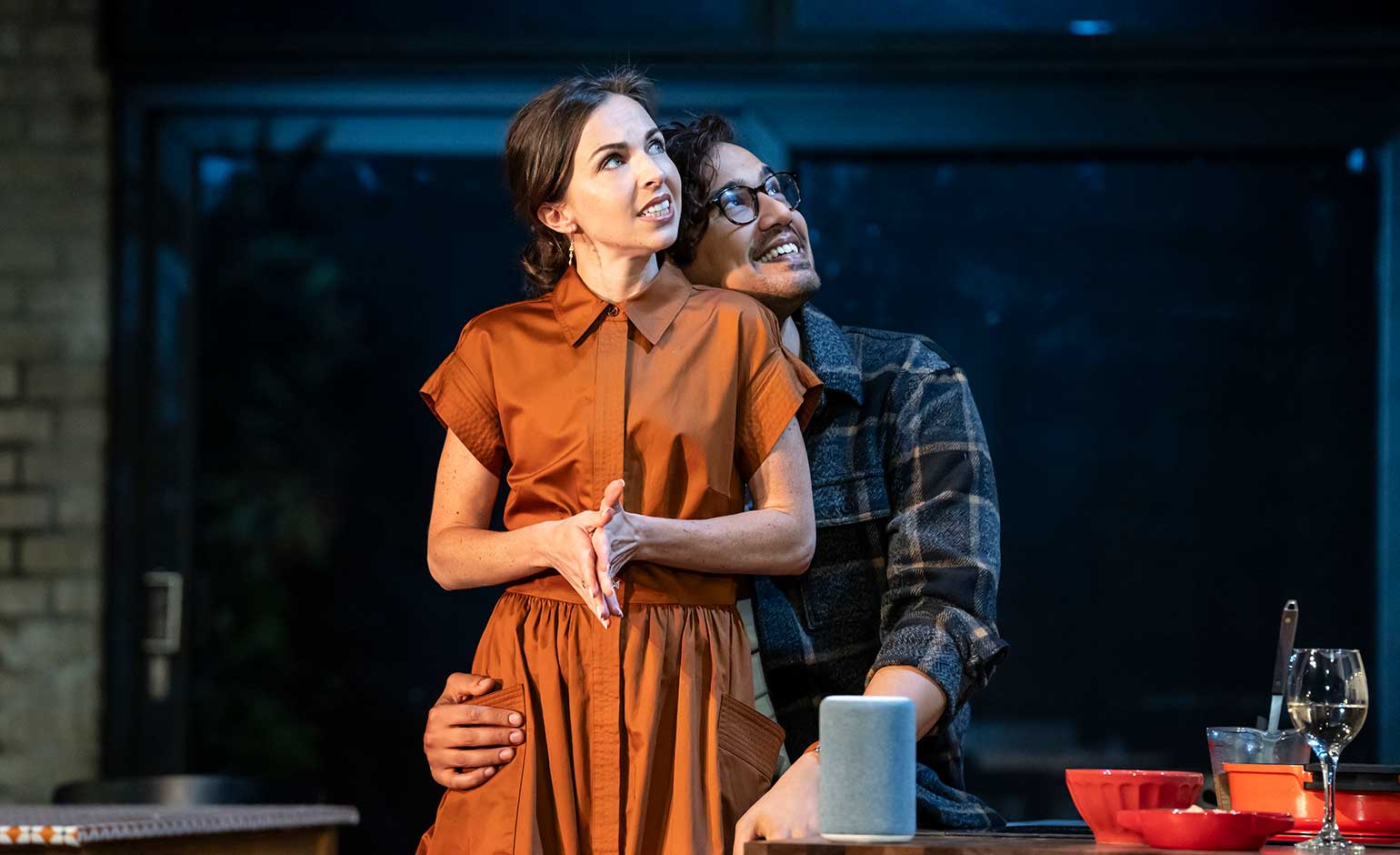
Written by Danny Robins and directed by Matthew Dunster and Isabel Marr, 2:22 A Ghost Story is remarkable, not least because it manages to feel like a traditional gothic tale at the same time as subverting many of the tropes. Screams in the night? Check – but that’s just the foxes in the garden, isn’t it? Flickering lights? Check – although the security sensors give us an instant explanation. Old creepy house? Well, kind of… except that this one has been renovated, so it’s light and bright – with a kitchen island and a window wall. But still, Jenny (Louisa Lytton) knows that something is wrong…

Jenny has been home alone with baby Phoebe, while her astronomer husband, Sam (Nathaniel Curtis), has been in Sark, studying its famous dark skies. He’s returned home just in time for a dinner party with Laura (Charlene Boyd), his best friend from university, and her new boyfriend, Ben (Joe Absolom). There is a lot of tension in the air: the antipathy between Sam (middle-class and pompous) and Ben (working-class and contemptuous) is open, while Jenny and Laura are polite on the surface, but clearly wary of one another. Jenny’s angry with Sam too: she keeps hearing spooky footsteps at the same time every night, but he isn’t taking her concerns seriously. And then Jenny suggests they all stay up until 2:22am, just to see…

As much a comedy of manners as it is a ghost story, 2:22 uses jump scares effectively and sparingly. Indeed, we find ourselves so caught up in the relationship dynamics that we almost forget about the supernatural element so that, when something spooky happens, it is genuinely shocking. An intimate four-hander, it’s to Dunster and Marr’s credit that it succeeds as a ‘big’ show, with no real sense of distancing, even from the back of the stalls in this two-thousand seater theatre. The set (by Anna Fleischle) helps: it’s got real depth, stretching back almost to the rear wall, so that the stage size seems to balance out the auditorium, as well as showcasing the understated opulence of Sam and Jenny’s abode. Of course, the size of the theatre means that the performances are a little heightened, but all four actors manage to make this work, never straying too far into the shouty or declamatory.

I do work out the much-touted twist before it’s revealed – but only because I know there is one and so spend a lot of time looking for it. It’s cleverly done, with lots of slippery diversions and sleights of hand.

A sprightly updating of one of my favourite genres, 2:22 A Ghost Story is a creepy delight.

4.6 stars

Susan Singfield
The Lesson

24/09/23

Cineworld, Edinburgh

The Lesson is one of those films that’s hugely enjoyable while you’re watching it, but falls apart when you try to analyse it – a bit like the airport novels its antihero, JM Sinclair, so witheringly disparages.

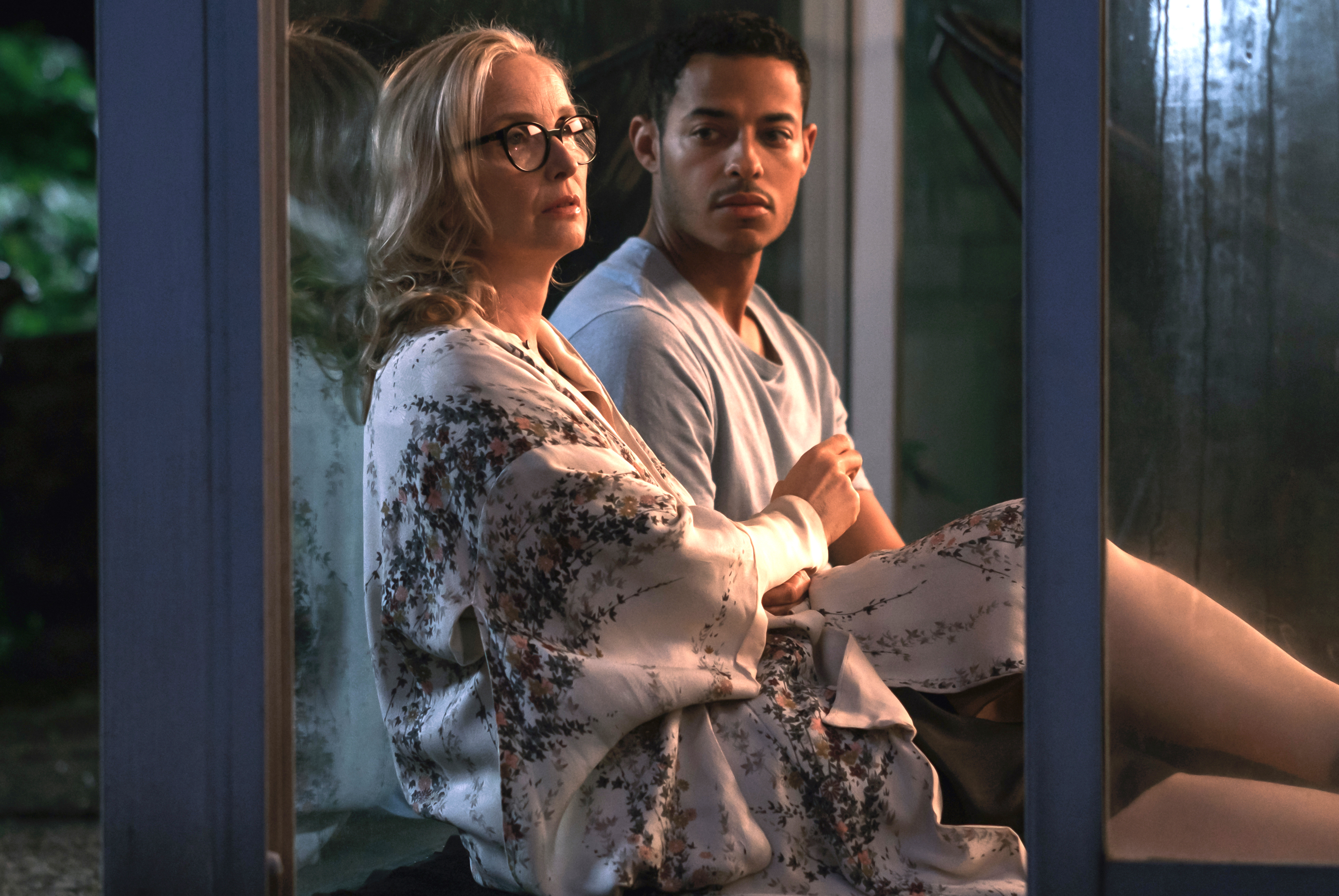
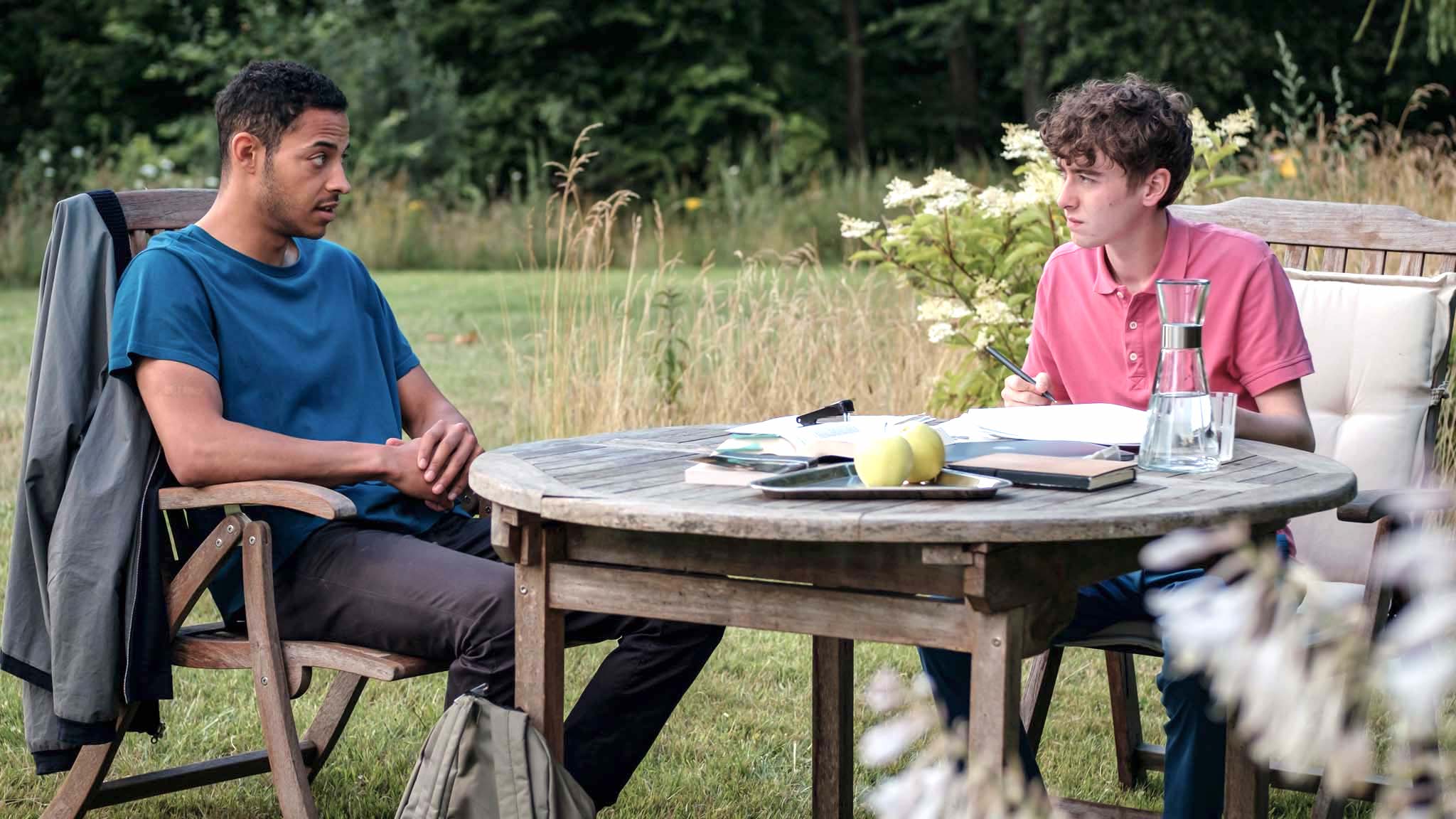
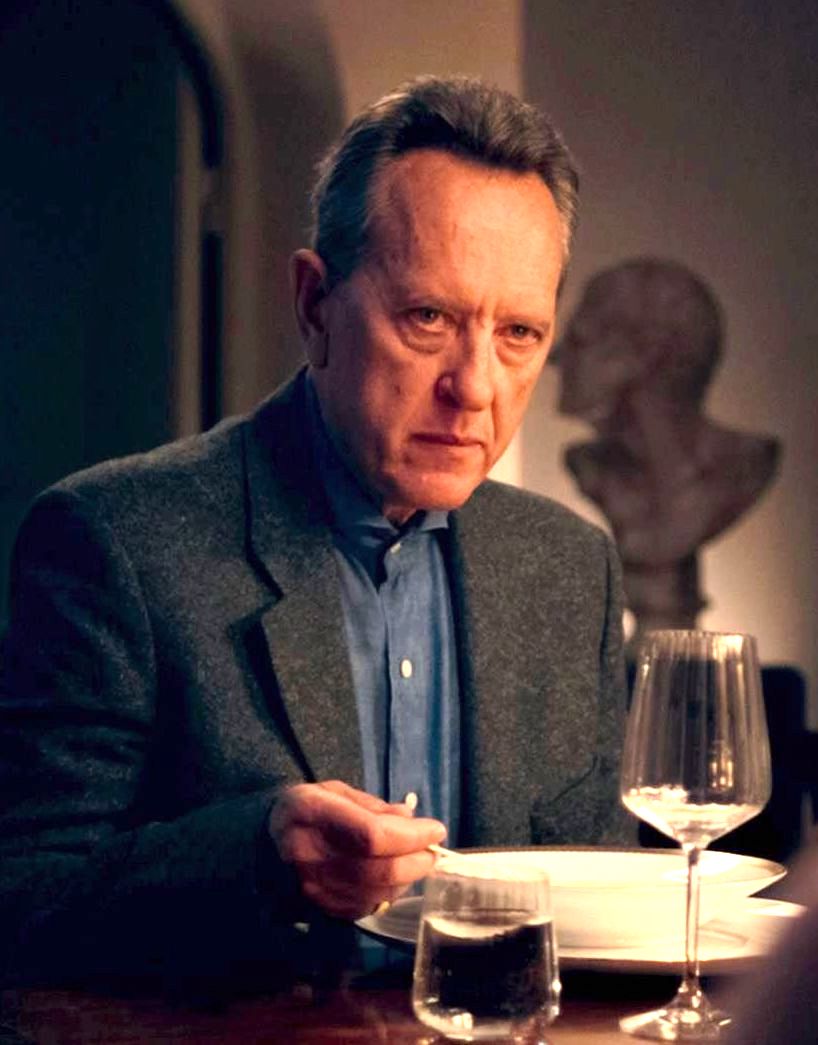
Sinclair (Richard E Grant) is a novelist of some renown – indeed, he is the subject of Oxford graduate Liam (Daryl McCormack)’s PhD thesis – but it’s been five years since he published anything. Since the death of his elder son, Felix, JM has been struggling; he writes daily, late into the night, but he just can’t finish his latest book. Meanwhile, his wife, Hélène (Julie Delpy), is determined that their younger son, Bertie (Stephen McMillan), should get into Oxford to study English literature, a feat which – despite his expensive schooling and obvious intelligence – can apparently only be accomplished by hiring a private tutor.

Enter Liam.

At first, the job seems like a dream come true. The Sinclairs live in the lap of luxury, their large country home filled with impressive artwork and attentive staff. Liam lodges in the guest house, swims in the lake, eats dinner with his idol and gets on well with Bertie; he even has time to finish his own first novel. But JM turns out to be a bruising presence and the family bristles with unhappy secrets; it doesn’t take long for the idyll to sour.

McCormack is a mesmerising screen presence (he surely has a big career ahead of him) and Grant, of course, is never less than interesting. Delpy imbues Hélène with an unsettlingly dispassionate and watchful air, while McMillan plays the innocent very convincingly – so that, no matter what chicanery is exposed, there’s someone we want to see being saved.

Director Alice Troughton does a good job of building the suspense: there’s a genuine sense of threat and the character dynamics are nicely drawn. The script, by Alex MacKeith, has some excellent moments, but also throws up some problems, not least the improbability of Liam’s ability to remember every word he’s ever read, on which the plot hinges. What’s more, although there are some genuine surprises, the main reveal is obvious from very early on, and there are several other details that just don’t ring true.

All in all, although The Lesson has its moments, it doesn’t quite live up to the movie it could be.

3.1 stars

Susan Singfield
Dumb Money

23/09/23

Cineworld, Edinburgh

How soon is too soon? The real life tale of the GameStop share crisis happened during lockdown, when most of us were more concerned about where we were going to get toilet paper from than in following the details of a story about share dealings, and – while it might have been a big deal across the water – it didn’t warrant much more than a passing mention in the British press.

Pitched as a sort of David and Goliath story, Dumb Money relates the tale of Keith Gill (the ever likeable Paul Dano), a small time, blue-collar share dealer, who advertises himself as ‘Roaring Kitty’ and who has a predilection for wearing T-shirts with pictures of cute cats on them. Gill has a regular spot on Reddit, where he recommends likely investments to a group of followers. He has recently decided that struggling bricks and mortar computer outlet GameStop is worth saving – so much so, he’s willing to gamble his life savings on it and to encourage his viewers to take a punt.

These include hospital worker, Jenny (America Ferrara), and actual GameStop employee Markus (Anthony Ramos). But as the company’s share price begins to rise, a lot of others decide they want to get in on the action and throw in everything they can spare. What was at first a steady rise suddenly goes up like a rocket. But several hedge fund companies – including Melvin Capital, led by Gabe Plotkin (Seth Rogan) – have already invested millions into GameStop, in the confident belief that they will trigger a ‘short squeeze’ scenario. They fully expect the company to go bust and their hedge funds to make millions from its demise. Now, thanks to Gill, they stand to lose everything.

Director Craig Gillespie, who previously gave us the brilliant I, Tonya, does his best to make all this work, but to somebody like me, who has no knowledge (or indeed interest) in the subject of stocks and shares, it’s sometimes hard to understand exactly what’s going on here, or more importantly, why I should care. Perhaps Dumb Money ties in to the American infatuation with the idea of making something from nothing, of taking on the big players and equating money with success.

Every character that appears onscreen is accompanied by a credit informing viewers of their net worth, and the loveable maverick quality that Gill exhibits feels somewhat overstated when we learn that, as a result of all these shenanigans, he himself is now a millionaire.

Though it’s fitfully amusing and occasionally generates some genuine laughs, Dumb Money never really settles into its stride. When the big players rig the game so that small investors can no longer participate, we’re probably supposed to be angry at the fact that there’s no such thing as a level playing field – but the whole story takes place in a world that seems light years away from our experience.

Consequently, it’s hard to feel involved. And therein lies the problem. Those with an interest in such matters may have a much better time with Dumb Money than I do.

2.8 stars

Philip Caveney

Ship Rats

19/09/23

Traverse Theatre, Edinburgh

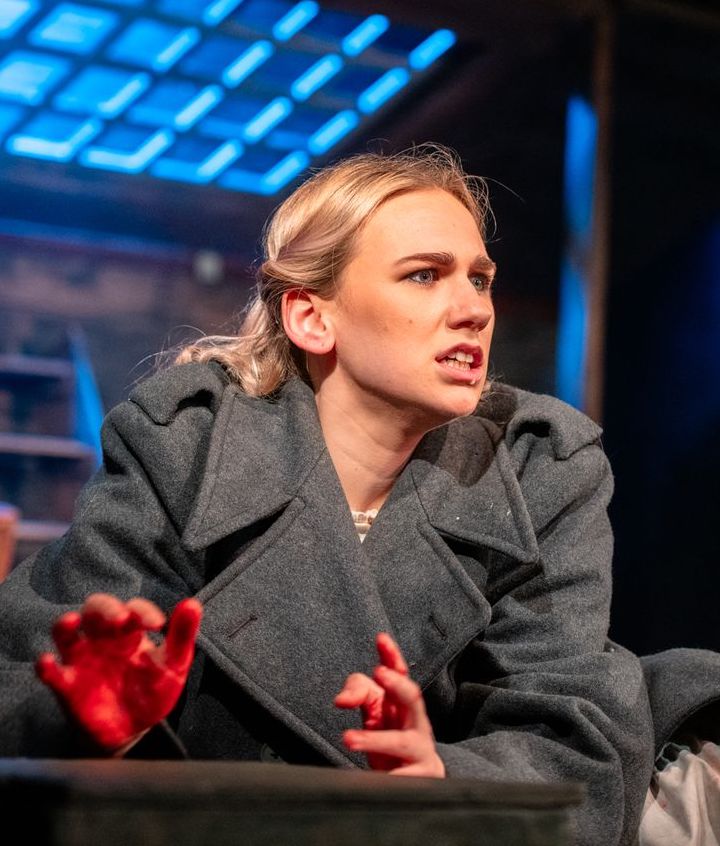
It’s the year 1880 and Jessie (Madeline Grieve) is in big trouble. She’s just murdered her husband and she’s covered in his blood. He’s the captain of the ship she’s currently aboard, a cruel tyrant who recently condemned an innocent cabin boy to fifty lashes for stealing a biscuit. He probably had it coming, but still, his crew are unlikely to be sympathetic.

To make matters worse, Jessie has sought refuge in the cabin of the ship’s Chinese cook, Jin Hai (Sebastian Lim-Seet), a man with probelms of his own. Shunned by the other members of the crew, he is planning a daring escape from the ship – but, try as he might, he cannot find the box of matches he needs in order to make his departure go with a bang.

When the inevitable hue and cry kicks off, Jessie and Jin Hai realise that they’ll have to ignore their respective differences and hide out together. In doing so, they begin to realise that they actually have quite a bit in common. Their conversation takes in a range of subjects: colonialism and Chinese medicine; murder and morning sickness; ginger and gunpowder.

Alice Clark’s spirited two-hander, a co-production between Òran Mór and the Traverse Theatre, is inspired by the adventures of the playwright’s own great-great-grandmother, a seafaring lass with a colourful backstory. The fact that the two protagonists in Ship Rats speak like contemporary Glaswegians out on the lash is initially jarring but, once I settle into the rhythm, it makes for a fun-filled fifty minutes, even if the tone is sometimes relentlessly frenetic.

Grieve offers a rollicking turn as the amusingly foulmouthed Jessie, while Lim-Seet makes an astute foil for her bawdy barrage of invective. If occasionally Jessie and Jin-Hai seem to possess the kind of insight that really only comes with the advantage of historical perspective, well that’s acceptable, given that this wants more than anything else to be a commentary on the toxic nature of Empire.

Director Laila Noble keeps the action propulsive enough to ensure that the pace never flags and Ship Rats has me entertained right up to the final scene.

3.4 stars

Philip Caveney