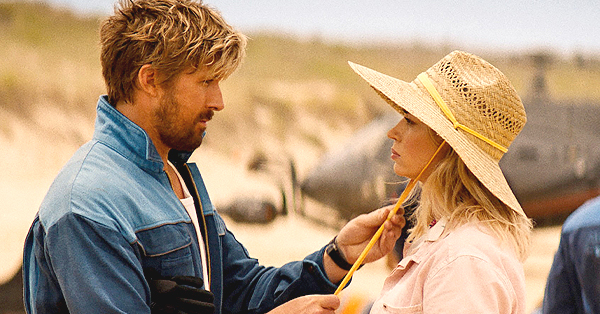
Brief Encounter

30/12/23

Royal Exchange Theatre, Manchester

It’s my birthday (hurrah!) and I’m in Manchester, visiting my daughter and her husband, which is already a massive improvement on last year. (In 2022, Susan and I found ourselves stranded in Carlisle for two nights when flooding interrupted our train journey back to Edinburgh. Deep joy.) As an added bonus, we’re also visiting the Royal Exchange Theatre, always a favourite venue when we actually lived in this neck of the woods. 

Tonight, we’re seeing Emma Rice’s adaptation of Noël Coward’s Brief Encounter, perhaps most fondly remembered for David Lean’s iconic 1945 film adaptation. But of course, it began life as a theatre production in a collection of works entitled Tonight at 8.30. Rice has had the brilliant idea of incorporating some of Coward’s songs into the narrative, making it not exactly a musical so much as a play with music cleverly incorporated into the narrative, with four musicians onstage throughout. This is an ambitious move and much more interesting than a straight recreation of its much-adored progenitor.

The plot is so familiar I won’t spend too much time recounting it. Laura (Hannah Azuonye) is awaiting her train at Milford Junction when she gets a bit of grit in her eye. GP Alec (Baker Mukasa), who happens to be having a cup of tea in the café when she stumbles in, comes to her assistance. From this inconsequential incident a friendship develops, which becomes increasingly problematic as the twosome keep bumping into each other. All too soon, they realise they are falling in love. 

But both of them are happily married and are tortured by the thought of deceiving their respective partners. So what should they do for the best?

Anyone familiar with Lean’s film will be aware that Rice sticks fairly close to that script (something that we confirm by rewatching it on the long journey home the following day), but she does some astute restructuring. Some of the film’s minor characters are given more developed roles here: the relationship between railwayman Albert (Richard Graves) and cafe manager Myrtle (Christina Modestou, most recently seen by B & B at the Edinburgh Fringe in the wonderful Grand Old Opera House Hotel) is more prominent and there’s also a developing romance between café worker Beryl (Ida Regan) and porter Stanley (Georgia Frost). The contrast between the polite conversations of the middle-class protagonists and the earthy, working-class station employees is effectively captured.

At key moments, the actors slip effortlessly into one of the ‘The Master’s’ torch songs, giving the proceedings a louche, cabaret feel, and there’s a brilliantly-choreographed routine where the whole cast move around the Exchange’s circular stage to a series of different musical pieces, culminating in a frenzied jitterbug. The performances are all exemplary, but I particularly enjoy Modestou’s soulful rendition of No Good at Love and Regan’s plaintive interpretation of Mad About the Boy

There’s also a delightful coup de théâtre involving the big station clock that hangs over the proceedings, while hats should also be lifted to the versatile Matthew Allen, who handles a whole string of smaller roles, singing, tap dancing and, at one point even playing the flipping saxophone! 

Sarah Frankcom directs with considerable skill – I fondly recall seeing her delightful production of Blithe Spirit in this very theatre, way back in 2009 – and, all in all, this is a delightful and occasionally surprising production that celebrates the spirit of its illustrious predecessor.

4.2 stars

Philip Caveney

THEATRE BOUQUETS 2023

In 2023, despite the King’s Theatre being out of action due to its long-awaited refurb, Edinburgh still had more than its fair share of exciting shows. We’ve somehow managed to narrow it down to our favourite ten, but if we’ve missed something, be sure to let us know about it!

Macbeth – An Undoing (Lyceum Theatre, Edinburgh)

“Harris’s adaptation is bold, daring and witty. I love the idea of the witches as servants: it makes perfect sense. They’re the eyes and ears of the house, privy to the paperwork the Macbeths have drawn up, witness to intimate moments and careless asides. Invisible. Ignored.”

The Ocean at the End of the Lane (Festival Theatre, Edinburgh)

“A sequence featuring a whole series of illuminated doorways through which Ursula disappears and reappears is so brilliantly played that I find myself gasping aloud at each new revelation.”

The Grand Old Opera House Hotel (Traverse Theatre, Edinburgh)

“A piece that fearlessly swings for the fences and hits all of its targets bang on. Part slapstick, part comic-opera, part mad-as-a-box-of-frogs spectacle, this is something you really don’t want to miss.”

Bloody Elle (Traverse Theatre, Edinburgh)

“This queer love story offers a wonderful celebration of the affecting powers of first love and Lauryn Redding takes us by the hand and leads us through the experience.”

Dark Noon (Pleasance EICC, Edinburgh)

“A unique piece of devised theatre, sprawling and multi-faceted. It’s sometimes funny, but more often it’s shocking and humbling. At the conclusion, the sell-out crowd rises to its collective feet and the applause reverberates around the room like thunder.”

Bacon (Summerhall, Edinburgh)

“A whip-smart, tightly-constructed duologue that pulls me into its tenacious grip and holds me spellbound as the story unfolds, cutting back and forth between the two boys’ home lives, their developing relationship, their triumphs and disasters.”

After the Act (Traverse Theatre, Edinburgh)

“A triumphant piece of theatre. Stevens skewers Margaret Thatcher’s self-righteous ignorance in a comical depiction of the ex-PM: if she sounds ridiculous as she defends her nasty law, they’re her own words; she’s hoist by her own petard.”

Moorcroft (Traverse Theatre, Edinburgh)

“A fabulous slice of theatre that moves effortlessly through a whole series of emotions. It swerves from raucous hilarity to visceral anger to heartrending tragedy with all the sure-footed precision of a well-drilled team.

The Snow Queen (Lyceum, Edinburgh)

“In this very Scottish adaptation, Morna Young illuminates the story’s season-appropriate warm heart. This production is as bold and vivacious as everything we’ve seen Cora Bissett direct”

Battery Park (Traverse Theatre, Edinburgh)

Battery Park captures the sweaty exuberance of a band’s early days with absolute authority, providing an inspired mix of drama and high-octane rock. As gig theatre goes, this is a perfect example of the craft.”

Susan Singfield & Philip Caveney

FILM BOUQUETS 2023

In 2023 we were gifted a rich and diverse selection of films. Indeed, there was so much to choose from we’ve had a very hard time picking out our ten favourites, but here they are in chronological order. Did we miss anything? Let us know if your favourite movie of 2023 hasn’t made our list!

Empire of Light

“This charming and affecting movie has me entranced from its opening shot to its final frame, and I suspect that anybody with a genuine love of film is going to have a similar experience.”

Tár

“This is a fascinating film, so densely packed I know I need to watch it again (something I rarely do). Quite simply, Tár is a masterpiece.”

Marcel the Shell with Shoes On

“Be warned: all but the most cynical will be in serious danger of falling head-over-heels for Marcel’s considerable charms.”

Spider-Man: Across the Spider-Verse

“The true triumph is the ever-changing beauty of the many different art techniques used to illustrate the story: from realist to impressionist; from pastel shades to psychedelia.”

Barbie

“Gerwig doesn’t just walk the thin line between celebrating and critiquing Barbie: she jumps up and down on it, turning somersaults and waving cheekily.”

Oppenheimer

“Murphy’s chiselled features seem to stare out of that giant screen as if appealing for understanding for the torture he’s going through, the awful weight of responsibility resting on those narrow shoulders.”

Past Lives

Celine Song has created a narrative so assured, so brilliantly handled, it’s little wonder that critics around the world have fallen for its charms.”

Killers of the Flower Moon

“There’s no doubt that this true story, based on the book by David Gran, makes for compelling viewing – and the film’s two-hundred-million dollar budget ensures that Scorcese’s evocation of the era is beautifully realised.”

The Creator

“Considerably more nuanced than most sci-fi adventures and I find myself constantly impressed by the film’s invention, the grubby reality of the AI creations that populate this imagined world.”

Anatomy of a Fall

“A strange beast indeed, a film that becomes increasingly compelling as it moves ever further away from anything approaching a straightforward resolution.”

Philip Caveney & Susan Singfield

Chicken Run: Dawn of the Nugget

24/12/23

Netflix

The trend for films being financed by (and galloping with indecent haste to) Netflix continues. Aardman Animations’ tardy sequel to Chicken Run is just the latest example of something that would have looked so much more impressive on a giant screen than it does on the average telly.

Dawn of the Nugget follows on from the first film with the escapee chickens living their best lives on a small island, where they grow their own food and work together as a team. Rocky (Zachery Levi, replacing Mel Gibson) and Ginger (Thandiwe Newton, replacing Julia Sawalha for less obvious reasons), are now the proud parents of an egg. This quickly hatches into Molly (Bella Ramsey), who has clearly inherited all her mother’s fearless qualities.

When workmen begin to clear some land on the other side of the water and new factory buildings are set up, Molly is eager to go across and investigate what’s going on, but Ginger urges her to be cautious. Of course she sets off on her own and, once on the far side, she bumps into Frizzle (Josie Sedgwick-Davies), a Scouse chicken who has heard great things about the new factory.

At first  it seems the twosome have discovered a place of refuge. But sinister happenings ensue before an old enemy reappears…

Dawn of the Nugget offers all the familiar tropes that the first film featured to such winning effect. No pun is left unspoken and several favourite characters make a welcome reappearance, including Jane Horrocks as the delightfully dim Babs and David Bradley as addled old rooster, Fowler.

The animation is beautifully handled and there are chases and spills aplenty, while the humour is innocuous enough to appeal to all age groups. But be warned, some viewers may find it hard to sit down to enjoy a chicken dinner after spending time in the company of this team of feathered lovelies. 

And if it seems a little late in the day to follow up that first film – twenty-three years to be precise – it matters not. This is great fun.

4 stars

Philip Caveney

Priscilla

22/12/23

Cameo Cinema, Edinburgh

Priscilla

If Baz Luhrmann’s Elvis was a dazzling celebration of the singer’s career, Priscilla offers the polar opposite of that film – a true story with a dark underbelly that, viewed with the gift of hindsight, feels almost shockingly transparent. Presley emerges as a toxic human being, a man who manipulated and exploited a naive fourteen year old girl for his own purposes. 

And before you say, “Well that’s just director Sofia Coppola’s interpretation of what happened,” let me add that her screenplay is closely based on Priscilla Presley’s autobiography, Elvis and Me – and that she was one of the executive producers on the film.

We first meet her as a bored teenager on an Army base in Germany. Cailee Spaaeny submits an impressive performance in the title role, managing to convincingly portray her subject from her early teens to her late twenties. When a young officer approaches Priscilla and casually asks her if she’d like to meet Elvis Presley, of course she says yes! Like most other kids in the late 1950s, she is a big fan. And he is arguably the most famous person on the planet.

So, to the understandable consternation of her parents, Priscilla heads off to Elvis’s house and is soon chatting to the man himself, as played by Jacob Elordi, last seen being quintessentially English in Saltburn, but managing to inhabit Presley’s mumbling, brooding persona with considerable skill. The pair hit it off, big time.

When Elvis is posted back to America, a lengthy interval suggests that he may have forgotten about her but, out of the blue (and again, much to her parent’s understandable concern), she’s summoned to his new home, Graceland, where she’s invited to become a permanent fixture. No sex yet, not until she’s of age, but plenty of smooching and much manipulation from Presley, who coaxes her to change her hair, her makeup and her fashions – to become, in effect, his dream girl.

As Presley grooms Priscilla (and there really isn’t a more appropriate term for what he’s doing), so her own identity becomes increasingly erased – and who knows where it’s all going to end?

Coppola’s accomplished film is handsomely mounted, the period detail convincingly evoked over the changing decades and it’s interesting to note how cinematographer Phillippe Le Sourd keeps everything murky and claustrophobic in the film’s early stretches, mirroring young Priscilla’s view of the world she’s obliged to exist in. Le Sourd returns to the gloom in the film’s later scenes, as Presley slips inexorably into addiction to prescription drugs. In between, the screen sizzles and pops as the odd twosome actually begin to enjoy the advantages of being a couple.

Weirdly, I knew about their story from my own childhood. My sister was a member of Presley’s fan club and received a monthly magazine. In the early sixties, I read repeatedly about the man’s developing relationship with Priscilla. Of course, back then, I wasn’t mature enough to fully appreciate how profoundly creepy the whole arrangement was. Priscilla’s age was an open secret to the world but, blinded by Presley’s fame, we just kind of accepted it. Shame on us.

This is a fascinating film, one that digs a lot deeper than Lurhman’s (admittedly very enjoyable) biopic, exposing the ugly bumps and warts that lay beneath the shimmering surface of stardom. To say that it’s an eye-opener would be something of an understatement. 

4.3 stars

Philip Caveney

The Boy and the Heron

20/12/23

Cineworld, Edinburgh

At eighty-two years of age, Hayao Miyazaki, the co-founder of Studio Ghibli, has had more comebacks than Frank Sinatra. He’s been talking about retirement ever since Princess Mononoke way back in 1997, but has managed three major releases since then, not to mention a whole bunch of shorts. And now here he is once again, director and writer of The Boy and the Heron, still reaching for those impossible heights on the big screen – and mostly achieving them.

It’s evident at a glance that Ghibli continues to exert a powerful hold on lovers of quality animation. This advance IMAX screening (the film will officially be released in the UK on Boxing Day) is completely sold out, despite being in Japanese with subtitles. (We don’t mind, we prefer it that way but apparently it puts a lot of viewers off.) We’ve managed to secure a couple of seats in the very front row, the giant screen looming above us, making the whole experience incredibly immersive.

The story is loosely autobiographical, but I can only assume that this applies to the film’s almost hallucinatory opening scenes in World War 2 – otherwise I’m left to conjecture that Mizayaki had a very strange childhood! Tokyo teenager Mahito (Soma Santoni) awakes one night to the sound of an explosion and is told that the local hospital has been firebombed. He’s horrified, because he knows his mother is working there and, in a breathtaking action sequence, he dresses himself and runs frantically through the blazing city, in the desperate hope of rescuing her. But he’s too late.

A few years later, Mahito accompanies his father, Shoichi (Takuya Kimura), an aeroplane designer, out to the calm of the countryside. Shoichi is now married to his late wife’s sister, Natsuko (Yoshino Kimura), who is pregnant with what will be Mahito’s little brother or sister. Mahito soon discovers that his stepmother’s country house is a place of mystery and intrigue, serviced by a team of comical-looking… erm… grannies. But things take a darker turn when a sinister grey heron that hangs around the grounds starts talking, telling Mahito that his presence is required elsewhere…

All the hallmarks of Studio Ghibli are present and correct and they’ve arguably never looked more ravishing. There are beautiful shimmering landscapes, ancient mouldering buildings and a succession of weird, dreamlike environments that seem to virtually erupt from the screen. And there’s that brilliant technique they always employ of illustrating food so perfectly, you can actually taste it. (One scene features fish entrails, so this isn’t always a pleasure!)

Aside from the fact that this particular tale focuses on a teenage boy (Ghibli’s lead protagonists are nearly always female), it feels like classic Ghibli dialled up to 11.

If there are some shortcomings, they are in the plot. It’s not that Miyazaki’s screenplay lacks interesting ideas. On the contrary, it’s stuffed with them, so many that they virtually do battle with each other to establish authority. While it’s perfectly fine for a storyline to be complex, it shouldn’t feel over-complicated and, since some of the fantastical goings-on are opaque to say the least, I too often find myself bewildered by what Miyazaki is trying to say. The inevitable questions that arise are left unanswered and, eventually, I decide that this is deliberate.

Perhaps it’s simply a case of an elderly man with a lifetime’s experience trying to cram all of it into a couple of hours. It’s hard not to see the mysterious wizard-like figure, obsessed with balancing various pieces of polished stone on top of each other in order to ‘make the world work’, as a version of the great director himself, trying to puzzle out the enormity of his own astonishing career.

As the credits roll, I find myself wondering if I might manage to slot this film in for a second viewing – maybe even the upcoming dubbed version with a host of Hollywood talent providing the voices. The Boy and the Heron is that kind of movie, the sort that has you pondering its various possibilities long after you’ve left the cinema. See it on the big screen, in IMAX if you can. You may be puzzled, but you won’t be disappointed.

4.2 stars

Philip Caveney

Don@Tokyo – lunch deal

18/12/23

Lothian Road, Edinburgh

It’s a couple of months since Eat@Tokyo opened for business and (hardly surprising since it’s right at the end of our street) we visited within days of its launch. We were impressed and said we’d be back, but we usually only return to a restaurant if there’s something new to talk about. So the fact that Don@Tokyo has launched a lunchtime special is exactly the excuse we’ve been looking for.

We make the gruelling thirty second slog along the street and take our seats. This lunch deal is reassuringly simple: you get one of three main courses and a soft drink (or a mug of green tea) for a total of just £8.90.

Susan goes for the veg poke bowl, while I choose the chicken katsu ramen. The former is a generously-sized dish full of delicious ingredients: avocado, red onion, tofu, edamame beans, radishes, sweet corn and more, all nestled on a bed of gooey, sticky rice. The latter is an equally generous portion of noodles in a creamy broth, liberally sprinkled with red onion, sweet corn and greens, with half a perfectly-judged boiled egg nestling in the mix. This is accompanied by a breadcrumb-coated chicken breast which comes with a little side dish of a mayonnaise mix that I try (and fail) to get the recipe for. Ah well, a restaurant must have its secrets, I guess.

Both dishes are both utterly delicious, the kind of hearty, aromatic food that you want to eat every last scrap of and then lick the bowl. They’re nourishing and comforting too, setting us up for a happy and productive afternoon.

There’s also a third choice – beef gyudon, which I sampled on my first visit and have already spoken about elsewhere. https://bouquetsbrickbatsreviews.com/2023/10/16/eattokyo/. It was the best thing we tasted on our previous visit.

When a takeaway fish and chips or even a couple of pizzas can set you back £30 or more, this lunch deal represents excellent value for money and, when you honestly cannot fault a single element of the meal you’ve just eaten, there’s really only one score that makes sense. Office workers looking for a change from their usual sandwich and packet of crisps should check out this offer at their earliest opportunity. Those on a tight deadline will appreciate the fact that the food arrives at an almost unbelievable speed.

What’s not to like?

5 stars

Philip Caveney

Godzilla Minus One

15/12/23

Cineworld, Edinburgh

Believe it or not, Godzilla is fast approaching his 70th birthday. His first screen outing was in 1954 in Ishirō Honda’s titular film, which featured a man in a rubber suit, clumsily demolishing a miniature cardboard city. Over the years, Japanese company Toho Films has produced more than thirty motion pictures starring the giant reptile, but has never managed to equal the excitement of that first venture.

More recently, American studios have tried to get in on the act, expending billions of dollars in attempts to come up with a decent version of the tale, but it has to be said that, while they’ve usually managed to get the visuals up to snuff, the human elements – even when played by bankable talent – have been found wanting. So when I start hearing rumours that Takashi Yamazaki’s Godzilla Minus One is well worth seeing, I’m initially doubtful. Honestly? Hasn’t this idea been done to death?

I’m delighted to report that my doubt was misplaced. This is surely the best version of the story since it came into existence.

It’s 1945 and Japan is rapidly losing the war. Would-be kamikaze pilot Koichi (Ryunosuke Kamiki) bottles out of going through his final mission; instead, he touches down on the remote island of Odo, claiming a fault with his plane. But the crew of engineers based there can find nothing wrong with it. And then the island comes under attack from the big G, and Koichi fails to protect the resident engineers, who are all chomped to bits except for their officer, Sosaku (Munetaka Aoki), who brands Koichi a coward.

Later, in the bombed-out ruins of Tokyo, Koichi meets a young woman called Noriko (Minami Hamabe), who is looking after Akiko, a little orphan girl she has found abandoned in the devastation, and the three of them set up as a kind of impromptu family. Koichi thinks his luck has finally changed when he lands a paid job with a crew of men aboard a little wooden boat. Their mission is to detect and detonate some of the hundreds of Japanese and American mines that still litter the waters around Tokyo. At least, that’s what they’re told.

But of course it’s only a matter of time before that pesky reptile rears its ugly head again and decides to head ashore on the rampage…

The strength of writer/director Yamazaki’s film is that he’s provided us with human characters who we actually care about, before launching headlong into all that destruction. Make no mistake, the big action sequences are there, and they are suitably impressive – but they don’t dominate the proceedings. The balance between the two different strands is masterfully done and everything builds to a climax that has me holding my breath.

Be warned, despite a 12A certificate, this film isn’t really suitable for youngsters and I note a couple of families leaving early, their kids unable to handle the subtitles and the visceral action sequences. But big kids like me, who have despaired for years of ever seeing new life breathed into this franchise, should take the opportunity to check this one out on the big screen.

It may have taken seventy years but we finally have a Godzilla worth watching.

4.2 stars

Philip Caveney

Maestro

14/12/23

Cameo Cinema, Edinburgh

Like several other recent films, Maestro has been bankrolled by Netflix and consequently ended up with a fleeting theatrical release before moving on to the streaming service. Much of the advance publicity has been caught up in the furore generated by writer/actor/director Bradley Cooper’s controversial decision to use a prosthetic nose in order to look more like his chosen subject, Leonard Bernstein, a complex issue I don’t feel qualified to wade into.

The film itself is undoubtedly accomplished and Cooper’s performance moves beyond impersonation, as he captures the composer’s restless nature, depicting him as a powerful, chain-smoking force of nature, a man constantly warring between his evident devotion to his wife, actor Felicia Montealegre (Carey Mulligan), and the succession of male lovers that drift into his orbit. He’s also at war with himself, lamenting his inability to concentrate on the classics he loves because of his commitments to provide music for various film and broadway productions. (When these include the likes of West Side Story, it’s hard to commiserate with him.)

Set over decades, the two actors enact their roles with absolute authority, while cinematographer Matthew Libatique uncannily captures the different eras with a range of camera techniques and varying aspect ratios. The effect is that the images gradually grow in scale as the years unfold. An early monochrome sequence where the two young lovers watch of production of On The Town and end up dancing with the cast is a particular highlight.

This is perhaps a film to admire rather than enjoy, with the story so tightly focused on the central characters that supporting players are barely given the opportunity to make much of an impression. Sarah Silverman as Leonard’s snarky sister Shirley comes the closest, but she’s only occasionally onscreen. Lovers of classical music will doubtless respond favourably to the long intervals where Bernstein conducts massive orchestras and choirs in his distinctive animated style, while those who are oblivious to its charms may feel distanced and (dare I say it?) a little bored by the excesses. Happily for me, I belong to the former category.

Maestro is a handsome, brilliantly executed film, one that belies the fact that this is only Cooper’s second outing a director. (2018’s A Star is Born was his debut; thanks for asking.) Made with the full cooperation of the Bernstein family, this is something of a Marmite movie. Mulligan (who is top-billed) submits a powerful performance as a woman compelled to a lifetime of compromise and her later scenes, where she slowly succumbs to illness, are devastating.

Many will decide to wait a week or so to stream this at home but it does deserve to be seen on the biggest screen available and with a speaker system that can do justice to that magnificent score.

4 stars

Philip Caveney

Same Team – A Street Soccer Story

12/12/23

Traverse Theatre, Edinburgh

Street Soccer Scotland is a charity using football for positive social change, and Street 45 is its women’s programme. It makes perfect sense. Team sports promote both physical activity and social connection; they provide a sense of purpose and help build self-esteem. People experiencing poverty, homelessness or addiction; those in the care or criminal justice systems; those with mental illness or other support needs: all too often, they’re marginalised, excluded. Street Soccer Scotland aims to create a sense of hope and opportunity for them.

Same Team – A Street Soccer Story serves a similar purpose: to remove the stigma associated with certain life experiences, to celebrate the women at the centre of the tale – and to raise awareness of this most deserving charity. It’s also a cracking good play.

As we take our seats, five women drift onto the stage dressed in sports gear, stashing their belongings in lockers and beginning to warm-up. “Are you here for the try-outs?” they ask us. Several audience members get up and join in the running drills. (Spoiler: they don’t make the squad.)

Jo (Chloe-Ann Tylor) is chosen as captain. Of course. She’s the star player, and this is Scotland’s chance to win the Homeless World Cup. “There are five rules,” she tells her team. “Players always come first. We look to the future. We never leave anyone behind. We place others before ourselves. We keep our promises.”

The rules are not always easy to follow. The women’s lives are complicated. Single parent Sammy (Kim Allan) is facing eviction – again. Her teenage sons are hard work, and she’s not looking forward to moving back in with her disapproving mother. Middle-class Lorraine (Louise Ludgate) has been unceremoniously dumped by her husband after twenty years. She’s staying on a neighbour’s couch and fretting about her perilous finances.

Things are even harder for teenager ‘The B’ (Hannah Jarrett-Scott), who has only just come out of prison. She’s brittle and defensive, unable to secure a job. Meanwhile, her ex-classmate Noor (Hiftu Quasem) is still at school. She lives with her grandfather – her Nana – and he’s got dementia. A chance meeting between the pair proves fortuitous, as The B tells Noor about the Change Centre. “There’s loads going on, like fitba… You were always a good player. There’s trials on for my old team. You should come along.”

And Jo. Well. Jo’s got problems of her own.

But for a few hours each week, the women leave their troubles at the edge of the pitch and focus on the game. Their commitment to the team and to each other gives them something important to feel proud of. Slowly, they let their guards down, opening up to one another and forging friendships. Their shared sense of purpose binds them together.

Written by Robbie Gordon and Jack Nurse in collaboration with the women from the Dundee Change Centre, Same Team is a heartwarming and affecting piece of drama. The narrative is clear-eyed and unsentimental, affording the characters the dignity and respect they deserve. Director Bryony Shanahan maintains the kinetic pace appropriate to the theme, with softer, sadder moments punctuated by riotous cheering or flashes of anger. The movement feels real – even though we never see a ball or an opposing team. The light and sound (by Lizzie Powell and Susan Bear respectively) are integral to the atmosphere, especially once we arrive at the World Cup in Milan. I particularly like the way the different countries’ flags appear in the floodlights.

Perhaps I don’t quite buy finicky Lorraine’s inclusion in the team; perhaps some of The B’s jokes don’t need explaining by the other characters, but this is compelling and important theatre, with five impressive performances from the ensemble cast. Jarrett-Scott is a gifted comic actor, always able to undercut even the most heart-breaking scenes at exactly the right moment. Tylor brings the emotional heft, her Jo a smouldering fuse just waiting to explode.

Same Team – A Street Soccer Story is playing at the Traverse until the 23rd December, and – although it’s not a festive tale – it embodies the spirit of the season. Grab yourself a seat in the stands and get ready to cheer.

Oh, and make sure you know the words to Flower of Scotland.

4 stars

Susan Singfield