Live By Night

18/01/17

Ben Affleck has already proved his worth as a director – Gone Baby Gone and Argo are just two examples that spring to mind – and adaptations of the novels of Dennis Lehane have already yielded cinematic gold on several occasions, so it’s hard to pin down exactly why Live By Night fails to measure up to expectation. It’s a handsomely mounted production, its 1920s setting lovingly evoked and there’s a stellar cast in evidence, with the likes of Brendan Gleeson, Chris Cooper and Elle Fanning submitting strong performances in what amount to little more than cameo roles. But there’s an overpowering conviction that the film is simply trying to cover too many bases for its own good, that a simpler, more linear narrative  would have exerted a stronger grip on its intended audience.

Affleck plays Irish-American Joe Coughlin, an ‘outlaw’ with his own moral code. As he puts it, he doesn’t mind working for gangsters, he just doesn’t want to be one. Which is, it has to be said,  a fairly nebulous difference. After a violent brush with New York Irish mob boss, Albert White (Robert Glenister), results in a lengthy stay in the chokey, Coughlin goes to work for the Italian mob, run by Maso Pescatore (Remo Girone) and finds himself relocating to Florida, where he becomes a major player in the burgeoning rum-running business. He also romances and marries Graciela (Zoe Saldana) and it begins to look as though a pleasant future is assured for both of them. But when Pescatore’s plans for a big casino go awry (largely because of Joe’s refusal to be as villainous as he actually needs to be), it soon becomes clear that there will be the inevitable deadly reckoning…

This is by no means a terrible film and, every now and then, events do spark into fitful life. An early car chase featuring vintage automobiles is decent enough and Elle Fanning’s role as a former heroin addict who turns to religion for salvation is briefly diverting, but too often events become bogged down in a lot of talking and not enough action. And the screenplay seems to want to have a bit of everything, involving as it does the Ku Klux Klan, Latin American swing music and whatever else happens to be wandering across the cinematic horizon. Even the film’s climactic shootout is followed by another half hour of loose ends being tied, all of which goes to dilute its appeal.

Which is a shame because it’s evident that much love and care has gone into the making of Live By Night. A stronger hand in the editing booth would probably have delivered a different viewing experience but, as it stands, this is to be filed under M for ‘Meh.’

3.4 stars

Philip Caveney

Hacksaw Ridge

15/01/17

Former megastar Mel Gibson has been persona non grata around Hollywood for quite some time, but Hacksaw Ridge looks like the film that will restore his reputation. Rightfully so, I think, because no matter what he’s done in his private life, he remains a gifted film maker. This assured war movie tells the true story of Private David Doss, a God-fearing young man from the Blue Ridge mountains of Virginia, who after nearly killing his brother in a youthful fight takes an oath never to pick up a weapon ever again. Which is all fine and dandy until the days following Pearl Harbour, when his brother and most of the other young men around the town, join the army, and Doss decides that he really can’t stay at home and let them take all the punishment; so after much consideration, he too enlists – which, as you might imagine causes all manner of problems. His intention to be a medic but of course, things don’t go quite as smoothly as planned…

Having just given us a saintly Jesuit in Martin Scorcese’s Silence, Andrew Garfield offers us another take on the idea, this time as that rarest of creatures, the weaponless war hero. The conflict he is sent to is the American invasion of Okinawa, one of the bloodiest conflicts. We’re often told that war is hell and Gibson’s re-enactment of the events certainly look the part – indeed this must qualify as one of the most visceral movie battles ever. Much of the footage here makes Saving Private Ryan look like a pleasant day at the seaside and those who cannot relish bloodshed would be well advised to give this one a miss. Heads, limbs and brains are propelled around the screen with gusto and, if there’s a criticism of the film, it’s simply that there may be just a little too much of it. I’m not advocating more tasteful bloodshed, you understand, but the sheer volume of the slaughter eventually begins to inure you to the film’s message – that war is a terrible thing and we need to stop sending people off to fight them.

Garfield is terrific though and there’s a pleasing turn from Teresa Palmer as the young nurse he woos in earlier, gentler scenes. Hugo Weaving plays Doss’s alcoholic father, turned bitter by the loss of his best friends in the First World War and watch out for Vince Vaughan, taking a break from his usual slapstick comedy schizzle to give us  a nicely restrained variation on the ‘tough Sergeant with a heart of gold’ – a cinematic line that goes all the way back to John Wayne in The Sands of Iwo Jima and which Gibson himself made a decent fist of in We Were Soldiers.

Towards the end, we start to suspect that Gibson is over-egging Doss’s sanctity a little too much; but a post credits interview with the (late) great man himself seems to confirm that he really was the quiet, unassuming hero that the film makes him out to be.

Harrowing stuff, not for the faint-hearted.

4.4 stars

Philip Caveney


Picnic at Hanging Rock

14/01/17

Lyceum, Edinburgh

A cult novel by Joan Lindsay that became a cult movie, directed by Peter Weir, Picnic at Hanging Rock has long exerted a powerful influence on the Australian psyche – so much so that even to this day, this entirely fictional story is believed by most Australians to be based on fact. (I believed it myself for years and even after I read the truth of the matter, somehow managed to forget about it until I began re-researching for this review).

Weir’s film made a huge impression on me when I first saw it in 1975, so I was very interested to see how its themes of the conflict between the barbarity of nature and the suffocating repression of Victorian society would translate to the stage. This joint production by Malthouse Theatre and Black Swan Theatre, I am assured, is based more closely on the original novel, but I was indebted to my knowledge of the movie, which helped me to follow what was going on – something I felt I might not have been so sure of if I’d come to it totally unprepared.

The staging is spartan to say the least – an oblong grey box, overhung by some kind of tree limb. There are five female performers who first present themselves as contemporary schoolgirls. Standing in line, they begin to tell us the ‘facts’ of the case – the class visit to the titular rock on Valentine’s Day 1900, resulting in the disappearance of three girls and one of their teachers. The first scene is slow, drawn out (and perhaps a tad overlong) but as the narrative continues, the  actors begin to take on character roles from the original story and things become a lot more interesting. Scenes are presented as short vignettes, with illuminated titles, each one followed by a sudden and complete blackout. Each time the lights snap on again, the characters or props have changed dramatically, amplifying a genuine sense of mystery and magic.

The performances are all assured, though I particularly liked Elizabeth Nabben’s turn as the acerbic headmistress, Miss Appleyard and Amber McMahon’s as Michael Fitzhubert, the lovestruck young man who goes in search of the lost girls and actually manages to find one of them. The effective sound design by J. David Franke also deserves a mention,  incorporating a whole range of sounds from nature mixed in with whispers, groans and sighs, giving the proceeding the atmosphere of a classic Victorian ghost story.

Whilst not achieving the power of Weir’s iconic film, this is nonetheless a fascinating and thoughtful production that deserves your attention.

3.6 stars

Philip Caveney

Why Him?

09/01/17

Given that this film is a sort of Christmas movie, we came to it late. In fact we only went to see it because A: It was one of the only three films in the cinema we hadn’t yet seen, and B: It wasn’t Ballerina or Assassin’s Creed. We had fairly low expectations for it and were pleasantly surprised to find that we actually rather enjoyed it.

The ‘him’ in question is Laird Mayhew (James Franco), a potty-mouthed but fabulously rich man-child, the impresario behind a line of incredibly successful computer games featuring apes with bazookas. The person asking the titular question is Ned Fleming (Bryan Cranston), who along with his wife, Barb (Megan Mulally) runs a struggling print-on-paper publishing company, the kind of set up that people like Laird are putting out of business on a daily basis. The reason the question is being asked is that Ned’s beloved daughter, Stephanie (Zoey Deutch) is now going out with Laird, and Ned’s parents have just been introduced to him in the worst way possible – midway through a Skype call during Ned’s fifty-fifth birthday party, they are forced to watch online as he prepares to get down and dirty with their daughter. Awkward!

When the Fleming family is invited out to sunny California to spend the Christmas holidays with the young couple, Ned is far from enthusiastic; and when he sees the palatial designer house in which Laird (and his sizeable entourage) dwell, his hackles rise and it’s clear that this is going to be a bumpy ride.

Now, I’ve never subscribed to the theory that the fathers of daughters have to automatically hate their choice of partner, though this inappropriate jealousy is a familiar if overused trope. But it has to be said that Cranston and Franco certainly milk the idea for some big laughs here – and Stephanie makes clear that she wants no part in their macho posturing. Most of the hilarity comes from Ned’s long-suffering expressions as he is subjected to one indignity after another. His humiliating tussle with a ‘paperless toilet’ is particularly funny and there’s a nicely set up gag about the rock band, Kiss that also pays dividends. I also enjoyed Keegan Michael-Key’s turn as Laird’s ‘mentor’ Gustav and the running joke where he and Laird attack each other on a daily basis, an evident tribute to Clouseau and Cato from the Pink Panther films.

Okay, so this isn’t going to challenge It’s A Beautiful Life as everybody’s favourite Christmas flick, but it’s a decently made bit of fluff that (unless you’re very hard to please) will  make you laugh out loud at regular intervals. And maybe, in these troubled times, that’s as much as you can reasonably ask.

3.8 stars

Philip Caveney

Manchester by the Sea


08/01/17

Manchester by the Sea is a bleakly brilliant film, far more original and affecting than either the trailer or a synopsis can convey. The plot is fairly conventional fodder: Lee Chandler (Casey Affleck) is tasked with caring for his nephew, Patrick (Lucas Hedges), after the boy’s father dies. Lee is not really cut out for the job, and their relationship is fraught with problems, which they have to work to overcome. So far, so ordinary. But there is a rare honesty in the telling of this tale that renders it both raw and authentic, making it one of the most compelling films I have ever seen.

Casey Affleck is extraordinary. He’s closed, inarticulate and conflicted, a reserved, introverted man who’s called upon to fulfil a role he simply can’t take on. There is real pain in his performance, despite its understatement. The gradual revelation of his past trauma is beautifully handled by writer/director Kenneth Lonergan, whose script is clearly a gift for the actors in this film.

Michelle Williams, as Lee’s ex-wife Randi, is as exemplary as you’d expect; she only appears in a handful of scenes, but her final conversation with Lee is utterly heartbreaking, without ever straying into sentimentality or sensationalism. And Lucas Hedges, as Patrick, acquits himself well too, absolutely convincing as the grief-stricken, selfish, but ultimately decent teen.

The setting plays a huge part in this movie: the wintry colours of Manchester reflecting the apparent coolness of its residents. The eventual thaw is slow and slight. The cinematography is beautiful, capturing those cold blues and greys with icy precision.

We loved Manchester by the Sea. Do try to catch it; it’d be a real shame to miss this one.

5 stars

Susan Singfield


La La Land

08/01/17

Remember movie musicals? You know, the big sweeping MGM-style pictures, the kind they really don’t make any more? Well, clearly nobody told director Damien Chazelle, because, apart from a few subtle nods to the modern age, that’s pretty much what he gives us here. Apparently this is a long-cherished project for him, one that predates Whiplash, the picture that first propelled him into the public eye. Essentially, La La Land is a great big glittering love letter to LA and the creative industries that serve it.

The opening sequence pretty much sets out Chazelle’s stall. There’s a freeway full of gridlocked traffic. A girl in  a car begins to sing a song. She gets out of the car and dances a few steps and then the guy in the next car steps out and joins her. Pretty soon, hundreds of people are following their example, offering a brilliantly choreographed routine that is as audacious as it is delightful. It’s a wonderful start.

Soon we meet our protagonists and wouldn’t you know it, at first they hate each other on sight. Sebastian (Ryan Gosling) is a musician, a jazz obsessive who dreams of opening his own club. Mia (Emma Stone) is a would-be actress, a barista by day, who slogs hopefully through an endless series of auditions for roles she appears to have no real chance of attaining. After their initial conflict, the two start to strike sparks off each other. And before too long, of course, they’re hoofing up a storm and singing most of their dialogue.

And if there’s a bit of this film that isn’t fully realised, it’s the songs. Don’t get me wrong, the jazz-inflected score is strong, yes, but the so-called big numbers aren’t exactly memorable. It says a lot when the tune you come out humming is the Flock of Seagulls song, that’s only there as an example of ‘bad pop’ by the cover band in which Sebastian is forced to play in order to pay his rent. And while you might be able to recall one of the film’s original melodies, chances are that the lyrics will escape you. But look, that seems an almost churlish observation in the midst of so much invention, so much undoubted chutzpah.The cinematography is ravishing and the film simply bristles with invention.

There are echoes here of some of the great movie musicals: A Star Is Born, An American in Paris… and then there are other scenes that are refreshingly original. Stone is particularly good, especially in an early scene where she auditions for a character receiving bad news over the phone and you feel like shouting at the casting directors who aren’t taking enough notice of her!

Of course, these kind of movies traditionally have a happy ending and I have to applaud Chazelle for resisting that temptation, even if the alternative he offers may be a cleverly devised way of him having his cake and eating it.

But what a cake! Delicious, delightful and ultimately satisfying. If you miss those old-time musicals, this one is undoubtedly for you.

4.4 stars

Philip Caveney


Moana

05/01/16

Moana is the name of a young Polynesian girl, the daughter and heir of a chief. Her father wants her to take his place one day, and can’t bear the idea of her leaving Motonui, their beautiful island. But Moana is fixated on the ocean and what lies over the horizon, and it seems her destiny lies elsewhere. All becomes clear when her grandmother explains that Moana has been chosen by the ocean to find the demigod Maui and help him return the goddess Te Fiti’s heart, which he had stolen a millennium before. Moana sets sail, and so the adventure begins.

It’s a wonderfully animated film, with some absolutely gorgeous seascapes in particular. Te Fiti is also beautifully rendered, her transition from goddess to island a delight to see. And the story is engaging, especially once Moana tracks down Maui and their odd-couple interplay begins.

The music works well as a soundtrack, and never feels wrong, but neither is it especially memorable; none of the songs sound like they’d have a life outside the film. And some of the tropes feel a little too well-worn: comedy animal side-kick? Check. Contemporary Americanised dialogue? Check. Cheesy final message: just be yourself? Yawn. Check.

Still, overall this is a very watchable movie, and certainly one that will entertain the kids. Is it up there with the best Disney animations? Not really.

3.6 stars

Susan Singfield

Theatre Bouquets 2016

unknown-18

unknown-18

unknown-18

We’ve been lucky enough to see some amazing theatre again in 2016. Here, in order of viewing (and with the benefit of hindsight), are our favourite productions of the year.

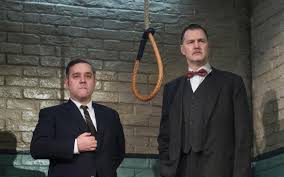
Hangmen – Wyndham’s Theatre, London

Unknown-1

An excellent start to the year’s theatrical viewing, Martin McDonagh’s play was absolutely superb: funny, frightening and thought-provoking with an outstanding central performance by David Morrissey.

The Girls – The Lowry, Salford

Gary Barlow, Tim Firth and the original Calendar Girls credit Matt Crockett

This was the biggest surprise of the year for us: on paper, it sounded a million miles away from the sort of thing we usually enjoy, and we went along reluctantly. But it was a truly delightful production – flawlessly realised.

The Merry Wives – The Lowry, Salford

image

Northern Broadsides version of The Merry Wives of Windsor was a rambunctious, irreverent take on the tale, with the inimitable Barrie Rutter clearly relishing the role of Falstaff.

I Am Thomas – Lyceum Theatre, Edinburgh

I_Am_Thomas_415x800_jpg_300x200_crop_q85

A strange and eclectic production, telling the tale of Thomas Aikenhead, the last person in Scotland to be hanged for blasphemy, this was essentially a series of vignettes and musical interludes, with an ensemble taking turns to play the eponymous role.

King Lear – Royal Exchange Theatre, Manchester

04-KING-LEAR-RET-L-R-Pepter-Lunkuse-Cordelia-Don-Warrington-King-Lear-Photo-Jonathan-Keenan

Michael Buffong’s King Lear was a tour de force, a gimmick-free yet undeniably modern production. Don Warrington was well-cast in the central role, but it was Pepter Lunkuse’s Cordelia who really stood out for us. She’s definitely one to watch!

Stowaway – Home, Manchester

Unknown

Analogue Theatre’s troubling tale of a stowaway falling from a flying aeroplane and landing in the car park of a DIY store was fascinating, depicting a moment where worlds collide and understandings begin to take root. A thought-provoking, political play.

Royal Vauxhall – Underbelly Med Quad, Edinburgh

2016ROYALVA-APJ-300

A quirky and irreverent musical, telling the true story of when Freddie Mercury and Kenny Everett dressed Princess Diana in drag and took her to the Royal Vauxhall Tavern in London for a night out, incognito. We loved this production.

Wonderman – Underbelly Potterrow, Edinburgh

Wonderman_edinburgh_FOURSHEETS-quartersize_final

Based on the short stories of Roald Dahl – and incorporating a true incident from his eventful life – Gagglebabble’s collaboration with the National Theatre of Wales was a sprightly mix of drama and music with a deliciously dark heart.

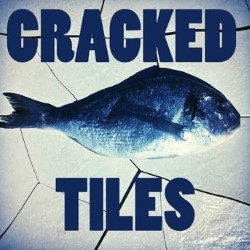
Cracked Tiles – Spotlites, Edinburgh

2016CRACKED_AVH

This beautifully crafted monologue, written and performed by Lorenzo Novani, was the downbeat tale of a young man who inherits a Glasgow fish and chip shop from his father Aldo. Novani was quite staggering as Riccardo.

Dear Home Office – Underbelly Med Quad, Edinburgh

2016DEARHOM_AXD

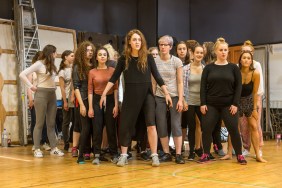
This was the story of unaccompanied minors applying for asylum in the UK, performed with touching vulnerability by eight refugee boys. The play was an amalgamation of the performers’ own experiences, blended with fictional accounts. A raw and truthful exposé.

The Suppliant Women – Lyceum Theatre, Edinburgh

29676962992_8e7a020135_b

It’s a rare thing indeed when you go into a theatre and are treated to something unique – but that is the word that kept coming to us, as we sat entranced in the stalls of The Lyceum, watching David Greig’s production of The Suppliant Women. Truly brilliant.

Grain in the Blood – Traverse Theatre, Edinburgh

unknown-2

A real one-off, this was a stark, unnerving chiller, at once contemporary and classical, with dialogue that was taut and ultra-modern in style, all fragments and silences and unfinished thoughts. This was a complex, angular, unwieldy play – a fascinating watch.

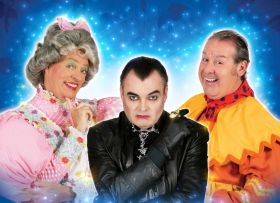
Jack and the Beanstalk – King’s Theatre, Edinburgh

cfk-panto-beanstalk-header

By far the best panto we have ever seen, this was a standout production, with fantastic performances from King’s Theatre regulars Allan Stewart, Andy Gray and Grant Stott. It brought the year to a celebratory end.

Susan Singfield

Film Bouquets 2016


Unknown-1

Unknown-1

Unknown-1

It was an interesting year for film. Here, in order of release, rather than stature – and with the benefit of hindsight – are our favourite movies of 2016.

Room

Unknown-1

This superb adaptation of Emma Donoghue’s novel got 2016 off to a cracking start. There were powerful performances from Brie Larson and young Jacob Tremblay as the central characters in a tragic yet oddly inspirational story.

The Revenant

Unknown

Alejandro Gonzalez Inaritu delivered another dazzling movie, this one as savage and untamed as the grizzly bear that mauled Leonardo Di Caprio half to death – but made up for it by helping him win his first Oscar.

Anomalisa

1401x788-068-ANOMALISA-008R

Writer/director Charlie Kaufman gave us a quirky (and deeply disturbing) animation that was a Kafkaesque meditation on identity and the bleak nature of the human condition.

Dheepan

Unknown-1

Jacques Audiard’s fascinating study of the lives of refugees never fell into cliche. There was violence here, but it felt horribly real and totally devastating. There were affecting performances from a cast of newcomers.

Victoria

201505757_6

Sebastian Schipper’s film really shouldn’t have worked. Delivered in one continuous take, the fact that it hooked us in so brilliantly was just the icing on the cake – a real ensemble piece but plaudits must go to Laia Costa as the eponymous heroine.

Sing Street

Unknown-2

John Carney may have only one plot but when it was delivered as beautifully as it was in Sing Street, we were happy to indulge him. This was a beautiful, heartwarming film with appeal to anybody who has ever dreamed about pop stardom.
The Neon Demon

1*jUNDeTEvI8L-iWHG0NnPrA

The fashion industry as seen by Nicolas Winding Refn is a hell hole and here, Elle Fanning as Jesse, was the latest recruit. A weird mash-up of sex, violence and extreme voyeurism, this was the director’s most assured effort yet.

Hunt for the Wilderpeople

1200

New Zealand director Taika Waititi offered up this delightfully quirky story about a troubled teenager (Julian Dennison) and his friendship with crusty curmudgeon, Hec (Sam Neill). This film reeled us in and kept us hooked to the end credits.

The Girl with all the Gifts

1200x675

Just when we thought the zombie movie had stumbled as far as it could go, Colm McCarthy’s film gave the genre a hefty kick up the backside – and there was a star-making performance from young Senna Nanua in the lead role.

Under the Shadow

84a67240-5eae-11e6-8163-65d9c75d2344_20160810_undertheshadow_trailer

Babek Abvari’s film had all the tropes of the contemporary horror movie and a powerful political message as well. Set in post war Tehran, young mother Shideh (Narges Rashidi) struggled to keep her daughter safe from the forces of darkness.

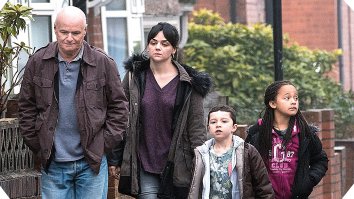
I, Daniel Blake

maxresdefault

Ken Loach’s return to the screen resulted in one of the most powerful and affecting films of the year – a searing look at ‘benefits Britain’ that would have the most stony-hearted viewer in floods of tears. Should be required viewing for Tory politicians.

Train to Busan

busan-review-pic

Another day, another zombie movie – but what a zombie movie! Korean director Sang ho Yeon gave us a galloping ‘zombies on a train’ thriller that nearly left us breathless. There were some incredible set pieces here and a nerve-shredding conclusion.

Paterson

PATERSON_D16_0149.ARW

Jim Jarmusch presented a charming and quirky tale about a would-be poet living in a town that had the same name as him. Not very much happened, but it didn’t happen in an entirely watchable way. A delightful celebration of the creative spirit.

Life, Animated

t-life-animated-art-streiber-06-2016

This compelling documentary squeaked in right at the end of the year – the true life tale of Owen Suskind, an autistic boy, initially unable to speak a word, but rescued by his love of Disney movies. It was funny, uplifting and educational – and our final pick of 2016.

Silence

03/01/17

If I were ever asked to nominate somebody as ‘Greatest Living Film Director,’ Martin Scorcese would be a serious contender for the title. He has an exceptionally strong and eclectic body of work, which includes bona fide masterpieces like Taxi Driver, Raging Bull and Good Fellas –and even occasional misfires like The Last Temptation of Christ are never less than interesting. Silence is a film he’s been trying to make for something like thirty years. Based on a novel by Shusaku Endo and co-written by Scorcese with his old collaborator, Jay Cocks, it’s essentially a meditation on the power of belief – and the lengths to which people will go to in order to observe their chosen religion.

In seventeenth century Portugal, two young Jesuit priests, Father Rodrigues (Andrew Garfield) and Father Garrpe (Adam Driver), set themselves a difficult mission – to travel to Japan in search of their old tutor, Father Ferreira (Liam Neeson), who disappeared whilst trying to convert the locals to Christianity. Rumour has come back that Ferreira has ‘apostatised’ – renounced his faith – and is now living the life of a Buddhist under the watchful gaze of his captors. The young priests refuse to believe that this can be the case and they set off on the perilous journey to Japan, knowing that from the minute they arrive they will be in grave danger. Christians are hated there and are cruelly tortured and executed in large numbers. But that’s not to say that the film is necessarily pro (or anti) Christian; indeed, questions are raised about the very nature of missionary work, and the religious zeal that prompts people to try to force others to accept their ‘truth’.

Silence is a powerful slow-burner of a film, that certainly won’t be to everyone’s taste. It takes a while to unfold an intriguing story and with a running time of two hours and forty-five minutes, it will undoubtedly test the patience of many; but there’s a great deal here to enjoy – the ravishing cinematography of Rodrigo Prieto, Dante Feretti’s costume design and a superb central performance by Andrew Garfield, clearly delivering on a role that’s a bit of a stretch from his earlier turn as Spiderman. Liam Neeson, now the go-to guy for any performance requiring gravitas, delivers his cameo role with aplomb and I particularly like Yosuke Kubozuka as the Jesuit’s guide, Kichijiro, a would-be Christian who continually betrays his chosen faith only to come scrabbling back seeking forgiveness through the act of confession.

There are also some scenes of terrible violence here; the unflinching depictions of the barbaric treatment meted out to those who refuse to renounce their faith are not for the faint-hearted. People are burned alive, crucified and drowned all in the name of religion.

As to the film’s central tenet – is there a God? – Scorcese (who himself trained as a priest before deciding to seek his absolution through celluloid) is wise enough to resist offering a definitive answer. In the end, it is left to the individual viewer to decide. But I would urge you to go and see this film. It may have taken a very long time to bring it to the screen, but in my opinion at least, it has been well worth the wait.

4.2 stars

Philip Caveney