The Beautiful Future is Coming

08/08/25

Traverse Theatre, Edinburgh

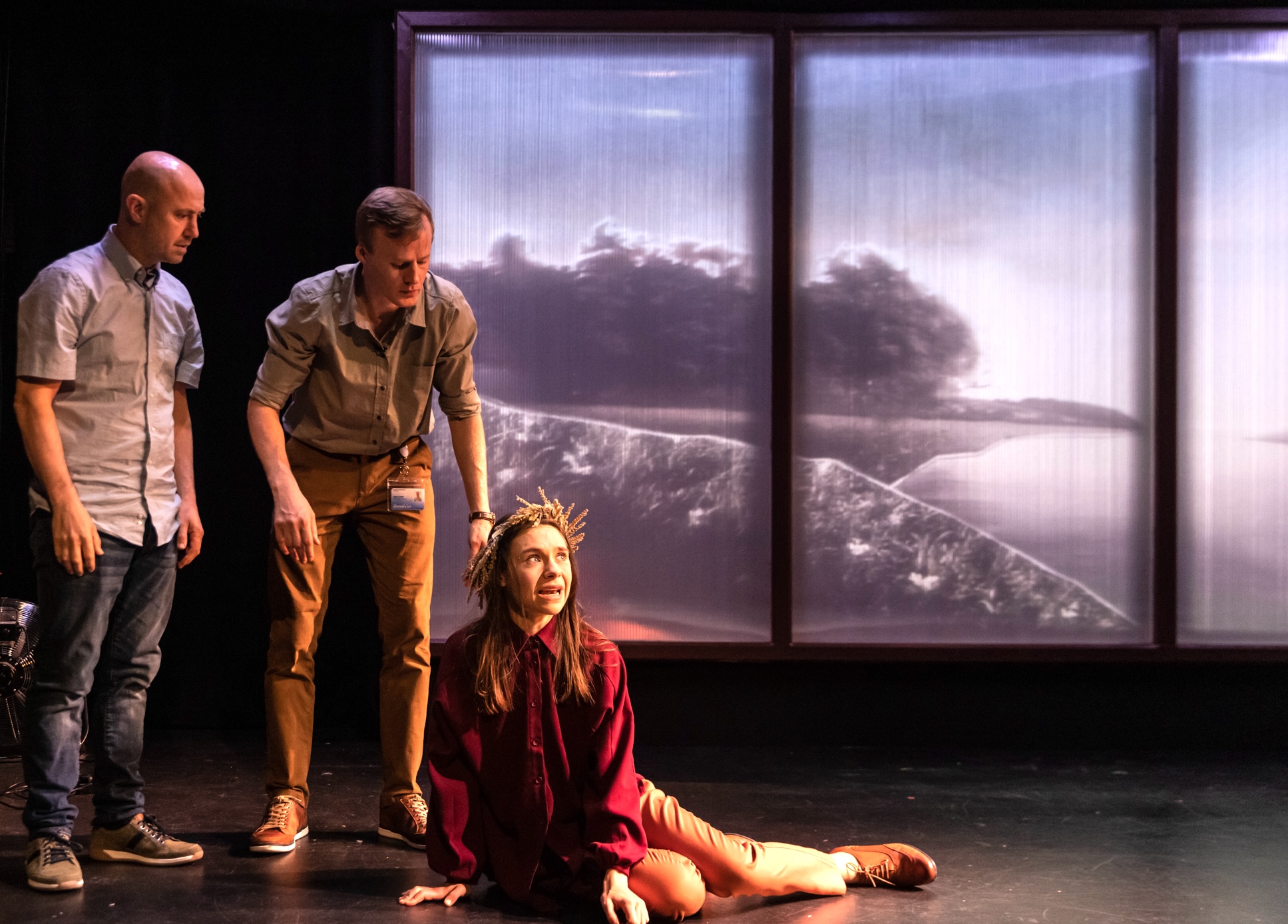
Flora Wilson Brown’s The Beautiful Future is Coming is a triptych: a thought-provoking meditation on the subject of climate change set over centuries. 

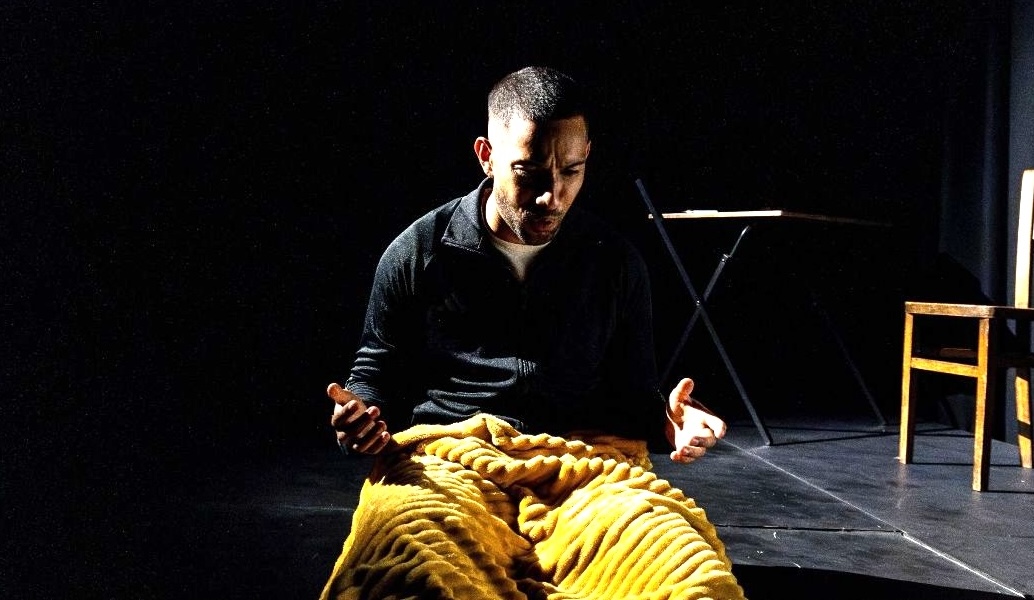
New York, 1856. Eunice (Phoebe Thomas) believes she has discovered evidence that sunlight and carbolic acid will one day have a dramatic effect on the world’s weather. She’s understandably keen to spread the word – obsessed with the notion – and she’s supported at every step by her well-meaning husband, John (Matt Whitchurch). However, nobody in the scientific community is prepared to take the word of an amateur – and what’s more, a woman – seriously.

In 2027, Claire (Nina Singh) and Dan (Jyuddah Jaymes) are based at a design agency in London where, ironically, they are working on an advertising campaign for Greenpeace. They begin a flirtation, which develops into a serious relationship. But when Dan’s mother home is flooded by a sudden, catastrophic weather event, Dan’s whole worldview is irrevocably tainted.

In 2100, scientists Malcolm (James Bradwell) and Ana (Rosie Dywer) are trapped in a research centre in Svalbard, Norway, where a storm has been raging for months. Ana is trying to conduct experiments on weather-resistant strains of wheat – and getting precisely nowhere. She is heavily pregnant and beginning to wonder if she can make it to safety before her baby arrives…

The story switches effortlessly back and forth in time, the scenes interconnecting almost seamlessly, the events occasionally echoing each other, as if to emphasise that, no matter how hard humanity tries to effect change, we hardly ever succeed. 

This complex tale is told with deceptive simplicity. The three couples move around Aldo Vázquez’s set like chess pieces on a board, while Elena Penãs atmospheric sound and Ryan Day’s lighting contribute to the play’s immersive atmosphere. For me, the only uncertain point here is Dan’s OTT reaction to his mother’s fate – there’s been no hint in his previously cheerful demeanour that such darkness lies within him.

But The Beautiful Future is Coming does have a profound impression on me, even if I can’t help feeling that the words ‘Don’t Hold Your Breath’ would make an apt suffix.

4 stars

Philip Caveney

Midnight at the Palace

08/08/25

Gilded Balloon Patterhoose (Big Yin), Edinburgh

“I went to primary school with Baylie Carson’s stepmum.”

I know, it sounds like a Fringe show title, but it’s not. It’s just a fact. Summer 1982, North Wales: while the rest of our class dealt with the big move to high school, Kerry faced a more exciting change, emigrating all the way to Australia. And now, more than forty years later, I’ve climbed the stairs to the third floor of Edinburgh’s Patterhoose to see her stepdaughter perform. It’s a tenuous connection, but feels oddly significant. It’s lovely to see our peers succeed, and somehow even more lovely when it’s their children doing well.

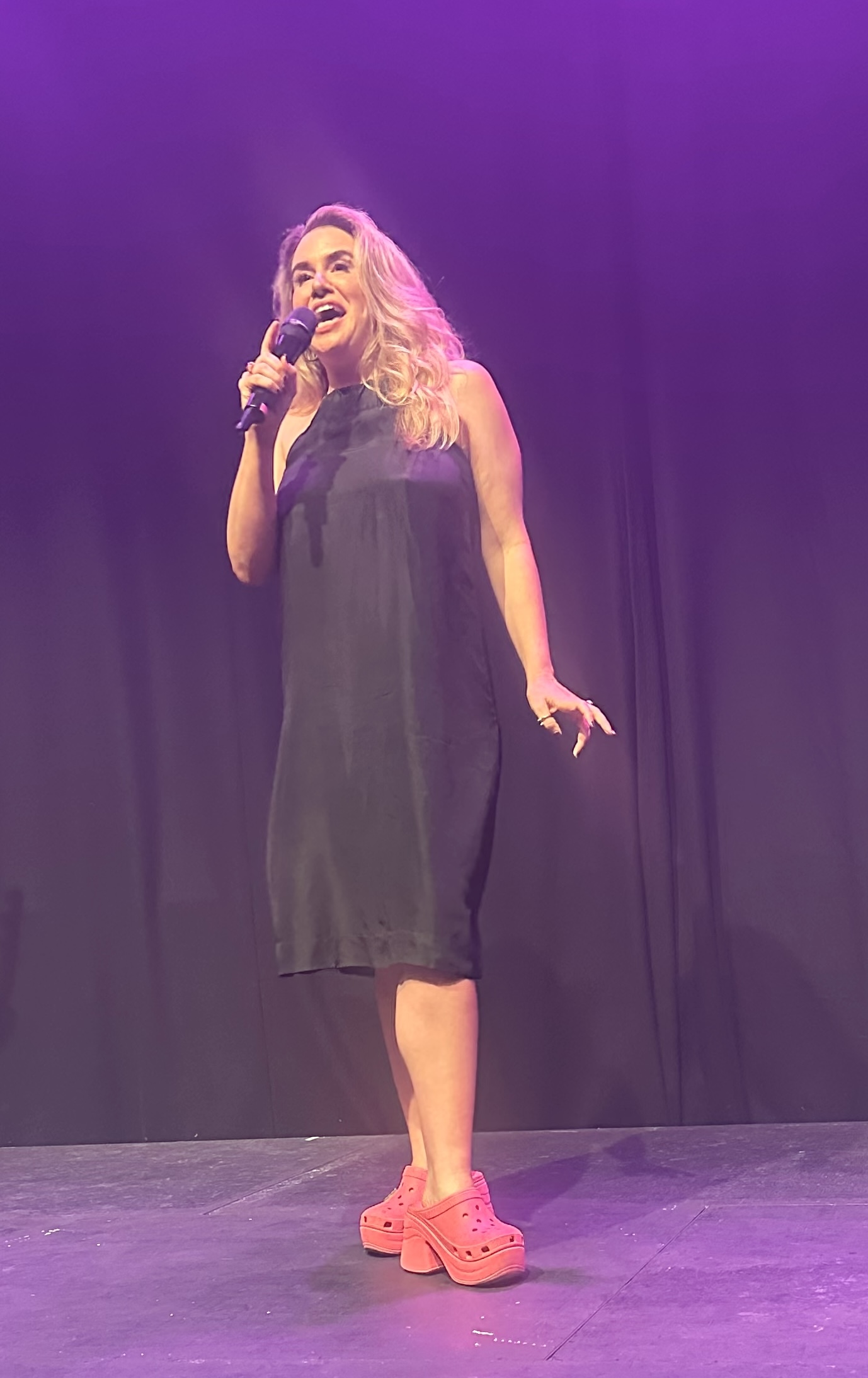
And Carson is doing really well, recently appearing in West End productions of SIX (Anne Boleyn) and Mean Girls (Janis). They’re in the ascendant.

But tonight they’re here, part of a sequin-clad ensemble bringing the little attic room to life with this sparkling production of Midnight at the Palace.

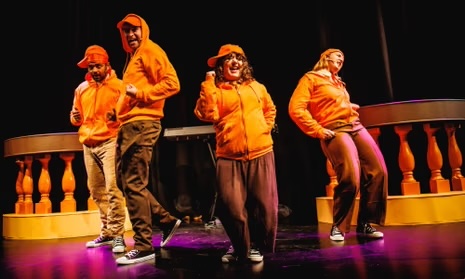
The musical is based on a true story. It’s the late 1960s and San Francisco’s counterculture is booming. Radical Hibiscus (Andrew Horton) and disco-diva Sylvester (Gregory Haney) lead a ragtag group of hippies, freaks and drag-queens, known as The Cockettes, whose performances at the North Beach’s Palace Theater are legendary. As the group becomes successful, however, tensions begin to rise, especially when they get the chance to appear in New York. While the others are drawn by the allure of Broadway, Hibiscus believes that ambition corrupts. He wants to stay in California, true to his ideals, performing for free, refusing to be co-opted by ‘The Man.’

Perhaps to its detriment, Rae Binstock’s book doesn’t really focus on the conflict, but Brandon James Gwinn’s music is great, with some really catchy, memorable songs. The piece works best as a celebration of queer culture: the gaudy costumes and home-made props a riot of colour and joy; the vivacious performers full of sass and vim, gleefully waving two fingers at the normies, swallowing acid and quaaludes; singing, dancing, shagging around. However, there’s not much of a storyline, and it’s a shame that the fascinating political undercurrents are only referenced rather than explored.

Carson is a standout as Pam, the sweet country girl with a yearning for excitement, who hitches her way to The Golden City to find a family of friends. Their song Take Me Home is a highlight of the play. Haney is also fabulous as Sylvester, dominating the stage, while Horton’s A Crab on Uranus is a visual delight. I also really like the puppetry (John Waters and Divine are particularly amusing), and am mightily impressed by the dynamic dance routines Paul McGill manages to choreograph on such a small stage.

Midnight at the Palace is a blast: a spectacular, gender-bending kaleidoscope of fun.

4 stars

Susan Singfield

Rob Auton: CAN (An Hour-Long Story)

07/08/25

Assembly Roxy (Upstairs), Edinburgh

I haven’t seen Rob Auton performing live before, but I have heard him on The Elis James and John Robins Show and found him appealing. So I’m looking forward to this hour, my introduction to a new (to me) comedian. He doesn’t disappoint.

In what is (I learn) something of a departure for Auton, CAN is a character comedy. The eponymous ex-motivational speaker charts his ascent from an ordinary man doing a home workout to a global influencer, changing hearts and lives. And then he tells us of his descent, his growing disillusion with the whole idea of motivation, his acceptance of normality.

Can tells us it’s hard to describe our existence on earth; likewise, it’s hard to describe this hour-long story. It’s gentle and life-affirming, silly and bleak, familiar and strange. Auton’s dry, deadpan delivery belies the emotional heft; he’s mocking motivational speakers and yet somehow motivating me (just into a kind of general positivity; I’m not planning on doing anything drastic like moving the toaster…).

I don’t want to give too much away, but the hour flies by in a carefully-orchestrated onslaught of ideas. There’s some pretty standard observational stuff mixed in with the surreal; some poetic riffs and some important points. I’m sold. And I’ll be back to see whatever Auton does next.

4 stars

Susan Singfield

James Phelan: The Man Who Was Magic

06/08/25

McEwan Hall at Underbelly, Bristo Square, Edinburgh

James Phelan was probably destined to be a magician. After all, his uncle was the late Paul Daniels, a man known for the infamous catch-phrase, ‘You’ll like this. Not a lot, but you’ll like it.’ Not that I would apply that description to Phelan’s show, which I do enjoy. A lot. It’s bigger, more grandiose than the kind of offering his Uncle Paul was known for and features several WTF moments that have me shaking my head in disbelief.

Phelan enjoyed a palpable success at last year’s Fringe, though we didn’t get the opportunity to add him to our watchlist. This year, you’ll find him in the cavernous surroundings of the McEwan Hall, which is great news for him – the importance of bums on seats is not to be ignored – but in some ways works against him, because some of the tricks inevitably lose their power by being distanced. Though we’re seated in the stalls, I sometimes find myself struggling to maintain a clear sight-line and one routine in particular, which takes place right on the edge of the stage, is lost to view behind a sea of heads.

Of course it would be unfair to share details of any of the illusions; suffice to say that some of them are quite bewildering and I find myself wracking my brains for hours afterwards, wondering how a particular bit of wizardry was achieved. A prominent sign when we enter announces that ‘no stooges are used in the show’ or words to that effect. So how the hell did he…?

Trust me, don’t go down that road.

Overall, The Man Who was Magic is an accomplished production and Phelan is a relaxed performer who takes the audience into his confidence and enjoys playing with their expectations. But I do have reservations. At one point, the theatre is plunged into total darkness for several minutes, which just feels downright suspicious, an opportunity for his stage crew to tinker with things. To give him his due, Phelan announces that he’s not entirely sure about keeping this bit in and I think I agree. We all know there’s no such thing as magic, only the power of suggestion and the trick of misdirection – but for something to be truly astounding, we need to believe we’ve seen every single moment in crystal clear detail.

Still, the audience troops out talking excitedly about what they’ve just witnessed – and at the end of a Fringe show, that’s exactly the effect that every performer is hoping for.

4 stars

Philip Caveney
Kanpur: 1857

06/08/25

Pleasance Courtyard (Beneath), Edinburgh

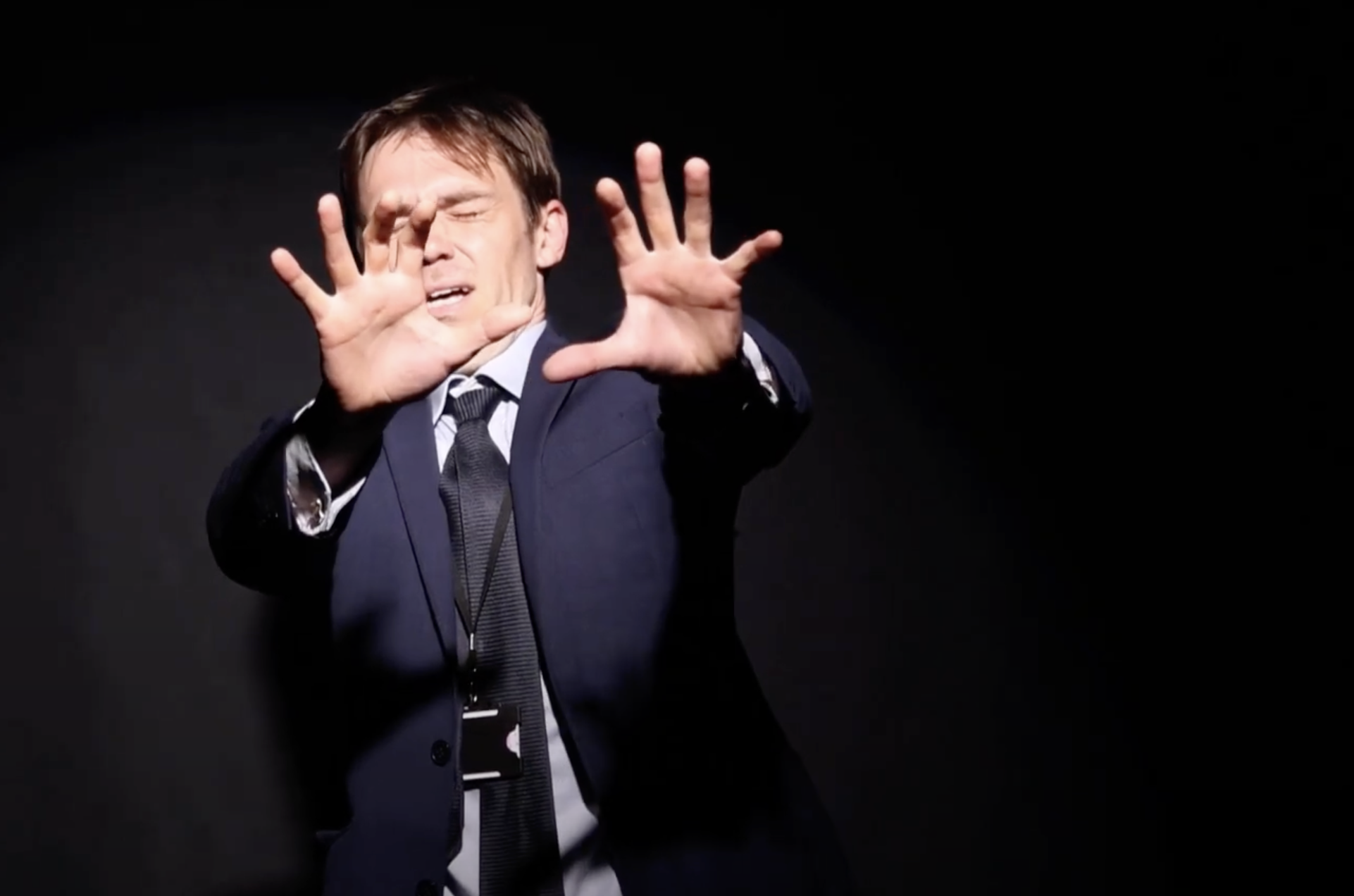
Set in Kanpur, India, in the aftermath of the so-called “Sepoy Mutiny,” an unnamed Indian (portrayed by the play’s author, Niall Moojani) is sentenced to death for insurrection. The captive is a Hijra, often described as ‘the third sex,’ who are traditionally assigned as male at birth, and can decide which gender they wish to assume in the fullness of time. The officer in charge of the execution, played by co-director Jonathan Oldfield, offers his victim an opportunity to speak, or rather demands that they do so. Afterwards, they will be strapped to a cannon and blown apart in front of a crowd of onlookers – or, as we’re known in these quarters, a Fringe audience.

A serviceable-looking cannon has been sourced, and it’s pretty much the only prop in evidence. I can’t help thinking about the difficulties of bringing such a cumbersome weapon down into the Pleasance Courtyard’s ‘Beneath’ performance space, but happily that’s not my job.

Oldfield’s officer serves in a distinguished Highland regiment, though his accent is – perhaps inevitably – cut-glass English. Now, he suggests, is the time for the condemned to explain what has brought them to this awful situation. A garrulous sort, the officer can’t stop interrupting his victim’s narrative, asking awkward questions, offering his own privileged perspectives, even at one point picking up a guitar and lending some lilting accompaniment.

Kampur: 1857 has interesting points to make about the nature of colonialism, reminding us that, during the conflict there have been acts of barbarism on both sides – though these observations come from Oldfield’s character, speaking from the more comfortable point of view of somebody who isn’t about to be evenly distributed across the landscape, and whose side’s reaction to the mutiny has been massively disproportionate.

The piece, which lies somewhere in that strange no-man’s-land between storytelling and drama is at its best when the two characters are exchanging views, bickering, joking, vainly trying to bring each other around to some shared worldview. Oldfield gets the best of it, his sneering superiority played at full-throttle, while Moojani’s dialogue is more reserved and contemplative. Meanwhile, tabla player Hardeep Deerhe provides a rhythmic accompaniment to his words.

It’s impossible not to feel swept up in the play’s final moments, as the victim waits, helpless and silent, their final seconds ticking inexorably away…

3.8 stars

Philip Caveney

Single Use

06/08/25

Pleasance Courtyard (Bunker Three), Edinburgh

Ella’s life is a muddle: she’s struggling to separate her mounting troubles and figure out how to deal with them. A bit like her recycling.

Ella (Verity Mullan) is an expert procrastinator. She’s unfulfilled by her bar job, but can’t be bothered to look for anything else. She likes the idea of her allotment, but tending to it is a step too far. She never pays her rent on time and doesn’t get on with her flatmate anyway. She cares about the planet, but it’s not her fault takeaways are delivered in plastic boxes – and who has the energy to cook? From the outside, it’s clear that Ella is depressed. It’s just that she hasn’t realised it yet.

Written by Mullan and directed by Emma Beth Jones, Single Use works well as a character study. Mullan is an engaging performer, imbuing Ella with a winsome vulnerability and spark. I particularly enjoy the physical comedy – her exaggerated sense of repulsion as she deals with her icky bin bags; the slurping of beer from Tupperware – all perfectly complemented by Flick Isaac-Chilton’s sound design.

However, there are too many disparate plot strands competing for our attention and it’s not always clear who the various voice messages are from. I’m confused by ‘Stusi’ (Ella’s young stepsister), who is first described as someone to whom “puberty has not been kind” – leading me to assume that she is about thirteen years old – but then turns up in a car to give Ella a lift home. The climate crisis element feels particularly under-developed, with the tantalising messages from Malaysia left to fizzle into nothing.

Ultimately, there are some promising ideas here, but they perhaps need a little more cohesion and development for this piece to fully realise its potential.

3 stars

Susan Singfield

Matt Forde: Defying Calamity

05/08/25

Pleasance Courtyard (Beyond), Edinburgh

It’s rather lovely to see Matt Forde strolling out to greet a sold-out house at the spacious Pleasance Beyond, the mere sight of him bringing back memories of alcohol-fuelled nights at earlier fringes (in smaller venues) in those far-off days before we went on the wagon.

Anyone coming to this show after spotting the poster and expecting some kind of Wicked mash-up will be sorely disappointed. That title is, I think, a reference to the comedy-impressionist’s own recent brush with cancer and the couple of years he’s spent learning how to adjust to his new condition. If anything, the experience has given him an added openness, a willingness to talk about his own situation in unflinching detail. I now know a lot more about erectile dysfunction than I did before.

Which is not to say that this isn’t a rollicking evening of laughter as he flits from impersonations of one politician to another: a hapless Keir Starmer, trying his level best to do the right thing but invariably putting his foot in it; a swaggering Nigel Farage, fired up on pints of best bitter and loudly opposing anything his opponents present him with; and is there any other impressionist who can portray the execrable Donald T with quite such skill, capturing the man in all his awfulness which just a frown and a grimace?

Forde is also rather adept at making me reconsider views that that I’ve long held, merely by coming at a subject from a slightly different direction. He’s a staunch centrist, and I’d like to hear his views on the new Corbyn-Sultana alliance, but maybe it’s too recent an event for him to have built a routine around.

Tonight’s set offers an overview of Great Britain as it stands at the crossroads of change. Just exactly where our country is headed remains to be seen, but it’s great to have a skilled comic like Forde to provide the commentary, offering his own authoritative insights into the world of politics.

I’m glad to see him back on stage, where he belongs.

4 stars

Philip Caveney
The Other Mozart

05/08/25

Assembly George Square Studios (Studio Two), Edinburgh

You’ve heard of Nannerl Mozart, right?

Nope?

Me neither.

Her brother’s pretty well-known though. He’s so famous he’s known by just one name (which is probably a good thing, considering his original moniker was the unwieldy Joannes Chrysostomus Wolfgangus Theophilus Mozart – although he did later change this to Wolfgang Amadeus).

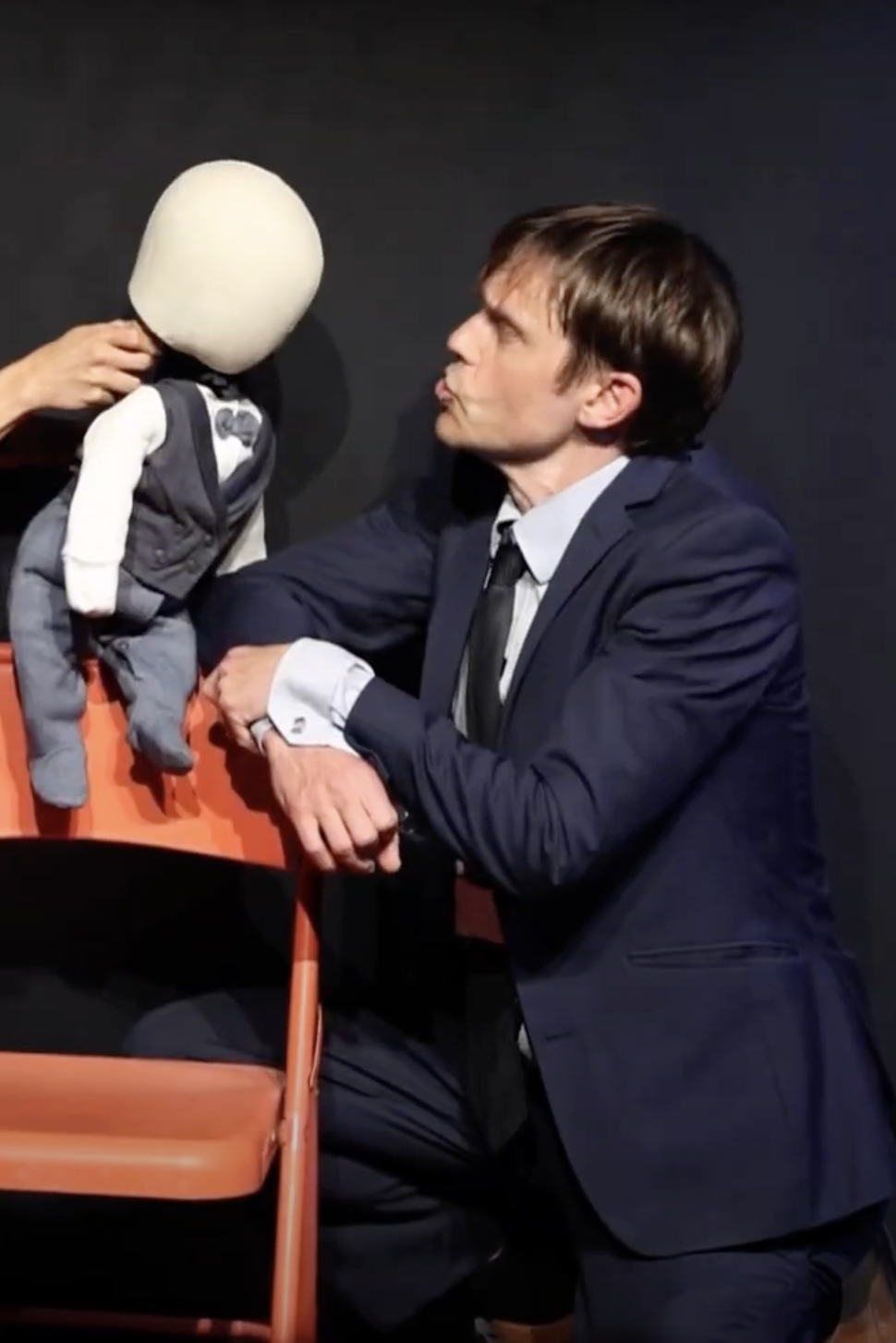
It turns out “Nannerl” (aka Maria Anna Walburga Ignatia; yep, Mama and Papa Mozart really liked long names) was something of a musical prodigy too, who toured with “Wolfie” when they were both children. This elegant production, written and performed by Sylvia Milo (in rotation with Daniela Galli), finally brings Nannerl out of the shadows and into the light.

It’s no great shock to discover that the reason we don’t know about her is because of her gender. Europe’s aristocracy were happy to watch a little girl perform, less so a grown woman. Here, with great artistry and precision, Milo shows us the toll this must have taken on the talented musician and composer, forced to watch her younger sibling garnering credit and acclaim while her own similar ambitions were thwarted, subsumed into marriage and motherhood.

Sadly, none of Nannerl’s original pieces survive, but Milo’s poised performance is beautifully complemented by Phyllis Chen and Nathan Davis’s compositions, which evoke the era perfectly, allowing us to believe in Nannerl’s genius.

The Other Mozart, directed by Isaac Byrne, is a work of art: a sophisticated blend of monologue, music and movement – and it’s a visual marvel too. The set is the costume; the costume is the set: a giant dress, designed by Magdalena Dąbrowska, fills the entire stage, waiting, predator-like, to trap Nannerl in its fathomless drapes. The image is intensified by Miodrag Guberinic’s cage-like panier, constructed – I think – from music stands, constricting Nannerl but also amplifying her stature, so that she rises monumentally, towering over us, defying us to forget her name.

An object lesson in reclaiming women’s history, The Other Mozart is exquisitely conceived and realised, a magnum opus in its own right.

5 stars

Susan Singfield

Bury the Hatchet

05/08/25

Pleasance Dome (Queen Dome), Edinburgh

I’ve long been fascinated by the case of Lizzie Borden, after reading Evan Hunter’s fictionalised account of her story back in my youth – and, of course, many people are aware of the little poem that begins, ‘Lizzie Borden took an axe…’

I don’t think I’ve ever used the word ‘playful’ to describe a true-crime drama before – but it’s the first word that springs to mind when thinking about Out of the Forest’s production of Bury the Hatchet. It’s not that Sasha Wilson’s script treats its grave subject disrespectfully, far from it. It’s just that the story is handled in such an offbeat and refreshing way.

This fascinating hybrid – part true-crime investigation, part re-evaluation – looks at all the different threads of the mysterious murder of Lizzie Borden’s parents in the prosperous neighbourhood of Fall River, Massachusetts, in the year 1892. With all the relevant pieces in place, it attempts to make sense of them. Wilson plays Lizzie, while Lawrence Boothman and David Leopold embody a whole cast of different characters, switching from role to role with only a token item of clothing or a simple prop to ensure I’m never confused as to who is who. And trust me, it’s a tangled tale.

At key moments, Lizzie will snatch up a mandolin, while her companions grab a violin and a guitar, and they bash out a series of bluegrass standards (at one point, even a Nina Simone classic), their voices blending in stirring harmony. In other fourth-wall-breaking moments, the actors briefly step out of their guises, bewildered by the complexity of the task they’ve taken on, pausing to question the likelihood of some of the weird evidence submitted by Lizzie in her defence.

‘She said what? Mosquito bites?’

If I’m making this sound too convoluted, don’t be misled. Bury the Hatchet is an inspired piece of theatre, wonderfully propulsive, perfectly judged and by turns shocking, intriguing and acerbically funny. Vicky Moran’s direction keeps everything bubbling away at full throttle so that the pace is never allowed to lag. This is an object lesson in how to pitch a true-crime drama – and how to hold an audience absolutely spellbound.

So was Lizzie Borden guilty of a heinous crime? Did she walk away from the gallows simply by virtue of being a prosperous white woman? Or was there another, more complex explanation for what happened to the Bordens? Whatever the case, they were brutally murdered and nobody ever had to answer for the crime.

Interested parties should make their way to the Pleasance Queen Dome to judge for themselves – and prepare to be utterly captivated by this thrilling production.

5 stars

Philip Caveney

Charming

05/08/25

Greenside (Forest Theatre), George Street, Edinburgh

“And they all lived happily ever after…”

Everyone’s familiar with the traditional fairytale ending, but playwright Annie Lux has a question: what does that actually look like? Twenty years down the line, how are Prince Charming and Cinderella getting along? After all, she reminds us, there’s no mention of “together…” in that concluding line.

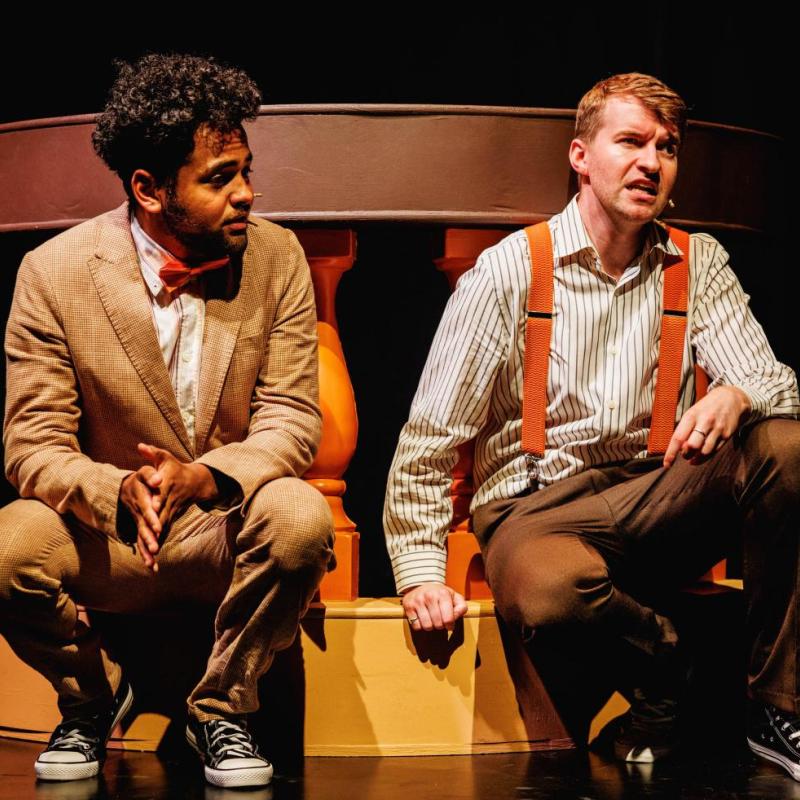
We meet Charming (Nigel Myles-Thomas) after a gruelling ‘petition day’. He’s tired, as tetchy as King Charles III faced with a leaky quill, and not at all inclined to see the insistent latecomer who’s waiting at his gate. But this last-minute petitioner is Cinderella’s fairy godmother (Claire Toeman) and, with a wave of her wand, she’s gained entry. Before he knows it, Charming is being served divorce papers. Cinderella wants out.

Directed by Lee Costello, Myles-Thomas imbues Charming with weary charisma, and his bewildered responses to Cinderella’s demands are very funny. I like the conceit that the characters know about the different versions of themselves, and use these as justification for their actions (“Only in Grimm! Not in Andersen!”), although I do wonder why punches are pulled. If we’re to acknowledge the ugly sisters having their toes chopped off in Grimm, why is there no mention of them having their eyes pecked out?

Apart from a brief appearance from Cinderella’s wicked stepmum (Margot Avery) – no iron shoes; no walking on fire – Charming is a two-hander and, while Avery makes a decent fist of the role, I don’t think her character has enough to do. To justify her sudden arrival in the final third, she needs to signal an escalation or be a catalyst for change, but that is not the case, so she just feels redundant. Another issue is the over-reliance on dialogue: nothing is conveyed without being spoken, which seems a shame as theatre is a visual art form and fairytales are so replete with imagery.

There are plenty of revisionist versions of this story, but not many focus on the characters in middle-age, and it’s interesting to see this whimsical representation of the effects of the passing years, even on those with charmed – and Charming – lives.

3 stars

Susan Singfield