Bait

11/02/20

We think we’ve missed Bait but, as we walk past the Odeon on Lothian Road this morning, Philip notices there’s a screening at 11am. We’re not working today, and the sky is too full of sleet to make outdoor pursuits attractive. So in we go, down a spiral staircase and into a crowded cinema.

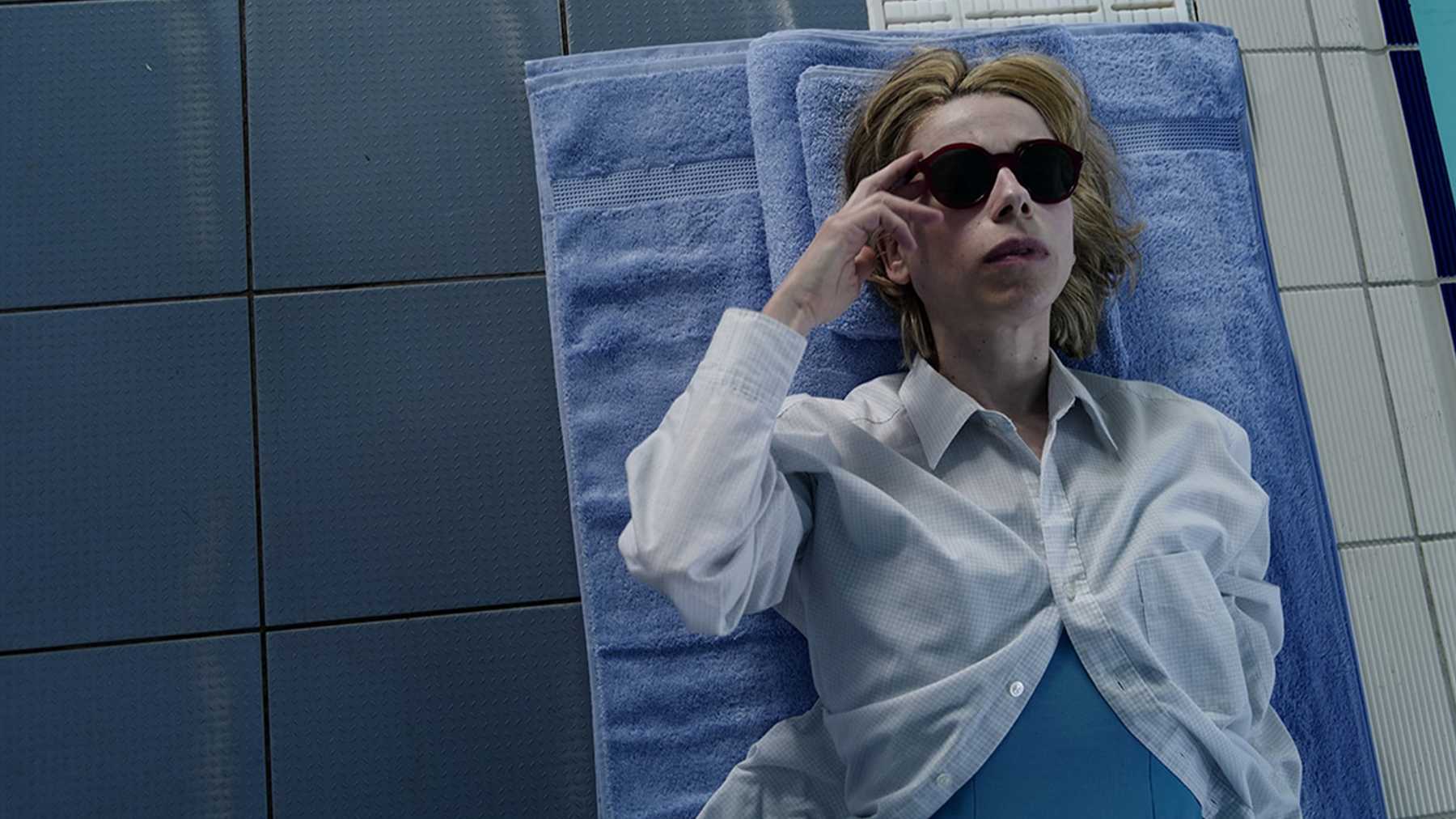
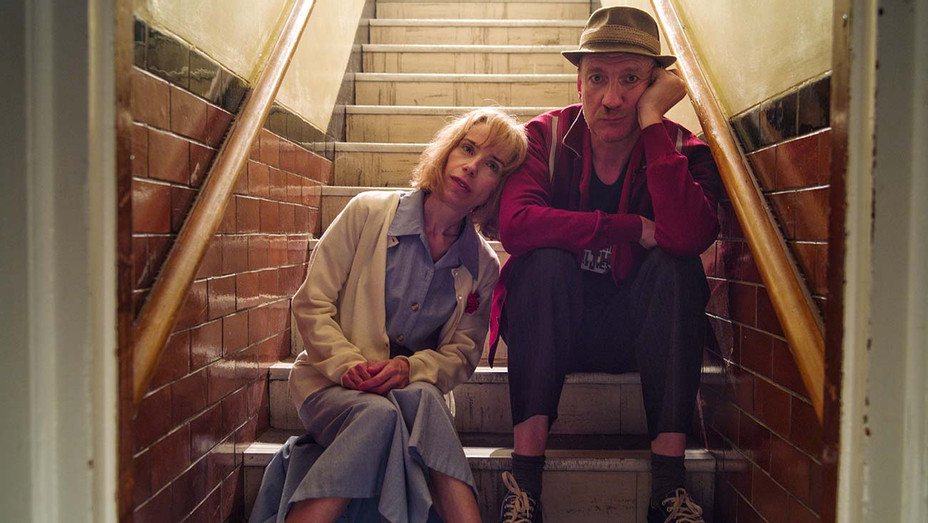
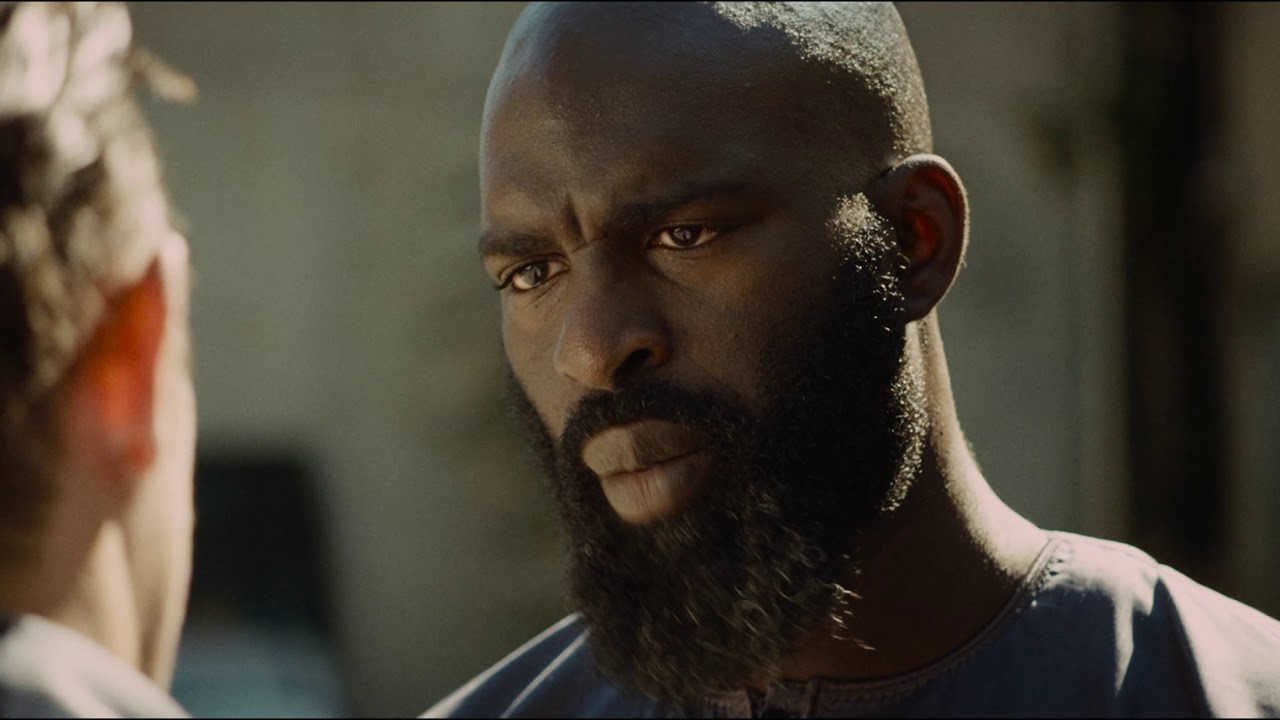
The film is about to start. We’re barely settled in our seats before the opening credits roll, and this foreboding tale begins. We find ourselves in a tiny Cornish village, where Martin (Edward Rowe) is a fisherman scratching a living without a boat. He works tirelessly, using a beach seine and a single lobster pot, selling his catch door-to-door, saving the cash payments in a tin marked ‘Boat.’ His brother, Steven (Giles King), has repurposed their late father’s vessel as a tourist tripper, but Martin wants no part in that enterprise. He’s resentful of the rich incomers, epitomised by Sandra and Tim (Mary Woodvine and Simon Shepherd), who’ve bought up all the pretty quayside properties so they can rent them out to others like themselves (‘One of them was so posh, I honestly thought he was German,’ says Wenna (Chloe Endean), a local teenage barmaid, frustrated by the hordes of outsiders, making her feel like a stranger in her own locale). The tension is palpable. Clearly something has to give.

It’s only six days since we saw The Lighthouse, and there are some obvious comparisons. Both are shot in black and white with a square-ish frame (albeit slightly different ratios). They’re both slow and brooding, too, with minimal dialogue and brutally realistic depictions of manual work. But Bait is a far superior film, at once broader in outlook and more particular.

It’s utterly compelling, the extended silences are excruciating, the characterisation painfully believable. The moneyed visitors are blinkered, ignorant of the devastation their presence has wrought on this small community, confident that their payments entitle them to what they want. But they’re not caricatures: we witness Sandra’s guilt as she glimpses what Martin is up against; we hear Tim’s justification about the business he’s bringing to the village he has grown to love. It’s just that the two ways of life are incompatible and, as ever, it’s the poor and working class who end up dispossessed.

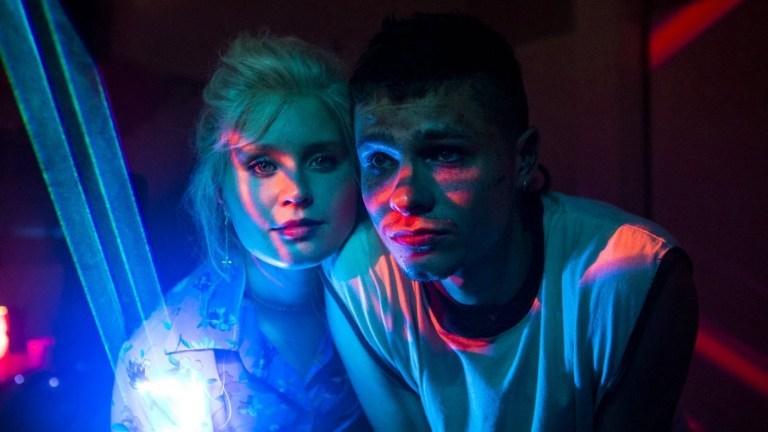
Although the setting is contemporary, the film looks like a 1950s documentary, all scratchy  and old-fashioned, adding to the sense that what Martin wants is – irrevocably – in the past. His nephew, Neil (Isaac Woodvine), hankers after what is gone as well, although that doesn’t stop him hooking up with Sandra’s daughter, Katie (Georgia Ellory), much to her brother Hugo (Jowan Jacobs)’s dismay. The scene is set for a perfect storm…

Bait is a splendid example of low-budget independent film-making, and writer/director Mark Jenkin is clearly one to watch.

4.6 stars

Susan Singfield

A Beautiful Day in the Neighbourhood

10/02/20

The main problem with Marielle Henner’s A Beautiful Day in the Neighbourhood for UK audiences is one of recognition. TV presenter Mister Rogers was a key part of the formative years of millions of children across America. Imagine if you will, Brian Cant from Play Away and Geoffrey from Rainbow – bundled into one avuncular package – and you’ll have some idea of the kind of person we’re talking about. And who do you get to play one of the nicest guys in history? Well, Tom Hanks, obviously.

But actually this story is mostly about Lloyd Vogel (Matthew Rhys), a journalist for Esquire magazine and a man with deep family issues – the kind that lead to him having a fist fight with his father, Jerry (Chris Cooper) at his sister’s wedding, for example. He’s clearly not a happy bunny. He’s also a new dad, struggling to come to terms with his baby son’s needs and leaving most of the heavy lifting to his wife, Andrea (Susan Kelechi Watson).

When Lloyd is dispatched to interview and write a feature on the aforementioned Fred Rogers, he’s initially horrified. He’s more the kind of writer to pen a character assassination than a puff piece. He’s convinced that Rogers must have some dark and nasty secret. (Looking back at many of my childhood heroes, I’m with him on this one.) So imagine his surprise when it turns out that Fred Rogers is every bit as nice as his TV persona. Indeed, according to Rogers, there is no persona. What you see is what you get.

And the more Lloyd spends time with him, the more the hard-bitten journalist begins to heal…

This is a warm hug of a movie, which attempts to walk a perilous tightrope between emotion and corn (if it occasionally strays into the latter, well perhaps that’s just my cynical Brit personality kicking in). There’s actually quite a lot to like here. I particularly enjoy the use of shonky scale models whenever the proceedings venture outside – models like this were an integral ingredient of Mister Roger’s Neighbourhood – and there are nice performances from all concerned.

But, perhaps not surprisingly, it’s Hanks who takes the lion’s share of the attention here, portraying Fred Rogers as an intense, engimatic and (it must be said) faintly creepy guy, who appears to have the wisdom of the ages simmering quietly within him. Check out the moment when Fred and Lloyd enjoy ‘a minute’s silence’ in a cafe. For a very long space of time, Hanks just stares intently into the camera lens and somehow succeeds in giving me chills. Odd then, that his recent Oscar nomination was in the ‘best supporting actor’ category.

This is by no means a perfect film, and better knowledge of its subject matter would help no end, but it’s nonetheless worth catching, even if (like us, on this snowy Edinburgh afternoon) you have to walk through a blizzard to see it. A Beautiful Day in the Neighbourhood? That’s rich!

3.8 stars

Philip Caveney


Parasite

07/02/20

I’ve long been a fan of South Korean director Bong Joon-ho. His 2006 film, The Host remains one of my all-time favourite creature features, while both Okja and Snowpiercer, though not perfect, are the work of a director who’s always ready to break new ground and look for the unexpected in every situation. With Parasite, however, he takes a giant step into the stratosphere. This is filmmaking at its most inventive. Little wonder it’s hotly tipped to lift the Oscar for best international film and, possibly,  the biggest prize of them all.

It’s the story of two families – one poor, one rich – and their interactions with each other. The Ki family are down-on-their luck, all four of them unemployed, living a squalid existence in a stinkbug-infested basement and reduced to hacking the wifi signals of their neighbours in order to find out what’s happening in the world.

Then young Ki-woo (Choi Woo-sik) is unexpectedly handed a lifeline by his student friend, who asks him to take over as English tutor to the daughter of a wealthy family, the Parks, who live in a super-swish uptown house. Ki-woo is not qualified to do the work, but his sister, Ki-jung (Park So-dam), is a dab hand on the computer and easily runs him up some fake documentation. He charms the gullible Yeon-kyo (Cho Yeo-jeong) into employing him and, when he finds out that her troubled young son has artistic aspirations, Ki-woo seizes the opportunity to bring in his sister as an ‘art tutor’ called Jessica.

From there, it isn’t long before the conniving kids have managed to instal their father as the family’s chauffeur and their mother as a replacement for the Park’s long-term housekeeper. So far, what we have is a very enjoyable story about a cunning deception, played for laughs and endlessly inventive as the home invaders, driven by the desperation of their own poverty, use ever more complicated ruses to assert their dominance over their rich employers.

But it’s at this point that the story takes a much darker turn, stepping in out of left field and slapping the viewer hard. It would be a crime to reveal anything more of the plot; suffice to say that what emerges is a brilliant study of class and privilege – an examination of the harsh, uncrossable wastelands that lie between the haves and the have-nots. The brilliance of the script is that you still feel sympathy for the confidence tricksters, no matter what depths they sink to in order to maintain their deception. Neither are the Parks depicted as monsters; they are just over-privileged, and oblivious to the fact that they’re treating their employees as disposable commodities.

As the story gallops towards its shocking climax, there’s barely time to catch your breath – and there’s a wistful, aching coda that has me leaving the cinema with a tear in my eye. Parasite is not only a landmark event for Asian cinema, it’s the work of a brilliant director at the height of his game. Those who are put off by subtitles should note that it really doesn’t matter here. See this version, before the inevitable American remake appears.

5 stars

Philip Caveney

Chicago

06/02/20

The Pleasance Theatre, Edinburgh

You have to hand it to Edinburgh University Footlights. This talented student company never shies away from taking on ambitious productions and few shows come with more ambition fitted as standard than Kander and Ebbs’ 1975 masterwork, Chicago. But, down go the lights and on troop the players, dressed to the nines, and supported by a full orchestra, playing to a packed and highly appreciative crowd.

This is, of course, the story of Roxie Hart (Rebecca Joyce), a young woman who ruthlessly guns down her lover when he threatens to walk out on her. The cheek of the man! She soon finds herself in the Cook County Jail, where she discovers that being a notorious killer can pay off, provided you have the right management.

Her main rival here is Velma Kelly (Lauren Robinson), currently riding high after the recent murder of her husband and sister, and being groomed for a career onstage by Matron “Mama” Morton (Niamh Higgins). She tells Roxie that, in order to get ahead, she needs to find five thousand dollars to pay for a lawyer – and lawyers don’t come any slicker than Billie Flynn (Matthew Storey). But, as Roxie and Velma struggle for supremacy, they soon realise that they’ll need every ounce of sass they possess in order to stay newsworthy.

The show gets off to a fabulous start with Robinson – the absolute standout in this show – delivering a terrific performance of All That Jazz and, from there, the pace never lets up as a whole series of Kander and Ebb earworms explode onstage. Joyce gives us a memorable Roxie, making us care about her not so lovable character, while Storey has plenty of swagger as Billy Flynn. There’s a lovely sequence where Higgins wanders through the audience singing When You’re Good to Mama with absolute authority. Hats off also to Alex Andsell, who manages to milk the sympathy as Roxie’s much-put-upon husband, Amos, performing a cracking rendition of Mr Cellophane and then apologising for taking up so much of our time!

But of course, Chicago is – more than anything else – an ensemble piece and it’s in those big dance numbers that amateur productions can so often come unstuck. Not the case here, thanks to the slick choreography of Florence Hardy and that superb big band, bashing out a whole string of memorable songs. Becca Chadder handles the directorial reins with aplomb, yet the programme informs me she’s ‘never directed a musical before.’ Really? Well, she’s done a first rate job here and I’m pleased to be told that she’d like to repeat the experience.

Sadly, we’re late onto this, so you only have a couple of opportunities to catch up with it. If you can grab tickets for one of the final performances, I’d urge you to do so. Let’s face it, we could all do with a little razzle dazzle in our lives.

4.2 stars

Philip Caveney


The Lighthouse

05/02/20

It’s always frustrating, isn’t it, when others commend the work of a particular director and – for the life of you – you just don’t see what they love about it?

I’ve felt like that about Quentin Tarantino, pretty much since Pulp Fiction onwards; more recently, I really didn’t care for Robert Eggers’ debut film, The Witch, which many respected critics hailed as nothing short of a masterpiece. Now here’s his sophomore effort, The Lighthouse, which arrives in cinemas virtually creaking beneath the weight of the many superlatives that have been heaped upon it. Of course I have to give him a second chance, right?

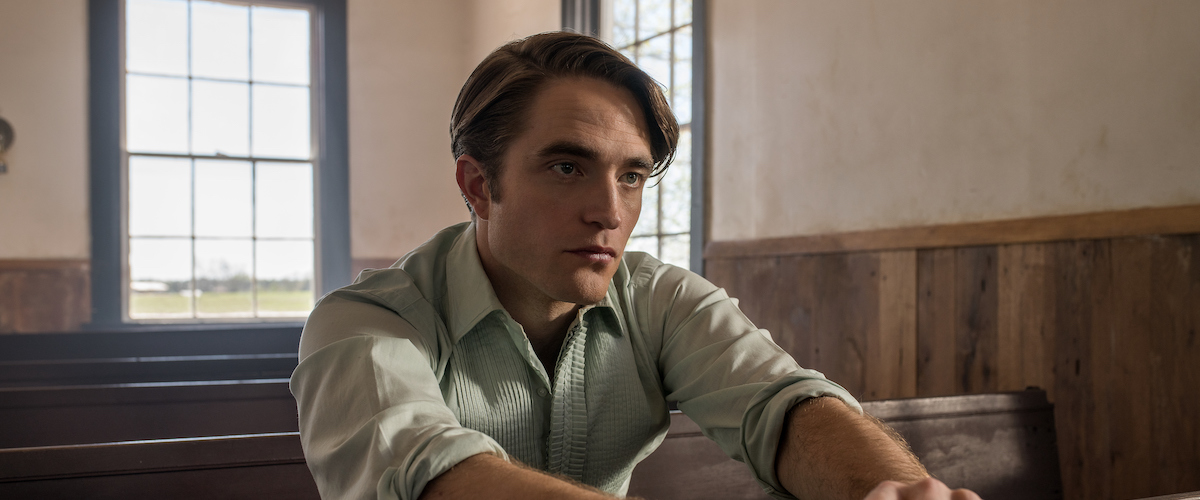
This doom laden two-hander, shot in grainy black and white on 35mm stock and projected in a claustrophobic 1:19:1 aspect ratio, concerns the story of two ‘wickies,’ despatched to a remote lighthouse off the coast of New England, where they are to live and work for a month. Thomas Wake (Willem Dafoe) is an old hand, who lords it over new recruit Ephraim Winslow (Robert Pattinson), making him take on most of the menial duties while he reserves the tending of the light itself as his own personal privilege. He also mentions that Winslow’s predecessor went mad after seeing some ‘enchantment in the light’ and hints that something bad happened to him.

The two men embark on their dull and thankless routine, which is depicted in punishing detail. Wake is a drinker of alcohol and, though Winslow resists the temptation to join him at first, he soon succumbs. When a terrible storm maroons the men long past the time when they should have been heading back to the mainland, madness and depravity rapidly descend upon them…

Sadly, I am left completely unstirred by what ensues. Here is a ‘horror’ movie that completely fails to generate any sense of threat, an allegory that cloaks its meaning to an irritating degree. What we’re left with is a study of two tedious examples of toxic masculinity, who spend most of the time in silence and then ramble away in what Eggers insists is an aproximation of the language of the late 19th century, but which is mostly rendered unintelligible by the over-enthusiastic sound effects. They fight a bit too. And sing. And dance.

Winslow’s character has recurring dreams (possibly memories, it’s never entirely clear) of discovering a mermaid and having sex with her – sadly that appears to be the only role for a woman in this film – and there are visions of tentacles, floating logs and a severed head that might just belong to Winslow’s predecessor.

There are various attempts to allude to classical elements. The killing of a bird presaging disaster is surely a nod to The Ancient Mariner, while a climactic image seems to refer to the myth of Prometheus. But honestly, there’s so little incident in this film’s one hour, forty-nine minute run, that I spend most of my time feeling as bored as its two protagonists. Dafoe and Pattinson are both excellent actors, but neither is given enough to do here (unless you count Wake’s unbridled flatulence) and, when the final credits roll, I leave wondering, once again, what it is about Eggers that generates so much adoration?

I really wanted to like this film. And I gave it my best shot. Honestly.

2 stars

Philip Caveney


Ten Times Table

04/02/20

King’s Theatre, Edinburgh

This revival of Alan Ayckbourn’s 1976 meeting-based comedy begins well, the disparate characters all deftly drawn and the tedious nature of committee membership perfectly skewered. The time wasted on protocol (proposing and seconding a chairperson, for example, when there’s only one contender); the petty rivalries that develop into full-blown feuds; the horrible ‘conference’ rooms in once-grand hotels: all present and correct.

There are laughs a-plenty in the first act, albeit of the gentle variety. Robert Daws is entertaining as the  pragmatic Ray. The town pageant, commemorating The Massacre of the Pendon Twelve, is his pet project and he’s ostensibly in charge. But it soon gets hi-jacked by Marxist ideologue and local history teacher Eric (Craig Gazey) – and Ray’s wife, Helen (Deborah Grant), is far from happy. Soon, the committee is split into two warring factions, and the re-enactment of the battle seems destined to be as bloody as the original.

The play is at its best when it’s focus is the pedantry: Mark Curry’s Donald is a stickler for the rules, and his adherence to irksome rituals is always amusing. Elizabeth Power plays Donald’s more-astute-than-she-appears mother, Audrey, who also draws more than her share of laughs. The political satire is less effective – not detailed enough, perhaps, to really say much of import, too superficial to have a real impact. Still, after the first act, we head out for our interval drinks intrigued to see how the rising tensions will be resolved.

But the second act is a little disappointing, the farcical elements too ‘polite,’ the pay-off too trifling to really satisfy. The relationship between Eric’s two lovers – his live-in partner, Phillipa (Rhiannon Handy), and fellow committee member, Sophie (Gemma Oaten)  – is vapid and uninteresting, despite both women delivering good performances, so that I struggle to see what we’re supposed to take away from this strand of the story. And Harry Gostelow has a truly unenviable task, trying to make weirdly angry ex-soldier Tim (who’s called in to lead the resistance against Eric) even faintly believable. The revelations have all been over-signposted, so that the ridiculous ‘horse’ is entirely expected (and therefore not as funny as it might be) and the final bombshell robbed of any power.

Nevertheless, there is plenty to enjoy here, particularly if you’ve ever been subjected to the special kind of awfulness that only exists in an endless round of meetings…

3 stars

Susan Singfield

Queen & Slim

31/01/20

In one scene in Queen & Slim, a character refers to the two leads as ‘the black Bonnie and Clyde’ – and it’s true that the spirit of Arthur Penn’s notorious 1967 crime drama hangs inescapably over this production. However, it shouldn’t be overlooked that, while Clyde Barrow and Bonnie Parker were small time opportunist crooks whose legend outgrew them, Angela Johnson (Jodie Turner-Smith) and Ernest Hinds (Daniel Kaluuya) are just two young black people in the wrong place at the wrong time. As for that odd title, we don’t even learn the characters’ real names until the film’s conclusion. Quite how they earn their titular monikers is anybody’s guess, but I’ll go with it for simplicity’s sake.

When we first encounter Queen and Slim, they are in Cleveland, Ohio, and struggling through an awkward first date, arranged via Tinder. She is a lawyer, miserable after losing a court case, and seeking solace from human company. He is just a happy-go-lucky guy, hoping for a bit of love action and refusing to complain when the scrambled eggs he’s ordered are delivered fried. As a couple, they aren’t exactly hitting it off, so they get into Slim’s car and head for Queen’s apartment, where Slim is clearly still hoping that things might develop further.

But the situation goes catastrophically awry when they are pulled over for a minor traffic violation and a racist white cop pulls a gun on them. In  the ensuing confusion, Queen is grazed by a bullet and, in self-defence, Slim shoots the officer dead.

Slim is all for calling the cops and facing the music, but Queen assures him that no black man can ever hope for a fair trial in such a situation. She ought to know; this is her area of expertise. She insists that they get in the car and drive South to New Orleans. They even discuss the possibility of crossing the water to Cuba.

And so a long Southbound odyssey begins. The couple encounter various characters along the way, and there’s a notable stopover with Queen’s Uncle Earl (Bokeem Woodbine), a gold-adorned pimp who owes Queen a major favour. Wherever they go, they realise that people are recognising them despite the fact that they have taken steps to radically change their appearances. It transpires that footage from the dead cop’s dashboard cam has somehow found its way onto social media and gone viral. Support for the fugitives begins to grow across America. Meanwhile, the police are attempting to track them down and have even offered a substantial reward for information leading to their arrest.

This is mostly an entertaining road trip with a powerful central message about inequality. Both Turner-Smith and Kaluuya are engaging performers and, as the couple’s relationship begins to blossom, so we begin to learn a little more about them. Melina Matsoukis’s direction is pretty solid too, though – on what is her first feature film – she makes a few missteps, sometimes allowing the momentum to stall, occasionally trying little arty flourishes that don’t quite come off . Furthermore, the screenplay by Lena Waithe contains elements that don’t always entirely convince: occasionally there’s the feeling that certain details may have been lost in the edit. The film’s conclusion feels somehow horribly inevitable. Would it have been more empowering to buck the trend and offer something a tad more optimistic?

Still, for a debut feature, this is pretty impressive stuff and feels like another useful addition to the #BlackLivesMatter movement.

3.8 stars

Philip Caveney

Heroine

30/01/20

Traverse Theatre, Edinburgh

Heroine is not for the faint hearted and the various trigger-warnings posted around the foyer of The Traverse are not just for show. This powerful one-woman drama, written and performed by Mary Jane Wells, is the true story of Danna Davis, a lesbian who joined the American army in the 1990s – before the infamous ‘Don’t Ask, Don’t Tell’ policy was repealed. While stationed in Germany, she was subjected to a horrific rape at the hands of four fellow soldiers, one of whom was her commanding officer. Davis then had to serve alongside the same men in combat situations in Iraq, until eventually, she was badly wounded and discharged from the Army.

Wells’ drama takes the form of a monologue as she recounts the awful attack and then examines the long and arduous fight that came in its aftermath, as Davis struggles to come to turns with what has happened to her. It’s a raw and compelling performance and is made all the more stark when we learn that the situation is distressingly common in the American armed forces (there are 19,000 cases of sexual assault a year), and even has its own official terminology: MST (military sexual trauma).

This is nobody’s idea of a pleasant evening at the theatre – indeed, it’s shocking and brutal, a shaming indictment of the army’s policy – but it’s also an important subject that fully deserves to be exposed and explored. In the era of #MeToo, Davis’s story is finally reaching wider audiences. Heroine, created and developed with help from the King’s and Festival Theatre in Edinburgh is soon to be staged at the John F. Kennedy Centre for the Performing Arts in Washington DC.

Tonight there’s an after-show discussion which examines the case of a British soldier who after reporting a similar incident, had her allegation summarily dismissed and tragically took her own life. Only the intervention of Emma Norton (lawyer for soldier’s rights firm, Liberty), managed to ensure a proper investigation. The more light that can be directed at such injustice, the more chance we’ll have of ensuring it can be identified and dealt with.

So, do go and watch this harrowing and challenging piece of theatre.

4 stars

Philip Caveney
 

Oor Wullie: The Musical

28/01/20

King’s Theatre, Edinburgh

Jings and crivvens!

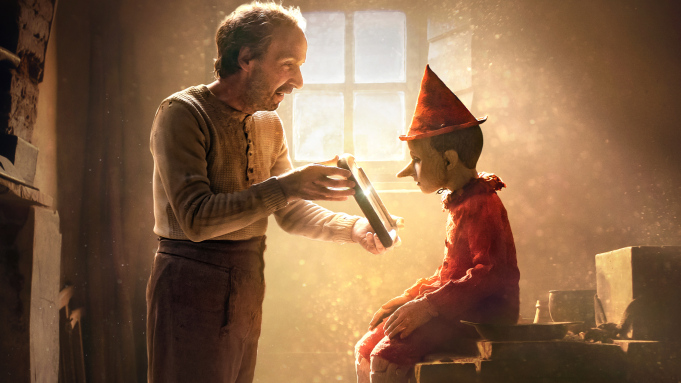
Wullie and I are old acquaintances. He appeared every week in the comics I read as a child back in the 1960s, but he first saw the light of day in 1936 and has endured over the decades, recently clocking up his eightieth anniversary. Last year, his image made millions for charity with the Big Bucket Trail, which featured individually decorated statues of the iconic kid from Auchenshoogle in various locations around Scotland.

This musical, by the same team who brought The Broons to the stage, features  a sprightly and raucous collection of songs in a wide range of styles. The simplicity of the storyline would seem to make it a good fit for a younger audience. Indeed, the kids in the auditorium tonight are clearly enjoying the proceedings (especially when Wullie’s pet mouse, Jeemy, makes an appearance), but the majority of the audience are older people, here to reconnect with something fondly remembered from their childhoods.

Wahid (Eklovey Kashyap) is a teenage boy, born in Scotland to Pakistani parents. He’s having a hard time fitting in, forever being asked if he ‘likes his new home.’ Well-meaning neighbours ask him where he’s really from, while the school bullies enjoy making fun of him at every opportunity. Wahid is Scottish, but somehow, ‘not-Scottish,’ and he’s beginning to struggle with his own identity.

In the school library, he meets up with the mysterious librarian (George Brennan), who gives him an Oor Wullie annual to read, telling him it’s the perfect introduction to ‘being Scottish.’ Wahid is somewhat taken aback when Wullie (Martin Quinn) appears in his bedroom, claiming to be in search of his famous bucket, which has unexpectedly gone missing. Wahid remembers that he saw just such a bucket in the school library, so the two of them set off in search of it.

It isn’t long before Wullie is joined by his gang – Bob (Dan Buckley), Wee Eck (Grant McIntyre), Soapy Soutar (Bailey Newsome) and Primrose (Leah Byrne). They are not surprised to discover that the bucket has been purloined by arch enemy, Basher McKenzie (Leanne Traynor), and the kids enlist their old adversary PC Murdoch (Ann Louise Ross) to help them retrieve it. In the second half, the comic book characters take Wahid into the fictional world of Auchenshoogle, where their clothes transform from black and white into full colour.

Valiant attempts are made to make Wullie more relevant to a modern day audience. There’s a song that features him performing a duet with Alexa, for instance and there’s a nice bit of inclusivity where the cast put on saris and leap about to a bhangra-style tune. PC Murdoch gets an opportunity to strut his stuff to a rock song and there’s some funny interplay between him and an amorous teacher (Irene MacDougall).

If there’s an over-riding problem, however, it’s that the drama fails to generate any genuine sense of peril. Wullie wants his bucket back, but we’re never entirely sure why its so important to him, nor indeed what will happen if he doesn’t get it. The result is never less than knockabout fun, but here’s a musical that doesn’t seem entirely sure about what kind of audience it’s trying to appeal to.

To my mind, it’s surely one for the kids, assuming you can get them away from their phones and tablets for a couple of hours. Wullie has been an enduring character over the decades and there’s no reason why a new generation of youngsters shouldn’t fall for his charms, given half a chance.

3.5 stars

Philip Caveney
 

Anne Frank: Parallel Stories

27/01/20

It’s Holocaust Memorial Day and watching this documentary seems a fitting way to mark it. Anne Frank would have been ninety this year, had her life not been stolen by a repugnant ideology, had she not been murdered at sixteen because she was Jewish.

She’s just one, of course: a single, accessible representative of the unimaginable six million WWII victims of genocide. But her remarkable diaries provide a powerful insight, humanising those who were dehumanised, her singular narrative a worthy stand-in for those who cannot speak.

In this documentary by Sabina Fideli and Anna Migotto, other voices are added to the mix. We hear from five survivors (Arianna Szörenyi, Sarah Lichtsztejn-Montard, Helga Weiss and sisters Andra and Tatiana Bucci), and their testimonies are heartbreaking. It’s impossible not to cry whilst listening to these dignified, thoughtful old women, all of whom have managed to build good lives for themselves, despite the horrors they endured: taken from their families, imprisoned, starved, brutalised, experimented on. As Nazi atrocities fade from living memory, it’s imperative that we should bear witness to these remaining first-hand narratives, because we cannot afford to forget. This is what happens when the far right ascend to power; this is why we need to be alert.

If the survivors were this film’s main focus, I think its impact would be immense. Unfortunately, there’s a lot of filler too, additional elements that weaken its effect. There’s a young girl, for example (Martina), travelling around Europe, purportedly learning about Anne Frank. But she never gets to speak or respond emotionally to what she discovers. Instead, we get a lot of artful shots of her looking sad with on fleek eyes, posting vapid photo-messages on social media (‘What were you thinking, Anne?’) with a rash of hashtags attached (#emotional). This seems like a terrible waste: we know from Anne’s own diary how intelligent and erudite young people can be; why is Martina reduced to such banality? I can’t work out what we, the audience, are supposed to gain from her presence.

I’m not sure about Helen Mirren either. She’s reading excerpts from the diary, sitting in a mock-up of Anne’s bedroom in the tiny Annexe where she hid for two long years. She reads beautifully – of course she does; she’s Helen Mirren – but I can’t help feeling this section would be stronger if the reader were someone with a closer connection to Anne Frank and the Holocaust.

Nevertheless, for the survivors’ stories alone, this is a must-see. Because their stories really matter. As one of the marvellous youngsters featured in the opening sequence makes clear: we need to be open to refugees, to people fleeing fear and oppression. Because every time we turn our backs or close our doors, another Anne Frank is condemned to die, and we reveal just how little we have learned.

3.8 stars

Susan Singfield