Theatre

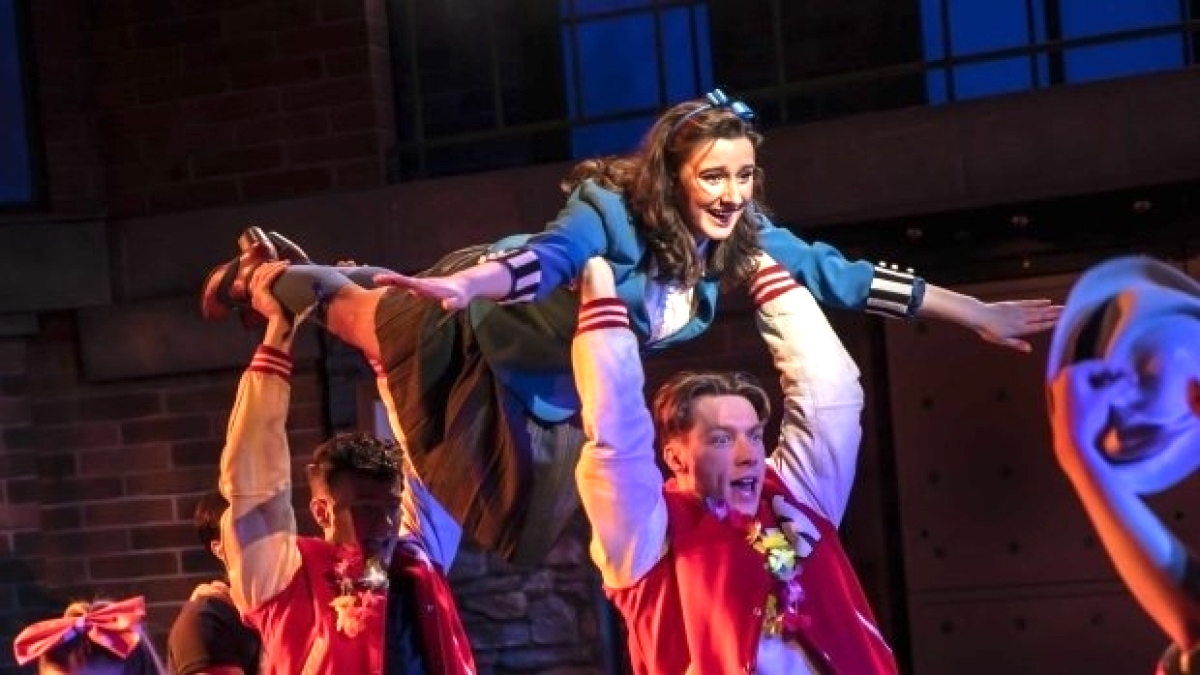
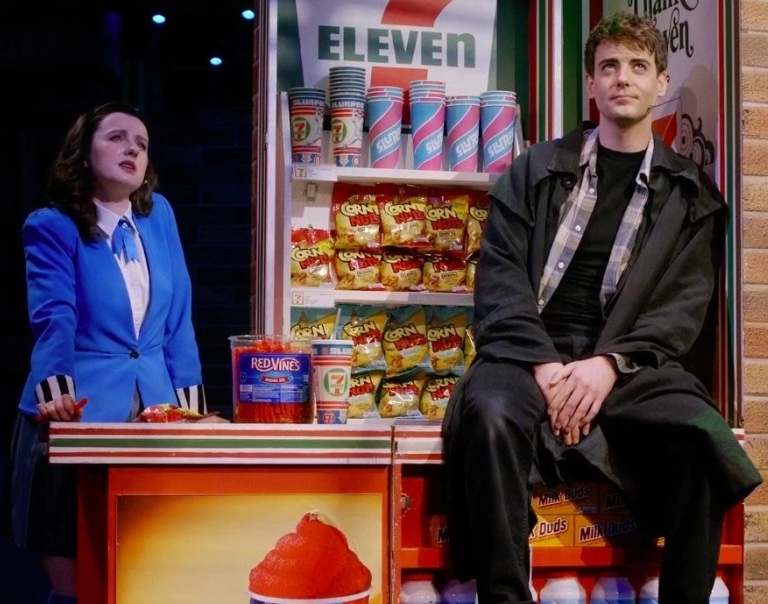
Heathers: The Musical

28/03/23

Cameo Cinema, Edinburgh

In 1988, I was seventeen – and so was Veronica Sawyer. “You’re right; it really blows.” Luckily for me, high school in Abergele wasn’t quite as combative as it was in Sherwood, Ohio, and I never had to murder anyone. I did love Heathers though, and not just because Winona Ryder starred in it.

Written by Daniel Waters and directed by Michael Lehmann, the gloriously anarchic Heathers soon gained cult film status, so it’s no surprise that it morphed into a musical a decade or so later, nor that this stage version also has longevity. Here we are in 2023; unlike me, Veronica is still a teenager, still navigating the halls of Westerberg High, still trying to fit in.

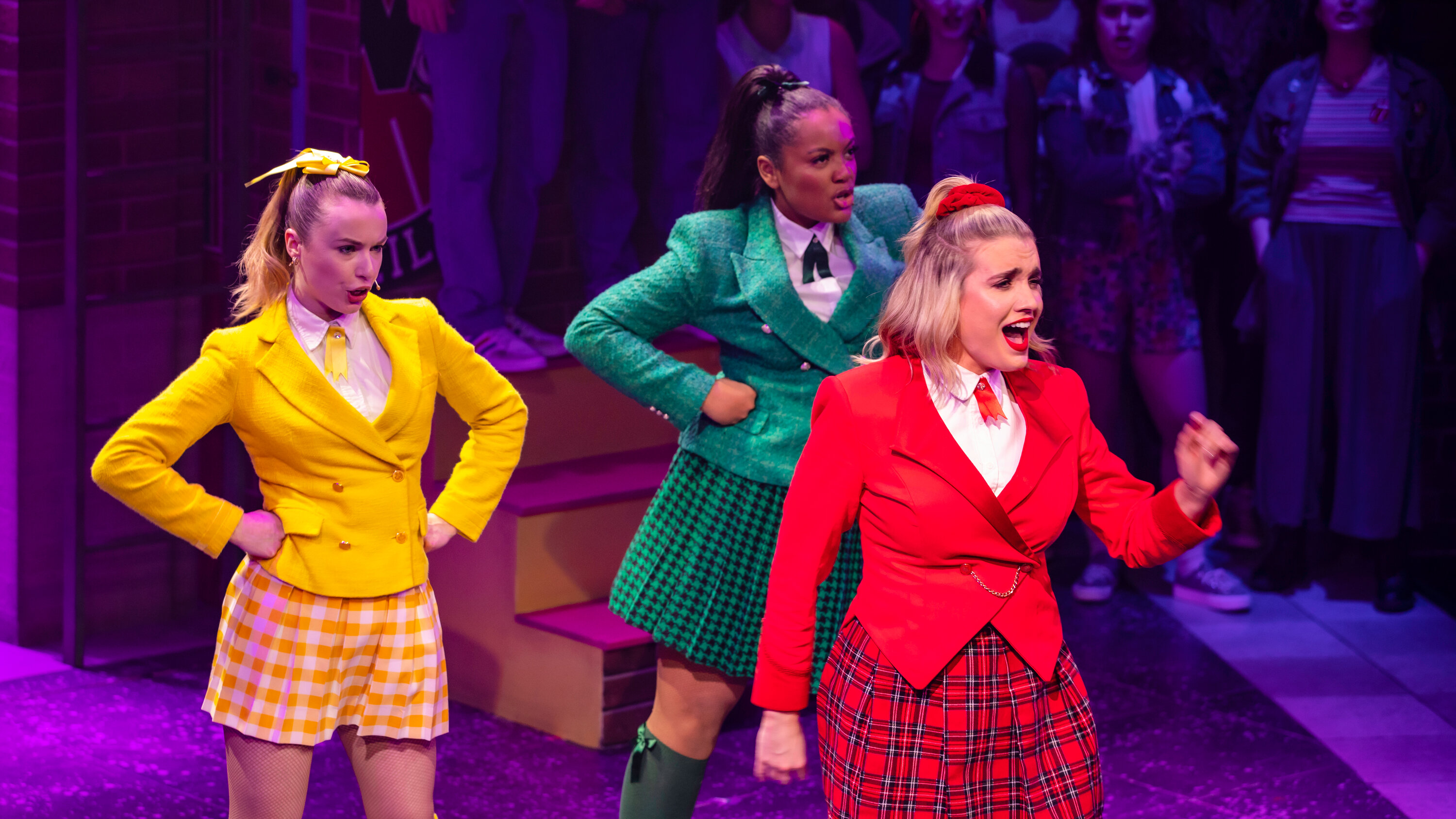
The plot is sprawling and bonkers, the humour dark. Tired of being bullied, Veronica (Ailsa Davidson) comes up with a cunning plan: she will use her excellent forgery skills to bribe the three most popular girls at school into letting her hang around with them. In return for a fake hall pass or two, Heathers Duke, McNamara, and Chandler (Vivian Panka, Teleri Hughes and Maddison Firth) give Veronica a makeover and the status she craves. And sure, she feels bad about turning her back on her best pal, Martha (Mhairi Angus), but it’s a matter of survival, right?

Except not everyone survives. Heather Chandler’s cruelty becomes too much for Veronica, and she longs to escape the stifling ‘friendship’. Enter bad boy JD (Simon Gordon). He takes an interest in Veronica’s problems – and offers some pretty drastic solutions. For a while, Veronica is drawn to his sexy brand of nihilism, but soon realises he is dangerous. Can she extricate herself before even more damage is done?

It’s no easy feat to make a rambunctious, feelgood musical about murder, attempted rape, homophobia, suicide and school shootings, but writers Kevin Murphy and Laurence O’Keefe seem to have done just that. Despite its age, the show clearly still resonates: tonight’s screening is full, and the audience is mostly young women – who probably only know Winona from her role in Stranger Things. It’s an unabashedly schlocky piece of theatre, as camp as Christmas and – despite the body count – just bursting with life. I like the slight softening of JD’s character (he’s less sympathetic in the film, without as much backstory), and the constant presence of Heather Chandler’s kimono-clad ghost works well: she’s the most dynamic character in the play, and it would be a shame to lose her in the first act.

Directed by Andy Fickman, the chorus numbers are vibrant and the choreography suitably zippy, maximising the potential of The Other Palace Theatre’s small stage. Davidson shines in the lead role, her vocals impressive and her characterisation spot on. With its bright colour palette and bold delivery, Heathers provides the same kind of high-octane girl-power as Six.

“I know who I’m eating lunch with on Monday. Do you?”

4.3 stars

Susan Singfield

Variant

28/03/23

Traverse Theatre, Edinburgh

The latest in this A Play, A Pie and A Pint season is Variant, written by Peter Arnott and directed by Kolbrún Björt Sigfusdöttir. It’s a distinctly Beckettian slice of absurdist theatre, a slippery two-hander that seems to question the very essence of identity. Who are we? Are we who we really think we are? And are the people we believe we are closest to, actually who they appear to be? Such heavy questions are just the tip of the iceberg in this taut and unsettling play.

A woman (Meghan Tyler) and a man (Simon Donaldson) saunter into the circular performance space, dressed in muted tones that perfectly match the simple setting. The woman begins to write in a notebook, the man reads a novel, but the silence is almost immediately broken by the arrival of a fly, buzzing annoyingly around the man’s head, interrupting his reading. He kills it. And then he pauses to make a remark to the woman.

‘I see you’ve changed your hair.’

But she quickly questions what he means by this. Was there something wrong with her hair before? Does he approve of what she’s done to it? Or would he have preferred something else? What’s wrong with her hair?

At first the conversation seems innocuous, the bickering of a long-married couple – but as it progresses, it becomes increasingly complicated, loaded with allusions to other things. I find myself asking questions. Are the two people actually married? Because isn’t this beginning to feel distinctly like an interview? And why does the woman keep steering the conversation into darker waters? Why are the images she refers to so violent?

Arnott’s play is cleverly constructed, raising many questions but offering no answers, and – just as we’re beginning to think we have a handle on it – the piece resets itself, and pursues another line of thought, steering us in a different direction. All credit to Tyler and Donaldson, who inhabit their complicated roles with absolute authority. If I’m not always entirely convinced that the piece has as much substance as it has ambition, it’s still nonetheless an engaging, and wryly amusing play, weighing in at a taut forty-five minutes, during which it switches back and forth like a cerebral rollercoaster. 

Did I like the play? Well, let me ask you something. What do you mean by the word ‘like’? Are you asking if it entertained me? Or puzzled me? Or even baffled me? Do you think I should review it? But then, what is a review? And perhaps more to the point, who’s writing this one? Oh, hang on a minute. I think it must be me. Whoever I am.

3.8 stars

Philip Caveney

Write-Off

21/03/23

Traverse Theatre, Edinburgh

The A Play, A Pie and a Pint season continues its cracking run with this intriguing two-hander, written by Aodhan Gallagher and directed by Irene McDougall. It’s a play about writers and writing, so naturally I’m fascinated to see what it has to say about the subject – and, as it turns out, it has plenty. What’s more, I’m delighted to note how many unexpected twists and turns are packed into a brisk fifty-minute running time.

Freddie (Richard Conlon) is a long-established fiction writer, currently preparing to start work on a new novel – most of which is already a stack of crumpled notes in his wastebasket. He’s never seen the necessity for incorporating elements from his own life into the gritty psychological thrillers he’s made his reputation on. These are brutal tales filled with violence and action. But lately, Freddie’s publishers have become a little twitchy, pointing out that his earlier work is increasingly being perceived as ‘problematic’. 

With this in mind, they’ve suggested that this time around, he might want to employ a ‘sensitivity reader’, somebody more attuned to contemporary issues. Enter Ben (Bailey Newsome), the promising student of one of Freddie’s literary acquaintances. Ben is young, gay and confidently in touch with the zeitgeist. He sports a beanie hat and trendy footwear. He also has an unpublished novel of his own that he’s very keen to get noticed…

Write-Off’s acerbic dialogue hooks me from the get-go and my sympathies bounce from character to character as the two men, by turns adversaries and allies, discuss their respective ambitions, beliefs and motives. One moment I’m laughing out loud at Freddie’s caustic observations, the next I’m gasping at some new revelation from Ben, which I genuinely haven’t seen coming. Can these two men ever hope to settle their differences enough to work together on a project?

The performances of the two actors are utterly believable and while it could be argued that this is a piece that’s completely predicated on its quickfire dialogue – and might work just as effectively as a radio play – it’s nonetheless a compelling and challenging production that maintains its propulsive edge right up to the final scene.

I head straight from the play to The National Library of Scotland where – inevitably – I’m working on my new novel. Who says life doesn’t imitate art?

4 stars

Philip Caveney

Babs

14/03/23

Traverse Theatre, Edinburgh

This week’s A Play, A Pie and A Pint is the pithily titled Babs by Morna Young. We’ve enjoyed Young’s work before – Lost at Sea and Aye, Elvis are both excellent examples of Scottish theatre – so we arrive at the Traverse this Tuesday lunch time with high expectations. The set, by Gemma Patchett and Jonny Scott, doesn’t give much away: there are a few fir trees, some pipes, a couple of skulls and a ukelele – an eclectic mix, promising something unusual.

We’re not disappointed.

Bethany Tennick plays Lisa, a troubled young quine from Aberdeen, who lives for her annual holiday with her best pal, Shelley. Apart from that, all Lisa has is her guitar, her tunes and a truckload of attitude. So when Shelley decides she’d rather go away with her new boyfriend, Gareth, Lisa is raging. How dare Shelley ditch her? Desperate and drunk, she signs up for a solo retreat, which turns out to be life-changing, because ‘Babs’, the mysterious host, is none other than Baba Yaga – she of the iron teeth and chicken-legged house… Why has she invited Lisa here?

Young’s decision to write the piece in Doric dialect gives it an urgent authenticity, underscoring Lisa’s need to be true to herself, even as she searches for a new identity. She is a bold, in-your-face character, and Tennick imbues her with such spark and vim that it’s impossible not to warm to her, even when she’s being completely unreasonable. The songs (composed by Tennick) add an extra dimension, showing us that Lisa has the potential to be more than ‘a sheep’, even if she can’t yet see it herself. The plaintive ode to her mother is especially emotive.

Despite its dark themes, Babs is essentially a comedy, and I spend much of the fifty-minute running time laughing at Lisa’s disproportionate outrage, or at her renditions of the other characters who populate the tale. Director Beth Morton keeps the pace snappy, and every joke lands well with the audience.

I’m fair-tricket to say this is another winner from 2023’s first PPP season.

4.2 stars

Susan Singfield

You Bury Me

08/03/23

Lyceum Theatre, Edinburgh

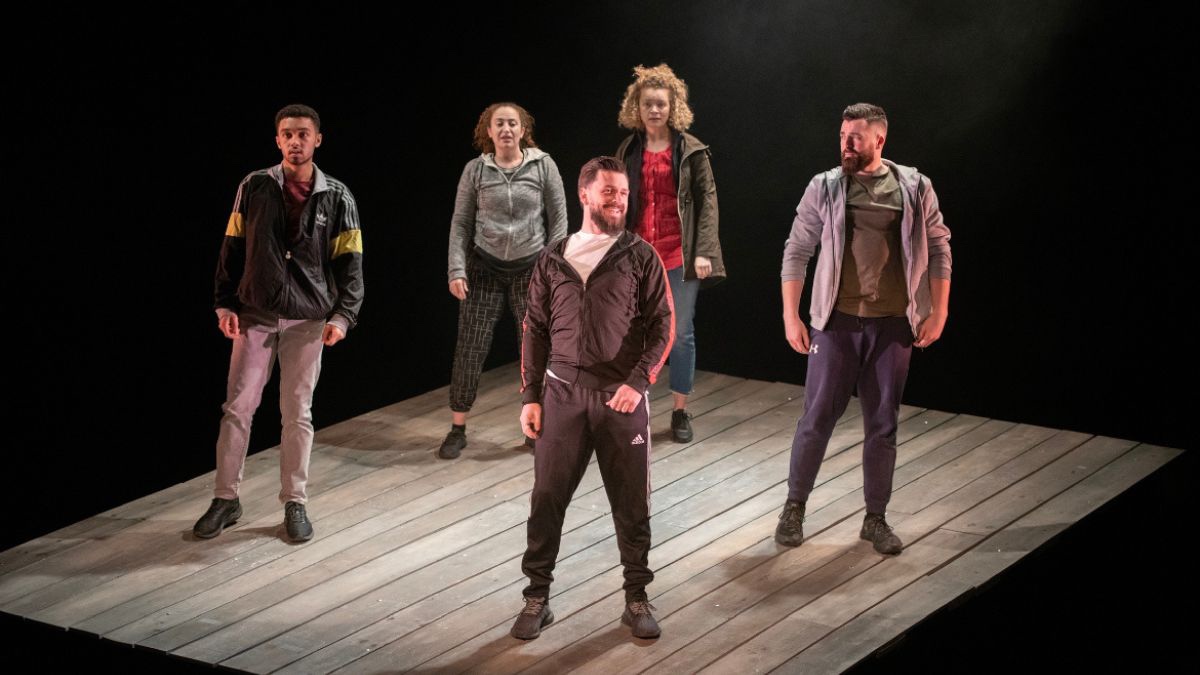
You Bury Me is a play about six young Egyptians coming of age in the aftermath of the Arab Spring – “a generation emerging from a national trauma, determined to live and love freely”. It’s a fascinating premise. I’m aware of the Arab Spring, of course; I read the news. But I don’t know anything about life in modern Egypt, nor of the ‘what happens next’. I’m keen to learn more.

Written by an anonymous playwright – under the alias ‘Ahlam’ – and directed by Katie Posner, the play is a co-production with the ever-dependable Paines Plough (among others), and the winner of 2020’s Women’s Prize for Playwriting. Its strength lies in the verve and vitality of the characters, all brimful of youthful energy, fighting to find their places in a changing world.

Alia (Hanna Khogali) and Tamer (Moe Bar-El) have both just graduated from university, but they’ve little experience of sex and relationships. They’re in love and want to get married, but it’s not as easy as all that. Alia is Muslim and Tamer is Christian; Alia’s family, who all work for the police, will not be pleased – and Cairo is a city where displeasing the police can have serious consequences…

Meanwhile, eighteen-year-old Maya (Yasemin Özdemir) is making the most of her last year of high school, attending every party she can, and making out with lots of guys. She’s bubbly and outgoing, and doesn’t care a jot about her ‘reputation’. New girl Lina (Eleanor Nawal) is shy and insecure, but opposites attract sometimes, and the two soon become firm friends – but is this enough for Lina?

Osman (Tarrick Benham) is Maya’s half brother, and he’s a political writer, publishing a blog that makes him a target for the authorities. We never see his girlfriend, Zeina, but we learn that she’s an activist too, so it’s no surprise to learn that Rafik (Nezar Alderazi) – who’s staying with Osman because his dad has kicked him out for being gay – thinks there are people watching the house. The two men fear for each other: Osman urges Rafik to delete Grindr, while Rafik wants Osman to stop writing his blog. But neither is prepared to sacrifice their sense of self in order to feel ‘safe’.

All six actors deliver lively and spirited performances, and I like the choral narration that provides context. Özdemir in particular really owns the stage; she is very charismatic, and Maya and Lina’s burgeoning friendship is always believable. Khogali and Bar-El make the most of the humour in Alia and Tamer’s fumbling sexual encounters, as well as inviting empathy for the lovers’ plight.

Although Benham and Alderazi both inhabit their roles well, their strand of the play is less satisfying, mainly because it is all told rather than shown. We don’t see any of Rafik’s dates, nor his family disowning him. Neither do we find out anything about what Osman is actually writing: the political discourse here is frustratingly vague. What is he saying that is so inflammatory, and how much danger is he really in? Without these details, Osman’s rage at his blog being deleted lacks context, and Rafik’s big emotional scene doesn’t elicit as much sympathy as it ought.

You Bury Me is eminently watchable – in the same way as an episode of Friends or Skins – and there are plenty of laughs, as well as moments of sadness. Ultimately, however, I don’t think it quite delivers on its political promise.

3.3 stars

Susan Singfield
Burning Bright

07/03/23

Traverse Theatre, Edinburgh

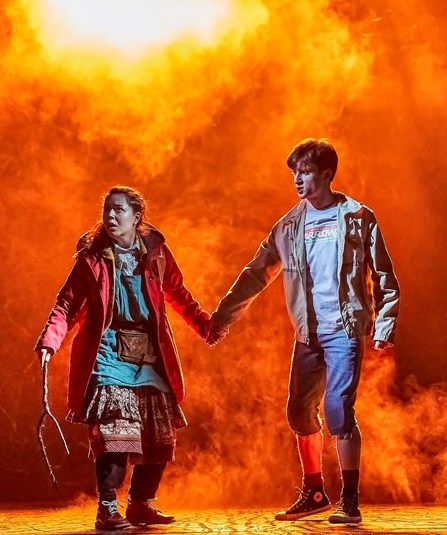
This latest season of A Play, A Pie and A Pint promises to be a good ‘un. Hot on the heels of last week’s sprightly Until It’s Gone comes Burning Bright, Áine King’s apocalyptic depiction of the climate crisis engulfing us. It’s no surprise to learn that this play won the 2022 David MacLennan award: it’s evocative and visual, a big story told in small fragments, as economical as poetry.

We are presented with three disparate narratives, linked by an over-arching theme of environmental collapse. Suzanne Magowan is a TV journalist desperately chasing a story about Australian wildfires, more interested in saving her career than in saving the earth. Hannah Jarrett-Scott plays a grief-stricken young woman with an eco-tourism business, taking rich adventurers on her boat, The Ice Princess, to see the polar ice caps before they’re gone. And Adam Buksh is a survivor: he’s escaped floods and tigers in his native India, and now he’s navigating racism on his Glasgow street.

The performances are all strong, the characters compellingly portrayed, and the writing is gorgeously cinematic – the image of a blazing horse, for example, is horribly mesmerising. Roxana Haines (director), Gemma Patchett and Jonny Scott (designers) achieve astonishing things with a tiny stage and a minimal set, so that it’s easy to suspend my disbelief and accept that I am, simultaneously, in the Arctic, Australia, Scotland and India, witnessing fire, floods and melting ice caps.

The conceit works to emphasise the ubiquity and urgency of climate breakdown. Even these characters, closer to the epicentres of disaster than most of us, are each only aware of one aspect of the problem. But here in the audience, we are shown the cumulative effect: their monologues are tangled and entwined, so that we see their interdependence and the extent of the catastrophe that’s looming over us. The image is there throughout, cleverly captured in the juxtaposition of the encroaching wave of plastic waste that dominates the set, and the tiny dinghy representing our precarious position.

Burning Bright is a superbly accomplished piece of theatre, skilfully illuminating why climate change is an issue we can’t afford to ignore.

4.7 stars

Susan Singfield
Julius Caesar

03/03/23

Debating Hall, Teviot Row House, Edinburgh

It’s a fascinating concept – Shakespeare’s classic play reimagined as a gangster epic.

Imagine those stirring soliloquies as delivered by a young Robert De Niro or Al Pacino – the senate represented by mob mosses and wise guys, bustling around the tables of a crowded nightclub while a live band blasts out spirited jazz. That’s what we have here and, fortuitously, the baroque setting of the Teviot’s debating hall proves to be the ideal location. EUSOG have never lacked ambition and this production, directed by Devki Panchmatia, may be their most confident offering yet. There’s a powerful buzz tonight and extra seats have to be added at the last minute to accommodate an enthusiastic audience.

In this version, Francesco Davi plays the titular role as a swaggering Don, appearing to general acclaim while a fawning Mark Antony (Julia Lisa) hangs on his every word and wastes no opportunity to ingratiate himself. But Cassius (Tom Wells) is growing tired of obeying the whims of a man he perceives as a ruthless dictator. He enlists Caesar’s old friend, Brutus (Haig Lucas), as his co-conspirator. It isn’t long before they have enlisted the services of others with similar intentions and a fateful date is set: the Ides of March, where Caesar will meet with bloody retribution..,.

I’ve always felt that the play is oddly weighted, the first half culminating in one of the bard’s finest scenes (and, as performed by Julia Lisa, it’s certainly the high point of this production). The final third feels more ramshackle, condensing years of civil war into a few brief skirmishes – and there’s also the impression that some of the longer interactions could benefit from some judicious editing. I know, I know. A bit late to bring it up now!

Unfortunately, the play starts later than the advertised time and the interval stretches on for so long that the hard-earned momentum evaporates and the cast have to work really hard to recapture it. It must also be said that the decision to stick rigidly to those wise-guy accents means that it’s not always an easy matter to follow every character’s dialogue. Those audience members who know the speeches by heart will have no issue with that, but it’s a while since I last studied the play and, occasionally, I find myself struggling.

Still, there’s much here to admire. Victoria White’s costume design is impeccable and Luca Stier’s set convincingly evokes the atmosphere of a nightclub. Isabelle Hodgson offers up a sneering, duplicitous Casca, while Tom Cresswell manages to shine both as Cicero and in his brief appearance as Cinna the poet.

The strobe-lit fight scenes are effectively done, while Panchmatia manages to keep a large cast moving around the crowded stage with great efficiency. And of course, it’s always heartening to witness a young company showing total commitment to a challenging project. Here, EUSOG deliver a Julius Caesar like no other.

3.8 stars

Philip Caveney

Until It’s Gone

28/02/23

Traverse Theatre, Edinburgh

This sprightly two-hander packs a lot into its fifty-minute running time. Until It’s Gone is the first of 2023’s A Play, a Pie and a Pint offerings, and it’s a corker: Alison Carr’s tight and cleverly-crafted script imagines a future where all of womankind have disappeared, and men are left to make the best of a world without them. In stark contrast to Charlotte Perkins-Gilman’s Herland, where women have created a female Utopia, this male-only Scotland is a dystopian mess, its citizens desperate for the women to return from their unspecified and unexplained exile.

We’re offered a glimpse into this terrifying scenario through a simple park-bench, chalk-and-cheese set-up: a meeting between an eager young man of twenty-five (Sean Connor) and a gruff older one (Billy Mack). They’ve been matched by a supposedly ‘world-beating’ app, but this is not a date – or at least, not a conventional one. They are two avowedly heterosexual, cis-gendered men, following a strict government mandate to ‘connect’ – because things aren’t sustainable as they are. Through this smallest of microcosms, Carr seeds just enough information into the men’s darkly comic dialogue to allow us to envisage the bigger picture, the tortured society in which they live, where schools are closed, most interactions happen online, and everything feels wrong.

The characters are beautifully realised, played with warmth and humour by Connor and Mack, even as they expose the men’s real pain. The generational divide is deftly managed, the initial chasm between them narrowing as they talk and share confidences, slowly realising that they’re more alike than not, that their shared fate should bind them rather than pull them apart.

Under Caitlin Skinner’s assured direction, the play’s political points are clearly made without ever feeling intrusive. I like the cheeky use of tableaux and blackouts to mark the passage of time at the beginning, and the set – by Gemma Patchett and Jonny Scott – is modest but strikingly effective. I’m especially drawn to the myriad images of women adorning the tumbledown walls, and find myself wondering if they are ‘missing’ posters or simply photos, there to remind the men of what they’ve lost. 

Because, of course, you never know until it’s gone…

4.4 stars

Susan Singfield
Revelations of Rab McVie

24/02/23

Traverse Theatre, Edinburgh

The word ‘psychedelic’ is often misapplied to theatrical ventures but, in the case of Revelations of Rab McVie, I think it’s entirely appropriate. This challenging piece of gig theatre is mind-bending in the best sense of the word: an exhilarating collaboration between a group of musicians, a visual artist and an actor – which succeeds on just about every level.

The performance begins…

To my left, there’s the Scottish three-piece, The Filthy Tongues, augmented in this case by two other musicians. As vocalist Martin Metcalfe, decked out like some surreal preacher, unleashes a series of memorable songs about darkness and decay, he’s anchored by the metronomic rhythms of drummer Derek Kelly and bass player Fin Wilson. The results have me hooked from the first chords of the opening song, The Ghost of Rab McVie. Alex Shedlock adds extra guitar and keyboards to the mix, while Asim Rasool takes care of a whole range of percussion.

To my right, artist Maria Rud works on a sheet of horizontal glass, smearing paint with brushes and sponges (but mostly with her bare hands). Her endeavours are projected onto a huge backdrop and they are mesmerising. From an initial sludge of colour, she is able to conjure vivid landscapes, bizarre animals, cloaked figures and even an enigmatic portrait of a mysterious figure, gazing benignly down at the audience. Lit from behind, her translucent creations are like surreal stained-glass windows, and what’s also interesting is the way she interacts with the music, at times almost appearing to conduct it with her paint-splashed hands. Each successive image is washed away, like a sand castle extinguished by a rising tide, only to be replaced by something new and equally intriguing

And now, centre stage, a silhouette rises from one of the paintings and stumbles out of it. It’s Rab McVie himself, as portrayed by actor Tam Dean Burn, a grotesque leering presence, transported by visions that only he can see. From time to time, he proclaims a string of half-intelligible observations, including a detailed description of the Four Horsemen of the Apocalypse. He tears off his clothes. He picks up a megaphone and bellows at us.

This eclectic mix of performers is directed with aplomb by Maria Pattinson. If I were to claim to understand everything that’s going on here, I’d be lying. Suffice to say that I am swept up in the piece, riveted by what’s happening onstage, my gaze moving back and forth as I try to take in every detail. I later read that the piece started life as an essay by Rud, written shortly before the invasion of Ukraine, which may account for the disturbing ‘end of days’ vibe that dominates the production. Whatever its roots, this has blossomed into something unique and spectacular.

4.4 stars

Philip Caveney

Othello

23/2/23

NT Live: Cineworld, Edinburgh

Although we’re watching it in a cinema, Clint Dyer’s Othello is avowedly theatrical, overtly referencing the play’s stage history via a series of projected images as the audience trickles in. It’s a powerful conceit, acknowledging the fact that our interpretations of classic texts change with the times, informing us that this will be an Othello for the 2020s (and far removed from Olivier’s infamous 1960s blackface).

Dyer brings the play’s racism into sharp focus, as well as its sexism. Moving the action to the 1930s means that the widespread bigotry Othello (Giles Terera) endures fits into a recognisable framework of fascism. Brabantio (Jay Simpson), who doesn’t want his daughter to marry ‘a Moor’ – not even a super-soldier, credited with defeating the Turkish army – is far from alone in his prejudice. Indeed, we have a whole System (the chorus), all too willing to endorse his view. Roderigo (Jack Bardoe) is not played here as an amusing fool; instead, he is a jingoist, short on reason but bold in his assertions. Thus, as the only Black actor on stage, Terera’s Othello is isolated and visibly different from those around him, and his relationship with the politically-aware Desdemona (Rosy McEwen) is as much ideological as it is romantic.

In this context, it’s no surprise that an unscrupulous schemer such as Iago (Paul Hilton) can thrive. He is the ultimate embodiment of toxic masculinity, propelled by self-entitlement and envy; Hilton makes this Iago deliciously sinister. He abuses everyone: his wife, Emilia (Tanya Franks) bears the brunt of his frustration, but no one is immune. His bitter resentment sours everything, drags everybody down. Othello doesn’t stand a chance against such an insidious adversary, in such an imbalanced world.

Chloe Lamford’s set is stark and monochrome: a semicircular series of steps, suggestive of a Greek amphitheatre. The chorus heightens this notion, acting as a kind of on-stage audience, reflecting us back at ourselves. We are all the System, it seems to say; we are all complicit. The costumes (by Michael Vale) continue the monochrome theme, highlighting the binary opposition of black and white.

This is an excellent production: bold, contemplative, kinetic and engaging. Terera captures both Othello’s strength and his failings, his dignity and his deficiencies. We see his greatness, but also recognise and despise his misogyny when he tries to justify murdering Desdemona by saying he loved her “too well”. McEwen imbues Desdemona with a steadfast nature, confident and assertive to the end, but it is Franks’ Emilia who really surprises: I’ve never been so aware of her as a victim before, nor of her bravery in finally speaking out.

Dyer’s Othello is a complex, clever piece of work. It’s not a radical reworking – indeed, it’s almost entirely true to Shakespeare’s text – but the lens is very different.

4.5 stars

Susan Singfield