Theatre

Boy

20/08/22

Summerhall (Main Hall), Edinburgh

1966: Winnipeg, Manitoba, Canada. Twin babies Bruce and Brian Reimer are both diagnosed with phimosis. Circumcision is recommended. Their doctor chooses a new and unconventional method: electrocauterization. Bruce is up first.

And the procedure goes horribly, shockingly wrong. Bruce’s penis is damaged beyond repair.

Brian is spared. His phimosis is left to resolve itself naturally. Which it does.

The twins’ parents, Janet and Ron, are distraught. So when Harvard-educated psychologist John Money recommends gender reassignment, they are soon persuaded. ‘Brenda’ won’t remember being Bruce, Dr Money says; it’s a simple matter of surgery and hormones…

Writer/director Carly Wijs draws on this tragic true story to create a thoughtful drama, exploring the very topical subject of gender identity, illuminating the age-old nature/nurture debate. It’s sensitively done – socratic rather than didactic – and it’s impossible not to feel emotionally involved.

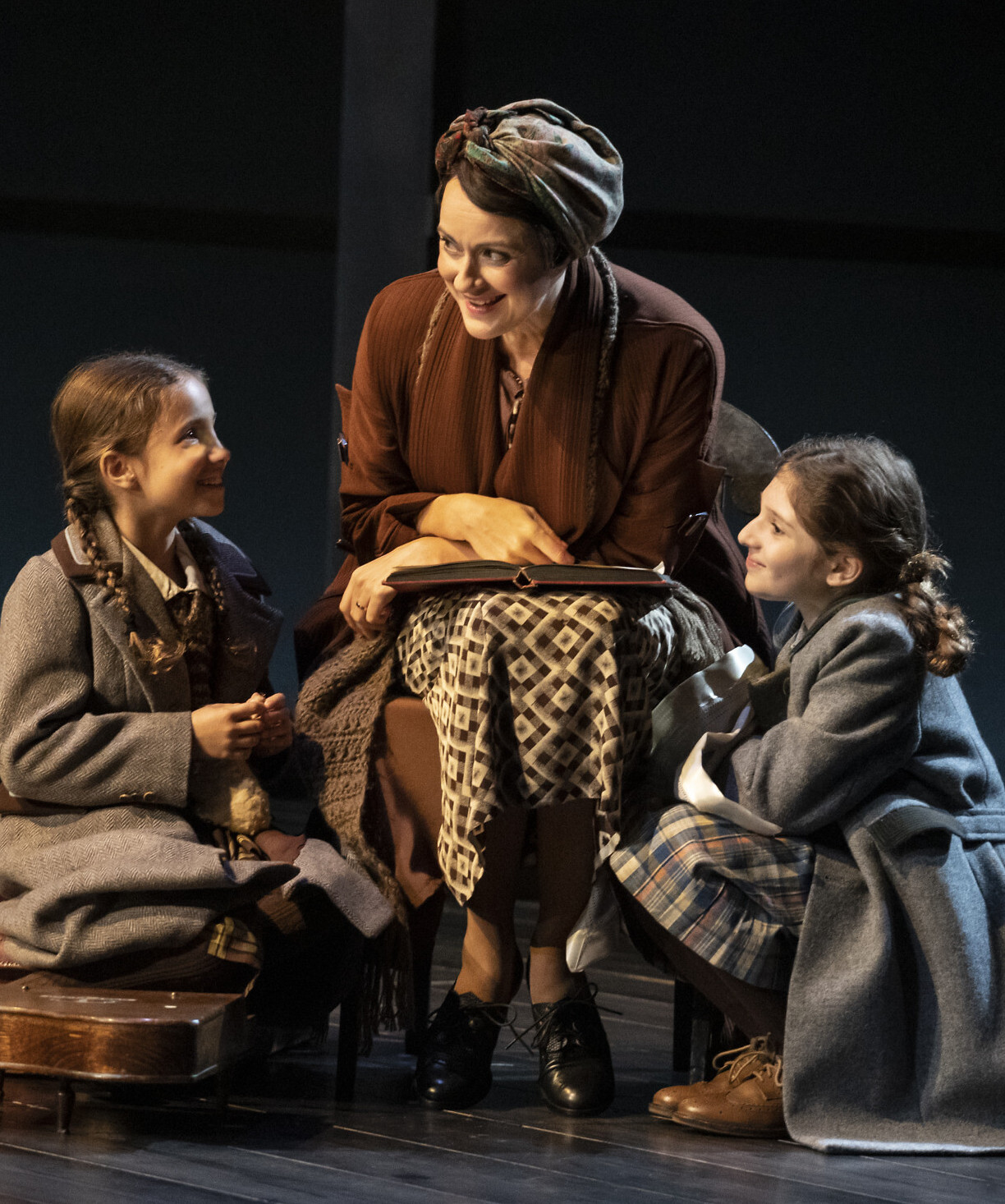
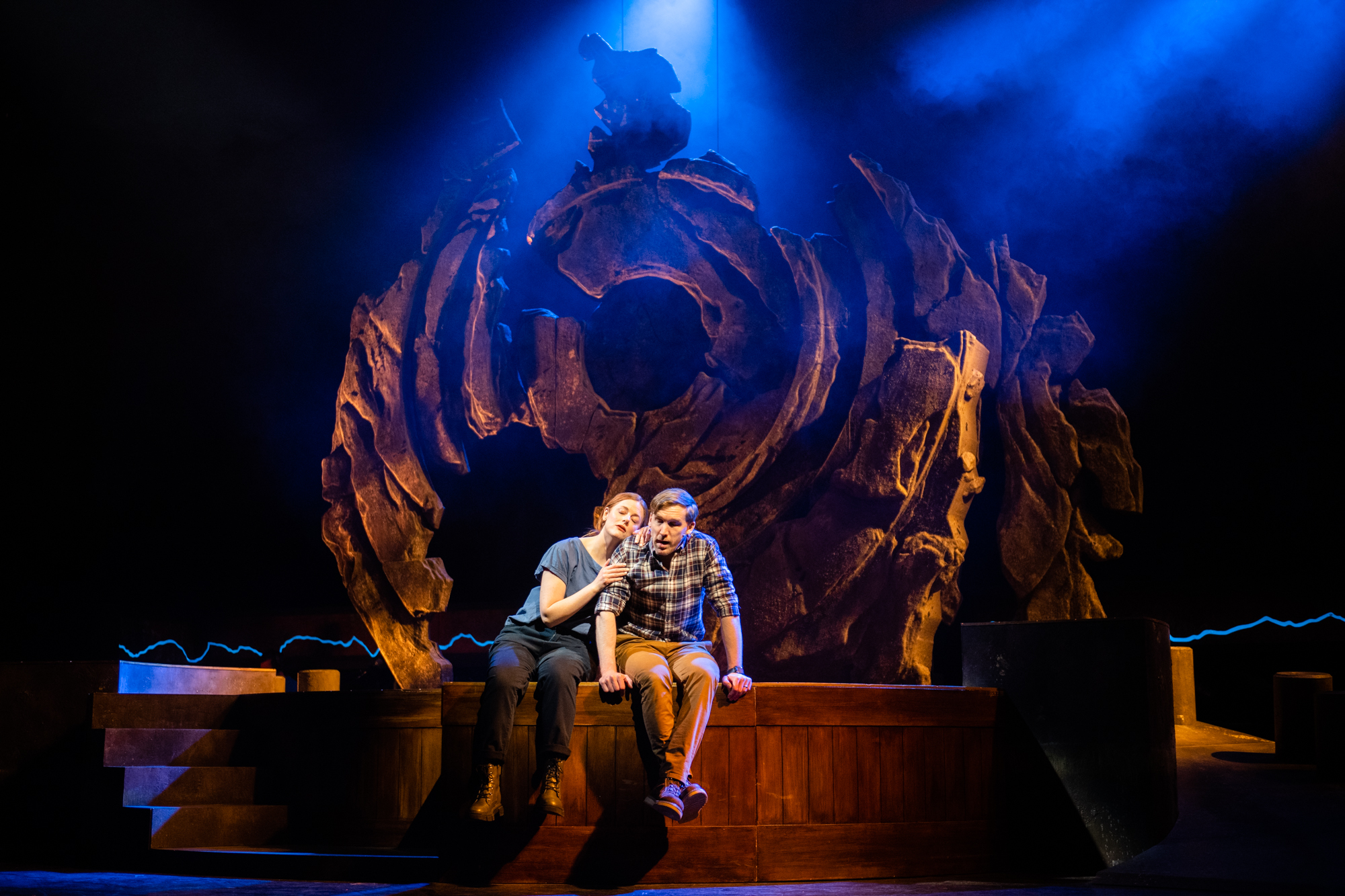
Actors Vanja Maria Godée and Jeroen van der Ven play Janet and Ron respectively, and also act as narrators, using a range of cuddly toys as stand-ins for the other characters. This technique is oddly affecting, highlighting the family’s innocence, while also suggesting that the very act of telling their story is ‘play therapy’ for the troubled pair. The set, by Stef Stessel, is wonderfully effective in its simplicity: a wheeled ‘wall’ draped with a light blue cloth, suggestive of a waterfall, spans almost the whole width of the stage, and there’s a stunning moment of revelation towards the end of the piece. Both Godée and van der Ven are immensely likeable performers; their gentleness and vulnerability ensure we’re on their side. Janet and Ron are victims of a man so caught up in his own theories that he’s stopped seeing the humanity of those he’s experimenting on.

Because Brenda is a very unhappy child. She doesn’t like the constrictions that come with being a girl; she doesn’t want to wear dresses or learn to sew; she wants to climb trees and fight and run with the boys. Is this because she is a boy, or would a cis-Brenda feel the same frustrations? We’ll never know. What we do know, unequivocally, is that it can’t be right for someone else to have made such a momentous decision for baby Bruce: to have compounded his initial mutilation with surgical castration, testosterone blockers and oestrogen – and to have concealed this fact from him. It’s his body; his choice. And the repercussions are devastating…

Despite its harrowing subject matter, Boy is a tender, poignant tale, told with real heart. This is experimental theatre-making at its best.

4.8 stars

Susan Singfield

Sap

20/08/22

Roundabout @Summerhall, Edinburgh

‘Daphne’ (Jessica Clark) is a bisexual woman living in London. She’s working for a charity during the day and, in her free time, she’s making the most of the Capital’s vibrant nightlife. On her daily commute to work, she finds herself inexplicably drawn to a flat she passes. Through an open window, she can see a host of greenery growing within, as though inside it’s a huge forest. She finds this strangely alluring.

At a business meeting, she hooks up with a man, with whom she has a one-night stand. He doesn’t call her back, so she puts it down as one of those things. Then, some time later, at a gay club, she spots a ‘Wonder Woman’, who – she’s sure – is out of her league. She is amazed when the two of them promptly hit it off.

Pretty soon, they are an item, going everywhere together, wanting nobody else. But Daphne has a surprise waiting for her, one that is going to affect her life profoundly…

Sap is one of those plays where you daren’t reveal too much about the story. Suffice to say that Rafaella Marcus has scripted a deliciously labyrinthine tale about sexual identity (specifically bi-invisibility), one that cleverly assimilates a Greek myth into its core. The maze-like structure is beautifully captured by the hyper-physical performances, directed by Jessica Lazar and Jennifer Fletcher. Clarke is a brilliant narrator, inviting the audience into her world with supreme confidence: making them laugh, flirting outrageously with them, making them care about what’s going to happen to her. Rebecca Banatvala plays all the other roles: she’s the one-night-stand, she’s Wonder Woman, she’s over-inquisitive work colleague, Miriam. Again, I don’t want to reveal too much. While Banatvala’s performance is less flamboyant than Clarke’s, she manages to slip effortlessly between her characters, inhabiting them with the merest glance, the smallest gesture. Together, the two actors create a mesmerising partnership.

I’ve already observed that Roundabout are having one hell of a year and Sap is another glittering jewel in an already abundant treasure chest. Grab your tickets for this before they’re all snapped up.

5 stars

Philip Caveney
Ghislaine/Gabler

19/08/22

Greenside at Riddles Court, Edinburgh

Ghislaine Maxwell is largely defined by her relationships with men: she is Robert’s daughter and Jeffrey’s partner. But who is she now, alone in her prison cell, her father long-gone, her ex-lover also dead? She’s a woman of many parts: convicted sex-trafficker, erstwhile socialite, pampered rich-kid, penniless fighter – and the only person serving any time for the rapes that occurred at Epstein’s ‘parties’. The rapists themselves are either dead or free.

In this challenging piece of theatre, Kristin Winters draws a parallel between the enigmatic Ghislaine and Ibsen’s anti-heroine, Hedda Gabler. The similarities are, in fact, quite astonishing, although I wouldn’t have made the connection by myself. Like Ghislaine, Hedda grows up living in the lap of luxury, and is close to her difficult but rich father – and, like Ghislaine, his death leaves her (relatively) poor. Both women are known by their fathers’ names (Hedda’s married name is Tesman; Ibsen explains the title thus: “My intention in giving it this name was to indicate that Hedda as a personality is to be regarded rather as her father’s daughter than her husband’s wife”). Both women are corrupted by their circumstances, and abuse their power to hurt those weaker than themselves. They each seek to influence other people’s fates; they are hungry and twisted, and it is hard for others to understand what motivates them.

So, yes. The conflation makes perfect sense. And writer/performer Winters’ strange and complex play is as fascinating as the women themselves. It’s an exploration of something unknowable, that raises as many questions as it answers. It’s not an easy watch – and nor should it be. It’s as gnarly and difficult as Maxwell and Gabler, as opaque and unfathomable as their actions. Winters mixes physical and verbatim theatre, lines from Hedda Gabler, imagined internal monologue and dance – and the result is extraordinary. Winters’ intensity is almost unbearably disconcerting.

Perhaps the piece is a little too demanding of its audience: there’s an assumption that we’re au fait with not just the Epstein case (fair enough, that’s common knowledge), but also with Hedda Gabler (I’ve got that one, luckily), and with what happened to Robert Maxwell (in my case, just the ‘media-mogul-financial-misconduct-drowning’ elevator-pitch). I’d like maybe a tad more hand-holding to guide me through some of these details.

This is an intelligent and arresting play and, although I don’t enjoy it exactly, I guess I’m not supposed to. I’m provoked, intrigued, and – in the end – impressed.

4.1 stars

Susan Singfield

We Were Promised Honey!

19/08/22

Roundabout at Summerhall, Edinburgh

This, storyteller Sam Ward tells us, is a choice. This: staying here, listening to what he has to say, engaging with his tale. There’s no happy ending, he says; he wants to be upfront about that. We’re free to refuse. To sit in silence for the allotted hour. It just needs one audience member to say, “I would like to begin.”

The risk is small (especially during Fringe, when more than half the audience are probably performers of some kind), but it feels real. I find myself wondering what it would be like if no one spoke. Would we really just sit? But there’s barely a hesitation. A confident voice rings out. And we begin.

This is a story on an epic scale, and the miserable outcome is existential rather than personal. Ward’s whimsical narration takes us on a journey billions of years into the future, when the planet dies, the universe collapses. Our fate is sealed. The question is, do we want to know what happens along the way? And the answer, of course, is yes.

Yesyesnono theatre company specialises in ‘democratic art’, and We Were Promised Honey! demonstrates clearly what this might look like, how it might work. Ward creates a friendly, open atmosphere, where people feel safe to join in, confident that he won’t make fools of them or push them to do things that make them uncomfortable. Apocalyptic subject matter notwithstanding, WWPH! is a joyous, hopeful kind of show, focusing on the small kindnesses and moments of happiness we find in our lives, despite our inevitable demise. We’re all like Richard Russell, the 29-year-old Sea-Tac baggage handler, who went joyriding – in a plane, even though he’d never flown before. Eventually, he crash-landed and died but, for a while, he flew…

This is a gentle, quirky piece of collaborative theatre, and I leave feeling strangely soothed, and ready to embrace the day.

4.2 stars

Susan Singfield

Assisted

18/08/22

The Space@Surgeon’s Hall, Niddry Street, Edinburgh

Jordan (Matt Vickery) is a wealthy tech entrepreneur living in a swish apartment, locked away from the stress of the outside world. Connie (Emma Wilkinson Wright) is his latest partner. When we first meet the couple, they are in the early stages of a relationship, in love with each other and looking towards making some kind of a future together. With this in mind, Connie leaves her flat and moves in with Jordan. He is already unpleasantly smug but, as time goes on, he becomes ever more controlling, exerting his influence over Connie – over what she wears and where she goes.

Jordan’s household is run by Alivia (voiced by Jessica Munna), an AI device that handles the day-to-day running of the home. Essentially, she’s Alexa, only a few generations further on. She’s able to communicate effortlessly with her human companions, to reason things out with them – and, as Jordan is so fond of observing, unlike Connie, she’s infallible. Alivia doesn’t eat, she doesn’t drink alcohol and she has no inconvenient ambitions to become a mother. Jordan knows he can always depend on Alivia to give him the answers he wants to hear.

Greg Wilkinson’s intriguing play, longlisted for the Popcorn Award, takes us just a few small steps into the future and spins a prescient tale of humanity’s increasing dependence on AI. Along the way it makes some cogent points about society’s constant striving for perfection – and how much easier it is for humans to evade their responsibilities by handing them on to their electronic carers.

Unlike many shock/horror stories that have flirted with the same subject matter, Assisted takes a more subtle approach, delivering a nuanced take on its chosen theme. Vickery and Wilkinson Wright play their parts with panache and Munna somehow manages to create a memorable presence with her voice alone.

This is an intriguing and credible vision of the near future.

4 stars

Philip Caveney
Feeling Afraid as if Something Terrible is Going to Happen

17/08/22

Roundabout at Summerhall, Edinburgh

The offerings at Roundabout during Fringe are generally very good, but this year their shows are really knocking it out of the park. If this sounds like my cue to say something like, “unfortunately, not in this case,” please don’t be misled. Feeling Afraid as if Something Terrible is Going to Happen is (apart from its tortuous title) another solid-gold winner. At the packed show we attend, the crowd are clearly spell-bound by Samuel Barnett’s performance and that’s perfectly understandable. He inhabits his role completely, spitting out a constant stream of pithy one liners and wry observations with apparent ease. Marcelo Dos Santos’ script is utterly compelling and Matthew Xia’s exemplary direction ensures that the pace is never allowed to flag.

Barnett plays a thirty-six-year-old comedian (we never actually learn his name), gigging in various pubs and clubs around London. He’s gay and happy to explore his sexuality with the many random strangers he meets online, but things change dramatically for him when he encounters ‘The American,’ a handsome guy who, unlike most of his hookups, is clearly in no great hurry to get him into bed.

As the relationship develops, our nameless protagonist begins to wonder if this might actually be the real thing. You know, love and all that.

But then he learns that The American suffers from a very rare condition…

As I’ve already said, Barnett performs this so confidently that I find myself completely immersed in his story, which struts a masterful path from laugh-out-loud jokes to poignant, heart-tugging observations. I quite overlook the fact that the narrator is working me like a master magician, mesmerising me, misdirecting me, even scattering a trail of clues which I somehow manage to overlook. The result? When the piece reaches its conclusion, I feel as though I’ve been punched in the solar plexus.

Both Barnett and Dos Santos deserve huge praise for what is undoubtedly one of the best collaborations between writer and performer that I’ve ever witnessed – and, once again, Roundabout proves to be the perfect performance space for a show like this.

If Feeling Afraid… isn’t on your bucket list, it’s not too late to put it there. Just saying.

5 stars

Philip Caveney
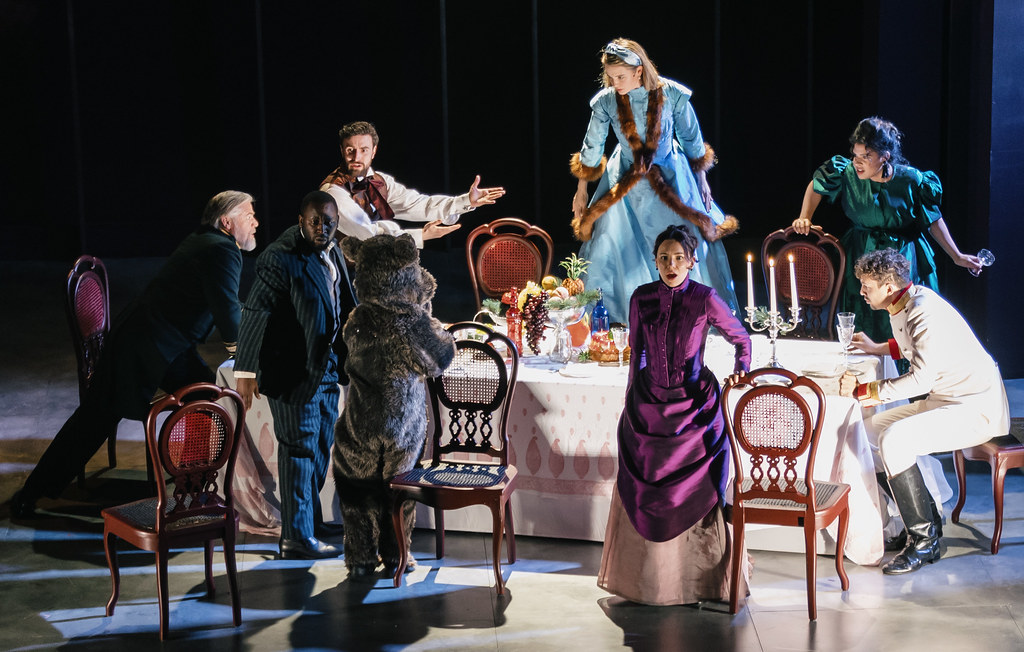
About Money

17/08/22

Summerhall (Tech Cube 0), Edinburgh

“It’s not about money,” says Michael (Rohit Kumar), the swaggering manager of Tasty’s (Tasties? Tasteez?) fast food restaurant. “What is it about then?” asks Shaun (Michael McCardie), struggling to understand what other benefits his recent ‘promotion’ might bring.

Because, of course, it’s always about money.

Especially in Shaun’s case, because he’s got responsibilities. He’s not here for pocket money to fund a new pair of trainers and a few nights out. He needs a proper wage, enough to support him and his little sister, because she’s relying on him and there’s no one else. Well, there’s Eddie (Matthew Boyle), who’s happy enough to do a bit of babysitting in exchange for a place to stay, but Eddie can’t be counted on…

Eliza Gearty’s play is a timely one (similar in theme to Katherine Soper’s Wish List), highlighting how unfair and how unfit for purpose the gig economy really is. But, as Shaun’s co-worker Hannah (Isabele de Rosa) discovers, unionising isn’t easy.

Unusually for an adult play, About Money features a child in one of the leading roles. Nine-year-old Lois Hagerty more than holds her own, delivering an impressively nuanced performance and imbuing Sophie with an impish charm. The rest of the cast also perform very well, creating memorable and appealing characters, but it’s Sophie we’re talking about as we leave, and it’s Sophie we’ll remember. This is no accident. Gearty’s script positions her as the focus, and Alex Kampfner’s direction highlights this, literally placing her centre stage. She’s the star around which the others orbit, that makes them strive to improve their corner of the world. For her.

On the downside, I’m unsure about the date scene, when Hannah comes to spend the evening with Shaun. This seems a little contrived, and somehow unbelievable. Likewise, the late-night search for a missing person feels rushed, and is told rather than shown.

Nonetheless, About Money is an engaging and thoughtful piece of theatre.

4 stars

Susan Singfield

The Tiger Lillies: One Penny Opera

16/08/22

Underbelly Bristo Square (Cow Barn), Edinburgh

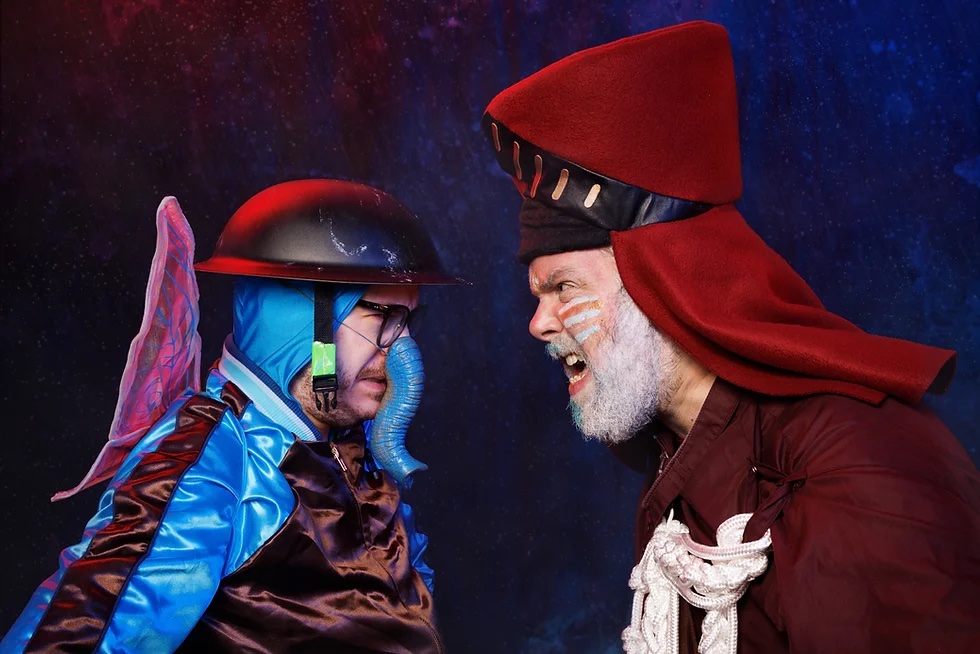
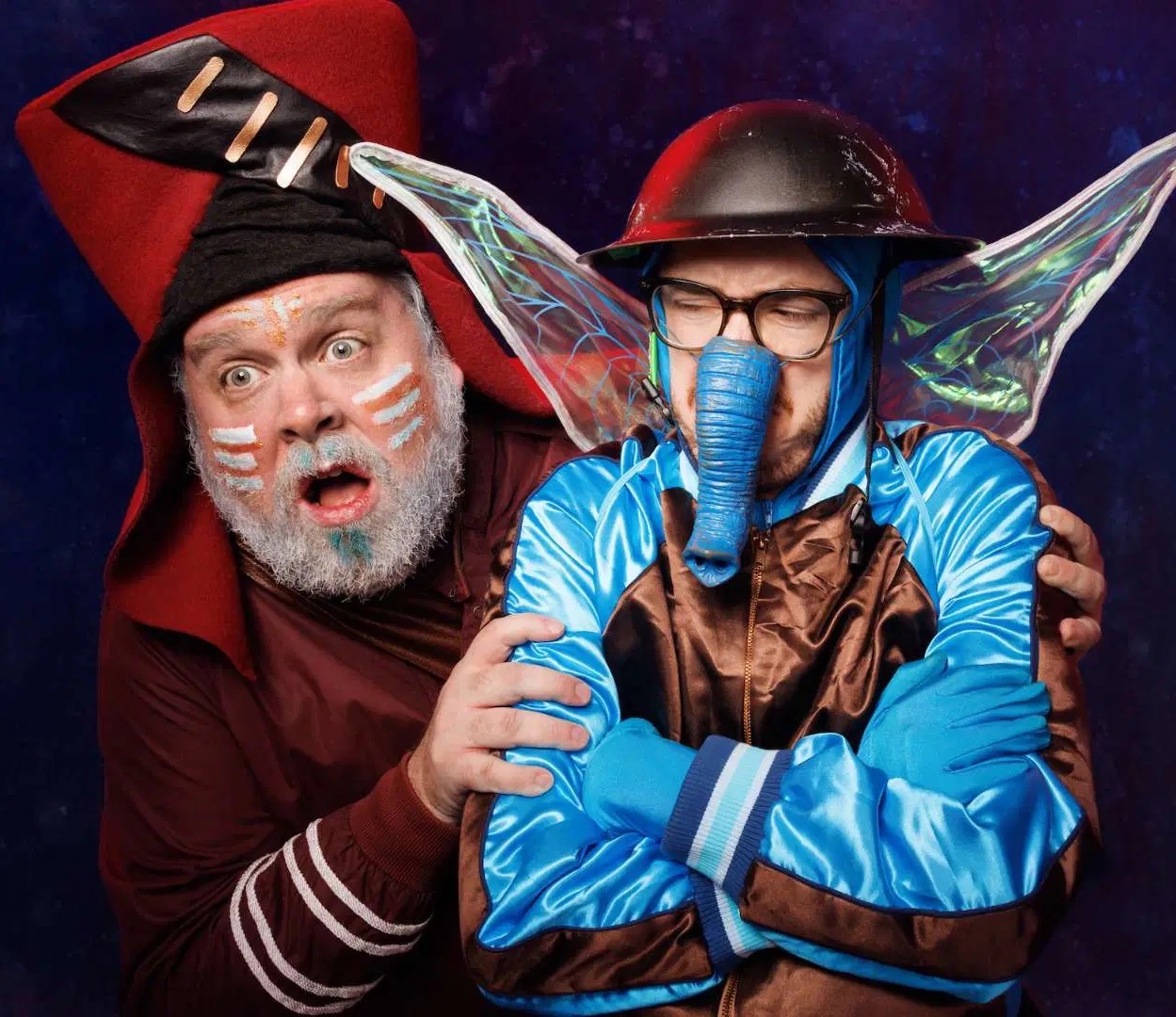
Describing an act as ‘unique’ is often considered a cop-out, and yet I can’t think of a more appropriate word to describe The Tiger Lillies, three remarkable musicians currently strutting their inimitable stuff at The Cow Barn on Bristo Square. Originally formed way back in 1989, they’ve been through a number of personnel changes over the years, though the macabre compositions of singer-songwriter Martyn Jacques have remained a constant. They describe themselves as “Brechtian Punk Cabaret”, and who am I to argue with them?

The current lineup shambles onto the stage looking like characters from your worst nightmare, plastered in grotesque makeup and wearing eccentric outfits. They launch headlong into their opening song, a Germanic foot-tapper that recalls the music of pre-war Berlin, jaunty and uncompromising, while Jacques’ lyrics spin an introduction to a tale of darkness and dismay, a world of crime and vicious retribution, featuring Mack the Knife and Polly Platt. Indeed, the entire hour is devoted to the continuing adventures of these miscreants and their various accomplices, so this is as much a storytelling session as it is a concert.

These days, Jacques handles accordion and keyboards, anchored by the drumming of Budi Butenop and embellished by Adrian Stout’s mercurial musical flourishes. Watching Stout conjure ethereal sounds from the theremin, the electric bass and, at several points, from a battered old saw is like watching a gifted magician at work. If you thought a saw was only good for cutting down trees, think again! Occasionally, Jacques switches to keyboards and offers us beautiful ballads that juxtapose poignant melodies with tales of murder and bestiality. His voice, a weird, soaring soprano, is quite extraordinary too.

I could say that this won’t be for everyone, but judging by the large, spellbound crowd that’s in tonight, The Tiger Lillies’ dark cabaret clearly has an ardent following – and if you need any more convincing, the band won an Olivier Award back in the day for their cult musical Shock Headed Peter.

Those looking for a unique – yes, that word again! – blend of music and theatre should head down to the Cow Barn without delay for a truly unforgettable experience.

4.4 stars

Philip Caveney
The Macbeth Inquiry

16/08/22

The Space at Niddry Street, Edinburgh

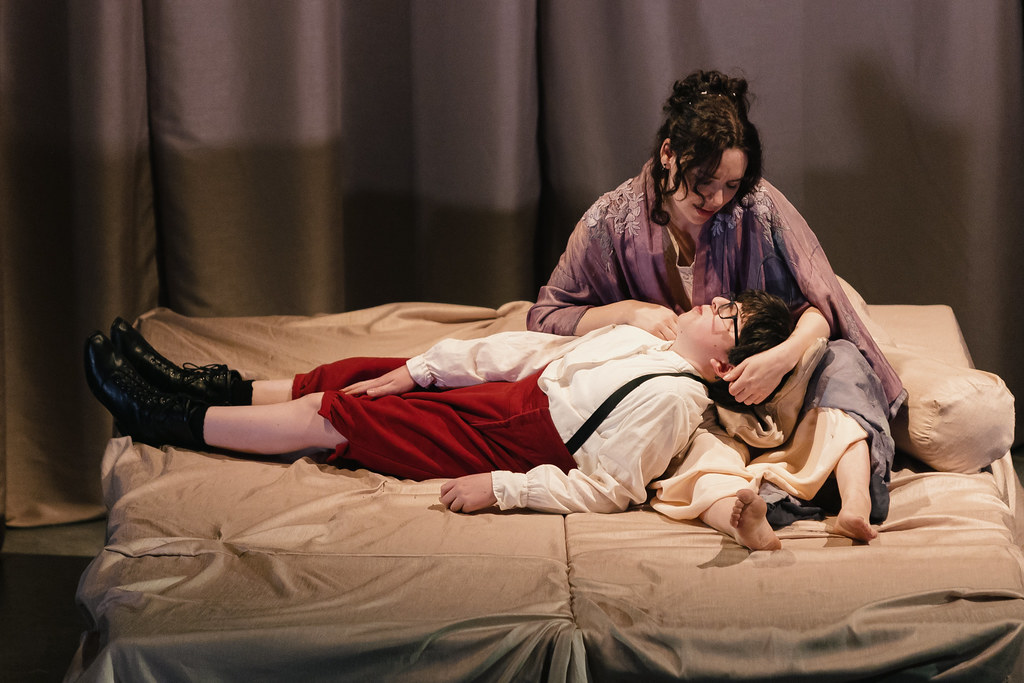
We’ve seen a few of Edinburgh University Shakespeare Company’s productions over the years, and we’ve always been impressed. We’re interested to see what happens when they get “Shakesperimental” with this contemporary reimagining of Macbeth as a politician, only metaphorically stabbing PM Duncan in the back.

It’s a nice idea, and the blending of Shakespeare’s script with the current vernacular is – for the most part – convincingly done by the three writers (Izzy Salt, Clara Wessely and Freddie Stone). Ted Ackery’s Paxman-like news reporter is an interesting addition. Ackery is a strong actor (he excelled as Joe in Miller’s All My Sons, which we saw earlier this year), and this shows in the blistering exchanges he has with the various ministers who dare to be interviewed by him. I’m less convinced, however, by the comic exchanges between him and weather reporter, Claudius (Rorke Wilson), which derail rather than enhance the production. Wilson performs well, but these moments seem to come from another play, and I feel like I’m watching a series of in-jokes that probably seemed hilarious in rehearsal, but don’t really fly on stage. I don’t get it. Is Claudius supposed to be funny just because he’s camp? It seems somewhat regressive, if so.

Maddy Brown’s trouser-suited, city-slicker version of Lady Macbeth is perhaps the standout performance here, her vaunting ambition dismayingly credible – but the characterisations are all good. Archie Turnbull (as Macbeth) delivers some key speeches with real gravitas, commanding the audience in a way that makes us believe the people might just vote for him.

I’m not mad about the frequent blackouts, used to mark the ending of each scene. It doesn’t help that today’s audience decides to applaud whenever the lights go down, as if every section were a mini-play. It’s a bizarre response, and not one I’ve seen before in all the hundreds of times I’ve been to the theatre. The blackouts make the action seem a little stilted, and I think the flow would be much improved by more imaginative transitions.

All in all, while there’s much to admire here, The Macbeth Inquiry just doesn’t quite work for me. Still, I applaud EUSC for giving this a go. At least they haven’t lost “the good we oft might win, by fearing to attempt”.

2.7 stars

Susan Singfield

Vermin

16/08/22

Gilded Balloon, Teviot (Balcony) Edinburgh

I can’t pretend that Vermin is a pleasant theatrical experience. On the contrary, this two-hander from Triptych Theatre, directed by Michael Parker, makes for harrowing viewing. But the piece is superbly acted and this twisted tale of a young couple working through the aftermath of grief is undeniably affecting.

Rachel (Sally Paffett) and Billy (Benny Ainsworth, who also wrote the play) are here to tell us their story from their first meeting on a train, which is delayed while a random stranger on the platform commits suicide, through their whirlwind romance and marriage, to their move to the ‘perfect’ flat, which, as it turns out, is infested with rats. A word of warning here – those with a phobia for rodents may not want to watch this play. No actual rats are shown, you understand, but they are talked about in some detail.

Billy has clearly had psychopathic tendencies from an early age, telling us in a disconcertingly affable – even proud – manner about the cruel escapades of his youth. But Rachel is in love and has a child on the way, so she’s prepared to put such minor issues aside.

Later, however, she proves not quite so ready to forgive Billy’s transgressions…

Vermin heads steadily deeper and deeper into disturbing territory, but it’s the naturalistic performances that make this piece fly, with both characters breaking off to bicker, or to dispute the other’s memory of a certain incident – and the play’s climax brings everything sharply into focus.

4 stars

Philip Caveney