
Theatre

The Trials of Magnus Coffinkey

19/08/26

Summerhall (Red Lecture Theatre), Edinburgh

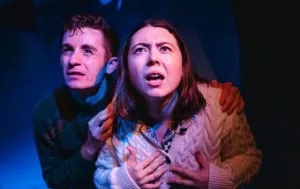
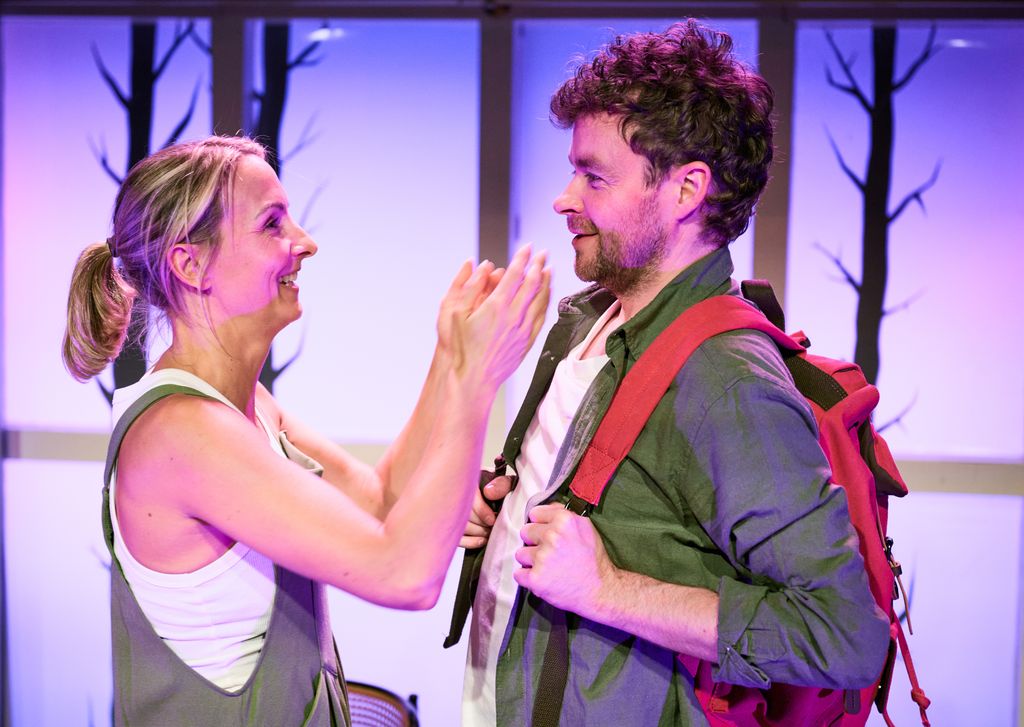
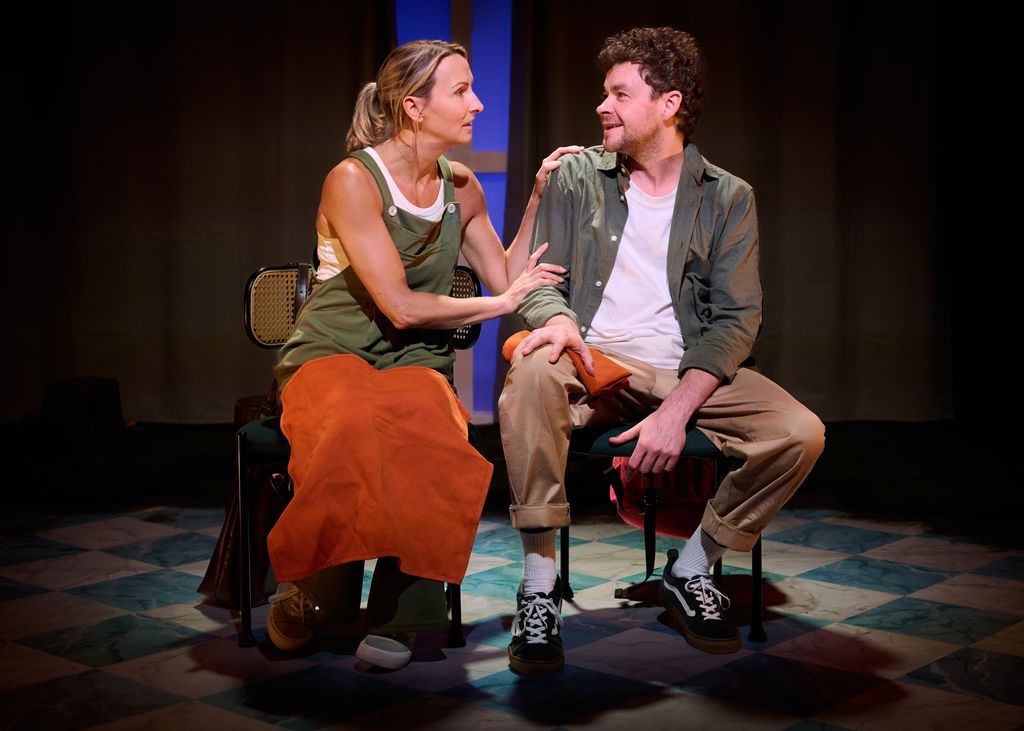
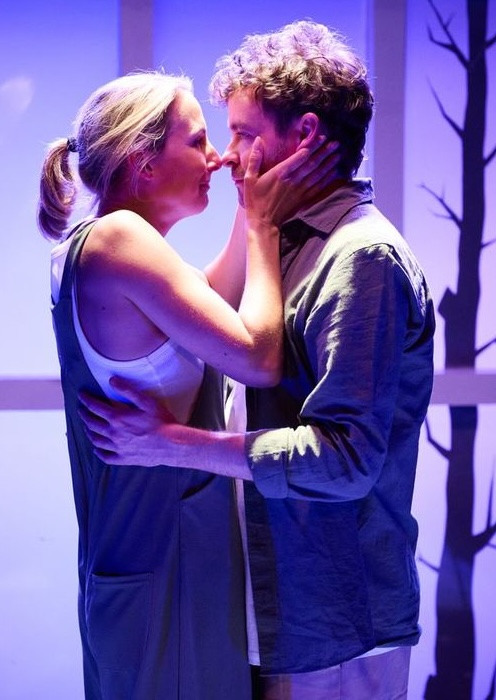
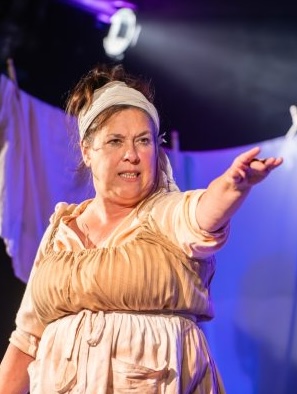
On a stage littered with autumn leaves, the Storyteller (Rebecca Camilleri) begins a whimsical, rhyming fairytale about a doomed bell hanger called Magnus Coffinkey (Jospeh Zammit). In the middle of the night, high up in a belfry, Coffinkey is spooked, first by a malevolent gargoyle and then by a cauldron of bats. As he falls, he grabs the bell – which proves a near-fatal error. He and it tumble together, the silver bell entombing him in the graveyard.

When Magnus wakes up, it’s to find a sweet, guileless creature stealing his heart. From her, he learns that he is in The Gloom, a space somewhere between life and death. If he wants to return to the world he knows, he’ll need Harmony’s help to mend his broken ticker…

So far, so twee – but there is more to this dark fable than meets the eye. Zammit imbues Magnus with real sorrow, while Camilleri perfectly inhabits a whole host of roles, most heartbreakingly that of Harmony. The piece is, in fact, an ode to grief, Magnus’s story serving as catharsis for Lara (Camilleri), a writer trying to cope with immense loss. Cleverly, despite the allegorical structure, there are no glib answers offered here. In fact, when Lara’s husband, Jeremy (Zammit), attempts to provide the ending Lara’s struggling with she dismisses his maxims as useless platitudes.

Something deeper is required…

Co-written by husband and wife team, Malcolm and Angele Galea of Malta’s Give or Take Productions, this play is at once profound and beautiful, precise and dynamic; the script perfectly complemented by Philip Leone-Ganado’s sure-footed direction. Sam Edmunds’ imaginative use of simple lighting – a bell gobo; a couple of coloured bars; a few overhead lamps – provides the finishing touches, establishing whether we’re in Magnus’s story or Lara’s reality.

Only the most stone-hearted person could fail to cry at this play – but only the most cynical could fail to smile.

4.3 stars

Susan Singfield

Playback

18/08/26

Summerhall (Former Womens Locker Room), Edinburgh

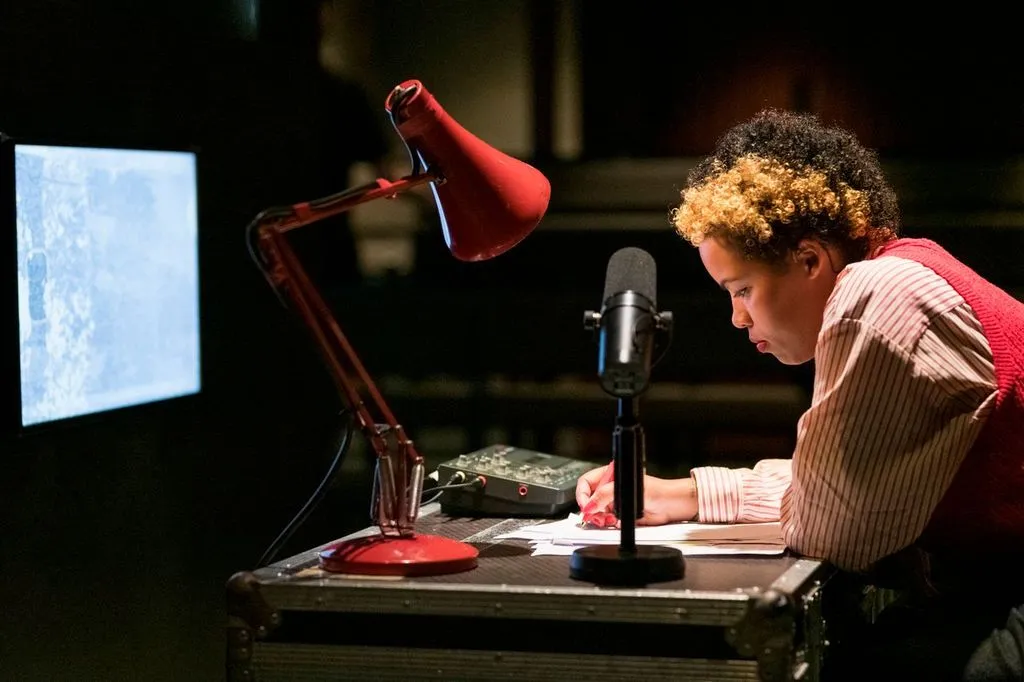
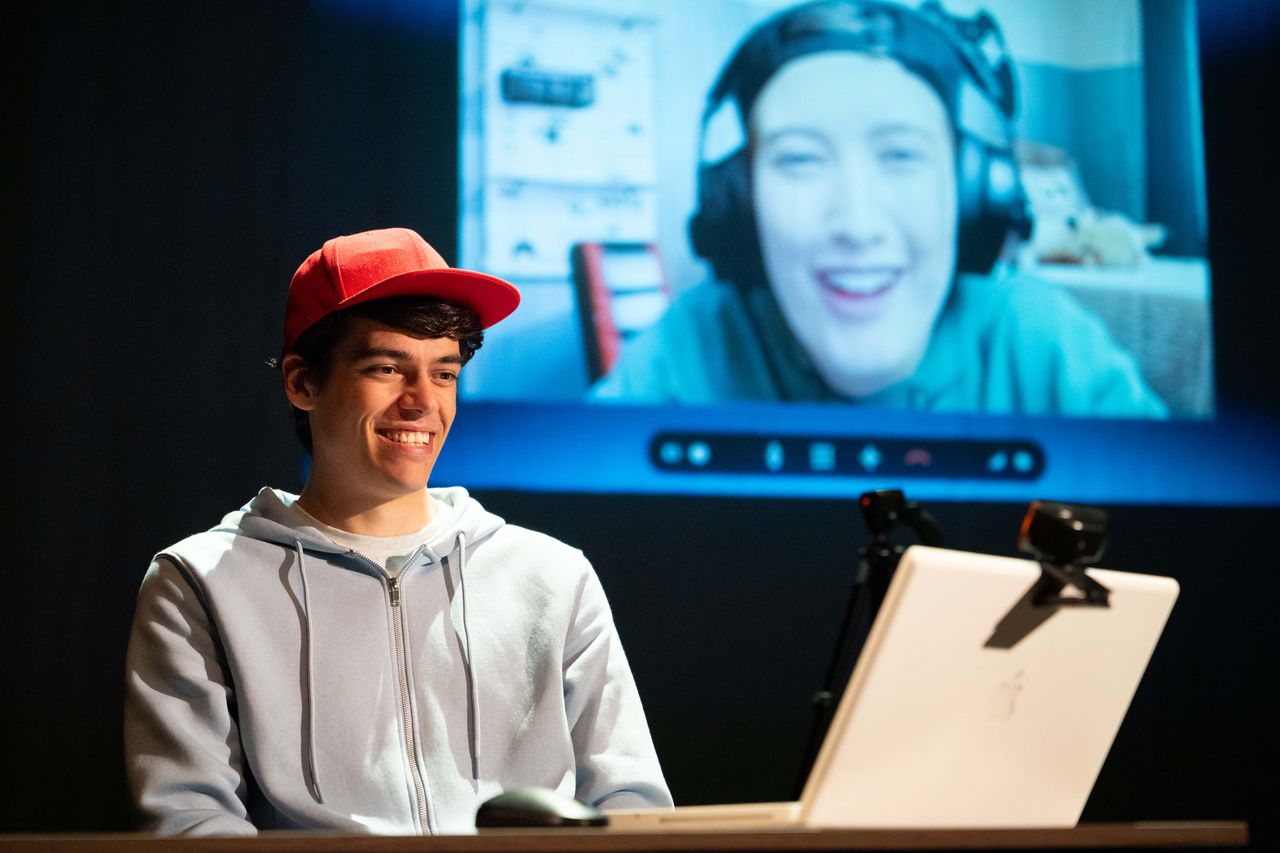
It’s 2013 and Euan Munro is taking his first steps as a filmmaker on YouTube. We watch entranced as clips of the cheeky eleven-year-old play on a large screen at the back of the room and we know instantly that they are too spot-on to have been faked. Then, suddenly, we’ve moved on a couple of years and now here’s Euan in person, still sporting that trademark red baseball cap – only now, he’s being played by his present-day self (aged twenty-four). We join this new incarnation as things are beginning to hot up on the YouTube front.

For one thing, Euan is still sparring with his friend, Cammy (Yana Harris) – also a YouTuber and sometimes Euan’s collaborator. Euan is initially jealous of his pal, who has more followers than he does, but then he gets his own good news. A popular vlogger calling himself Billosaurus wants to be Euan’s friend – and he lives in Iowa! After Billosaurus features Euan’s World as a hot tip on his account, the kid’s legend begins to grow. Soon he’s approaching the dizzy heights of 1000 followers!

Inspired by Munro’s own childhood experiences, this is a cleverly immersive account of the rise of a wannabe digital superstar. But he’s a naïve boy who takes everything at face value as he tries to negotiate his ascent to fame in a world where he’s perceived as easy prey. Would he maybe accept the sum of $100 dollars to show his bare feet on camera? Why not? That’s good money! Luckily, Billosaurus is on hand to advise Euan against accepting the offer, but… who exactly is Billosaurus?

And what is he expecting from this friendship?

Munro’s autobiographical play, directed by Katya Searle, is a wonderfully-affecting piece of theatre, made all the more powerful by its use of genuine found-footage. As the reality of the central character’s situation begins to dawn on him, there’s also an emotional scene between Euan and his mum (Mori Christian.) The final payoff has me welling up with tears. Though young Euan is never directly harmed by any of the people he encounters online, they are all grooming him for their own nefarious purposes – and their silent intent speaks volumes.

Chilling and compelling in equal measure, Playback is another unmissable show at Summerhall.

4. 8 stars

Philip Caveney

Jerk Off!

17/08/26

Underbelly Bristo Square (Dairy Room), Edinburgh

Don’t be misled by the title. Jerk Off! is not a bro-comedy, akin to The Hangover or The Inbetweeners. Instead, it’s a profound autobiographical play about death, abusive relationships – and hip hop.

Nadia P Manzoor is a triple threat. Not only has she penned this provocative script; not only is she a compelling actor; this woman can really dance.

Framed as a story (or perhaps a lesson) for her daughter, Rumi, the play follows Nadia in the aftermath of her mother’s death. She’s only twenty when her mother dies and she doesn’t know how to process her grief. Her British-Pakistani family want her to get married to a nice Muslim boy, but Nadia wants to spread her wings. So when her cousin Zeinab invites her to Boston, she books a ticket right away.

Boston is a revelation: an internship at Harvard (thanks, Zeinab!), a hip-hop dance class and a hot boyfriend. And if the boyfriend’s behaviour raises a few red flags, well, that’s a small price to pay for a cool new life… Until it’s not.

As well as Manzoor’s skilled performance, what makes Jerk Off! so powerful is her refusal to offer us any easy answers. There is nuance upon nuance; there are no heroes or villains here. Instead, we have a cast of flawed humans, failing and succeeding, trying their best and falling short. By the end of the play, Nadia has come to terms with the imperfect reality of who her mother was. The message to Rumi seems to be that people are tricky and love is complicated – but we can learn to make peace with that.

Engaging, informative and challenging, Jerk Off! is not to be missed.

5 stars

Susan Singfield

Omar Badawy: Guided Detour

16/08/26

Pleasance Courtyard (Bunker One), Edinburgh

Omar Badawy leads us on a Guided Detour through the life of a conflict-averse ‘Posh Arab’, who somehow keeps stumbling into situations where passivity isn’t an option. Take a grey London afternoon in September 2025, for example. Badawy is on his way to a Norwegian-themed fancy dress party. He doesn’t want to go but he’s certainly not going to risk an argument by telling his girlfriend that. So here he is, reluctantly making his way across the city, only to find himself in the midst of Tommy Robinson’s ‘Unite the Kingdom’ march, surrounded by far-right protestors.

Oops.

What’s a non-confrontational Viking to do?

Twenty-eight-year-old Badawy has an affable persona, relating his series of unfortunate events with a rueful, resigned air. The tone is light and the jokes are plentiful, but he makes some serious points. He just wants to get on with his life: he doesn’t want to be drawn into race-debates; why should he? Ever since primary school (a particularly funny anecdote, which I won’t spoil here), he’s been defined by his Egyptian lineage, expected to engage with identity politics.

Confident, articulate and perfectly in control of his material, Badawy is a deceptively breezy comedian. I laugh throughout the show, as if I’m watching something playful and inconsequential. It’s only later, walking home, that the more profound elements begin to assert themselves.

4 stars

Susan Singfield
The Day of the Locust

15/06/26

Pleasance Courtyard (Attic), Edinburgh

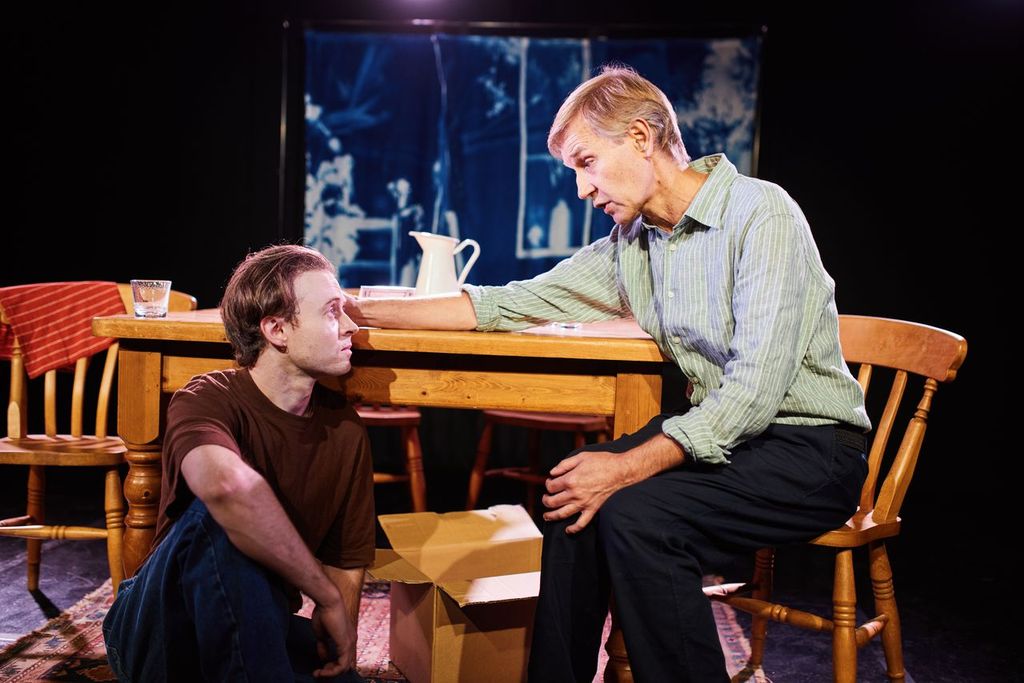
Published in 1939 by Nathanael West and set in LA, The Day of the Locust is widely considered to be one of the great American novels – a treatise on the insatiable hunger for fame. It was also memorably turned into a feature film by John Schlesinger in 1975. Sprawling, visceral and strangely apocalyptic, it’s an ambitious subject for a monologue and I’m intrigued to see what storyteller Calum Patrick Hughes can make of it in the claustrophobic confines of the Pleasance’s Attic. 

He manages to weave a beguiling tale with just his voice (occasionally boosted by a microphone) and atmospheric layers of sound, courtesy of an electric guitar fed through various loop and drone pedals, to create haunting soundscapes. Though he’s done a moderate amount of updating to the story – there’s mention of mobile phones at one point and also a couple of scenes where security forces have morphed into ICE agents – what’s interesting is how convincingly these elements gel with what was essentially a depiction of 1930s Hollywood. The avarice and greed remains undiminished; there’s the same propensity for people to exploit each other for personal gain.

Perhaps less successfully, Hughes has also retained the brutish sexual politics of the era in which the book was written, and I find myself wondering if those aspects too could be reappraised. Just a thought.

Hughes embodies all the familiar characters convincingly, varying his voice just enough to identify each of them in turn, and his descriptions of Hawthorn’s startling images create an atmosphere of steadily-rising tension throughout, until we are slammed headlong into the novel’s infamous climax. 

All in all, this is an experiment that has yielded a powerful and thought-provoking monologue. You don’t have to be a fan of the original – or even familiar with it – to enjoy this performance.

4 stars

Philip Caveney 

Endgame

14/08/26

Pleasance at EICC (Lomond Theatre), Edinburgh

Which adjective best describes Samuel Beckett’s Endgame? Depressing? Dystopian? Dingy? Dark? Take your pick. And yet this is also a funny play, full of clowning, jokes and silly absurdities. Who better to illuminate the weirdness than the wonderful Flabbergast Theatre?

We’ve been fans of Flabbergast ever since we stumbled across Tatterdamelion at 2016’s Fringe; in the intervening years, we’ve been wowed by The Swell Mob, The Tragedy of Macbeth and Paper Swans. We’re excited to see what they do with “the play that Beckett considered bleaker than Godot“.

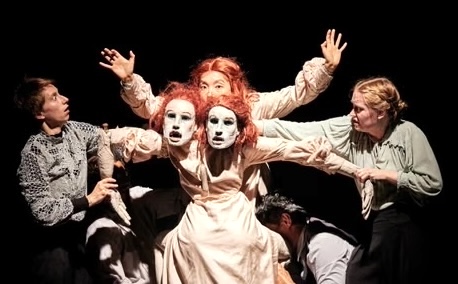
Henry Maynard is not only Flabbergast’s founder and the director of Endgame, he’s also Hamm, the blind and dying man at the centre of this piece. Hamm is angry with life, railing against his failing body and the terrible state of the world. The view from his window, he is told, is desolate, post-apocalyptic. Something dreadful has happened out there – and it’s not much better inside his home. Hamm is stuck in his chair, unable to move, utterly reliant on the hapless Clov (Simon Gleave), who’s been with Hamm since he was a boy. Part servant, part surrogate son, Clov is cowed by Hamm, incapable of standing up to him.

The play’s most transparent metaphor is Hamm’s parents’ accommodation. Old and useless, Nagg (Derek Ellwood) and Nell (Complicité’s Annabel Arden) have been discarded like rubbish: they live in a pair of dustbins outside their son’s house, popping up occasionally to beg for food. The price for a hard biscuit is high: they have to listen to Hamm’s endless shouting about how they neglected him when he was young. His accusations are born out by Nagg’s cruel replies but their helplessness makes us sympathise with the aged couple.

Mostly, though, our hearts go out to Clov. He’s the only one who’s able to move, albeit with difficulty, and so he’s stuck caring for these dreadful people, none of whom has a kind word for him. Gleave’s expert clowning gives the play its physical dynamism, preventing it from seeming static, despite the fixed positions of the other three characters.

Skilfully conceived, this production has a clarity that illuminates Beckett’s dream-like, complex play, making it more accessible than any other version I have seen. Just as in life, death looms large – but there are plenty of laughs along the way.

5 stars

Susan Singfield
Bliss

14/08/26

Pleasance Courtyard (Grand), Edinburgh

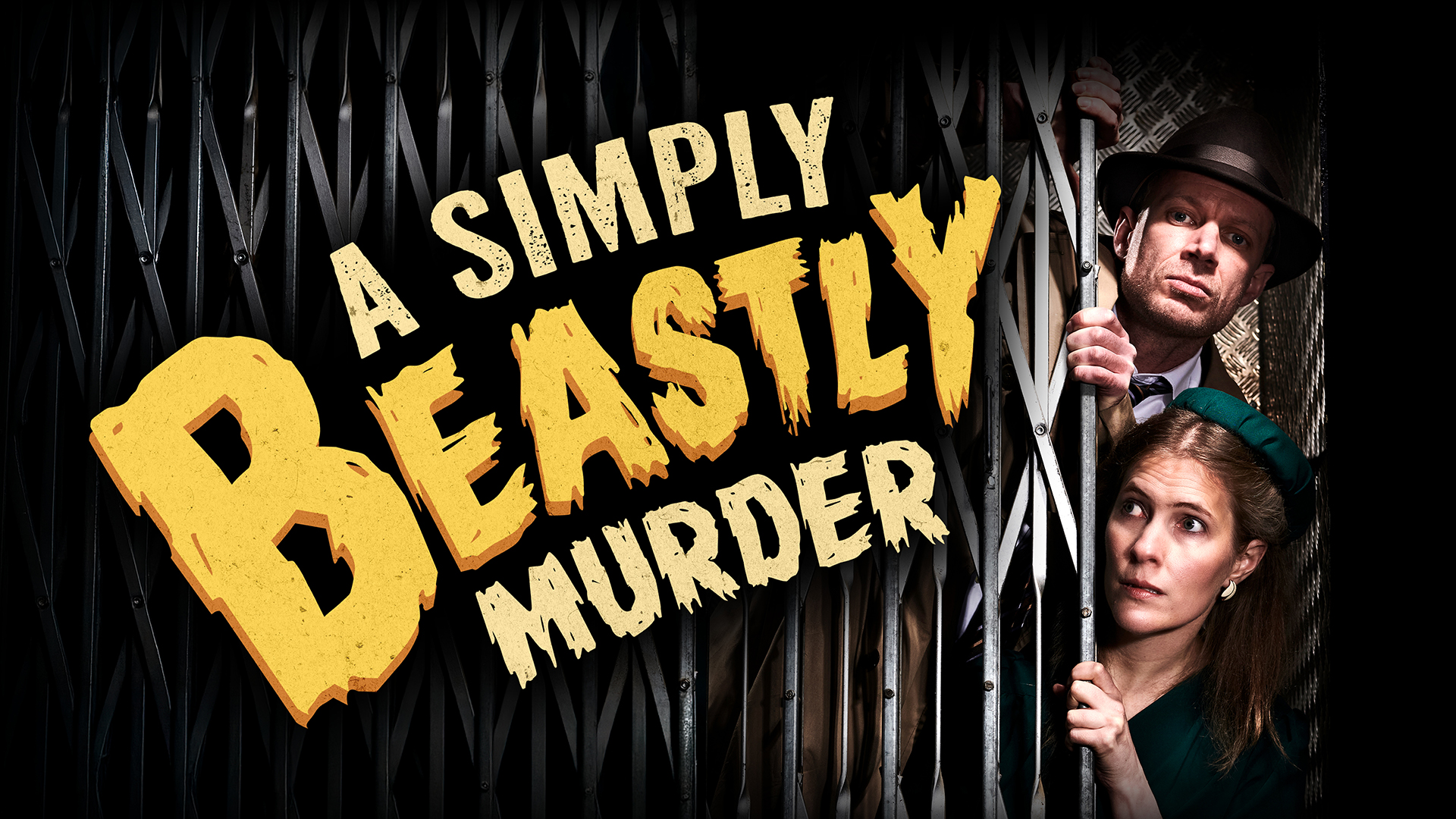
Bliss is currently being talked about as ‘the next Six.’ It’s easy to see why. Both offer revisionist stories where young women are placed centre stage. But while Six is based on actual historical events, Bliss chooses the traditional fairy tale for a makeover. If we’re merely talking about popularity, the massive crowd at the Pleasance Grand is proof that this show is exactly what it needs to be: a big, loud, glittering musical that has everyone clapping along to its upbeat songs and swooning to its power ballads.

Four teenage princesses live in a secluded tower, locked away from the world by their widowed father, The King (Cameron Johnson), apparently for their own safety. They are Piper (Askshara Gunda), Carmella (Alexandra Emmerson-Kirby), Faye (Miriam Nyarko) and Holly (Matilda Shapland). As they spend so much time with only each other for company, they have each developed expertise in the subjects that interest them most. Piper specialises in astronomy and, when she discovers that a rare meteor is due to arrive, she longs to find a way to go outside and watch it.

The girls use their combined knowledge to escape but, once outside, they encounter something much more interesting – young Prince Devin (Jordan Calloway), who looks like he’s on day-release from a boy band, but who has a way of knocking out a song that has Piper’s heart fluttering. It turns out he’s soon to be hosting a party where he’ll choose a bride. How can Piper wangle an invite?

Right on cue, along comes Fairy Godfather, Glimmermore (Tom Bennett, appropriately decked out in pink robes). He assures Piper that she has a perfectly good chance of securing an invitation, and he can see to it that she gets her deepest wish…

Happily, the writers have the good sense to point out that being chosen as a bride isn’t necessarily a good thing, since Glimmermore’s posse of eligible females all have something of the Stepford Wives about them – and maybe it’s not the best outcome a young woman can hope for…

Sheryl Kaller directs with aplomb and, with book, music and lyrics by Emma Lively and Tyler Beatty, and well-drilled choreography by Josh Prince, Bliss packs plenty of energetic singing and hoofing into its 90 minute running time.

If there’s an issue for me, it’s the lack of jeopardy in the story. Glimmermore is the closest this show has to an actual villain, but there’s never any intimation that he has any real power over those he inducts into his cult-like following – and, as it turns out, his attempts to threaten anyone are instantly dispelled by a fatal flaw he gives away early in the proceedings.

Still, there’s no ignoring the enthusiasm of that standing ovation, which threatens to lift the roof off the venue. Could Bliss become the next Six?

Maybe if the creators wish hard enough, their dreams will come true…

4 stars

Philip Caveney

Nesting

13/08/26

Summerhall (Old Lab), Edinburgh

Nesting is a difficult play – complex, ambitious and emotionally devastating. But that’s the beauty of art, right? It comes in so many guises. Sometimes it’s good to be challenged.

This one’s very close to home: it’s about a man dying of MND, the neurological condition that killed my lovely dad four years ago. Billy Mack’s embodiment of the disease is horribly accurate and I find myself crying. A lot.

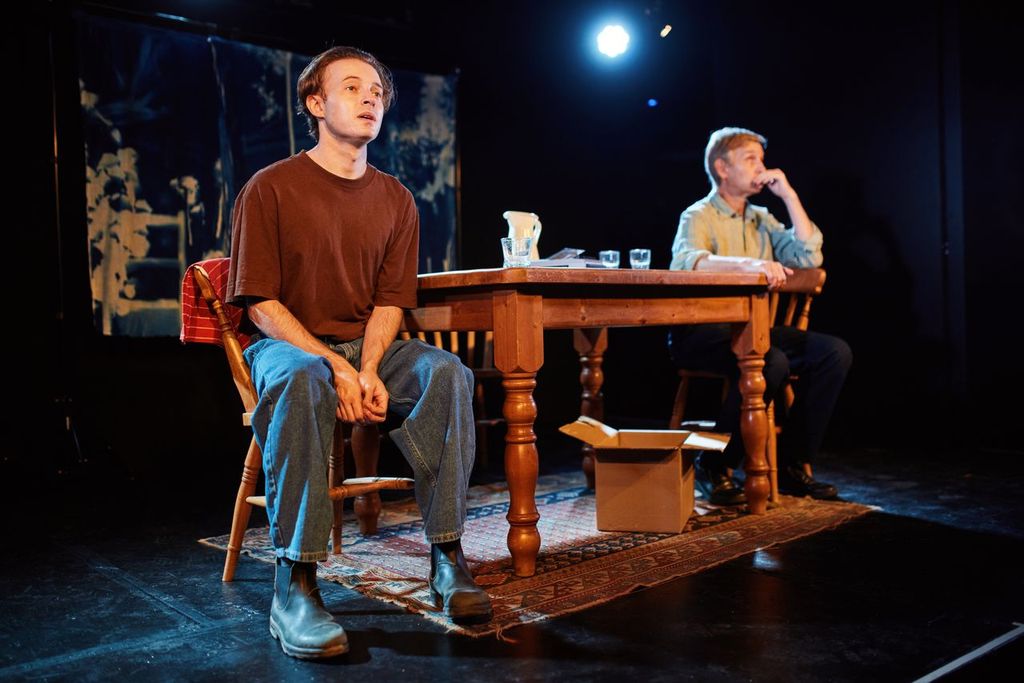
Mack plays Francis, a widower who lives with his pregnant daughter, Emma (Francesca Hess). The two enjoy a close relationship, teasing and joking and looking out for each other. Emma’s an overworked teacher, and – although he’s retired – Francis is very busy too. He’s making a crib for his new grandchild, lovingly cutting and sanding the wood he’s chosen so carefully.

But there’s something wrong with his right hand…

The diagnosis of motor neurone disease, delivered by Dr Bell (Peter McCormick, who also wrote the play), is devastating.

So far, so sadly ordinary. But then we meet Gull (Michael Guest), a seagull with a mission. If Francis agrees, Gull will kill him and take over his body, stalling the disease at its current level. It’s a no-brainer, he squawks. Not only will Emma be spared the burden of caring for her dad, she won’t even know he’s gone. Francis is very tempted. He just needs some time to think.

Under Ben Standish’s assured direction, Nesting is an arresting, deliberately stagy piece. As befits the Fringe, with its quick turnaround, the set is simple yet extraordinarily effective. A wooden frame with a curtain serves as hospital ward, bedroom window, room divider, etc. Meanwhile, Guest’s performance is a masterclass in physical theatre, committed, unnerving and utterly convincing. If the metaphor is a little opaque, that’s not necessarily a bad thing. We find ourselves discussing possible interpretations long into the evening.

McCormick’s script addresses the strain placed on carers too. Hess perfectly conveys the toll her dad’s illness takes on Emma, as she struggles to look after him as well as keeping up with her job and coping with her pregnancy. The impassioned speech she gives is perhaps the most memorable moment of the play. She pleads with Dr Bell to help her, explaining that the care homes she’s approached have rejected her dad because MND is too complex for them! If that’s the case, how is she supposed to cope? How can two hours of daily home help be enough?

Dark, funny, absurd, salient: Nesting is not an easy play to pin down. But it is an intensely thought-provoking drama, one that will stay with you for a long time.

4.2 stars

Susan Singfield
A Ghost Among the Living

13/08/26

Pleasance Dome (Queen Dome), Edinburgh

There are regular visitors to The Fringe who we wouldn’t dream of missing. Box Tale Soup are one such company.

We first encountered then in 2023’s Casting the Runes, which we loved. 2025’s 1984 was even better. It’s not just that the two central performers are so accomplished. And it’s not that they make all the intricate sets themselves from recycled materials. It’s more that we’re always excited to see where they’ll go next.

This year they take on Edgar Allan Poe. We’re in!

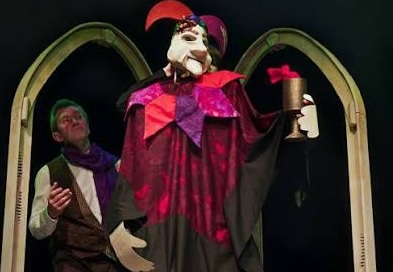
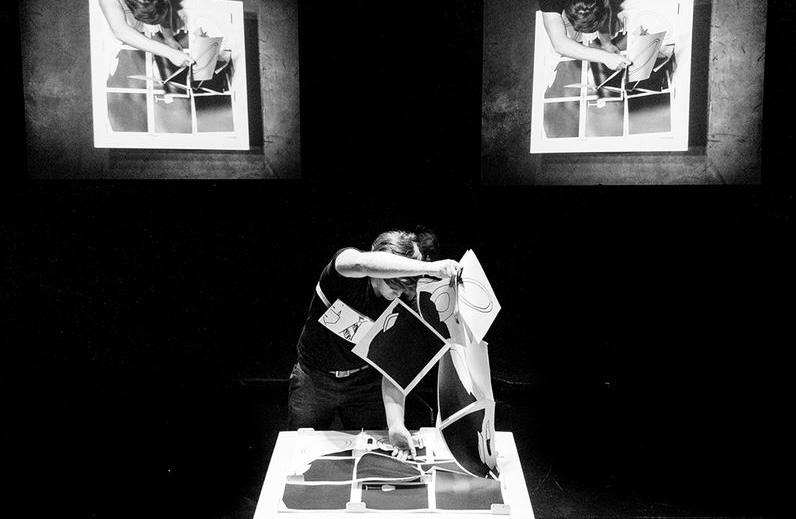
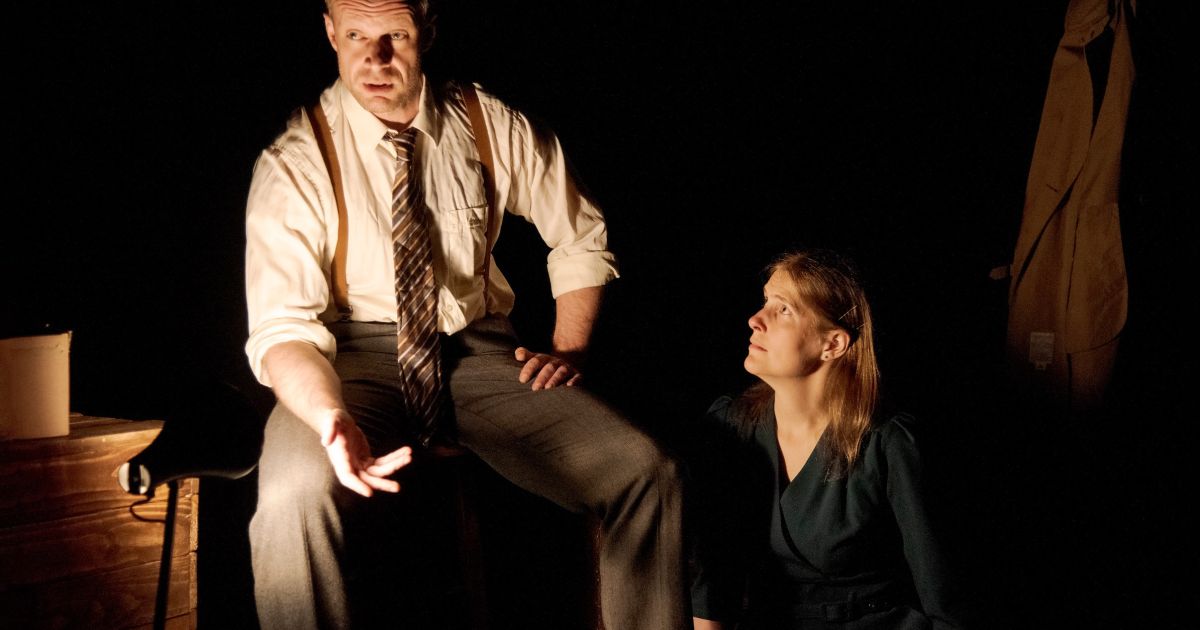
Our narrator (Noel Byrne) takes to the stage and begins to recite Poe’s best-known poem, The Raven. But as he’s talking, a woman dressed in black (Antonia Christophers) prowls into the room and watches balefully from a distance as the narrator segues into another Poe classic, The Tell-Tale Heart. It’s clear that he’s aware of her presence and that her proximity has unnerved him… but who exactly is she? And what has drawn her to this event?

As the stories continue, she becomes the narrator’s assistant, helping him to manipulate those incredible puppets which illustrate each successive story in more detail. As ever, I marvel at the complex and brilliantly designed props that the twosome have conjured up; the incredible attention to detail. Every figurine, every lighting effect, every drape of fabric is a holistic part of the whole, so that there’s never any confusion as to where we are and who is who. As the narrative moves inexorably towards Poe’s masterpiece, The Masque of the Red Death, so the various pieces of the final puzzle slot perfectly together.

This may be Box Tale Soup’s finest achievement to date and I would urge lovers of horror, theatre, puppetry and set design to hurry along to the Queen Dome, where an absolute feast comprising all those different ingredients awaits you. 

But a warning for those of a nervous disposition: this is wonderfully creepy.

If you like it as much as we do (and I’m confident you will), please pass the word on. Productions like this are what the Fringe is all about.

5 stars

Philip Caveney

Shaun Guff: Enuff is Enuff

12/08/26

Hoots Potterow, Edinburgh

Do you want to be happier? More successful? Have you had enuff? If so, get yourself to Shaun Guff’s self-funded seminar. He’s hit rock bottom so you don’t have to, and he’s ready to share his sensational life lessons via a very Y2K PowerPoint.

Guff is the third solo show from talented actor-comedian Clementine Bogg-Hargroves, who clearly isn’t one to keep churning out the same old stuff: the three productions could hardly be more different. 2021’s Skank was a heart-wrenching comic drama about a young woman with extreme health anxiety; 2023’s Please Love Me was an exploration of societal expectations, accompanied by pole dancing. And now here’s a character comedy, featuring an unqualified life coach called Shaun Guff, whose pronouncements are, well… You’ll have to pop along and see for yourself.

Created by Bogg-Hargroves and Lewis Coleman, this is cringe-comedy at its best: think Alan Partridge with a dash of David Brent or Larry David. Guff’s lack of self-awareness is cleverly depicted, the moments of social awkwardness he creates are genuinely mortifying. Bogg-Hargroves is an engaging performer anyway, but she turns that up to eleven in this show, forcing eye contact for just a bit too long, standing just that little bit too close. It’s wonderfully excruciating.

There is some audience participation but don’t let that put you off. Bogg-Hargroves is a lot more sensitive than her alter-ego, and she knows how to pick the right people. (And let’s face it, there’s never a shortage of willing performers watching a Fringe show.)

The show is laugh-out-loud funny from start to finish – a joyous, silly hour of nonsense.

And who knows? It might just open the door to a brand new you.

4.3 stars

Susan Singfield