Theatre

I’m Almost There

09/08/24

Summerhall (Main Hall), Edinburgh

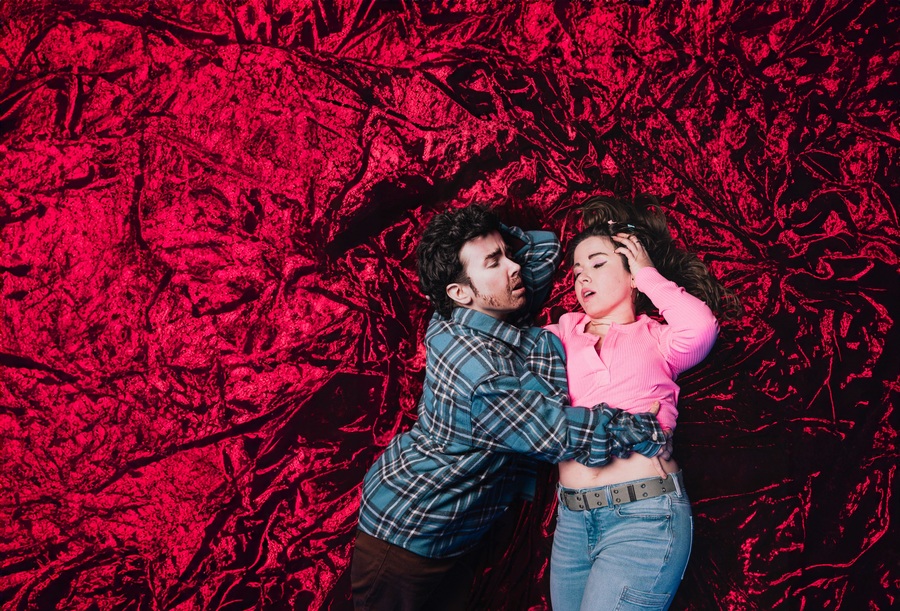
Todd Almond hails from New York City and I’m Almost There, a song cycle inspired by The Odyssey, begins with him sitting at the piano, his fingers pumping out an urgent and propulsive rhythm – and then his plaintive voice soars over the music as the tale begins.

A friend phones to invite the storyteller to a party in trendy Tribeca, and at first he’s reluctant to venture out from the sanctuary of his apartment block, but his friend is very persistent and eventually he agrees to go. Amongst the ranks of strangers, his friend is nowhere to be found, but the storyteller’s gaze meets the eyes of a man and, almost before he knows it, the two of them have left the party together and are walking through the streets of the city. Eventually they part ways, but the next morning, the storyteller hears his doorbell ring. The stranger is waiting for him below with two cups of coffee and all he needs to do is go downstairs and let him in. But so many things get in the way.

There’s the weird upstairs neighbour who is looking for her lost cat; the odd but sexually-attractive guy across the hall who keeps telling the storyteller that he hates him. And don’t even mention what’s waiting for him down in the basement….

Accompanied by Erin Hill’s distinctive harp and Lucas Macrosson’s slinky bass guitar, Almond weaves an intriguing and compelling tale of urban mystery. It’s a distinctive approach to storytelling and its premise puts me in mind, for some reason, of the short stories of Armistead Maupin, which are themselves so inspired by the author’s adopted city. I’m also thinking of the Australian performer Wil Greenway, who used to be a regular fixture at the Fringe, who is also adept at weaving whimsical tales of everyday existence.

And perhaps too the weird sequence of events is reminiscent of the ways in which authors, chasing that new narrative, find themselves continually distracted by other ideas bubbling to the surface at inopportune moments.

There’s a packed crowd in the Main Hall at Summerhall, hanging on to Almond’s every word and, when the last chord dies away, the applause is heartfelt and appreciative. Those who have yet to experience the talents of this distinctive musical storyteller should grab tickets before they sell out.

4.2 Stars

Philip Caveney

Playfight

08/08/24

Roundabout at Summerhall, Edinburgh

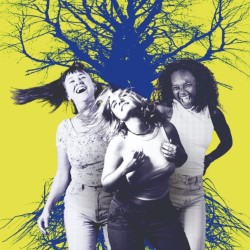
At first, Julia Grogan’s Playfight seems like a pretty straightforward coming-of-age story. The three protagonists, Keira (Sophie Cox), Zainab (Nina Cassells) and Lucy (Lucy Mangan), are fifteen years old, fizzing with adolescent energy and trading wide-eyed misinformation about sex. The characters are nicely delineated and the dialogue is lively and witty. Keira is the bold one, the most sexually aware, proud that she’s lost her virginity before starting sixth form. Lucy is struggling to reconcile her Christianity with her longing for an orgasm, while Zainab is worried about coming out as lesbian. She’s not scared about her friends rejecting her, but she is nervous about revealing exactly who it is she has feelings for. So far, so ground-well-trod.

But there are darker elements at play in Grogan’s script, and – under Emma Callander’s direction – these are gradually revealed. The insouciance with which the girls share news of their sexual exploits and fantasies belies the enormity of some of what they’re saying, the banal and the shocking met with the same innocent acceptance. “It was great,” says Keira about having sex for the first time. “Except for the awkward bit, where he asked to hit me in the face.” My heart aches for these youngsters, whose yearning makes them so vulnerable.

This is nuanced stuff. A movement sequence (choreographed by Aline David) marking the end of their school years recalls The Crucible, as the trio remove their clothes and dance in the woods. Like Abigail Williams and her friends, they are never just victims; they’re also active participants in their own (and others’) destruction. Keira’s lover, Dan, might be eighteen, but he’s as defenceless as she is; Lucy’s masochism is signalled from the start, but does she know enough to give informed consent? If there’s a message here – and I think there is – it’s that we’re failing our young people when it comes to sex education. It’s 2024, but they’re still learning from rumour and porn. Where are the open, frank discussions with well-informed, non-judgmental adults?

Playfight feels authentic. The girls’ home lives exist just out of sight, rarely discussed. What is there to say? They already know each others’ circumstances; of course they’re keener to talk about masturbation – or GCSE results. Still, we glean snippets of information, enough to contextualise their actions. Cox, Cassells and Mangan utterly convince in their portrayal of the kind of all-consuming friendship that means so much when we are young – but often fails to survive into adulthood.

Hazel Low’s simple set design works well: a bright pink ladder surrounded by wood chippings represents the girls’ favourite tree. I like the stylised image, and the connotation of ascension.

Playfight has real emotional heft – and is yet another winner from Roundabout at Summerhall.

4.8 stars

Susan Singfield

Diva: Live from Hell

08/08/24

Underbelly Cowgate (Belly Button), Edinburgh

The dank environs of Belly Button somehow make an apt setting for Diva: Live from Hell. If there is a hell, this is surely what the place must look like. It’s here in the Seventh Circle that former high school musical theatre star, Desmond Channing (Luke Bayer), is obliged to re-enact the story of his fall on a nightly basis. Back in the day, Channing was the all-singing, all-dancing star of The Ronald Reagan High School’s drama society. Camp and undeniably talented, he is also the society’s president – something he never lets his co-stars forget.

And then along comes Evan Harris, a new recruit recently transferred from California. Despite his bluff ‘aw shucks’ attitude, everybody seems to like Evan and Desmond dutifully takes him under his wing. Evan soon lands a plump role in the society’s production of Gilbert and Sullivan’s The Pirates of Penzance and, pretty soon, he is making moves on the young actress who Desmond has had his eye on for ages.

Naturally, there’s going to be hell to pay.

Triple-threat Bayer is a tour de force in this supremely entertaining riff on the high school musical genre. There’s just him and three backing musicians (two of whom have to work very hard not to keep laughing out loud at his snarky asides to the audience). Bayer is quite simply astonishing, singing and dancing up a storm, slickly slipping from one character to another with absolute assurance, even delivering a frenetic tap dance routine at one point.

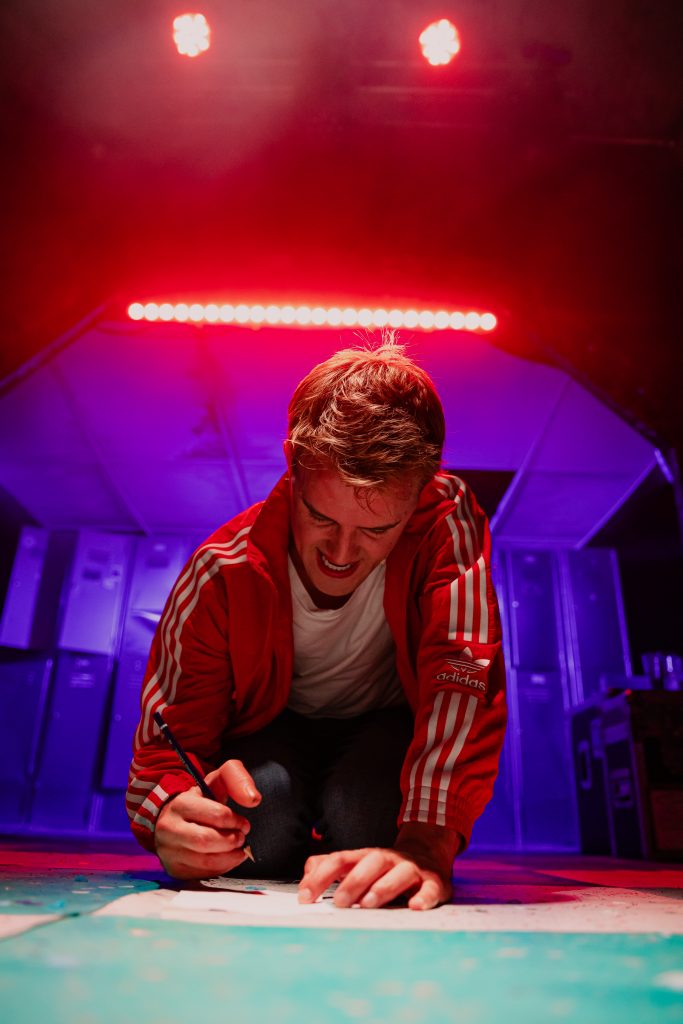
Channing (the name is obviously a reference to Bette Davis in All About Eve) is a delightful character, supremely self-obsessed, deliciously callous and intent on achieving stardom at any cost. The songs by Alexander Sage Oyen are insanely catchy and Nora Brigid Monahan’s script is packed with references to the stars of musical theatre. Given the modest size of the performance space, the presentation is really inventive, a line of metal lockers providing Bayer with costume changes, props and even a mirror in which to check his makeup. A scene involving a death by automobile is simply but ingeniously depicted.

Diva: Live from Hell deserves to be shown on a massive stage with an equally massive production budget, but this is the Fringe, baby and, up in the modest setting of Belly Button, Bayer and his team are creating theatre to die for. Literally.

5 stars

Philip Caveney

Mutant Olive 2.0

08/08/24

Gilded Balloon Patter Hoose (Nip), Edinburgh

Mutant Olive 2.0 is a wild ride of a show. Adam Astra (Mitch Hara) is auditioning for a part in Hamilton Unplugged and he’s determined to stand out from the crowd. Sure, he’s an ex-addict, his headshot is twenty years out of date, and he’s left his props on the kitchen table but, as the audience becomes a room full of directors, producers and casting agents, we are urged not to let any of this cloud our view. He’s going to wow us with a Shakespearean monologue. What could be more appropriate?

Except, would we mind waiting just a minute, because his Dad’s calling? Sorry about that. The problem with his Dad is… “Okay. Puck. I am that merry wanderer of the night…” His phone rings again.

Hara is a kinetic performer, almost sparking with energy. He dazzles with his smile and prowls the small stage, lurching from sly camp to devastating emotion, somehow keeping us with him all the time. The stories of Astra’s childhood – his speed-freak alcoholic mother; his hitman father – seem utterly fantastical, but it turns out they are largely autobiographical, based on Hara’s own experiences. 

The audition, of course, careens out of control, like the seventeen cars Astra has crashed whilst high. And in amongst all of the gloriously riotous, outrageous tales, we see the man emerge, scarred but intact, resolute in his determination to succeed on his own terms.

Directed by Carlyle King, Mutant Olive is a true delight. I’ll certainly be seeking out more of Hara and King’s work, starting with Smothered, their short form series on Amazon Prime. Meanwhile, do yourself a favour and head to the Gilded Balloon for a chance to see a fairy goblin in a whole new light. 

4.6 stars

Susan Singfield

Weer

07/08/24

Traverse Theatre, Edinburgh

Natalie Palamides’ burgeoning reputation has evidently preceded her. Traverse One is packed to the gills with an exuberant crowd, many of whom have clearly seen her Netflix special. I have to admit that thus far her name has eluded me, so I really don’t have the first idea what to expect. But whatever wild imaginings I might have had beforehand are nothing like the slice of unhinged genius that I witness onstage tonight.

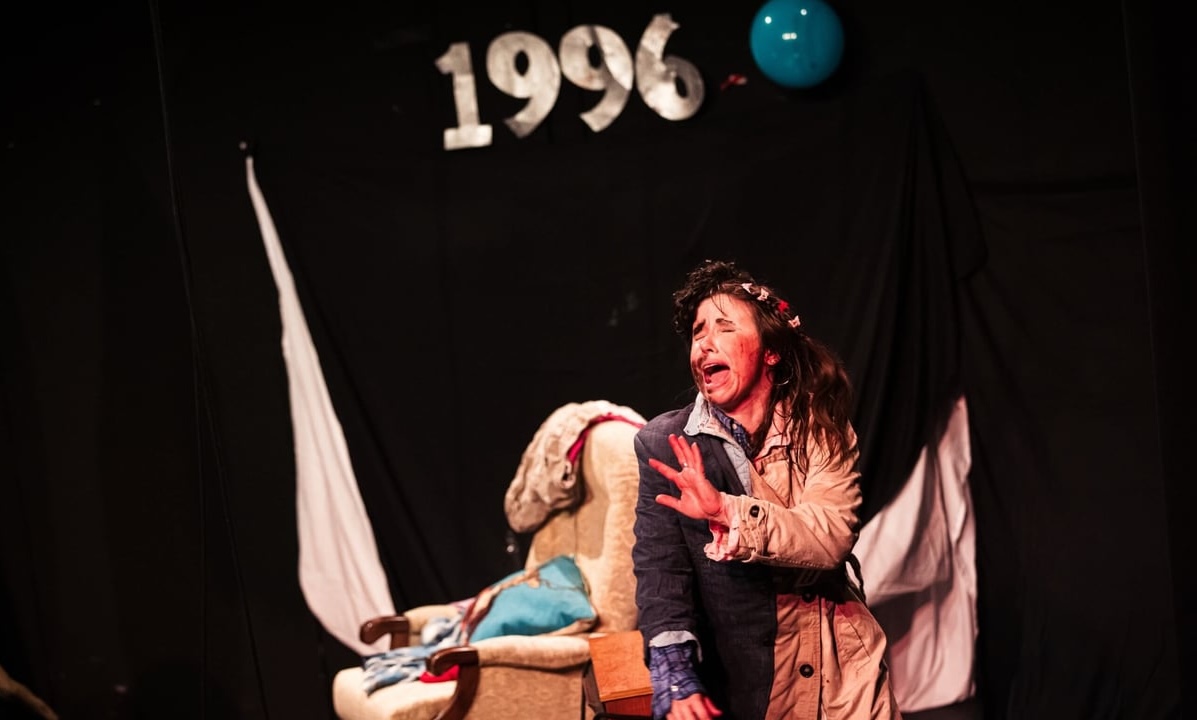
Weer (the name is explained somewhere in the chaos) is the tumultuous tale of Mark and Christina, two star-crossed lovers, who have been falling in and out of lust with each other since 1996. Now it’s New Year’s Eve 1999, the world is poised for the ensuing havoc and the two of them are having a violent altercation, mostly prompted by Mark’s inability to fully commit to Christina. Palamides plays both Mark and Christina, using the old music hall technique of donning a series of bisected costumes, and presenting the resulting interchanges by twisting from side to side. On paper, it sounds a bit hack and it shouldn’t work for a full-length play… and yet, against all the odds, it really does.

The opening events are simply an introduction to a whole series of demented scenes, Palamides racing back and forth across an increasingly cluttered stage, using weird Heath Robinson-like props to help tell the story. There are chases and spills, rampant love making (in an actual shower at one point!). There’s bloodshed and slapstick, a loaded gun with a penchant for discharging bullets – even though it isn’t loaded. There are spurts of bodily fluids, frantic costume changes, audience interaction, meaningful sideways glances, tears, laughter, death – and a great big fucking deer.

I – like most of the others in the theatre – spend large amounts of my time alternately laughing uproariously and staring in wide-eyed astonishment at Palamides’ next unexpected rug pull. Essentially, Weer is a just a great big slice of the absurd, expert clowning performed with such reckless abandon that you can’t help loving it. Palamides is now well and truly on my radar and I’m already looking forward to what she does next.

Meanwhile, those in need of some laughter should get the to The Traverse to see Weer and be grateful that you’re not one of the team of people who have to clean up the stage after the show.

5 Stars

Philip Caveney
Rita Lynn: Life Coach

07/08/24

Pleasance Dome (Ace), Bristo Square, Edinburgh

My suicide note was so good, it made me want to live.

Enter Rita Lynn, life coach extraordinaire. After all, who better to advise the rich and foolish than a woman at rock bottom with a penchant for hard drugs? 

Imogen Wood (Louise Marwood) used to be a dancer, but it turns out no one wants to employ an addict, who disappears for days on end, then turns up drunk, hungover or high. Stuck in a codependent relationship, she can’t see any way out – until a chance encounter with a wealthy worrier sparks an audacious thought and Imogen’s alter ego, Rita Lynn, is born. For just £250 per hour, she’ll counsel ‘Helen’ – and all her well-heeled friends.

Loosely based on Marwood’s own experience with addiction, this is a cleverly crafted tragicomedy. Not only is her performance a real tour de force, the writing is mightily impressive too; Marwood is clearly a talent. 

She’s extraordinarily engaging, one of those actors who seem to carry their own light, and so we’re irresistibly drawn to Imogen despite her bitchiness, able to see beneath the brittle façade she’s constructed to protect herself from her inner demons. We want her to beat her addiction and emerge happy on the other side.

Marwood also plays a raft of supporting characters, including her toxic boyfriend, her therapist, her clients and her best friend, switching from one to the other, sometimes mid-sentence, never leaving us in any doubt about who she’s meant to be. This is a heightened, almost melodramatic piece, the humour emanating from Imogen’s outrageousness, as well as her biting criticism of the way society wants her to behave. She’s caustic and dismissive, bold and fearless – and as fragile as can be. 

At once laugh-out-loud funny and desperately sad, Rita Lynn: Life Coach is a must-see show. Just don’t be tempted to employ her to sort your problems out. 

4.8 stars

Susan Singfield

How I Learned To Swim

07/08/24

Roundabout at Summerhall, Edinburgh

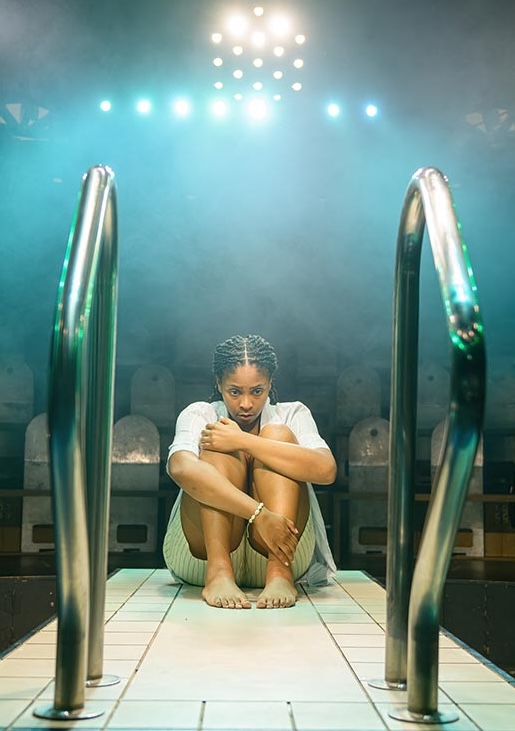
Jamie is 30 years old and is having her first official swimming lesson. What took her so long? Well, there was that incident back in her childhood that instilled her with a powerful dread of diving into the water, not to mention the old stereotype that Black people can’t swim. But now, more recent events have driven her to take on the challenge in the hope that she can rectify something that’s been haunting her…

How I Learned to Swim by Somebody Jones is a engaging monologue, compellingly narrated and acted by Frankie Hart. The play was shortlisted for The Women’s Prize in 2023 and it’s easy to see why. Jamie’s story is compelling (and not just because I share her fear of being submerged). Her quiet determination to overcome old fears is both empowering and inspiring. Hart conveys Jamie’s emotions with aplomb, allowing glimpses of the anxious woman that hides behind a calm façade. She also slips effortlessly into a couple of other characters as the story unfolds: her indefatigable English swimming coach, Molly, and a spliff-smoking spiritual guide she goes to for advice.

This feels like a perfect play for Roundabout. The set is simply but effectively realised, the swimming pool location so convincingly evoked you can almost smell the chlorine. Lighting director Ali Hunter and composer Nicola T Chang work together to make the water sequences completely er… immersive.

There’s no great revelation here – at least, not one I haven’t already guessed at – but there is a genuine sense of peace and fulfilment at the play’s conclusion, the sense that long-held terrors are finally being laid to rest.

4 stars

Philip Caveney

Lynn Faces

06/08/24

Summerhall (Main Hall), Edinburgh

There’s no denying it’s an original premise. After all, there aren’t many bands inspired by the facial expressions of Alan Partridge’s long-suffering assistant, Lynn.

But Lynn Faces are here and they’re ready to perform. Leah (Madeleine Macmahon) is turning forty tomorrow, and – after splitting up with her boyfriend, Pete – she needs to do something big to mark the occasion. Encouraged by her friends, Shonagh and Ali (Holly Kavanagh and Peyvand Sadeghian), she’s booked a gig for the hastily-formed titular punk band. Okay, so the drummer they’ve never met is AWOL and – with the exception of Shonagh’s recorder – none of them can actually play an instrument, but how hard can it be? Leah did meet Viv Albertine from The Slits once; she’s bound to have absorbed some talent, right? 

Er, wrong. 

While silly on the surface, Laura Horton’s sophomore play also has some serious points to make about domestic abuse. Leah is devastated by her break-up with Pete,  eagerly awaiting messages from him and reminiscing fondly about how they met. But piece by piece the jigsaw builds until we have a clear picture of what he’s really like and how much damage he has done to her.

Unfortunately, the problem is that the gig really is as bad as it purports to be. Unlike say, The Play That Goes Wrong, where the apparently shoddy is actually perfectly drilled, Lynn Faces is an hour of non-musicians performing bad songs. The poignancy of the final stretches doesn’t feel earned and so it doesn’t land for me. It doesn’t help that I’m sitting next to an air conditioning unit, so any dialogue that happens away from the mic (or behind a Lynn mask) is hard to hear. 

There are some genuinely funny moments – Shonagh’s recorder solo and the Cunt x 40 song, for example – and Summerhall’s Main Hall is sold out, full of people laughing and enjoying the show.

For me though, this feels a bit dialled in. 

2.7 stars 

Susan Singfield

The Transcriber’s Tale

06/08/24

Gilded Balloon (The Patter Hoose), Edinburgh

American actor/ musician Joanna Parson relates the story of the years she spent working for “Transcribers’ Express” (not their real name) in New York City, typing up news reports and magazine bulletins previously recorded on tape. It takes a special skill set to do the job effectively but Parson, armed with her ergonomic keyboard, quickly discovers she has a knack for it. At first it’s just a temporary solution, a way of earning easy money in between auditions for shows that never seem to come off. It’s also a way to finance her grocery and bar bills.

But the short term fix soon develops into long years of service, the day job ousting the dream.  Parson chronicles the ups and downs of her tenure in a series of short songs, accompanying herself on acoustic guitar. She’s a confident performer with a likeable line of patter and the songs range from an upbeat celebration off the joys of whisky to a plaintive, thoughtful meditation on 9/11. She rounds it all off with a jolly singalong, supplying the lyrics on a back projection, and the crowd happily complies.

This is enjoyable though I’m not always convinced that there’s quite enough material here to justify the length of the set and, in some cases – the 9/11 section in particular – Parson is skating over the surface rather than digging deeper into the material. All freelancers will be familiar with the unpredictability of their work and the need for a back-up plan. The revelation that Parson has now set up her own business offering transcribers a friendlier working environment seems to illustrate the old adage ‘if you can’t beat ’em, join ’em.’ Surprisingly, the idea that AI could soon supersede such operatives isn’t touched on.

Anybody with an hour to spare at lunchtime should make their way to the Patter Hoose. Ergonomic keyboards are optional.

3.4 stars

Philip Caveney

Chris Dugdale: 11

05/08/24

The Ballroom, Assembly, Edinburgh

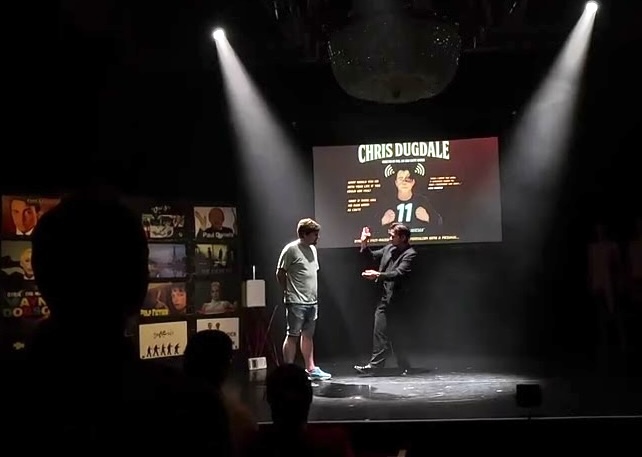
At the Fringe, we spend most of our time seeking out new performers whose work we’ve never encountered before. But there are a few honourable exceptions. Back in 2015, as fledgling reviewers at the Festival, we happened upon Chris Dugdale: Sleightly Dishonest and were blown away by it. We weren’t magic fans per se (still aren’t really) but something about the man’s delivery, his brain-scrambling routines, his cheeky persona, chimed with us and we’ve seen him pretty much every year since – apart from when the dreaded COVID cancelled the whole Festival in one fell swoop.

But here he is again with 11 (remember that number), another meticulously arranged head-spinner that is mostly about coincidences – or at least apparent coincidences. One section deals with the attack on the World Trade Centre and the importance of that title is suddenly made clear. 

Dugdale is in a bigger theatre than usual and his wife and two young daughters are sitting in the audience (the latter putting their hands up when he asks for volunteers and having to be politely refused). As ever, we find ourselves laughing at the sheer unbelievability of some of the things we’re witness to, especially the examples of close-up magic, where a video camera is focused on the illusionist’s hands as he does a whole series of impossible things with a pack of cards. There are also some examples of mind control that have us shaking our heads in disbelief – and I may be guilty of muttering the odd expletive.

Oh and did I mention Dugdale’s poster collection? There’s a whole wall of them to stage left, a series of seemingly unconnected images…

As ever with these shows, I can’t give too much away because the best approach to Dugdale’s material is to go in with an open mind and prepare to have it opened a good deal more. But I will say that this is the best show we’ve seen from him and, trust me, it’s a very high bar. Those who like the sound of this should make a beeline for The Ballroom in the Assembly Rooms on George Street, where Mr Dugdale is doing unbelievable things every night.

Walking home afterwards, Susan randomly asks me what time it is. I glance at my watch and can’t help gasping. The numbers on the digital display are 9:11.

Another coincidence? Or is that noise I hear the distant sound of Chris Dugdale chuckling maniacally?

5 stars

Philip Caveney