Theatre

300 Paintings

18/08/24

Summerhall (TechCube 0), Edinburgh

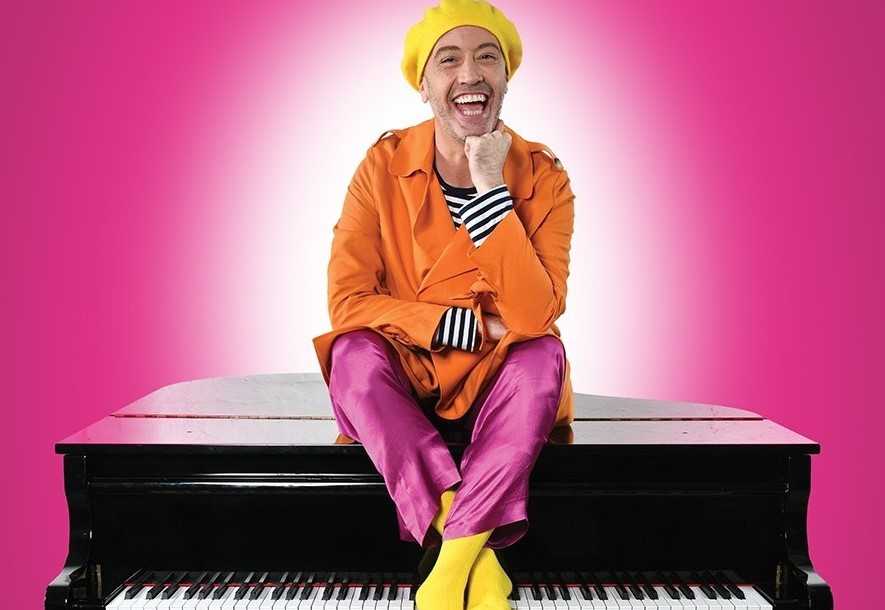
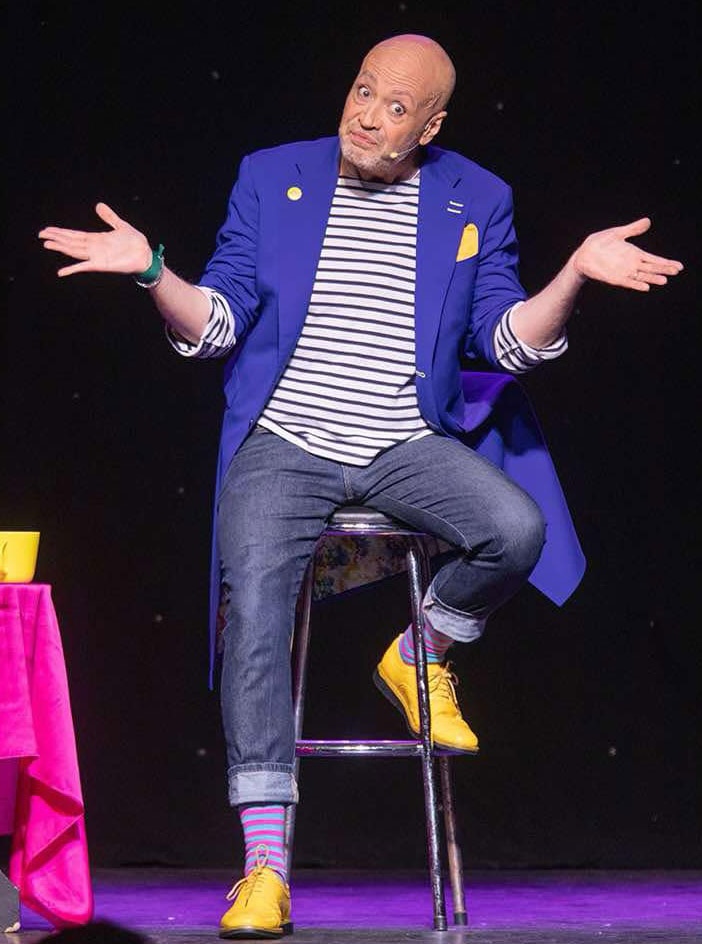
Aussie comedian Sam Kissajukian had an epiphany in 2021. Okay, so it turns out it was actually a manic episode, but he didn’t know he had bipolar at the time, so he really believed he’d seen the light. It was time, he decided, to turn his back on comedy and become an artist. So what if he’d never painted before? He had a beret. He was good to go.

We have his bipolar to thank for the art we see today: without the high levels of energy, the euphoria and the delusions that come with a manic episode, Kissajukian might never have rented a workshop, moved into it and obsessively painted massive (and tiny) pictures for several months. He might never have created the Museum of Modernia or held exhibitions of his work across Australia – or visited the Edinburgh Fringe with this fascinating show.

Of course, he wouldn’t have had to endure the crippling depression that followed either, but he’s doing well now, he tells us, so we’re allowed to laugh at the crazy, funny stuff he did.

300 Paintings is essentially a story about finding yourself and, although most of us won’t experience periods of transition with quite the same intensity as Kissajukian, the urge to escape our shackles and work out what we really want is very relatable. Unleashed from the need to please a drunken comedy audience, Kissajukian turns out to be extraordinarily creative. His ideas are inventive (literally) and exciting; his artwork primitive but fresh. He pushes every concept beyond its boundaries, so that this show is unlike anything I’ve seen before.

Kissajukian’s previous incarnation as a comic means he’s adept at communicating with the audience, even if the early morning is an unusual time for him to be awake. His easy-going patter makes the complex mental health issues accessible, and the projections of his artwork illustrate the story perfectly. Twenty-five of his paintings are on display here at Summerhall, the performance and exhibition inextricably linked.

Today’s show was sold out but, if you can get a ticket, 300 Paintings is an invigorating way to start your day.

4.2 stars

Susan Singfield

Summer of Harold

17/08/24

Assembly Checkpoint, Edinburgh

Ensemble Theatre’s three short standalone plays are brought to the Fringe via House of Oz. Written by Hilary Bell and performed by Berynn Schwerdt and Lucia Mastrantone, they form a perfect trinity, and we are treated to ninety minutes of exquisite storytelling.

The opening monologue, Summer of Harold, is all about Janet (Mastrantone), a middle-aged woman clearing out her junk room and reminiscing about the seasonal job she had when she went backpacking in her youth. But nineteen-year-old Janet doesn’t settle for bar work or fruit-picking. Instead, she spends her time in London working as a housekeeper for the titular Harold.

Pinter.

That’s right. Janet – whose story is inspired by the true-life adventures of one Margaret Woodward – provides holiday cover for Harold Pinter’s live-in help. And that summer, with Pinter and his wife, the novelist Lady Antonia Fraser, looms large and bright in Janet’s memories.

Mastrantone is tiny but she fills the stage with her glorious portrayals of the Pinters, as well as their many famous friends and her own chain-smoking Kiwi co-worker, Alison. She encapsulates the bold, vivacious swagger of youth, as the two girls bluff their way into a job they can’t do, and then learn how to do it anyway. Bell’s script is beautifully crafted and Mastrantone more than does it justice.

The second monologue, Enfant Terrible, stars Berynn Schwerdt, a man as big as Mastrantone is small, his gangly frame an interesting visual counterpoint to hers as they swap places and a new tale begins.

Gareth is a ceramicist but he’s not as famous as he’d like to be. More pressingly, he’s not as famous as his erstwhile best friend from art college, even though Gareth was the star back then and the work he’s producing now is definitely much better than anything “Mr Pinch-Pot” could create. Definitely. But his ex-pal is being given a big award so Gareth has to attend the ceremony and act like he is pleased.

There’s also a piece of very old and rancid Camembert he needs to deal with…

Again, it’s flawless. This is perhaps my favourite piece of writing of the three (although they’re all great), and Schwerdt’s performance has real emotional heft. His jealousy and resentment are both visceral and palpable – and any creative who says they don’t recognise these feelings is lying!

The final piece, Lookout, is a two-hander, with Schwerdt as Jonathan and Mastrantone as Rae, two people in their late 50s. It’s Jonathan’s birthday and they’re up a mountain in their special place, remembering the many times they’ve been here before. They haven’t visited recently though; they haven’t seen each other for a while. And Jonathan has some news for Rae that catches her off-guard…

Unlike the first two plays, Lookout relies on the element of surprise, so I won’t reveal too much about the storyline here. Suffice to say, it’s every bit as engaging as its predecessors, and just as skilfully acted.

Damien Ryan’s direction allows the trio of plays to shine. The transitions are particularly well-handled, overtly playful and theatrical. I especially like the device of using Schwerdt as a kind of silent removal man throughout Summer of Harold, carrying away Janet’s boxes one by one, leaving the stage bare and uncluttered for Enfant Terrible.

If you’re looking for an hour-and-a-half of impressive theatre, with snort-out-loud humour as well as profound emotional moments, then Summer of Harold ticks all the boxes. It’s an absolute pleasure from start to finish.

5 stars

Susan Singfield

Deluge

15/08/24

Summerhall (TechCube 0), Edinburgh

Deluge typifies what I used to think the Fringe was – way back when, before I’d ever set foot in Edinburgh. I expected every show to be like this: artsy, meaningful and chock-full of expressive dance. Of course, now I’m both an old hand and an Auld Reekie resident, and I know that the 3000+ shows on offer here cover every form imaginable: from the mainstream and family-friendly to the wild and debauched; in venues as varied as traditional theatres, circus tents, tiny broom cupboards and former dissecting rooms. But in fact, there’s not actually a lot that conforms to those youthful preconceptions.

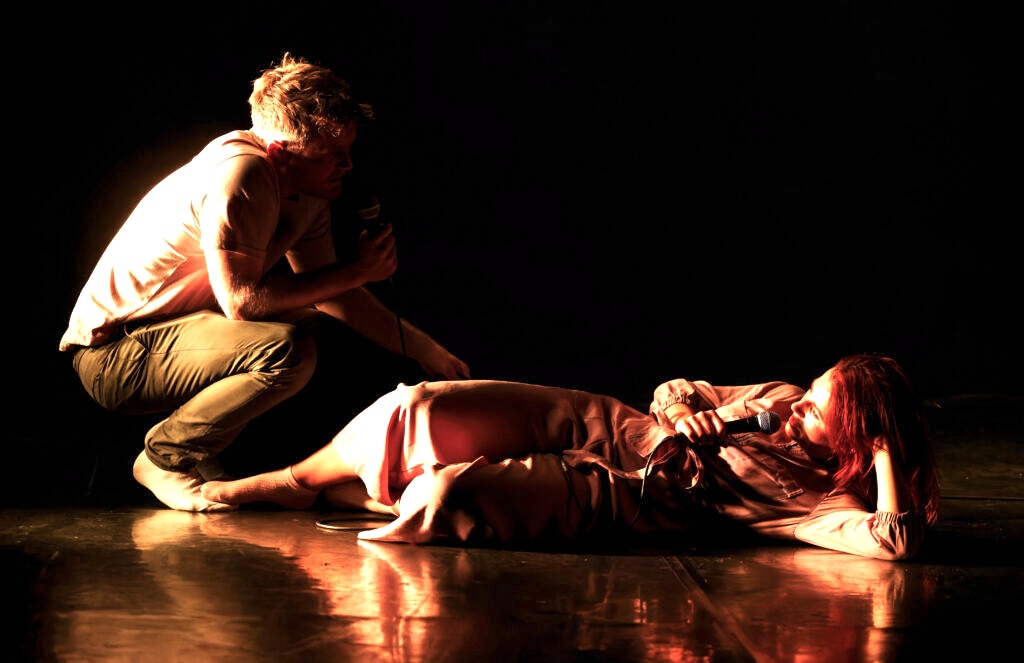
Deluge – a one-woman play by Brazilian theatre-makers Gabriela Flarys and Andrea Maciel – is very artsy, very meaningful and, yes, replete with expressive dance. And I am totally absorbed, lapping up every minute of this quirky, offbeat play.

The protagonist (Flarys) is in mourning. Her lover has left her and she is bereft. She is also covered in jam. What follows is a wonderfully eloquent evocation of loss, the whole grieving process externalised and made concrete. ‘The End’ itself is personified, while the emotions overwhelming her are represented by a cumbersome ladder and a constant drip-drip dripping sound, as inescapable as tinnitus.

The woman takes us back in time, to when she first met her ex-boyfriend. We bear witness to their love, and to the diverging dreams that eventually tear them apart. This is a multi-media production, cleverly utilising a keyboard, video projections and, most impressively of all, Flarys’ extraordinary physical skills, as she contorts herself every which way, a paroxysm of grief. Despite her unhappiness, the protagonist is an expressive and three-dimensional character, extrovert and full of life. She just needs to negotiate her way through this quagmire of misery…

The central metaphor – of grief as water, infiltrating the woman’s home and threatening to drown her – is beautifully realised, not least when she hopelessly tries to plug up the leaks with the jam her partner left behind. We all know bereavement and heartache, one way or another, and I found this section in particular spoke to me and my experiences.

Deluge is a profoundly moving piece of theatre, as ‘Fringey’ as it gets and none the worse for it.

4.3 stars

Susan Singfield

Gamble

15/08/24

Summerhall (Cairns Lecture Theatre), Edinburgh

Hannah Walker greets us as we wander into the Cairns Lecture Theatre. She’s dressed in a sharp suit featuring dollar bills and wearing a pair of snazzy high-heels. Without further ado, she launches into her intro, a razzle-dazzle rant about the joys of online gambling, backed up by a bright and zippy display on the video screen behind her.  She tells us about her youth, spent in a sleepy village in the UK, where the only bright spot was the occasional trip to the bingo. Even at a tender age, she tells us, she was being indoctrinated, taught that ‘having a flutter’ was perfectly acceptable.

But time moves on and she finds herself married to a man with a gambling addiction, unable to resist squandering eye-watering amounts of money on an almost daily basis. This show is Walker’s attempt to highlight the potential dangers of online gambling, the invidious ways in which it can entice and corrupt people into its clutches, convincing us that it’s just a bit of harmless fun. The show alternates between those brash, colourful enticements and clips of addicts, confessing how what originally seemed like a harmless pastime mutated into something utterly destructive. There’s also input from a clinical psychologist and an invitation to attend Zoom sessions, where people with a gambling problem can talk about their situation.

Walker and her co-creator (Rosa Postlethwaite) give this piece their all, but I’m left with the distinct impression that Gamble is trying to be too many things at once and that its potential is somewhat dissipated by a tendency to spread itself too wide and not all of the humour lands. Also, perhaps because Walker is so close to the issue (her husband is an addict, though thankfully in recovery), it doesn’t go hard enough to expose the depth of the potential problems. For example, the number of gamblers committing suicide is mentioned but never explored.

There’s no doubting the sincerity of Walker’s intentions and Gamble is a thought-provoking piece, which has plenty to say about a multibillion dollar industry that hides behind that cheerful, glittering façade. But I’d like to see its focus tightened in order to realise its full potential.

3 stars

Philip Caveney

Hold On to Your Butts

15/08/24

Pleasance Forth, Edinburgh

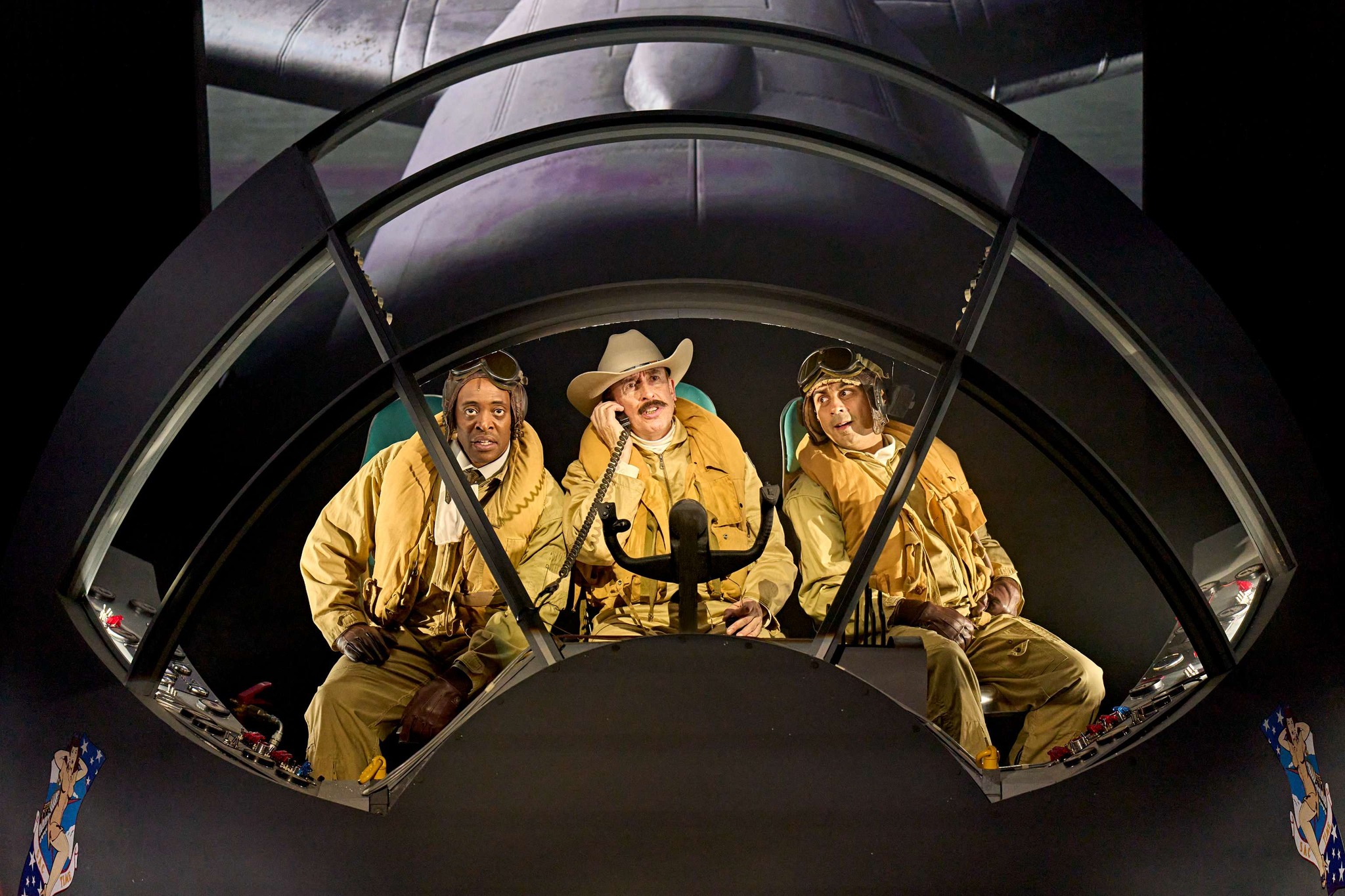
At the Pleasance Forth, a huge crowd of film fans has eagerly assembled for Hold Onto Your Butts. The raison d’etre of this New York-based outfit, making its debut at the Fringe, is to take a big-budget movie – you know the kind of thing, epic scale, massive special effects – and replicate it. They do this pretty much scene-for-scene, using a series of cheap-as-chips props to capture every detail. So for instance, a spinning umbrella becomes the rotor blades of a helicopter. Got it? Good.

Today we’re being treated to their version of Jurassic Park, though (presumably for legal reasons) the title is never mentioned. A grand cast of two performers (Natalie Rich and Matt Zambrano) and one foley artist (Kelly Robinson) gleefully launch themselves headlong into the action. The actors mine the film for its weaknesses, having fun with Ian Malcolm’s proclivity for pregnant pauses, John Hammond’s habit of fitting in lavish meals at inopportune moments, and the seeming inability of the adults in the cast to realise that they are repeatedly plunging the two kids in the story into harm’s way.

And then of course there are the dinosaurs. It’s amazing what can be achieved with a bike helmet and a traffic cone…

This is great fun, but I should probably point out that anyone with little or no knowledge of the original film will be somewhat bewildered by what’s happening onstage. Fans of Jurassic Park – and there are many – will have a whale of a time. Judging by the gales of laughter filling the room, that’s a sizeable part of the audience.

Fast, funny and irreverent, Hold On To Your Butts has all the makings of a monster hit and I fully expect it to become a regular fixture at the Fringe. We’ll see how that one er… evolves.

4 stars

Philip Caveney

A Knock on the Roof

14/08/24

Traverse Theatre, Edinburgh

Written and performed by Khawla Ibraheem, A Knock on the Roof is a horrifying illustration of the realities of living under Israeli occupation.

Mariam’s ‘normal’ life sounds bad enough. The electricity supply only works for a few hours each day, so she has to be ready when it comes on – to charge her phone, wash the dishes, take a quick shower. Fresh water is in short supply, and she’s forbidden her son from swimming at the beach because the sea is so polluted.

When war comes – again – things are even worse.

Mariam’s biggest fear is the euphemistic ‘knock on the roof’ – a small bomb dropped on a residential building to give notice that a bigger one is on its way. This is a perverse distortion of the international humanitarian law requiring an effective warning before a civilian target is attacked, and it destroys Mariam’s mental health. Her husband is in England – working on his PhD, trying to forge a better life for them – so she’s on her own, looking after her young son and her elderly mother, and the anxiety is too much to bear.

She begins to practise running, to maximise her chances of fleeing to safety in the five minutes she’ll have when the knock on the roof comes. Director Oliver Butler uses these sprints to make the monologue dynamic, Mariam’s kinetic force conveying her panic. This is further emphasised by the frantic pace of Ibraheem’s vocal delivery. In fact, sometimes she speaks so quickly that it’s hard to catch every word, but the gist is always clear, and it ensures we are in no doubt about how terrified she is.

The staging is almost completely stripped back, with a single chair the only prop. There is only one theatrical flourish in the whole play, and – when it comes – Hana S Kim’s projection is genuinely breathtaking.

If A Knock on the Roof begins to feel repetitive, then I guess that’s the point. This is how Mariam lives, repeating the same routine over and over, like a ritual. If she can get this right, she can save her son. In the end, she begins to wish for the bomb, because waiting for it is killing her…

An intense and heartfelt production with a vital message, A Knock on the Roof is a timely eye-opener, and an important part of Travfest 24.

4 stars

Susan Singfield

F**king Legend

14/08/24

Pleasance Courtyard (Bunker Two), Edinburgh

Olly Hawes isn’t a bad guy. Okay, so maybe things get a little out of hand on stag dos now and again, but he and his pals are not like those other lads, misbehaving drunkenly in historical European cities. Sure, they go to the same places and drink the same booze, but their raucousness is performative and self-aware. They’re being ironic – and that makes all the difference. Right?

In this one-man show, Hawes veers between biting humour and apocalyptic despair; it is at once a confessional and a call to arms. The affable persona he creates serves as a hook, allowing him to reel us in and bring us face-to-face with our own hypocrisies.

There’s a gulf between the opening scene, where Hawes stands contemplating which socks to wear, and the terrifying ending, where we all stand on the precipice of a climate disaster. But Hawes is an effective guide, leading us from an introspective focus on the daily minutiae to a bird’s eye view of what’s happening just out of shot. If this sounds bleak, it is, but don’t be misled – it’s also very entertaining.

There’s an overt meta-quality to this monologue. Hawes invites us to picture our own lead character. It might be him or it might just be someone a bit like him. It might be us. (It is us. We’re all guilty.) The piece is presented as a screenplay, with Hawes narrating the cues, which works well as a simple means of establishing where we are in time as well as place.

There’s no denying that the ending is frenetic and hyperbolic – but it feels earned. This is clever writing with a relatable protagonist, striking exactly the right tone to keep the audience on board.

And we need to actually do something about climate change, don’t we? The planet’s burning while all us f**king legends look away and party.

4 stars

Susan Singfield

My Blood

13/08/24

theSpaceTriplex (Big), Edinburgh

In the rush and buzz of the Fringe, it’s easy to overlook the fact that there are plenty of amateur productions here, put together and performed by dedicated teams of young (and sometimes old) creatives. One of the best places to see these offerings is at theSpaceTriplex, a venue that offers ‘affordable’ rooms for such projects.

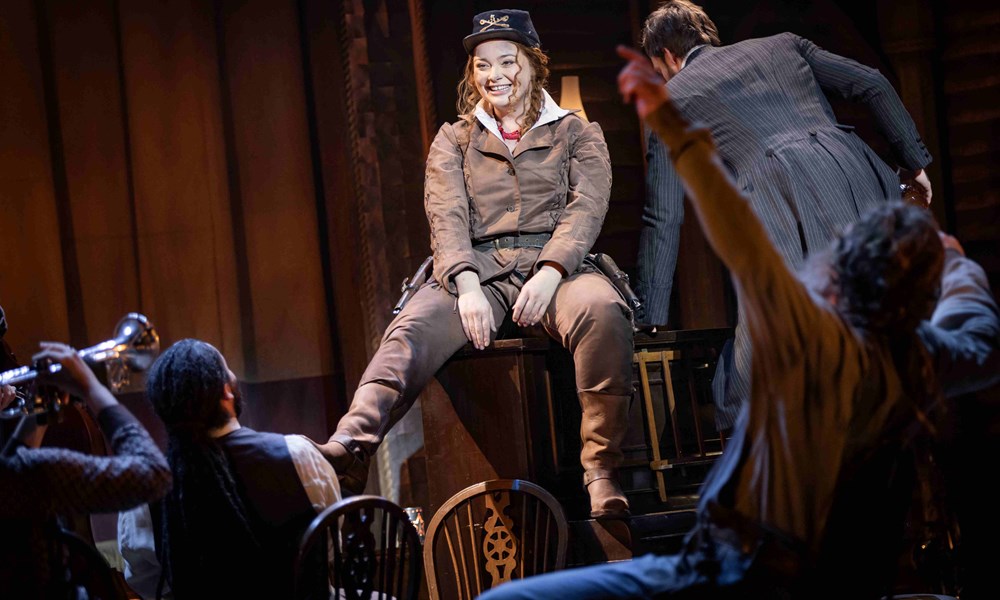
Something about the premise of My Blood captures my attention. A new play based upon Aeschylus’ Oresteia? That would be an ambitious project for a seasoned professional company, so I’m interested to see what this team from Oxford has come up with.

Playwright Leelou Lapteva has clunningly reimagined the old saga as a psychological thriller, set in the aftermath of the 2008 banking crisis. In this version of the story, King Agamemnon becomes Adam Atreides (Gilles McDonald), the CEO of a major bank and the father of Oliver (George Loynes) and Chloe (Victoria Kinne). He’s married to the vitriolic Sandra (Kelsey DeJesus, clearly having a field day with her expletive-littered lines).

But a mysterious cabal has Adam in its grasp and it soon becomes apparent that powerful forces are at work on him, forcing him to go to unspeakable lengths in order to ensure that the Atreides dynasty will survive the financial meltdown and continue to prosper.

But such an outcome comes at a hard price.

I’m impressed by Lapteva’s intriguing concept and there’s some excellent writing here. What’s more, the acting – especially from the sibling duo of Loynes and Kinne – is also pretty impressive, though it’s fair to say that every member of the seven-strong cast gives it their all. And if some of the dialogue occasionally feels a little histrionic… well, look at the source material.

What I’m less keen on in this production is the over-dependence on props. The impetus of the play keeps getting slowed down as the actors are obliged to lug items of furniture back and forth across the stage and there are too many scenes where characters are chair-bound, looking on silently while others speak their lines. Some polystyrene gravestones also seem like an unnecessary encumbrance.

I’d love to see this production stripped back, freed from the shackles of those pesky props, the actors able to prowl the stage as they perform. And could some of the developments in the story be shown through movement rather than dialogue (for example the masked sequence that Oliver describes)?

My Blood is an impressive production, a fresh interpretation of a classic piece of theatre that has plenty of appeal for a modern audience.

3.5 stars

Philip Caveney

Lie Club

13/08/24

Paradise Green (The Club), Edinburgh

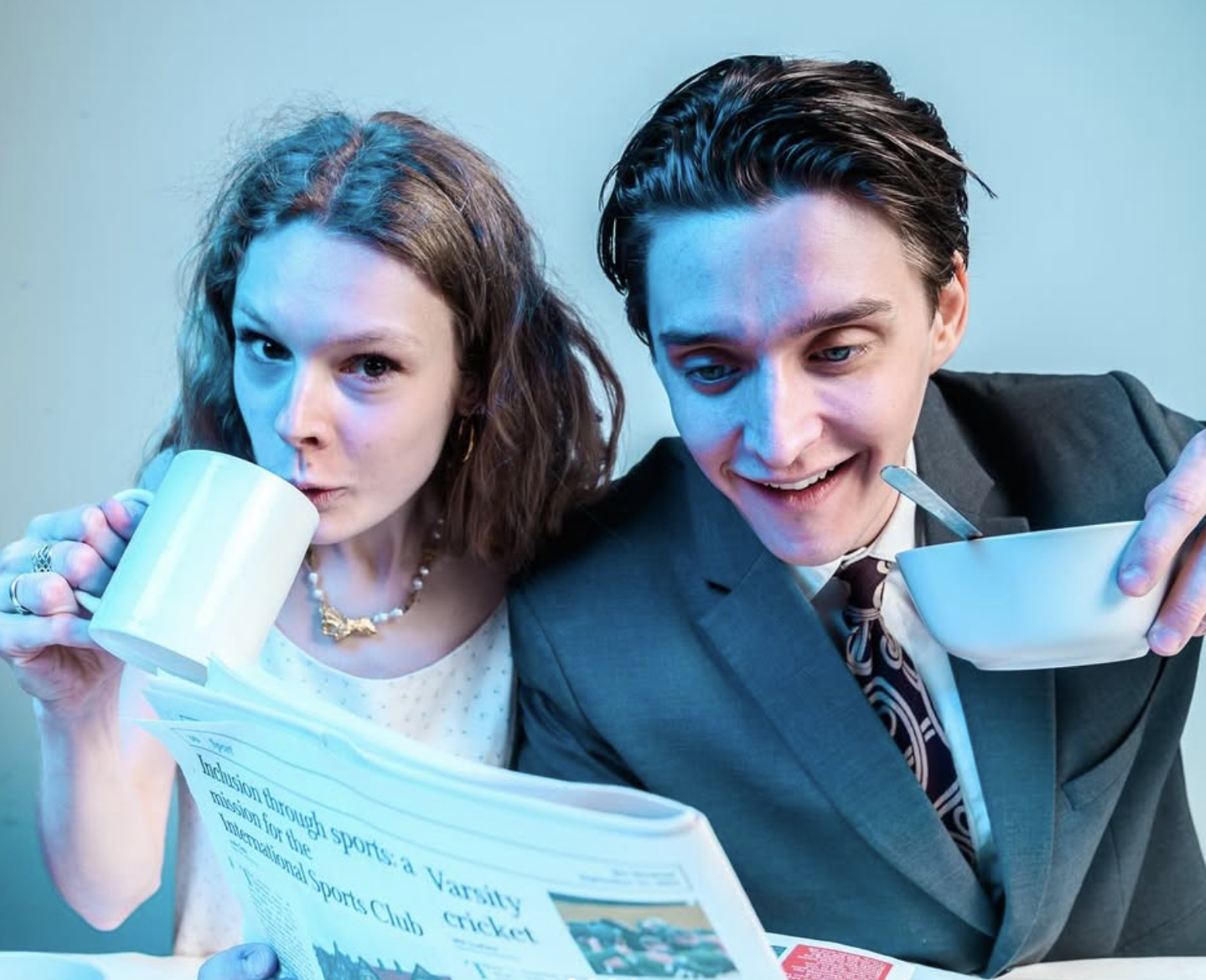
We’re at a meeting of Liars Anonymous and Tracey (Rachel DeFontes) is holding forth about her life as a compulsive liar – the many ways in which that compulsion has brought her to the very edge of disaster. But, as she gleefully points out, in a world where Fake News holds sway, where serial fibbers can be elevated to the highest positions in society, can anybody be trusted to supply a straight answer to a simple question? Maybe, she suggests, lying is ultimately inevitable.

There’s a new face at the meeting. Ben (Peter Jeffries) is in a similar predicament to Tracey. His inability to tell the truth has already cost him his marriage and his prestigious job and yet he still feels the need to continue in the same vein. There’s an instant attraction between the two of them, and they soon find themselves entering into an edgy and unpredictable relationship as they probe each other’s lives. But how can there be any sense of trust when neither of them appears to be capable of saying a single true word and when no subject, no matter how sacred, is considered something to come clean about? 

Lie Club is a propulsive, fragmented slice of absurdist theatre, written and performed by DeFontes and Jeffries, a story that twists and spirals in unexpected directions as the lies the couple tell each other begin to spin out of control. 

But which of them will break first?

This is a fresh and compelling narrative, driven by powerful performances by the two actors who are clearly delighting in the absolute mayhem they are creating. Their characters’ actions invoke some bigger questions. Is anything we think we know about ourselves actually real? When is it acceptable to lie about a particular subject? When should you throw up your hands and admit you’re telling a porkie pie? And, perhaps most interestingly, are any scenes in the drama we’re watching to be taken at face value?

Lie Club is a great example of the Fringe at its best – a full-throttle two-hander that provides more questions than answers and has me leaving the theatre with plenty to think about. Luckily my chauffeur is waiting outside to pick me up in a stretch limo and he drives me straight back to my mansion in Murrayfield, where Donald Trump and Kamala Harris are eagerly waiting to hear my advice…

Whoah! I think this lying business might be contagious.

4.3 stars

Philip Caveney

My Grandmother’s Eyepatch

13/08/24

Zoo Playground 1, Edinburgh

Award-winning actor and clown Julia VanderVeen is hosting a memorial service for her beloved grandmother, the improbably-named Mamie Lee Ratliff Finger. It’s time for Julia to deal with her grief head-on, a mere eighteen years after Mamie’s demise.

We’re all here to pay our respects to the piratically-attired matriarch, and we’re soon ensconced in VanderVeen’s giddy, absurdist world, our cheeks hurting from laughing, our hands held to our mouths in gestures of oh-God-what-now? A lot of the comedy comes simply from VanderVeen’s exaggerated facial expressions and her tendency to skewer audience members with a scarily intense stare. Sometimes she moves achingly slowly, making us chuckle just to relieve the tension; other times, she capers about the small stage frenetically, or performs a ridiculously elaborate dance, contorting herself into a range of awkward poses. There are props a-plenty littering the stage – a more-is-more approach akin to Natalie Palamides’ in Weer.

Macbeth? Check. Card tricks? Check. Hobby horse? Of course. What else could you possibly ask for?

Perhaps unsurprisingly, the show tells us more about Julia than it does about Mamie, although we do learn quite a lot about her grandmother in the process. It would be a crime to reveal too much here, as it’s the unpredictability that makes it so entertaining; suffice to say, I’m pretty sure you’ve never been to a memorial service quite like this one – and if you have, I hope your therapist is good.

Sly, silly and absolutely hilarious, My Grandmother’s Eyepatch is the funniest show about grief I’ve ever seen.

5 stars

Susan Singfield