Theatre

To Save the Sea

10/10/24

Traverse Theatre, Edinburgh

If ever I were asked to compile a list of ‘unlikely ideas for a musical,’ the story of the Brent Spar oil rig might well up there towards the top. How could such a tricky subject, set in such a obscure location, ever be convincingly staged? Well, this rousing production, written and directed by Isla Cowan and Andy McGregor is an object lesson in how to make such a venture work – a heartfelt polemic, for sure, but a supremely entertaining sung-through musical at the same time. And you don’t have to be a committed activist to appreciate the importance of what happened back in 1995 – and to realise that not enough has changed since then.

Many will remember the story of the decommissioned Brent Spar, which (largely as a cost-cutting exercise) was scheduled to be blown to bits by its owners, Shell, before being consigned to the depths of the North Atlantic, where it would cause untold damage to the ecosystem. But the company’s plans came to the attention of a team of Greenpeace activists, who sailed out from Shetland, climbed aboard the rig and steadfastly refused to leave, even after being repeatedly blasted by water cannon.

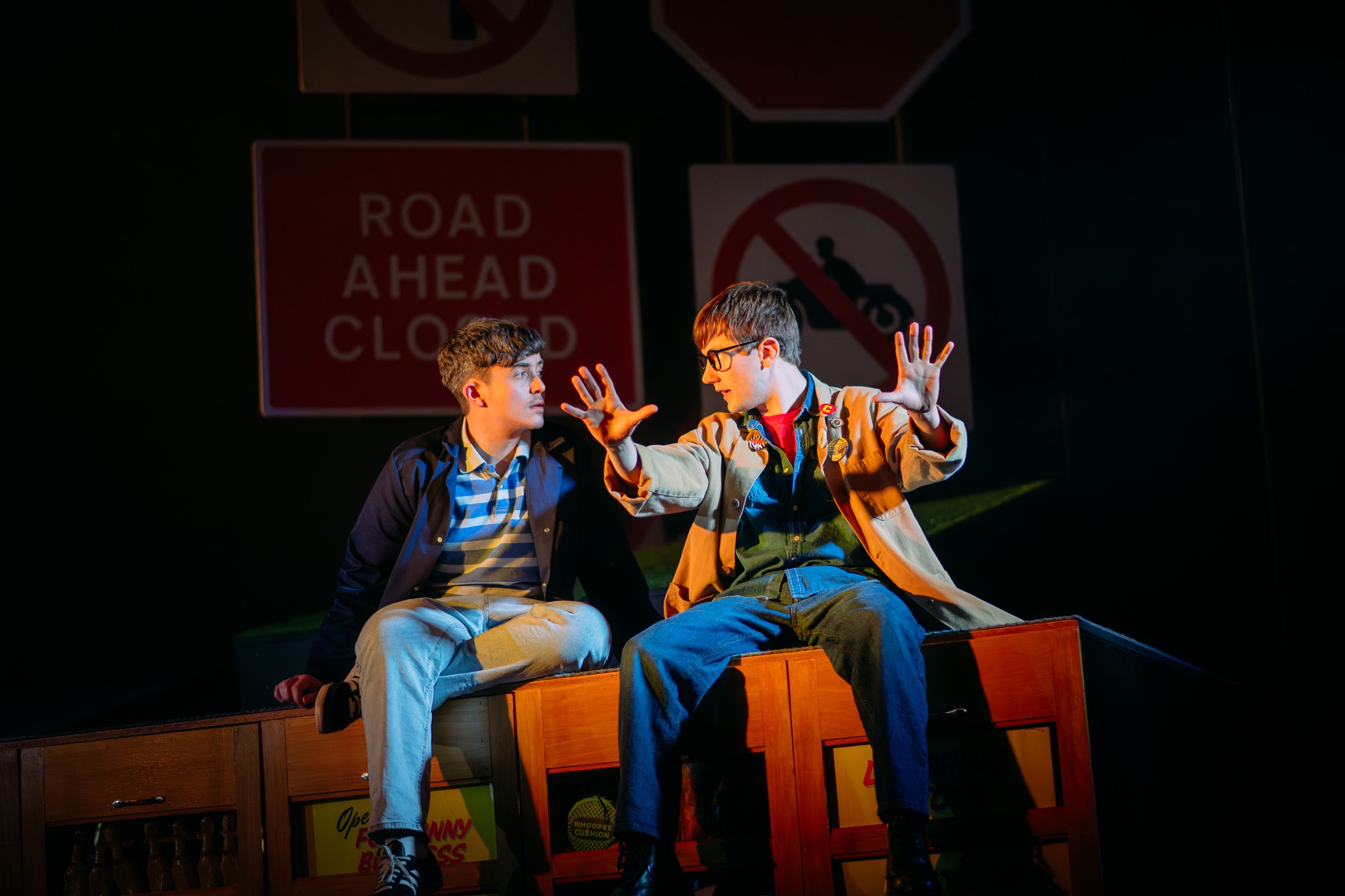
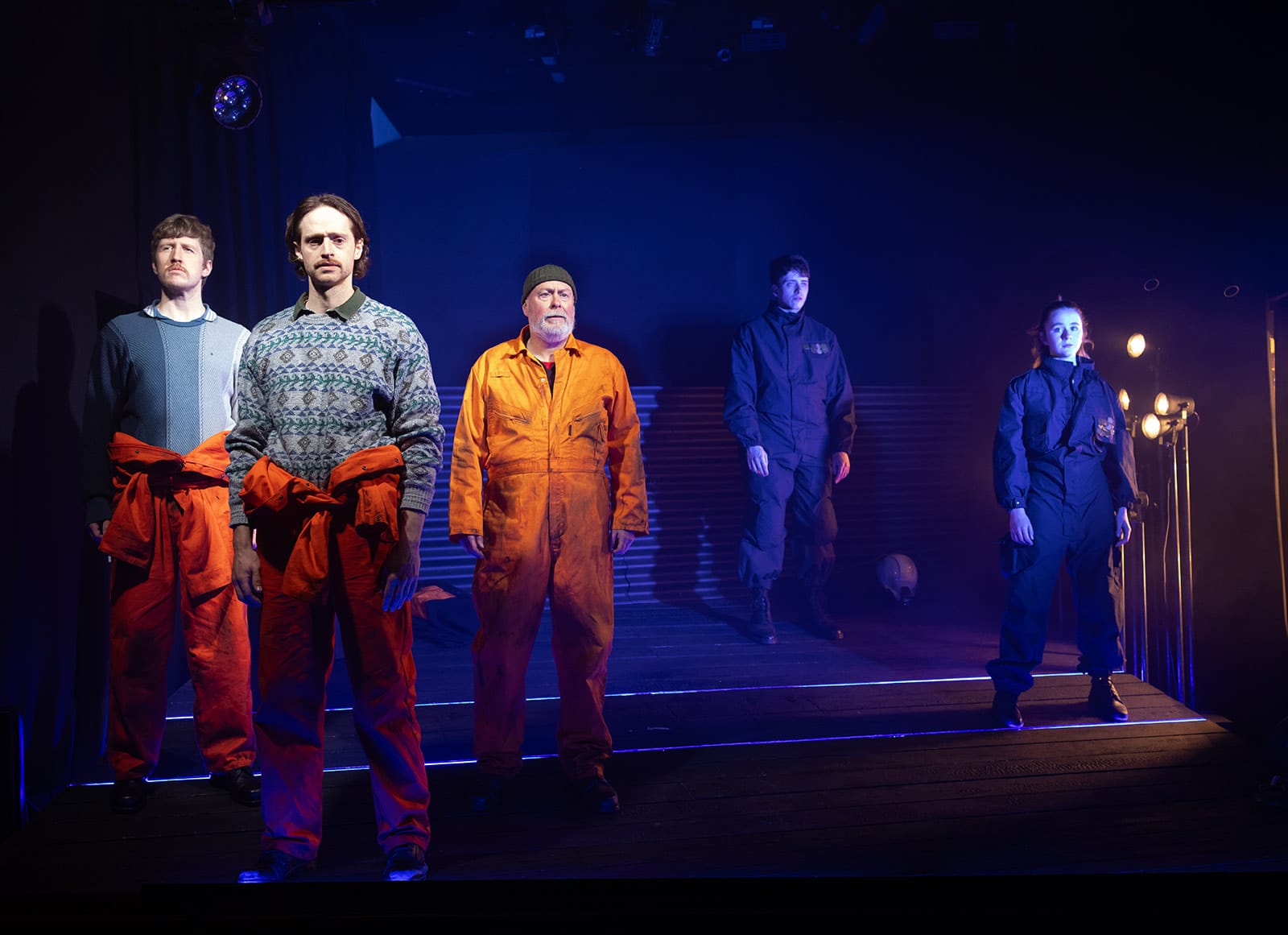
In this version of events, the names of the protagonists have been changed. Team leader Karl (Matthew McKenna) is driven by his desire to do the right thing for the environment. He’s backed up four others: feisty rich girl, Engel (Katie Weir), whose parents made a lot of money from fossil fuels; student, Colin (Nathan French), who has impulsively abandoned his University studies in order to go on this mission; journalist with a conscience, Brianna (Kaylah Copeland), who has promised to do everything she can to bring this matter to the public’s attention; and stay-at-home mum, Rachel (Kara Swinney), taking a break from her domestic duties to make a stand for ‘something that matters.’

Together the disparate team sail out to the rig and prepare to face the opposition.

Meanwhile, a scheming triumvirate of Shell executives, Rupert (David Rankine), Karen (Helen Logan) and David (Ewan Somers), are determined to end the occupation as quickly as possible. This could cost them a lot of money! The trio are played as comic relief to the action, drawing up their dastardly plans almost in the style of Gilbert and Sullivan villains, romping around in a variety of costumes and occasionally breaking away to embody real life characters. Somers does a hilarious job of embodying John Major as (trust me) you’ve never seen him before, while Logan briefly dons a bald pate to impersonate German chancellor, Helmut Kohl.

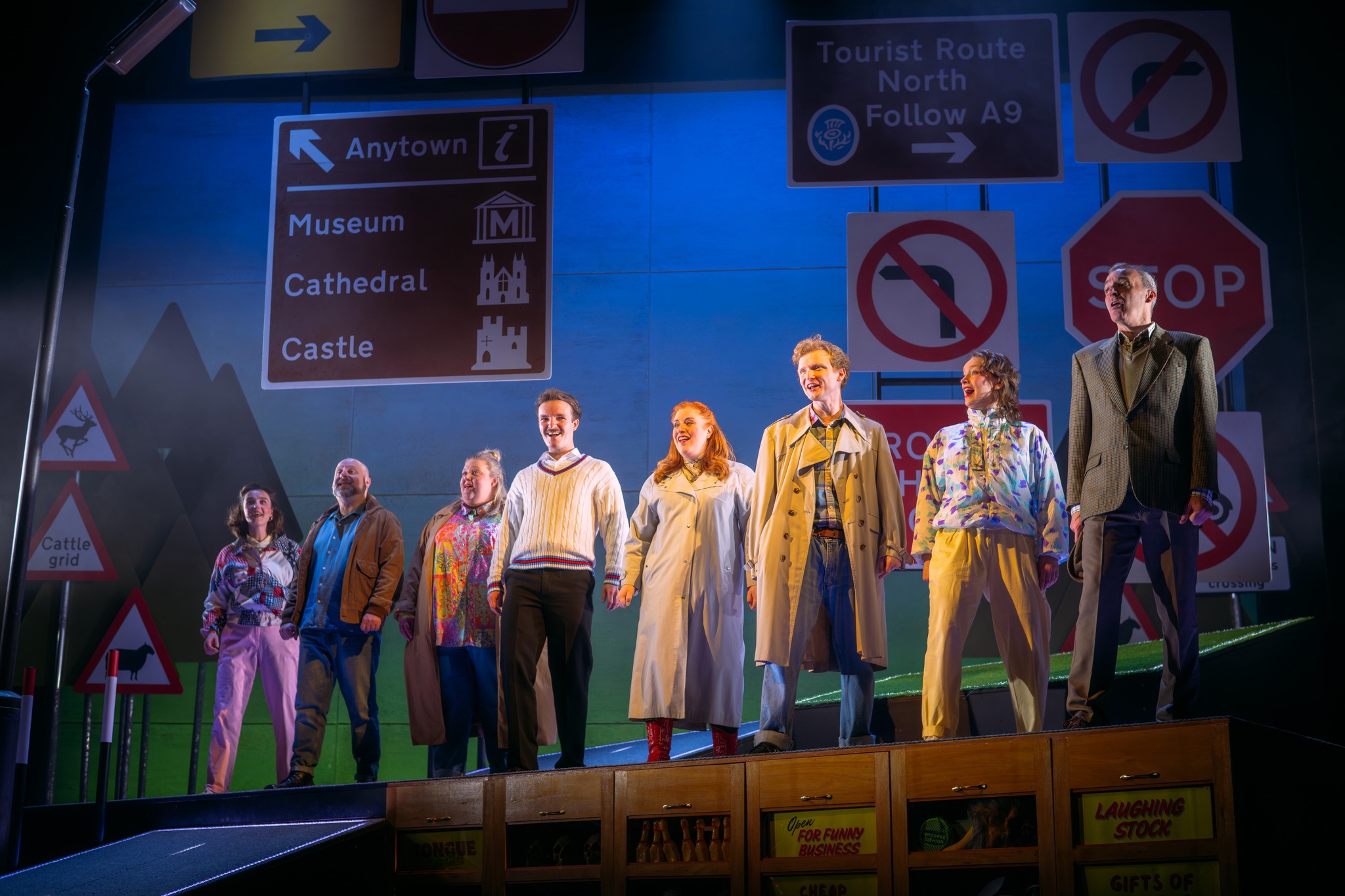
Claire Halleran’s impressive set design convincingly evokes the rugged location and this is accentuated by Fraser Milroy’s sound and Simon Wilkinson’s lighting. The songs (also by Cowan and McGregor) are uniformly impressive, all majestic chords and soaring vocals. All the performers have impressive ranges and, when the five protestors join together in powerful harmony, the results are nothing short of spectacular. A scene where Rachel proudly proclaims the importance of her new-found role is particularly moving and I have to confess to having something in my eye by the time Swinney reaches the final chorus.

This is only at the Traverse for a couple more nights before moving on to tour a series of Scottish locations through October, finishing up in Inverness on November 2nd. If you can get seats, I urge you to make the effort. To Save the Sea is a deeply committed and ultimately moving piece of musical theatre with an important message to deliver.

4.6 stars

Philip Caveney

The Baddies

09/10/24

Lyceum Theatre, Edinburgh

The Baddies, David Greig and Jackie Crichton’s theatrical adaptation of Julia Donaldson and Axel Scheffler’s 2022 book, is well-pitched for its target audience of 3+. This morning’s audience is almost all made up of school trips, with rows of squirming, excited P1s and 2s eating snacks and being cajoled out of their jackets while waiting for the show to begin. The colourful set – designed by Jasmine Swan – intrigues them. Indeed, there’s one little girl in the front row who can’t seem to help getting out of her seat and walking towards the stage, drawn like the proverbial moth to the flame. Every time her teacher asks her to sit down, she does so – but she’s up again a moment later, eyes wide, mouth open.

But as soon as the show begins, she returns to her seat and watches, enthralled. And her reaction is a more important review of this production than anything I can write. Her classmates enjoy it too. The noise level in the auditorium bears testimony to the musical’s success: there are hundreds of young children here, clapping enthusiastically for the songs, waving their hands and shouting when required – but much quieter than the on-stage mice as the story carries them along.

A framing sequence introduces us to Mamma Mouse (Lottie Mae O’Kill), who wants to teach her three bad-mannered children (Dyfrig Morris, James Stirling and Rachel Bird) to say thank you, sorry and please, but it doesn’t go well. They’re more interested in having fun. To calm them down, she decides to tell them a bedtime story about a spotted handkerchief, and then we’re off, as they transform into the titular Baddies: Troll (Morris), Ghost (Stirling) and Witch (Bird). “We’re the very worst baddies,” they sing in the show’s catchiest number (courtesy of Joe Stilgoe) – but there’s a problem. They’re not. They’re rubbish at being bad. They can’t even scare the new young shepherdess The Girl (Yuki Sutton), who’s out in the mountains on her own for the very first time.

As an adult, I have to say that the story doesn’t do a lot for me. There’s not much of a narrative arc. I’d like the manners referenced in the opening sequence to have more bearing on the subsequent narrative. I’d also like Mamma Mouse to refrain from waving around her dirty hanky after exhorting the little mice to sneeze into it to catch the germs. But these are grown-up concerns and, as we’ve established, I’m not the target audience.

Stilgoe’s songs are light and catchy, but most of them are perhaps not sing-along-able enough for little children. I like Katie Beard’s direction: the slapstick is especially nicely done, with lots of silly near misses and amusing sound effects. O’Kill seems to be channelling Mary Poppins – and this works well for the piece, lending her a convincing authority over the proceedings, so that when she assures the audience in advance that, although there are some scary moments in the story, nothing bad happens and there’s a happy ending on its way, it’s clear that the children trust her and so relax into the tale.

But, for me – as for the little front row girl – it’s Swan’s design that steals the show. The set is a glorious riot of hidden delights, like a giant Polly Pocket, the mountainside opening up to reveal a fairytale cottage, while the costumes – although different from the book’s illustrations – seem somehow iconic. I can imagine them as popular Hallowe’en outfits.

The Baddies leaves Edinburgh on the 20th October for an extensive nationwide tour. If you’re a parent or a teacher and you have wee ones you want to treat, an hour in the company of this not-so-dastardly trio is pretty sure to please them.

4 stars

Susan Singfield
Anna/Anastasia

08/10/24

Traverse Theatre, Edinburgh

Berlin, February, 1922. Following a failed suicide attempt, Anna (Kirsty McDuff) is brought to a local police station. She’s dripping wet after trying to drown herself in a local canal. She is interviewed by Franz (Chris Forbes), a straight-laced police officer with a liking for equally straight talking. But when she claims to be the Grand Duchess Anastasia, the lone survivor of the assassination of her entire family by Bolshevik revolutionaries two years earlier, Franz isn’t quite sure what to believe. For one thing, Anna talks so lucidly about her glamorous past: her memories from the court of Nicholas and Alexandra, the glittering balls, the wonderful meals.

And for another, she is wearing an expensive-looking tiara that’s clearly been dented by a bullet…

Inspired by real events, Anna/Anastasia approaches its subject matter with an endearing sense of humour, playing Anna’s volatility off against Franz’s restrained, analytical approach. Franz, we are told, paints china swans as a hobby and keeps them up in the attic out of harm’s way. Anna, with her unrestrained bursts of exuberance, represents something he is unaccustomed to, something that threatens to bring all his most established convictions clattering down around him in pieces – and yet, as the years pass and Anna’s fortunes rise and fall, the couple keep re-encountering each other and a kind of guarded relationship develops.

The sprightly script by Jonny Donahoe (whose Every Brilliant Thing is a popular yearly visitor to the Edinburgh Fringe) maintains just the right mix of comedy and pathos, while the two performers make perfect foils for each other. McDuff stays in character the whole way through, inhabiting Anderson’s turbulent persona with considerable skill, while Forbes occasionally steps out of his main role to play a number of subsidiary characters – at one point breathlessly re-enacting the murder of the entire Romonov family single-handedly. Liz Caruthers handles the direction with an assured touch.

The story of Anna Anderson has formed the basis for many plays and films over the years and, though the mystery has recently been pretty much solved thanks to DNA testing, it continues to exert considerable powers over the public imagination. As Anna/Anastasia seems to emphasise, the actual truth of the story is somehow less important than the speculation it has always kindled – and the play’s bitter-sweet conclusion still manages to leave us wondering about the possibilities.

4.4 stars

Philip Caveney

Armour: A Herstory of the Scottish Bard

01/10/24

Traverse Theatre, Edinburgh

Today’s A Play, A Pie and A Pint production is a welcome revival of Shonagh Murray’s Armour: A Herstory of the Scottish Bard. Unwieldy title notwithstanding, this is a taut, well-scripted piece of theatre, the music deftly evoking the lyrical poetry at its heart.

It’s thirty years since the death of Scotland’s beloved poet, Robert Burns, and his widow, Jean (Irene Allan), still misses him. But she has plenty to occupy her time, not least her headstrong young granddaughter, Sarah (Karen Fishwick), who’s been sent to live with her in Dumfries, while her dad’s away in India. And then there’s Nancy Maclehose (Hilary Maclean), Burns’ erstwhile mistress, who seems very keen to talk to Jean. There’s something important she needs to say…

Tom Cooper’s direction and Heather Grace Currie’s set design both serve to highlight Murray’s clever structure, ensuring that Burns’ absence forms the centre of the play, a model of his mausoleum gleaming from the mantlepiece, white against the dark furniture. Armour is a feminist piece but it doesn’t shy away from the fact that we only know these women in relation to a man, that they are destined to remain almost unknown, circling the ghost of a famous heavyweight, as small as the dolls that Sarah plays with.

Murray’s script breathes life into the women, imagining their responses to the scant details we have of their real circumstances. Allan imbues Jean with a sharp dignity, a refusal to be shamed or diminished by her husband’s infidelities. What’s more, Maclean’s Nancy defies the image of a paramour: she admits to feeling guilt for not thinking about Jean, but there’s no room here for any moral outrage. She loved Rab. He loved her. He loved Jean too. People are complicated and you can’t change that. What you can do, as Jean explains to Sarah, is choose whether to be “a sitter or a do-er”. And being a do-er is infinitely more admirable.

Fishwick shines as the motherless young child, fascinated by her granny’s stories and determined to follow in her grandad’s footsteps and become a bard herself. Her wistful demeanour – as she remembers India and her dad – contrasts beautifully with the irrepressible spirit she shows as she sings and dances around her granny’s house. Jean and Nancy might have been consigned to a life in the shadows, but Sarah believes she can have much more. Especially with those great women behind her.

Armour is a deceptively melodic piece, which smoulders gently before bursting into full flame.

4.1 stars

Susan Singfield
The Wolves at the Door

24/09/24

Traverse Theatre, Edinburgh

The Wolves at the Door, the second in this season of A Play, A Pie and A Pint at the Traverse, is a heartfelt polemic, written by Jack Hunter and directed by Amie Burns Walker. As Winter crooks its frosty finger and beckons, this timely piece zooms in on the issue of energy companies forcing impoverished people to use expensive prepaid gas and electricity meters.

The allegory of a Big Bad Wolf threatening the security of a vulnerable Little Pig might not be subtle but it’s certainly effective, and Heather Grace Currie’s dingy set design reminds us exactly how Grimm (sorry) the situation is.

The Pig, Daniel (Ciaran Stewart), is struggling. He’s lost his job, his marriage has fallen apart and he’s desperate to maintain a good relationship with his seven-year-old daughter. But how can he do that when the flat he’s renting is mouldy and damp, and a combination of Universal Credit and part-time shelf-stacking barely leaves him enough to feed himself, let alone put the heating on? Worst of all, his daughter knows. She puts on a brave face for him, trying to reassure him that the crappy pizza he’s heated up is exactly what she wants for her tea. He can’t bear it.

Enter the Wolf, Malc (Ben Ewing), and his sidekick, Sussanne (Beth Marshall). He’s a debt collector and she’s an engineer, and they’re here at the behest of the energy company, to install a new smart meter – one that requires prepayment. If he doesn’t have the money up front, Daniel will be left without power.

Malc is unsympathetic. He knows what poor looks like; it’s how he grew up. But he believes it’s up to individuals to get off their arses and sort themselves out – like he has done. Ewing portrays the GB News-loving cynic with a charismatic swagger. “How can someone call themselves broke if they’re still drinking ground coffee, if they’ve got a TV and a Playstation?” he demands. Sussanne is less world-weary – it’s her first day – and more sympathetic too: she doesn’t think it’s a lot to ask for a warm, safe home and enough food in your belly; she’s in favour of a benefits system that allows people a few small treats. Marshall imbues the conflicted newbie with real heart – but hey, she’s got a job to do, and if she doesn’t do it, she’ll be in the same boat as Daniel.

Hunter makes some important points in this play, but the dialogue focuses too intensely on the issue, reducing the characters to representatives of their respective positions, rather than fully-rounded people. While the dark humour works well in places, a lighter touch is needed throughout to stop the story from being bogged down by its own good intentions – and perhaps the brusque conclusion ties everything up a little too neatly to be entirely convincing.

3 stars

Susan Singfield
The Last Cabaret on Earth

17/09/24

Traverse Theatre, Edinburgh

Almost before we know it, a new season of A Play, A Pie and A Pint is upon us for its – gasp! – 20th Anniversary run. This opening piece is part-play, part-cabaret and the title is not – as you might suppose – metaphorical, but quite literal. Due to a catastrophic solar event, the world is due to end in one hour (don’t panic!) and Sam (Marc Mackinnon) is stuck in a locked-down airport hotel, delivering his final show to a captive audience. That’s us, in case you were wondering.

He’s stranded hundreds of miles away from his longtime partner and co-creator, Mel, who can only contribute to the performance via a series of jumbled text messages. As the final hour ticks relentlessly away, Sam offers us some insight into his tortuous path into show-biz: the people who helped him on his way, the others who stood in his path.

One thing’s for sure: when the end finally comes, he’ll greet it with a song and a smile…

Mackinnon is an engaging actor and he delivers Brian James O’Sullivan’s script with considerable skill, performing a series of classic songs in a wonderfully distinctive style. Under Joe Douglas’s direction, Mackinnon lures the audience into his prematurely fading orbit. A sequence utilising an old glitter-ball and the torch from a mobile phone is particularly affecting.

I do have one reservation. Although the songs – ranging from Judy Garland to James Taylor – are beautifully sung and Mackinnon has a strong, plaintive voice, there isn’t much original material here. There is a charming little ditty about a man who lives in a house made of pasta (!) but I would like to hear more new compositions.

However, this apocalypse is weirdly captivating and a strangely delightful way to spend your last hour – even if the tragic conclusion seems horribly prophetic.

3.8 stars

Philip Caveney

Edfest Bouquets 2024

Another incredible August in Edinburgh. Another Fringe packed with wonders to behold. As ever, we’ve put together our annual list of virtual bouquets for the shows that blew us away.

Julia VanderVeen : My Grandmother’s Eye PatchZOO Playground

“A lot of the comedy comes simply from VanderVeen’s exaggerated facial expressions and her tendency to skewer audience members with a scarily intense stare…”

Luke BayerDiva: Live from HellUnderbelly (Belly Button), Cowgate

“Channing (the name is obviously a reference to Bette Davis in All About Eve) is a delightful character, supremely self-obsessed, deliciously callous and intent on achieving stardom at any cost…”

The Sound Inside – Traverse Theatre

“Director Matt Wilkinson handles the various elements of the play with skill, and guides it to a poignant conclusion…”

Summer of Harold – Assembly (Checkpoint)

‘If you’re looking for an hour-and-a-half of impressive theatre, with snort-out-loud humour as well as profound emotional moments, then Summer of Harold ticks all the boxes…”

Rebels and Patriots – Pleasance Courtyard (Upstairs)

“Loosely stitched with a sprinkling of history and Shakespeare, it all adds up to something very thoughtful…”

Chris Dugdale: 11 – Assembly George Street (Ballroom)

“There are some examples of mind control that have us shaking our heads in disbelief – and I may be guilty of muttering the odd expletive…”

Natalie Palamides: Weer – Traverse Theatre

“A great big slice of the absurd, expert clowning performed with such reckless abandon that you can’t help loving it…”

V.L. – Roundabout at Summerhall

“A whip-smart comedy that also has some incisive things to say about the difficulties of adolescence and the importance of friendship…”

Sam Ipema: Dear Annie, I Hate YouZOO Playground

“A wonderfully inventive and cleverly-assembled slice of true experience, by turns funny, profound and – at one particular point – very challenging…”

Michaela Burger: The State of Grace – Assembly George Street (Drawing Room)

“Not so much an impersonation as a transformation. Burger talks eloquently and provocatively about the lives of sex workers, explaining why there is a need for their business to be recognised…”

Honourable Mentions

Werewolf – Summerhall (Former Women’s Locker Room)

“I love it. The wardens do an excellent job of inhabiting their characters at the same time as managing the narrative, expertly drawing what they need from the participants…”

Megan Prescot: Really Good Exposure – Underbelly (Belly Button)

“Prescott is an accomplished performer. She tantalises and reels us in before skewering our internal biases and forcing us to think…”

The Sound of the Space Between

25/08/24

Zoo Playground, Edinburgh

Harri Pitches’ debut hour, The Sound of the Space Between, is perhaps more performance art than ‘show’ – a series of soundscapes and images created with nothing more than a couple of fancy torches, some microphones and a loop pedal. The result is evocative and intense, a meditation on grief and longing.

There’s not a lot of narrative here – which I guess is the point. It’s an expression of feelings, a jumble of nightmares and memories, yearning and fear. Barefoot, clad in a pair of grey pyjamas, Pitches opens with the information that he’s suffering from sleep deprivation. This explains the hallucinatory dreamscape that takes hold of him every time he shuts his eyes. Eventually, he works out that he’s in a garden that he used to know when he was a child, and remnants of long-forgotten knowledge return to him – details gleaned from his dead grandparents. He misses them; their loss makes him regress to boyhood.

The soundscapes work well, enveloping the audience, so that it feels like we’re inside his head. If I have a criticism, it’s that it’s all a bit one-note, and doesn’t really build to anything. The heightened emotions are all there from the beginning and, once we learn quite early on that this is about bereavement, there is no further development of the theme.

Nonetheless, this is a heartfelt piece, and Pitches performs with absolute commitment. All I need to know now is where I can get one of those amazing torches.

3 stars

Susan Singfield
Precious Cargo

24/08/24

Summerhall (Demonstration Room), Edinburgh

In 1975, as the Vietnam War came to its chaotic conclusion, thousands of orphaned Vietnamese babies were airlifted to safety and relocated in Australia, the USA and Europe. Barton Williams was one such orphan, taken in by a family in Adelaide. As he grew up, he made friends and enemies, learned the skills of being a surfer and, later on, found his niche in acting. His onscreen appearances were mostly in Vietnam war movies, even though – ironically – he couldn’t speak a word of his native language.

Then, working on an indie film on the Isle of Lewis, he met Andy Yearly, a musician and composer, who had also been a part of Operation Babylift and who had grown up in pretty much the same situation as Williams, albeit in a more remote environment. It was here that the two men came up with the premise for Precious Cargo.

The stage is a litter of cardboard boxes, the kind of container in which Williams first arrived in Australia. As the story unfolds, he moves the boxes back and forth around the stage, stacking them in piles. Vintage film footage is projected onto them: a mixture of family photographs and found images, designed by Robbie Thomson. Yearly’s original music plays in the background and there are recorded interviews with others who found new homes in unfamiliar countries.

Williams talks about the rootlessness that was an inevitable result of his upheaval, the many ways in which he sought to locate his birth parents, his desperate attempts to reconnect with a culture he barely even remembers. Taking a DNA test, he is bewildered to discover that he is 94% Chinese. The hopelessness of the situation is affecting and so too is his evident love for the family that took him in – without whom, he reminds us, he wouldn’t have survived to tell his story.

This is an ambitious project and there are a lot of different elements to control. With so many of them at play on stage, I occasionally find myself struggling to follow some of the recorded dialogue. But Barton is a compelling storyteller and there’s little doubting the sincerity of what he has to say about his life – or the importance of having the platform on which to speak about it. Developed with the assistance of Creative Scotland, Precious Cargo offers an opportunity to look at a largely forgotten moment of recent history.

There are just a couple of chances left to catch up with it at Summerhall.

3.6 stars

Philip Caveney

The Daughters of Roísín

24/08/24

Pleasance Courtyard (Bunker 1), Edinburgh

The Daughters of Roísín, written and performed by Aoibh Johnson, is an ode to the women of Ireland, whose histories are too often forgotten. Serving as a kind of companion piece to Luke Kelly’s 1980 poem, For What Died the Sons of Roísín? this play is a poignant reminder of what the country’s women sacrificed.

By now, we all know about the infamous Magdalene Laundries, where so-called ‘fallen women’ were sent to work before having their babies, which were then taken from them and sold to wealthy adoptive families. But even those who avoided the overt cruelty of the convents were failed by a Catholic state that viewed them as sinners.

Directed by Cahal Clarke, this play from Wee Yarn Productions tells the tale of Johnson’s great-grandmother, who fell pregnant as a teenager. Her vulnerability is highlighted by the phrase she uses to insist her parents let her go to a dance (“I’m almost an adult; I’m seventeen”), which segues into a mournful lament (“I’m only seventeen!”) when she discovers she is going to have a child. After all, how was she supposed to know? No one ever spoke about sex. She didn’t understand what she was doing.

Johnson’s performance is utterly compelling: she flits effortlessly between the past and the present, breaking the fourth wall to draw us in with direct questioning, then clipping up her hair and becoming the frightened young woman confined to her room, with only the tiniest of windows to peek out of for the nine months of her pregnancy. No one must see her; her ‘sickness’ would bring shame to the family. And, when she gives birth, the baby – Johnson’s grandfather – is spirited away and adopted.

This is a lyrical piece of work, blending poetry, song and prose, at once a scathing condemnation of the church and a love letter to Ireland’s lost women. Oisin Clarke’s simple lighting and sound work well, allowing breathing space for the moments of silence and darkness, which are eerily effective.

One of my favourite things about the Fringe is the sheer breadth of what’s on offer; I love the fact that serious plays like this sit alongside stand-up comedy and circus acts and everything in between. The Daughters of Roísín is a thought-provoking, important piece of theatre, and I’m glad it’s found a home here at the Pleasance.

4.3 stars

Susan Singfield