Theatre

Come Dine With Me: The Musical

19/08/24

Underbelly, Bristo Square (Cowbarn), Edinburgh

There’s a well-established route to success at the Edinburgh Fringe. Find a long established TV series (one that already boasts legions of devotees), tack the words “The Musical” onto the end and design a poster to go with it. Voila, you have the ingredients guaranteed to pull in large crowds of festival-goers in search of an hour’s entertainment. 

The results can sometimes be mediocre, but to give Come Dine With Me: The Musical its proper due, this sprightly production, co-created by Neil Butler and Genevieve Welch – who actually worked on the original programme – is slickly put together and nicely performed.

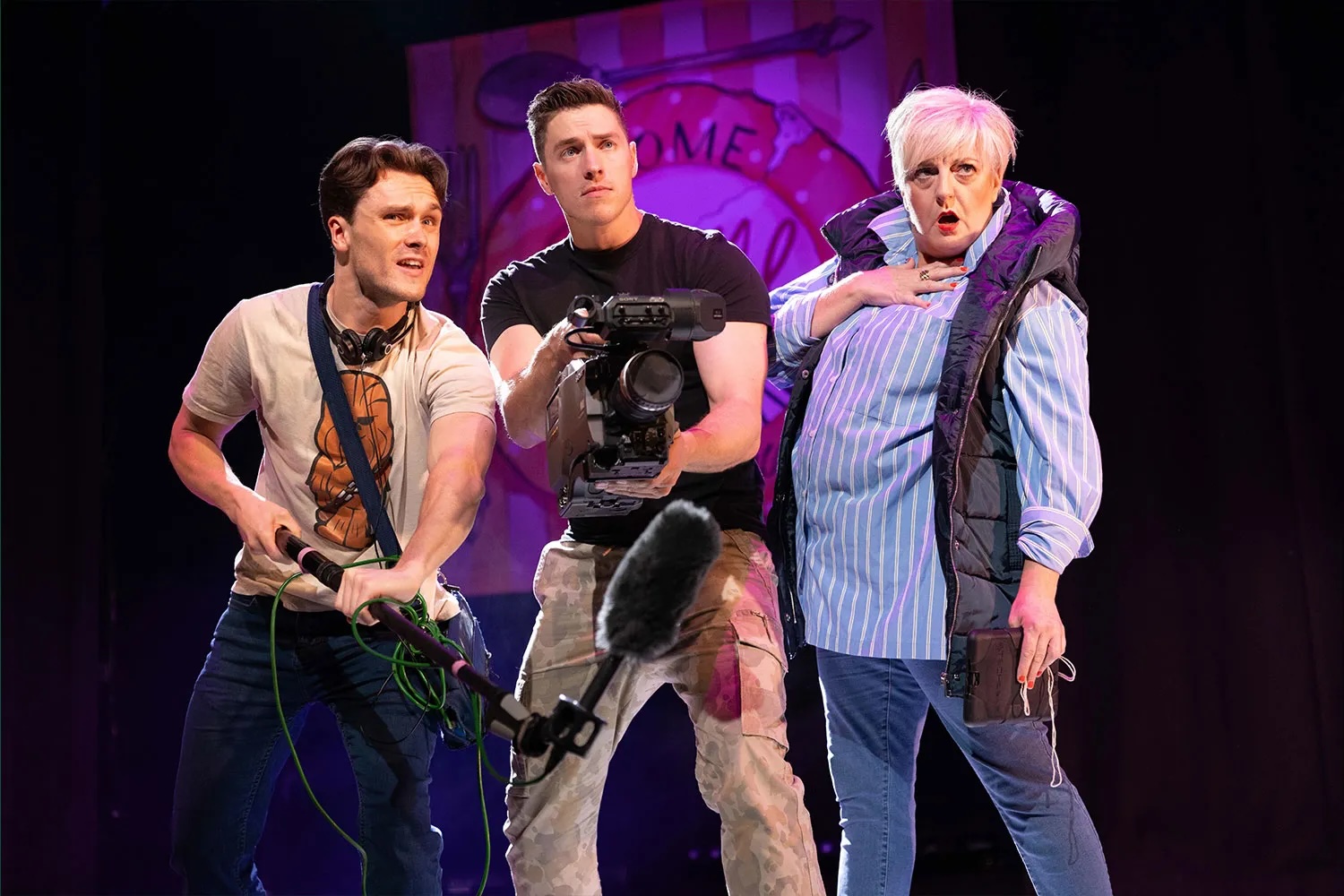
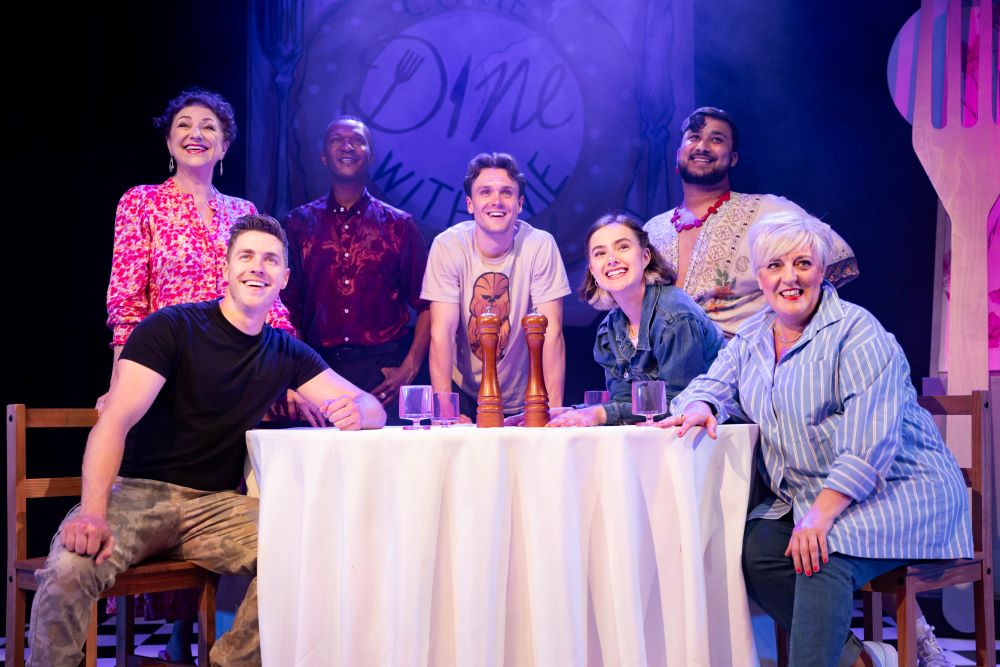
We are first introduced to harassed TV producer, Mary (Danielle Coombe), her hunky camera operator Roy (Tom Bowen) and her shy and hapless sound man, Teddy (Harry Chandler). The series is fast approaching it’s 1000th episode and the trio drive with some trepidation to the remote English village where it is to be filmed. They need something to boost their flagging viewing figures. Teddy is anxious for entirely different reasons. He grew up there.

Of course, we all know the format of the show (four disparate people cook dinner and are scored out of 10) but who will be the winner? Will it be snooty Barbara (Kim Ismay), who is completely obsessed with all things Françaises? Will it be evangelistic vegan, Ernest (Leo Udvarlaky), who can do some pretty inventive things with a bowl of lentils? What about the self proclaimed ‘King of the Sausage Roll,’ Duncan (Paul Hazel), a man who equates meat with manhood? And, lest we forget, how about Teddy’s old school chum (and secret crush), Jenny (Sophie Hutchinson)?

But when Teddy’s microphone picks up what appears to be somebody scheming to spike another chef’s culinary creations, the scene is set for a memorable landmark edition…

This is an enjoyable and occasionally very funny show, with a selection of songs memorable enough to have me humming the closing melody as I leave the theatre. All the performers have excellent vocal skills, with Coombe in particular reaching some impressive top notes.

You might argue that it’s slight fare, an amuse bouche rather than a dish of the day, but if it’s an hour of escapism you’re after, you could do a lot worse than Come Dine With Me: The Musical, before heading out for a slap-up meal in Edinburgh.

4 stars

Philip Caveney

Katzenmusik

19/08/24

theSpace @ Surgeons’ Hall (Grand Theatre), Edinburgh

Kingston Grammar School’s drama teachers don’t make things easy for themselves. Not for them the tried and tested school favourites; there’s not even a sniff of DNA or A Midsummer Night’s Dream on the agenda, let alone a mention of Oliver! or, dare I say it, Grease. Nope, every other year, they bring their sixth formers to perform at the Fringe – and, based on the two productions I’ve seen, they like to go a bit off-piste.

All power to them for opening their students’ eyes to exciting new voices in modern theatre. In 2022, they gave us Phil Porter’s comic romp, The Ofsted Massacre. This year, they’re back with Tom Fowler’s darker, weirder katzenmusik.

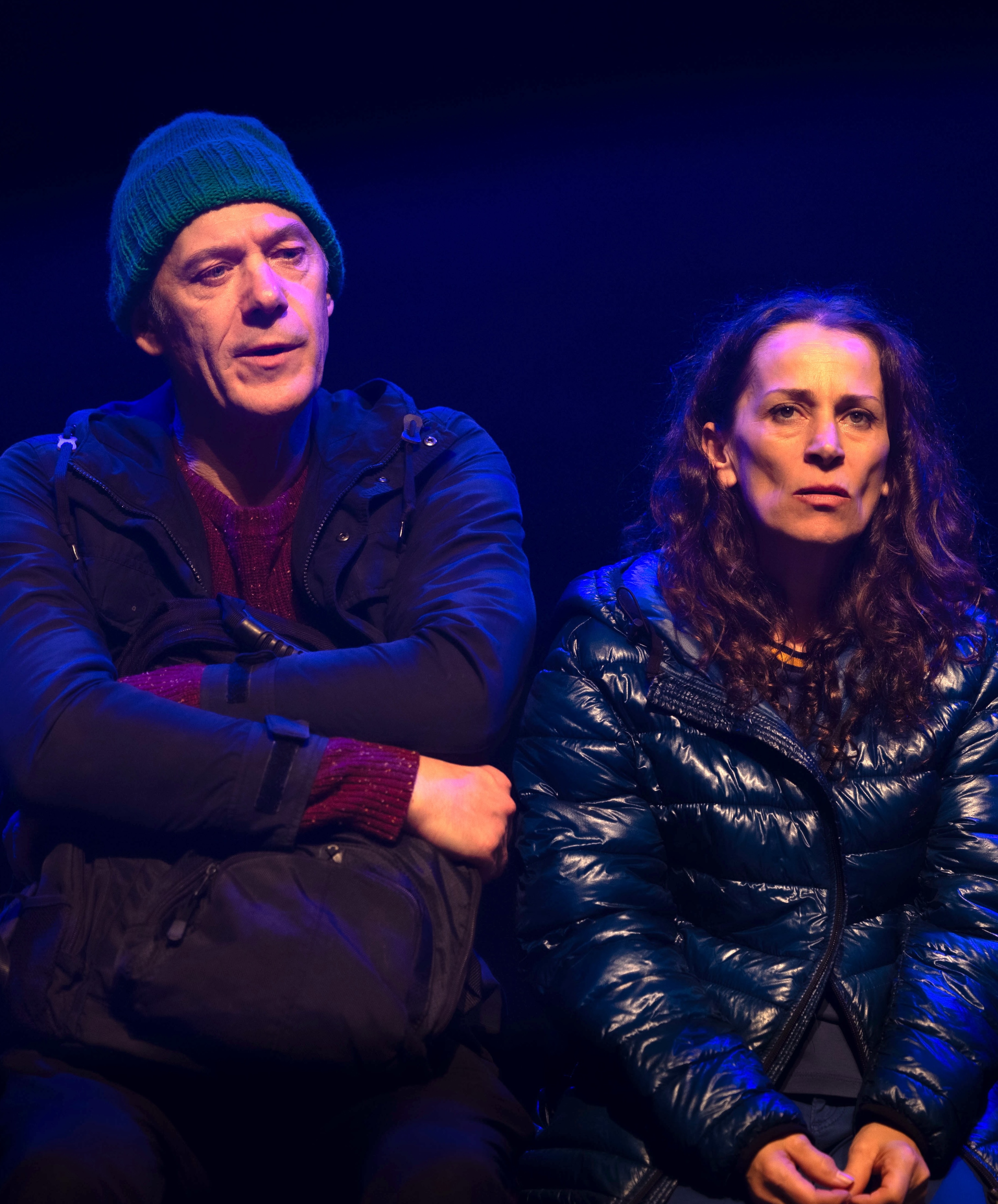
It’s an interesting choice for a private school: a scathing piece of social commentary, excoriating the rich and powerful for not valuing poor people’s lives. The setting is Burnside, a northern industrial town, decimated by the closure of its car plant – and a microcosm of Britain as a whole. It’s a place where a historical mining accident is commemorated with a statue to the cat that survived rather than a memorial to the seventeen men who were killed. So, when local resident Jackie Williams dies in her freezing, mould-infested flat, it makes a kind of warped sense for a group of outraged citizens to hit their dodgy landlords where it hurts – by killing their pampered pets. Of course, the media doesn’t see it that way, and soon the town is a byword for senseless animal cruelty, its inhabitants shunned and vilified.

Director Meg Christmas does a sterling job marshalling her troupe, and the players perform with gusto as well as skill. This is very much an ensemble piece, so it’s hard to single out individuals, but Jasmine Proctor-Tarabanov is compelling as the protest’s reluctant figurehead, Jamie, while Grace Dormer convinces as the vulnerable Maureen. Hats off to Charlotte Routledge too, for her impressive accent work.

Despite the heavy themes, there is humour here, most notably when groups of minor characters move in unison, delivering their lines in well-judged comic tones. The large cast utilise the space well, with smooth transitions and efficient use of props. I especially like the way that more and more bloodied cats are added to the stage, slowly ramping up the horror of what’s unfolding.

This is a complex play but the young actors have clearly worked hard to explore its every nuance, so that the production is emotionally engaging as well as provocative. I can’t wait to see what KGS come up with in 2026.

4 stars

Susan Singfield

Willy’s Candy Spectacular

18/08/24

King Dome, Assembly, Edinburgh

Unless you’ve been living in a cave for the past six months, you’ll doubtless be aware of the ill-fated Willy Wonka Experience held in Glasgow back in February. You’ll surely have read about the ensuing travesty, how parents stumped up £35 for tickets and were incensed when their kids were handed a couple of jelly beans in a near-empty warehouse.

And you’ll have seen the image of young actor, Kirsty Paterson, shoddily dressed as an Oompah Loompah, standing behind a wooden counter/meth lab, looking thoroughly depressed. That meme subsequently went viral and gave Hollywood director Andy Fickman an idea for a new Edinburgh show…

Ironically, a production built around a real-life disaster has already had more than its own fair share of turmoil, with the cast decimated in its opening week by a bout of COVID. But now they’ve got through that and here we sit amidst a sell-out crowd at the King Dome – and the lights go down.

Guitars and drums pump out the opening number at ear-splitting volume (the sound mix is eventually sorted out), ‘David Hasselhoff’ (Wilkie Ferguson) belts out the lyrics while a couple of glitter-clad dancers strut their stuff around him. The song ends and on comes Julie Dawn-Cole (who played Veruca Salt opposite Gene Wilder in the 1971 movie) as our sardonic narrator. She’s accompanied by the actual Kirsty Paterson, who gets to make the occasional remark, but is still pretty glum because not one, not two, but three actors have been employed to impersonate her, while she stands around like a spare part.

Well, that’s theatre for you.

But the show must go on and now here comes the fictional version of event-organiser, Billy Coull. He’s Willy the Impresario (Eric Peterson), here to explain, through the medium of song, exactly what he thought he was doing. Swindling people, I guess, though the lyrics seem to let him off the hook somewhat. Because he did have good intentions. (Did he?)

If sheer energy could make a Fringe hit, then Willy’s Candy Spectacular would be home and dry. But the problem is that this is a show that’s been created solely to parody the crap event that inspired it. Having established that in the first fifteen minutes, it really doesn’t have anywhere left to go. The inevitable result is that it all feels a bit one-note. No matter how hard Peterson and his supporting cast strive to keep things peppy, no matter how many gimmicks are thrown into the mix (scratch and sniff cards anyone?), the show never really takes flight.

There’s perhaps the only positive song about AI I’ve ever witnessed (ably performed by Nicole Greenwood) and a sweet ballad sung by Monica Evans explaining that kids can be entertained by the unlikeliest things, but the fifteen songs have been put together by ten songwriters and, though they get your toes tapping, they don’t really cohere. In fairness, I think I should add that today’s audience shows every sign of enjoying themselves and the applause at the conclusion is enthusiastic.

But I can’t help feeling that the disparate parts of this production don’t quite add up to the feel-good entertainment it so obviously wants to be.

3 stars

Philip Caveney

300 Paintings

18/08/24

Summerhall (TechCube 0), Edinburgh

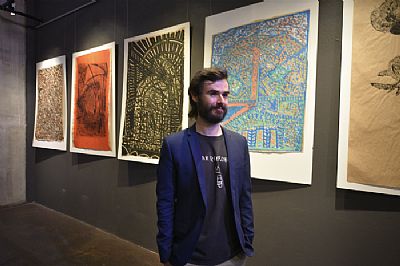
Aussie comedian Sam Kissajukian had an epiphany in 2021. Okay, so it turns out it was actually a manic episode, but he didn’t know he had bipolar at the time, so he really believed he’d seen the light. It was time, he decided, to turn his back on comedy and become an artist. So what if he’d never painted before? He had a beret. He was good to go.

We have his bipolar to thank for the art we see today: without the high levels of energy, the euphoria and the delusions that come with a manic episode, Kissajukian might never have rented a workshop, moved into it and obsessively painted massive (and tiny) pictures for several months. He might never have created the Museum of Modernia or held exhibitions of his work across Australia – or visited the Edinburgh Fringe with this fascinating show.

Of course, he wouldn’t have had to endure the crippling depression that followed either, but he’s doing well now, he tells us, so we’re allowed to laugh at the crazy, funny stuff he did.

300 Paintings is essentially a story about finding yourself and, although most of us won’t experience periods of transition with quite the same intensity as Kissajukian, the urge to escape our shackles and work out what we really want is very relatable. Unleashed from the need to please a drunken comedy audience, Kissajukian turns out to be extraordinarily creative. His ideas are inventive (literally) and exciting; his artwork primitive but fresh. He pushes every concept beyond its boundaries, so that this show is unlike anything I’ve seen before.

Kissajukian’s previous incarnation as a comic means he’s adept at communicating with the audience, even if the early morning is an unusual time for him to be awake. His easy-going patter makes the complex mental health issues accessible, and the projections of his artwork illustrate the story perfectly. Twenty-five of his paintings are on display here at Summerhall, the performance and exhibition inextricably linked.

Today’s show was sold out but, if you can get a ticket, 300 Paintings is an invigorating way to start your day.

4.2 stars

Susan Singfield

Summer of Harold

17/08/24

Assembly Checkpoint, Edinburgh

Ensemble Theatre’s three short standalone plays are brought to the Fringe via House of Oz. Written by Hilary Bell and performed by Berynn Schwerdt and Lucia Mastrantone, they form a perfect trinity, and we are treated to ninety minutes of exquisite storytelling.

The opening monologue, Summer of Harold, is all about Janet (Mastrantone), a middle-aged woman clearing out her junk room and reminiscing about the seasonal job she had when she went backpacking in her youth. But nineteen-year-old Janet doesn’t settle for bar work or fruit-picking. Instead, she spends her time in London working as a housekeeper for the titular Harold.

Pinter.

That’s right. Janet – whose story is inspired by the true-life adventures of one Margaret Woodward – provides holiday cover for Harold Pinter’s live-in help. And that summer, with Pinter and his wife, the novelist Lady Antonia Fraser, looms large and bright in Janet’s memories.

Mastrantone is tiny but she fills the stage with her glorious portrayals of the Pinters, as well as their many famous friends and her own chain-smoking Kiwi co-worker, Alison. She encapsulates the bold, vivacious swagger of youth, as the two girls bluff their way into a job they can’t do, and then learn how to do it anyway. Bell’s script is beautifully crafted and Mastrantone more than does it justice.

The second monologue, Enfant Terrible, stars Berynn Schwerdt, a man as big as Mastrantone is small, his gangly frame an interesting visual counterpoint to hers as they swap places and a new tale begins.

Gareth is a ceramicist but he’s not as famous as he’d like to be. More pressingly, he’s not as famous as his erstwhile best friend from art college, even though Gareth was the star back then and the work he’s producing now is definitely much better than anything “Mr Pinch-Pot” could create. Definitely. But his ex-pal is being given a big award so Gareth has to attend the ceremony and act like he is pleased.

There’s also a piece of very old and rancid Camembert he needs to deal with…

Again, it’s flawless. This is perhaps my favourite piece of writing of the three (although they’re all great), and Schwerdt’s performance has real emotional heft. His jealousy and resentment are both visceral and palpable – and any creative who says they don’t recognise these feelings is lying!

The final piece, Lookout, is a two-hander, with Schwerdt as Jonathan and Mastrantone as Rae, two people in their late 50s. It’s Jonathan’s birthday and they’re up a mountain in their special place, remembering the many times they’ve been here before. They haven’t visited recently though; they haven’t seen each other for a while. And Jonathan has some news for Rae that catches her off-guard…

Unlike the first two plays, Lookout relies on the element of surprise, so I won’t reveal too much about the storyline here. Suffice to say, it’s every bit as engaging as its predecessors, and just as skilfully acted.

Damien Ryan’s direction allows the trio of plays to shine. The transitions are particularly well-handled, overtly playful and theatrical. I especially like the device of using Schwerdt as a kind of silent removal man throughout Summer of Harold, carrying away Janet’s boxes one by one, leaving the stage bare and uncluttered for Enfant Terrible.

If you’re looking for an hour-and-a-half of impressive theatre, with snort-out-loud humour as well as profound emotional moments, then Summer of Harold ticks all the boxes. It’s an absolute pleasure from start to finish.

5 stars

Susan Singfield

Deluge

15/08/24

Summerhall (TechCube 0), Edinburgh

Deluge typifies what I used to think the Fringe was – way back when, before I’d ever set foot in Edinburgh. I expected every show to be like this: artsy, meaningful and chock-full of expressive dance. Of course, now I’m both an old hand and an Auld Reekie resident, and I know that the 3000+ shows on offer here cover every form imaginable: from the mainstream and family-friendly to the wild and debauched; in venues as varied as traditional theatres, circus tents, tiny broom cupboards and former dissecting rooms. But in fact, there’s not actually a lot that conforms to those youthful preconceptions.

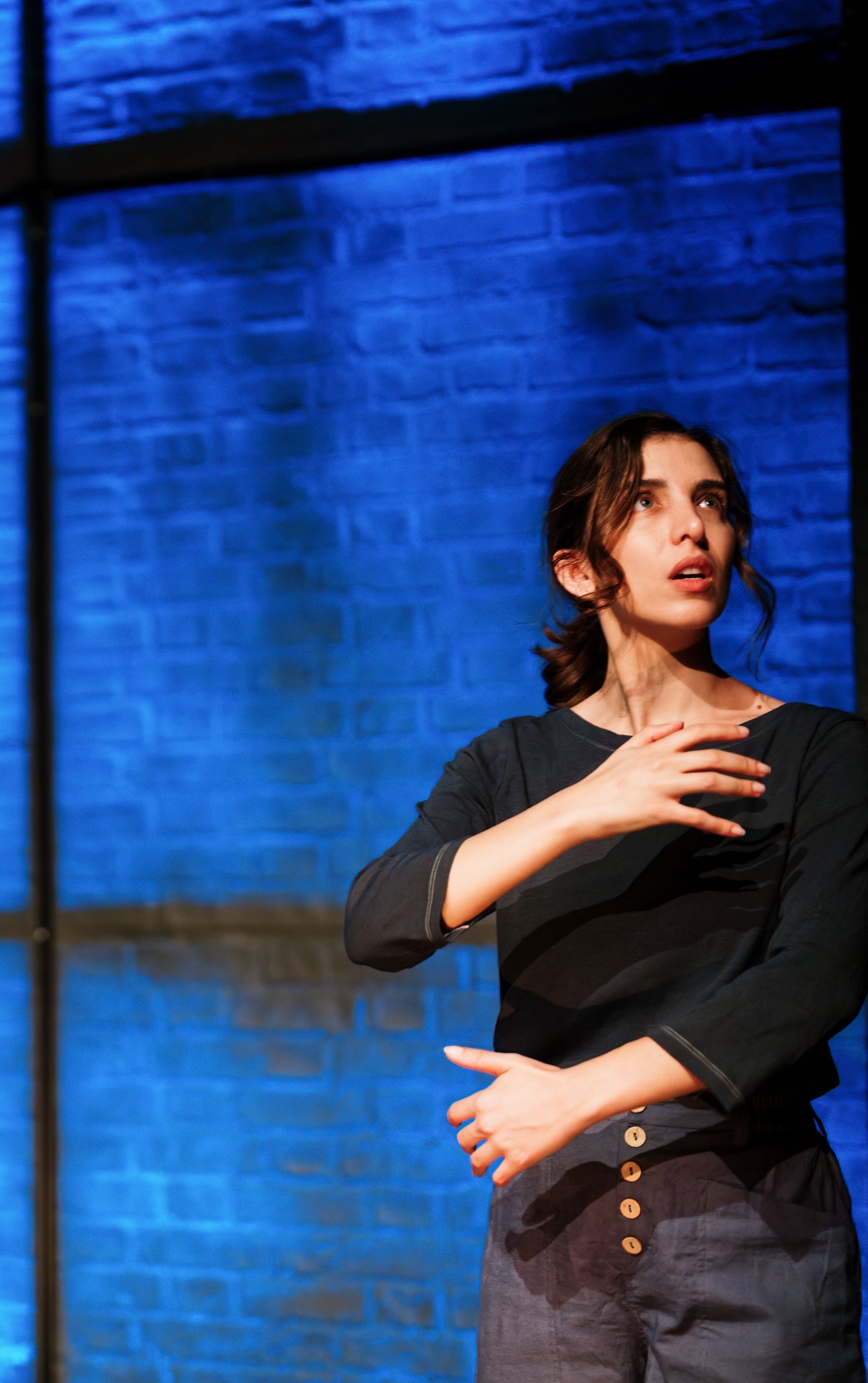
Deluge – a one-woman play by Brazilian theatre-makers Gabriela Flarys and Andrea Maciel – is very artsy, very meaningful and, yes, replete with expressive dance. And I am totally absorbed, lapping up every minute of this quirky, offbeat play.

The protagonist (Flarys) is in mourning. Her lover has left her and she is bereft. She is also covered in jam. What follows is a wonderfully eloquent evocation of loss, the whole grieving process externalised and made concrete. ‘The End’ itself is personified, while the emotions overwhelming her are represented by a cumbersome ladder and a constant drip-drip dripping sound, as inescapable as tinnitus.

The woman takes us back in time, to when she first met her ex-boyfriend. We bear witness to their love, and to the diverging dreams that eventually tear them apart. This is a multi-media production, cleverly utilising a keyboard, video projections and, most impressively of all, Flarys’ extraordinary physical skills, as she contorts herself every which way, a paroxysm of grief. Despite her unhappiness, the protagonist is an expressive and three-dimensional character, extrovert and full of life. She just needs to negotiate her way through this quagmire of misery…

The central metaphor – of grief as water, infiltrating the woman’s home and threatening to drown her – is beautifully realised, not least when she hopelessly tries to plug up the leaks with the jam her partner left behind. We all know bereavement and heartache, one way or another, and I found this section in particular spoke to me and my experiences.

Deluge is a profoundly moving piece of theatre, as ‘Fringey’ as it gets and none the worse for it.

4.3 stars

Susan Singfield

Gamble

15/08/24

Summerhall (Cairns Lecture Theatre), Edinburgh

Hannah Walker greets us as we wander into the Cairns Lecture Theatre. She’s dressed in a sharp suit featuring dollar bills and wearing a pair of snazzy high-heels. Without further ado, she launches into her intro, a razzle-dazzle rant about the joys of online gambling, backed up by a bright and zippy display on the video screen behind her.  She tells us about her youth, spent in a sleepy village in the UK, where the only bright spot was the occasional trip to the bingo. Even at a tender age, she tells us, she was being indoctrinated, taught that ‘having a flutter’ was perfectly acceptable.

But time moves on and she finds herself married to a man with a gambling addiction, unable to resist squandering eye-watering amounts of money on an almost daily basis. This show is Walker’s attempt to highlight the potential dangers of online gambling, the invidious ways in which it can entice and corrupt people into its clutches, convincing us that it’s just a bit of harmless fun. The show alternates between those brash, colourful enticements and clips of addicts, confessing how what originally seemed like a harmless pastime mutated into something utterly destructive. There’s also input from a clinical psychologist and an invitation to attend Zoom sessions, where people with a gambling problem can talk about their situation.

Walker and her co-creator (Rosa Postlethwaite) give this piece their all, but I’m left with the distinct impression that Gamble is trying to be too many things at once and that its potential is somewhat dissipated by a tendency to spread itself too wide and not all of the humour lands. Also, perhaps because Walker is so close to the issue (her husband is an addict, though thankfully in recovery), it doesn’t go hard enough to expose the depth of the potential problems. For example, the number of gamblers committing suicide is mentioned but never explored.

There’s no doubting the sincerity of Walker’s intentions and Gamble is a thought-provoking piece, which has plenty to say about a multibillion dollar industry that hides behind that cheerful, glittering façade. But I’d like to see its focus tightened in order to realise its full potential.

3 stars

Philip Caveney

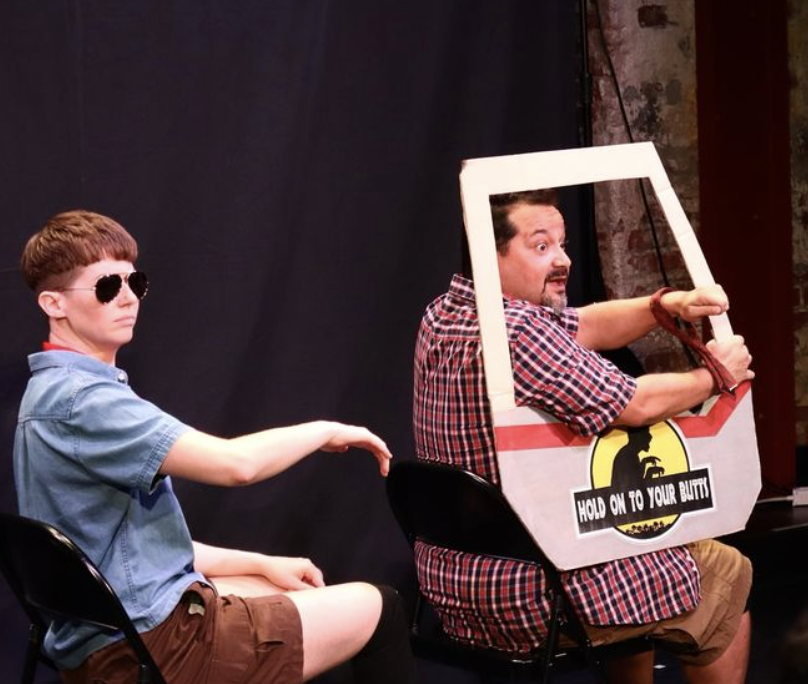
Hold On to Your Butts

15/08/24

Pleasance Forth, Edinburgh

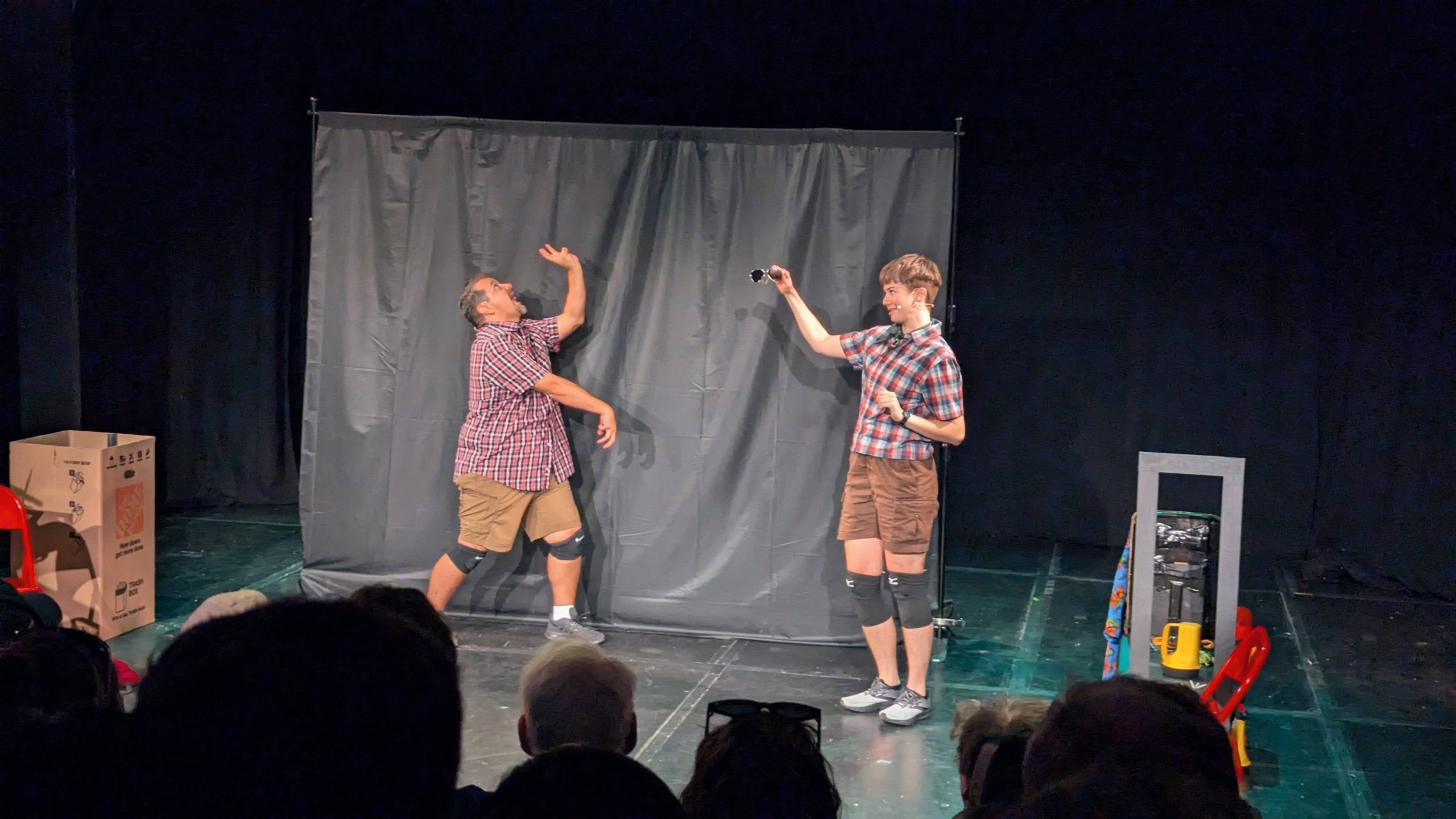
At the Pleasance Forth, a huge crowd of film fans has eagerly assembled for Hold Onto Your Butts. The raison d’etre of this New York-based outfit, making its debut at the Fringe, is to take a big-budget movie – you know the kind of thing, epic scale, massive special effects – and replicate it. They do this pretty much scene-for-scene, using a series of cheap-as-chips props to capture every detail. So for instance, a spinning umbrella becomes the rotor blades of a helicopter. Got it? Good.

Today we’re being treated to their version of Jurassic Park, though (presumably for legal reasons) the title is never mentioned. A grand cast of two performers (Natalie Rich and Matt Zambrano) and one foley artist (Kelly Robinson) gleefully launch themselves headlong into the action. The actors mine the film for its weaknesses, having fun with Ian Malcolm’s proclivity for pregnant pauses, John Hammond’s habit of fitting in lavish meals at inopportune moments, and the seeming inability of the adults in the cast to realise that they are repeatedly plunging the two kids in the story into harm’s way.

And then of course there are the dinosaurs. It’s amazing what can be achieved with a bike helmet and a traffic cone…

This is great fun, but I should probably point out that anyone with little or no knowledge of the original film will be somewhat bewildered by what’s happening onstage. Fans of Jurassic Park – and there are many – will have a whale of a time. Judging by the gales of laughter filling the room, that’s a sizeable part of the audience.

Fast, funny and irreverent, Hold On To Your Butts has all the makings of a monster hit and I fully expect it to become a regular fixture at the Fringe. We’ll see how that one er… evolves.

4 stars

Philip Caveney

A Knock on the Roof

14/08/24

Traverse Theatre, Edinburgh

Written and performed by Khawla Ibraheem, A Knock on the Roof is a horrifying illustration of the realities of living under Israeli occupation.

Mariam’s ‘normal’ life sounds bad enough. The electricity supply only works for a few hours each day, so she has to be ready when it comes on – to charge her phone, wash the dishes, take a quick shower. Fresh water is in short supply, and she’s forbidden her son from swimming at the beach because the sea is so polluted.

When war comes – again – things are even worse.

Mariam’s biggest fear is the euphemistic ‘knock on the roof’ – a small bomb dropped on a residential building to give notice that a bigger one is on its way. This is a perverse distortion of the international humanitarian law requiring an effective warning before a civilian target is attacked, and it destroys Mariam’s mental health. Her husband is in England – working on his PhD, trying to forge a better life for them – so she’s on her own, looking after her young son and her elderly mother, and the anxiety is too much to bear.

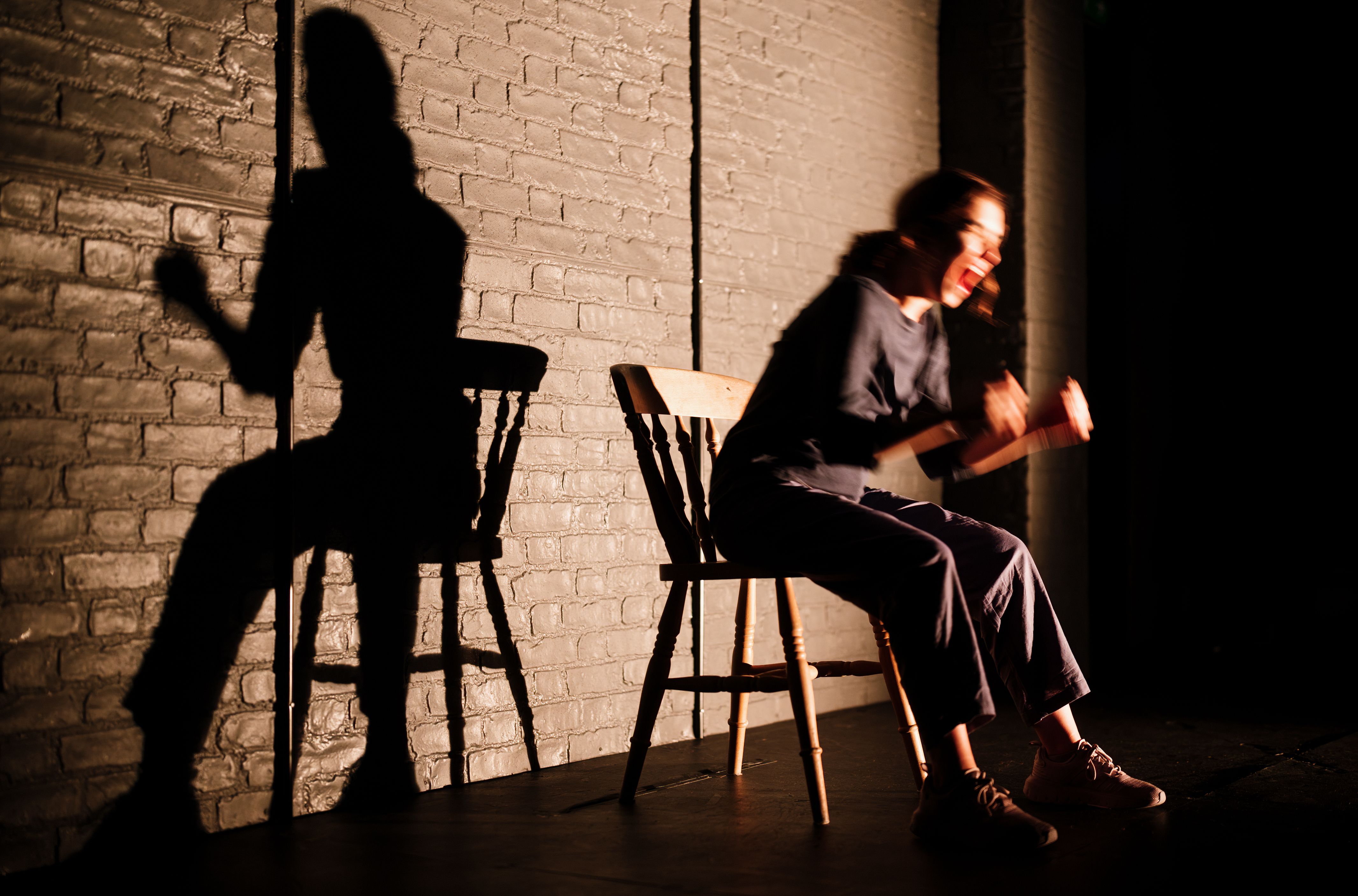
She begins to practise running, to maximise her chances of fleeing to safety in the five minutes she’ll have when the knock on the roof comes. Director Oliver Butler uses these sprints to make the monologue dynamic, Mariam’s kinetic force conveying her panic. This is further emphasised by the frantic pace of Ibraheem’s vocal delivery. In fact, sometimes she speaks so quickly that it’s hard to catch every word, but the gist is always clear, and it ensures we are in no doubt about how terrified she is.

The staging is almost completely stripped back, with a single chair the only prop. There is only one theatrical flourish in the whole play, and – when it comes – Hana S Kim’s projection is genuinely breathtaking.

If A Knock on the Roof begins to feel repetitive, then I guess that’s the point. This is how Mariam lives, repeating the same routine over and over, like a ritual. If she can get this right, she can save her son. In the end, she begins to wish for the bomb, because waiting for it is killing her…

An intense and heartfelt production with a vital message, A Knock on the Roof is a timely eye-opener, and an important part of Travfest 24.

4 stars

Susan Singfield

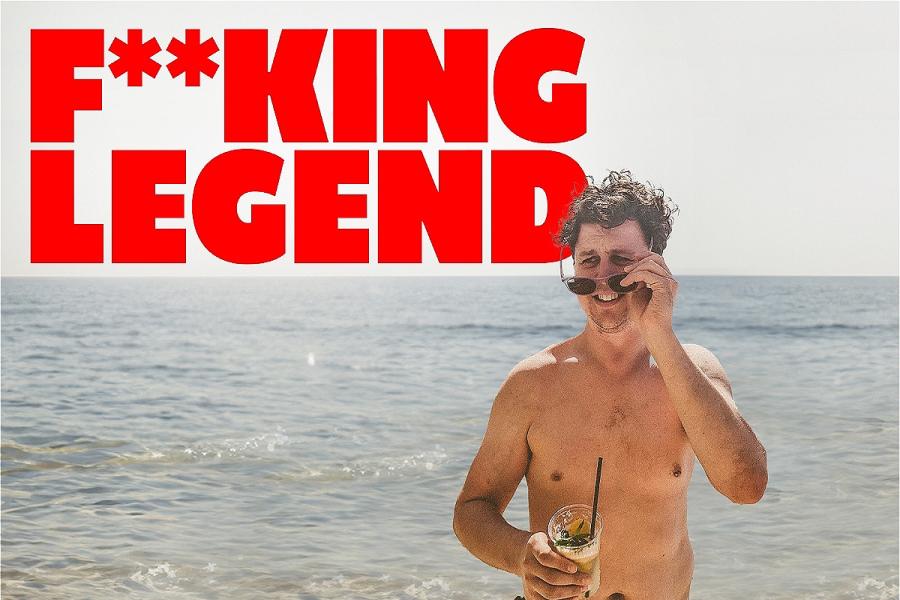
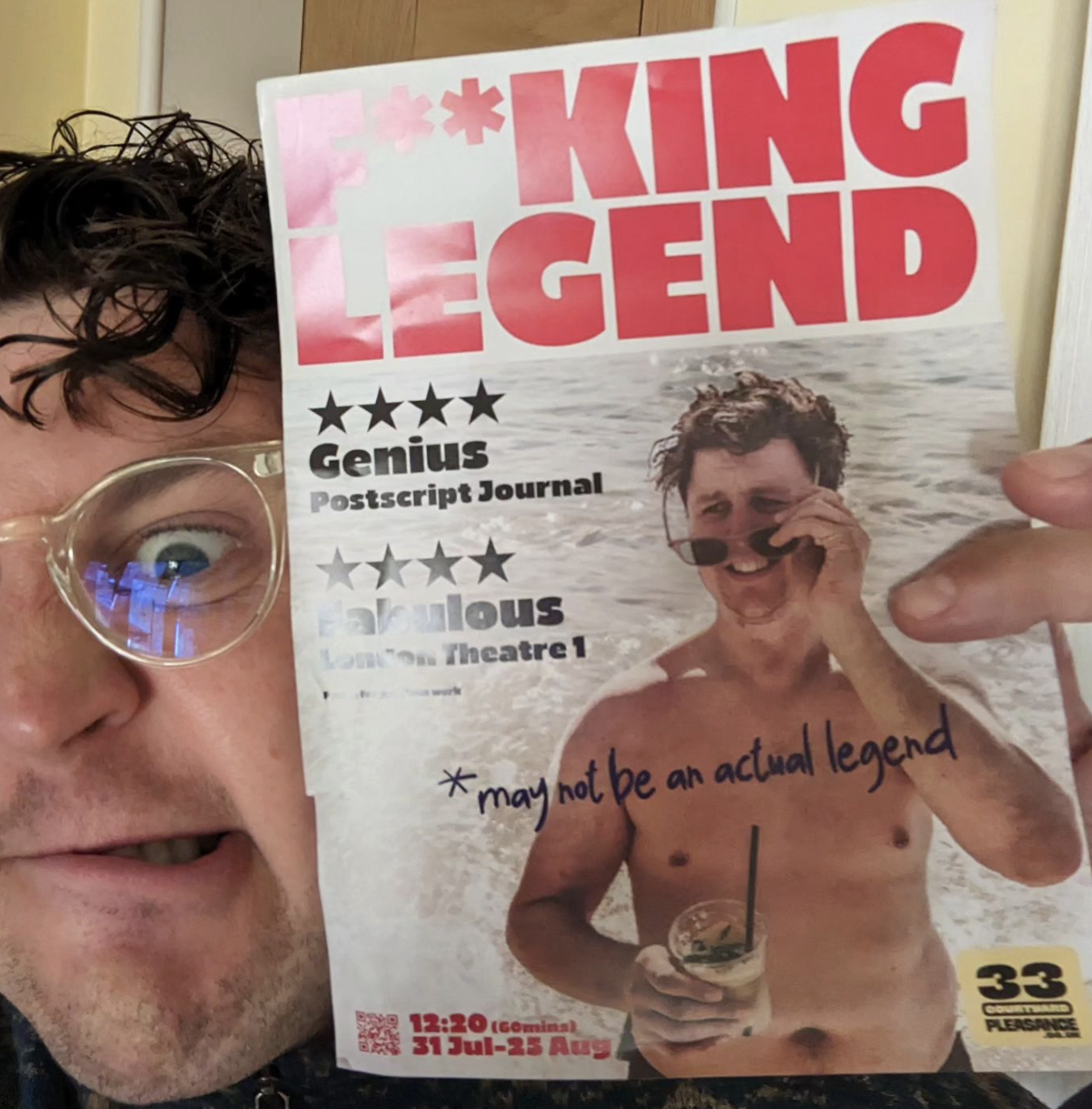
F**king Legend

14/08/24

Pleasance Courtyard (Bunker Two), Edinburgh

Olly Hawes isn’t a bad guy. Okay, so maybe things get a little out of hand on stag dos now and again, but he and his pals are not like those other lads, misbehaving drunkenly in historical European cities. Sure, they go to the same places and drink the same booze, but their raucousness is performative and self-aware. They’re being ironic – and that makes all the difference. Right?

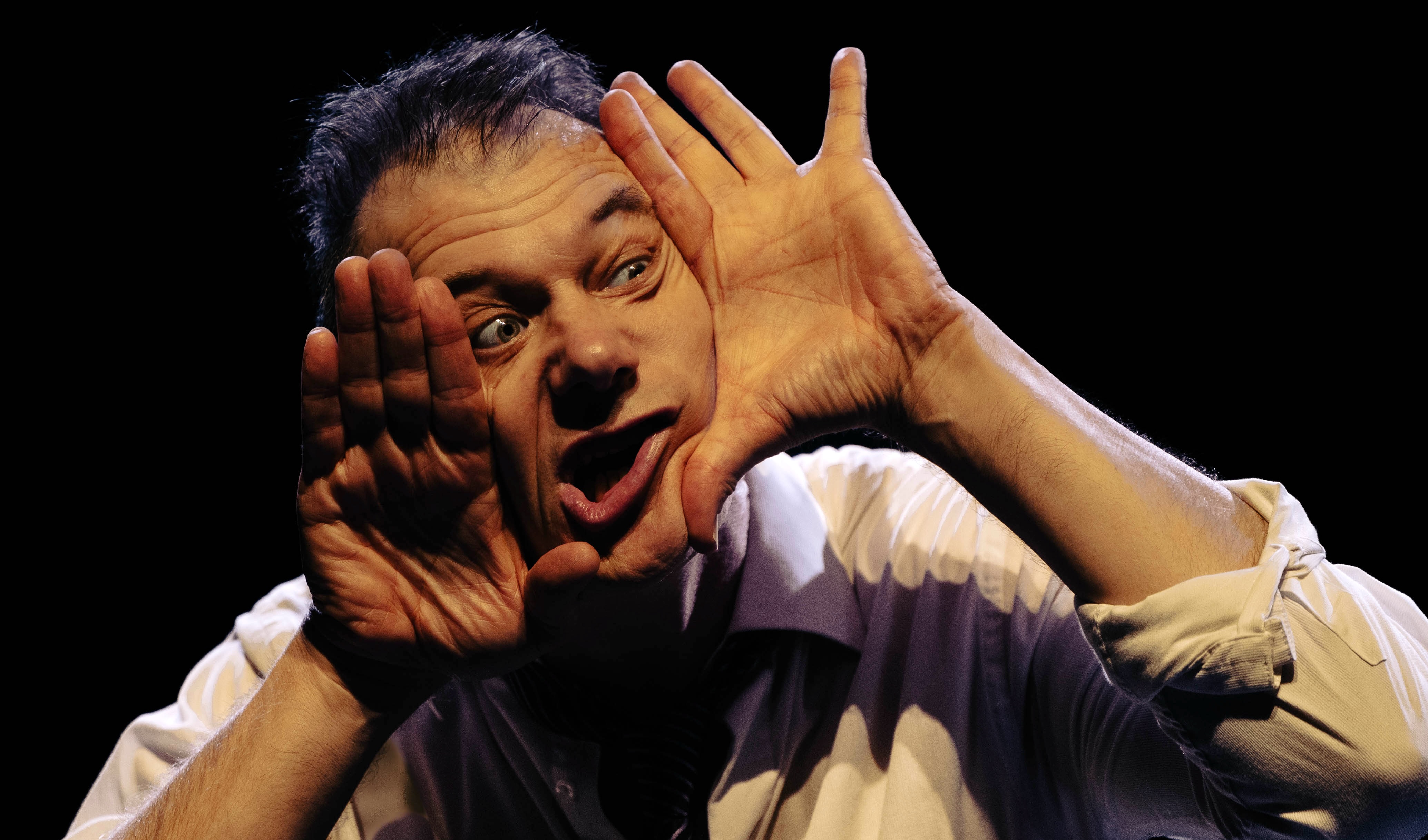
In this one-man show, Hawes veers between biting humour and apocalyptic despair; it is at once a confessional and a call to arms. The affable persona he creates serves as a hook, allowing him to reel us in and bring us face-to-face with our own hypocrisies.

There’s a gulf between the opening scene, where Hawes stands contemplating which socks to wear, and the terrifying ending, where we all stand on the precipice of a climate disaster. But Hawes is an effective guide, leading us from an introspective focus on the daily minutiae to a bird’s eye view of what’s happening just out of shot. If this sounds bleak, it is, but don’t be misled – it’s also very entertaining.

There’s an overt meta-quality to this monologue. Hawes invites us to picture our own lead character. It might be him or it might just be someone a bit like him. It might be us. (It is us. We’re all guilty.) The piece is presented as a screenplay, with Hawes narrating the cues, which works well as a simple means of establishing where we are in time as well as place.

There’s no denying that the ending is frenetic and hyperbolic – but it feels earned. This is clever writing with a relatable protagonist, striking exactly the right tone to keep the audience on board.

And we need to actually do something about climate change, don’t we? The planet’s burning while all us f**king legends look away and party.

4 stars

Susan Singfield